Tag: Desserts

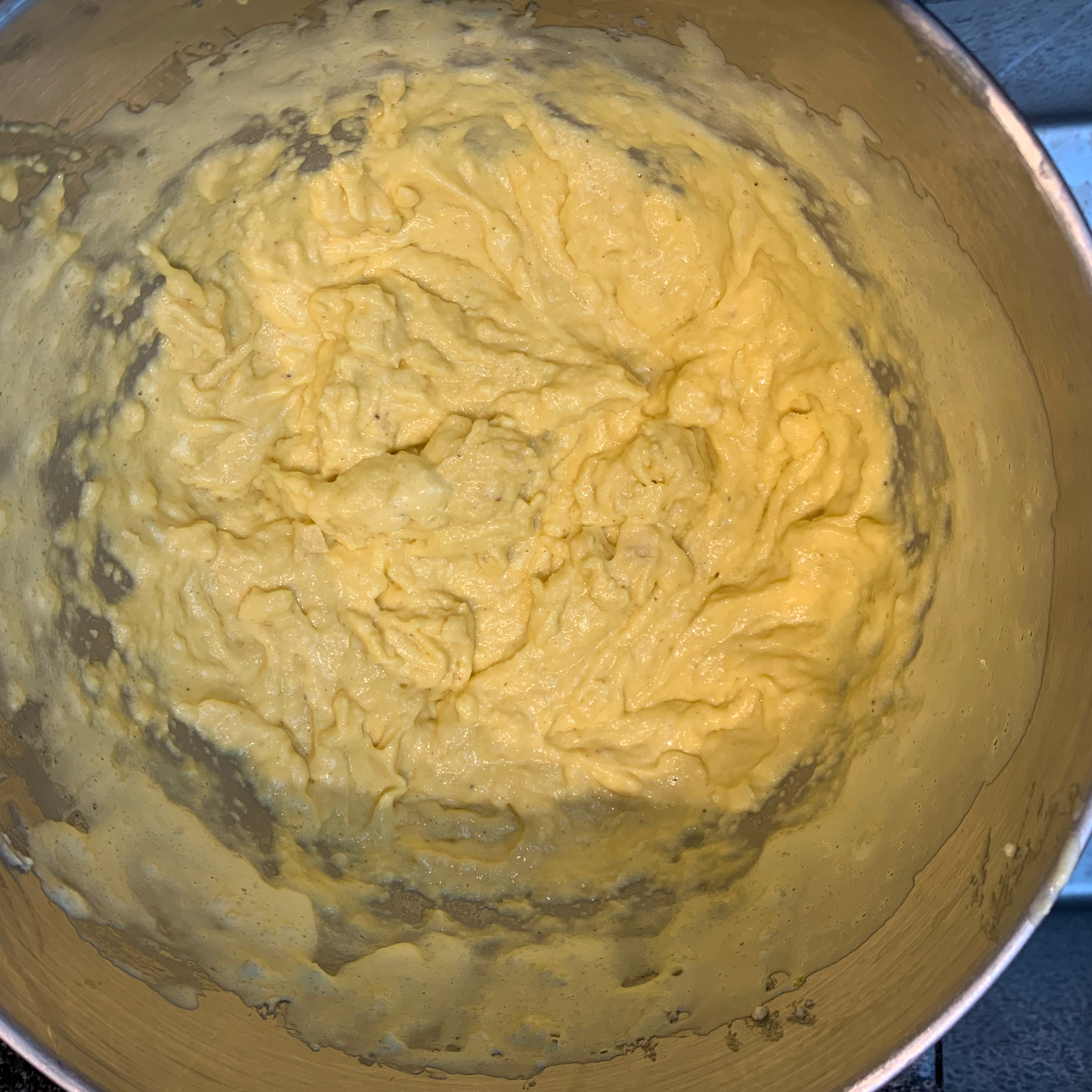
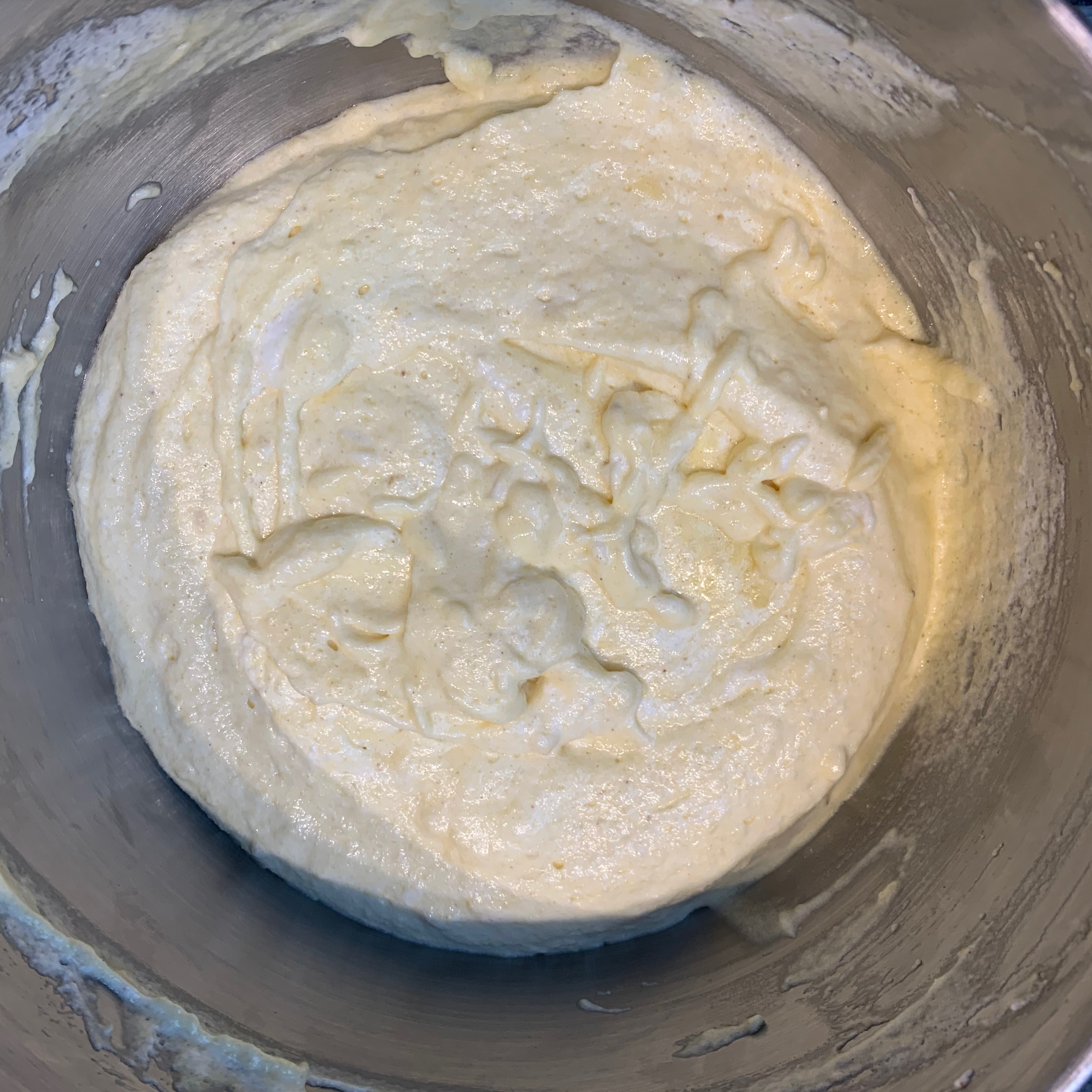
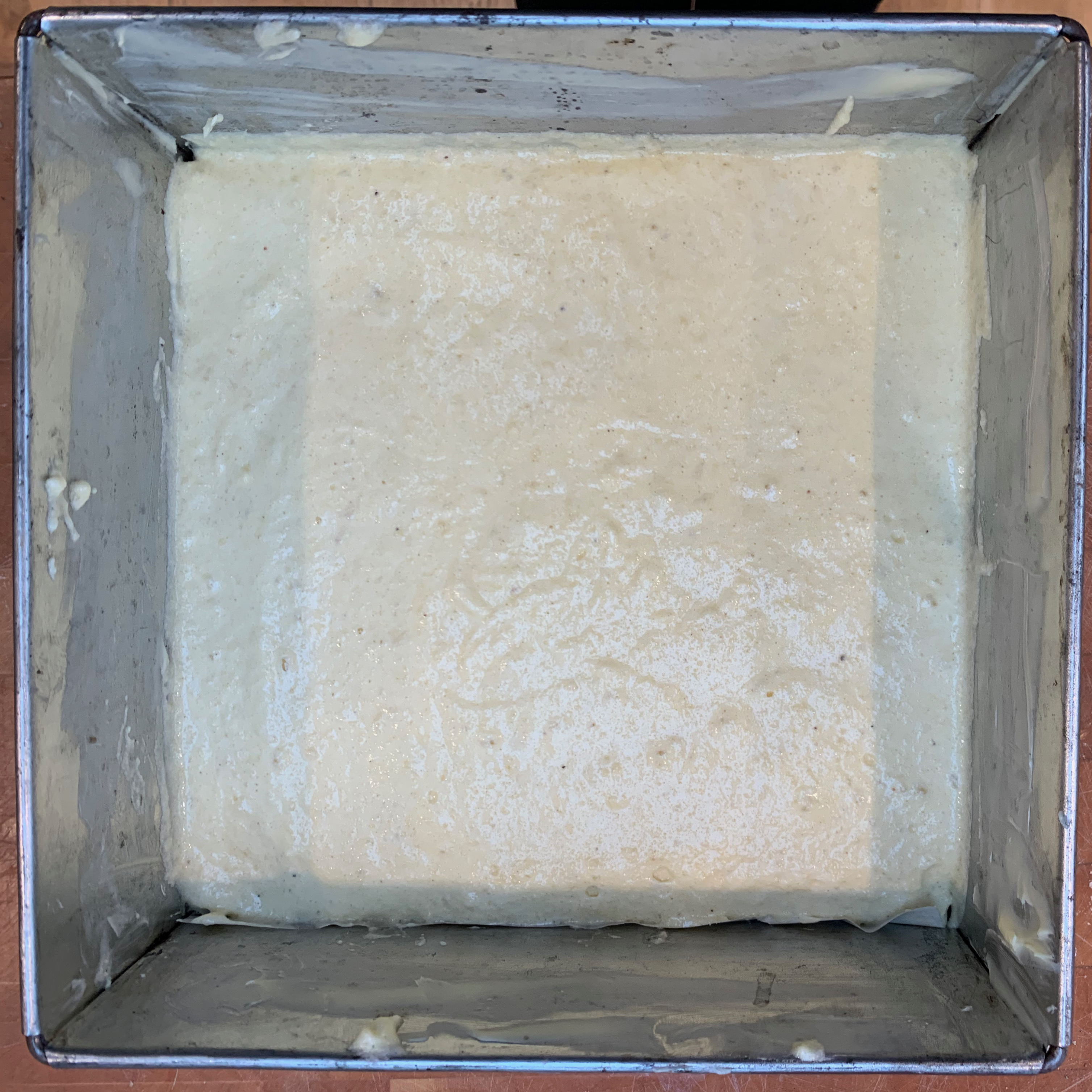
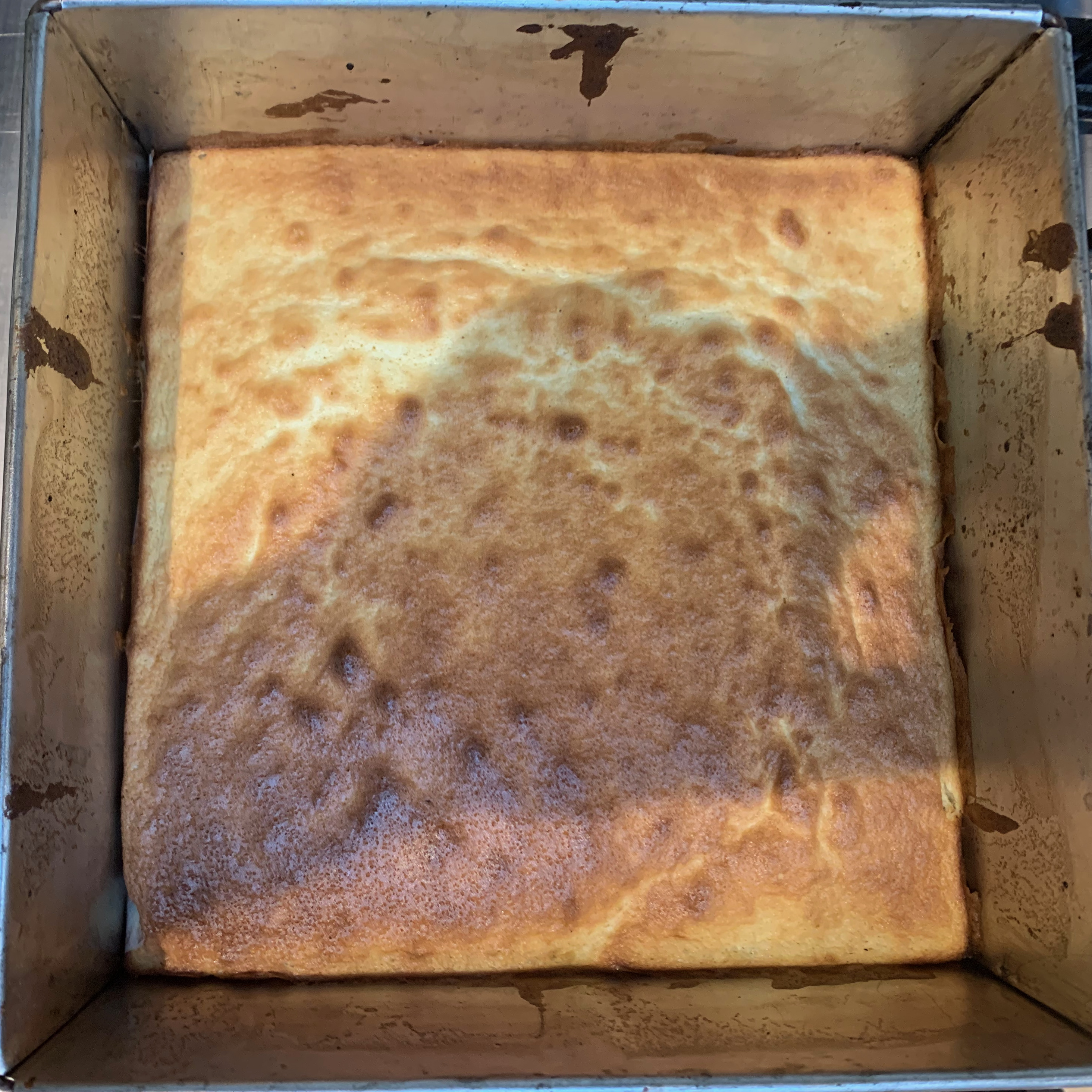
Chocolate mousse

For anyone planning a Seder night (the Jewish celebration of Passover eve), the question raises itself of how to make a flourless dessert. There are various standard tricks, like using ground almonds or matzo meal to substitute for the flour, but here is a fabulous, indulgent dessert that avoids the tricks altogether.

This chocolate mousse started life as one of my mother’s standards, taken from the classic American cookbook Joy of Cooking (still in print and being revised, 93 years after its first edition – my own copy is now so tattered that it needs replacing). I’ve made things metric and changed various quantities, mainly to suit what you buy in English supermarkets, although, to be honest, it’s incredibly forgiving: the recipe will still work OK even if you change the ratios of cream to chocolate to eggs sugar, so you can make sweeter, lighter or more intensely chocolatey at will.

Recently, I’ve been making a more substantial change: making the egg whites into an Italian meringue before folding them into the rest of the mixture. The result is a far lighter, stable consistency which, in my view, is well worth the extra effort. This needs a thermometer – if you don’t have one, just go for standard sweetened beaten egg whites.

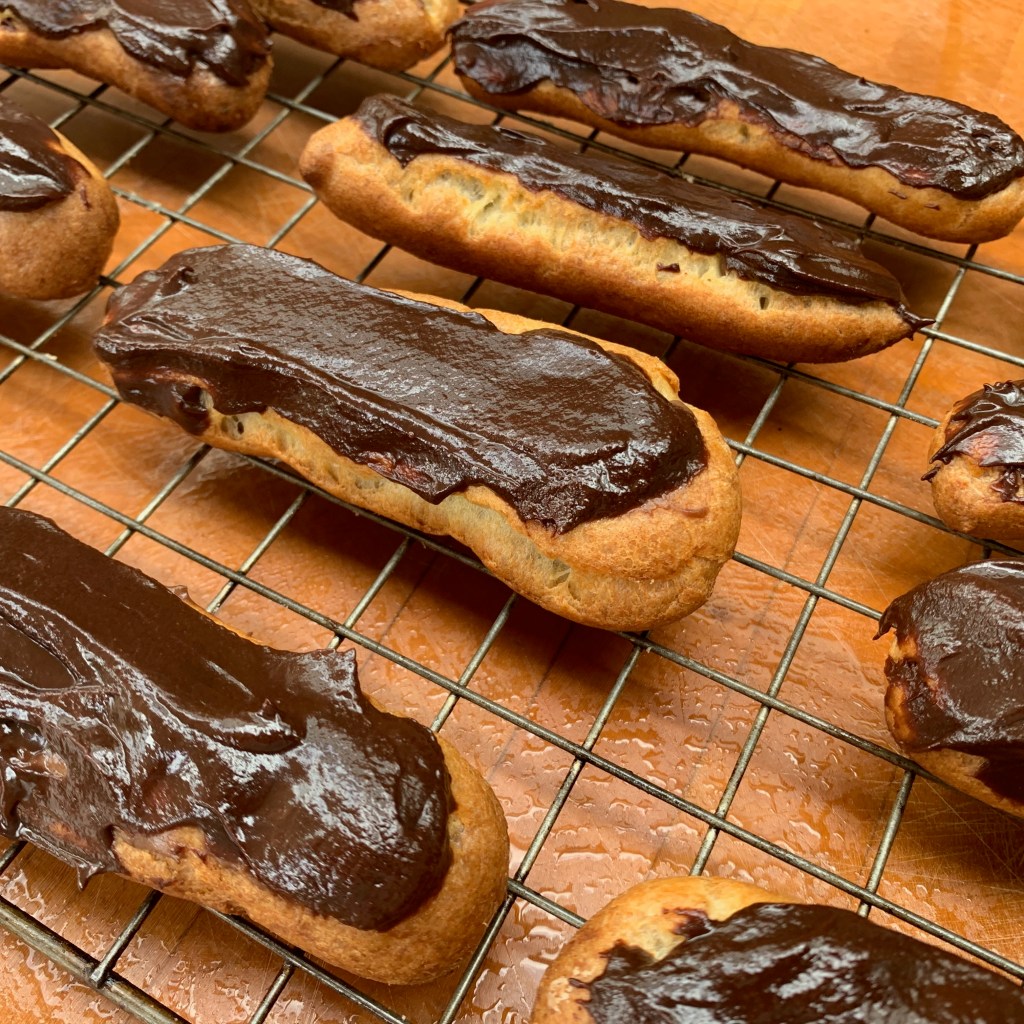
By the way, I tend to use the egg yolks for crème pâtissière, for use in éclairs or fruit tarts.

The Italian meringue

  • 4 large egg whites
  • 200g sugar (this is less than most recipes, so you can up it to 300g if wanted)
  • 5oml water
  • Juice of half a lemon
  1. Pu the egg whites into the bowl of your stand mixer, equipped with the whisk attachment.
  2. Put the sugar and water into a small saucepan and heat: for the first part of the process, make sure you mix things until the sugar is properly dissolved. 
  3. Monitor the temperature regularly with a thermometer: you will be using the syrup when it reaches 121℃.
  4. Well in time for the syrup to be complete (I tend to start when it’s at around 90℃), whisk the egg whites until they form soft peaks. Stop the mixer.
  5. When the syrup reaches 121℃, restart the mixer on full speed, and slowly pour the syrup into the bowl, in as thin a dribble as you can manage.
  6. Add the lemon juice, then continue mixing for at least 10 minutes while the meringue cools.
  7. Remove the whisk – you meringue is now ready to use.

The mousse

  • 50g sugar 
  • 80g rum
  • 350g dark chocolate, at least 70% cocoa solids
  • 500ml cream
  1. Put the sugar and rum into a saucepan and warm gently until dissolved into a syrup. You do NOT want the syrup to caramelise.
  2. Take the syrup off the heat and leave to cool somewhat.
  3. Break up the chocolate, then heat in a double boiler until melted
  4. Mix in the syrup
  5. Mix in 100ml of the cream, a bit at a time, until everything is smoothly blended
  6. Whip the remaining 400ml of the cream until stiff
  7. Fold in the chocolate mixture until completely blended (you don’t really want white blotches).
  8. Now fold in the Italian meringue. Try to do it without overworking, which will lose the air – but at the same time, you want it completely mixed. It’s a good idea to fold in about a quarter of the meringue first, and then the remainder, which you’ll be able to do more gently.
  9. Put the mousse into a large bowl for serving, or into individual ramekins or glasses if you prefer.

I like serving this with a red fruit coulis, made from reducing and sieving frozen red fruit and sugar, with a bit of lemon juice added. The sharpness of the coulis cuts through the richness of the mousse, and anyway, raspberries and chocolate are a marriage made in heaven.
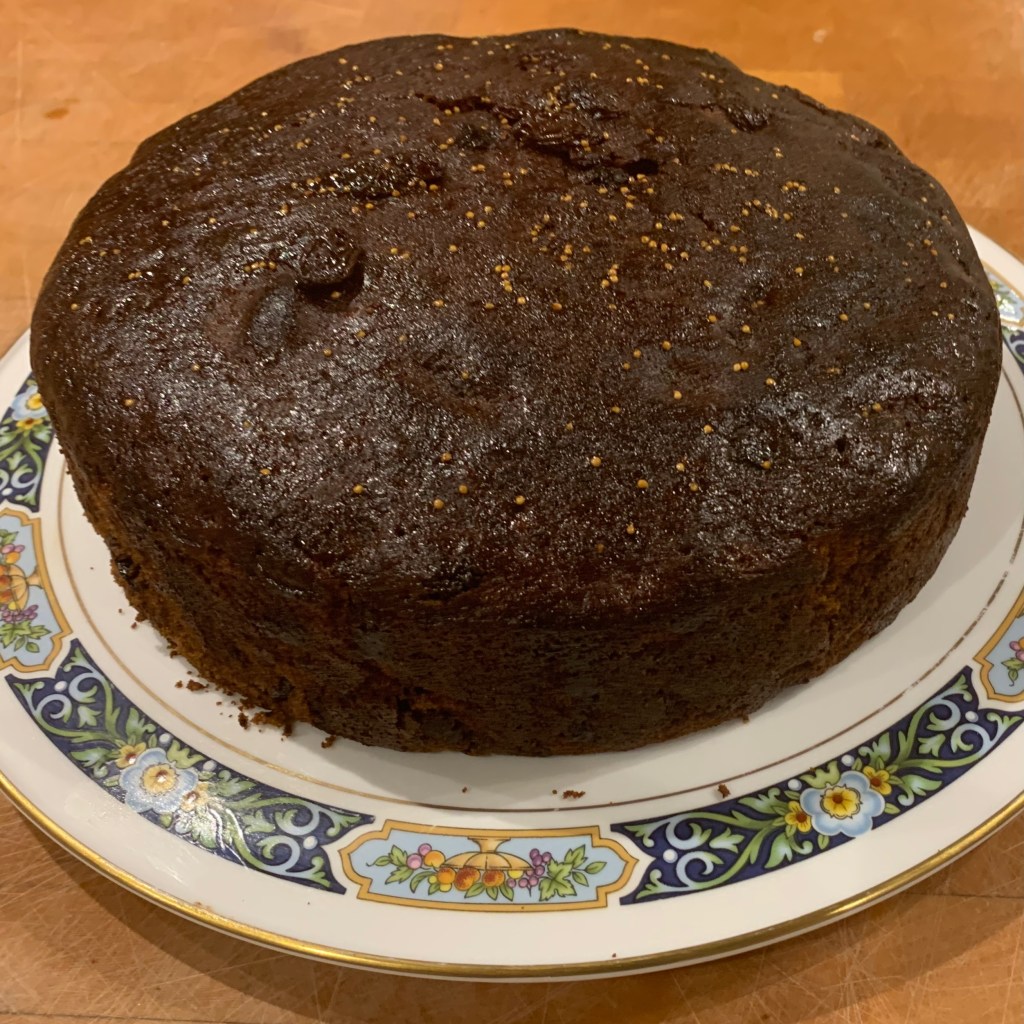
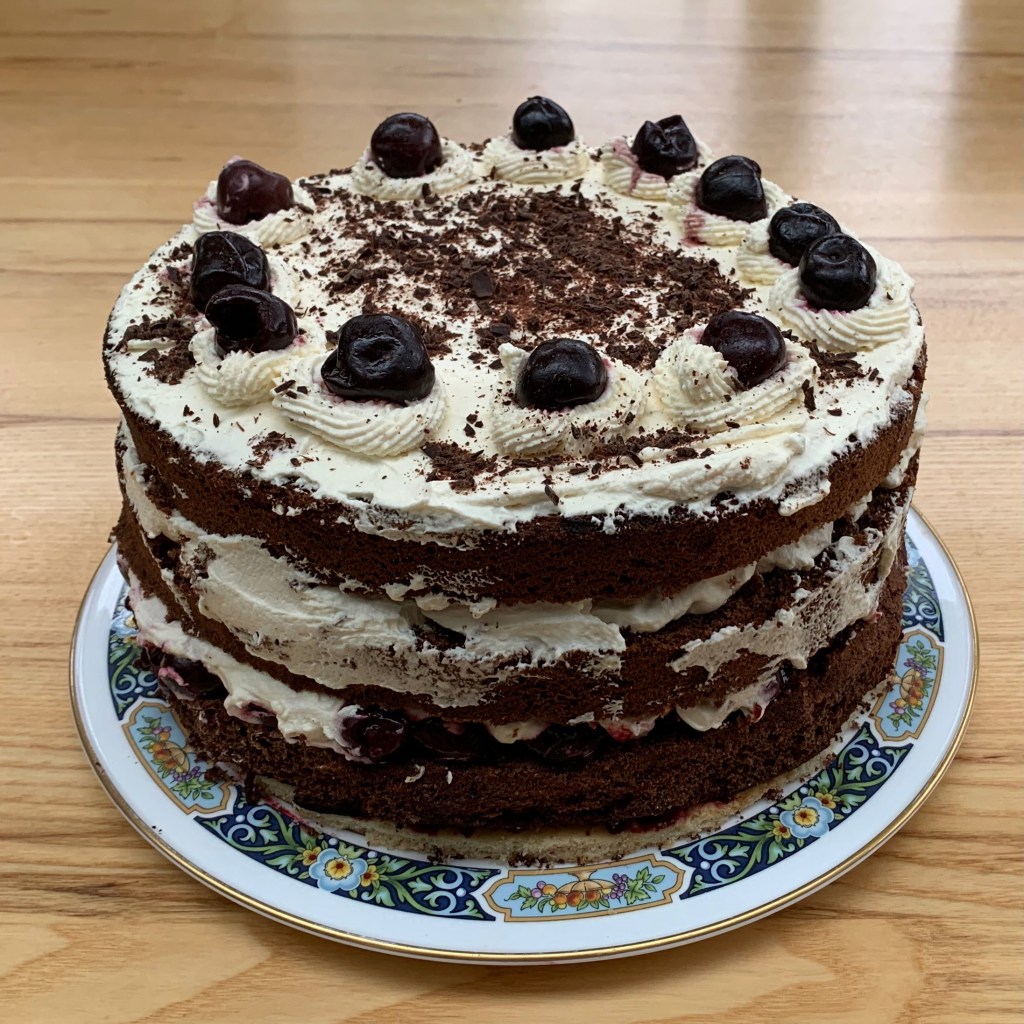
Sachertorte revisited – for diabetics

Sachertorte revisited – for diabetics

The words “diabetic baker” are something of an oxymoron: diabetics really shouldn’t be eating high carbohydrate foods, which pretty much rules out bread, cakes, biscuits, pies, pastries and just about any kind of baked goods. That makes my series of blog posts on baked goods from around the world a totally inappropriate project to have done (or, viewed more positively, a rash thumbing of my nose at the health gods).

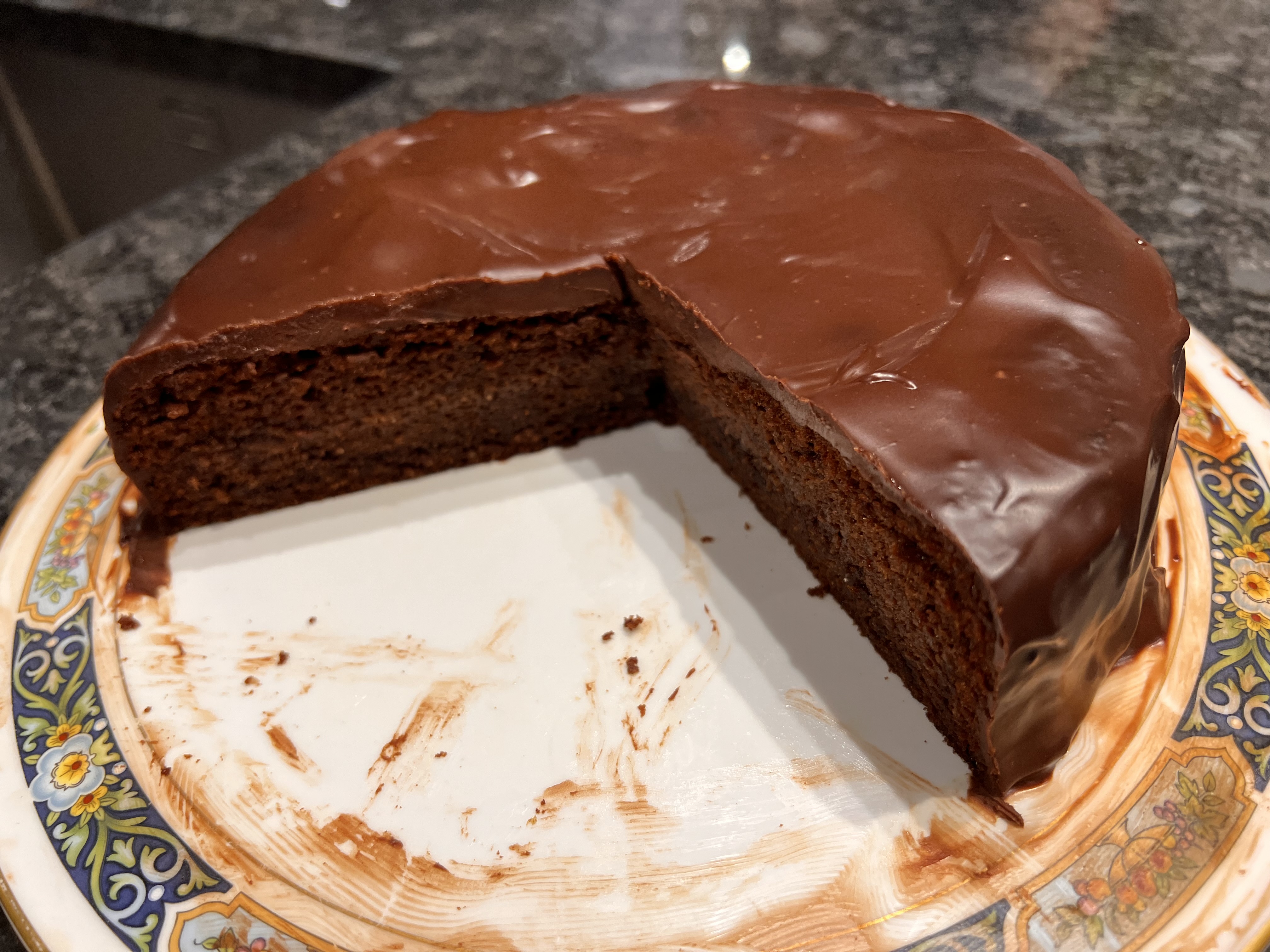
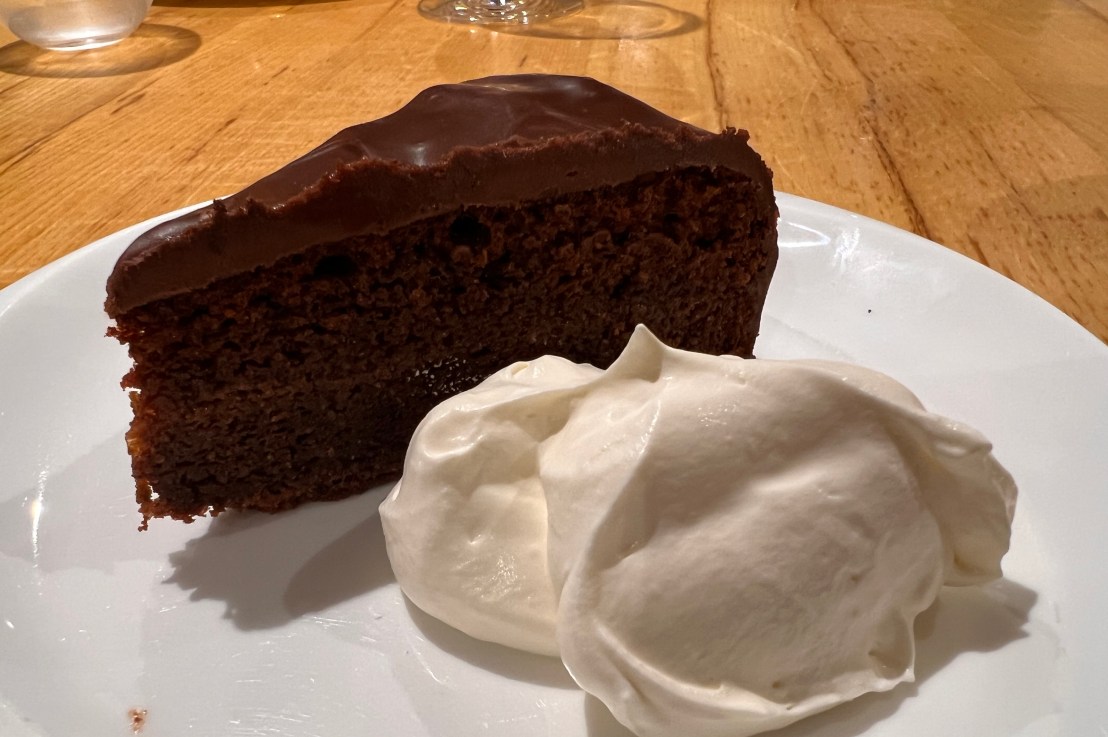
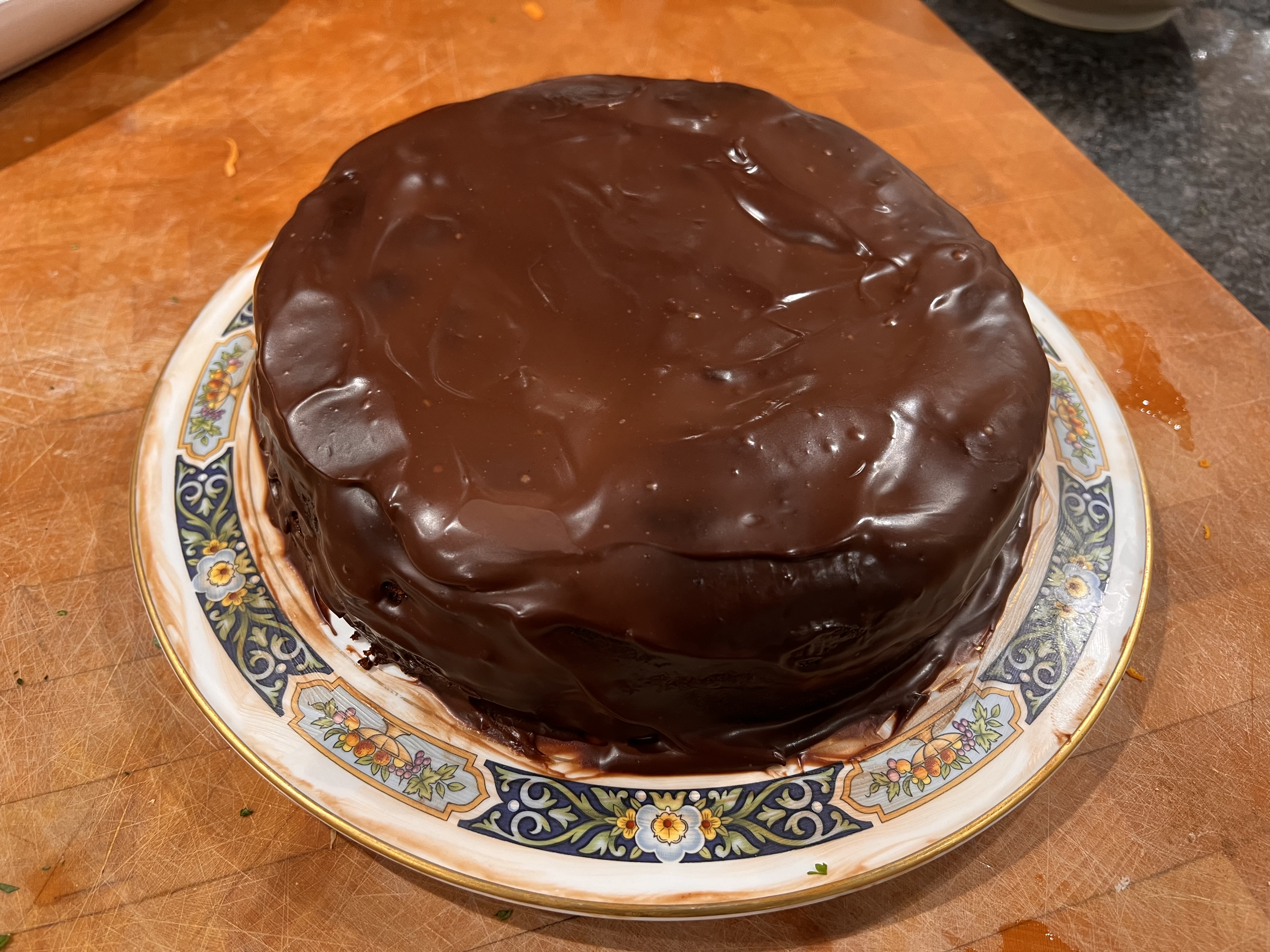
But there are times when you can cheat. I just ran an experiment to see how far I could minimise the carbohydrate content of my favourite cake – Sachertorte – and it was outstandingly successful.

Starting with my recipe for normal Sachertorte, I did four things:

  1. Replace the flour with ground almonds
  2. Replace the sugar with allulose
  3. Replace the icing with a chocolate ganache
  4. Keep careful control of the amount of apricot jam in the filling

With more time available and apricots in season, I could have made my own apricot compote with allulose, but there really wasn’t time.

If you aren’t aware of allulose (aka Psicose or D-ribo-2-hexulose): it’s a naturally occurring sugar which you can’t digest normally. It tastes something like 70% as sweet as sugar. I find that it has little or none of the aftertaste of most non-sugar sweeteners – and in a recipe with this one, with its strong-tasting dark chocolate, I could detect no aftertaste whatsoever. People have questioned whether there any health risks, but the US FDA have approved it with a maximum consumption of 33-36g per day for a 60kg adult (a portion of this cake uses under 20g, so I reckon it looks OK). 

Comparing the two recipes, the carbohydrate budget looks like this. In rough numbers, the new recipe’s carbohydrate count is a quarter of the standard one.

NormalDiabeticSaving
Dark chocolate 300g90g90g
Sugar to allulose150g0150g
Flour to ground almonds76g19g57g
Remove icing200g0200g
Apricot jam 90g to 60g53g35g18g
Total for a 1kg cake569g144g425g
Total for a (generous) 125g portion71g18g53g

I can’t fault the results. My family proclaimed this to be better than the original, which we attribute to liking the extra flavour of the almonds and preferring the creaminess of the ganache to the extra sweetness of the chocolate icing. It’s a winner.

For completeness, here’s the modified recipe. Make it in a greased, 8-9 inch, removable-rim pan.

Ingredients

Cake

  • 150g dark chocolate (70-80% cocoa solids)
  • 150g allulose
  • 30g granulated sugar
  • 170g butter, softened
  • 100g ground almonds
  • 6 eggs
  • 60g apricot jam mixed with the juice of half a lemon
  • 1/2 tsp baking powder
  • vanilla essence or vanilla paste to taste (different brands are so different in strength that I can’t give an amount)

Ganache

  • 150g dark chocolate (70-80% cocoa solids)
  • 200g double cream

Method

Cake

Preheat the oven to 160°C fan. Grease the sides of an 8-9 inch, removable-rim cake tin with butter and line the bottom with baking paper or parchment.

  1. Separate the eggs into yolks and whites
  2. Melt 150g of the chocolate in a double boiler. Then leave it to cool.
  3. Cream 120g of the allulose and the butter until the mixture is fluffy.
  4. Beat in the egg yolks gradually until the mixture is light in colour.
  5. Add the melted cooled chocolate.
  6. Add the ground almonds. Add the baking powder and mix everything thoroughly.
  7. Beat the egg whites until they are beginning to be stiff. Add the remaining 30g of allulose and beat on maximum speed until stiff but not dry.
  8. Fold the resulting meringue mix into the cake mixture, about a fifth at a time. The weight of the almond-rich mixture will make this trickier than for a normal cake.
  9. Bake the mixture in the pan for around 40 minutes.
  10. Remove and cool on a rack.
  11. Optionally, slice the top dome from the cake and set aside. Slice the remaining cake in half. Spread the jam on the bottom half and reassemble (optionally, spread jam on the top of the cake also).

Ganache

  1. Break or chop the chocolate into small pieces (less than 1cm square) and put in a reasonably heatproof bowl. Of course, if you’ve bought your chocolate in the form of chips/pellets, this has already been done for you.
  2. Bring the cream close to the boil, and pour it over the chocolate.
  3. Stir rapidly and continuously until the mixture is smooth.
  4. Cool enough that the ganache no longer runs really easily, but is still spreadable with a glossy finish.
  5. Spread over your cake.
  6. Leave to cool completely.

Around the world in 80 bakes: the index

OK, so there are a few dubious categorisations here to make the images line up. But I’ve done my best.

Biscuits (aka cookies)

Breads (loaves)

Breads – sweet

Cakes

Flatbreads

Pastries – sweet

Savoury dishes

Other

Around the world in 80 bakes, no.76 – Panettone from Italy

Around the world in 80 bakes, no.76 – Panettone from Italy

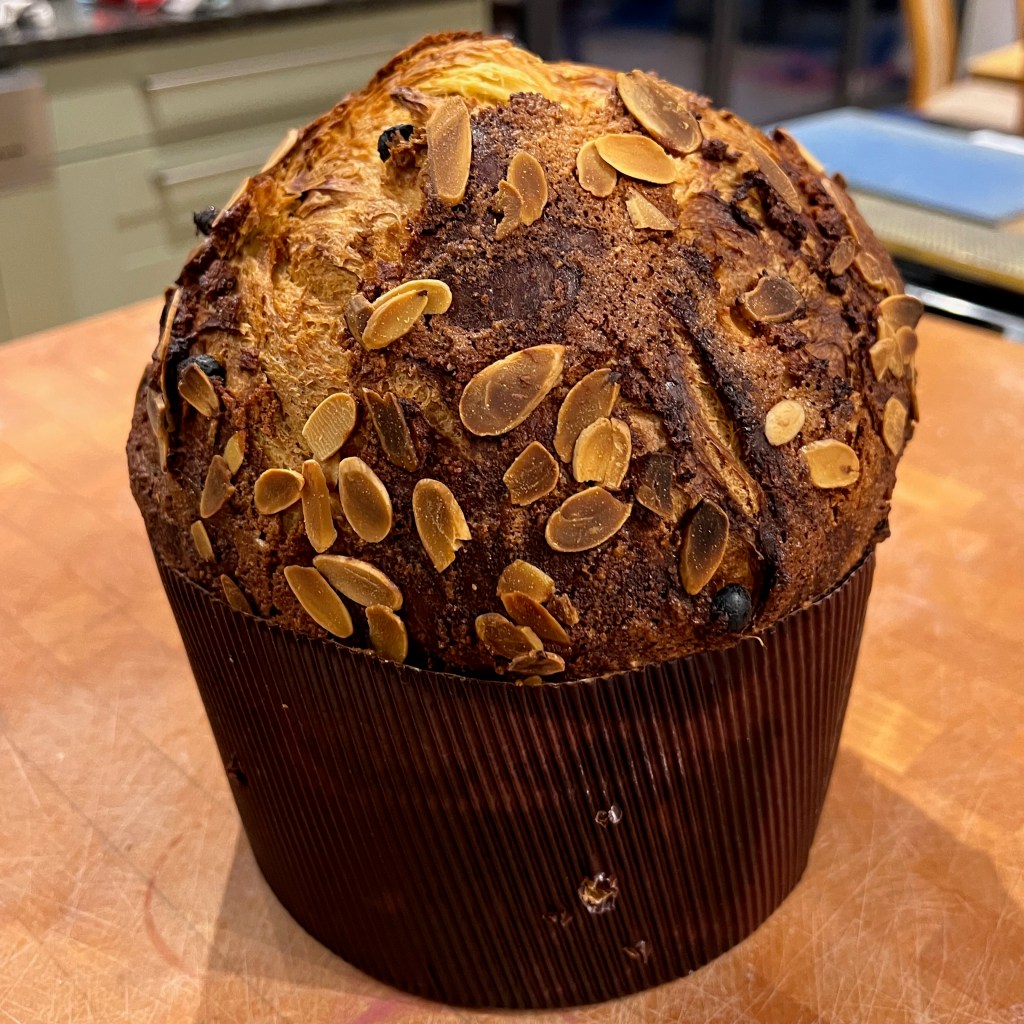
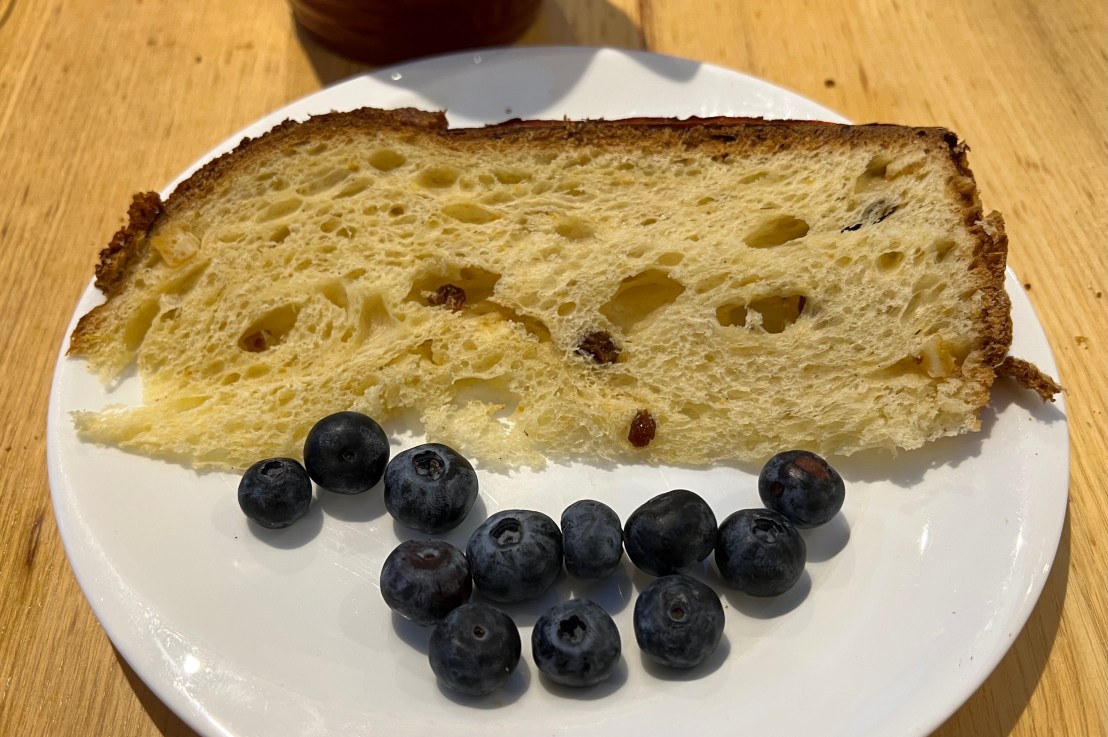
Christmas food in Italy is a whole lot more varied than in England, with all manner of different meats, fish, pasta dishes, cakes and biscuits (mercifully, the Italians don’t share our obsession with roast turkey). But there’s one thing that you’ll see at Christmas all over Italy: the cylindrical, sweetened, enriched bread called “Panettone” – the “big loaf”. Whenever I’ve been to a café in Italy at Christmas time, usually in or near Milan, the base of modern, industrial scale panettone manufacture and said to be its city of origin, piles of panettone pieces have been arrayed on the bar for everyone to nibble with their coffee. The aroma of citrus and vanilla in a bread of extreme fluffiness is unbeatable.

There are zillions of recipes, from the traditional candied fruit to those with more outlandish fillings: chocolate, hazelnut puree, tangerine paste, marrons glacés and so on. But there are a few things that distinguish a panettone from other breads/cakes of its type:

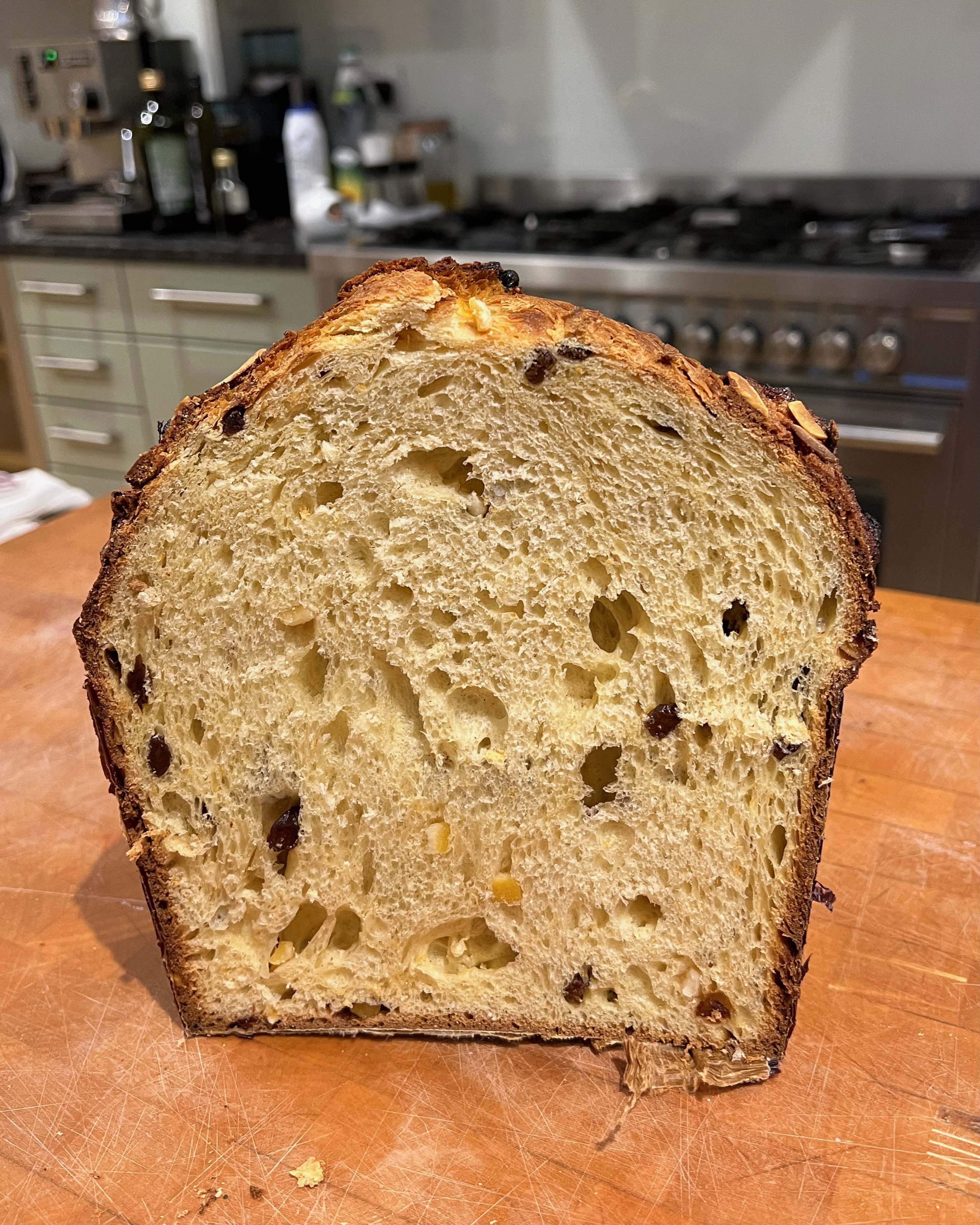
  • The dough is sweetened and enriched with egg yolks and butter, giving an overall flavour profile something like a brioche. But where you would try to get a brioche smooth and even in crumb, a panettone should be as aerated as you can make it: fluffiness is mandatory and large air pockets are completely acceptable.
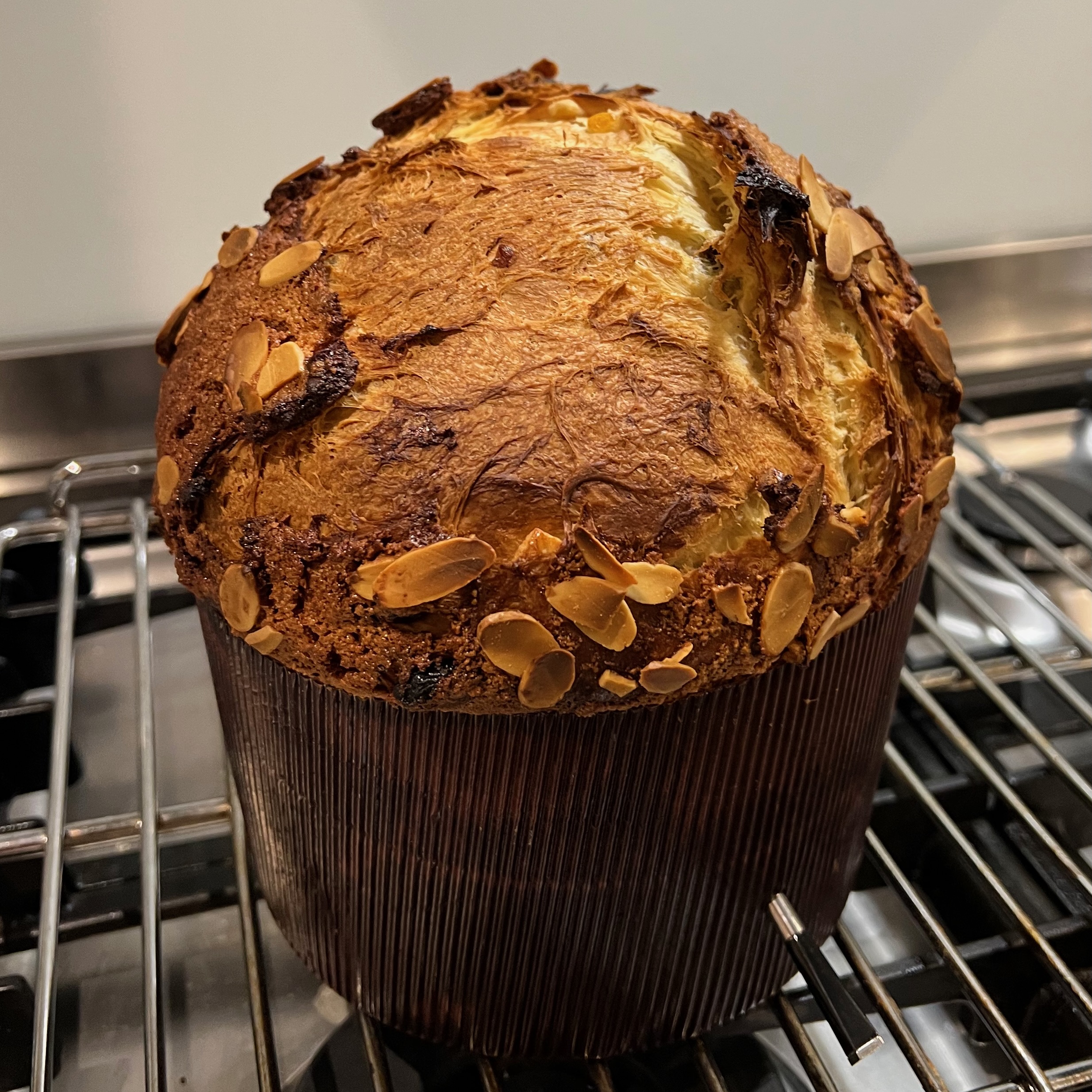
  • The loaf is baked in a cylindrical case or tin. Originally, the chances are that you’d have reused one of the large tins in which canned goods were sold, but today, you are more likely to go for a single-use paper case made specially for the purpose: these are inexpensive and readily available both in the UK and the US.
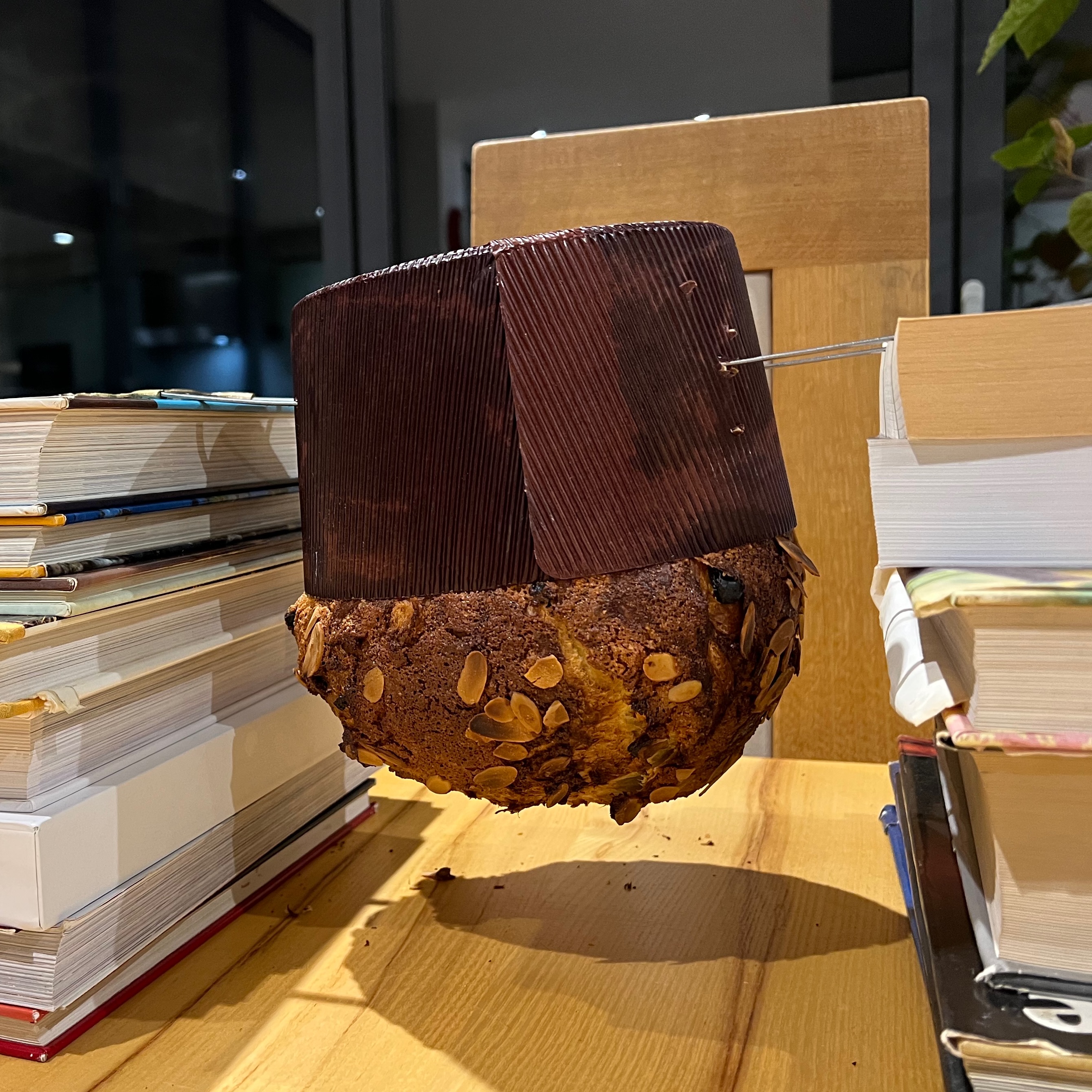
  • To prevent your loaf collapsing down the moment you take it out of the oven – the fate of most heavily aerated breads and cakes – a panettone is cooled upside down: instead of collapsing, it gains extra height and fluffiness.

Making panettone turns out to be something of a project: it’s going to take you most of a day as an absolute minimum, with some recipes calling for multiple resting and proving stages taking several days, in order to develop the flavour to its maximum. I went for an intermediate, starting with a sourdough “sponge” at 6pm on day 1 and getting the panettone out of the oven around 24 hours later, to be cooled and ready for breakfast the next morning.

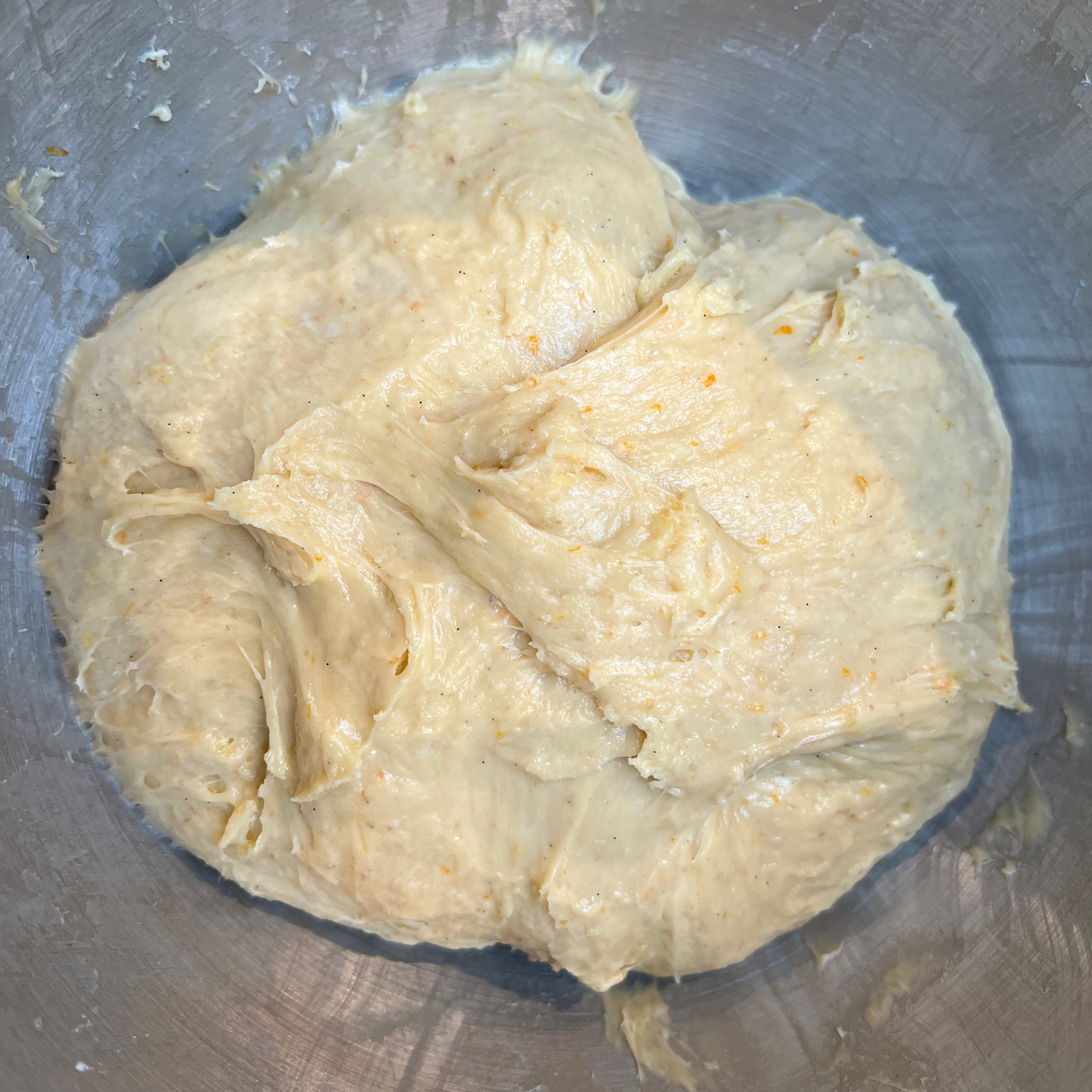
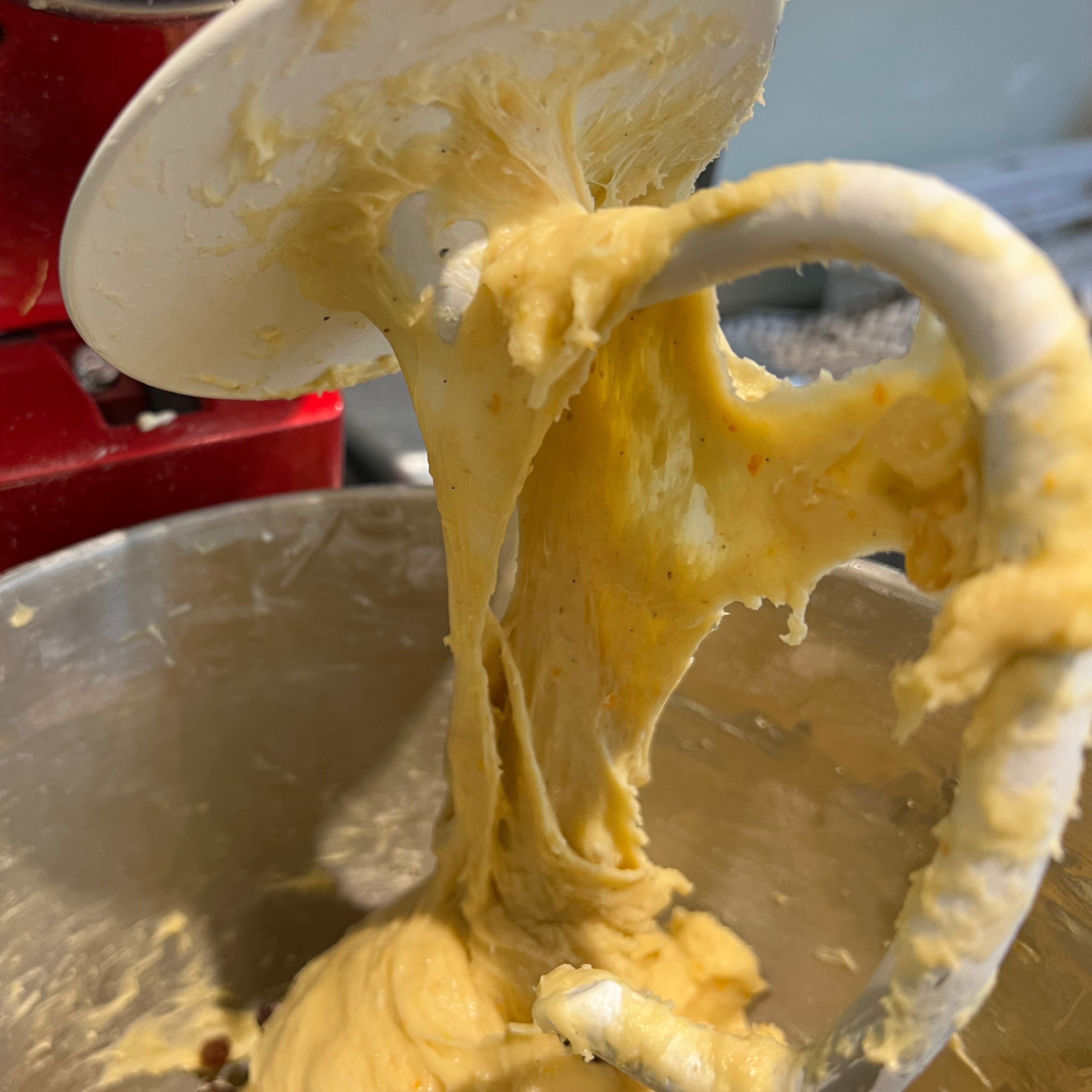
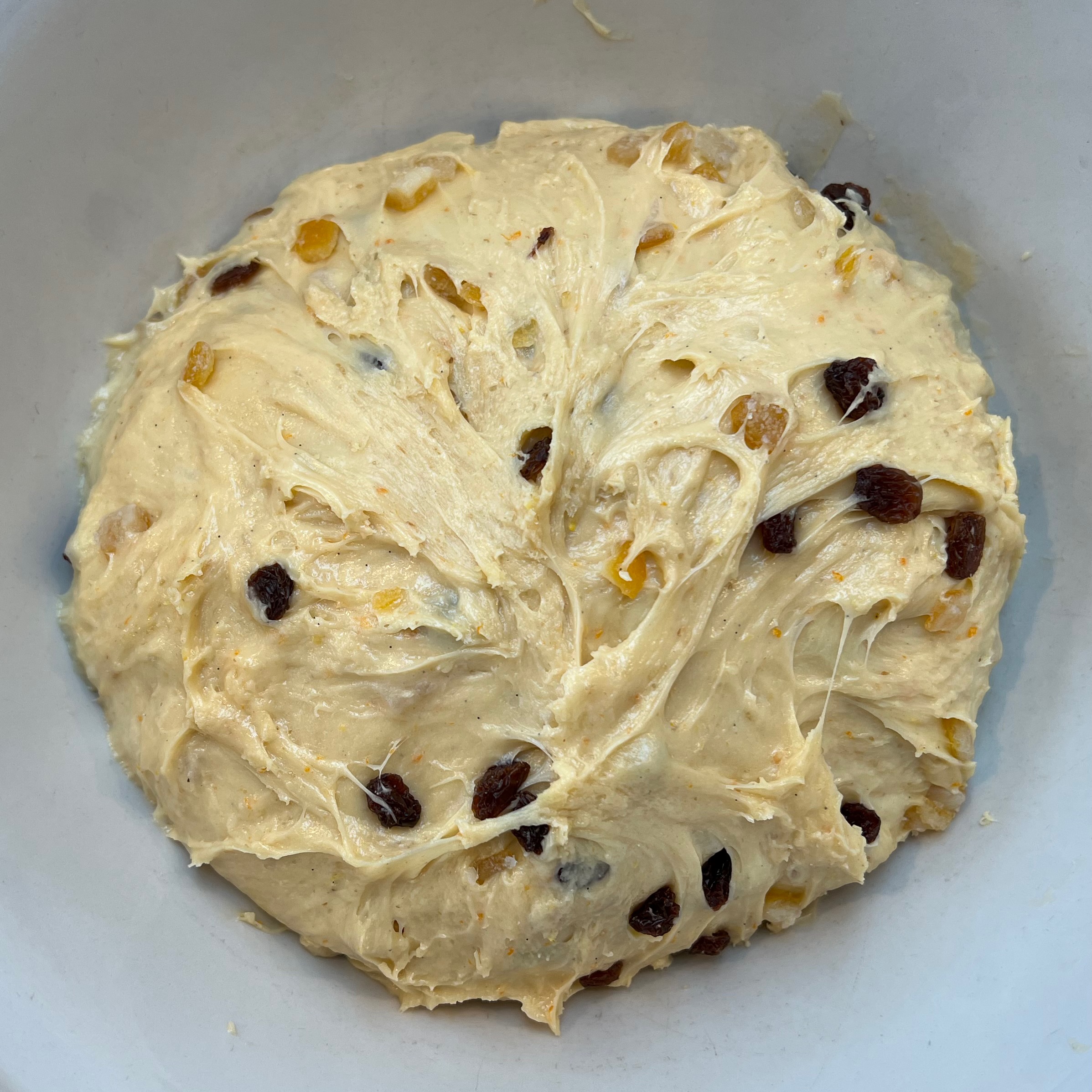
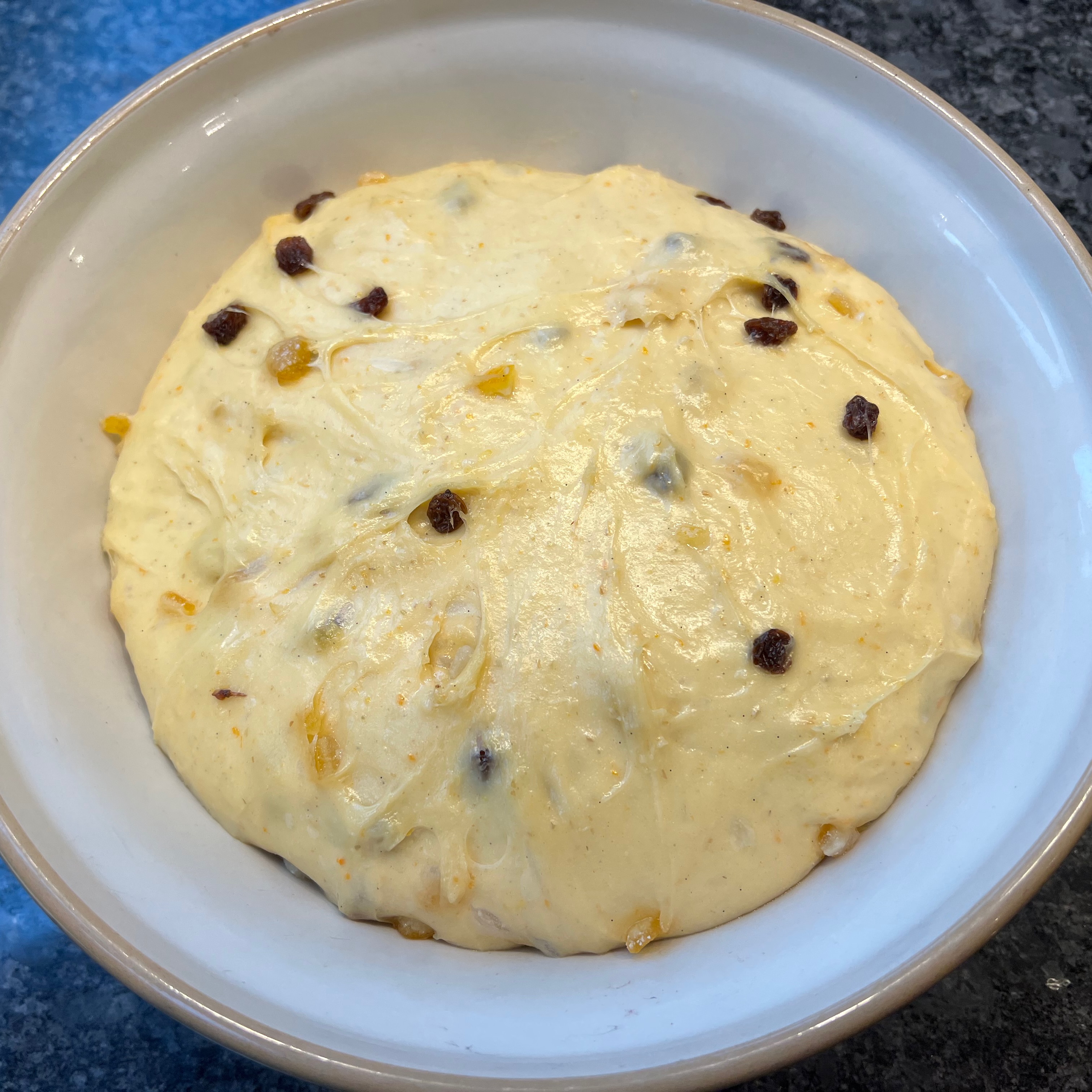
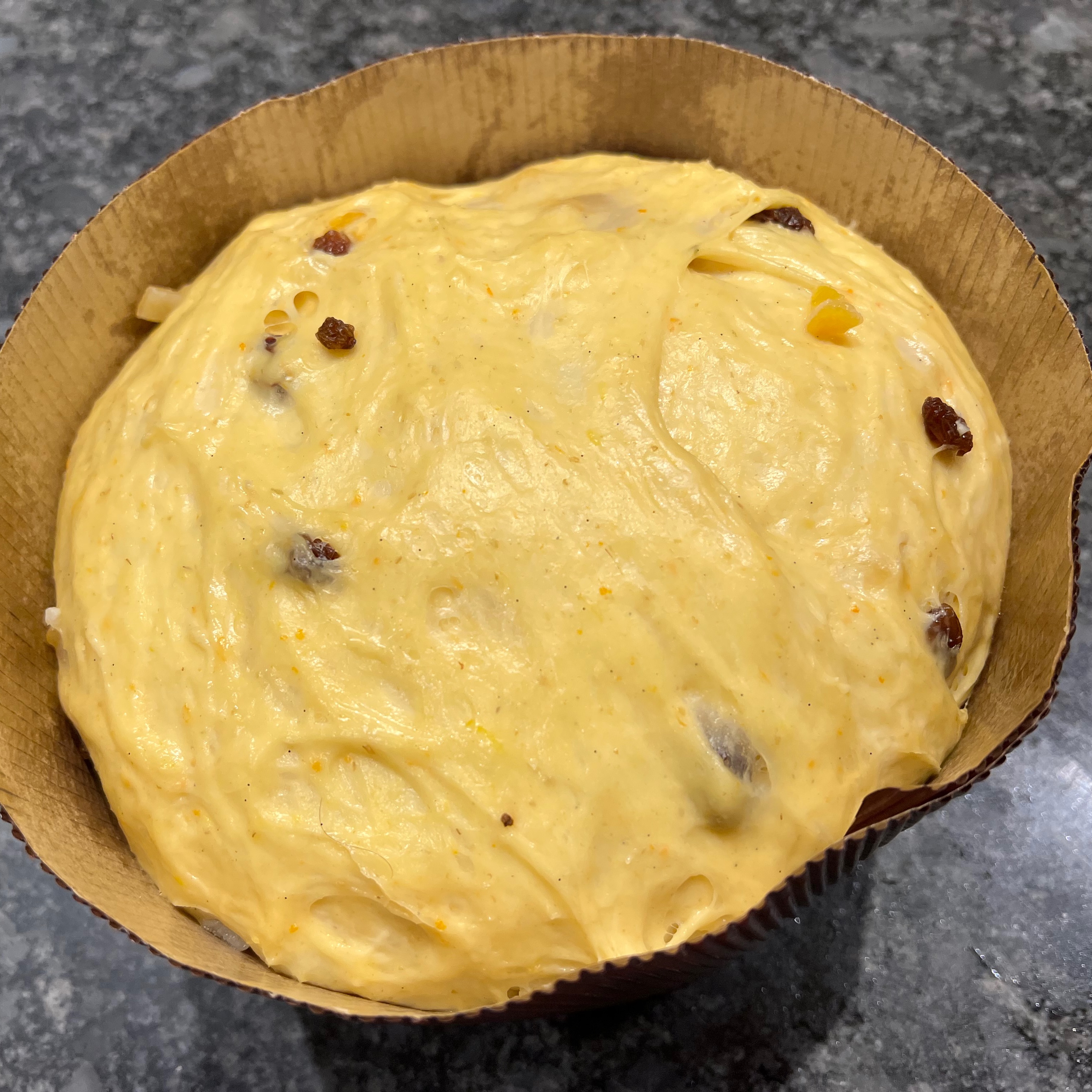
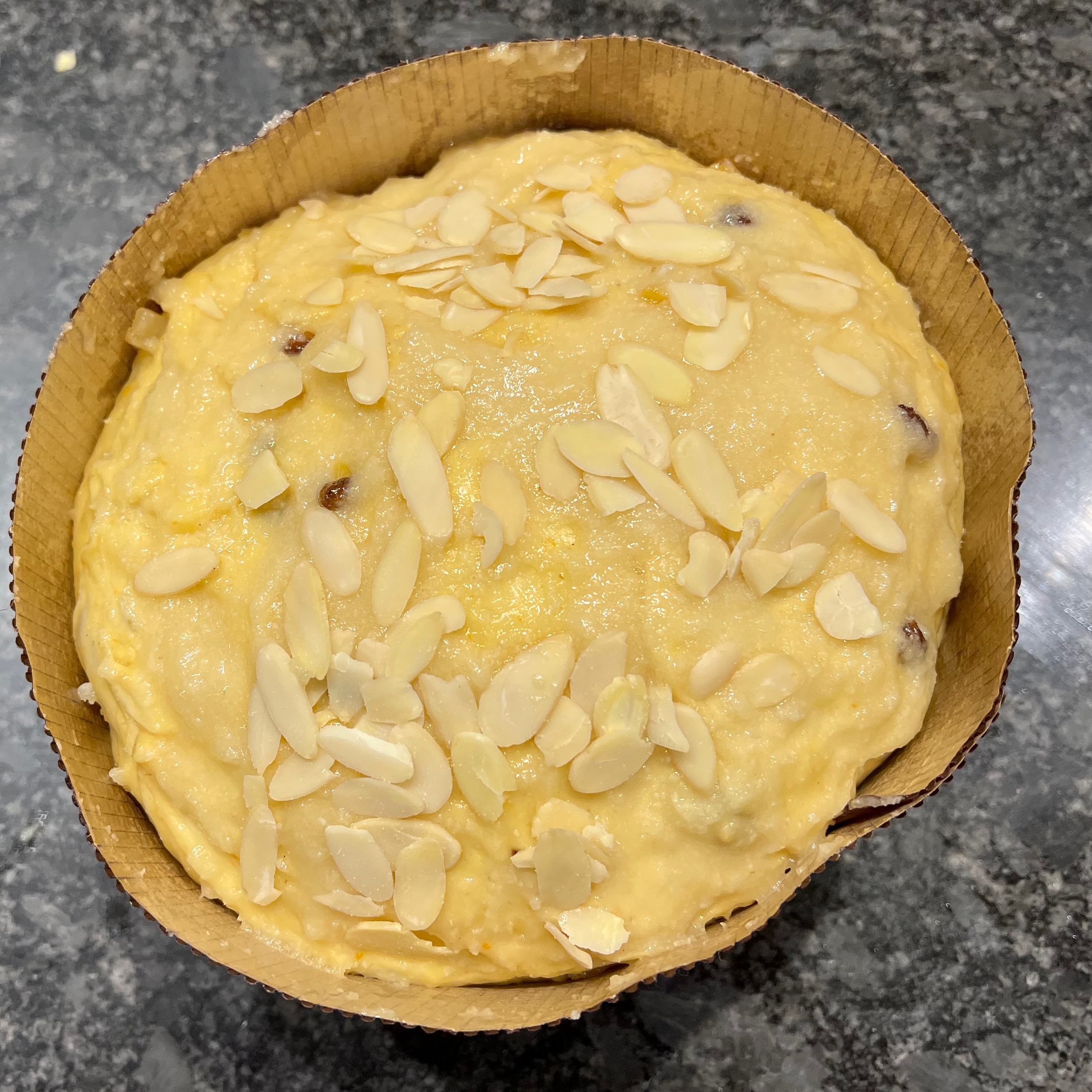
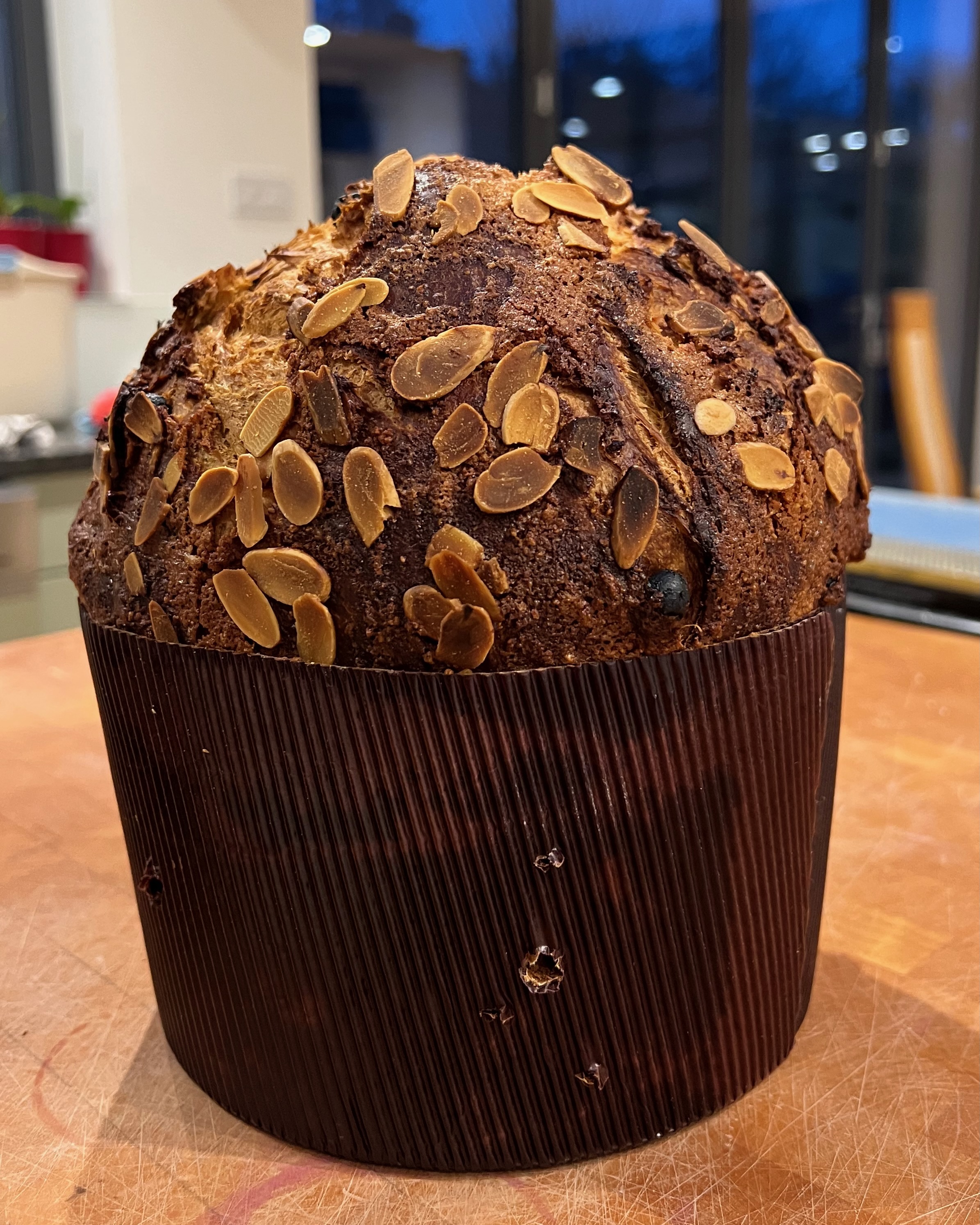
I ended up taking bits and pieces from several different recipes: Giallo Zaferrano, Great Italian Chefs, BBC Good Food. But rather than slavishly following a set of quantities and times, I relied more on getting the dough to look right at each stage, with my main reference being this video from chefsteps.com. You’ll see from the photos that my texture came out perfectly – I couldn’t have asked for better. However, my flavours beed adjusting for next time: I used a bit too much salt and not enough sugar and I was definitely too conservative about how much candied fruit to add. I’ve adjusted the quantities below to what I think I should have used (and will try for next Christmas).

Confession time: I was going by look and feel and not measuring all the quantities as accurately as usual. So if you’re going to try this, use your judgment.

Day 1, around 6pm: the sourdough sponge, part 1

  • 30g sourdough starter
  • 170g strong white flour
  • 130ml water
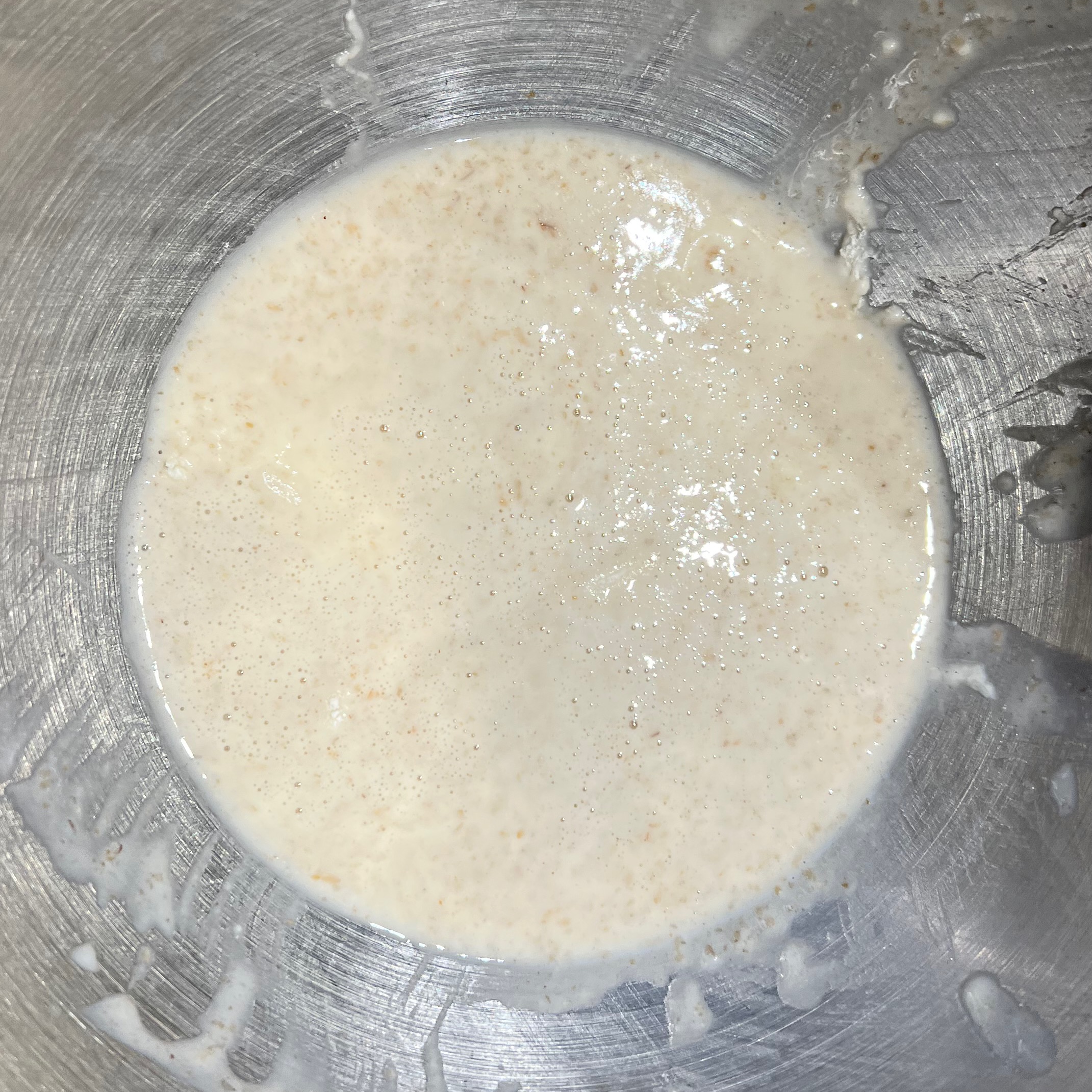
  1. Mix thoroughly the sourdough starter with 30g of the flour and 60ml of the water. Leave to ferment for around three hours.
  2. Add the rest of the flour and water, mix thoroughly then leave to ferment overnight.

Day 2, around 8am: the sourdough sponge, part 2

  • 100g strong white flour
  • 4g dried yeast
  • 100g yoghurt (any active yoghourt should do, buttermilk or kefir might be better)
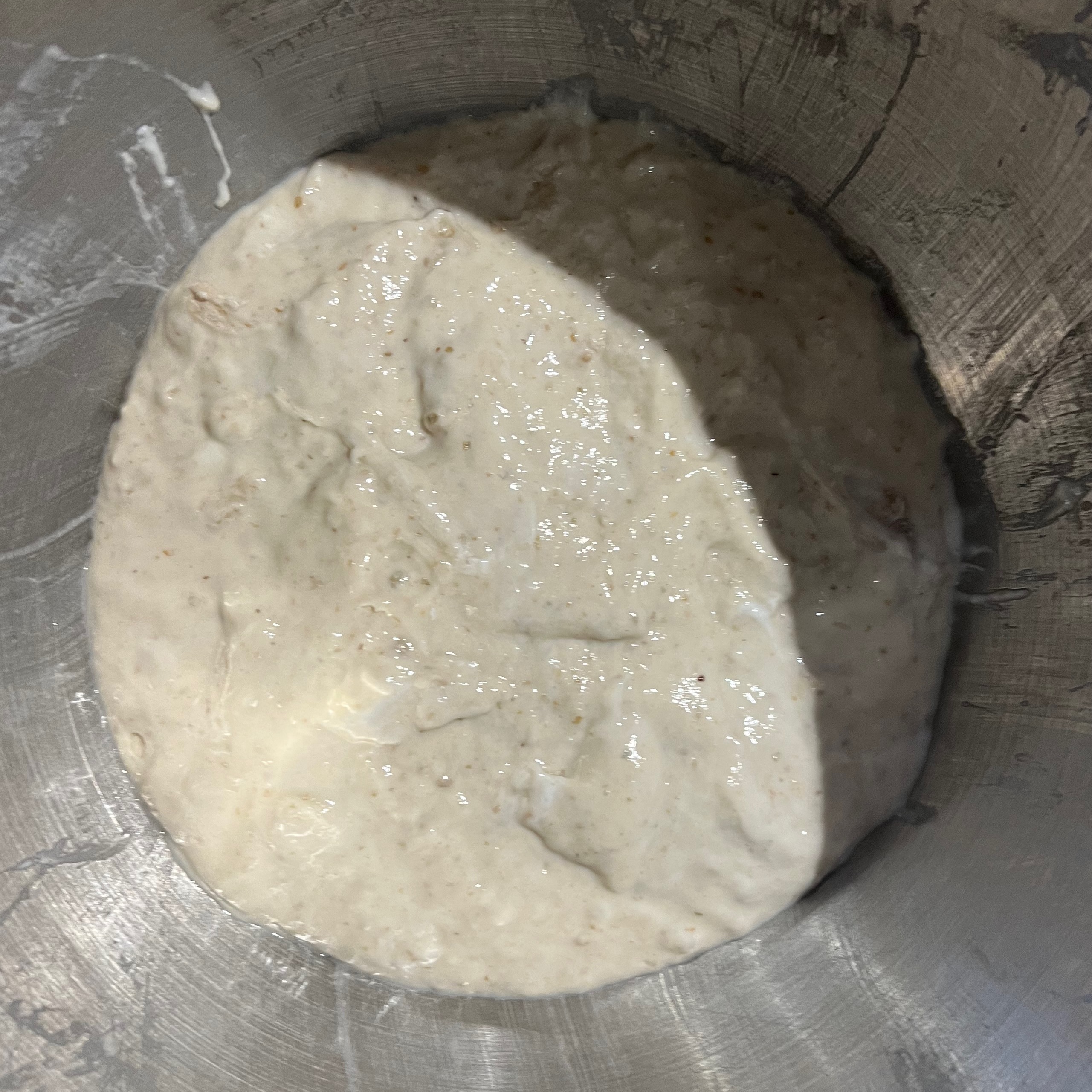
  1. Add all the ingredients to your sponge from the previous day, mix thoroughly and leave to rest until everything is bubbling nicely. This will depend on the ambient temperature: I left mine for around two hours in a place near my boiler which is around 30℃.

Day 2 mid-morning: make the dough

  • 400g flour (very approximate, do by feel of the dough)
  • 8 egg yolks, at room temperature (when you separate the eggs, keep a small amount of the white – you’ll use it for the glaze.
  • 200g caster sugar
  • 140g butter, at room temperature
  • zest of one orange
  • zest of one lemon
  • seeds scraped from one vanilla pod
  • 5g salt
  • 120g lemon peel
  • 120g sultanas
  1. If it didn’t start there, put your sponge into the bowl of your stand mixer. Add flour and egg yolks and knead using the dough hook for five minutes. Leave half an hour, then start kneading again, for perhaps another five minutes, until the dough is extremely elastic with the gluten very stretchy.
  2. Slowly add the sugar and continue mixing with the dough hook until throughly mixed in. The dough should loosen out as the sugar dissolves.
  3. Cut the butter into small cubes, perhaps 1cm on a side. Add the butter a little at a time, continuing to mix until it’s all incorporated. I found that the butter tended to clump around the side of the bowl, requiring me to stop mixing at regular intervals and scrape down the sides.
  4. Eventually, you should have a soft, silky dough whose gluten makes it stretch into thin sheets when pulled. Leave it to relax for ten minutes or so.
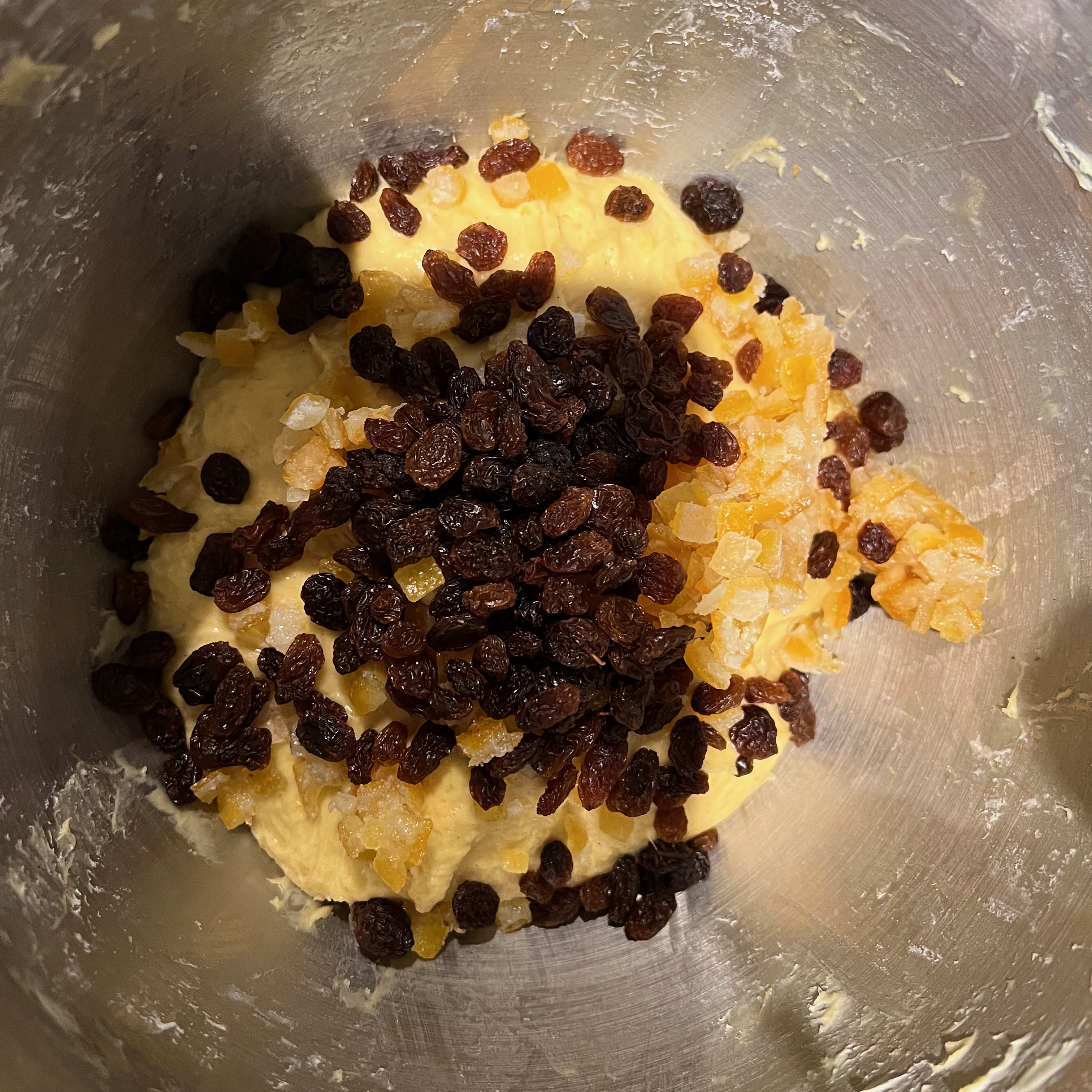
  5. Add the vanilla, the lemon and orange zest, the salt and the dried fruit, and carry on mixing until the fruit is nicely coated in dough – this is what will stop if from sinking to the bottom of your panettone during baking.
  6. Now leave to ferment until doubled or tripled in size – in my case, this took around three hours.

Day 2 mid-afternoon – stretch and fold

  • 1 panettone mould (or other cylindrical tin)
  • Oil spray
  1. Spray a non-absorbent work surface with oil; also spray your hands, your scraper and the surface of your dough.
  2. Transfer the dough to the work surface.
  3. Stretch the dough as far as you dare, then fold it over onto itself, trapping some air. Repeat a few times, respraying with oil as needed.
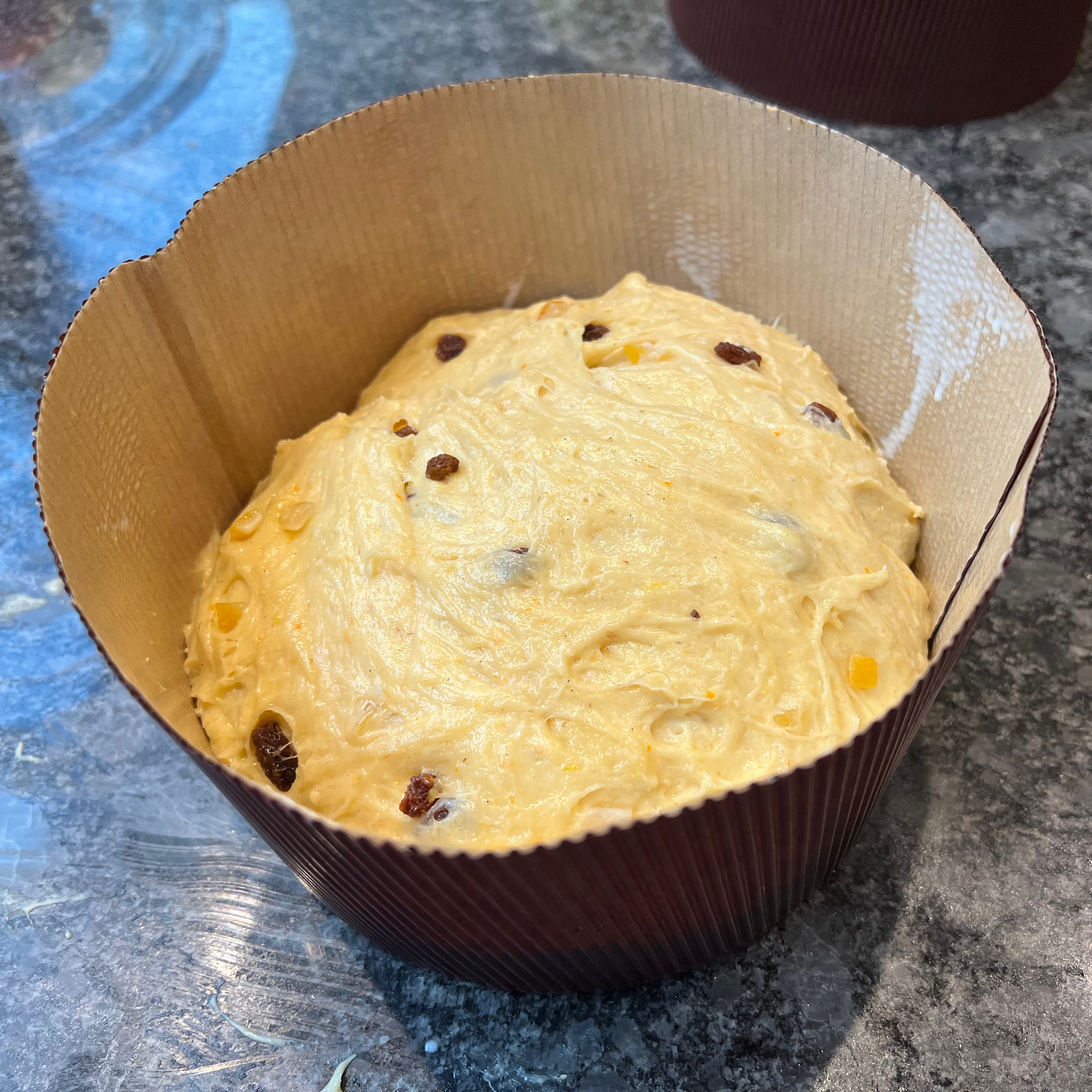
  4. Transfer the dough to your mould. It should reach half to 2/3 of the way up.
  5. Leave to rise. You’re hoping for the dough to reach close to the top of the mould, which will probably take at least an hour, maybe two. At some point during this, start heating your oven to 180℃ fan.

Day 2 early evening: glaze and bake

  • 20g egg white
  • 20g icing sugar
  • 20g ground almonds
  • 20g flaked almonds for topping – I’ve never liked the traditional topping of  “pearl sugar” which is often found on a shop-bought panettone, so I’ve just used the almonds. But you choose.
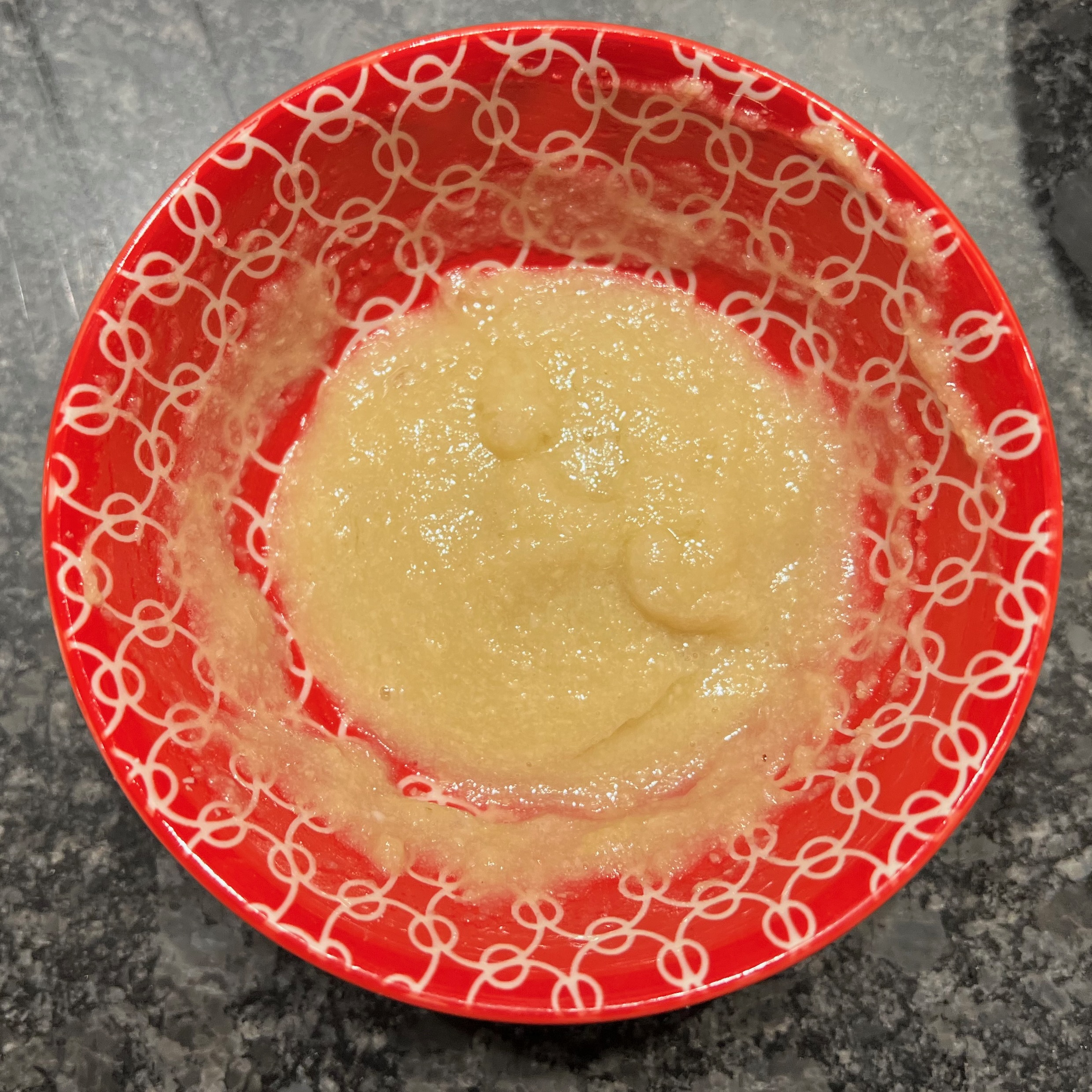
  1. In a small bowl, thoroughly mix the egg white, icing sugar and ground almonds to form a fairly thick, sticky glaze (add egg white if it’s too thick).
  2. Preferably with a silicone brush, paint the mixture carefully over the top of the panettone. Since the dough is very light an puffy at this point, you need to treat it gently: you really don’t want to be tearing holes in the surface right now.
  3. Scatter the ground almonds over the glazed panettone. You can press them in a tiny amount, but again, don’t risk tearing the surface.
  4. If you have an oven-proof temperature probe, insert it into the middle of the loaf and bake until the internal temperature reaches 94℃. I use one called a “Meater”, which is intended for meat cookery but works well for this.
  5. If you don’t have a temperature probe, you’ll have to guess: bake for around 40 minutes and then poke a skewer in through the side to look for signs of dough that’s still wet. Mine took just short of 50 minutes total, in an oven that was supposedly set to 175℃ but was actually running at 180.
  6. When the panettone comes out the oven, hang it upside down to cool for at least 12 hours before serving. There are various ways of doing this: most involve knitting needles or, in my case, Turkish kebab skewers. As you’ll see from the photos, I poked two skewers through the loaf and balanced the whole lot on a pair of towers of cookbooks. It was rustic, but it worked.

If you get this far and have a lovely dome reminiscent of the cupola of the cathedral in Milan, bravo!

Around the world in 80 bakes, no.75: back in England for Bakewell Tart

Around the world in 80 bakes, no.75: back in England for Bakewell Tart

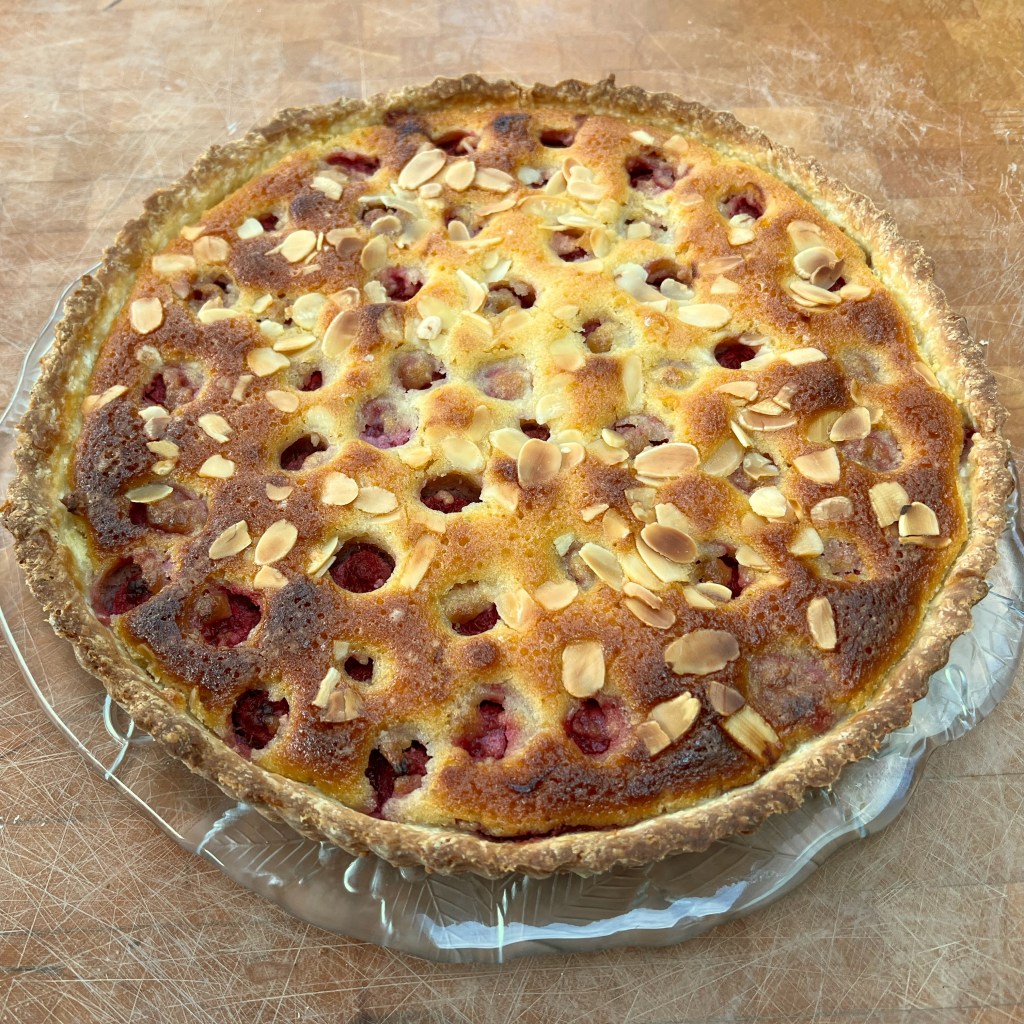
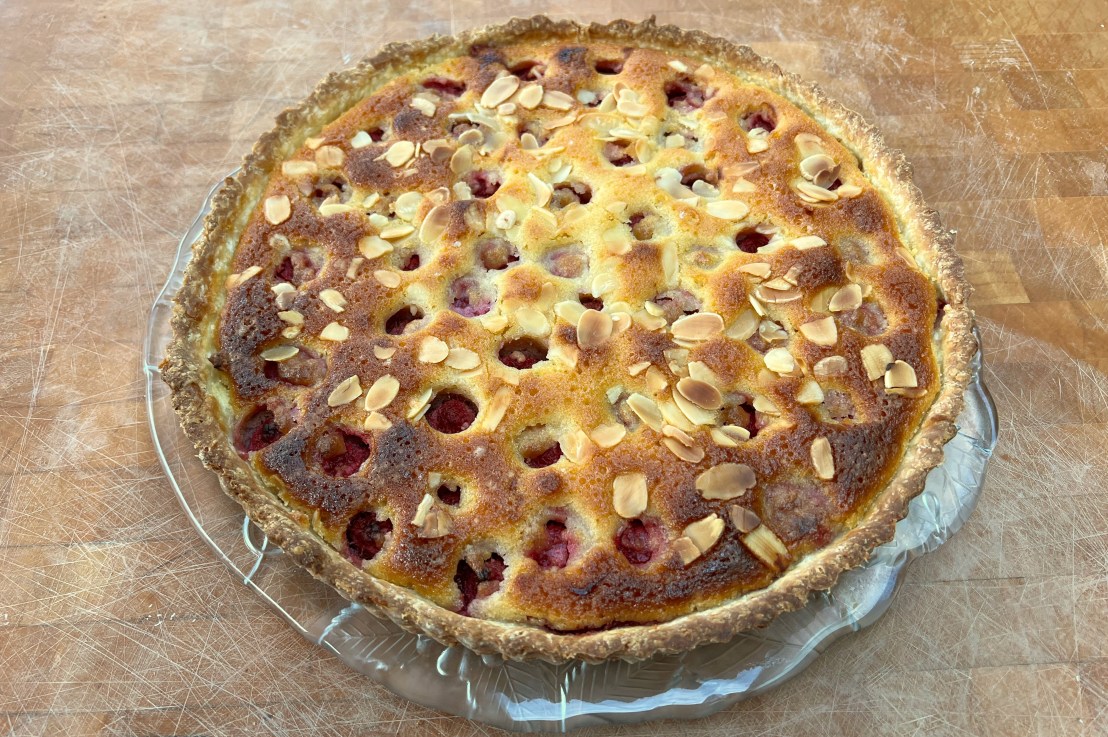
It’s not really obvious why the picturesque Derbyshire market town of Bakewell (population 3,949 at the last census) should have become known as the home of England’s most famous tart. The dessert that bears its name didn’t even start out as a tart – the “Bakewell Pudding” starts to appear in recipes in the early 1800s (there are arguments as to exactly when) and then morphs into its present pastry-fruit-and-frangipane form around the turn of the 20th century. Perhaps it’s just down to the name.

The ubiquitous mass-produced “iced cherry Bakewell” would not make a fit subject for a blog post. But Nigella Lawson’s classic How to Eat has a fabulous recipe for Bakewell Tart. It may owe rather more to French patisserie than to what you’d find in a pastry shop in the village, but it really captures the Bakewell Tart’s almond-and-raspberry loveliness and has been a favourite in my family for years. I’ve changed a few things – mine is a little less sweet and the pastry technique is slightly different (actually based on another recipe in the same book), which I find makes more elastic pastry that’s less prone to tearing. But if you buy the book and make the original, that will work perfectly well too.

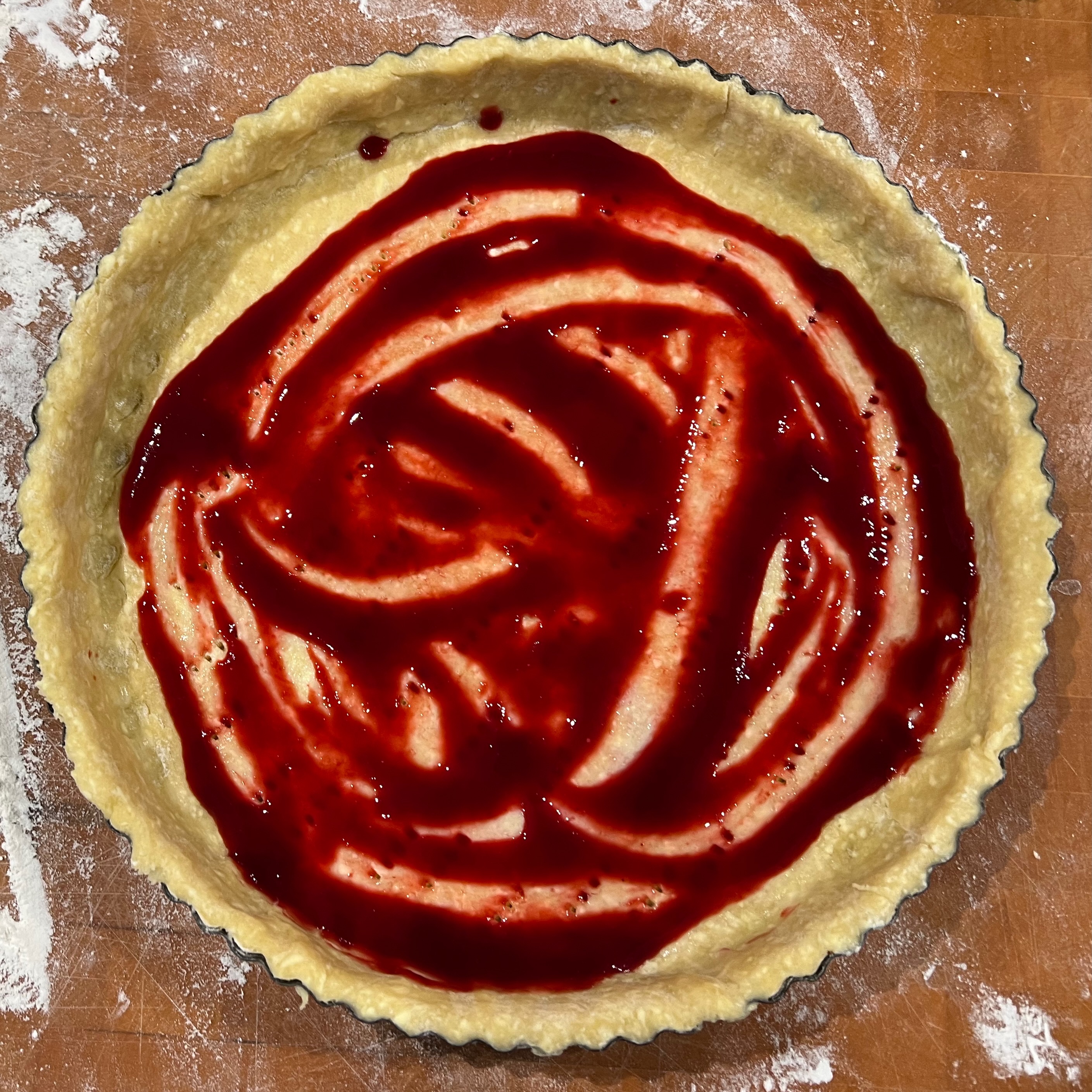
If your raspberries aren’t all that sweet (this is December, so mine very much weren’t), you’ll want some extra raspberry jam or, as I’ve done here, use some raspberry coulis made from raspberries cooked down with a bit of sugar and cooled (I happened to have some left over from a previous dessert).

The pastry

  • 200g plain flour (preferably OO grade), plus more for rolling
  • 40g icing sugar
  • 60g ground almonds
  • 60g butter, cold
  • 2 Eggs
  • Juice of half a lemon
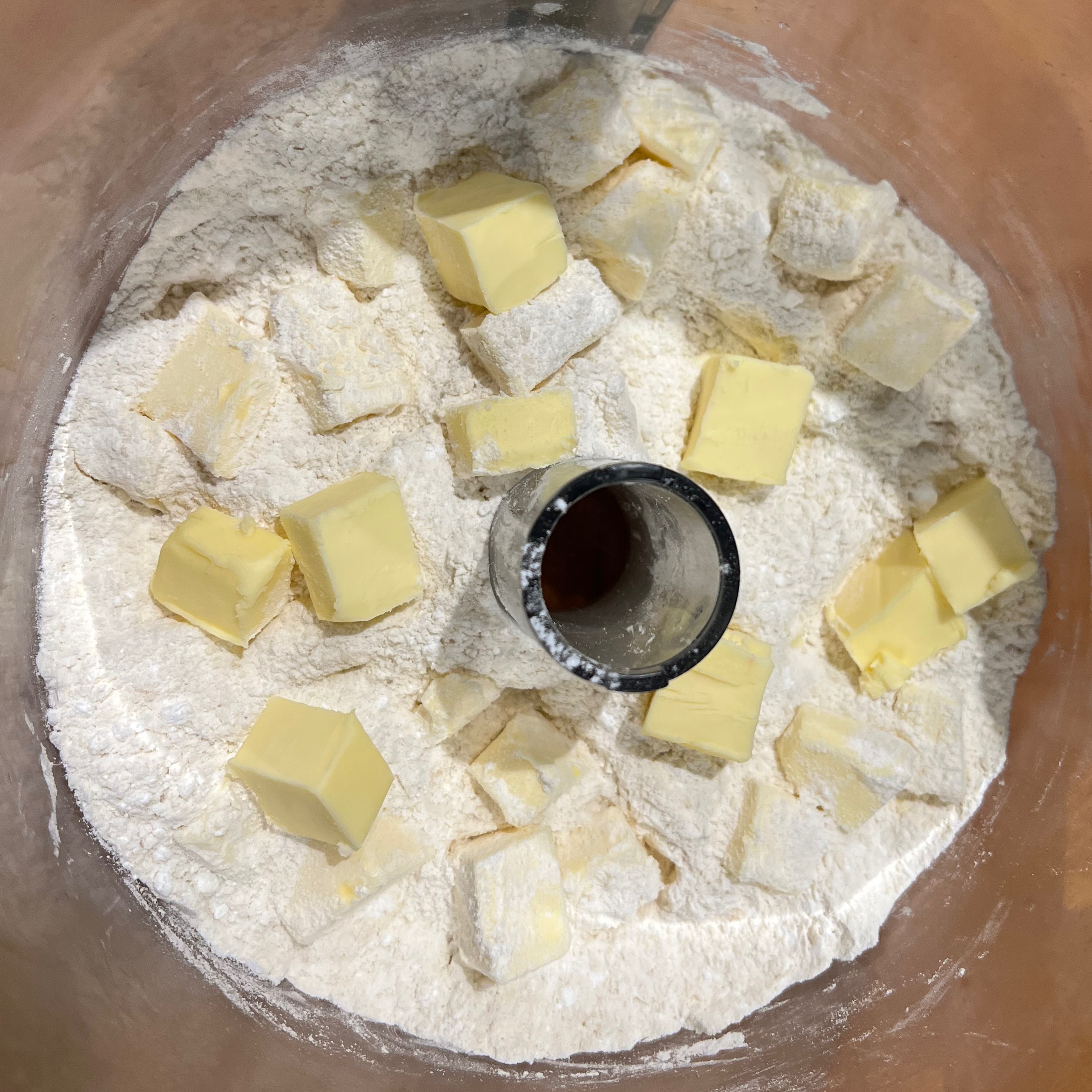
  1. Put the flour, icing sugar and ground almonds into the bowl of your food processor.
  2. Cut the butter into small cubes (perhaps 5-10mm)  and add to the bowl.
  3. Put the bowl in the freezer for at least half an hour.
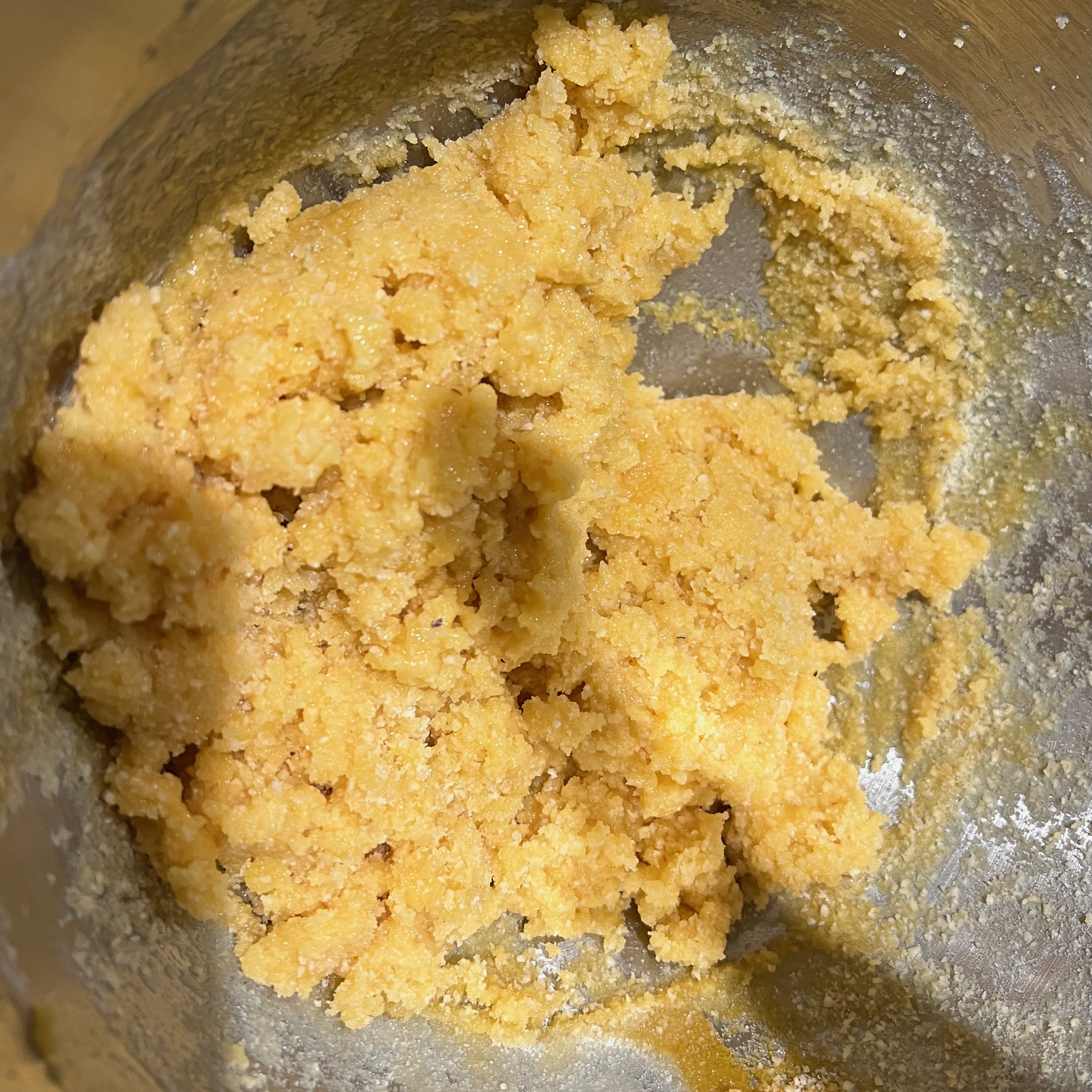
  4. Remove the bowl from the freezer and blitz to a fine, sandy texture.
  5. Beat together the eggs and lemon juice, add to the bowl and pulse for a short time to blend in.
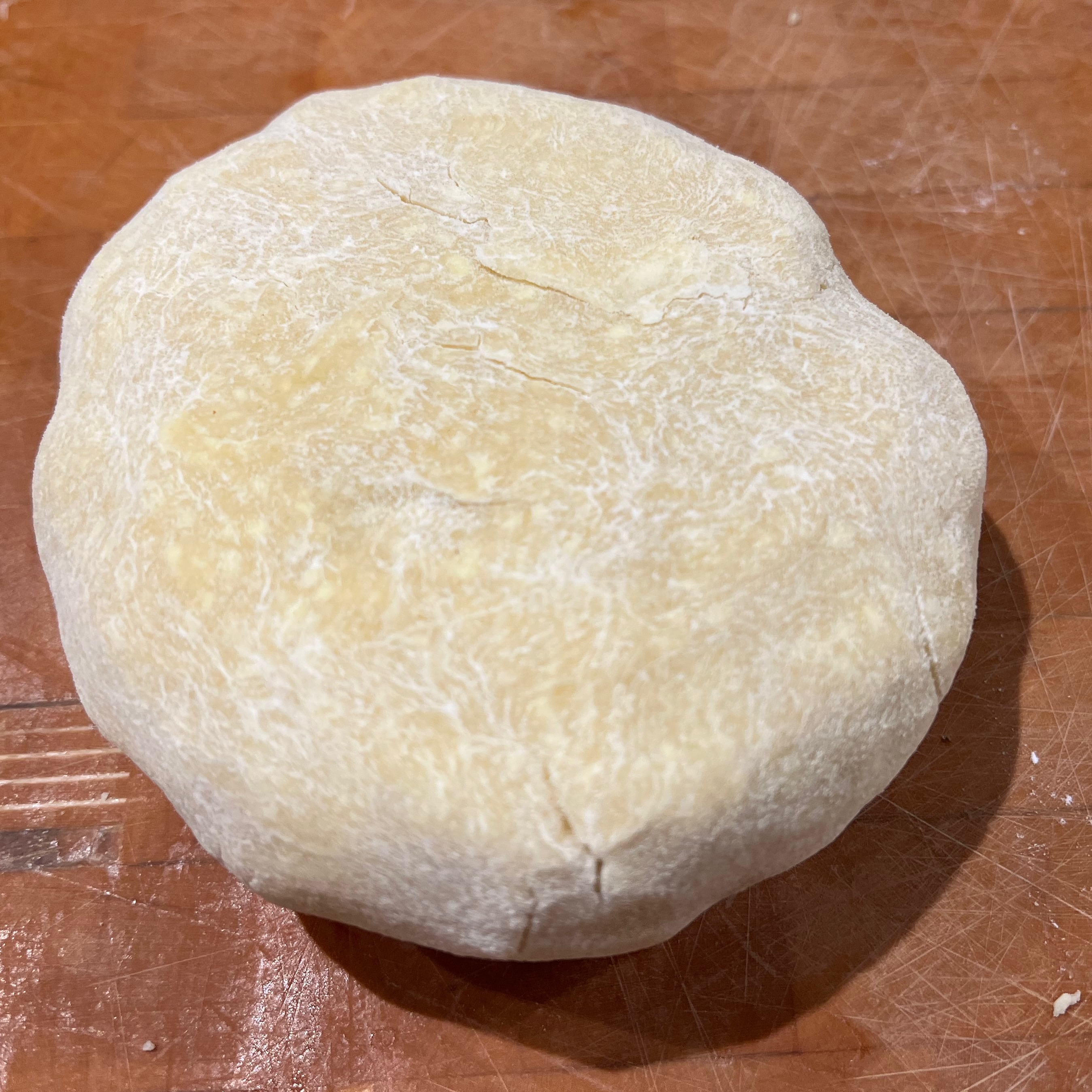
  6. Pour the contents onto a surface, bring it together into a ball, knead it a few times, flatten, wrap it in cling film and leave to rest in the refrigerator for at least half an hour.
  7. Grease a tart tin (the quantities here do a 27-30cm tin).
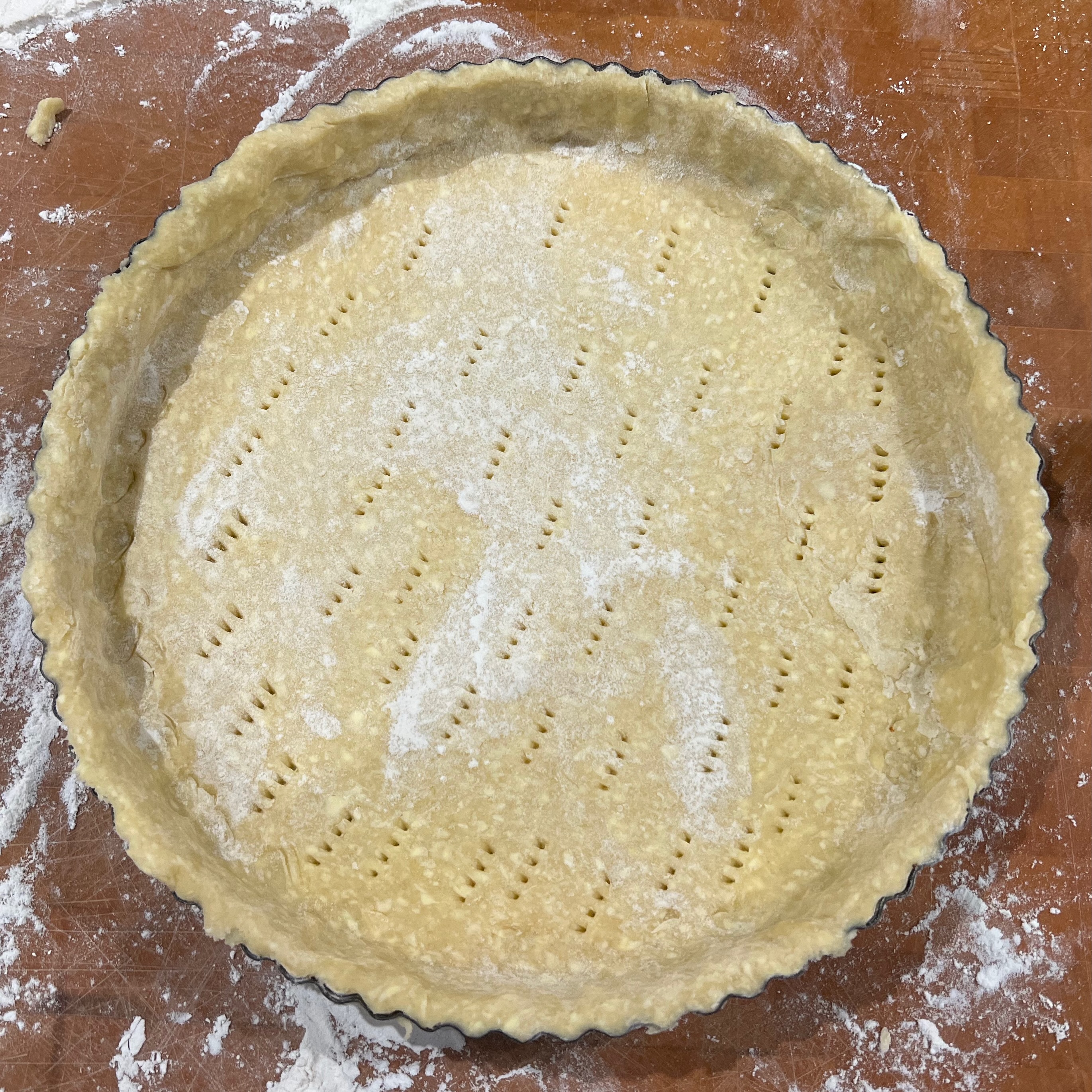
  8. Flour your board and rolling pin; roll out the pastry to a diameter several centimetres larger than your tin, then line the tin with the pastry.
  9. Put the tart in its tin back into the refrigerator until you’re ready to assemble it.

The frangipane filling

  • 3 large eggs
  • 180g caster sugar
  • 180g ground almonds
  • 180g butter, melted
  1. Put the eggs into the bowl of your stand mixer, setting aside half an egg white for use brushing the pastry.
  2. Mix the eggs, caster sugar and almonds
  3. When you’re sure the butter is cool enough not to scramble the eggs, mix it in thoroughly

Putting it all together

  • 300g raspberries
  • 70g raspberry jam or coulis (omit this if the raspberries are sweet)
  • Flaked almonds for sprinkling (I used around 25g)
  • Optional: 100ml or so whipped cream
  1. Preheat oven to 175℃ fan
  2. Prick the pastry base with a fork
  3. Brush the base with your reserved egg white: this helps to stop the jam and/or filling seeping into the pastry with the resulting dreaded “soggy bottom”.
  4. If you’re using the jam or coulis, spread it over as evenly as you can manage.
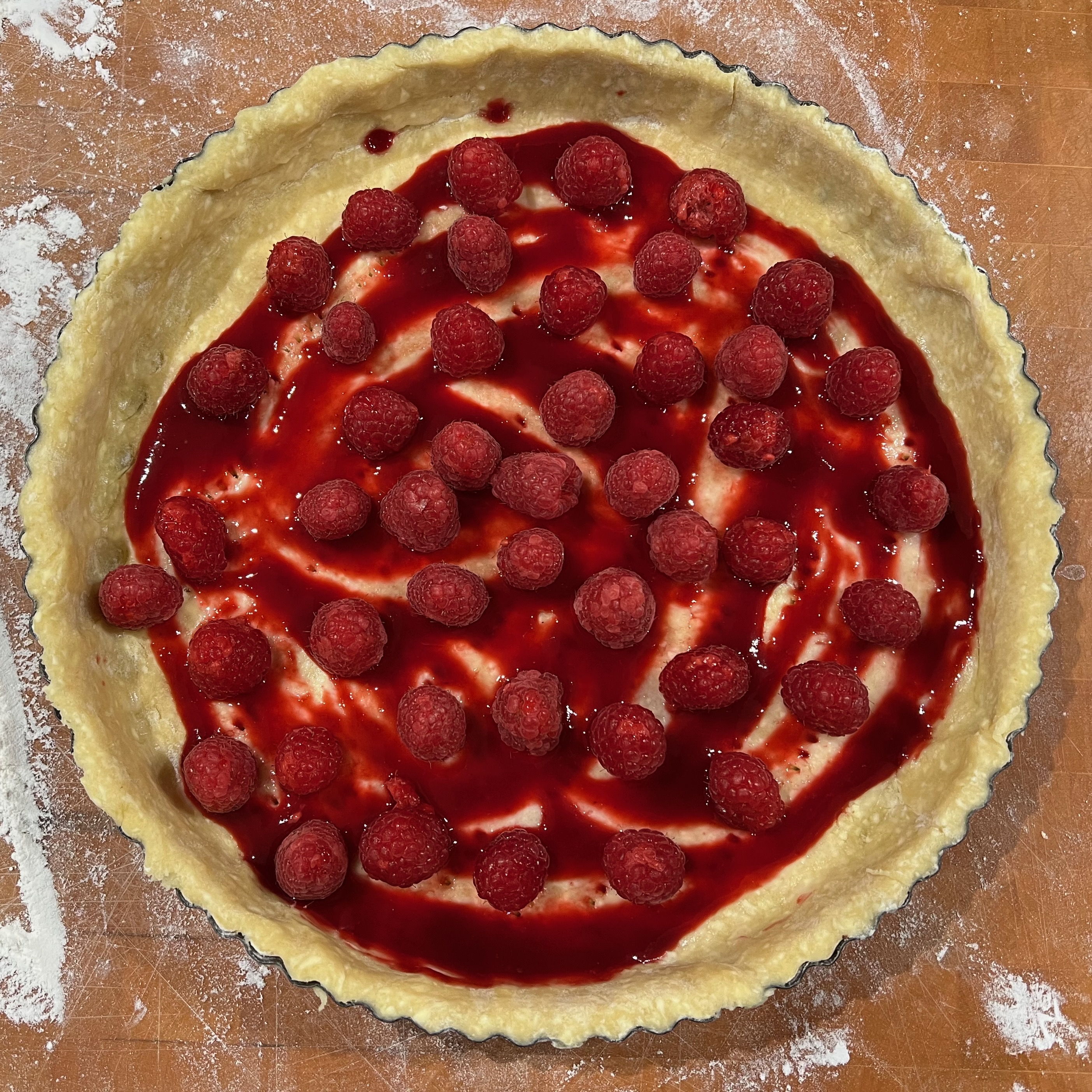
  5. Dot the raspberries evenly around the whole of the tart base.
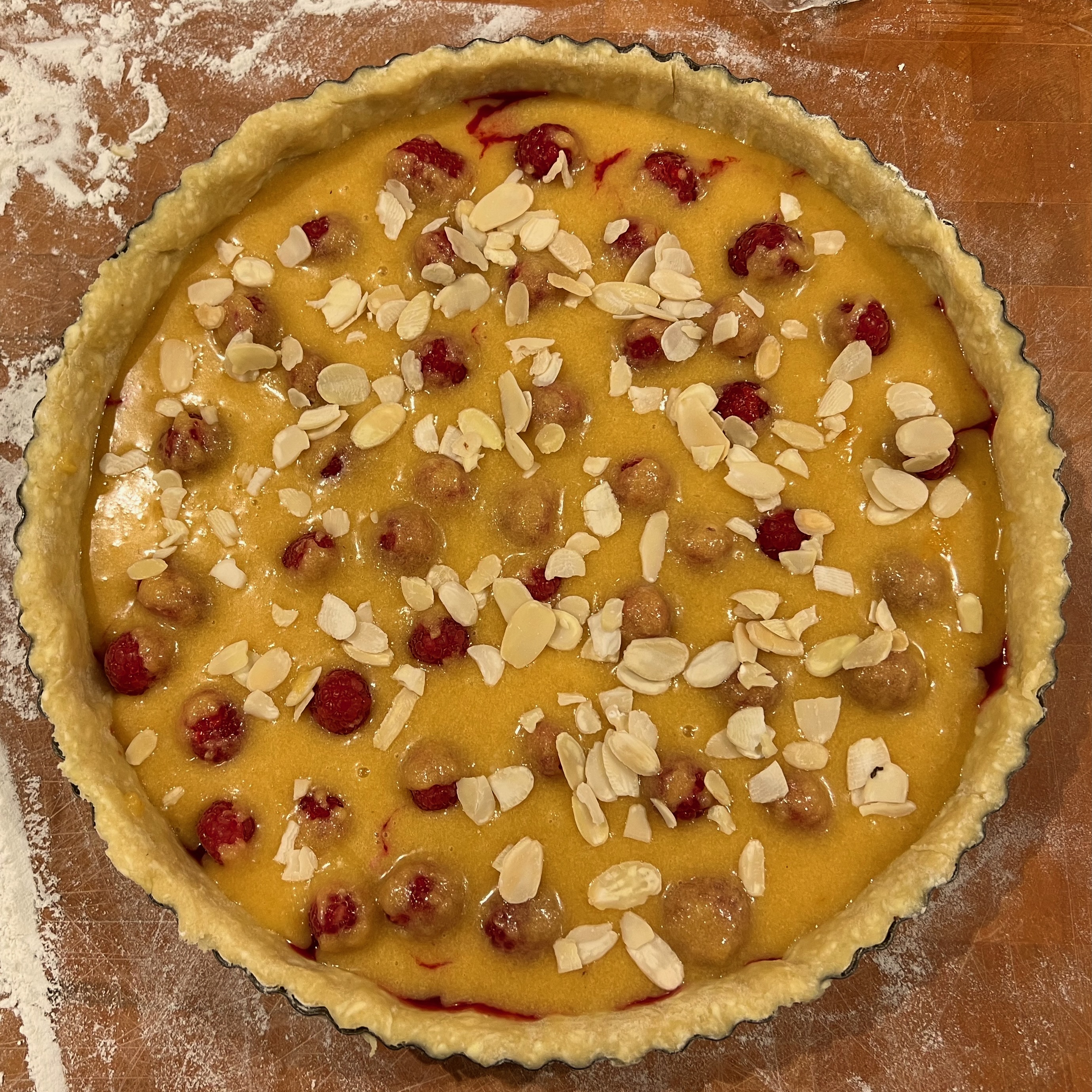
  6. Pour the frangipane mixture evenly over the tart base and raspberries. You may need to tilt or shake the tart slightly to get everything reasonably level.
  7. Scatter flaked almonds over the top.
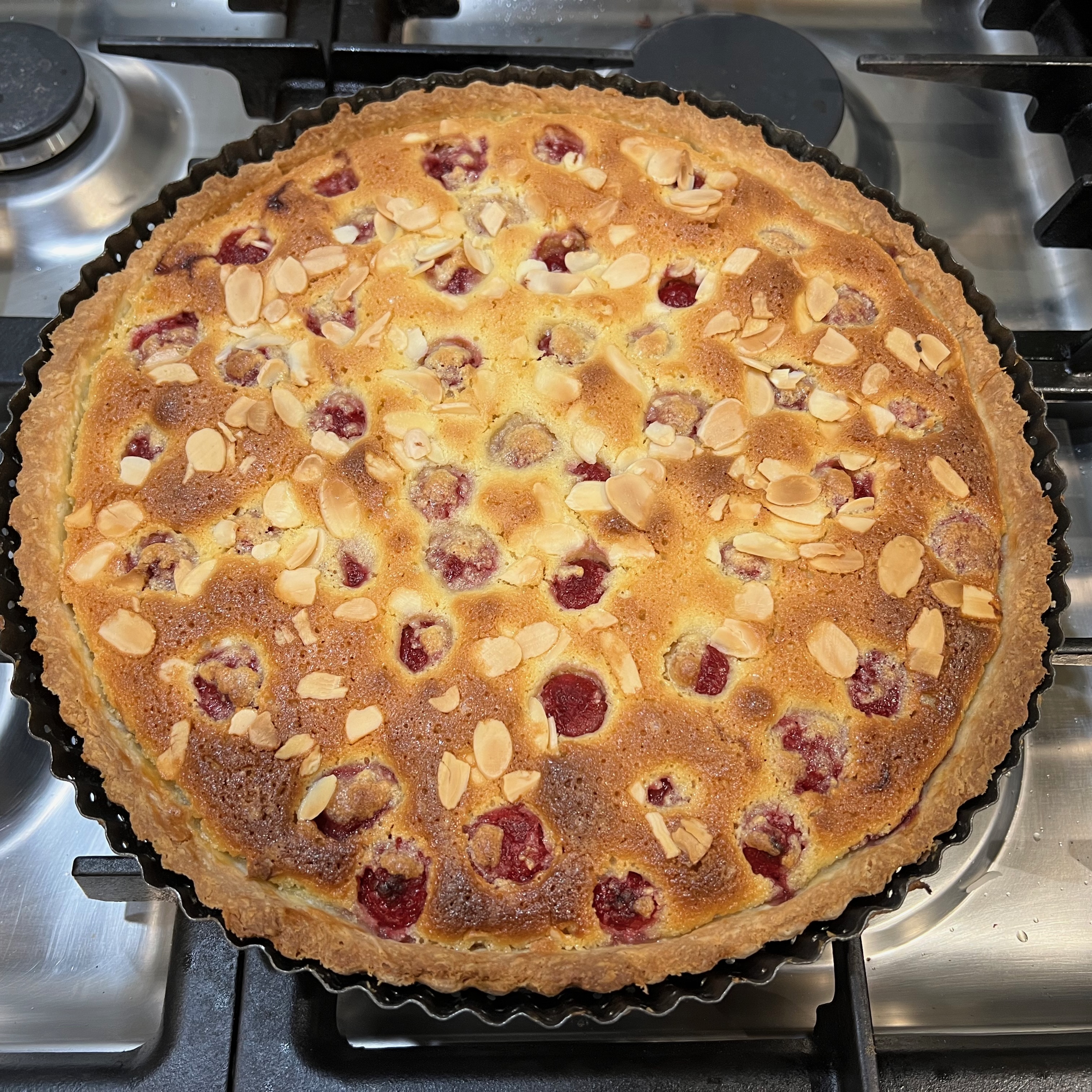
  8. Bake until golden brown, around 35 minutes.
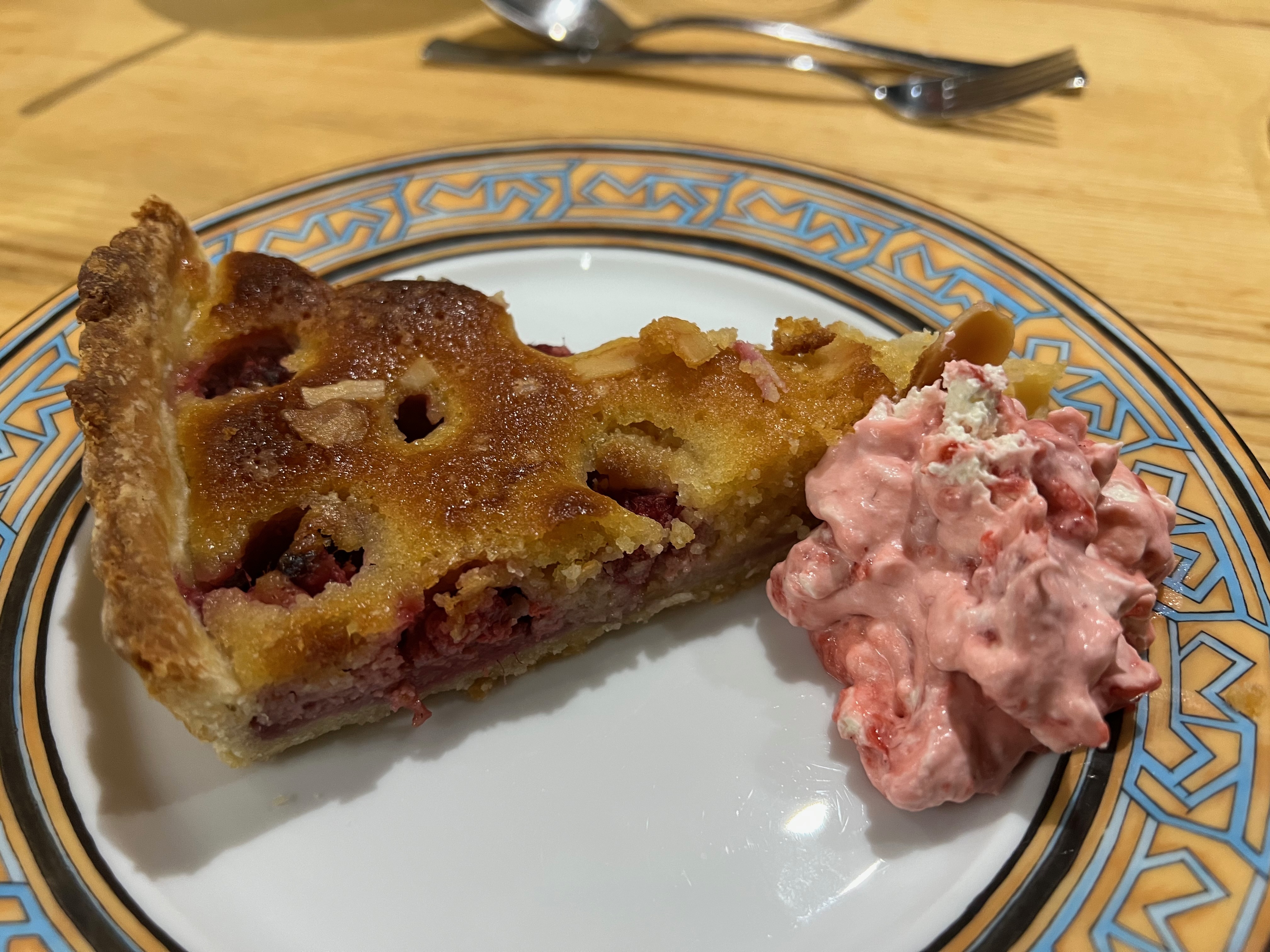
  9. Cool and serve. Whipped cream with a dollop of raspberry jam folded lightly through it makes a nice accompaniment.
Around the world in 80 bakes, no.72: Tarte Tatin from France

Around the world in 80 bakes, no.72: Tarte Tatin from France

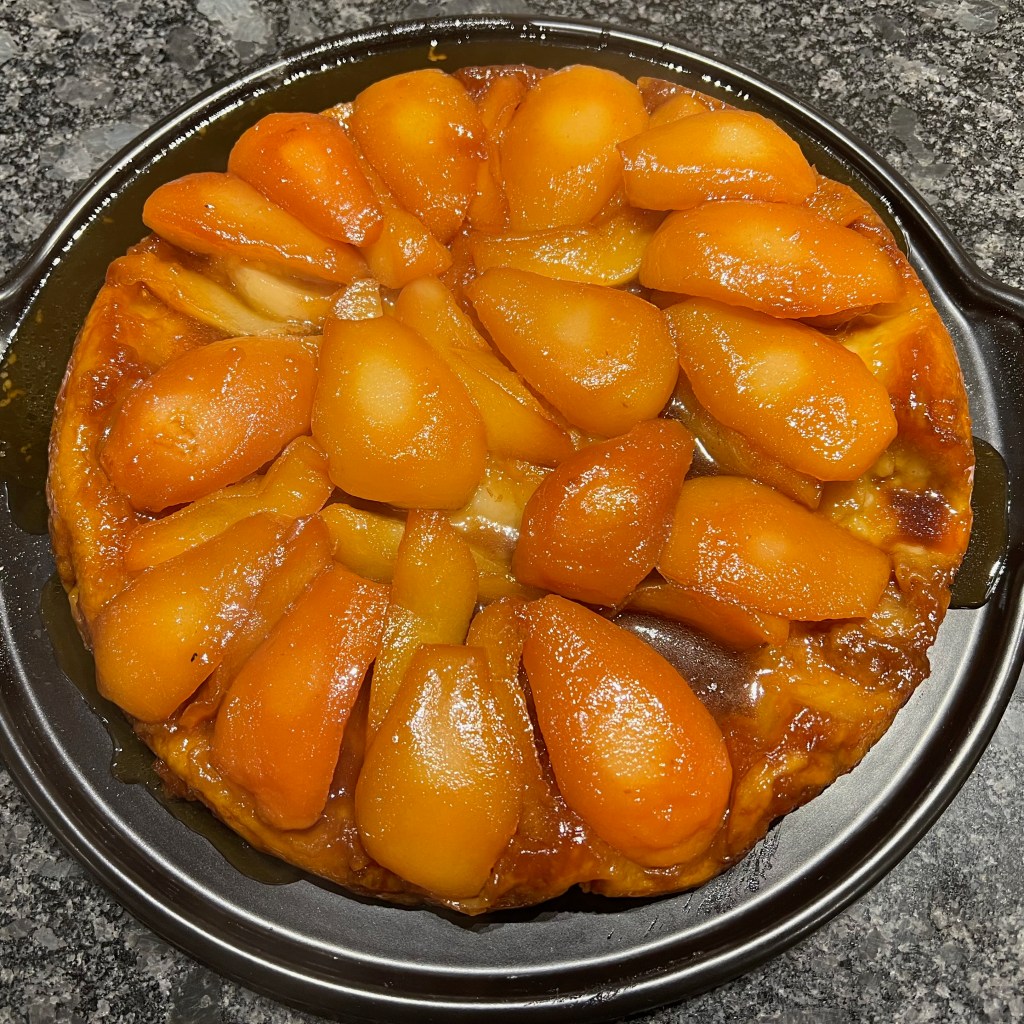
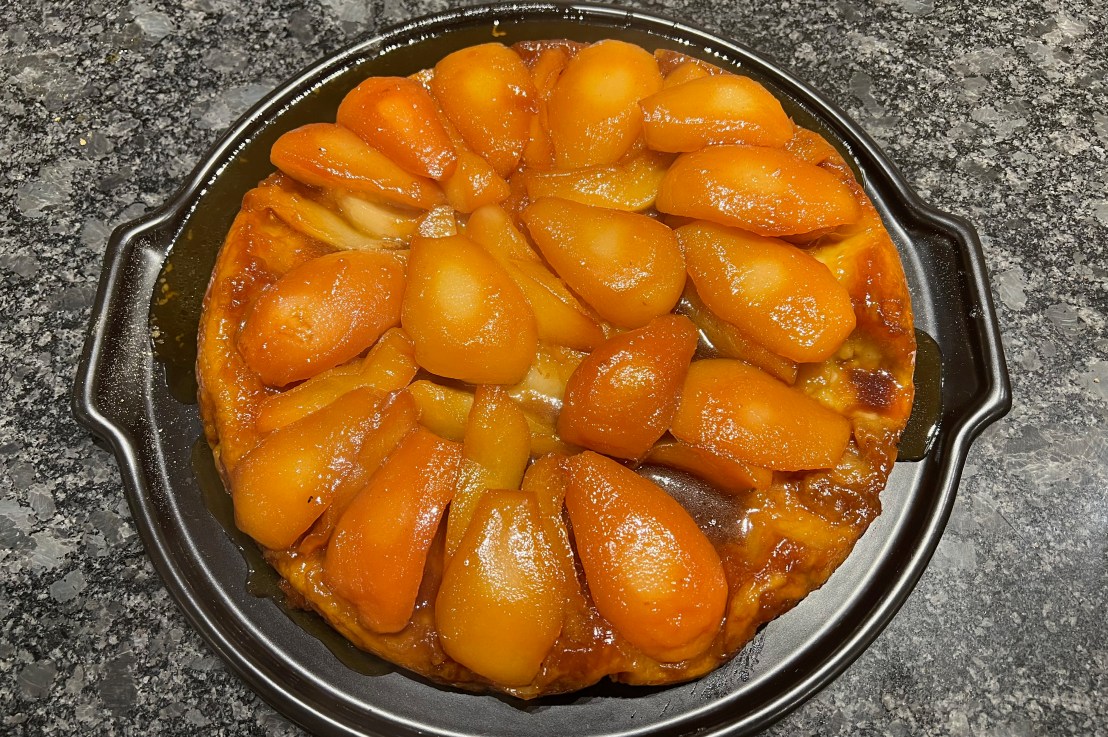
Yes, we all know the (probably apocryphal) history of the upside down tart made by mistake. But the reason for including a Tarte Tatin in this series is that quite simply, it’s the single thing that I bake that is most requested by my family. There’s something about the way that caramel blends into the fruit that is quite irresistible.

Tarte Tatin is most commonly made with apples and there’s plenty of room for debate as to which variety of apple to use. The most authentic version uses a French variety called “Reine de Reinettes”, which is equivalent to an English “King of Pippins”, but neither of these are readily available in UK supermarkets. Many modern French recipes specify Granny Smiths, although these can be very acid and even a touch watery. You’ll also see Golden Delicious: the trouble here is that there are some wonderful Golden Delicious apples around, particularly in Italy, but also some really powdery, tasteless ones. When I’m not using apples from the tree in our garden, I tend to use a half-half mix of Braeburn or Jazz and Granny Smith.

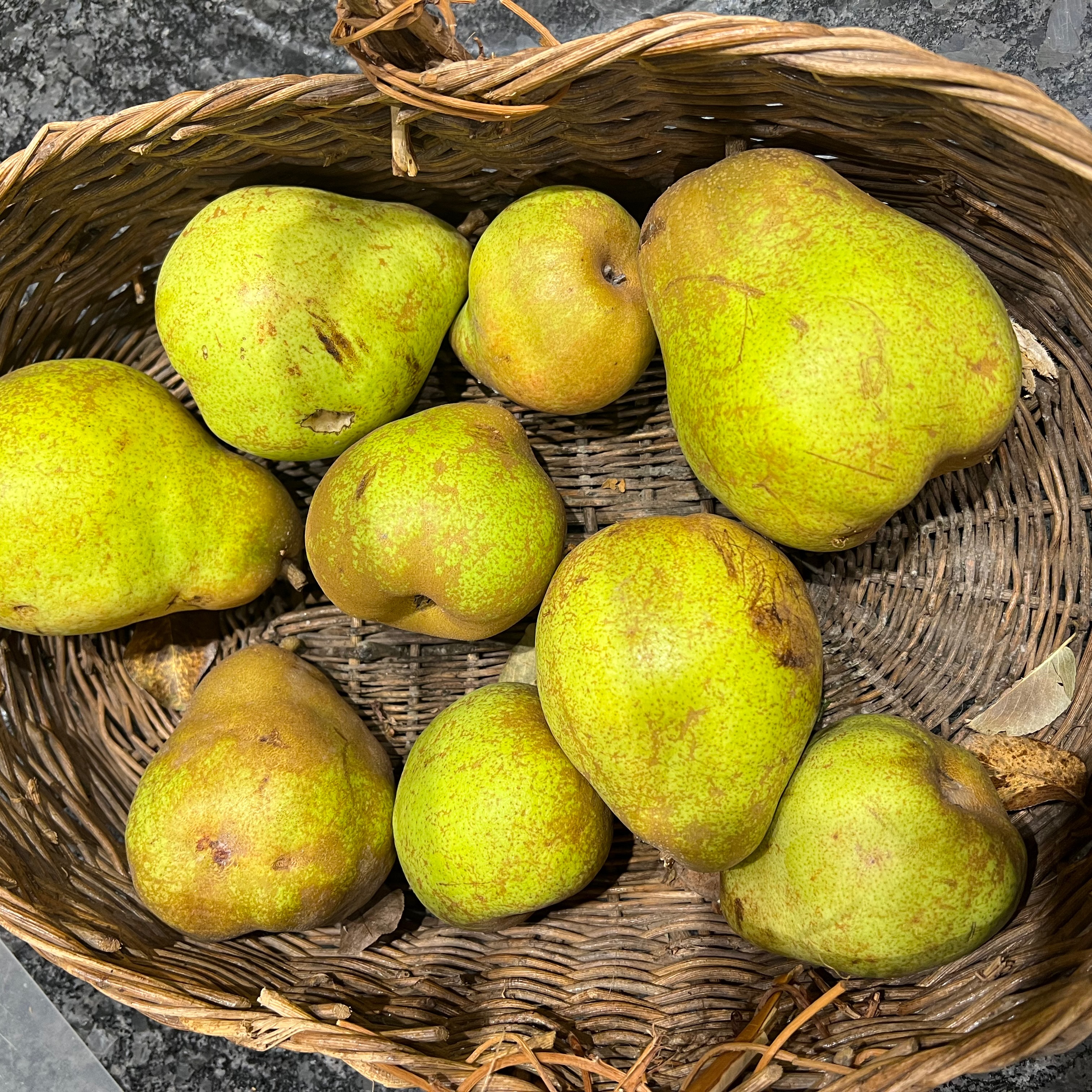
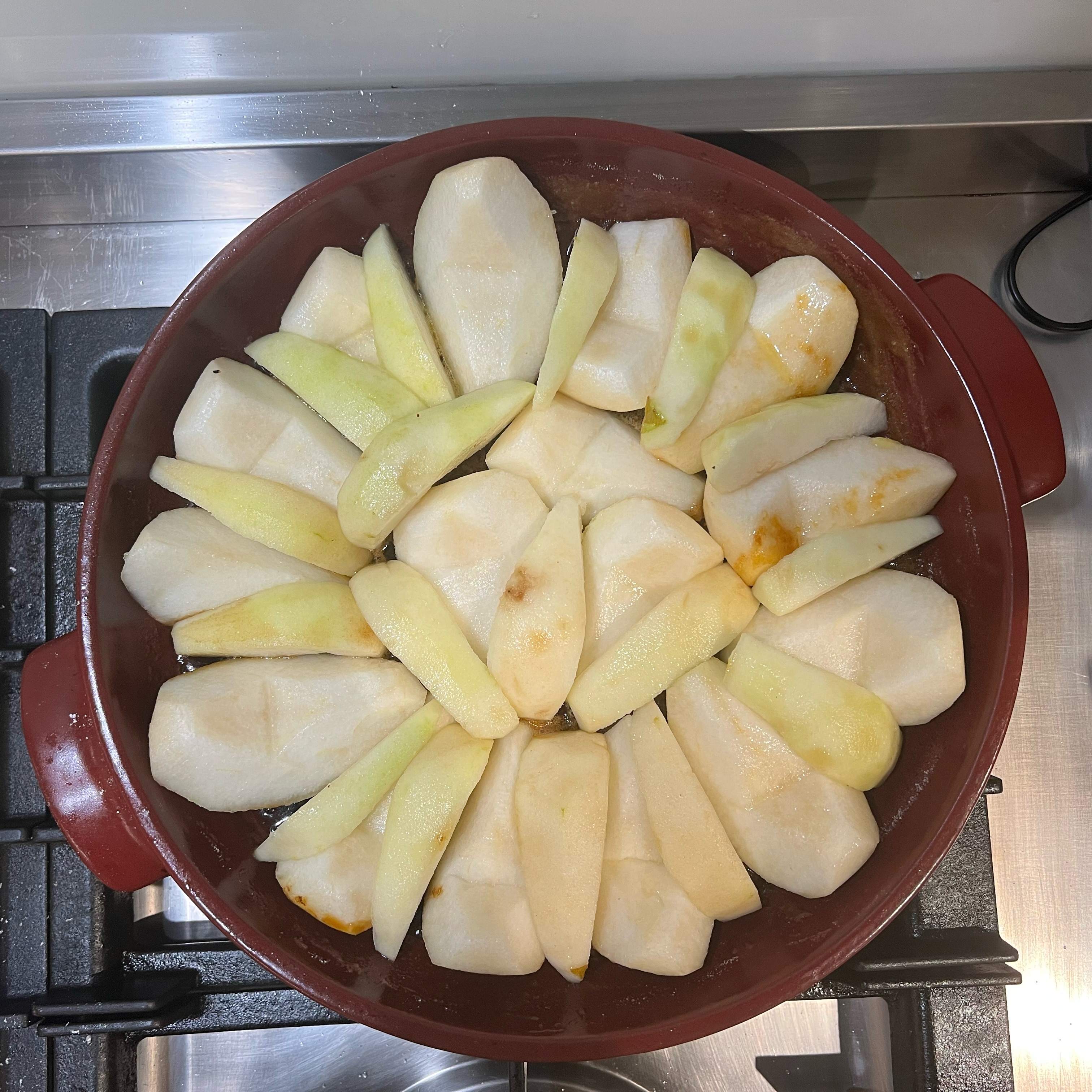
However, for this post, I’m not using apples at all. A fabulous new French restaurant, Les Deux Garçons, has opened down the road from our home and they do a stunning pear Tarte Tatin. Our apple tree has finished producing for the year, but we have a glut of slightly underripe pears which, the chef at Les Deux Garçons explained, should be perfect for making a Tatin. I checked this out and it worked like a dream: a gentler, more subtle flavour than the apple, but very fruity and truly scrumptious. The only real downside of using pears (at least our ones) is that they release at lot more moisture than apples, so any surplus caramel is considerably more runny than I’d like.

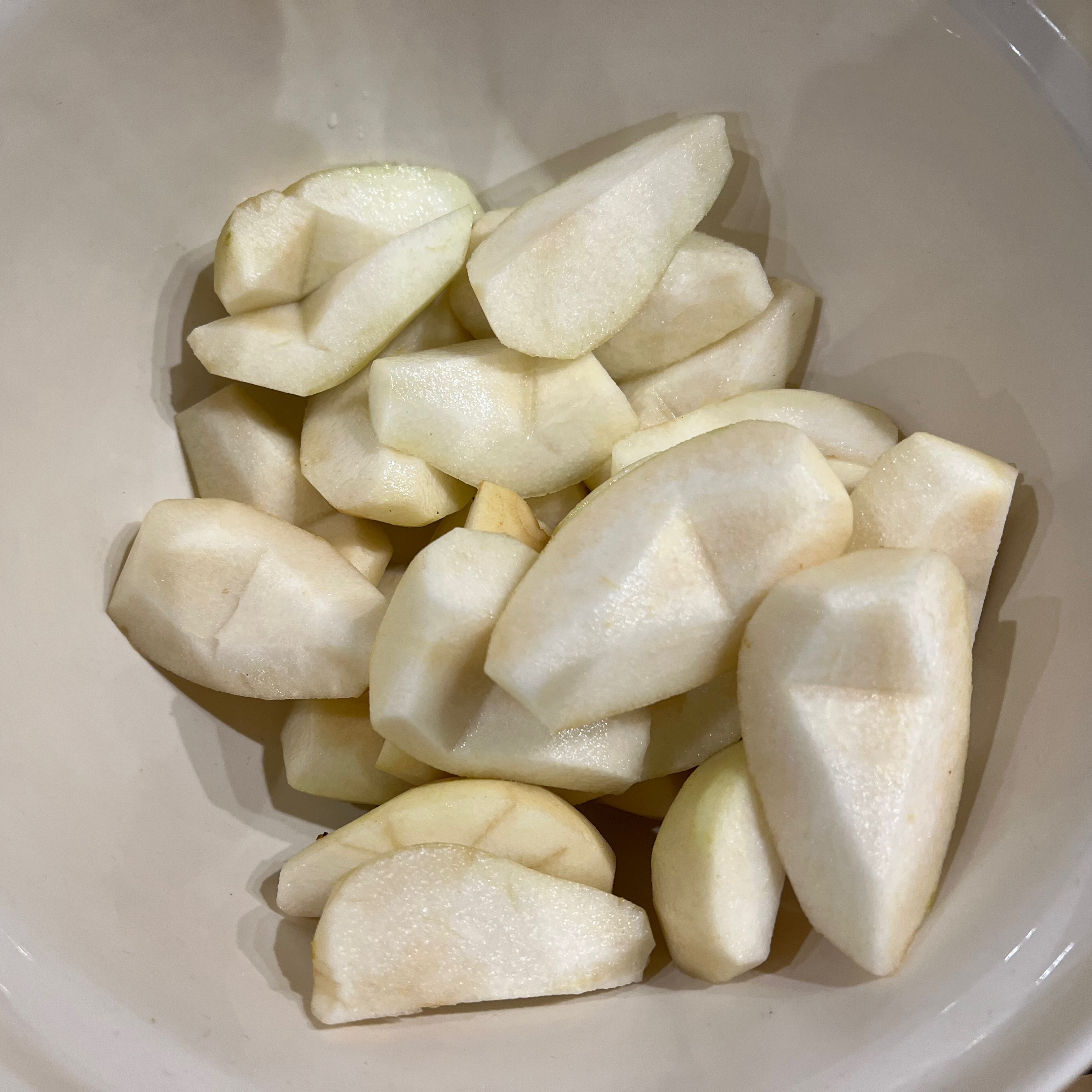
Depending on your level of patience and skill, there are various ways of cutting your fruit. The posh way is to cut out a circular core with a dedicated apple-corer, and then cut the fruit in half. This is fairly difficult to execute, but allows you  to pack your fruit really tightly in a regular shape. For those of you with less time and patience (like me), just peel each fruit, chop it into four and cut out a triangle around the pips, which is what I’ve done here. I remember one recipe which suggested cutting each fruit into three: I tried this and it struck me as particularly tricky to do with no obvious benefit.

You can use pretty much any pastry: shortcrust, rough puff or full puff – just don’t go for a sweet pastry because the caramel makes the tart plenty sweet enough as it is. In this recipe, I’ve gone for a rough puff because I really like the flakiness, but it’s a fairly lengthy process. You can always use shop-bought puff pastry instead of making your own, but try and find the stuff that’s made with butter (unless, of course, you’re vegan or lactose-intolerant).

Some twenty years ago, I made an impulse purchase of a dedicated ceramic Tarte Tatin dish. At the time, it seemed a ridiculous overpriced indulgence. Since then, the number of tarts I’ve made in it must be approaching three figures, which makes it seem quite reasonable, really. The truth is, though, that you can use pretty much any pan that has sides which are 5cm or so deep and is robust enough both to be used both on the hob and in the oven.
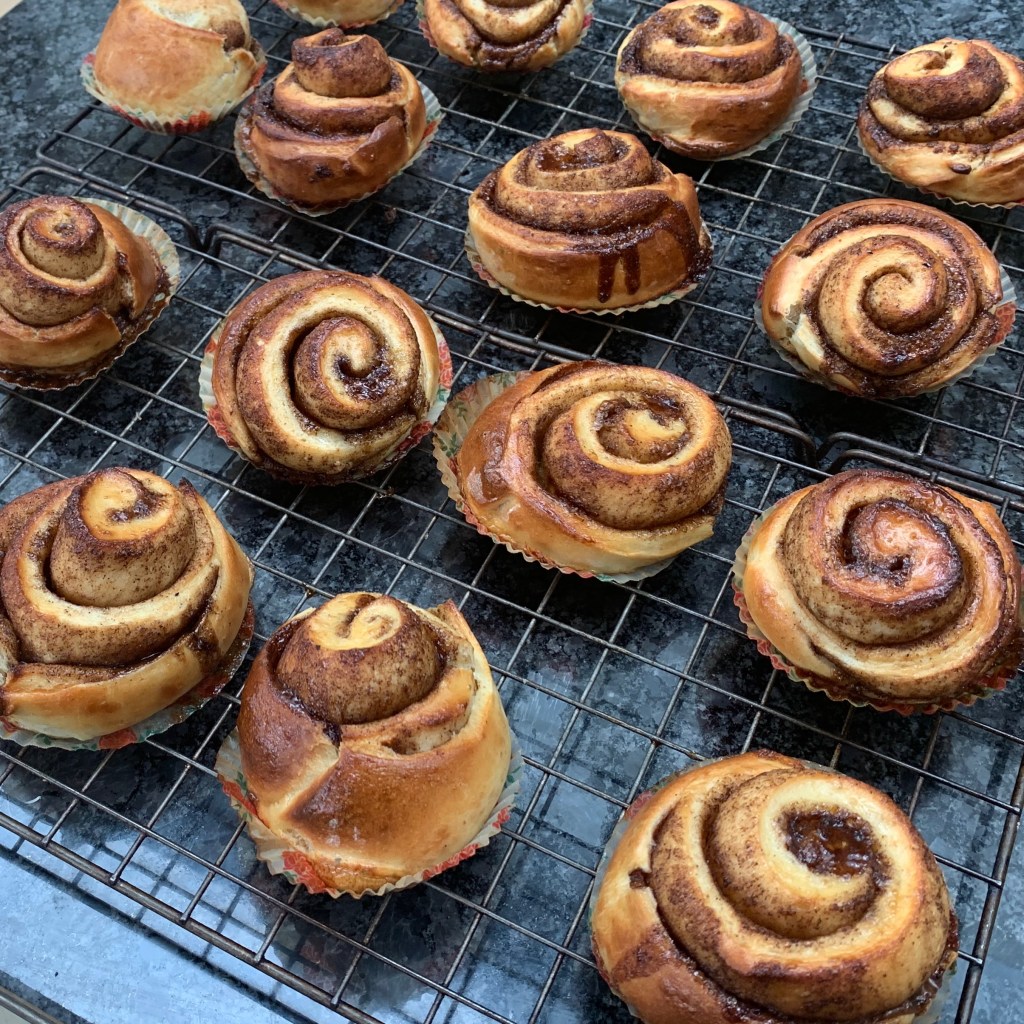
The quantities here are for my dish, which is around 29cm in diameter and produces 8 generous portions. Adjust the quantities for the size of your own dish but remember that it’s a square law, so you’ll need just under half the quantities for a 20cm dish and 1/4 for a 15cm one.

The rough puff pastry

  • 200g plain flour (I use OO grade) plus some more for dusting and rolling
  • 180g butter, frozen
  • 100ml (approximately) ice cold water
  • 1 tsp lemon juice
  1. If you have time, measure out the flour and put in the freezer for half an hour or so before you start.
  2. Put the flour into the bowl of your food processor.
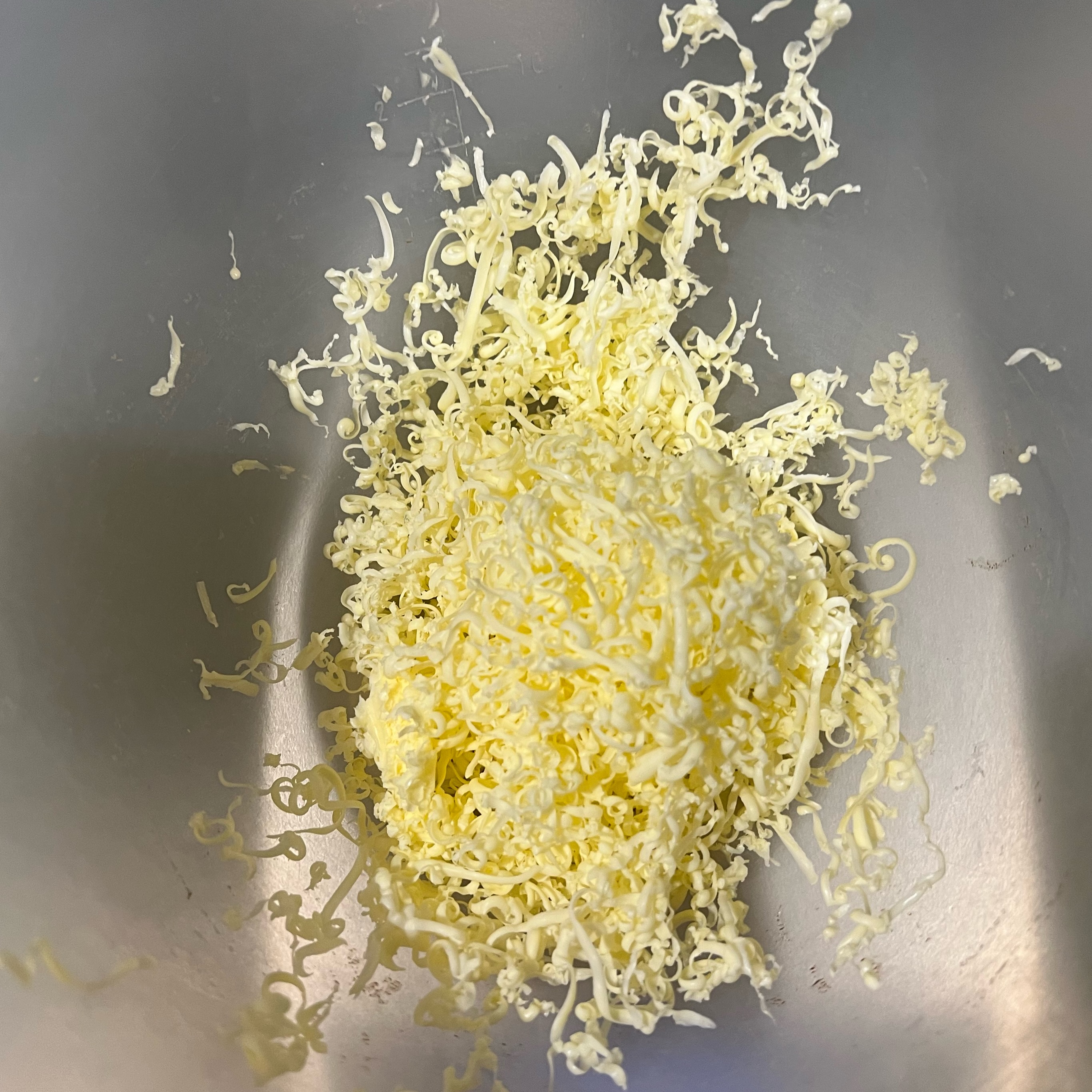
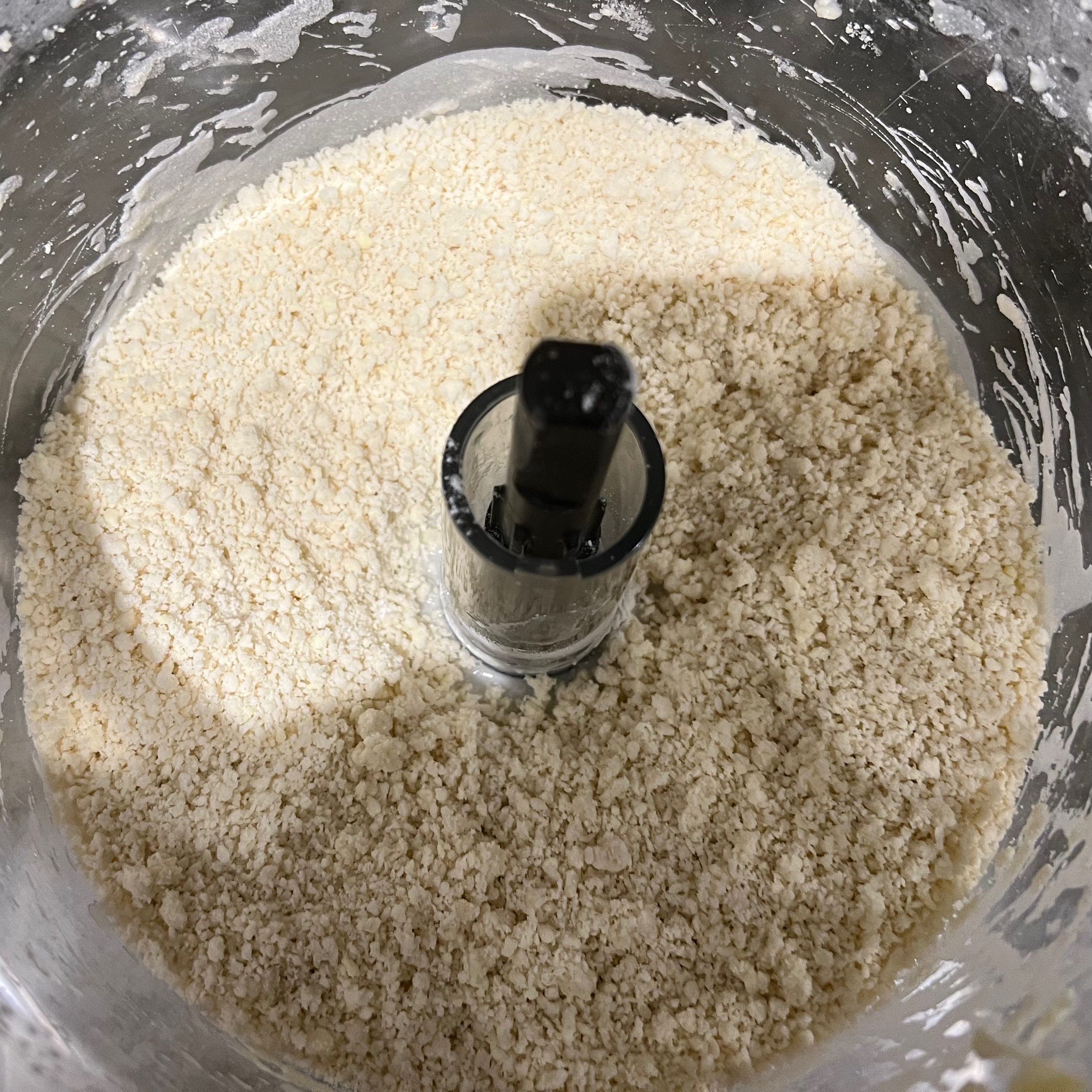
  3. Grate 30g of the butter and add to the bowl; process until you have a fine mixture
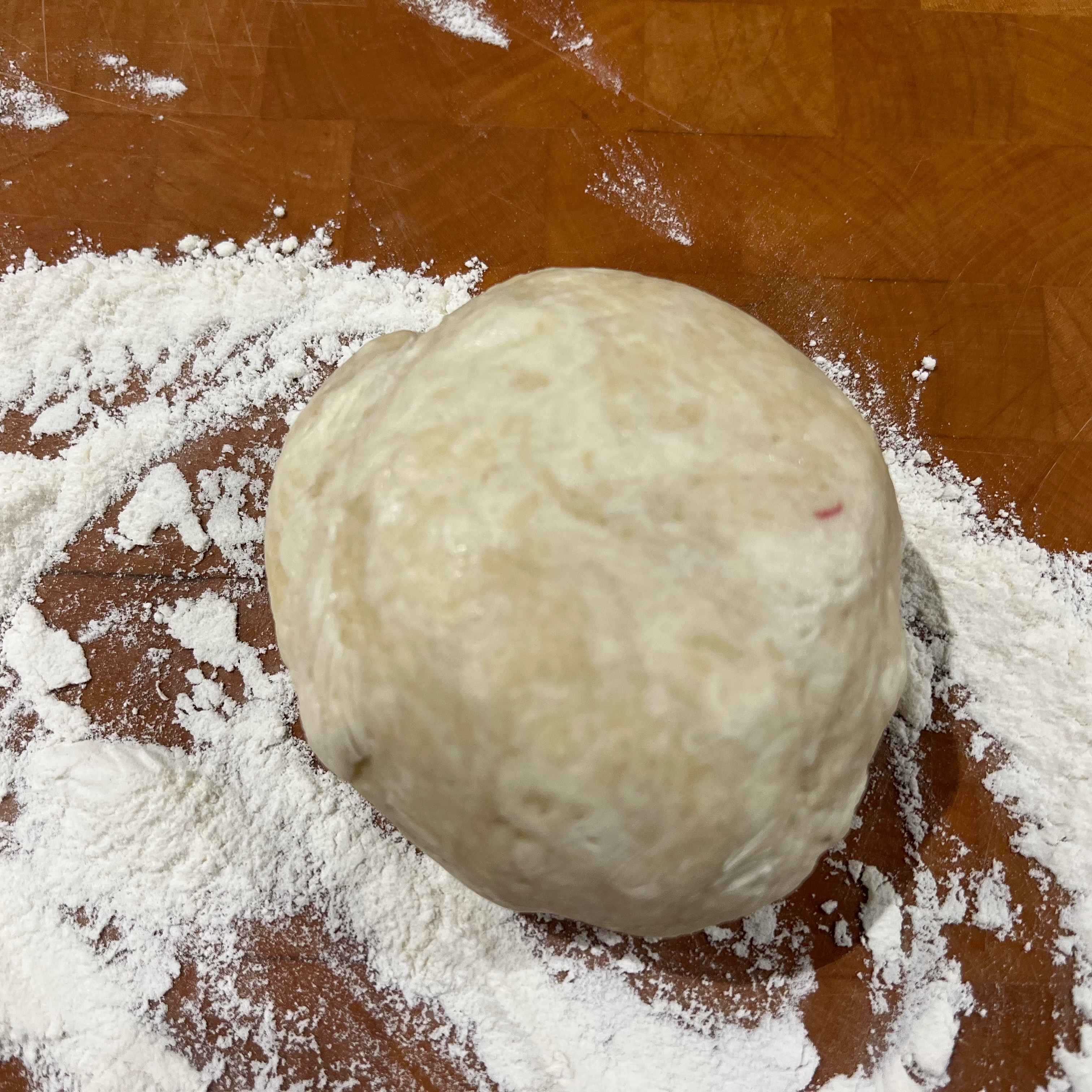
  4. Add the lemon juice and most of the water and process some more. You want the dough to be pliable but not actually sticky. Take it out of the food processor, bring it together into a ball, adding a bit more water or flour as needed to get to a good consistency.
  5. Wrap the dough in cling film and freeze for 30 minutes
  6. Just before taking the dough out, grate the rest of the butter
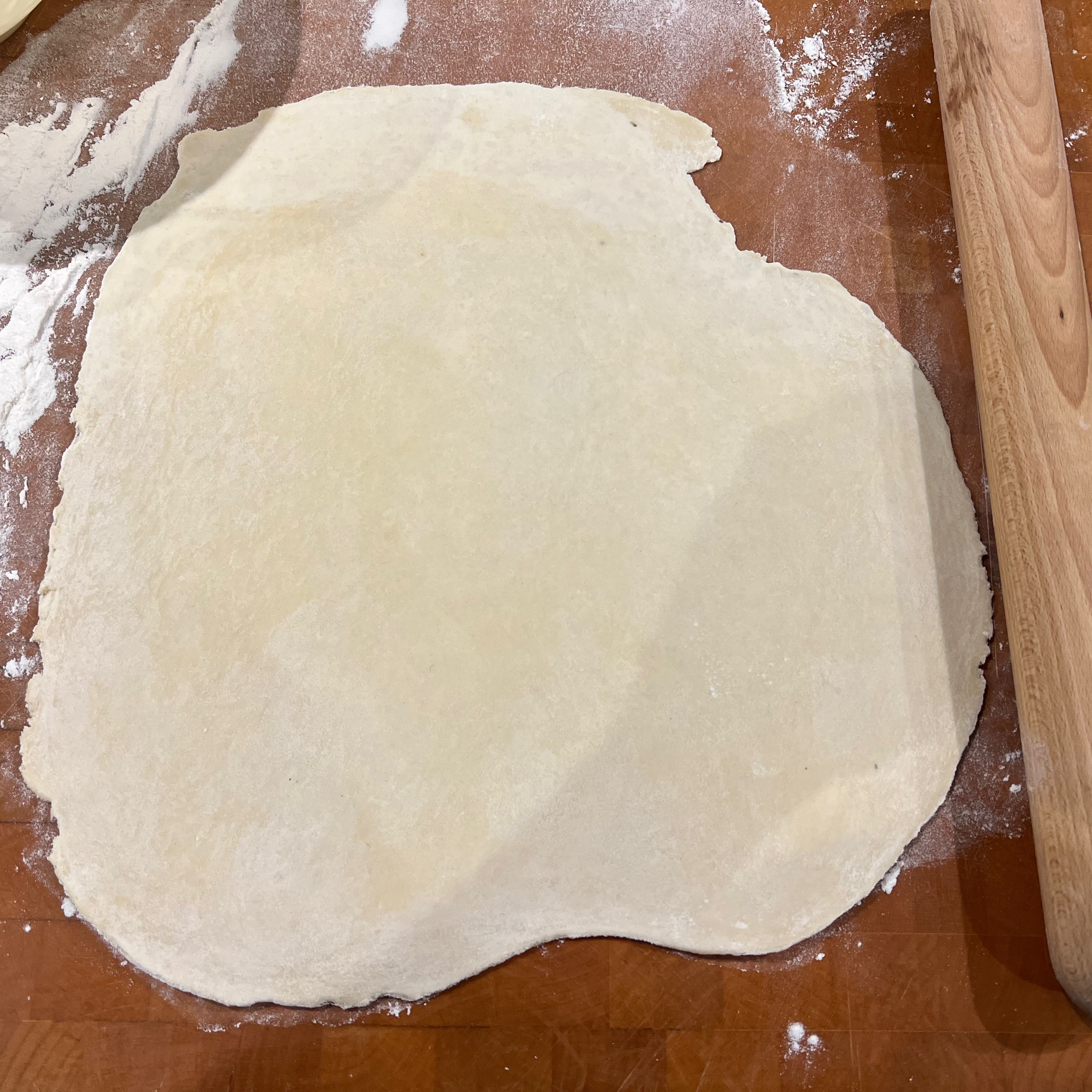
  7. Flour your board and rolling pin, take the dough out and roll into a thin rectangle
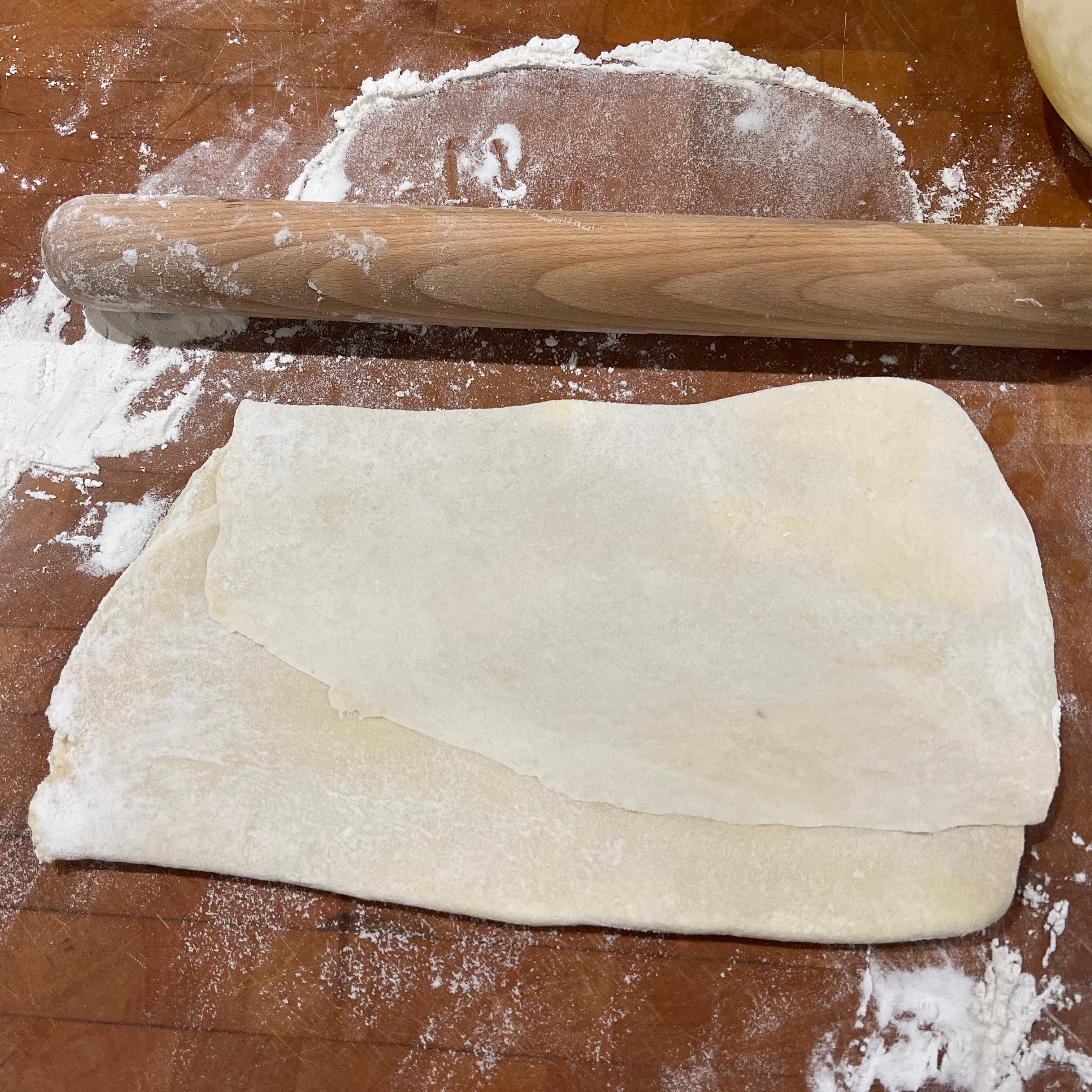
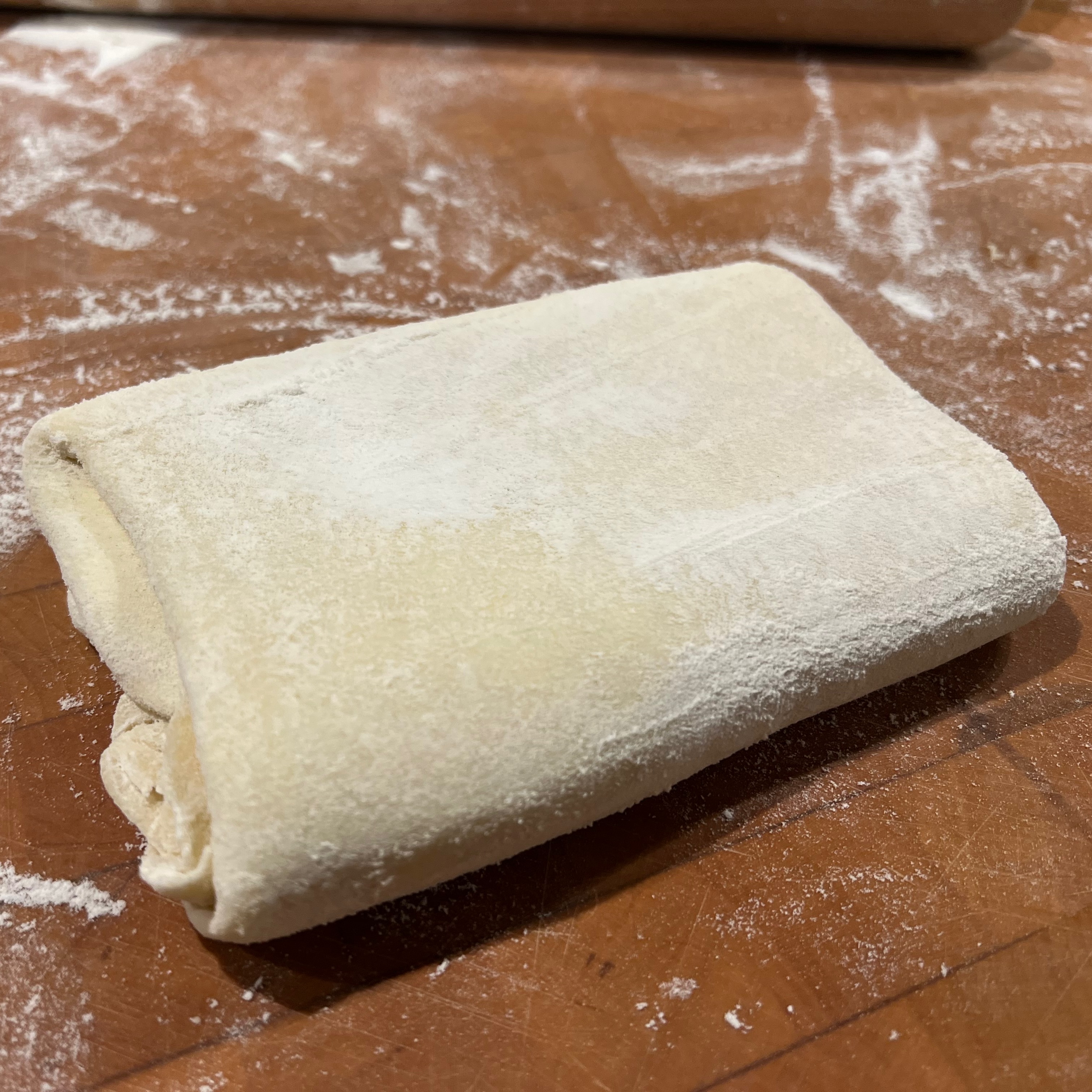
  8. Do a book fold: add half the butter to two thirds of one end of the rectangle, fold the unbuttered end over, then fold the other end over.
  9. Seal the edges, roll the rectangle out again, turning it by 90 degrees. Repeat the book fold process with the second half of the butter.
  10. Wrap the dough in the cling film again and freeze for another 20 minutes (now, by the way, is about the right time to start on your filling).
  11. Take the dough out again, roll it out and do another book fold. Now it’s back into the freezer for 20 minutes and do it again. You will have done five book folds in total.
  12. Finally, you’re ready to roll your pastry into a thin circle, big enough to overlap the edges of your dish. Don’t worry about making it a perfect circle: you’ll be tucking it in around the edges and if there are some huge areas of excess, you can trim them off.
  13. If you have time, measure out the flour and put in the freezer for half an hour or so before you start.
  14. Put the flour into the bowl of your food processor.
  15. Grate 30g of the butter and add to the bowl; process until you have a fine mixture
  16. Add the lemon juice and most of the water and process some more. You want the dough to be pliable but not actually sticky. Take it out of the food processor, bring it together into a ball, adding a bit more water or flour as needed to get to a good consistency.
  17. Wrap the dough in cling film and freeze for 30 minutes
  18. Just before taking the dough out, grate the rest of the butter
  19. Flour your board and rolling pin, take the dough out and roll into a thin rectangle
  20. Do a book fold: add half the butter to two thirds of one end of the rectangle, fold the unbuttered end over, then fold the other end over.
  21. Seal the edges, roll the rectangle out again, turning it by 90 degrees. Repeat the book fold process with the second half of the butter.
  22. Wrap the dough in the cling film again and freeze for another 20 minutes (now, by the way, is about the right time to start on your filling).
  23. Take the dough out again, roll it out and do another book fold. Now it’s back into the freezer for 20 minutes and do it again. You will have done five book folds in total.
  24. Finally, you’re ready to roll your pastry into a thin circle, big enough to overlap the edges of your dish. Don’t worry about making it a perfect circle: you’ll be tucking it in around the edges and if there are some huge areas of excess, you can trim them off.

The fruit and caramel filling

  • Juice of 1 lemon
  • Around 8 medium to large apples or pears (see above)
  • 170g caster sugar
  • 50g butter
  1. Preheat oven to 180℃
  2. Put the lemon juice into a bowl big enough to hold all your fruit
  3. Peel and chop the fruit (see above for details). As you do each one, put the pieces into the bowl and coat them with juice – this will help to stop them discolouring.
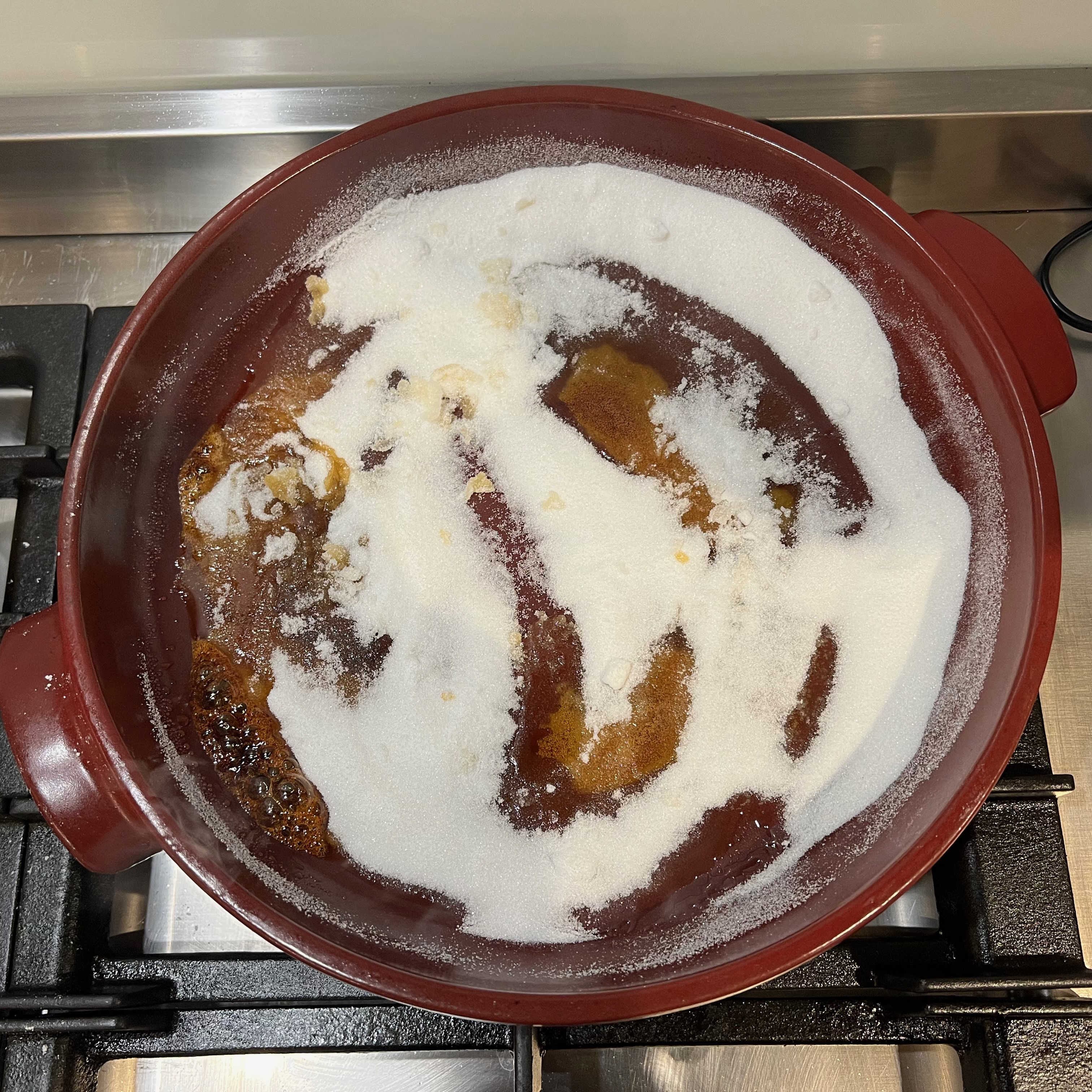
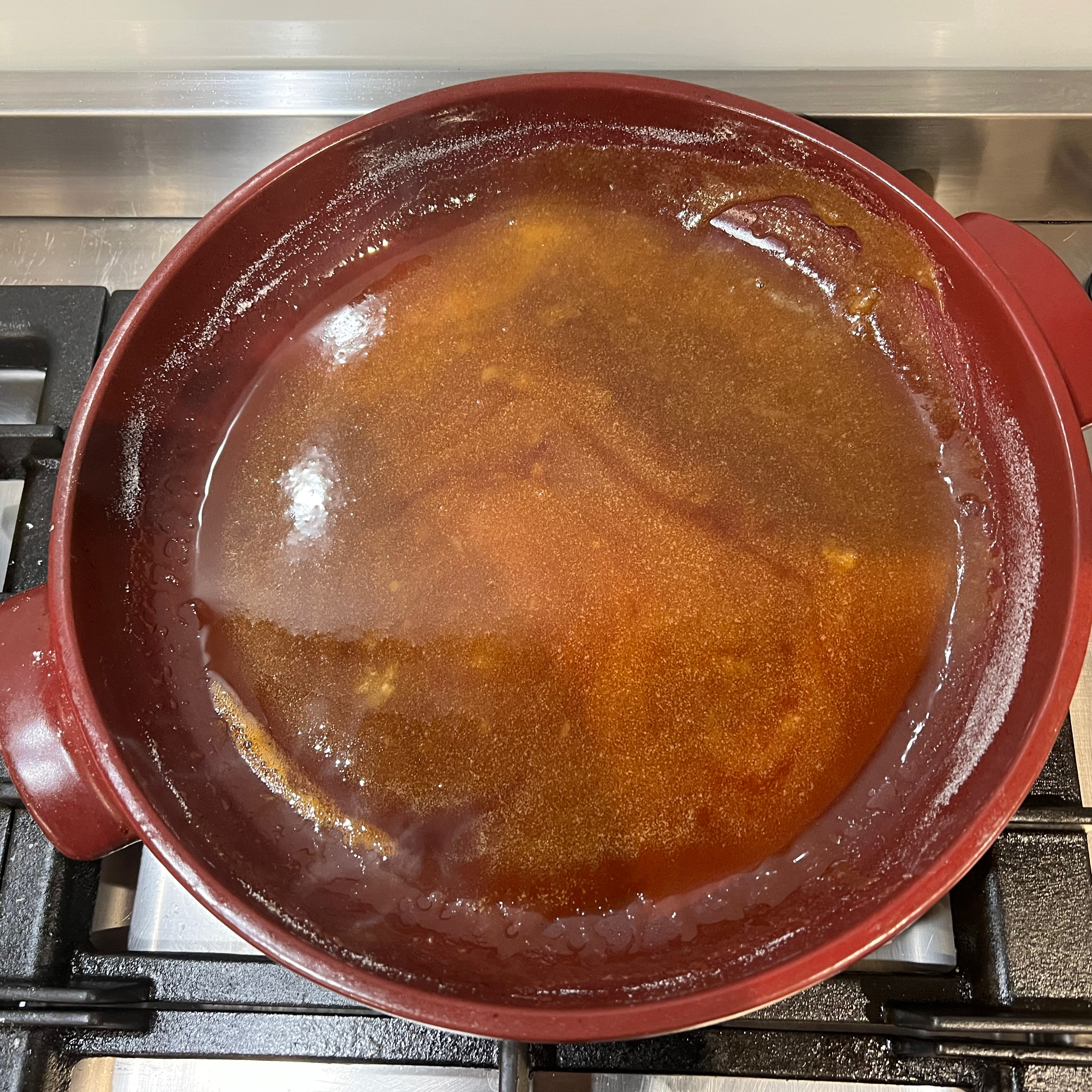
  4. Put your dish onto the hob at medium heat. Spread the sugar over it in an even layer. Keep heating and stirring until you have a smooth caramel. How long you keep going is very much a matter of personal taste: if you take it off fairly early, at a sort of butterscotch colour, you will have a smooth, gentle flavour. Leave it on for longer and you will get to a dark colour and a flavour that is stronger and more bitter: I’ve had both in perfectly respectable French restaurants, so it’s really up to you.
  5. Remove from heat, add butter, stir in until smooth. The caramel will froth alarmingly, but don’t be frightened. And if bits of hardened caramel stick to your spoon, just hack them off. They’ll melt into the rest in the oven even if they don’t do so straightaway.
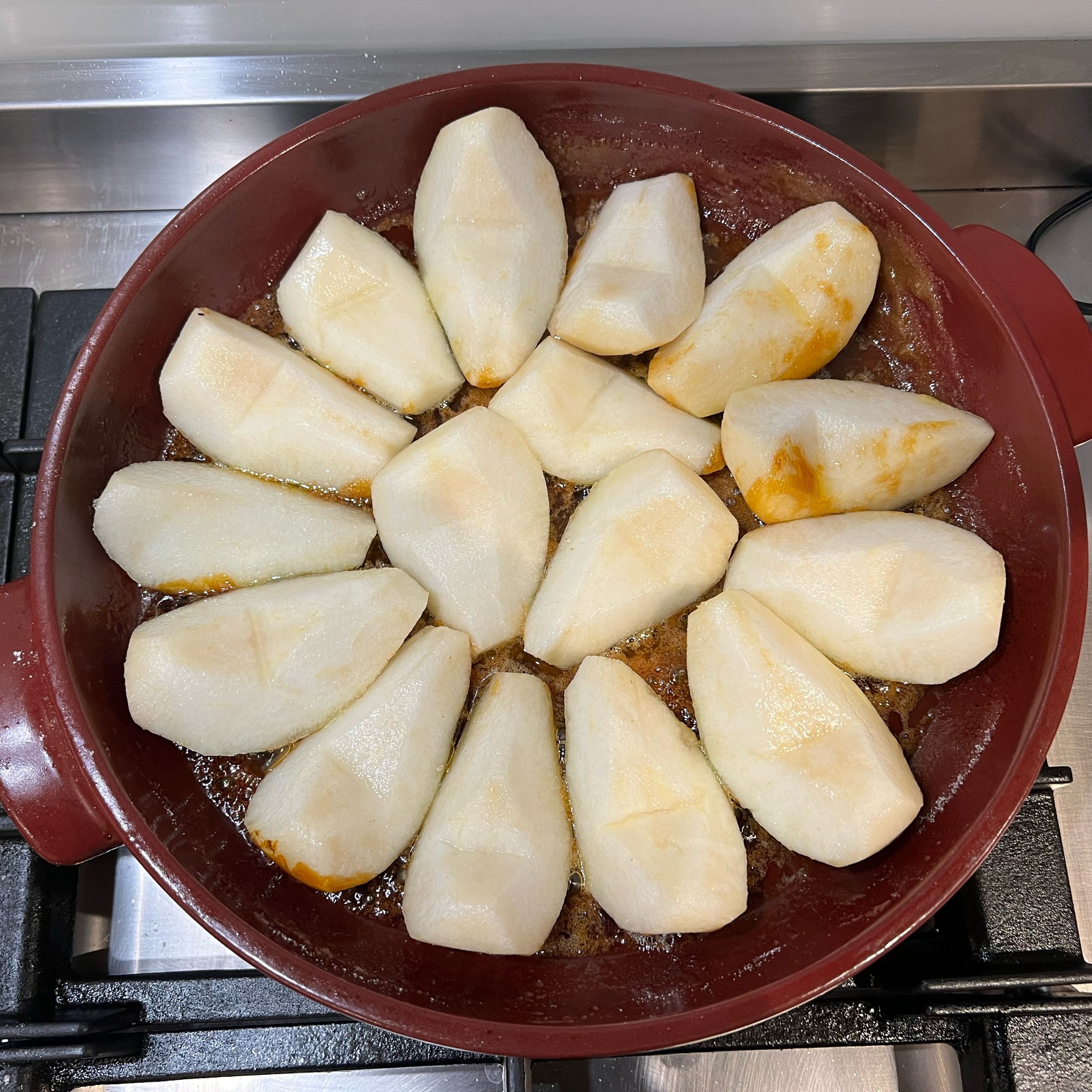
  6. Array the apples or pears into your dish, packing them as best you can to get a reasonably level top. If  you used quarters, once you’ve filled the dish with one layer, cut the remaining quarters in half and use them to fill in the gaps. 
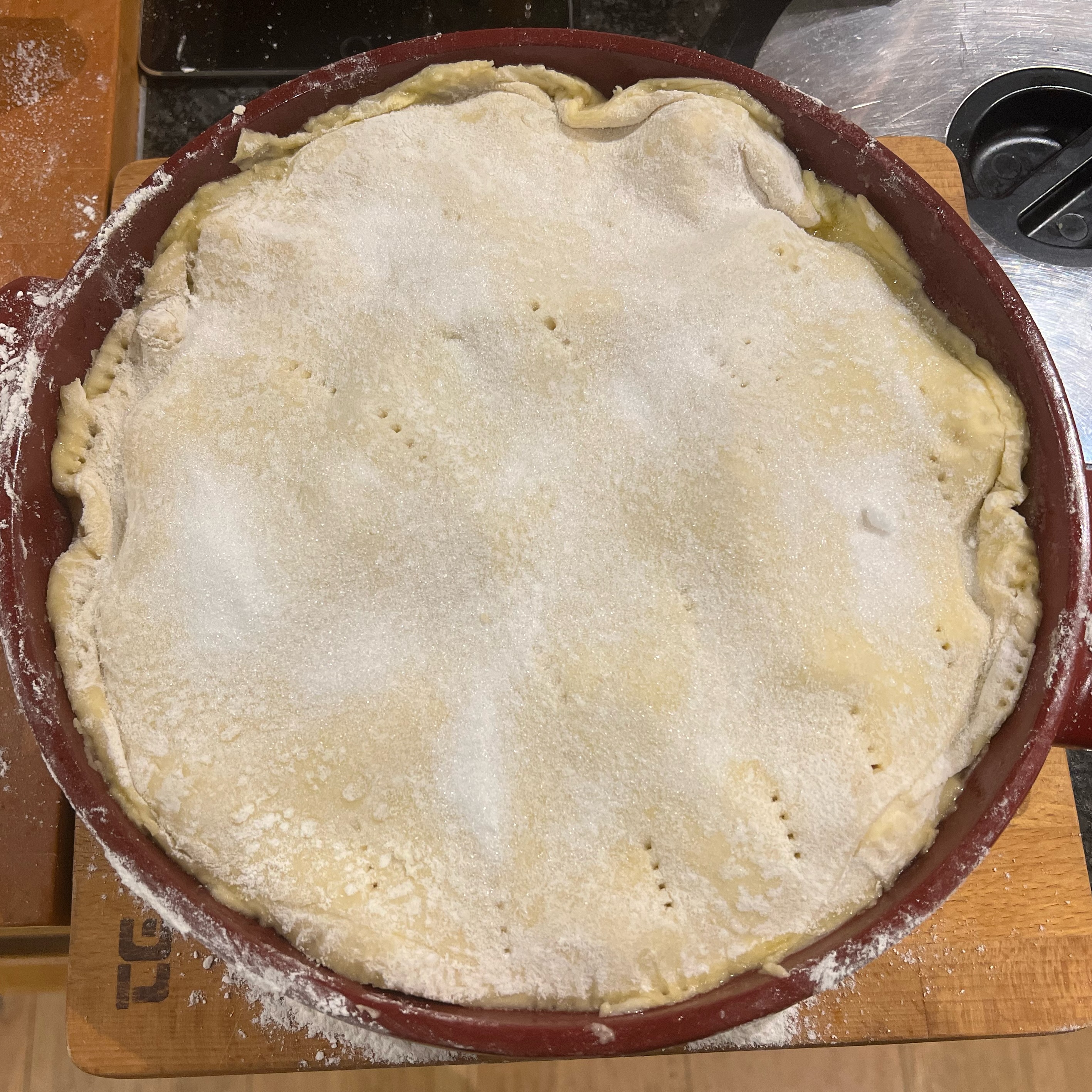
  7. Spread pastry on top, trim off any large bits of excess, and tuck the rest in around the sides. Pierce the pastry in lots of places: you want steam to be able to escape.
  8. Optionally, sprinkle a little more 
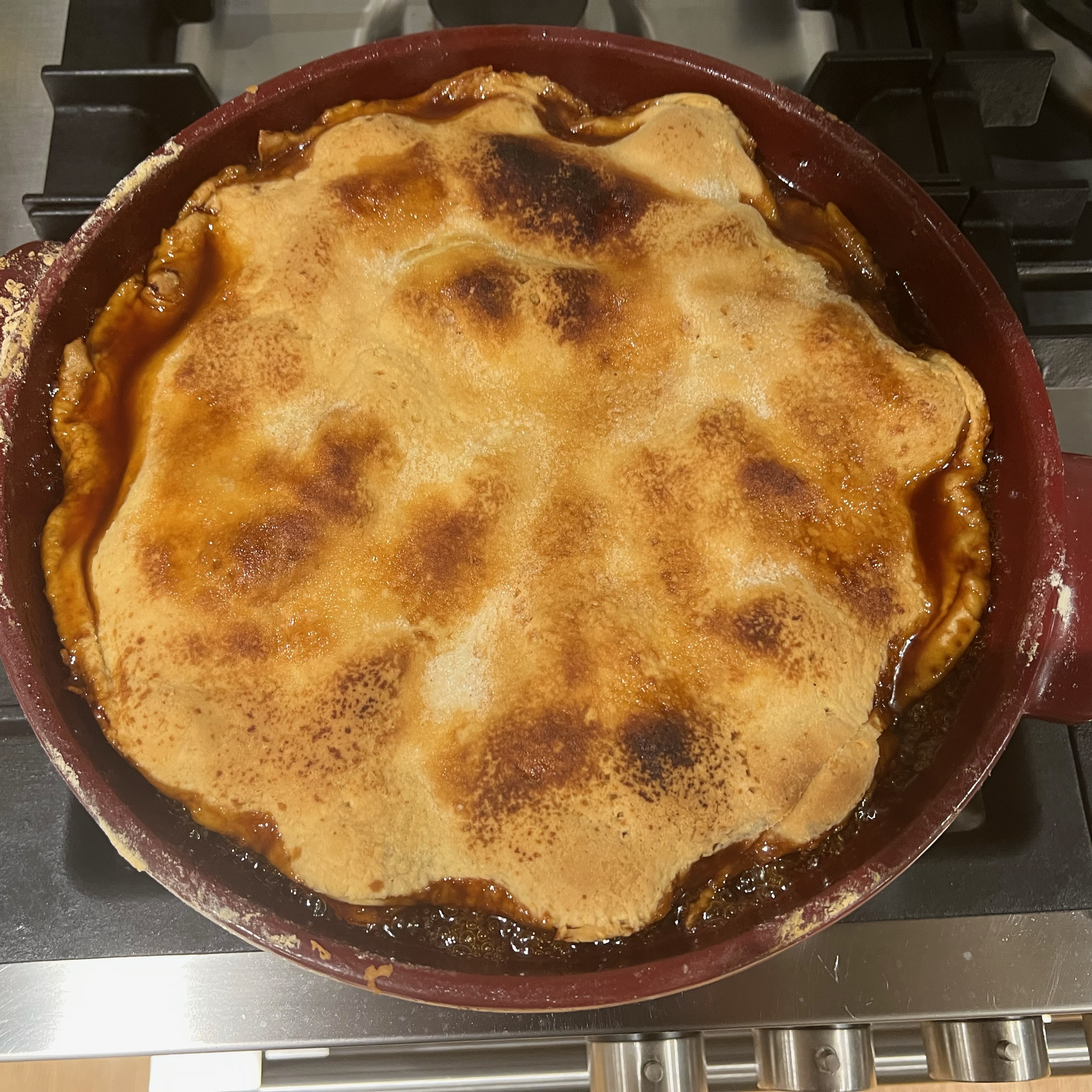
  9. Bake until golden. Your oven may differ, but mine took around 40-50 minutes.
  10. Take out from oven and leave for around 20-30 minutes.
  11. Now say a quick imprecation to your favourite deity to stop pieces of fruit staying stuck to the dish (I tend to go for “Bismillah” because my favourite Persian cookery book specifies it at a critical point in its main rice recipe), cover your dish with a flat heatproof plate or wooden board and turn the whole lot upside down.leave at least 30 mins, then turn it over onto a plate or board, then remove the tin in the fervent hope that the tart has fallen out onto your board (the caramel will run, by the way, particularly if you used pears, so make provision for dribbles). If your deity wasn’t looking kindly on you, there may be a need for some swift repair work.
  12. If you’ve timed it such that you can serve the tart warm, so much the better. But it’s pretty good cold as well. Either way, vanilla ice cream makes a great accompaniment; a splash of Calvados doesn’t hurt either.

Around the world in 80 bakes, no.70: Kue Lapis Legit – “thousand layer cake” from Indonesia

Around the world in 80 bakes, no.70: Kue Lapis Legit – “thousand layer cake” from Indonesia

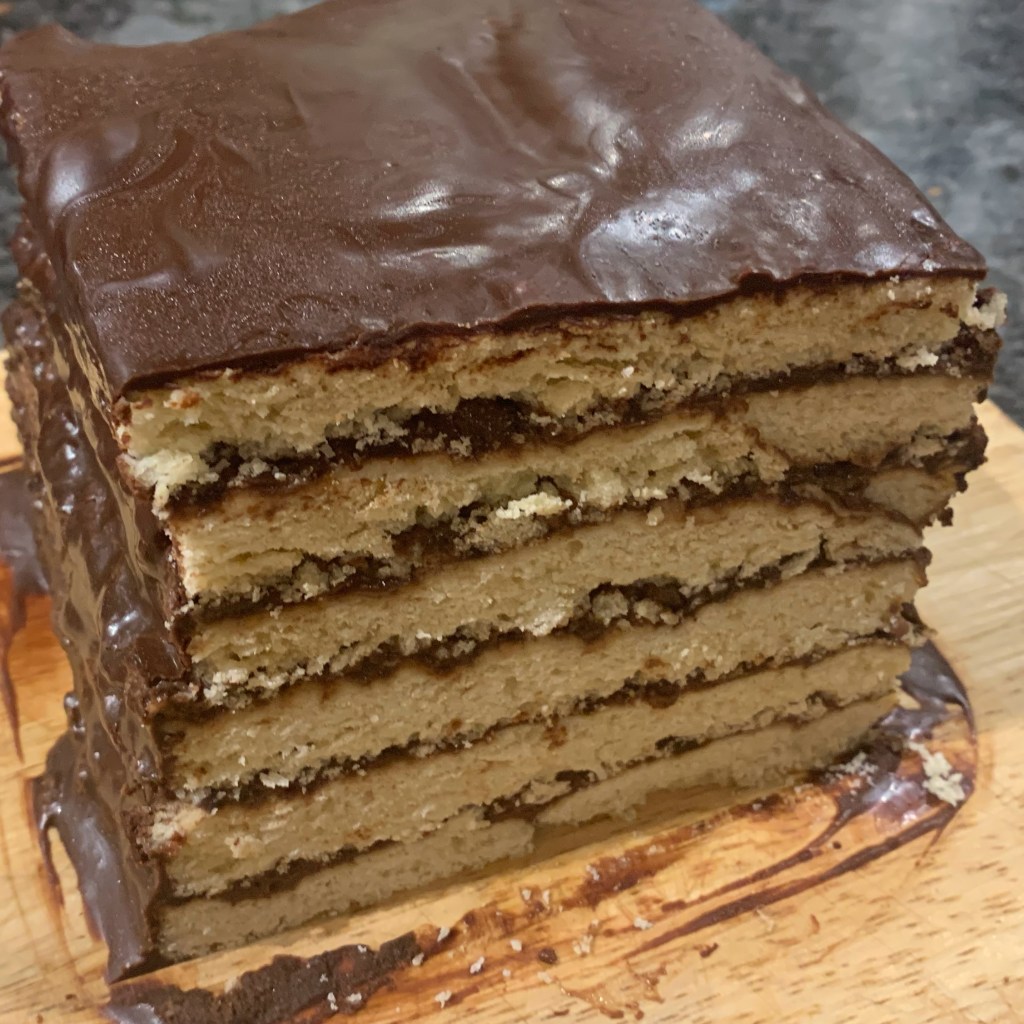
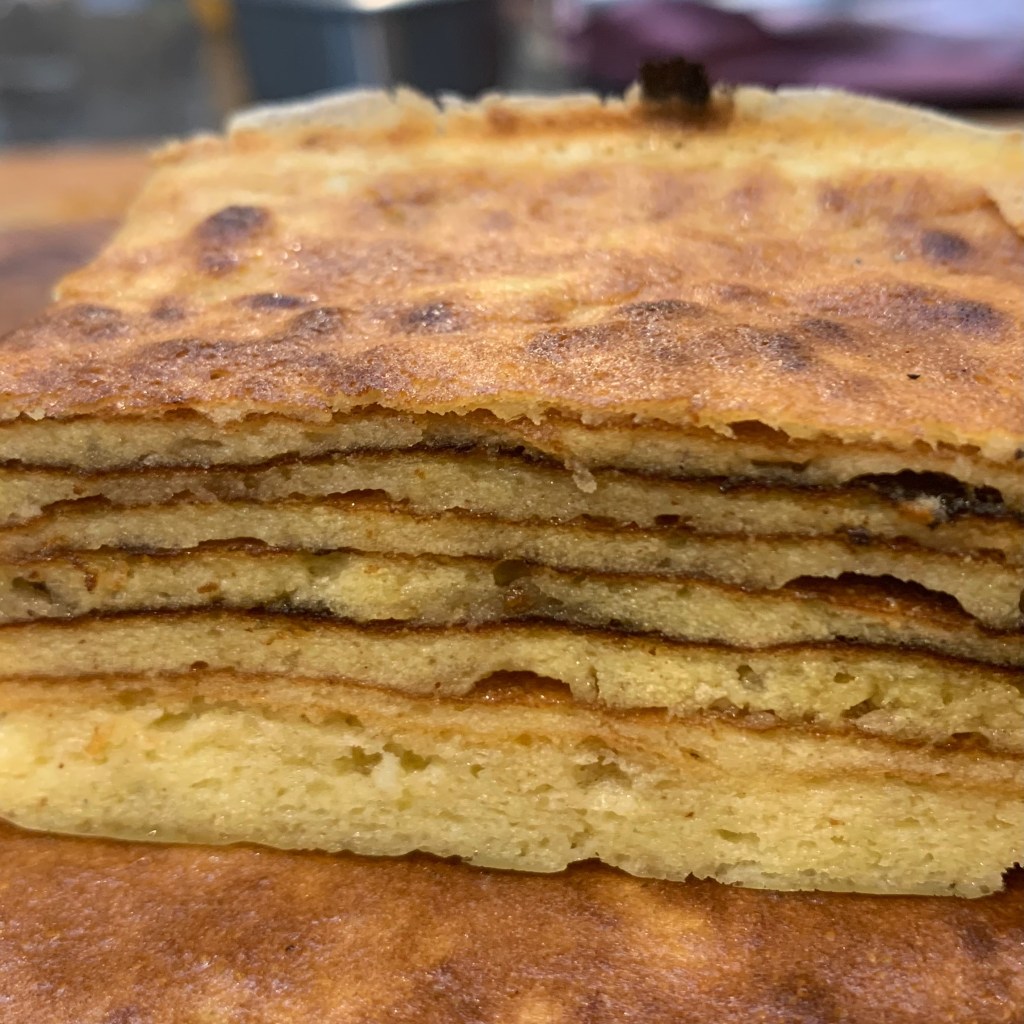
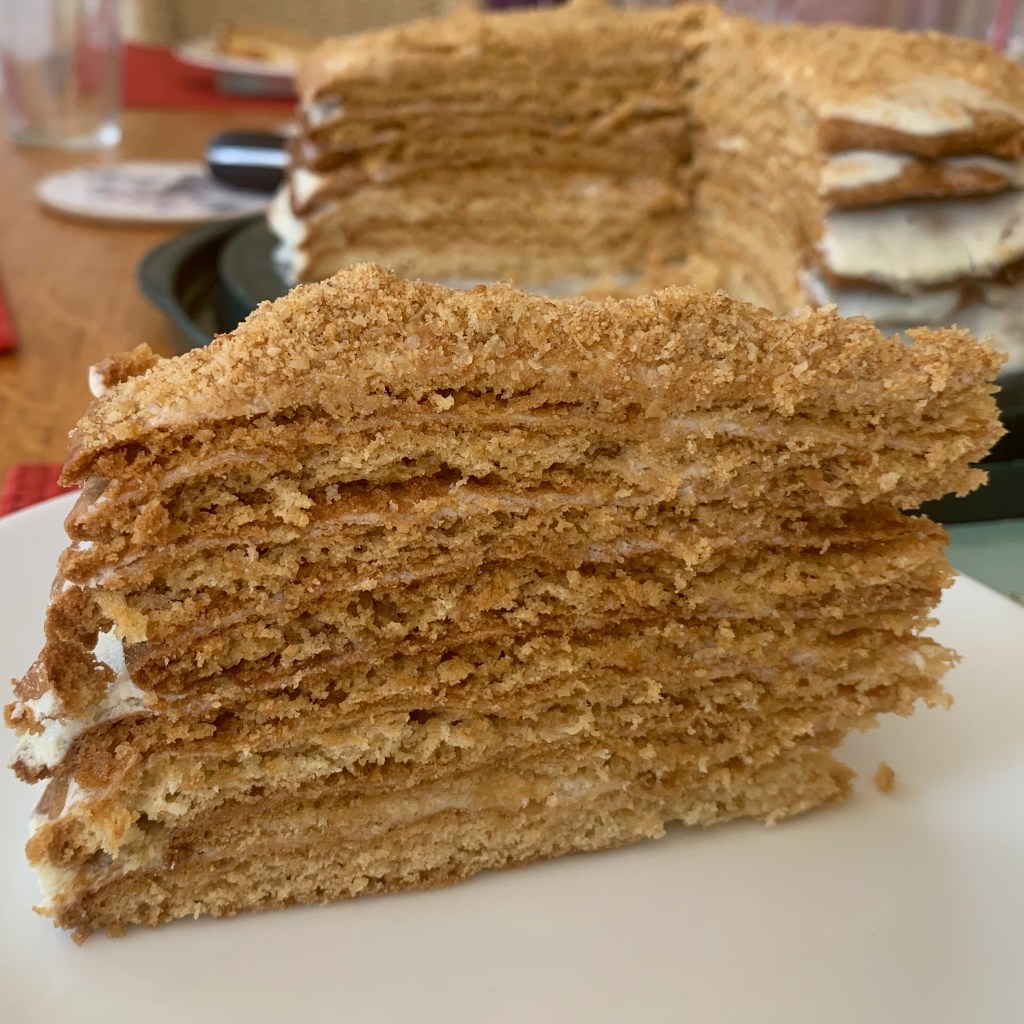
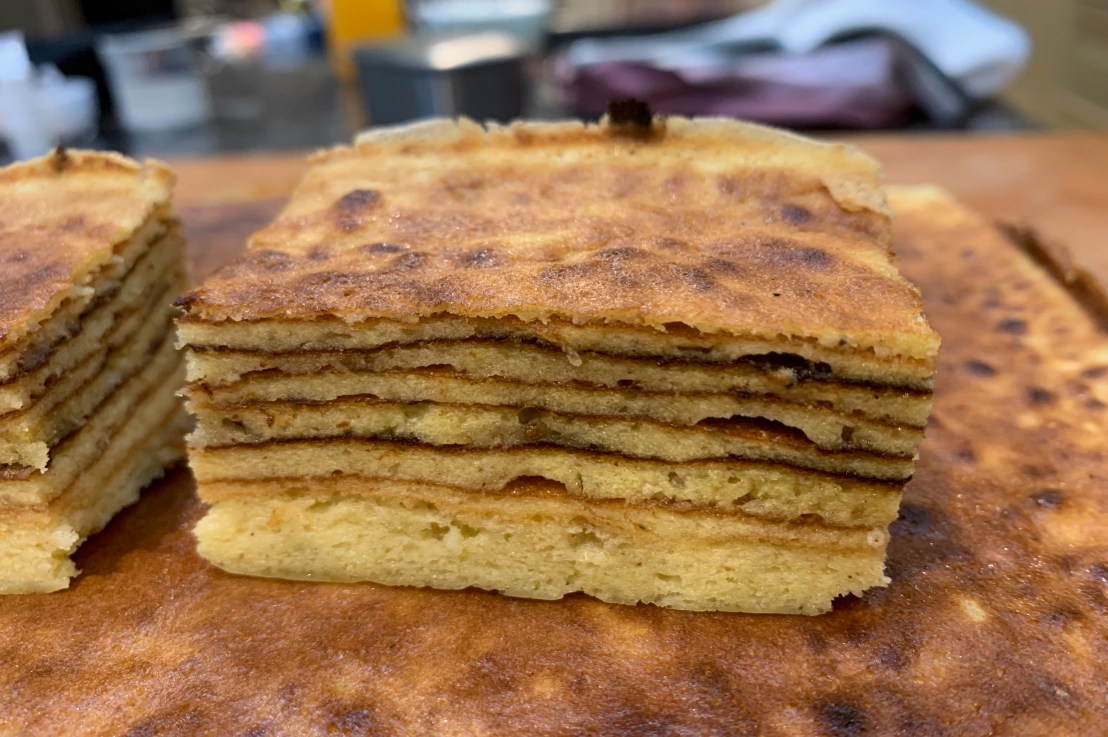
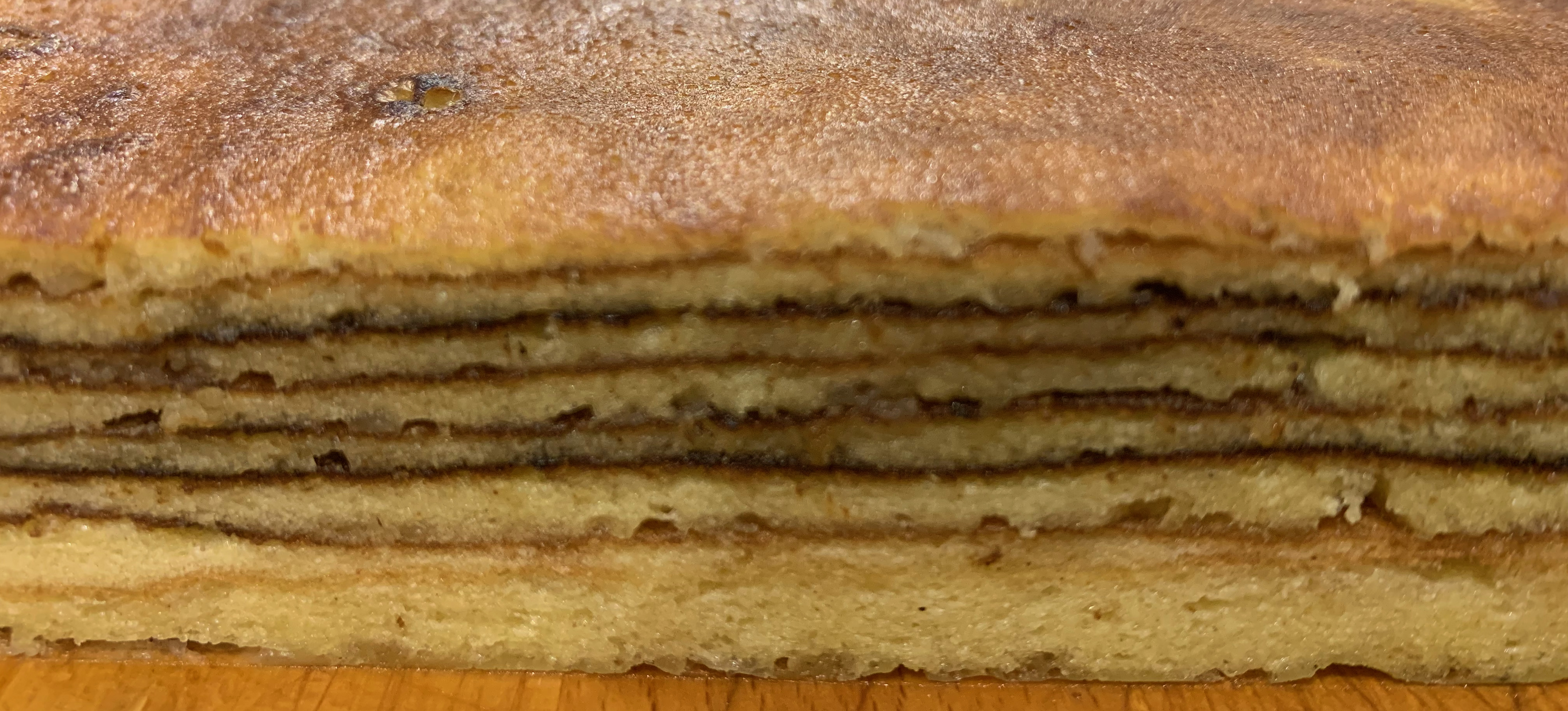
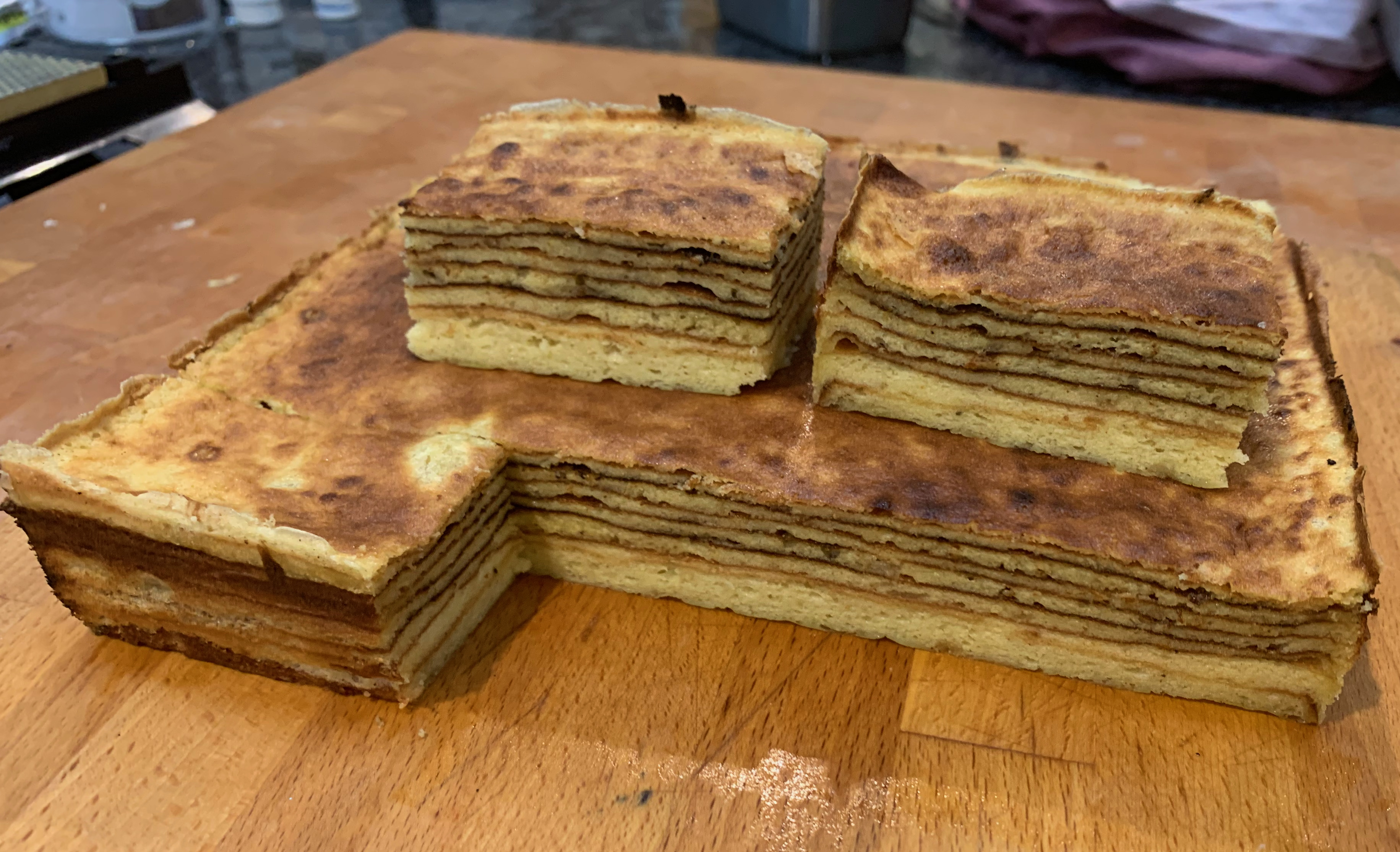
Several multi-layer cakes have featured in this series. But there’s one multi-layer cake to rule them all, which is distinguished by the thinness of the layers and the deliciousness of the caramelisation of each. It’s from the unlikely provenance of Indonesia, where it was originally baked by Dutch colonists, and it goes under several names. In Indonesian, it’s Kue Lapis Legit (Lapis Legit for short); in Dutch, its Spekkoek, named because the stripy layers that you see in cross-section reminded the Dutch of the layers in pork belly (“spek”).

What makes Lapis Legit unique is the cooking method: you spread a thin layer of fairly liquid batter over the cake and cook it under the grill (Americans: broiler) until brown and caramelised, repeating this many times to form the characteristic brown and yellow stripes of the cake’s cross section.
In neighbouring Sarawak (the half of Borneo that is in Malaysia rather than Indonesia), they have elevated Kek Lapis (as they call it there) to a fine art, using multiple colours for the layers and cutting the blocks to form intricate patterns. I’m sticking to the basic yellow-and-brown version, starting from this recipe in “Daily Cooking Quest” by Minnesota-based Indonesian cook Anita.
Although the cake looks complex, it’s not excessively time-consuming, certainly not so by comparison with some of the bread and patisserie items in this blog: it took me around two hours end-to-end plus half an hour’s cooling time. However, unlike normal cakes, that’s two hours of constant attention – there are virtually no periods of down time in which you can do something else while the cake is in the oven.
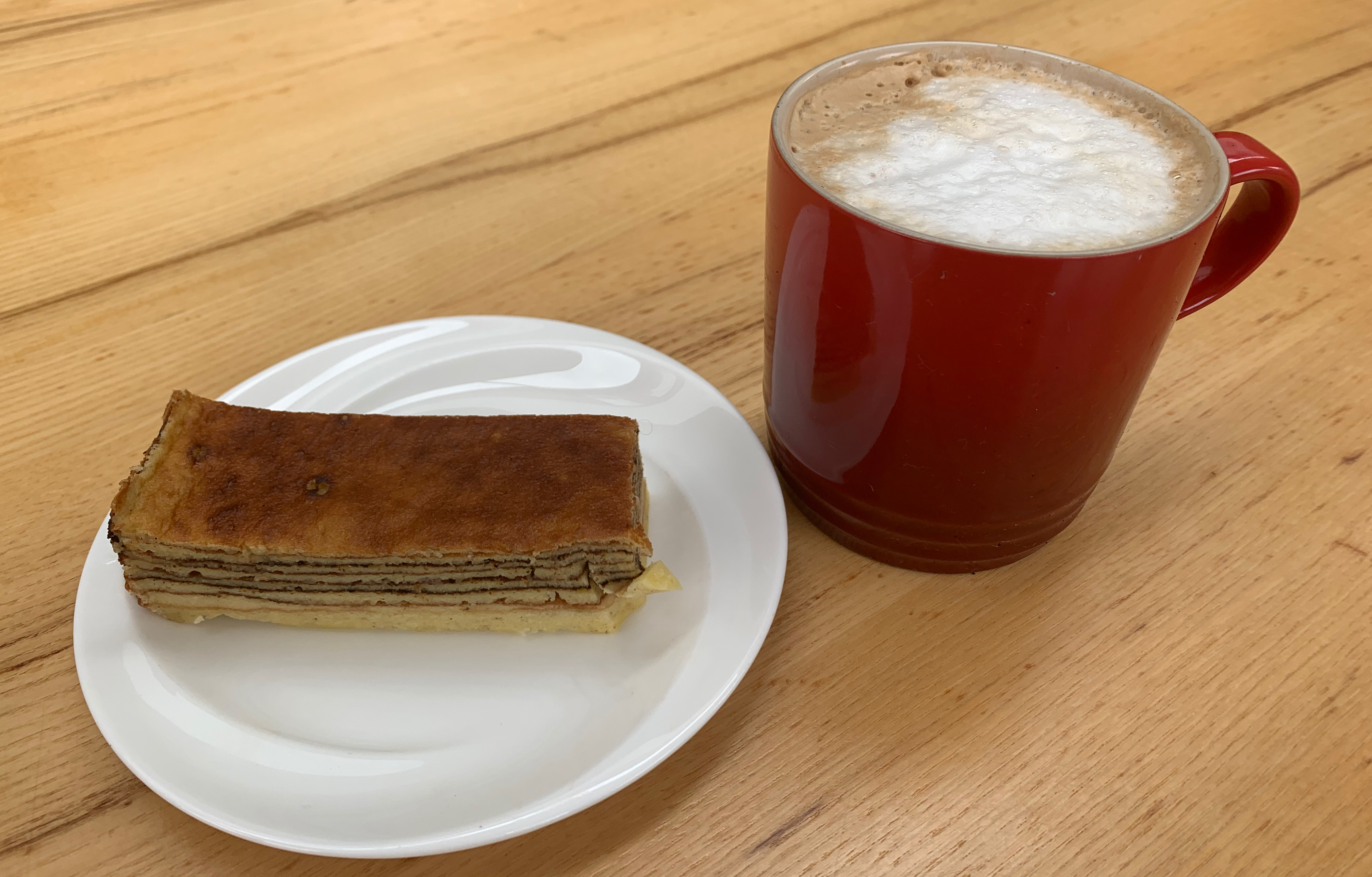
And the results, even on a first attempt, were absolutely worth it – one of the best and most interestingly different cakes I’ve made.

Setting up

  1. Preheat your oven to 200℃ fan.
  2. Use a cake tin with a removable base. If possible, use a square tin, because the cake cuts into rectangles really nicely: mine is 22cm square and worked OK, but 18-20cm would work better, giving you the opportunity for more layers. Line the bottom with baking paper, grease the sides with butter.
  3. You will need three bowls for your stand mixer. I only have two, so I improvised by making the sabayon mix in a separate copper bowl and using a hand mixer to whisk it, thus avoiding scraping and washing up in mid process.

The butter base

  • 300g butter
  • 120g sweetened condensed milk
  • 1 tbs rum
  • 90g plain flour
  • ¼ tsp salt
  • ¼ tsp ground cinnamon
  • ¼ tsp ground nutmeg
  • ¼ tsp ground mace (if you have it – I didn’t)
  1. If your butter isn’t yet at room temperature, chop it into small pieces and leave it for a few minutes to soften.
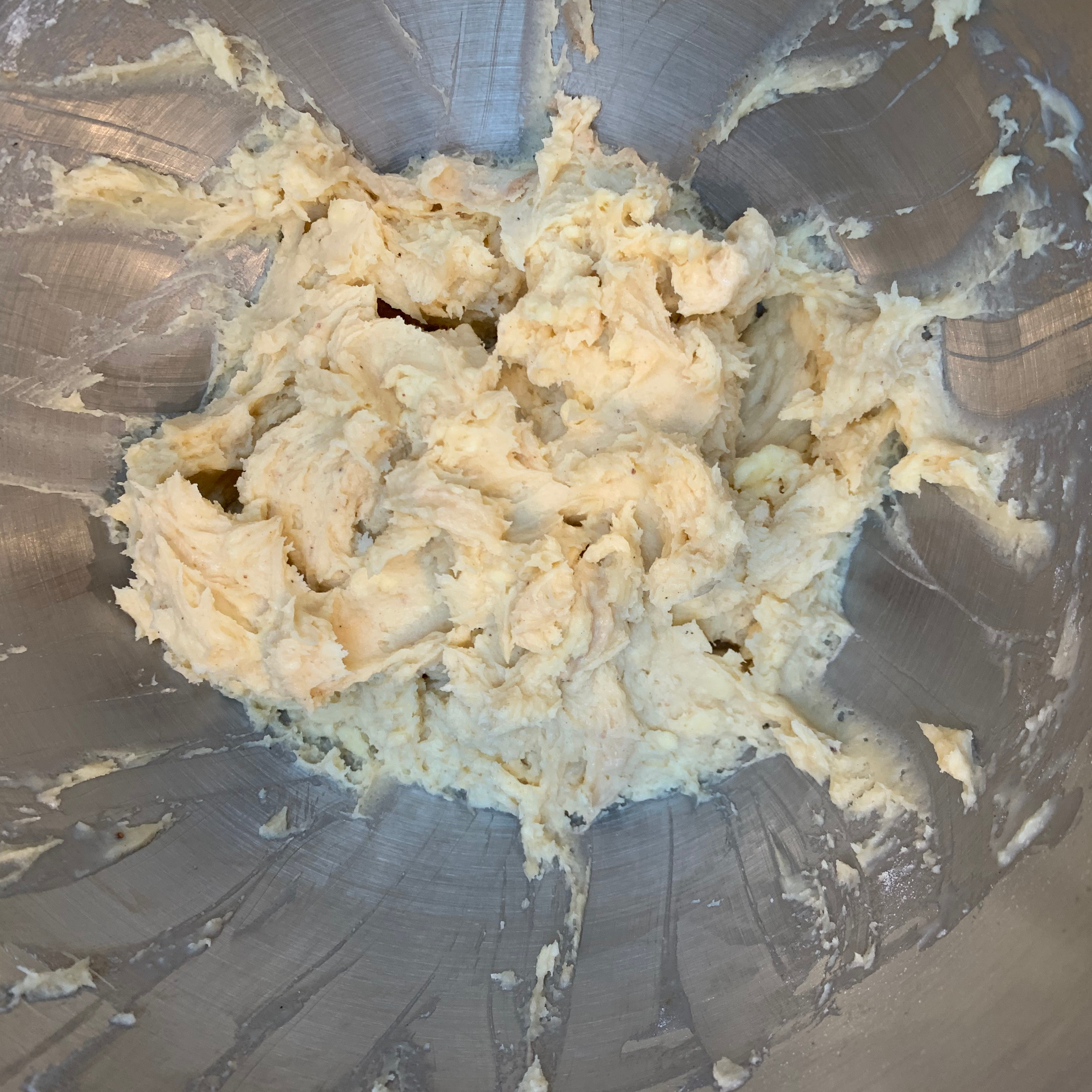
  2. In your first mixing bowl, combine the butter, condensed milk and rum. With the standard beater, mix at medium speed until fluffy (Anita says 8 minutes – mine took half that).
  3. Mix flour salt and spices and add to the bowl, mix for another minute or so until smoothly combined.

The sabayon mix

  • 12 eggs
  • 85g caster sugar
  1. Separate the eggs: put 12 yolks in one bowl and 6 whites into another, which ou’ll be using for the meringue part of the cake mix (discard the other 6 whites, or keep them for making other stuff).
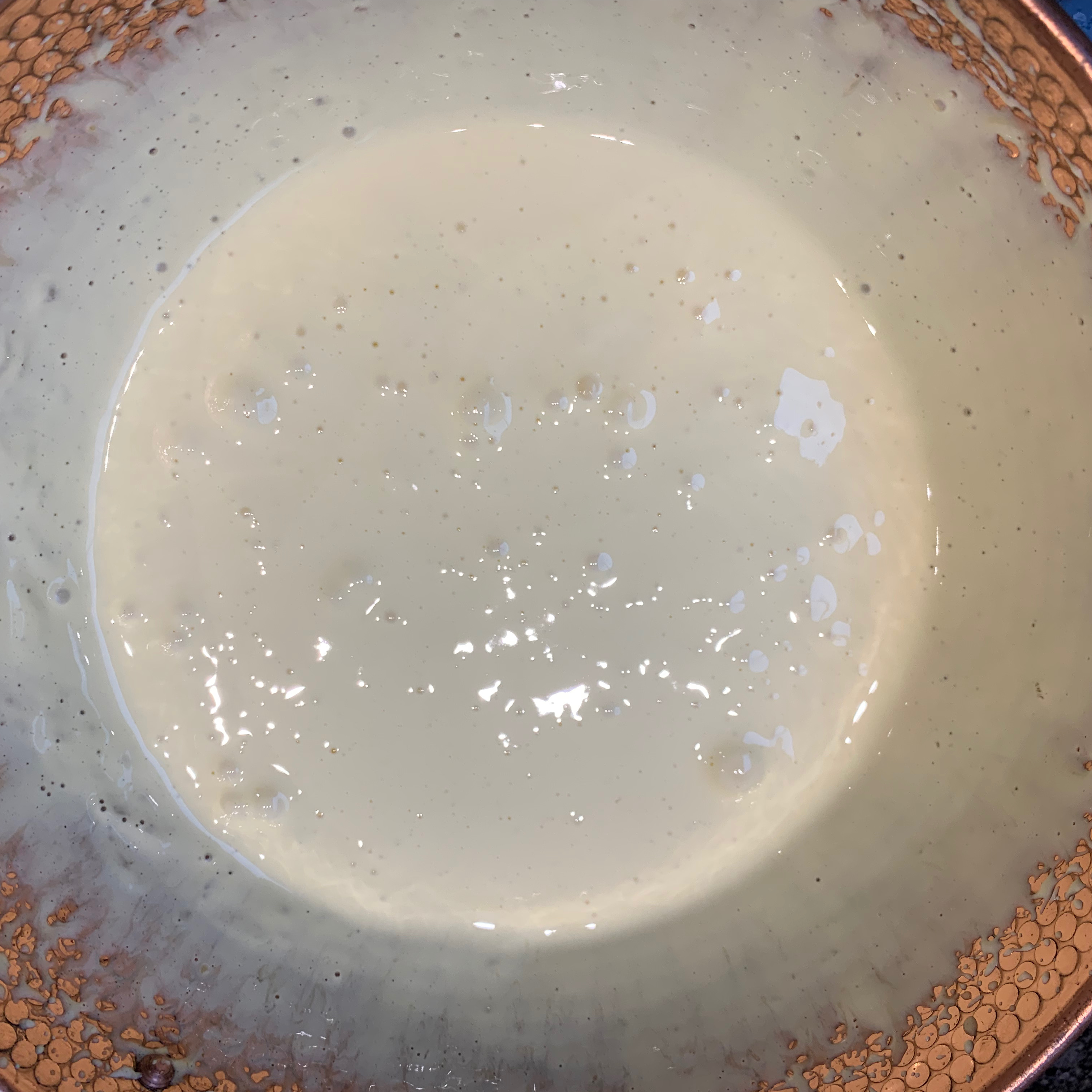
  2. Add the sugar to the egg yolks and whisk at high speed until the reach the consistency of thick cream. They’ll never quite achieve the stiffness of whipped cream, but you can get close.

The meringue mix

  • 6 egg whites from above
  • 55g caster sugar
  • ¼ tsp cream of tartar
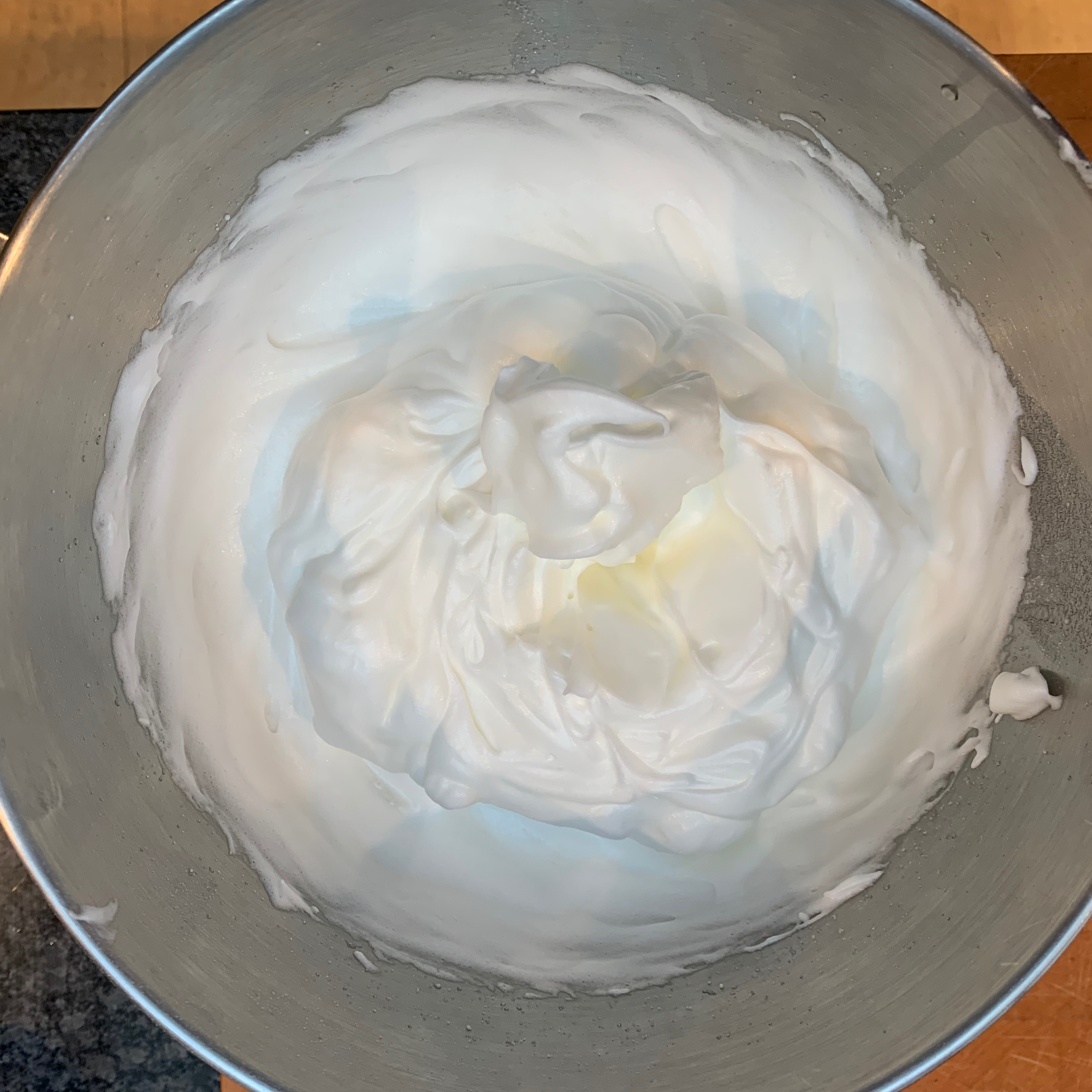
  1. Using the whisk of your stand mixer, beat the eggs at high speed until soft and frothy
  2. Add the sugar and cream of tartar, and beat at high speed until you have a stiff meringue

Putting it together

  1. If the sabayon mix has gone a bit liquid while you were making the meringue, whisk it for another minute or so.
  2. Add the sabayon mix into your butter base and mix using the standard beater until smoothly combined.
  3. Fold the meringue into your mixture until smoothly combined, with no bits of unmixed egg white left.
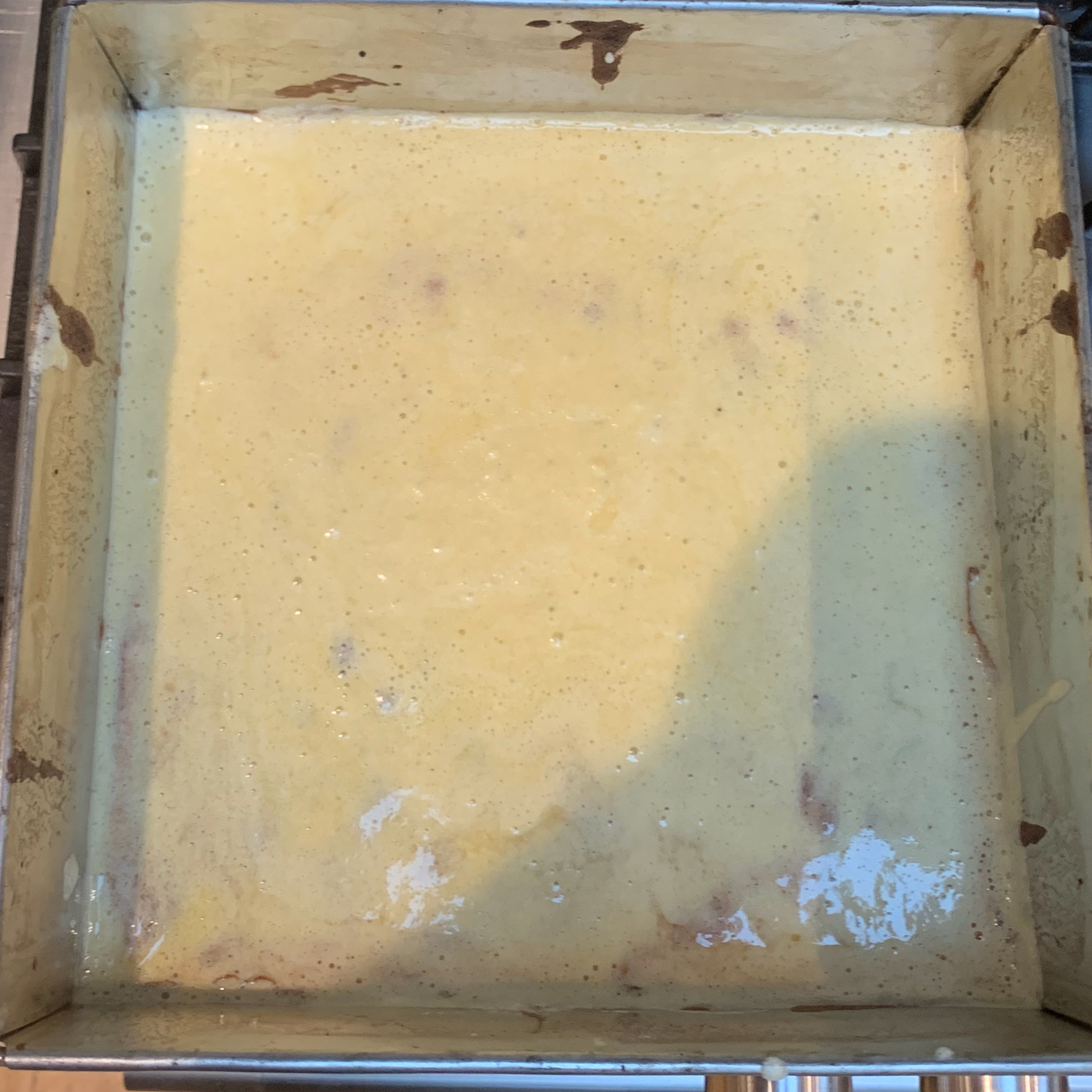
  4. Pour a couple of ladelfuls of mix into your cake tin and spread it so that you have a thin, even layer. Ideally, you want around 3-4mm thickness (on the photos here, I was somewhat over that).
  5. Put in the middle shelf of the oven and bake until the top is golden. You’ll need something like 8 minutes, but check it after 5-6, because it really depends on your oven and on the thickness of your mixture.
  6. Take the cake out of the oven and switch it to its top grill setting at maximum temperature (or set up your separate grill if that’s what you have). Move the oven shelf to its highest position.
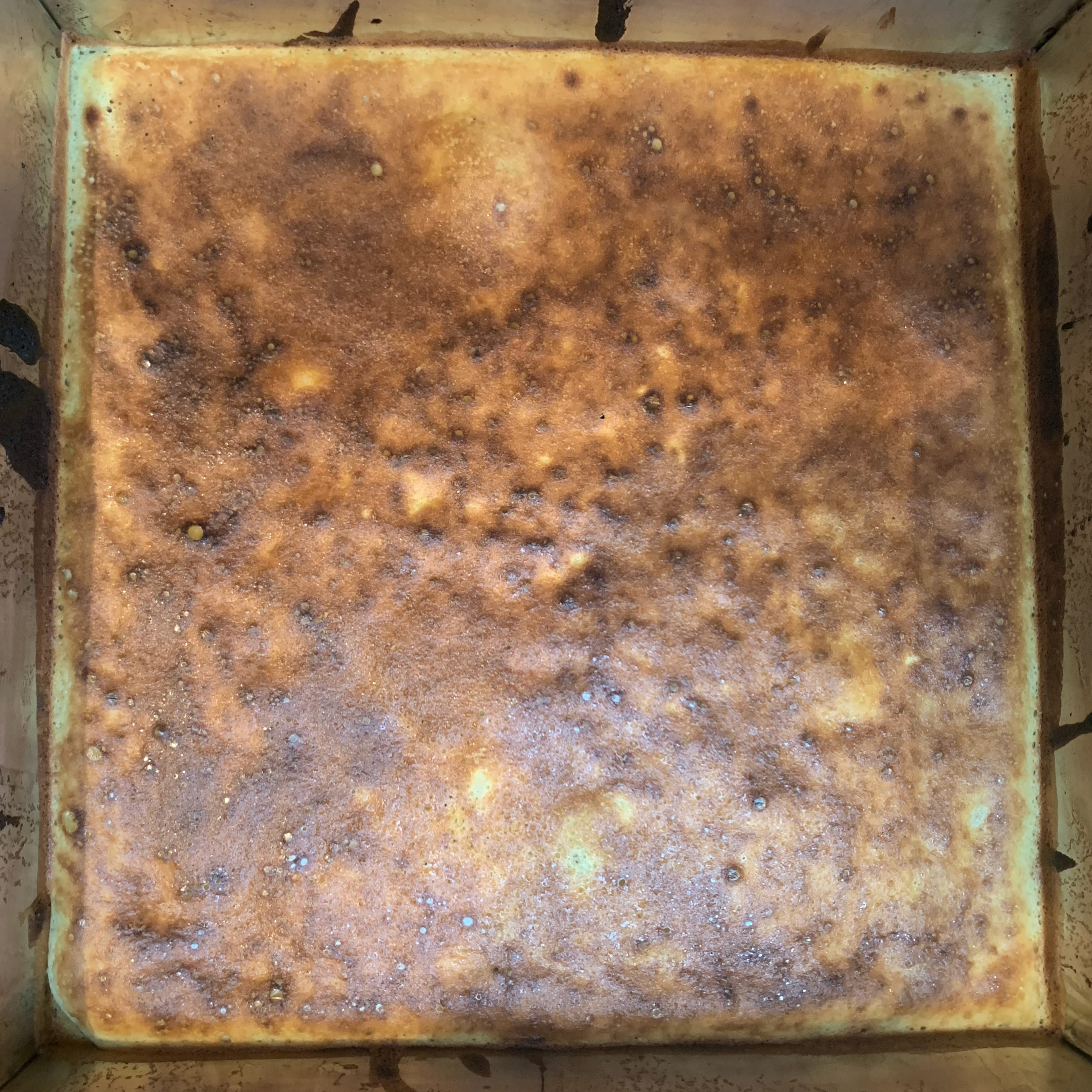
  7. Pour another ladelful or so of mixture into the tin. It will go more liquid as it contacts the hot surface. Your objective now is to get the thinnest possible layer of mixture that completely covers the whole cake: I achieved this by the combination of using an offset spatula and by tilting the tin in different directions until the coverage was smooth.
  8. Put the cake under the grill, and cook until golden brown. This will take between one and two minutes: you need to watch it like a hawk because the difference between uncaramelised yellow and burnt can be as little as 20 seconds.
  9. Take the cake out and repeat until you have run out of mixture. You’re trying to get as many layers as you can – I managed around 8.
  10. Once you’ve grilled the last layer, take the cake out and cool it in the tin for around half an hour.
  11. Finally, put a knife around the sides to make sure the cake has come away from all four sides, and take the cake out of the tin (if the tin has a removable base, this should be very easy).
  12. Enjoy…
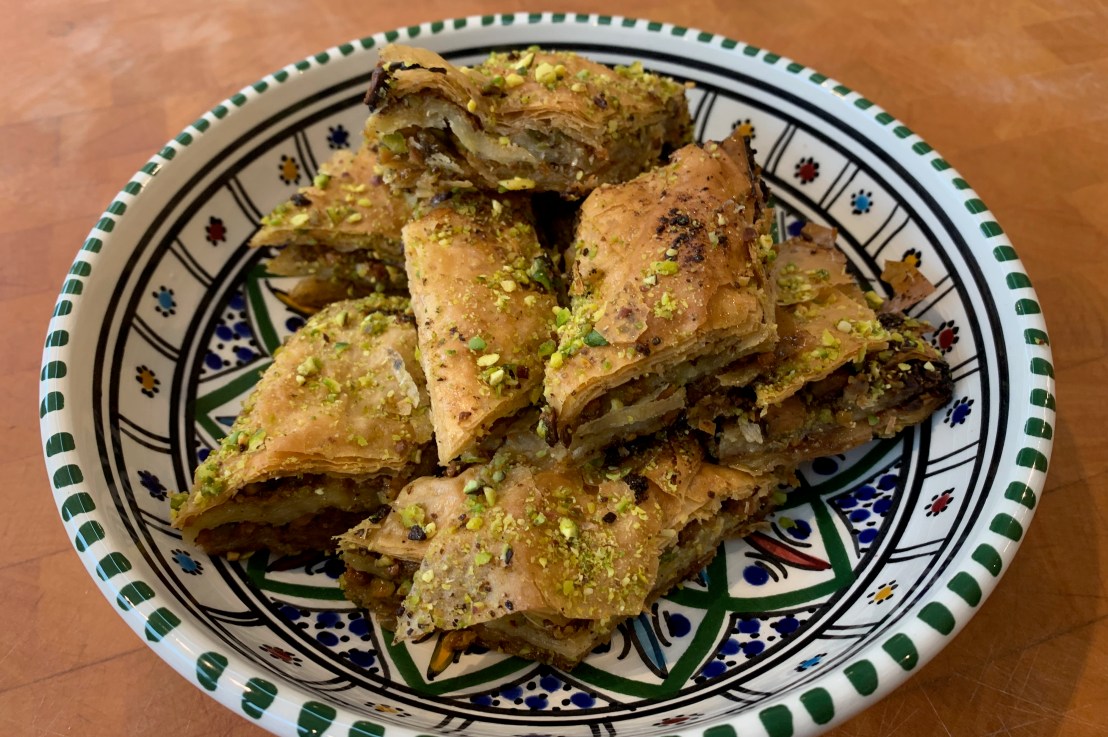
Around the world in 80 bakes, no.63: Pistachio Baklava from Turkey

Around the world in 80 bakes, no.63: Pistachio Baklava from Turkey

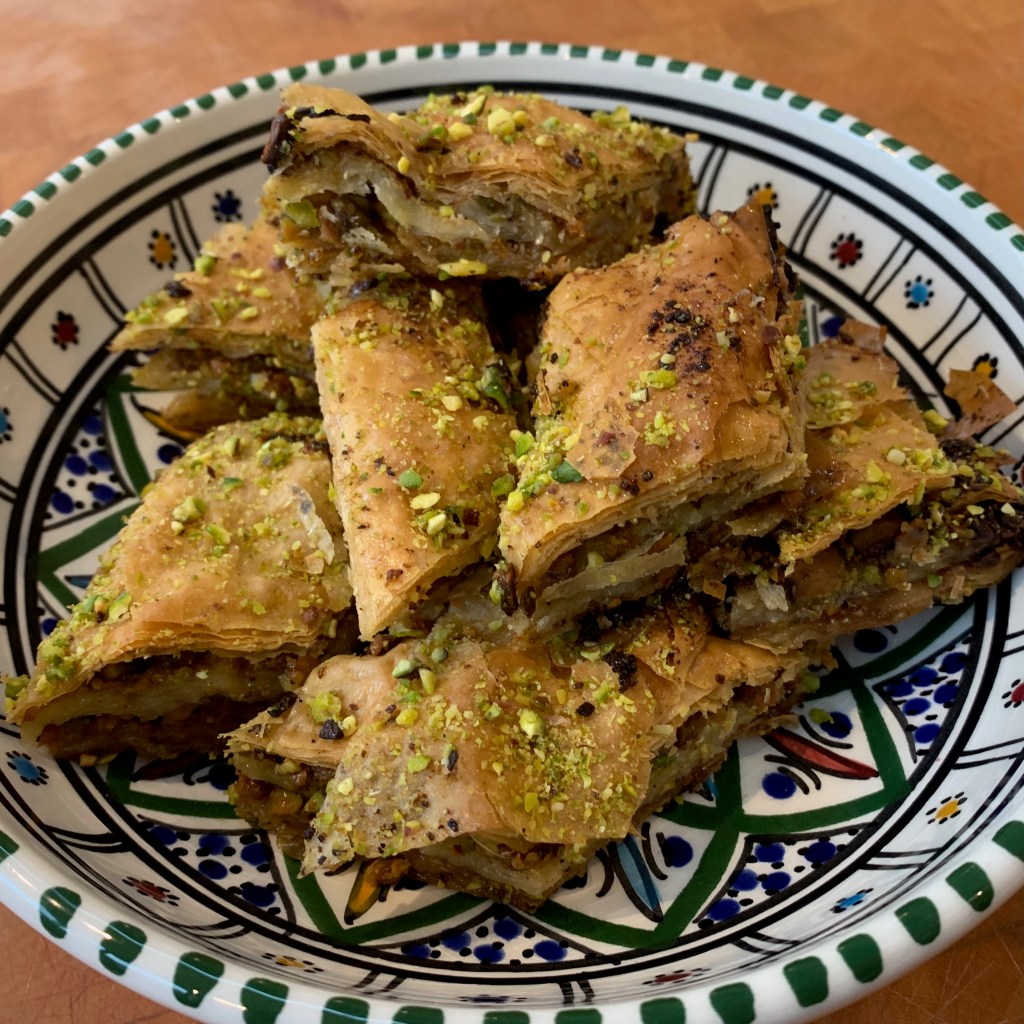
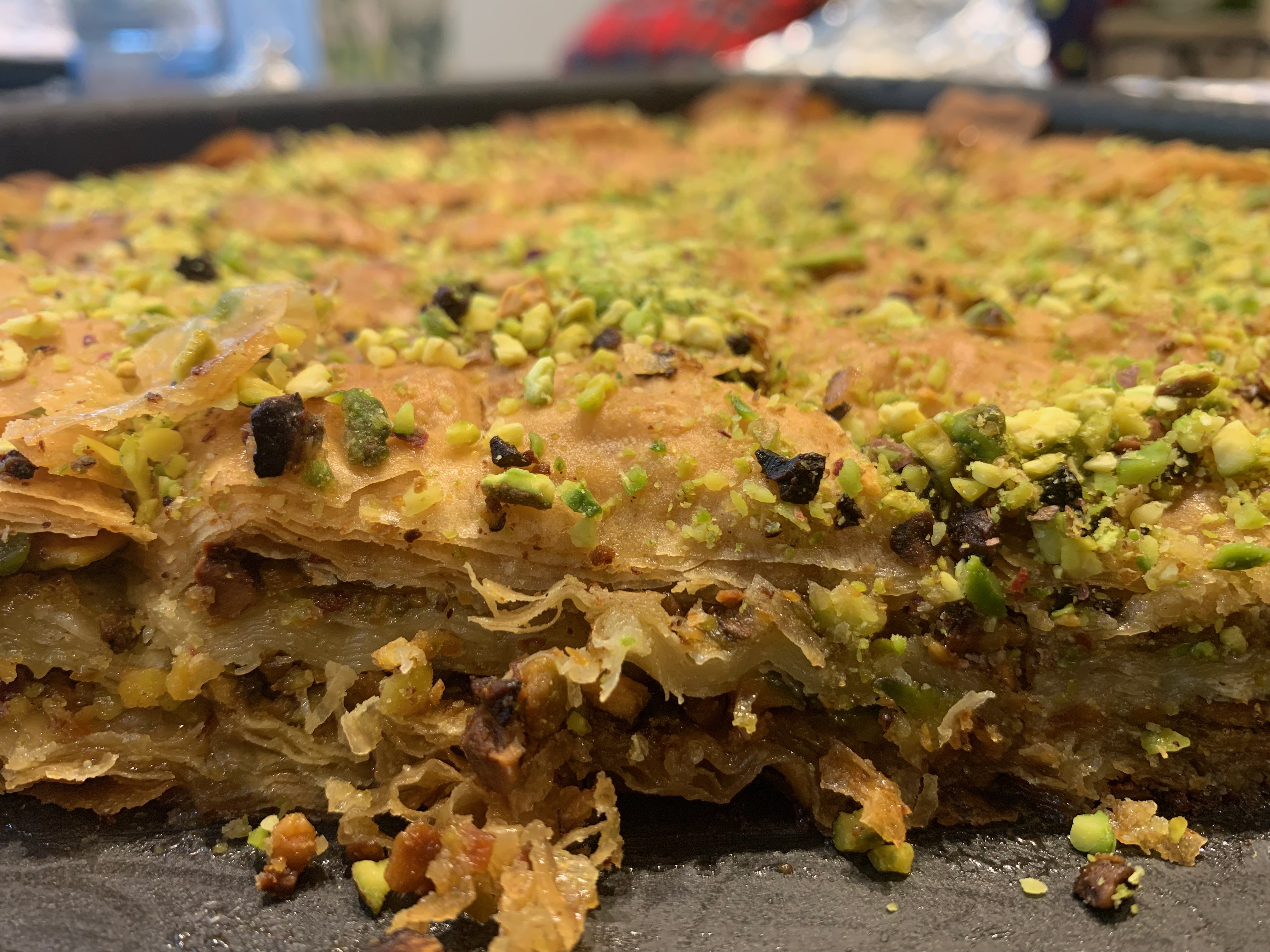
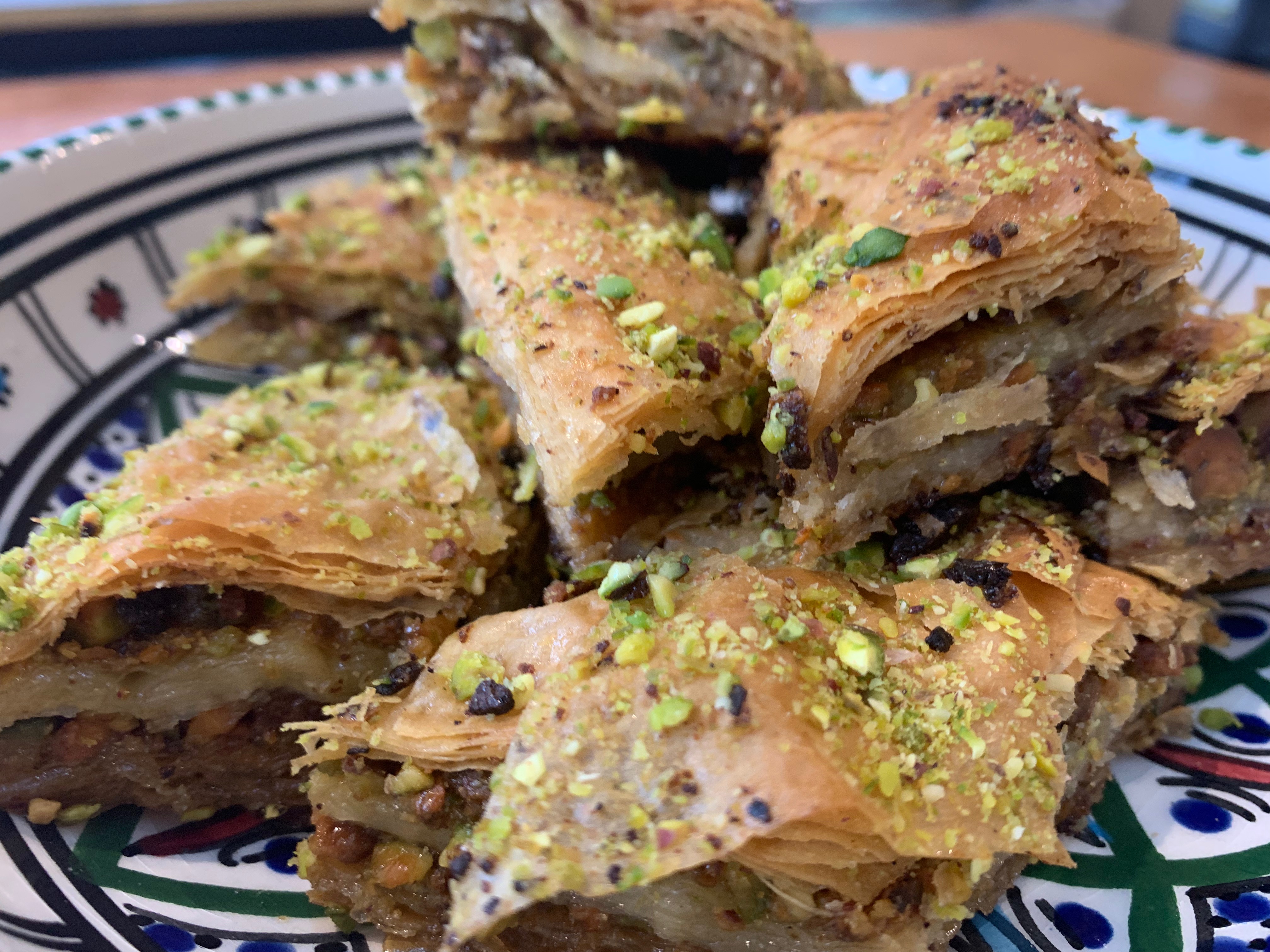
As we get close to 80% of the way round the world on this journey, I have to admit, dear reader, that some of the bakes have been getting a bit on the obscure side (and there are more of those to come). Baklava, however, isn’t one of those: the nut-filled, syrup-infused flaky pastries feature on the dessert menu of just about every Turkish, Greek, Persian or Middle Eastern restaurant on the planet, not to mention innumerable cafés.

Although scholars point at recipes for vaguely baklava-like desserts going all the way back to ancient Greece, the dish as we know it today probably showed up in the kitchens of the Ottoman Empire. So essential is the dish to Turks today that during Ramadan in 2020 – in the eye of the storm of the Covid-19 pandemic – baklava bakers were granted specific permission to stay open on the grounds that this was an essential commodity (if you don’t believe me, check out the New York Times article).

 There are many variations as to the choice of nuts, the make-up of the syrup and the way the final product is shaped, but roughly, it comes to this: the Greek version is likely to be filled with walnuts and soaked in a honey based syrup, whereas the Turkish version is more likely to use pistachios with a lemon-infused sugar syrup. That’s a very broad brush distinction – you’ll find plenty of exceptions, mixtures and different ideas.

I’m going to assume that in common with 99.99% of home cooks on the planet, or at least outside the Middle East, you have no intention of making your own filo pastry. On that basis,  making your own baklava is relatively straightforward, albeit time-consuming – it depends on how quick you are at laying out sheets of filo and brushing melted butter over them, which you’re going to be doing a lot of. I ended up with a kind of amalgam of recipes from The Spruce Eats, The Mediterranean Dish and Cleobuttera. The key thing to remember is to pour cold syrup over the hot baklava and then leave it to soak for a substantial amount of time.

The syrup

  • 450g sugar
  • 750ml water (see note below about quantities)
  • Juice of ½ lemon (around 30ml)
  • Optional: 10g liquid glucose, which is supposed to help prevent your syrup from crystallising
  • Optional: other flavourings such as orange blossom water, orange extract or cloves – I didn’t use any
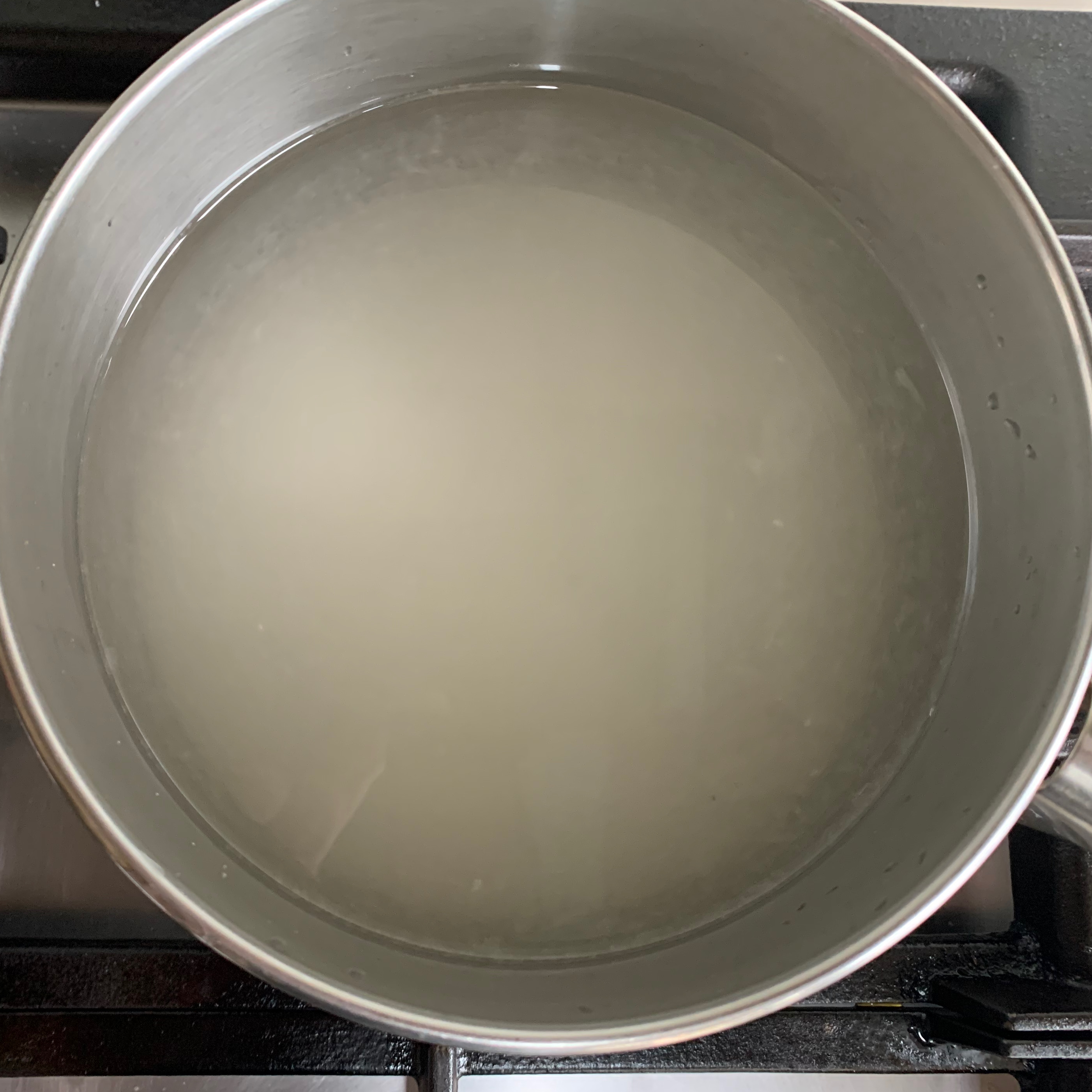
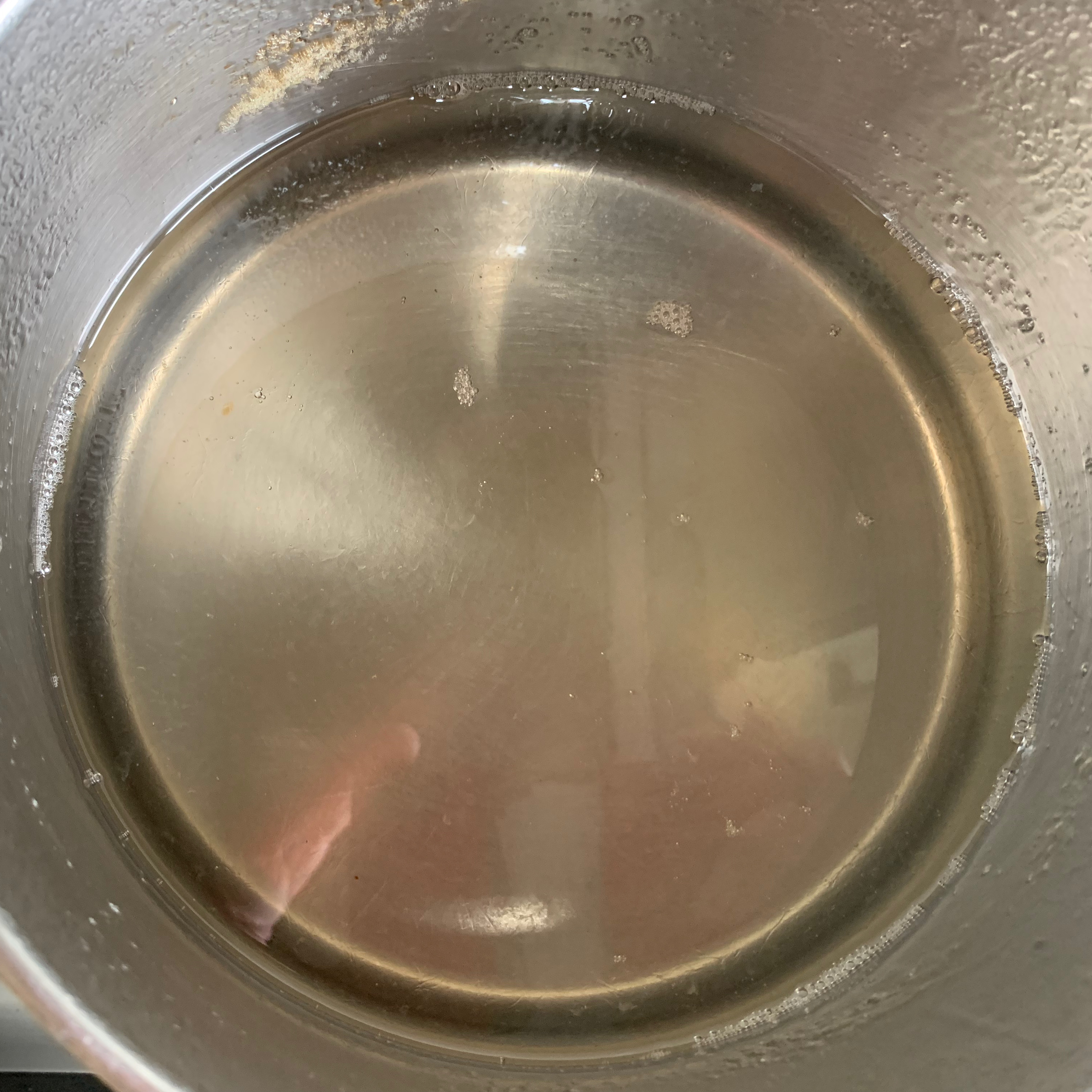
  1. Put all items into a small saucepan and mix
  2. Bring to the boil and simmer until you have a thick syrup, around 104℃
  3. Take the saucepan off the heat

The quantities in this recipe seems to be set so that you leave the syrup on for the whole time you’re making the baklava, reaching the right stickiness around the time you finish. This kind of worked, but next time, I think I’ll use a third of the amount of water and just get it done in adavance, with a fraction of the time boiling down.

The main thing

Ideally, you want a baking dish the same size as your filo sheets, at least 2.5 cm deep.. Mine was 37 cm x 27 cm, which was around 3 cm too narrow, so I had to trim down the filo. A word of warning, though: you will be cutting the baklava in the dish before it goes into the oven and, most likely, again when it is baked. This will probably gash any non-stick coating on your dish (it did mine). You can probably help matters by lining the tray with a single piece of baking paper so that you can lift the whole lot out after baking, which at least means you’ll only wreck it once rather than twice. Alternatively, a Pyrex dish might be a better choice.

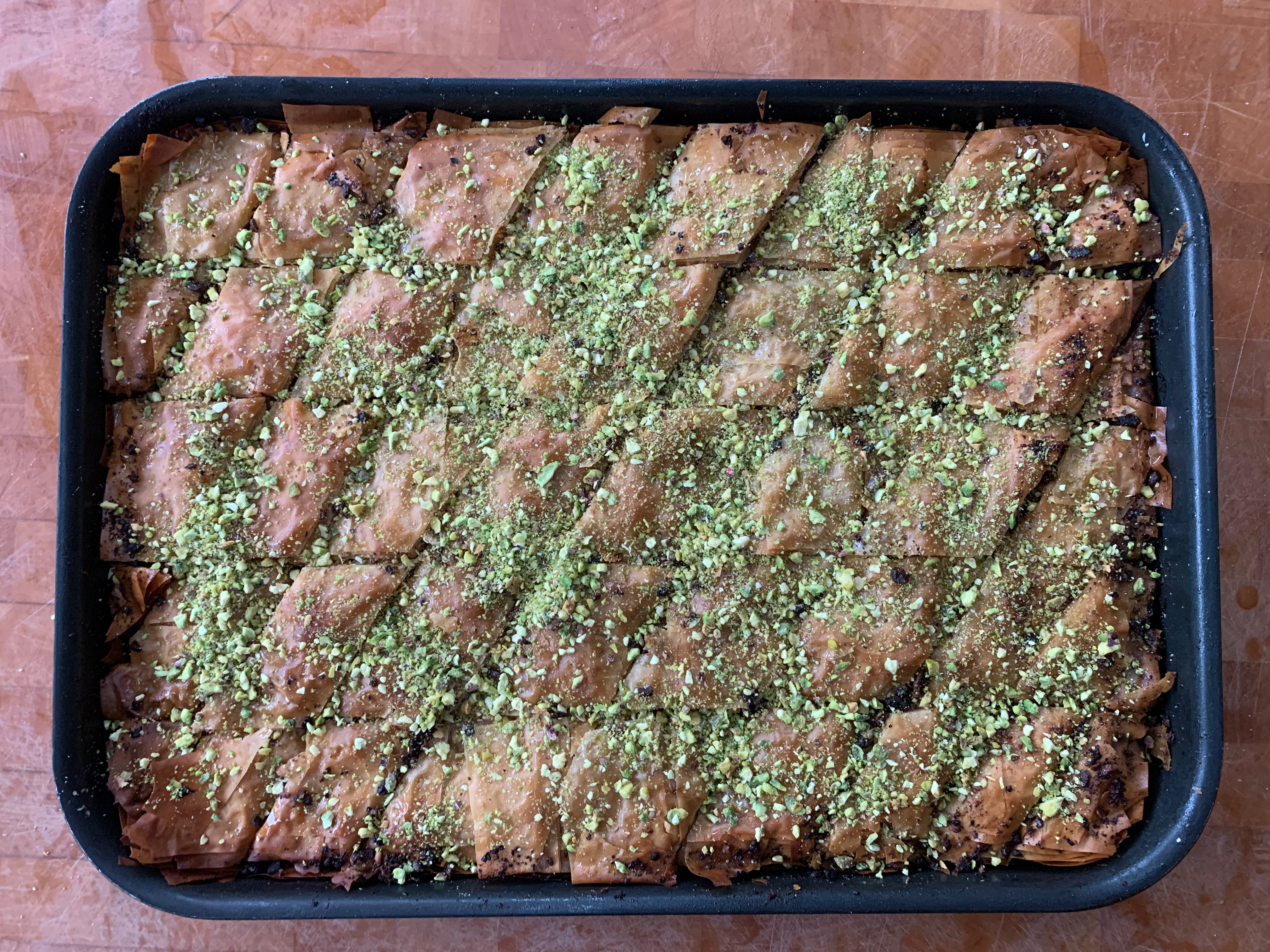
The diamond shape I used is pretty traditional, but you can, of course, try many different ideas: baklava is often sold in squares or rectangles.

The quantities assume that your filo comes in 250g packs, each of which has around 15 sheets. This lets you make three layers of 10 sheets each. Adjust the number of sheets accordingly: you want to use around ⅔ of a pack for each layer. Some recipes, by the way, just use two layers of filo with one layer of nuts – that’s fine too.

Next warning: filo dries out easily. Keep it covered with a tea towel at all times other than the minimum few seconds you need to peel a sheet off the block.

  • 400g shelled, unsalted pistachios
  • 40g sugar
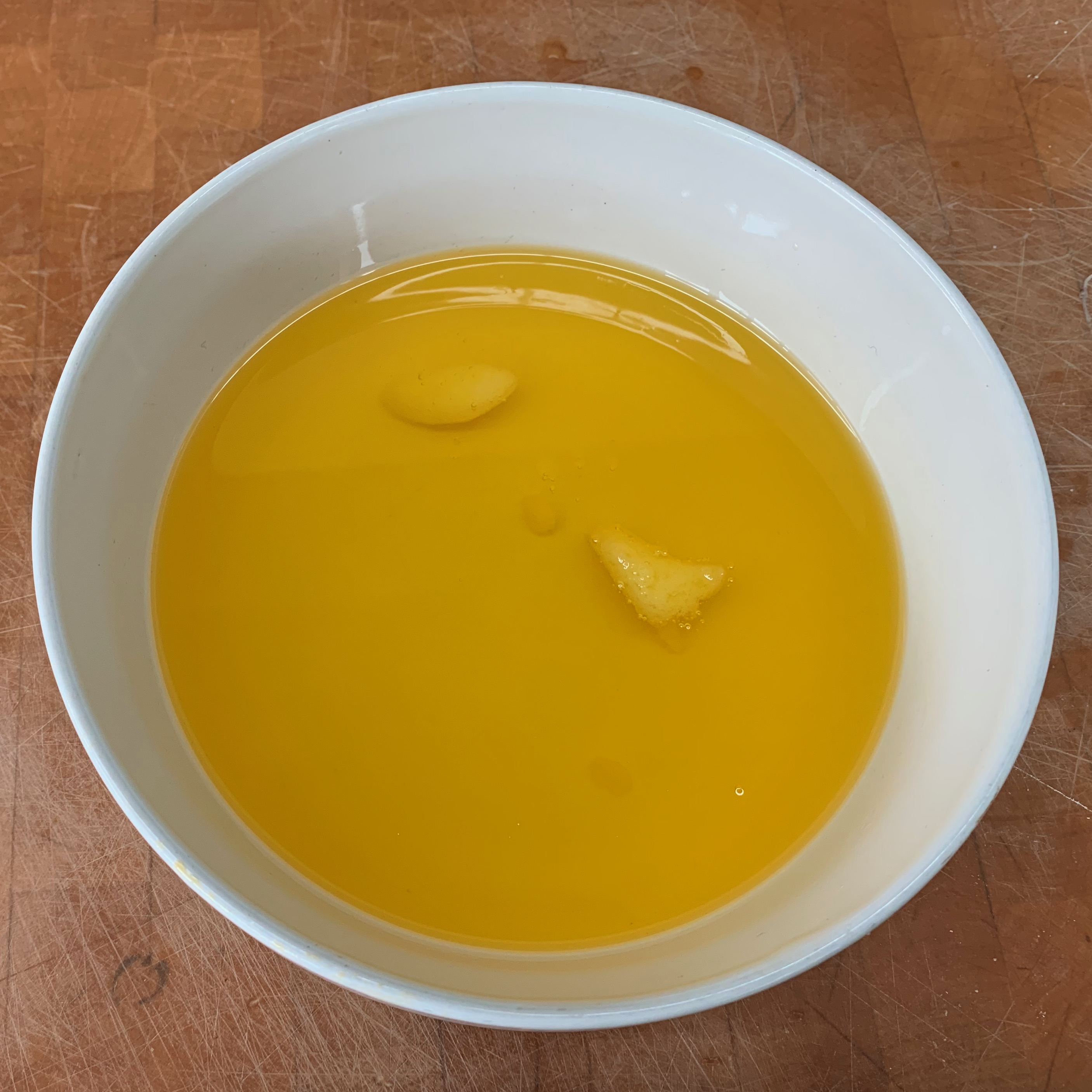
  • 250g ghee (use clarified butter if you prefer or if you can’t get ghee)
  • 500g filo pastry (fresh or frozen)
  1. Preheat oven to 200℃ fan.
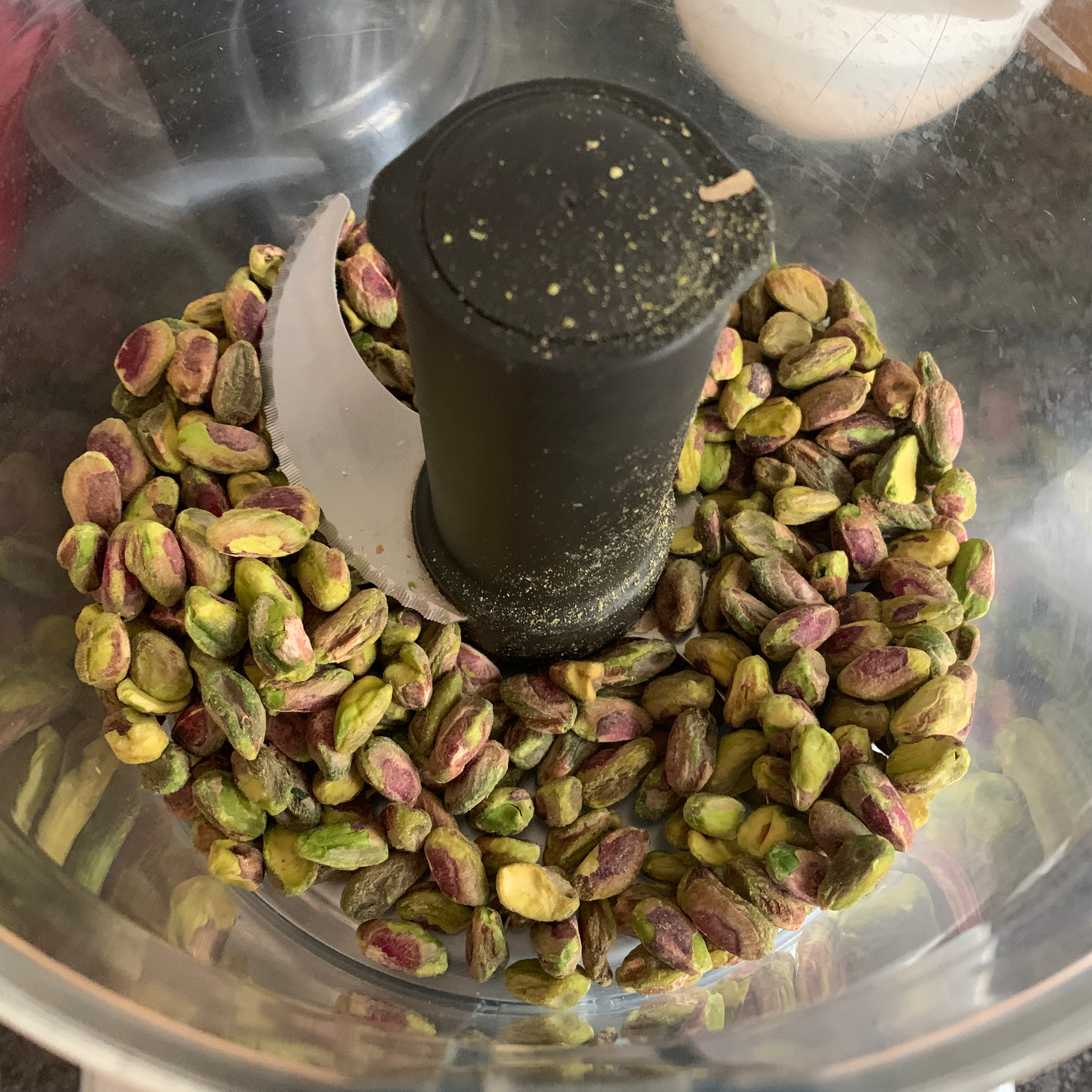
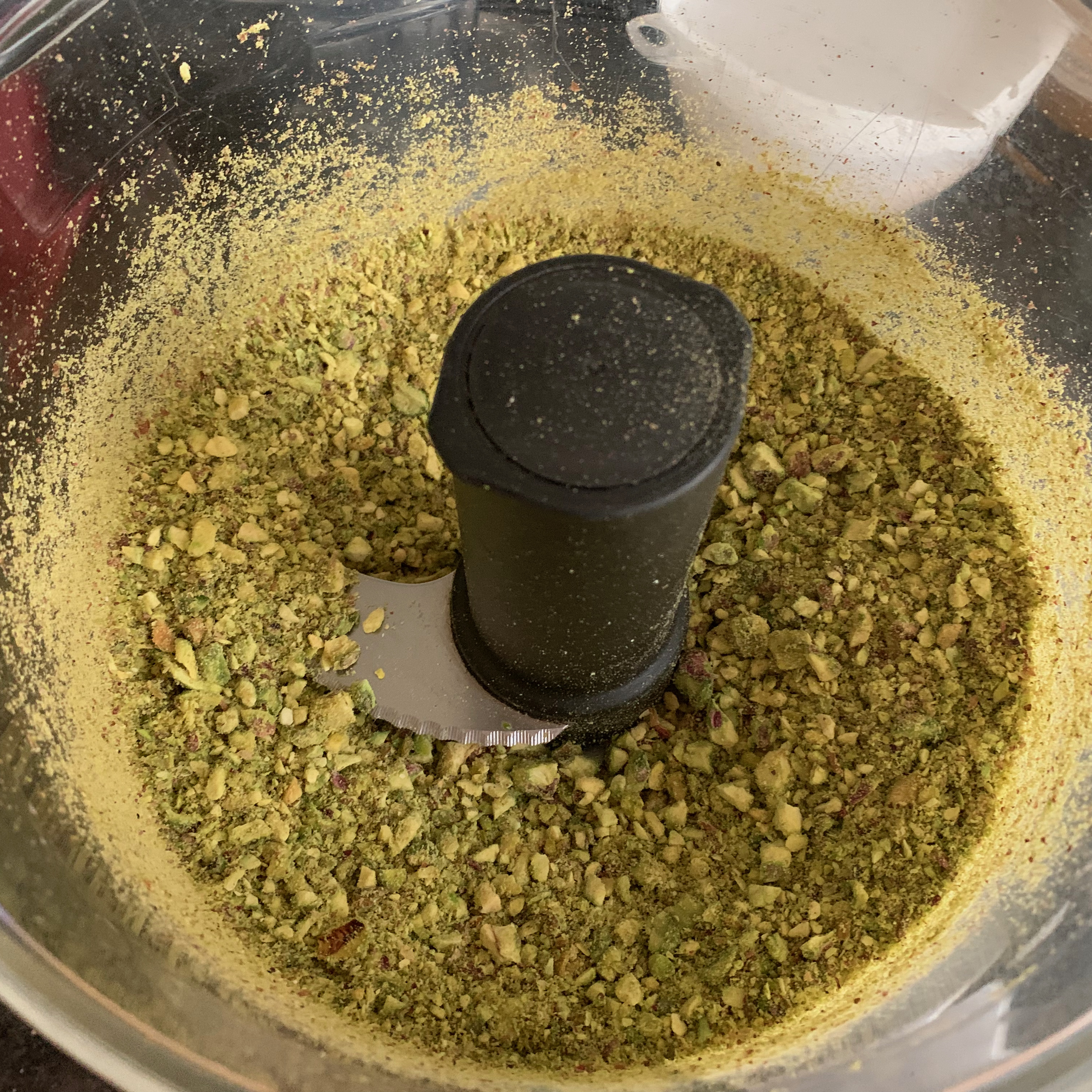
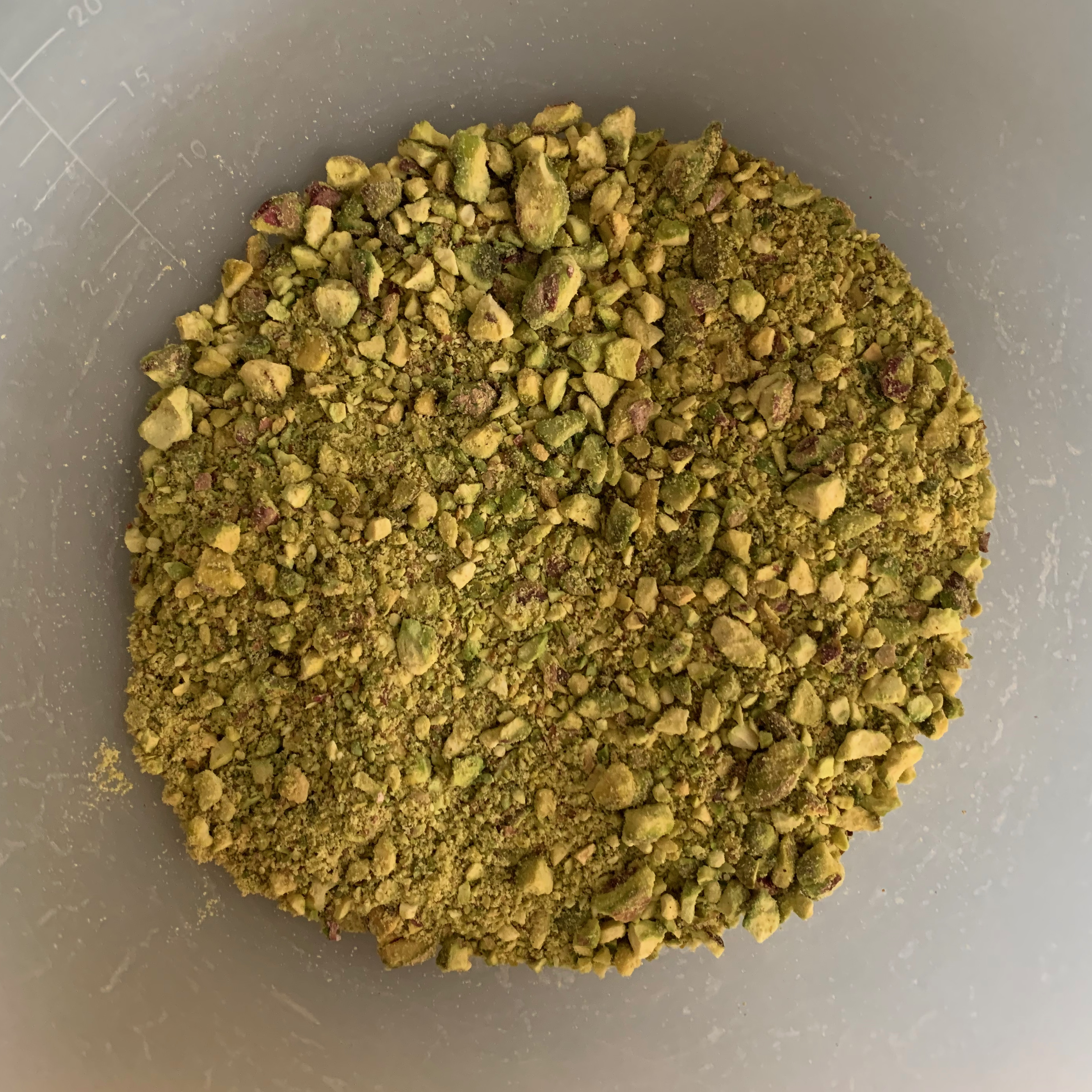
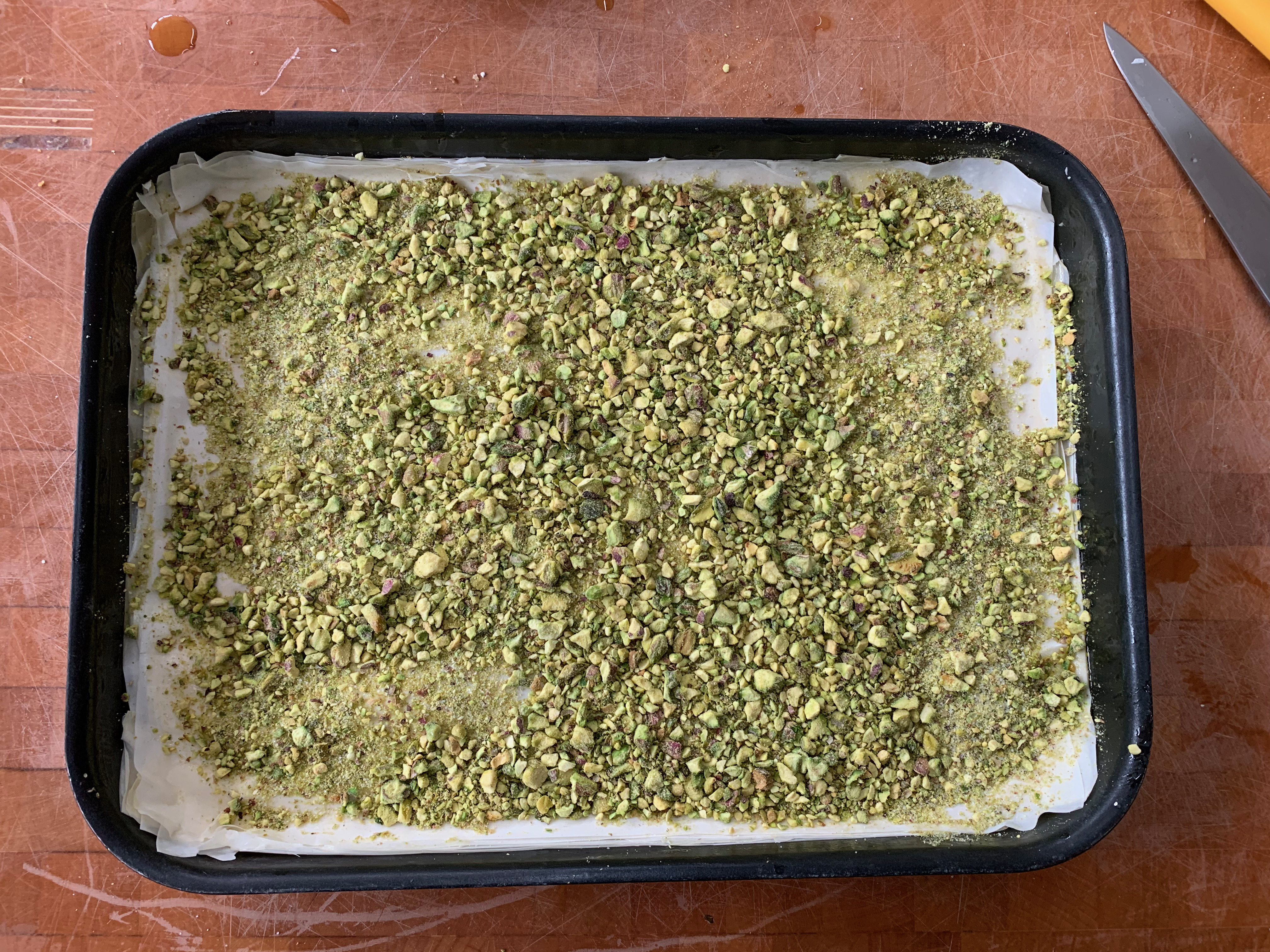
  2. Blitz the pistachios in a food processor until they are mostly powdered but still have a coarse texture with lots of small pieces.
  3. Transfer to a small bowl, add the sugar and mix. Reserve 50g for garnish after the baklava is baked.
  4. Melt the ghee.
  5. Spread your baking dish with ghee, and scatter a thin layer of pistachios.
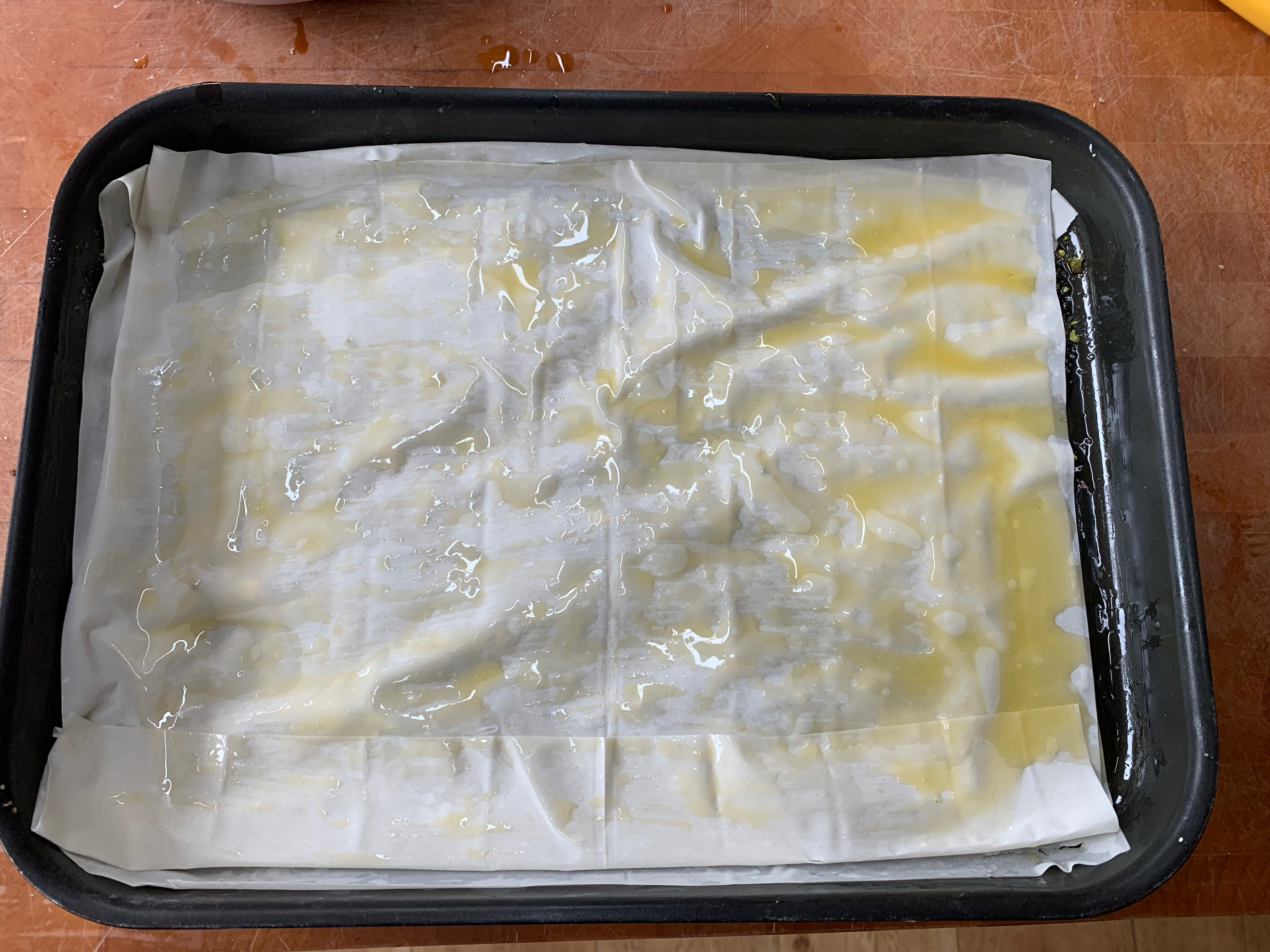
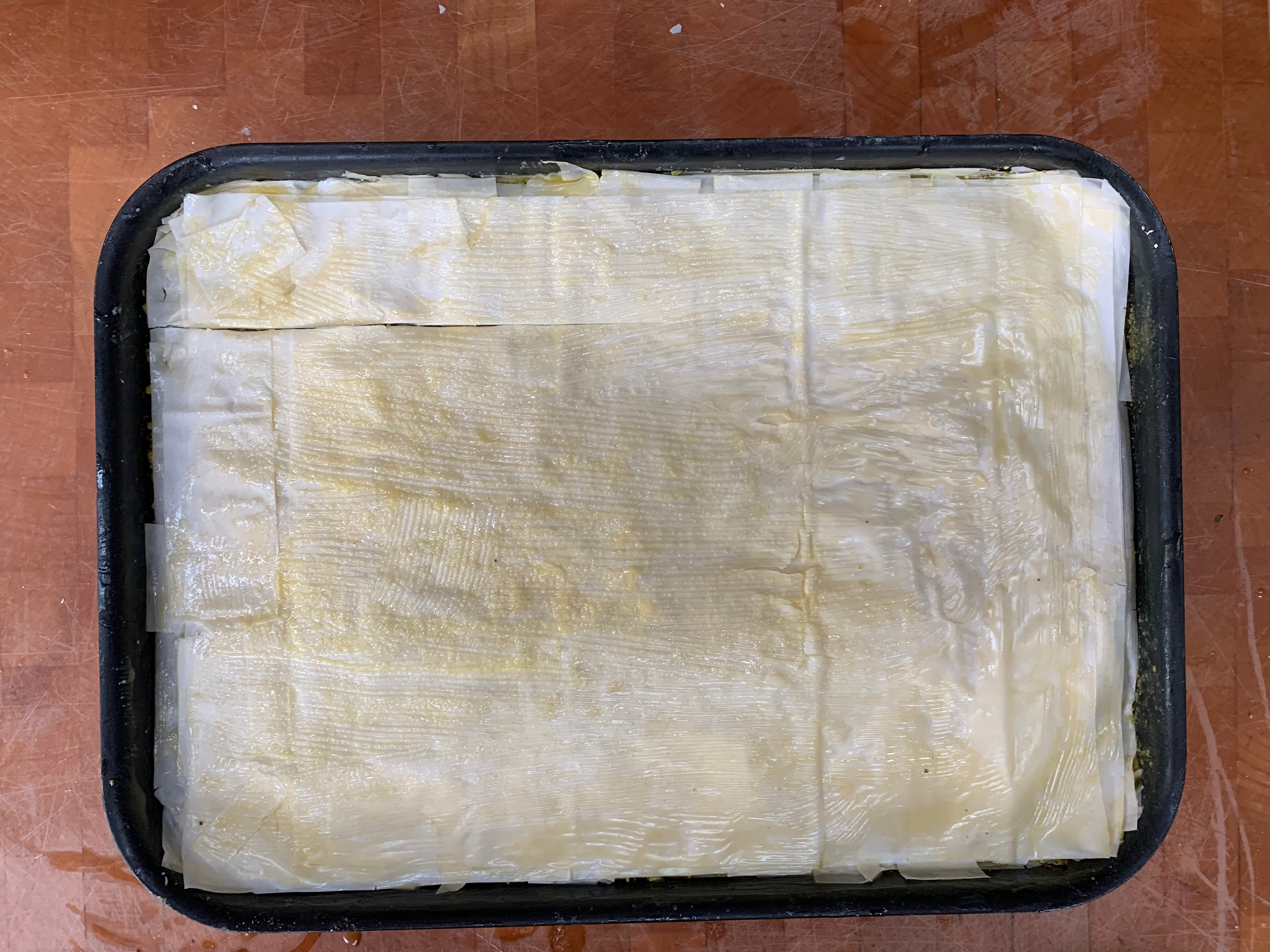
  6. Now work quickly. Peel a layer of filo off your block and place it on your dish. Cover the block with a tea towel. Spread the layer with ghee. Repeat around 10 times (see note above).
  7. Spread half the pistachio sugar mix evenly over the dish. You may need to shake the dish to get it even.
  8. Repeat steps 6 and 7.
  9. Repeat step 6 for a third time to get your top layer of filo.
  10. Brush the top of your pastry with the remaining ghee. If there isn’t enough for a generous amount, melt some more: you don’t want dry filo at the top.
  11. Cut the baklava into a diamond pattern – around 5 strips along the shorter side and around 8 along the longer side. This gets you 40 generously sized baklava – you can go smaller if you want.
  12. If your syrup is still boiling, wait until it’s reached the right stickiness and you’ve taken it off the heat.
  13. Bake until golden brown, around 40 minutes.
  14. Remove the dish from the oven and place it on a rack. Pour the syrup evenly over the whole dish, then sprinkle evenly with the reserved pistachio mix. 
  15. Cover with foil (otherwise, you’ve just created the world’s biggest attraction for the local insect life) and leave to cool.
  16. When it’s cool enough, put it in the fridge and leave for at least 8 hours (or overnight). Freshly made baklava just doesn’t have the right consistency (we checked this).
  17. Re-cut into its diamond shapes and serve.

Around the world in 80 bakes, no.54: Basler Kirschenbrottorte from Switzerland

Around the world in 80 bakes, no.54: Basler Kirschenbrottorte from Switzerland

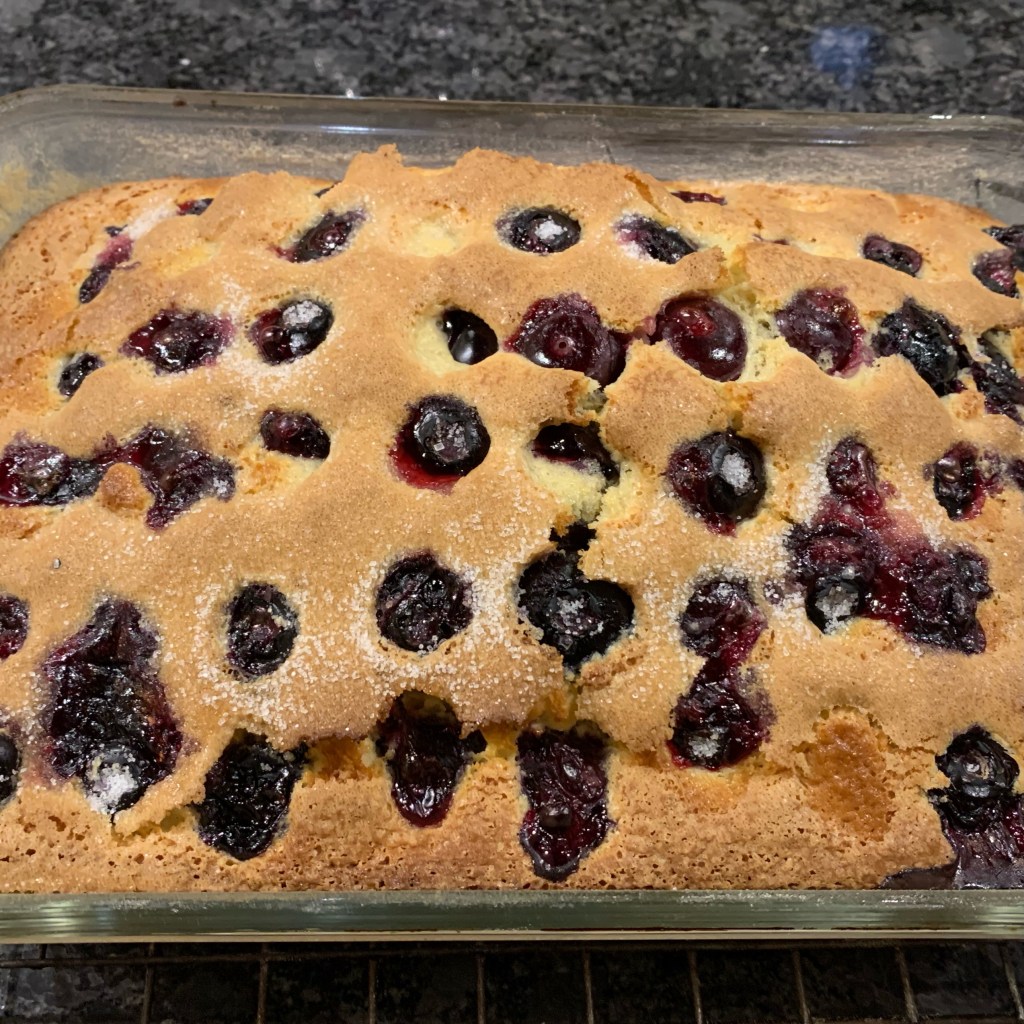
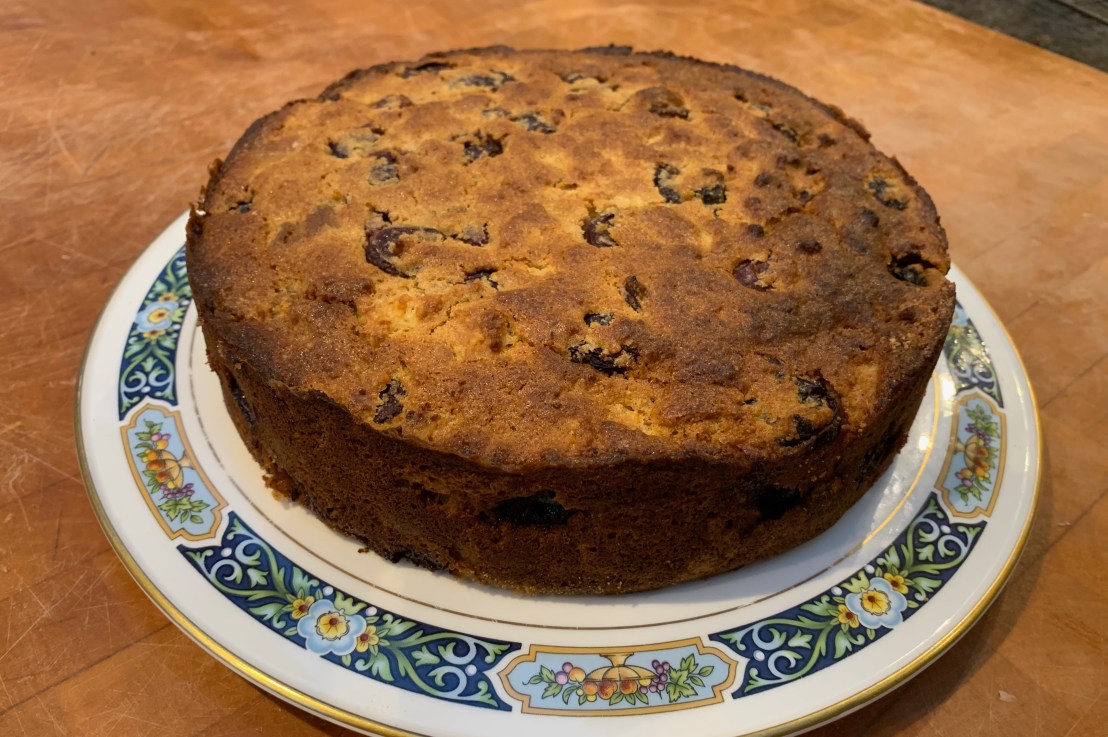
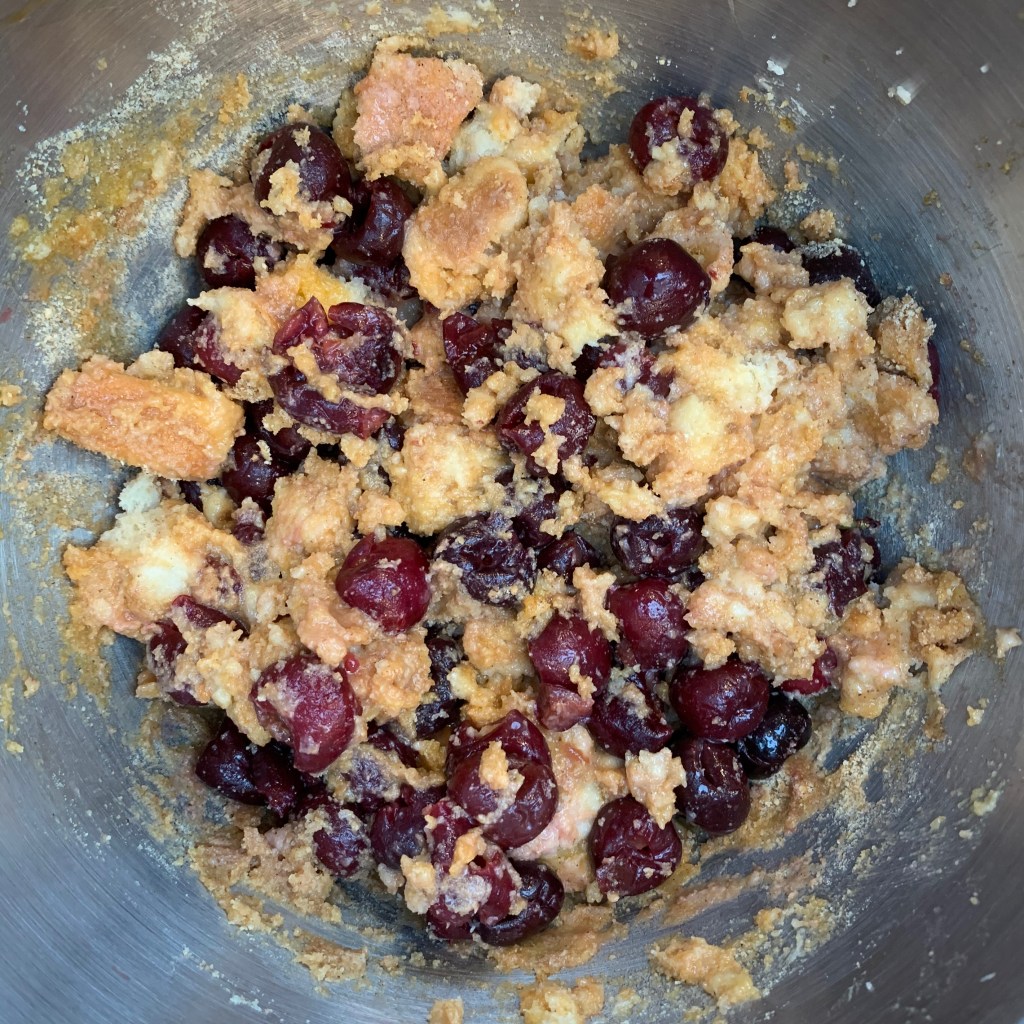
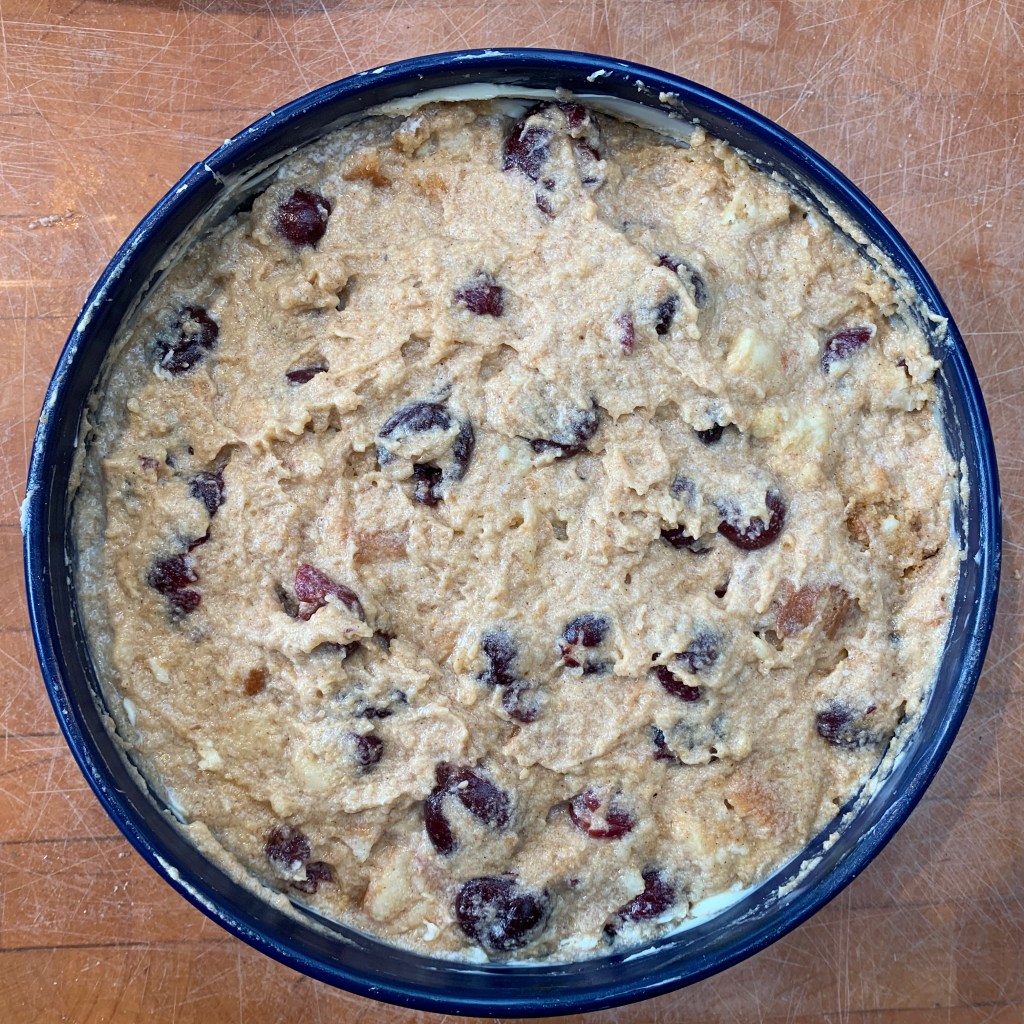
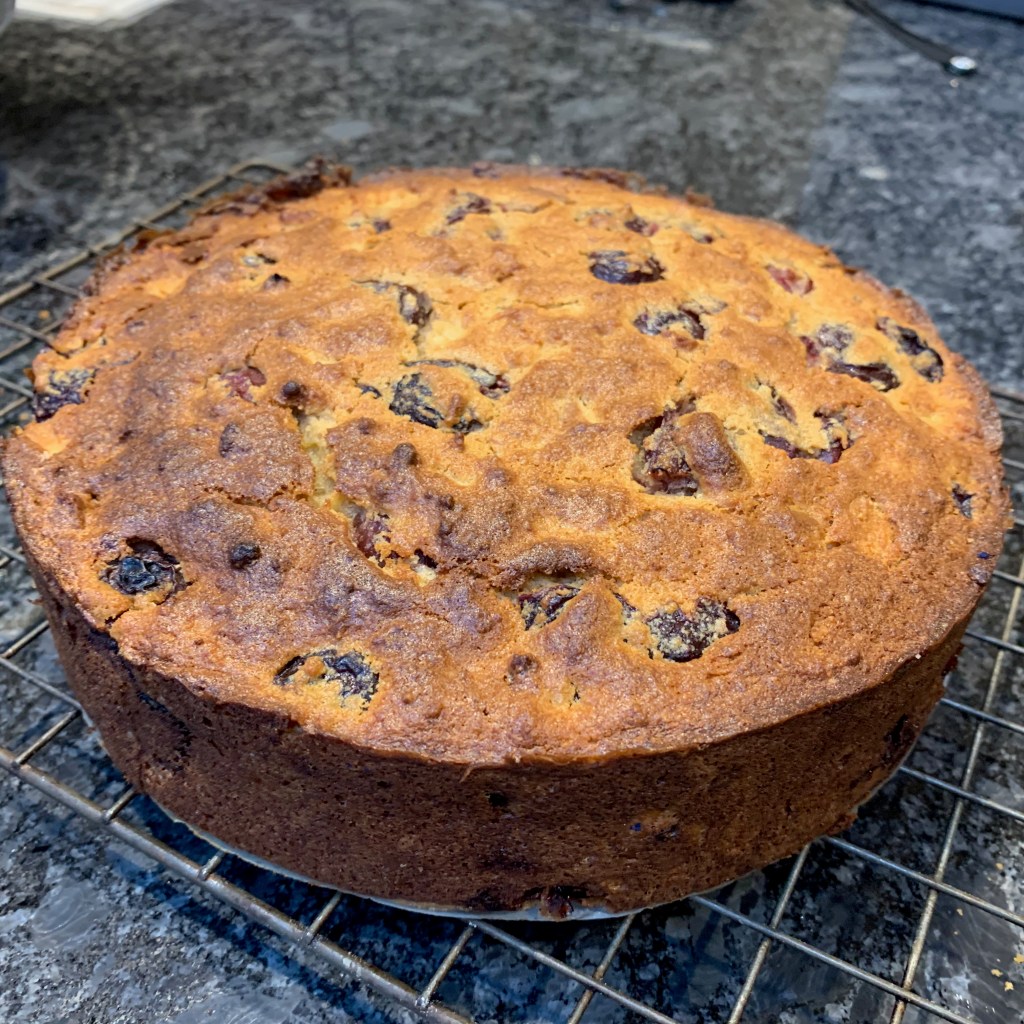
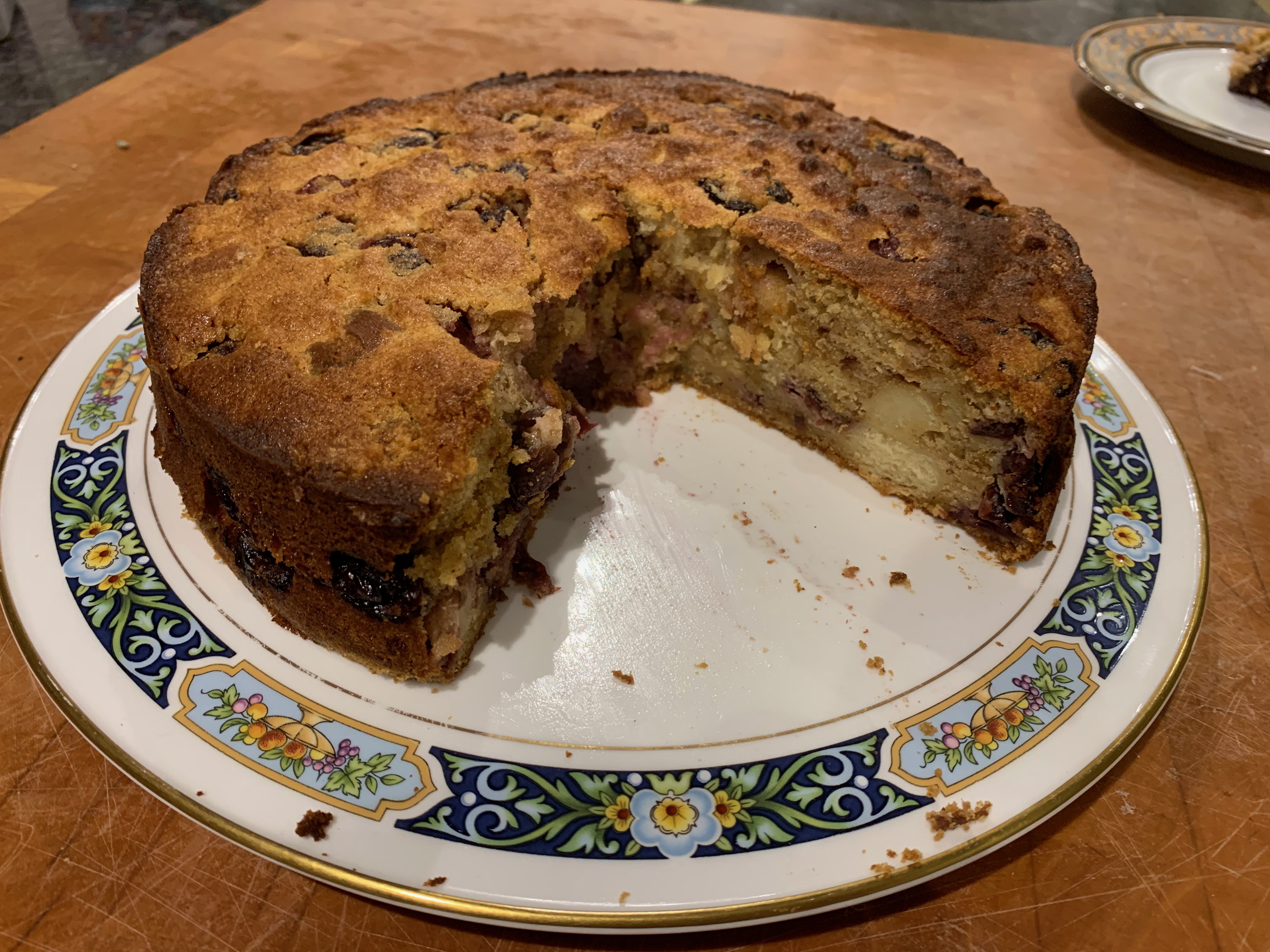
The German (or, in this case, Swiss-German) habit of running nouns together does sometimes lead you to a recipe that does exactly what it says on the tin: Basler Kirschenbrottorte (cherry-bread-cake from Basel) is, er, a cake whose two main ingredients are bread and cherries. And which comes from the city on the triple border between Switzerland, France and Germany. It’s surprisingly light for something which is not so far from a bread pudding, it’s fruity, cinnamon infused and bursts with flavour. This recipe comes from the food blog Helvetic Kitchen, where it’s accompanied by a nice family story to go with. I’ve halved the quantities.

To state the bleeding obvious, it isn’t cherry season in London right now, so I’ve gone for a 500g pack of frozen black cherries. This seemed to do the job OK, with the advantage that the cherries arrive already stoned, albeit with care needed to ensure that they were properly defrosted and with most of the surplus water dried off. However, I’m going to suggest that if you have fresh cherries growing anywhere near you, the way to go is definitely going to be to make this in season.

Warning: this recipe uses a lot of bowls. I can’t see an obvious way around this.

  • 500g cherries
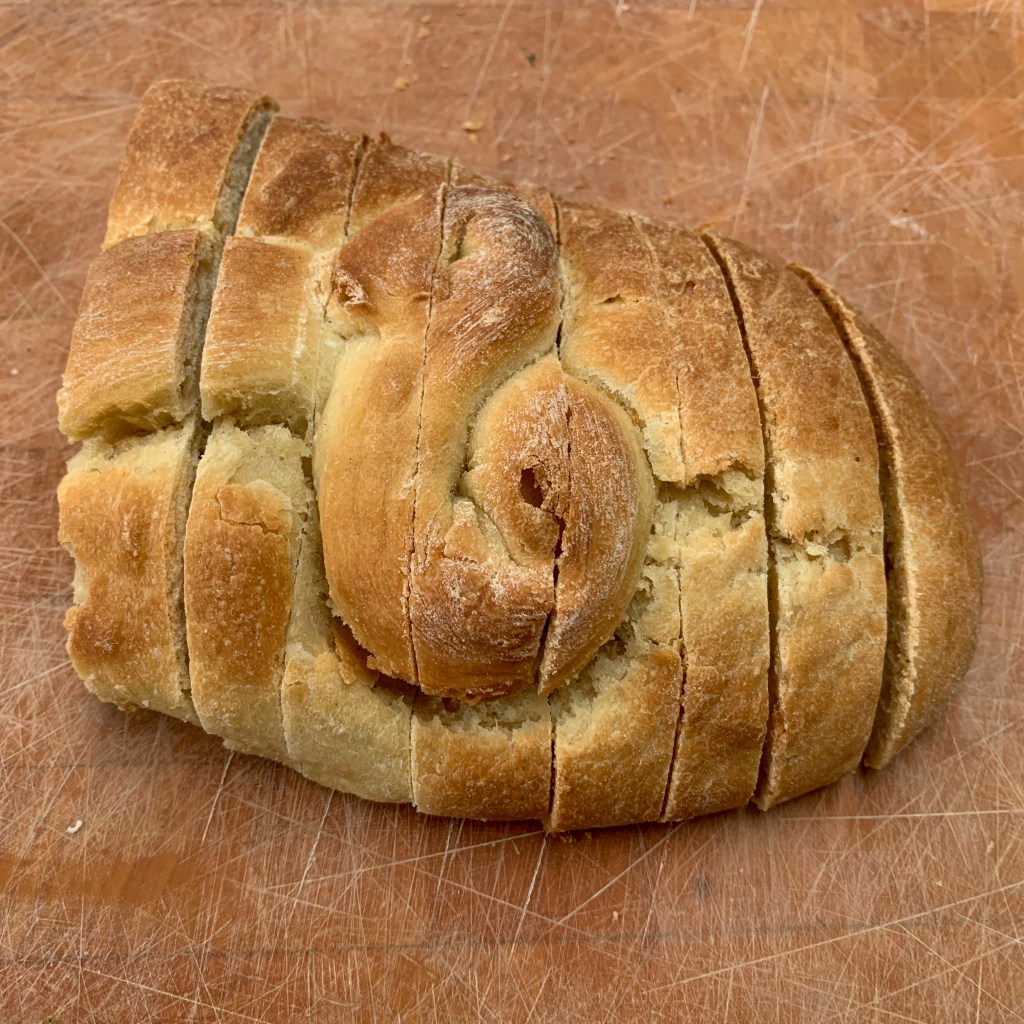
  • 250 g leftover bread (in my case, this was the last of my Antiguan Sunday Bread)
  • 200 ml milk
  • vanilla paste or extract to taste
  • 100 g biscuit crumbs – I used Digestive biscuits; in the US, one would probably go for Graham Crackers.
  • 60 g butter
  • 100 g sugar
  • 3 large eggs (around 200g total)
  • pinch of salt
  • 50 g ground almonds
  • 10 g flour
  • 1 tsp baking powder
  • 1 tsp cinnamon
  • kirsch or fruit schnapps to taste
  1. If using frozen cherries, defrost them.
  2. Preheat oven to 180℃.
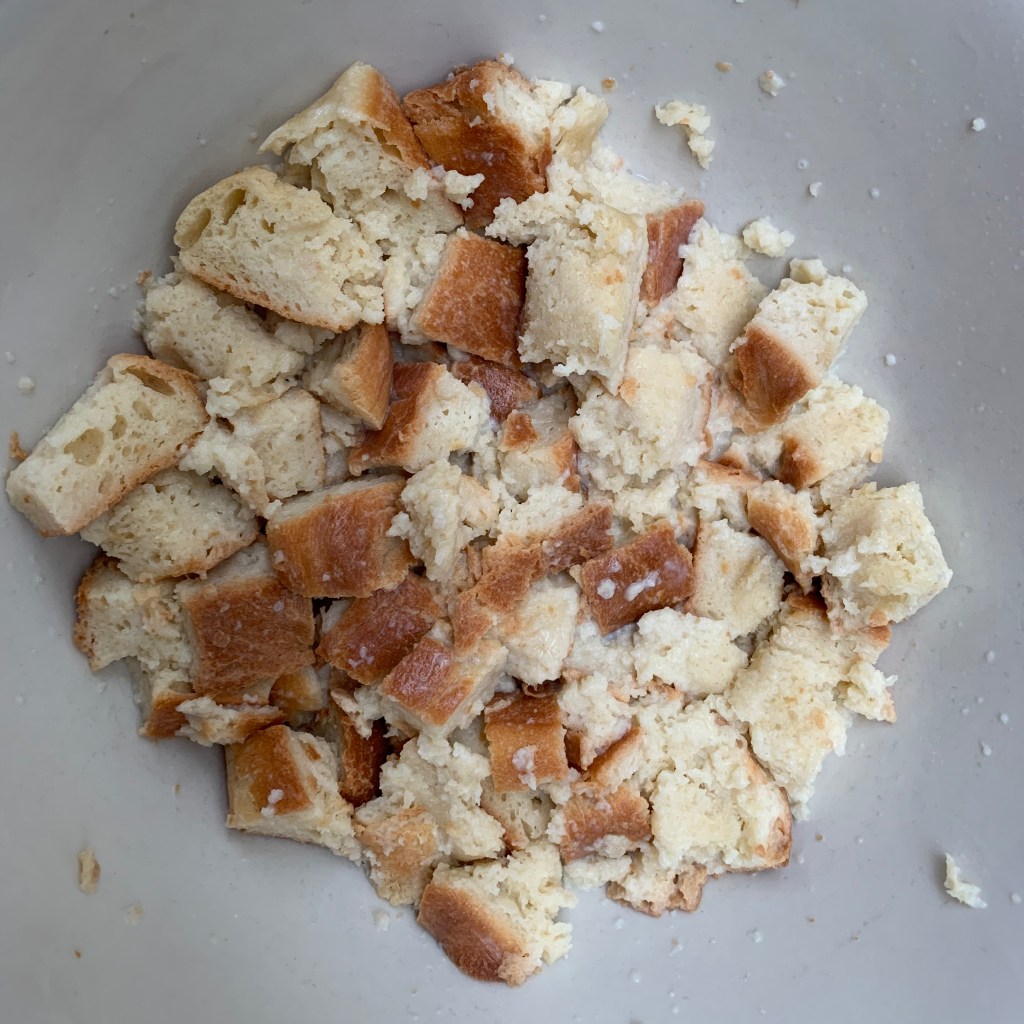
  3. Cut the bread into 1 cm cubes and put in a bowl.
  4. Put the milk and vanilla into a saucepan and scald until very warm (80-90℃). Take off the heat and pour into a bowl to cool.
  5. Remove the stones from the cherries, if this hasn’t been done for you already
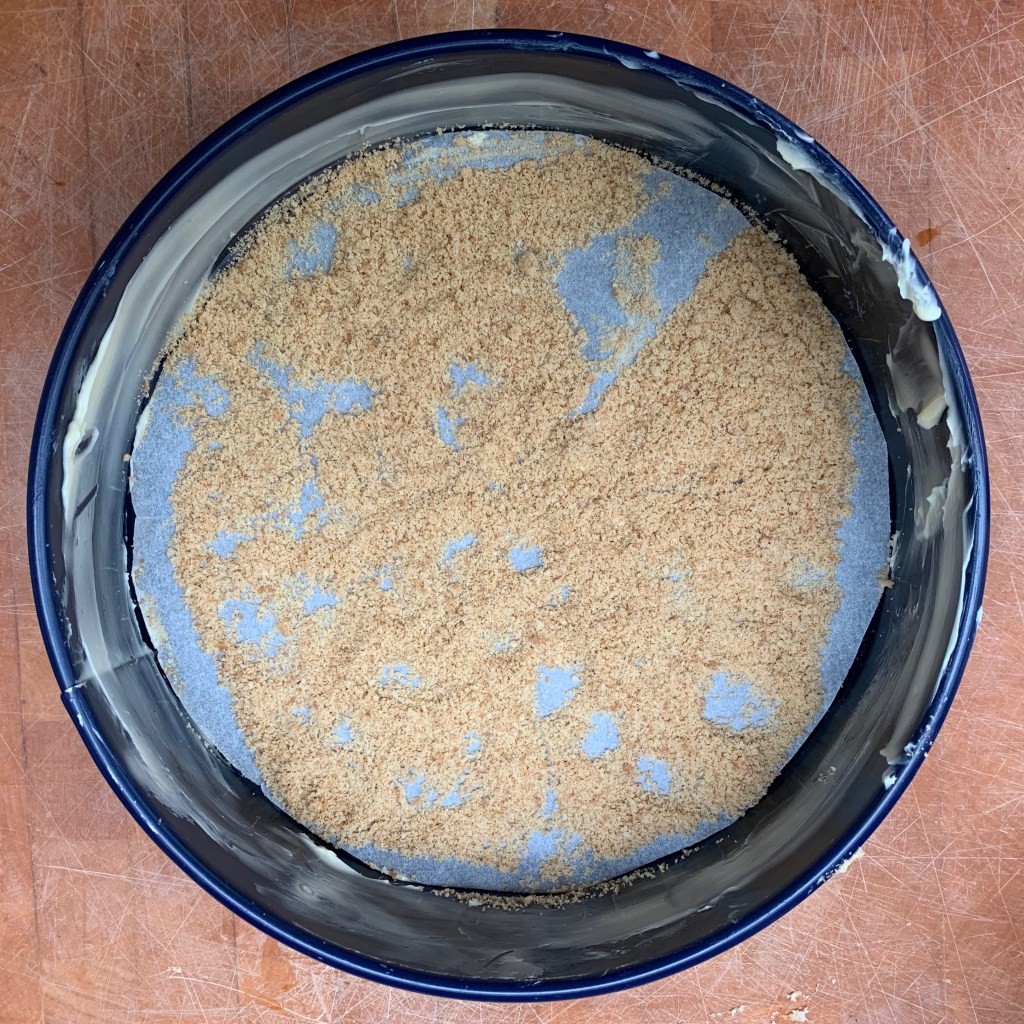
  6. Prepare a 20cm springform tin: line the bottom with baking paper, grease the sides generously with butter. 
  7. Once the milk is at room temperature, pour it over the bread and squeeze it down so that all the bread has soaked up some milk.
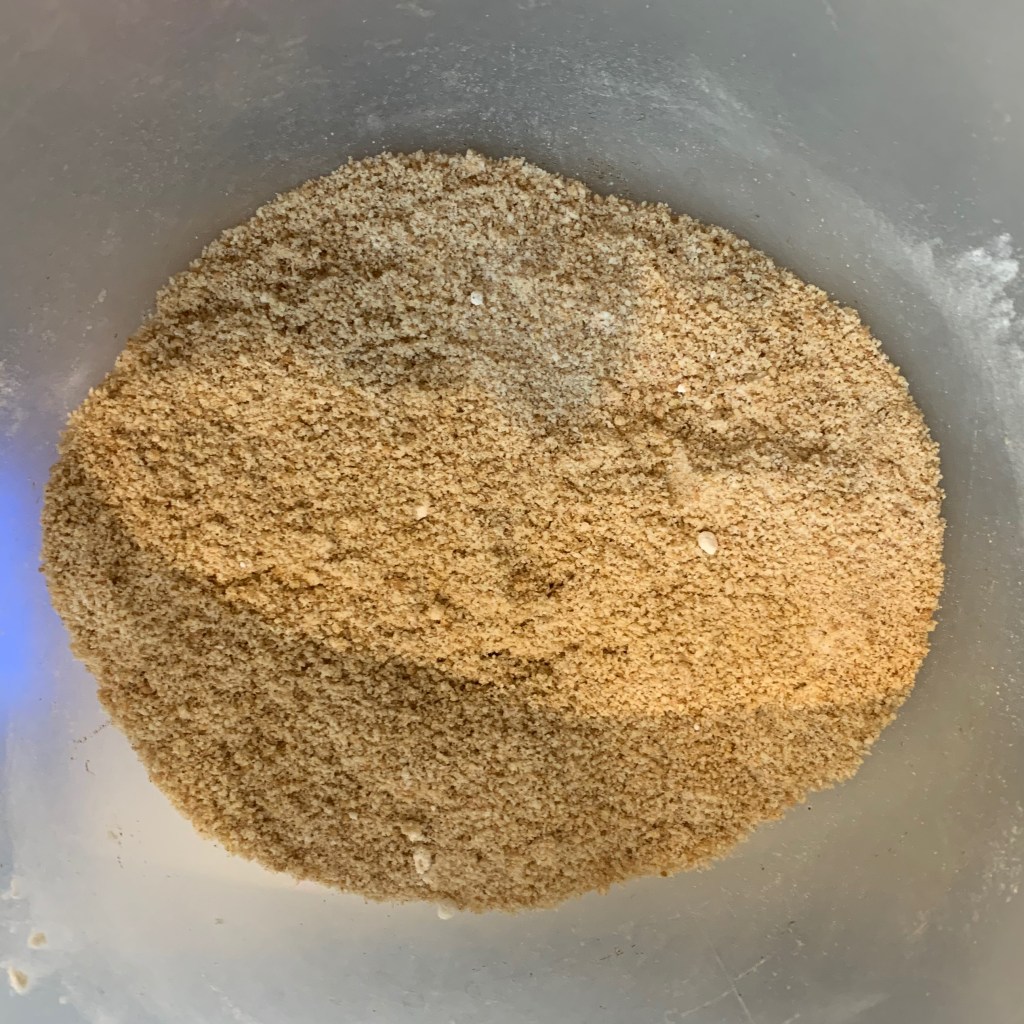
  8. Blitz your biscuits to a powder. Take about half the crumbs and spread them evenly over the base of the tin.
  9. Cream the butter and sugar together.
  10. Separate the eggs, pouring the whites into a bowl of your stand mixer, and the yolks into the butter-sugar mixture.
  11. In yet another bowl, mix the remaining biscuit crumbs, ground almonds, flour, cinnamon and salt; stir until blended evenly.
  12. Add the bread mixture into the butter-sugar mixture and mix.
  13. Add in the flour mixture and mix until everything is very even.
  14. Add the cherries and kirsch and mix.
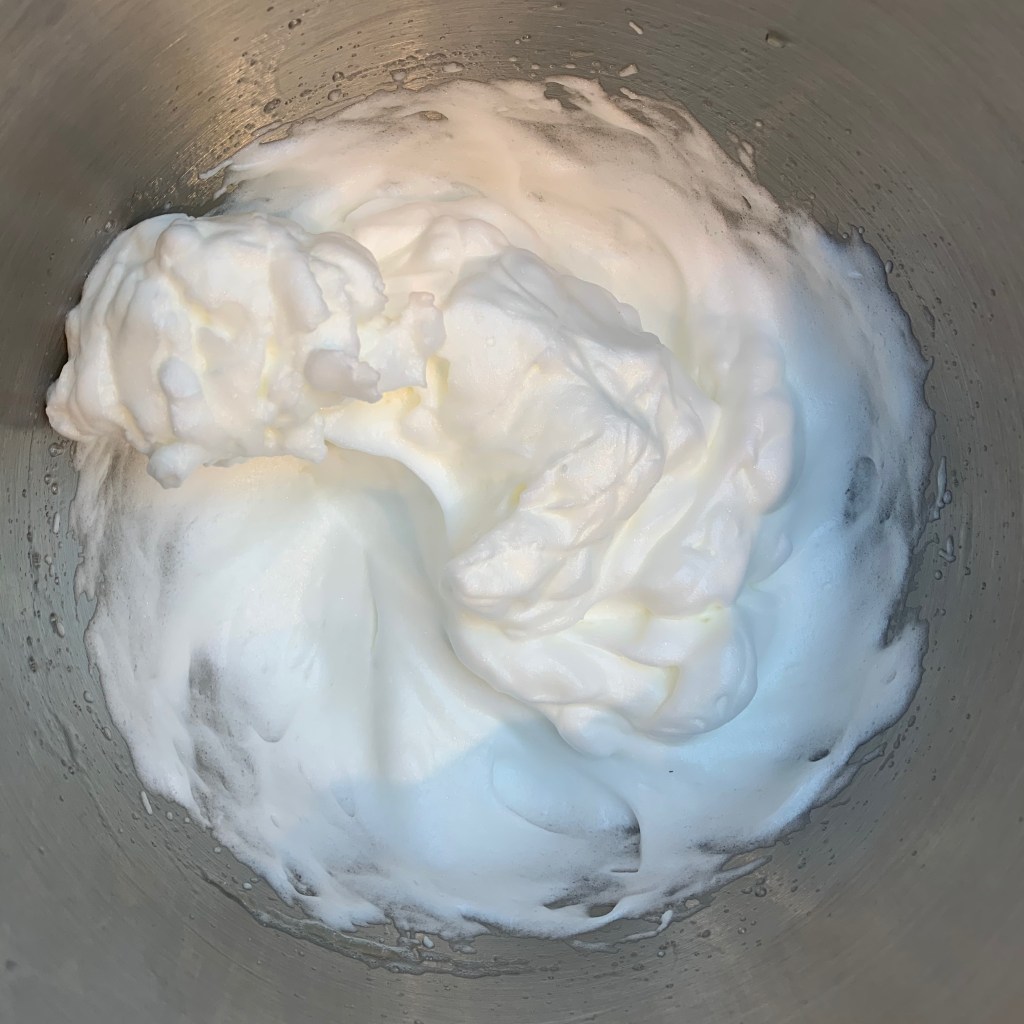
  15. Beat the egg whites until stiff and fold in.
  16. Pour the cake mix into your tin and bake for 40-45 minutes. If the cake looks like browning too far before the middle is cooked, cover it with foil for the last 5-10 minutes.
  17. Remove and cool on a rack.
Around the world in 80 bakes, no.49: Vaisių pyragas, fruit cake from Lithuania

Around the world in 80 bakes, no.49: Vaisių pyragas, fruit cake from Lithuania

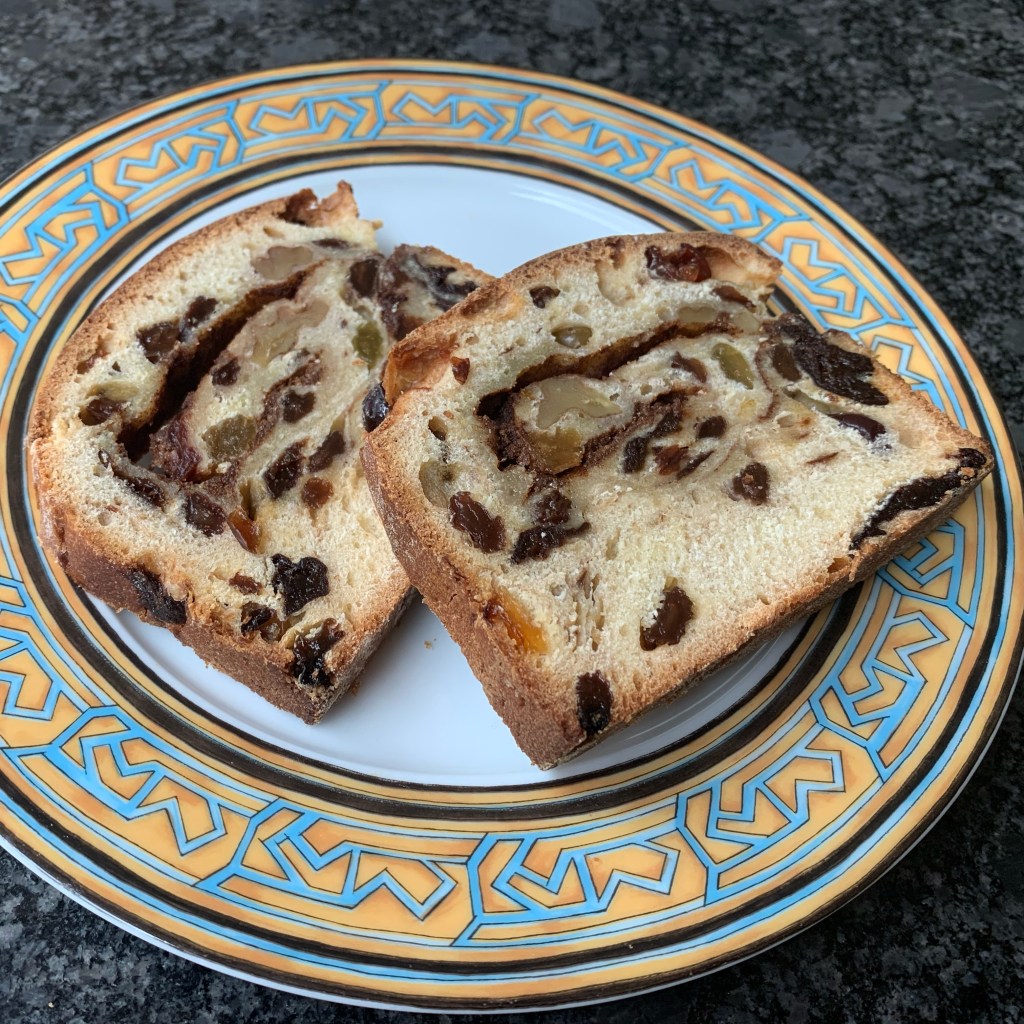
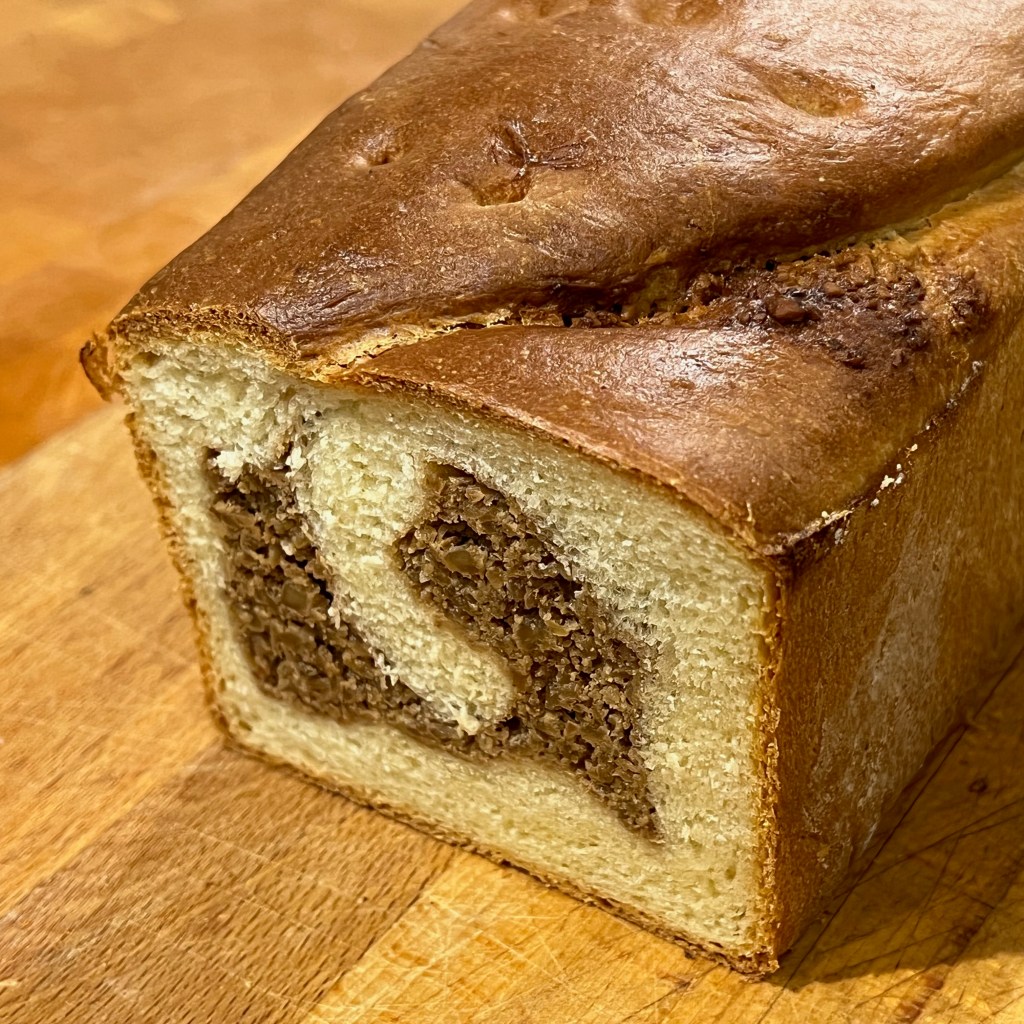
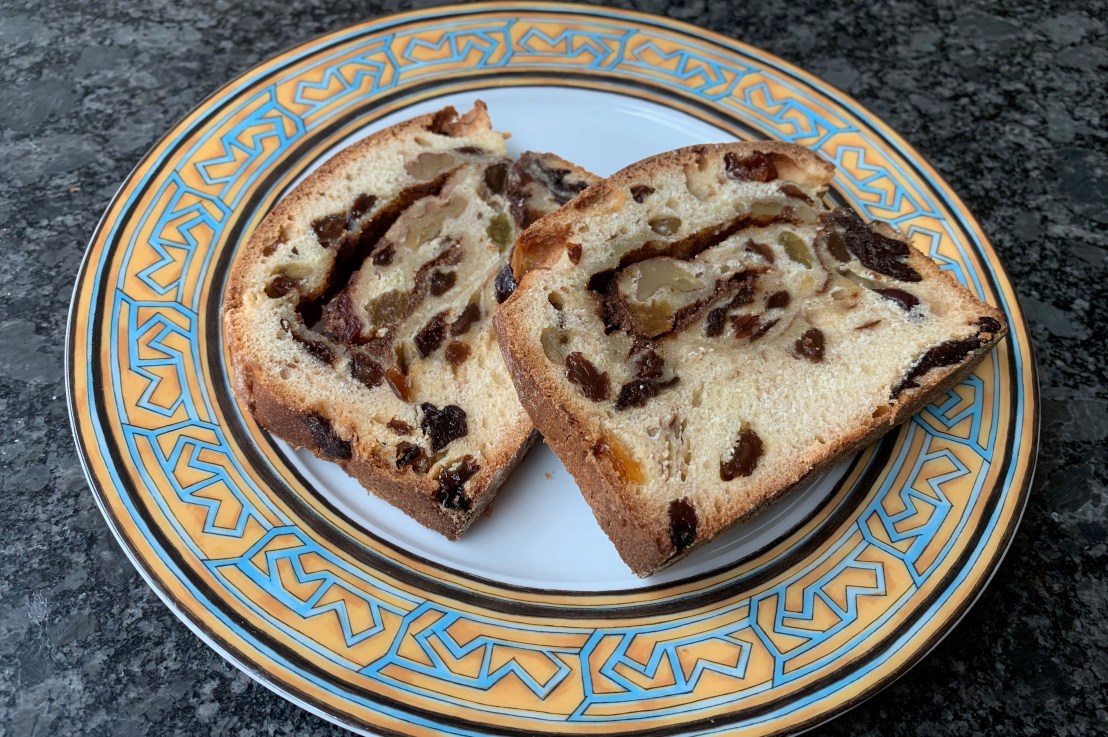
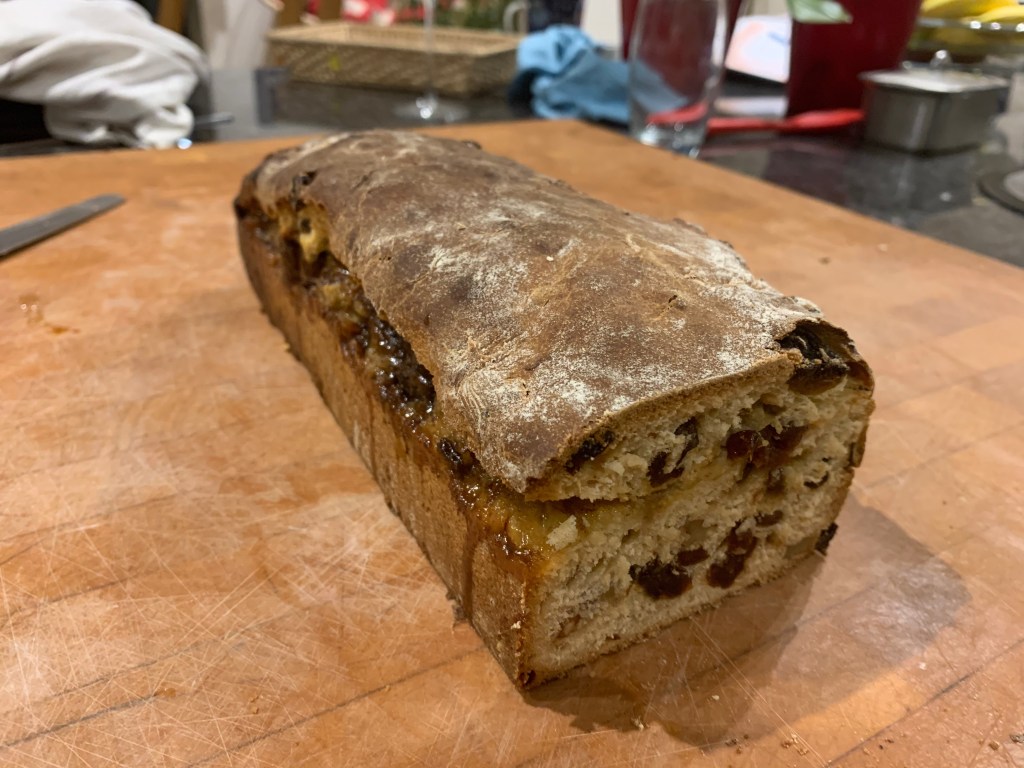
Time for a different kind of bake altogether: a yeasted fruit cake, which is a lovely afternoon snack somewhere between a cake and a bread. This one is from Lithuania and comes to us all via food writer Barbara Rolek: the same recipe seems to surface in lots of different US websites. I first spotted it on The Spruce Eats; I’ve halved and metricised the quantities, as well as tweaking a few things.

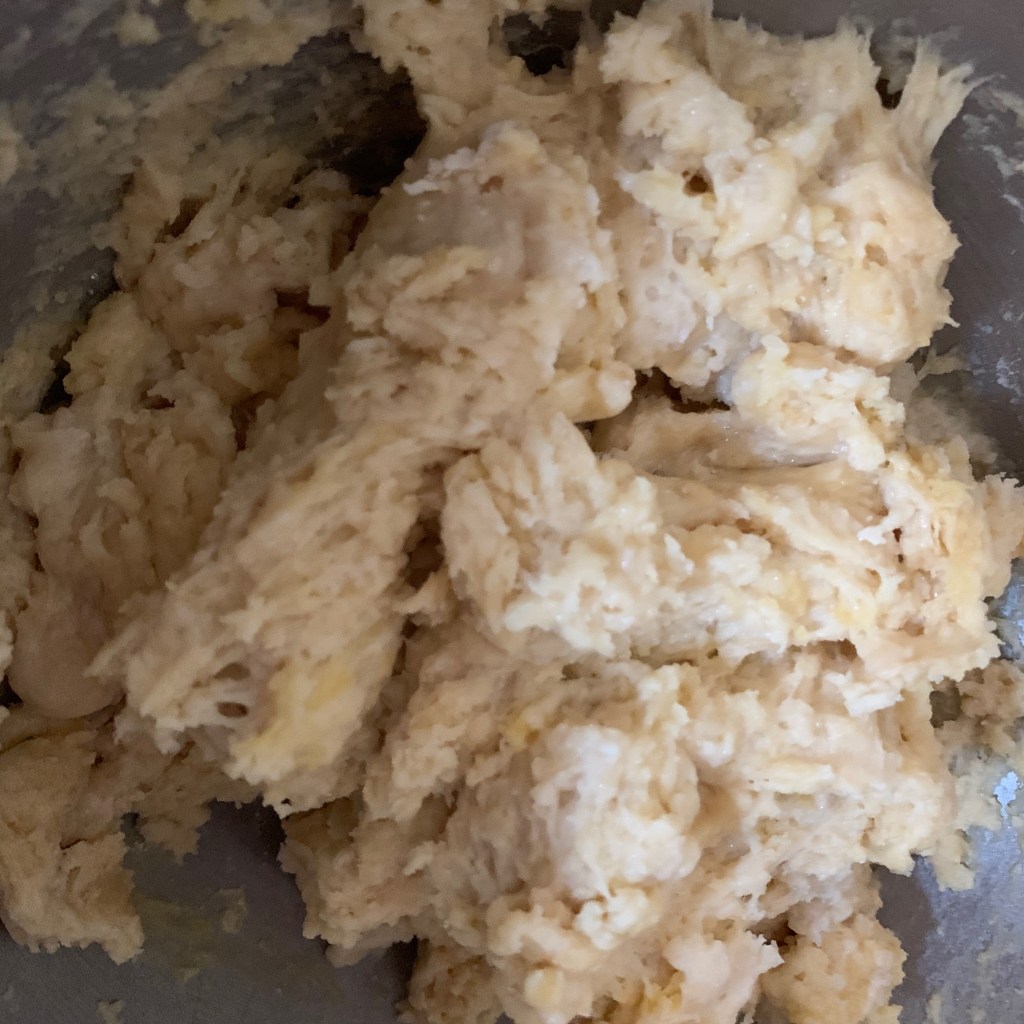
The result is a bit like a giant, fruit studded cinnamon bun. It’s great for slicing and storing in the freezer for a ready supply of snacks. The recipe doesn’t need excessive amounts of work, but it needs a lot of elapsed time – there are multiple rises which can each take a couple of hours, depending on the temperature of your kitchen. Start early.

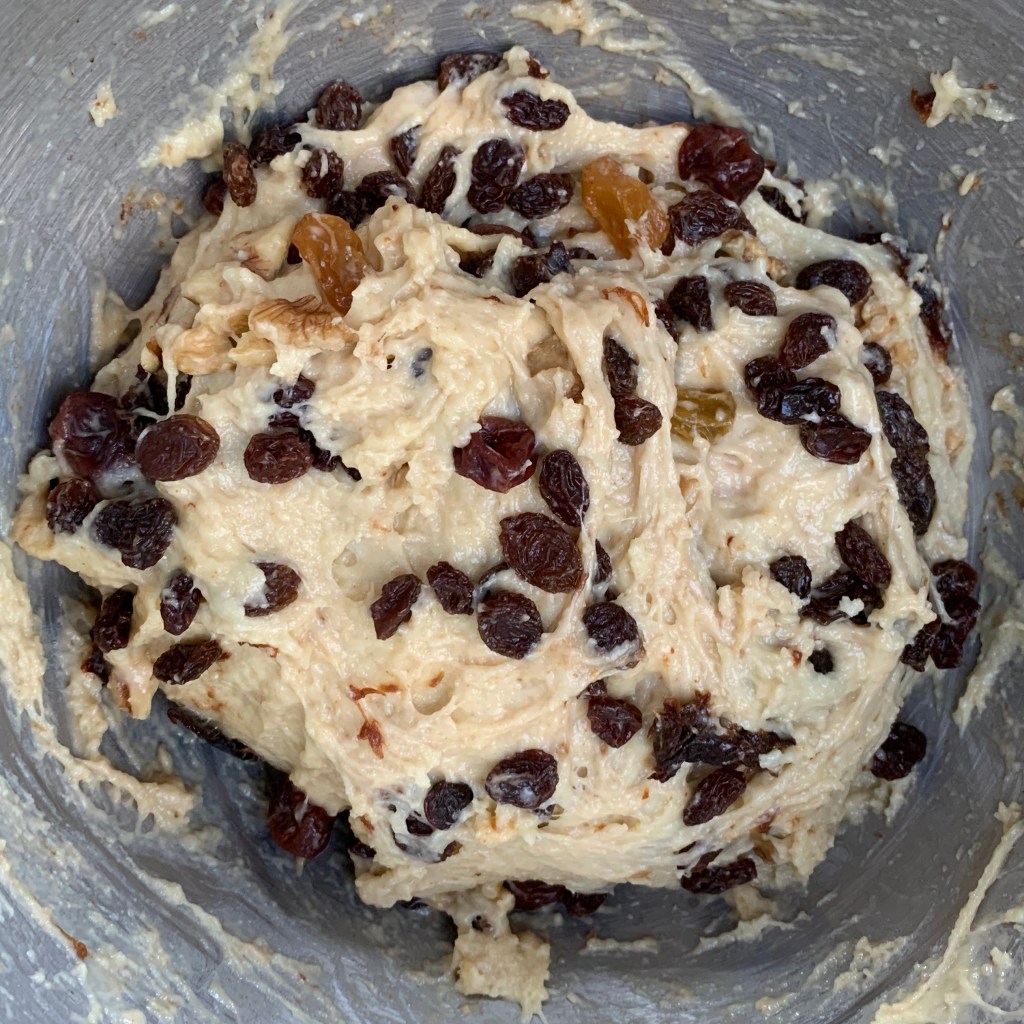
A couple of caveats, especially if you’re looking at the photos:

  • You can use pretty much any dried fruit you like. I couldn’t get glacé cherries, which looked nice in the original recipe. 
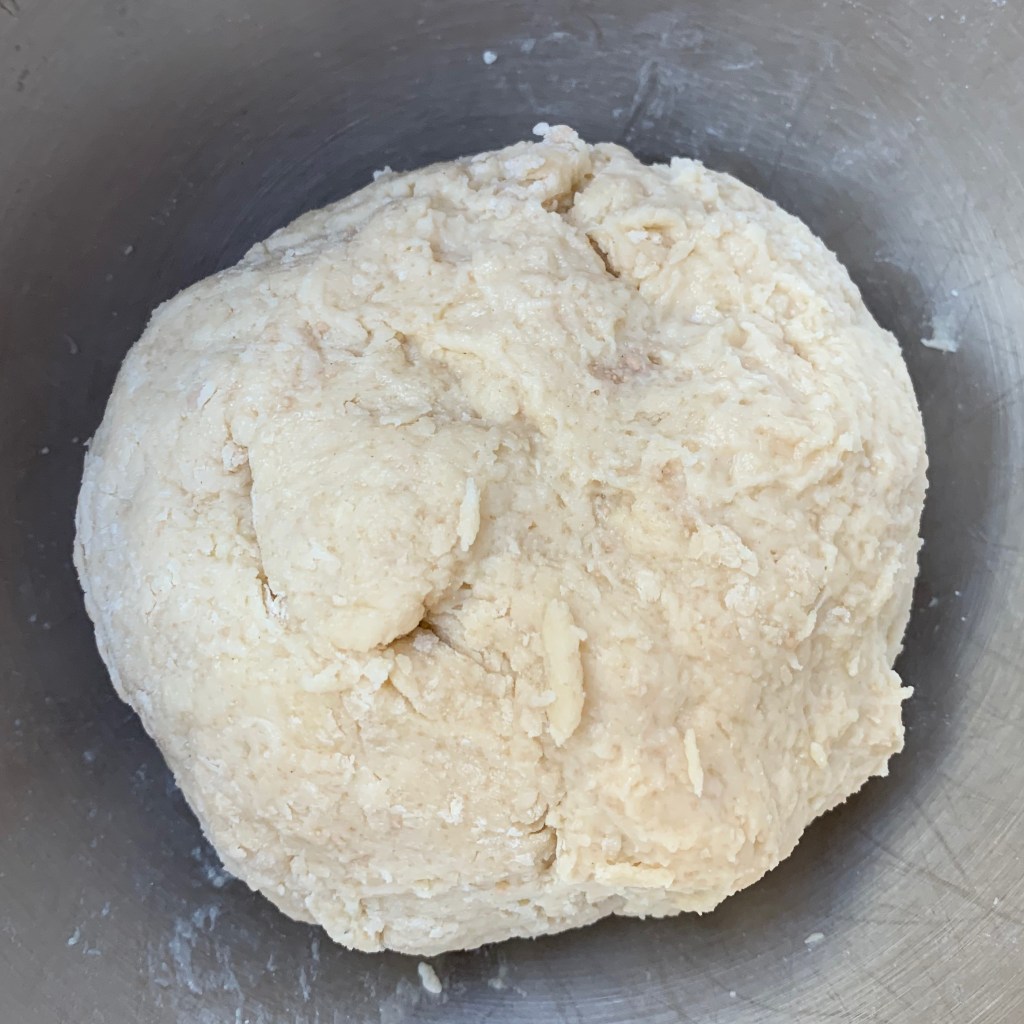
  • The dough on mine came out very stiff indeed, so you may find you want to increase the amount of milk.
  • I used bread flour, which was probably a mistake. I’d stick with plain flour next time.
  • Also next time, I’d probably start by activating the yeast in some warm water (or milk) and sugar. The recipe doesn’t suggest this, but not doing it meant that my dough took an eternity to rise.

The dough

  • 8g yeast
  • 120g sugar
  • 180 ml milk
  • 550g plain flour
  • 4g salt
  • 60g butter
  • 1.5 large eggs
  • 180g mixed fruit
  • 120g raisins
  • 40g walnuts
  • 30 ml rum
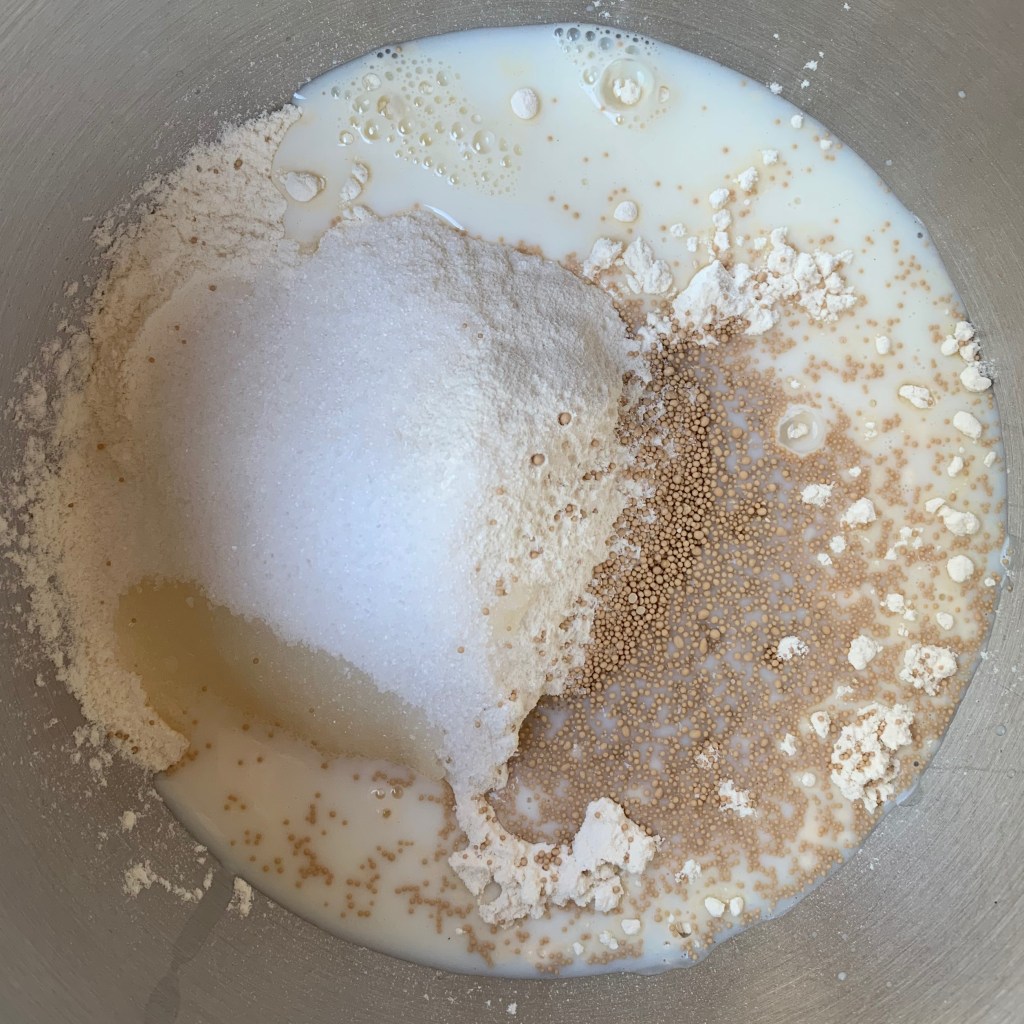
  1. In your stand mixer, combine 300g of the flour, 60g of the sugar, the yeast and milk and mix until reasonably smooth. Cover and leave to rest for an hour.
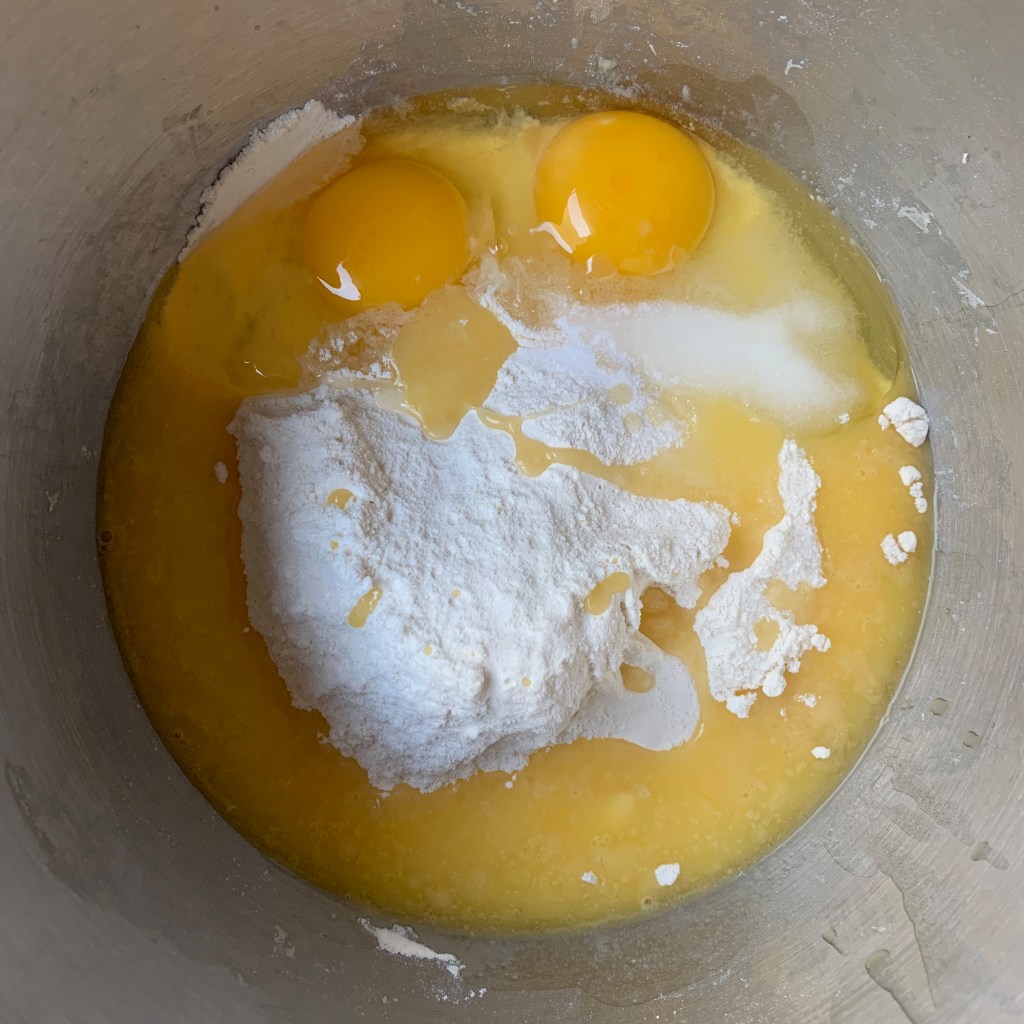
  2. Melt the butter. Add it to the mix with the eggs, the salt and the rest of the sugar and the flour. With the dough hook, knead for 5-7 minutes.
  3. Add the fruit, raisins, walnuts and rum. Mix thoroughly.
  4. Leave to rise until doubled in size. Expect this to take an hour or two.

The filling

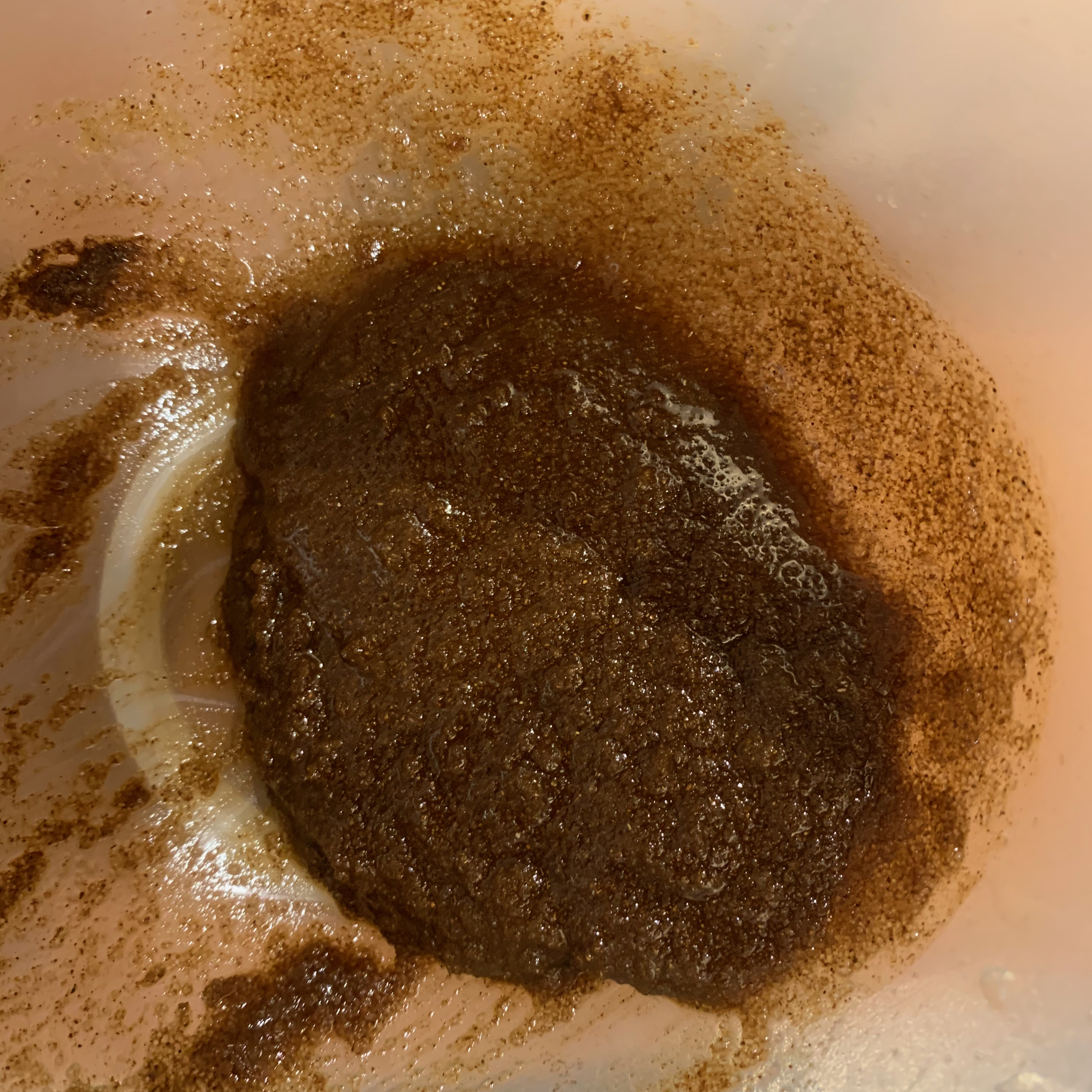
  • 30g butter
  • 60g sugar
  • 6g cinnamon
  1. Melt the butter. 
  2. Mix with the sugar and cinnamon. Leave to cool somewhat.

Putting it together

  1. Grease a loaf tin.
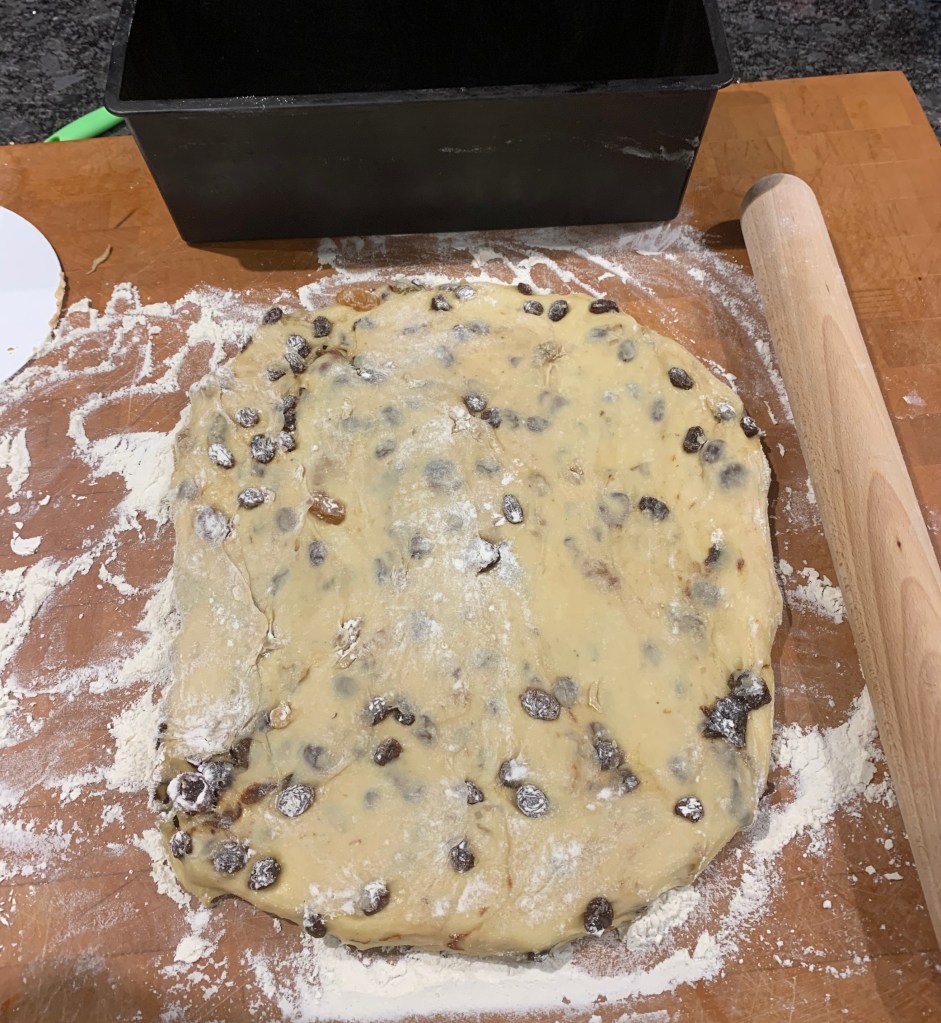
  2. Flour a surface and roll out your dough into a rectangle. The width of your rectangle should be somewhat under the length of your loaf tin; the length around 1½ times the width.
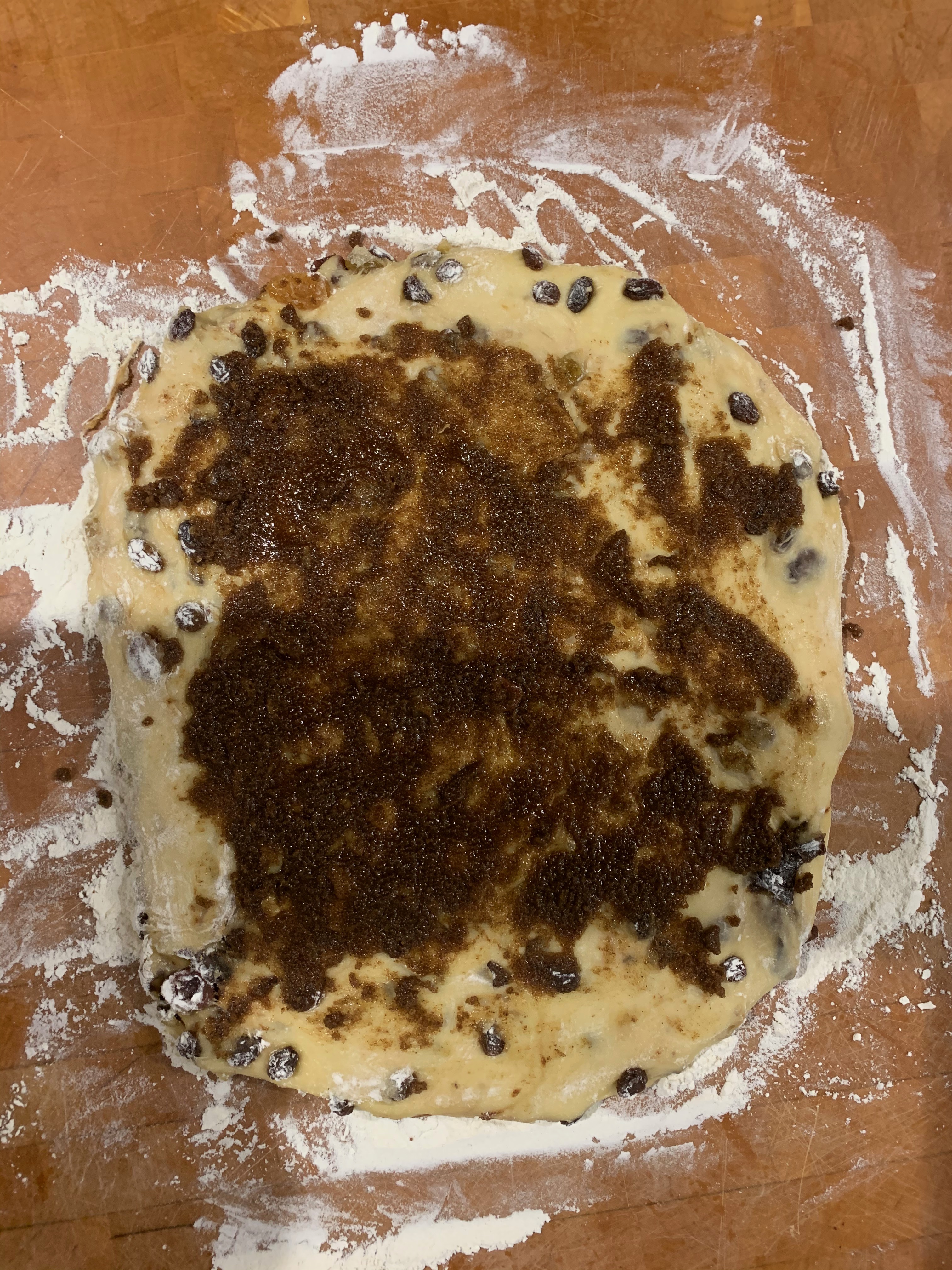
  3. Spread your rectangle of dough with the filling. Don’t go too close to the edges – you won’t want filling leaking out.
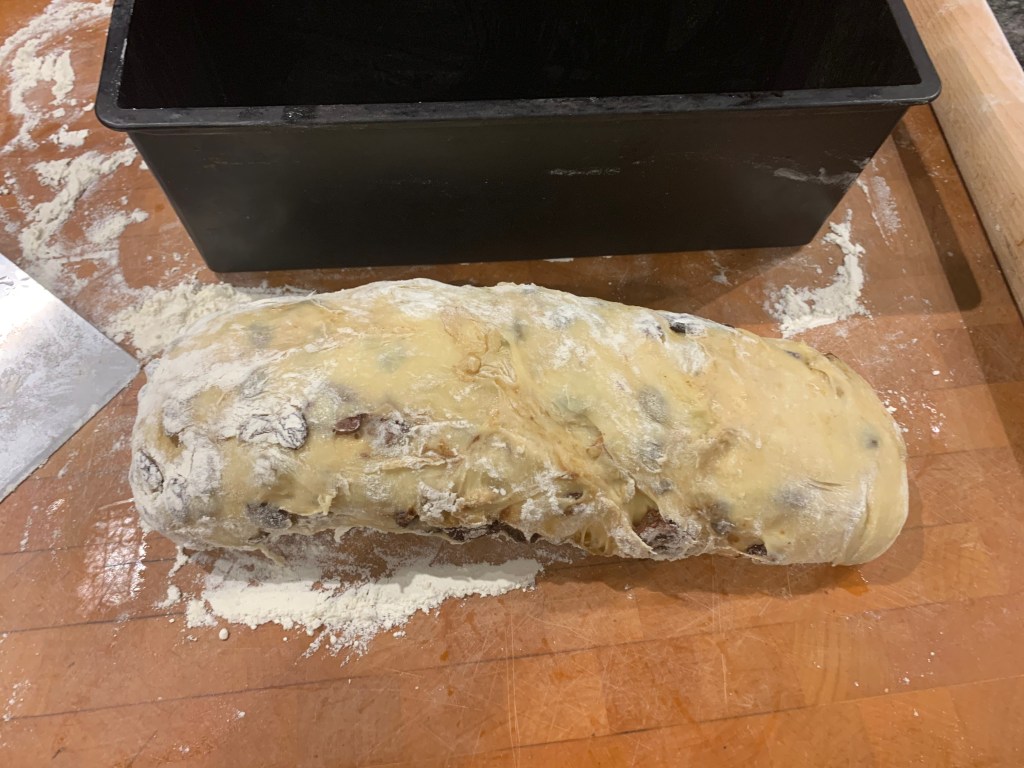
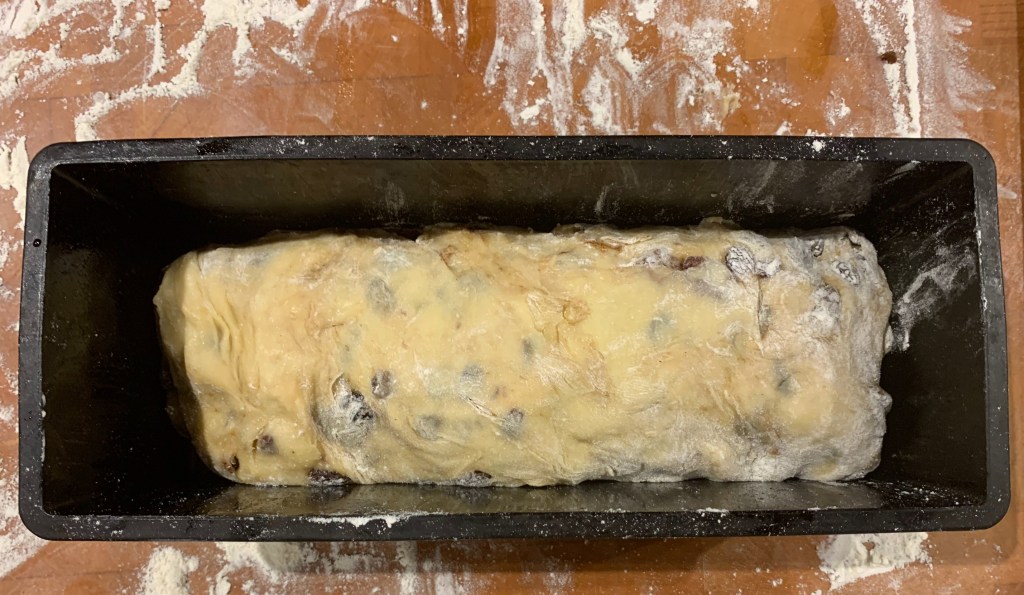
  4. Roll up the dough into a thick sausage, ensuring the filling is sealed inside. Transfer the sausage into your loaf tin.
  5. Leave to rise until doubled in size. Again, this could easily take 1-2 hours. If this hasn’t happened after a couple of hours, give up and bake it anyway.
  6. Preheat oven to 200℃ fan
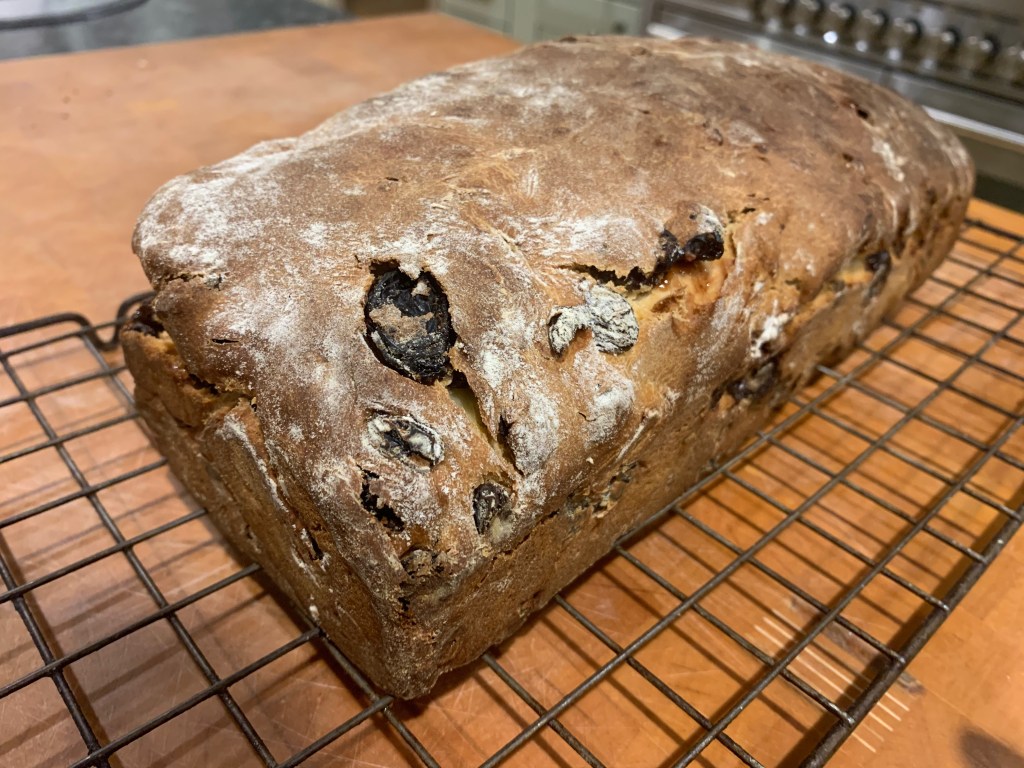
  7. Bake for 10 minutes, then reduce temperature to 175℃, then bake for around another 40 minutes.
  8. Leave to cool on a rack. If you want, sprinkle with icing sugar (I didn’t).