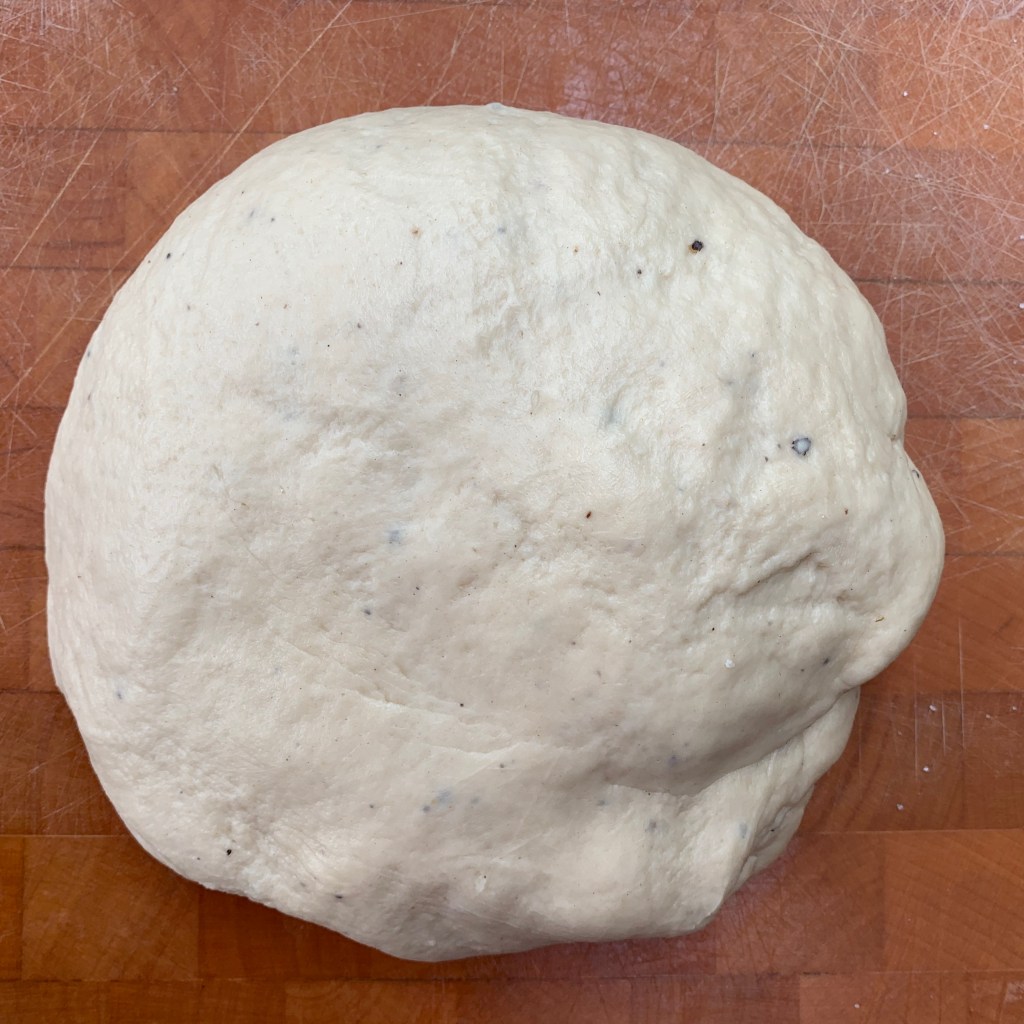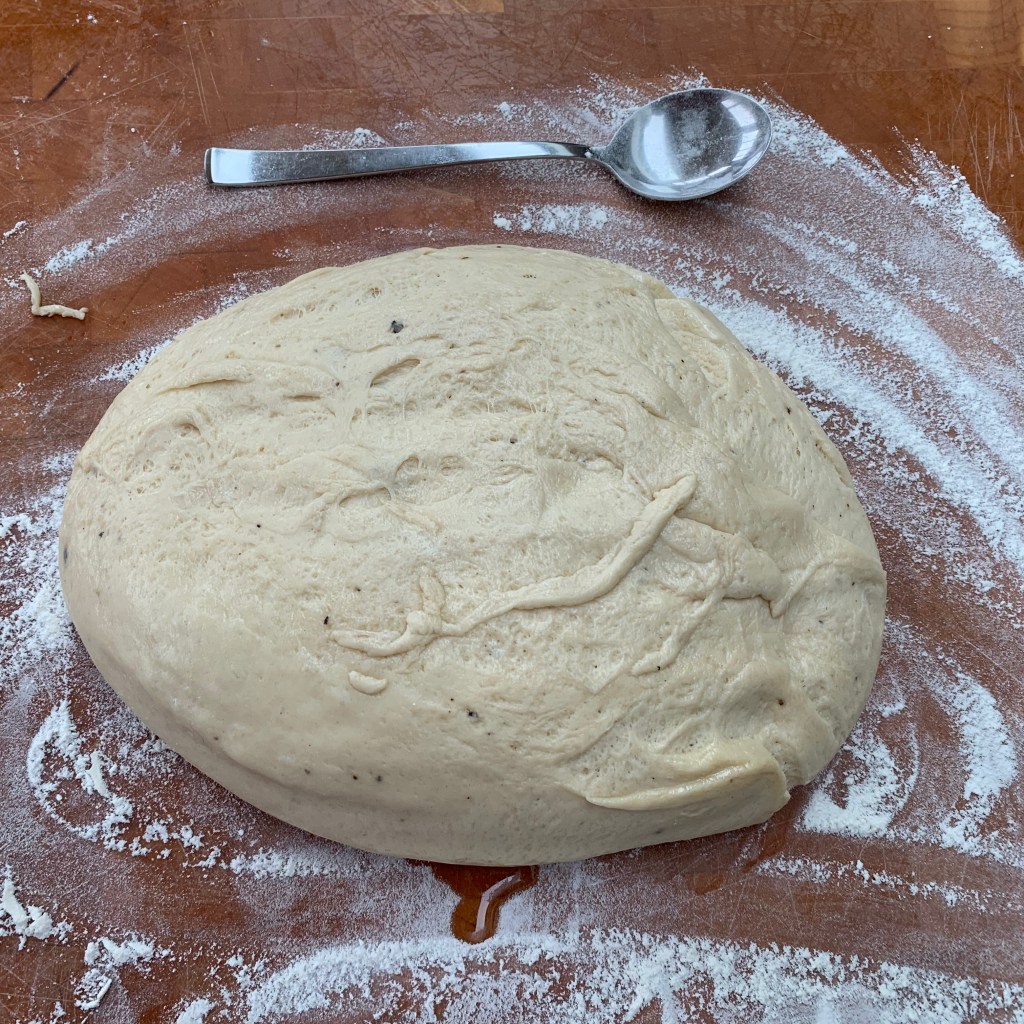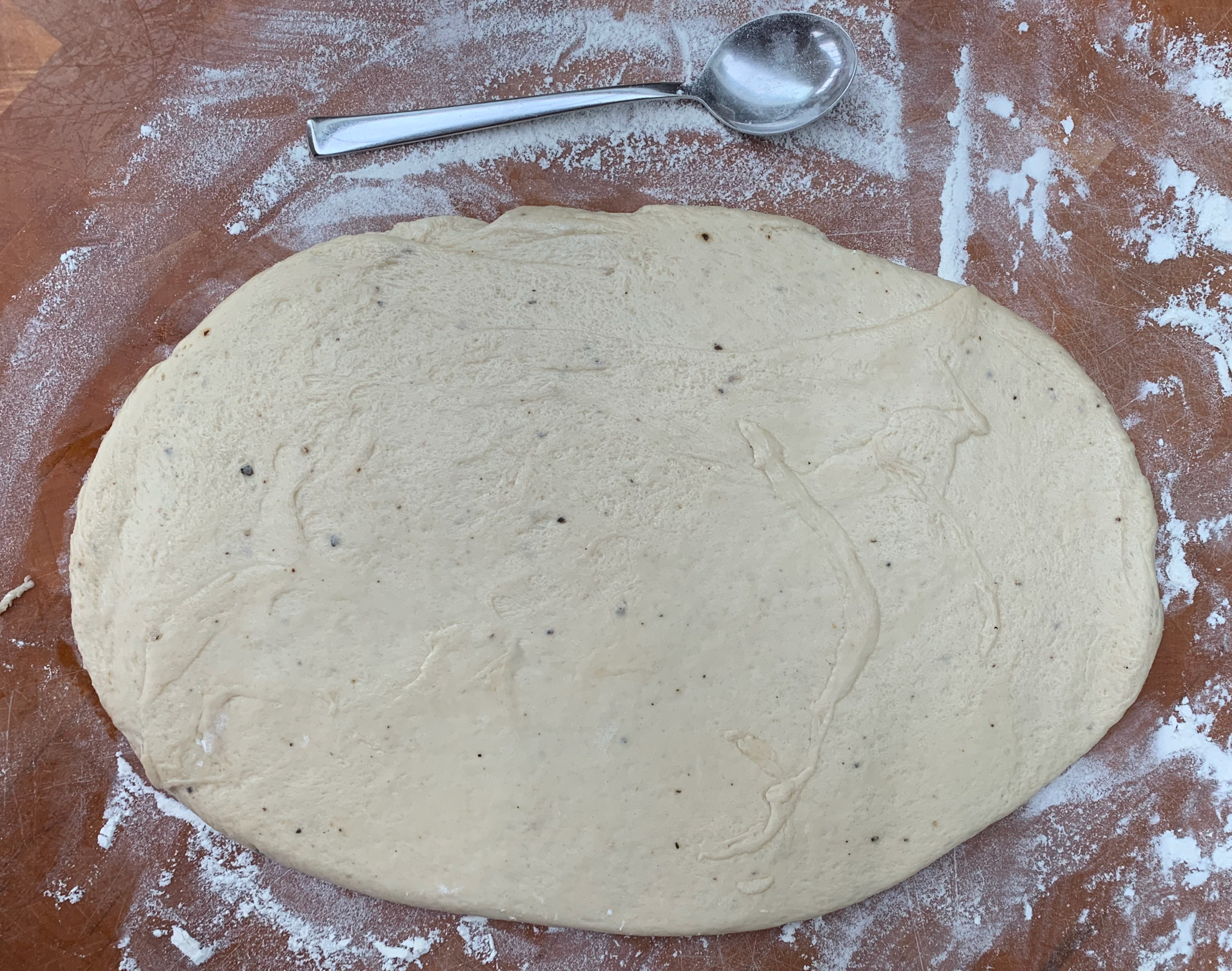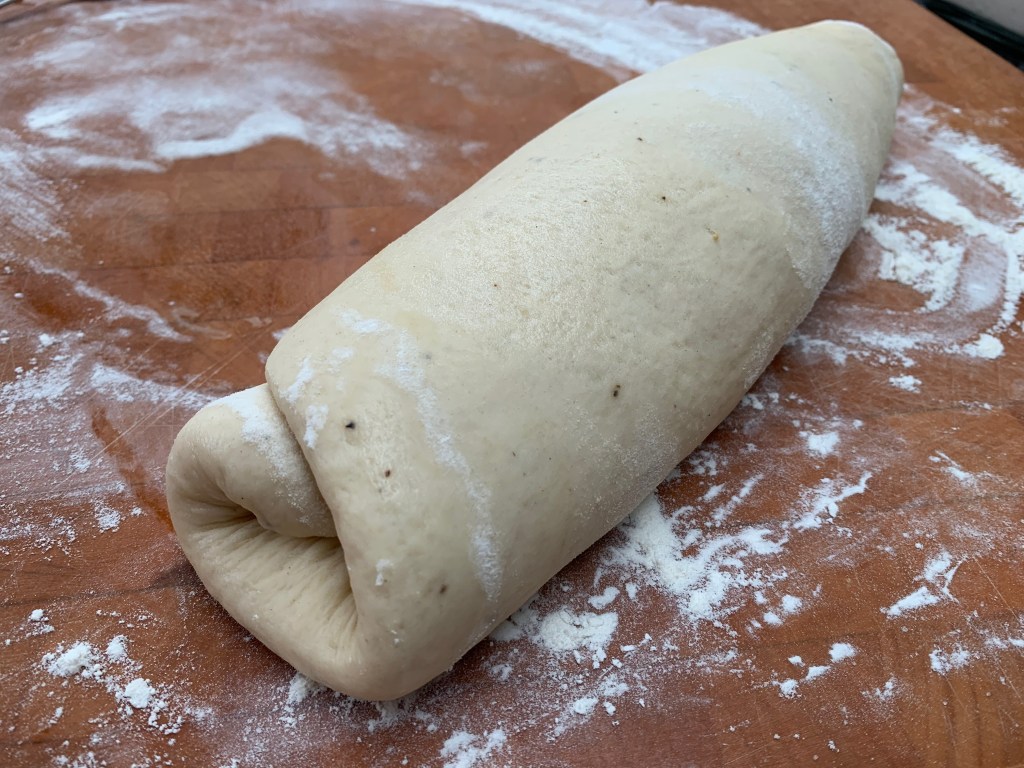
Tag: Around the world in 80 bakes

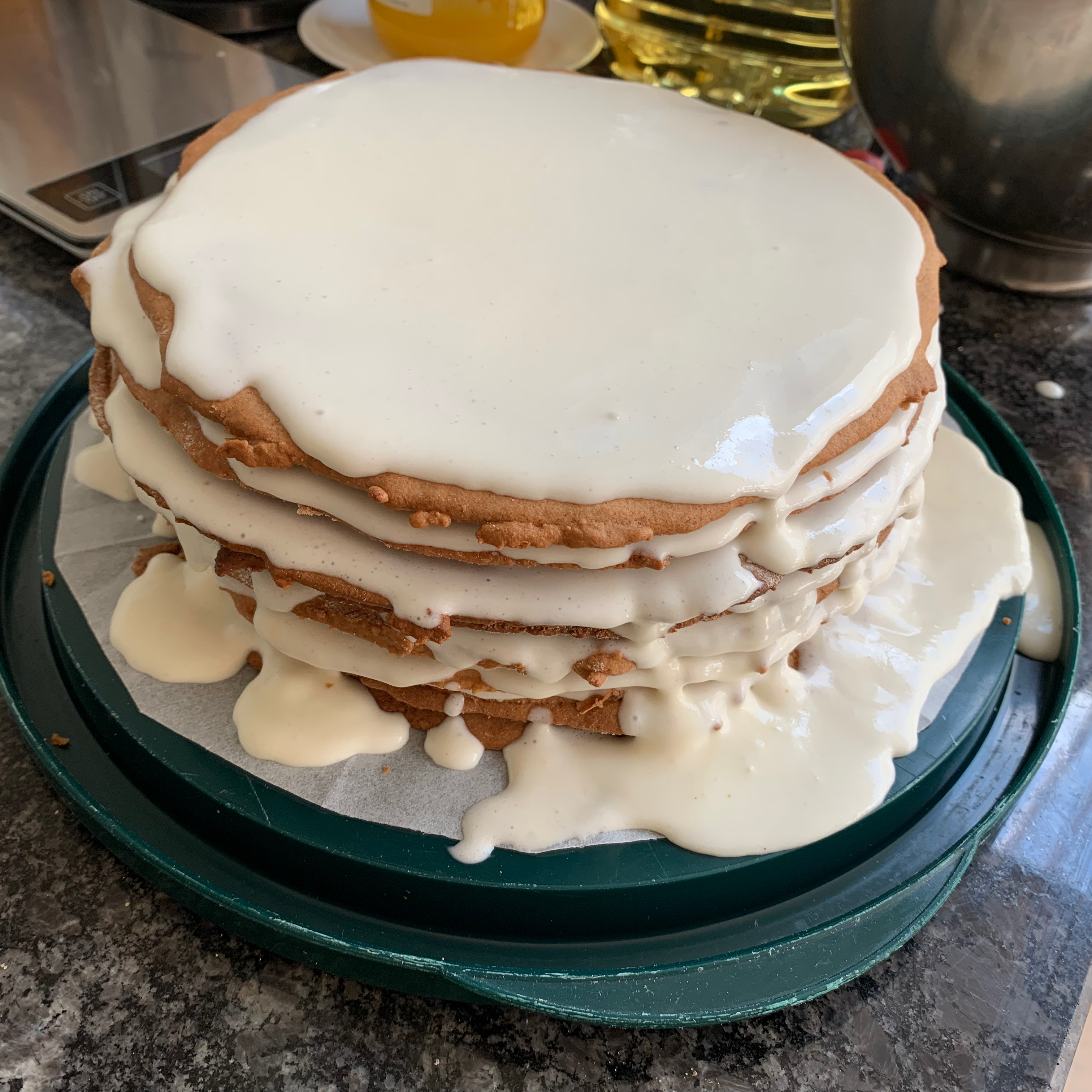
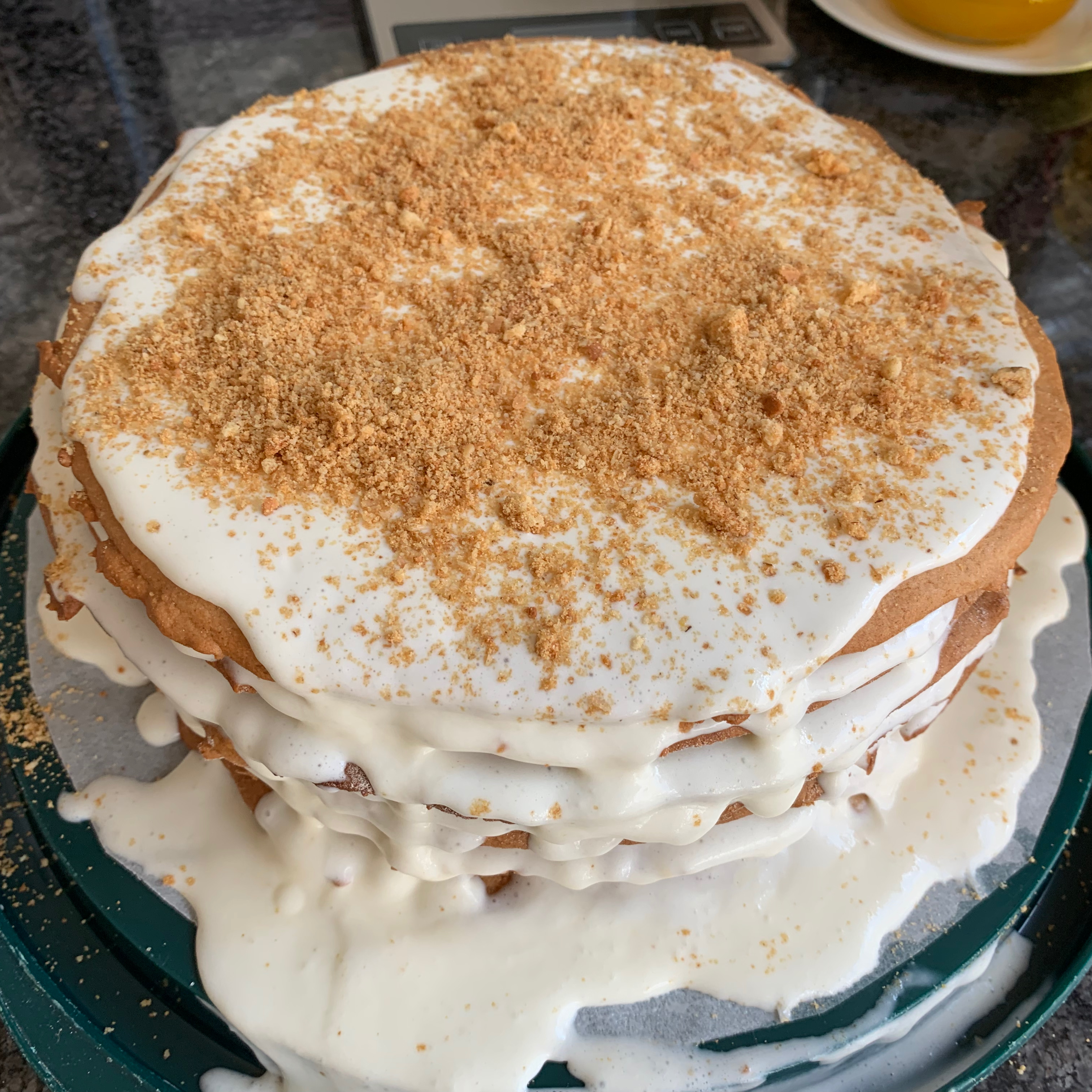
Around the world in 80 bakes, no.62: Medovik – Ukranian honey cake

Around the world in 80 bakes, no.62: Medovik – Ukranian honey cake

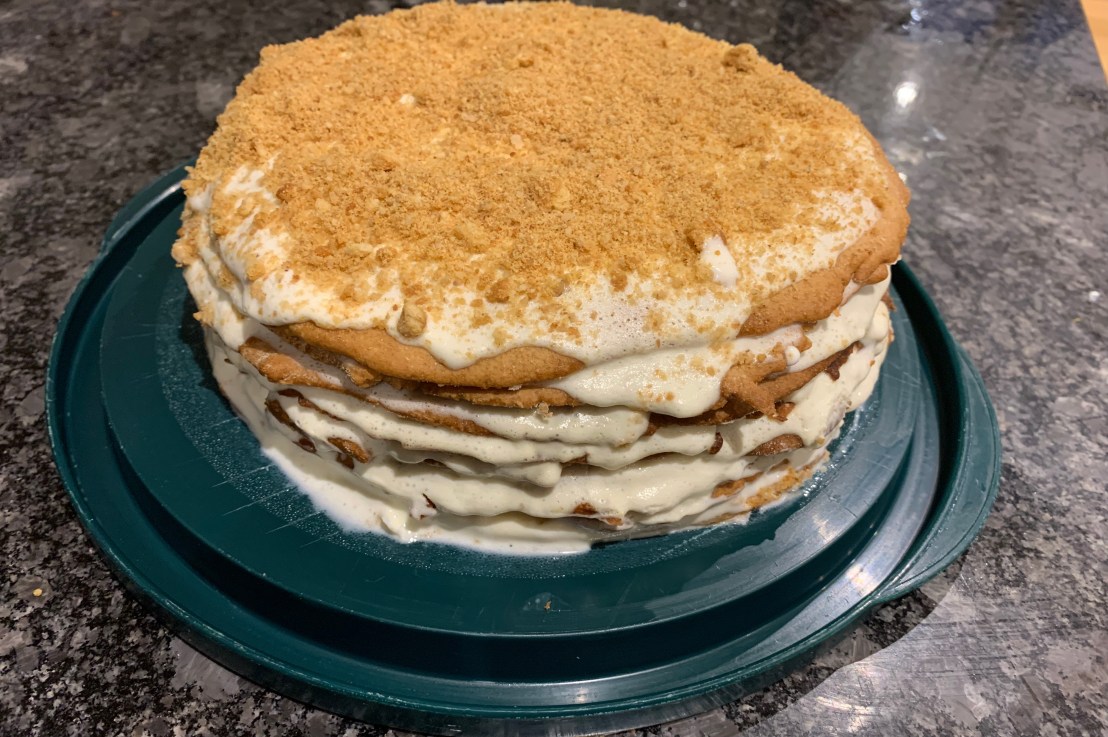
 Many countries have their own versions of a cake made of a large number of very thin layers: the Hungarian Dobos torte is probably the most famous, the Czechs have Marlenka (originally from Armenia), the Croatians have Mađarica, there are various Asian versions like the Indonesian kek lapis. The Ukranians go for a multilayered honey cake called Medovik (which is originally Russian and popular in much of Eastern Europe).

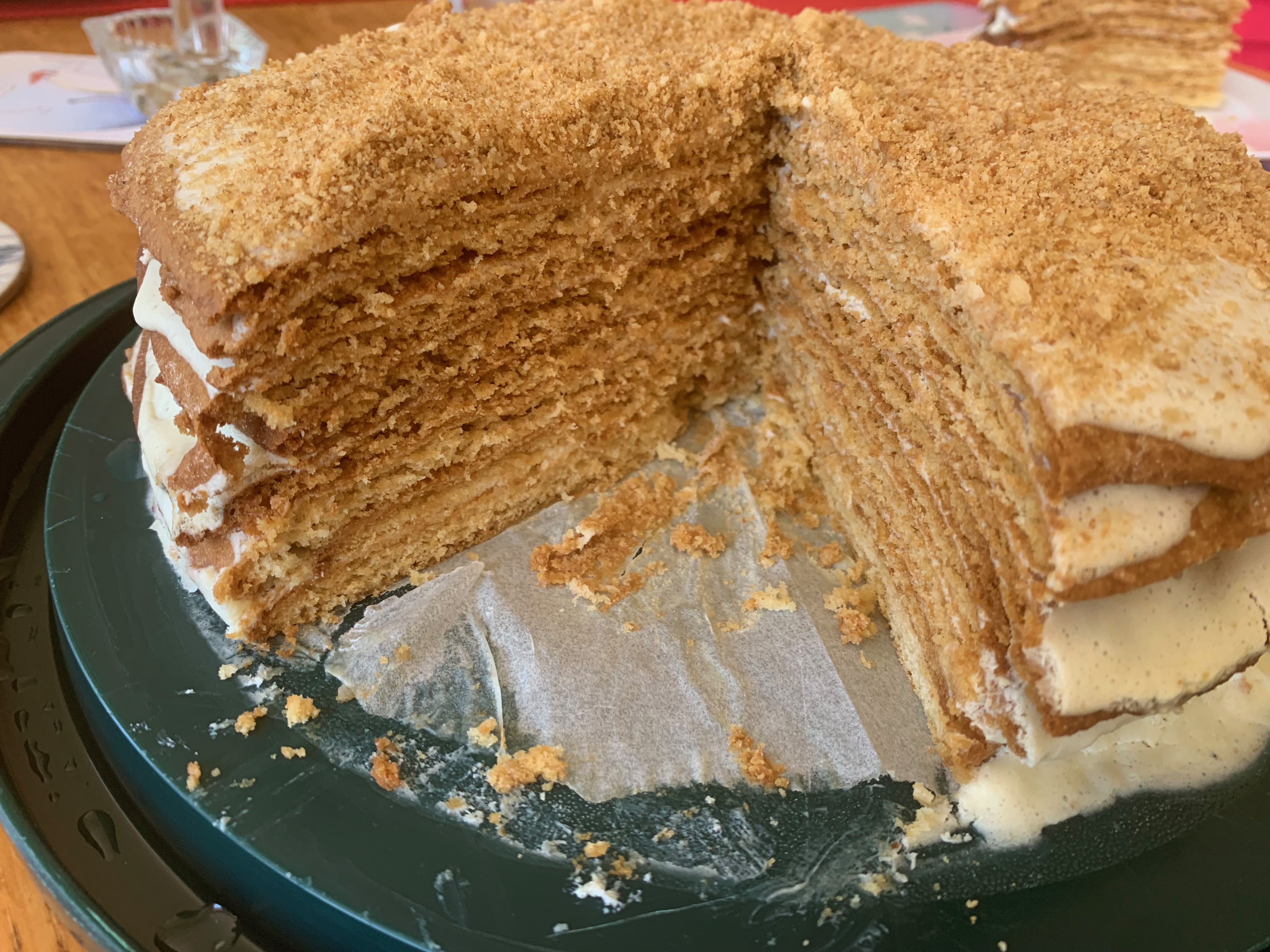
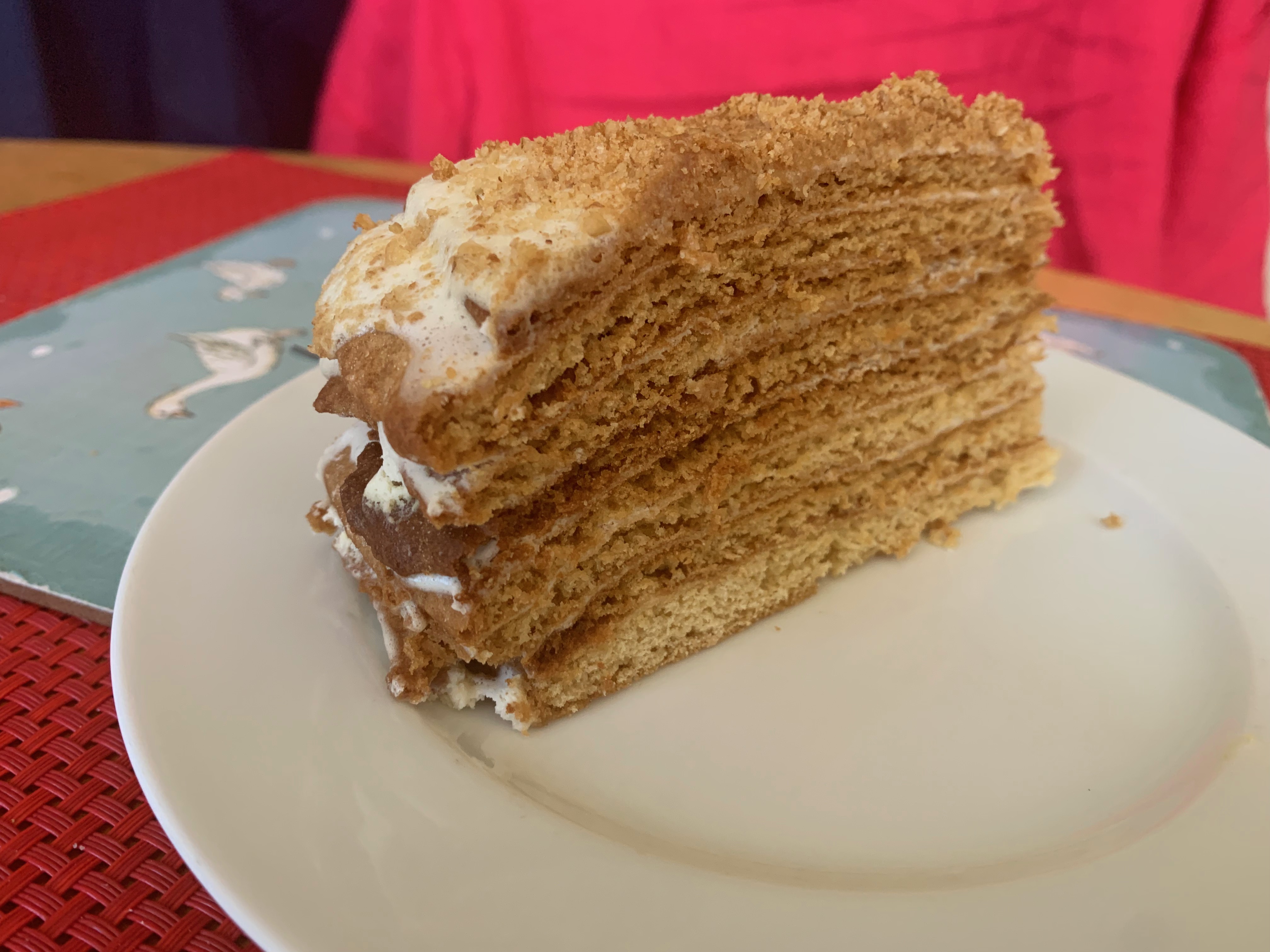
Medovik consists of alternating layers of cake and a cream filling. Recipes for the cake are fairly consistent: they come out closer to a biscuit or pastry than to a normal sponge cake. Recipes for the filling vary more: the base ingredient can be sour cream or whipped ordinary cream or an egg custard.

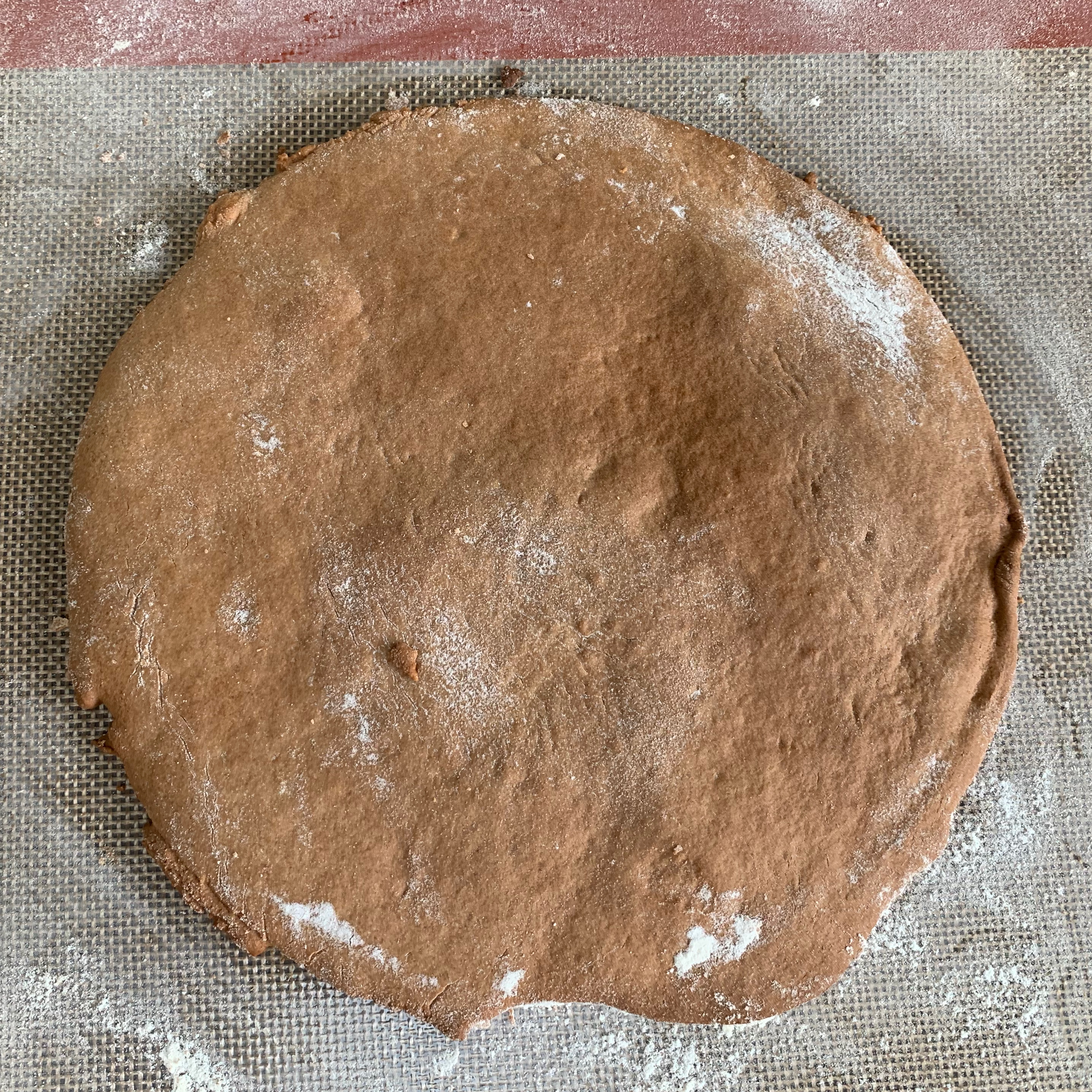
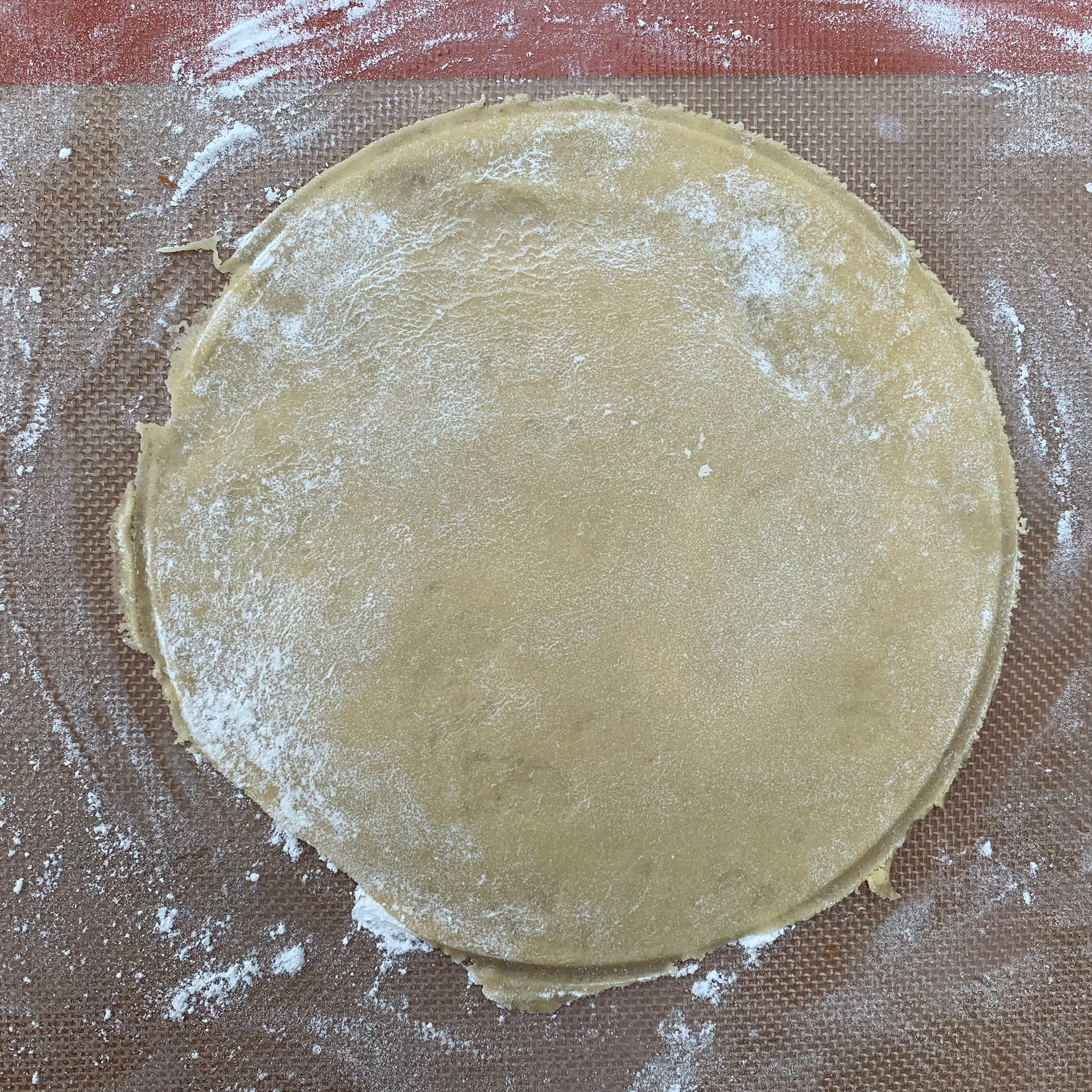
There are two keys to Medovik, one of which is easy and one of which is decidedly not so. The easy part is to remember, when you’ve made your layers, to give the cake a long time in the refrigerator during which each wet cream layer soaks into the relatively hard biscuit layer below it, which is what results in a delightfully spongy feel to the whole assembly. The hard part is rolling the cake dough out as thinly and evenly as possible. You need to keep your rolling pin constantly floured to stop it lifting the dough, you need a careful touch to maintain evenness and you need to do your best to create a circle rather than the heart shape that I always end up with when I’m not concentrating. Picking up a finished circle is an impossibility, so I rolled my dough directly onto a silicone sheet: I suspect that it might be easier if I put a layer of cling film on top before rolling, but I didn’t try this.

I used the batter and the basic technique from a recipe on Ukrainian website ukrainefood.info, and used a simple sour cream and condensed milk filling as recommended by Smitten Kitchen (which may or may not change the cake’s name to smetannik – “sour cream cake” rather than “honey cake”).

Most of the recipes I’ve seen expect you to frost the sides of the cake in order to produce a beautiful round cylinder. I can’t see the point of doing this, so I made less filling and just put it between layers and on the top of the whole cake. I still had plenty to spare.
The cake layers

  • 60g honey
  • 50g butter
  • 200g sugar
  • 2 eggs
  • 350g flour, plus plenty more for rolling
  • 1 tbsp bicarbonate of soda
  • Vanilla essence to taste
  1. Improvise a double boiler by using a metal bowl over a pan of boiling water.
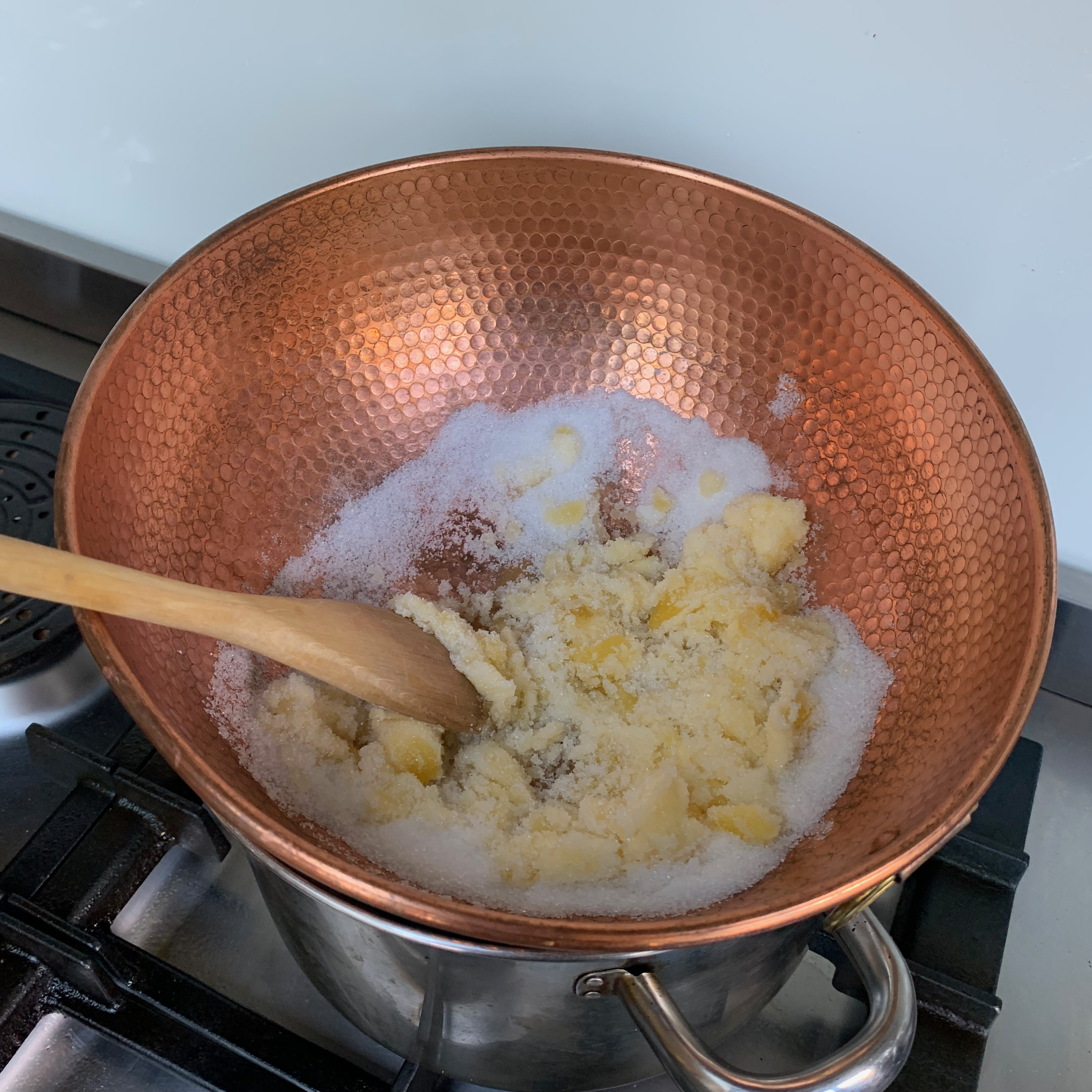
  2. Put the honey, butter and sugar into the double boiler. Cook it until smooth, stirring continuously.
  3. Add the bicarbonate of soda and vanilla, and cook for another minute.
  4. Remove from the heat and leave to cool for around 4 minutes. You are about to add eggs and you don’t want them to be scrambled.
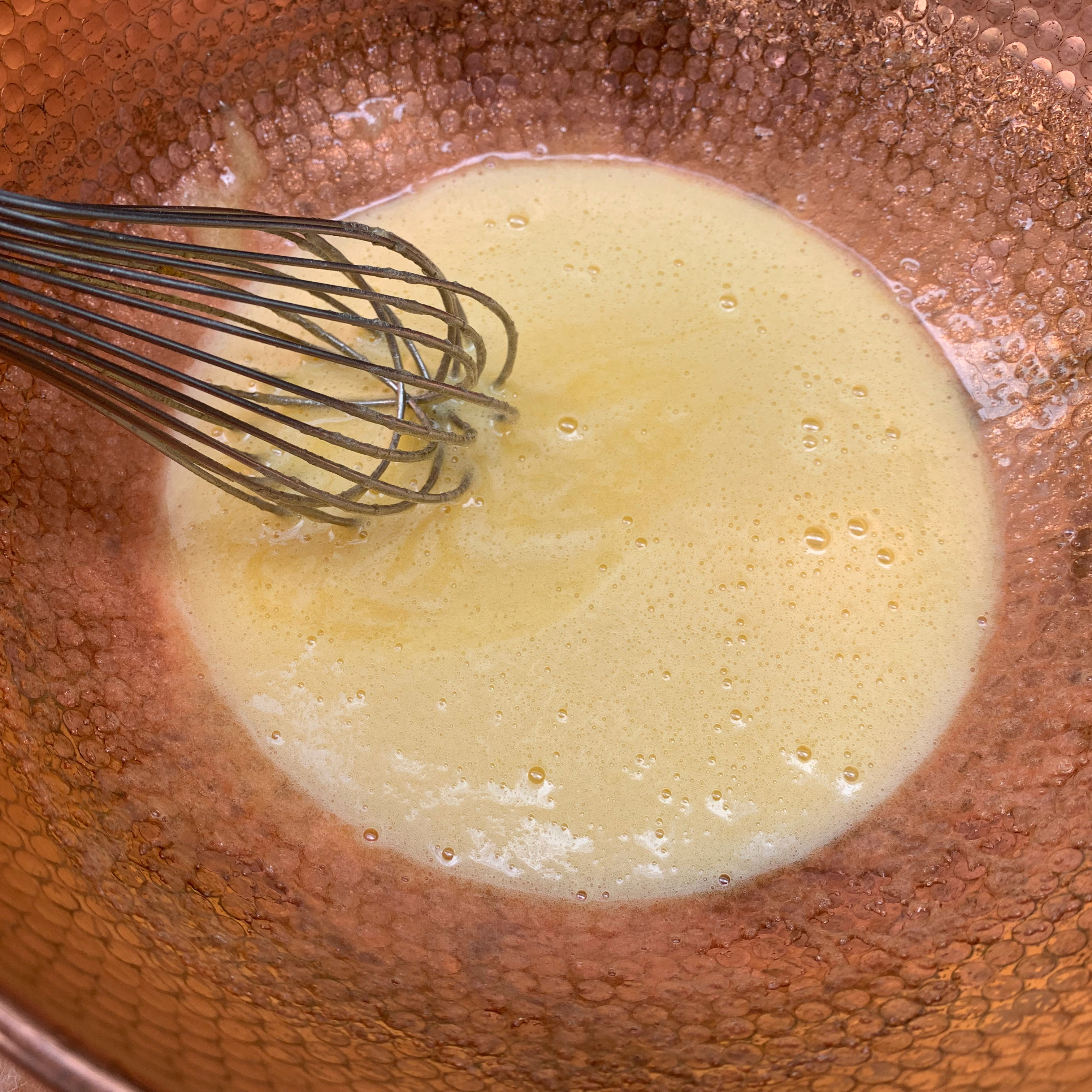
  5. Beat two eggs in a jug with a spout. Add the beaten egg very slowly to the mixture, continuing to beat as you go.
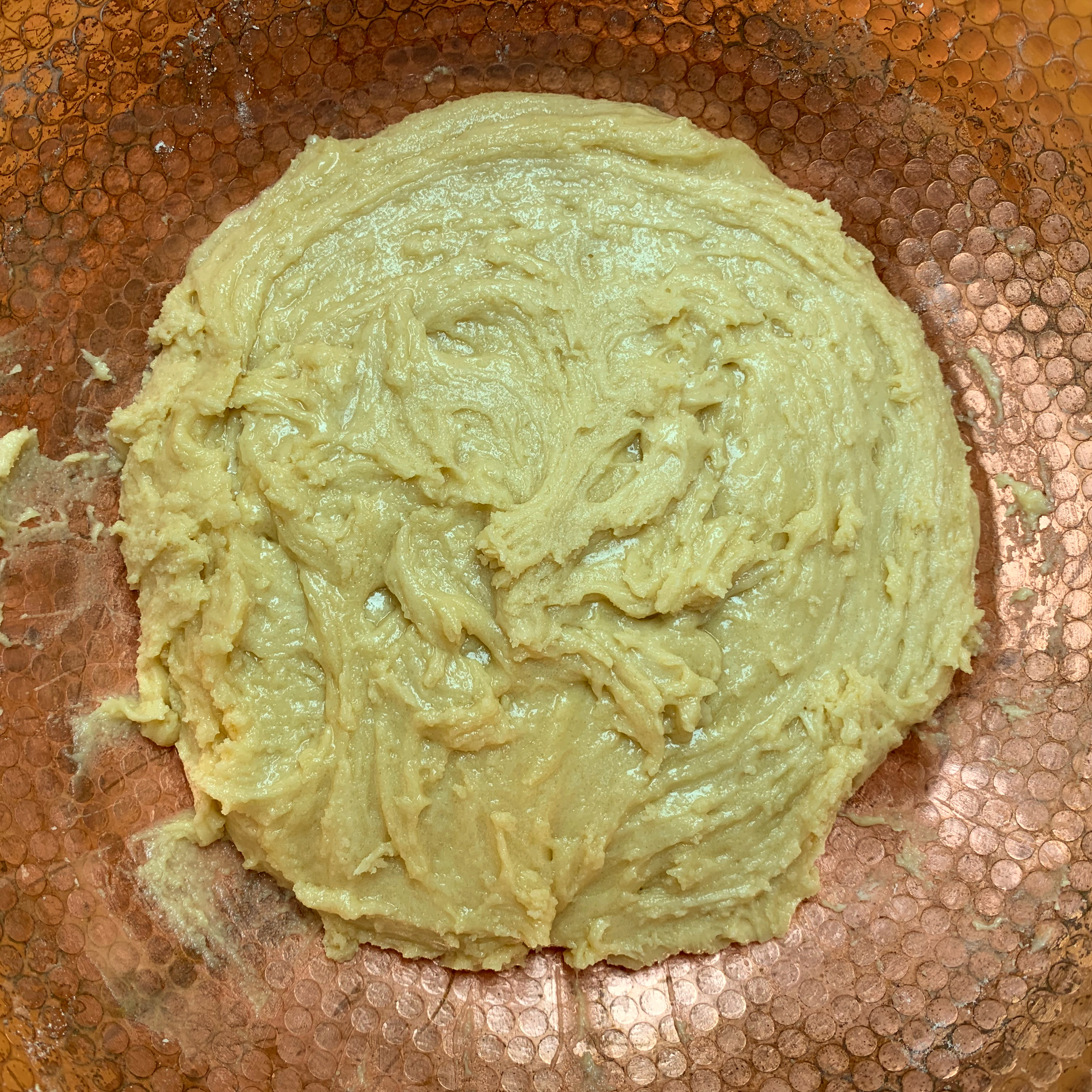
  6. Add the flour and stir until mixed thoroughly.
  7. Preheat oven to 200℃ fan.
  8. Form the dough into a ball, wrap with cling film, and place in a freezer for around 15 minutes.
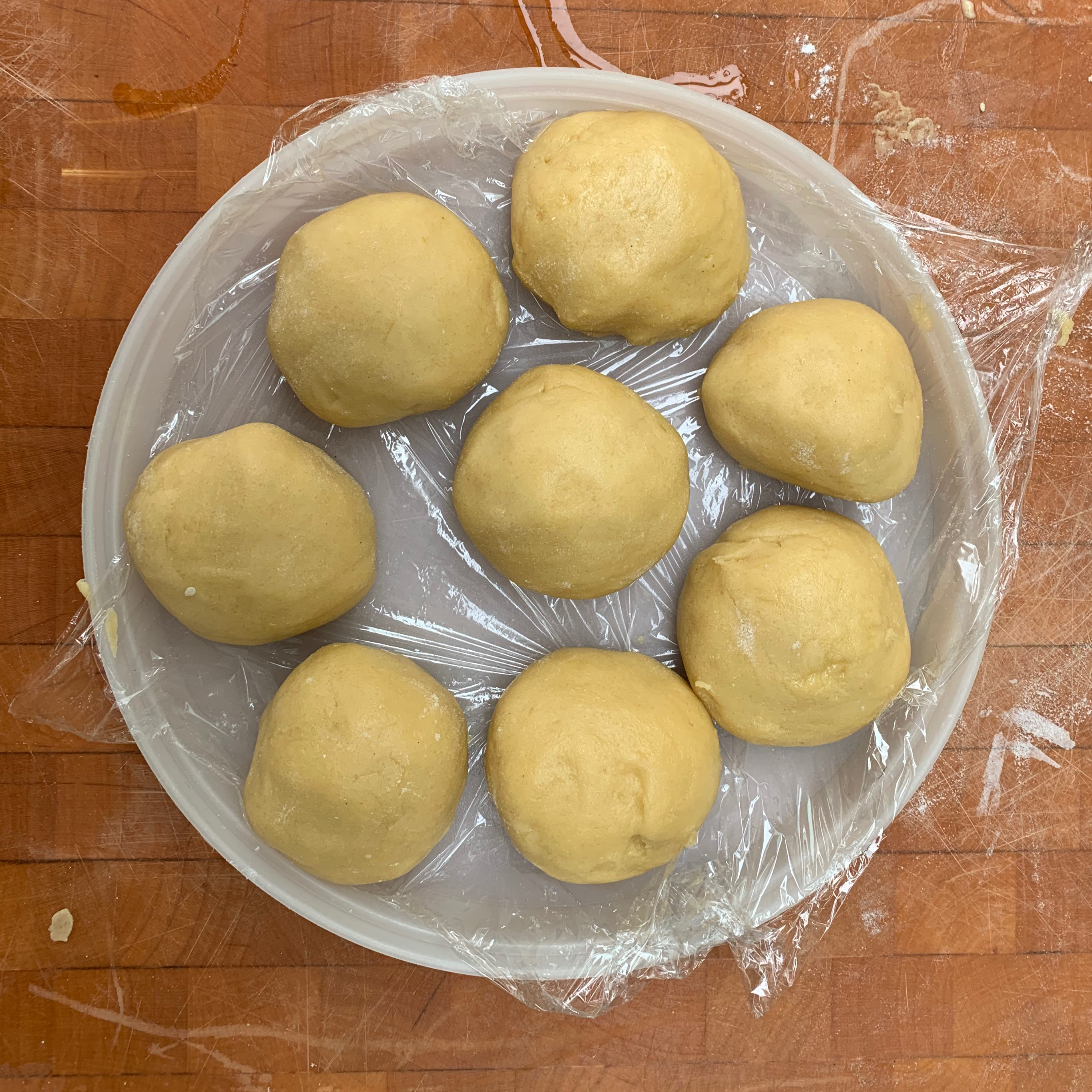
  9. Remove the dough from the freezer, cut into 8 equal pieces (make the weights as even as you can, they should be around 90g each). Form each piece into a ball, cover with cling film and replace in the freezer for another 5-10 minutes.
  10. Have a pile of flour ready to flour your rolling pin.
  11. Remove the dough from the freezer. Place a ball of dough out on a silicone baking sheet and roll it out until it is larger than a 20cm circle. The dough will be very thin, so you really need to take care that the rolling process doesn’t cause it to tear – although you can patch it and re-roll if you have to.
  12.  Cut out the circle and set aside the offcuts from around the edge (the best way of doing this is to use the base of a springform tin as a template).
  13. If you have two silicone sheets, do another one.
  14. Place the sheet(s) in your oven and bake for around 5 minutes until golden.
  15. Cool on a rack. When sufficiently cool, place in a pile.
  16. Repeat until all 8 sheets are done. Roll out the offcuts of pastry and bake them alongside your last cake layer (or couple of cake layers, if you have a lot). You may want to put the unused balls of dough back in the freezer occasionally to keep them cool during the process.
The filling

  • 600ml sour cream
  • 400g condensed milk
  1. Whisk the sour cream and condensed milk together until smooth.

Final assembly

  1. Cut a circle of baking paper somewhat larger than your cake – perhaps 24cm in diameter. Place it on your cake plate, and dab a small amount of filling in the middle.
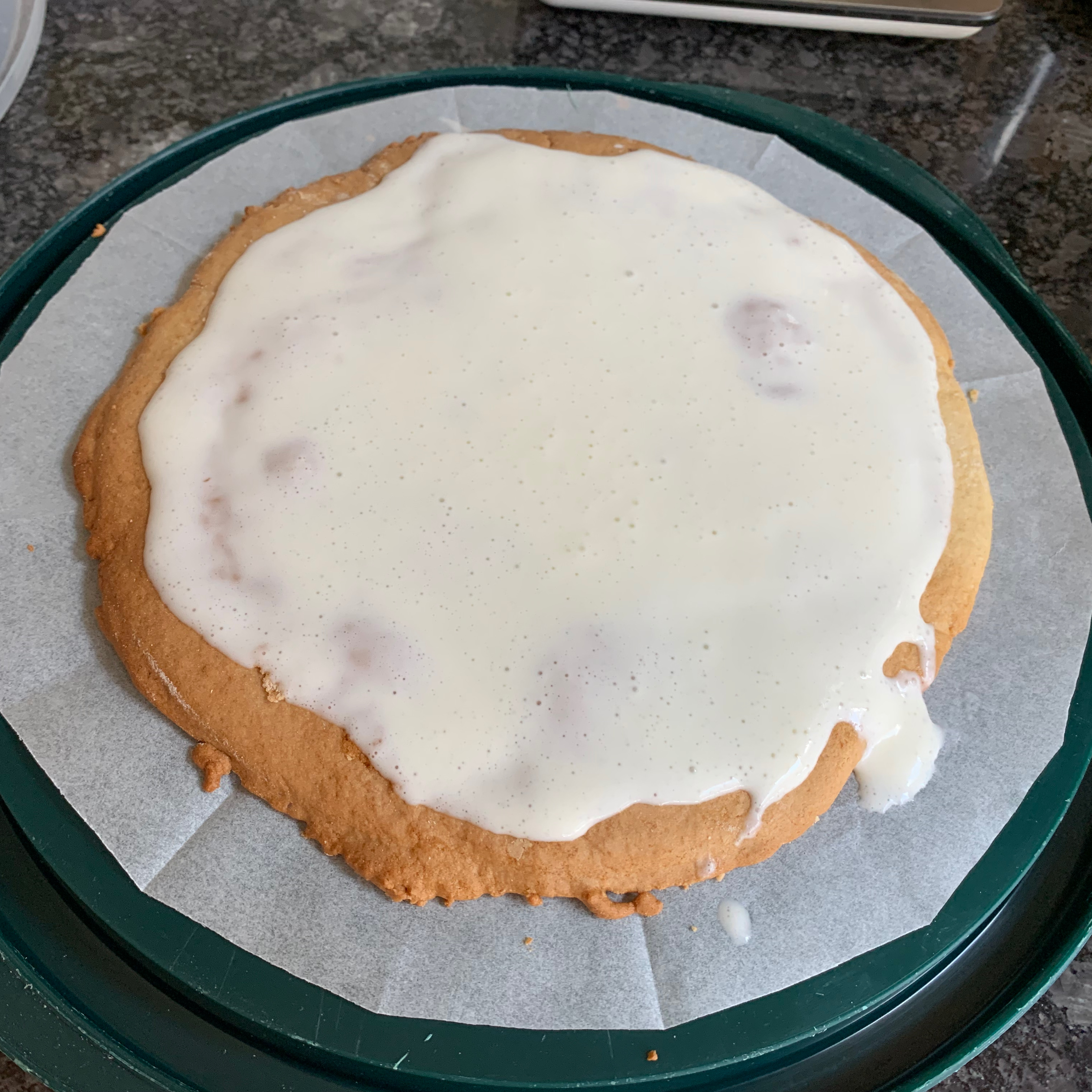
  2. Place a cake layer in the middle, then spread it thoroughly with frosting. This will dribble down the sides – that’s why you made the paper larger than the cake.
  3. Repeat until all the layers are done.
  4. Blitz the offcut pastry to crumbs (I didn’t have enough, so I supplemented mine with ordinary biscuits). Scatter crumbs over the top of the cake.
  5. Cover (I have a plastic cake plate with a matching cylindrical cover, which was ideal) and leave in the refrigerator overnight.
  6. Around 30 minutes before serving, take the cake out of the refrigerator and tidy up the edges, cutting the baking paper to the size of the cake and removing the surplus frosting which has dribbled down.
  7. Serve with coffee. OK, the coffee isn’t technically essential, just highly desirable.
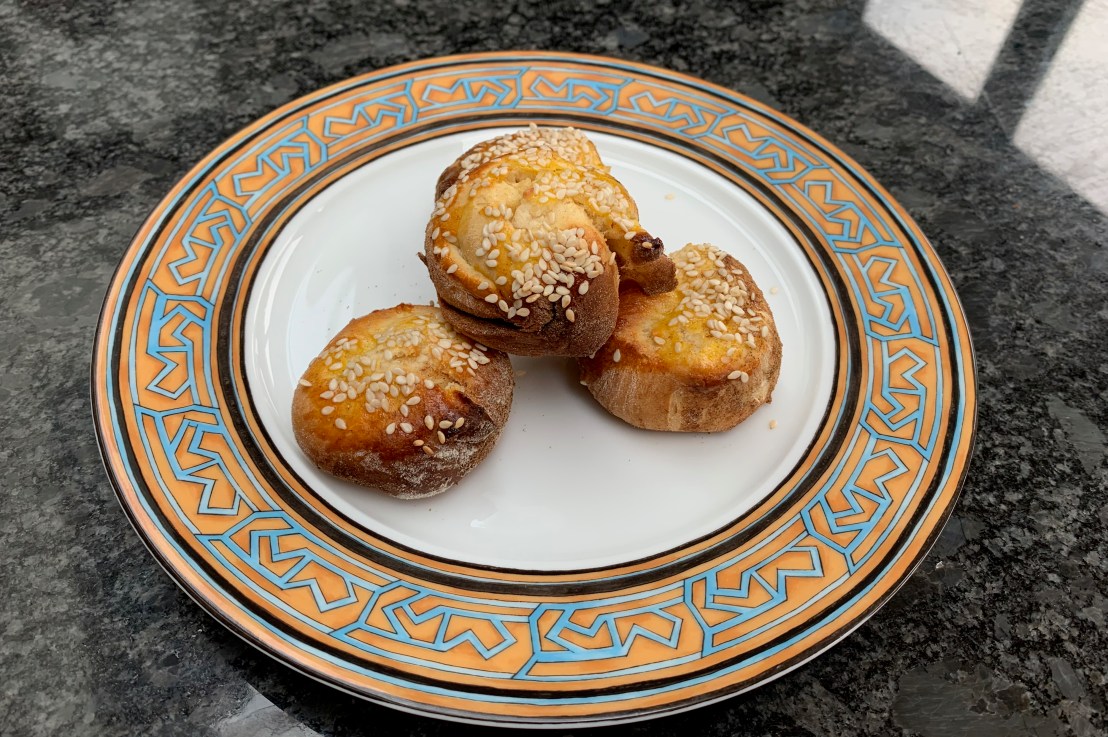
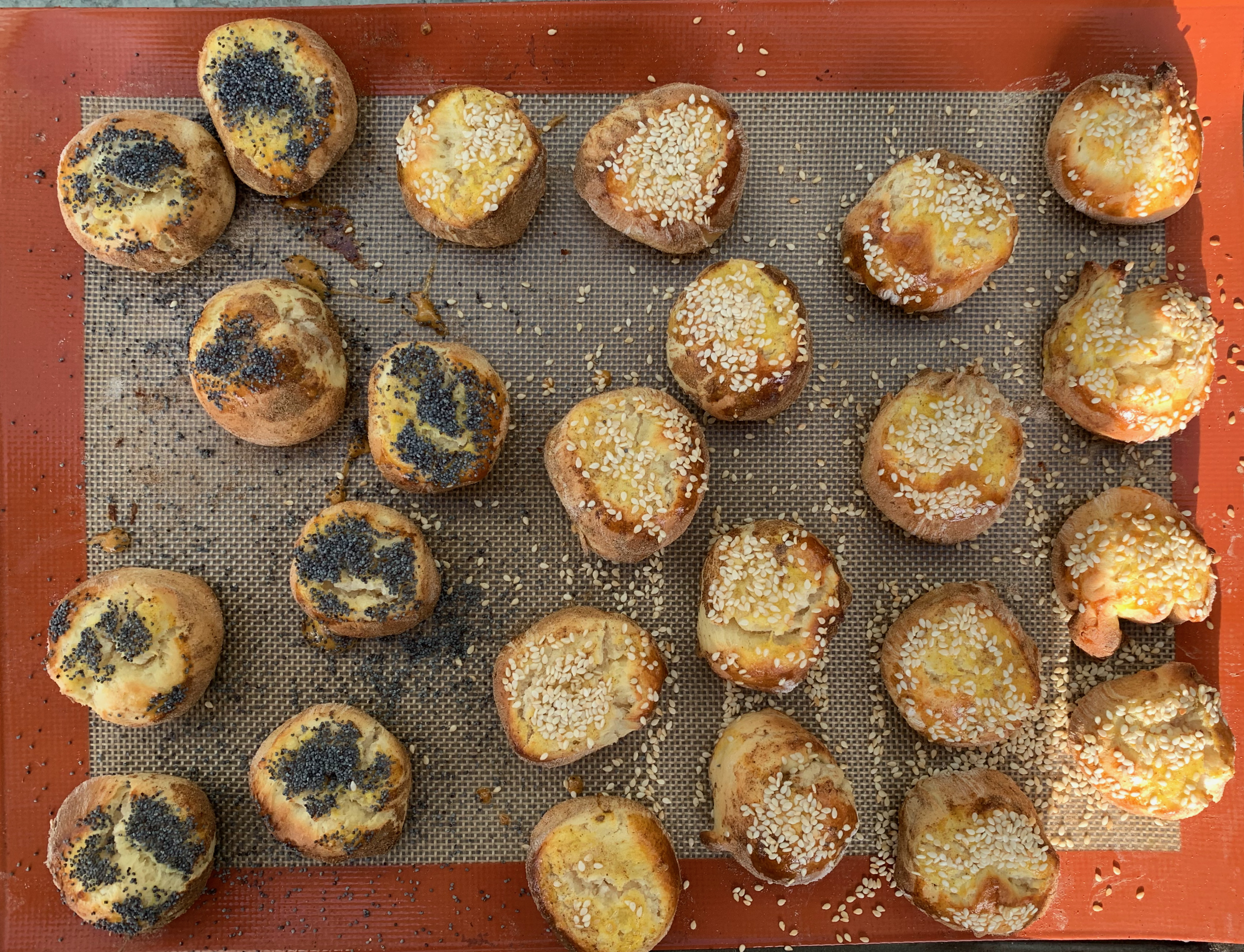
Around the world in 80 bakes, no.61: Gyepi-manju – bean-paste filled cookies from Korea

Around the world in 80 bakes, no.61: Gyepi-manju – bean-paste filled cookies from Korea

Like most of East Asia, Korea doesn’t really have a long-standing baking tradition – it’s to do with the relative scarcity of slow-burning fuel, which means that cooking is more likely to be done fast, at high temperature in a wok. However, Western baking has found its way to Korea (by way of Japan, in this case), where it has adopted a decidedly Korean accent. If you visit Seoul, I can vouch for the fact that their bakeries and patisseries are extremely popular and of super-high quality – even a relatively mundane chain bakery in a Seoul subway seems capable of turning out mouth-watering croissants.

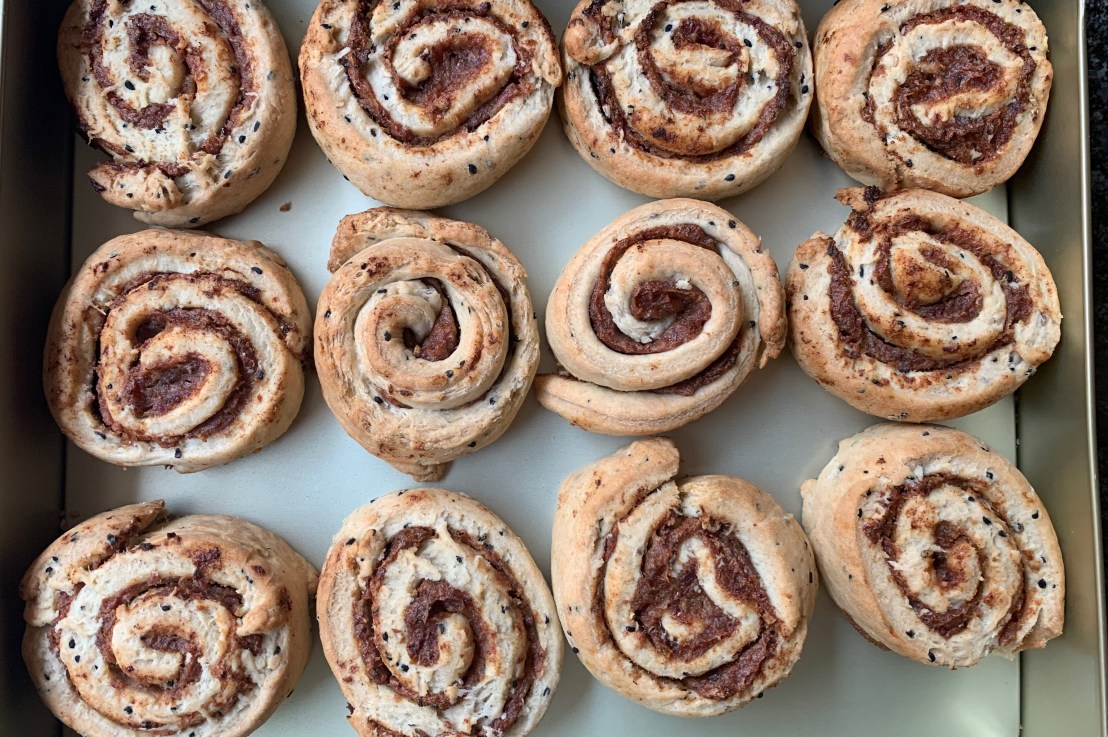
In the case of gyepi-manju, the cookies that I’ve made here, the Asian accent comes in the form of sweetened bean paste and the specifically Korean accent is their love of sesame seeds. They’re pleasant, not over-sweetened cookies: some Westerners will want to add more sugar.

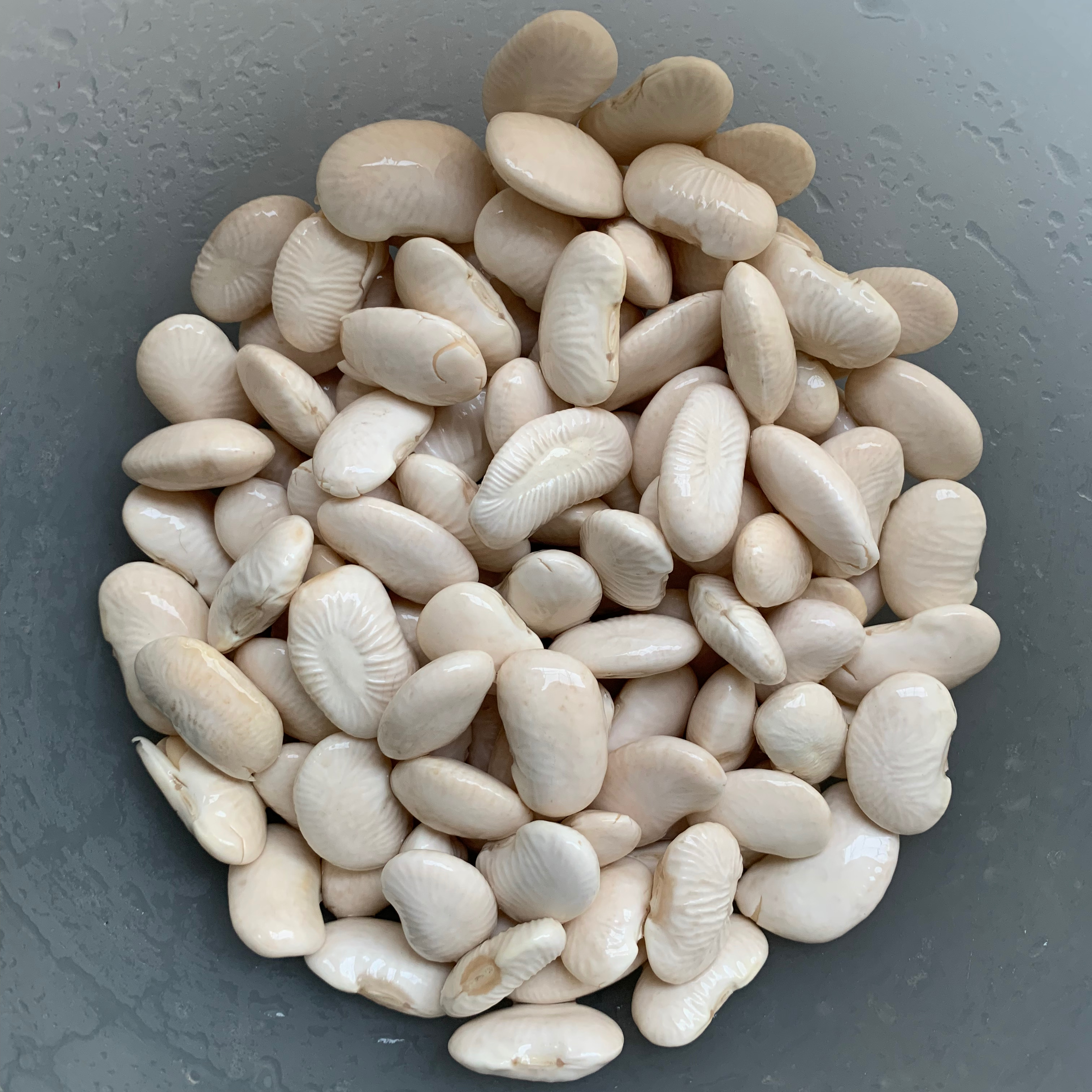
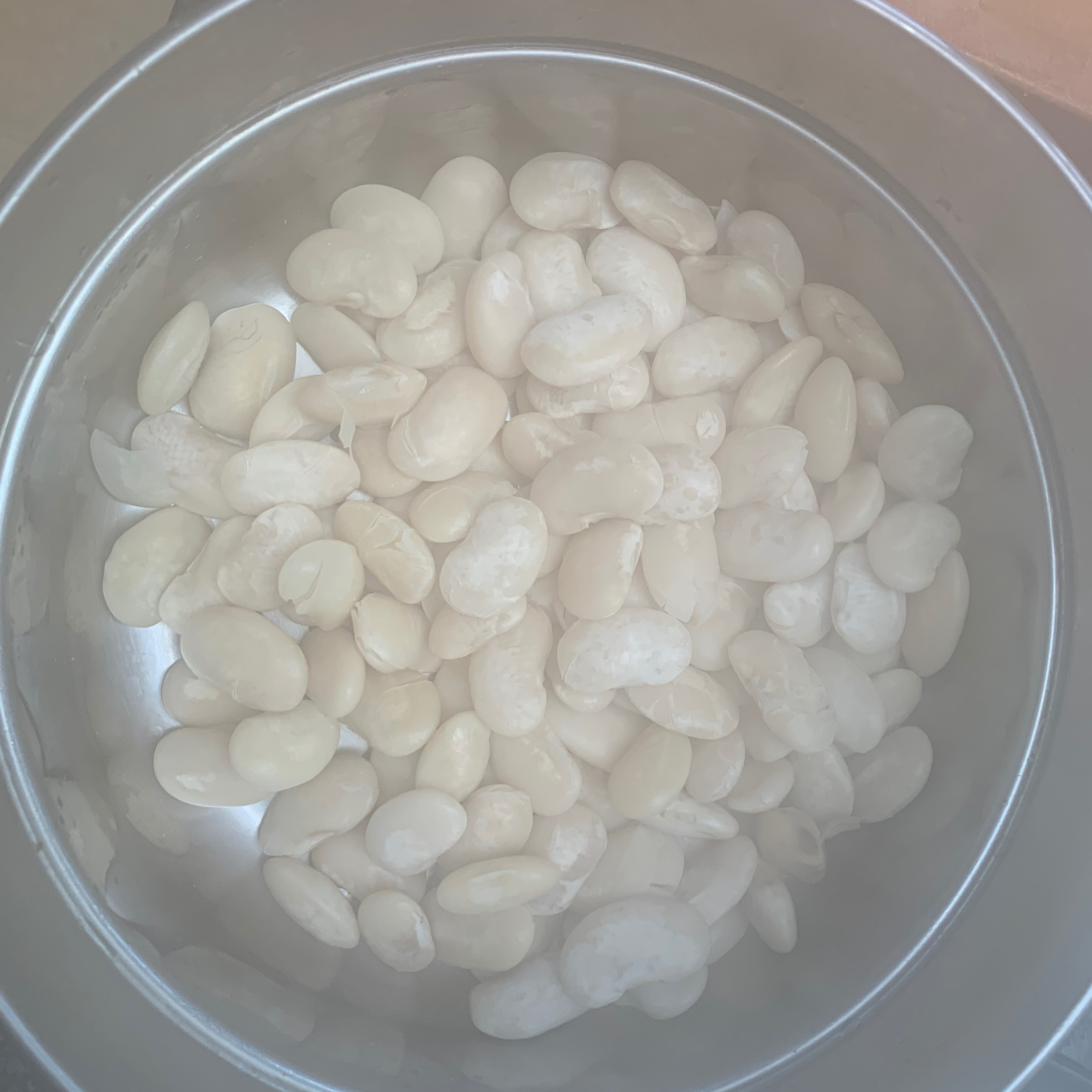
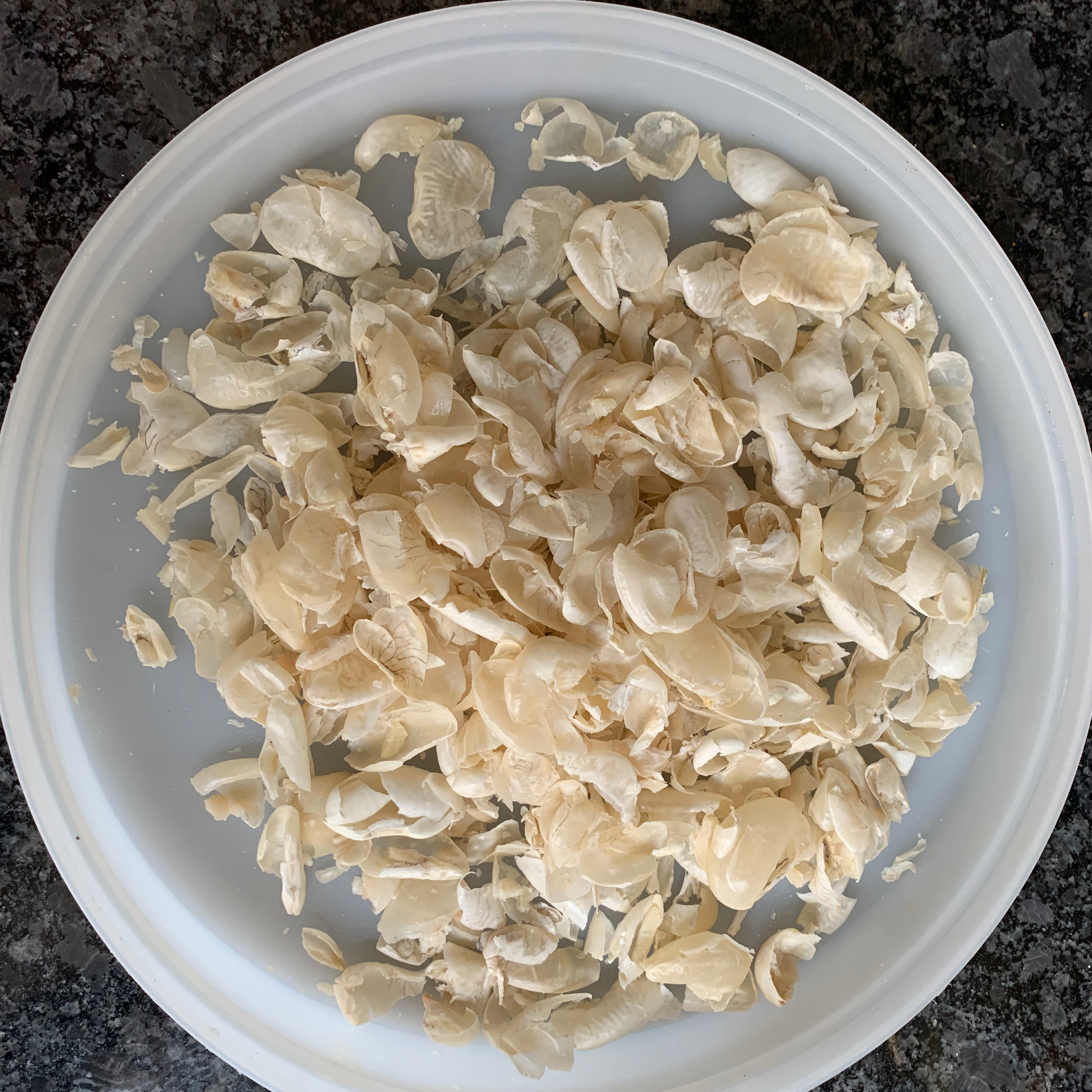
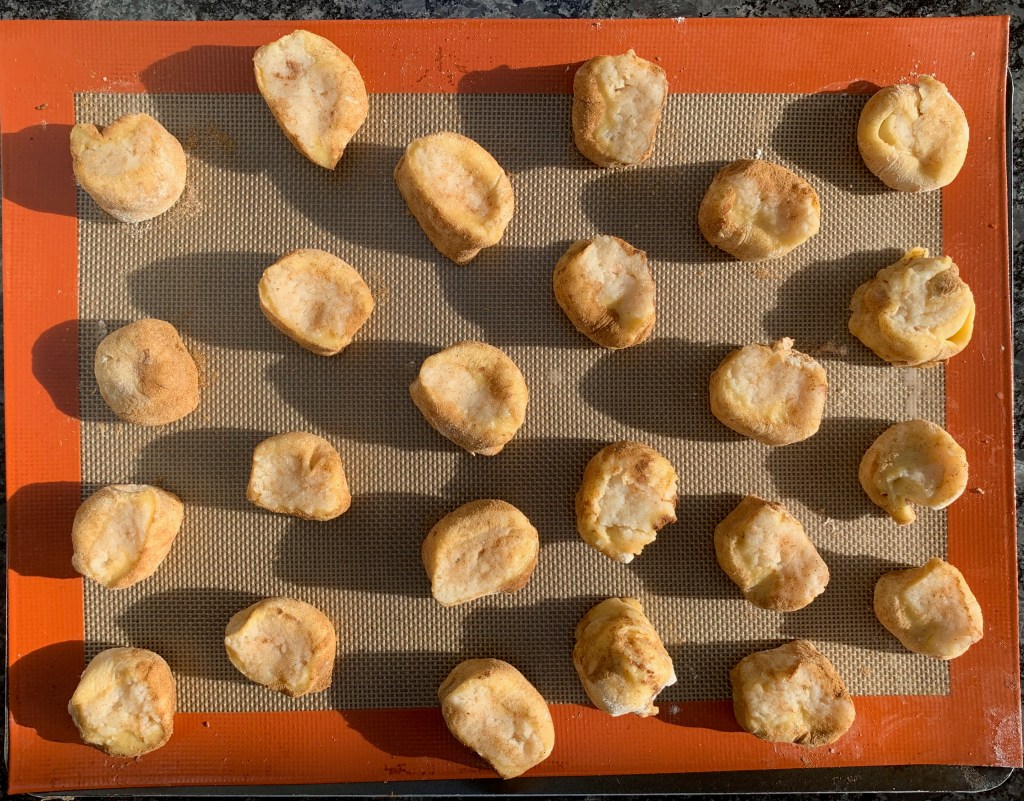
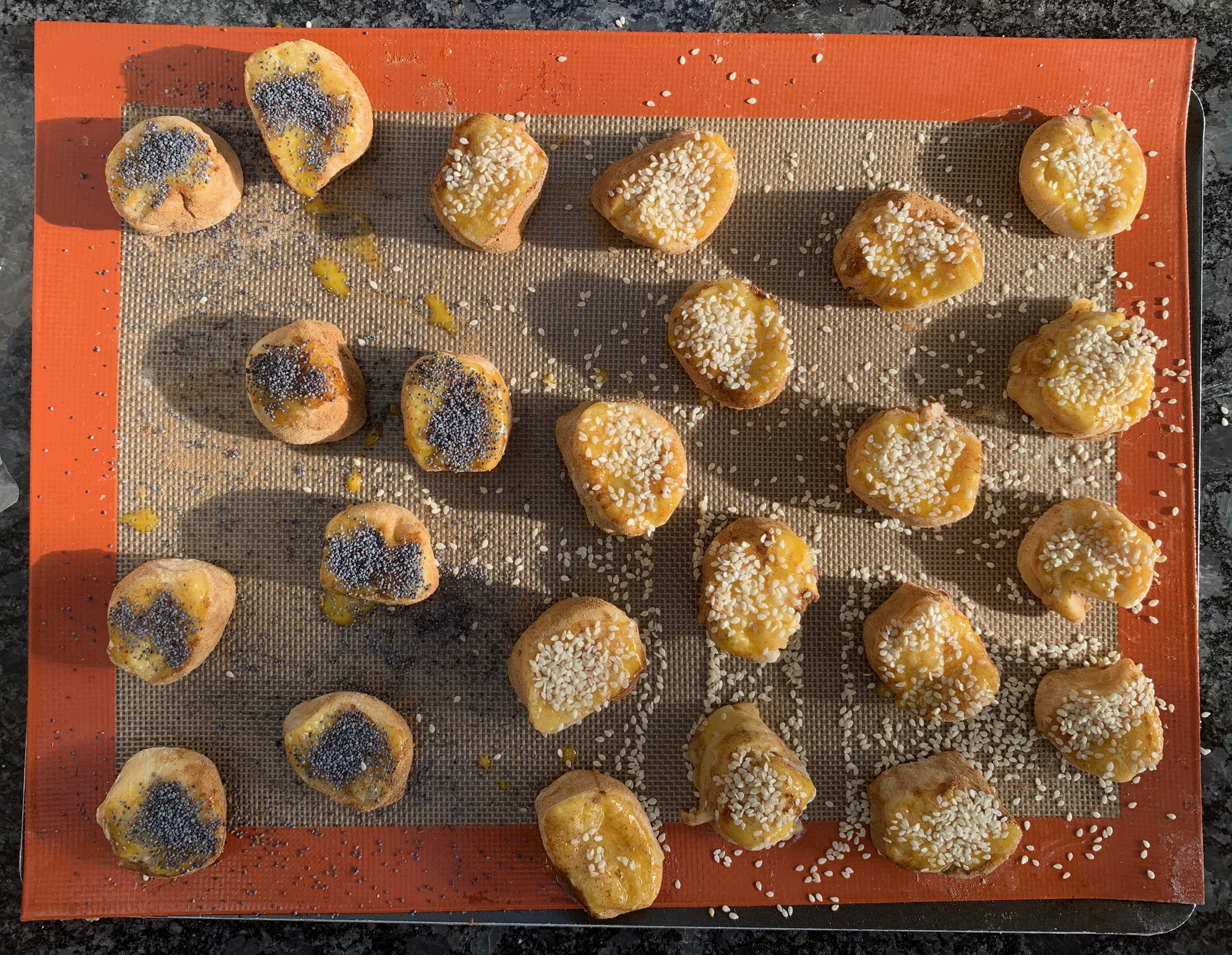
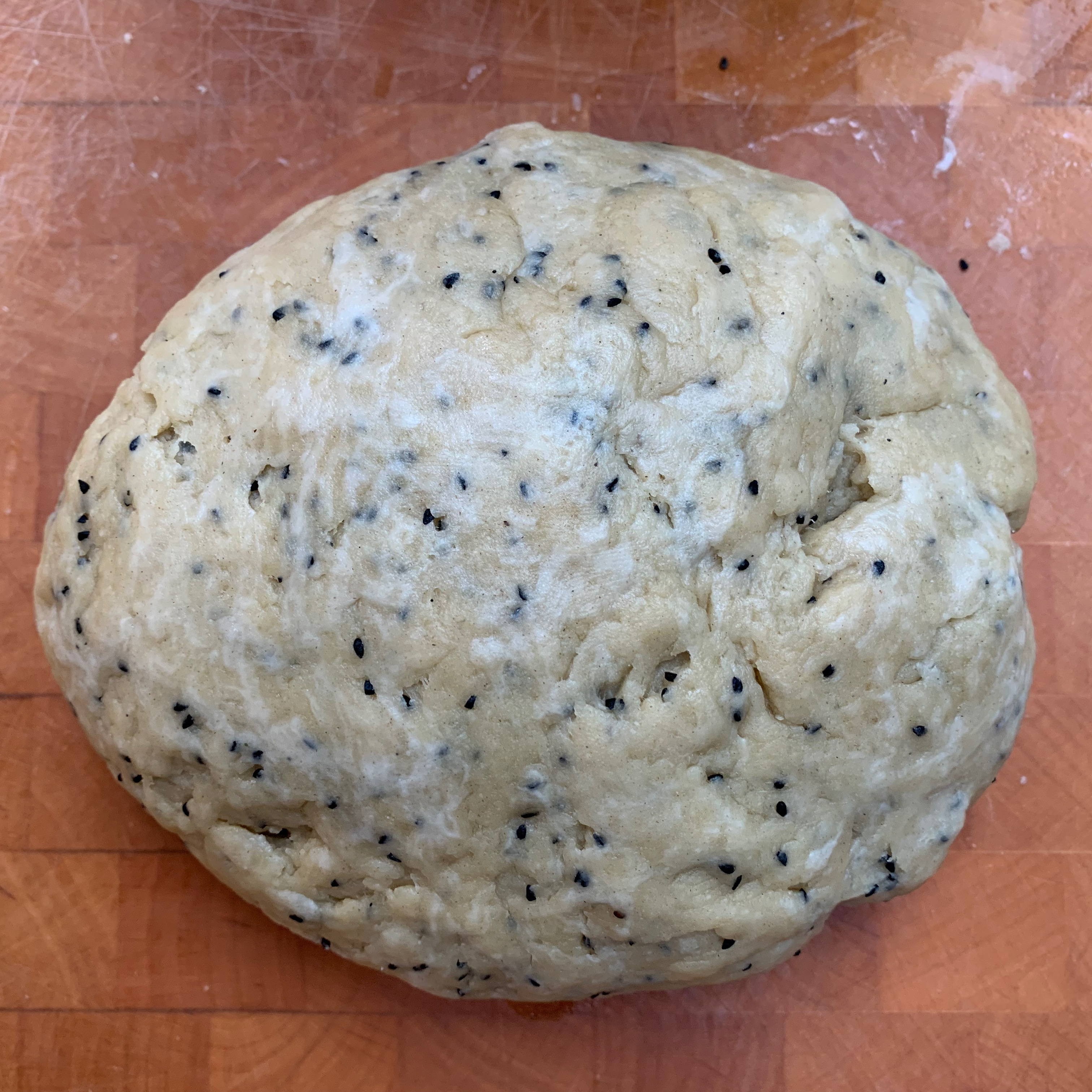
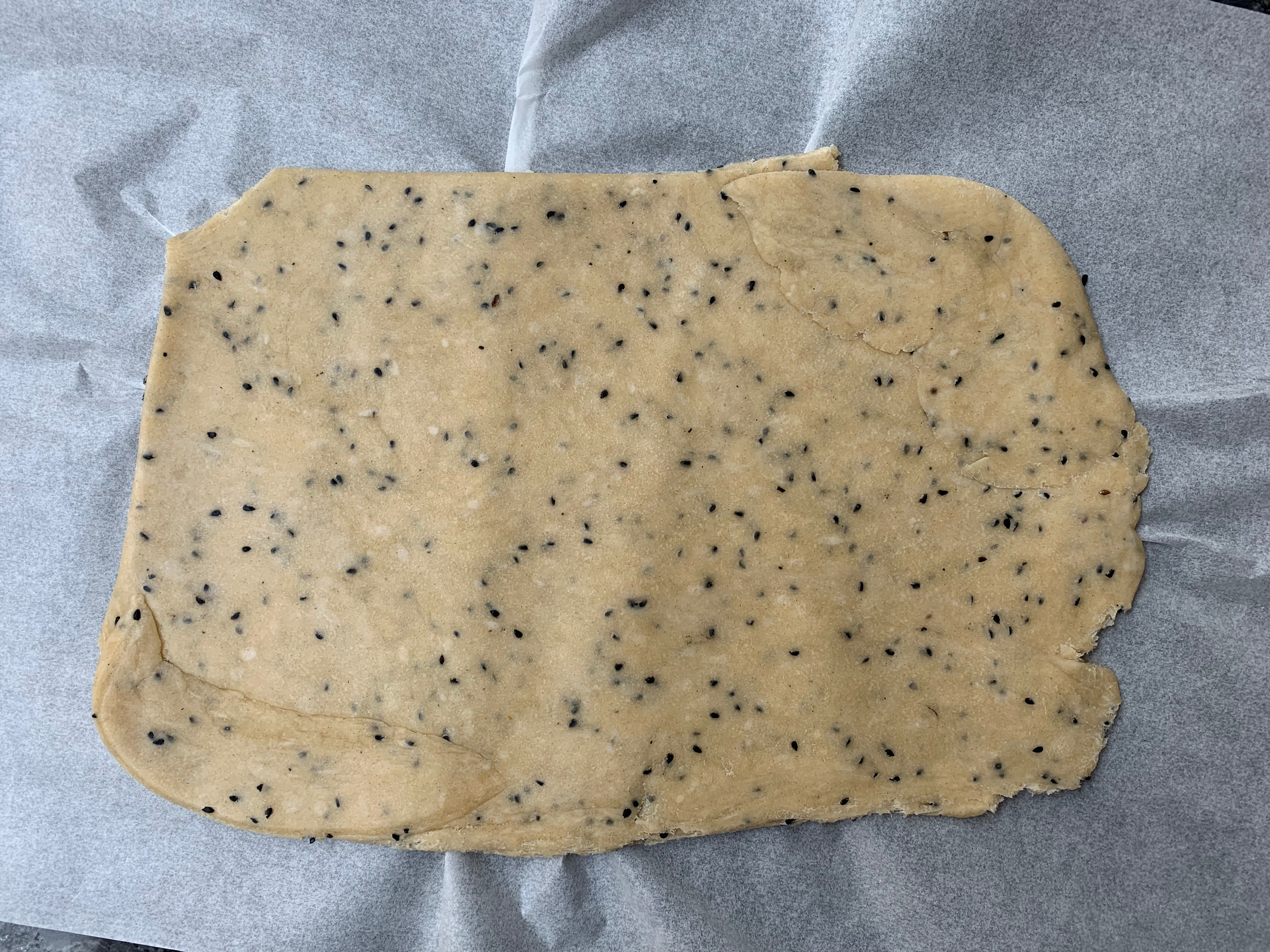
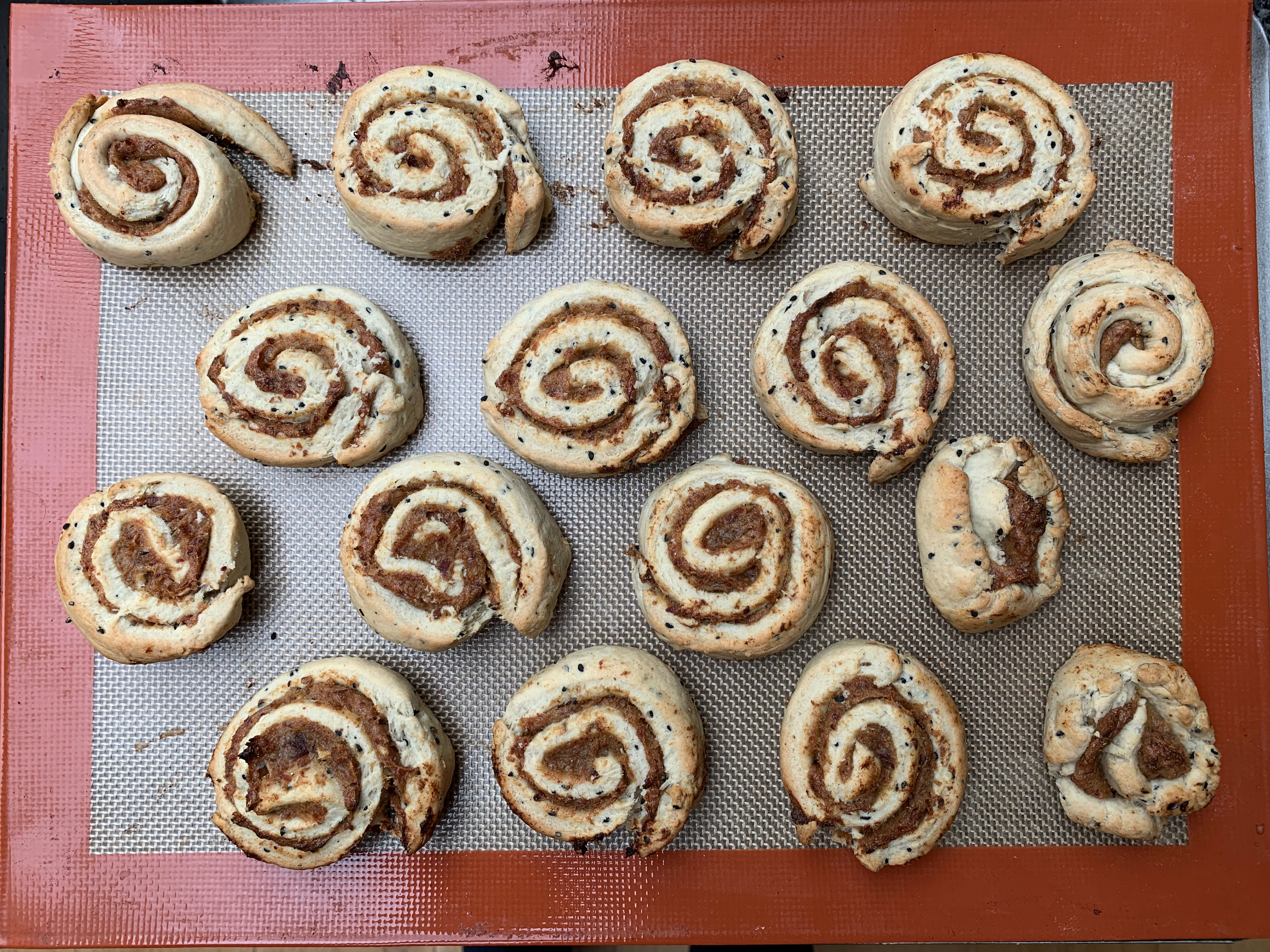
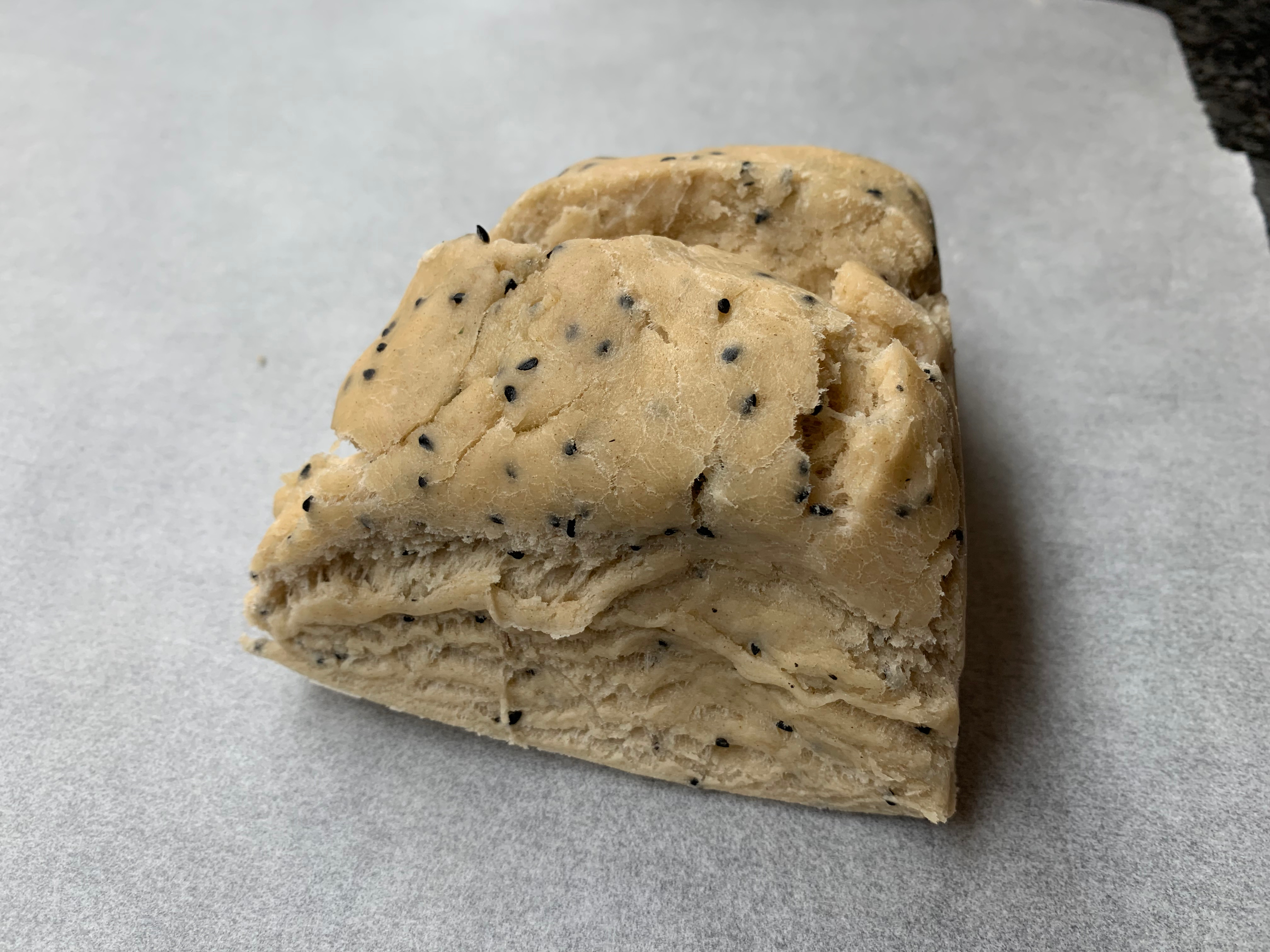
I started with a recipe from New-York based Korean cook Maangchi. While this isn’t the hardest bake in the world, there’s definitely room for error – and I made a few, which are visible in the photos. The first of these: Maangchi expects you to take the skins off your broad beans *before* boiling them, which I forgot to do. Taking them off afterwards is fine, but you need a much longer boil. The second is that I ran out of sesame seeds, so I substituted some decidedly un-Korean poppy seeds in my last few gyepi-manju (they were fine).

As usual, I’ve gone for metric quantities and ingredient names from the UK. I’ve shown the way I did the beans, since it worked fine. Go to the original if you prefer.

The bean paste

  • 200g butter beans
  • 100g sugar (1 cup)
  • A pinch of salt – perhaps 1g
  • Vanilla essence to taste
  1. Put the butter beans in a bowl and cover with a lot of cold water: soak overnight.
  2. Transfer the beans to a saucepan, cover in water and boil until soft, skimming off the worst of the scum that will accumulate at the top.
  3. Drain the beans and leave until cool enough to handle.
  4. Remove the tough outer skin of the beans and discard, placing the peeled beans in the bowl of food processor.
  5. Add sugar, salt and vanilla, and process until very smooth (this takes longer than you expect).
  6. Put into a covered bowl and refrigerate while you make the dough.

The dough

  • 15 g butter
  • 80g condensed milk
  • 130g flour
  • 1 egg
  • 5g baking powder
  • 2g salt
  • Vanilla extract to taste
  1. Melt the butter and pour into a bowl
  2. Add the condensed milk and stir
  3. Add egg, baking powder, salt and vanilla and stir
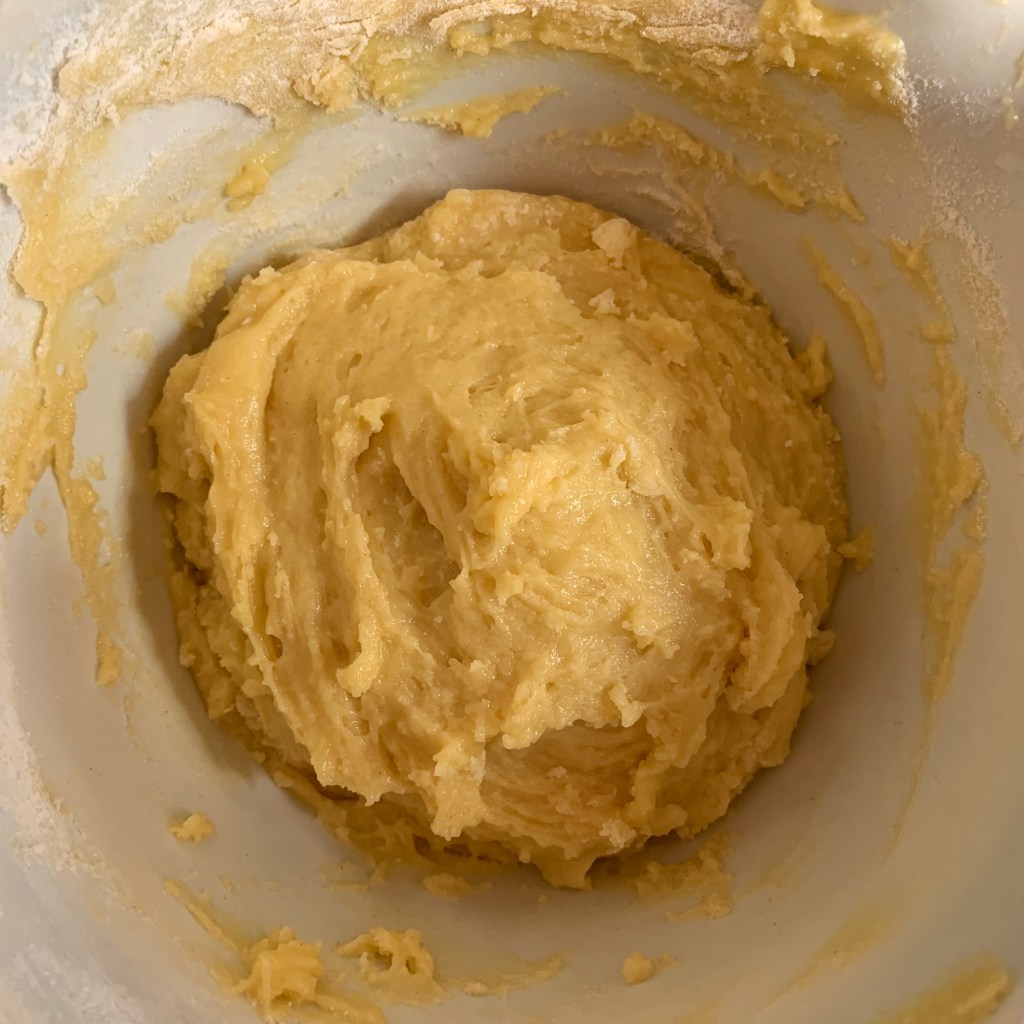
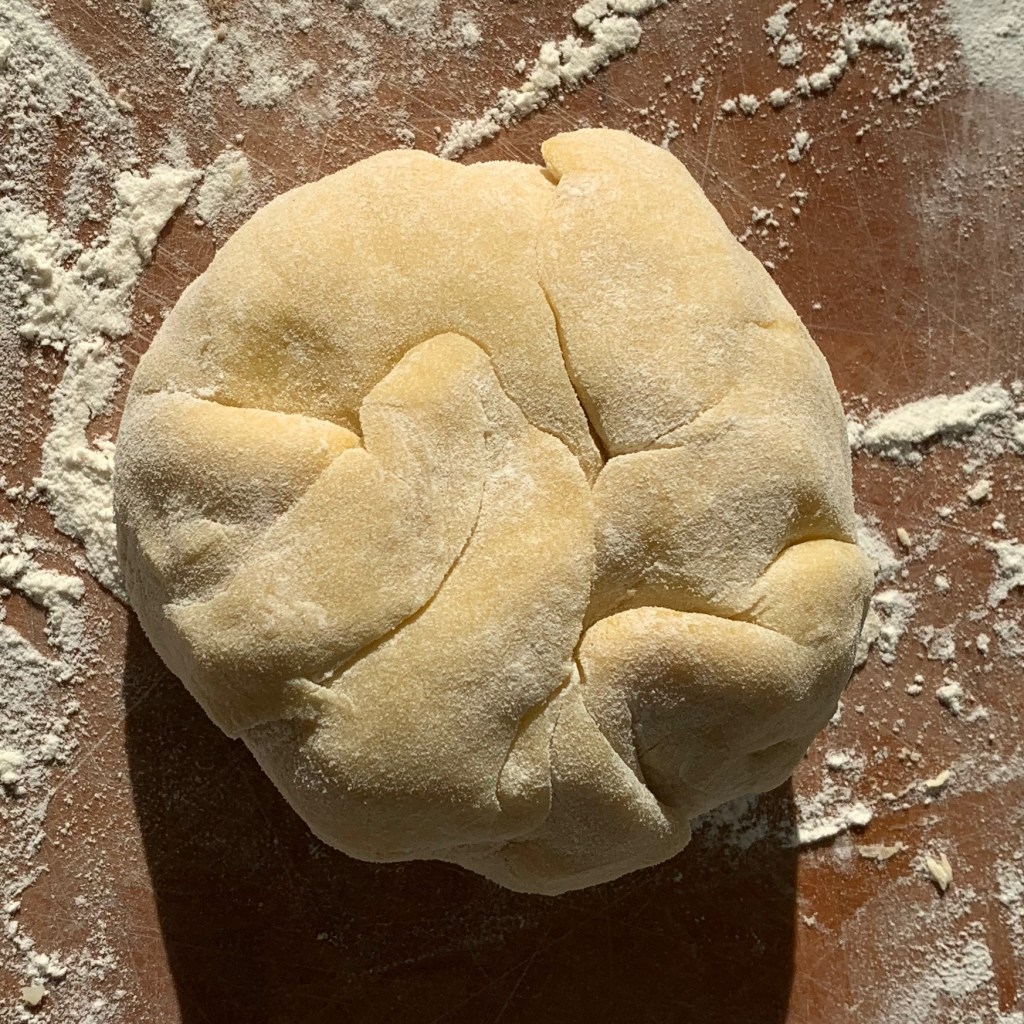
  4. Add the flour and mix until you have a smooth dough
  5. Cover in cling film (or put in a sealed bowl) and leave to rest for at least an hour – I actually ended up doing this overnight, which was fine.

Final assembly and baking

  • Generous amounts of sesame seeds (black, white or half and half) – perhaps 1-2 tablespoons
  • 1 egg yolk
  • flour for rolling
  • Generous amounts of ground cinnamon – perhaps 1-2 tablespoons
  1. Preheat oven to 180°C.
  2. Toast the sesame seeds in a dry pan until fragrant. Set aside.
  3. Beat the egg yolk in a small bowl. Set aside.
  4. Flour your board
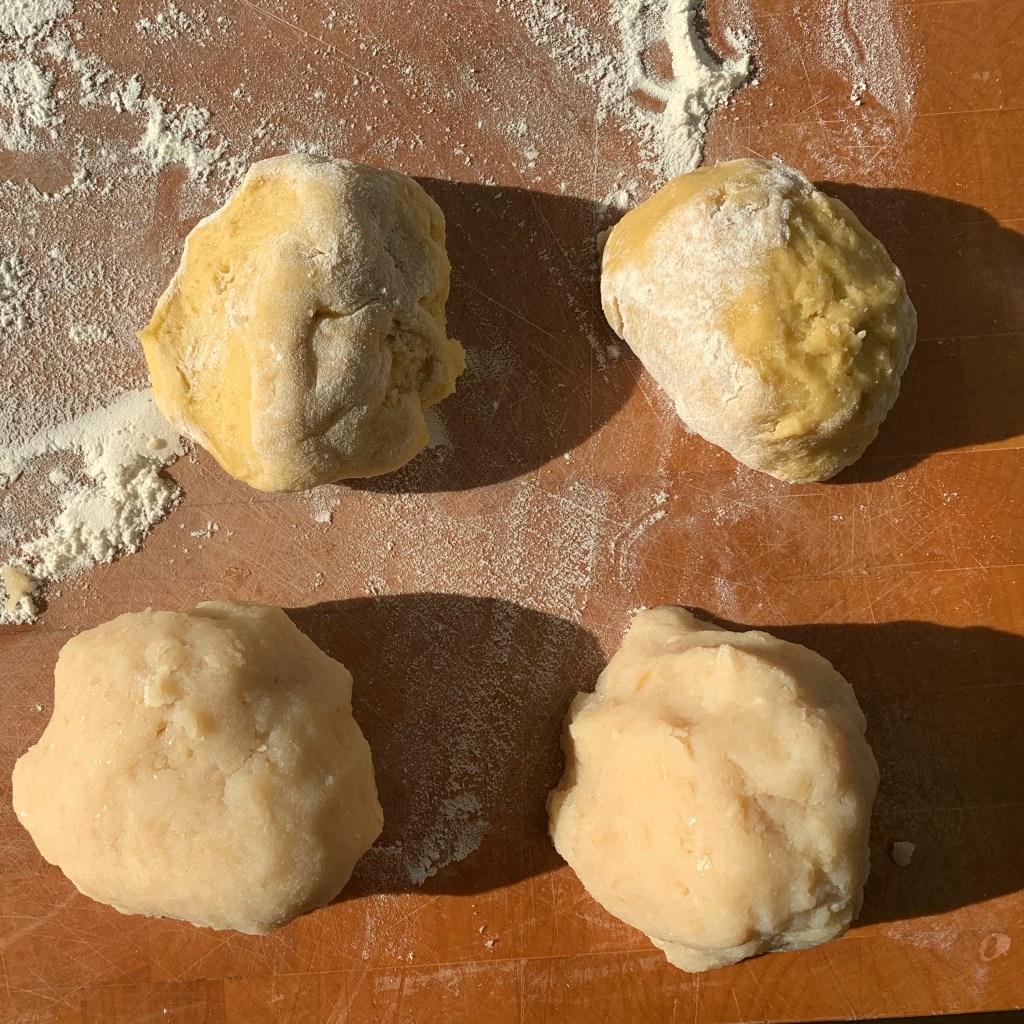
  5. Separate the bean paste into two halves. Separate the dough into two halves.
  6. Form a half of the bean paste into a ball.
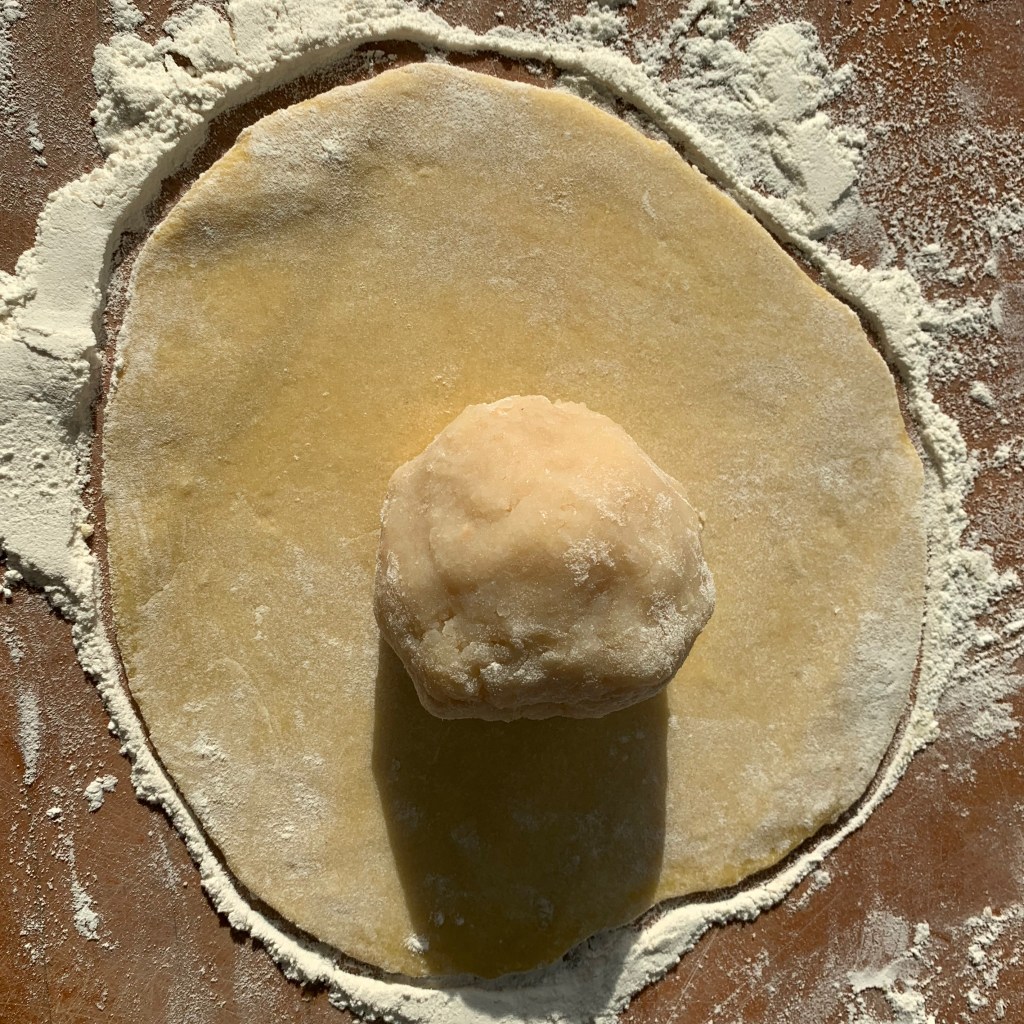
  7. Roll half of the dough into a circle big enough to be wrapped around the ball.
  8. Roll your assembled ball into a log.
  9. Repeat for the second half of the bean paste and dough.
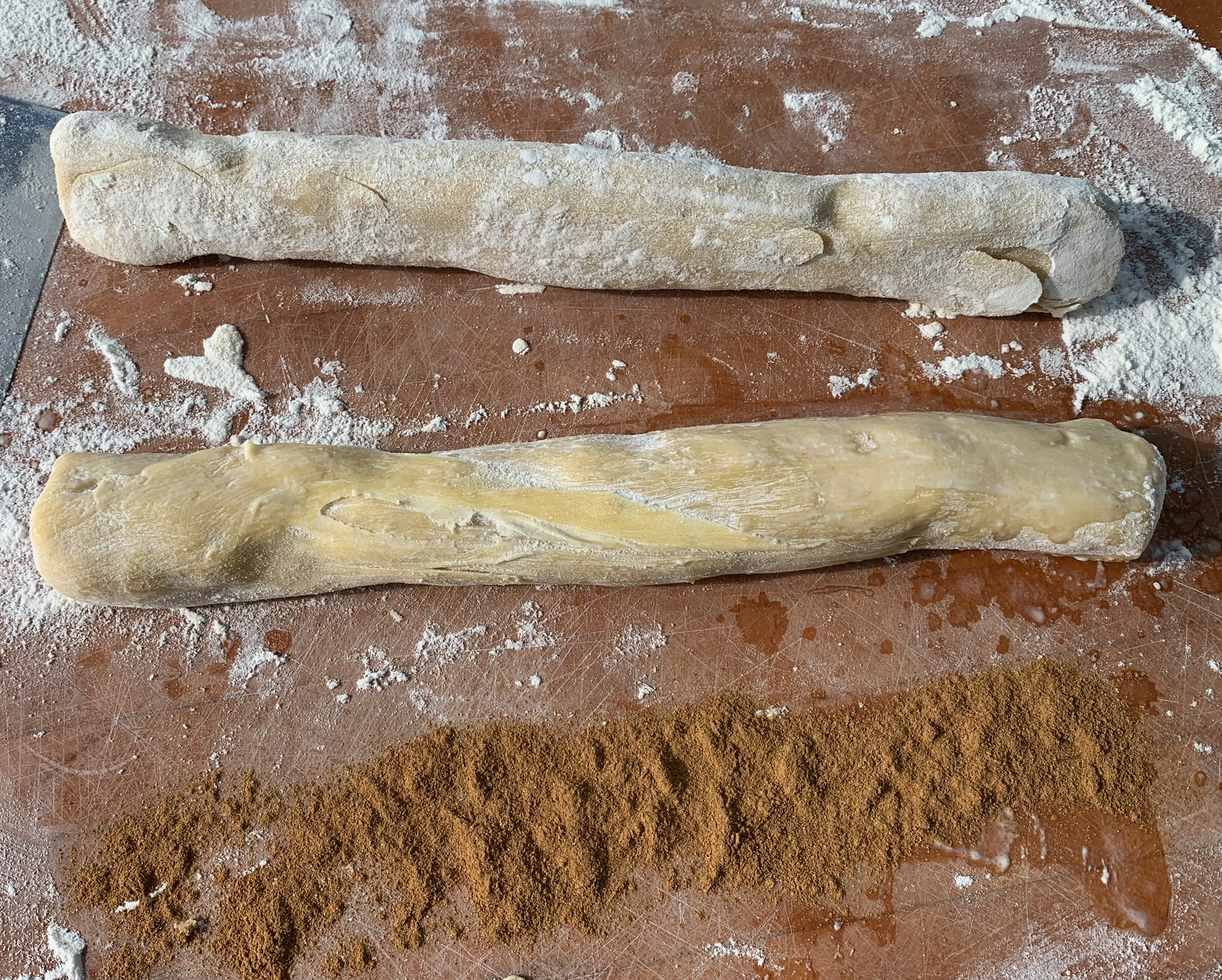
  10. Spread cinnamon powder over a space of your board that’s been cleared of flour.
  11. Brush water over a log of dough and roll it in the cinnamon so that it’s thoroughly coated. Keep adding cinnamon if you have to – it’s hard to overdo. Repeat for the second log.
  12. Cut your log into individual cookies (I made 12 each for a total of 24). Array them on a baking sheet lined with baking paper (or, better still, a Silpat sheet).
  13. Brush the tops of the cookies with beaten egg, and scatter generous amounts of sesame over them.
  14. Bake for around 20 minutes until golden brown. Take out and leave to cool.
Around the world in 80 bakes, no.60: Khobzet borgden – Tunisian orange cake

Around the world in 80 bakes, no.60: Khobzet borgden – Tunisian orange cake

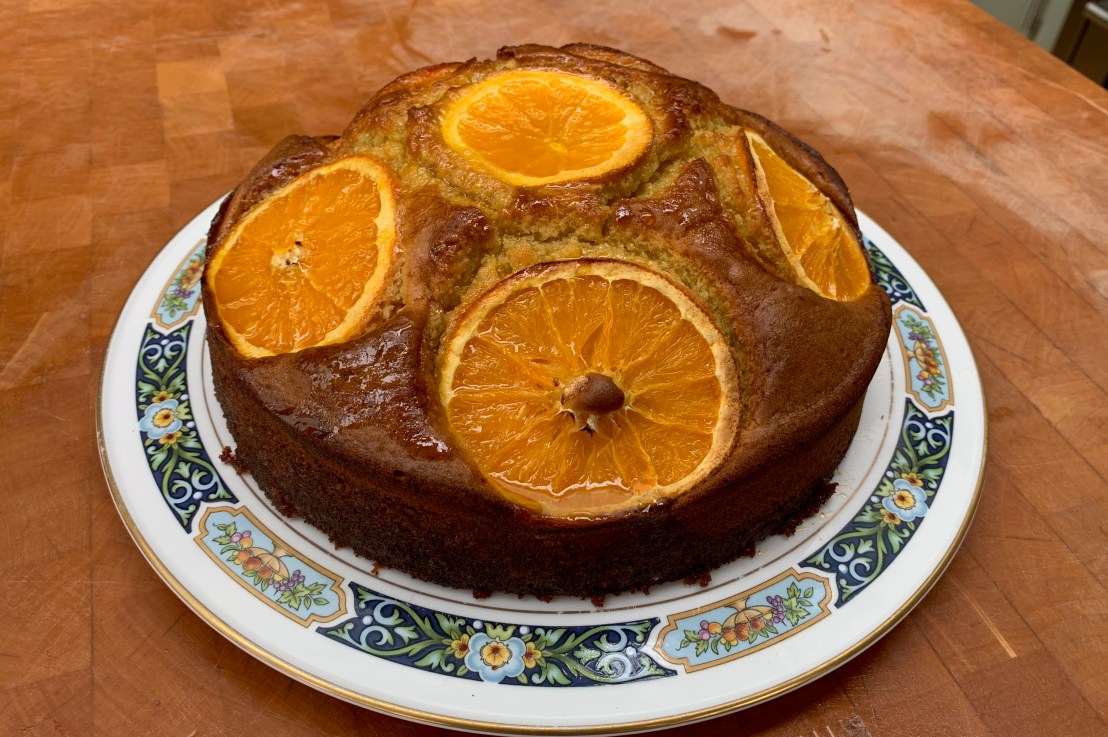
Tunisia grows a lot of oranges. Over 550,000 tonnes, according to The Guardian, in what was admittedly a freak year – apparently, 200-400,000 is more normal. Anyway, you have to do something with all that fruit, and one of things the Tunisians do is to make orange cake – or “Khobzet borgden”, as it’s called in Arabic.

If you look up English language recipes for Tunisian Orange Cake, you tend to get something different, often involving stale breadcrumbs and a lot of ground almonds. These are also very good – my wife has been making her mother’s orange almond cake recipe for years and it’s a winner – but I can’t find any evidence that they’re authentically Tunisian: the closest I got was a recipe where the cake was decorated with flaked almonds.

So I’ve gone for one of the many recipes for Khobzet borgden on Tunisian websites, generally in French. Variations include choice of fat (butter / olive oil / vegetable oil) and how to treat your oranges: the most extreme one I’ve seen involved blitzing whole oranges – skin, pips and all – and adding the resulting purée to your cake mix. Just about all the recipes involve drizzling your finished cake with an orange syrup. I’ve started with one from tunisienumerique.com (translation: digital Tunisia), which uses oil (I chose olive – it doesn’t specify) and lots of orange zest as well as decorating the top of the cake with slices of orange.

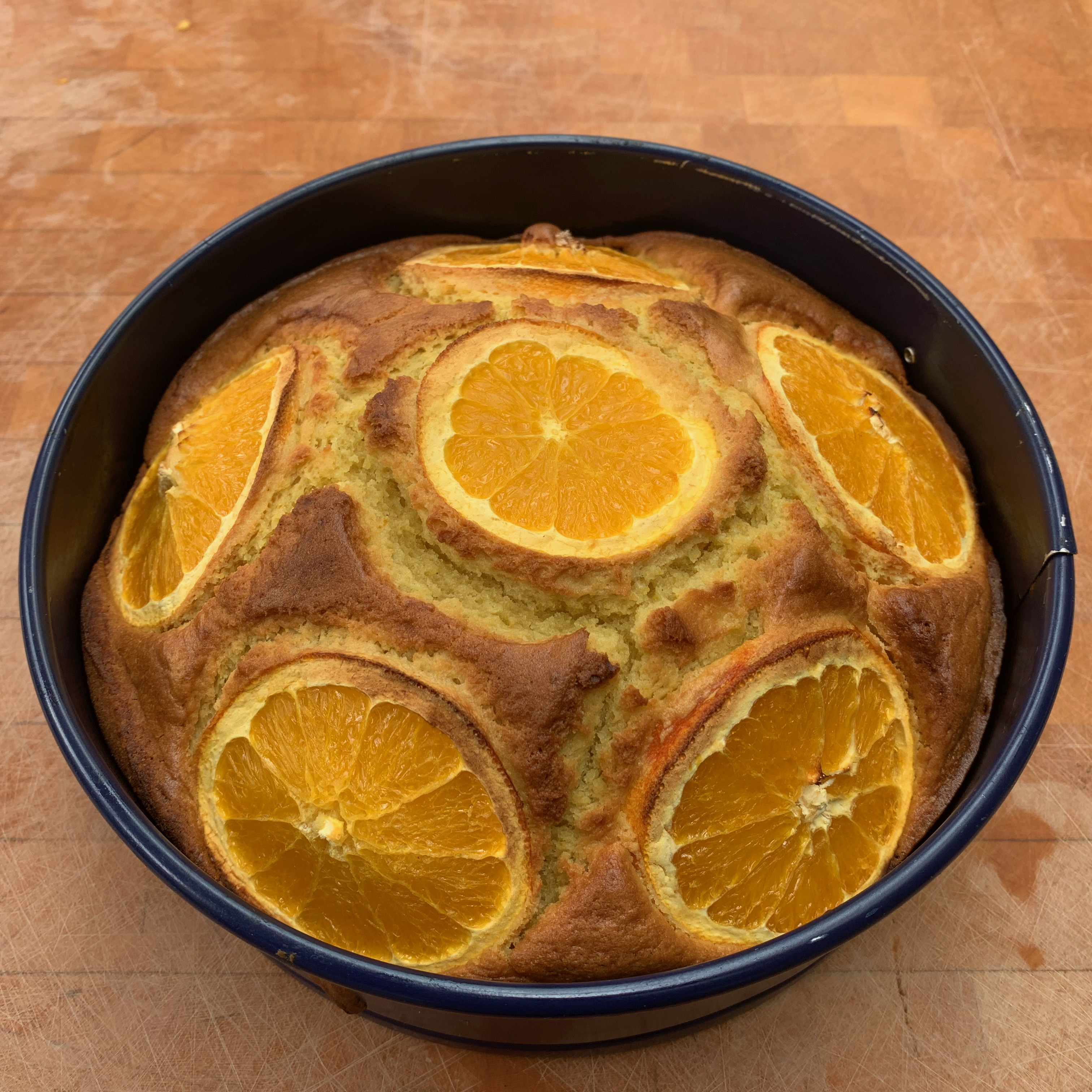
A couple of notes on my adaptation: (1) the suggested baking time of 20-25 minutes wasn’t even close. Either their oven or their baking tin is very different from mine. (2) my cake domed hugely in the middle. The original recipe specifies one sachet of baking powder, and I have no idea how much you get in a Tunisian baking powder sachet. So I went with around 12g, which may have been a bit excessive.

  • 300g plain flour
  • 12g baking powder
  • 3 oranges
  • 3 eggs
  • 150g granulated sugar
  • 100g olive oil
  1. Preheat oven to 180℃ fan.
  2. Grease with butter a 20cm springform tin (or other cake tin of similar size).
  3. Sift your flour and baking powder into a bowl.
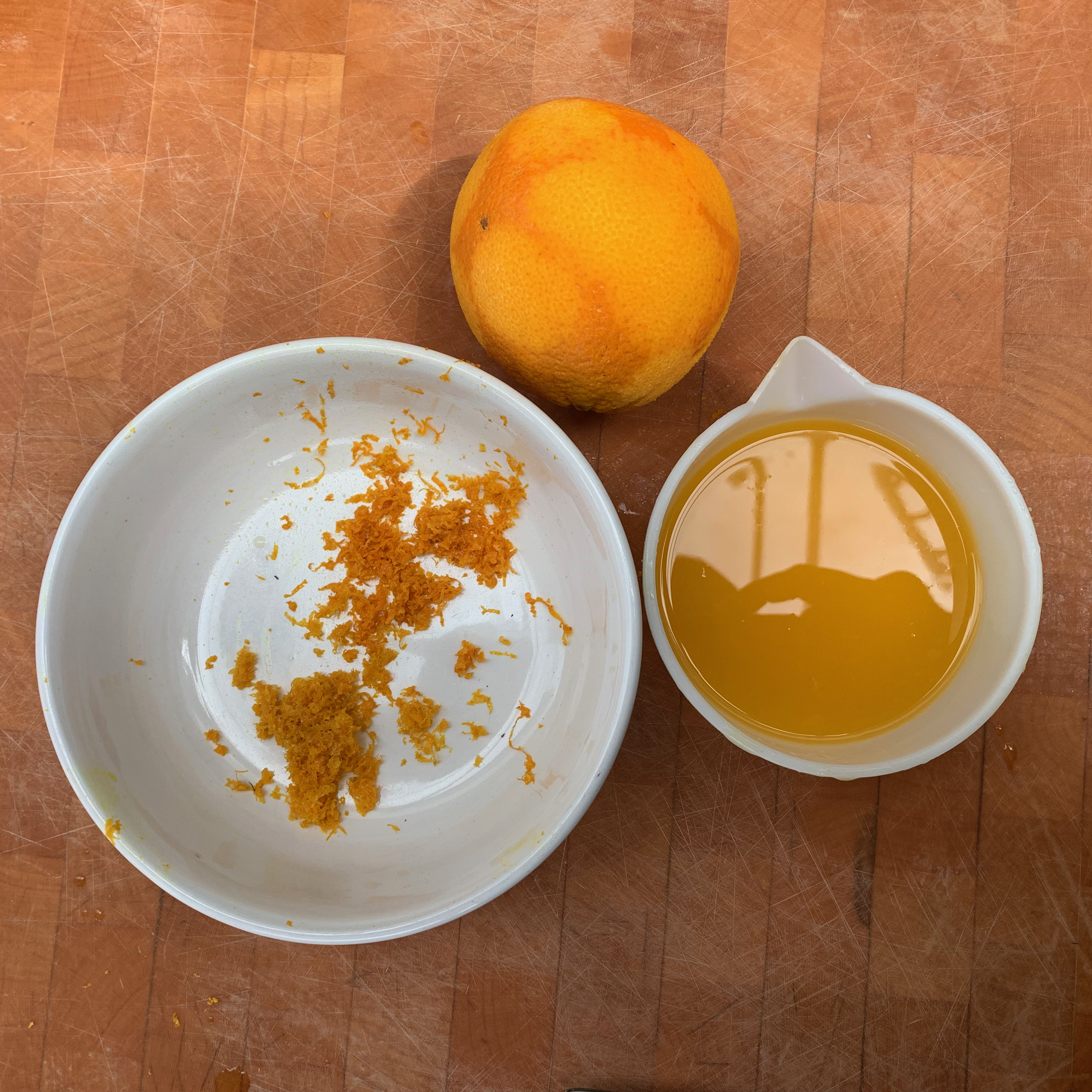
  4. Zest at least two of the oranges (all three if you really want a bitter orange flavour).
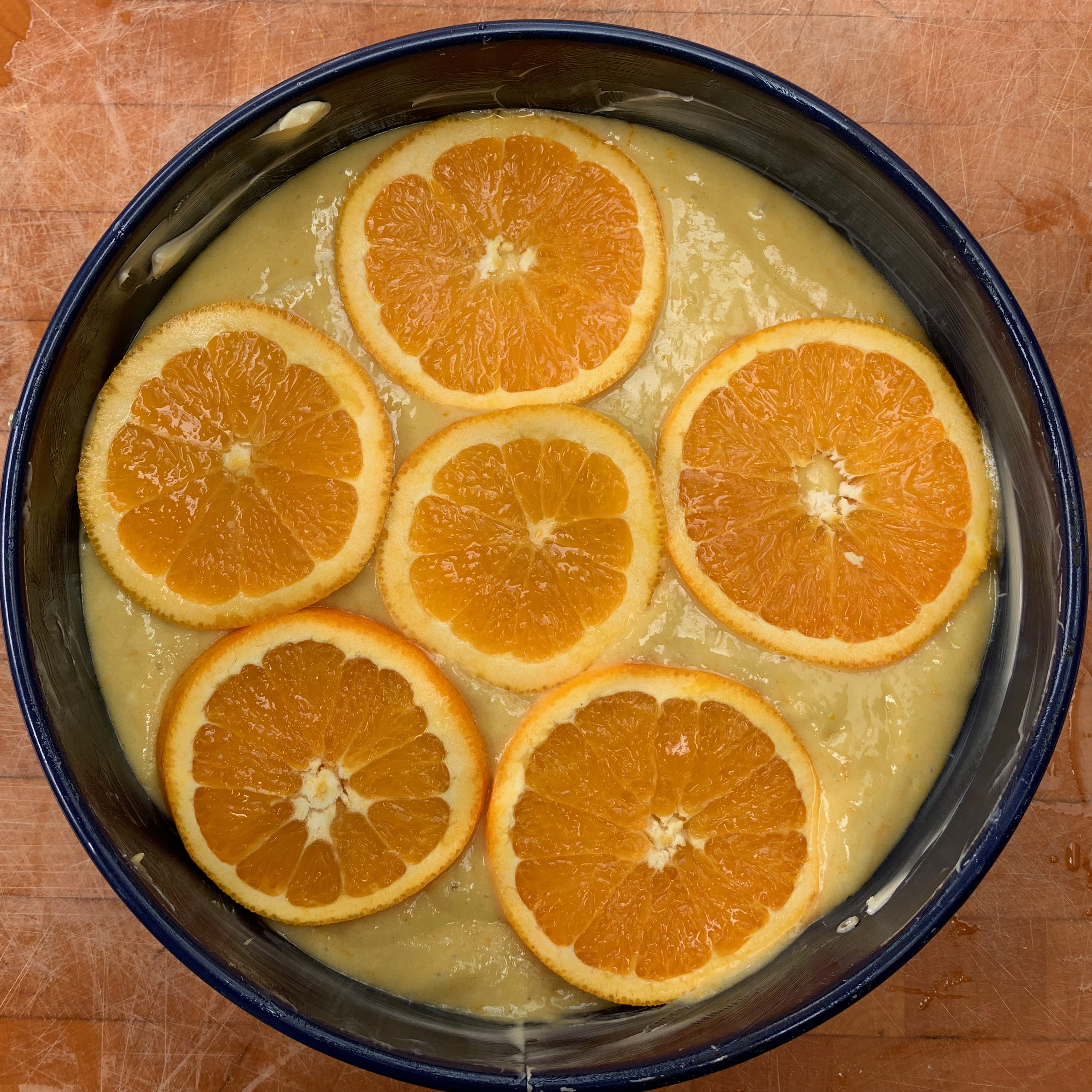
  5. Slice one of the zested oranges into rounds (I needed five rounds to fit onto my 20cm springform tin). Squeeze the juice out of the rest of this orange and the other two: you should get around 200ml. If the yield is substantially less, you might want to add some orange juice from elsewhere (or from a fourth orange if you have one).
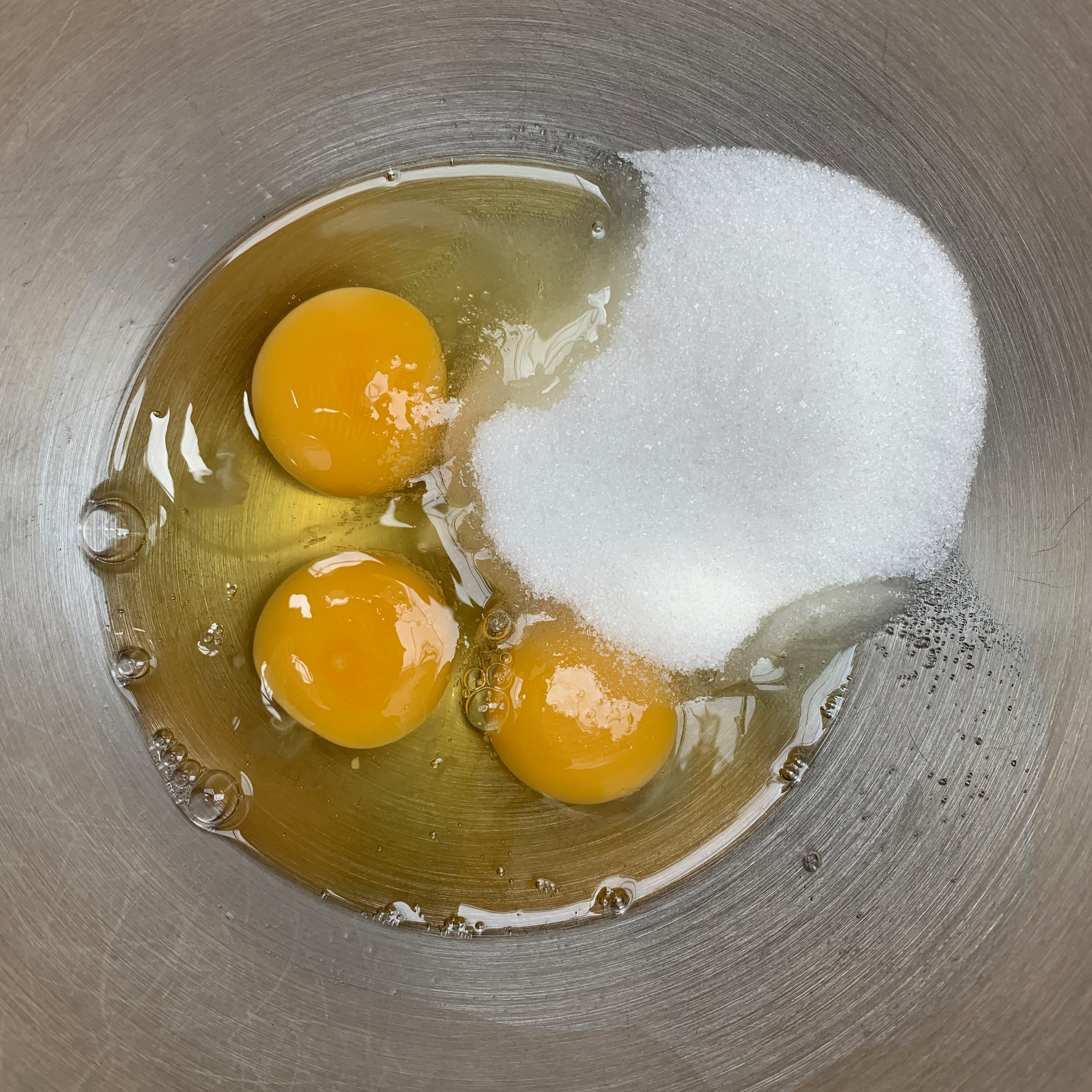
  6. Put the eggs and 100g of granulated sugar into the bowl of your stand mixer and mix at high speed until well blended.
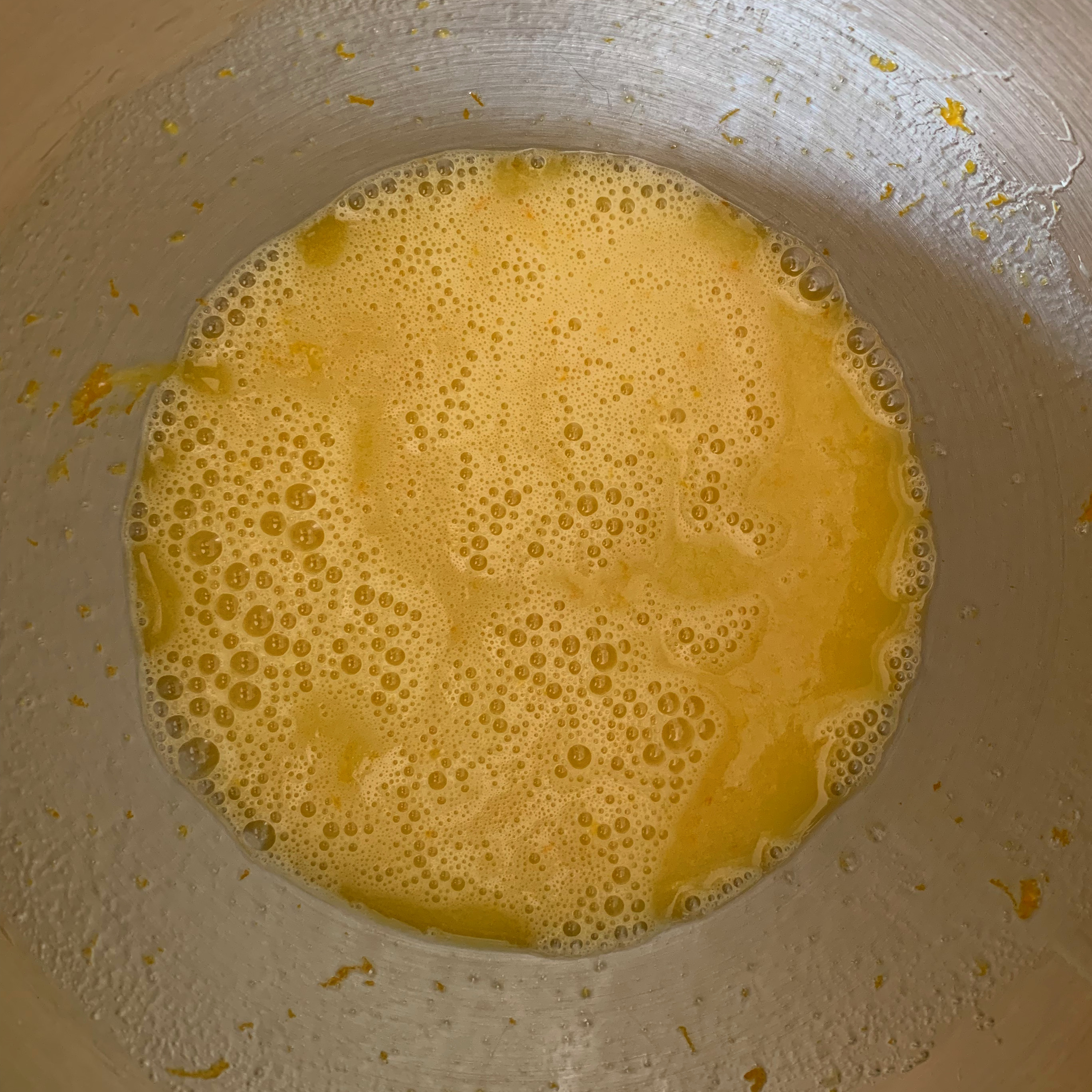
  7. Add the orange zest and 100g of the orange juice and mix until well blended.
  8. Add the oil and mix until well blended.
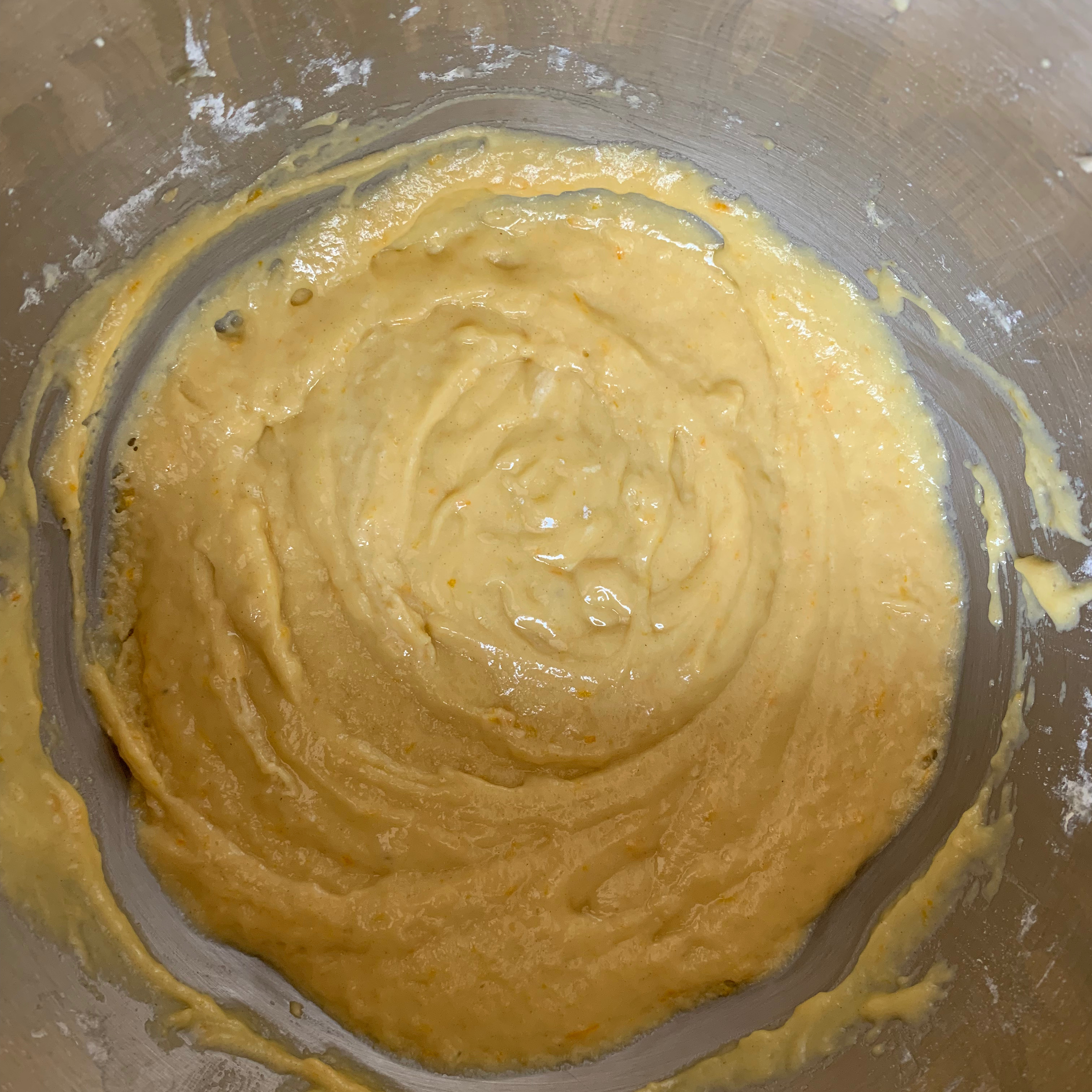
  9. Add the flour and baking powder and mix until you have a smooth batter.
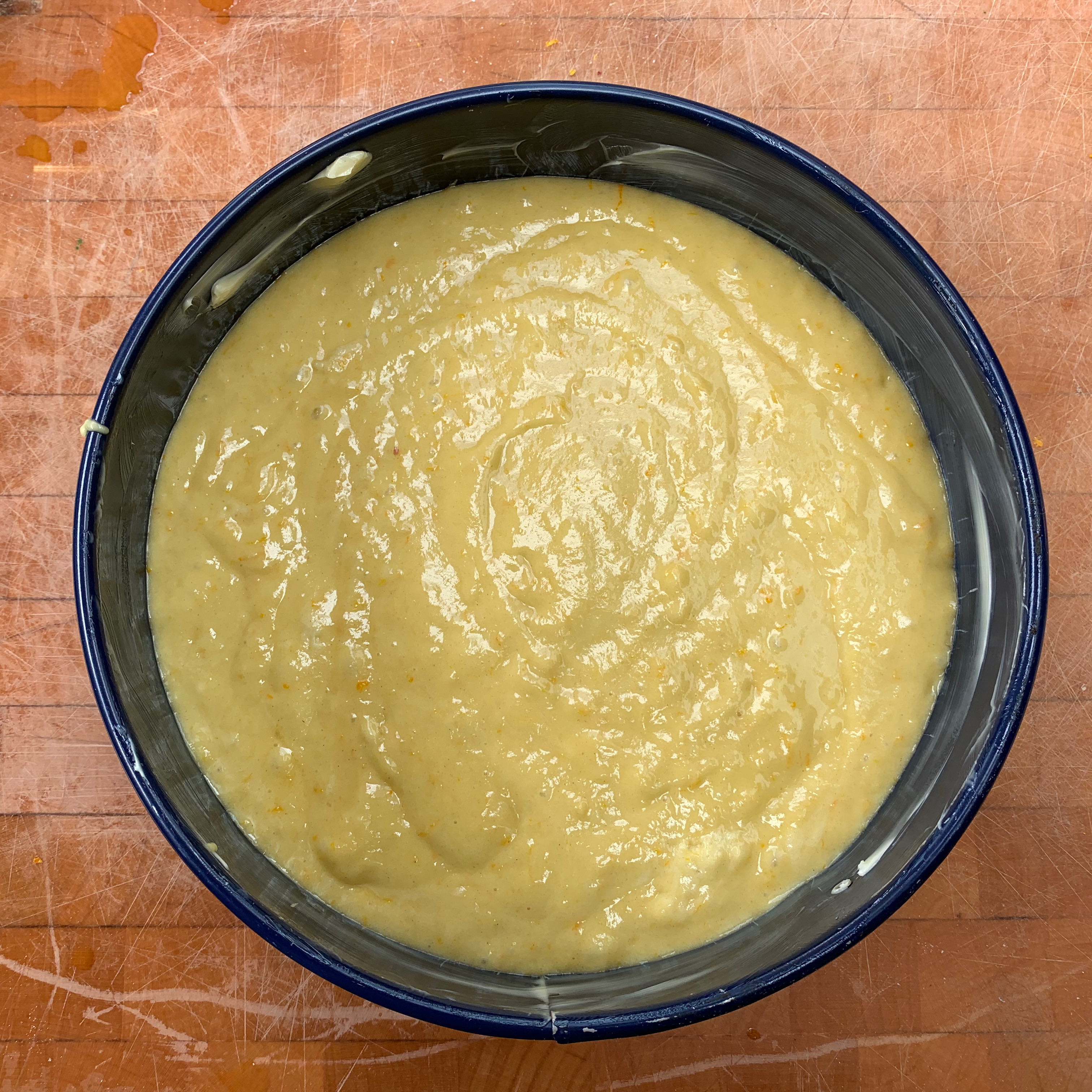
  10. Pour the batter into your tin. Arrange the orange slices over the top, pressing each slightly in so that it’s level with the batter.
  11. Put your tin into the oven and bake for around 30-35 minutes until a skewer comes out clean.
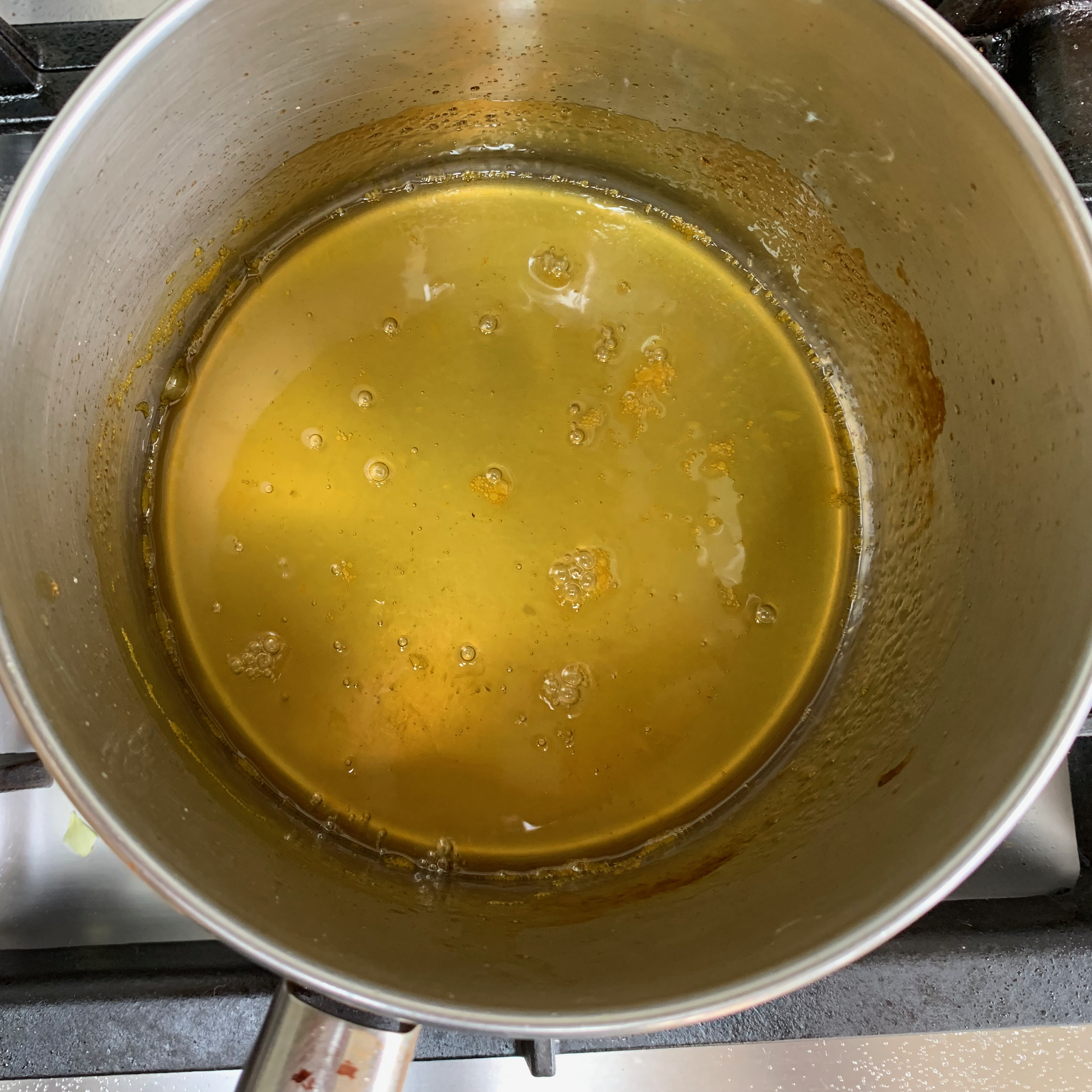
  12. Meanwhile, make a syrup: put your remaining 50g of sugar and 100ml (approximately) of orange juice into a saucepan, bring to the boil, stirring frequently.
  13.  Cook until the syrup is thick (if you’re using a sugar thermometer, aim for around 105℃).
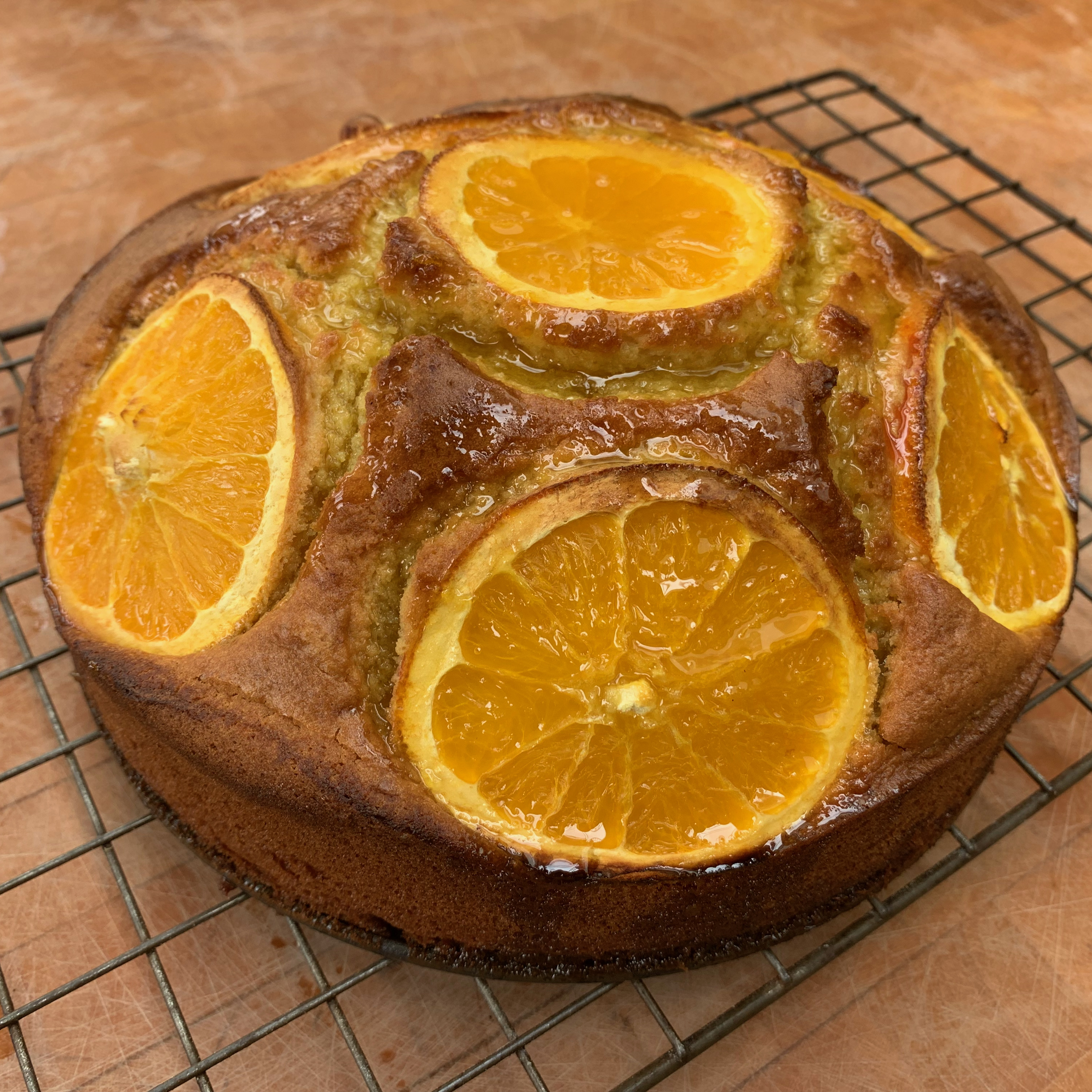
  14. When the cake is done, leave it to cool for a couple of minutes, then drizzle the syrup you should try to get the rest absorbed into the cake.
  15. Take off the outside of the springform tin and then cool the cake on a rack.

Tunisians would accompany this with black coffee. Personally, I’d go for both black coffee and a scoop of pistachio ice cream. But the choice is yours…

Around the world in 80 bakes, no.59: Latgalian Rye Bread from Latvia

Around the world in 80 bakes, no.59: Latgalian Rye Bread from Latvia

You will find good rye bread everywhere around the Baltic Sea, but in Latvia, rye bread is virtually a national symbol, with a thousand stories surrounding it. There are many different types, but I’ve chosen one that packs a huge punch of flavour – Latgalian Rye Bread (Latgaliešu Maize). The starting recipe comes from Stanley Ginsberg, who styles himself “The Rye Baker” – his website is a real baker’s treasure trove, with rye bread recipes from all over Europe. His books sound great also. 

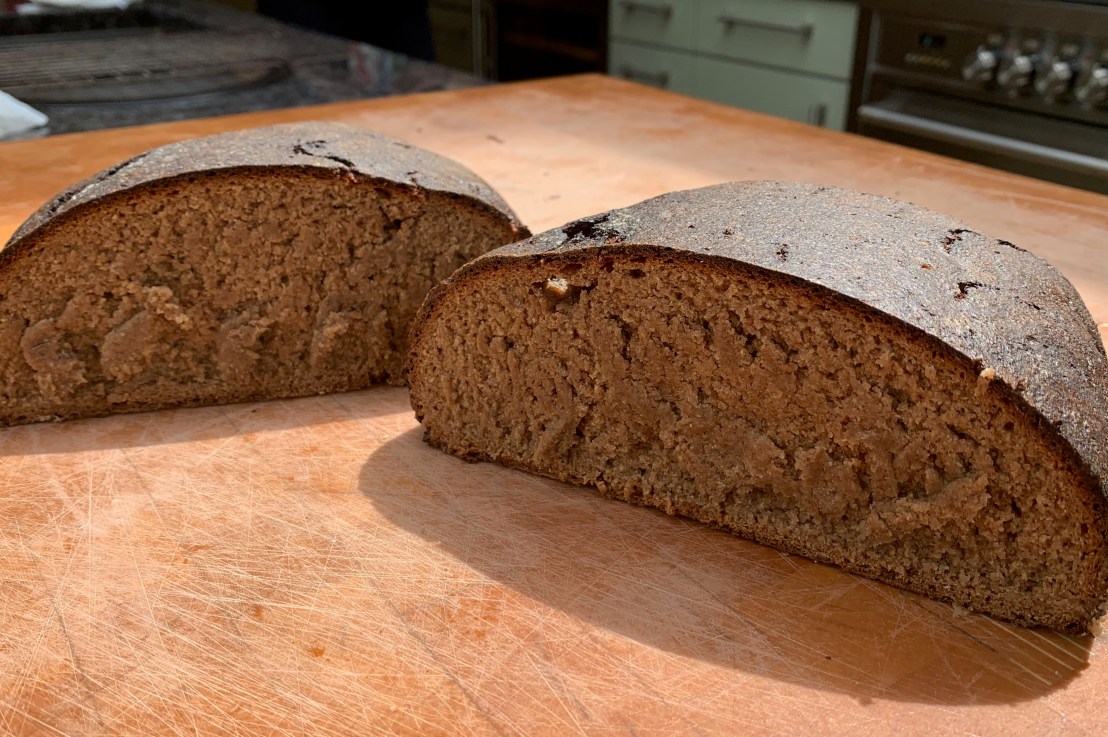
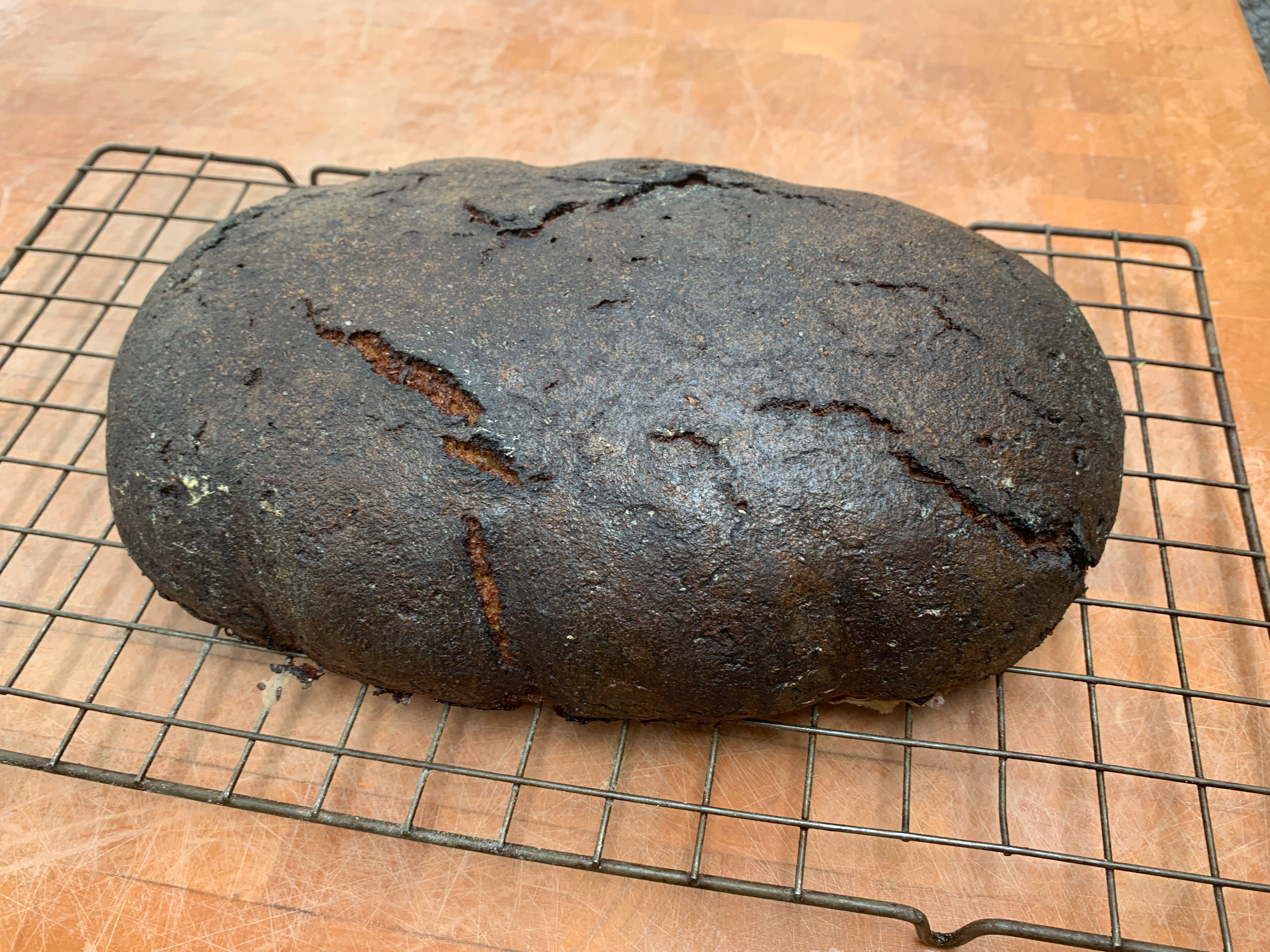
Warning: this bread is something of a project. There are multiple steps lasting three days, and it’s fiddly as regards temperature control. There’s a Russian language Youtube video (remember, Latvia has a large Russian-speaking population) which is very similar and reminds you on several occasions that you shouldn’t attempt this if you’re a beginner. The techniques, using various scalds and pre-doughs, are similar to the full Russian recipe for Borodinsky (as opposed to the simplified version I did early on in this blog series). Because of the sheer complexity, I’m not sure that it’s a bread I’m going to be making again and again – but for a treat, it’s fantastic.

The point of the recipe is to encourage lots of fermentation and the creation of various sugars, acids and lactobacilli which impart the amazing depth of flavour. Interestingly, this multi-stage process isn’t the only possible method: other methods start with Bulgarian Yoghurt or kefir and I came across one blog post from an agritourism trip to Latvia which describes a traditional baker who left out much of the complexity but went for five days of fermentation in a bucket!

So here goes, largely paraphrasing Stanley Ginsberg and substituting ingredients when I couldn’t get his exact suggestions. I’ve given the exact times I used: obviously, you can shift them around to suit your own day and anyway, I’m sure the timings are by no means precise.

Day 1, around 9pm – “The scald”

  • 320g dark rye flour
  • 650ml hot water (65℃)
  • 20g malt extract
  • 5g caraway seeds
  1. Preheat oven to 55℃.
  2. Put all the ingredients in the bowl of your stand mixer and mix thoroughly.
  3. Cover your bowl and put it into the oven for around 18 hours.

Day 1, around 9pm – “The sponge”

  • 20g rye sourdough starter
  • 50g dark rye flour
  • 30ml water tepid (40℃)
  1. Mix all ingredients in a small bowl or tupperware. It will result in a very thick dough.
  2. Cover and leave to stand at room temperature for around 18 hours.

Day 2, around 1pm

  1. Inspect your two mixtures. They should both be smelling strongly and showing evident signs of fermentation. The scald will have gone very dark, and the sponge will have become, well, spongy in feel.
  2. Add the sponge to the scald mixture in your mixing bowl and combine thoroughly (I did this with a wooden spoon).
  3. Cover the bowl and return to the oven, which should still be at 55℃.

Day 2, around 9pm

  • 5g dried yeast
  1. Remove your combined mixture from the oven.
  2. Add the yeast and stir thoroughly.
  3. Leave to ferment overnight at room temperature.

Day 3, around 9am

  • 600g dark rye flour
  • 100ml water
  • 5g salt
  • 30g honey
  1. Add the ingredients to your fermented mixture.
  2. With the dough hook, mix at low speed for 7-10 minutes until thoroughly mixed.
  3. On a floured board (I used light rye flour), form the dough into a rounded oblong and transfer onto a piece of baking paper.
  4. For the full traditional look, use your fingers to make indentations into the loaf. By tradition, each area of Latvia had its own signature: I just went for a few bars on each side.
  5. Brush the loaf with water, cover with a tea towel and leave to rise at room temperature for 60-90 minutes. You will need to brush water over the loaf regularly to stop it drying out – every 15-20 minutes or so.

Final bake and glaze

  • 3g cornflour
  • 150 ml water
  1. In plenty of time before your loaf has finished rising, preheat oven to 250℃ fan, with a pizza stone placed inside.
  2. Brush your loaf with water one last time, then transfer it on its baking paper to the pizza stone.
  3. Bake for 45 minutes.
  4. Reduce the temperature to 200℃ fan. Keep baking until the internal temperature is around 95℃ – probably another 20 minutes (admission: I underbaked mine by a few minutes, so you can see from the photo that it’s a bit doughy. It still tasted fabulous).
  5. Brush the glaze over the loaf, return to the oven and bake for another 5 minutes.
  6. Cool the loaf on a rack.
Around the world in 80 bakes, no.58: Kleicha – date-filled cookies from Iraq

Around the world in 80 bakes, no.58: Kleicha – date-filled cookies from Iraq

It’s time for a trip back to the Middle East to refill the cookie jar with what, according to Wikipedia and others, is the “national cookie of Iraq”: Kleicha (or Kleisha; as usual with Arabic, transliterations vary). Recipes also vary, particularly as to shape and choice of spices, but the most common appear to be a spiral of dough interleaved with a cardamom-infused date paste.

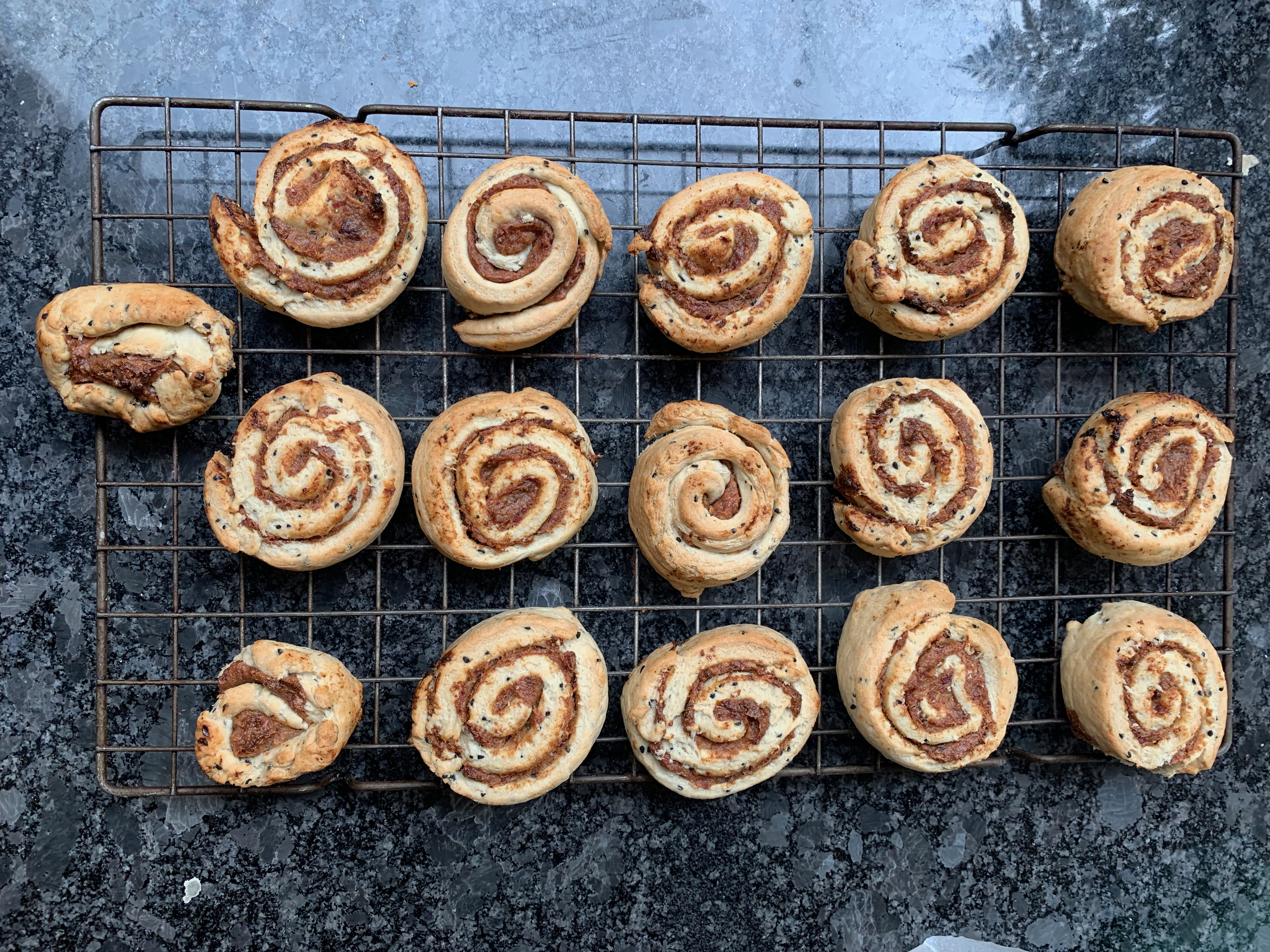
Kleicha turn out to be trickier to make than I expected: most of the recipes I’ve seen produce an incredibly crumbly dough. On my first attempt, the dough was almost impossible to roll and the kleicha came out at an unpleasantly sandy texture. Fortunately, I persevered, because my second attempt was a real success: the flavour combination of date and cardamom being a winner. It only worked, however, by using hugely more water than in my base recipe, from 196flavors.com.

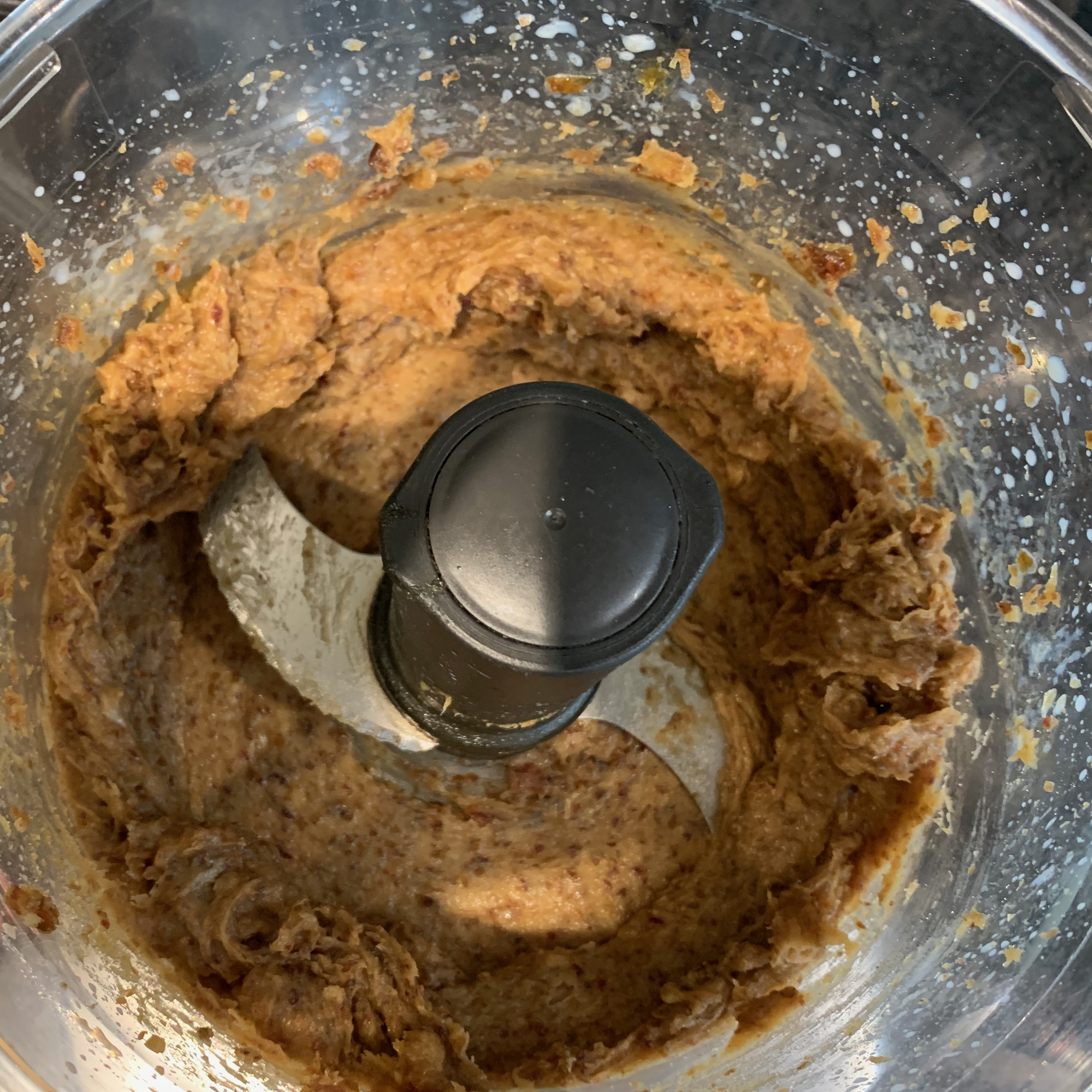
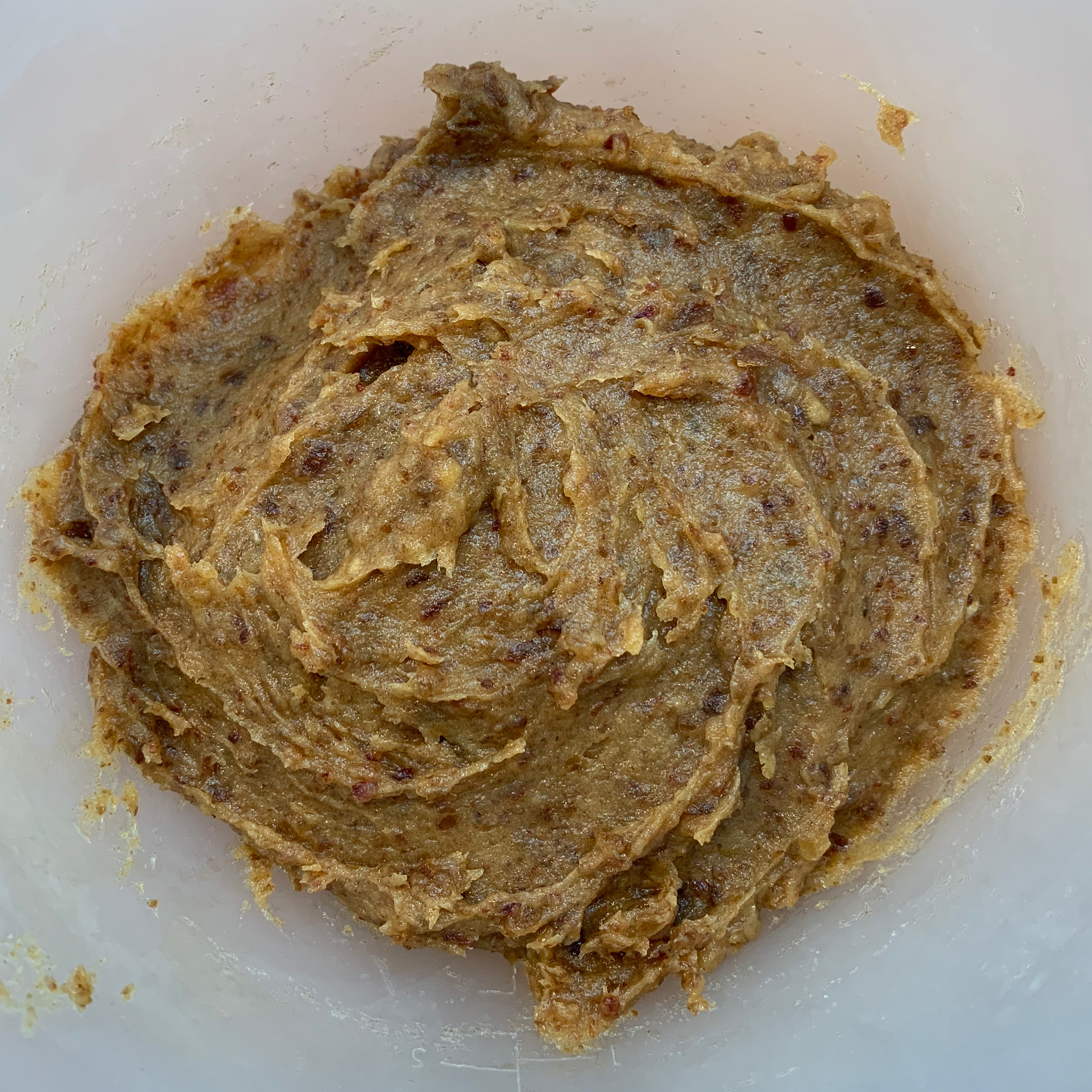
I couldn’t find ready-made date paste, so I made my own. Another pitfall from my first attempt was getting the texture wrong so I couldn’t spread the paste: second time round, it came out perfectly.

The quantities here were supposedly for 40 kleicha – I made 32.

The date paste

  • ½ tsp ground cardamom (or 20 or so cardamom pods)
  • 400g soft dates (choose Medjool or similar in preference to the harder Deglet Nour)
  • Milk as needed (a few tablespoons)
  1. If the dates aren’t already stoned, take out the stones and discard
  2. If you are starting from cardamom pods, pound them in a pestle and mortar to get the seeds out and get rid of the husks.
  3. Put the dates and cardamom into a food processor and blitz for a minute or two.
  4. Add a little milk and blitz some more: keep doing this until you get a puree the consistency of toothpaste.

The dough

  • 15g caster sugar
  • 10g dried yeast
  • 170ml lukewarm water (around 40℃)
  • 700g plain flour
  • 10g salt
  • 15g nigella seeds
  • 225g butter
  1. Melt the butter.
  2. Mix sugar, water and yeast and leave until frothy.
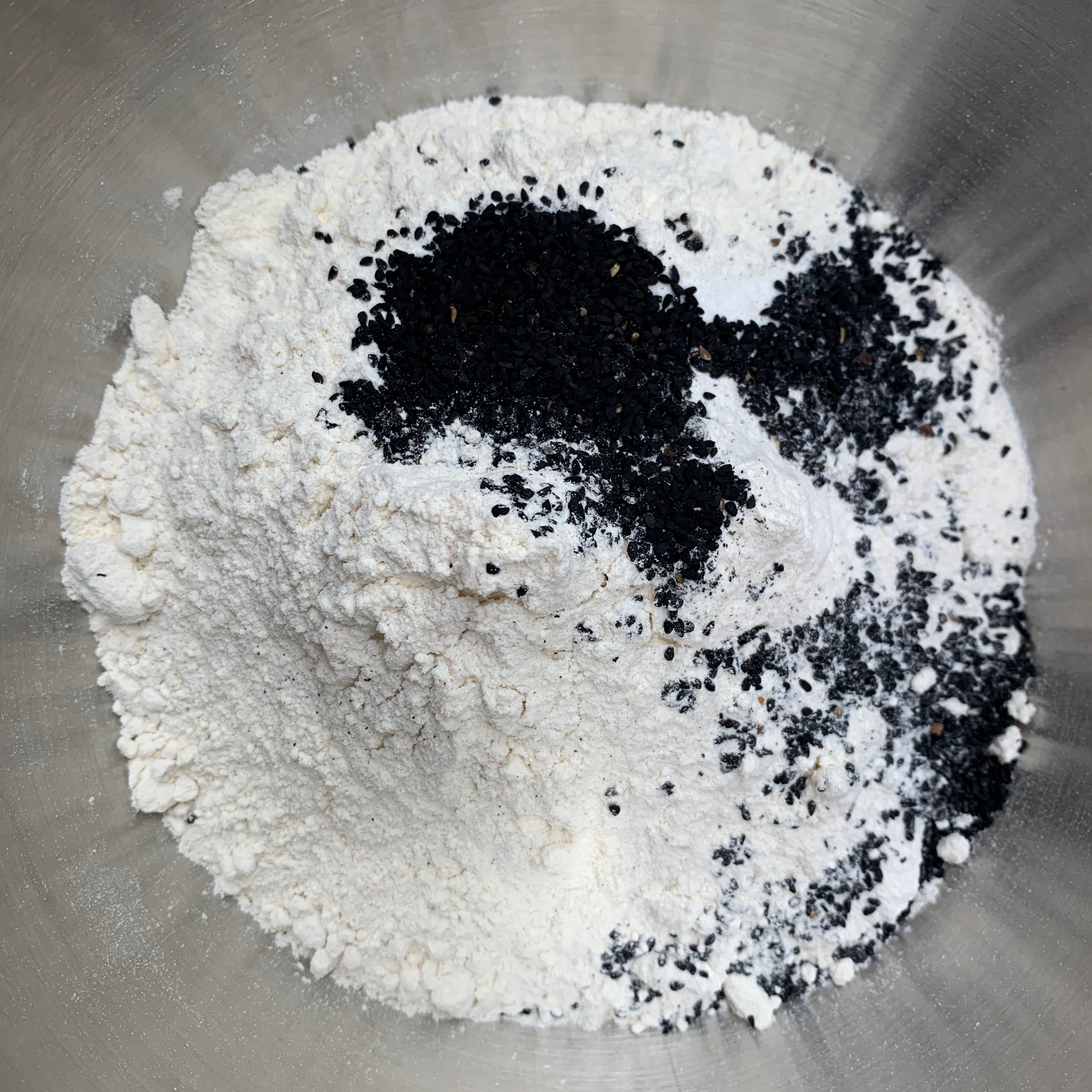
  3. In the bowl of your stand mixer, combine flour, salt and nigella seeds and mix evenly.
  4. Add the butter and mix for a few seconds.
  5. Then add the yeast/water mix and mix until you have a smooth dough. You may want to add more water than I’ve shown – the quantity shown here was barely OK.
  6. Leave dough to rest for around an hour.

Putting it all together

  • 1 egg and a bit of milk for a wash
  1. Preheat oven to 180℃ fan.
  2. Cut two sheets of baking paper, around 40cm long.
  3. Divide your dough into four parts.
  4. Form a ball of dough into a rectangle, place it between your two sheets of baking paper and roll it out as thinly as you can manage.
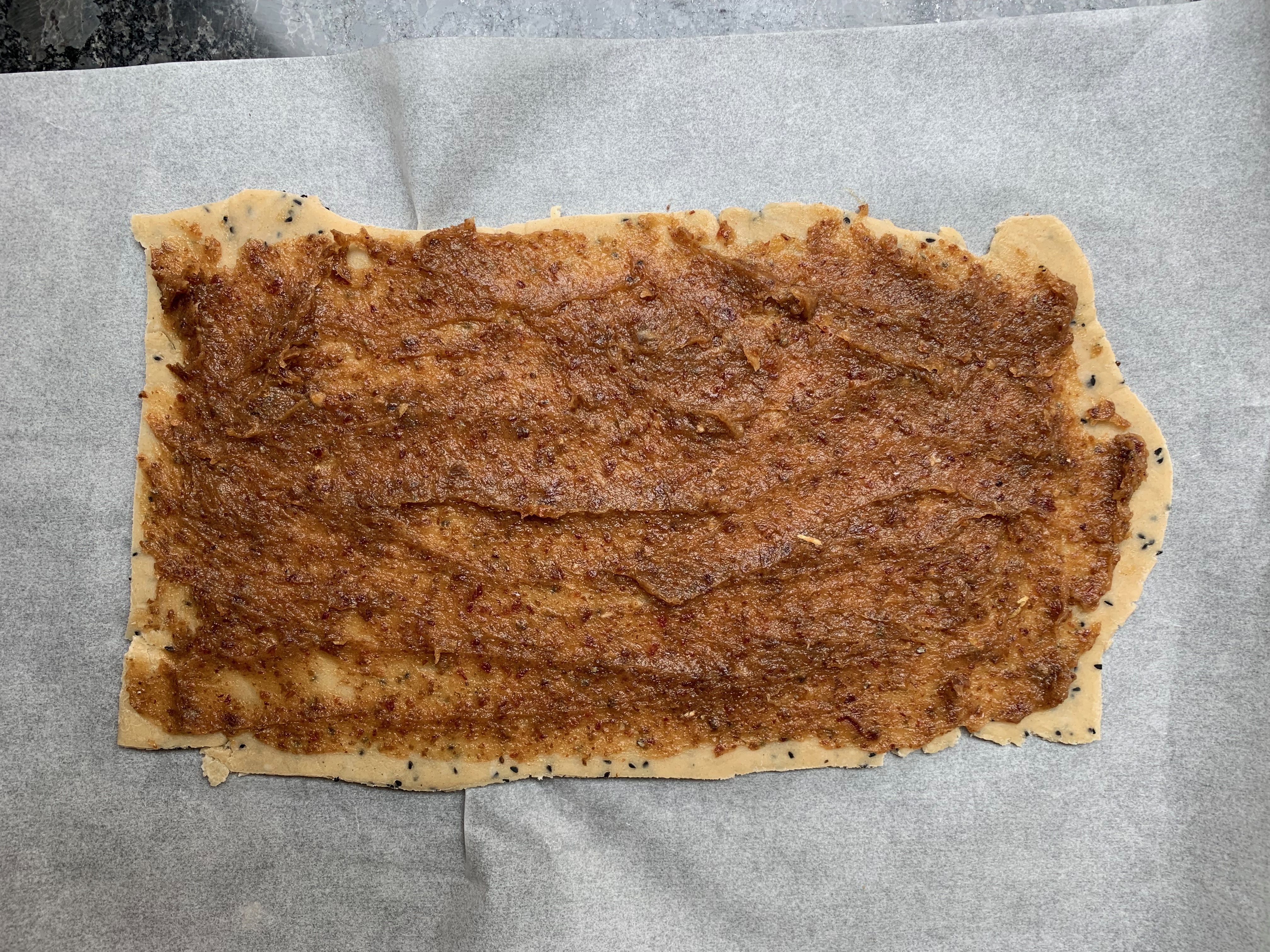
  5. Take a quarter of your date paste and spread it evenly over your rectangle of dough.
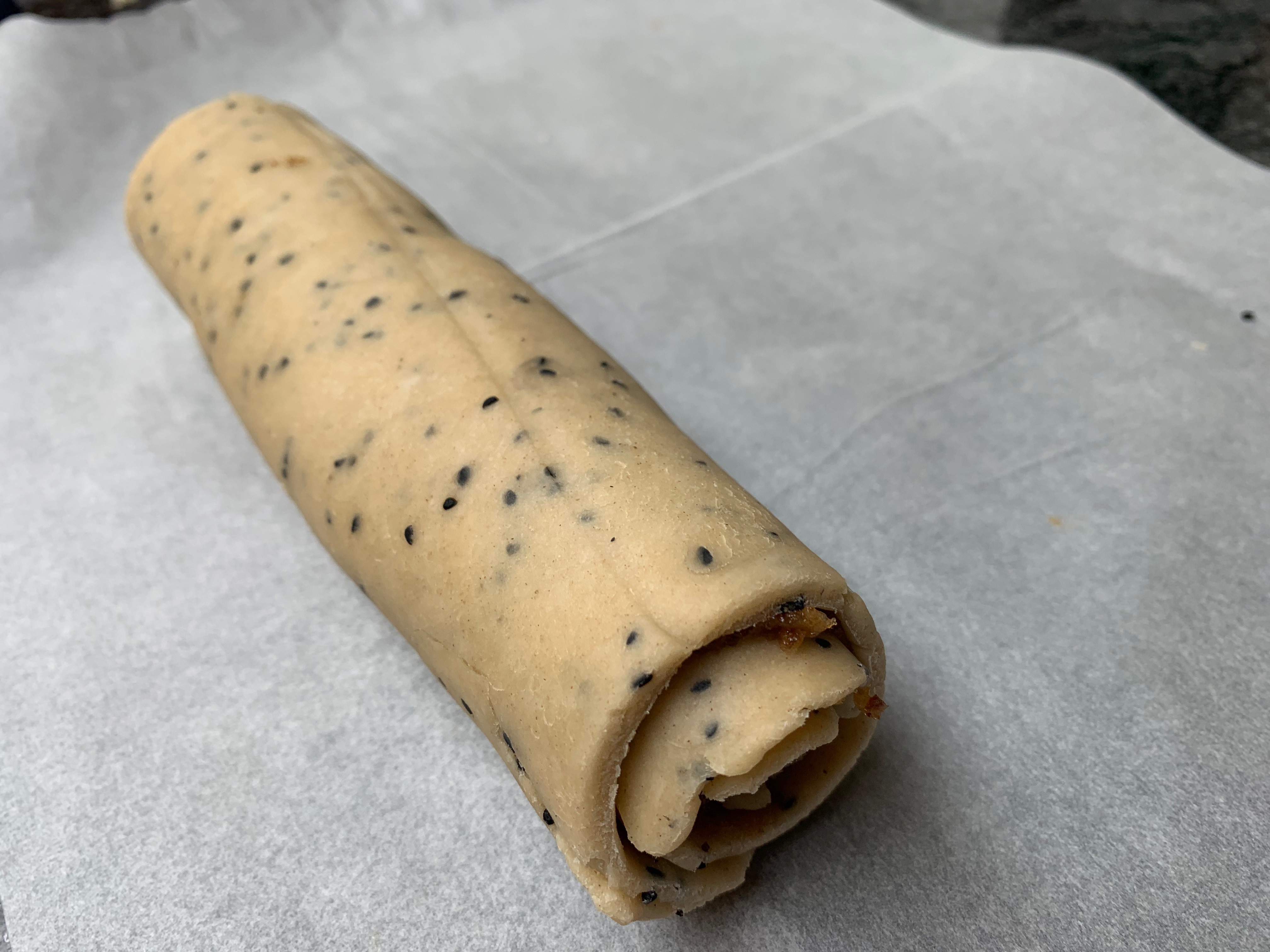
  6. Using the baking paper to help you, roll it up along the long end (Swiss roll style) as tightly as you can
  7. Cut your cylinder into 8 pieces (or 10 if you want smaller cookies) and place on a baking sheet
  8. Repeat for the remaining three parts of dough. You’ll end up with two baking sheets’ worth, which you can bake together or one after the other.
  9. Beat the egg with a little milk to make a wash; spread this over your cookies. (I’m labelling this stage as optional because I forgot to do it, resulting in kleicha which weren’t as pretty as they might have been but tasted fine).
  10. Bake until golden and thoroughly cooked – if you break off a bit of cookie and taste it, there should be no hint of raw flour. This took around 20-25 minutes in my oven – yours may differ.
  11. Cool on a rack.
Around the world in 80 bakes, no.57: Arepas from Venezuela

Around the world in 80 bakes, no.57: Arepas from Venezuela

Arepas are thick circular cakes made of cornmeal. They’re ubiquitous in Venezuela and Colombia and have been around in the area for at least 3,000 years. They’re served with myriad fillings, either as part of a main meal or as a snack – they’re a popular street food item.

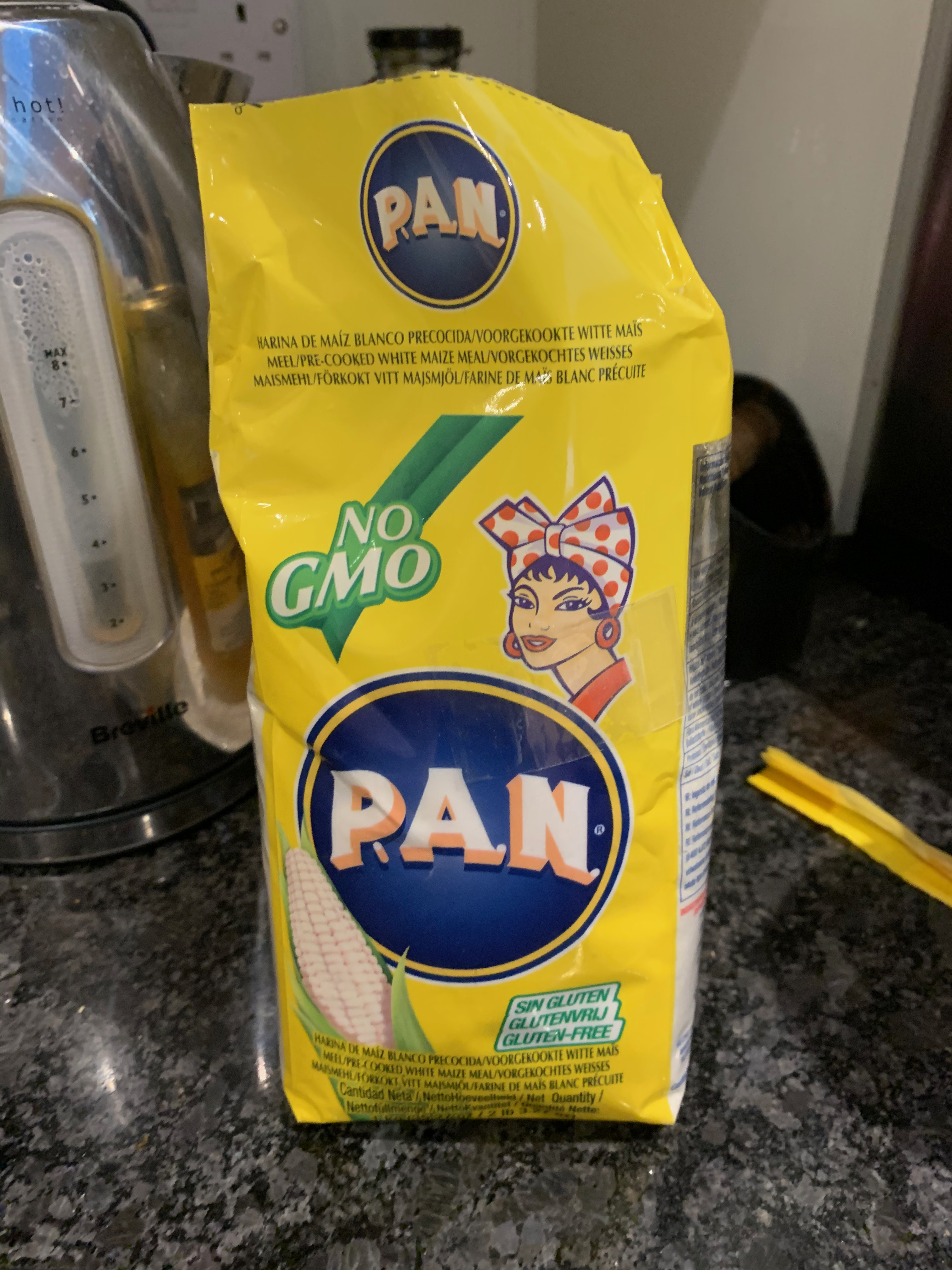
The final parts of the arepa-making process – making the dough, forming the cakes, frying them and  (optionally) finishing them in the oven – are straightforward enough for a non-native home cook. The beginning part – grinding the corn and the “nixtimalisation” process of boiling it up with lime – are best left to the professionals unless you’re really, really dedicated. The resulting ground meal is called masarepa and the most readily available brand in the UK (and, I suspect, elsewhere) is called Harina PAN. It comes in several varieties: I chose the plain white one, although I’ve also bought a packet of the yellow version for experiments yet to come.

I took my recipe for the arepas themselves from a post on healthiersteps.com: as well as your choice of masa, available variations include the addition of dairy products. All of butter, milk or quesito (white soft cheese) show up in recipes.

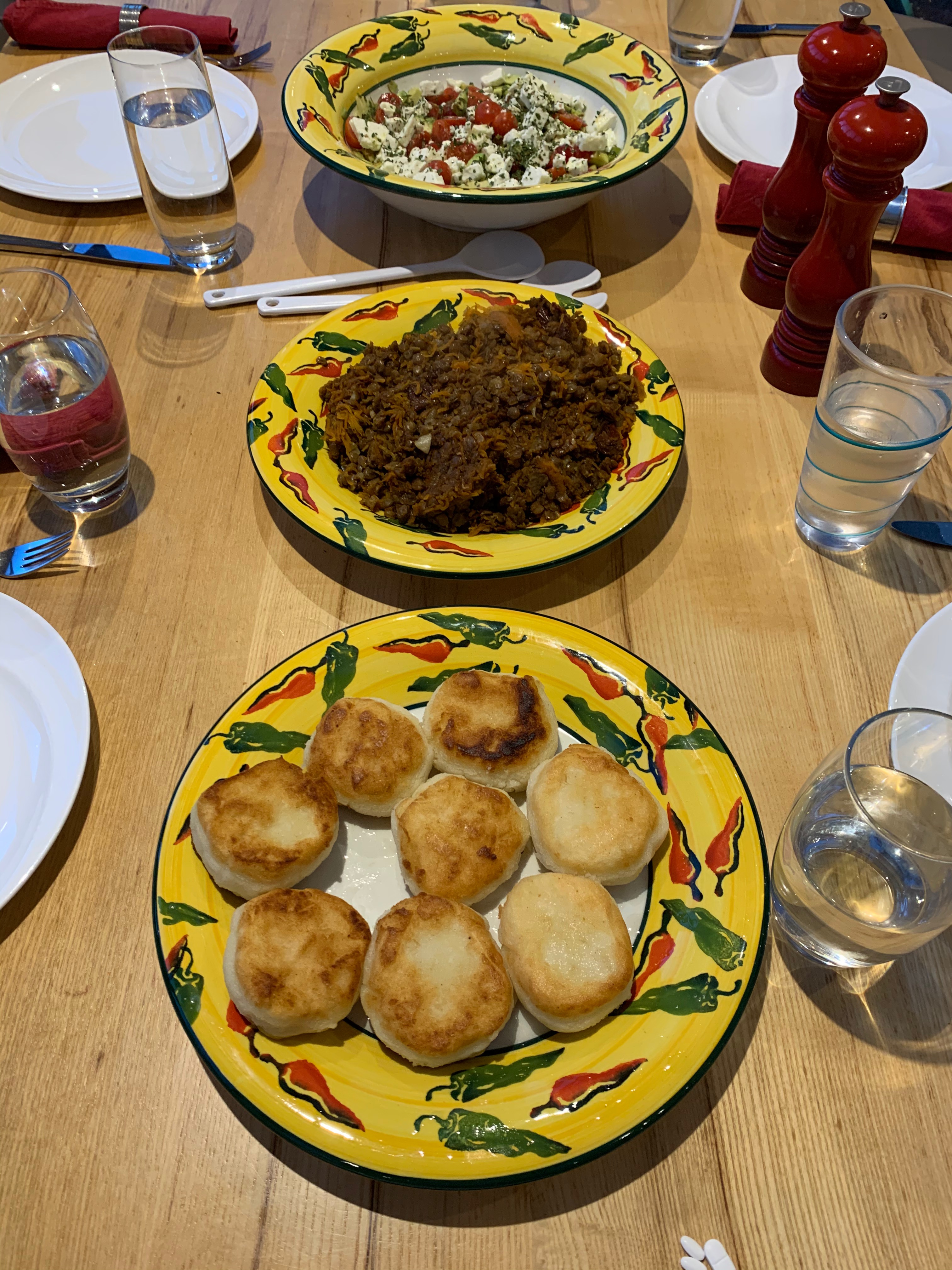
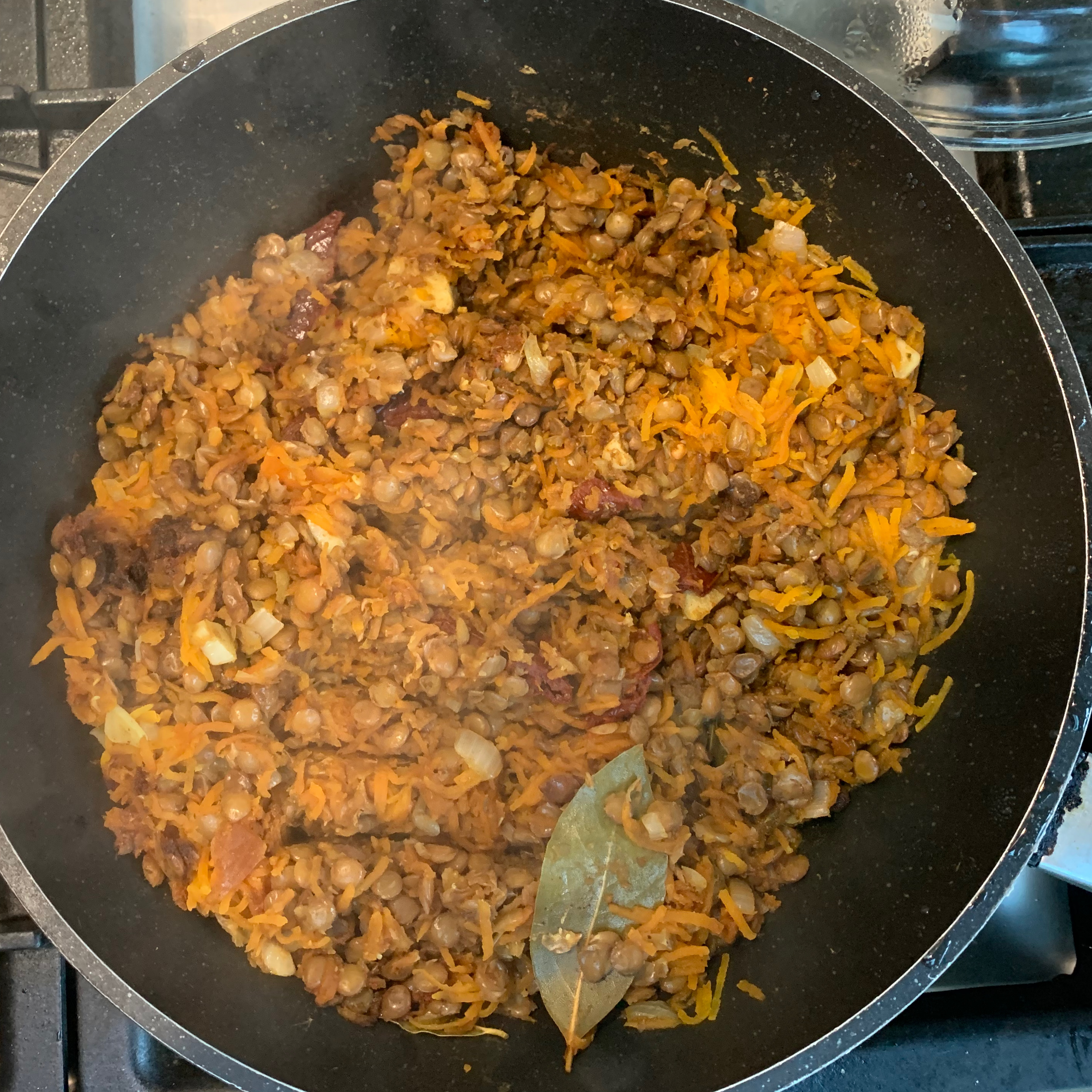
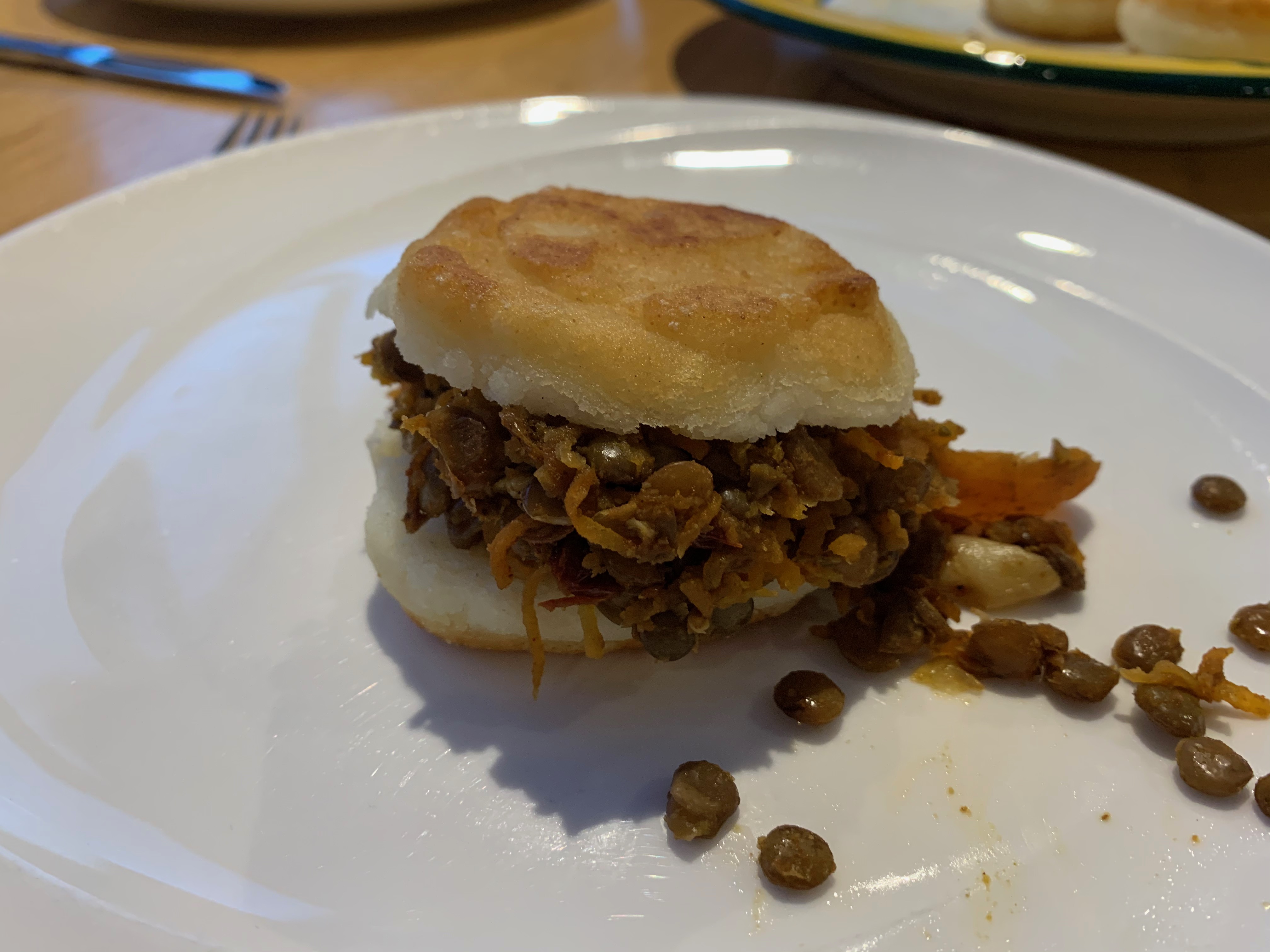
To go with the arepas, I could have picked dozens of different filling. I ended up, completely arbitrarily, by simplifying a recipe for vegan barbacoa (which is kind of a contradiction in terms, but I get the idea of emulating the smokiness of barbacoa while staying plant-based, and it turned out really delicious). As a side dish, I made an avocado, cherry tomato and crumbled white cheese salad, which I found in a recipe for Colombian arepas which I haven’t replicated here, but which is warmly recommended since it complemented the rest of the dish really well.

The vegan barbacoa filling

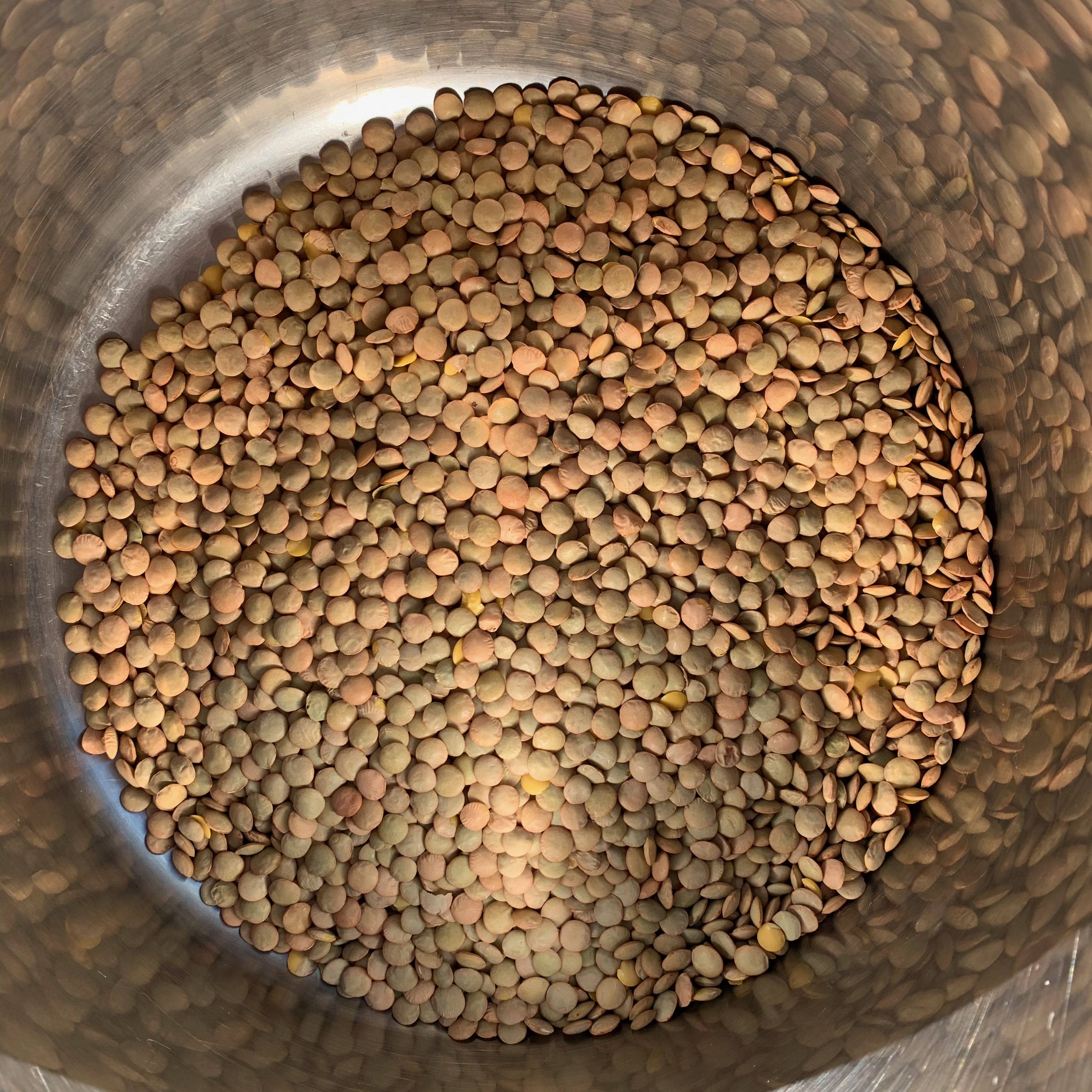
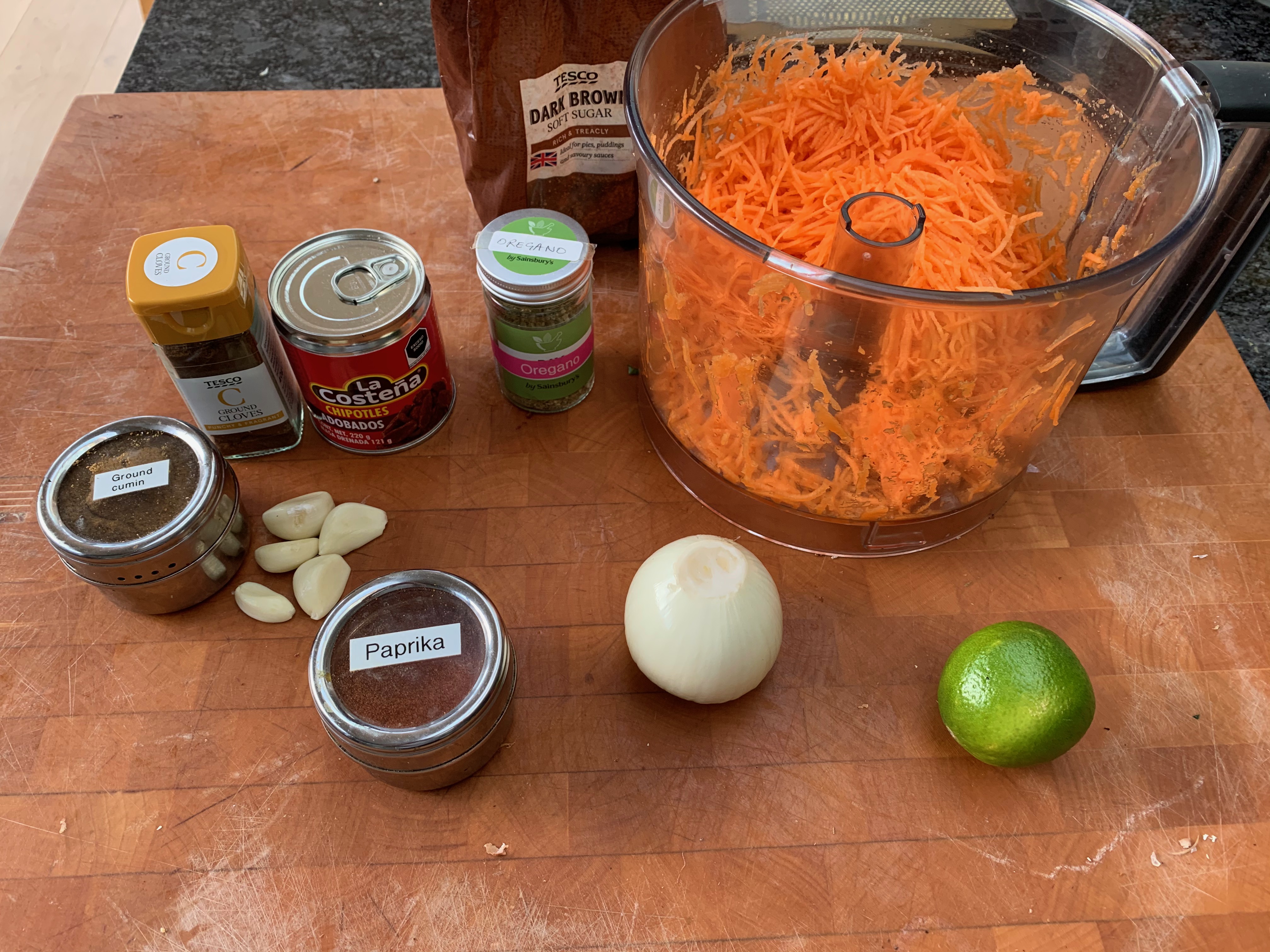
  • 250g dried green or brown lentils
  • Oil for frying (I used sunflower oil)
  • 1 onion
  • 3 cloves garlic
  • 3 large carrots
  • 2 tbs brown sugar
  • Salt and black pepper to taste
  • 1½ tsp ground smoked paprika
  • 2 tsp ground cumin
  • ¼ tsp ground cloves
  • 1½ tsp dried oregano
  • 2 dried bay leaves
  • 60g chipotle peppers in adobo sauce (see below)
  • Juice of one lime

Chipotle peppers in adobo sauce come in cans: I used around a quarter of a 220g can. It’s a strong flavour and you really need to calibrate how spicy you want the dish. Starting with zero knowledge, I think I got lucky: this amount was perfect for the people round the table who like their food spicy but not excessively so, and just about OK (but right on the edge) for those who don’t like their chili much. 

  1. Boil lentils in a saucepan in plenty of water until cooked (this took me around 45 minutes). You could, of course, use pre-cooked tinned lentils if you prefer. Drain and set aside.
  2. Chop the onion and garlic very finely. Grate the carrots – if you have a food processor with a grater attachment, use it.
  3. In a heavy pan with a lid, fry the onion and garlic on medium heat until transparent.
  4. Add the carrot and fry for a few more minutes.
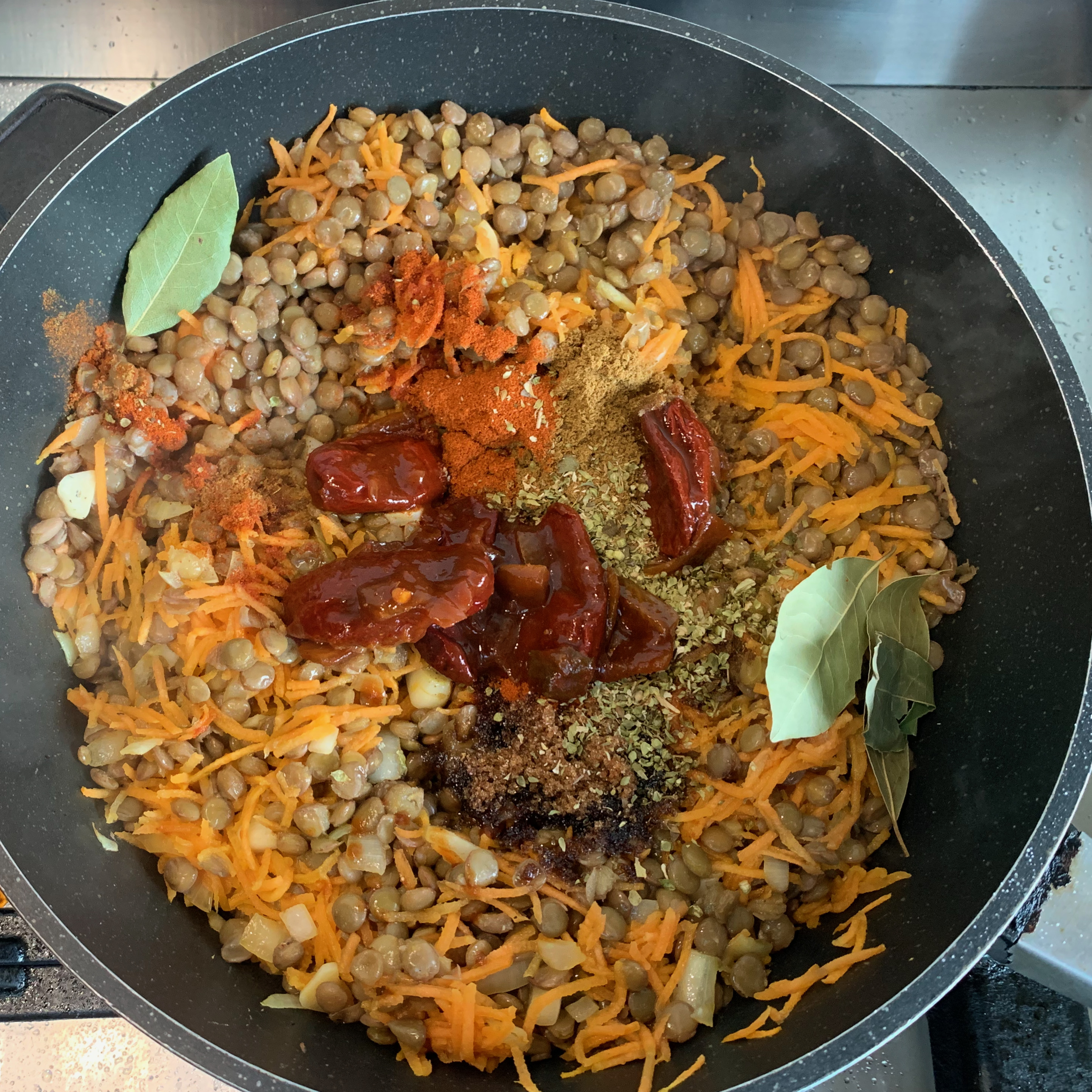
  5. Chop the chipotle peppers finely – this isn’t in the original recipe, so I didn’t do it. Let’s just say that biting into a whole chipotle pepper was, er, an intense experience.
  6. Add the lentils and all the remaining ingredients. Mix well and fry for a little longer.
  7. Cover the pan and put onto the lowest heat you have for 40 minutes to an hour. Keep topping up the mixture with a little water to ensure that it doesn’t dry out.

The arepas

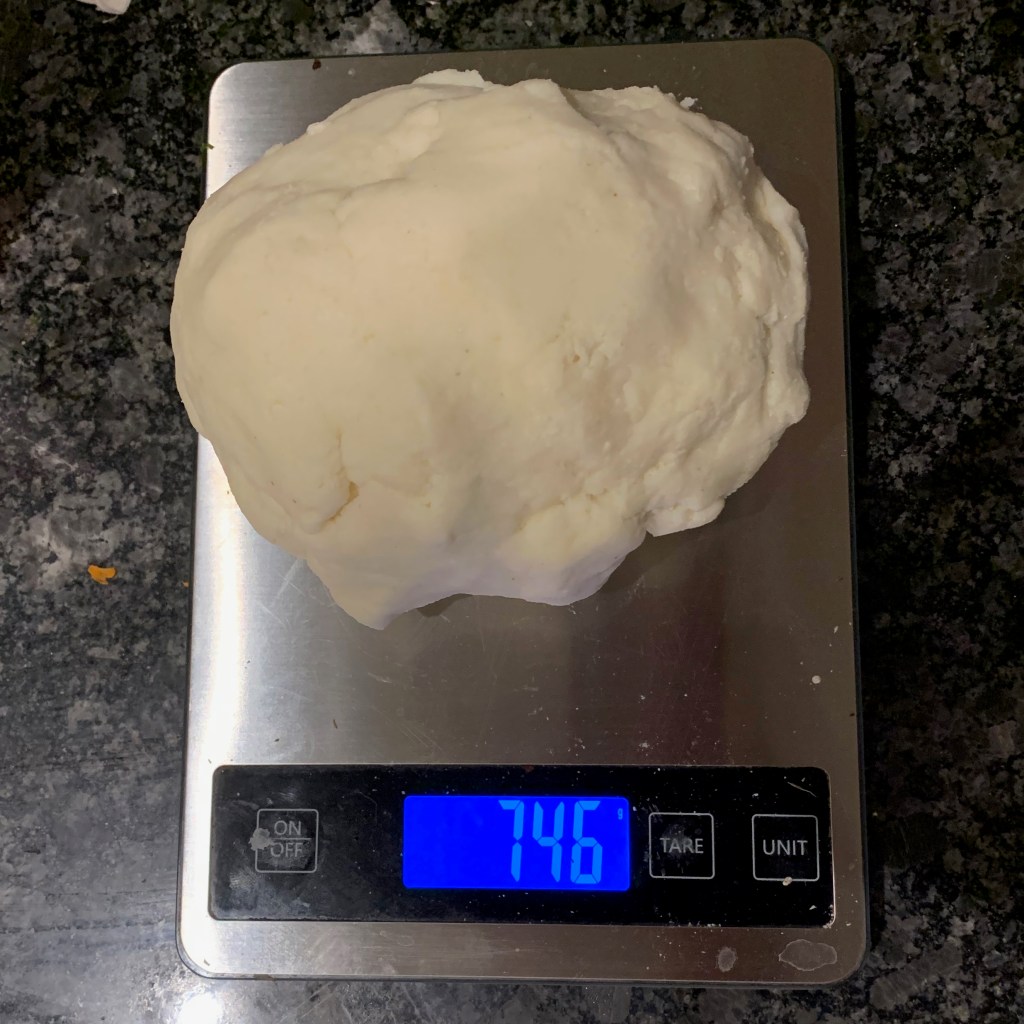
  • 300g masarepa (from Harina PAN or equivalent, see photo)
  • 10g salt
  • 500 ml warm water
  • Coconut oil for frying
  1. Mix the masarepa, salt and water and form into a ball of dough. Leave to rest for five minutes or so.
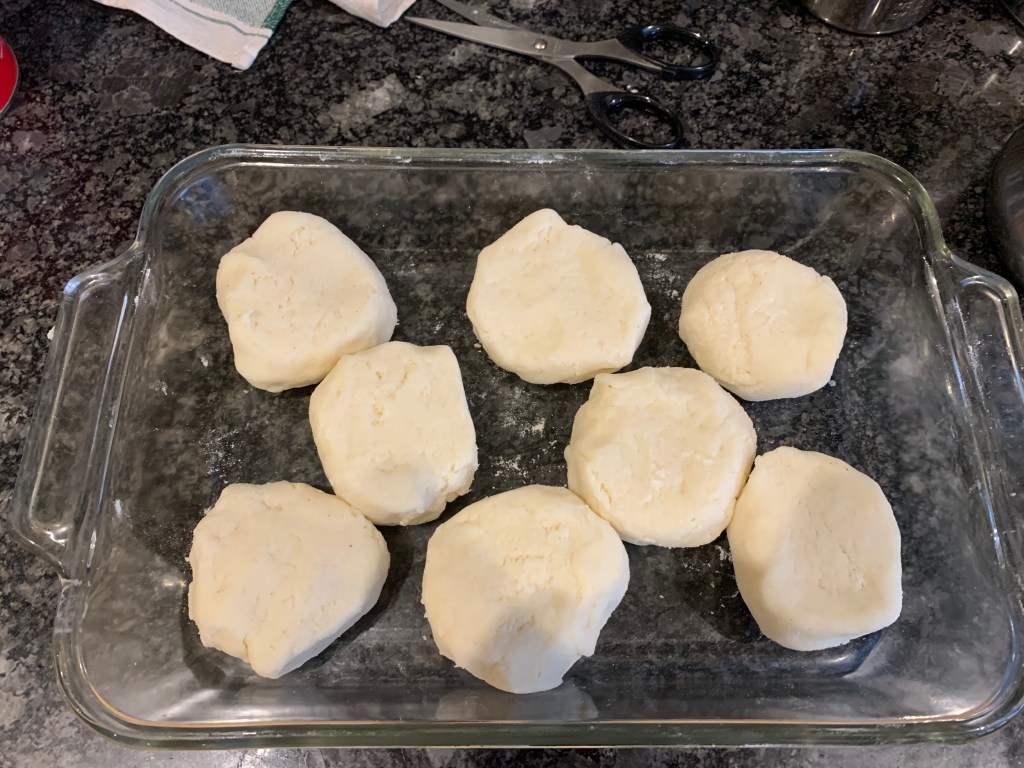
  2. Form the dough into a cylinder and cut into circular cakes, around 2cm thick. I made eight cakes, which were a bit too small; the original recipe was for six.
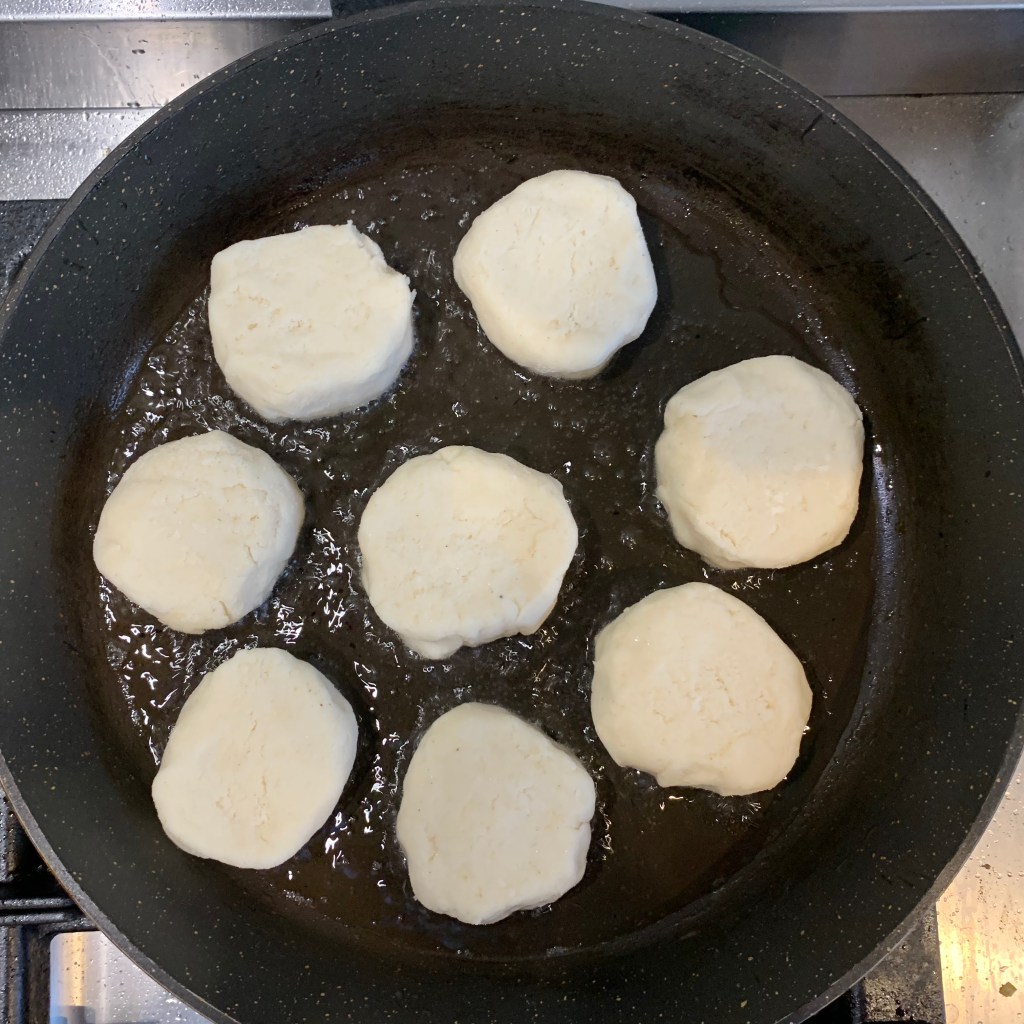
  3. Heat oil in a skillet and fry your arepas on medium heat until golden brown on both sides – turn each arepa over when it’s completely browned on the first side. The recipe said five minutes a side, but it took me around 15 minutes total. 
  4. Optionally, put the arepas in a 180℃ oven for a few minutes to make sure they’re absolutely cooked through. Perhaps because I used a relatively gentle heat, I didn’t need to do this step.
  5. To serve, slice each arepa in half horizontally, fill and replace the lid. But don’t expect anyone to eat them with their hands!
Around the world in 80 bakes, no.56: baked spring rolls from Malaysia

Around the world in 80 bakes, no.56: baked spring rolls from Malaysia

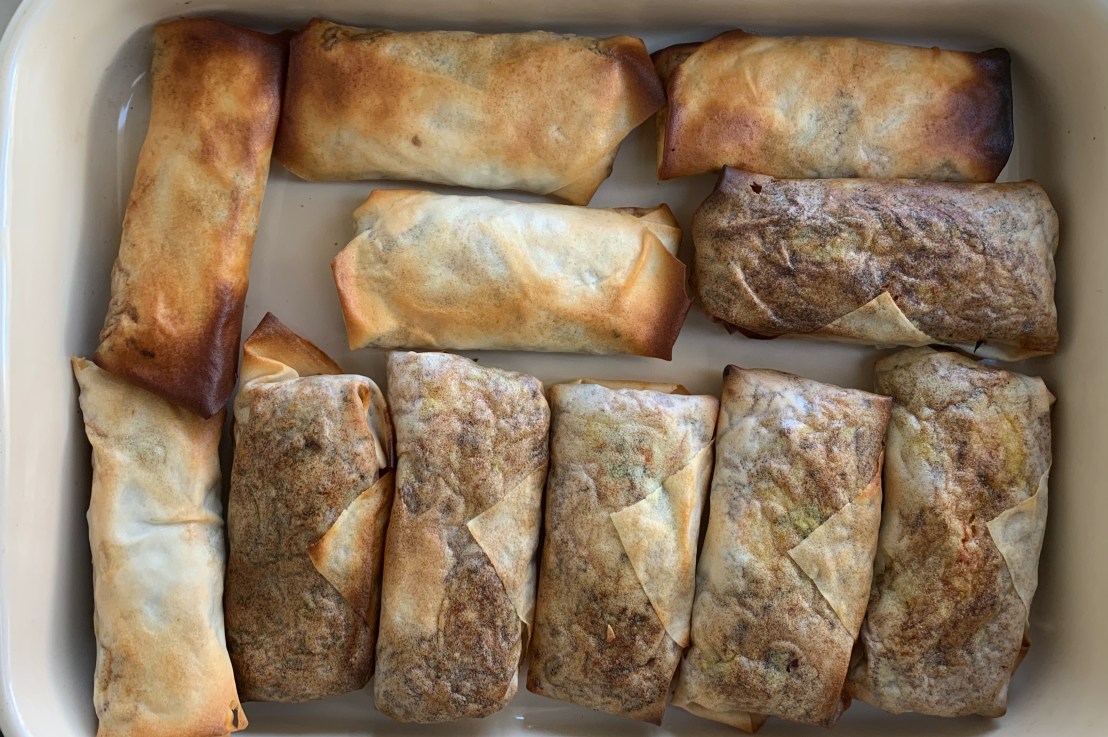
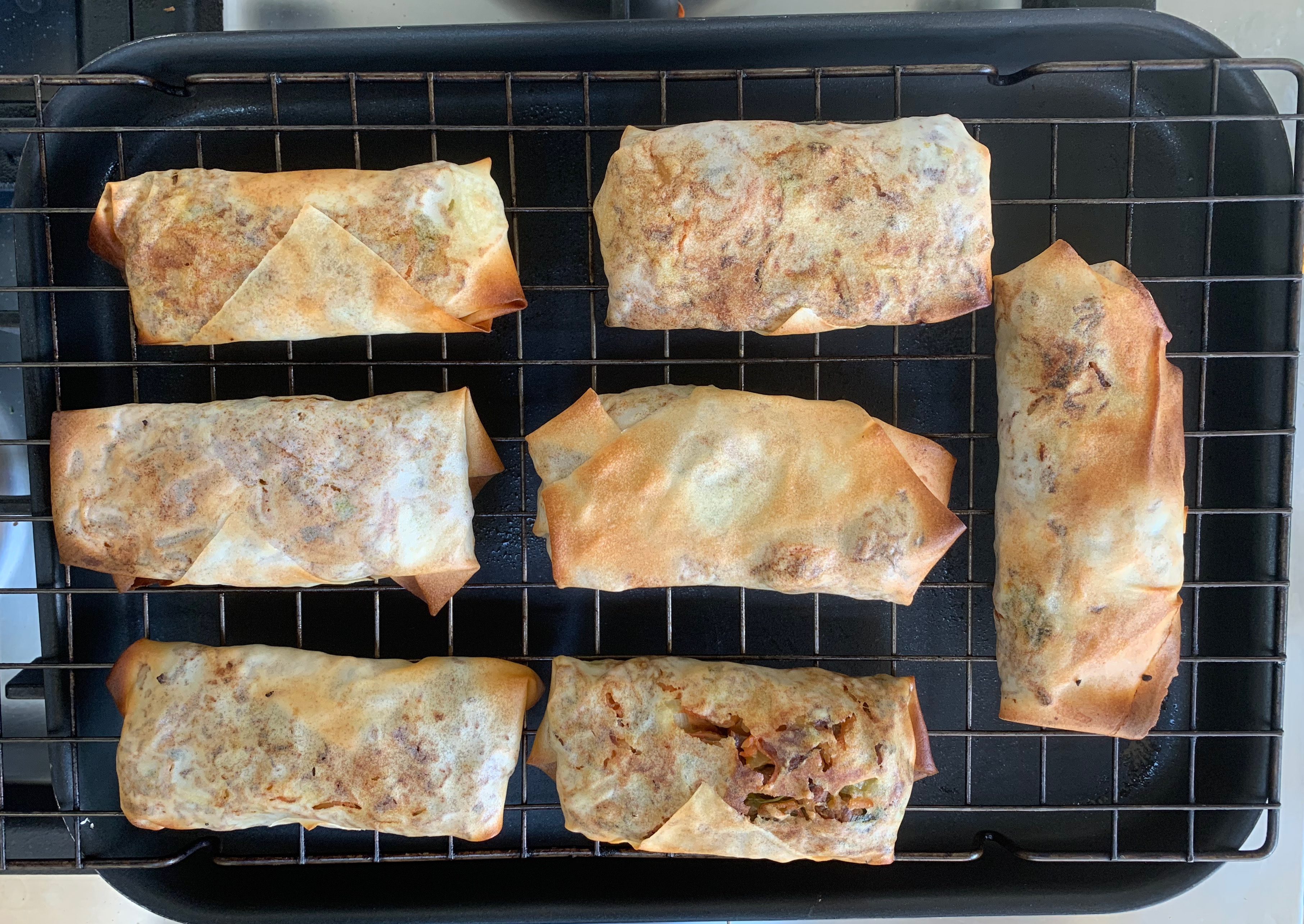
As far as I can see, the real definition of a spring roll is “anything you like that has vaguely Far Eastern flavourings, wrapped in a cigar shape of very thin pastry”. However, this being a baking blog with pretensions of authenticity, I started off with an actual Malaysian recipe – and one that specifies how to bake them rather than the more usual deep fry. If like me, you try to steer clear of deep frying, the use of cooking spray – not something I’d come across before using this recipe – seems to work pretty well, getting a result that’s crisp, non-greasy and holds its filling, even if you don’t get the classic “golden all over” look of the fried version.

The recipe will be very forgiving as to quantities: shown here are what I had easily available. The original recipe specifies jicama, a root vegetable that I couldn’t get hold of, so I substituted with a couple of cans of water chestnuts. I believe that mooli (aka daikon) also makes a good substitute, but with a more distinctive flavour of its own.
The filling

  • 500g lean pork mince
  • 1 tbsp dark soy sauce
  • Ground black pepper to taste
  • 1 onion
  • 2 cloves garlic
  • Oil for frying (I used groundnut oil, any neutral oil will do
  • 450g water chestnuts
  • 2 large carrots
  • 450g cabbage
  • 3 spring onions
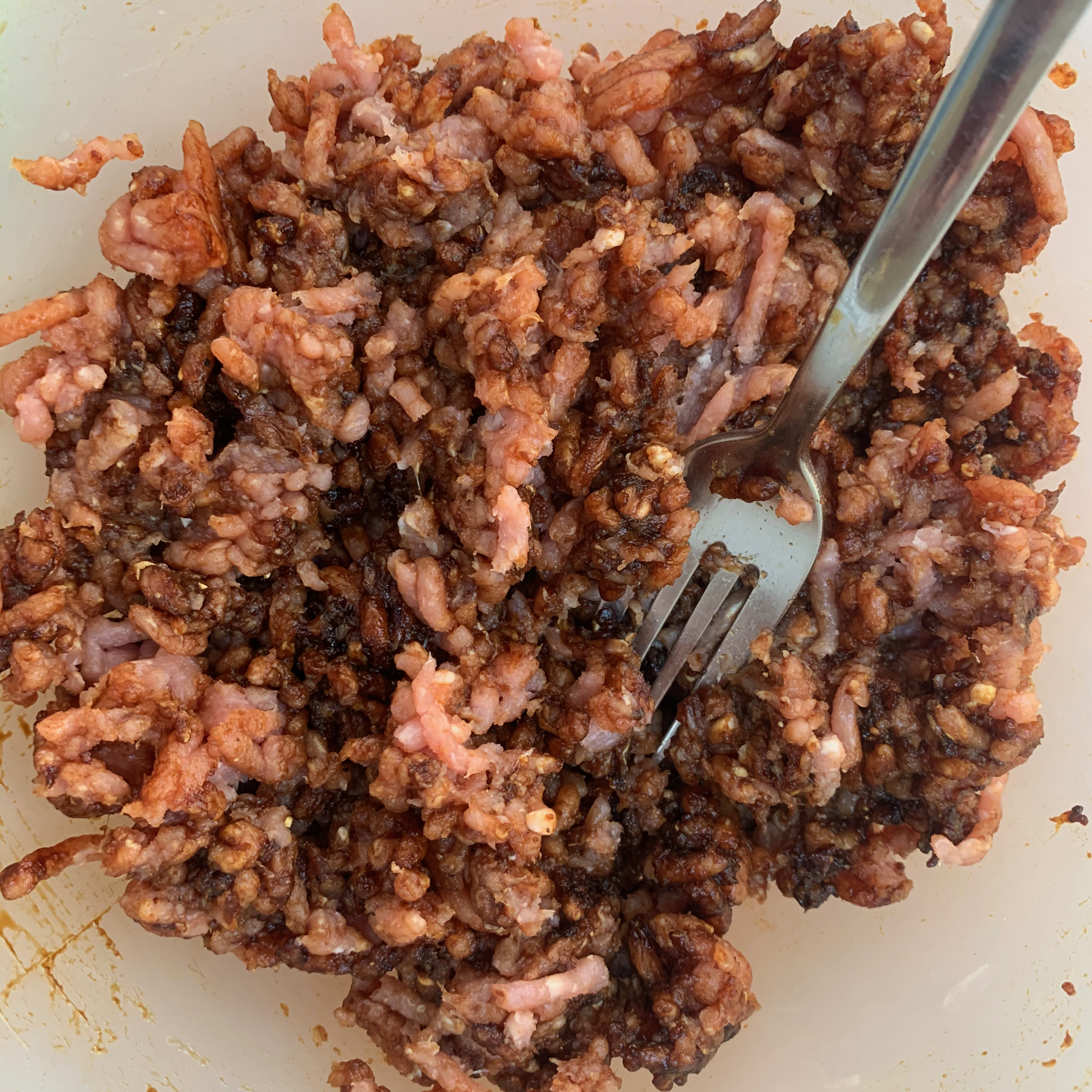
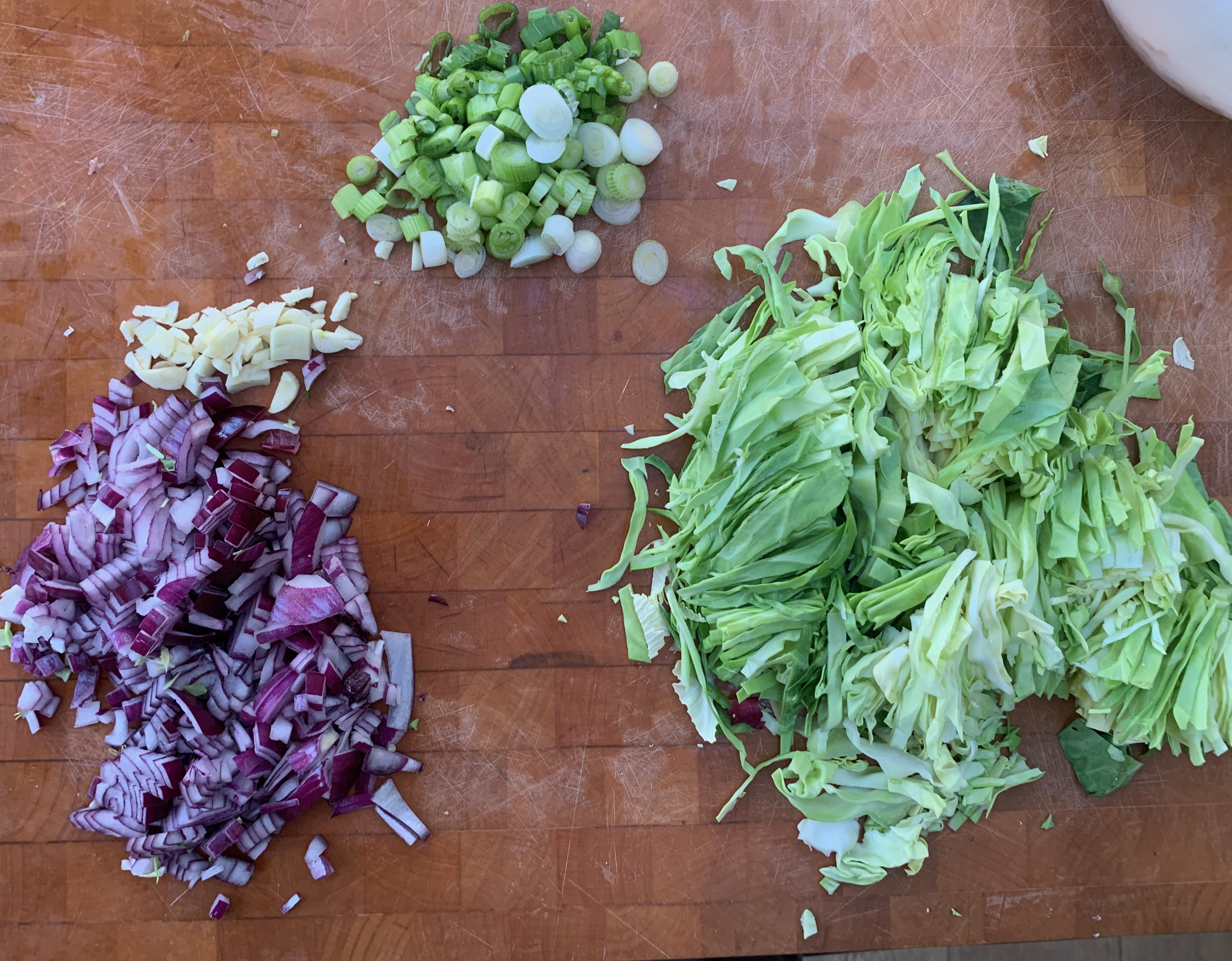
  1. Combine pork mince, soy sauce and black pepper in a bowl, mix well.
  2. Chop garlic and onion finely
  3. Shred cabbage
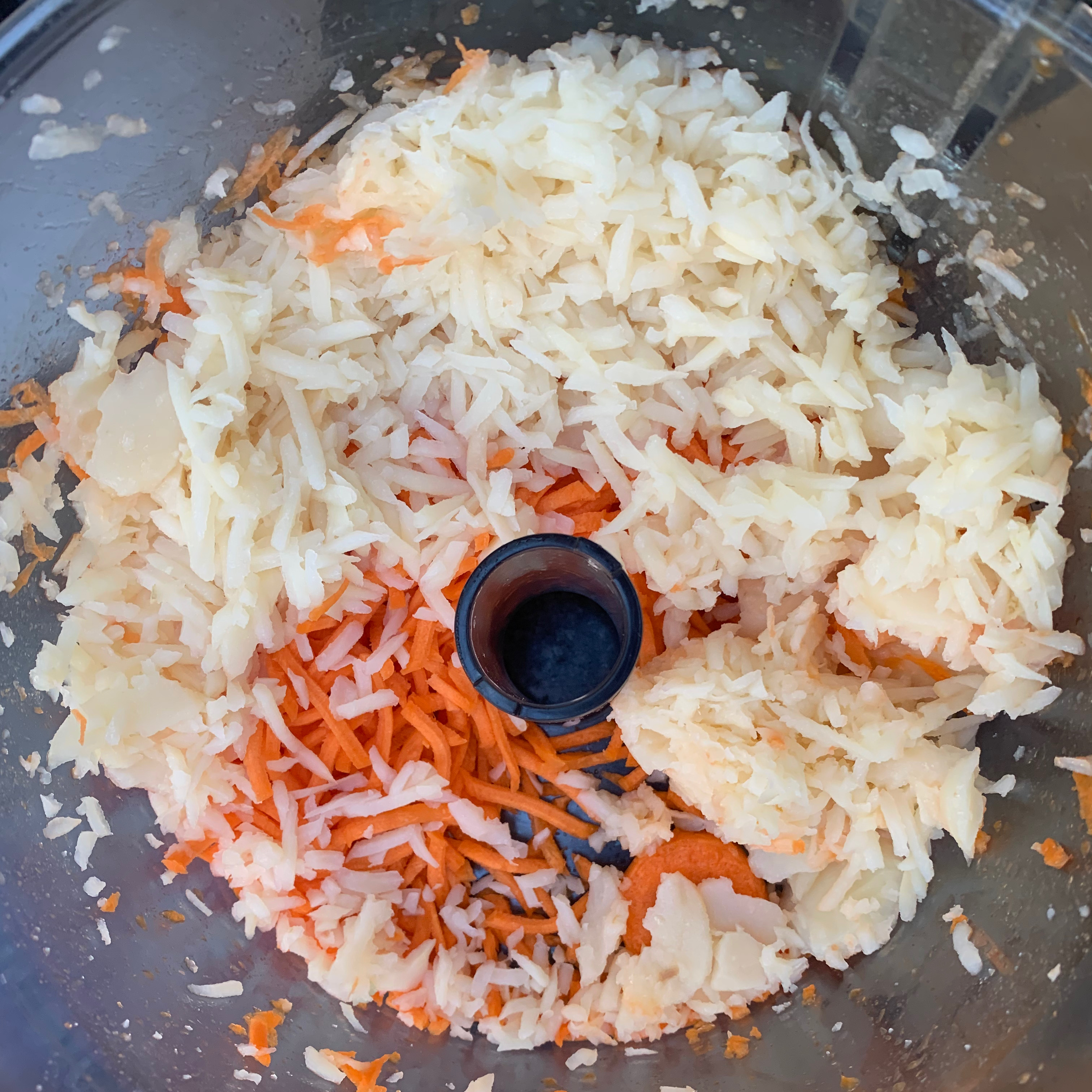
  4. Peel the carrots, grate them and the water chestnuts – I did this in a food processor.
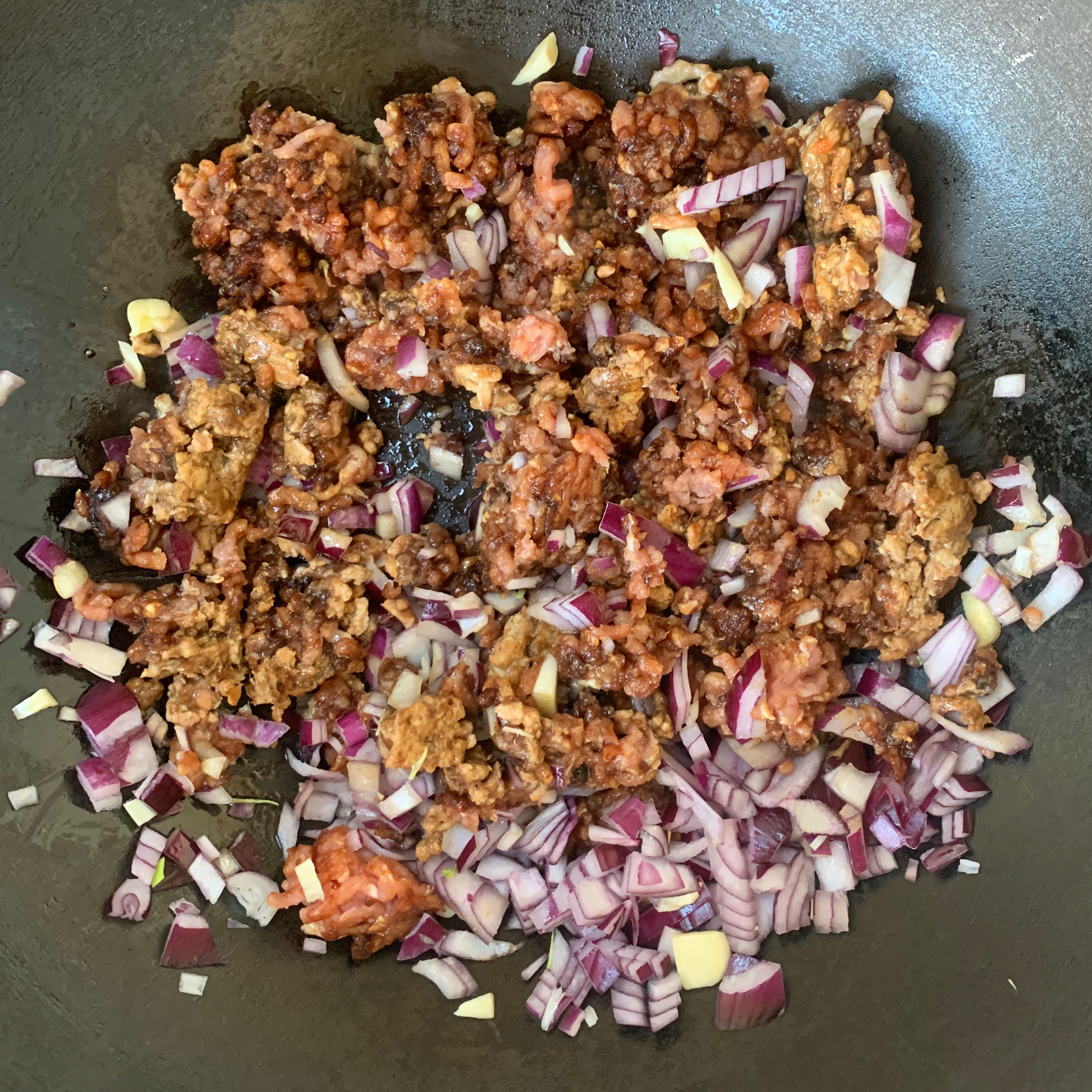
  5. Warm a small amount of oil in a wok, add the pork mixture and fry for a couple of minutes
  6. Add onion and garlic, fry until the meat is browned and the onion is soft
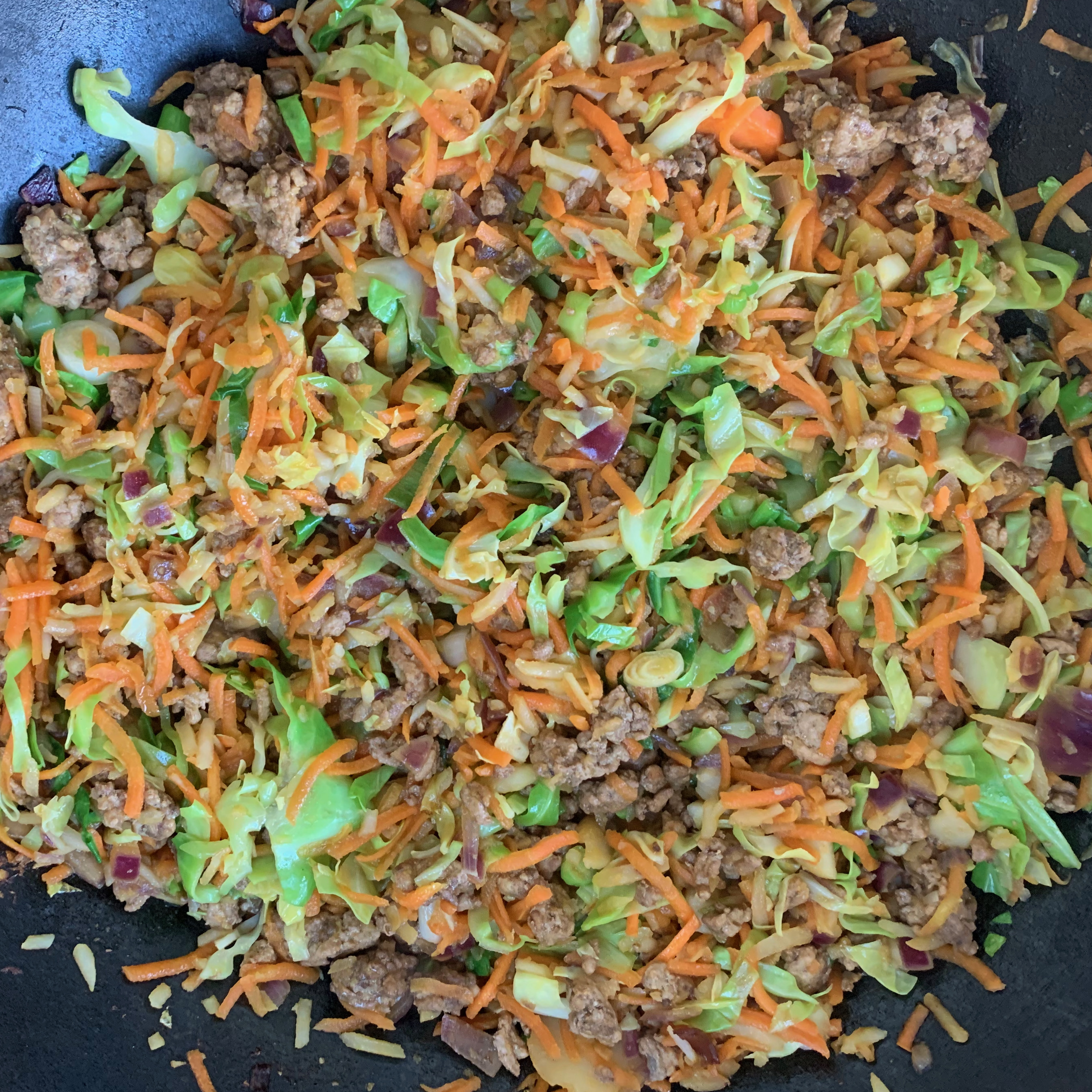
  7. Add the water chestnuts, carrots and cabbage, and keep cooking until the vegetables are cooked through and most of the water has been cooked out of them.
  8. Chop the spring onions and add them.
  9. Put the whole lot in a colander or sieve for ten minutes or so (or as long as you like) to allow more of the excess moisture to drain away.

Assembly and baking

Although I usually try to make my own pastry from scratch for this blog, I just couldn’t see a good reason for doing so here – and as far as I know, none of my Asian friends can be bothered either: the supermarket-bought wrappers are just fine. I couldn’t find fresh ones, so I bought a frozen pack: it was important to defrost them well in advance, because otherwise, peeling a wrapper off the frozen block would have been impossible without tearing it.

How many spring rolls this makes is a function of the size of your wrappers and how much filling you want to put into each. If you put a large amount of filling into each wrapper, you’ll have thinner pastry and a less carb-heavy dish; if you put less filling, you’ll have multiple layers of pastry, which will make it easier to get a crisper outside. I used wrappers that were 190mm square and put quite a lot of filling in, so the quantities here made about 20. Next time, I think, I’d go for two thirds of the filling I used here and make 30 rolls.

You want to work as quickly as you can manage, because the moisture from the filling will soak into the pastry faster than you would like.

  • 1 packet spring roll wrappers (20-30)
  • Cooking spray (I used a sunflower oil spray)
  1. Preheat oven to 225℃ fan
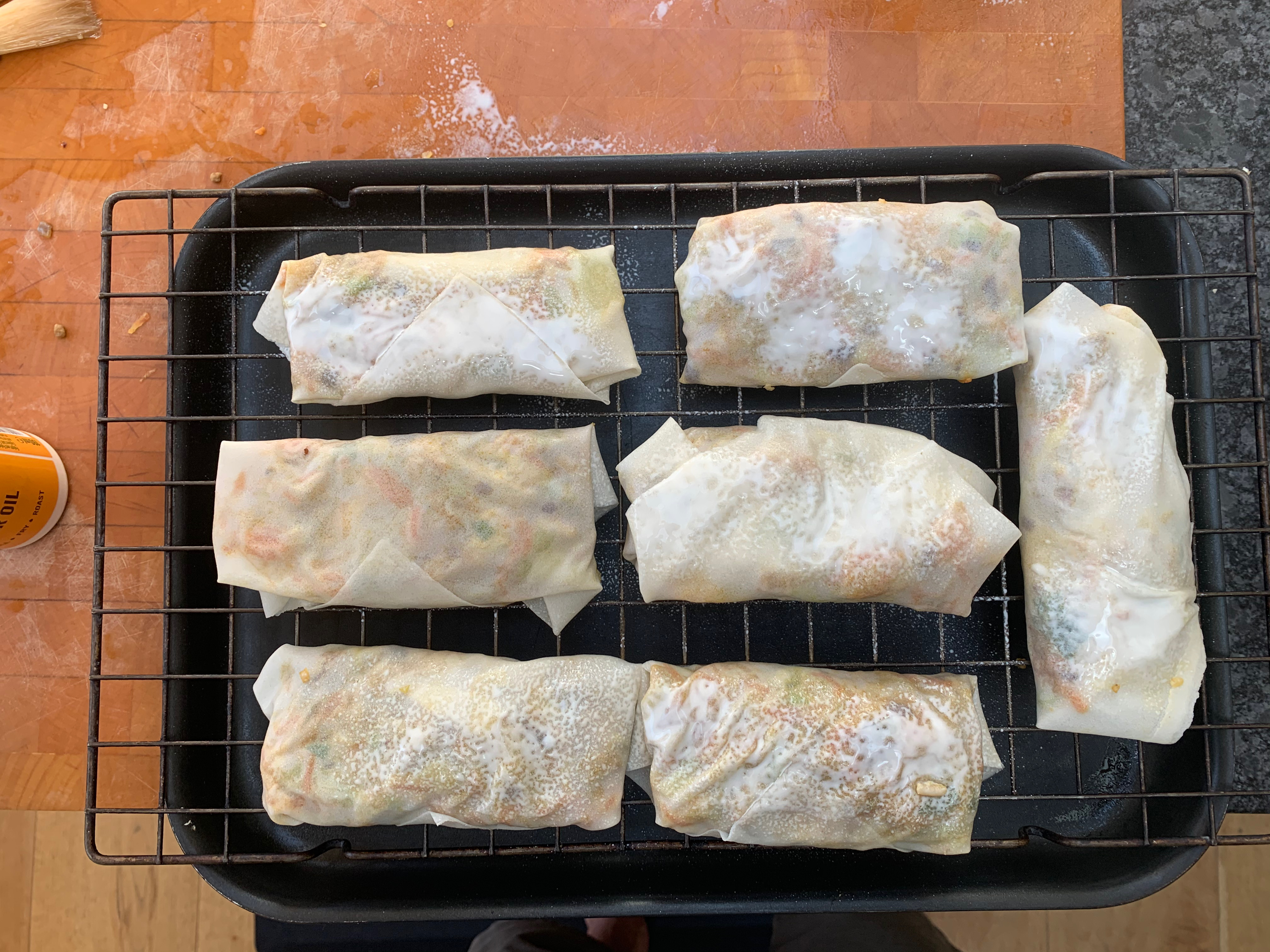
  2. Have ready a baking tray with a rack above it – I used a rack that I would normally use for cooling cakes or biscuits. Also have ready a small bowl of water and a pastry brush.
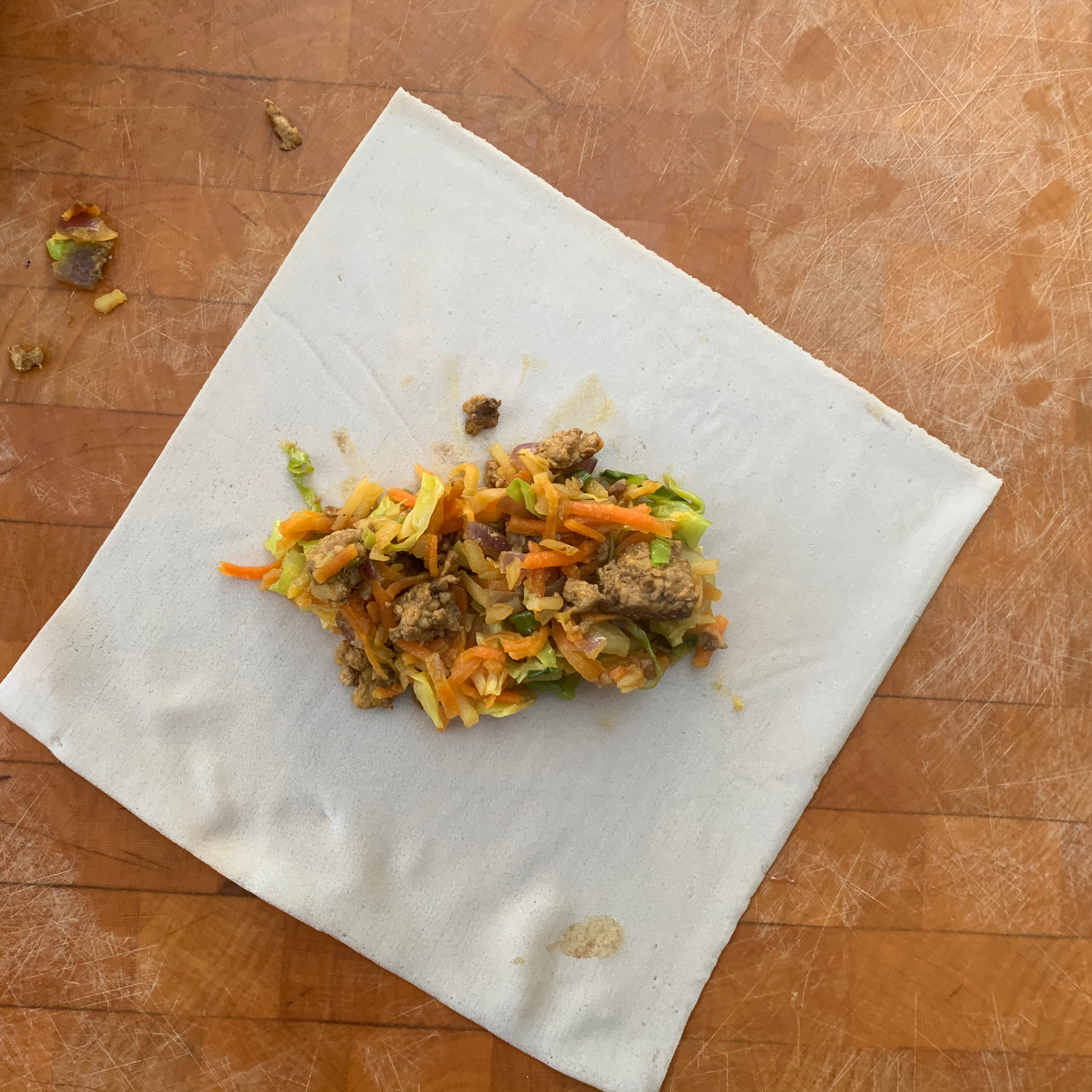
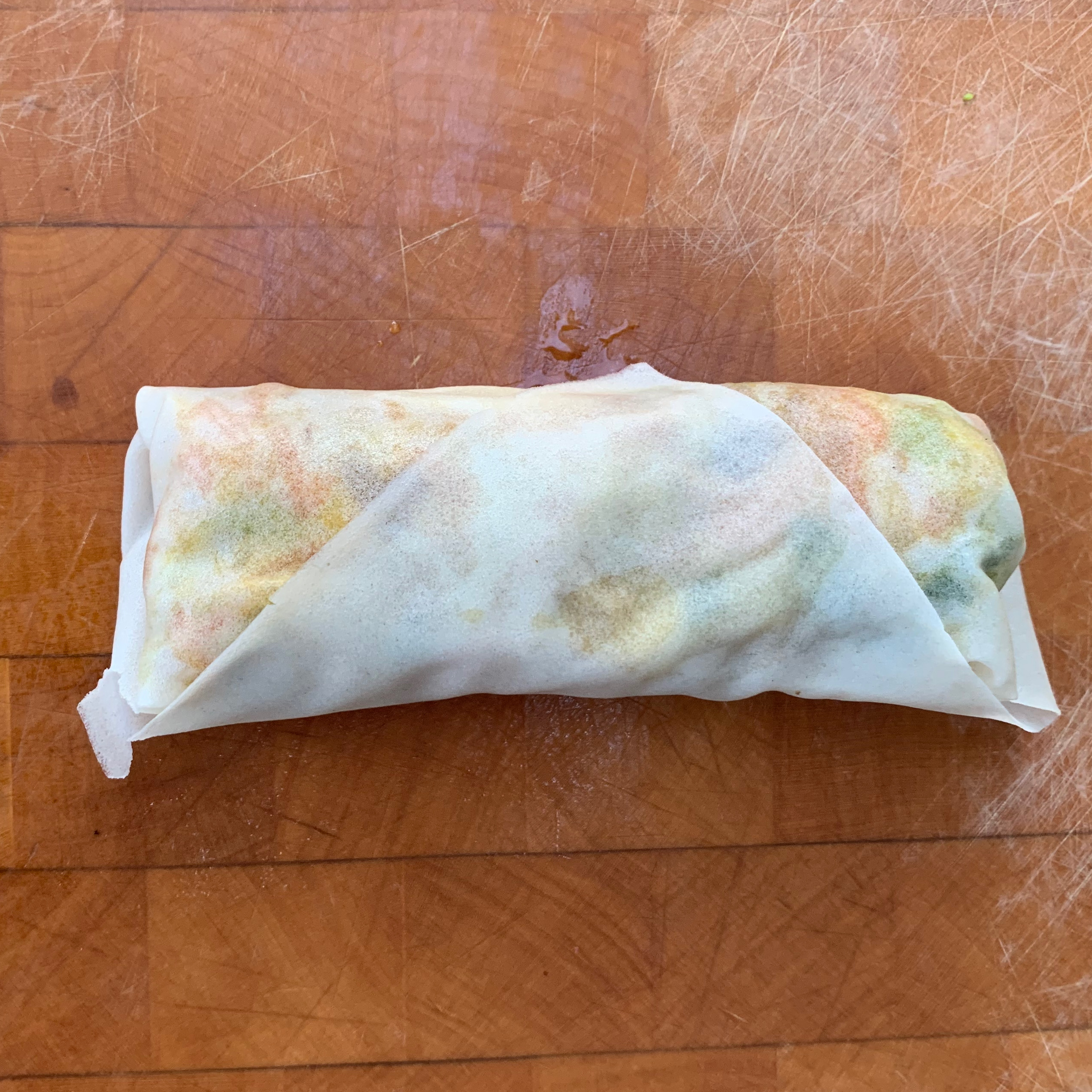
  3. Place a wrapper on a clean work surface so that you’re looking at a diamond rather than a square (i.e. the thing furthest away from you is a corner, not an edge).
  4. Spoon some filling into a cigar shape in the middle of the wrapper, going left-to-right as you see it.
  5. Tuck the corner furthest from you over your cigar of filling
  6. Tuck the left hand right corners into the middle
  7. Brush the remaining flat part of the wrapper with water, and tuck it over your filling to form the completed roll.
  8. Repeat for half a dozen or so rolls, spray them generously with cooking spray, transfer them onto you rack, turning them outside down as you go. Now spray the other side.
  9. Repeat until your rack is full. You’ll probably need to do the whole process twice: if you have a second pan and rack, you can bake them all at the same time; otherwise, you’ll have to wait until the first batch is backed.
  10. Bake for around 25-30 minutes until crisp.
  11. Cool slightly before eating.
Around the world in 80 bakes, no.55: Hard dough bread from Jamaica

Around the world in 80 bakes, no.55: Hard dough bread from Jamaica

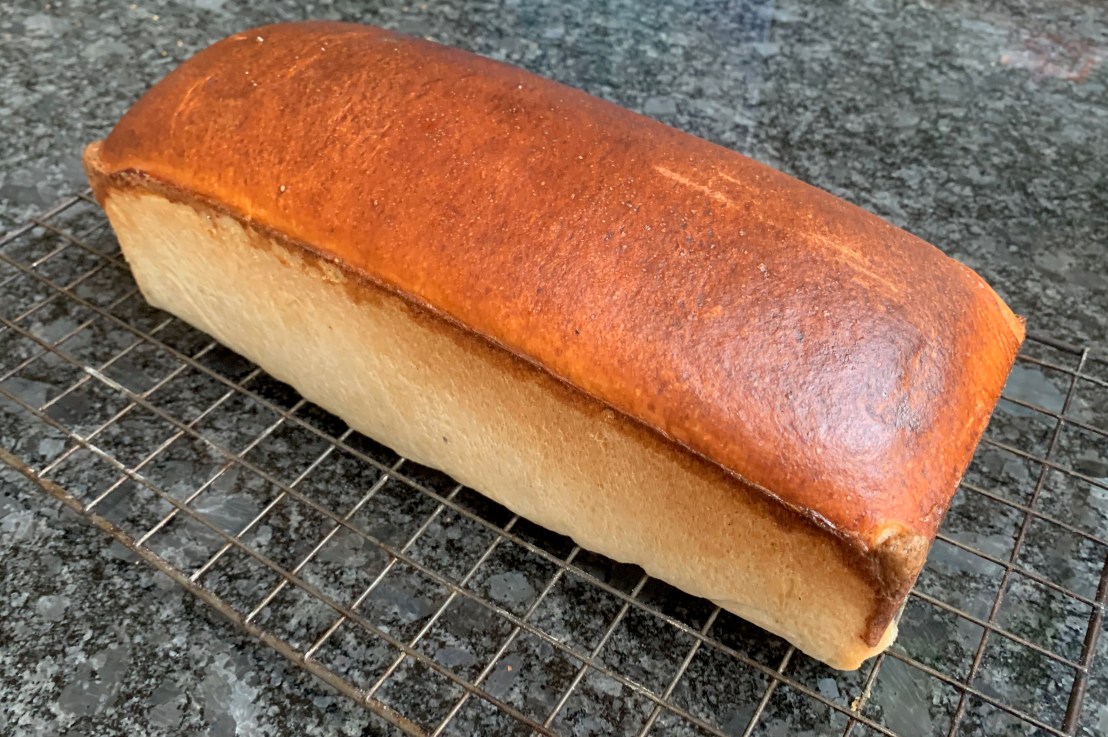
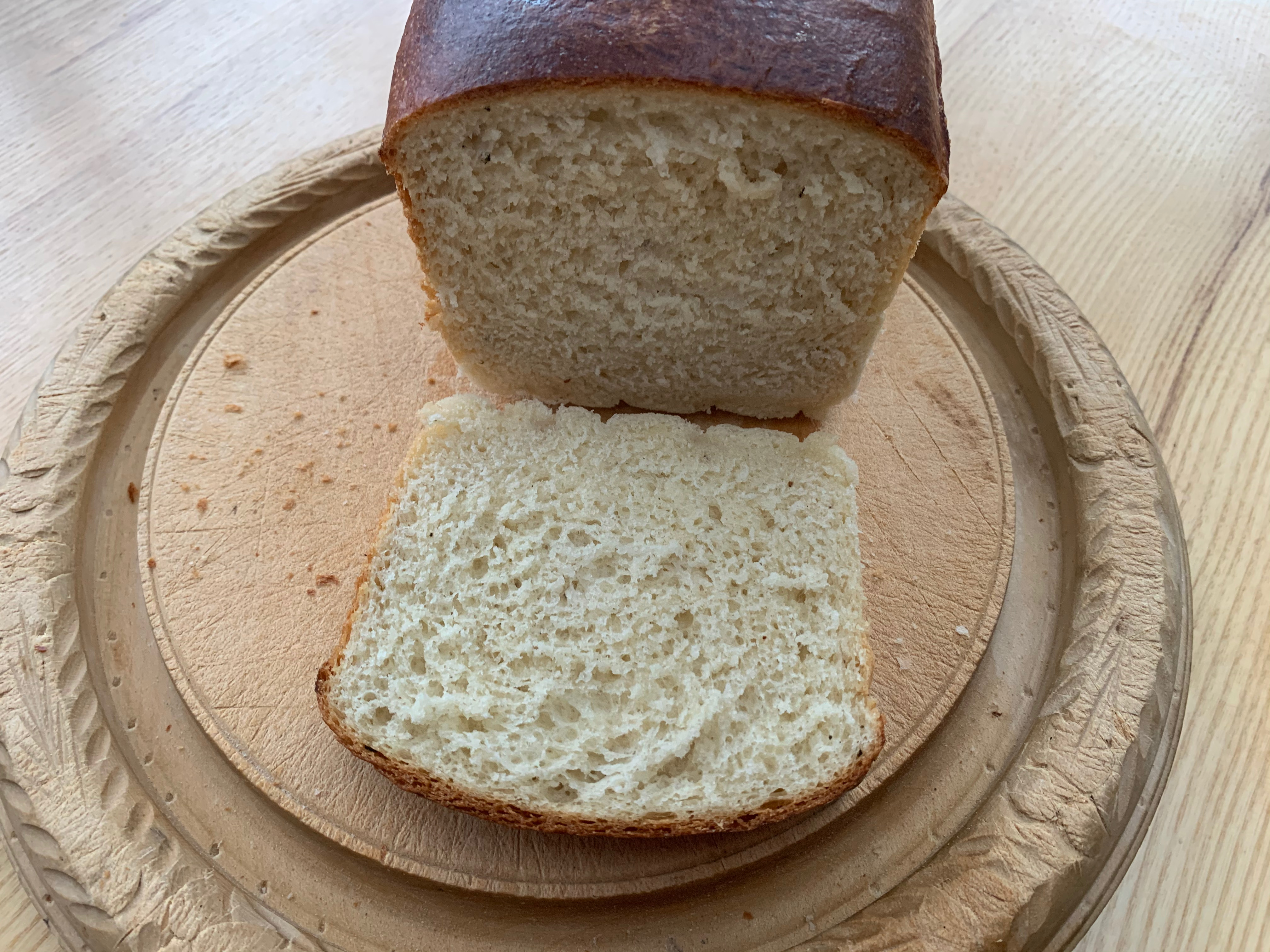
Jamaicans swear by Hard dough (or Hardo) bread as being the perfect base for all manner of snacks and sandwiches: avocado, salt fish, whatever. Hardo bread is generally made in an oblong tin (aka a Pullman tin); it should be pillowy soft and airy, but with a dense enough texture to stop your sandwich filling leaking through. It may look on the surface like a simple enough white bread, but it takes a level of skill and care to get that perfect texture.

If I do a bit of extrapolation, the history goes like this: French bakers take pain de mie to the Far East, where it’s taken up by Chinese bakers, who then migrate to the Caribbean. From there, West Indian workers take it to Africa, where something very similar turns up in Nigeria in the shape of Agege bread.

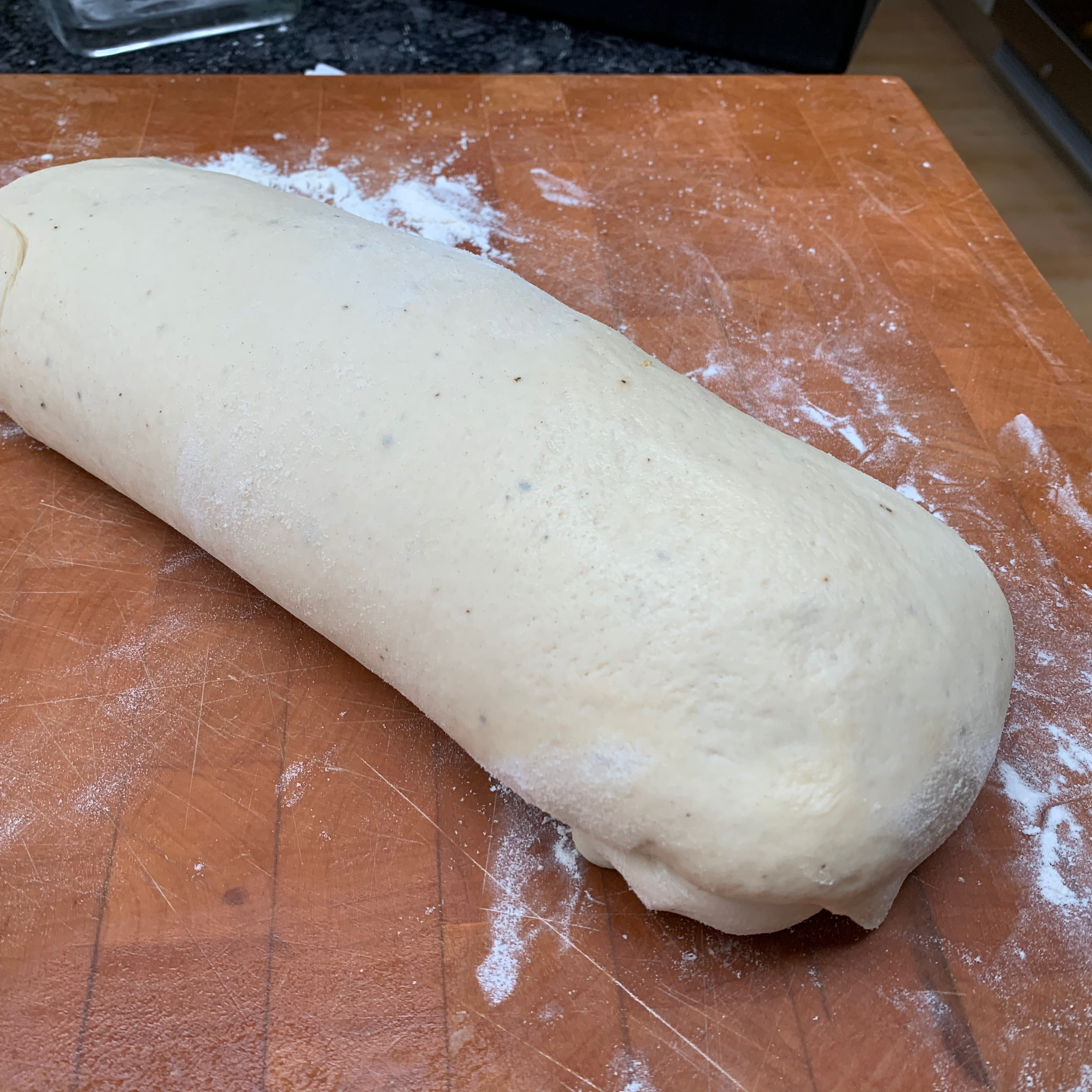
Like Agege bread, commercial hardo bread is often made using a dough brake – a set of rollers through which the dough is forced as part of the kneading and forming process. Following this video from Keshia Sakaria, I’ve approximated to the dough brake by rolling the dough out with a rolling pin in between its first and second rises.

It’s fair to say that there’s less than general agreement on the recipe. Most recipes call for white bread flour, but all-purpose and wholemeal flour get used. Some recipes use butter; others insist that vegetable shortening is the only way to go. Some use milk, others don’t. Wikipedia quotes authoritative references stating that hardo bread is usually brushed with sugared water before baking, but I haven’t seen any current Caribbean recipes that do this. And proportions are highly variable – I’ve gone for the less sweet end of the scale.
I’ve sized my recipe for my 30cm x 10cm x 10cm loaf tin, gone for strong white bread flour to try to get the springiest texture, and used butter and milk. I’ve also added a generous grind of black pepper for flavouring – a trick from Apollonia Poilâne’s pain de mie, which probably isn’t in any way authentic but which I’m confident Jamaicans would approve of.

  • 320 ml milk
  • 35 ml lukewarm water
  • 8g dried yeast
  • 25g sugar
  • 600g strong white flour
  • 15g salt
  • 60g butter
  • Optional: a generous grind of black pepper, to taste
  • Sunflower oil for greasing
  • a small amount of beaten egg for the egg wash
  1. Warm the milk to around 40℃. If it goes hotter, let it cool to 40℃ before using, or you’ll kill the yeast.
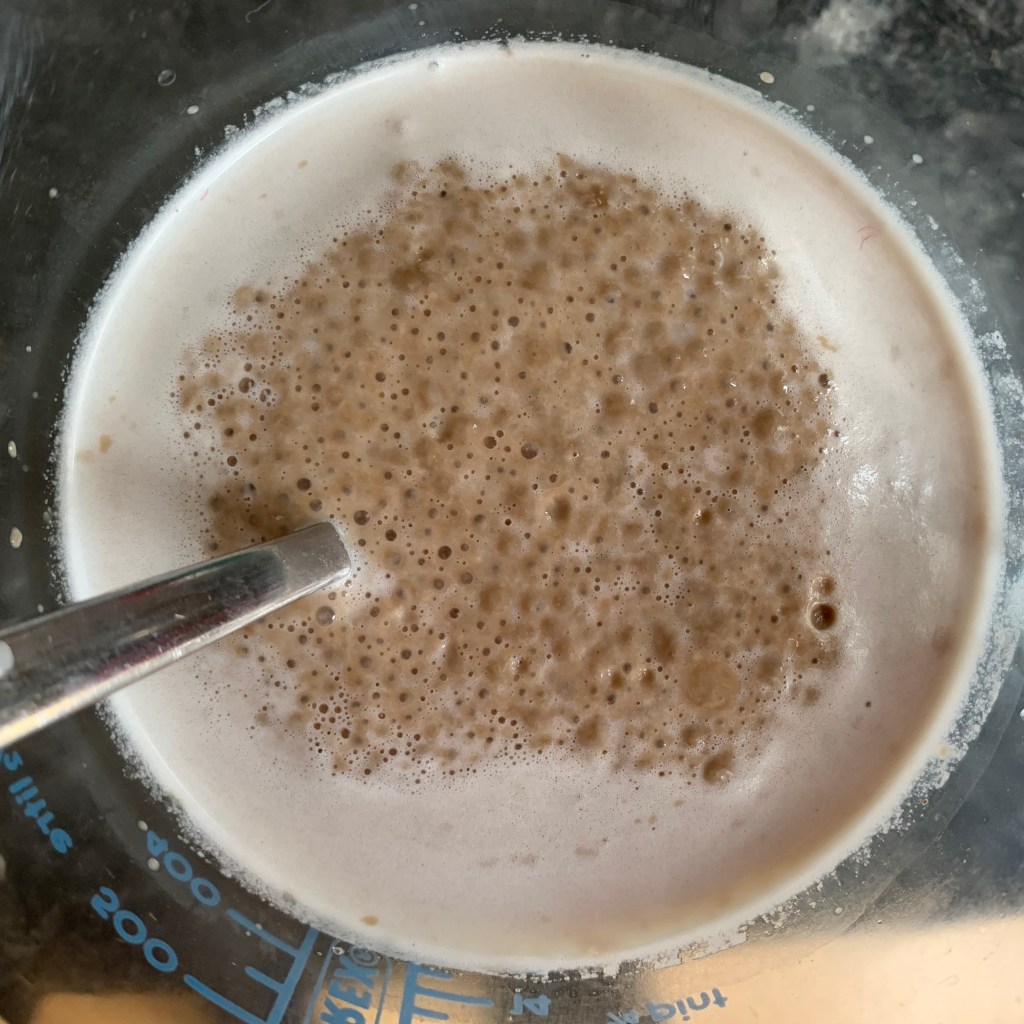
  2. Weight out the yeast and sugar into a jug or small bowl, add the water and the milk and leave for a few minutes until it all goes frothy.
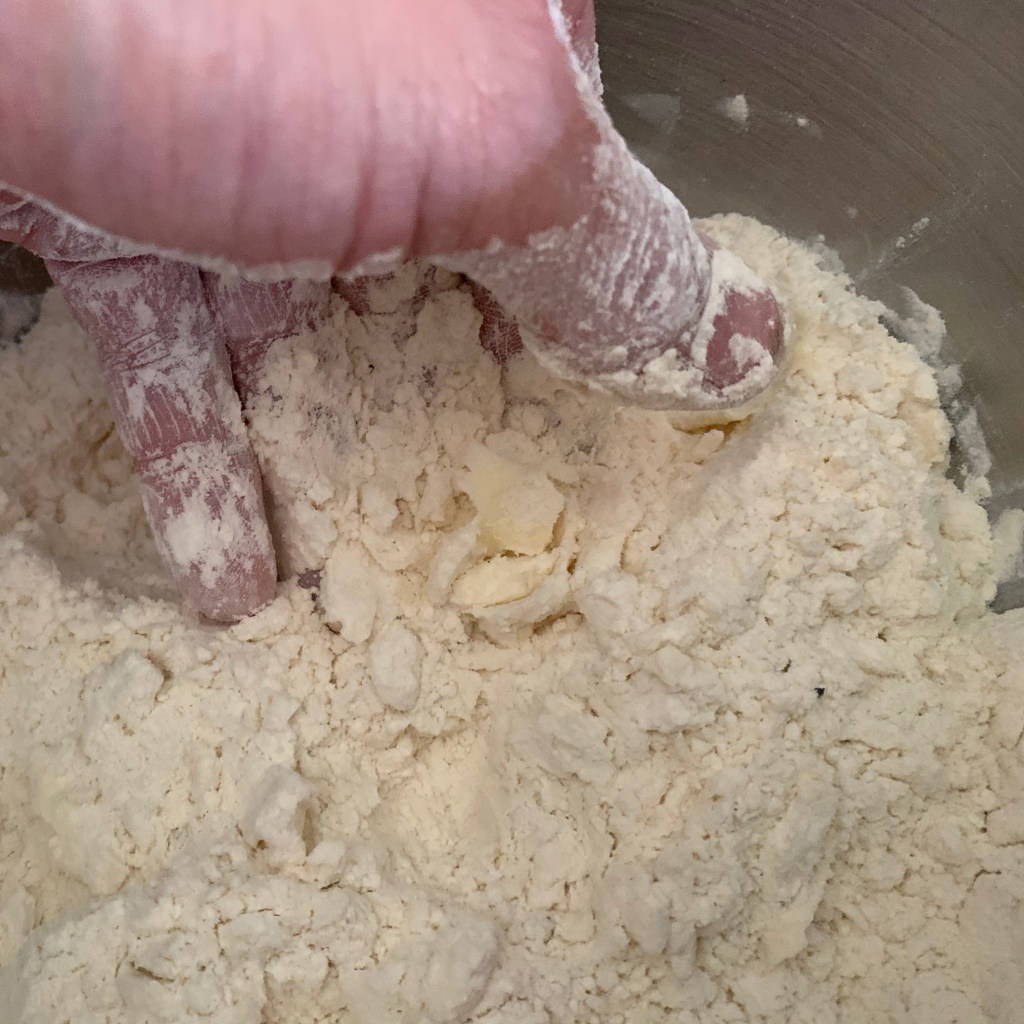
  3. Cut the butter into small cubes; put it with the flour, salt and pepper into the bowl of your stand mixer and rub the butter into the flour with your fingers to blend nicely. 
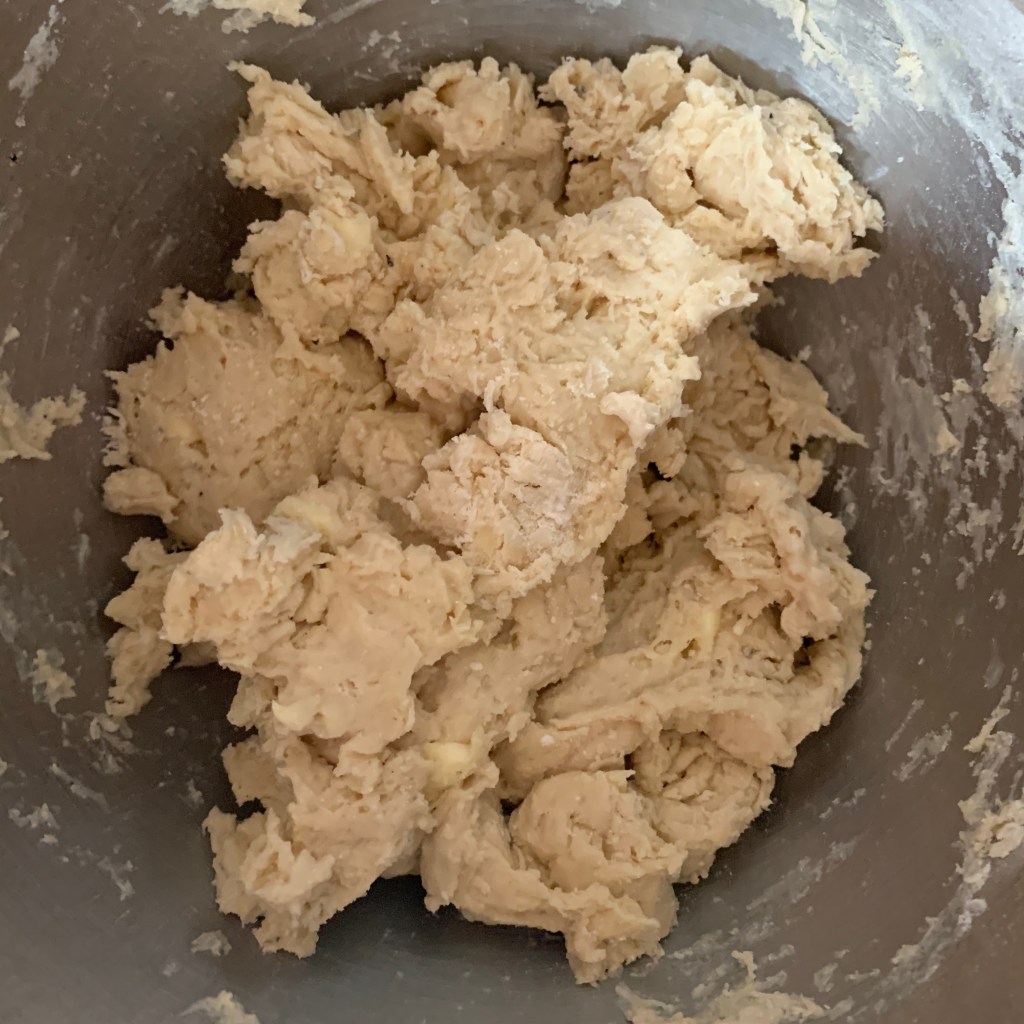
  4. Add the wet mixture and mix until you have a smooth dough: it should come away from the sides of the bowl.
  5. With the dough hook, knead for around 7-10 minutes until the dough is nice and elastic. You may also want to knead it by hand for a minute or two to make sure you have the right level of springiness.
  6. Form the dough into a ball and put it into a greased bowl covered with cling film; leave to rise for around 60-90 minutes until doubled in size.
  7. Grease your loaf tin
  8. Flour a surface and roll out the dough to a rectangle that’s about 2cm thick and whose width roughly matches the length of your loaf tin.
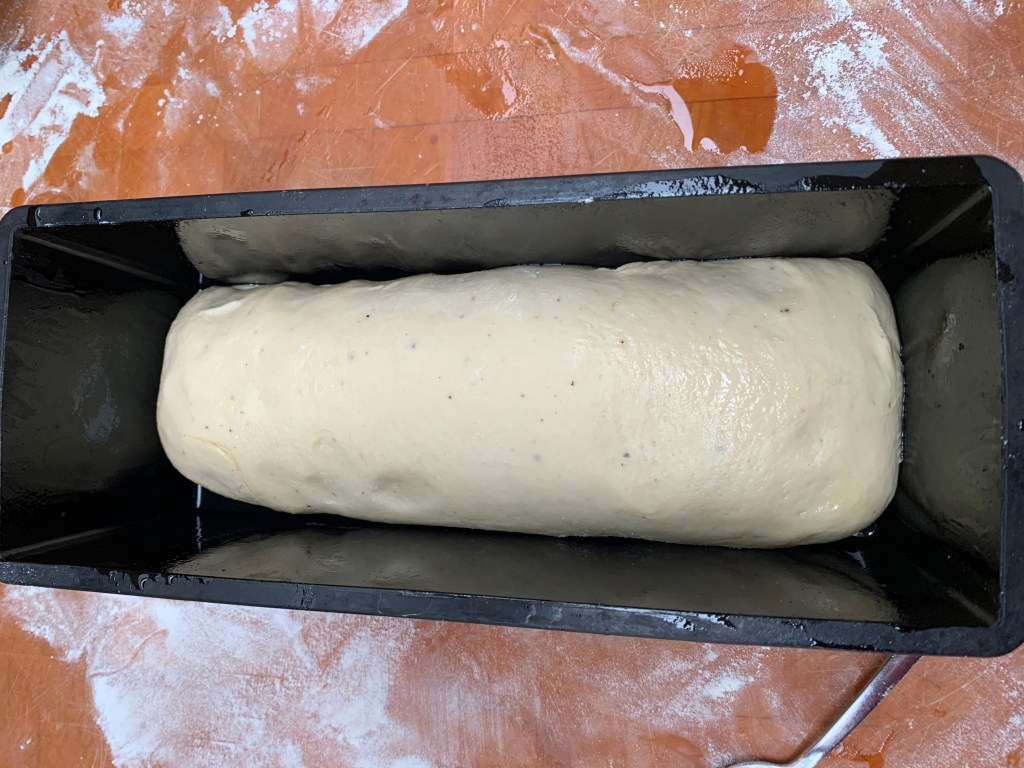
  9. Roll the dough tightly into a sausage; fold the ends under to tidy them up; brush a little oil over the whole loaf and place it carefully into the tin.
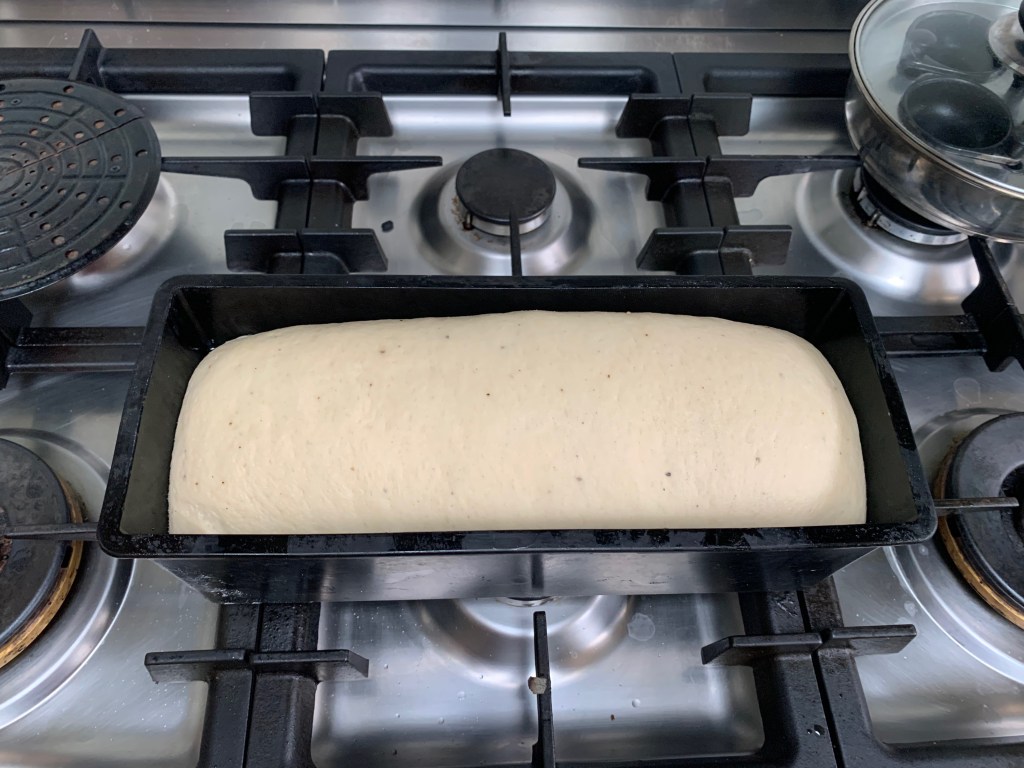
  10. Cover the loaf tin and leave to rise for another hour.
  11.  Half an hour in, preheat your oven to 200℃ fan. If you have a dutch oven that your loaf tin will fit into, put a couple of cm of water into it and put in the oven now.
  12. When the loaf is risen, brush it with beaten egg and put it in the oven.
  13. Bake for 20 minutes, then take the top off your dutch oven and bake for another 20 minutes – the top should be golden and the inside should be dry when tested with a skewer.
  14. If you don’t have a dutch oven or a cover for your loaf tin, just bake the loaf open for 20 minutes and then cover it with foil for the rest of the baking time.
Around the world in 80 bakes, no.54: Basler Kirschenbrottorte from Switzerland

Around the world in 80 bakes, no.54: Basler Kirschenbrottorte from Switzerland

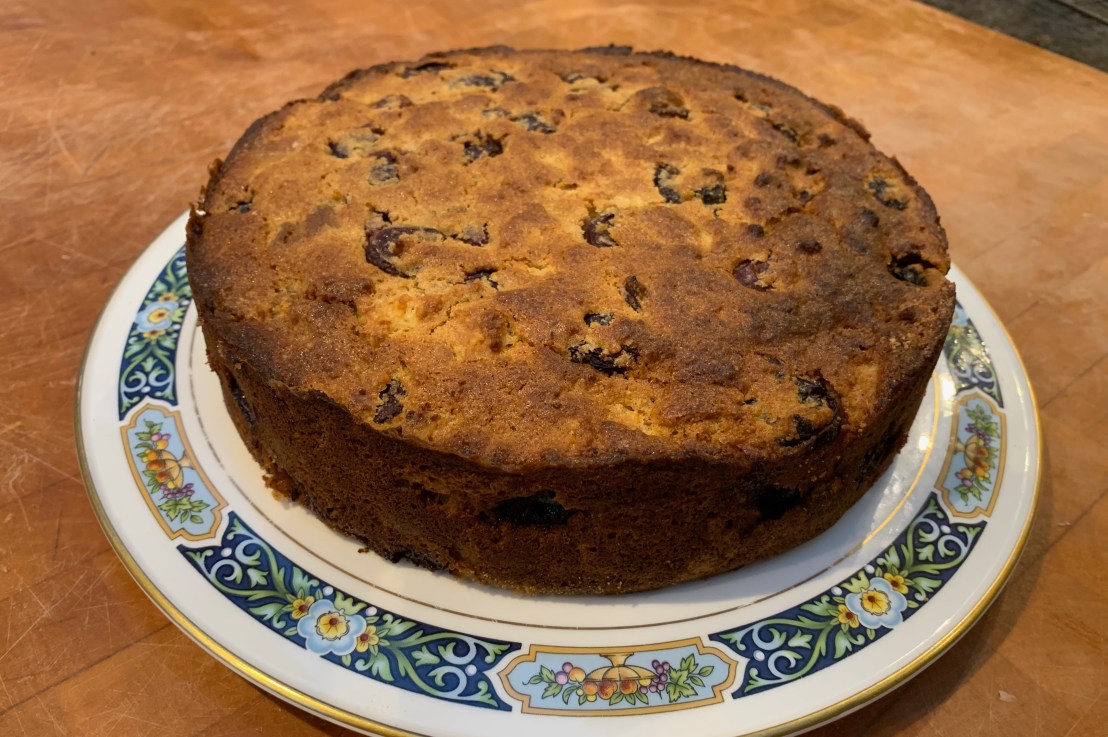
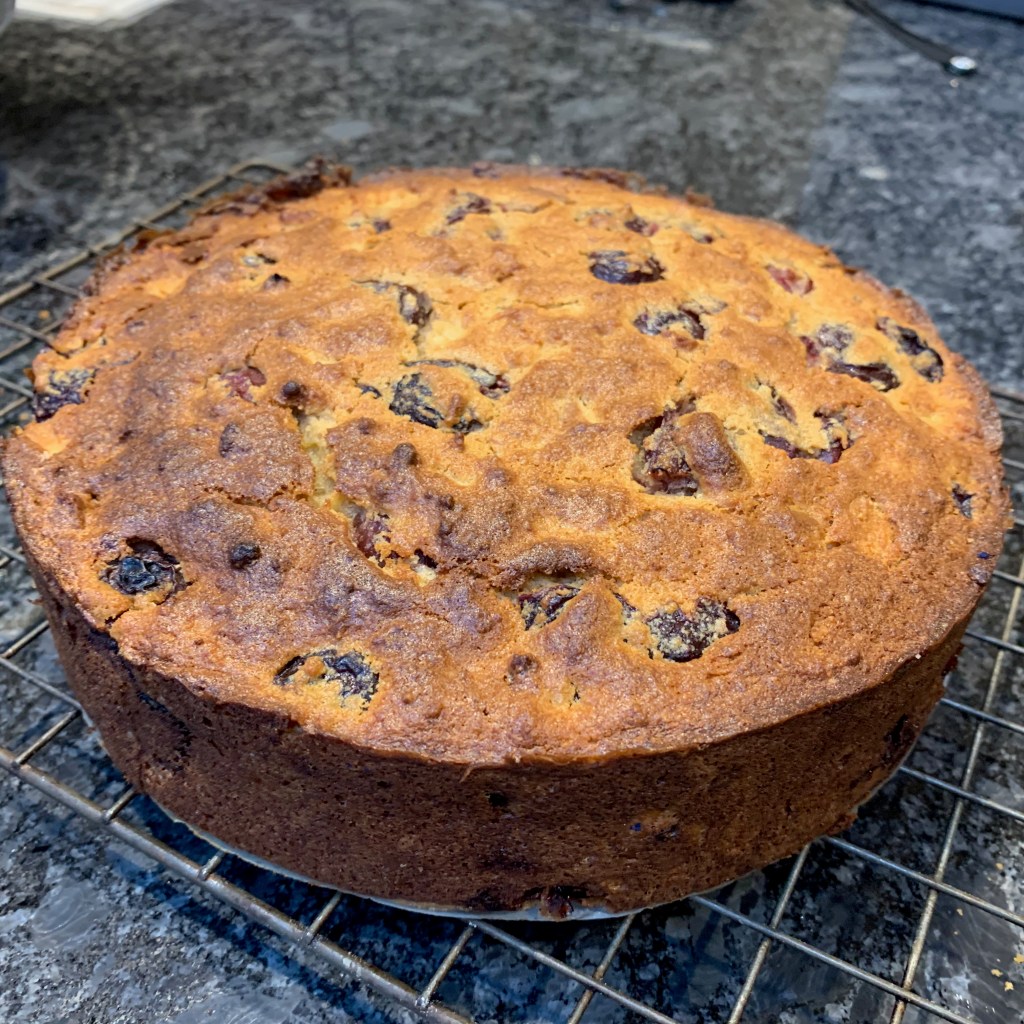
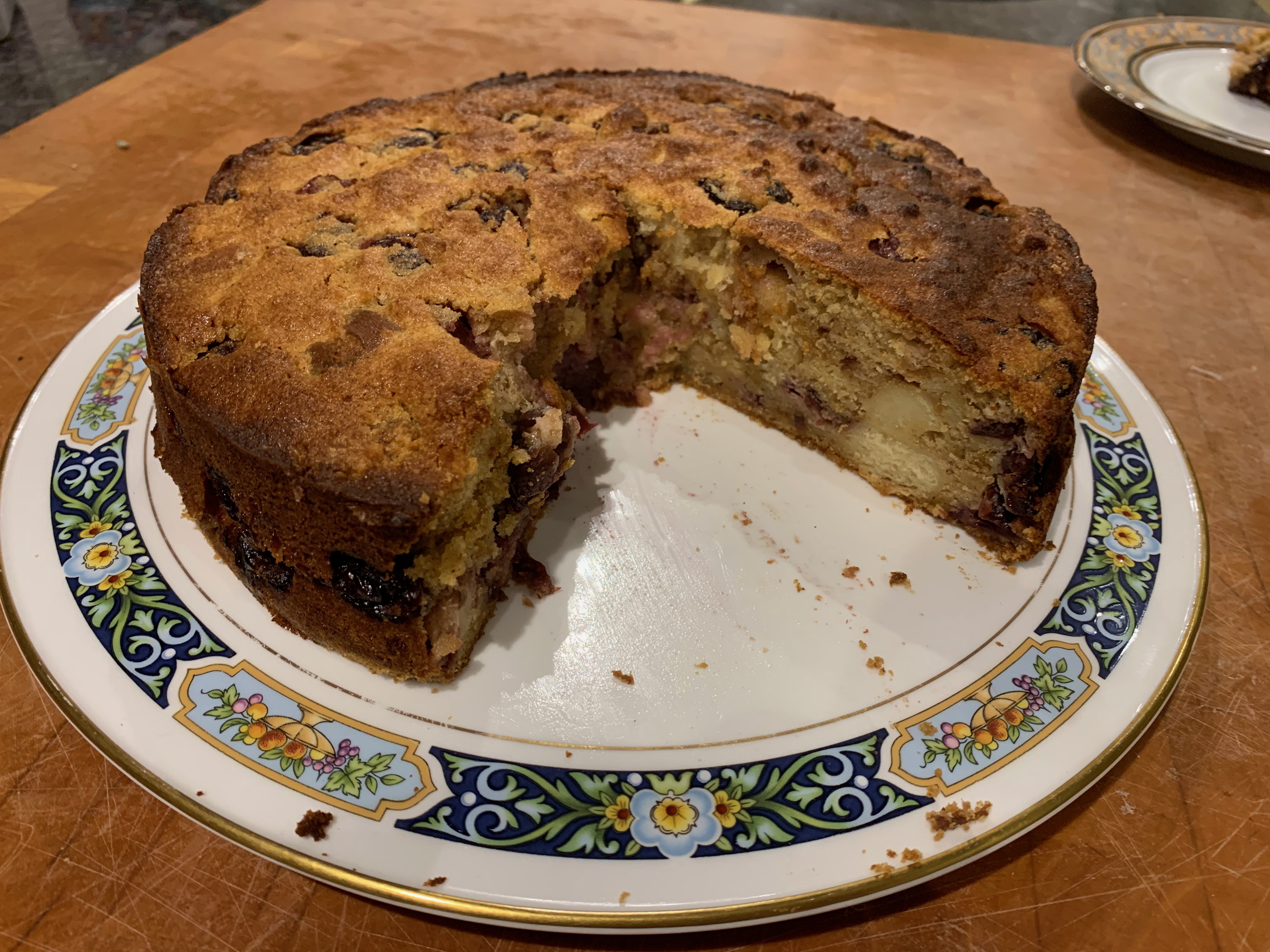
The German (or, in this case, Swiss-German) habit of running nouns together does sometimes lead you to a recipe that does exactly what it says on the tin: Basler Kirschenbrottorte (cherry-bread-cake from Basel) is, er, a cake whose two main ingredients are bread and cherries. And which comes from the city on the triple border between Switzerland, France and Germany. It’s surprisingly light for something which is not so far from a bread pudding, it’s fruity, cinnamon infused and bursts with flavour. This recipe comes from the food blog Helvetic Kitchen, where it’s accompanied by a nice family story to go with. I’ve halved the quantities.

To state the bleeding obvious, it isn’t cherry season in London right now, so I’ve gone for a 500g pack of frozen black cherries. This seemed to do the job OK, with the advantage that the cherries arrive already stoned, albeit with care needed to ensure that they were properly defrosted and with most of the surplus water dried off. However, I’m going to suggest that if you have fresh cherries growing anywhere near you, the way to go is definitely going to be to make this in season.

Warning: this recipe uses a lot of bowls. I can’t see an obvious way around this.

  • 500g cherries
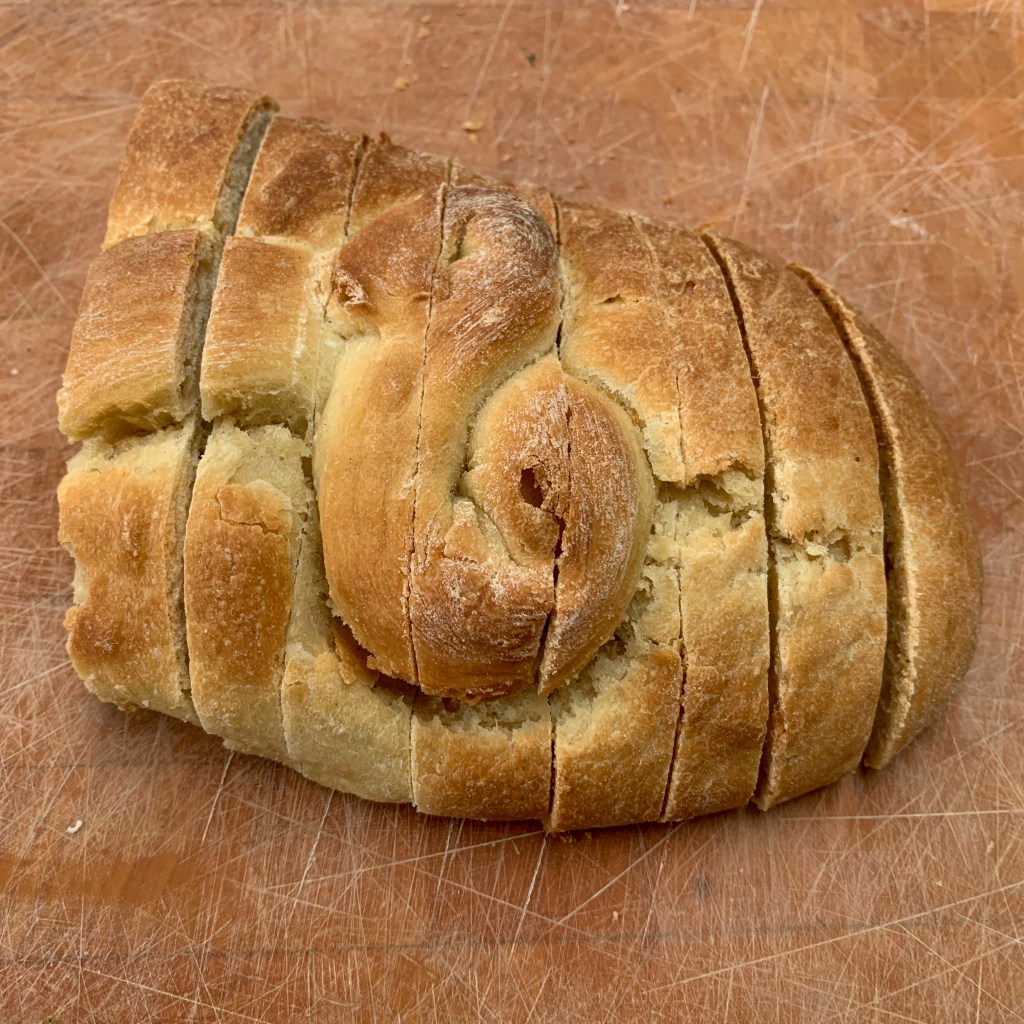
  • 250 g leftover bread (in my case, this was the last of my Antiguan Sunday Bread)
  • 200 ml milk
  • vanilla paste or extract to taste
  • 100 g biscuit crumbs – I used Digestive biscuits; in the US, one would probably go for Graham Crackers.
  • 60 g butter
  • 100 g sugar
  • 3 large eggs (around 200g total)
  • pinch of salt
  • 50 g ground almonds
  • 10 g flour
  • 1 tsp baking powder
  • 1 tsp cinnamon
  • kirsch or fruit schnapps to taste
  1. If using frozen cherries, defrost them.
  2. Preheat oven to 180℃.
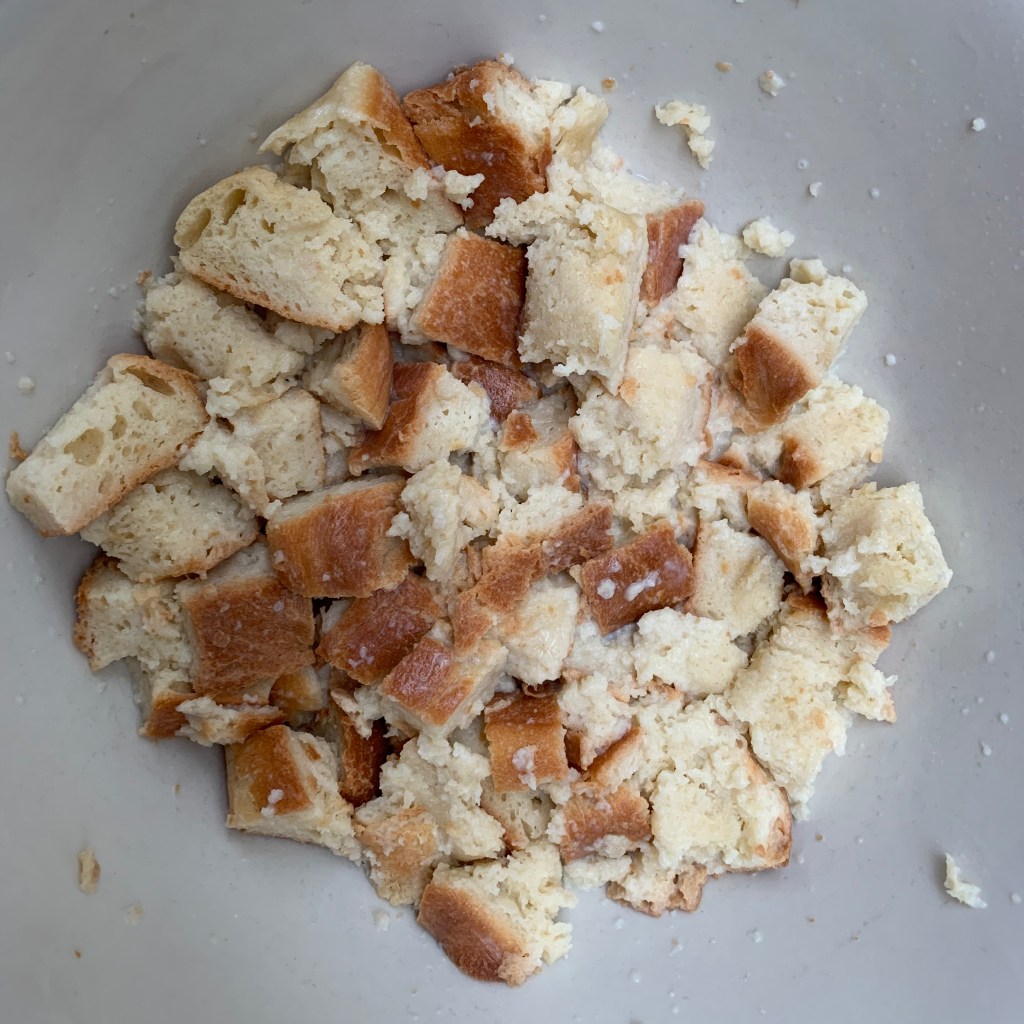
  3. Cut the bread into 1 cm cubes and put in a bowl.
  4. Put the milk and vanilla into a saucepan and scald until very warm (80-90℃). Take off the heat and pour into a bowl to cool.
  5. Remove the stones from the cherries, if this hasn’t been done for you already
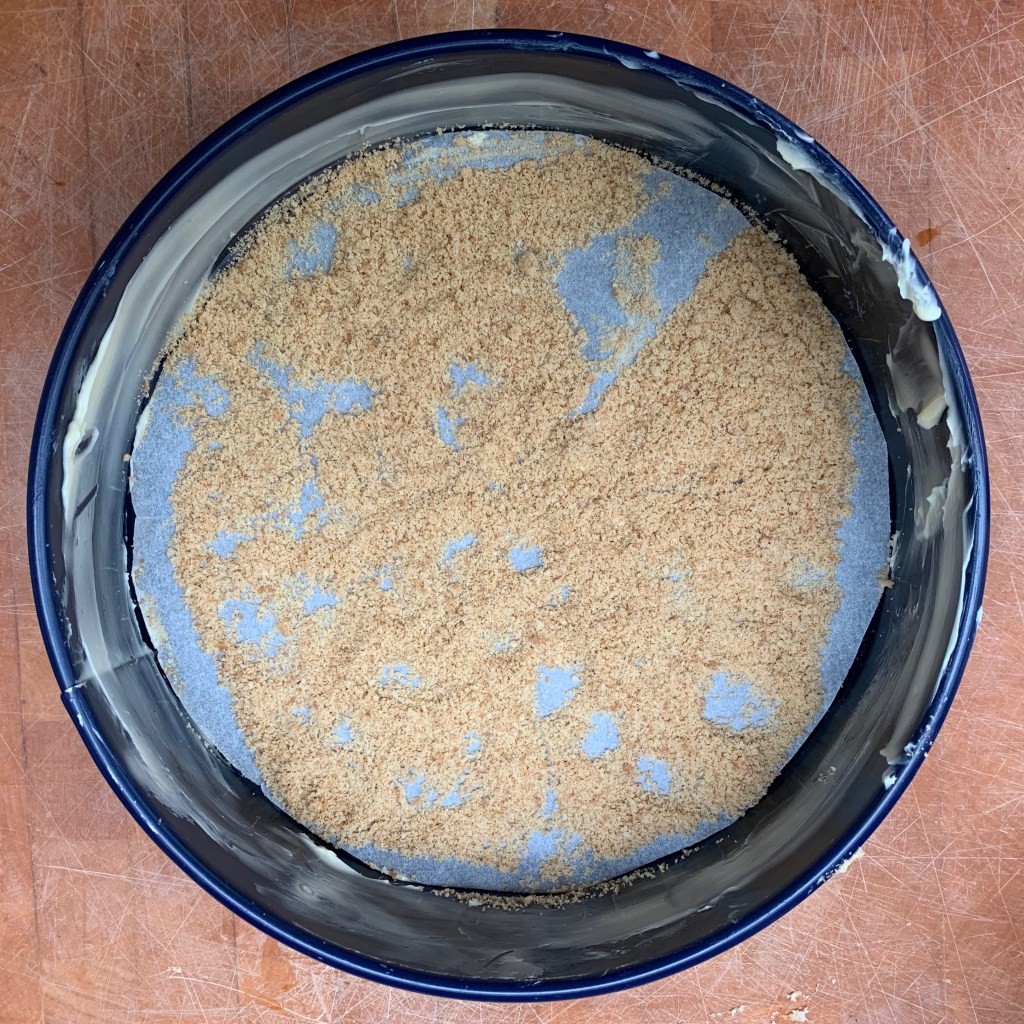
  6. Prepare a 20cm springform tin: line the bottom with baking paper, grease the sides generously with butter. 
  7. Once the milk is at room temperature, pour it over the bread and squeeze it down so that all the bread has soaked up some milk.
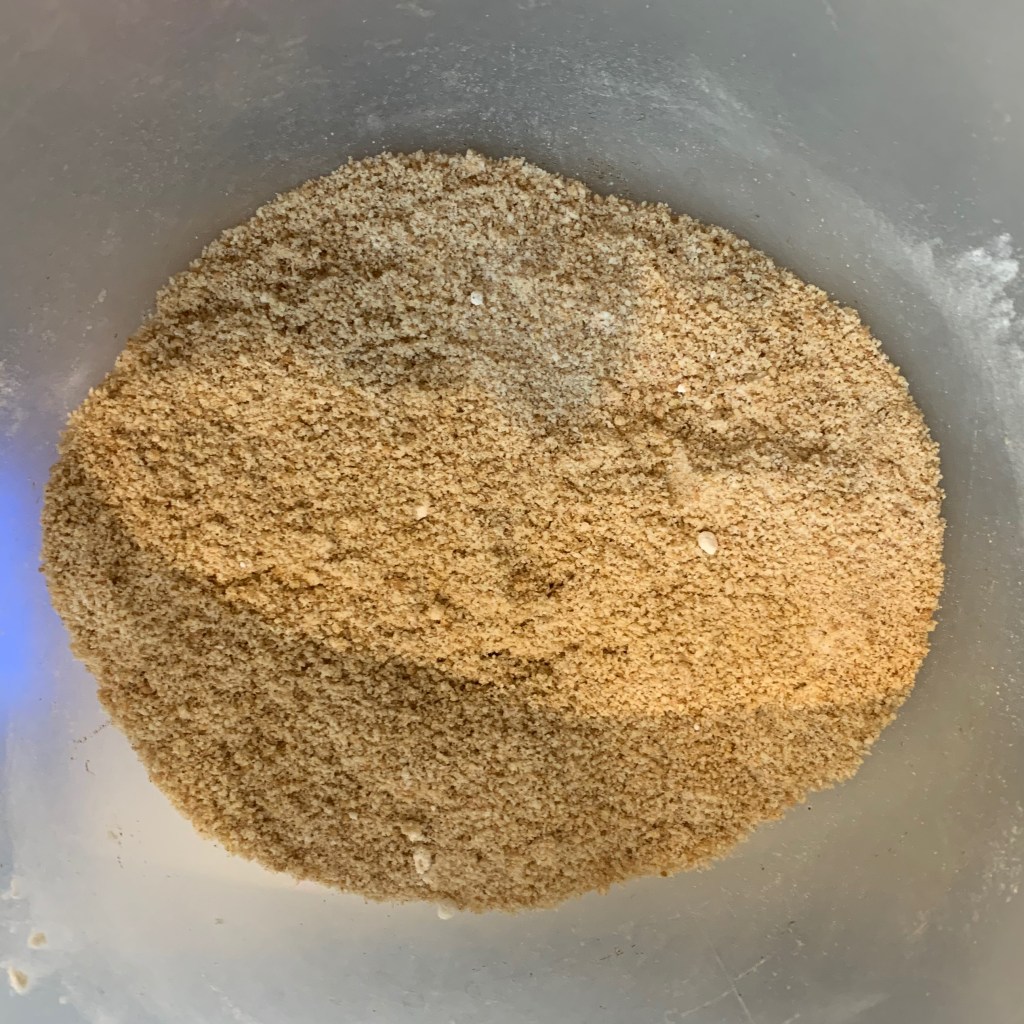
  8. Blitz your biscuits to a powder. Take about half the crumbs and spread them evenly over the base of the tin.
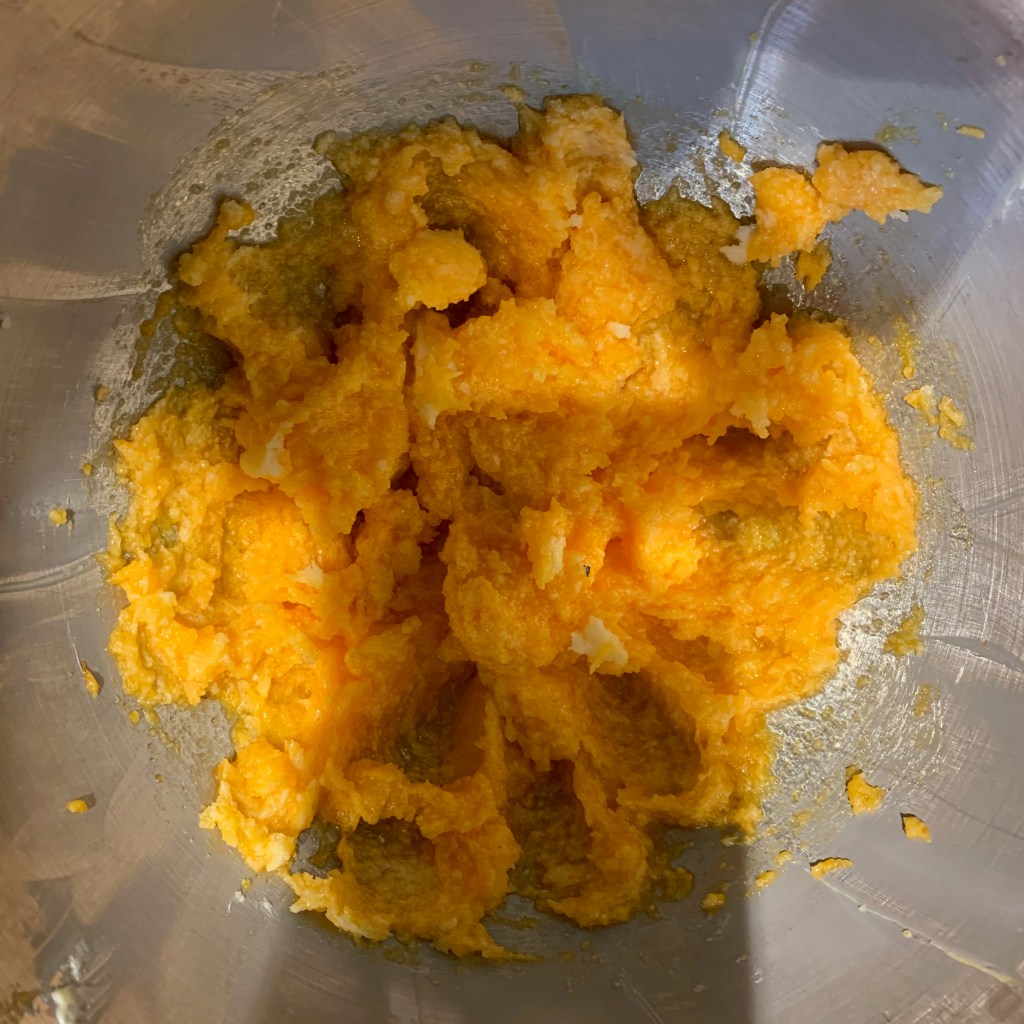
  9. Cream the butter and sugar together.
  10. Separate the eggs, pouring the whites into a bowl of your stand mixer, and the yolks into the butter-sugar mixture.
  11. In yet another bowl, mix the remaining biscuit crumbs, ground almonds, flour, cinnamon and salt; stir until blended evenly.
  12. Add the bread mixture into the butter-sugar mixture and mix.
  13. Add in the flour mixture and mix until everything is very even.
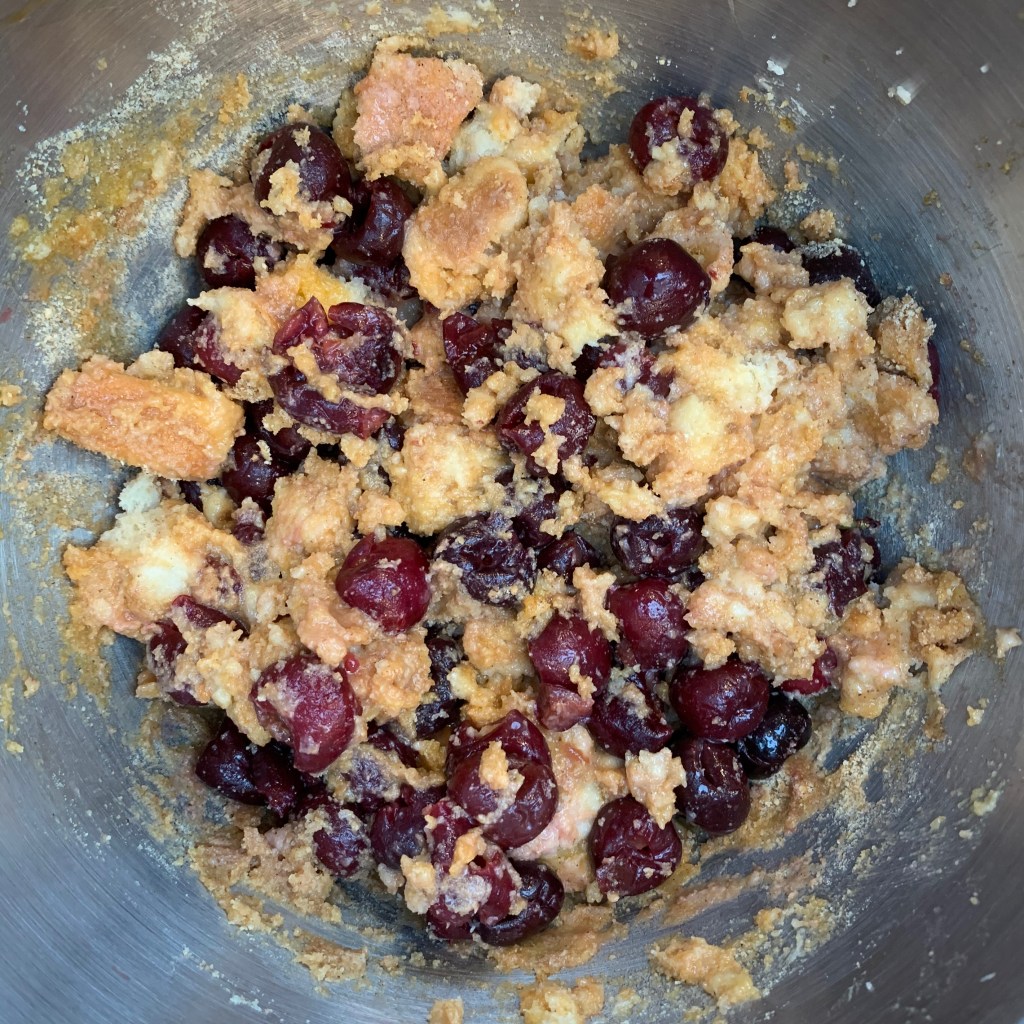
  14. Add the cherries and kirsch and mix.
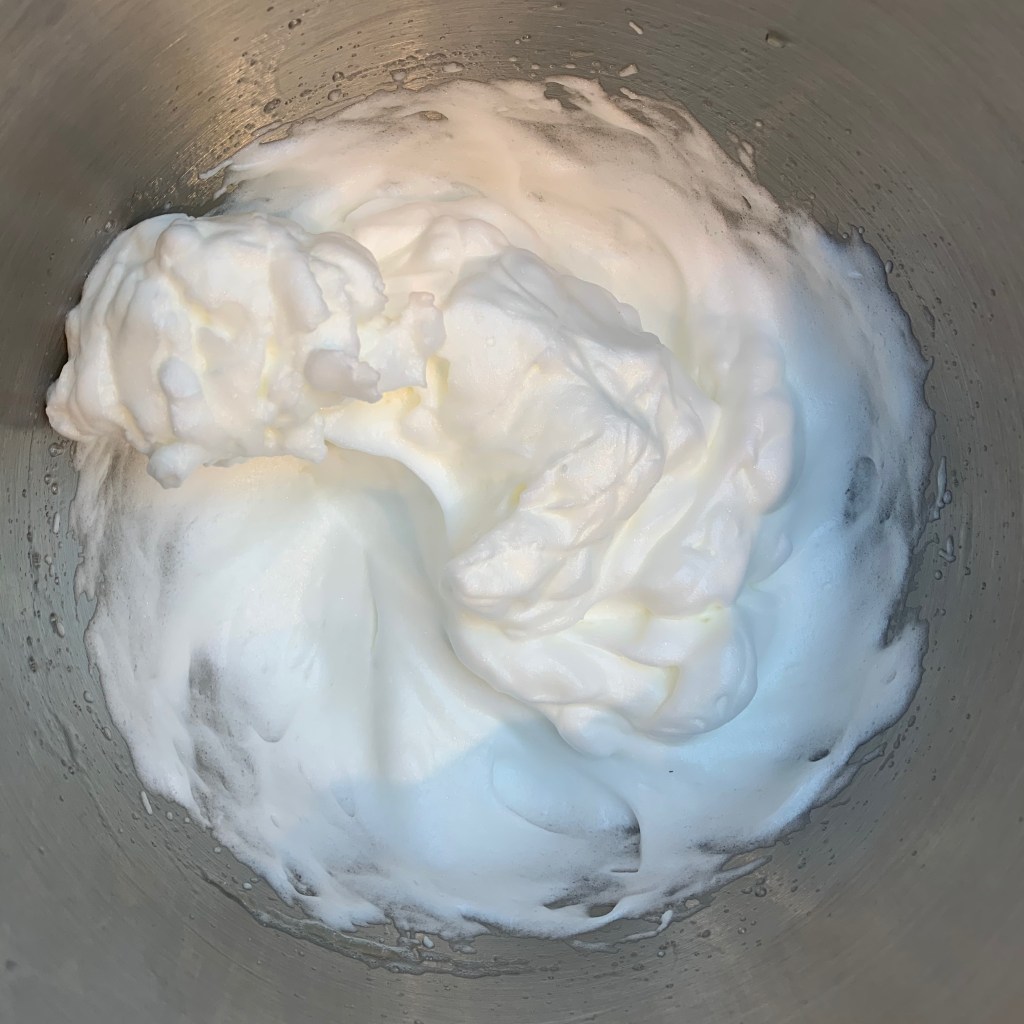
  15. Beat the egg whites until stiff and fold in.
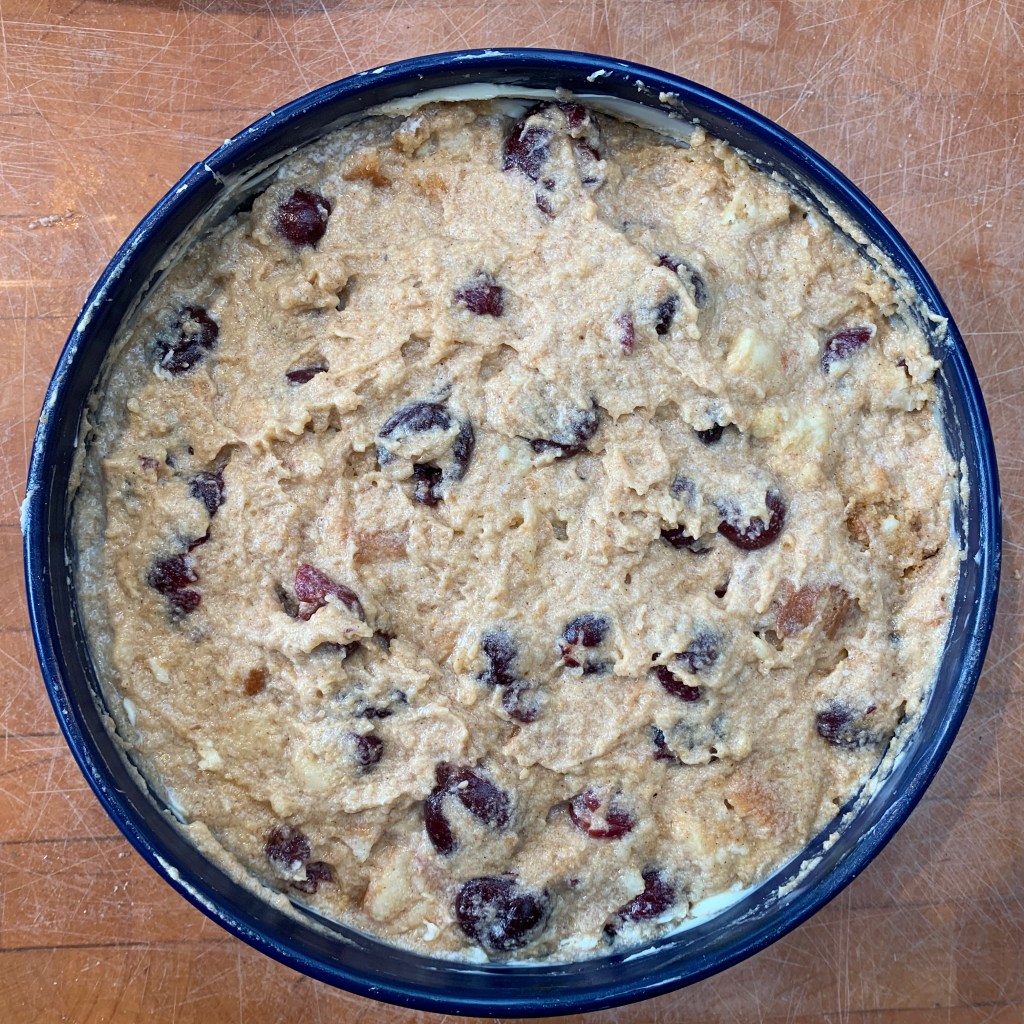
  16. Pour the cake mix into your tin and bake for 40-45 minutes. If the cake looks like browning too far before the middle is cooked, cover it with foil for the last 5-10 minutes.
  17. Remove and cool on a rack.
Around the world in 80 bakes, no.53: Kozunak – Bulgarian Easter Bread

Around the world in 80 bakes, no.53: Kozunak – Bulgarian Easter Bread

Most Christian countries have some form of enriched bread that they bake for Easter: there’s the Greek Tsoureki, Italian Pane di Pasqua, German Osterbrot, Russian Kulich, English Hot Cross Buns, Paraguayan Chipa – there are dozens more. Since it’s coming up to Easter and I needed a country that I haven’t yet visited on this round the world trip, I’ve gone for Kozunak, the version that’s popular in Bulgaria  (and, indeed, in Romania, Serbia and other Balkan countries.

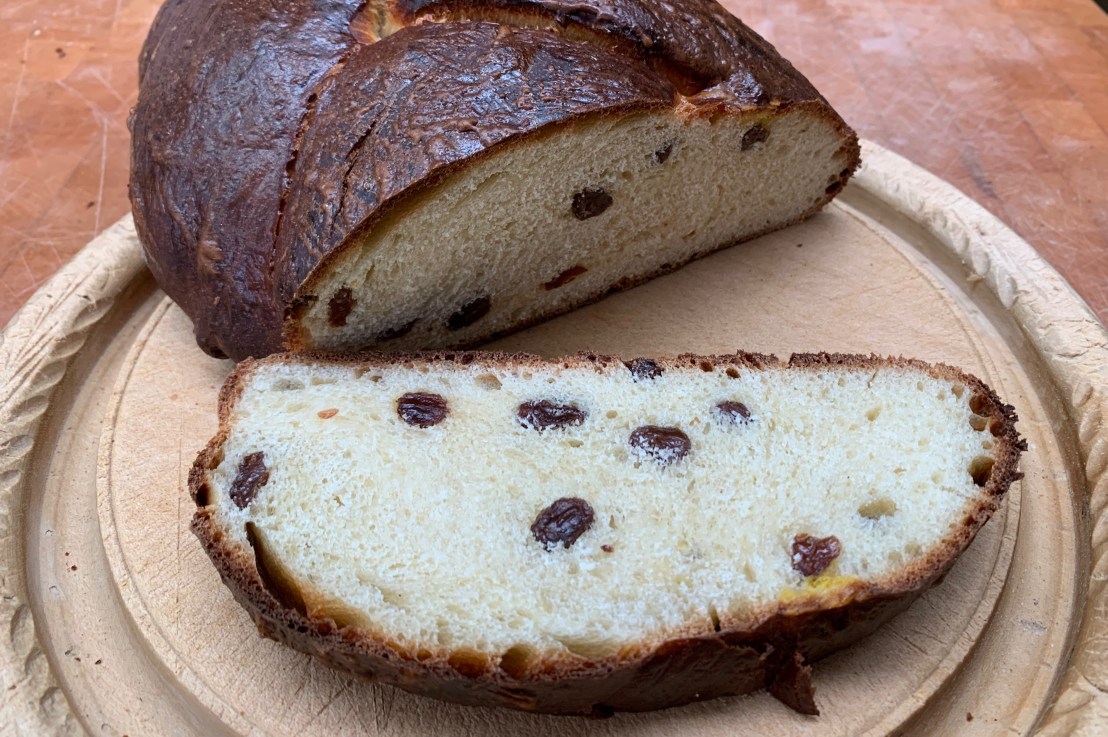
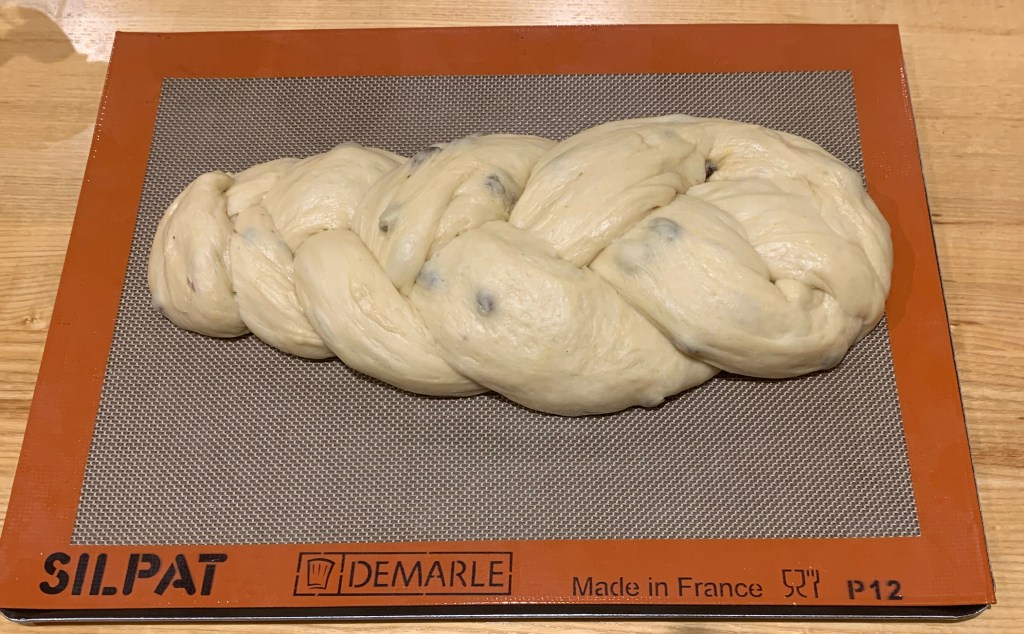
This is a braided loaf, not so far off a Jewish Challah, but sweeter and with the addition of  lemon and rum-soaked raisins. It’s not massively difficult in essence, but set aside a good amount of time for the three rises that will be needed. I’ve started with a recipe from The Spruce Eats (another of Barbara Rolek’s), halved the quantities as best I could, and broken the recipe up into several stages so that it’s easier to see which ingredients you need for which stage.

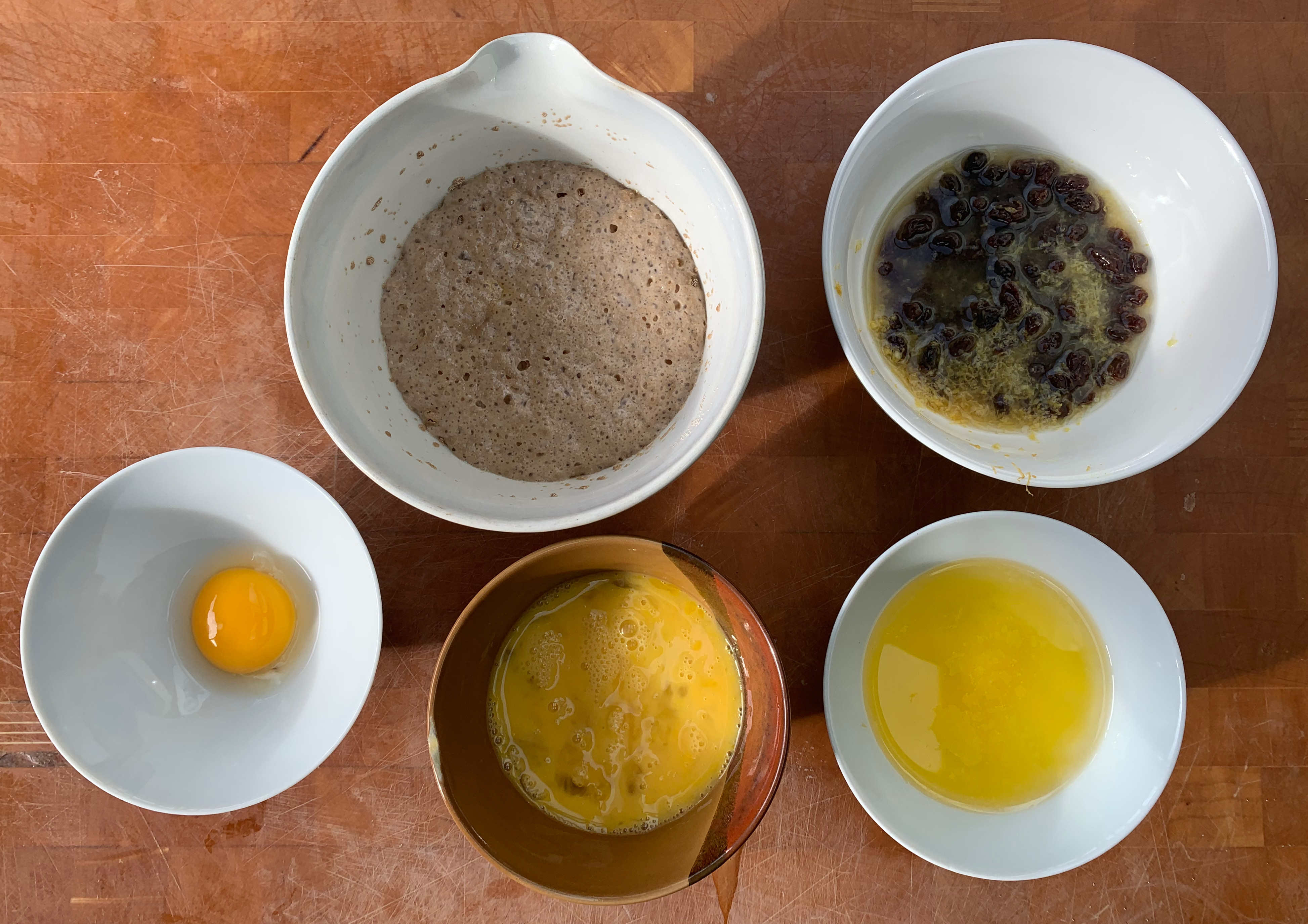
My one moan about this recipe is that it uses heroic numbers of small bowls. If you hate washing up, this probably isn’t one for you, or you might want to reshuffle the exact order of the processes a bit.

The raisins

  • 1 lemon
  • 30 ml rum
  • 50g raisins
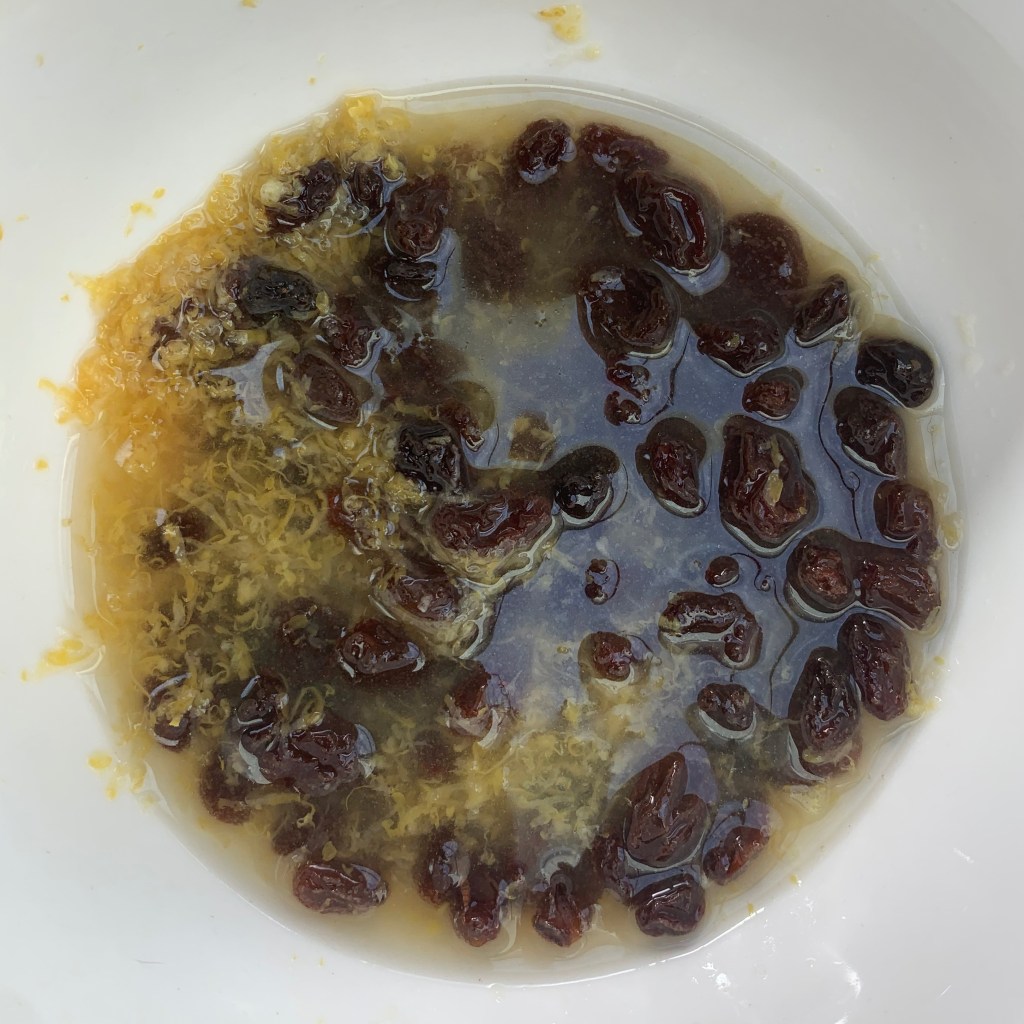
  1. Grate the lemon zest into a small bowl
  2. Juice around half the lemon and add it to the bowl (I ended up with about 30ml)
  3. Add the rum and raisins to the bowl and mix
  4. Leave to stand until needed

Yeast mix

  • 90ml milk
  • 1 egg (you’ll use half at this stage, half later)
  • 7g yeast
  • 10g sugar
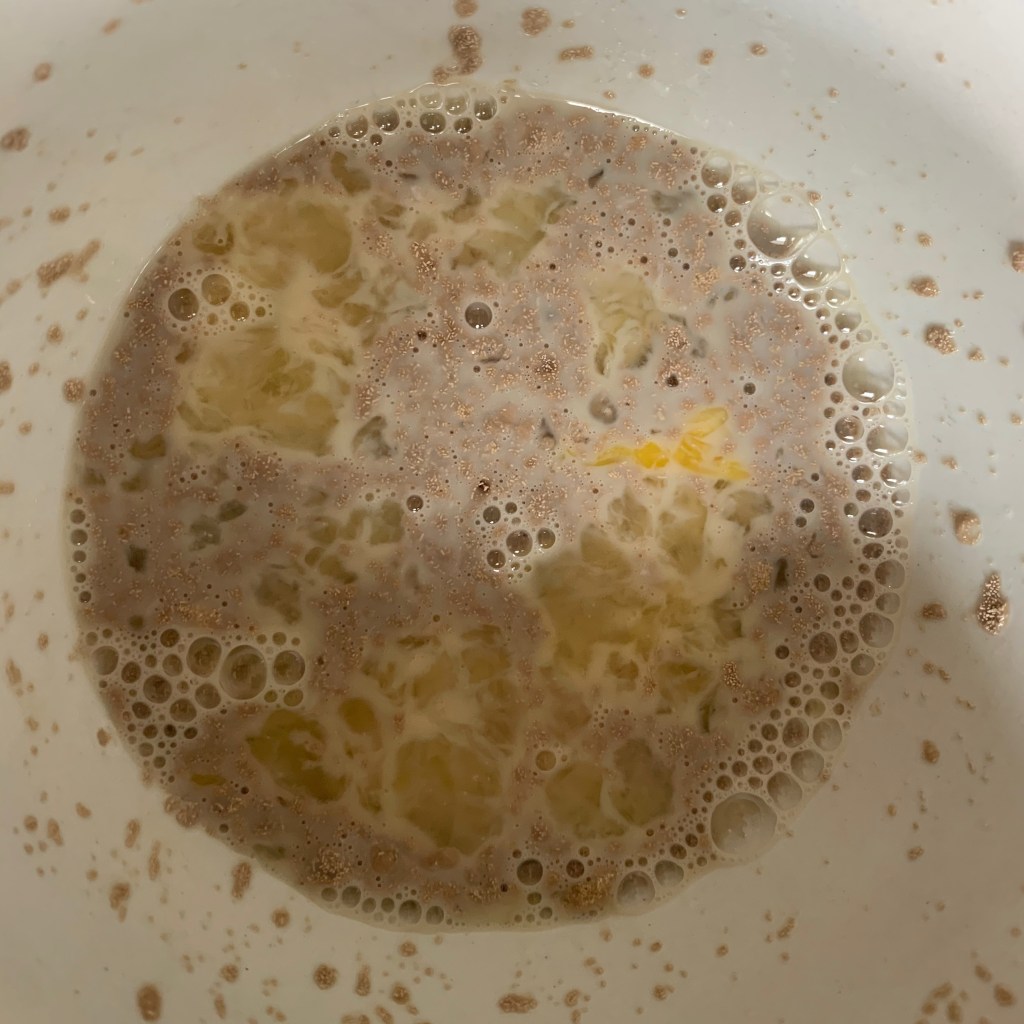
  1. Warm the milk to just below boiling – say 80℃. Pour it into a small bowl. (Note: it’s sensible to put this straight into the bowl of your stand mixer, which I didn’t do)
  2. Beat the egg in a small bowl
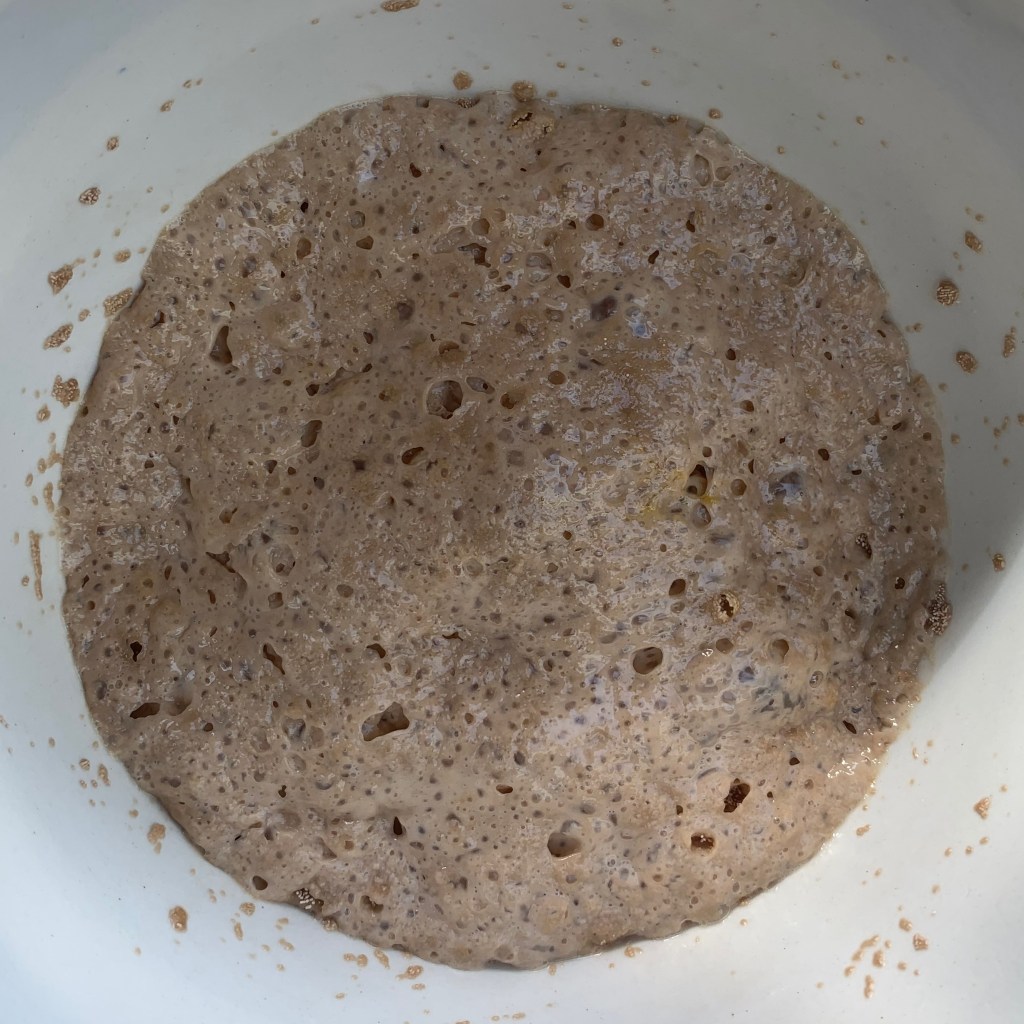
  3. Once the milk has cooled to around 40℃, add the yeast, sugar and around half the beaten egg. Keep the rest of the egg: you’ll be using it shortly.
  4. Leave to stand for 20-30 minutes until the mixture is frothy.

The dough and final baking

  • 120ml milk
  • 100g sugar
  • 30g sunflower oil, plus some more for greasing
  • 30g butter
  • 2 eggs, plus the half left over from earlier
  • vanilla essence to taste
  • 600g flour
  • 10g salt
  • 20g flaked almonds
  1. Put the milk and sugar into a saucepan; warm until the sugar is dissolved. Remove from the heat.
  2. Melt the butter and mix with the oil (I use 20 seconds in the microwave, but if you don’t have one, you’ll want to use a  pan).
  3. Separate one of the eggs: reserve the yolk in a small bowl, add the white and the other egg to the half a whole egg that you had left over earlier. Add some vanilla essence and beat them together. Keep the yolk aside, covered: you’ll use it for a wash before baking.
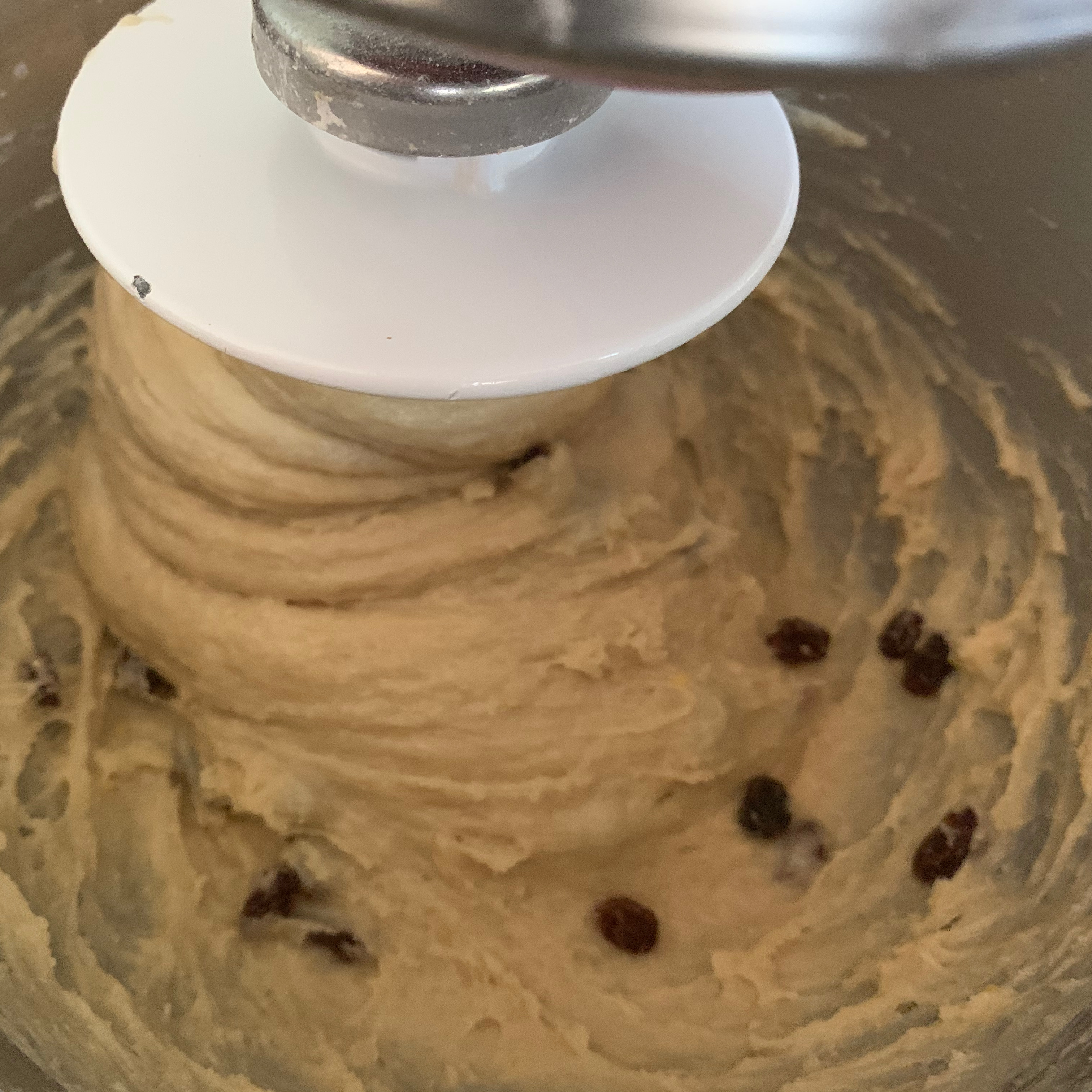
  4. Once your sweetened milk is cool and the yeast mix is frothy, you can get started on the dough. With the yeast mixture in the bowl of my stand mixer, I used the standard beater and set it going at low speed.
  5. Add the milk mixture.
  6. Add the butter/oil mixture.
  7. Drain the raisins and add them.
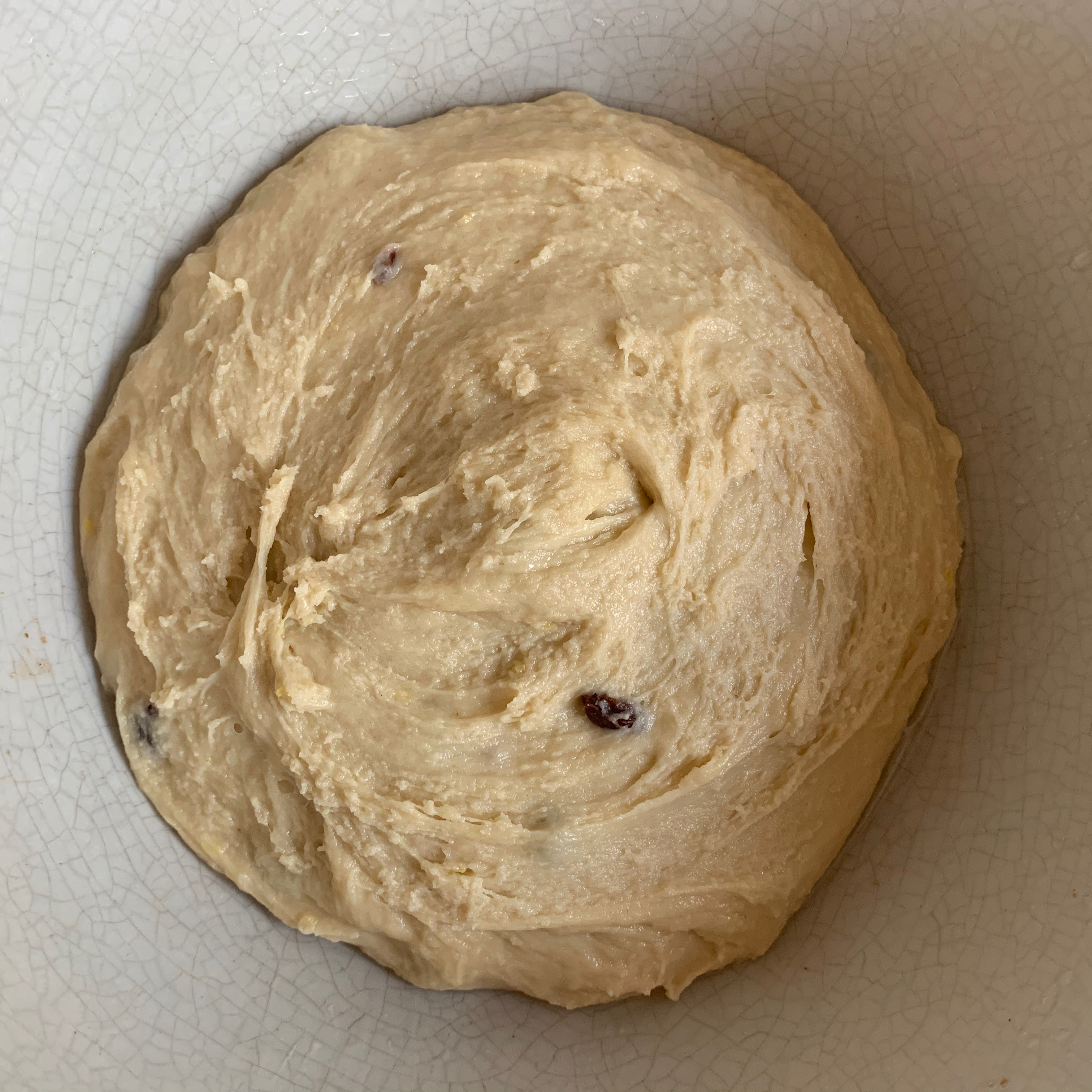
  8. Add the flour and salt. Mix until all the ingredients are combined.
  9. Switch to the dough hook and knead for around 5 minutes until the dough is very elastic
  10. Grease a bowl with oil.
  11. Form your dough into a ball and transfer it to the bowl. Coat the dough in oil, either by turning it or by brushing some more oil over the top.
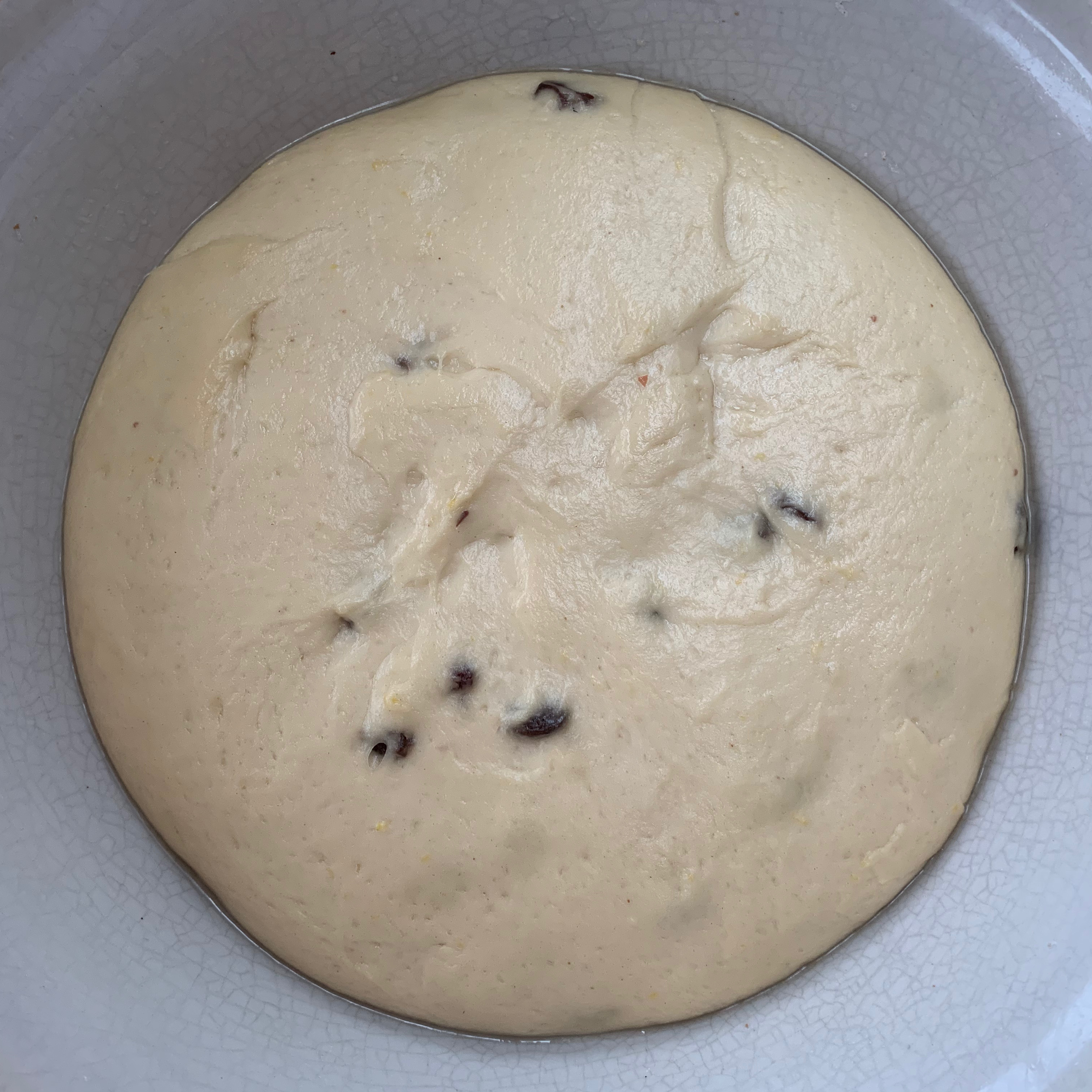
  12. Cover with cling film and leave to rise until doubled in size – probably 1-2 hours.
  13. Punch the dough down and leave to rise again – probably 1-2 hours.
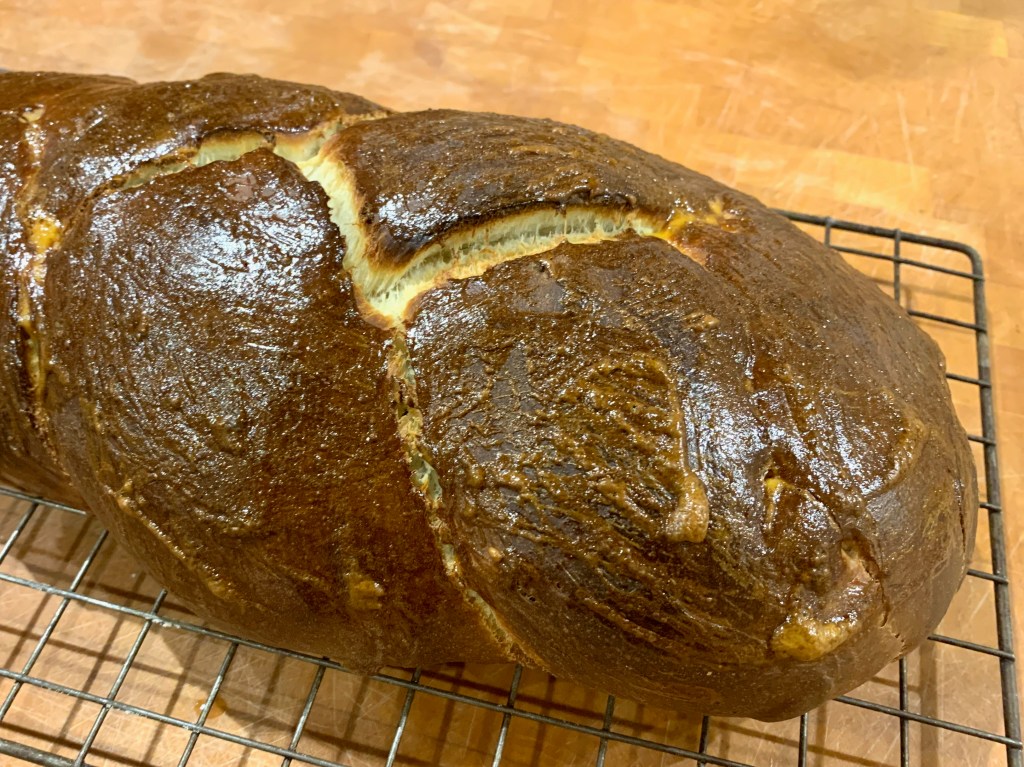
  14. Preheat oven to 190℃ fan (I used 200℃, and my crust is too dark)
  15. Separate your dough into three parts (actually, as many parts as you fancy for your favourite braid: now create your braid as shown in this video.
  16. Cover and leave for another 30 minutes.
  17. Spread the loaf with your beaten egg, scatter the almonds over the loaf and put in oven (photo disclaimer: I forgot the almonds!)
  18. Bake for around 25-30 minutes