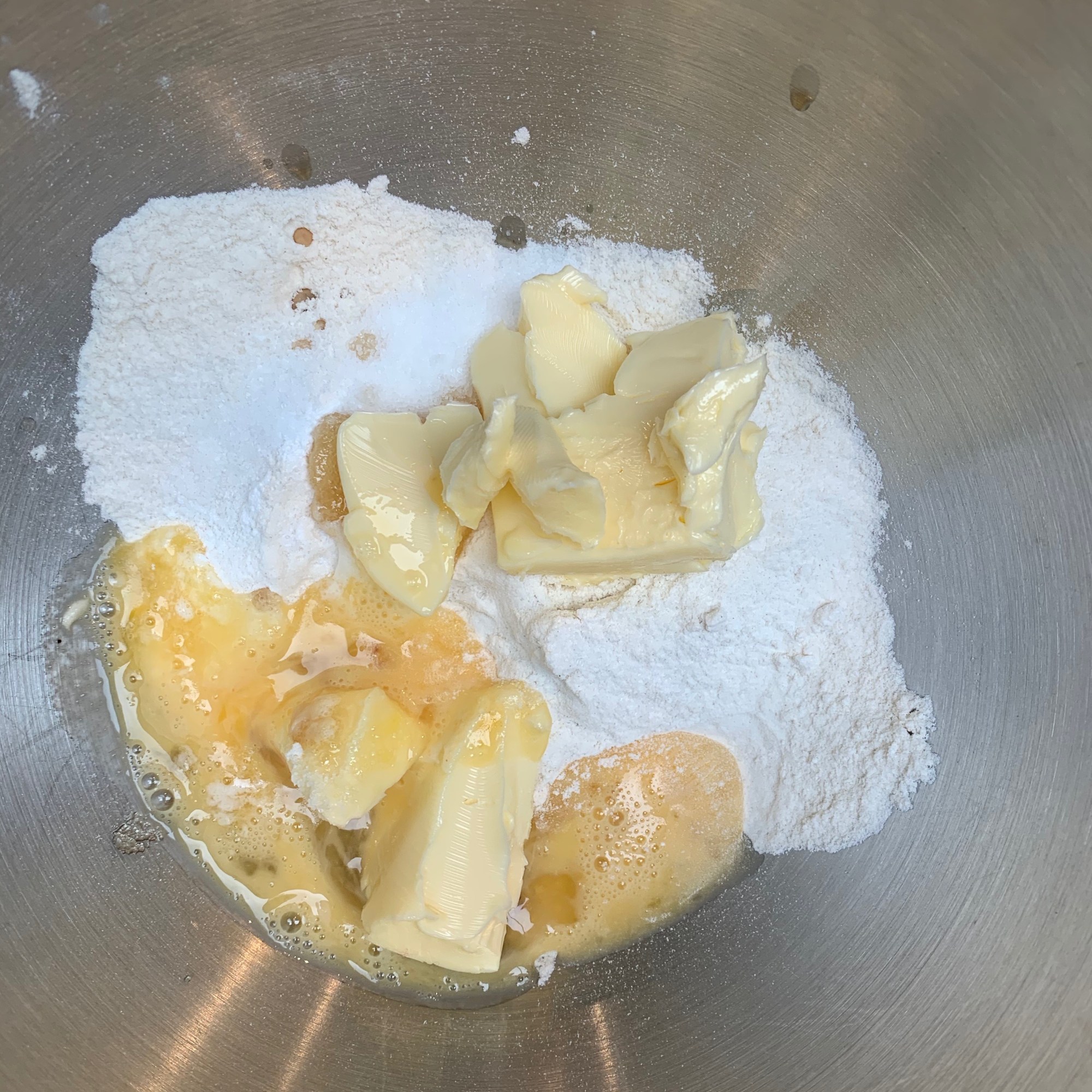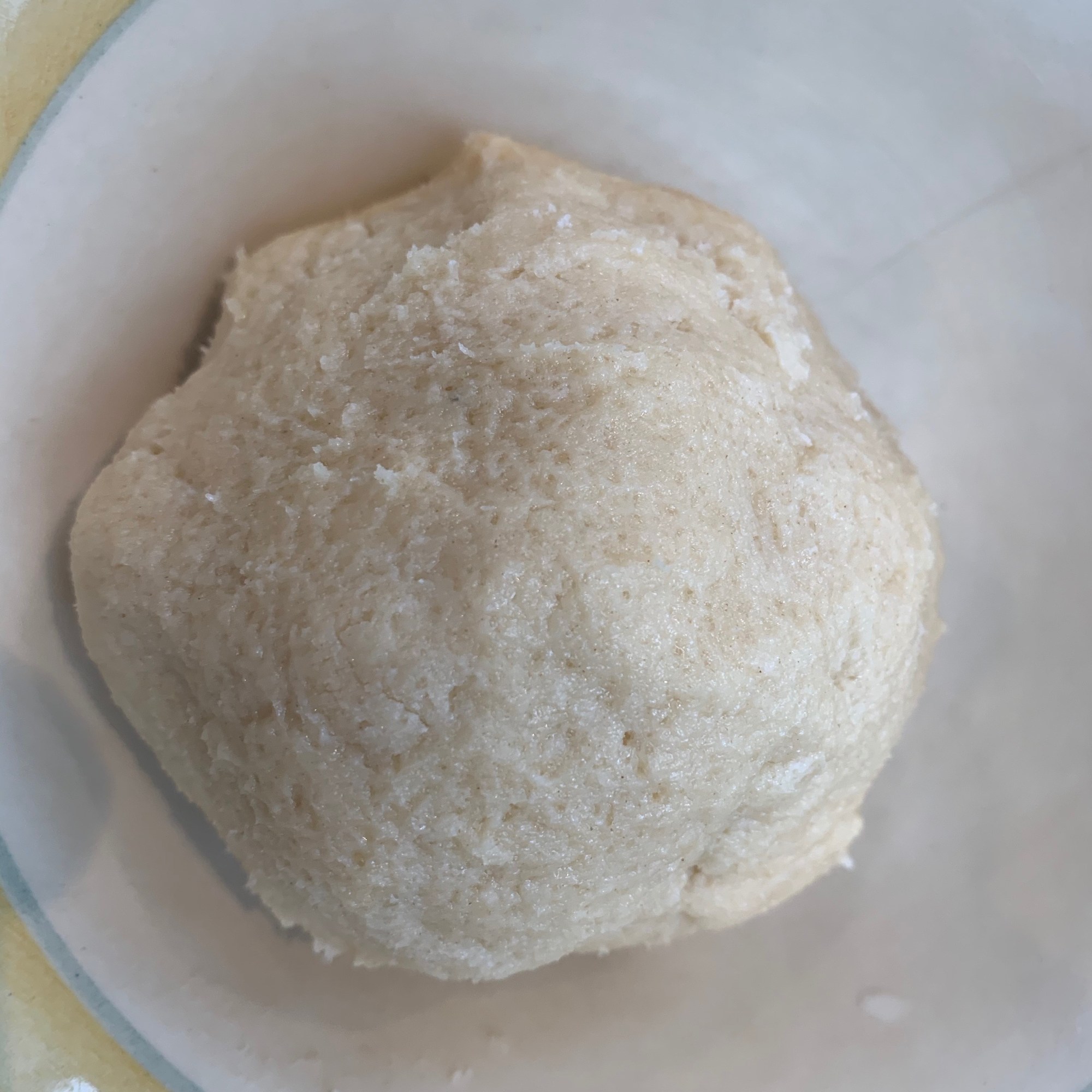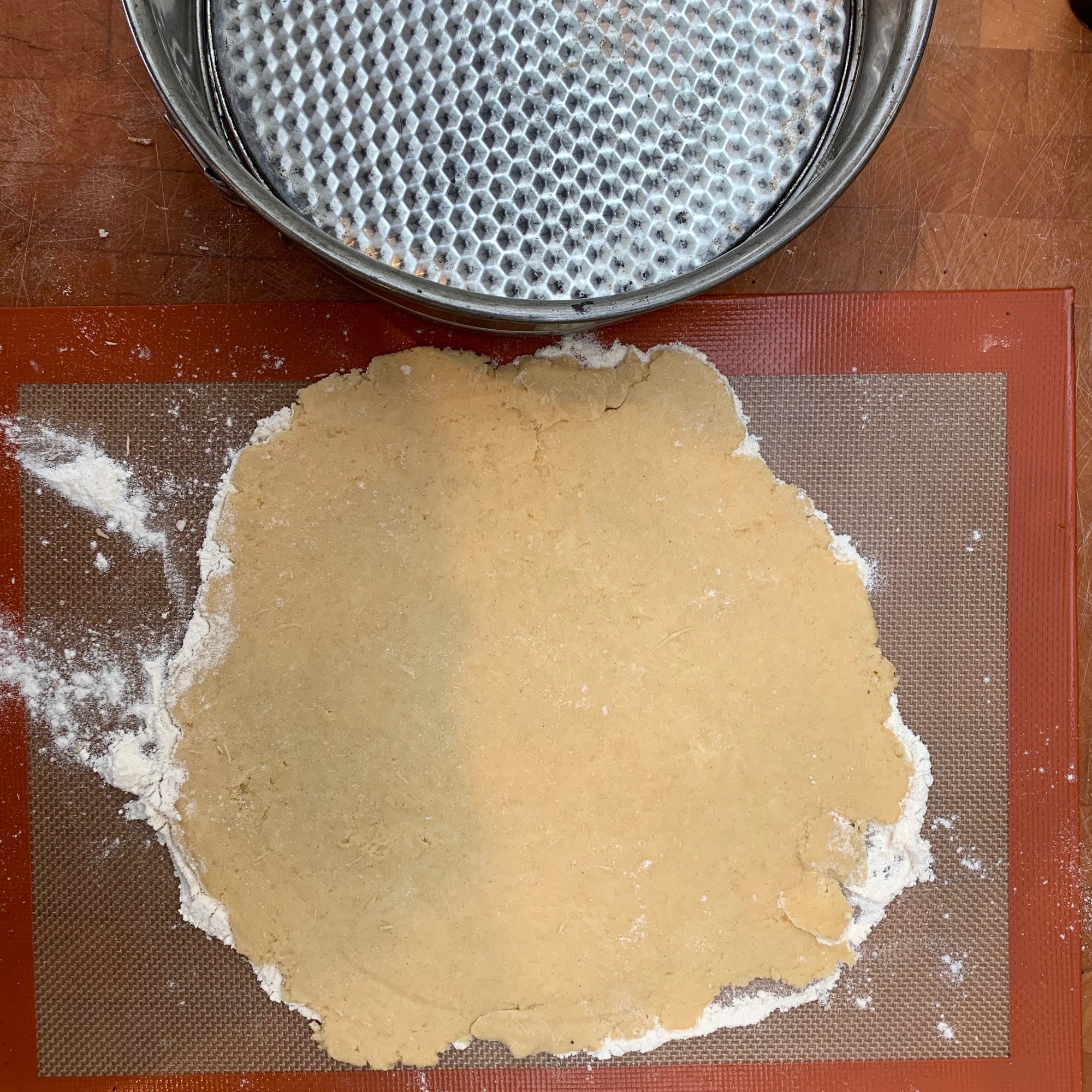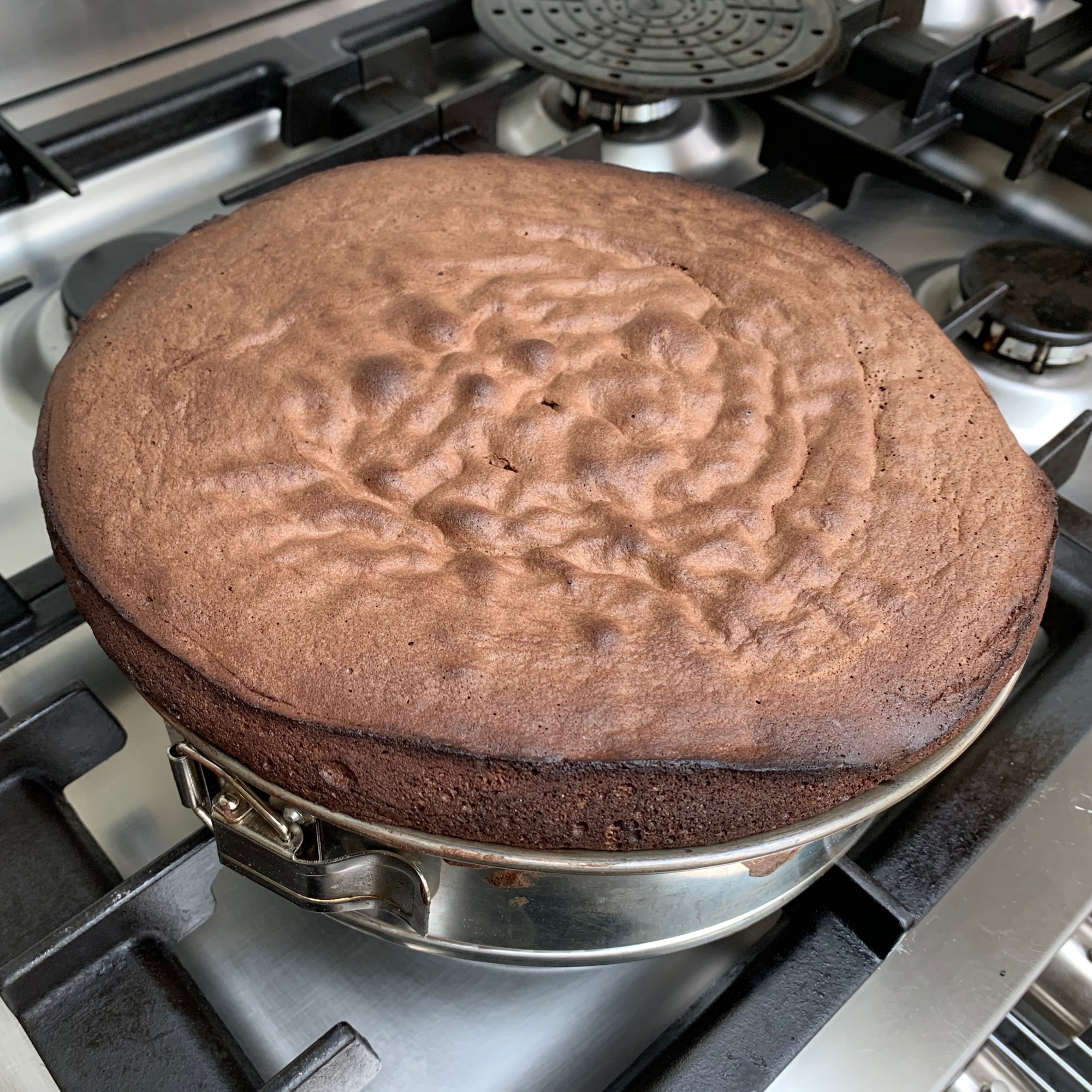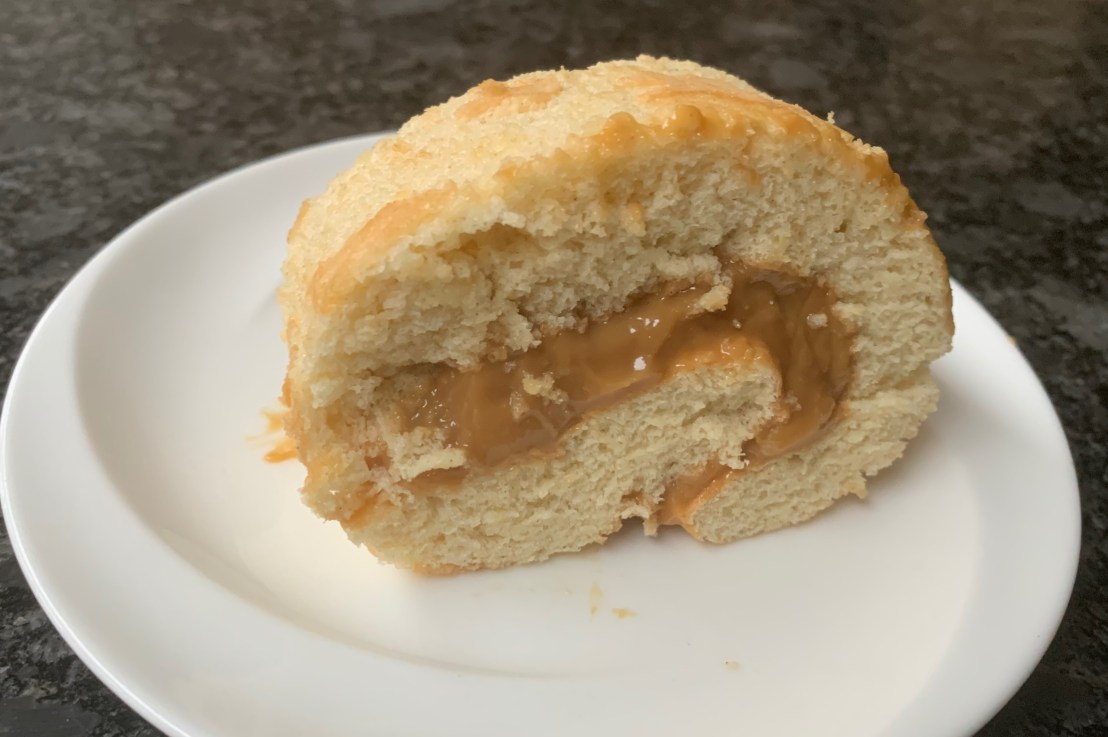
I have no idea why a Swiss Roll is called a Swiss Roll. I’ve travelled to Switzerland a lot and I don’t remember seeing one there. If Wikipedia is to believed, it doesn’t even come from Switzerland in the first place. But apparently, if you happen to be in Chile, at 5pm, it’s time for a coffee and a slice of Brazo da Reina – a rolled sponge cake filled with dulce de leche (caramelised condensed milk). The name in Spanish means “the Queen’s Arm”, which sounds to British ears more like a pub sign, which just goes to show that there’s no accounting for language. It’s not really clear where that name comes from either, and the same cake has other names in different bits of Latin America: Brazo de gitano (gypsy’s arm) or Pionono. Other countries also use different fillings.
The Chilean recipe I started from is notable for having a lot of eggs and no shortening whatsoever, which makes for an incredibly light, airy sponge cake. There are other recipes that use a small amount of oil.
The recipe I used tells you to fold the egg yolks into the beaten whites, then add the flour to the whole lot. That was a little too far outside my comfort zone, so I stuck to a more conventional scheme of mixing egg yolks, sugar and flour before folding, which worked very well.
The tricky part of making a roll cake – especially one as light an airy as this – is to roll it up without tearing. I wasn’t 100% successful, but it was good enough.
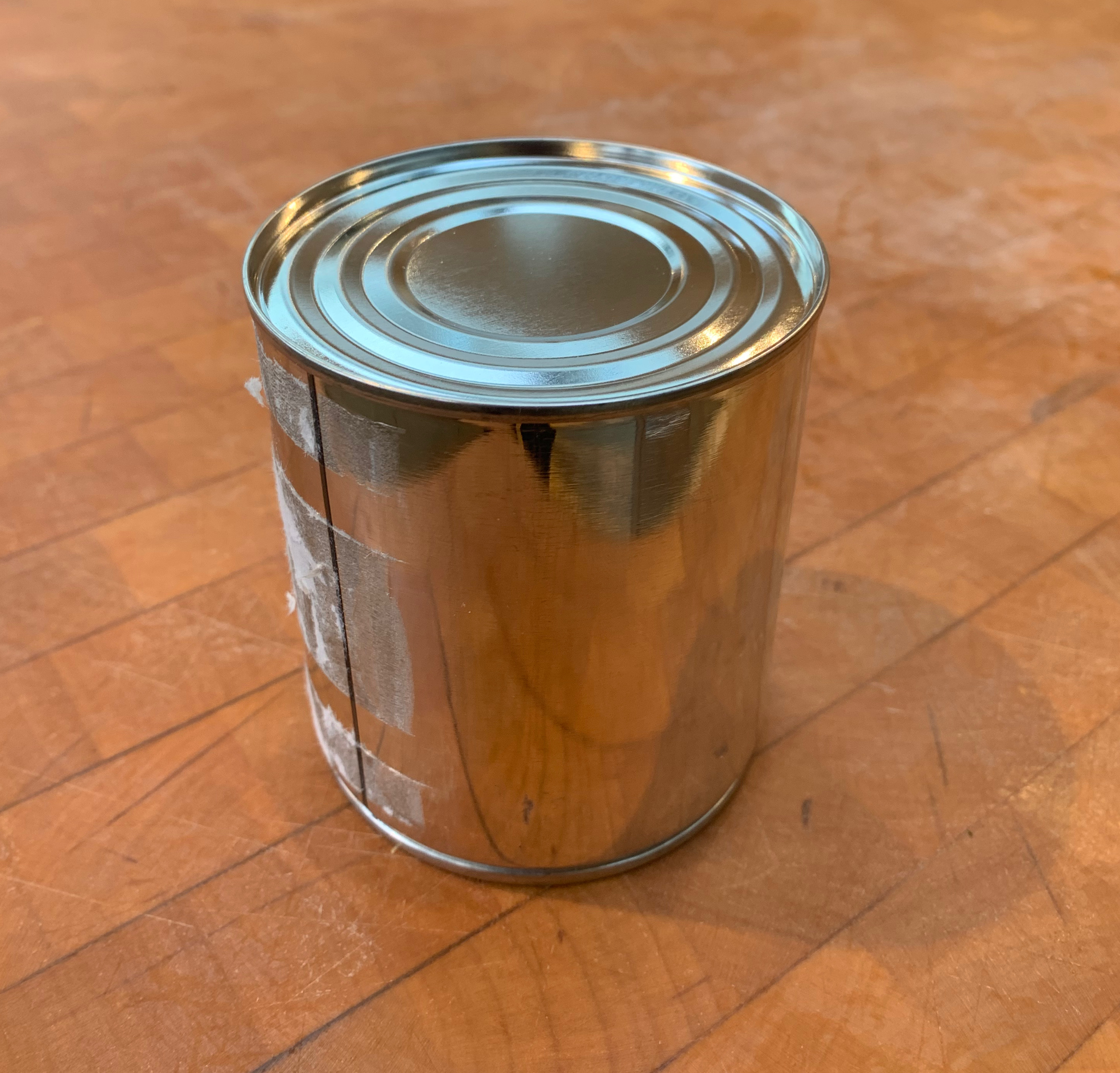
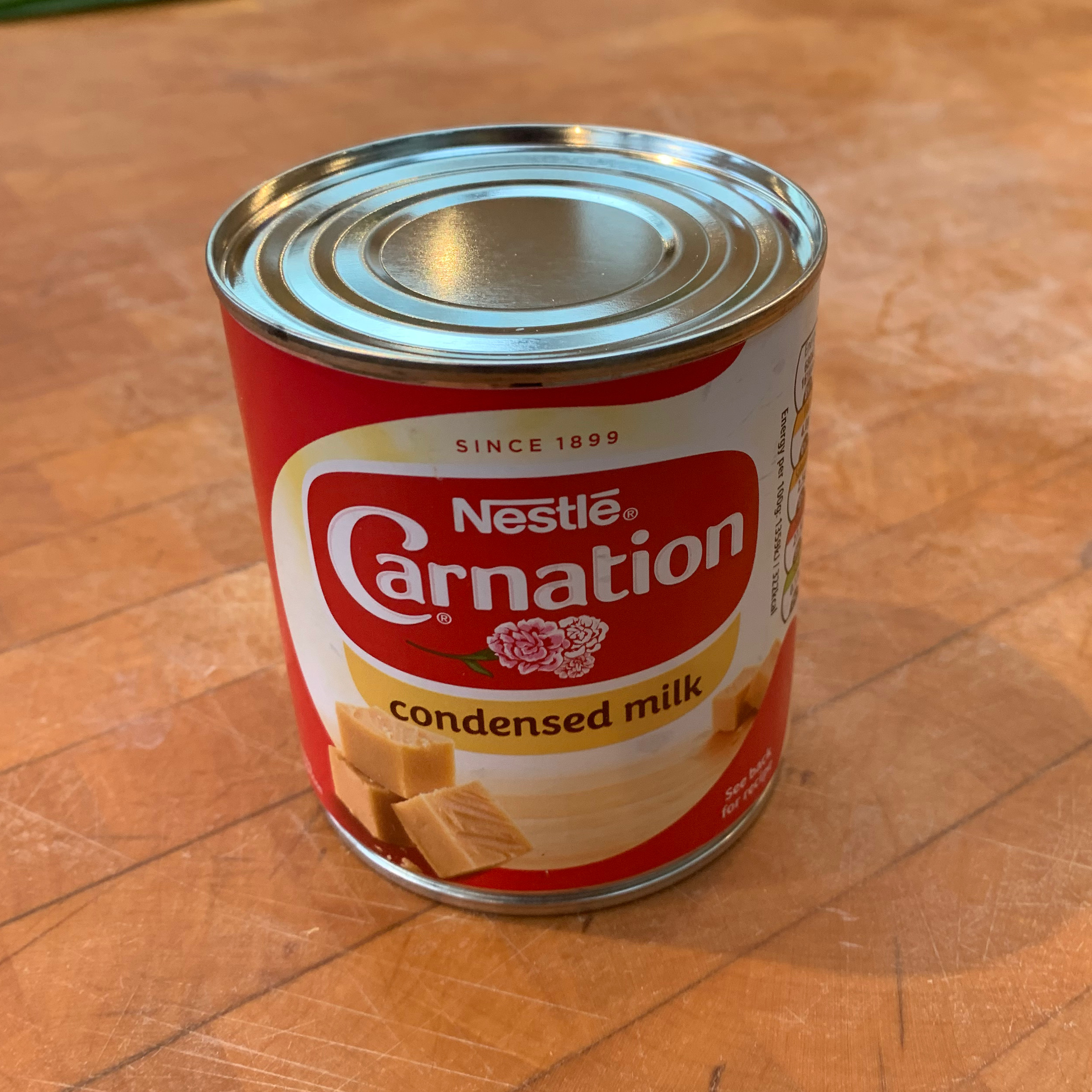
The last time I made dulce de leche, for Argentinian alfajores, I baked the condensed milk in an oven tray, which worked OK but was fiddly. For this recipe, I found the ultimate cheat method in the Brazo da Reina recipe in a blog called Curious Cuisiniere – just boil the condensed milk in its can. It’s close to zero effort and worked perfectly. Their advice for rolling up the cake seemed sensible too: this is the first time I’ve tried a roll cake, so I can’t speak for how well other methods work.
You’ll want a Swiss roll tin, around 30cm x 20cm.
The dulce de leche filling
400g can of condensed milk
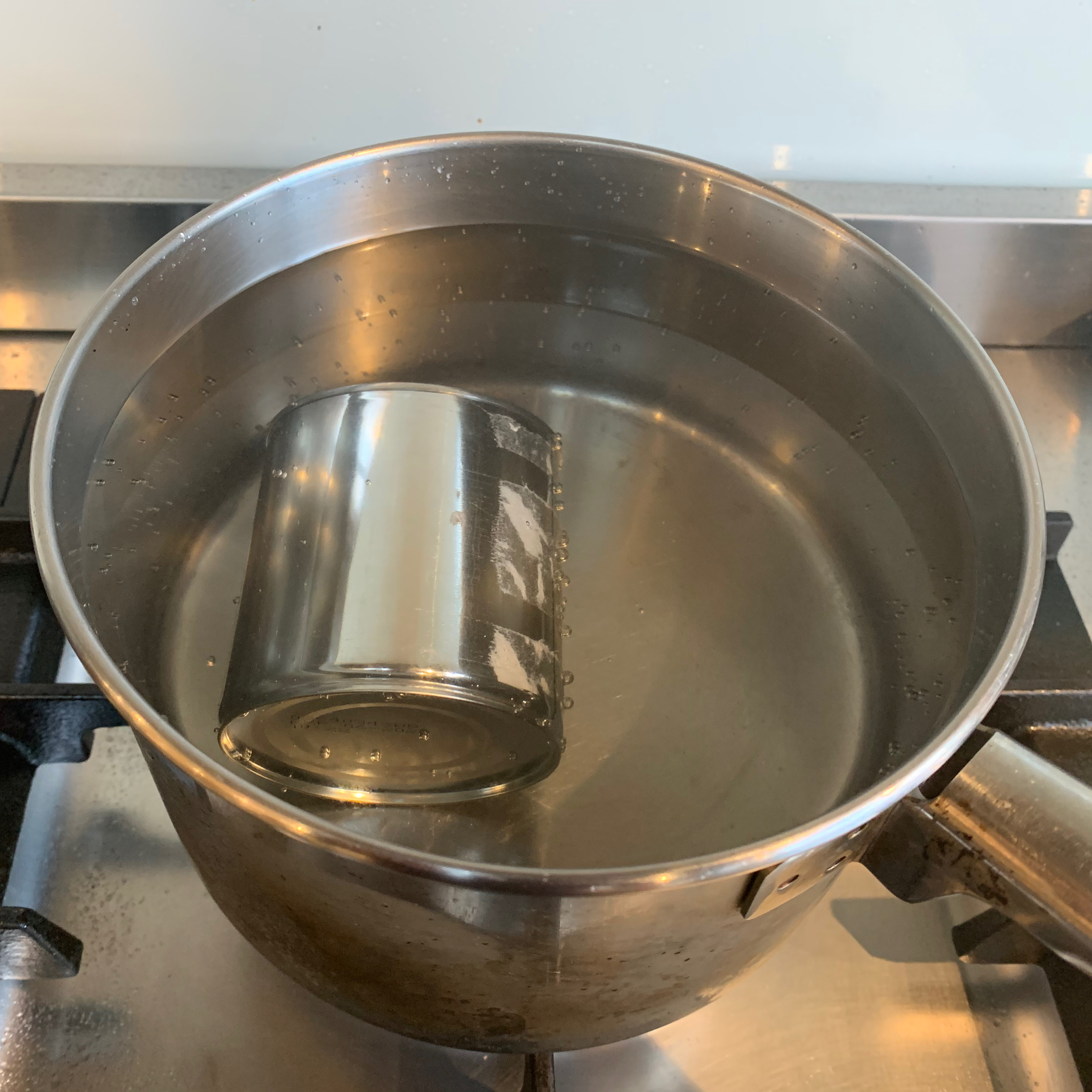
Put the tin of condensed milk (unopened, but you may want to take the paper off) into a saucepan, pour water to cover it (with some spare, since it will evaporate), and bring it to the boil.
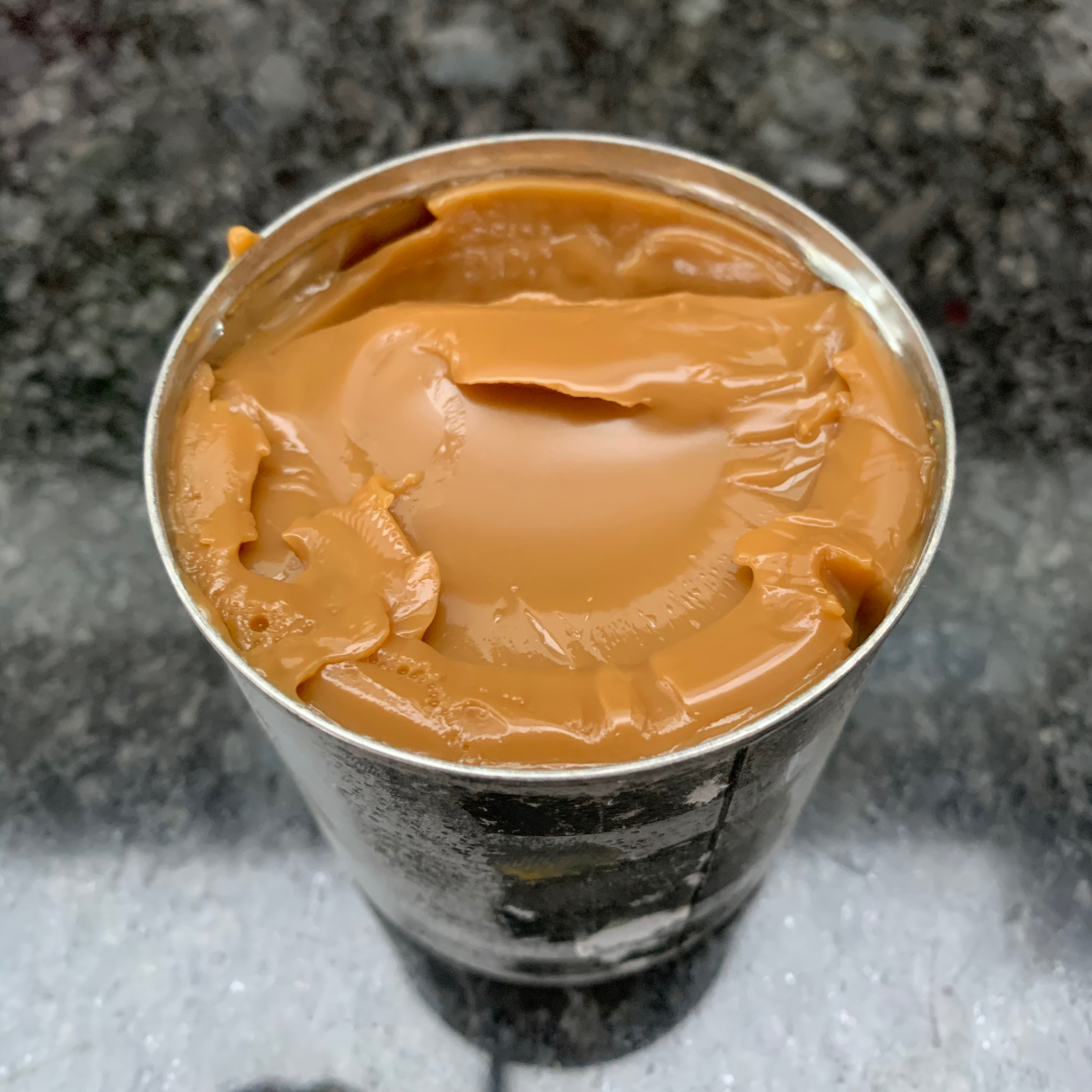
Leave it to simmer for 2-3 hours (two will get you a light caramelisation, 3 will get you a more golden-brown and stronger tasting result.
Remove the tin from the pan and leave it to cool.
The cake
Butter for greasing tin
6 eggs
240g flour
10g baking powder
180g caster sugar
icing sugar for dusting
Preheat oven to 175℃
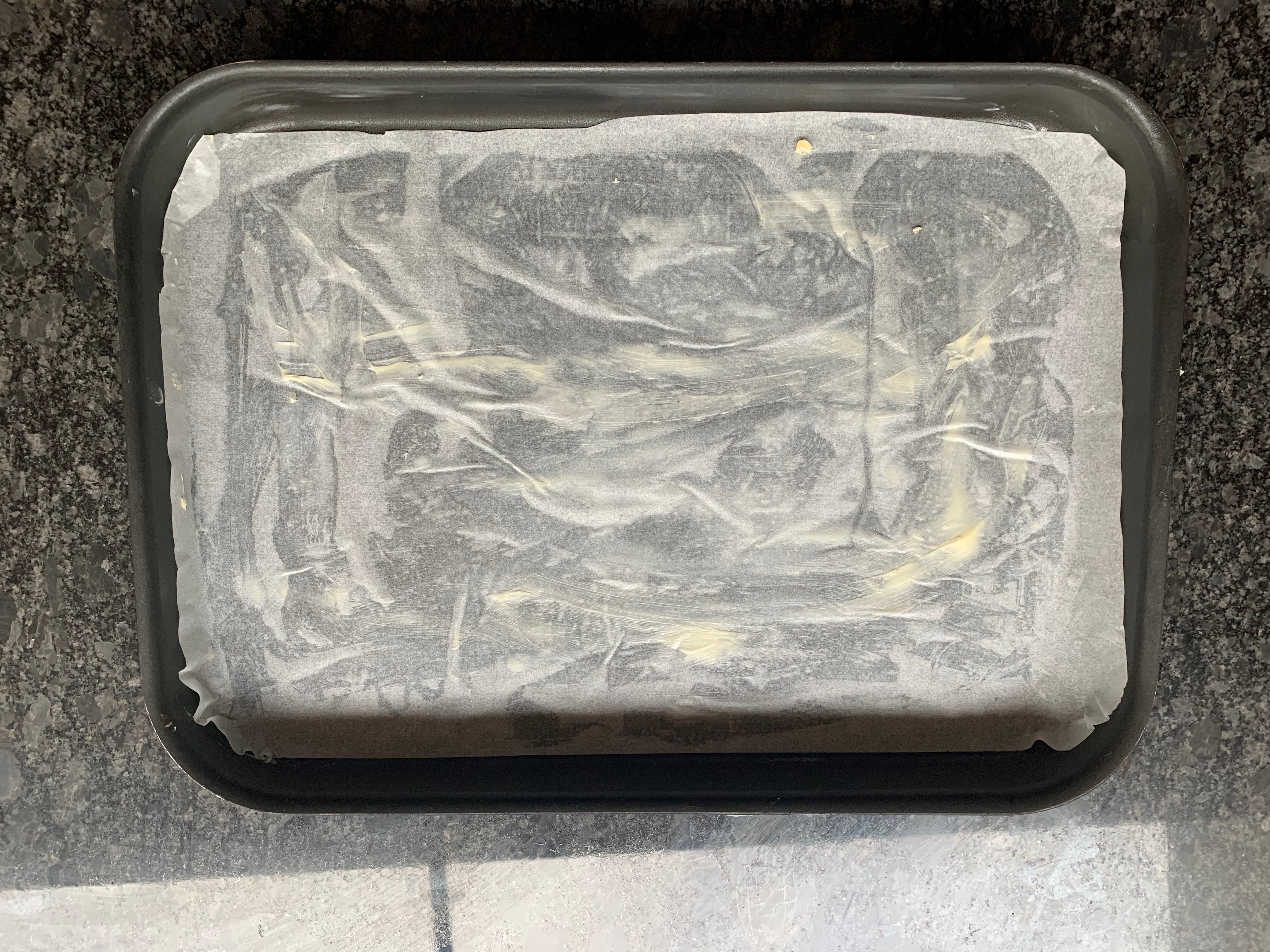
Grease your tin with butter, then line it with baking paper, then grease the baking paper generously.
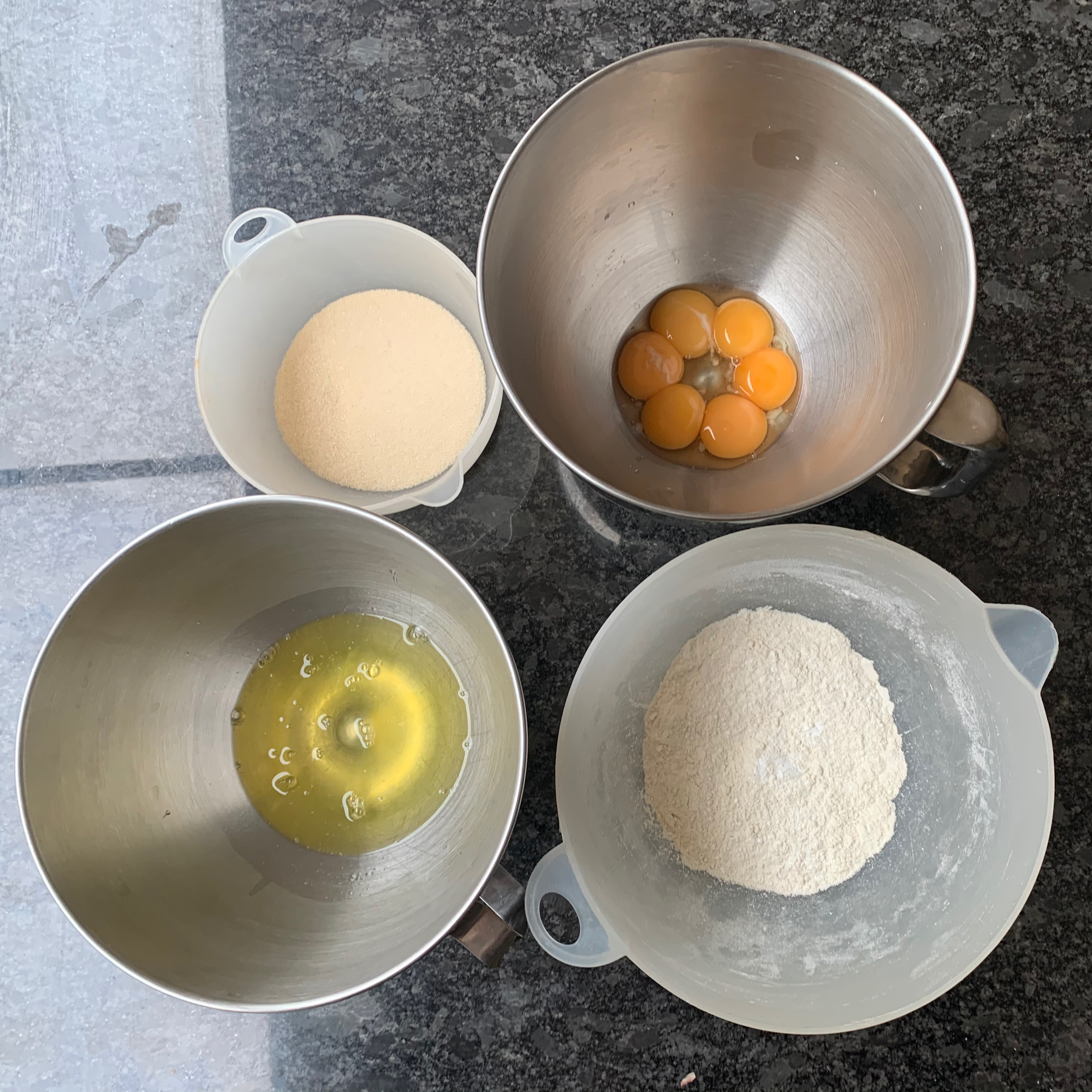
Separate the eggs into two mixing bowls.
Sift the flour and baking powder together.
Beat the egg yolks and add half the caster sugar. Then add the flour and baking powder and mix until well blended. The mixture will be quite stiff.
In the other bowl, beat the egg whites until soft peaks form, add the remaining caster sugar and whisk at high speed until you have a stiff meringue
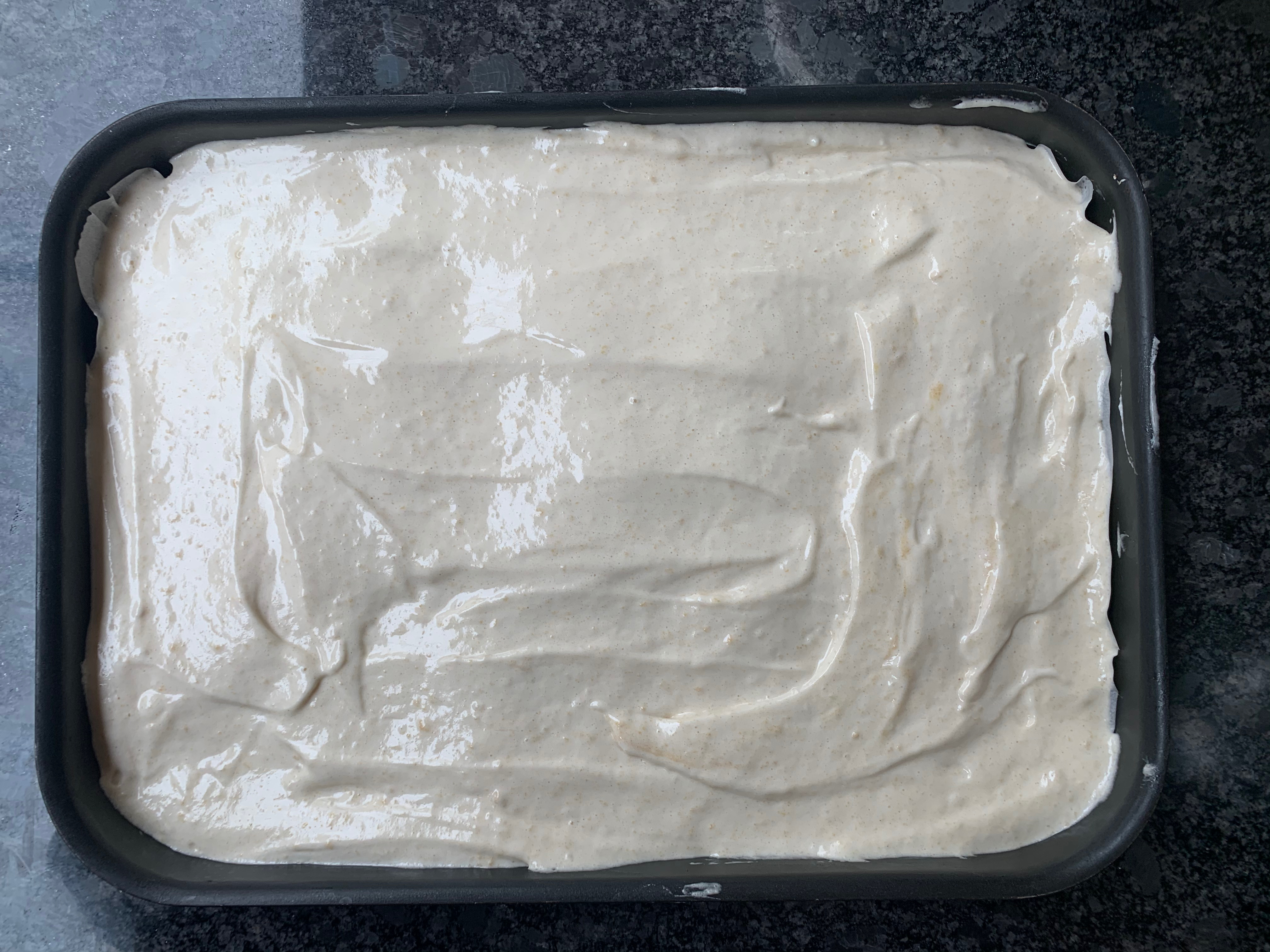
Add around a quarter of the meringue to your flour mixture and mix in until smooth. Do the same with another quarter, now taking care to keep as much air in the meringue as you can. Now fold in the remaining meringue, working really hard to keep the air in.
Spread the mixture evenly into your tin. Ideally, use an offset spatula to get it really level (I don’t have one, so I just did my best.
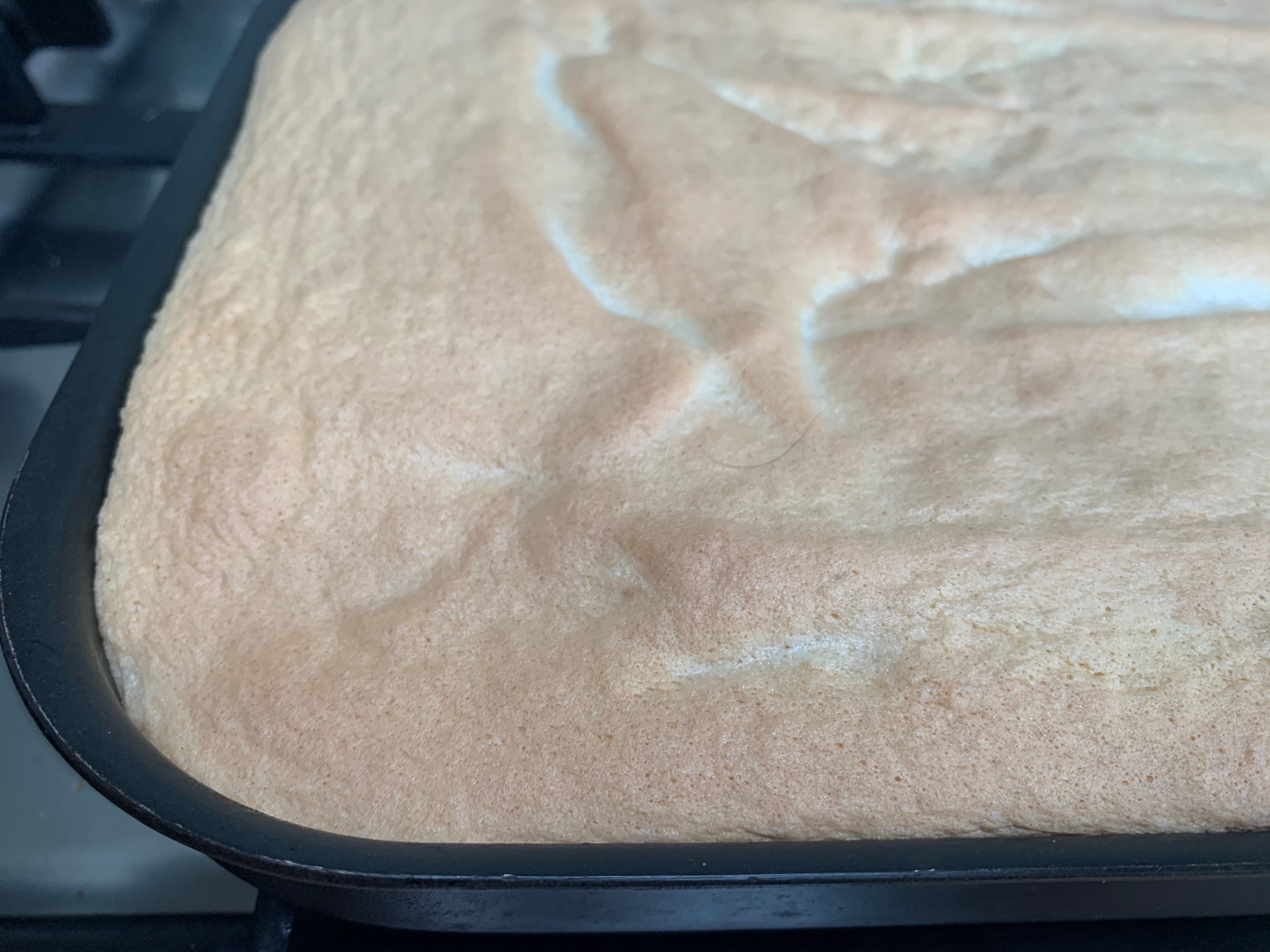
Bake for around 10 minutes. You do NOT want to overbake the sponge or you stand no chance of rolling it intact.
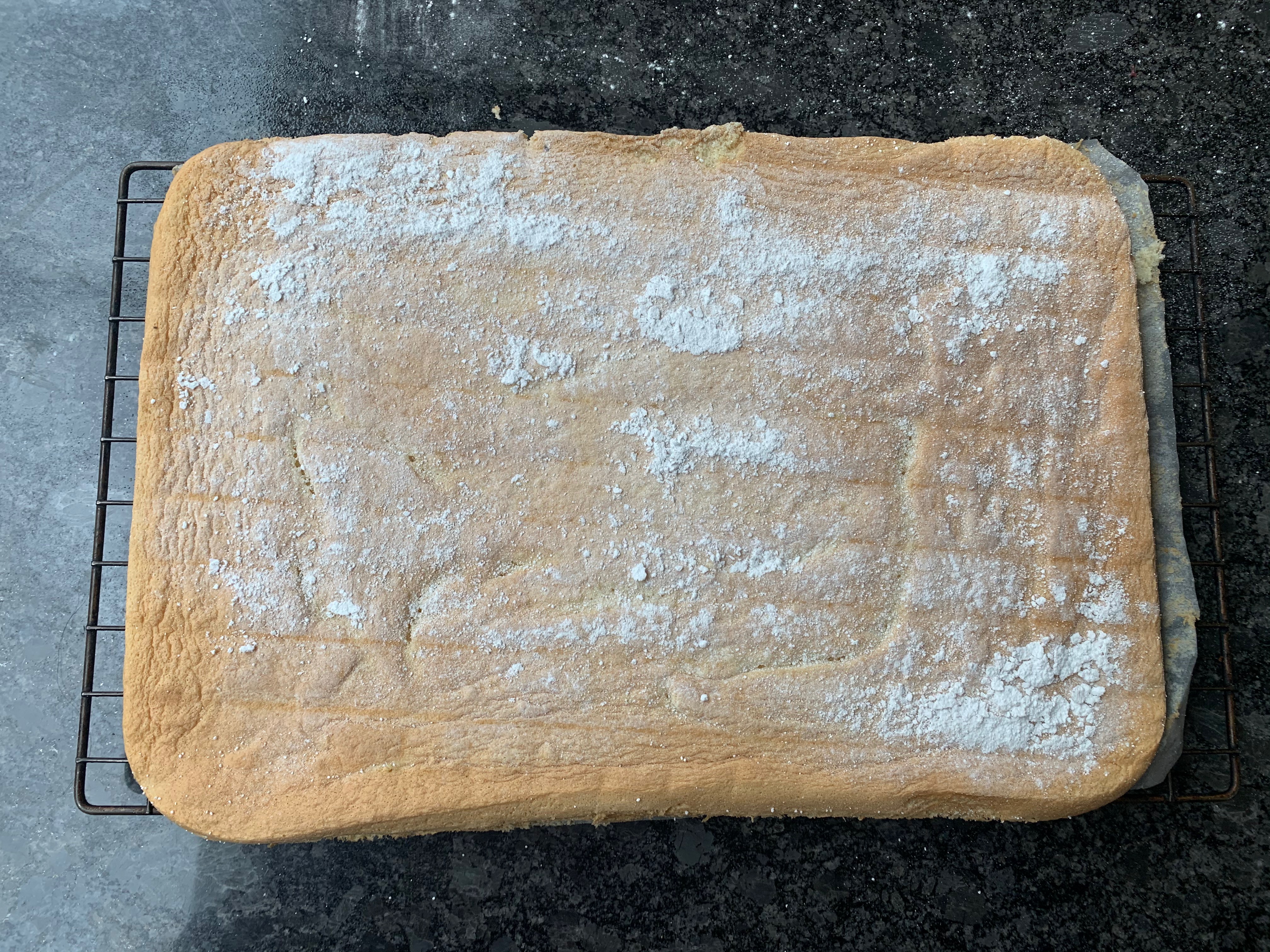
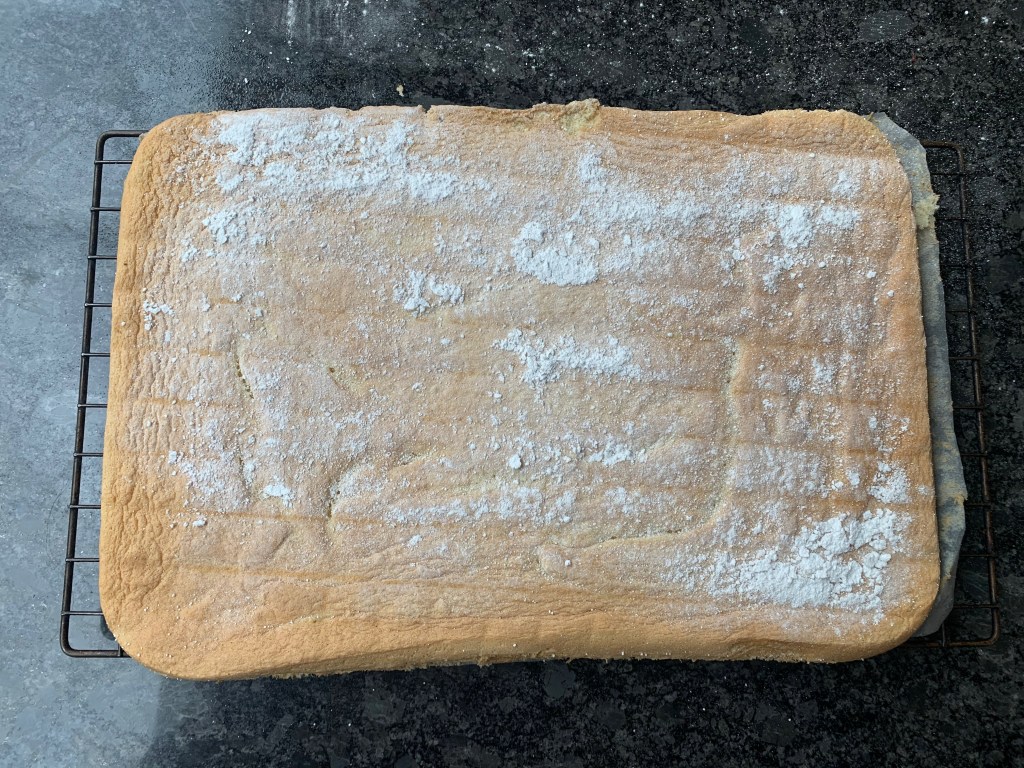
Leave to cool for a minute or two, then run a palette knife round the edge to make sure the cake is not sticking to the edge. Sprinkle some icing sugar over the cake.
Spread a tea towel over the cake, and then an inverted cooling rack. Turn the whole assembly upside down. As gently as you can, remove your cake tin. The cake should sit on its tea towel in one piece.
Very gently, pull off the baking paper almost all the way, then put it back in place.
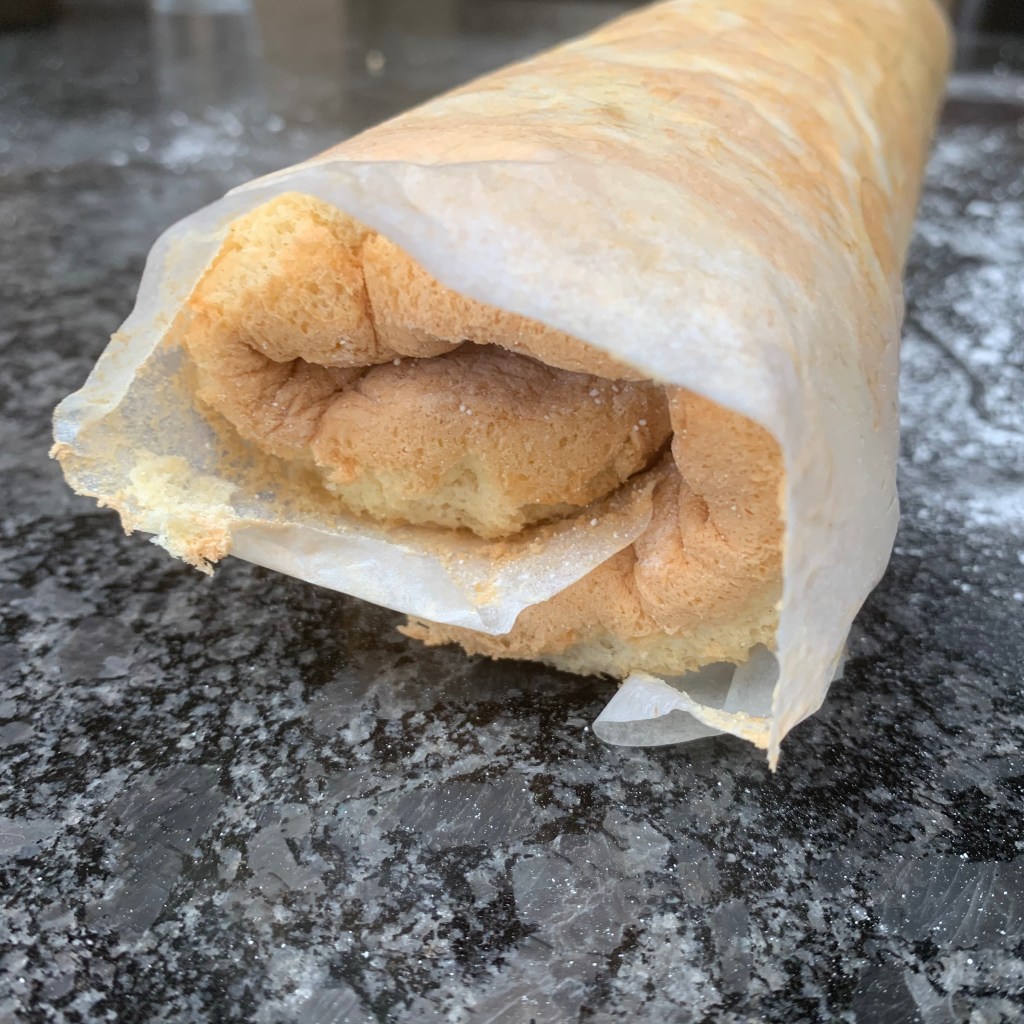
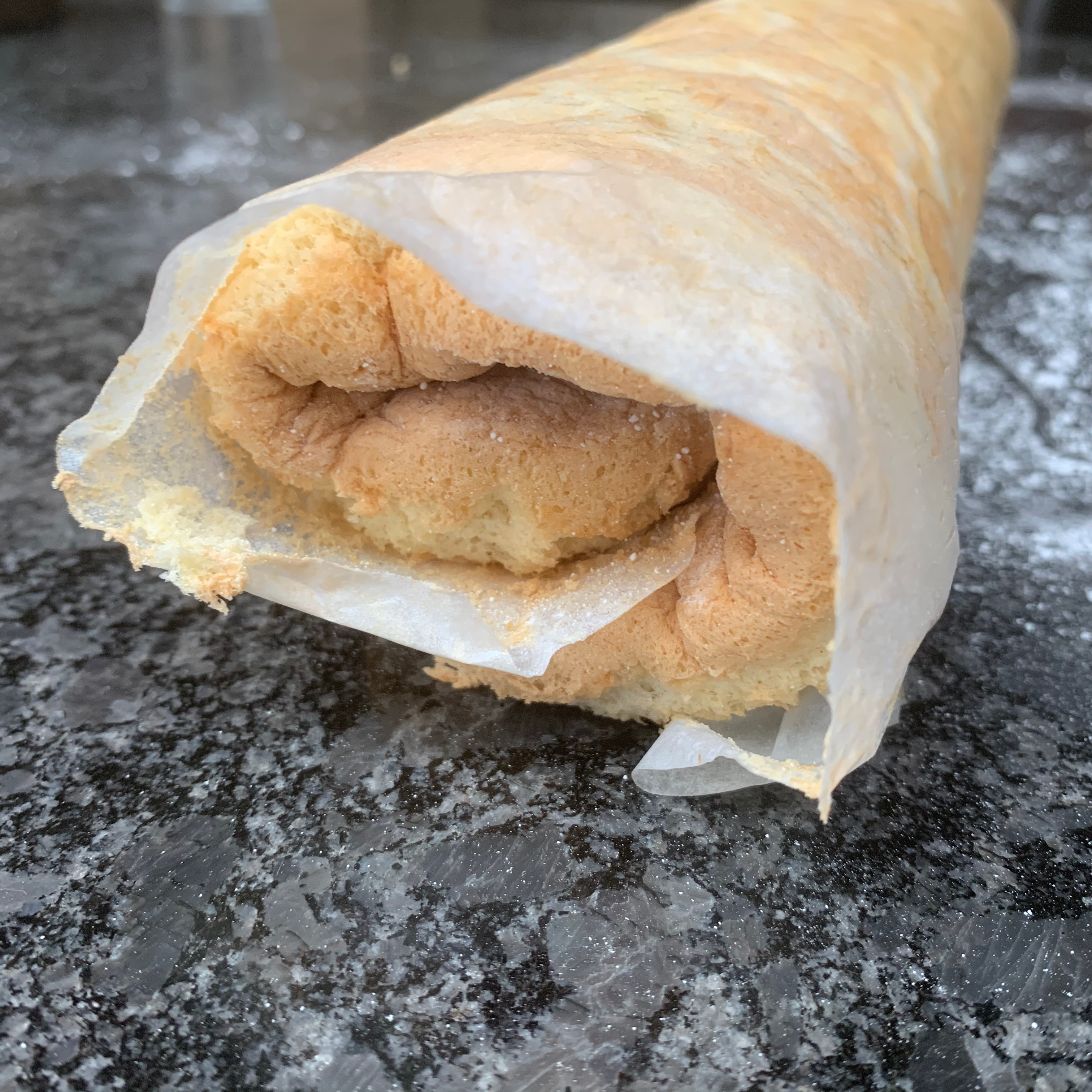
Now roll the cake up as tightly as you can, and leave to cool for an hour or so.
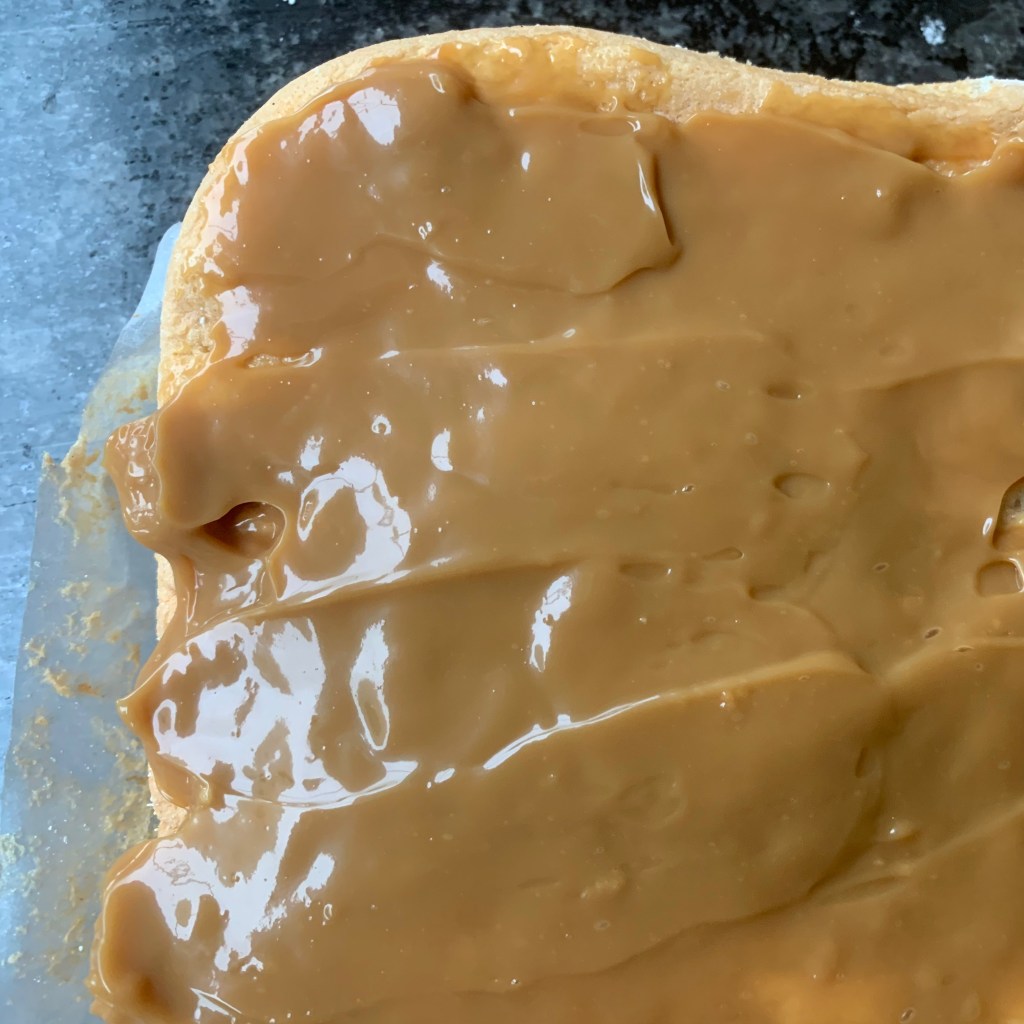
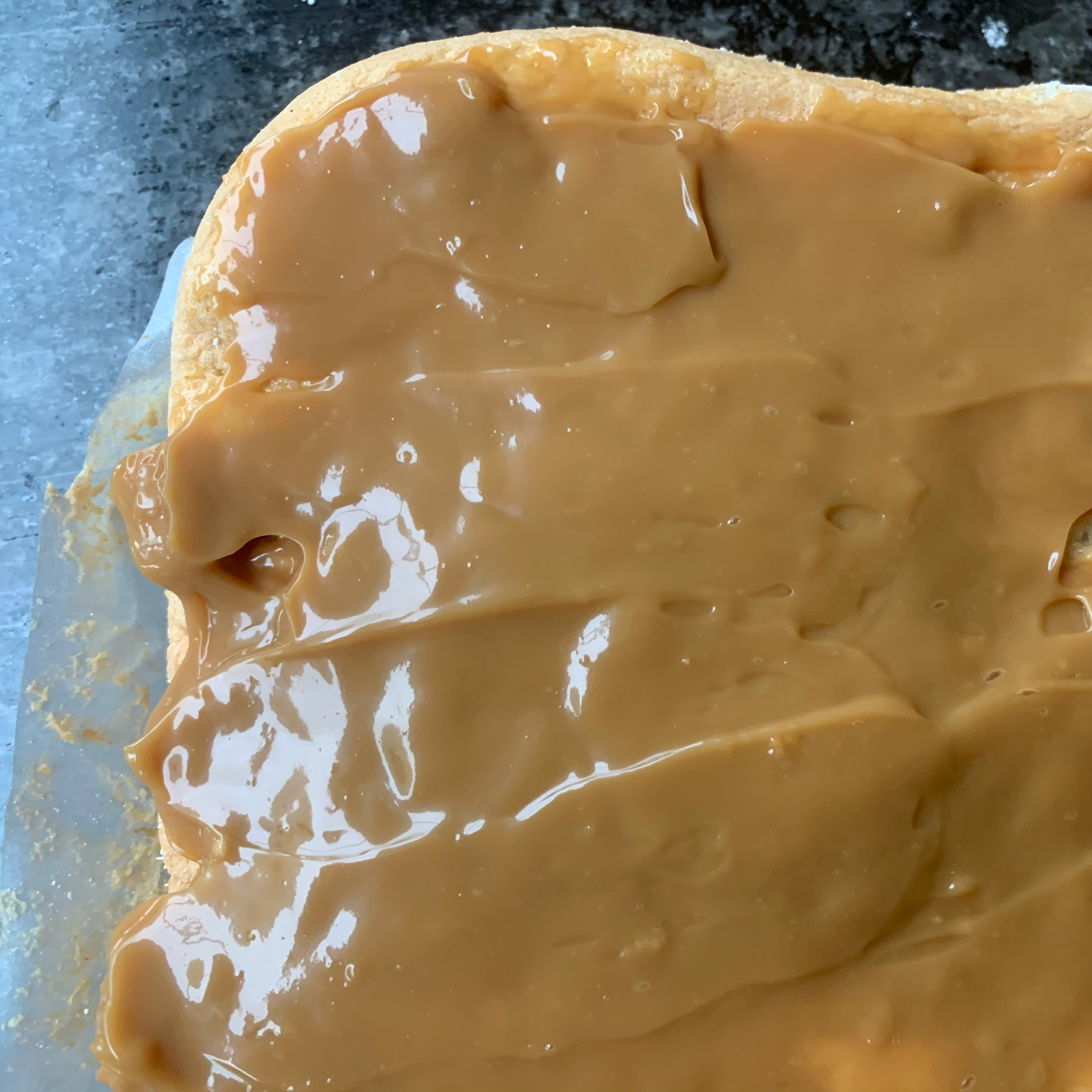
Unroll the cake (this is the part where it’s hard to stop it tearing), spread the filling over it, then roll it up again.
(Optional – I didn’t) dust the cake with more icing sugar.
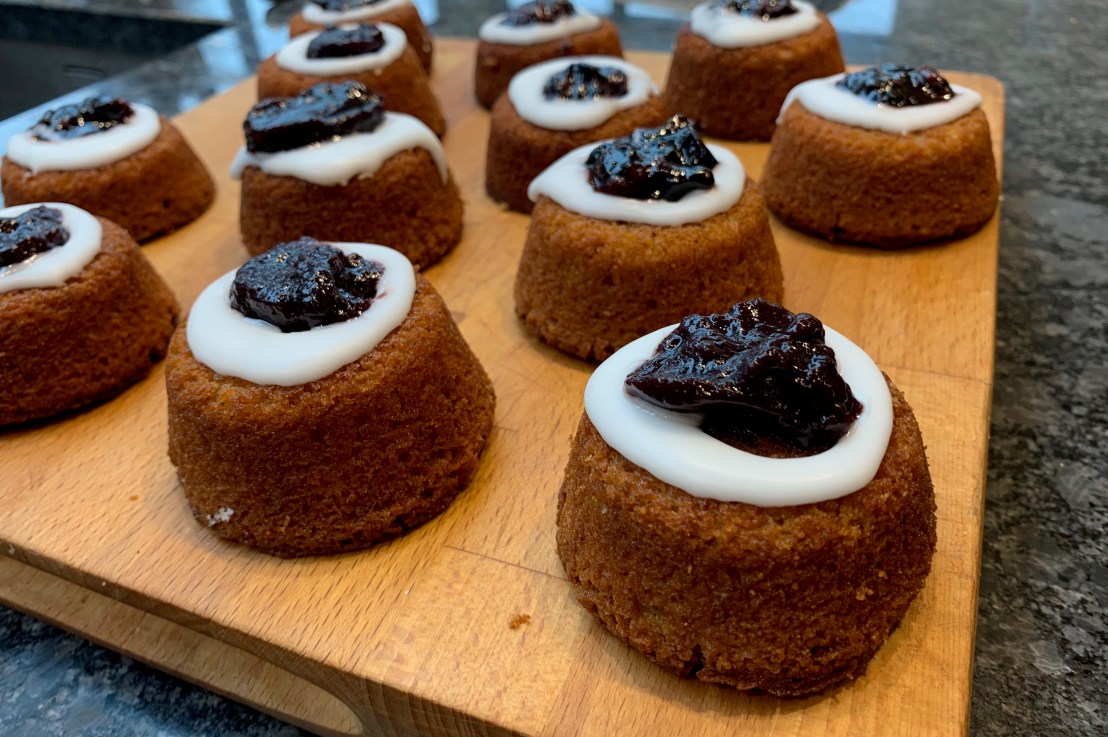
The weather in London today has been unremittingly grey with continuous drizzle, reminding me of a trip to Savonlinna in Finland, which is also the country which provided us with the biggest northern hemisphere rainstorm of our lives. So here, in homage to Finland and in honour of the poet Johan Ludvig Runeberg’s birthday next week, are Runebergintorttu or Runeberg Cakes.
To be fair on my many Finnish friends and on Savonlinna, which is a truly fabulous festival set in an impossible atmospheric mediaeval castle, it’s drop-dead gorgeous when the sun comes out (which it did the following day). And the Finns have a lot going for them, not least the best rainproof gear I’ve ever bought and also the best loudspeakers on the planet (with all those forests, the Finns really know their wood) and a surprisingly dry sense of humour (opera lovers need to check out Covid fan tutte).
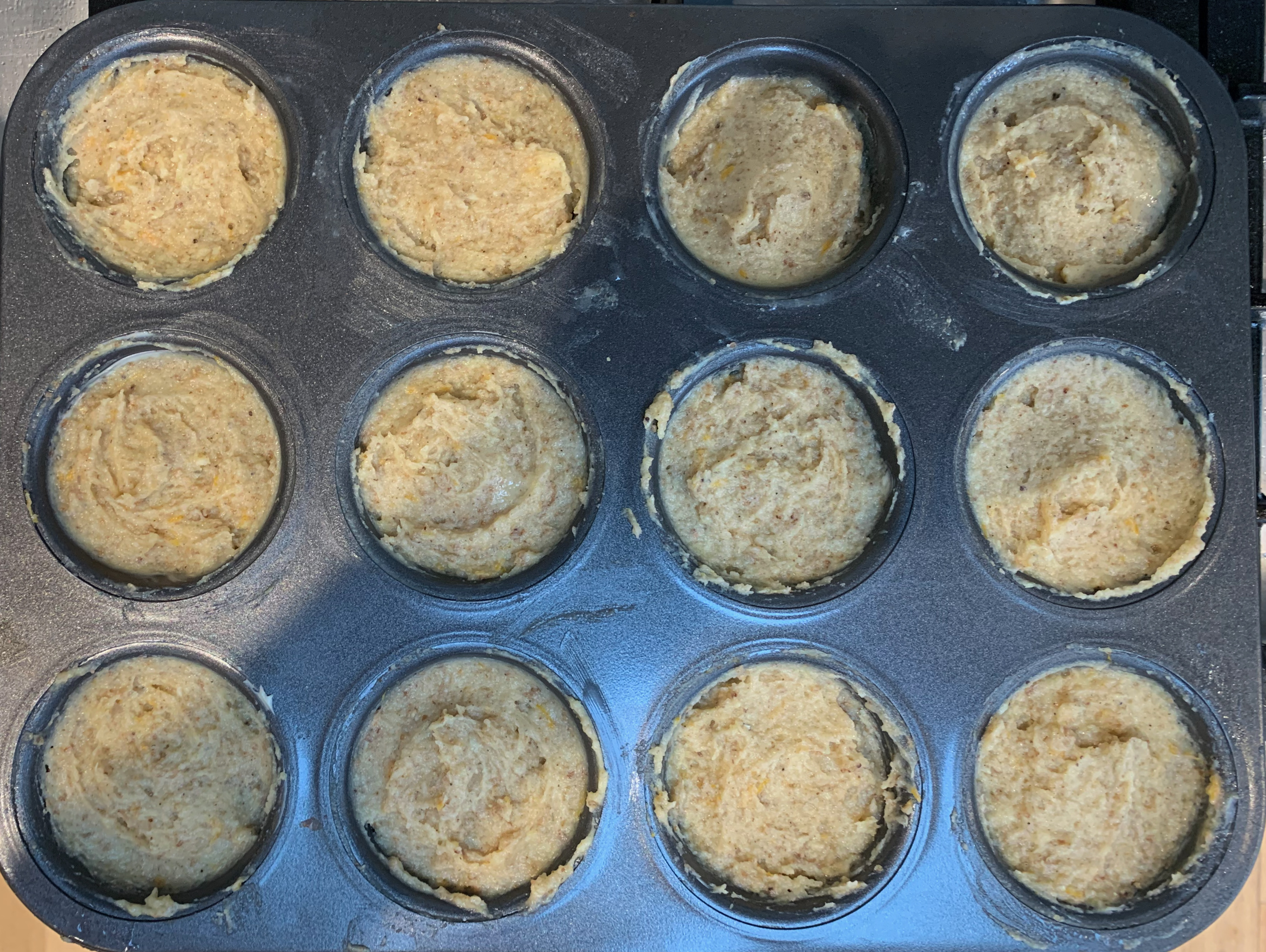
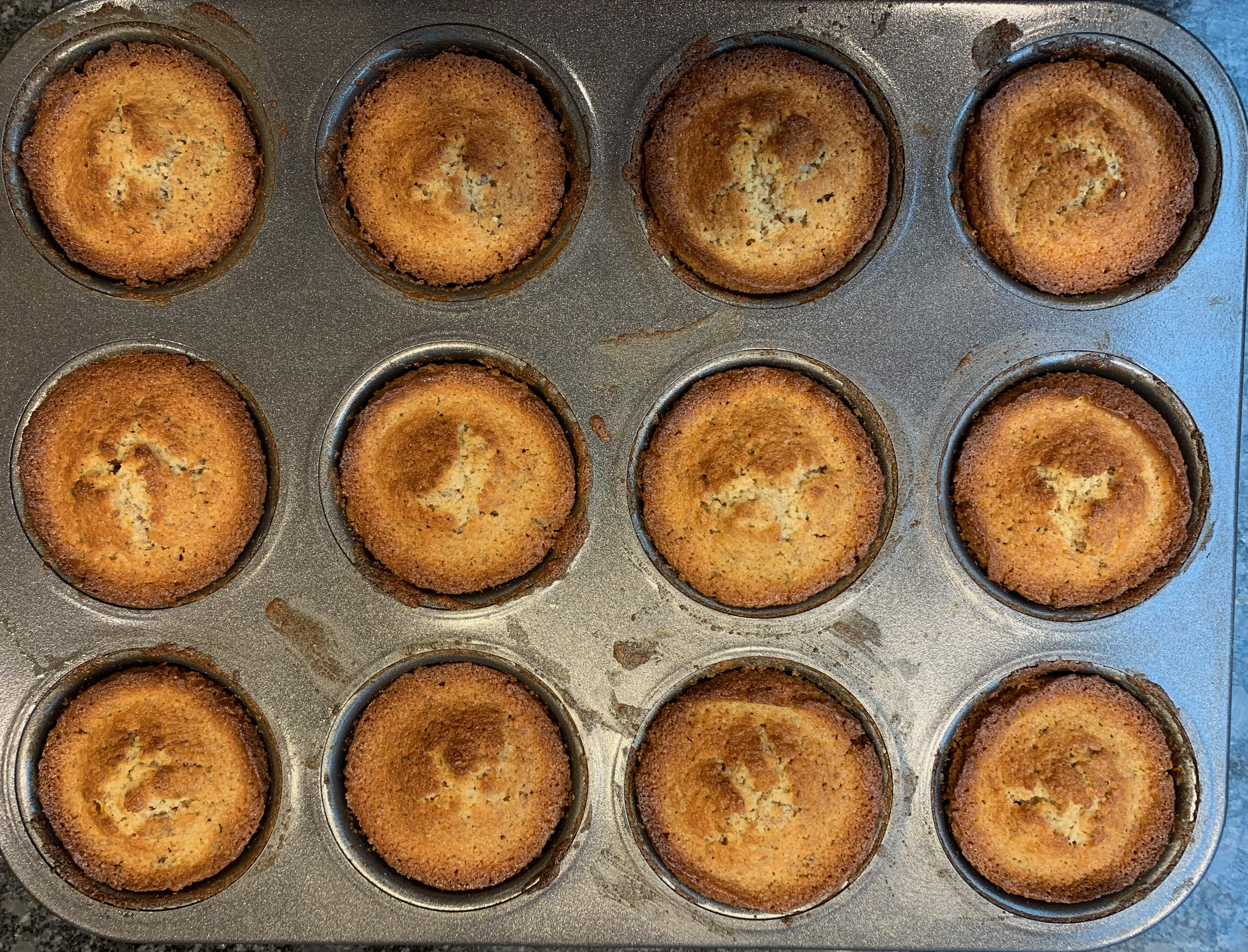
One note on the photos: I don’t have the tall cylindrical moulds that you need to make Runebergintorttu properly, so mine are baked in a standard muffin tin. But they taste the same… If that level of authenticity bothers you, this is the kind of thing that should work.
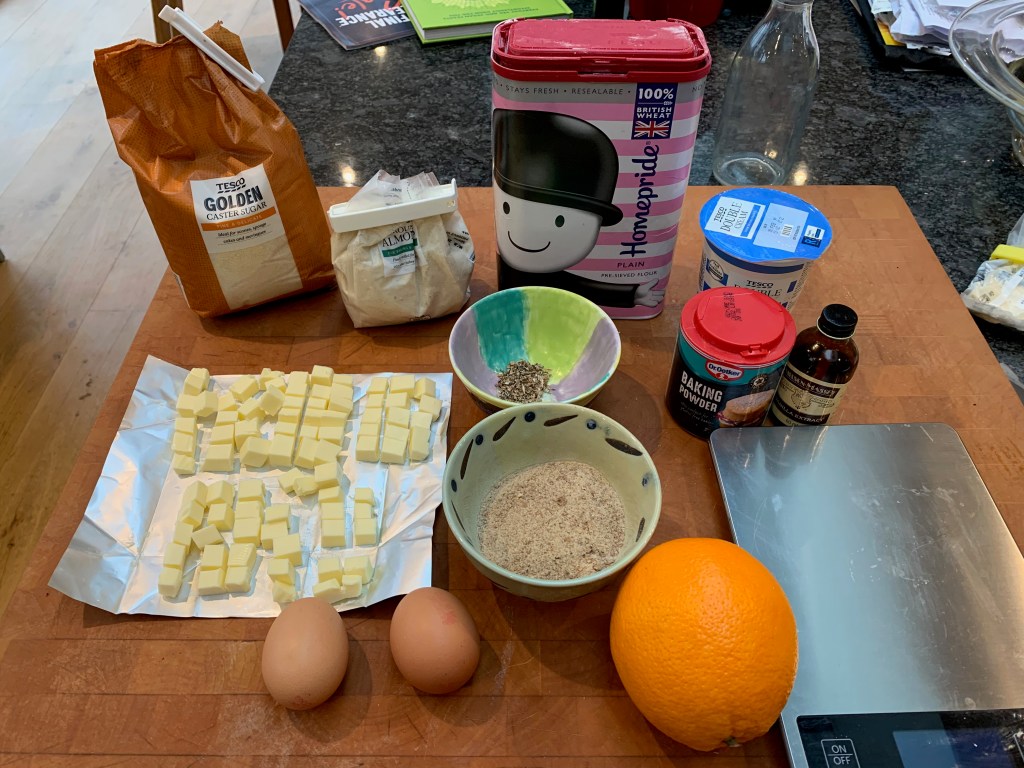
I started with a recipe from scandikitchen.co.uk and only changed a few things: I couldn’t get hold of Leksands crispbread, but I did find some dark Ryvita which I believe to be pretty similar. I used blackberry jam rather than raspberry. Vanilla essence is easier to find than vanilla sugar in these parts. I didn’t have any amaretto either, so I grated the zest of the orange that made the orange juice and added that. Personally, I think the combination of orange, cardamom and rye turned out to be an absolute winner.
125g butter, plus some for greasing
50g ground almonds
100g plain flour
6g (1 tsp) baking powder
2g salt
50g crispbread (Leksands, Ryvita or whatever), or just use breadcrumbs
80g caster sugar
1 whole egg plus 1 egg yolk
100ml cream
50ml orange juice, plus zest of the orange
Vanilla essence to taste
80g icing sugar
Raspberry jam (or, in my case, blackberry jelly) to finish
Preheat oven to 180℃ fan.
If your butter isn’t soft, cut it into small cubes and leave to soften.
Grease your muffin tin (or other cake mould) with some more butter.
Mix your flour, baking powder, ground almonds and salt.
Grind your crispbread into breadcrumbs
Cream the butter and sugar together
Add the eggs and mix
Add the flour mixture and combine
Add the breadcrumbs and cream and combine
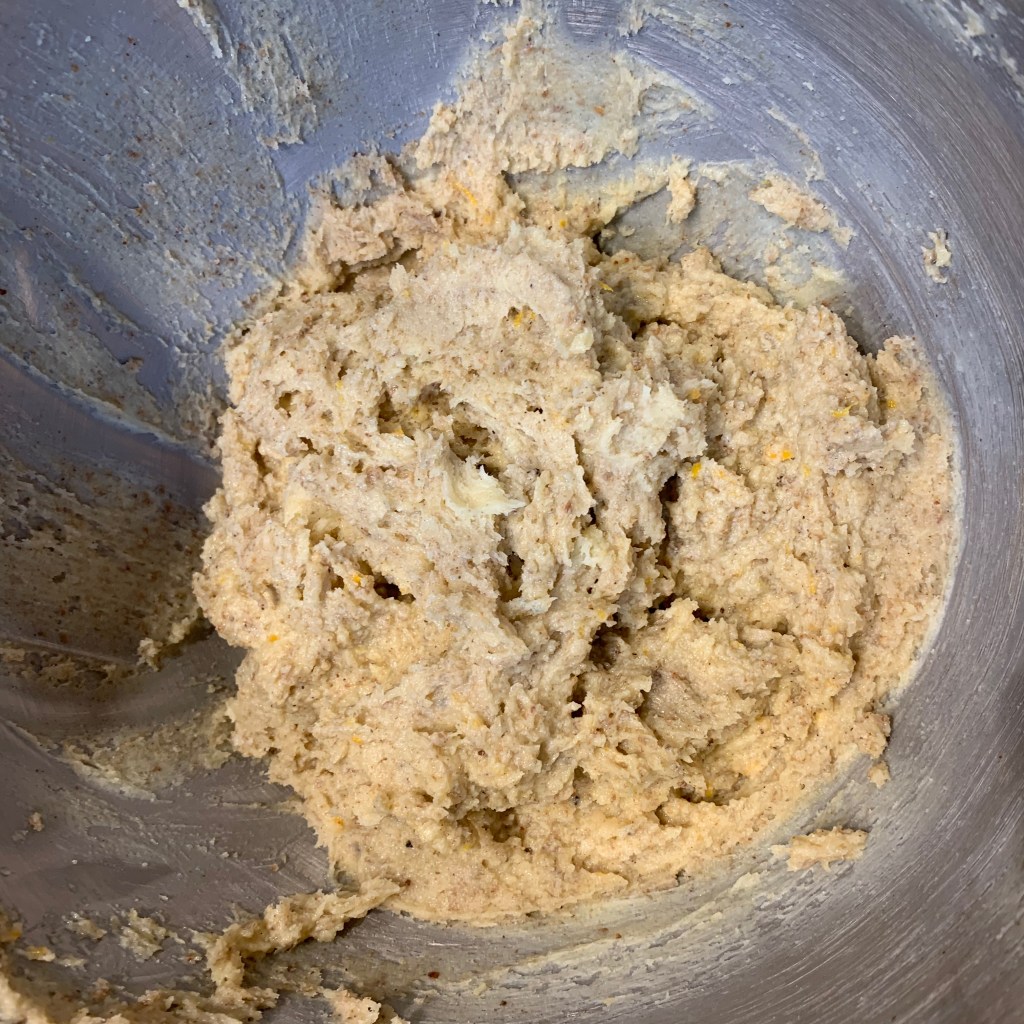
Add the orange juice, zest and vanilla essence and mix thoroughly. You should now have a fairly thick, sticky batter.
Divide the batter into the moulds in your cake tin.
Bake for around 15 minutes.
Leave to cool in the tin for a short while, then turn them out.
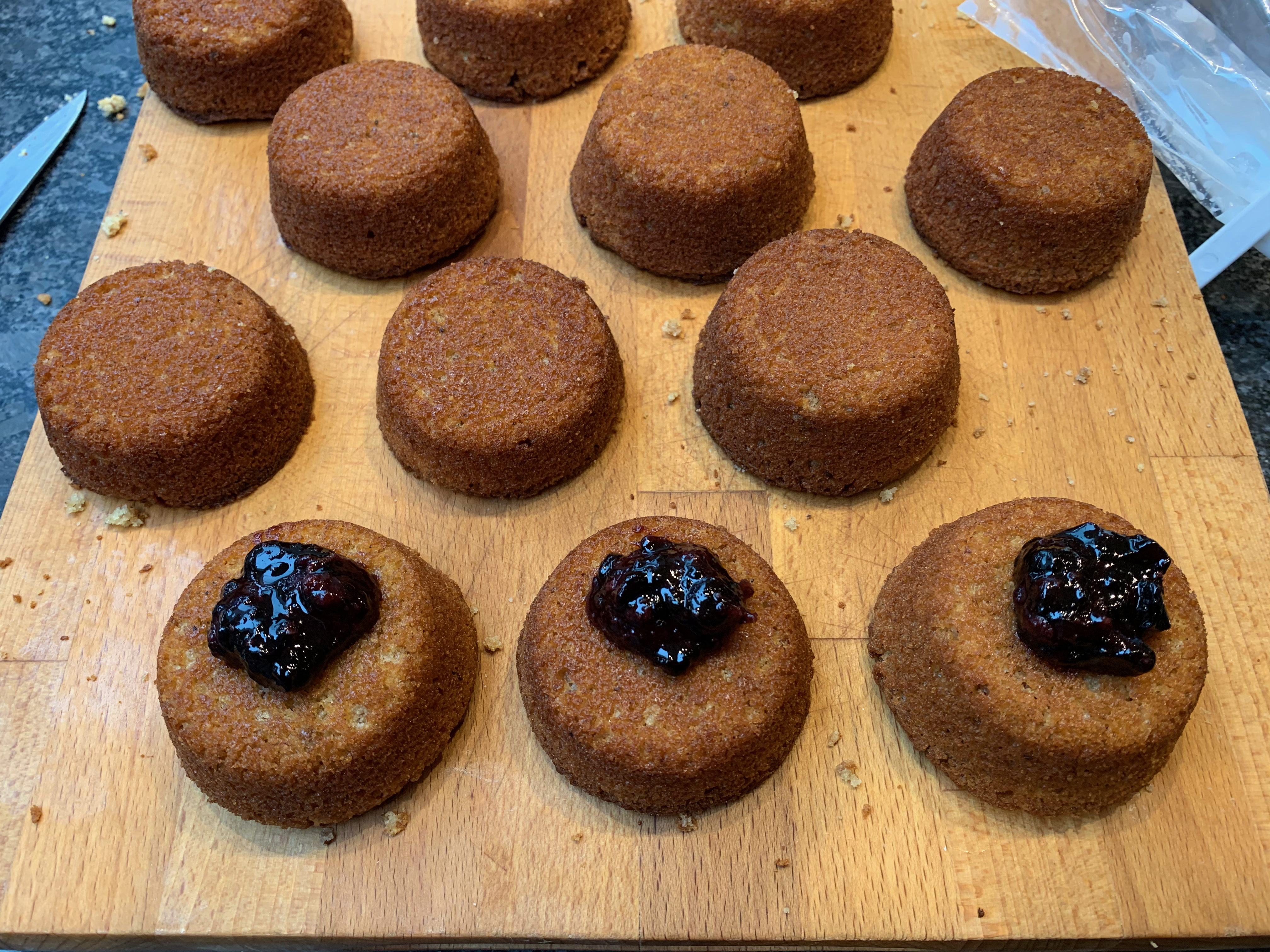
You will serve the cakes upside down. Since they have probably domed somewhat, cut them reasonably flat so that they stand upright.
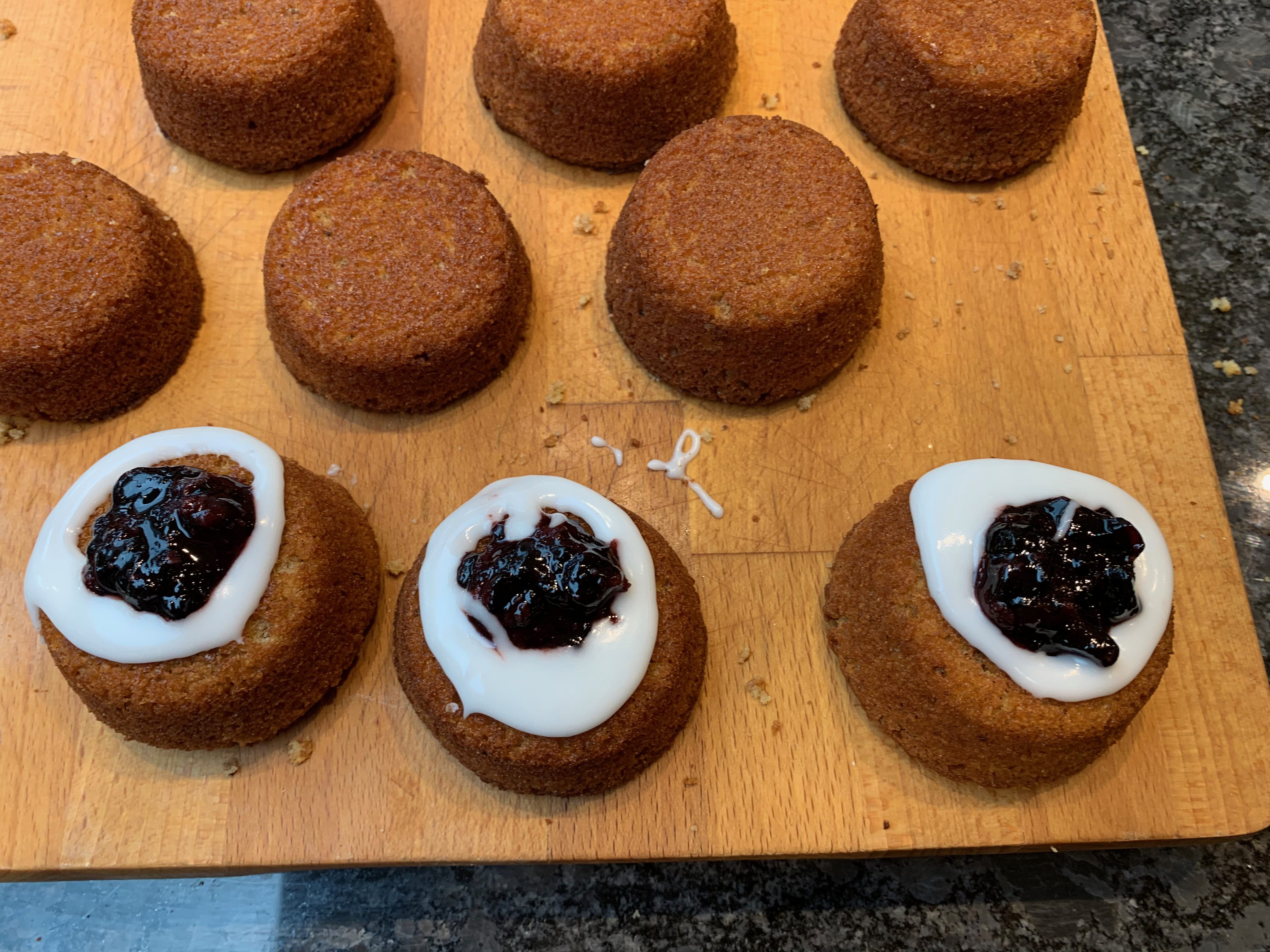
Mix the icing sugar with about 10ml warm water until you have a thick paste. Transfer this to a piping bag.
Pipe a circle of icing around the top of each cake. Put a dollop of jam into the middle of the circle. I found this easier than the original recipe, which suggests doing the jam first (as per the photos).
Leave the icing to dry (or don’t bother) and enjoy!
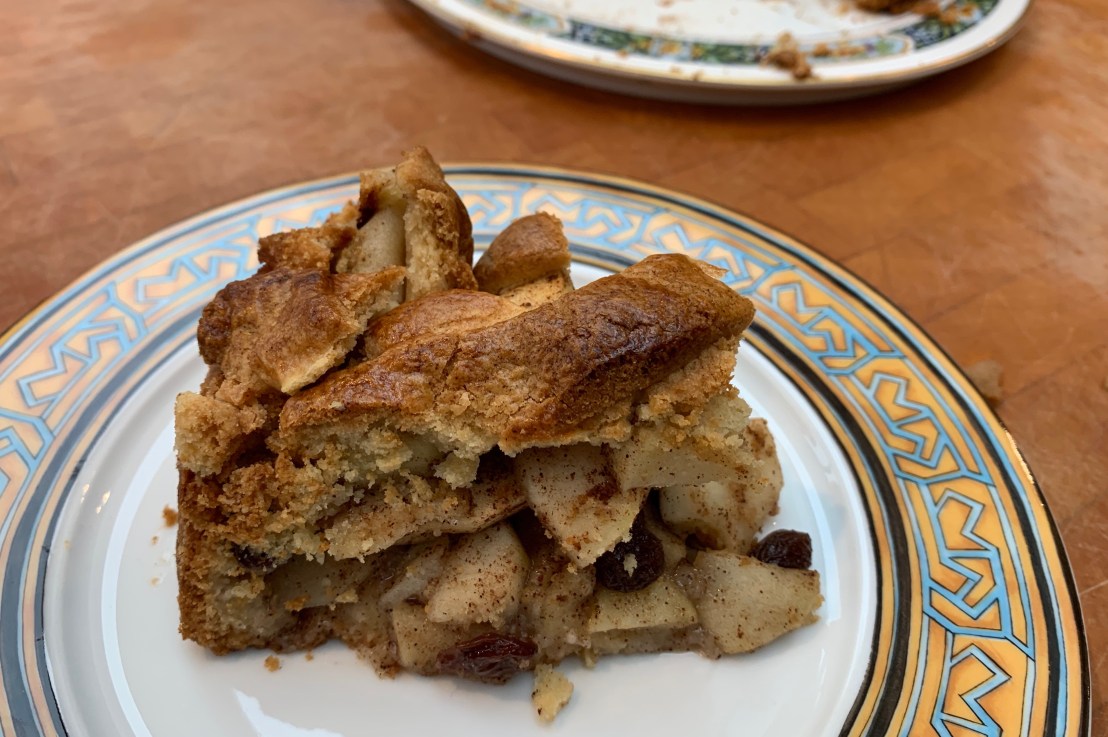
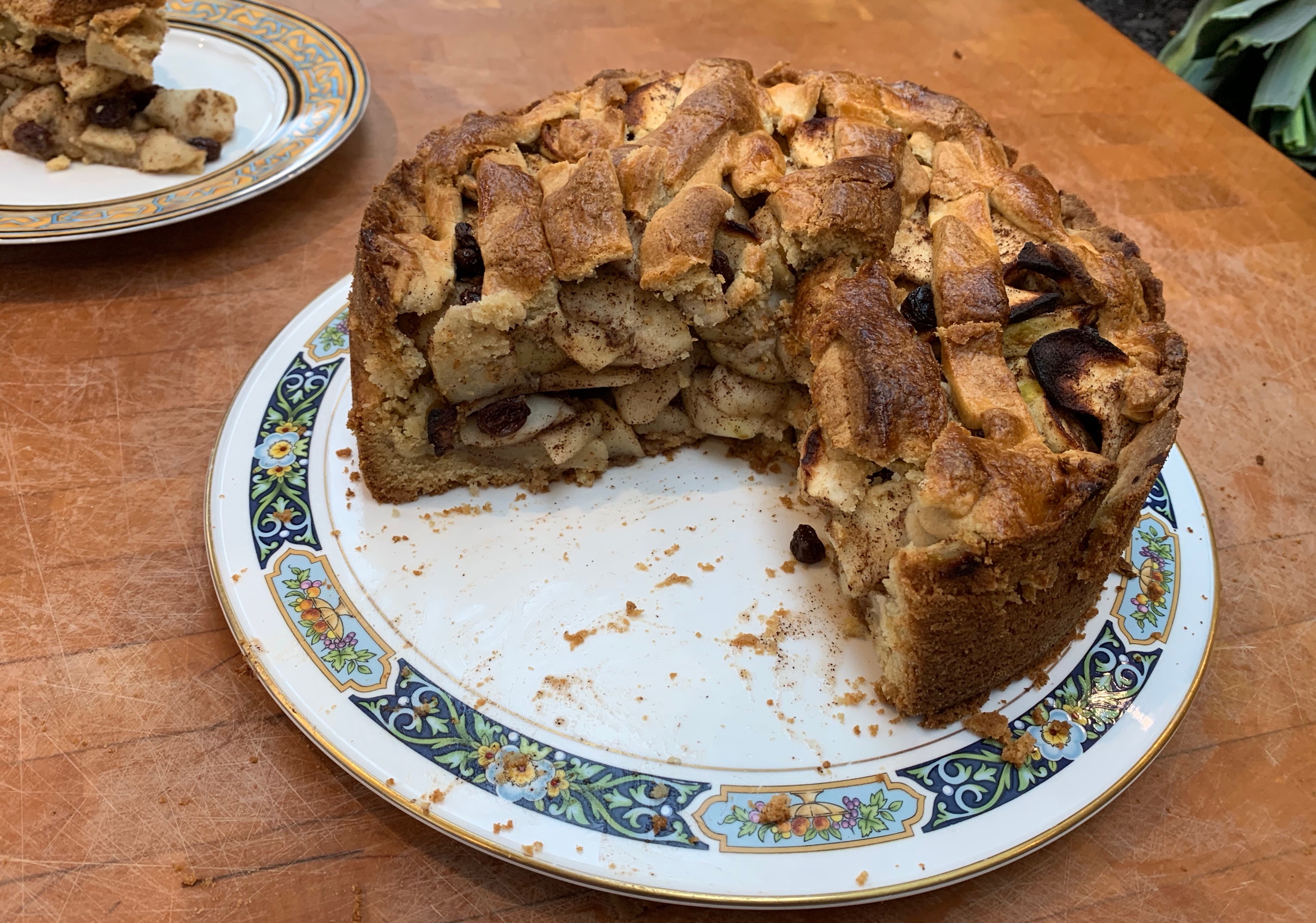
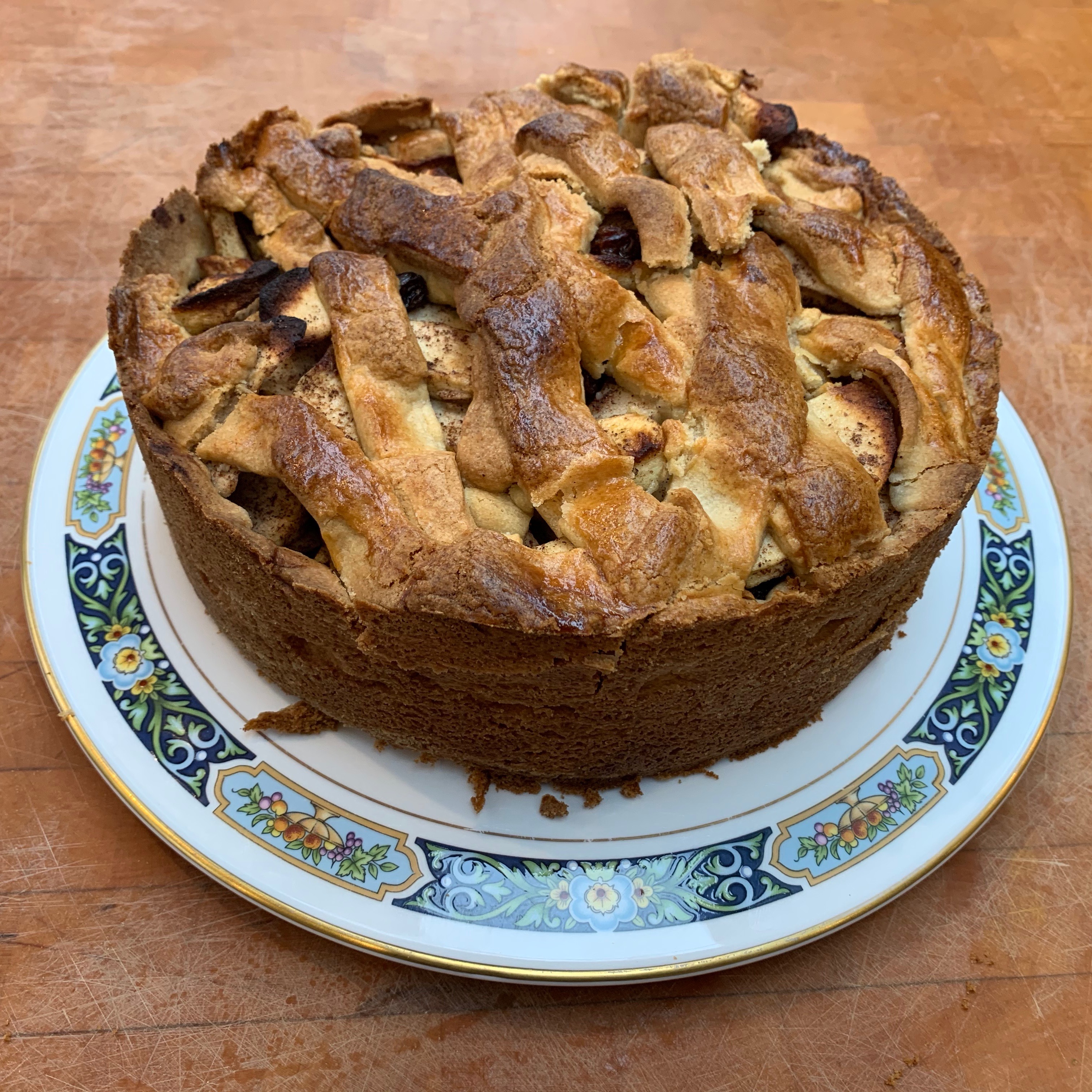
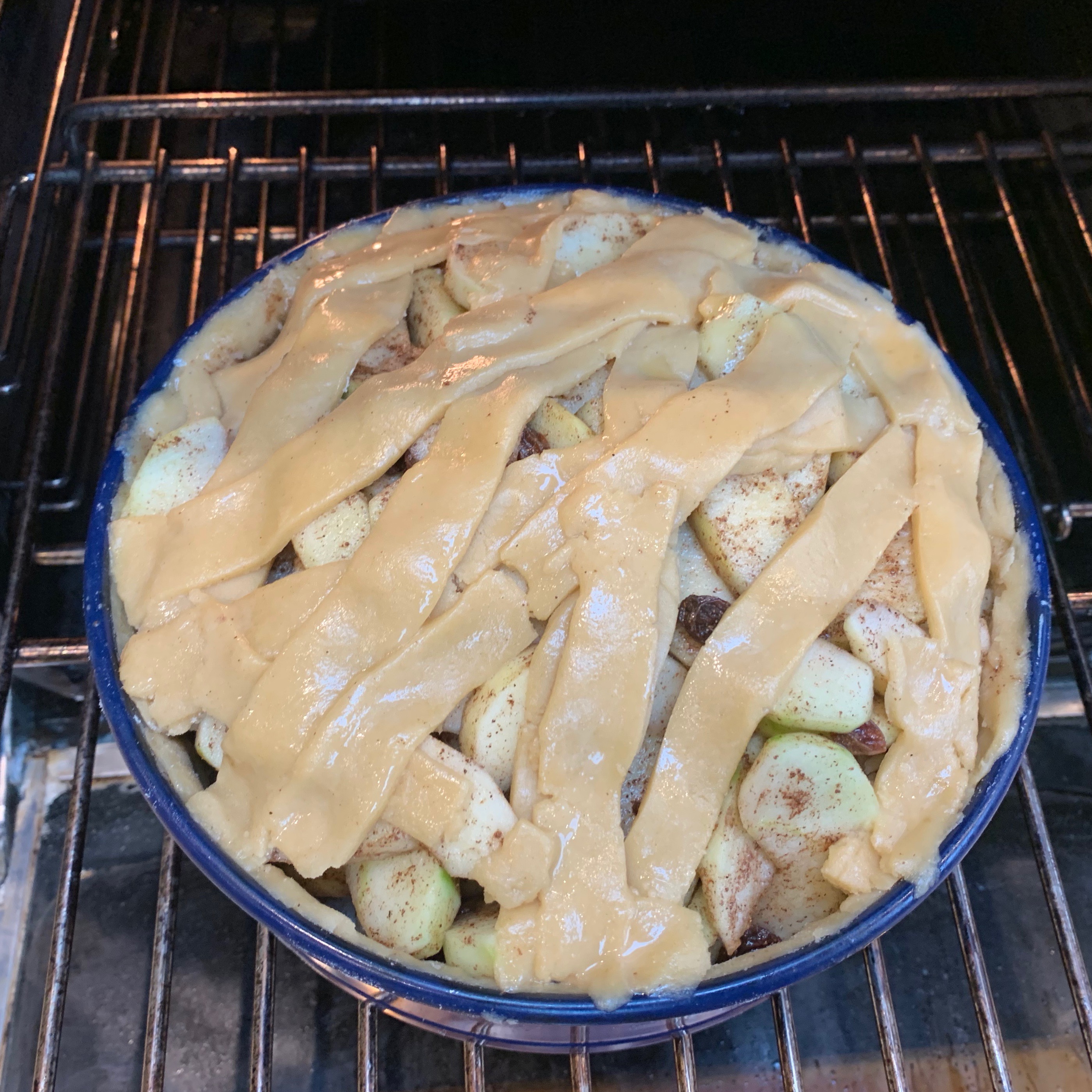
For Americans, the phrase “Apple Pie and Motherhood” (or possibly “Apple Pie and Mom”) means “a thing in life that everyone agrees to be unarguably good”. But even Americans would accept that Apple Pie comes from the Netherlands. In fact, there are two variants of Dutch Apple Pie: appeltaart, the lattice-topped version that I’ve made here, and appelkruimeltaart, a crumble-topped version whose American equivalent is Pennsylvania Dutch Apple Pie.
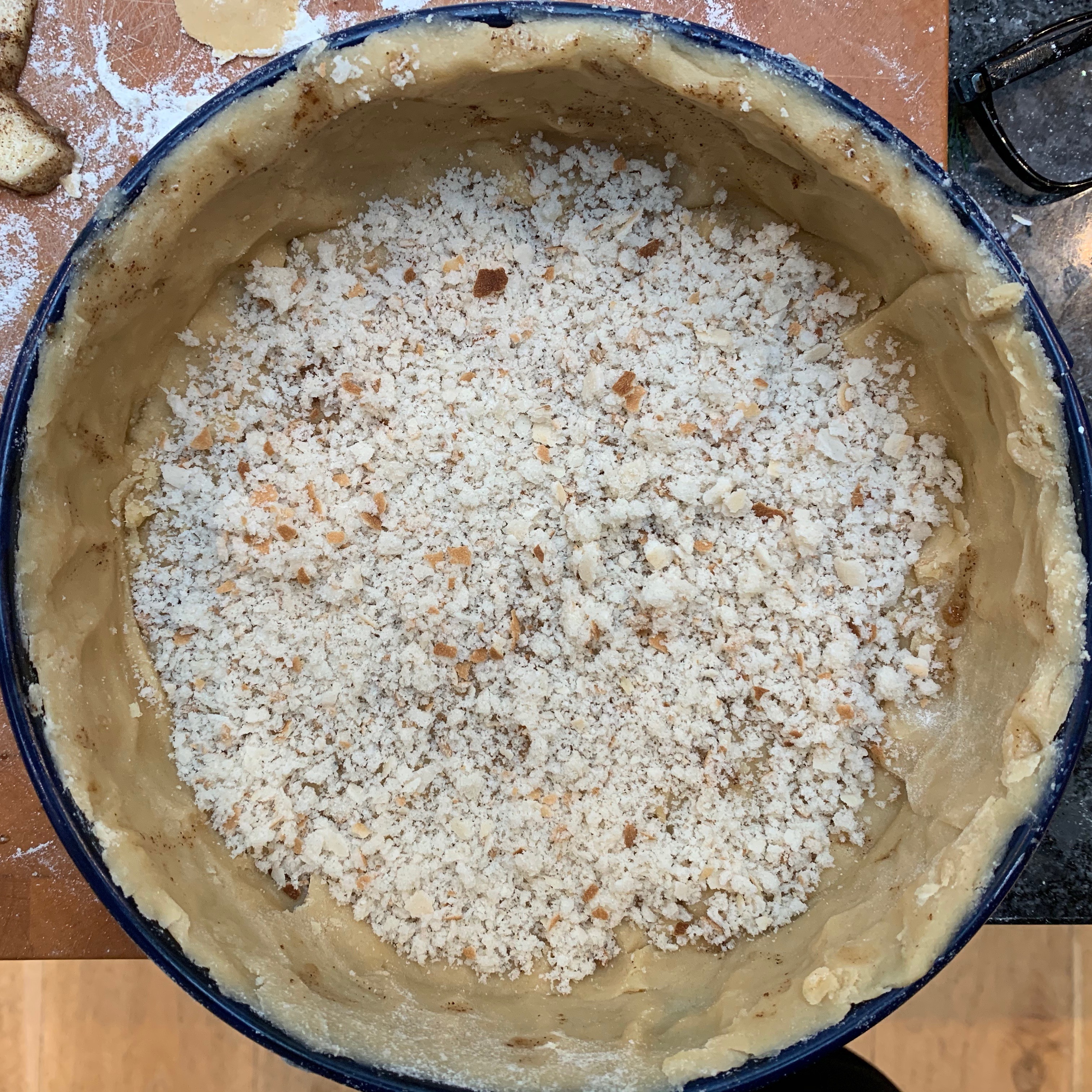
Most Dutch recipes (I’ve started with this one) go for a shortcrust pastry with a fairly high butter to flour ratio (this recipe uses 2:3, but I’ve seen higher), sweetened with brown sugar. As often, I’ve cut down the amount of sugar – the original recipe goes for 50% more than I’ve used. The Dutch use self-raising flour, which moves the end result somewhere in the direction of a cake compared to a typical French apple tart or English pie. A neat trick is to cover your base with a layer of breadcrumbs: this soaks up the juices in the early part of the bake and helps to prevent the dreaded soggy bottom.
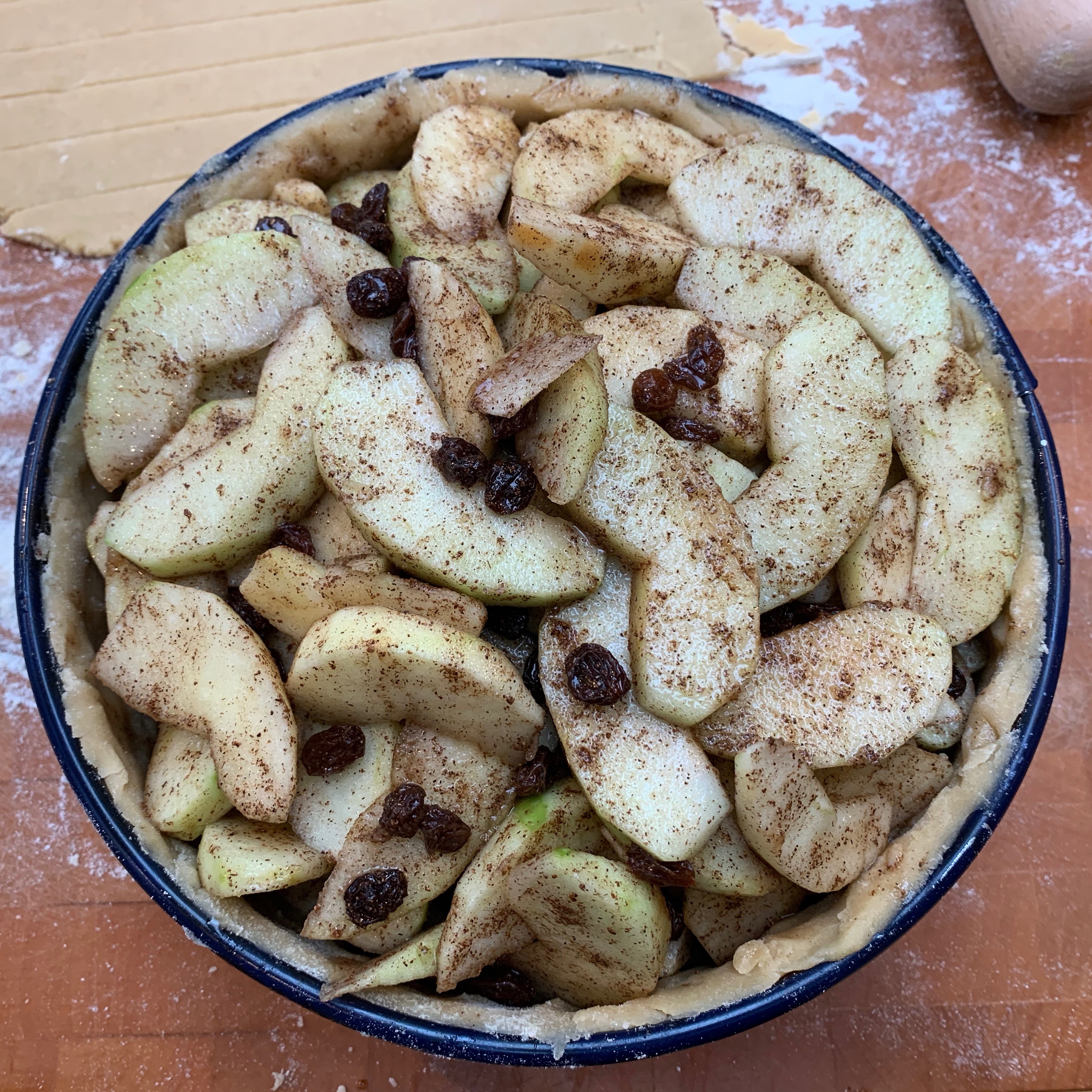
The filling is usually fairly heavily spiced and often has other fruit or nuts in addition to the apple. I’ve chosen cinnamon and raisins, but there are plenty of alternatives: cloves, ginger, walnuts or almonds to name just a few. At least once recipe recommends soaking your raisins in rum.
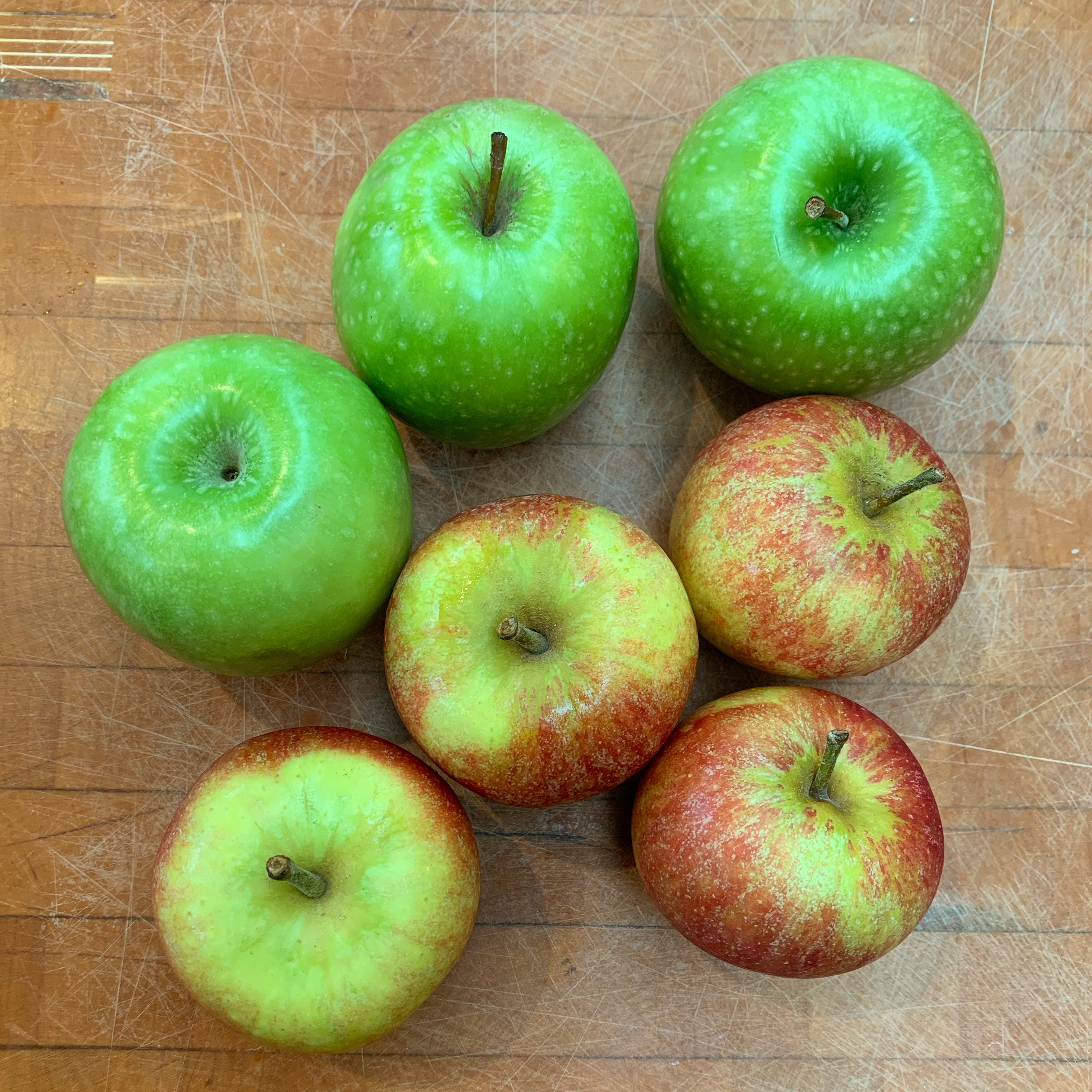
If you’re not in the Netherlands with access to Goudreinet (Golden Rennet) or Belle de Boskoop apples, you’ll have to improvise. You’re going to want an apple which is crisp enough not to disintegrate while baking, and which has plenty of flavour and a level of tartness. Lockdown London isn’t offering my usual levels of choice, so I went for 50/50 Granny Smith and Cox’s Orange Pippin, which worked pretty well. The Granny Smiths are there for tartness, but I’d worry that using them exclusively would be both too sour and too watery.
The pastry
300 g self raising flour, plus flour for rolling
100 g soft brown sugar
a pinch of salt
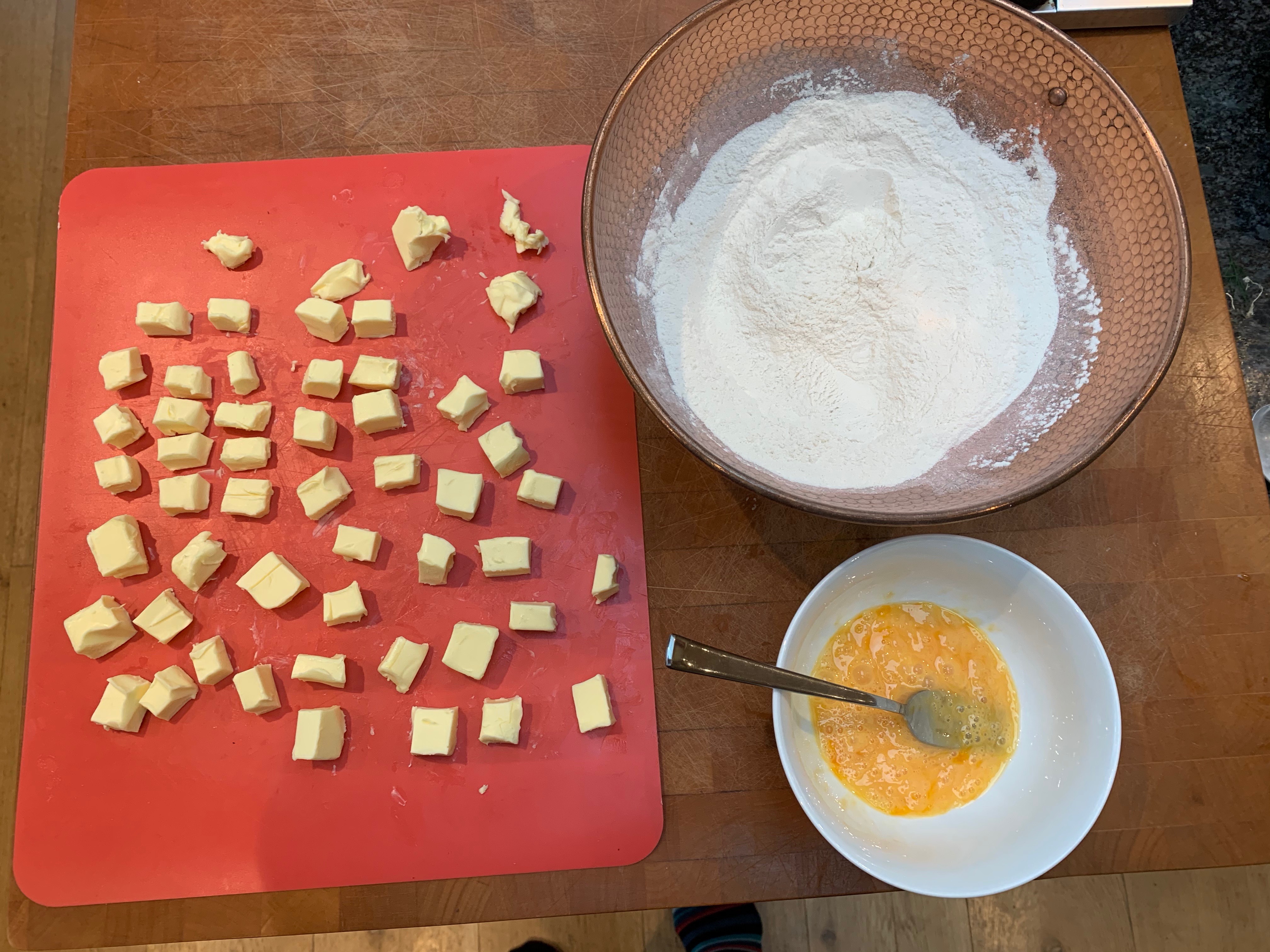
200 g cold butter
1 egg, beaten
Combine the flour, sugar and salt.
Cut the butter into small cubes and mix into the flour mixture with your fingertips until you’ve got rid of the lumps of unblended butter.
Keep aside a small amount of egg for brushing, pour the rest into your mixture and blend until you have a smooth dough which no longer sticks to the side of your bowl.
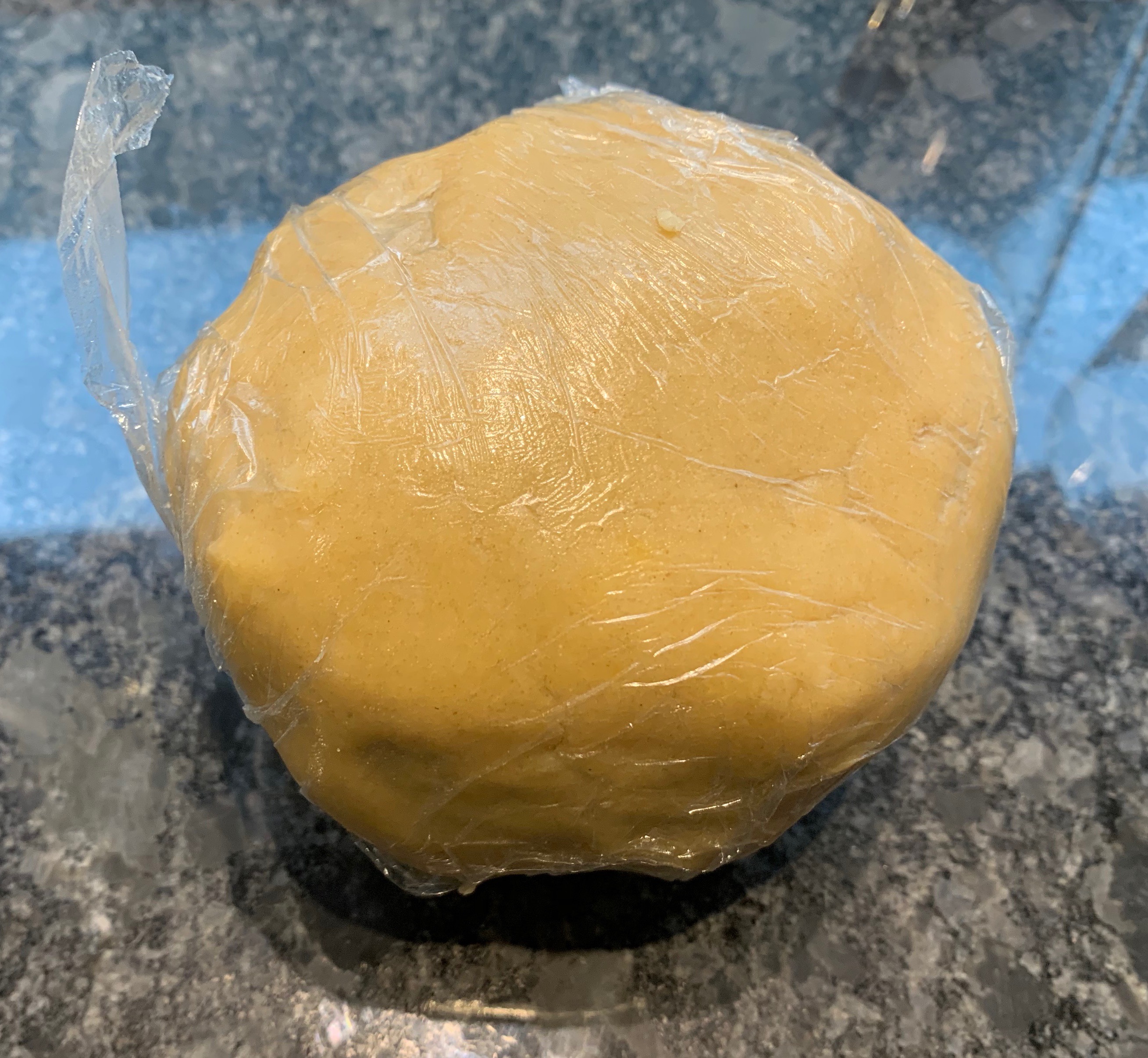
Wrap in cling film and refrigerate for 20-30 minutes.
The filling
1 kg apples (see above)
Juice of 1 lemon, or more to taste
6g ground cinnamon
50 g sugar
50 g raisins
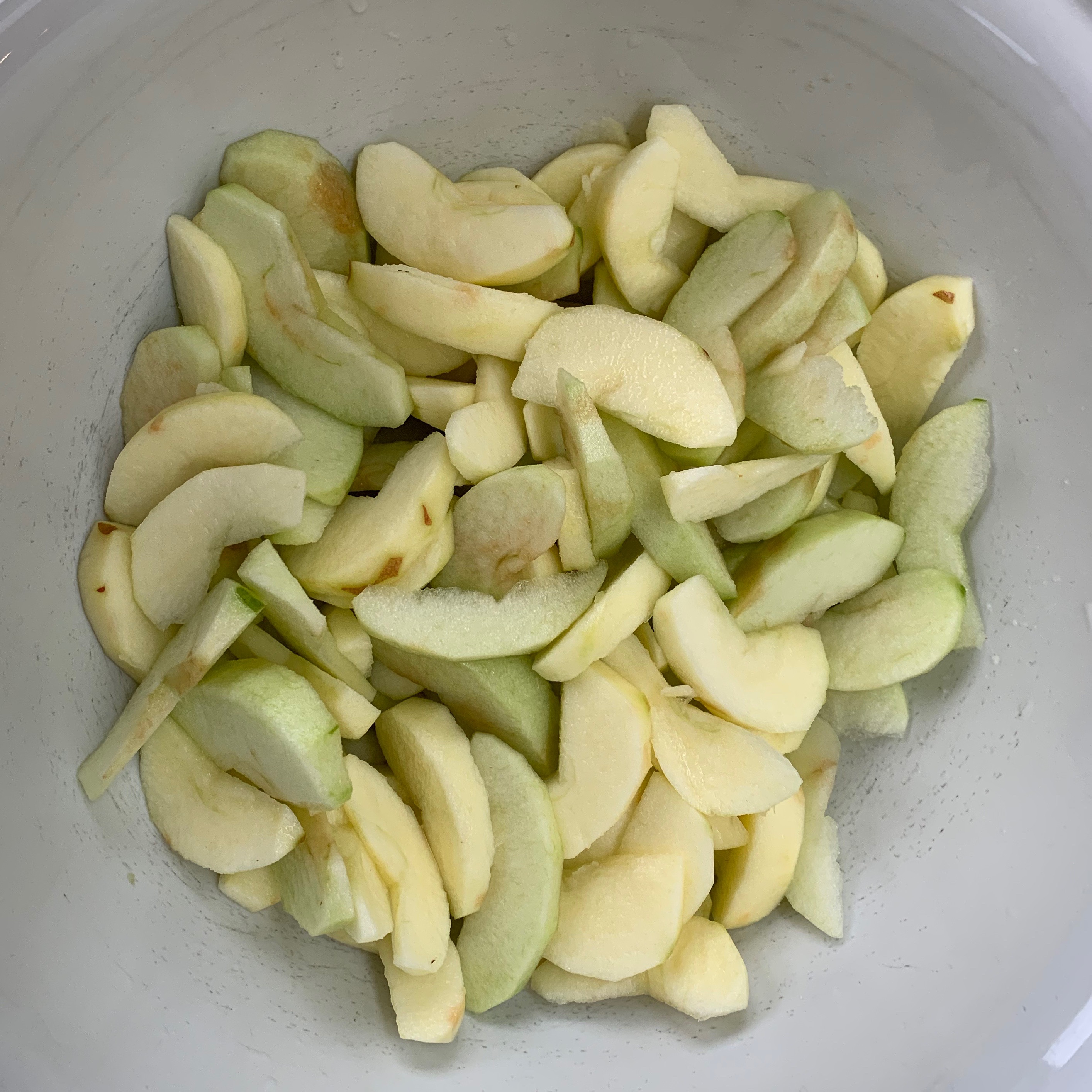
Peel, core and chop the apples into quarters, then chop each quarter into 4-5 slices. As you go, put the pieces into a bowl with the lemon juice and mix them around: the lemon will stop the apples going brown as you work.
Add the raisins.
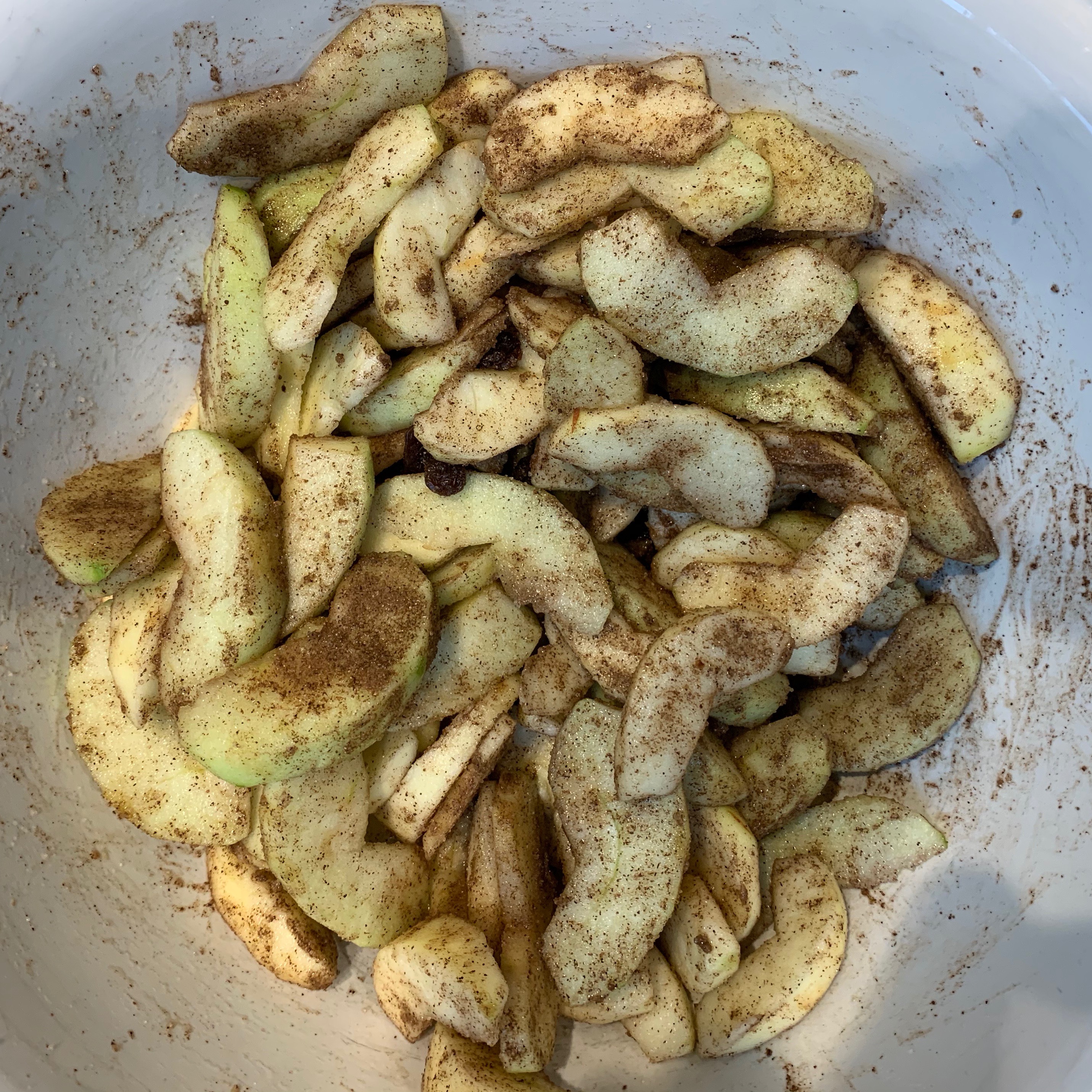
Combine the sugar and cinnamon, add them to the apples and raisins and mix everything until even.
Final assembly
Breadcrumbs (probably around 30g – sorry, I didn’t measure)
I used the fan setting on my oven and I wish I hadn’t – baking for longer without the fan would have resulted in a somewhat softer filling. If you like the apples crunchier, go with the fan option.
Preheat oven to 180℃ conventional.
Grease a 22-23cm springform tin with butter.
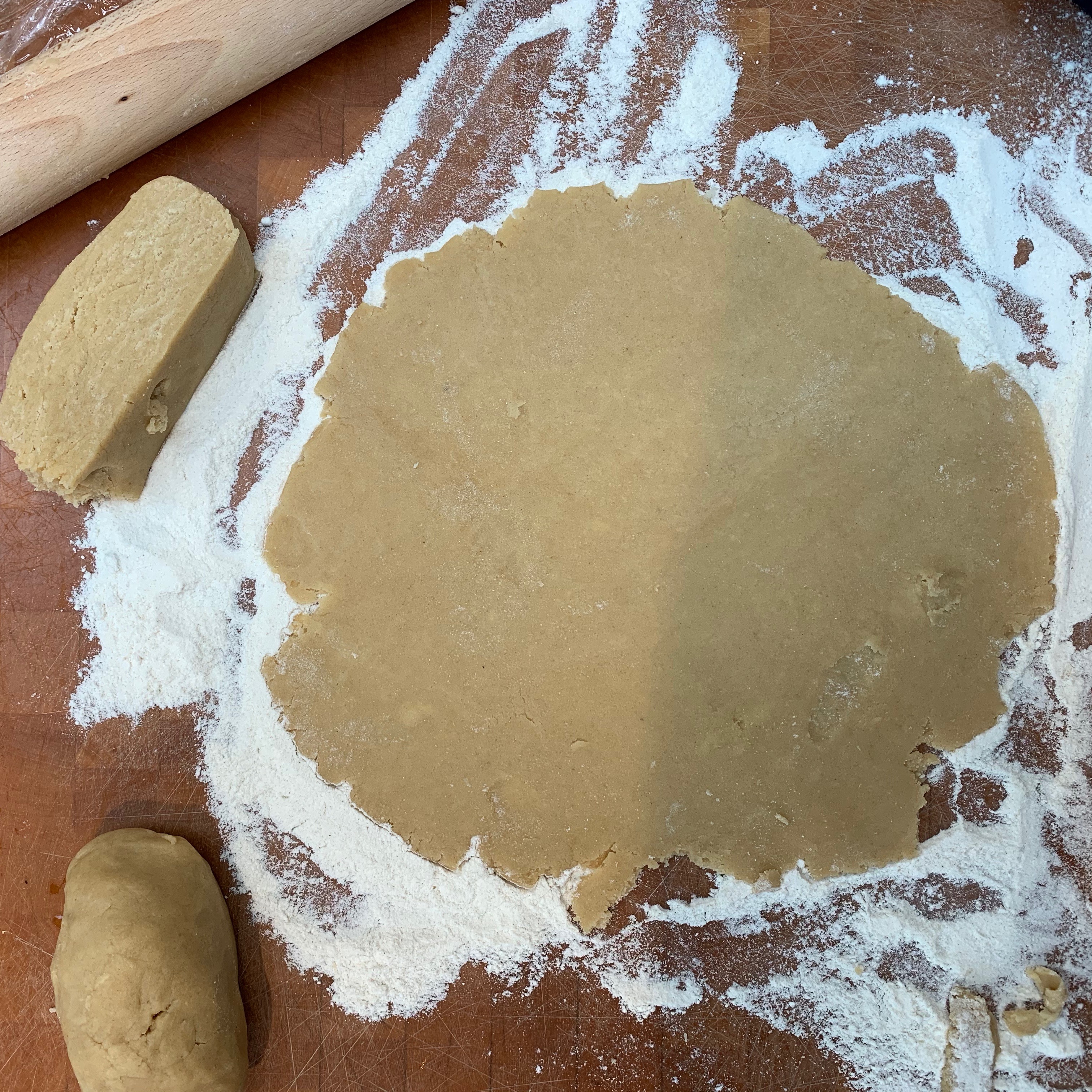
Divide the dough into 3 portions, roughly 40%, 40%, 20%.
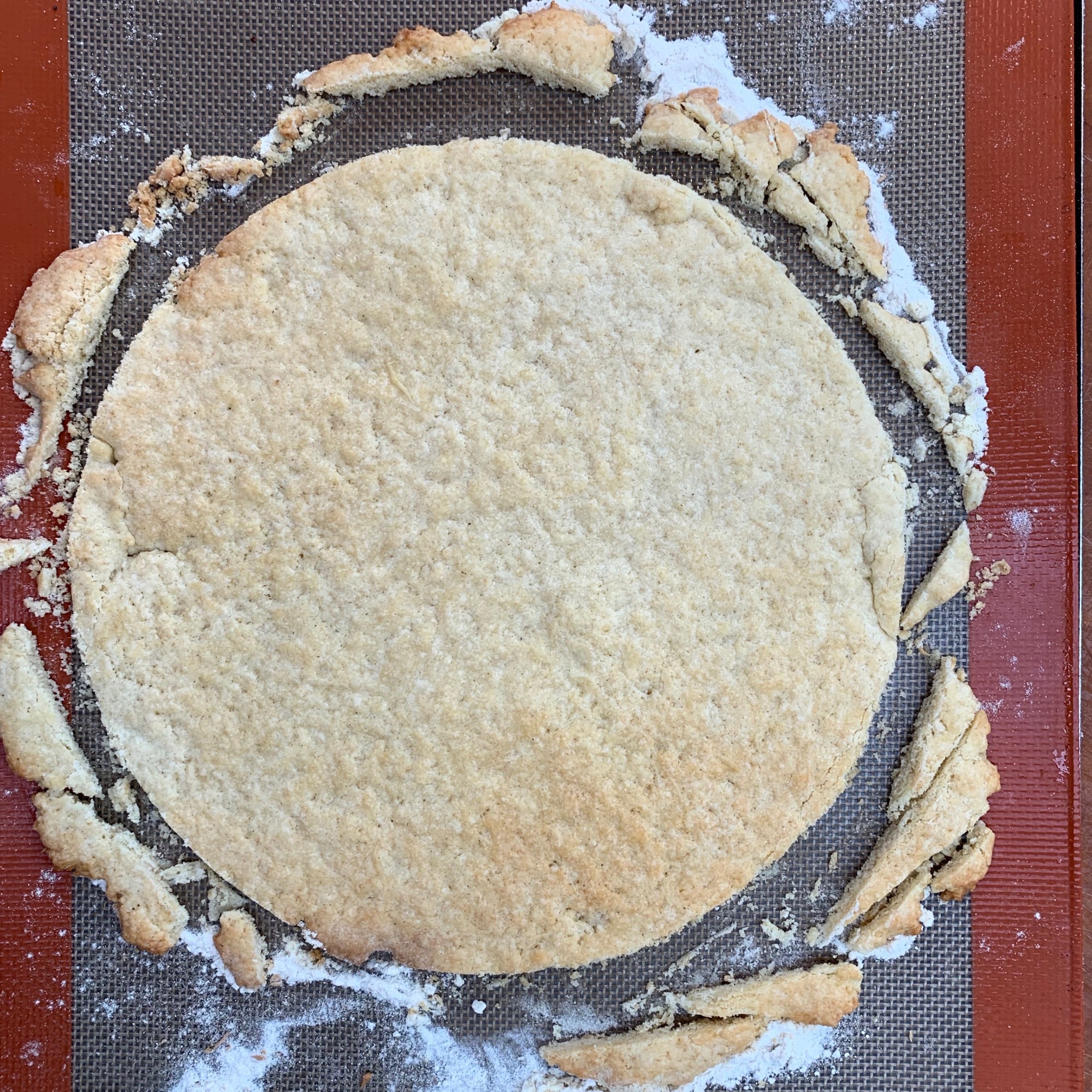
Roll out the first portion into a circle and use this to line the base of your tin. Trim off any excess and keep it.
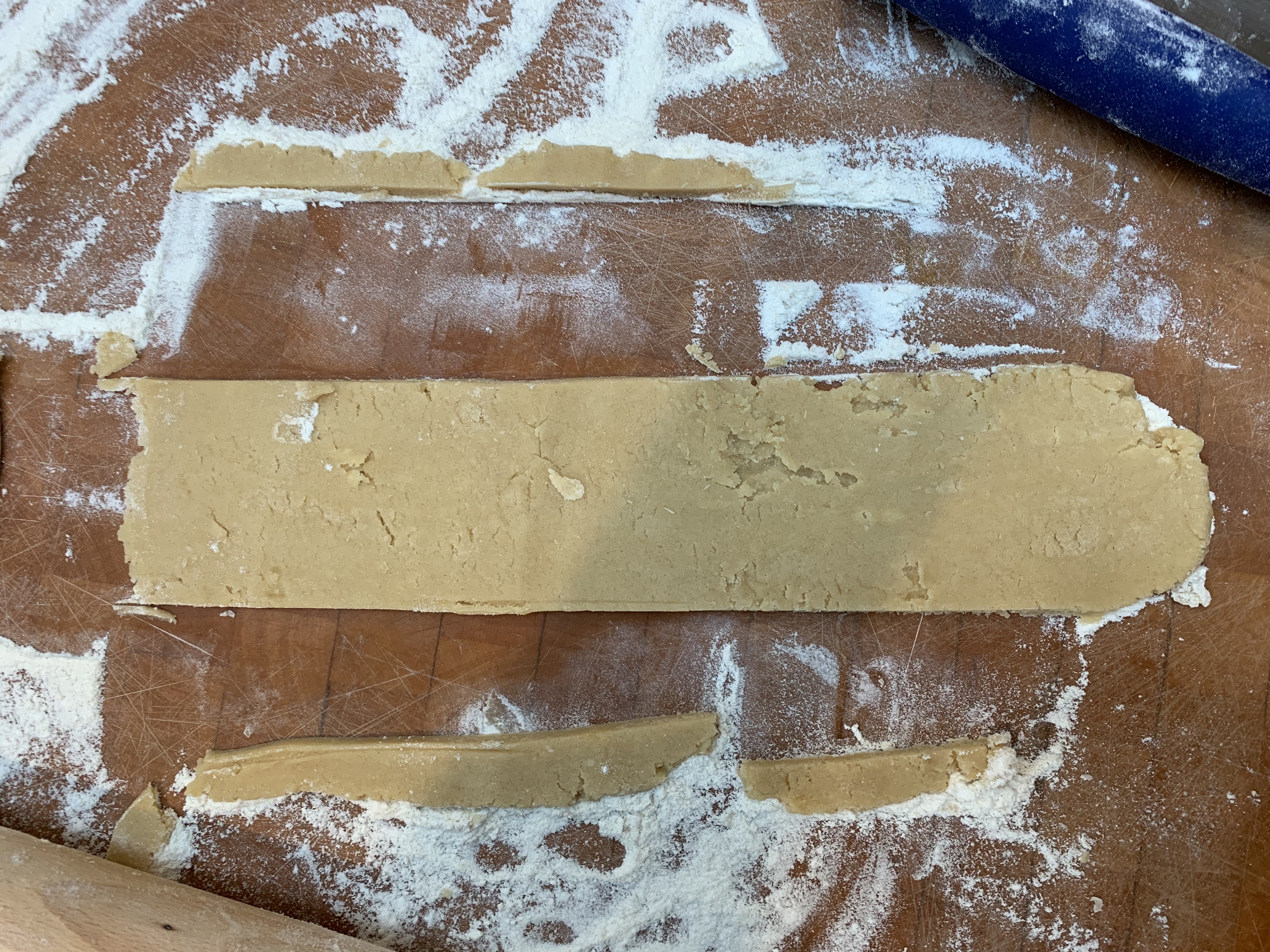
Roll the next portion into a long rectangle (you may need more than one) and use it to line the sides of your tin. Again, trim off and keep any excess.
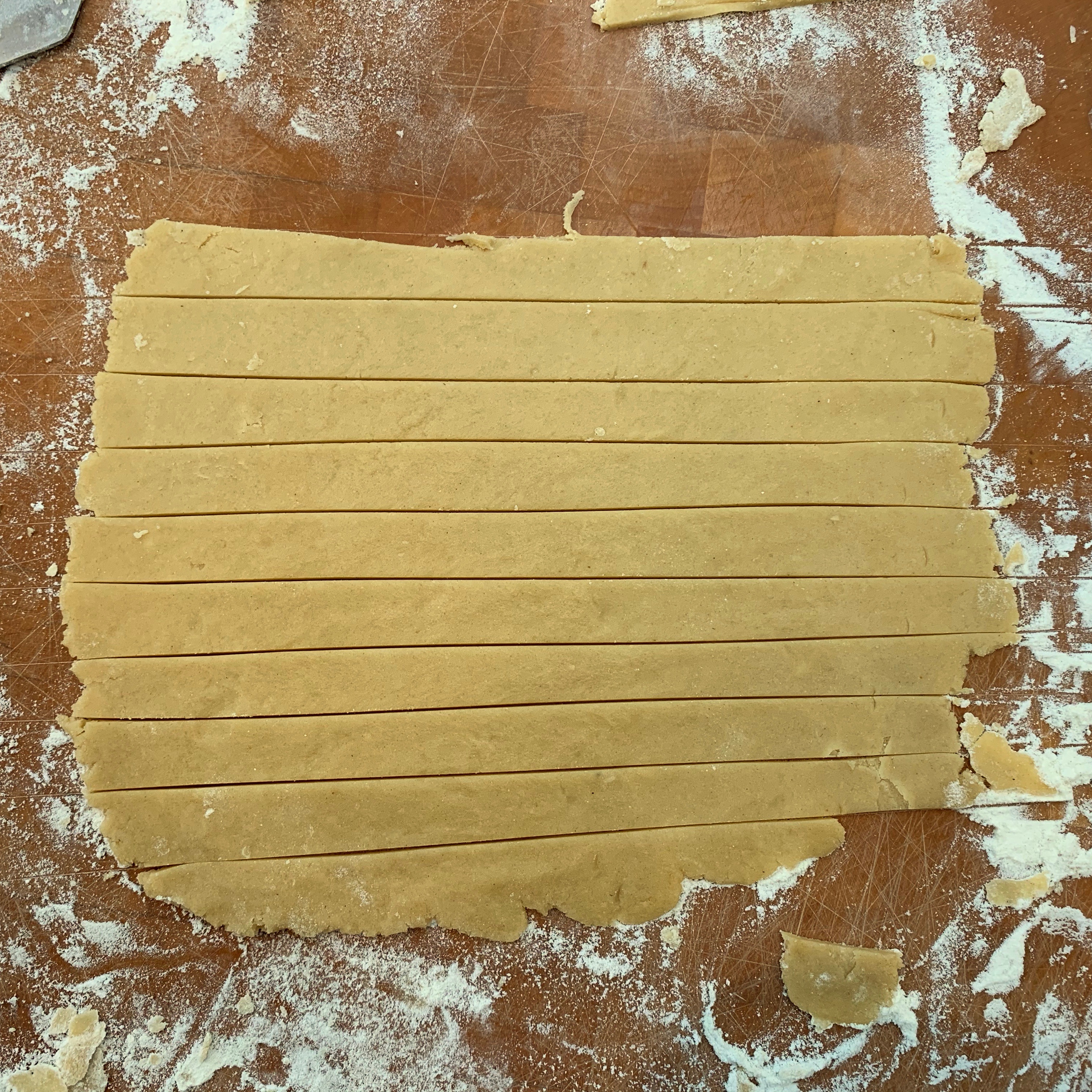
Add all the excess dough to your third piece, roll it out and cut into strips, around 1cm wide.
Spread the breadcrumbs evenly to cover the base of your tart.
Fill the tart with the apple mixture, trying to get rid of the air gaps so the apples are packed well down (but don’t press too hard). The filling will probably form a slight dome over the top: that’s fine.
With your strips of dough, form a lattice over the tart. The Dutch tend to do a kind of overlapping W-shaped pattern – my attempt at this was comically clumsy, as you’ll see from the photos, but this didn’t really matter. You can also do a standard criss-cross version (and if you’re feeling particularly competent, weave it).
Brush the top of the pastry lattice with the remaining egg.
Bake until the pastry is a deep golden brown, which should take around 50 minutes (conventional) or 40 minutes (fan) – depending, as ever, on your oven.
Leave to cool. After 10 minutes or so, extract the pie from the tin.
Enjoy. It’s the perfect treat for a damp, autumnal day.
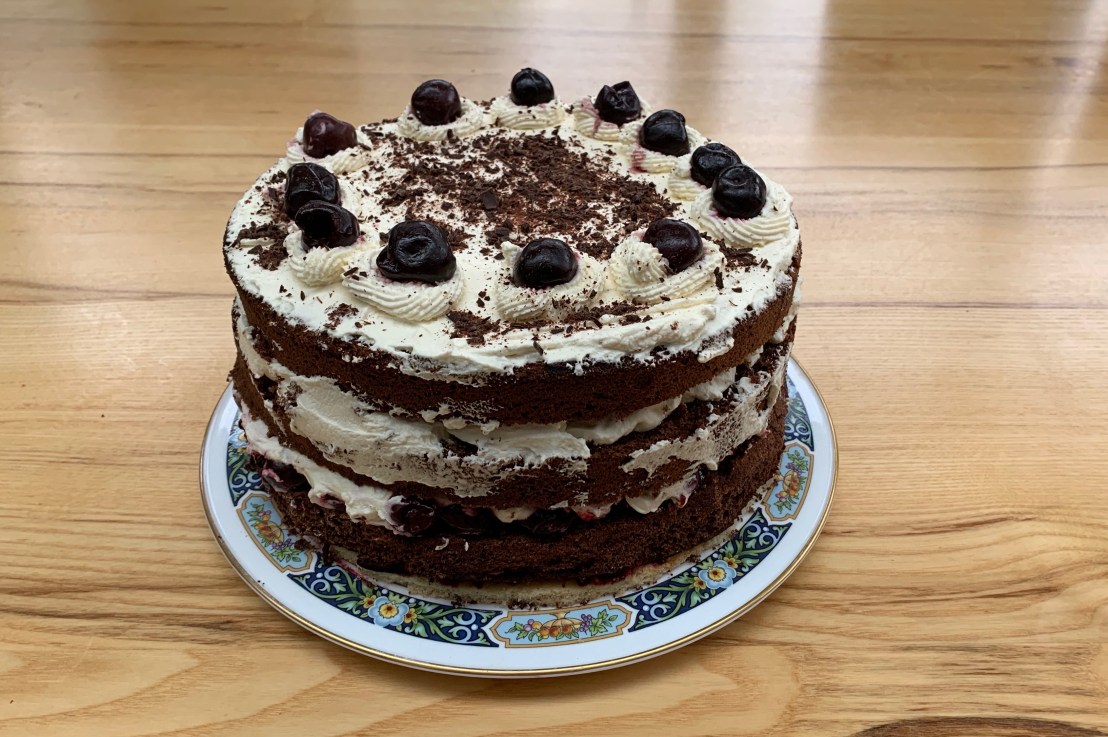
The Germans are fantastic bakers. I could have chosen from dozens of breads and pastries: pumpernickel, pretzels, seed-filled Vollkornbrot, melt-in-mouth Franzbrötchen and so many more. But I’m a child of the 1960s and I couldn’t resist the German cake of my childhood: the over-the-top architectural construction of chocolate cake, cherries and whipped cream that is the Schwarzwälder Kirschtorte – the Black Forest gâteau.
You need to be careful on this one: most English and American recipes are very sweet. The German recipes have better flavour balance, but do tend to be unbelievably heavy on the cream – I’ve seen recipes specifying over 1 kg of cream for a cake not much bigger than the one I’ve made here. The nice people at Gästehaus Reger, in the heart of the Black Forest, have posted an English language version of their recipe, so I’ve used that as my starting point (dramatically reducing the cream content). By the way, according to Wikipedia, Black Forest gâteau doesn’t actually come from the Black Forest (it was created by a confectioner near Bonn), but they seem to have embraced it with enthusiasm.
German recipes specify jars of sour cherries. Being unable to get these, I substituted frozen black cherries, adding lemon juice to give a sour edge. It’s not perfect, but it worked. I was also short of kirsch – the cherry-based firewater that is the key ingredient of authentic Schwarzwälder Kirschtorte, so I had to substitute some blackcurrant schnapps, left over from a trip to Sweden, which gives a similar flavour. I suggest that you don’t go for the cherry brandy that features in many recipes, because it has a very different flavour, stronger and sweeter.
The next problem to solve is your choice of cake tin. Ideally, you want to follow the Germans and use a single tin, slicing the cake into three layers after baking, because you don’t want lots of crusts. However, the cake extremely light and airy due to its mixture of both sabayon and meringue: my 23cm springform tin is about 6cm high and the cake overflowed it by some margin. This required me to trim some rather misshapen excess: use a deep tin if you have one.
This is a fairly complex and time consuming recipe, with two different baked layers and three fillings/drizzles. You will also use and wash up more bowls than you can possibly imagine. But none of this is unduly difficult.
You need to make the base, the cake and the cherry filling far enough in advance that they’re completely cool. The rest is best done at the last minute.
The cherry filling
If you can get jars of sour cherries, use 500g of those and 250g of the juice from the jar in place of the frozen cherries and lemon juice listed below. Also omit the blitzing of cherries and add 30g sugar.
750g frozen pitted cherries
Juice of 1 lemon
25g cornflour
Defrost the cherries. (That’s why I’ve shown this step first – you may want to make your cake layers while this is happening).
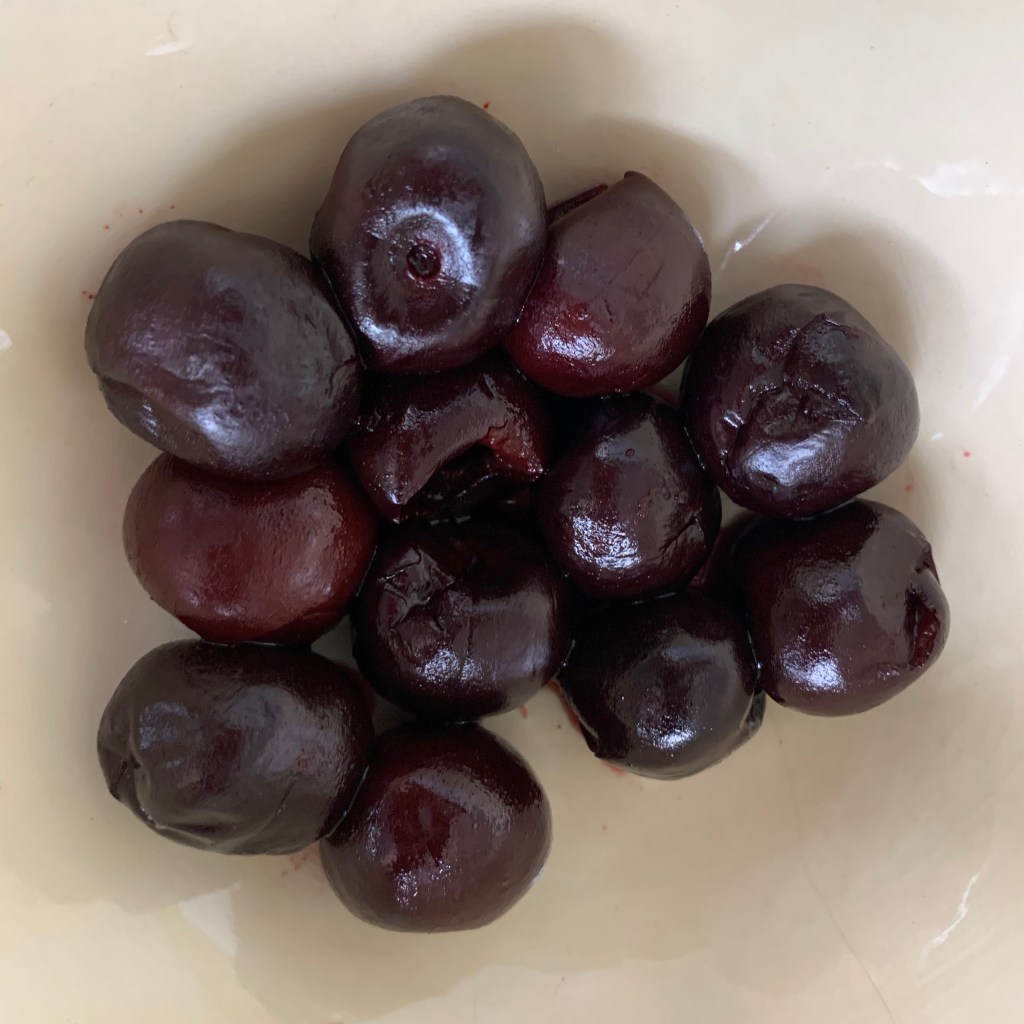
Reserve 12 of the best looking cherries – you will use them later for decoration.
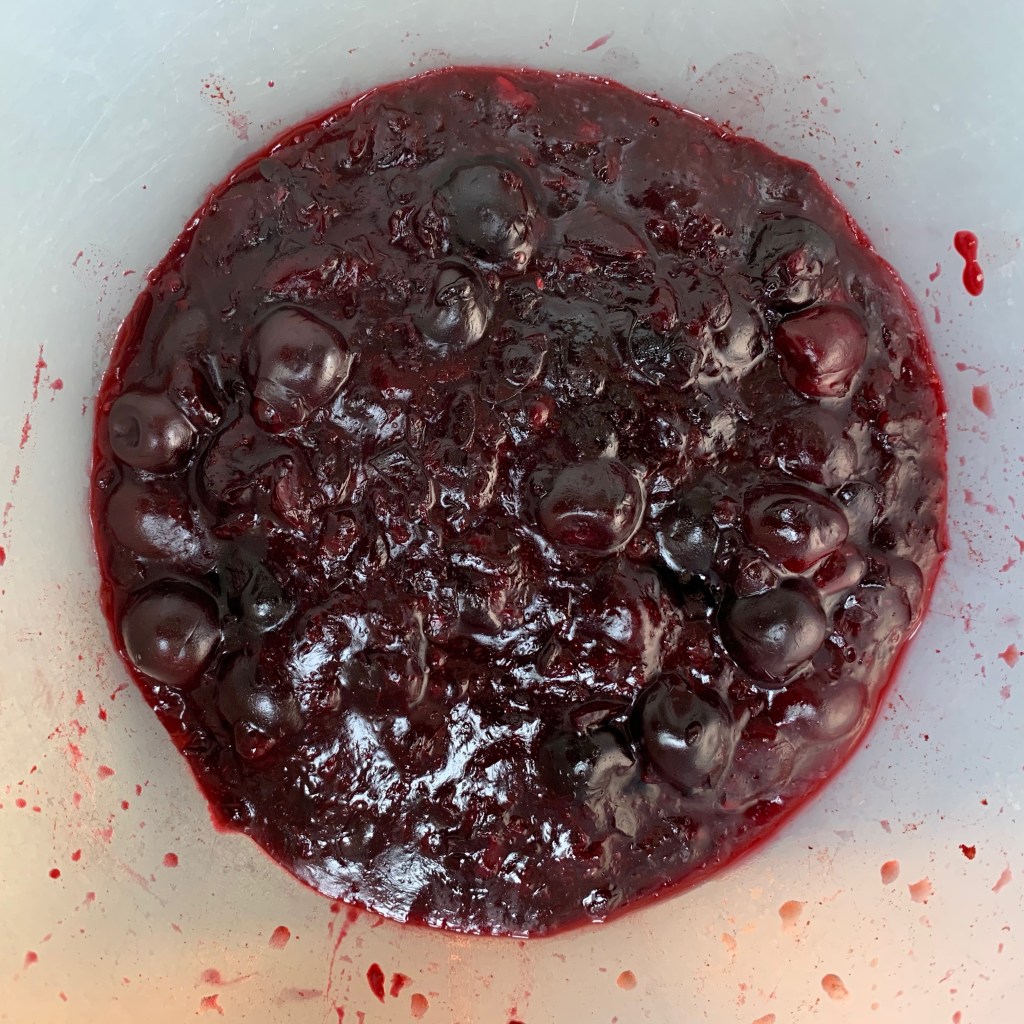
Blitz half of the remaining cherries to a coarse puree.
Put the puree and any juice into a saucepan with the cornflour, stir thoroughly and warm gently until thickened.
Add the remaining cherries and bring to the boil.
Remove from heat and refrigerate.
The shortcrust base
This is optional (several recipes don’t include one) but it gives a nice contrast of texture and makes the cake easier to handle.
120g plain flour
3g (around ½ tsp) baking powder
25g sugar
vanilla essence to taste (around 1 tsp)
1 small egg
60g butter, softened
Preheat oven to 180℃ fan
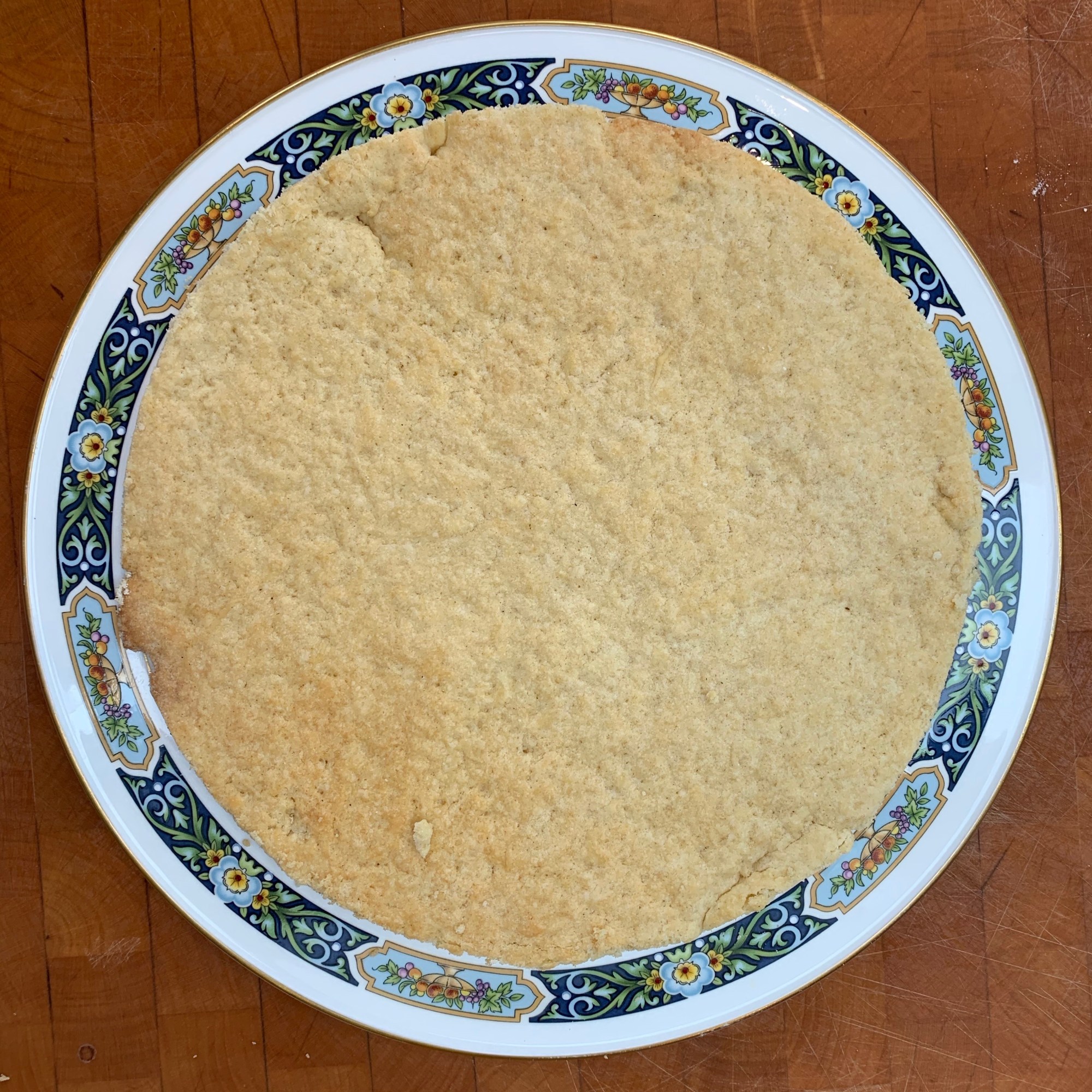
Mix all ingredients together. Cover and refrigerate for around 30 minutes.
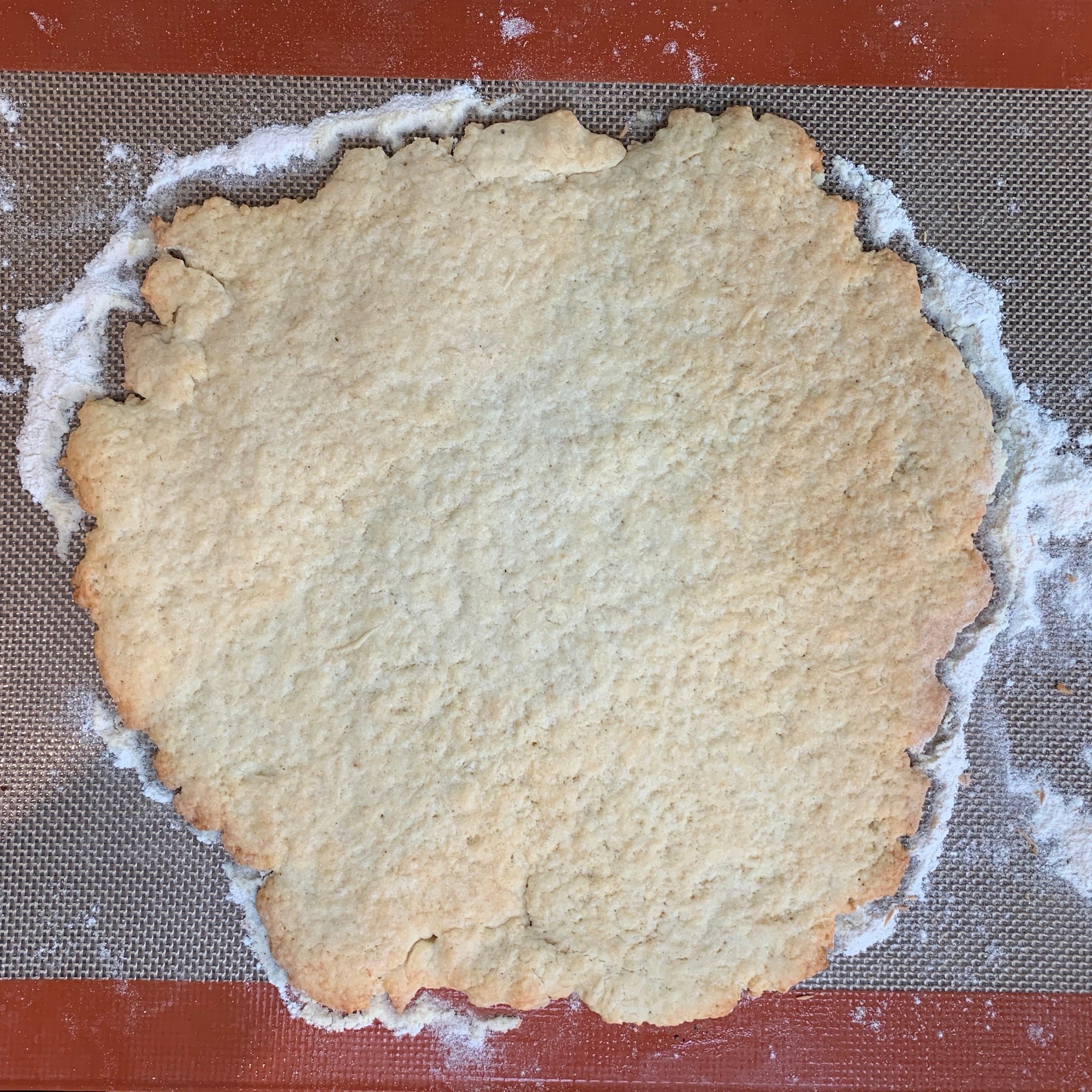
Roll out on a baking sheet to a size slightly larger than your cake tin.
Bake for around 10 minutes
Leave to cool
The chocolate cake
150g plain flour
60g cornflour
50g cocoa powder
10g baking powder – around 2 tsp
6 eggs
200g caster sugar
Vanilla essence to taste – around 1 tsp
Grease your cake tin
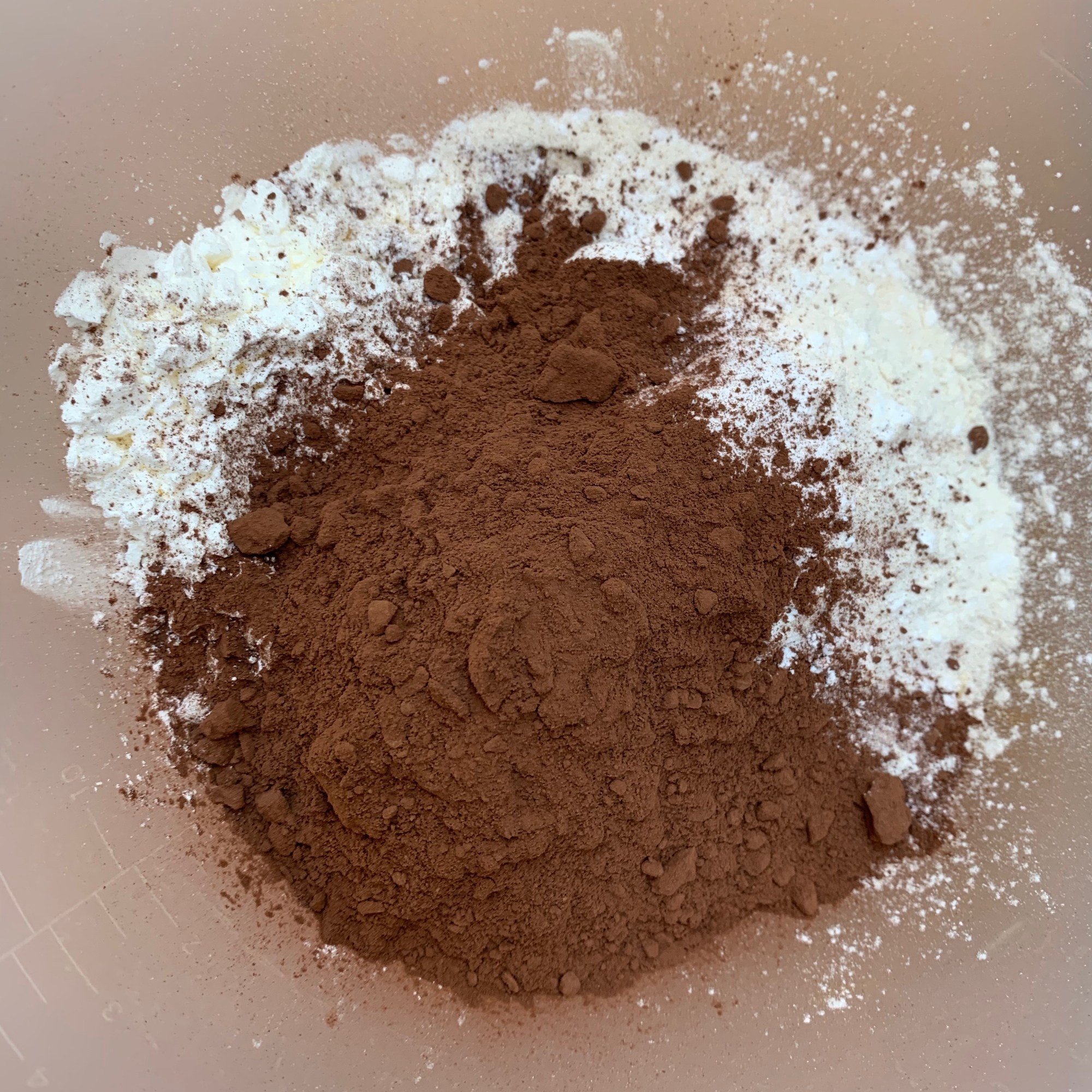
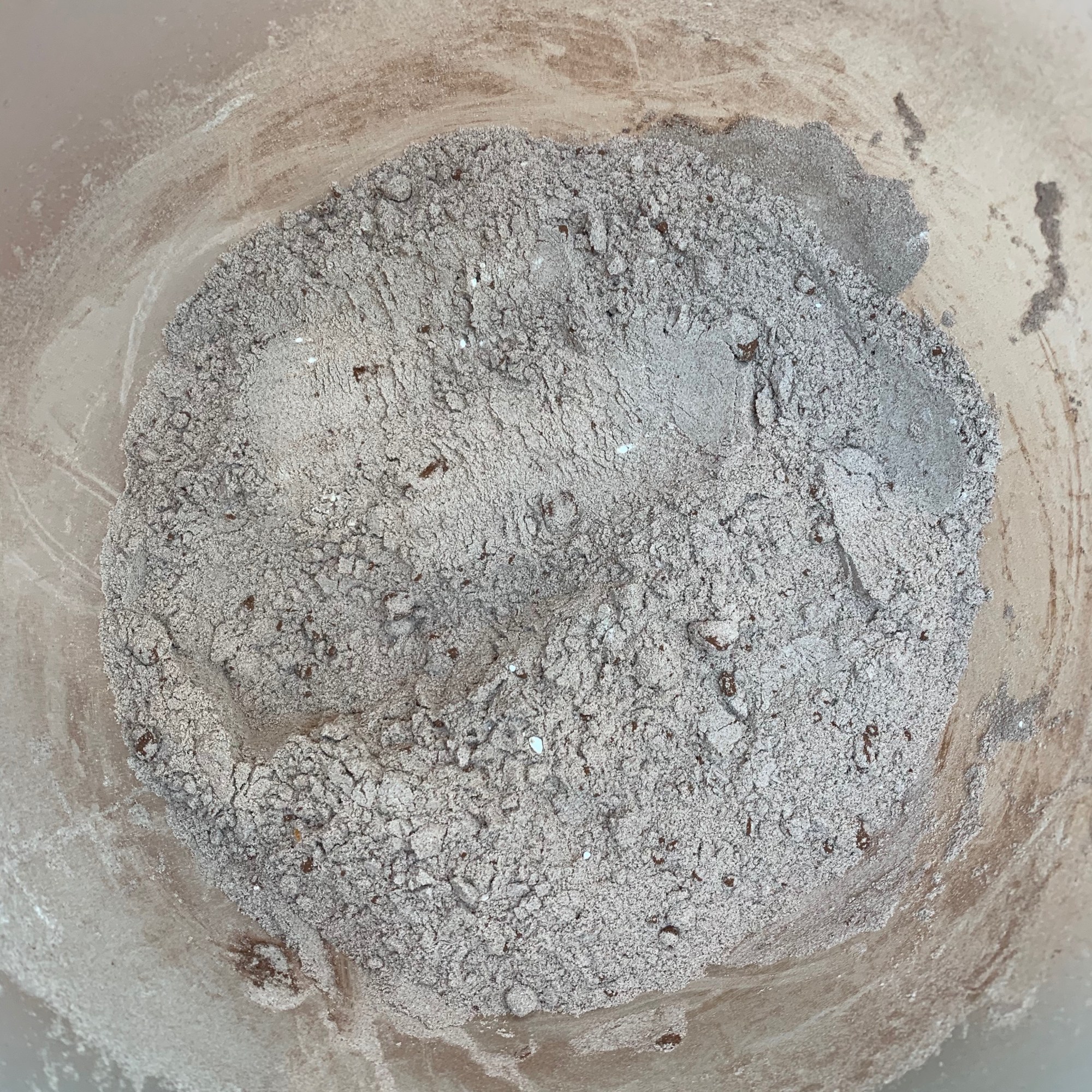
Sift the flour, cornflour, cocoa powder and baking powder into a bowl and combine evenly
Separate the eggs
Add around 50 ml of warm water to the egg yolks and beat at your mixer’s highest speed for around three minutes, until you have a creamy sabayon-like texture. Add 130g of the sugar and beat for another three minutes.
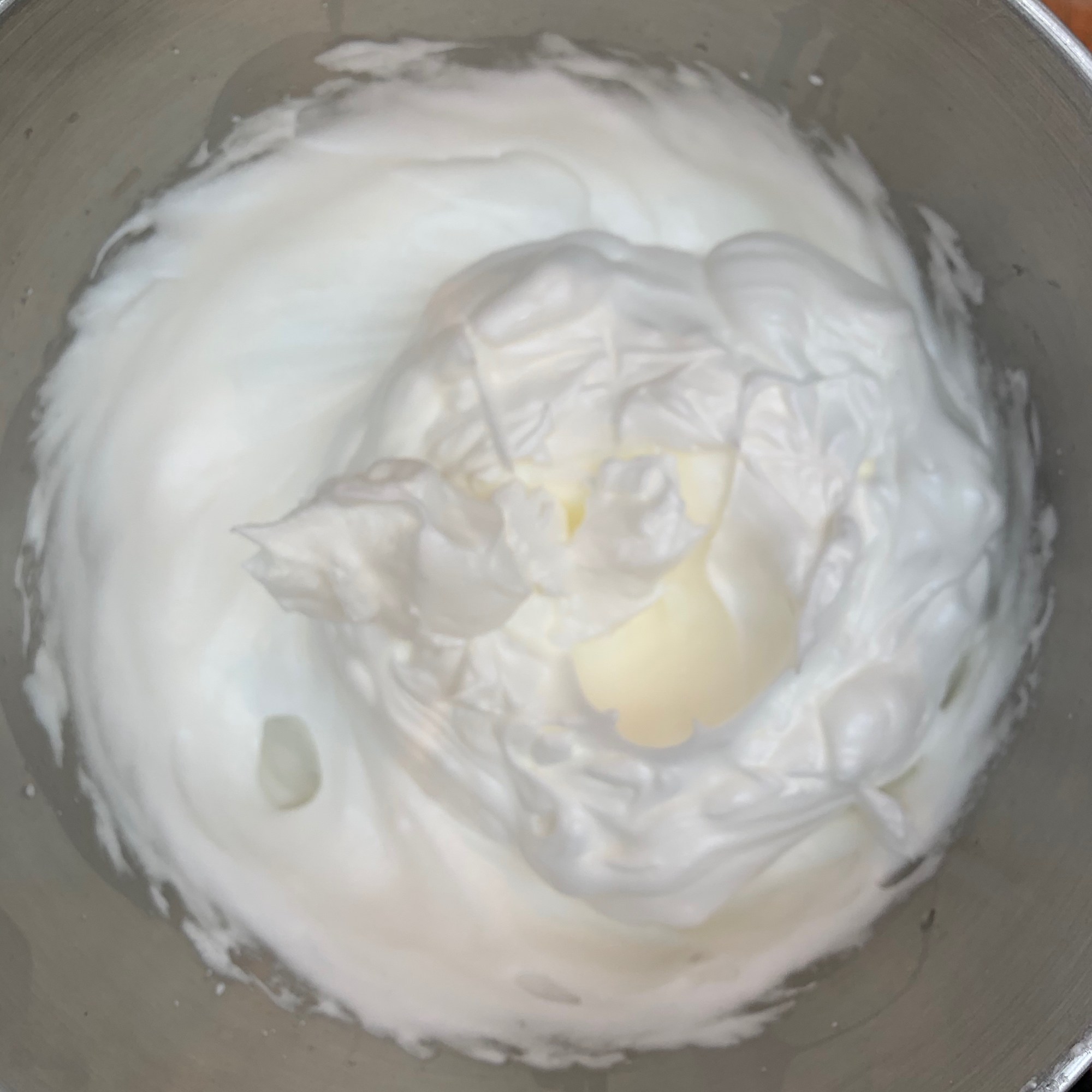
Beat the egg whites until soft peaks form, then add the remaining sugar, then beat until you have a stiff meringue.
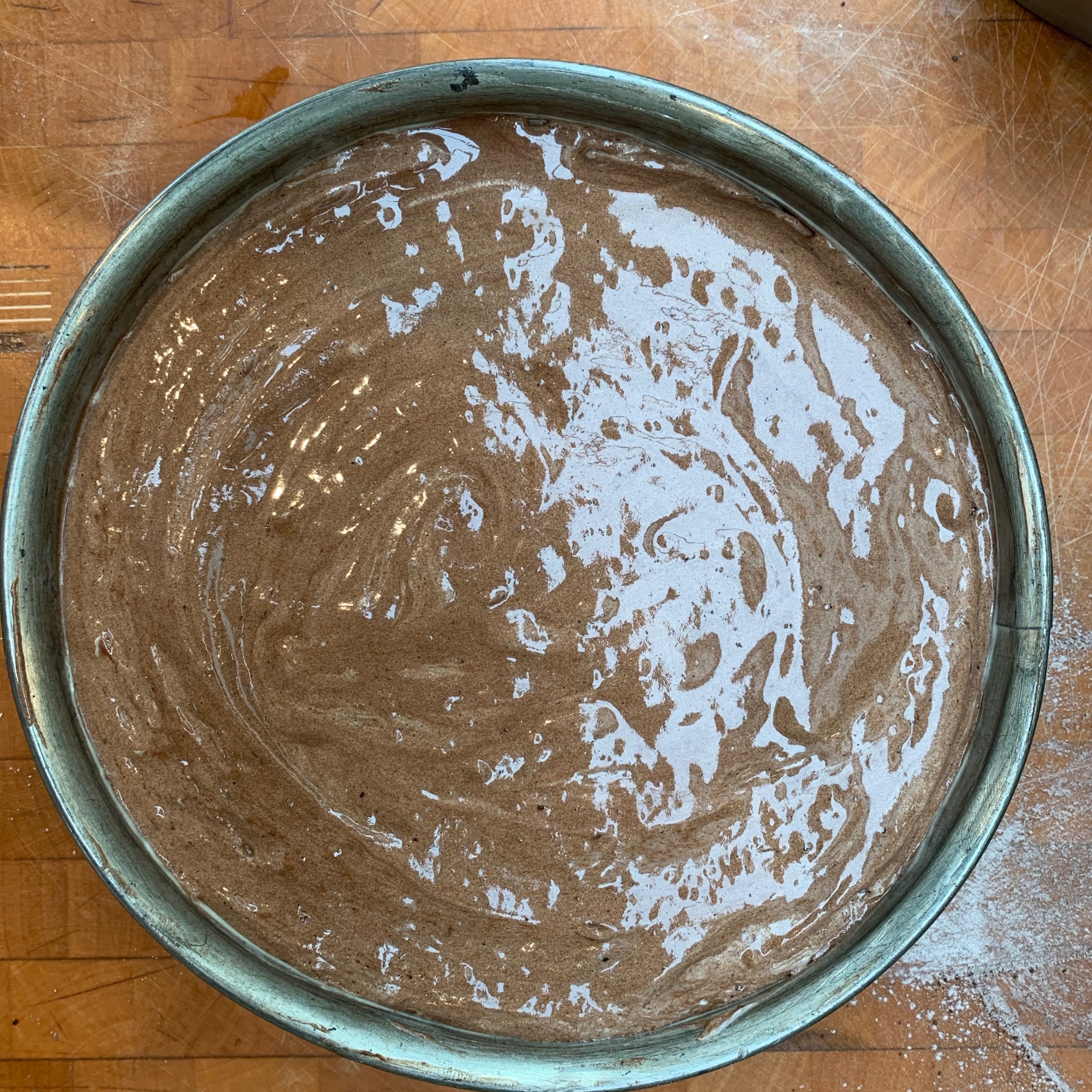
Combine the sabayon, the meringue and the flour mix and blend thoroughly. Mix it as a gently as you can (avoiding losing the air that you’ve just beaten into the eggs) but enough to be sure that you haven’t left any clumps of unblended flour.
Pour the cake into your tin, smooth it off so you have a flat top, then bake for around 40 minutes. The cake is ready when a skewer comes out clean.
Remove from the springform tin and leave to cool.
The whipped cream filling
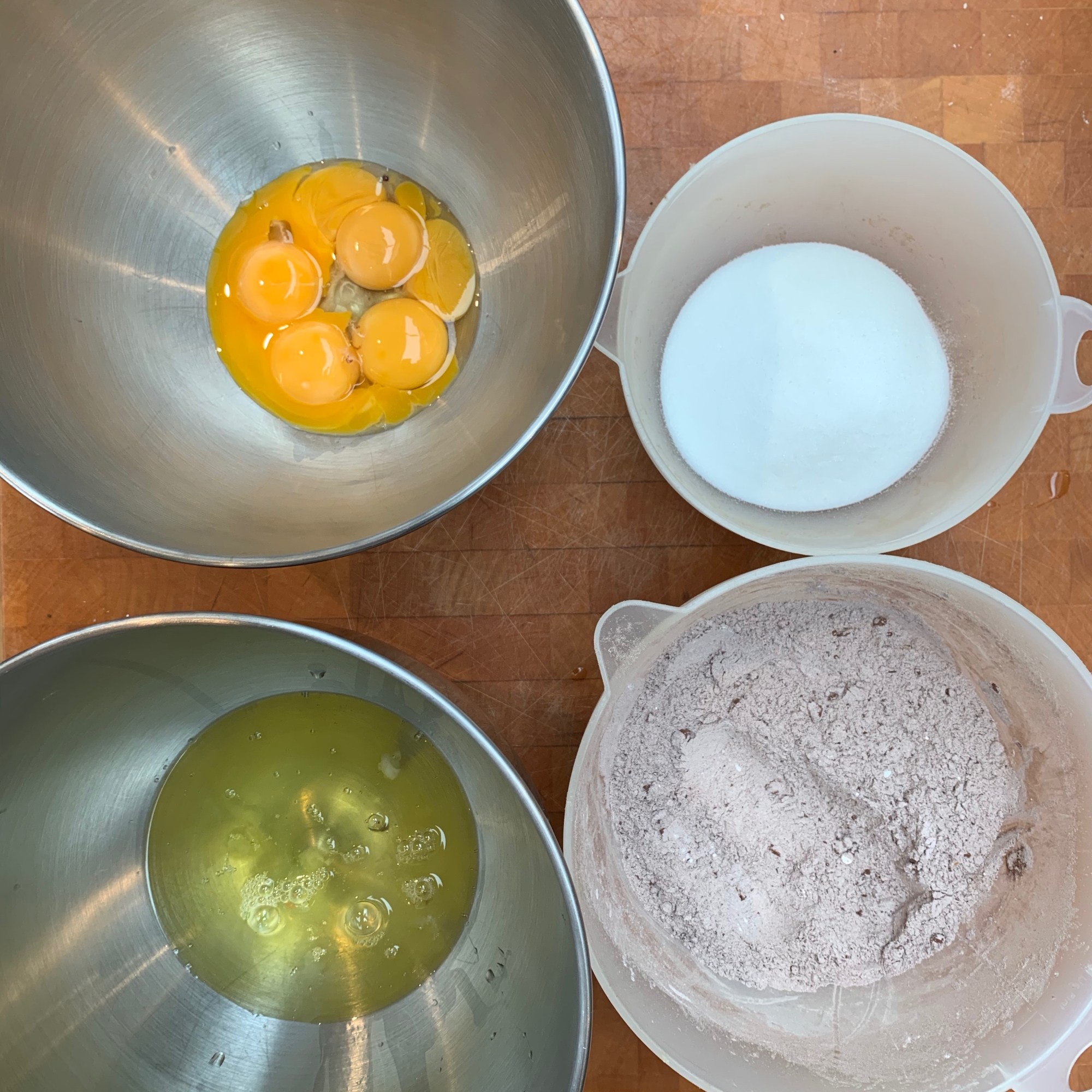
600 g double cream
60 g sugar
Vanilla essence to taste (around 1 tsp)
60 ml kirsch
Whip the cream for a minute or so.
Add sugar, vanilla essence and kirsch.
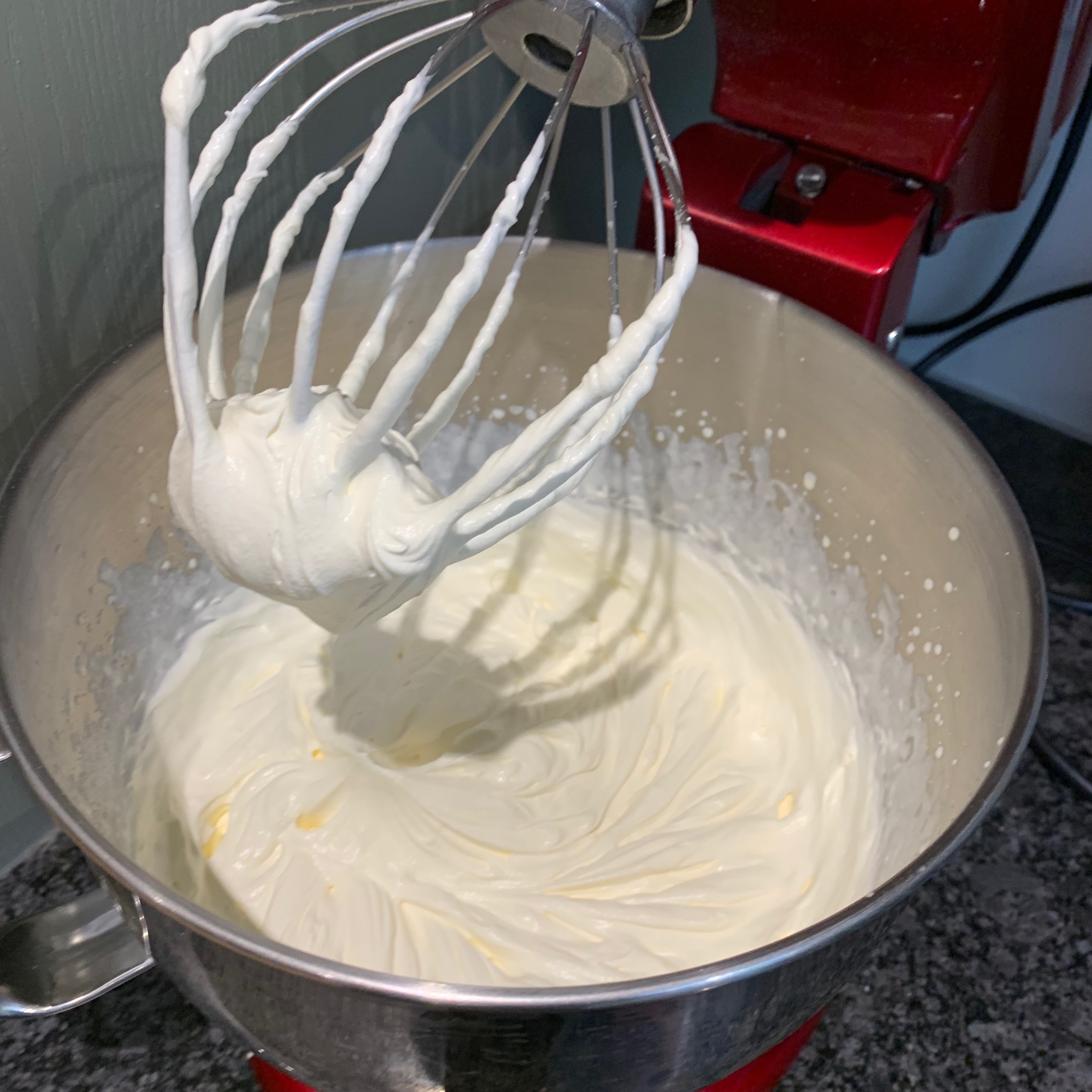
Whip the mixture until stiff.
Final assembly
150ml kirsch
20g sugar
20g dark chocolate for grating (the amount is very approximate)
Add 75 ml kirsch to the cherry filling and mix thoroughly
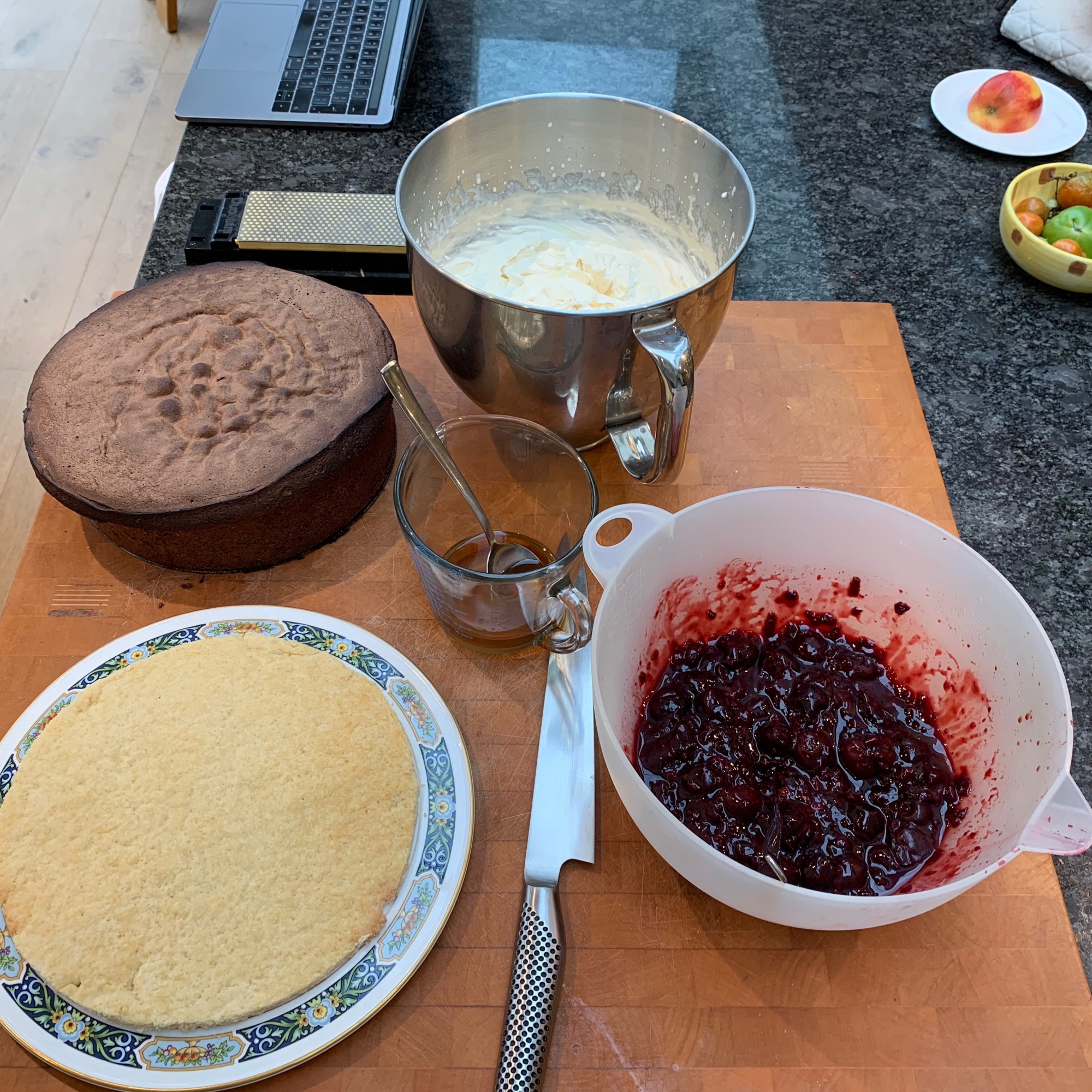
Add 75 ml kirsch to 75 ml water and 20g caster sugar and mix thoroughly
If the cake is heavily domed (mine wasn’t), trim off the domed crust.
Turn the cake over so the crust side is down.
If your cake overspilled the edges of your tin, trim it so that you have a cylinder.
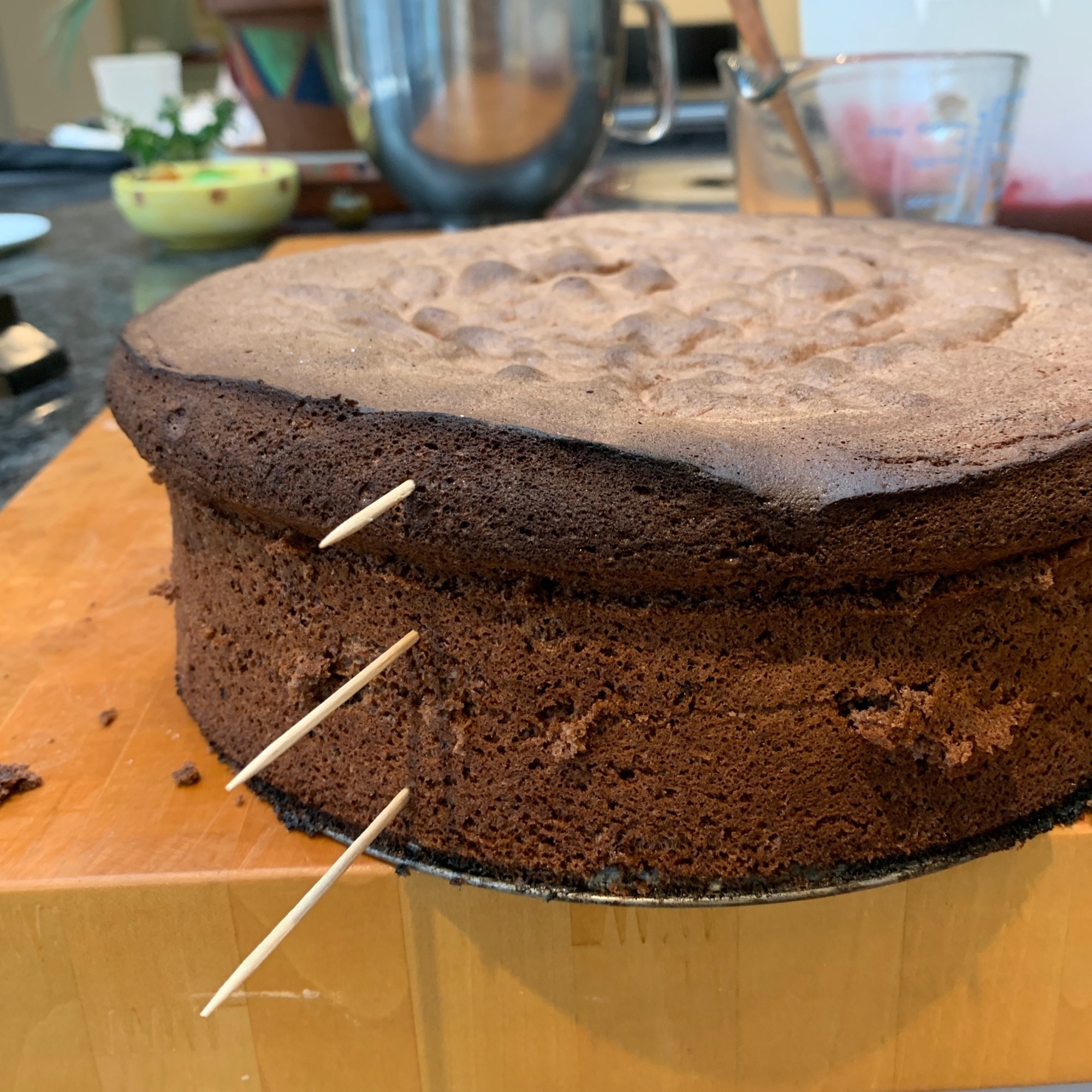
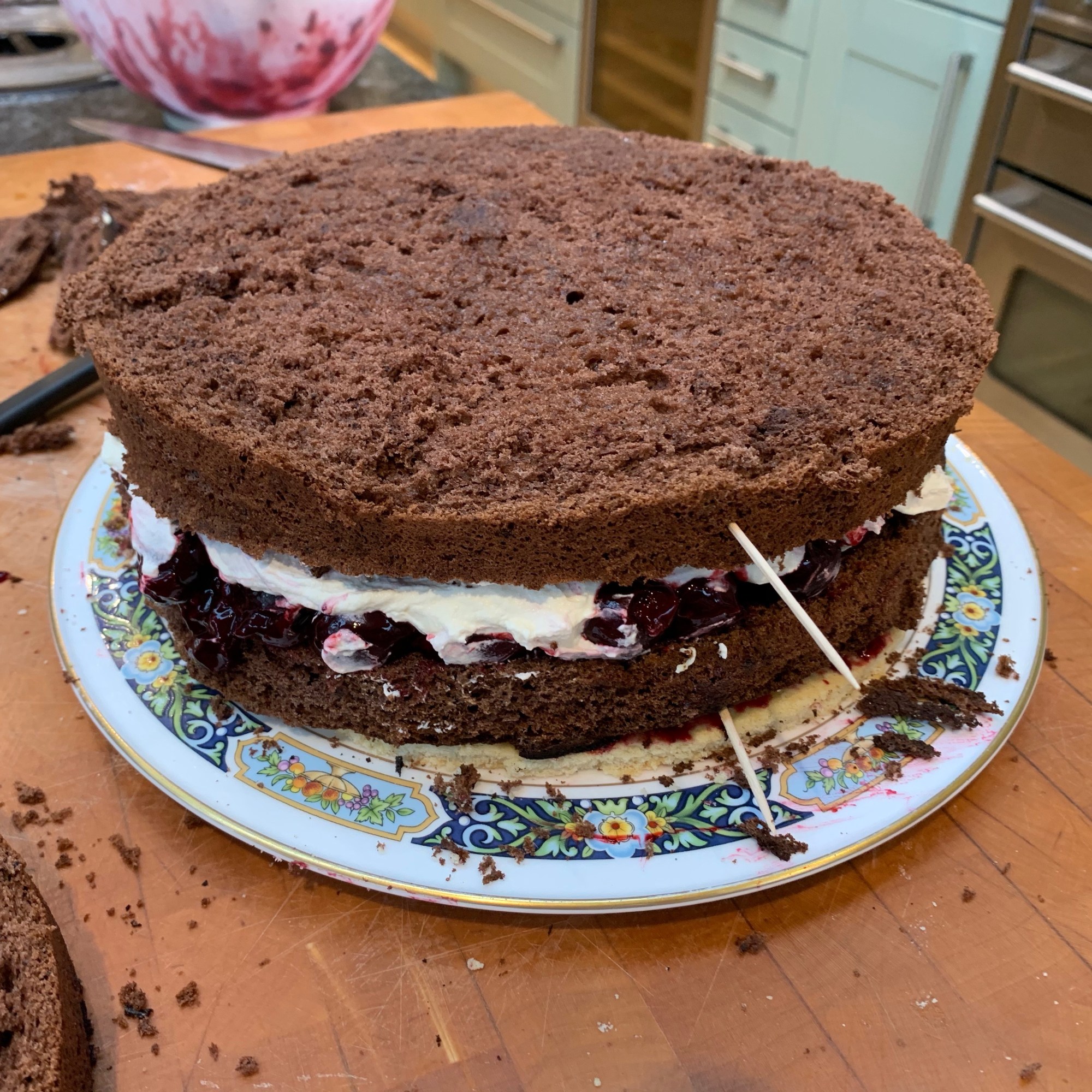
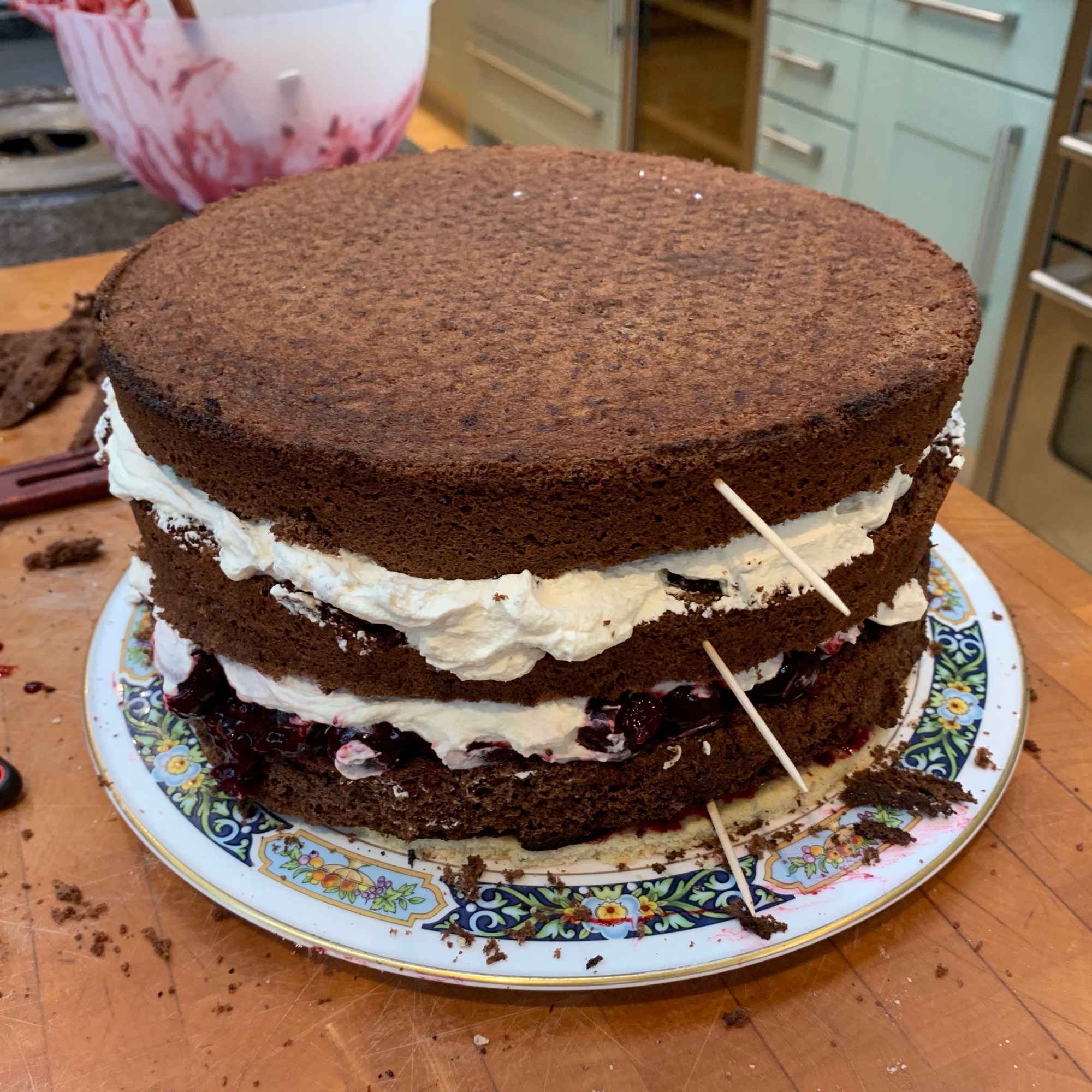
Slice the chocolate cake into three slices horizontally. It’s helpful to mark the slices with a toothpick in each one, immediately above each other: this will help you re-assemble the cake into exactly the right place.
Move the slices next to each other and drizzle them with the kirsch/water/sugar mix.
Trim the shortcrust base to a circle the same size as your cake.
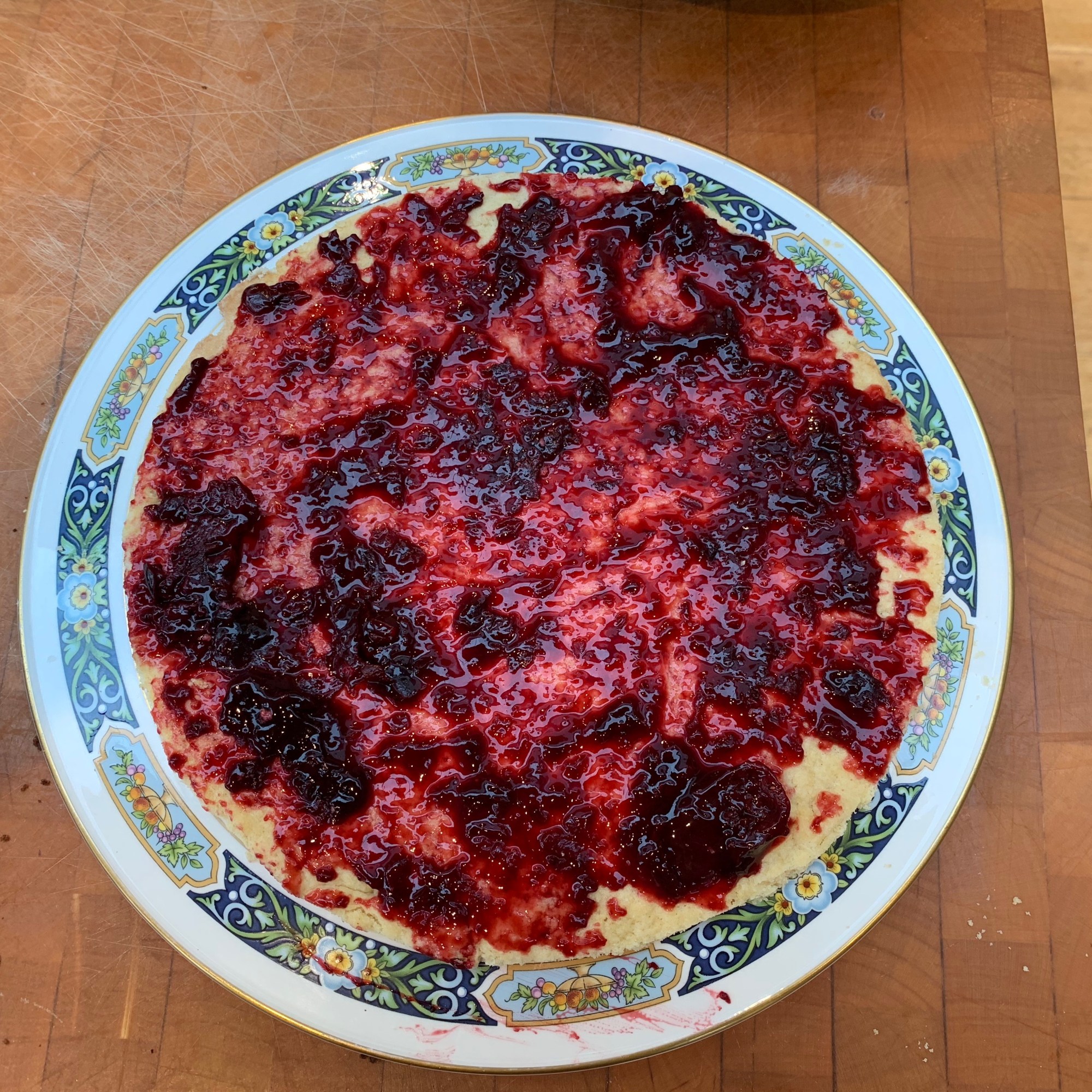
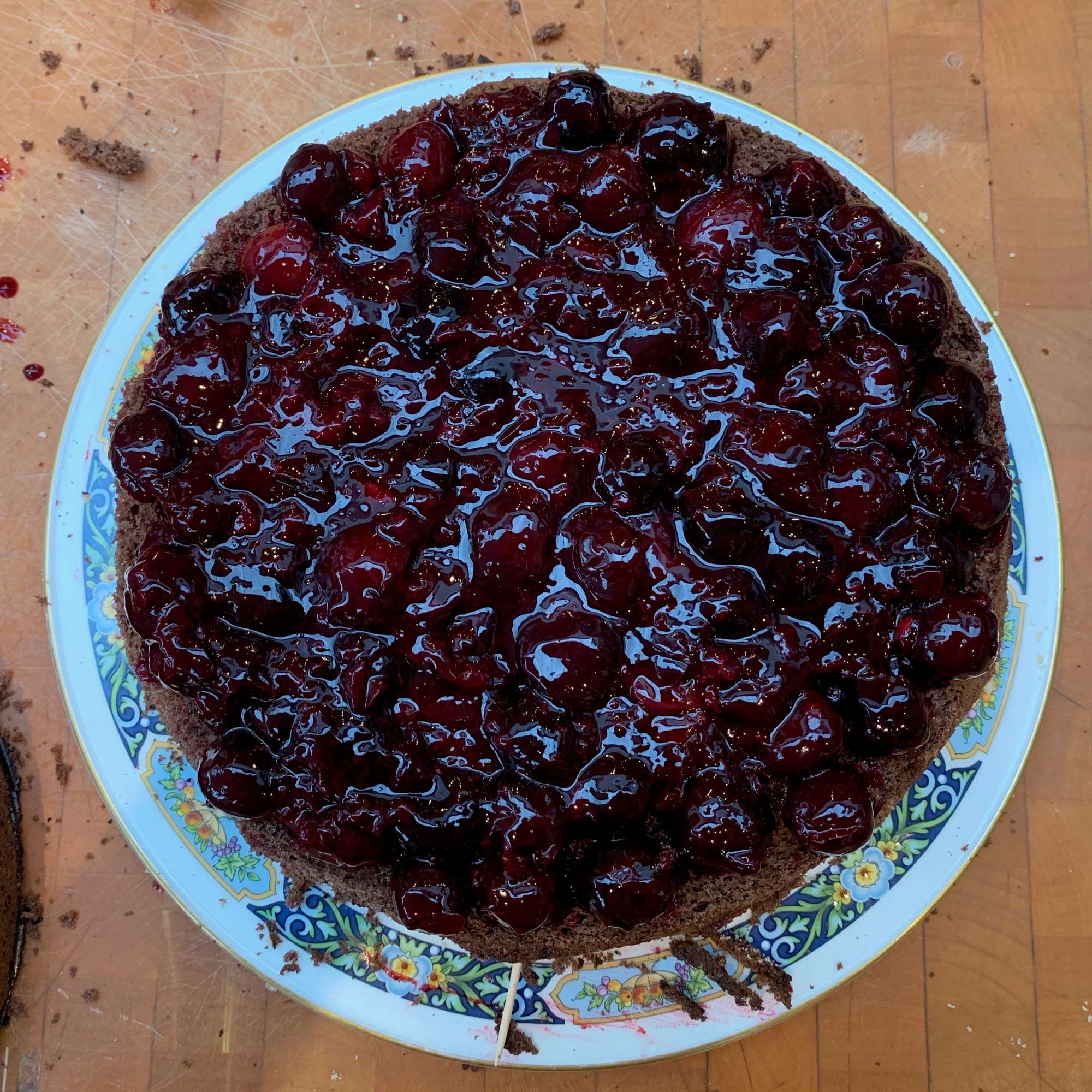
Spread some cherry filling over the base – remove any whole cherries so that you’re just spreading the jam.
Place a layer of cake onto the base (start with the one that was the topmost layer while baking).
Spread the rest of the cherry filling evenly over the cake. Make sure you get to the edges.
Reserve around 80g of the whipped cream for decoration: you’ll want to put it into a piping bag with a star nozzle.
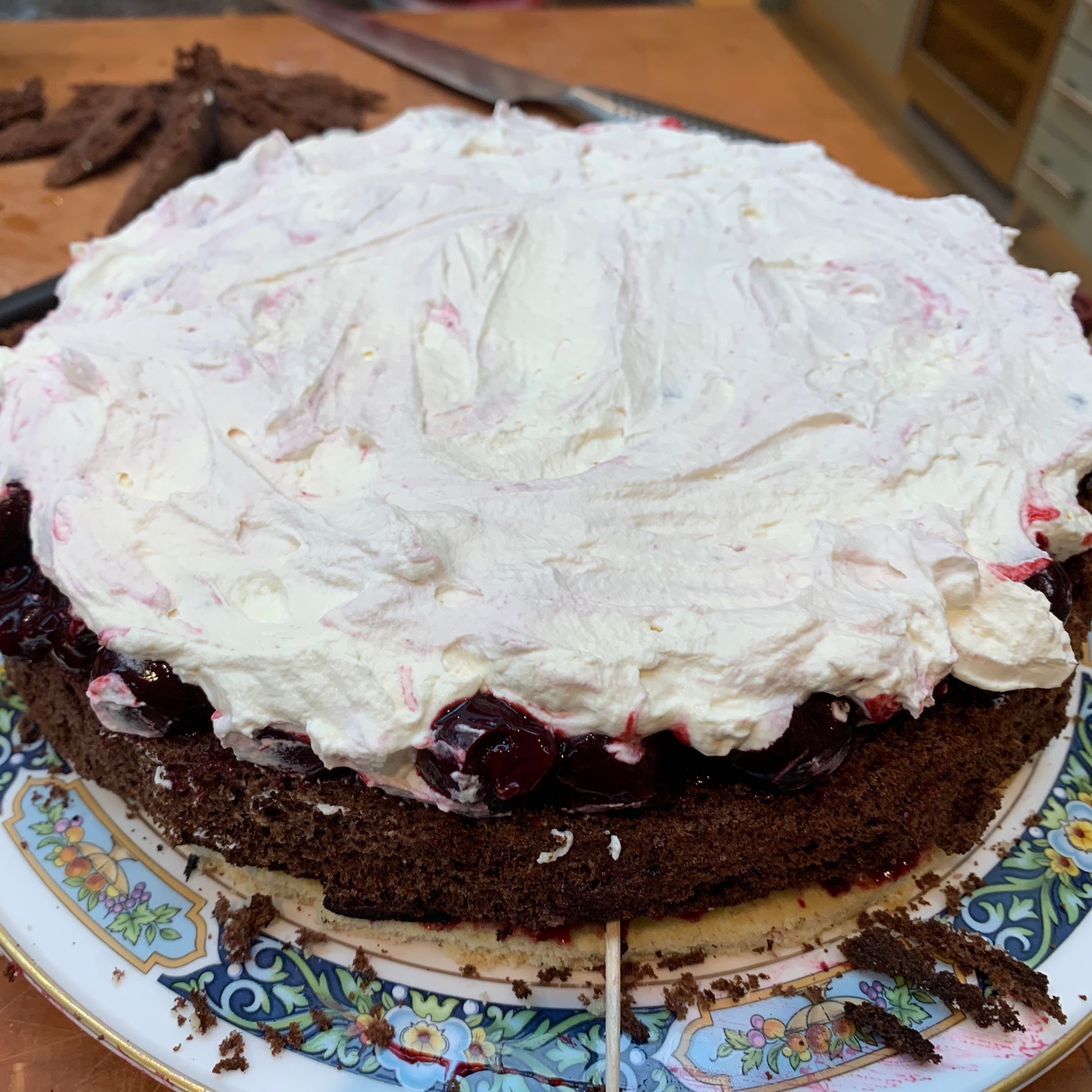
Spread ⅓ of the remaining whipped cream over the cherry filling. Make sure you get to the edges.
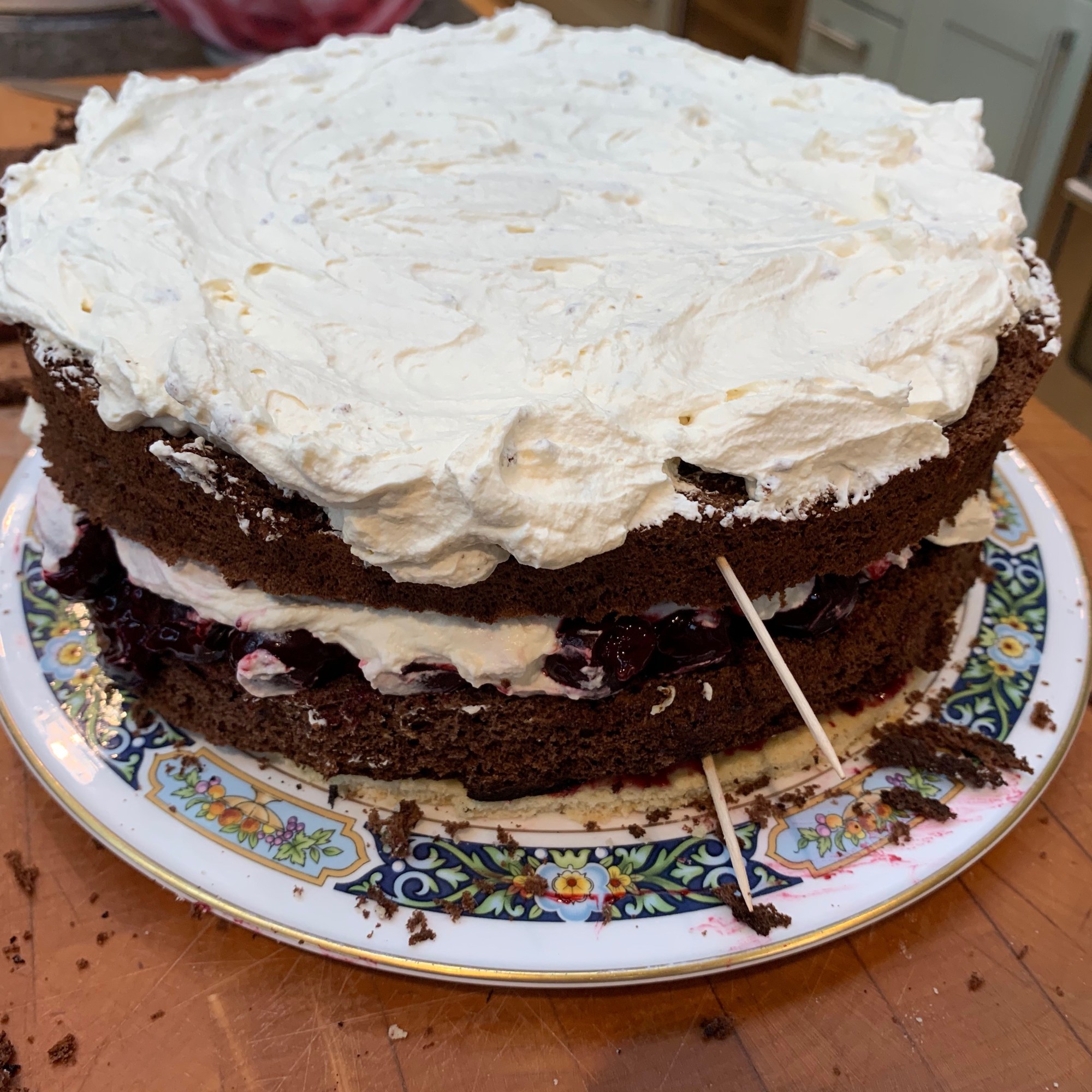
Place the remaining two layers of cake on top, using the toothpicks to orient you as to exactly where to put them. After each layer, spread another third of the whipped cream: the top layer should be very even. (At this point, the Germans would also spread cream over the sides to form a perfect white cylinder. But that’s too much cream for me.)
Grate the chocolate into shavings with a grater of vegetable peeler, and sprinkle the shavings over the cake. If you’ve put cream over the sides, also dust the sides with grated chocolate.
Pipe twelve small doughnuts of cream in a circle close to the edge of the cake. Into each doughnut, place a cherry.
You’re done! It was complicated and it was a long haul, but you’ve created a real spectacular, which is light as a feather and tastes fantastic.
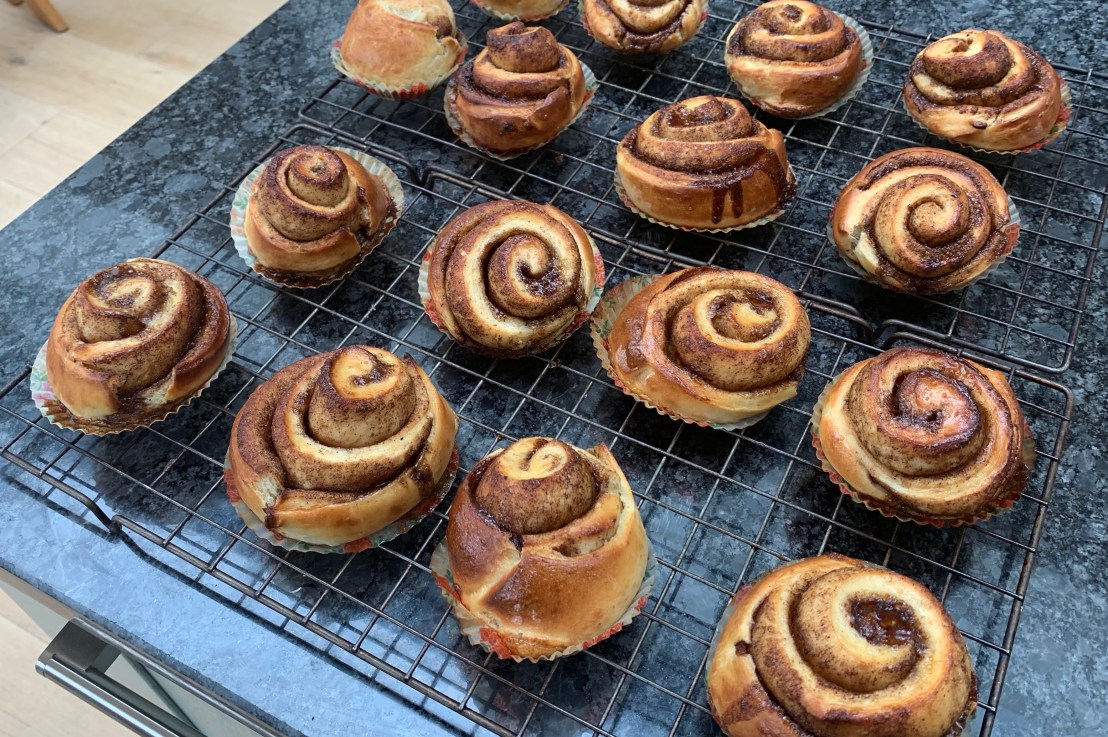
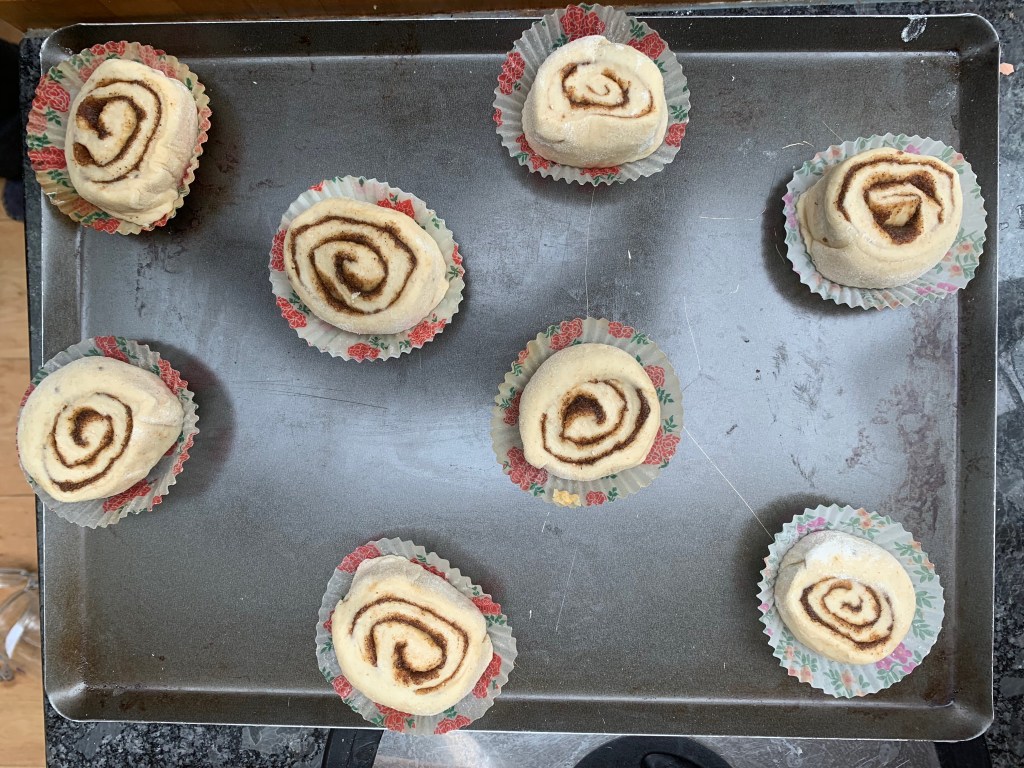
In Sweden, October 4th is Kanelbullens dag, which makes the humble cinnamon bun the only baked item I know to have an officially sanctioned holiday. To be fair, it’s not the most long-standing of national holidays, having been dreamed up in 1999 by the Swedish Home Baking Council. But this year, as it happens, it coincided with a cold and rainy Sunday morning here in London, so no possibility of my usual tennis game. How better to spend the morning than with a bit of traditional baking?
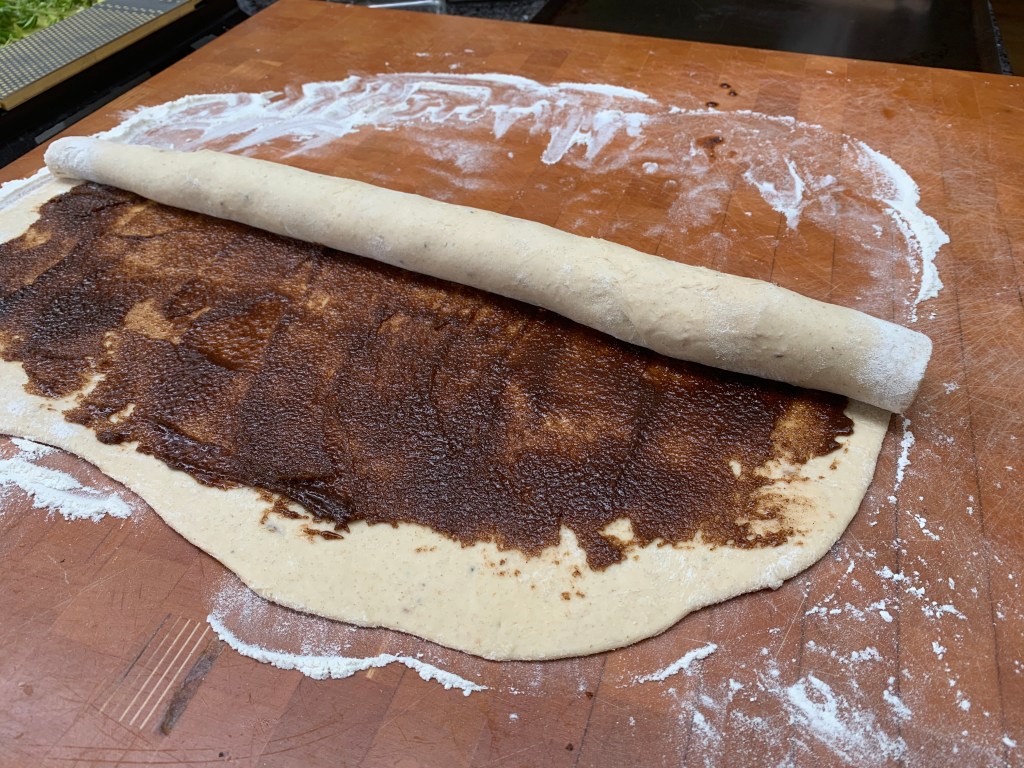
The basics of the cinnamon bun are straightforward enough: make a slightly sweetened bread-like dough enriched with butter, milk and (in many recipes) egg, let it rise, roll it flat and spread with a butter/sugar/cinnamon filling. At this point, you have two choices: for the traditional cinnamon roll, you roll it into a sausage; for the cinnamon twist or knot (kanelknutar), you start with a book fold and do a tricky looking twisting trick. I went for the simple roll.
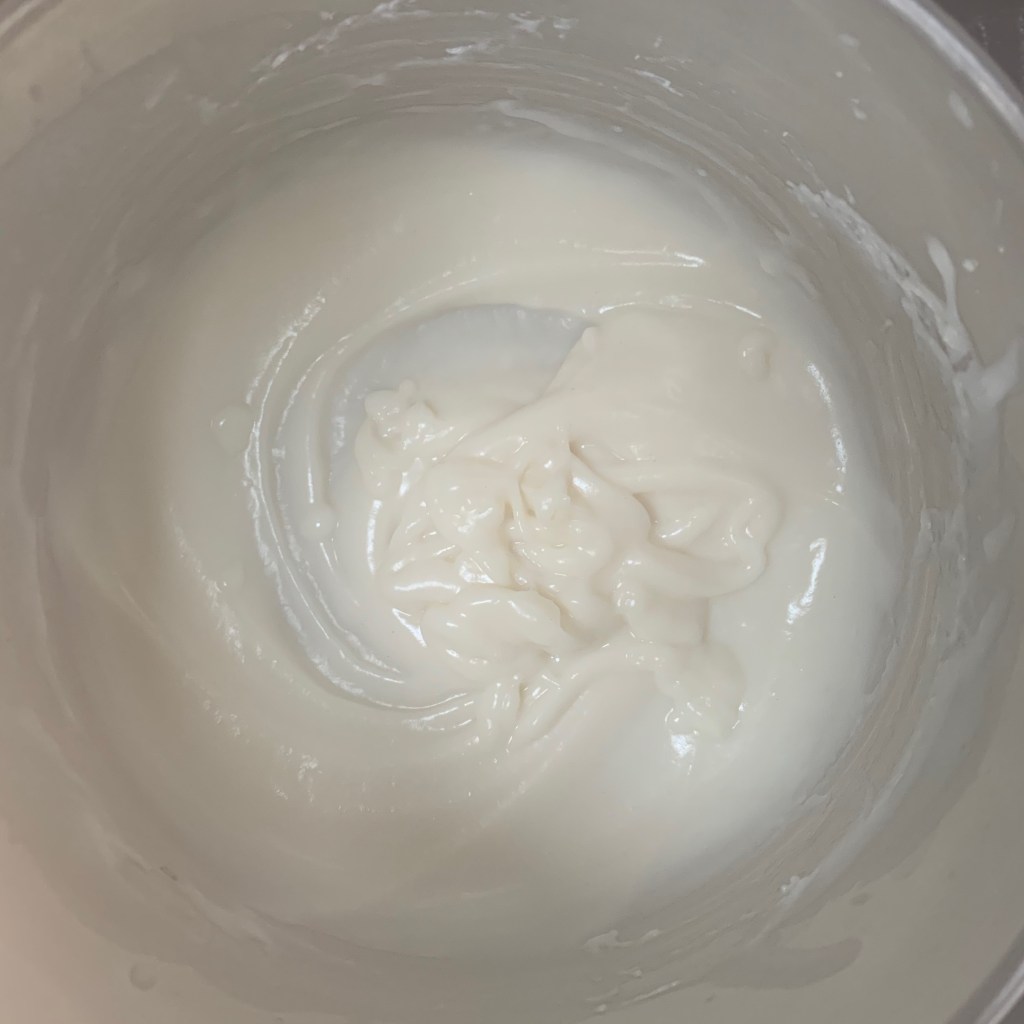
Just about anywhere in Sweden, the buns would be garnished with the little white sugar nibs known as “pearl sugar”, and in many places, it would be brushed with a syrup glaze after baking. My sweet tooth isn’t what it was, so I’ve omitted both of these. For added puffiness, however, I’ve followed an American blog called “True North Kitchen” and used an Asian pre-dough technique called Tangzhong, which helps to keep the buns stay soft for several days after baking.
The Tangzhong (or “water roux”)
75 ml milk
75 ml water
30g strong white flour
Whisk the ingredients together in a saucepan, getting as many lumps out as you can
Heat over medium heat until the mixture thickens, whisking frequently. Make sure you get rid of lumps as they appear.
Keep heating for a couple more minutes – there shouldn’t be any taste of raw flour left – and then remove from the heat and set aside.
The dough
75g butter
8g yeast
30g sugar
6g salt
400g flour
Ground cardamom to taste (I started with whole pods and shelled and ground my own in a pestle and mortar, which yielded about 1g, which was fine)
125ml milk
1 egg
Melt the butter and leave to cool
In the bowl of your stand mixer, evenly mix the yeast, sugar, salt, flour and cardamom
Warm the milk to lukewarm (around 40℃)
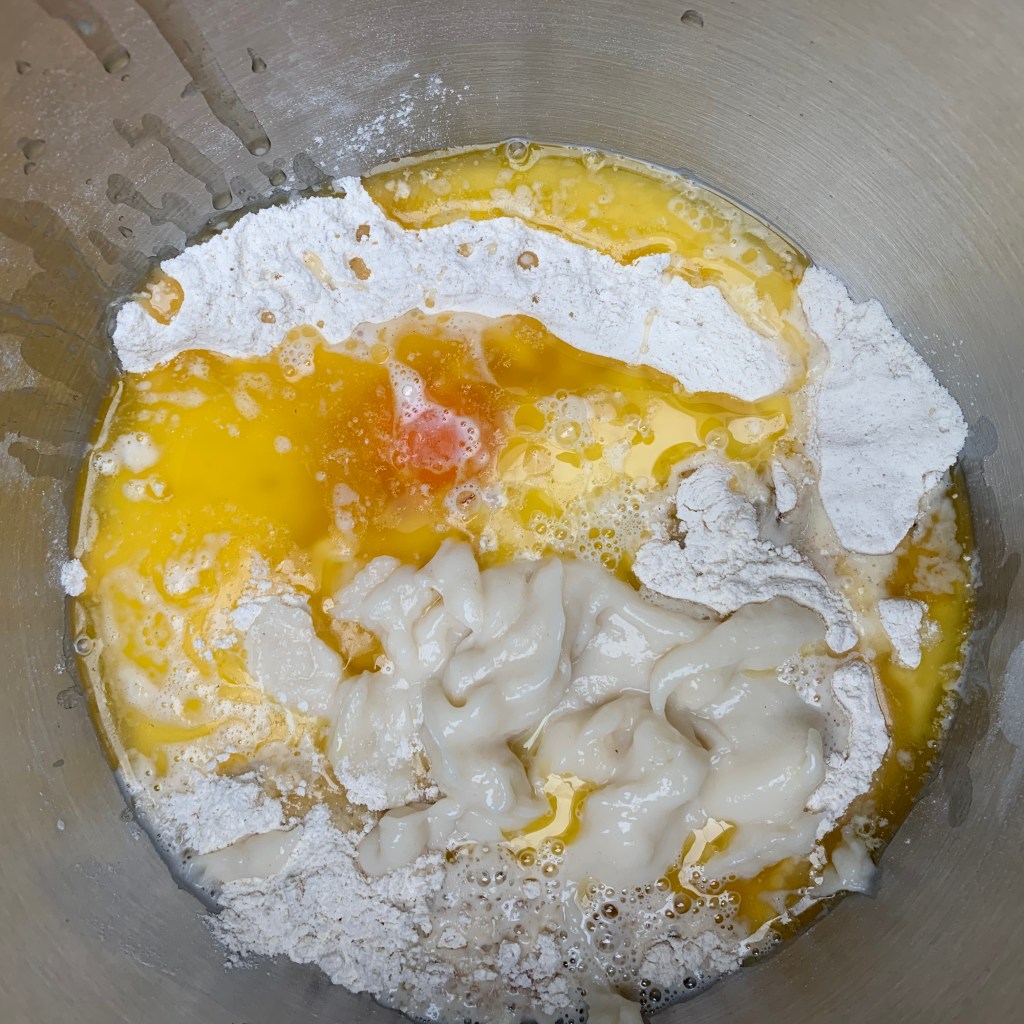
Add the milk, egg, melted butter and tangzhong to the dry mix. Stir until combined into a smooth dough (either with a wooden spoon or the standard paddle of your mixer.
Knead for around 5 minutes with the dough hook.
Leave to rise until you have a light, puffy dough: this took a couple of hours in a not particularly warm autumn kitchen, but will vary according to the temperature of your kitchen
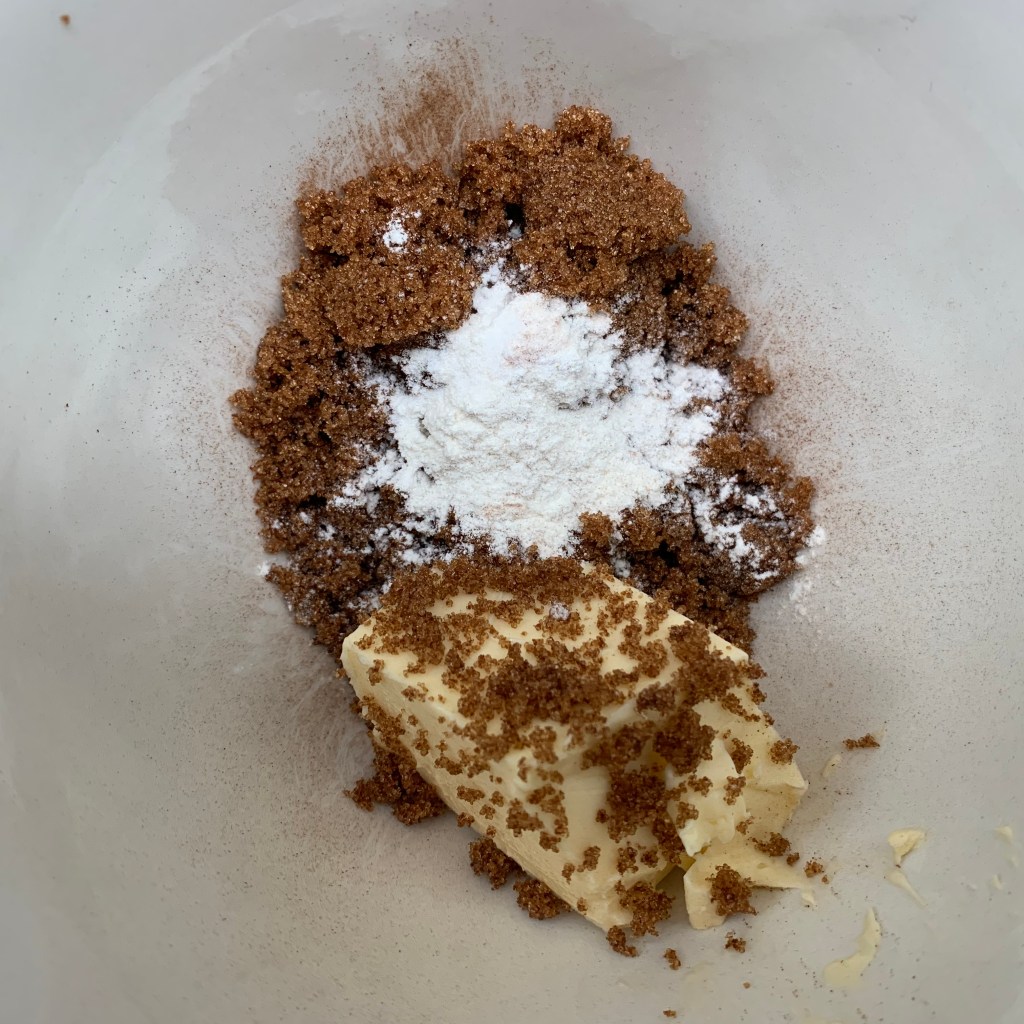
Ingredients
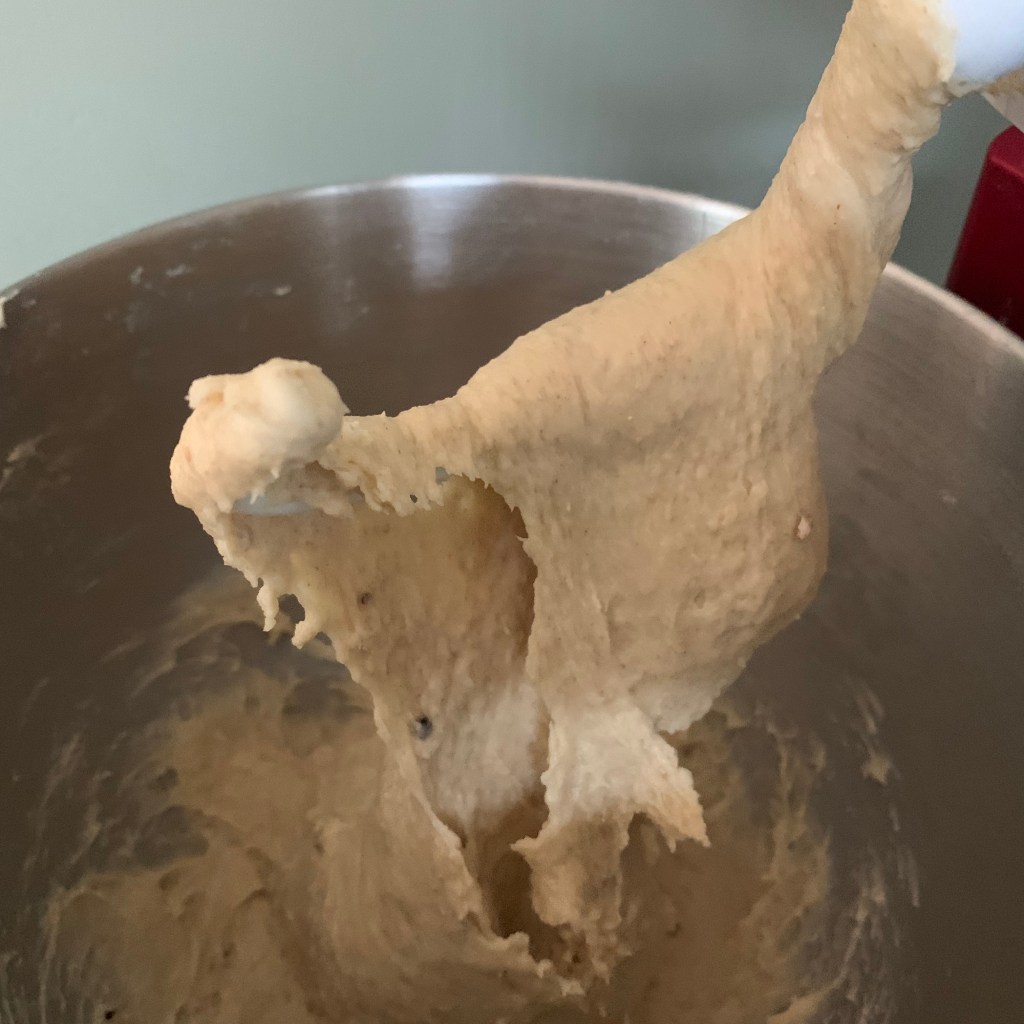
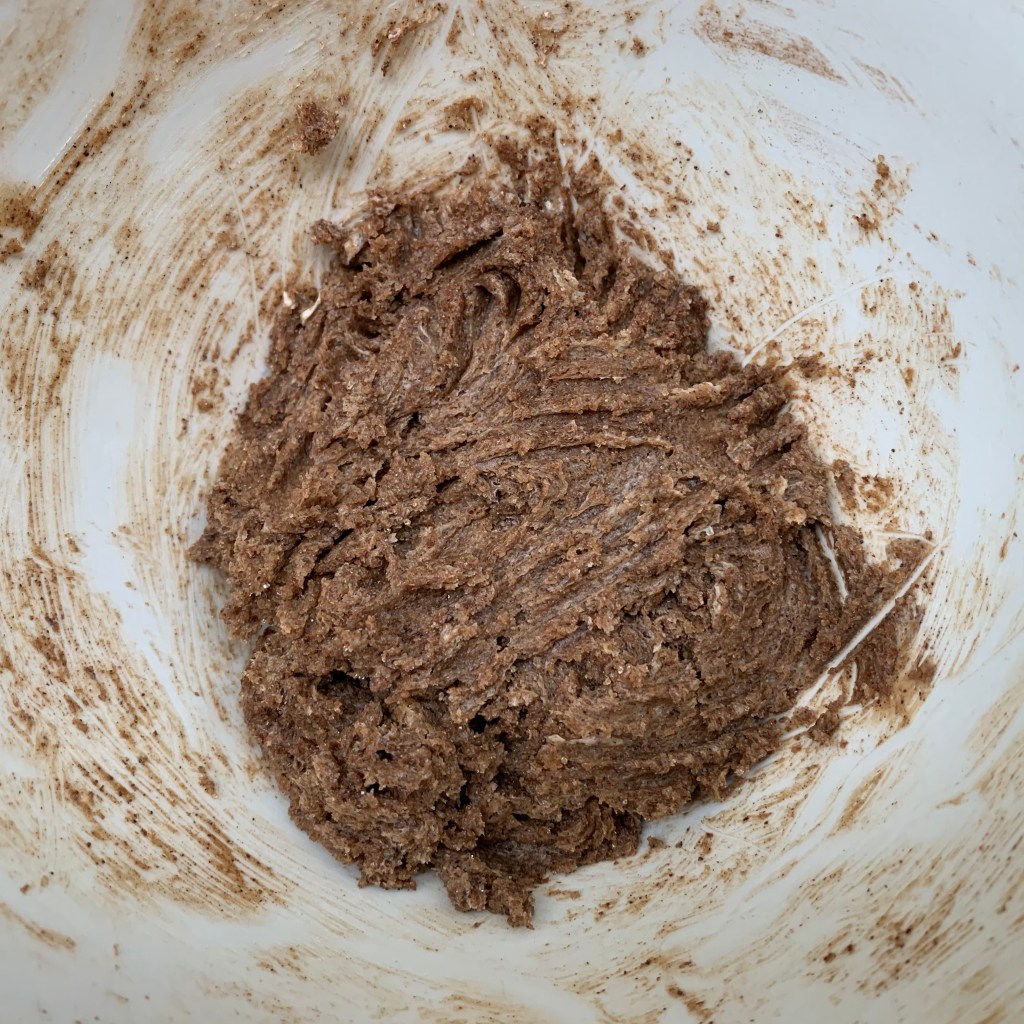
After first kneading
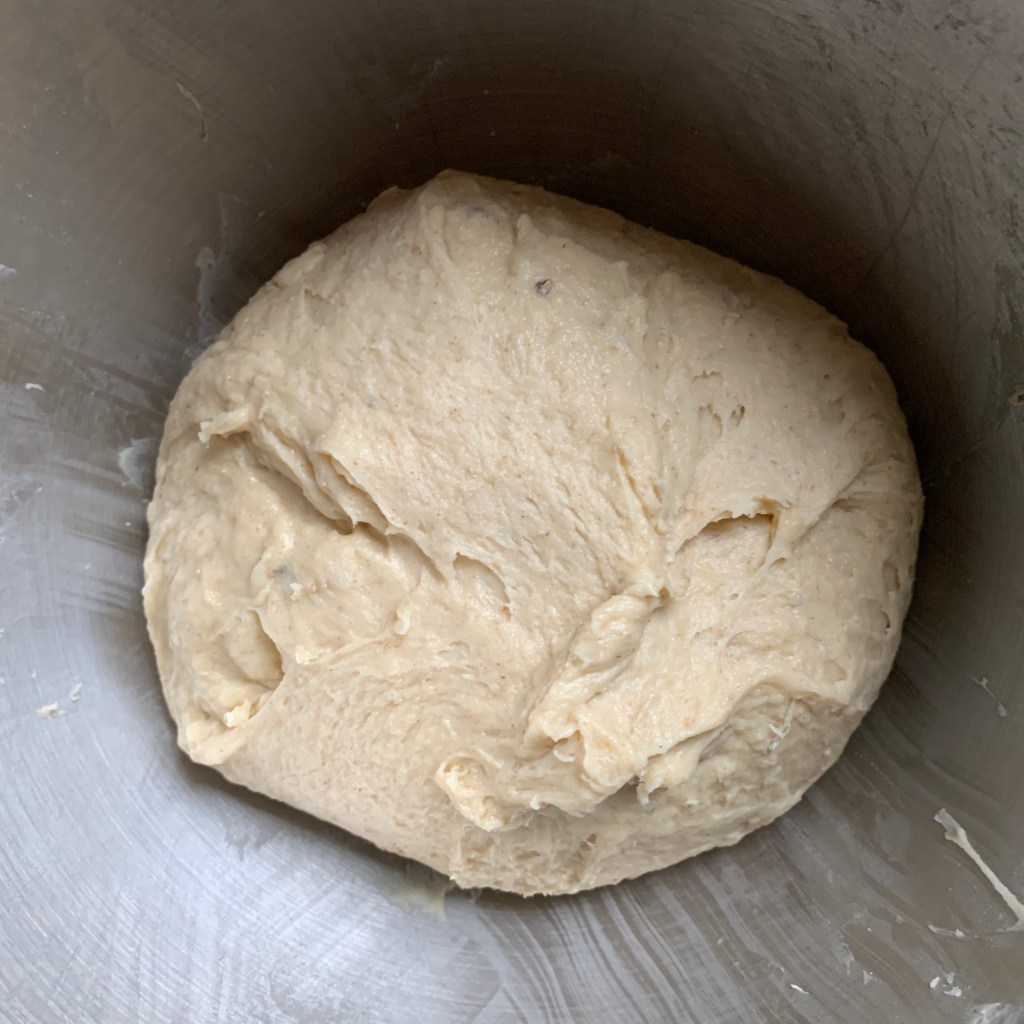
Before rise
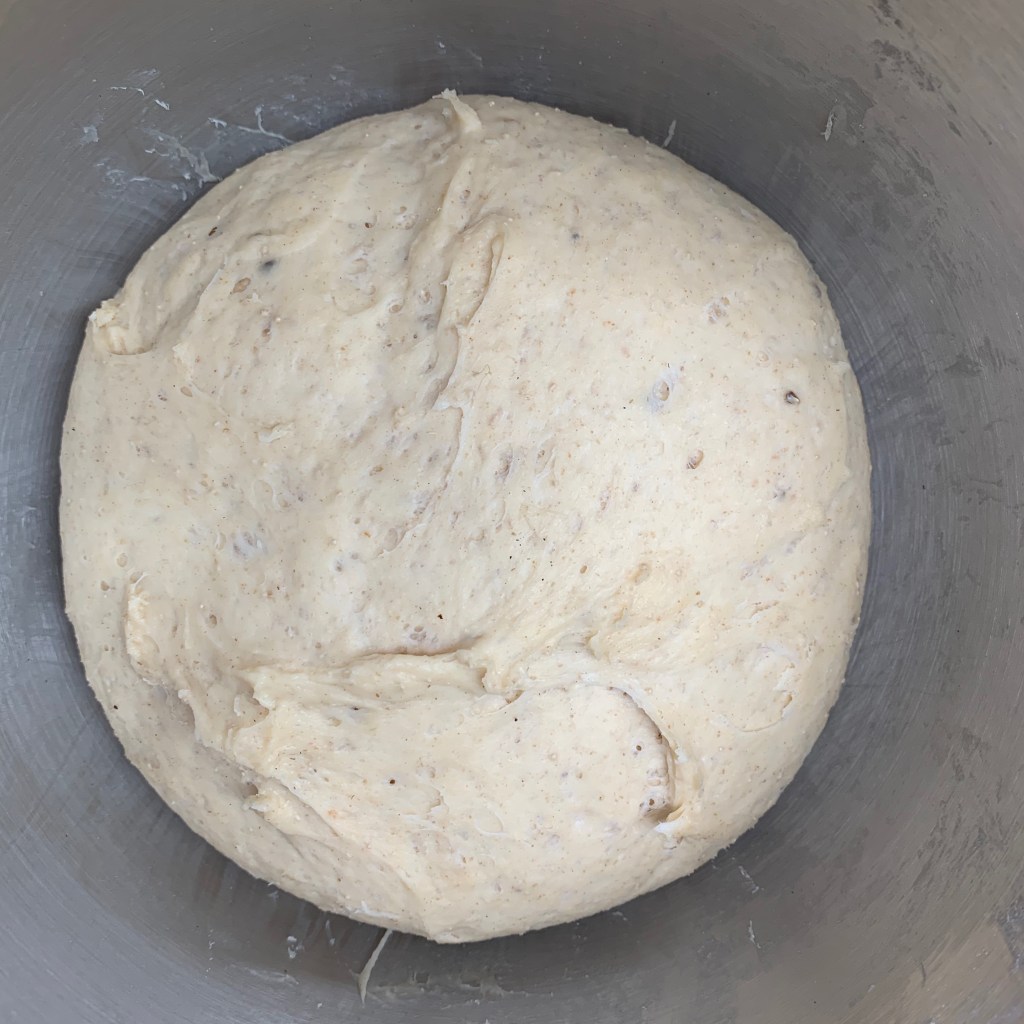
After rise. The flecks are the cardamom seeds
The filling
Preheat the oven to 225℃
75g butter, softened
75g brown sugar
4g flour
5g cinnamon
pinch of salt
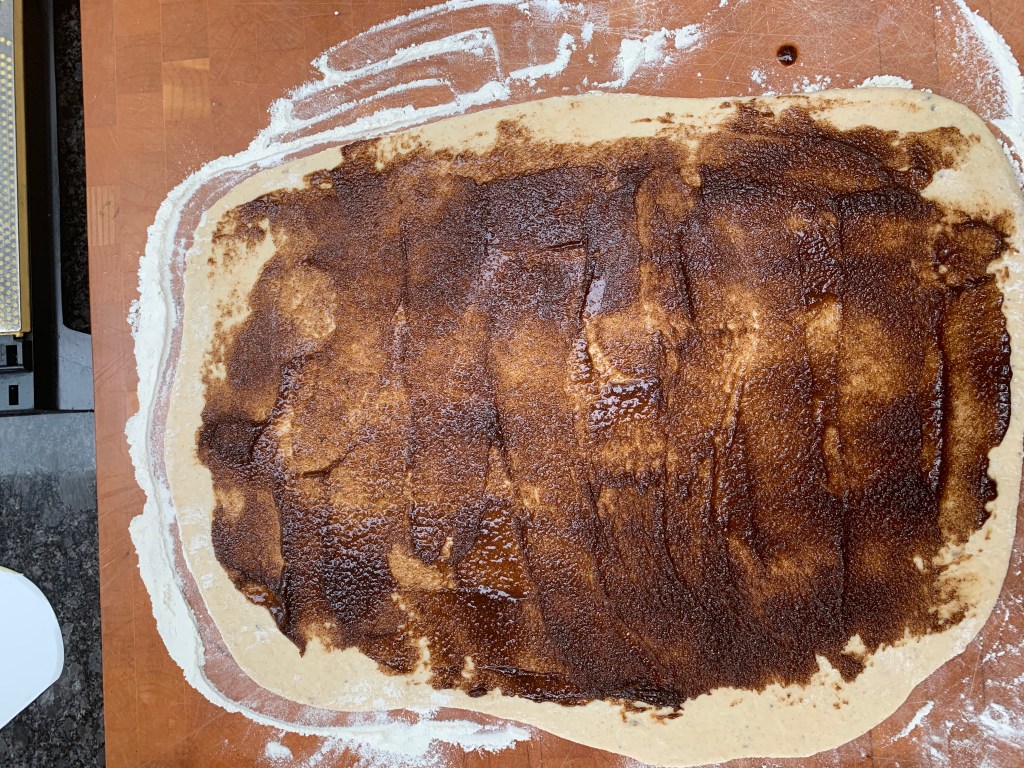
Combine all the ingredients and stir until you have a smooth, even dark brown paste.
Make sure it’s soft enough to spread thinly and easily: 30 seconds in the microwave is a good way of doing this. There’s no point in tearing your dough because you had lumps in the filling.
Final assembly
1 egg
1 teaspoon of milk
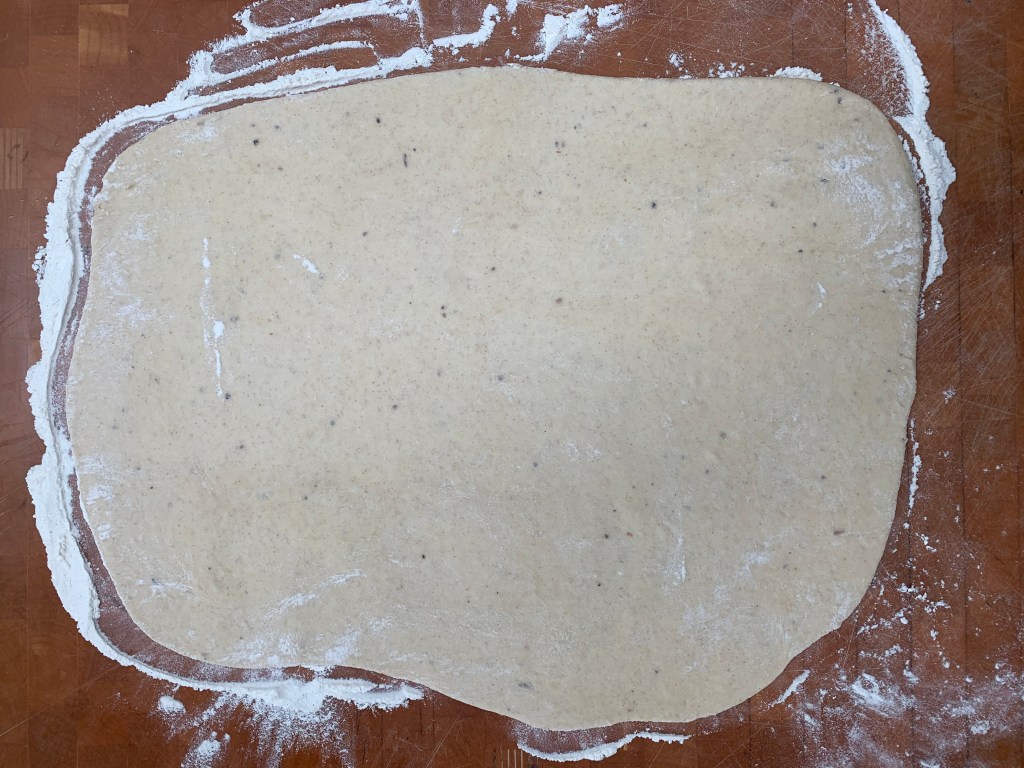
Roll out the dough on a lightly floured board until you have a thin rectangle around 50cm x 40cm – try and be as accurately rectangular as you can manage, otherwise (as you’ll see from my photos) the two buns at the end will be rather conical and rather shorter of filling.
Make an egg wash by whisking the egg and milk together until smooth
Slice the dough into sixteen even slices.
Prepare two baking trays and array eight buns on each one. If you have paper bun cases, use them: they help the buns keep their shape. If not, make sure the trays are properly greased.
Brush some egg wash over each bun
Bake the buns until golden brown: this should take around 8-10 minutes; if you did both trays at the same time in the oven, the bottom tray will need a couple of minutes longer.
Cool on a wire rack.
Dough rolled out
Filling spread
Rolling it up
Note the space left between buns: they will expand.
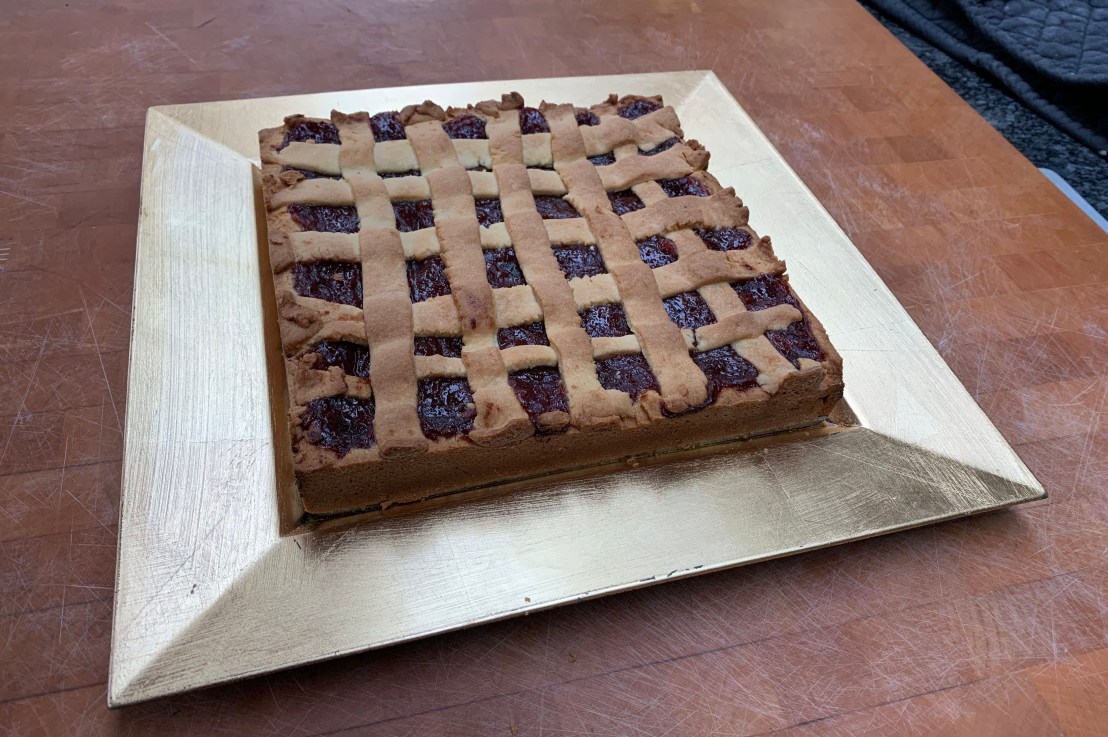
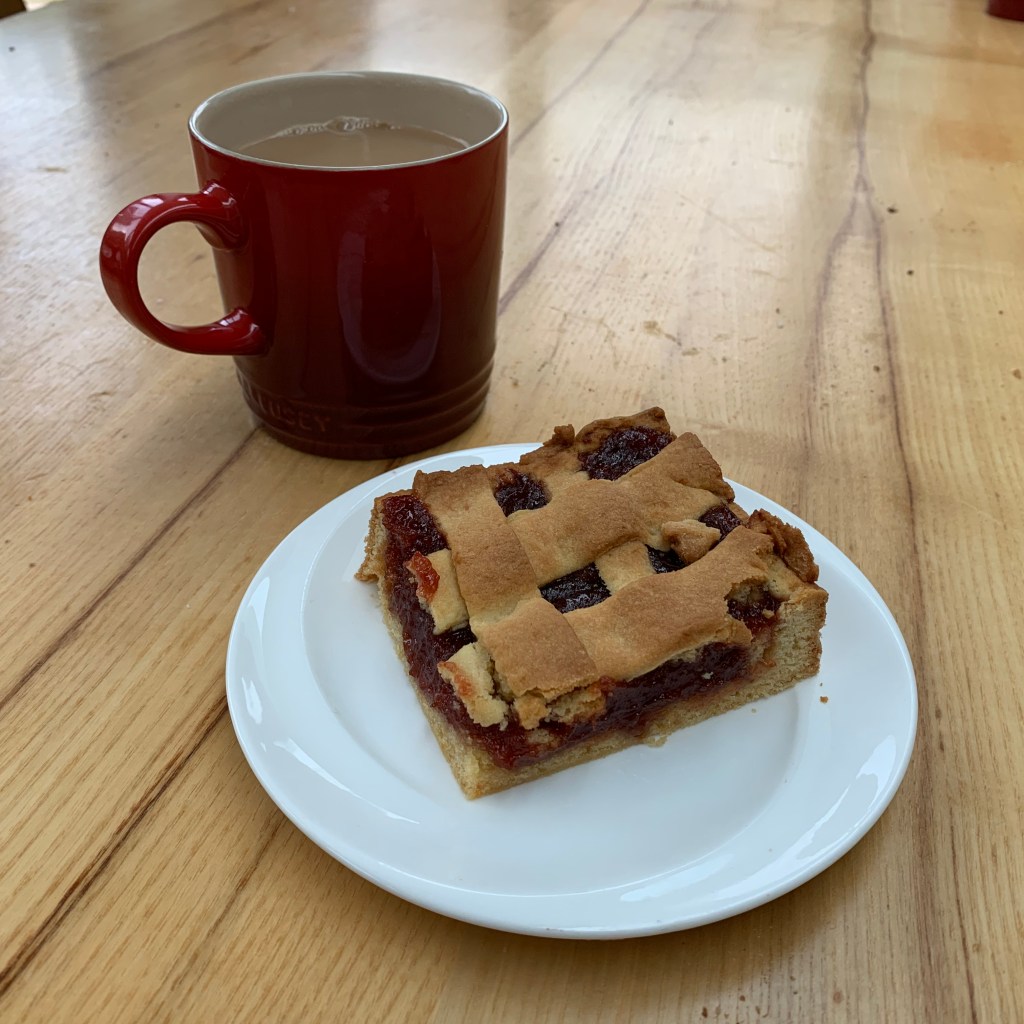
Where home-coming Argentinians make a beeline for Alfajores, Paraguayans head for Pasta Frola: a lattice-topped jam tart filled with either guava or quince paste. Childhood summers in Portugal have made me particularly partial to quince paste, and in any case, guavas are hard to get hold of here in England, so the quince version was the obvious choice.
Time for a couple of short linguistic digressions. The Spanish for quince is “membrillo”, and quince paste (sometimes called “quince cheese” for reasons I can’t fathom) is “dulce de membrillo”. In Portuguese, however, a quince is a “marmelo” and the paste is called “marmelada”. The English word “marmalade” confuses both Portuguese (where orange jam is just called “doce de laranja”) and Italians, for whom the word “marmellata” means jam of any sort, and “marmellare” means “to make jam”. In Italian, “pasta frolla” simply means shortcrust pastry, and this dessert would be called a “crostata”.
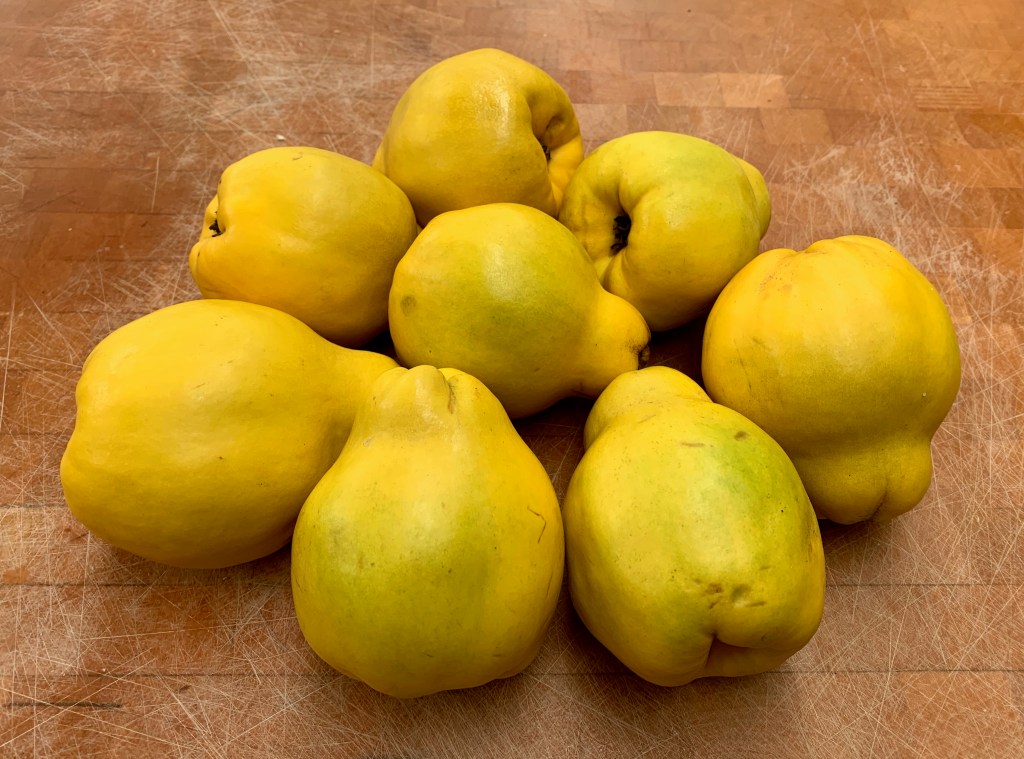
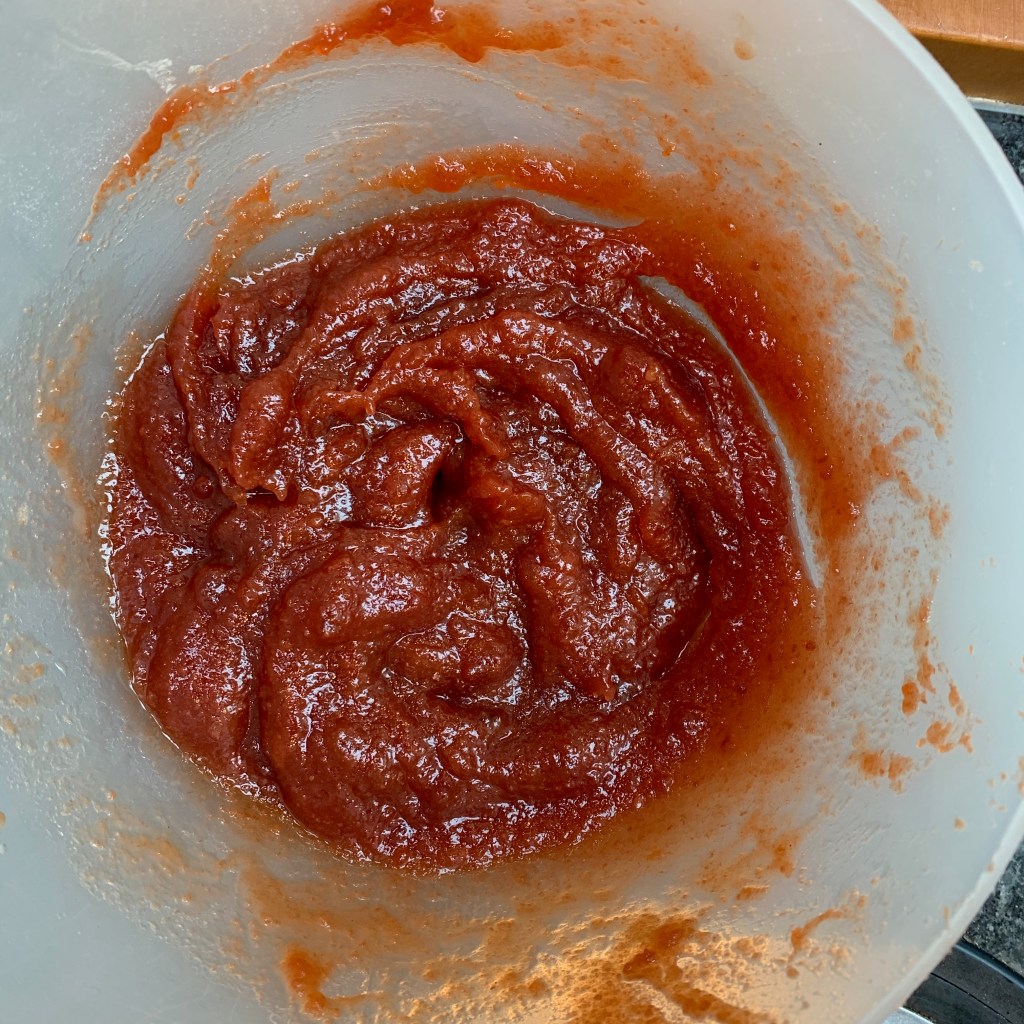
You can buy dulce de membrillo ready made in the UK, but it tends to be fairly expensive at around £25 or £30 for a kilo. Anyway, our local shops don’t stock it and our local fruit shop had quinces, so I had a go at making my own. Peeling quinces is a bit of faff – the skin is very tough – but other than that, the process isn’t too difficult.
Quince paste
This is metricised and modified slightly from the recipe from simplyrecipes.com. I overbought quinces and made around double this recipe, which was way too much: the quantities here will make well over 1kg of paste, which is a lot more than you need for the Pasta Frola.
Around 1 kg of quinces (typically 4 fruit)
Grated zest and juice of one lemon
Vanilla essence to taste
Around 800g jam sugar (to be adjusted)
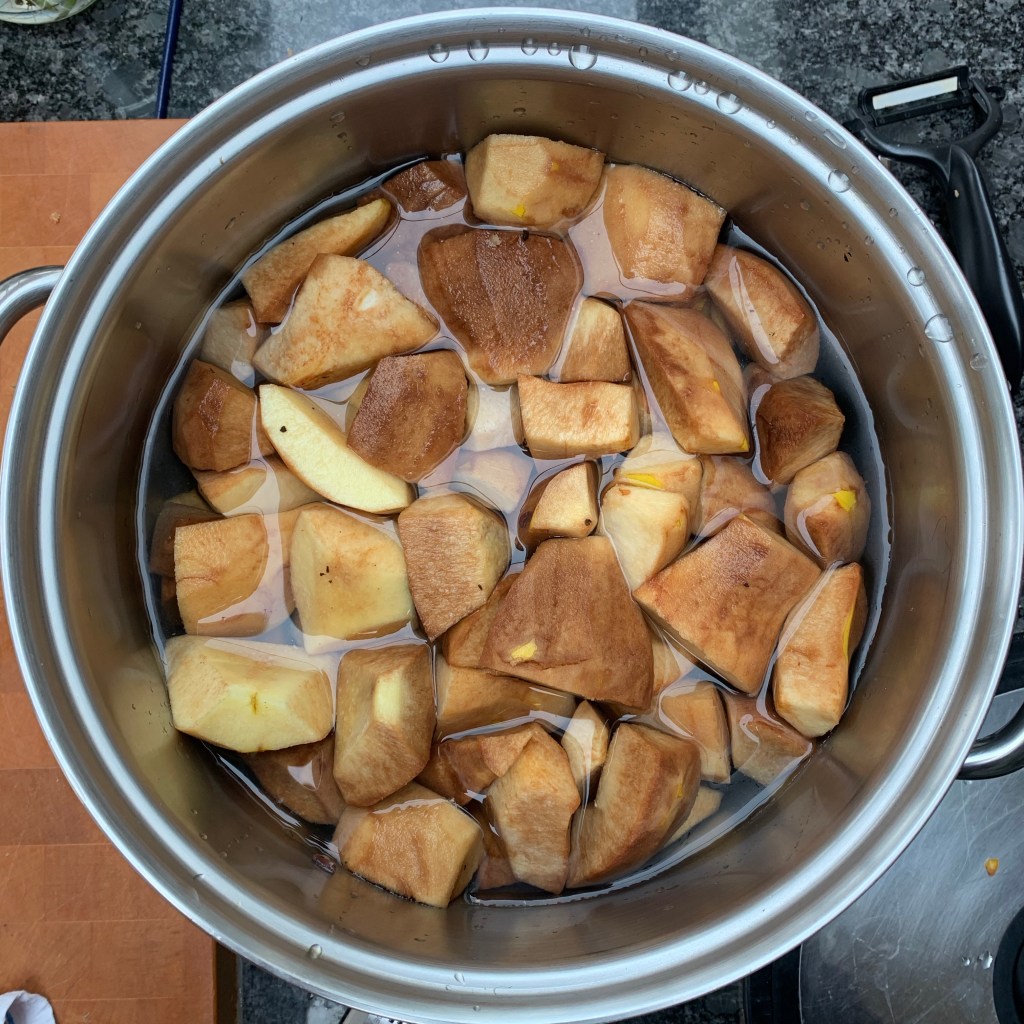
Peel and core the quinces, being sure to remove the fibrous bit of stalk that’s inside the quince. Chop coarsely (maybe 8-12 pieces per fruit).
Put them in a saucepan, add the grated lemon zest cover them with cold water and bring to the boil.
Simmer for around 30-40 minutes until you can cut them with a wooden spoon
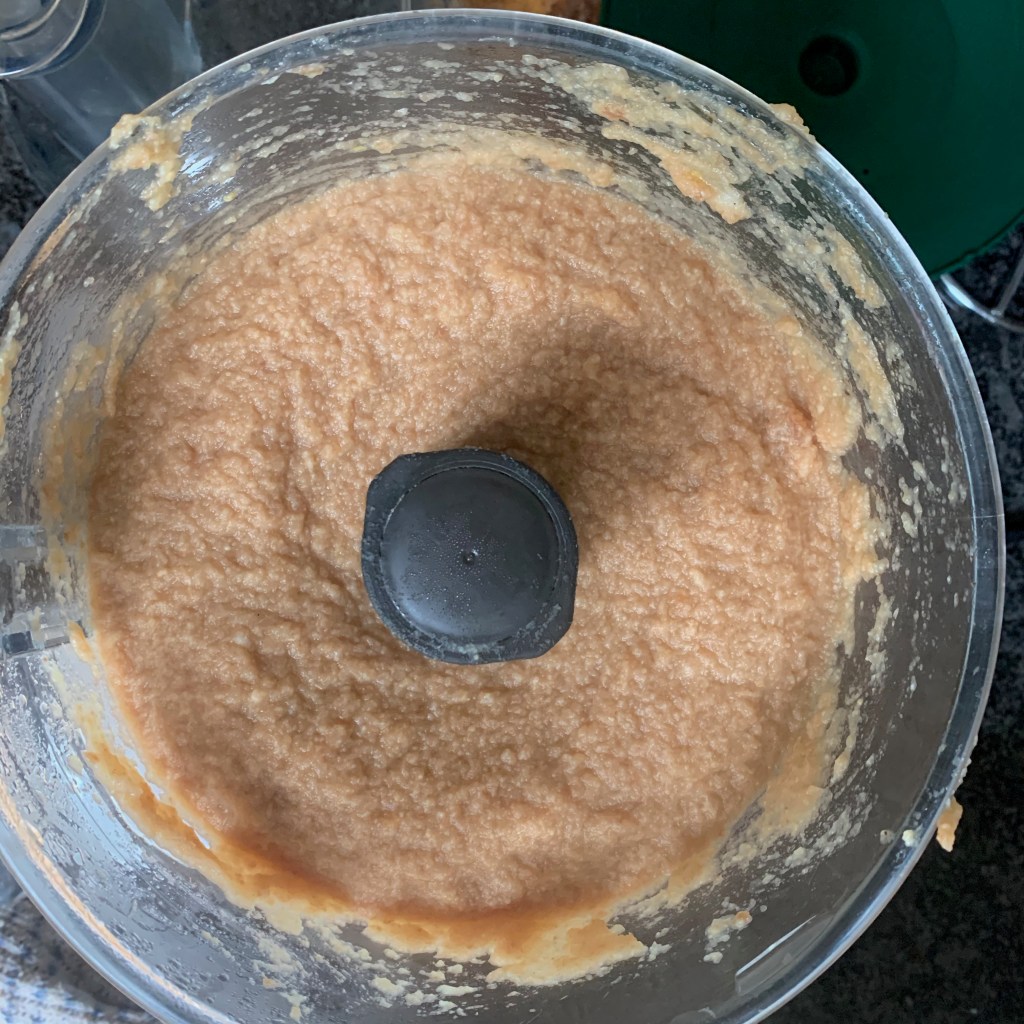
Drain the quince pieces and transfer to the bowl of a food processor: blitz until extremely smooth (this can take several minutes).
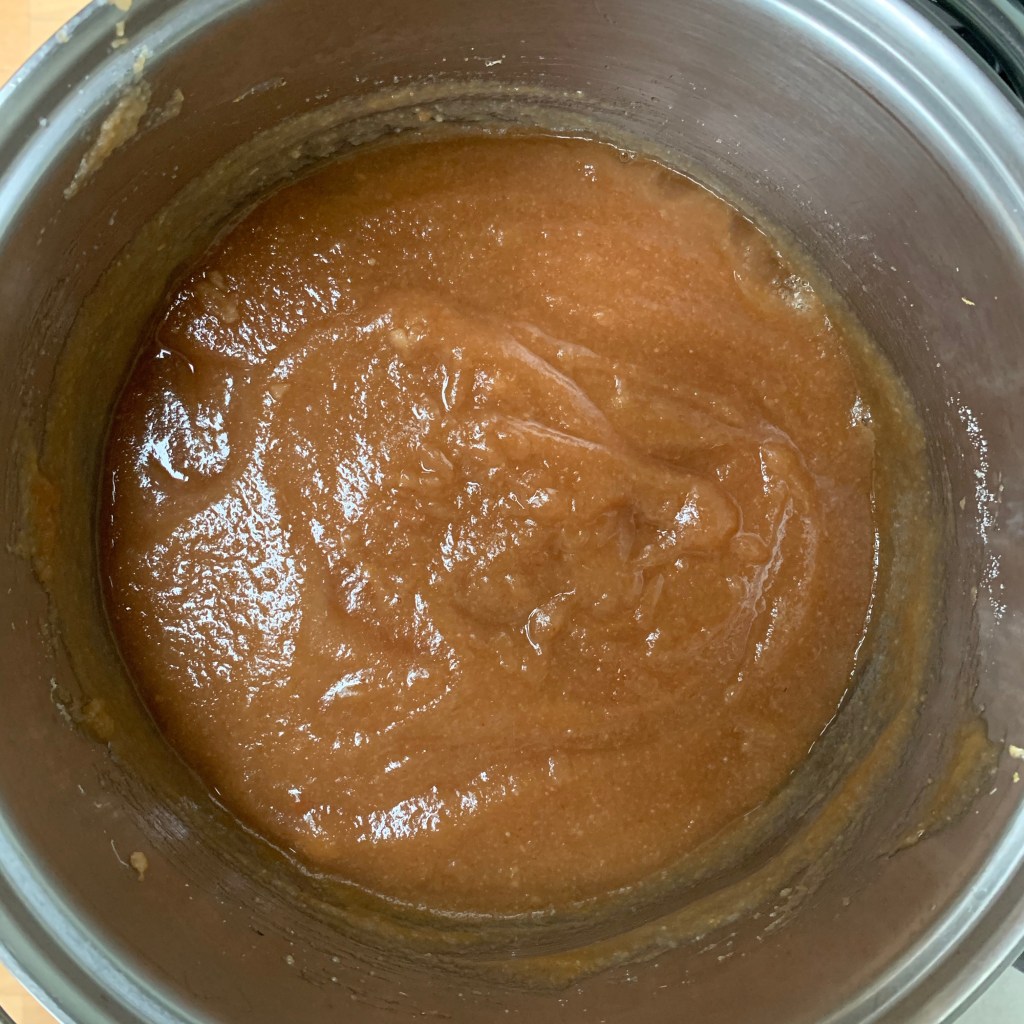
Return the puree to a saucepan, add the sugar, vanilla essence and lemon juice.
Bring to the boil, uncovered, and simmer gently for 60-90 minutes, stirring often enough to ensure that you don’t caramelise the paste on the bottom of the pan.
Preheat oven to 125℃
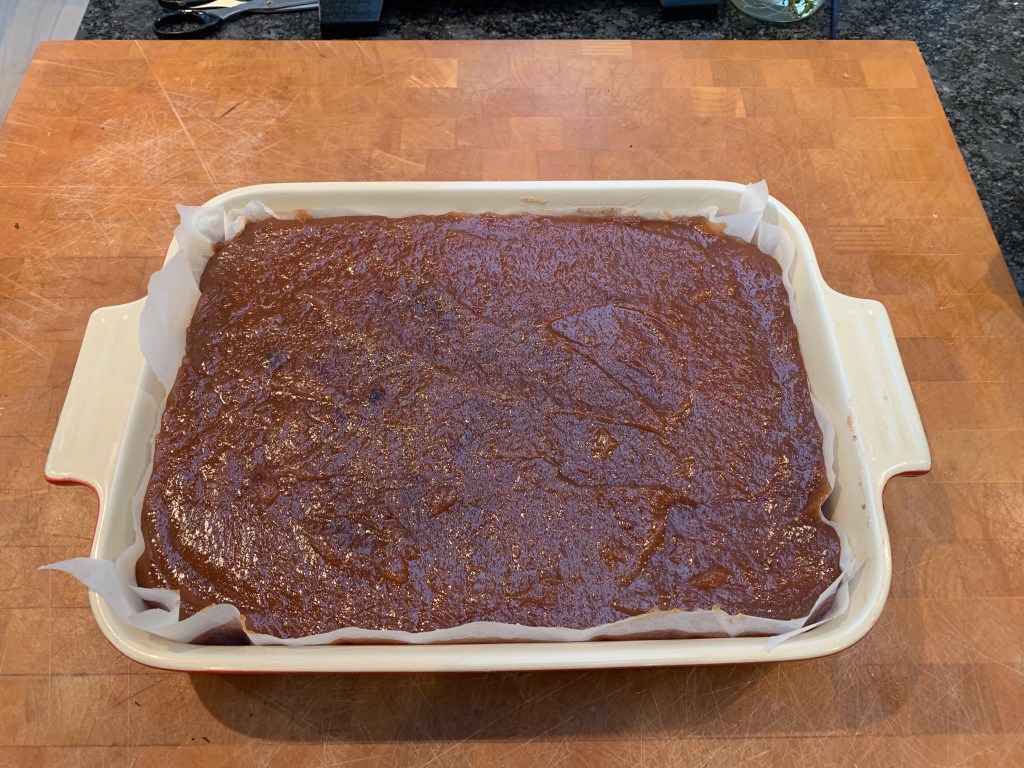
When the mixture is a dark pink/orange, remove from the heat. Line a shallow rectangular oven dish with baking parchment and spread the mixture evenly into the dish.
Leave the dish in the oven for around 90 minutes for the paste to dry out. The Spanish and Portuguese cook theirs to the consistency of thick jelly, so that you can cut slices of it. It’s quite difficult to get to this stage without burning it somewhere, and in any case, you don’t need to for Pasta Frola: a soft paste is just fine and you’re going to be baking it some more anyway.
By the way, quince paste is a really wonderful accompaniment to cheese, particularly sharply flavoured cheese.
The Pasta Frola
Thanks for this to my daughter’s South American colleague Daniel (who was the person who insisted that it should be included in this blog in the first place). His recipe was for about double this amount as a 40cm x 30cm traybake: I used a square tin with a removable base of around 23cm x 23cm, which left a small amount of pastry left over.
250g plain flour (use OO if possible)
15g baking powder
90g cup of sugar
125g butter, plus some for greasing
3 egg yolks (around 50g)
40ml milk
700g quince paste (see above)
50ml madeira, port or similar fortified wine
Preheat oven to 150℃
If your butter isn’t soft, cut it into squares and leave it a few minutes to soften
In the bowl of your stand mixer, combine flour, sugar and baking powder and mix well
Add the butter and mix until you reach the breadcrumb stage
Separate the eggs and add the yolks to the mixture, together with the milk
Mix until you have a smooth dough
Knead it for a couple of minutes until somewhat elastic, then cover and leave for 15 minutes
Meanwhile, grease the tin, and mix the quince paste and madeira in a bowl
Once the dough has finished resting, separate out one third of it and set aside. On a generously floured board, roll it out to the size of your tin with around 2cm overlap all the way round
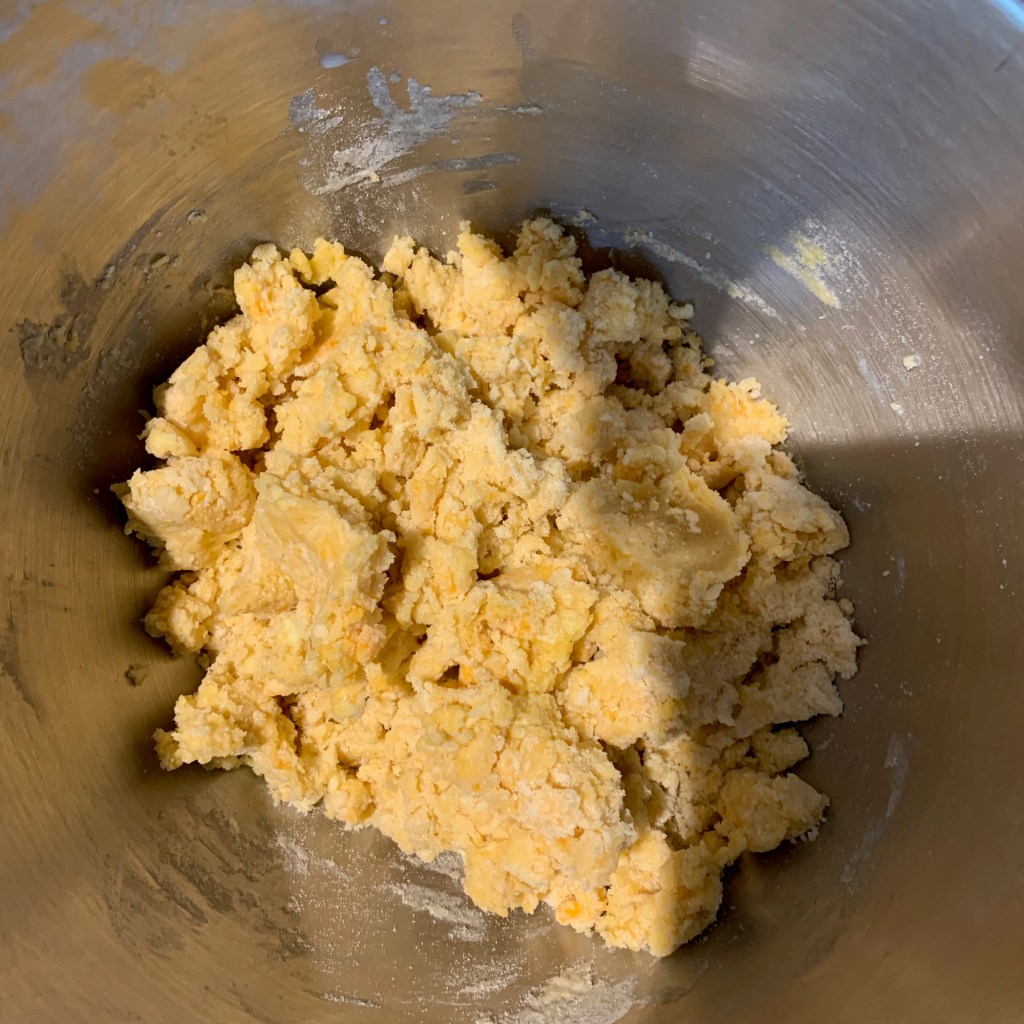
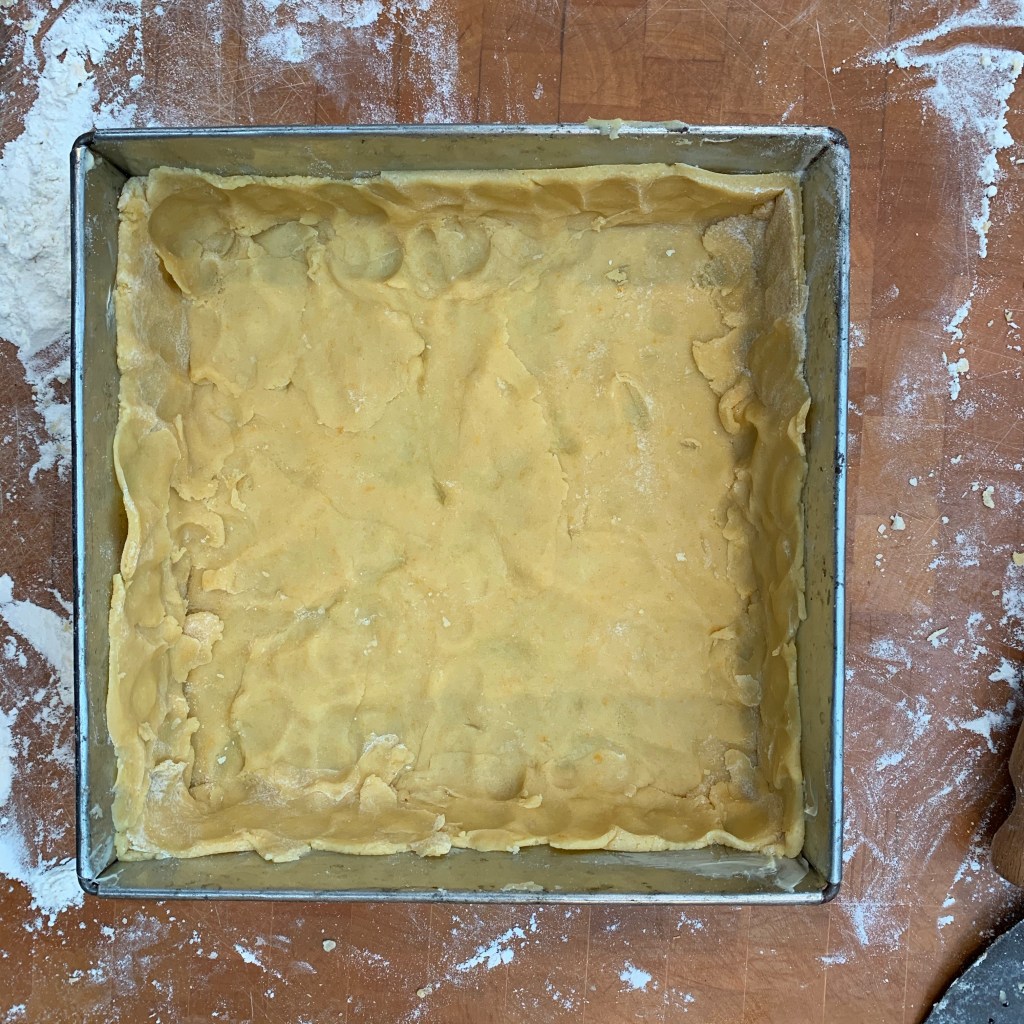
Line your tin with the dough. If, like me, your dough always breaks at this point, don’t worry – just press it into the bottom and sides with your fingers as best you can. The recipe is very forgiving
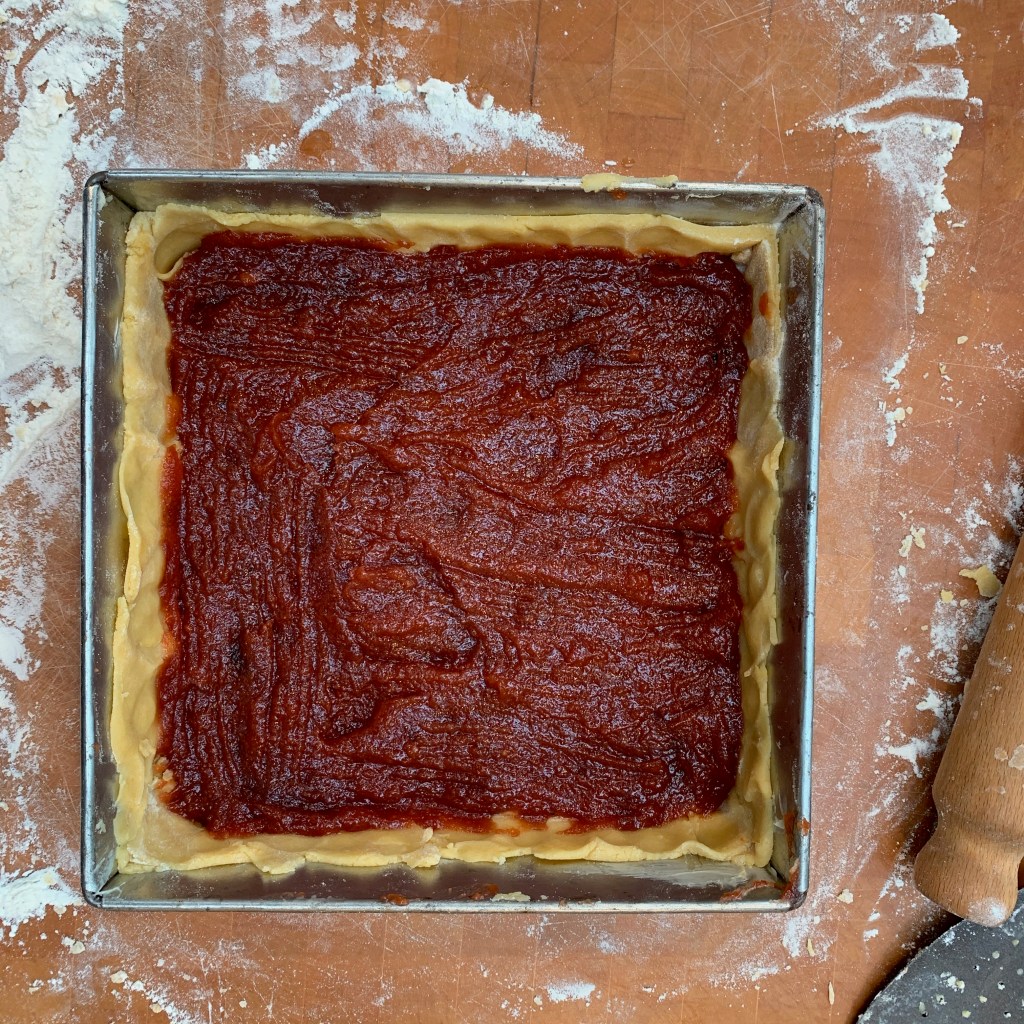
Pour your quince mixture into the tin and spread it to the edges
If necessary, trim the pastry down to the height of the filling
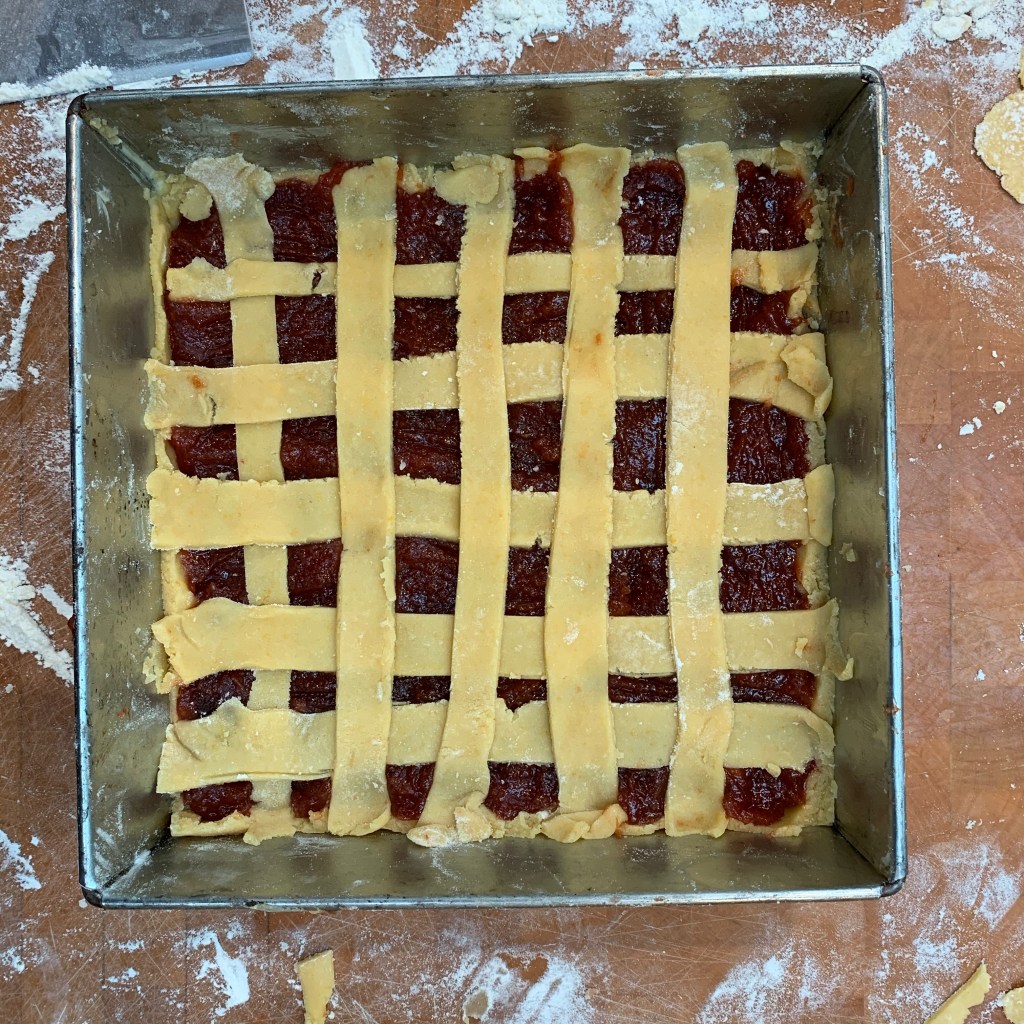
Roll out the remaining amount of pastry and cut it into strips approximately 1cm wide. Use these to form a lattice over the tart. At this point, you might like to think about how many pieces you’re going to cut the tart into and make sure that you have a gap, not a strip of pastry, at the point at which you’re going to do this (clue: I didn’t do this and learned the hard way).
Brush the pastry on the top with some of the egg white.
Last night was Erev Rosh Hashanah (Jewish New Year’s Eve), so there was a need to bake something suitable for a Jewish occasion, so what could be better than cheesecake? What I think of as “Jewish cheesecake”, which is broadly similar to what Americans call “New York Cheesecake”, actually hails from Poland, where it’s not particularly Jewish and is called Sernik.
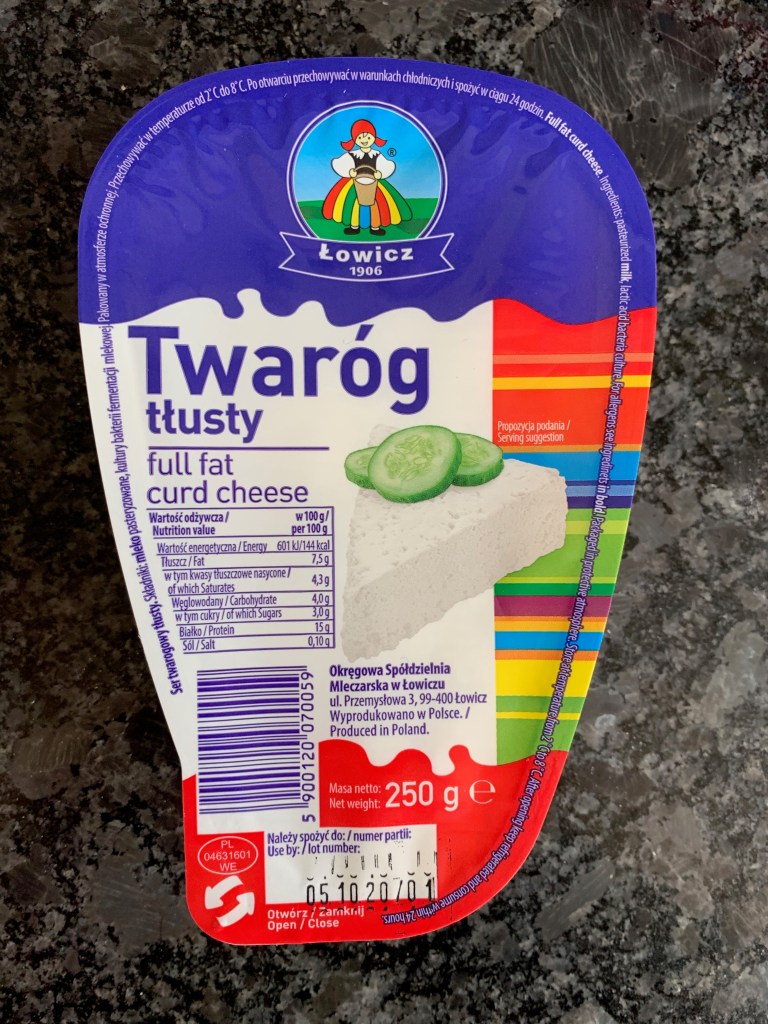
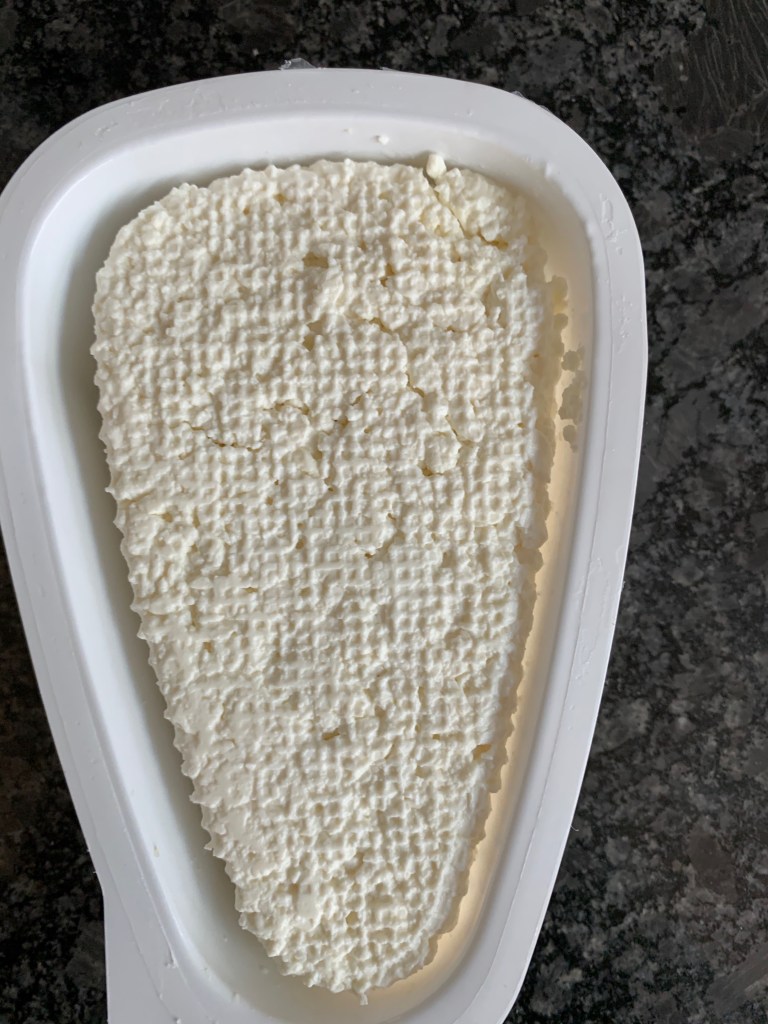
Dozens of countries have versions of curd cheese: paneer in India, Quark in Germany, túró in Hungary, labneh in the Middle East and many more. The Polish version is called twaróg: just about all the Sernik recipes I’ve found use this. It’s readily available in England; otherwise use any other curd cheese: farmer’s cheese, ricotta, etc.
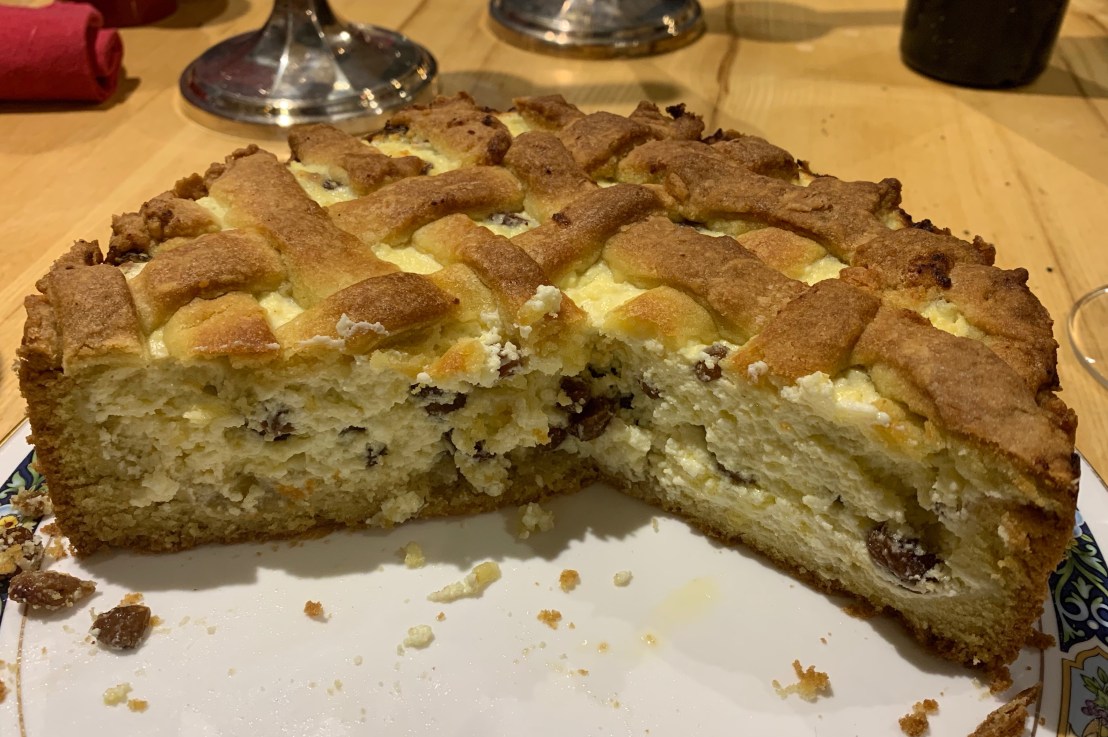
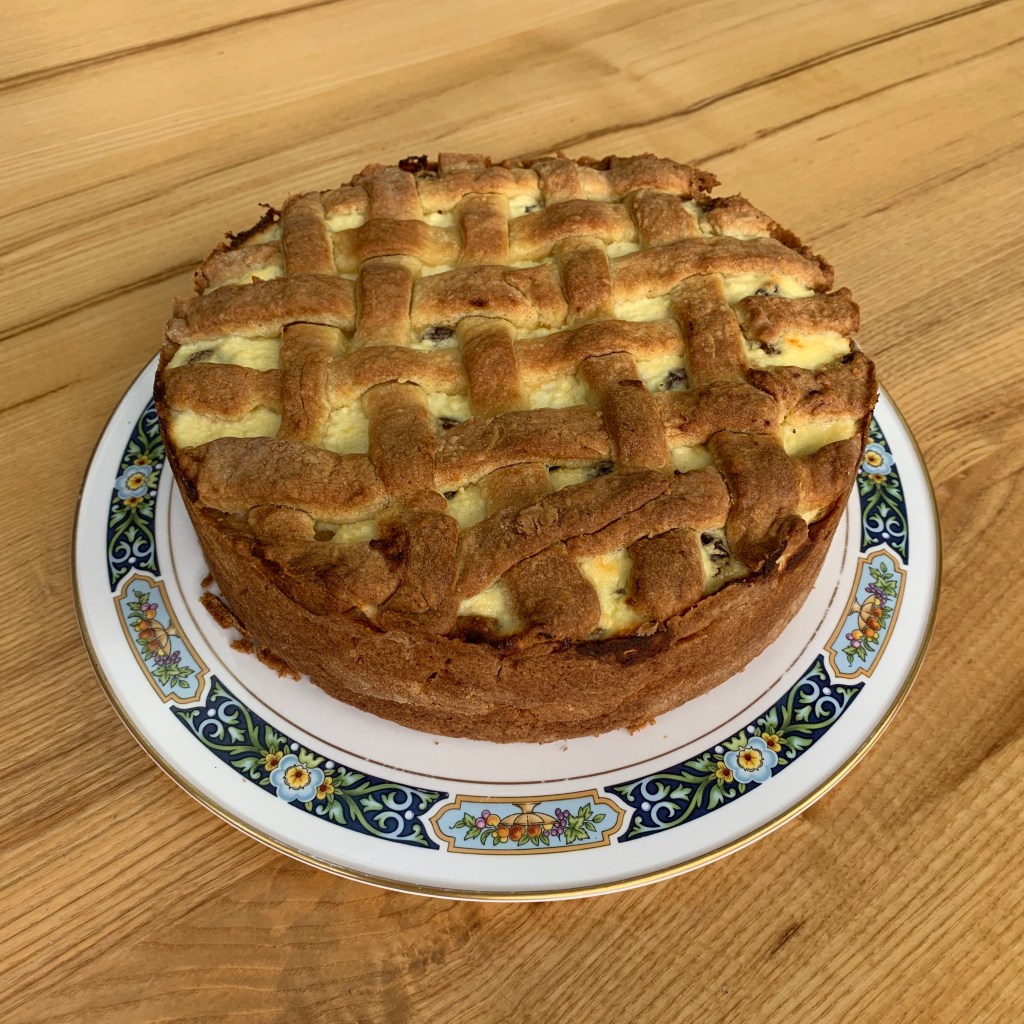
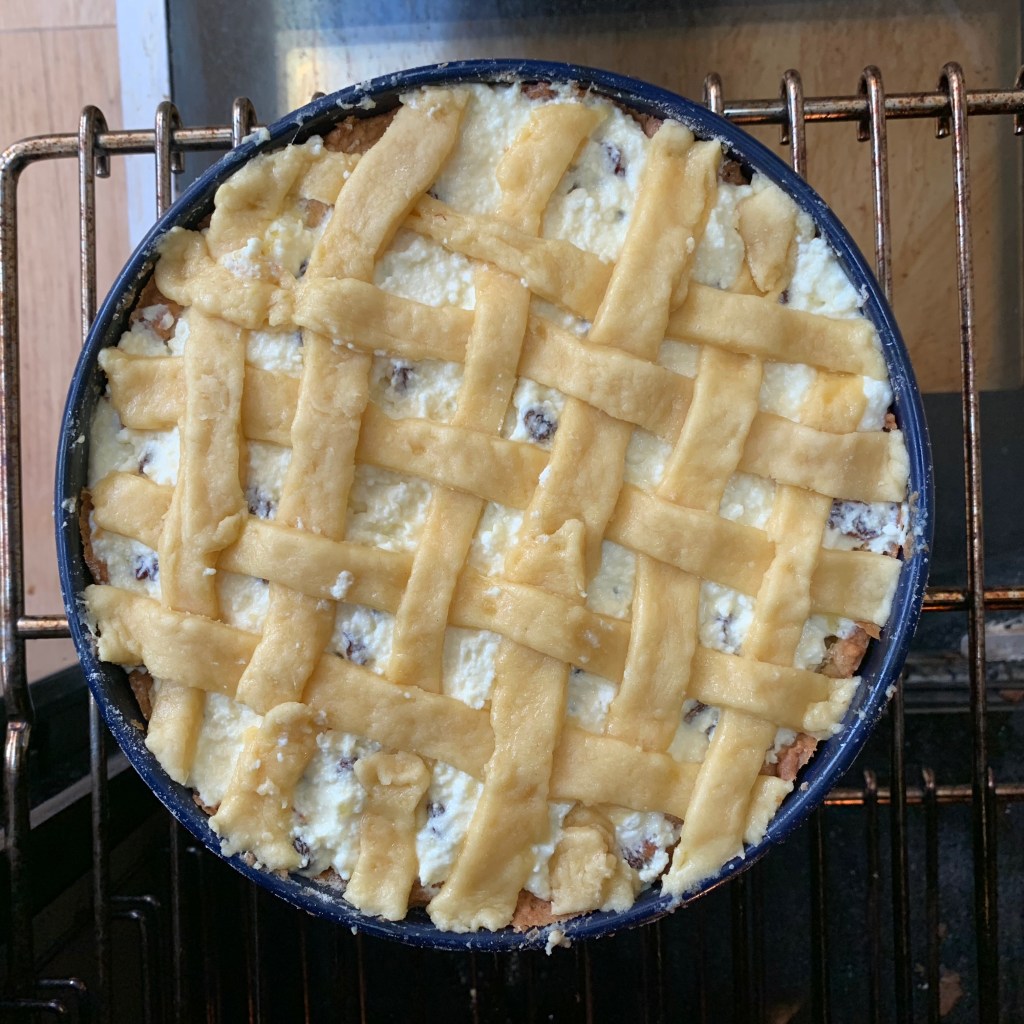
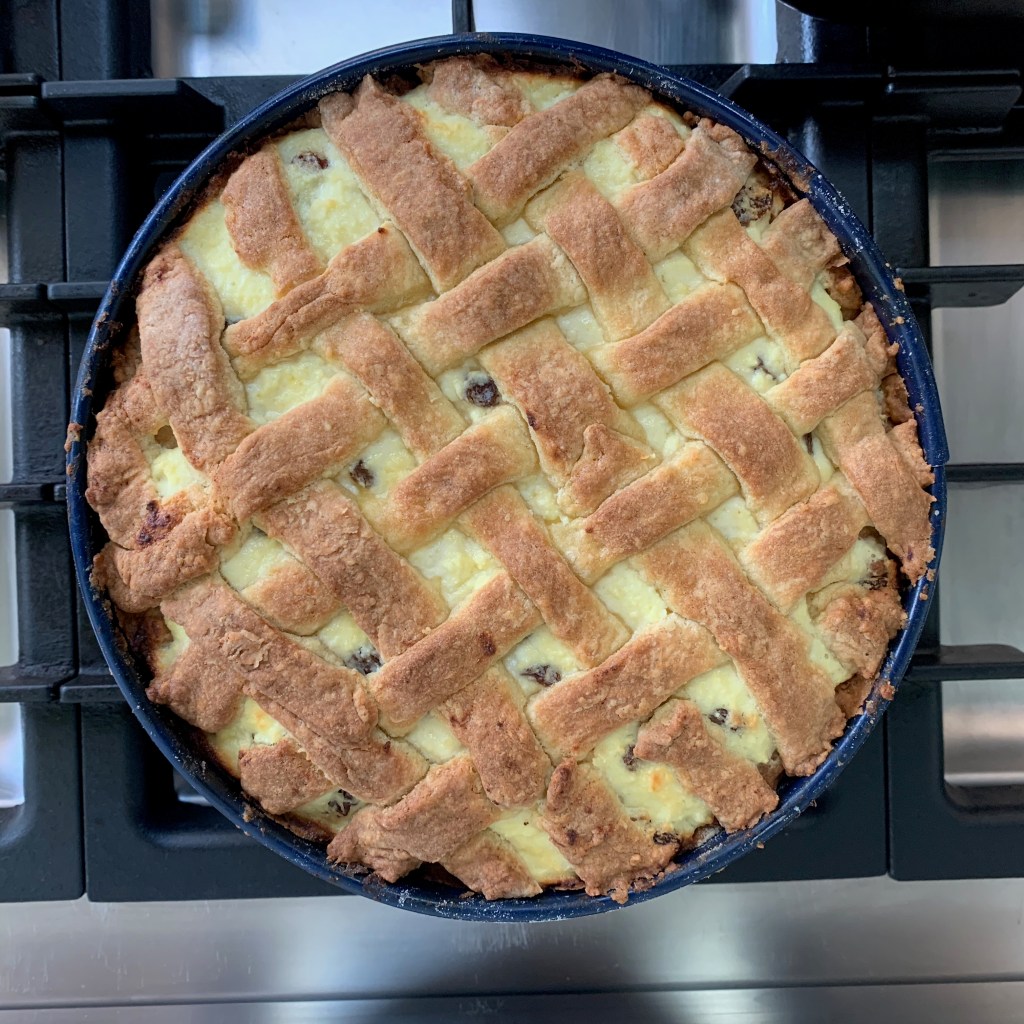
There are many different variations of Sernik, regional or otherwise, which use different toppings and/or pastry bases; some even dispense with the pastry altogether. I’ve chosen the version from Kraków, Sernik krakowski, largely because it looks pretty and I’ve actually been to Kraków. The pastry is a fairly standard shortcrust, except that it includes baking powder, thus ending up somewhere between a pastry and a cake. The Kraków-specific bit is to top the cheesecake with a lattice made of the same pastry. I’ve included raisins (definitely part of the cheesecakes of my childhood) and separated my eggs, making a meringue with the whites: this makes the finished product lighter.
The pastry
280g plain flour (OO if you have it)
5g baking powder
2g salt
140g butter (start from cold)
2 large eggs
100g sugar
50g soured cream
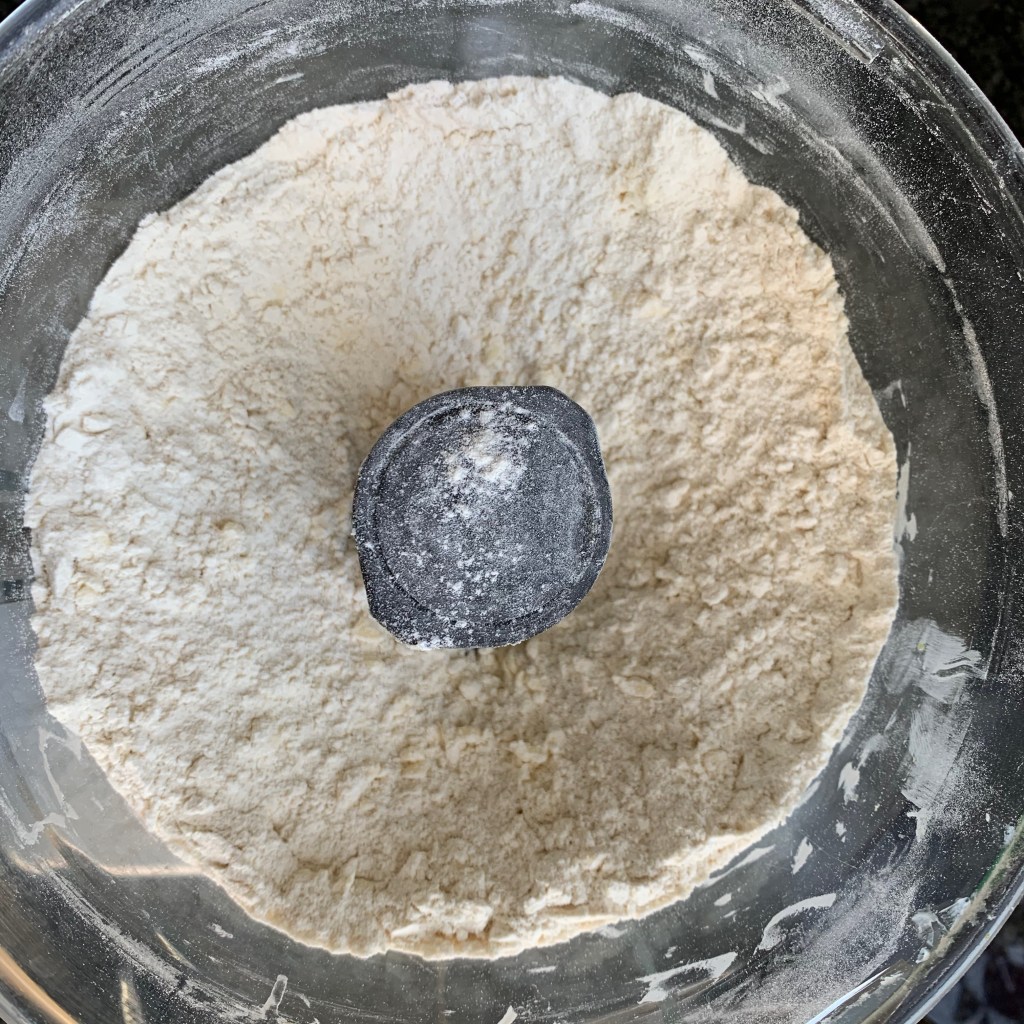
In the bowl of a food processor, mix flour, baking powder and salt
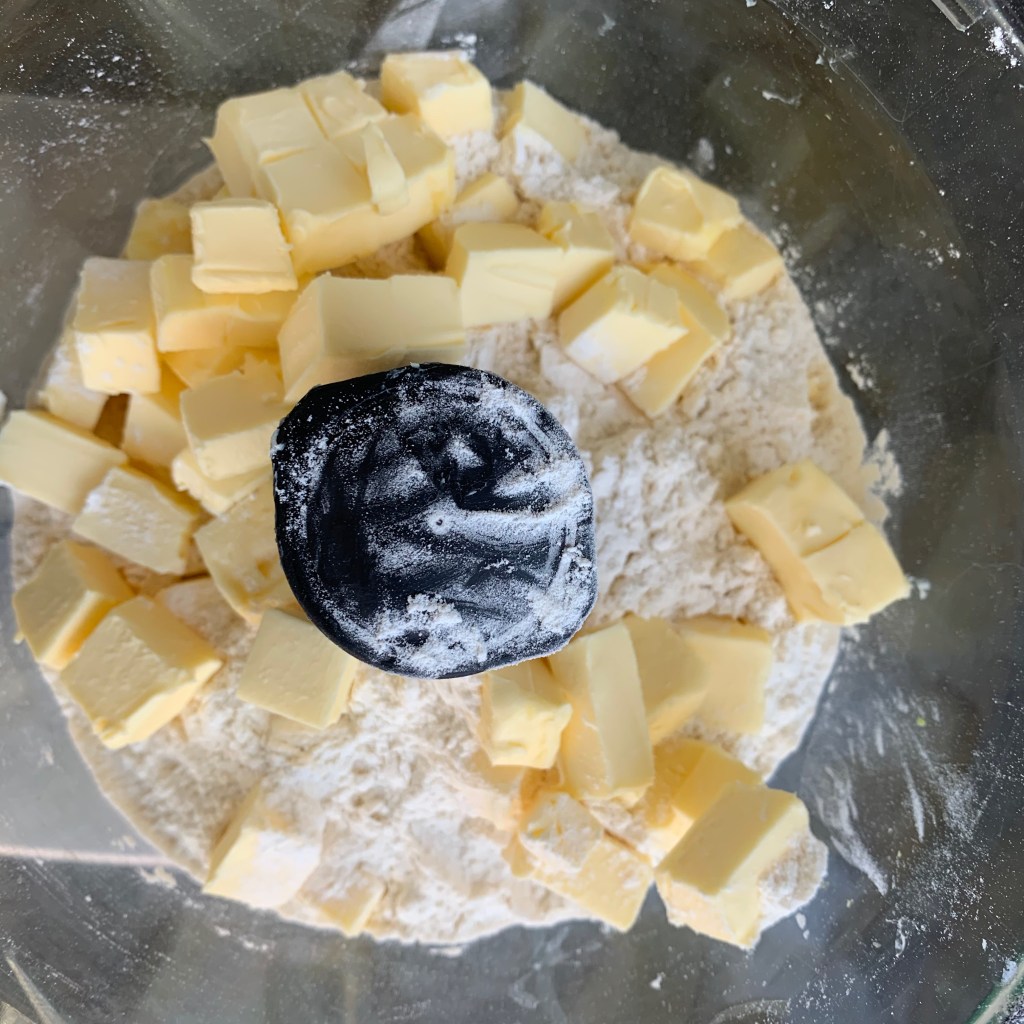
Cut the butter into cubes, add into the food processor and process for 20 seconds or so until you get to the consistency of fine breadcrumbs
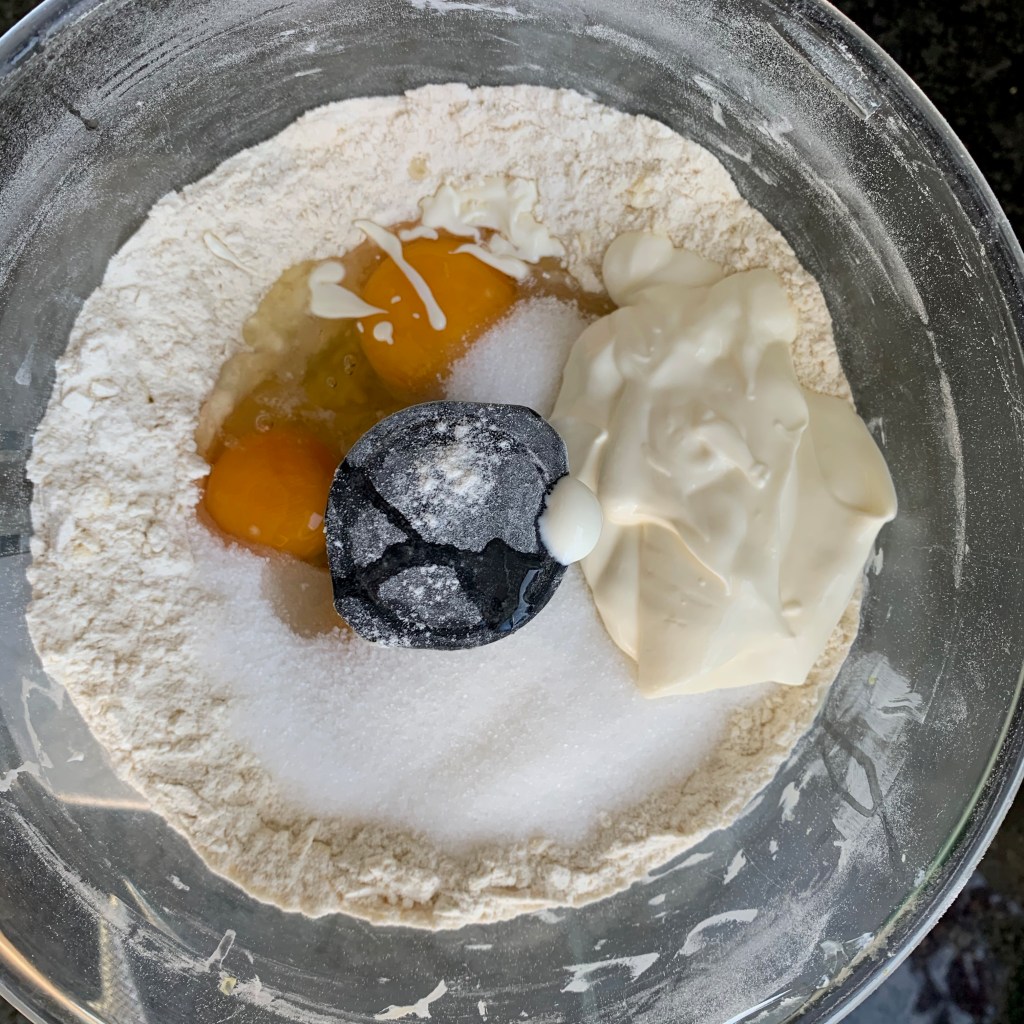
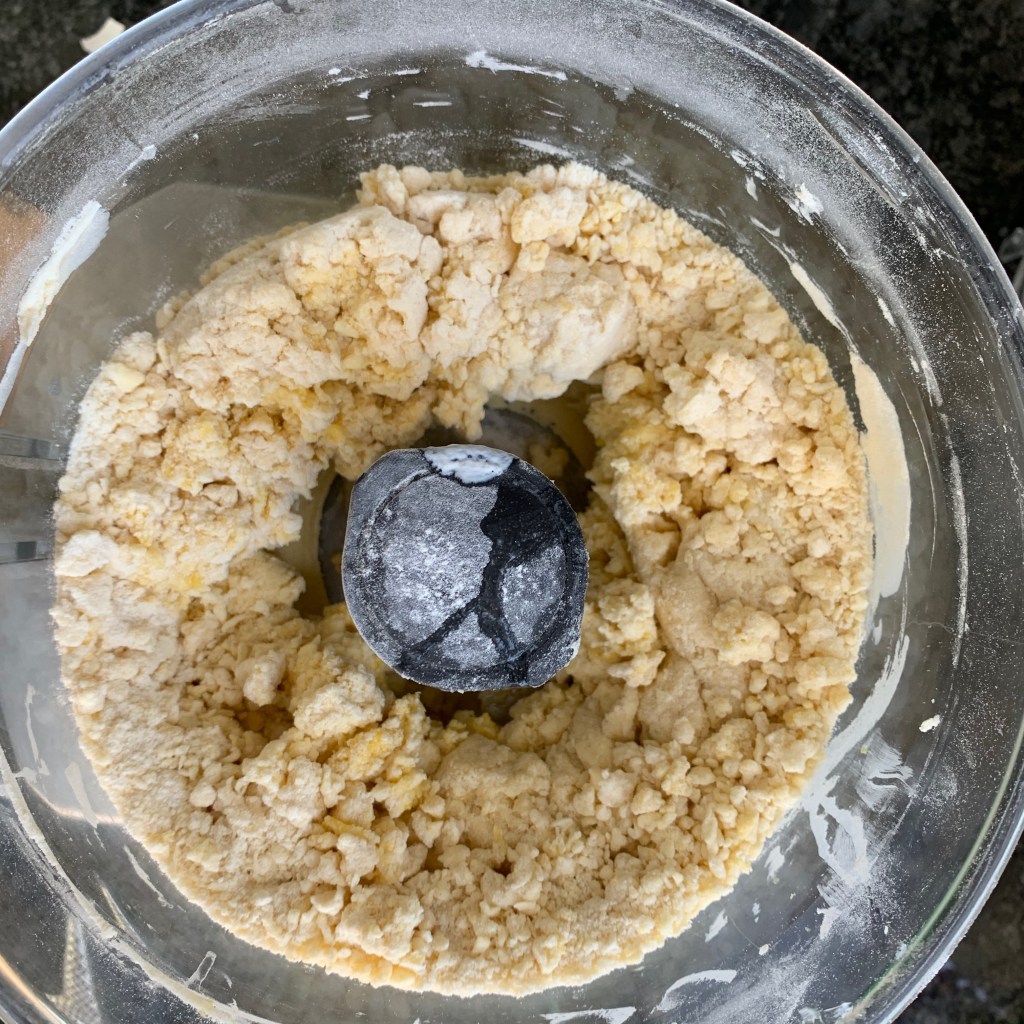
Add the eggs, sugar and soured cream, process for a few seconds until thoroughly blended
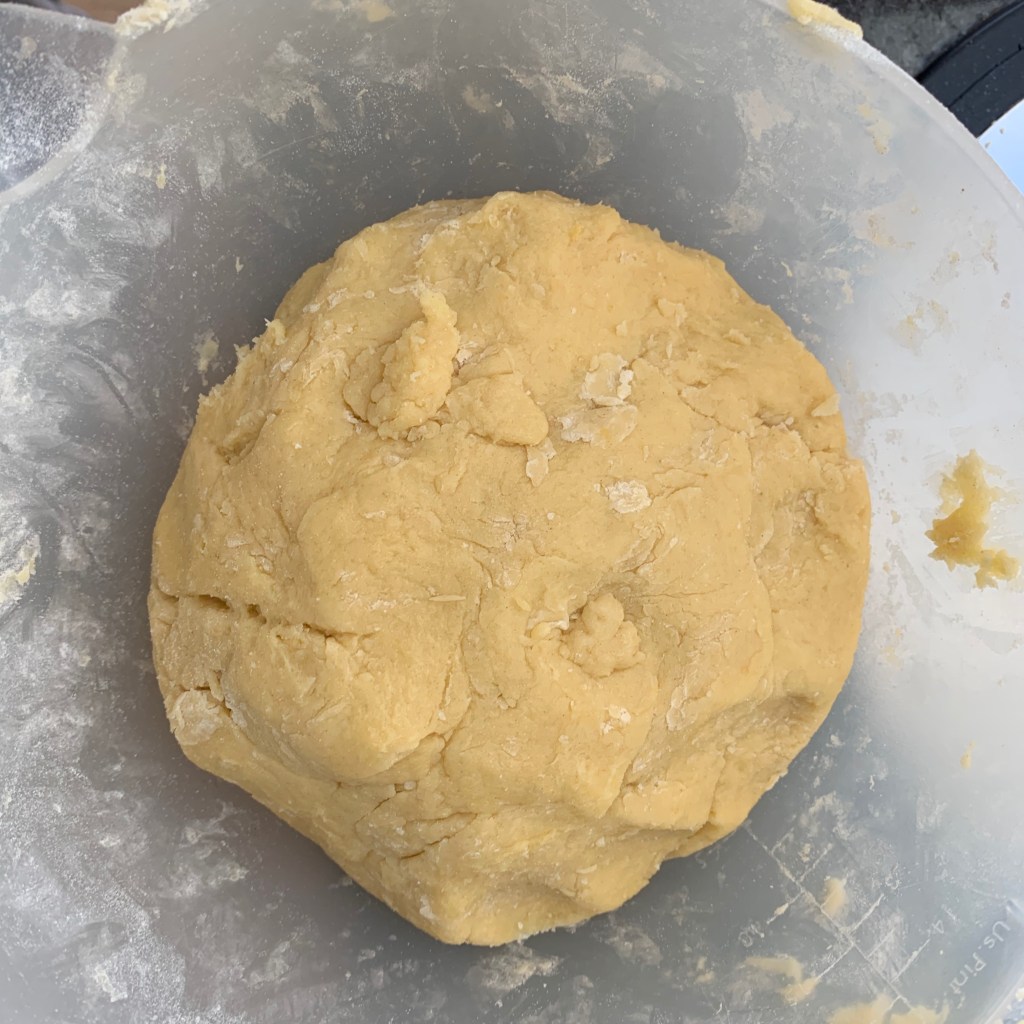
Form the dough into a ball, put into a covered bowl and refrigerate for 30 minutes
Preheat your oven to 180℃ fan
Grease a cake tin around 28cm diameter
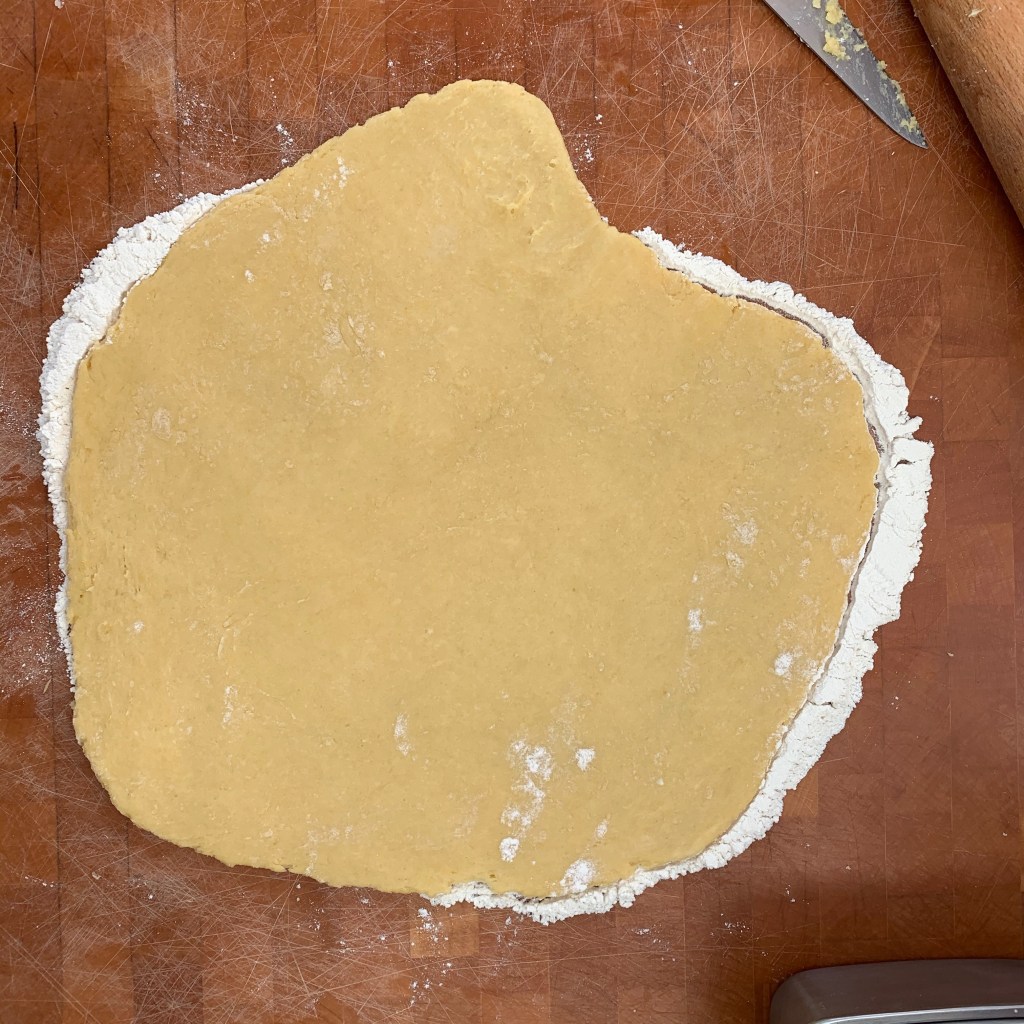
Take about ⅔ of the pastry and roll out on a generously floured surface
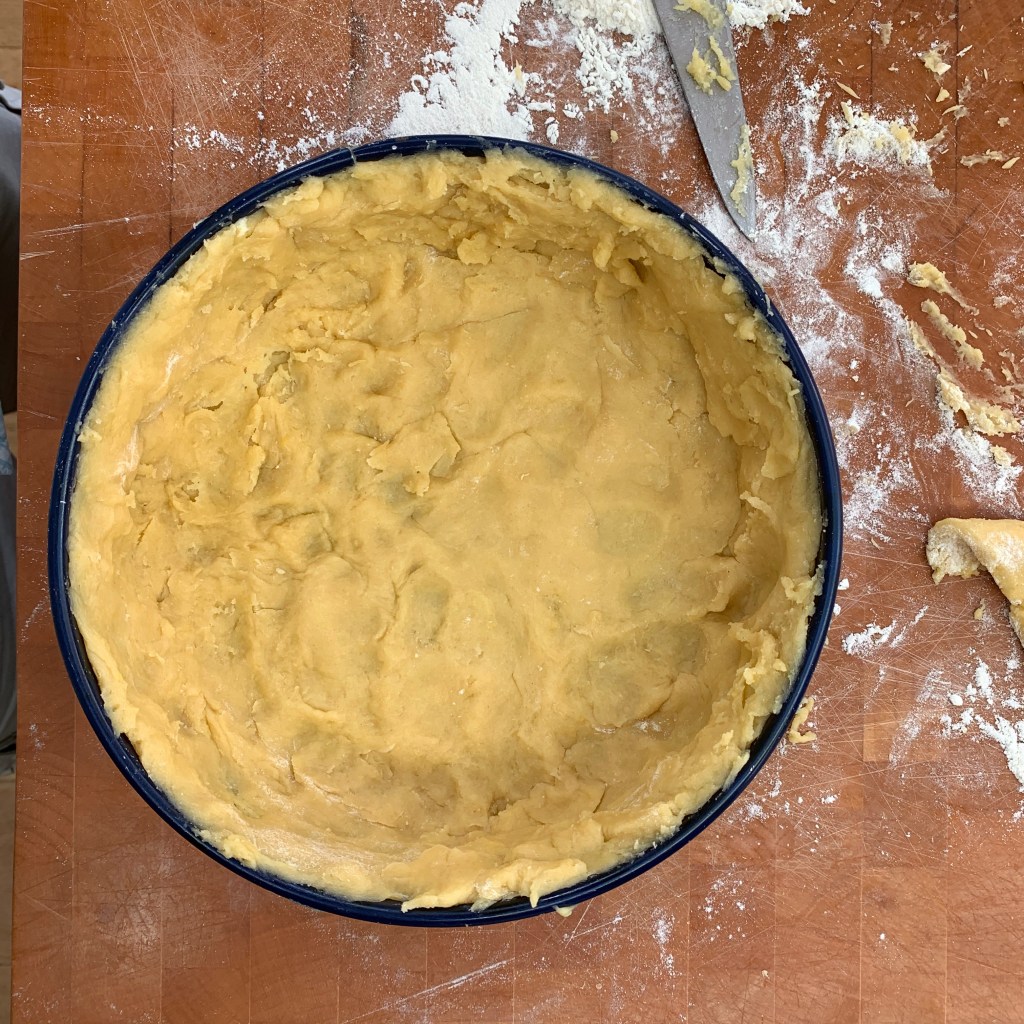
Line the base and sides of the tin, pressing the pastry firmly into the corners. Prick the base with a fork. Add any offcuts to the rest of your pastry and set aside
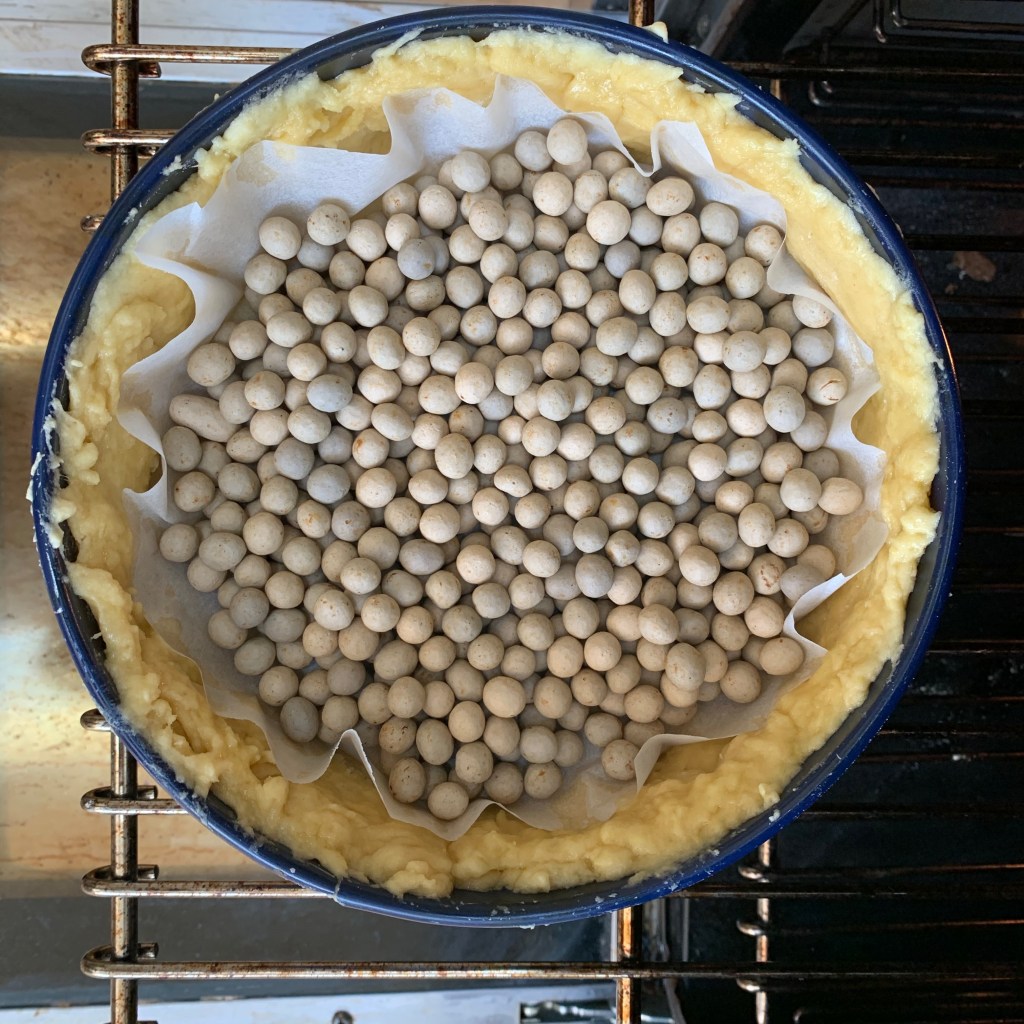
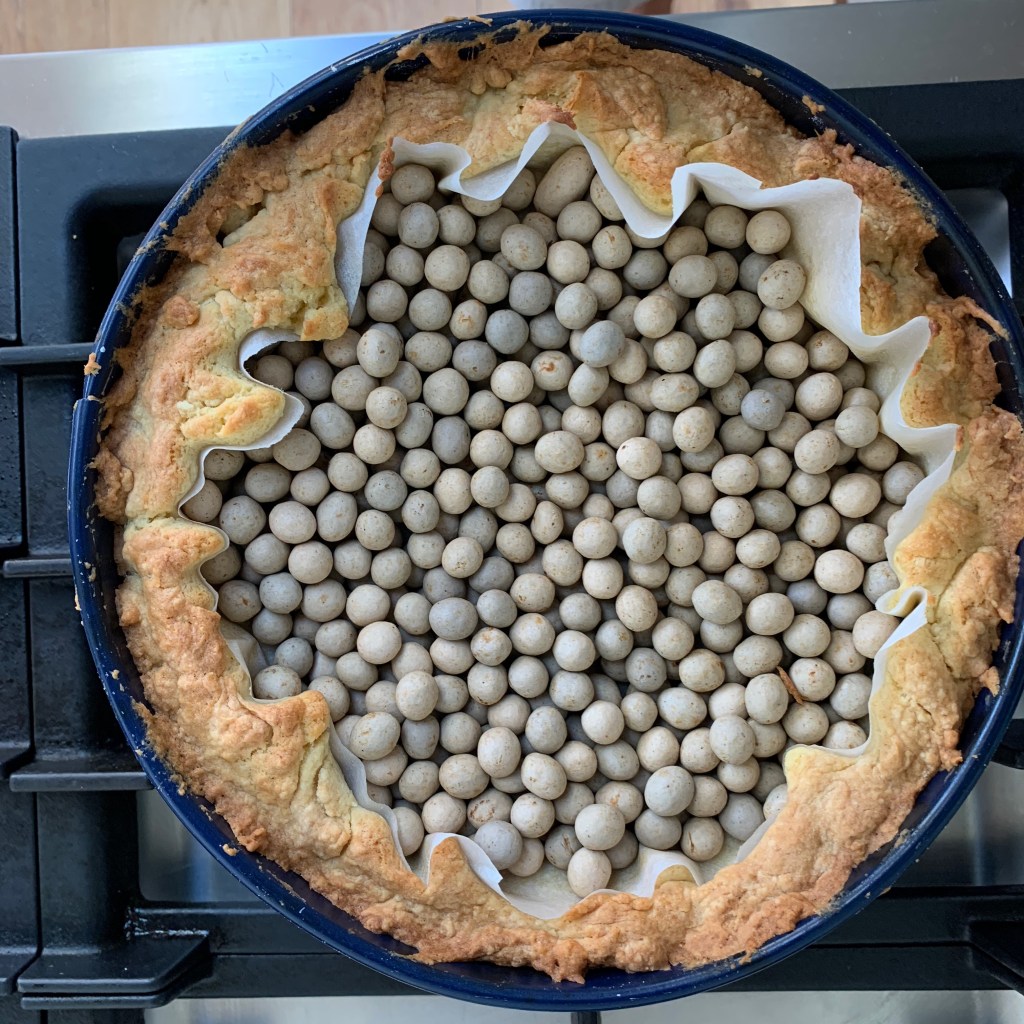
Line with baking paper and fill with baking beads. Bake for 15 minutes
When you’ve taken out the pastry, reduce the oven temperature to 150℃
The cheese filling
2 eggs
100g butter, soft
500g twaróg or other curd cheese
25 g flour
100g sugar
vanilla extract to taste
125 g raisins
Separate the eggs.
Beat the butter until smooth.
Add the twaróg and mix thoroughly
Add the egg yolks, flour, and vanilla and mix
Beat the egg whites until soft, add the sugar and mix until stiff
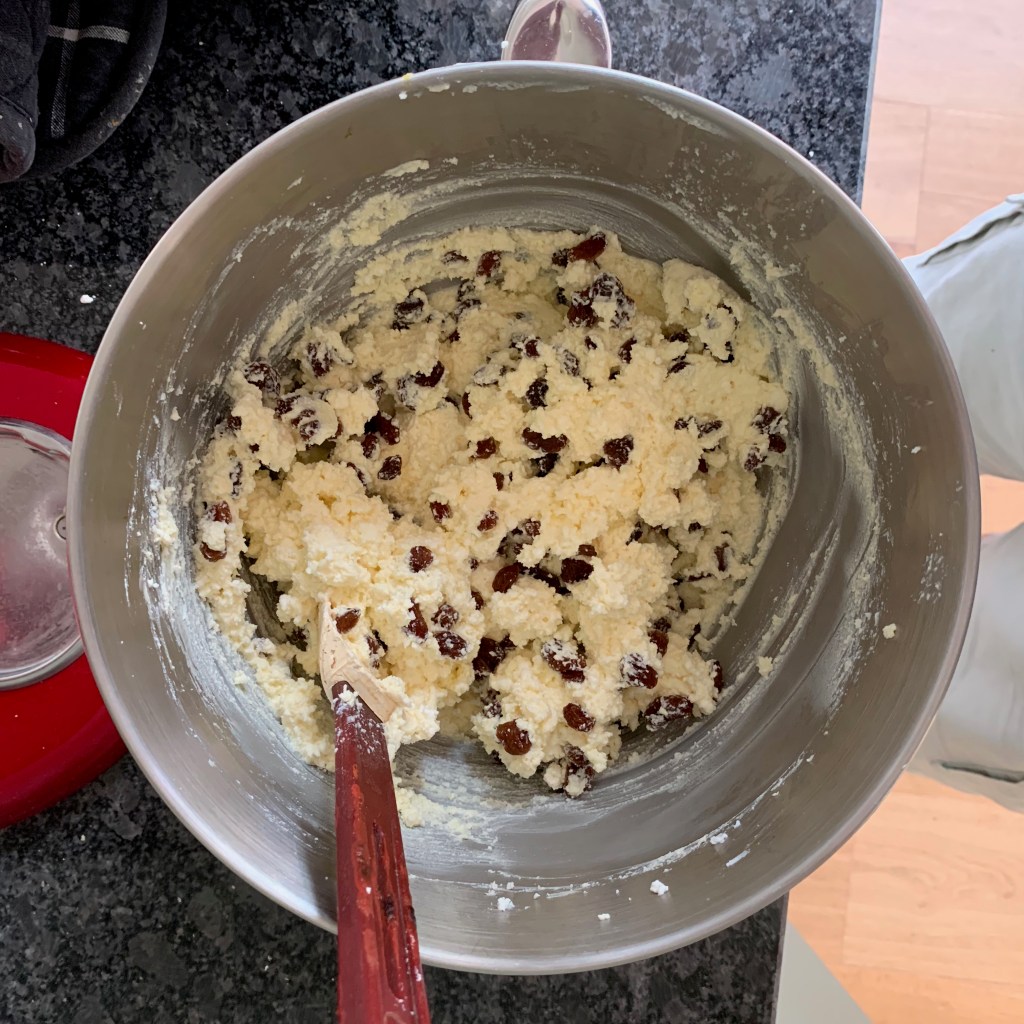
Fold the two mixtures and the raisins together
Final assembly
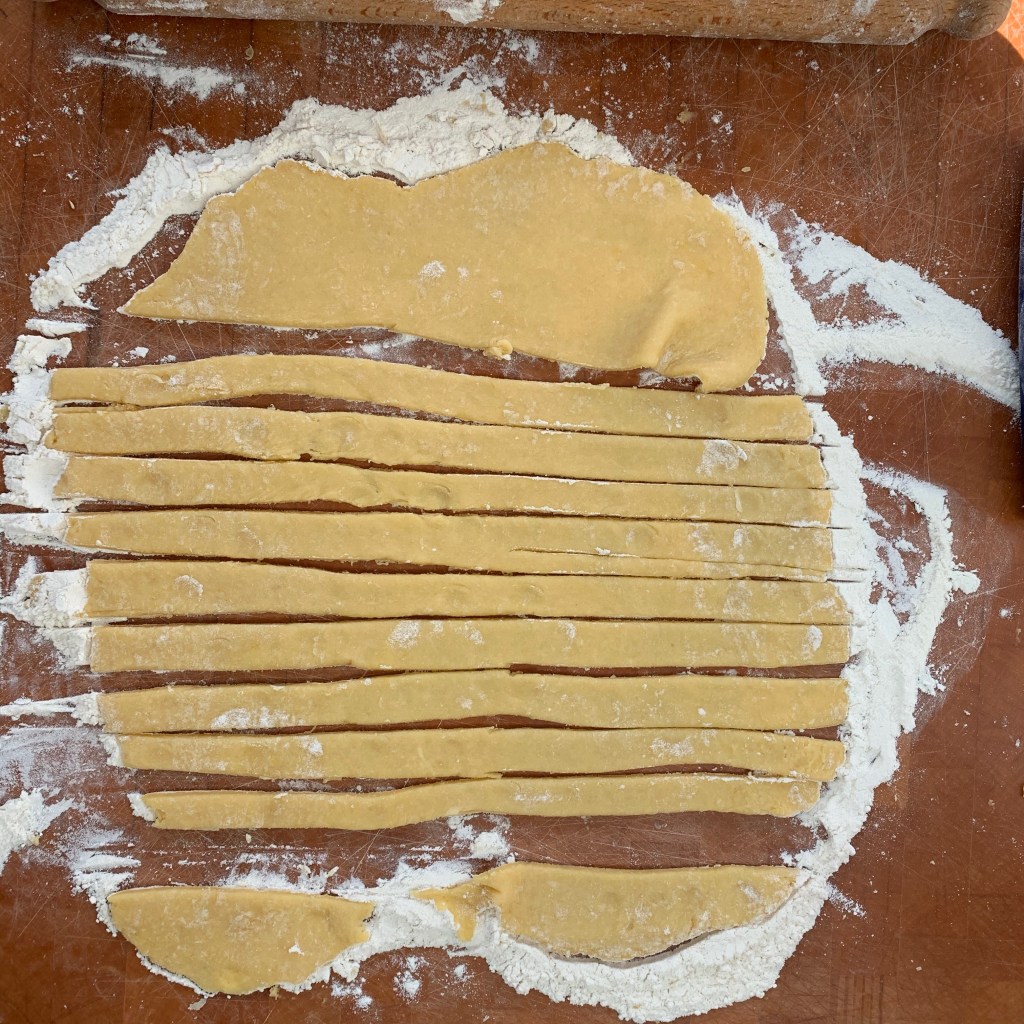
Roll out the remaining pastry and cut into 1cm wide strips
If you haven’t already, remove the baking beads and paper from your blind-baked pastry case.
Fill the pastry case with the cheese filling
Form a lattice over the top of your cheesecake with the strips of pastry (if you don’t know how to do this, YouTube is your friend)
Bake for around 50 minutes until the pastry lattice is nicely brown
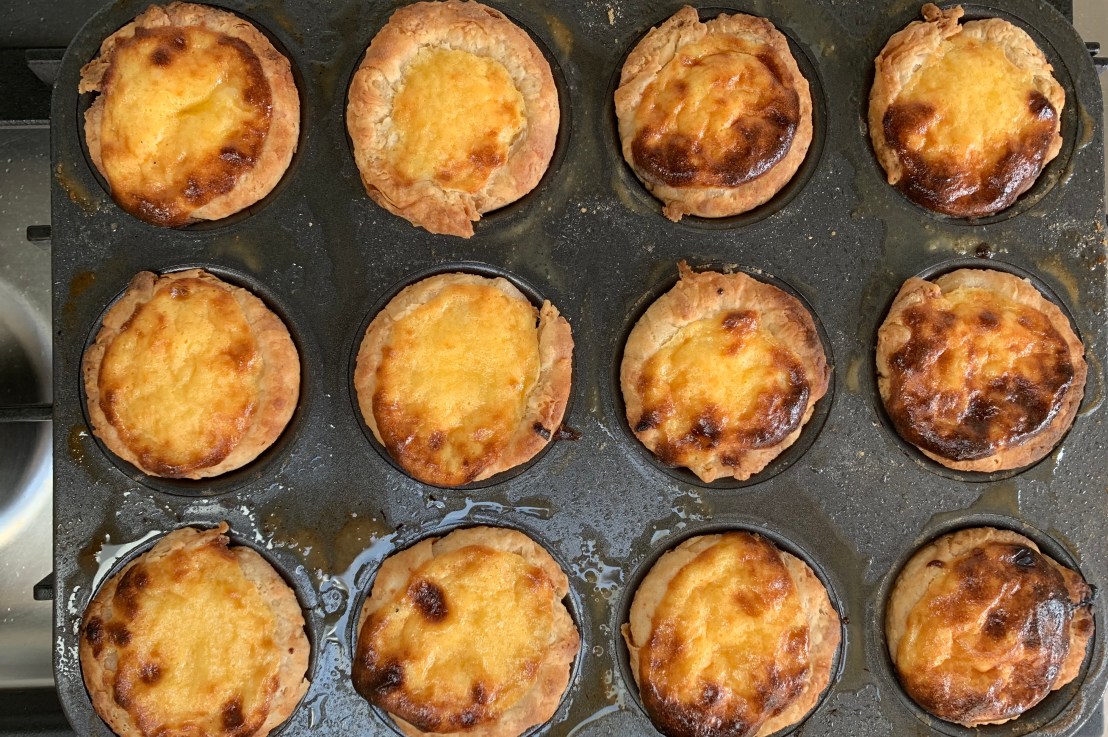
This recipe is dedicated to Conceiçao, who looked after me during many happy childhood summers in Portugal. There was only one option for the Portuguese bake: the little puff-pastry custard tartlets called Pastéis de nata – or Pastéis de Belém, in their most famous incarnation in the bakery in the Lisbon suburb of Belém, around the corner from the Mosteiro dos Jerónimos and opposite the monument to Henry the Navigator.
A Pastel de nata has two components: a puff-pastry case and its custard filling. There’s nothing particularly unusual about Portuguese puff pastry recipes, so you can use whatever recipe you like. Since puff pastry is fundamentally difficult, the alternative is to simply buy the stuff ready made, but if you do this, try to get an all-butter version or the flavour balance will be seriously off.
What is slightly unusual is the mechanics of the tartlet: the trick is to roll the whole sheet of pastry up tightly, Swiss roll style, then cut it into rounds. You flatten each round and press into the depression of a shallow cupcake or muffin tin to form the characteristic snail shell pattern in the flakes of the cooked pastry.
The custard is also unusual: it starts with a simple flour and water mixture; you then add hot syrup, then you cool the whole lot and add egg yolks; the custard is then baked in the tartlets.
I’ve started from two Portuguese recipes: one for the pastry and one for the pastéis themselves. If you haven’t made puff pastry before, the recipe contains a handy video showing you the technique far better than I can describe it.
The puff pastry
300g plain flour (OO grade if you can get it)
7g salt
170ml water
250g butter (if you can, use a high melting point butter like Président)
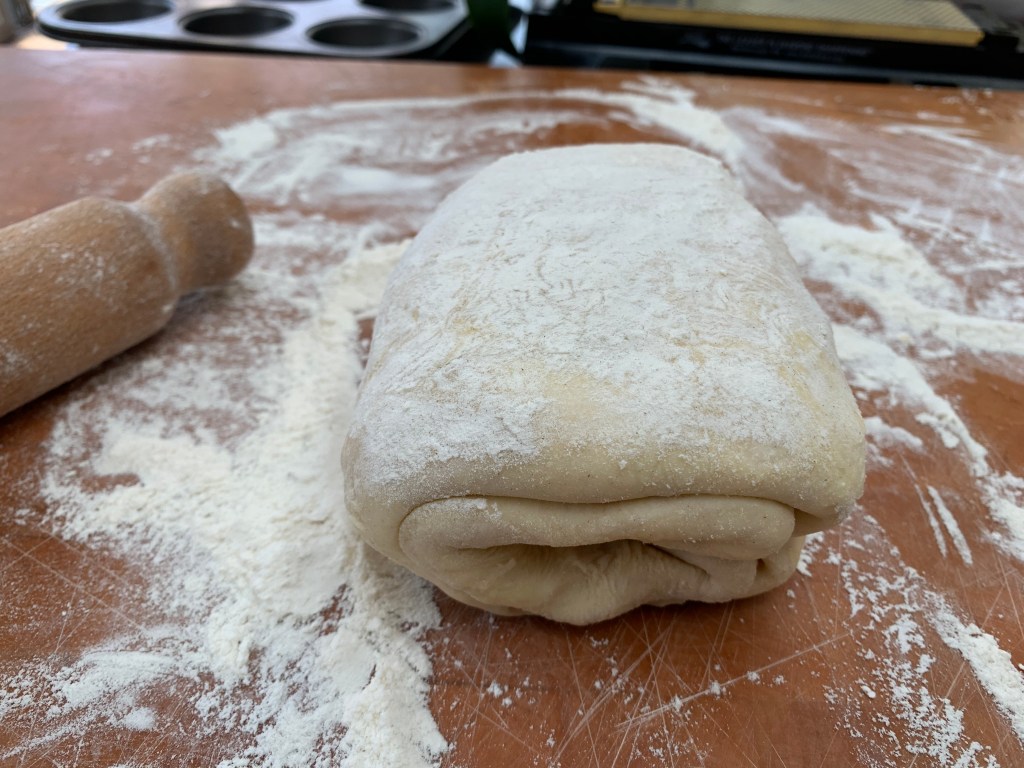
Your key objective throughout this process is to avoid the butter melting and leaking out through the sides of your pastry. If it’s a very hot day, which it was when I made these, you will need to put things back into the fridge frequently to keep them down to well below the melting point of the butter. You can tell from the cover photo that I wasn’t entirely successful.
Take the butter out of the fridge. Time this so that when you get to step 3, the butter will be soft enough to roll but still cold enough to be in no danger of melting.
Put the flour, water and salt into a bowl and mix thoroughly until you have a smooth dough. Form the dough into a ball, cut a cross in top (I have no idea why), cover and refrigerate for 30 minutes.
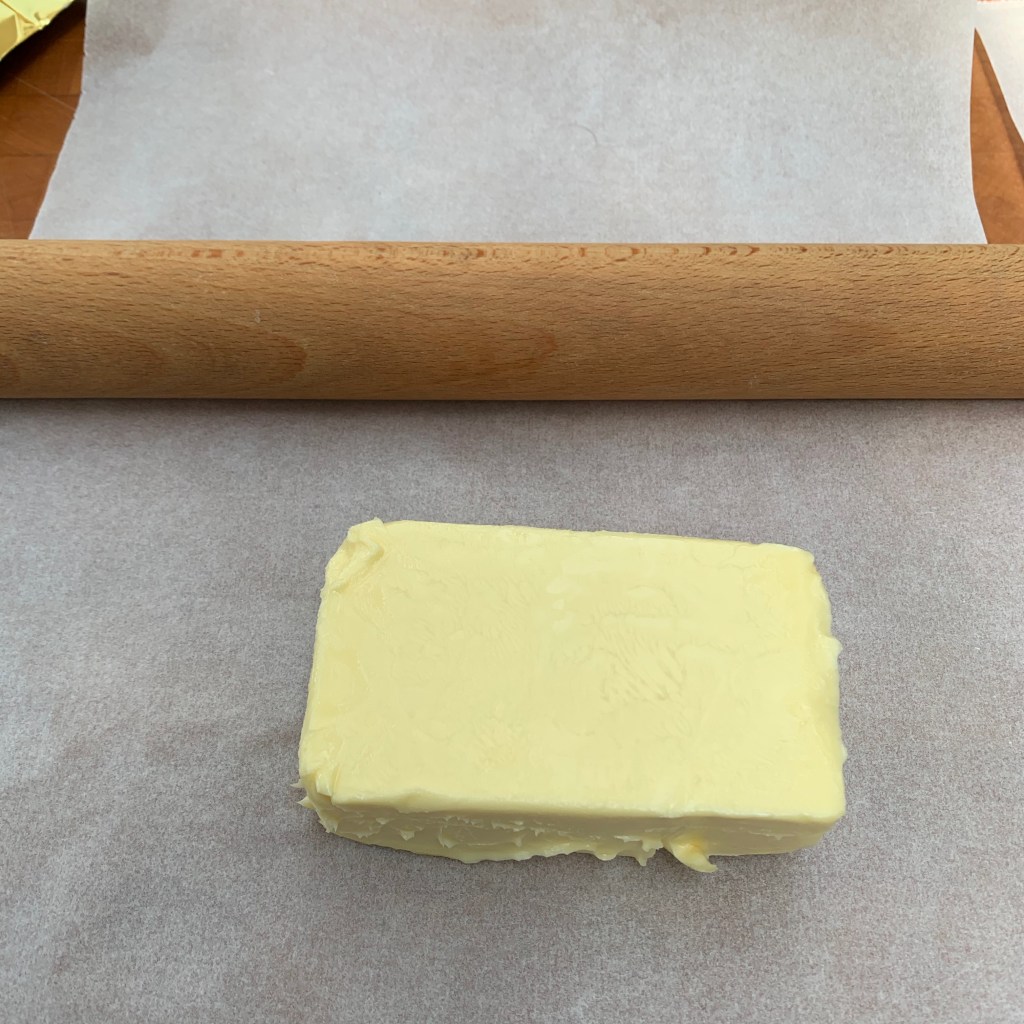
Cut out two large sheets of baking parchment (perhaps 40cm long). Roll the butter between the two sheets to form as neat a square as you can manage: you want a constant thickness. Put the assembly back into the fridge.
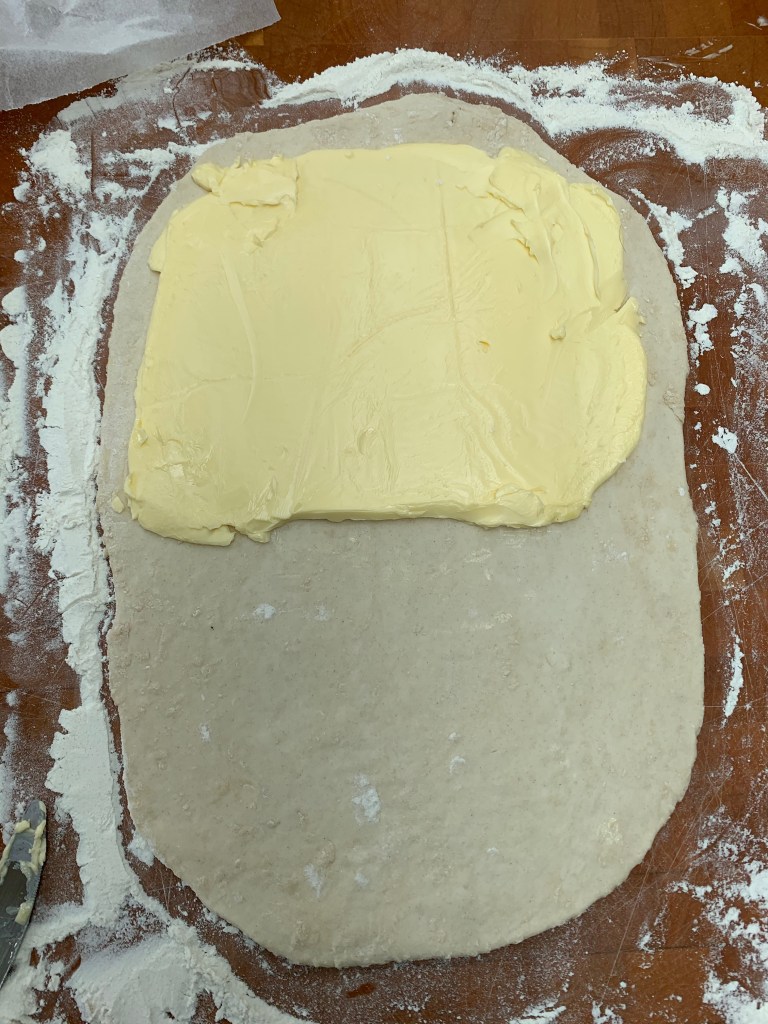
On a floured board, roll the dough until it’s slightly over twice the size of your square of butter.
Removing the paper, place the square of butter onto one end of the dough, fold the dough over and seal the edges. Roll the dough out slightly more to make sure that it’s properly laminated.
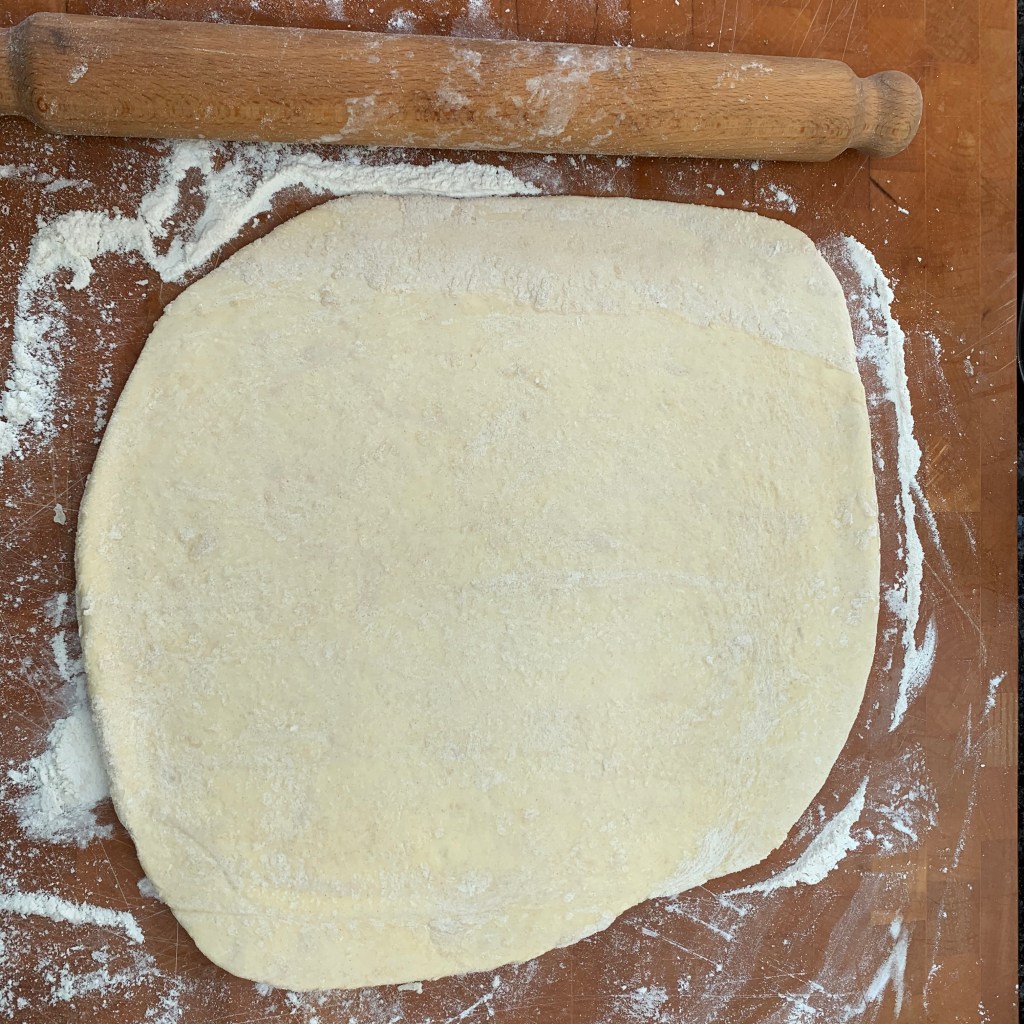
Fold the dough into three by taking one end to the middle and then the other end on top. Turn it by 90°, roll it out, fold into three again, then wrap with cling film and refrigerate.
Repeat this process twice (if you want to follow the Portuguese recipe strictly, do a 4-way book fold as your second stage). Refrigerate for 20 minutes or more again.
Have a set of muffin or cupcake tins ready. Grease them with a bit of butter.
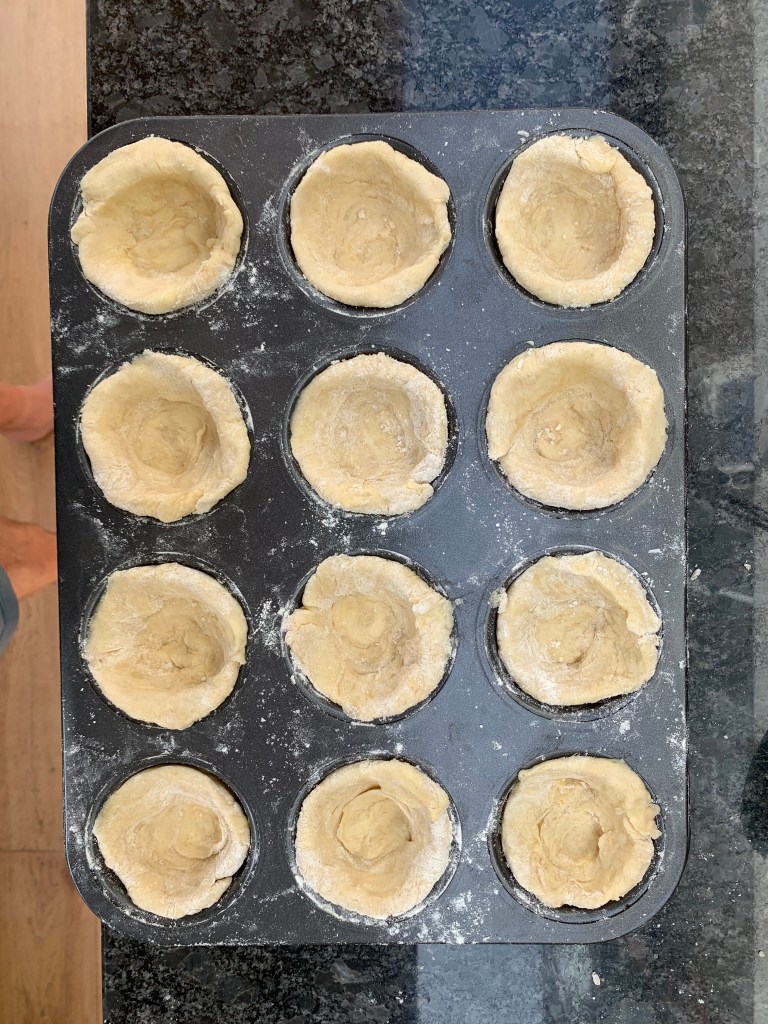
Roll the pastry flat, then roll the flattened pastry tightly into a cylinder. Cut the cylinder into slices: the recipe says 12, but my pastry came out a bit thick and I reckon that I should have tried to get a few more, perhaps 15 or 18.
Flatten each slice into a circle with the flat of your hand and/or a rolling pin, then press each circle into a muffin tin so that it lines the bottom and sides.
Refrigerate all of this while you make your custard.
The custard
250 ml milk
Peel of one lemon
150g sugar
75 g water
4 egg yolks
Ground cinnamon to taste
The tricky part of this recipe is to get as many of the lumps out as you can. Use a wire whisk and be ruthless with it!
Preheat oven to 230℃
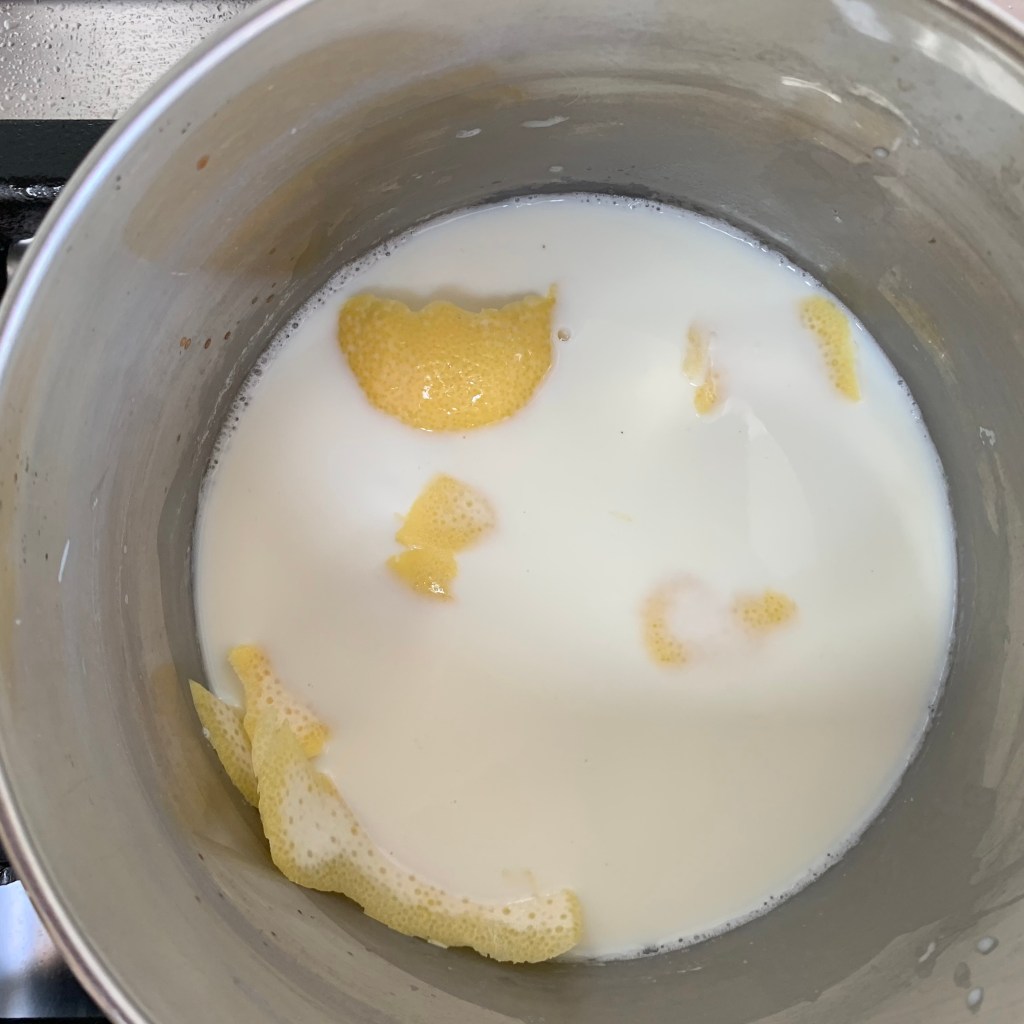
Peel the lemon, keeping the peel whole in as few pieces as you can manage. Count the pieces. Keep the rest of the lemon for juice later.
In a bowl, mix 100ml of the milk with the flour. Get as many of the lumps out as you can manage.
In a saucepan, bring the remaining 150ml of the milk to the boil with the lemon peel.
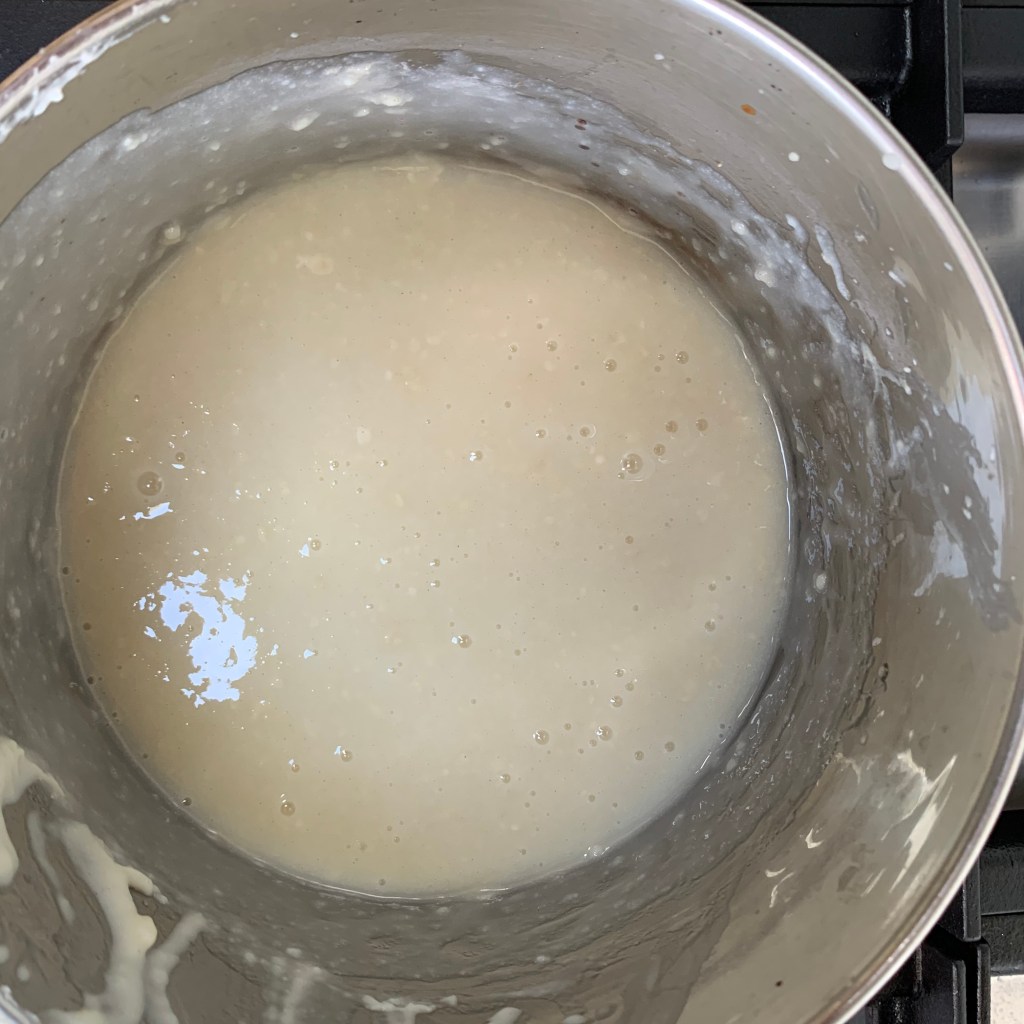
Pour in the flour/milk mixture and whisk vigorously, on the heat, for another couple of minutes until you have a thick paste. Remove from the heat and discard the lemon peel (that’s why you needed to count the pieces). You now have another opportunity to have a go with the whisk to get more of the lumps out.
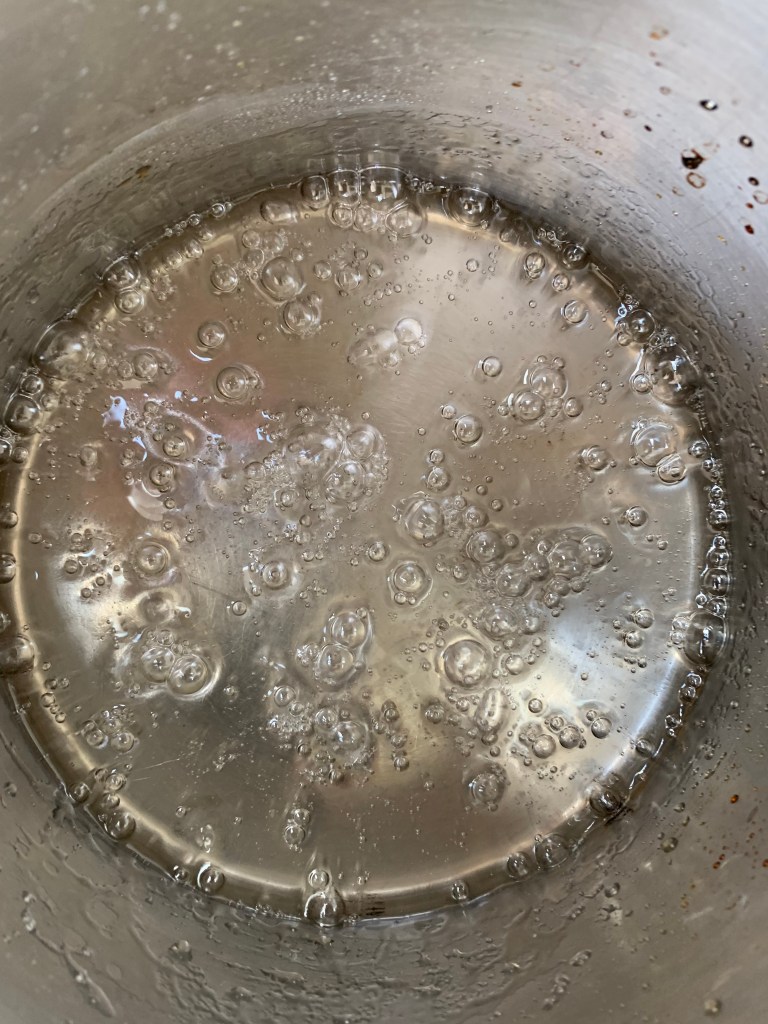
In another pan, mix the sugar and water. Bring to the boil and cook until you have a thick syrup. Mine got as far as 111℃ on a sugar thermometer, which is the top end of the “thread” stage, before it gets to “soft ball”.
Take your pastry out of the fridge around now.
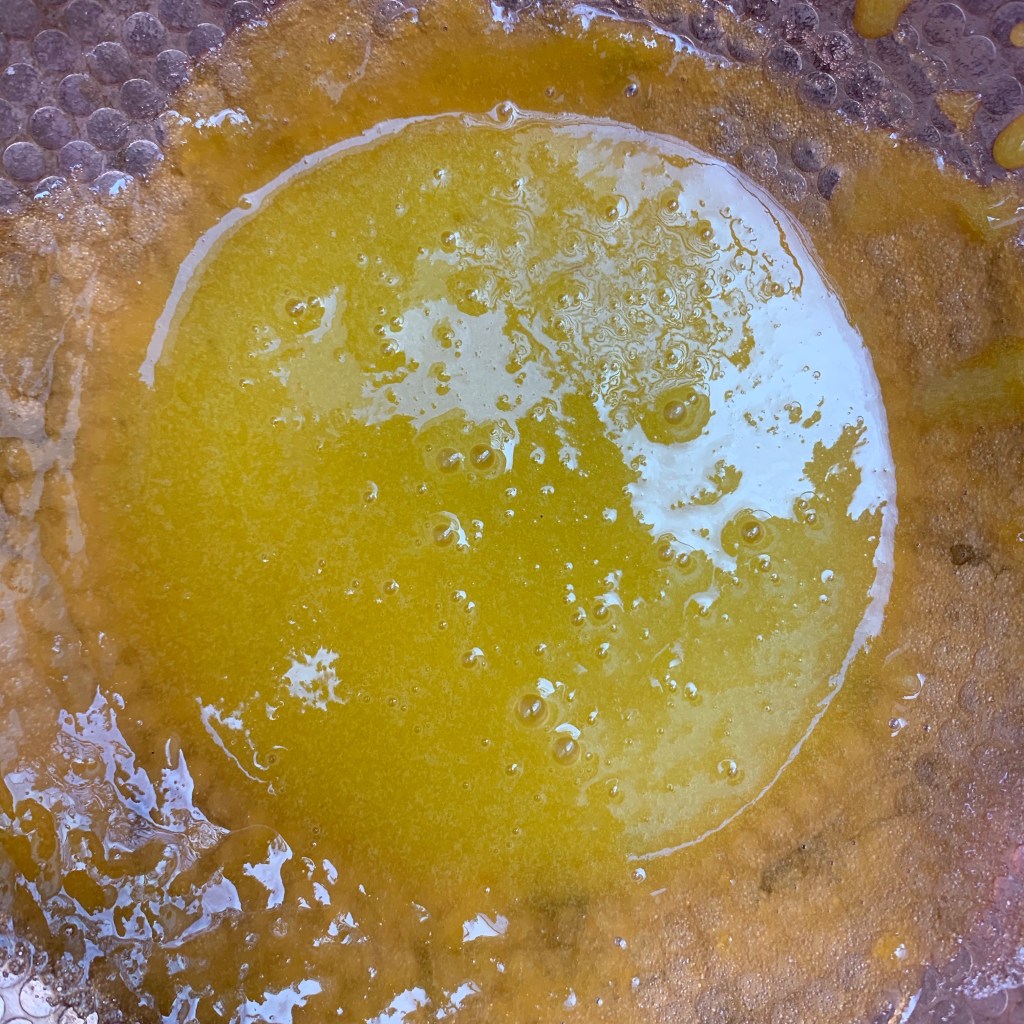
A little at a time, dribble the syrup into your flour mix, whisking all the time. You can speed up towards the end: make sure the syrup and flour mix is as smooth as possible.
Yes, you got it. It’s time to get the lumps out again. I did this by more frantic whisking: I suspect that passing it through a sieve might have been less work, at the cost of a bit of wastage and more washing up.
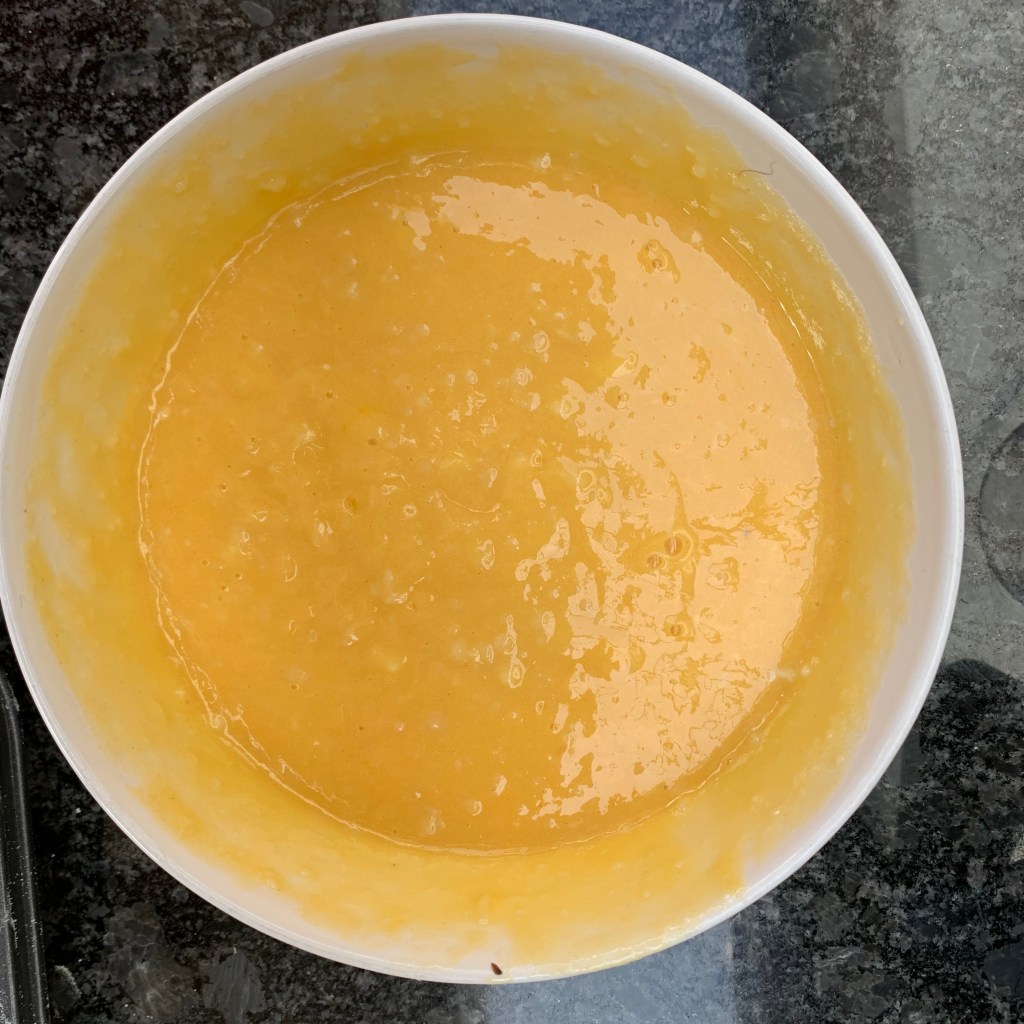
Add the egg yolks and whisk until smooth
Assembly
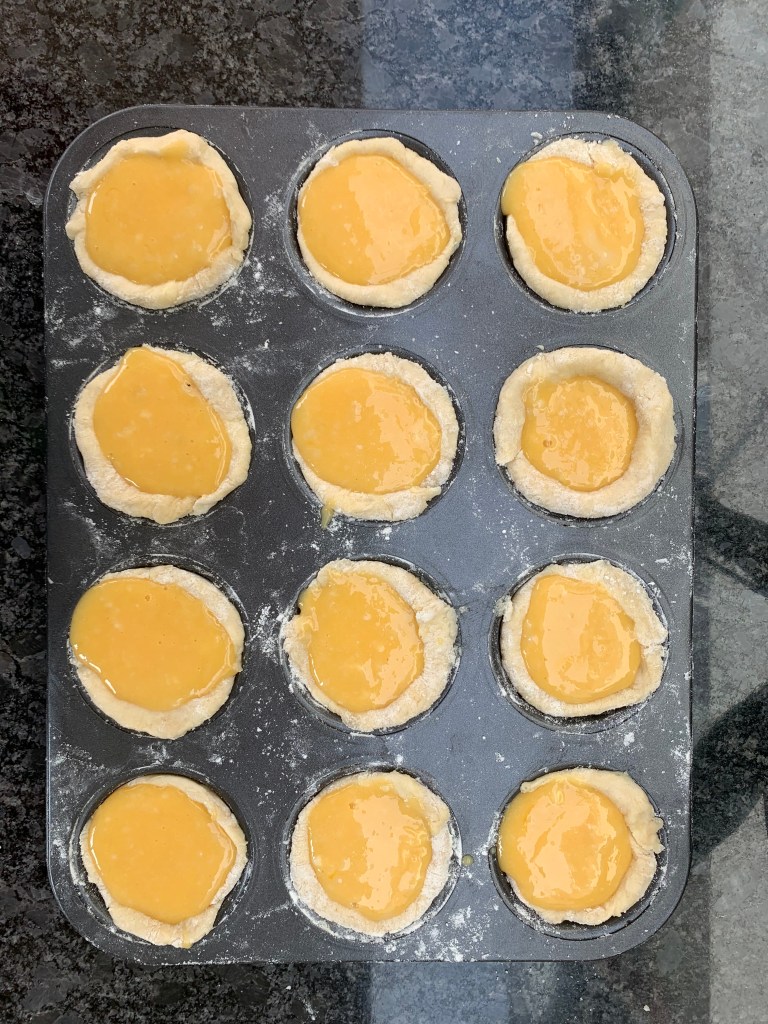
Pour the custard into the tartlets
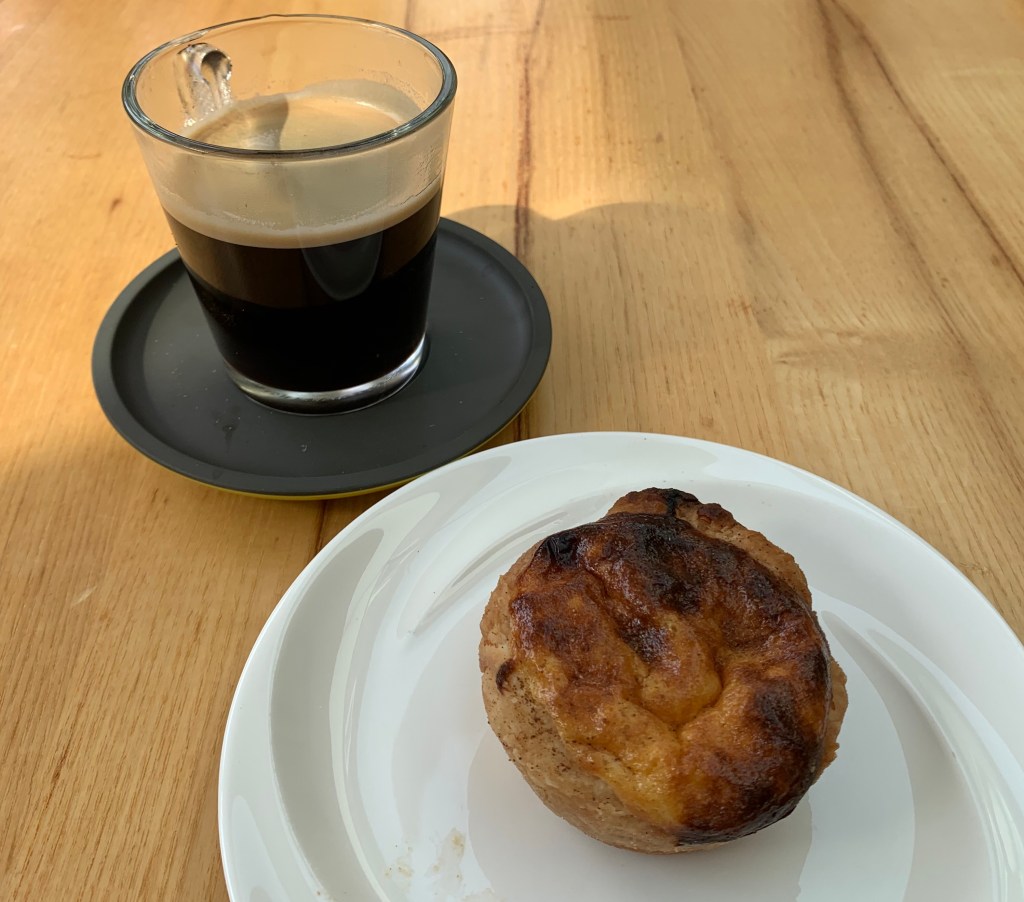
Bake for around 15 minutes. The custard should have blobs that are dark brown, on the verge of burning but not quite there; the pastry around the edges should look golden and flaky.
Dust with a little cinnamon.
Leave to cool for at least 10 minutes before serving. Pastéis de nata are fabulous straight out of the oven, but you don’t want to burn your tongue. Of course, you can have them cold later.
The Portuguese would never pass up a chance to have these with a bica (short espresso).
The French are fabulous bakers. I could have chosen any of a dozen bakes from France, but this one is the taste of my childhood – my Proustian Madeleine, if you’re of a literary mind. So let’s hear it for the “éclair au chocolat”, which brings back a flood of happy memories of small boy in Parisian patisserie.
There have been some easy bakes in this series of posts: this isn’t one of them. It’s fiddly and requires hand skill as well as pin-sharp attention to quantities and timing. If anyone labels an eclair recipe as “quick and easy”, don’t believe them.
The éclair is a three part dish: a cylindrical choux pastry bun, a crème pâtissière (pastry cream) filling and a ganache or glaze. Each one has its choices: I’m going to write only one recipe, but I’ll give some ideas about the other options. I should also point out that I’m not a master pastry chef: if you are looking for perfect symmetry and an immaculately shiny top, you’ll need to go well beyond my skill level. But I can assure you that these tasted suitably authentic and went down very well with the family…
The crème pâtissière filling
Eclairs in England tend to use whipped cream as a filling. The French don’t do this: the filling is always some variant of crème pâtissière (pastry cream or creme pat in English), either vanilla or chocolate. You can use plain pastry cream or add some Crème Chantilly (sweetened whipped cream), in which case it’s technically called a Crème Diplomate. I went for something in between: a chocolate crème pâtissière, but with double cream mixed in to thin it down to a pipable consistency.
3 eggs
15g flour
5g cornflour
5g (1tbs) cocoa powder
60g vanilla sugar (or 60g caster sugar plus vanilla essence to taste)
25g dark chocolate (I used chocolate with 70% cocoa solids)
250 ml milk
double cream as needed – perhaps 30-50ml
In the methods, I’ve sequenced things to minimise stress rather than overall preparation time. For example, if you were trying to minimise time, you’d probably put the milk on straightaway and then quickly sort out the egg mix while the milk heats up.
Separate the eggs and put the yolks in a bowl
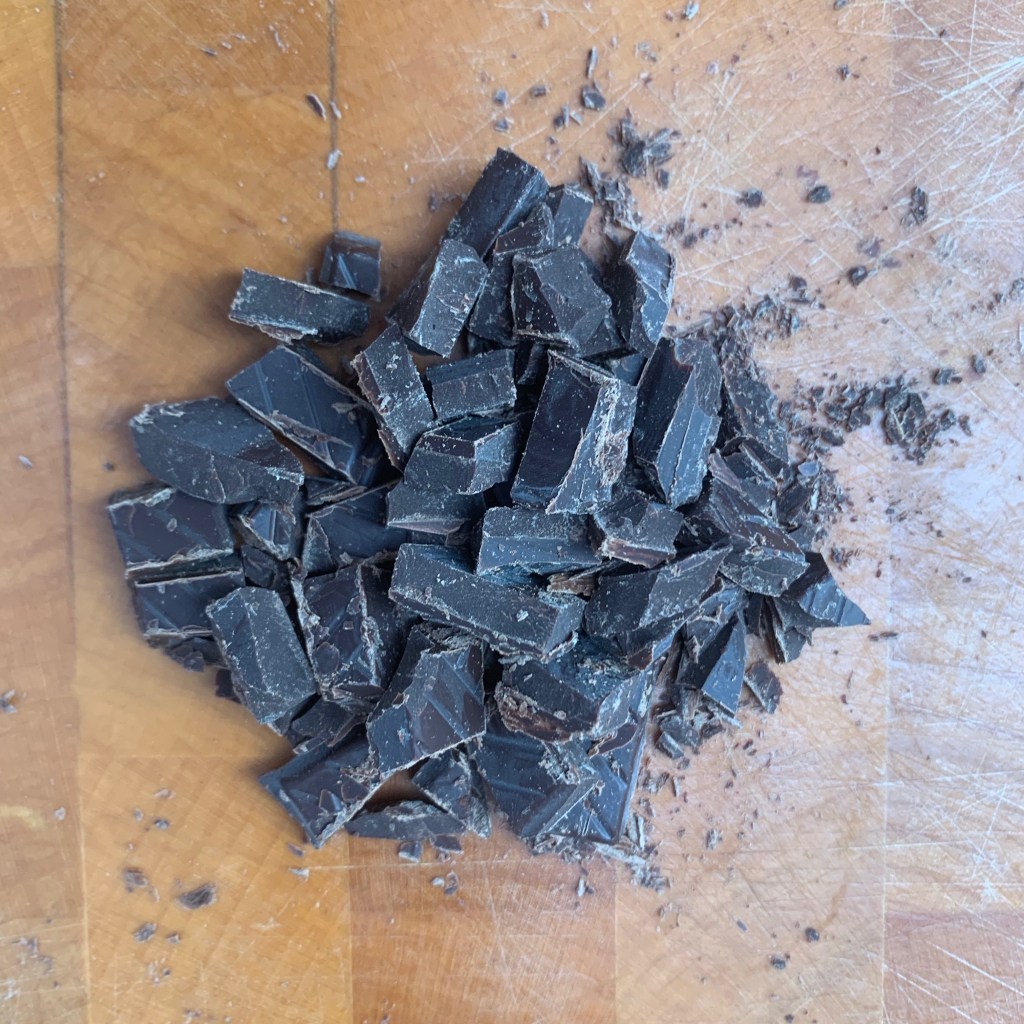
If your chocolate came in a bar as opposed to chips, chop it up into small pieces
Add 45g of the sugar to the eggs and whisk together
Add the cornflour, flour and cocoa powder and whisk thoroughly
Put the milk into a saucepan with the rest of the sugar (and vanilla essence if using) and bring to the boil
Pour the milk into your egg mixture and whisk together thoroughly
Return your mixture the saucepan and whisk in the chocolate
Cook for a minute or two longer until there is no hint of raw flour taste in the mixture
Decant your mixture into a bowl, dust it with icing sugar to stop a skin forming, cover and leave to cool; refrigerate until thoroughly cold and your eclairs are ready to be filled
Eggs, sugar to start
Eggs and sugar mixed
Flours/cocoa added
Chopped chocolate
In the saucepan
Cooling down
The choux pastry buns
Most choux pastry recipes are pretty similar: mine mainly comes from an old Roux Brothers cookbook and therefore has a level of French authenticity. The real choice you have is how to improve the crust on the top of your eclair: I’ve sprinkled icing sugar on top, but you can use egg wash if you prefer. Some French recipes like this one from Ricardo use a thin layer of a sweet pastry called “craquelin”, which merges into the main eclair, caramelises and forms a characteristic cracked pattern.
45g unsalted butter, plus another 5g if your milk is semi-skimmed
65ml milk
65ml water
½ tsp sugar
75g flour
2 eggs
icing sugar to dust
Preheat oven to 190℃ fan.
Get your baking tray ready: lie a silicone mat over it (if you have one), patterned side up, or a sheet of baking parchment otherwise
Prepare a piping bag with a 1cm nozzle. A French star nozzle is ideal: this gets you a ridged eclair with more surface area to go crisp. I don’t have one of these, so I went for plain.
Sift the flour
Chop the butter into small pieces and put into a saucepan
Add the milk, water and sugar (you can also add ½ tsp of salt at this stage, which some recipes suggest)
Bring to the boil and take off the heat
Immediately add the flour to the mixture in a single go and stir to combine
When properly mixed, return to the heat and cook for a short while – perhaps a minute or two – until the mixture comes away nicely from the sides of the pan. Take off the heat and leave to cool for a short while
Whisk in the eggs, one at a time, whisking thoroughly until you have a smooth mix. If the consistency is right, you should be able to pipe the mixture but it should hold its shape when piped. If it’s too stiff, you can add more egg. If it’s too loose, you’re in trouble, so an alternative to the “whisk in eggs one at a time” instruction is to whisk the eggs into a bowl on their own, and then add the egg mix a bit at a time until you are sure the consistency. For me, life was too short and I just added them in.
Leave to cool for five minutes or so, then fill your piping bag with the mixture
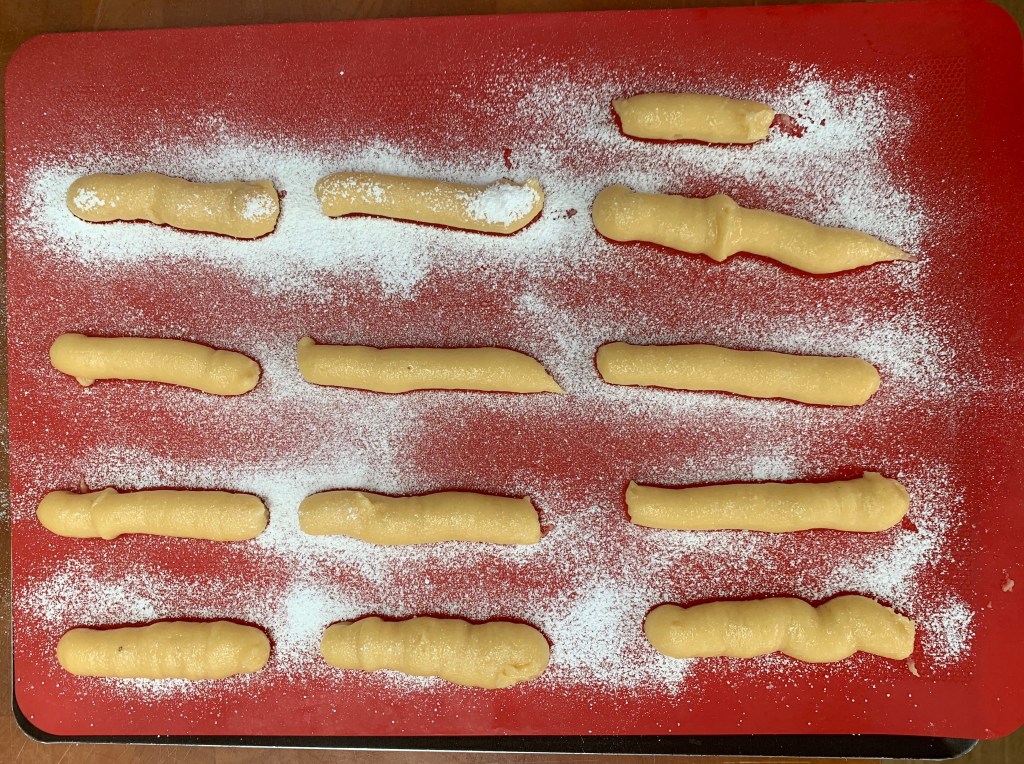
Pipe your eclairs into tubes of choux pastry around 8cm long – the recipe should get you a dozen of them. Make sure they are properly spaced out from each other: they will grow during baking. You really need to try to get an even cylinder here, which means piping quickly with a constant pressure: this takes practise. On the photos here, you’ll see that I have some way to go…
Tidy up any stray bits of dough which are sticking out at the ends, doing your best not to destroy the structure of what’s left
Bake for 20 minutes without opening the oven door
Open the oven door to check: close it quickly and then continue baking for however long it needs for your eclairs to go golden brown (probably 5-10 more minutes)
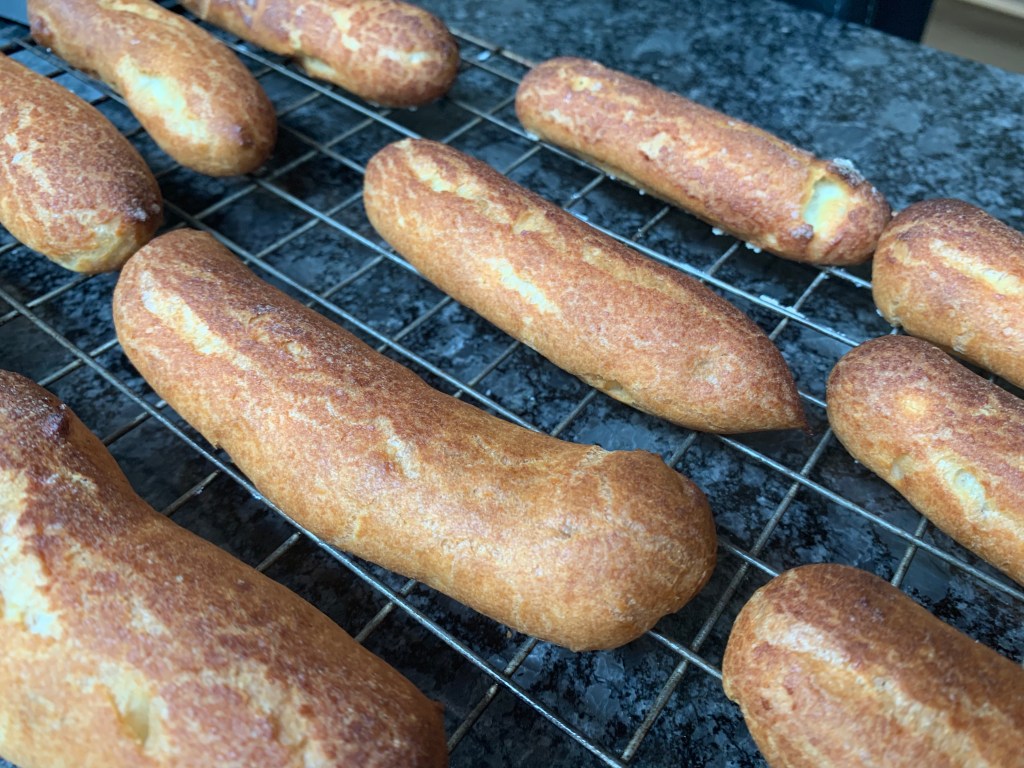
Remove the eclairs from the oven and leave to cool on a wire rack
Buttter, milk and water
After stirring in flour
Ready for piping
Dubiously shaped…
Out of the oven
Filling the eclairs
Take your crème pâtissière out of the fridge. Whisk in enough add double cream until you have a mixture that you can pipe easily: you want it to be rather thinner than toothpaste but not runny
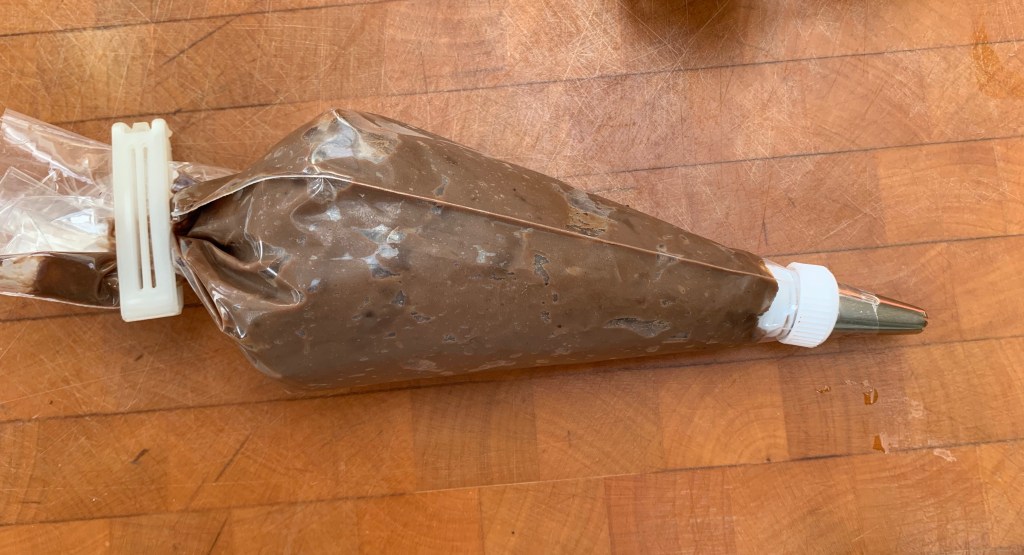
Transfer the crème pâtissière to a piping bag with a nozzle of around 5mm: the exact dimension doesn’t matter, but piping will be difficult if it’s too small and you’re likely to damage the choux pastry if it’s too wide.
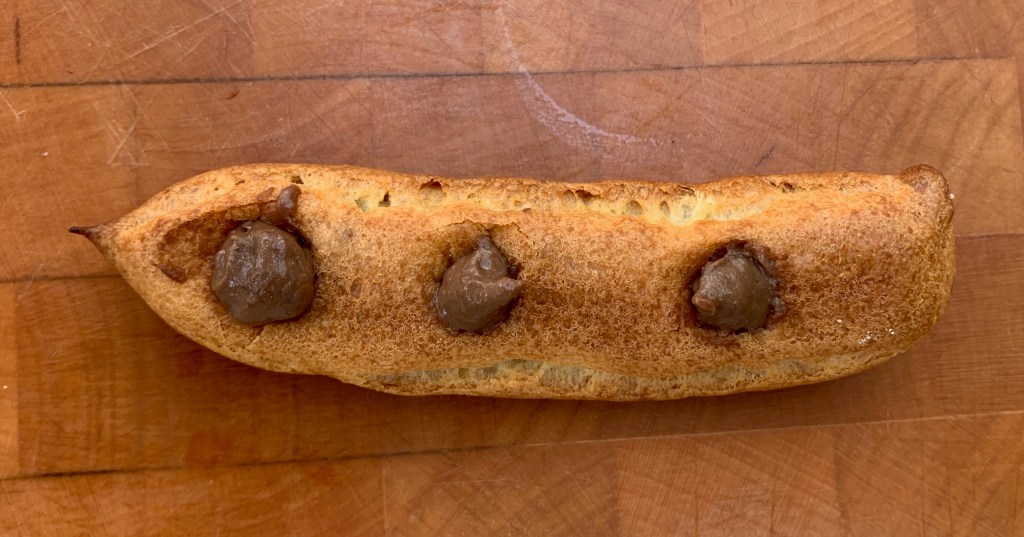
With your nozzle, make three holes in what is currently the bottom of each eclair, reasonably evenly spaced, piping filling into each until the eclair is full. Wipe off any excess and add it back to bowl – in the quantities in this recipe, you’ll have little or none to spare.
The ganache or glaze
The best tasting and easiest topping, in my view, is a simple chocolate-and-cream ganache and that’s what I’ve gone for here. But if you want that patisserie hard gloss look (or you just want something that doesn’t get quite so dramatically sticky in hot weather), there are plenty of alternatives around, involving icing sugar or glucose syrup (some American recipes specify corn syrup).
75g dark chocolate
75g double cream
Melt the chocolate in a double boiler
Cool slightly
Whisk in the cream and mix thoroughly
Leave to cool for 10 minutes or so
Spread smoothly over the eclairs with a small knife or spatula (spread them over the side with the holes you filled them from)
Leave to cool for an hour or so
If you have to, refrigerate and keep them for no more than a day or two: you don’t want to leave them for much longer, because the filling soaks into the pastry and it goes soggy. Eclairs don’t freeze, because the pastry cream splits. So really, you’re better off just eating them on the day…
Some notes and tips
Using cornflour guarantees that your pastry cream will thicken, but you risk it setting too thick to be piped easily – which is why I needed to thin it out with cream. If you use just 20g of plain flour rather than the flour/cornflour mix, you’ll need to cook the cream for much longer – perhaps as much as five minutes more – for it to thicken, but you then won’t need the cream afterwards.
Your biggest problem with eclairs is making sure that the buns dry out properly but don’t go rock hard. Of the various ways of preventing this, the one that seems to work best for me is to bake them at a relatively high temperature and have the nerve to bake them for at least 20 minutes before you open the oven to see how they’re doing. When you take them out, transfer them to a wire rack immediately: you don’t want any moisture building up on the base.
Canadian blog “the flavor bender” has an excellent post on how to troubleshoot problems with your eclairs, with a long list of what’s likely to go wrong and what you should do about it. It’s wordy and overly long, but the information is first class. Good luck!
It’s time for a trip to the delicately balanced, aromatic foods of Persia. Strictly speaking, Ranginak isn’t a baked dish – it’s cooked in a skillet, not an oven – but it’s a dessert made from a flour/butter/sugar mixture as found in many Western baked goods, so I’ll stretch a point. Ranginak gets described as a sort of Persian date and walnut fudge, but it’s much better than that because it isn’t overpoweringly sugary: cut into small chunks, it makes for a lovely, scented, sweet-but-not-too-sweet bite of deliciousness.
Ranginak is famous as a festive dessert in Iran: the name means “colourful”, which is mildly dubious since it’s basically brown until you add garnish. There are many regional variations, the most improbable of which comes from a seventeenth century Isfahan recipe and involves dressing the completed product with rice pudding. I’ve gone for a simple one, starting from a recipe in the lovely Persian website Turmeric and Saffron and adding in the odd bit from my Persian cookery bible, Margaret Shaida’s The Legendary Cuisine of Persia. As usual, I’ve given some details and turned most measurements into metric: I just find it easier to measure things accurately with a set of digital scales than with measuring spoons and cups.
I’ve halved the recipe, since we’re still in lockdown here in London and I don’t really want to make giant desserts if I’m not sure they’re going to freeze properly. The amounts here are about right for a round dish 15cm in diameter: adjust to suit whatever size dish you are going to use.
Ingredients, in order of use
50g walnut halves
200g dates
125g flour
125g butter
20g icing sugar
1/4 tsp ground cinnamon
1/4 tsp ground cardamom
A free pistachios, shelled and unsalted, to garnish
If you talk to anyone Iranian, they will tell you that Persian produce (walnuts, dates, melons, garlic, saffron, etc) is different from everyone else’s – and, of course, superior. This starts out by being incredibly irritating until you try things out and come to the inevitable conclusion that for the most part, they are simply stating correct information. Or nearly, anyway: Omani dates are as good as the Persian products, Chilean walnuts and Kashmiri saffron likewise. But you get the idea: if you can find a Persian food shop for your dates and walnuts, it’s a good idea.
In the more likely event that you don’t have access to a Persian shop: most supermarket walnuts will be fine, but the quality of the dates is important: the rock hard ones that you often see in oblong cardboard packets will be hard to work with and yield a disappointing result. Make sure the dates are soft. If they’re pitted, that will save you effort.
Method
Choose a shallow dish just large enough to hold your dates laid flat; grease it with a bit of melted butter.
In a dry pan on medium heat, toast the walnuts until fragrant but not yet burning (should be 3 minutes or so). Take them off the heat.
While the walnuts are cooling, take the stones out of the dates (if this hasn’t already been done for you).
In a bowl, mix the icing sugar, cinnamon powder and cardamom powder.
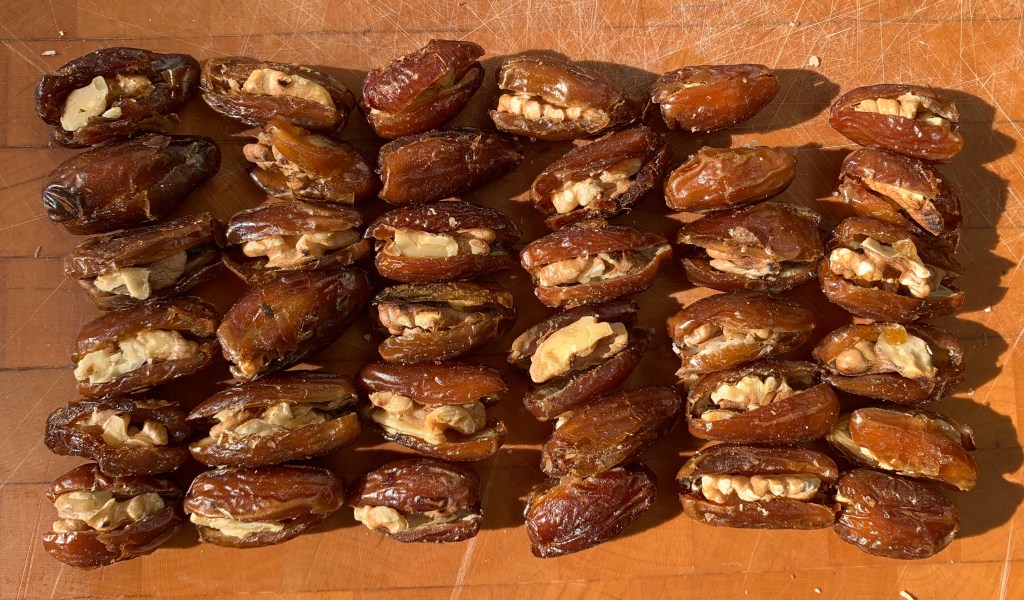
Once the walnuts are no longer too hot to touch, cut each piece in half so that you now have walnut quarters. Stuff a walnut quarter into the cavity of each date.
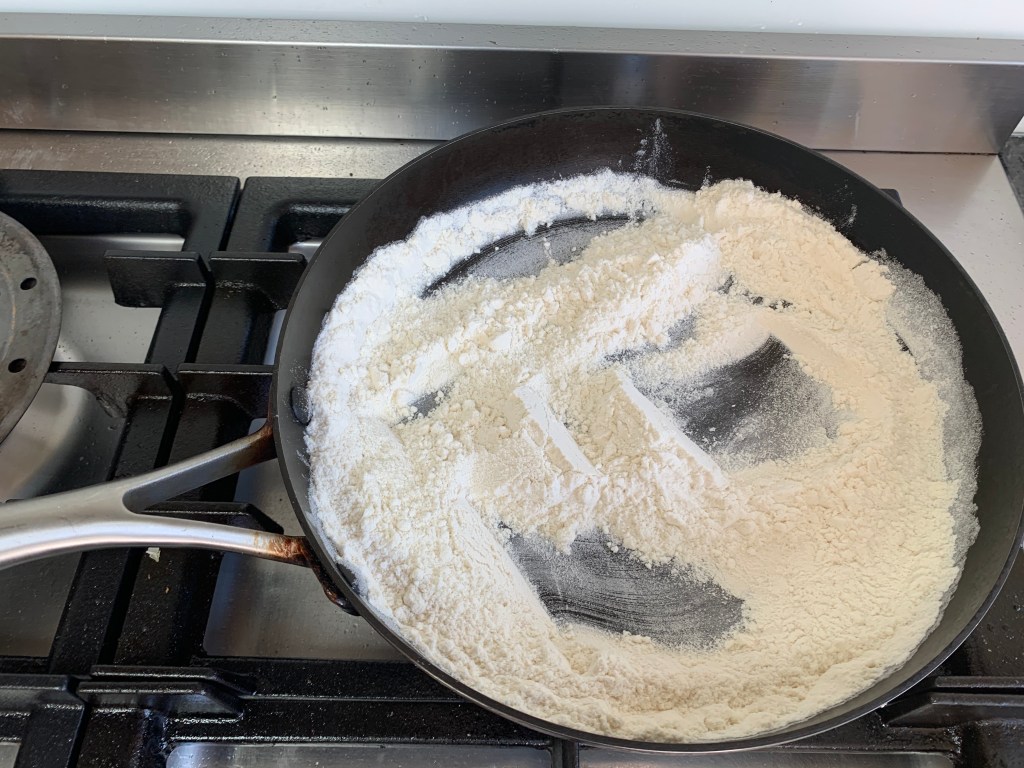
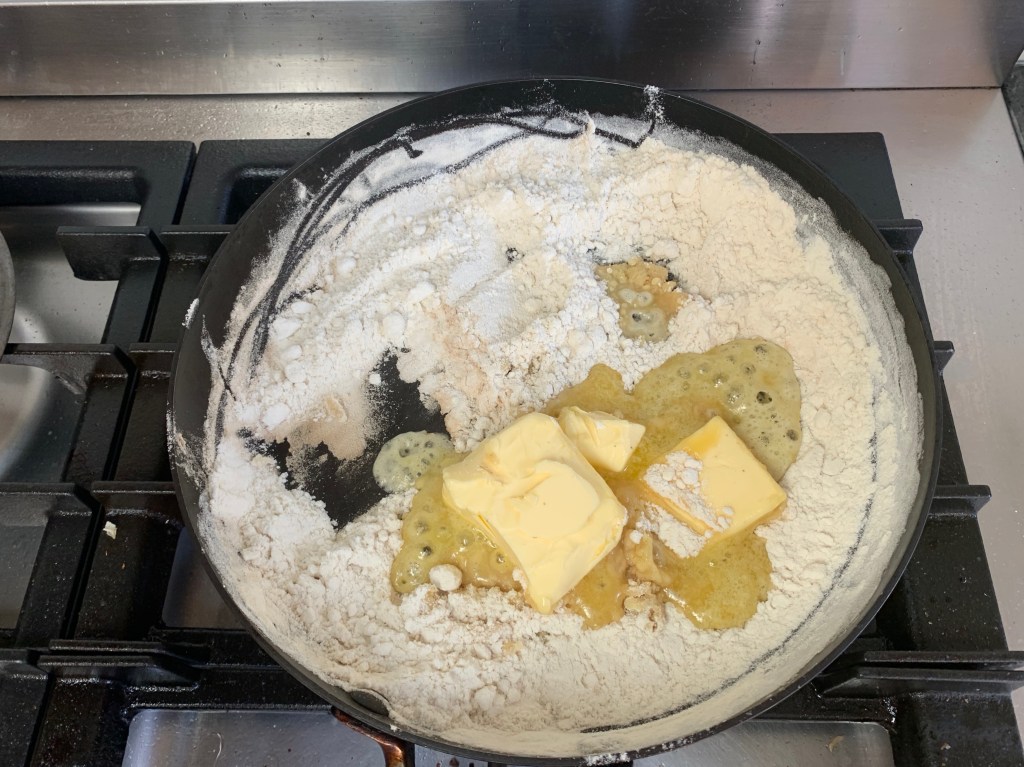
In a pan on medium heat, toast the flour until it’s just beginning to go pale brown and smell aromatic (around 5 minutes).
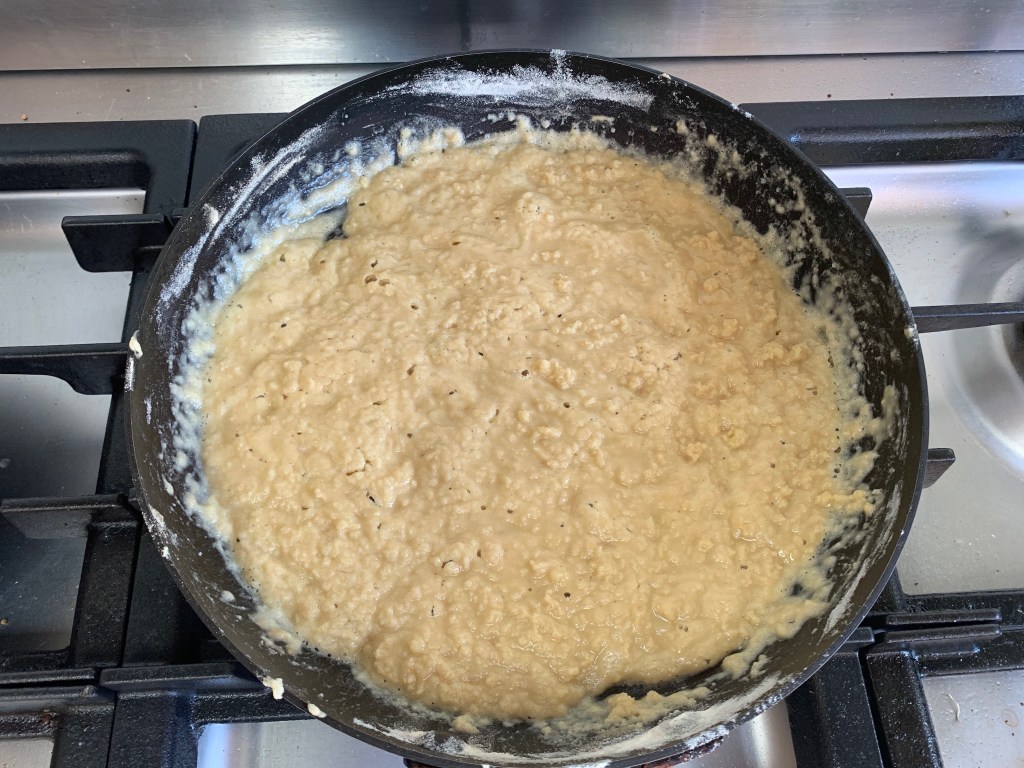
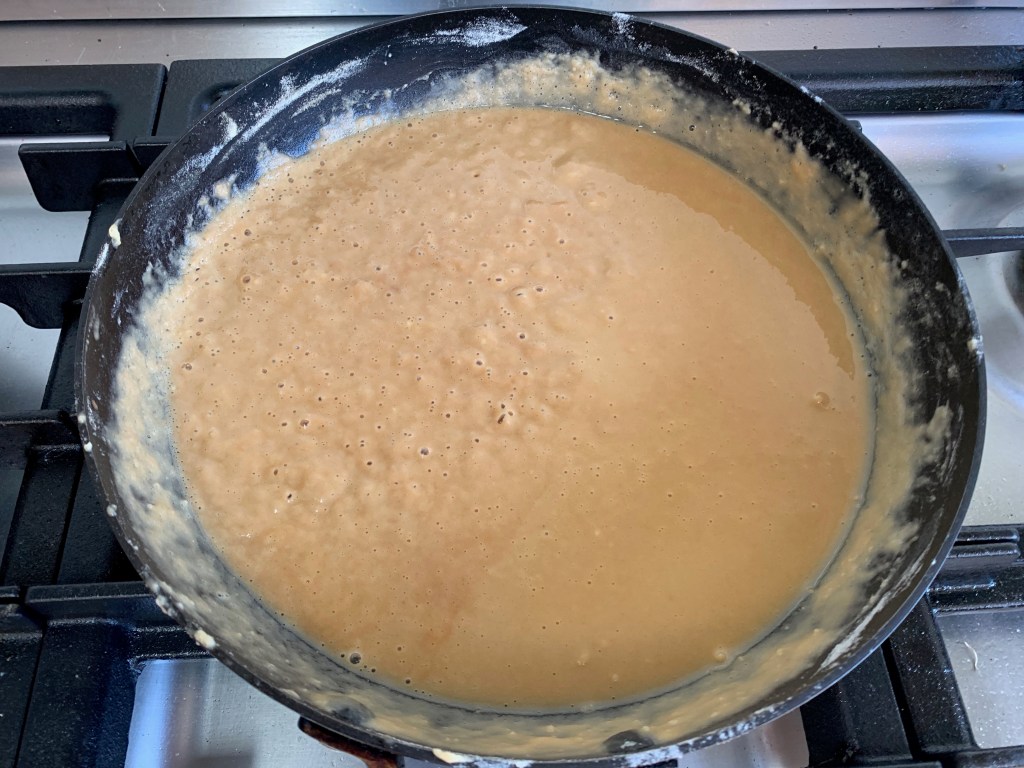
Add the butter and mix thoroughly as it melts. Now cook for around 10-15 minutes until your mixture is a medium butterscotch kind of colour. Don’t let it go as far as dark brown.
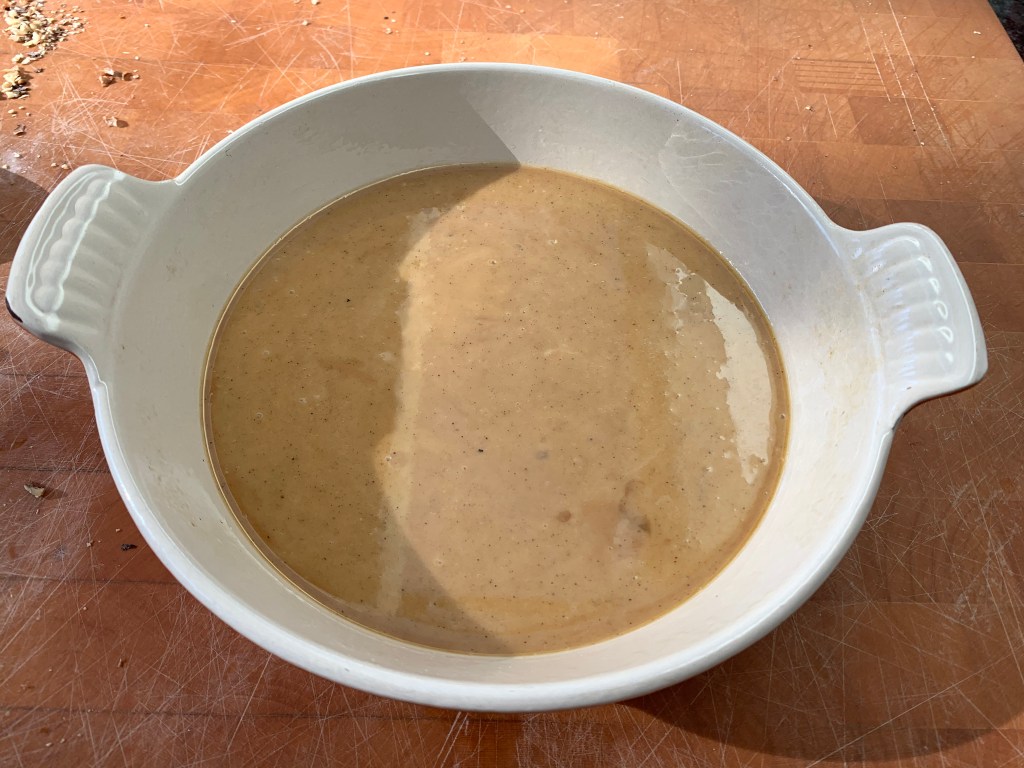
Add the spiced sugar and mix thoroughly, then pour the mixture into your dish. Leave to cool for long enough that you’re not going to burn your fingers in the next step.
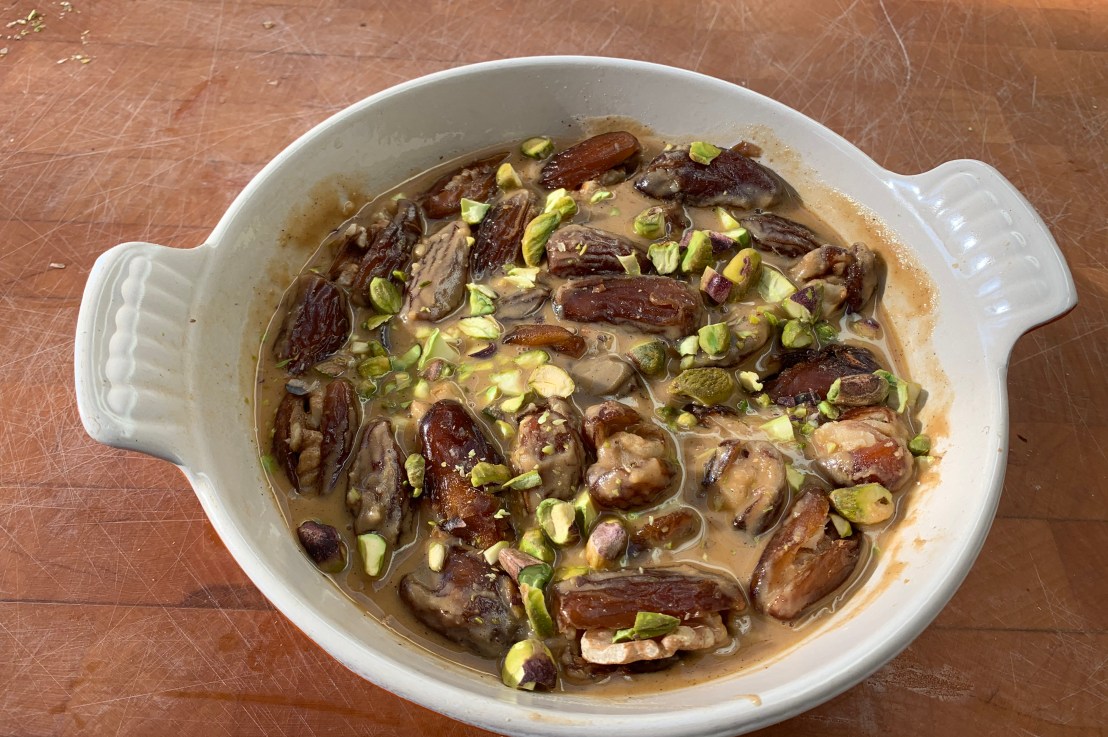
Now lay out the stuffed dates on the mixture, and sprinkle some chopped pistachios. If you’re of an artistic bent (and especially if you’re doubling or trebling this recipe), you’ve got scope for some fun here. Sadly, I’m not, but there are plenty of pretty photos online to give you the idea.
Leave to set, which should take a couple of hours at normal room temperature. If it’s a hot day and you’re in a hurry, you’ll probably want the Ranginak to spend part of the time in the fridge.
Traditionally, Ranginak is served with tea. Personally, I like going cross-cultural and serving a piece with a scoop of pistachio ice-cream. But I’ll leave that one to you…