Author: davidkarlin

Unelectable opinions, no.3: we should teach colonial history as it was

In the wake of the murder of George Floyd, there have been calls for black history to be taught in our schools. I’m broadly in favour of this, but I’m unconvinced that it’s the most important step in the fight against racism: it’s all too easy for the racists to brush it off as “someone else’s story”.

To confront racism head on, I believe that the most important step is to teach the history of empire and colonialism the way it was, which includes not only white-on-black violence but also white-on-yellow, white-on-brown and white-on-white. Only in that way can we persuade children to repudiate the racist behaviour of our forebears at a time where they held supreme power over swathes of the globe.

Most Chinese remember the British Empire not for any of its beneficent qualities but for Opium Wars, in which we burnt down their capital to support our drug runners in the havoc they wrought on Chinese society. Many Indians remember us not for their railways but for the Salt Tax and the Amritsar Massacre; Ireland remembers us for the Potato Famine. And that’s without mentioning our genocides of the Aborigines or Maoris or our invention of the concentration camp during the Boer Wars.

Inasmuch as British imperialism is taught in schools, it tends to be in the context of “we may have done a few bad things, but we glorified our nation and brought good to the world”. This way of representing the past must no longer be permitted: from an early age, potential racists must be made to understand the consequences of the evil wrought in the days where racism was normality pure and simple. Racist instincts may be built into all of us in some shape or form, but the mark of a truly civilised society is the ability to overcome those instincts. And that starts with being taught that they are evil and have always been so. Humanity should trump glory every time.

By the way, it’s not like we British are uniquely dreadful in this. The Americans with their native population, the French in Algeria, the Belgians in Congo, the Spanish in South America, the Japanese in Korea – I find it hard to think of a rich nation that’s untainted and that has ceased to glorify these episodes in their murky past. Of course, it’s more comfortable to focus on the good things in our past and erase our misdeeds. But that’s not the way to fight the cancer of racism today.
Around the world in 80 bakes, no.12: Lamingtons from Australia

Around the world in 80 bakes, no.12: Lamingtons from Australia

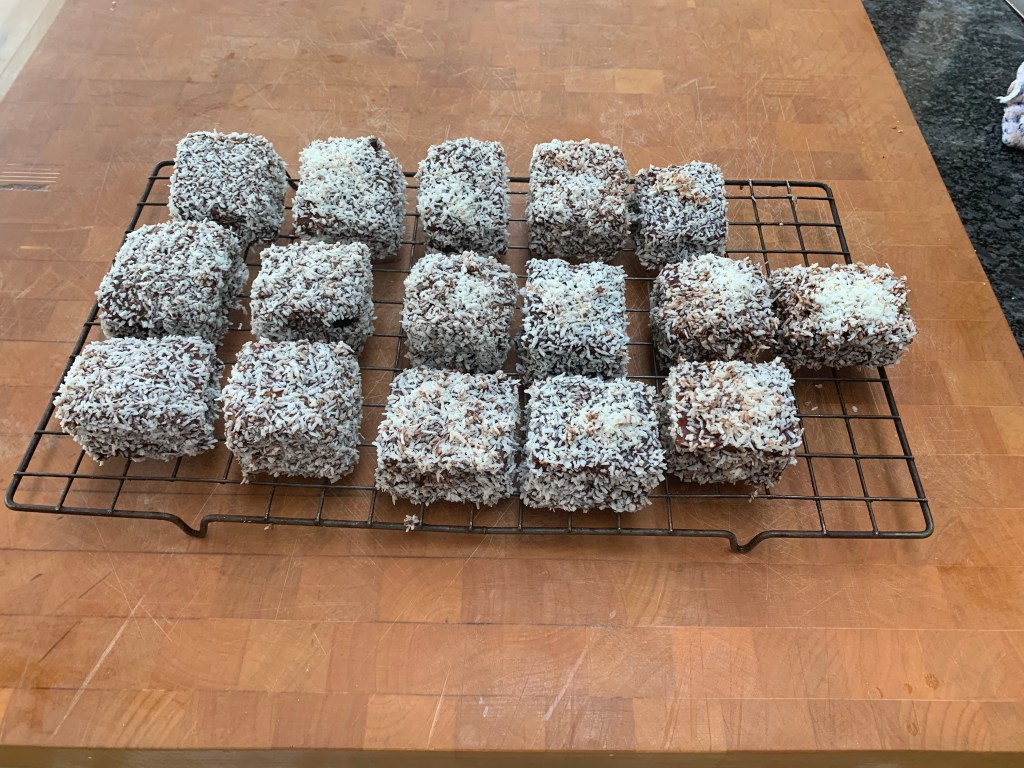
Since long haul travel looks like being impossible – or at least unwise – for the foreseeable future, let’s travel to the opposite end of the earth in our baking imagination. The Lamington is the definitive Australian cake, named after a sometime governor of Queensland (who apparently didn’t like them, according to TasteAtlas). There’s even a National Lamington Day, on July 21st, so if you’re reading this shortly after publication, you’ve got plenty of time to practise. This makes the Lamington one of a select collection of baked goods to have its own annual celebration day (cinnamon rolls are another, with Sweden’s Kanelbullens dag). 

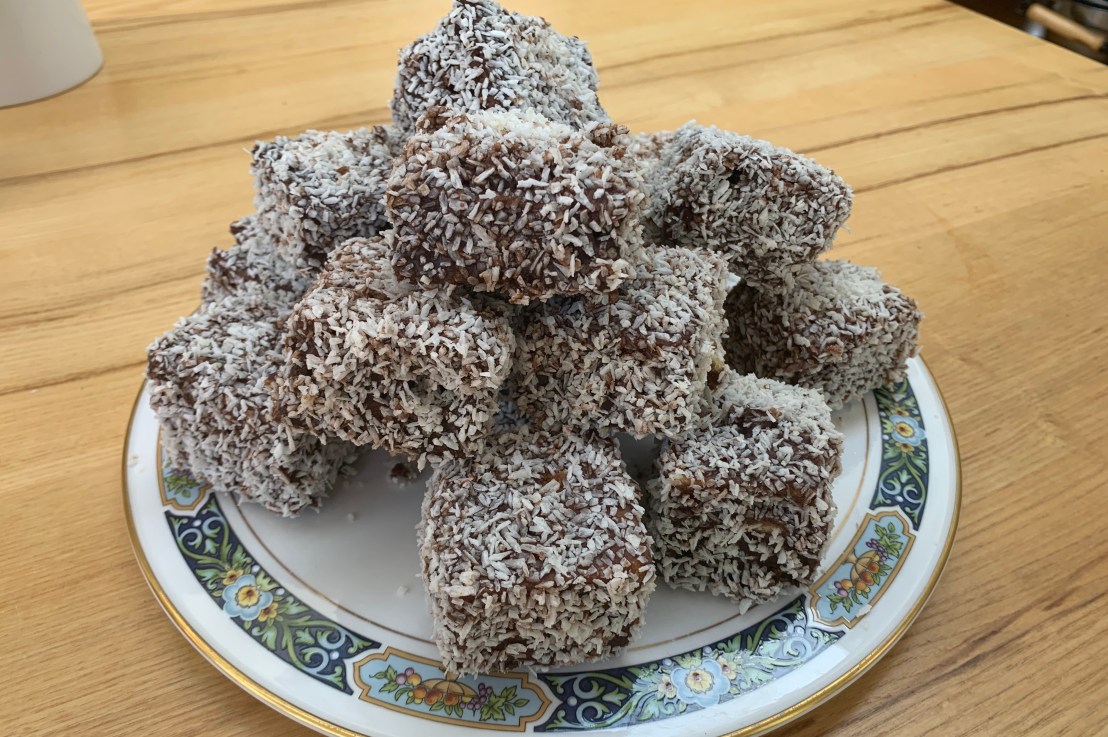
The recipe for Lamingtons could be written in a single line: cut a sponge cake into cubes, dip each cube in chocolate icing and roll it in desiccated coconut. I’m going to go into a bit more detail (after all, what self-respecting baking blog wouldn’t) but here’s the point: they’re a great option for hot weather because the coconut helps to stop everything melting onto your fingers. Anyway, I’m a sucker for anything made with coconut, so what’s not to like?

Most Lamington recipes are broadly similar. In fact, they don’t really vary much from the first recipe on record, from Queensland Country Life in 1900. You’ve basically got a couple of choices: filled/unfilled and portion-sized/bite-sized. Also, you can choose to use a filling or not. The original recipe specifies more icing, but you can also use whipped cream and/or raspberry jam, which is popular in New Zealand. I’ve gone for plain, largely because I think the recipe is sweet enough as it is, and anyway, keeping the cube structure looks really tricky with two layers of cake stuck together.

The much quoted Australian recipe in taste.com.au gets you 15 cakes of around 6cm on a side, which is a reasonable full portion size; Jamie Oliver’s somewhat different recipe gets you 30 cakes from around the same total weight of ingredients, which makes it more suitable for finger food at a party when there’s lots of other stuff. I’ve kept the sugar down a bit in my version.

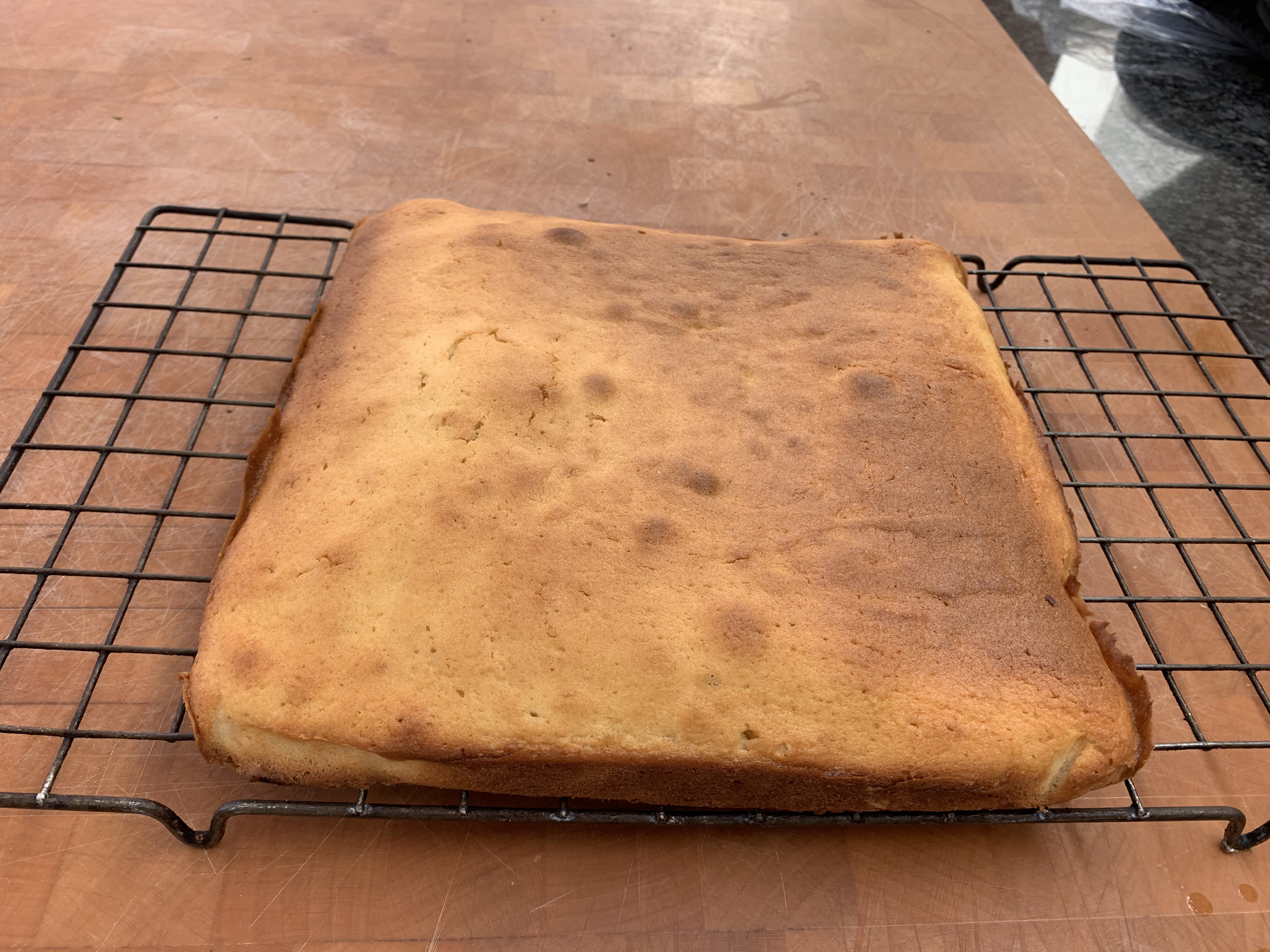
What everyone agrees is that you should make the cake the day before you try to ice it: otherwise, your cake is going to fall apart horribly when you try to dip it. So here’s the day 1 part of the recipe:

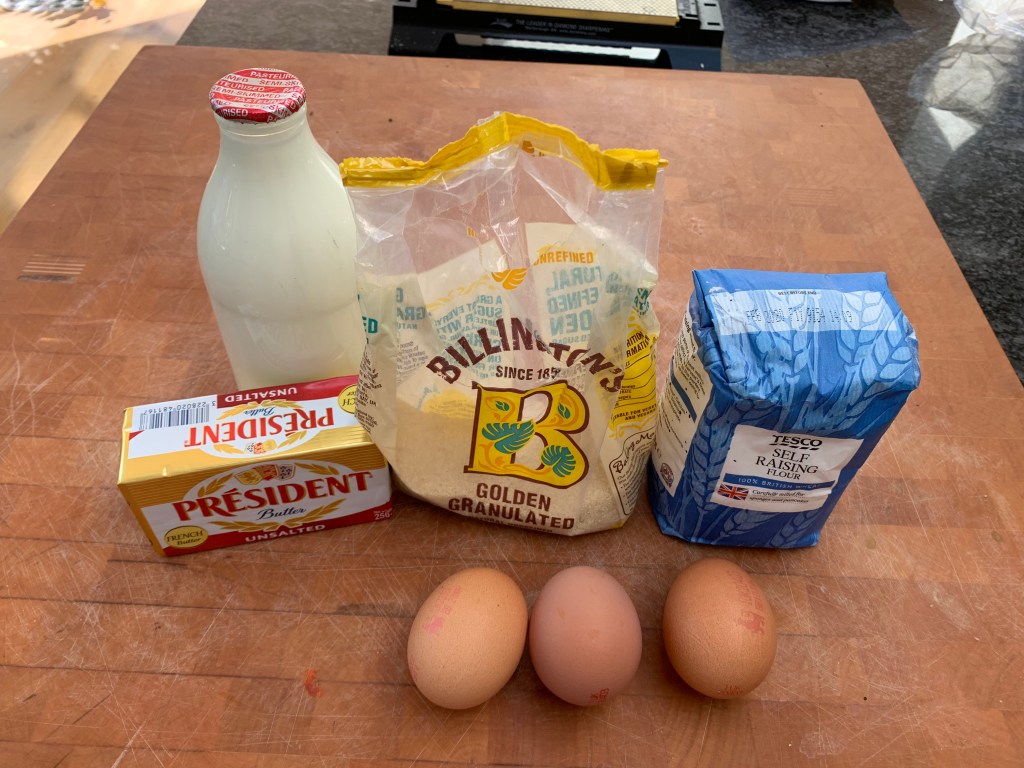
  • 150g sugar
  • 125g butter
  • 3 medium eggs or 2 large
  • 240g self-raising flour, sifted
  • 120ml milk
  1. Preheat oven to 180℃ (or 160℃ fan)
  2. Grease and line a baking pan (purpose made “Lamington pans” tend to be 20cm x 30cm; mine is 23cm square)
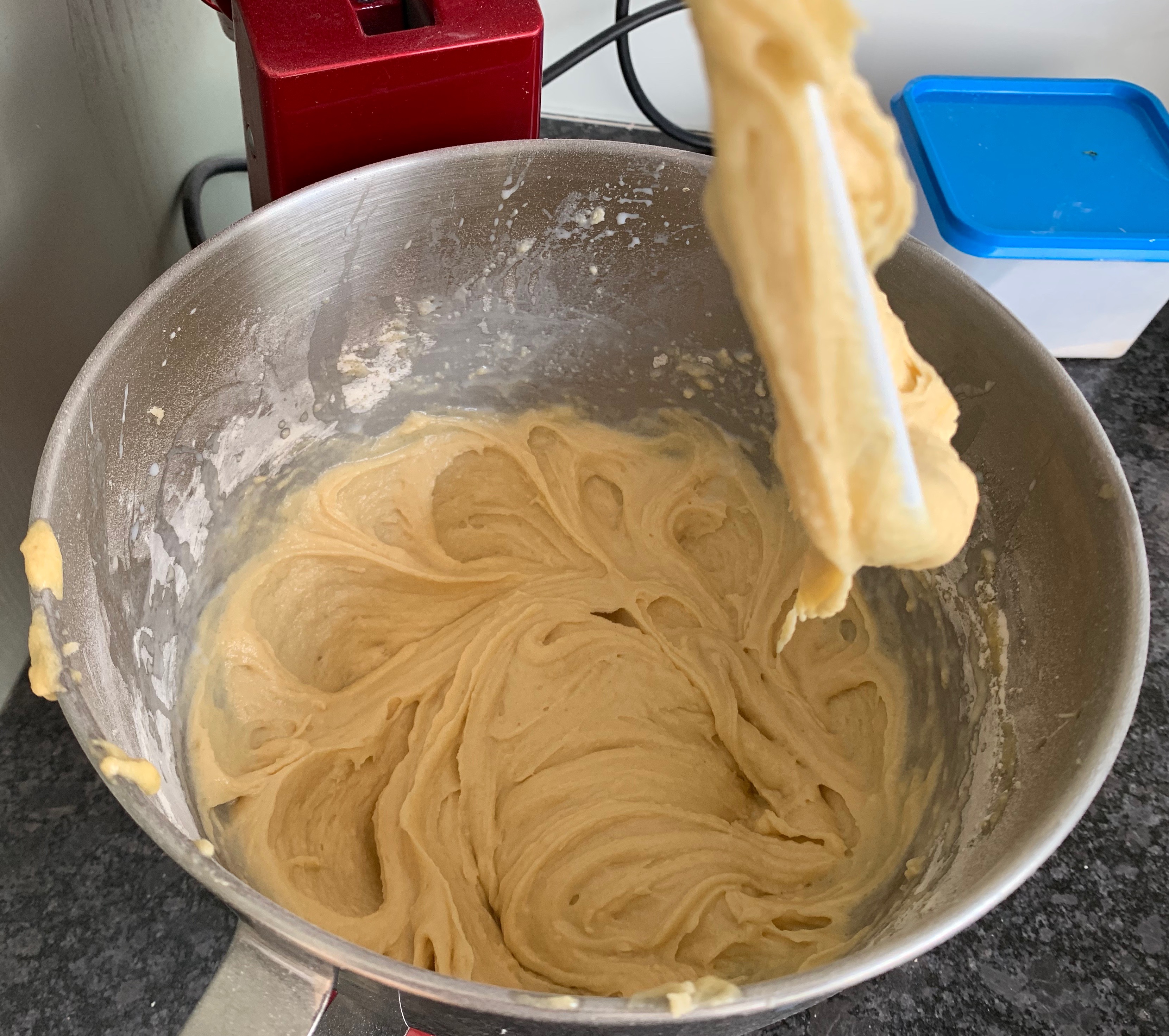
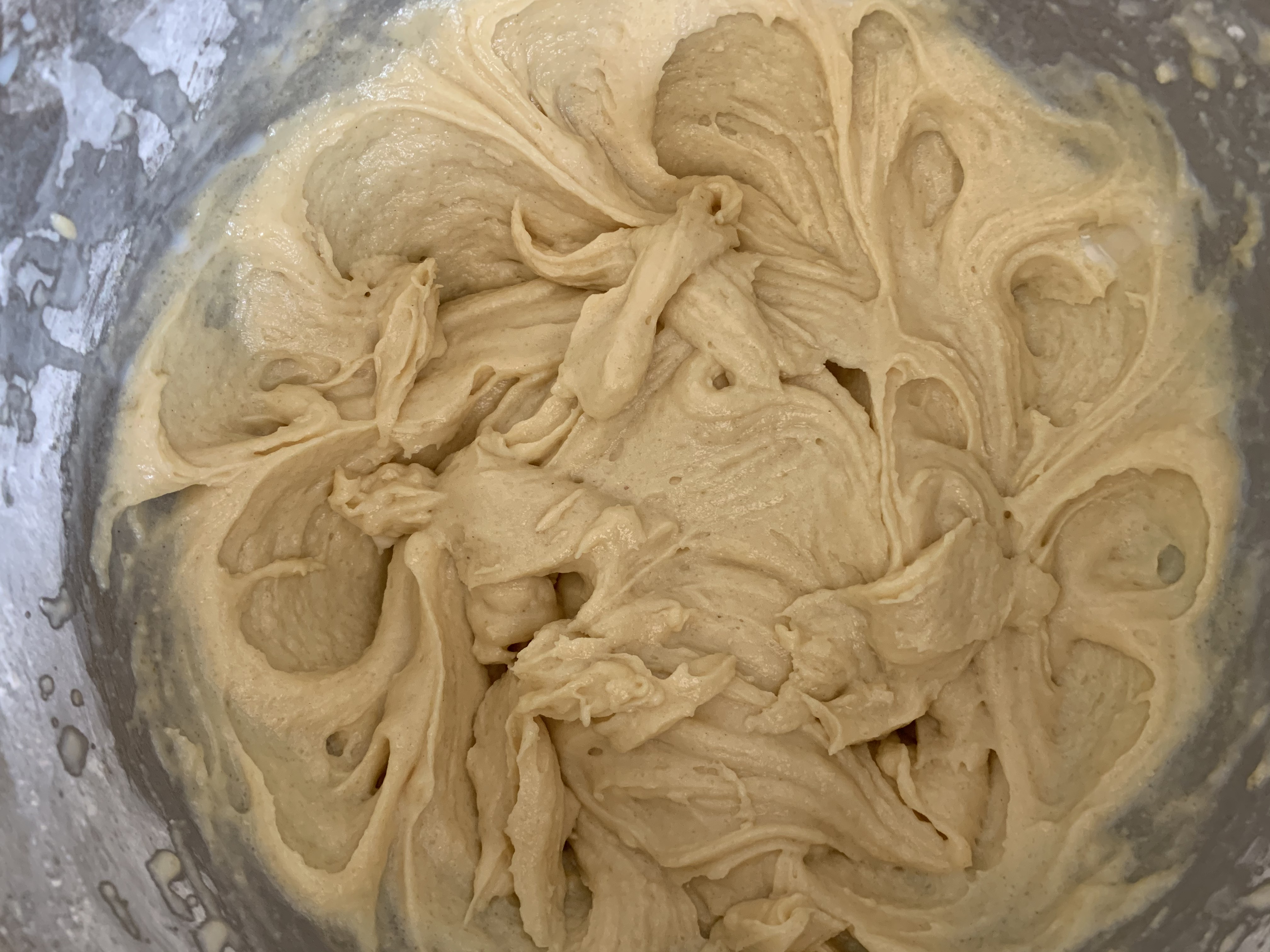
  3. Cream the butter and sugar together
  4. Add the eggs, one at a time, beating after each one
  5. Add half the flour and beat, then half the milk and beat, then repeat
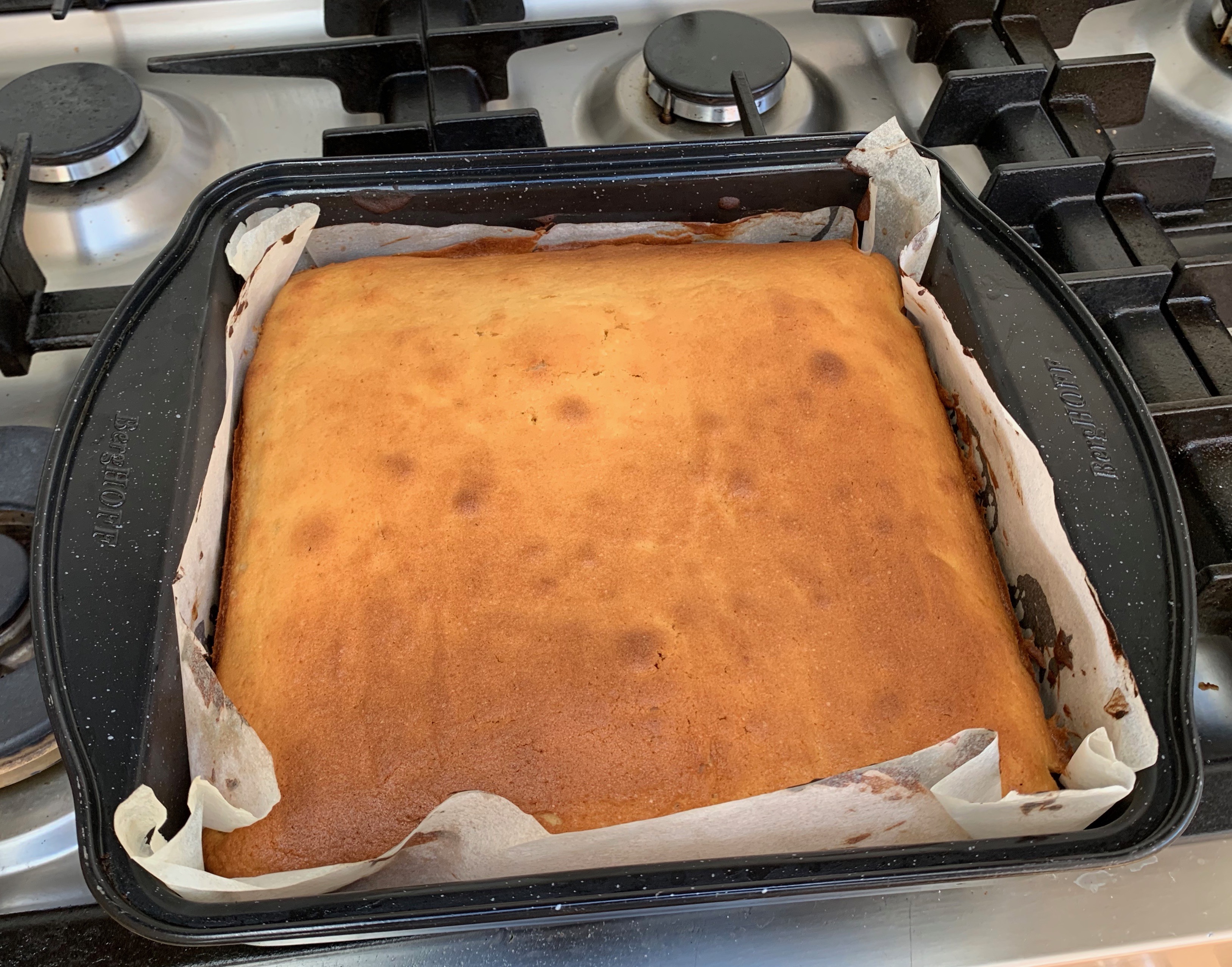
  6. Pour the mixture into your baking pan; do your best to spread it evenly
  7. Bake for around 20-30 minutes, use the usual “a skewer should come out dry” test
  8. Cool in the pan for 10 minutes and then on a rack
  9. Seal with cling film or in a tupperware and refrigerate overnight

The next morning, you’ll be doing the icing and rolling.

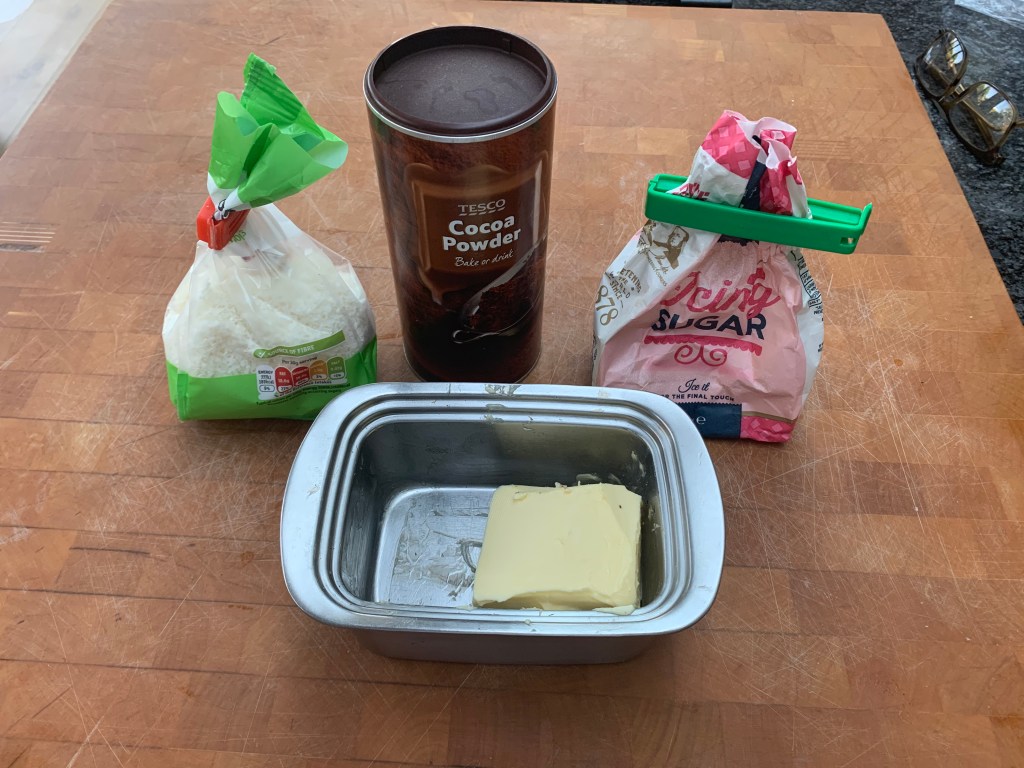
  • Dessicated coconut: you’ll need somewhere in the region of 300-350g, but it really depends on your rolling technique
  • 350g icing sugar
  • 25g cocoa
  • 15g butter, softened
  • 125ml boiling water

You might as well start by getting the coconut ready: you’ll want a decent amount of it in a shallow dish into which you’re going to roll your cakes and the rest in a separate bowl which you’re going to attempt to keep clear of drips of chocolate. Also get a cooling rack ready, putting it on a surface which you’ll be able to clean easily, because icing will drip onto it despite your best efforts.

Next:

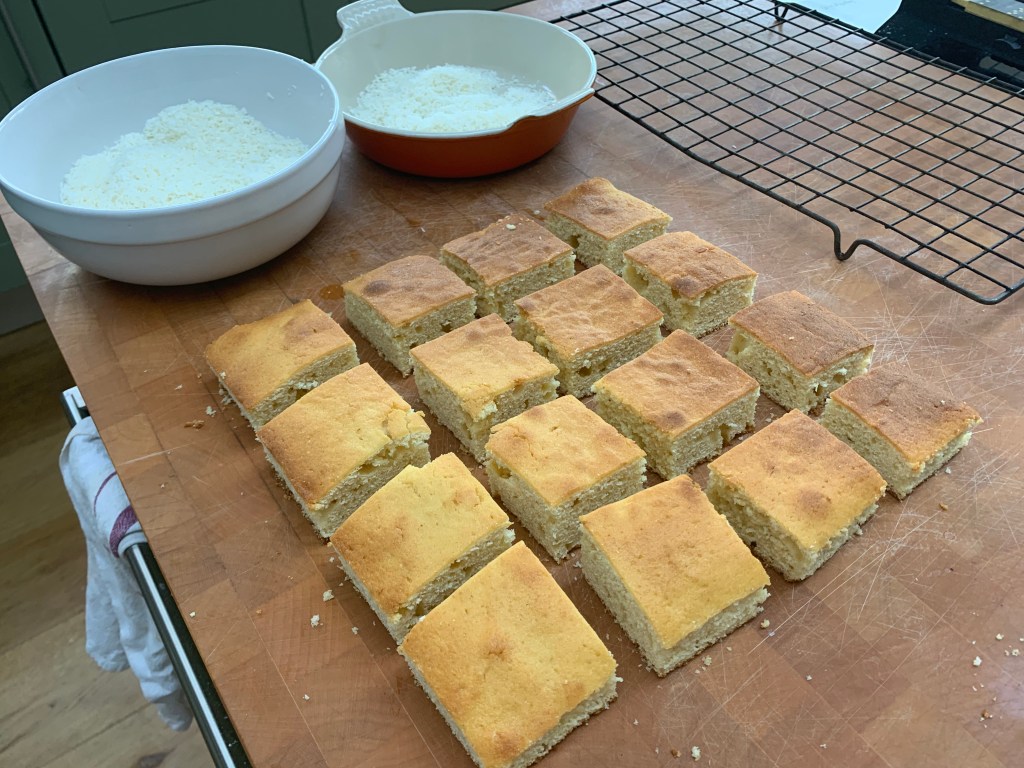
  1. Trim off the edges of the cake and cut it into your preferred size. With my square pan, I cut it into 16 squares around 5½cm on a side (they weren’t quite tall enough to be cubes, but it was close enough). A 20 x 30cm Lamington pan will get you 15 6cm squares.
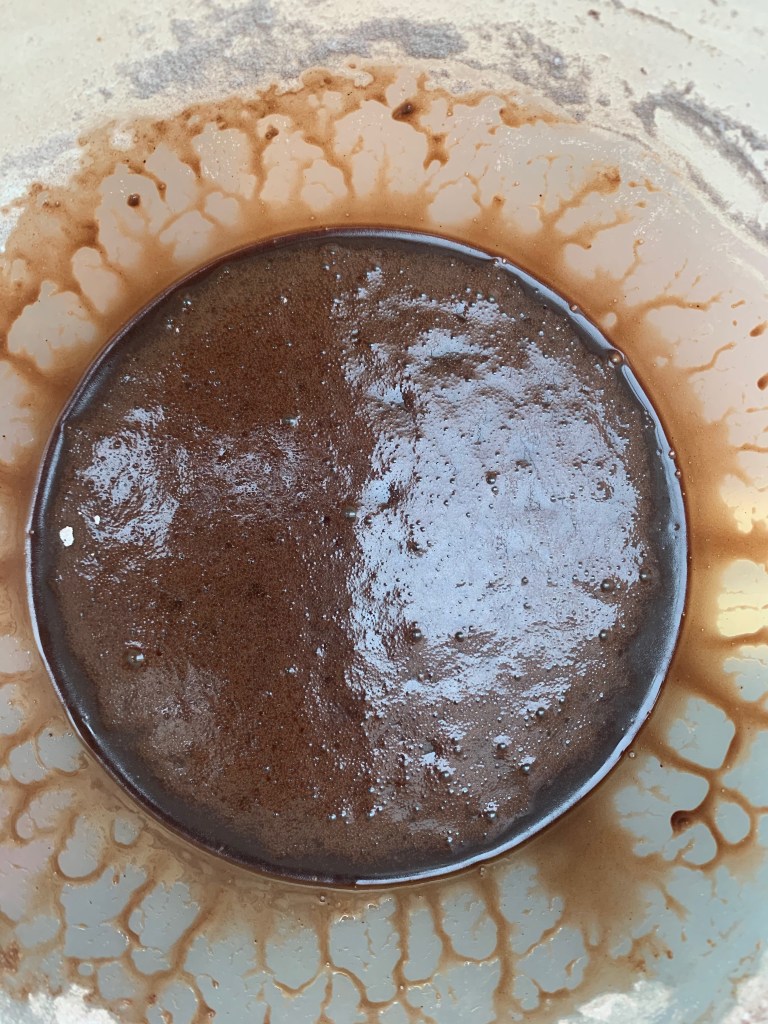
  2. Sift the icing sugar and cocoa into a bowl, using the finest sieve you have. You’d be amazed at how lumpy they both of these can be when coming straight out of the packet.
  3. Add the butter and boiling water and then whisk until you’ve got all of the lumps out. You will have a wet, liquid icing.
  4. Here’s the tricky bit: you now need to completely cover each cake in icing and then roll it in desiccated coconut without making a giant, gooey mess. I did this by dropping the cake in the icing, turning it over gently with a fork and then picking it up by sticking the fork into it. I held the cake over the bowl of icing to let the excess drip off and then transferred the cake to the shallow bowl of coconut to coat the bottom; I then sprinkled coconut from the other bowl onto any sides that weren’t covered and shook of the excess (for use on the next cube.).
  5. Having transferred all your completed Lamingtons to the rack, leave them for a couple of hours for the icing to set.

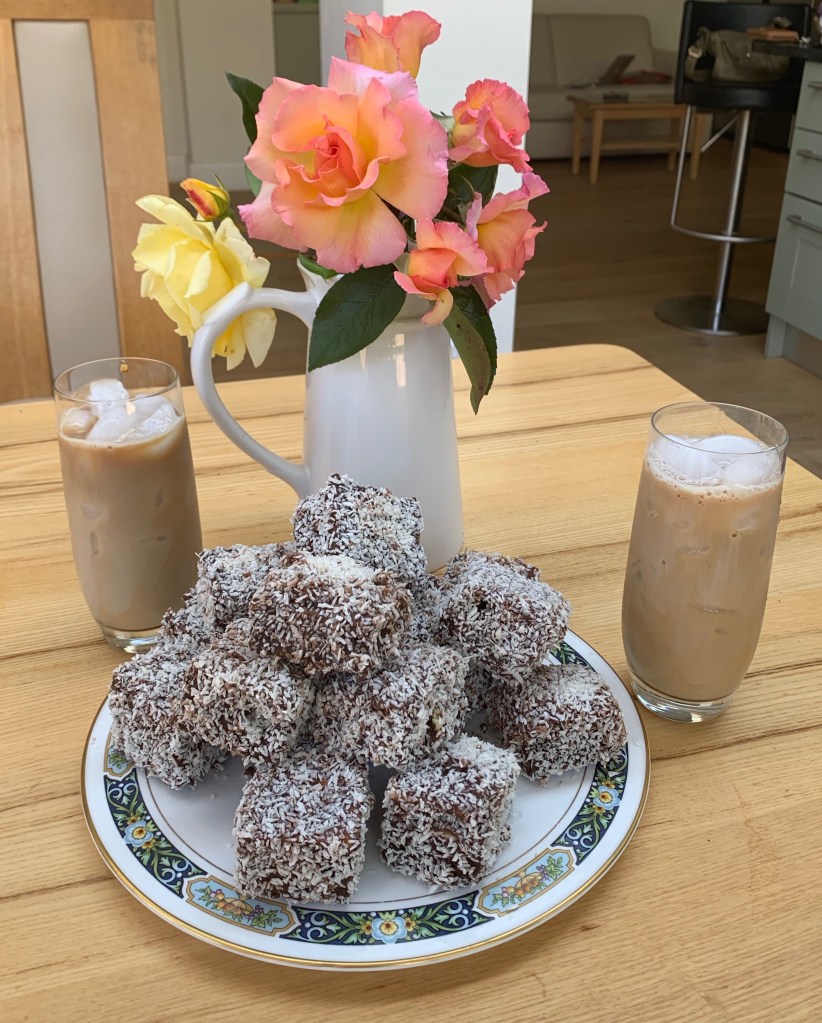
 That’s it. On a hot day, a Lamington and a glass of iced coffee is a snack fit for a king.

Around the world in 80 bakes, no.11: Ranginak from Iran

Around the world in 80 bakes, no.11: Ranginak from Iran

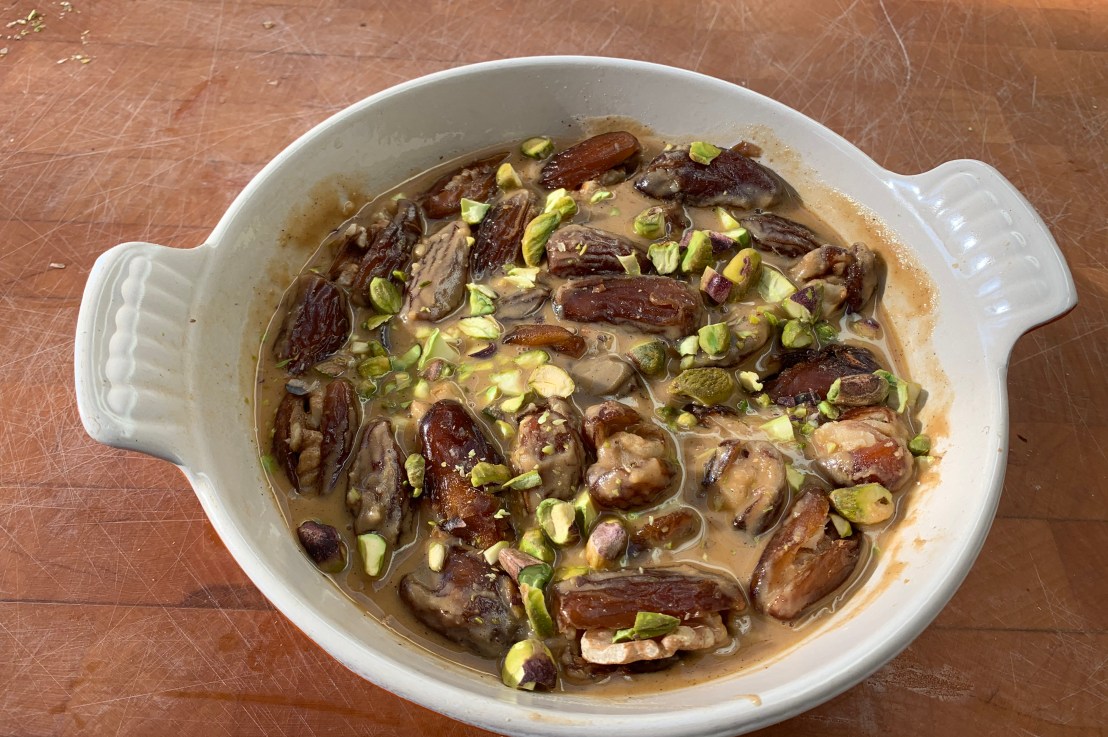
It’s time for a trip to the delicately balanced, aromatic foods of Persia. Strictly speaking, Ranginak isn’t a baked dish – it’s cooked in a skillet, not an oven – but it’s a dessert made from a flour/butter/sugar mixture as found in many Western baked goods, so I’ll stretch a point. Ranginak gets described as a sort of Persian date and walnut fudge, but it’s much better than that because it isn’t overpoweringly sugary: cut into small chunks, it makes for a lovely, scented, sweet-but-not-too-sweet bite of deliciousness.

Ranginak is famous as a festive dessert in Iran: the name means “colourful”, which is mildly dubious since it’s basically brown until you add garnish. There are many regional variations, the most improbable of which comes from a seventeenth century Isfahan recipe and involves dressing the completed product with  rice pudding. I’ve gone for a simple one, starting from a recipe in the lovely Persian website Turmeric and Saffron and adding in the odd bit from my Persian cookery bible, Margaret Shaida’s The Legendary Cuisine of Persia.  As usual, I’ve given some details and turned most measurements into metric: I just find it easier to measure things accurately with a set of digital scales than with measuring spoons and cups. 

I’ve halved the recipe, since we’re still in lockdown here in London and I don’t really want to make giant desserts if I’m not sure they’re going to freeze properly. The amounts here are about right for a round dish 15cm in diameter: adjust to suit whatever size dish you are going to use.

Ingredients, in order of use

  • 50g walnut halves
  • 200g dates
  • 125g flour
  • 125g butter
  • 20g icing sugar
  • 1/4 tsp ground cinnamon
  • 1/4 tsp ground cardamom
  • A free pistachios, shelled and unsalted, to garnish

If you talk to anyone Iranian, they will tell you that Persian produce (walnuts, dates, melons, garlic, saffron, etc) is different from everyone else’s – and, of course, superior. This starts out by being incredibly irritating until you try things out and come to the inevitable conclusion that for the most part, they are simply stating correct information. Or nearly, anyway: Omani dates are as good as the Persian products, Chilean walnuts and Kashmiri saffron likewise. But you get the idea: if you can find a Persian food shop for your dates and walnuts, it’s a good idea.

In the more likely event that you don’t have access to a Persian shop: most supermarket walnuts will be fine, but the quality of the dates is important: the rock hard ones that you often see in oblong cardboard packets will be hard to work with and yield a disappointing result. Make sure the dates are soft. If they’re pitted, that will save you effort.

Method

  1. Choose a shallow dish just large enough to hold your dates laid flat; grease it with a bit of melted butter. 
  2. In a dry pan on medium heat, toast the walnuts until fragrant but not yet burning (should be 3 minutes or so). Take them off the heat.
  3. While the walnuts are cooling, take the stones out of the dates (if this hasn’t already been done for you).
  4. In a bowl, mix the icing sugar, cinnamon powder  and cardamom powder.
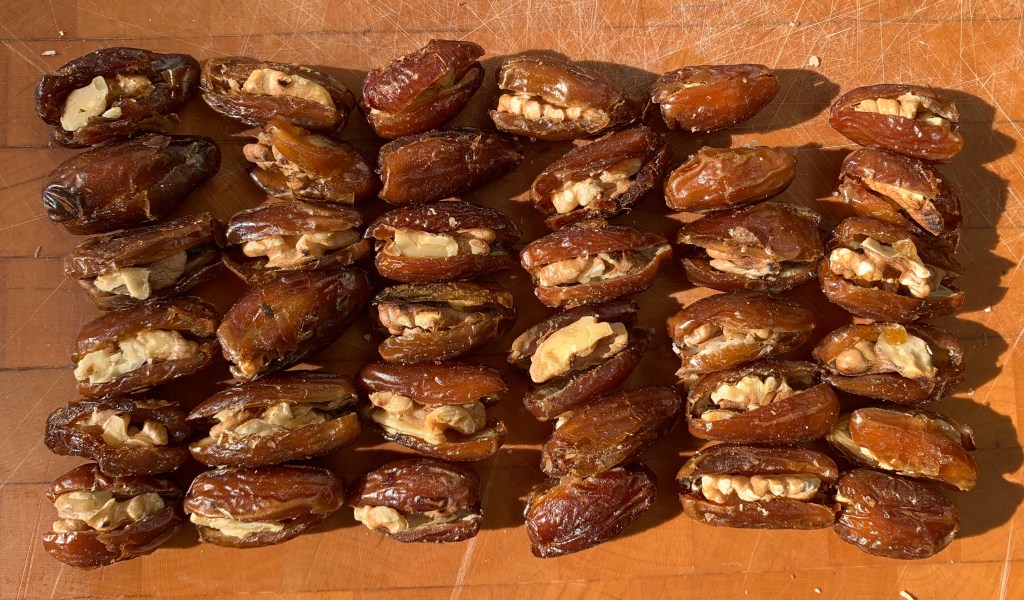
  5. Once the walnuts are no longer too hot to touch, cut each piece in half so that you now have walnut quarters. Stuff a walnut quarter into the cavity of each date.
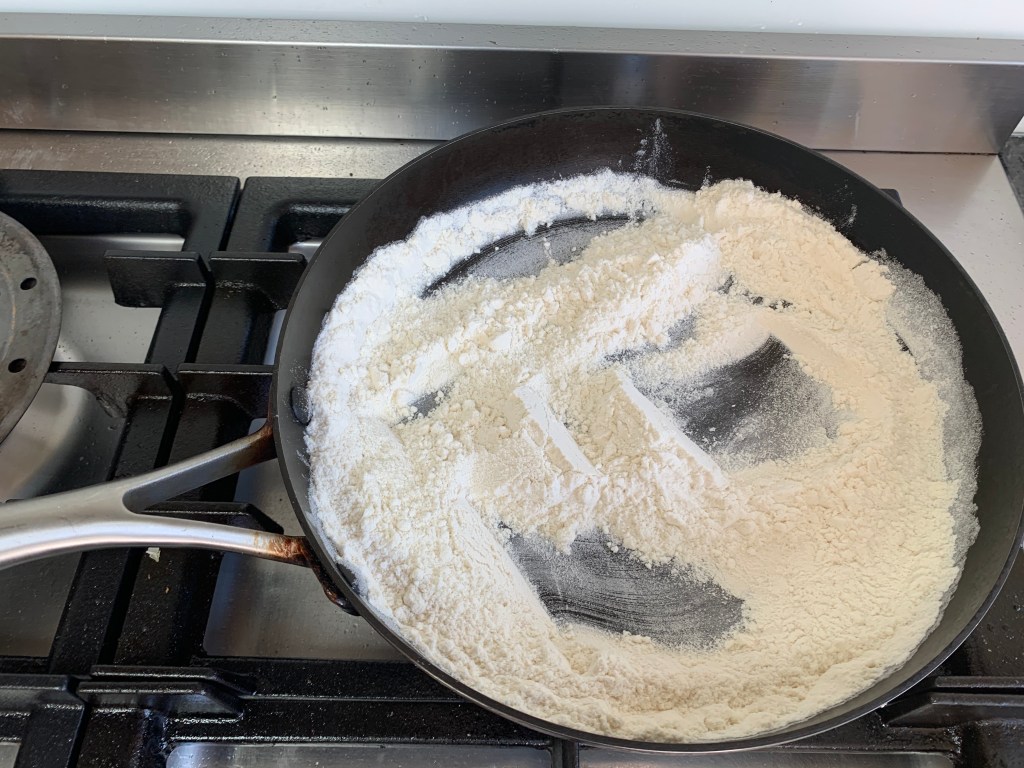
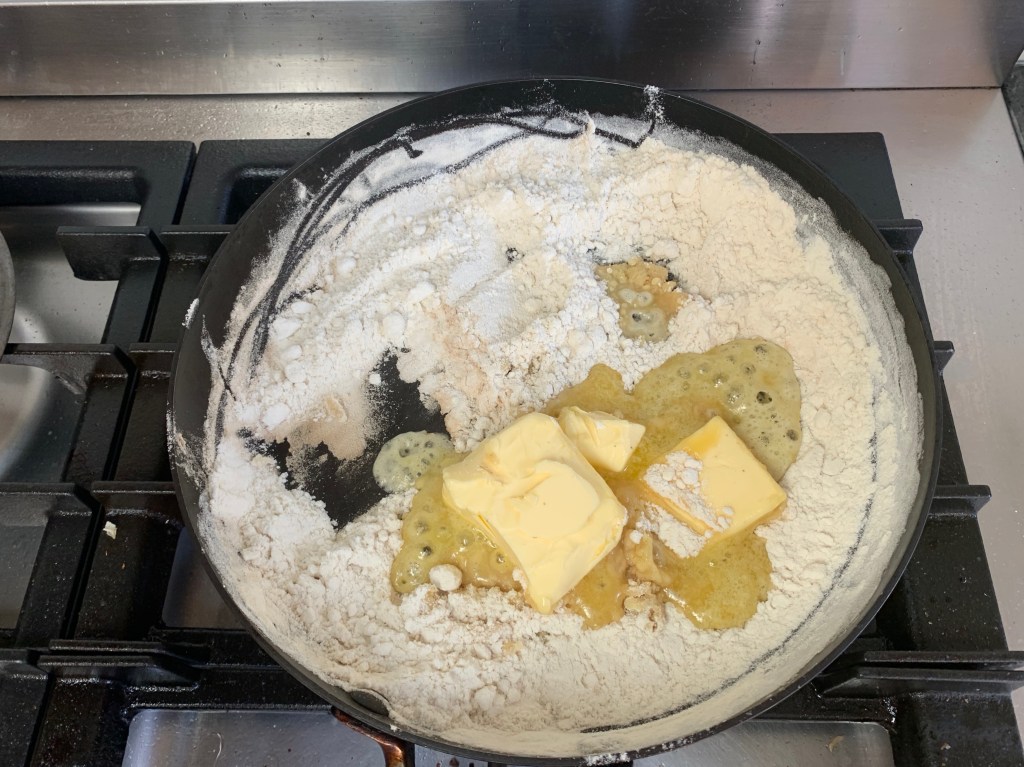
  6. In a pan on medium heat, toast the flour until it’s just beginning to go pale brown and smell aromatic (around 5 minutes).
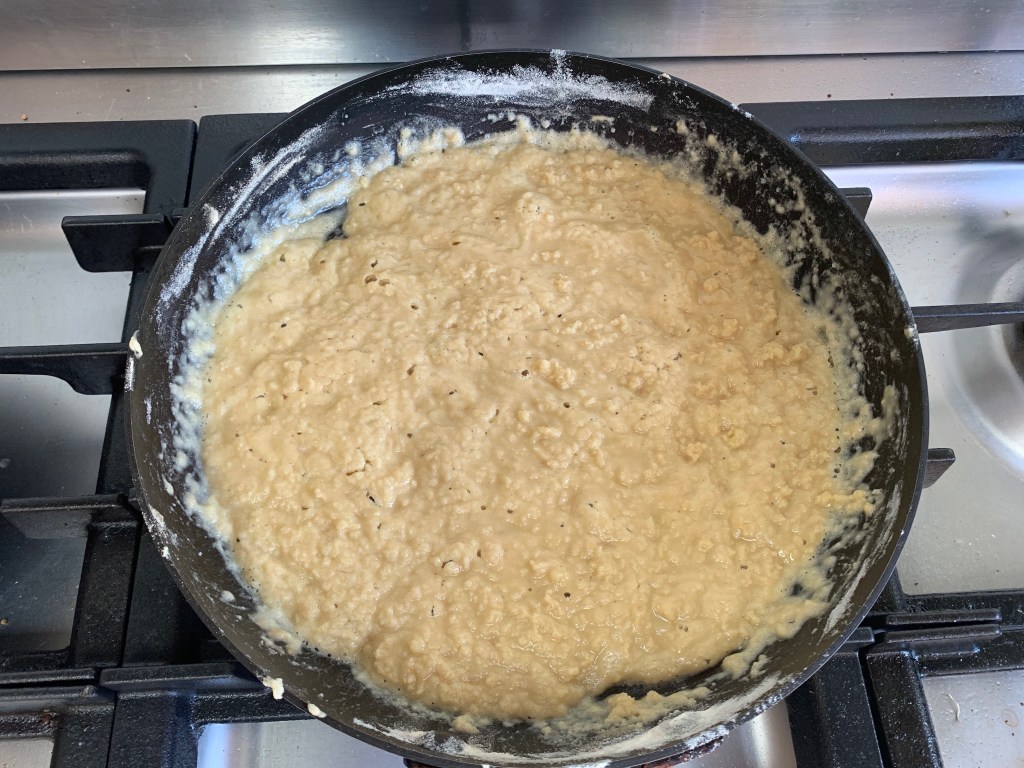
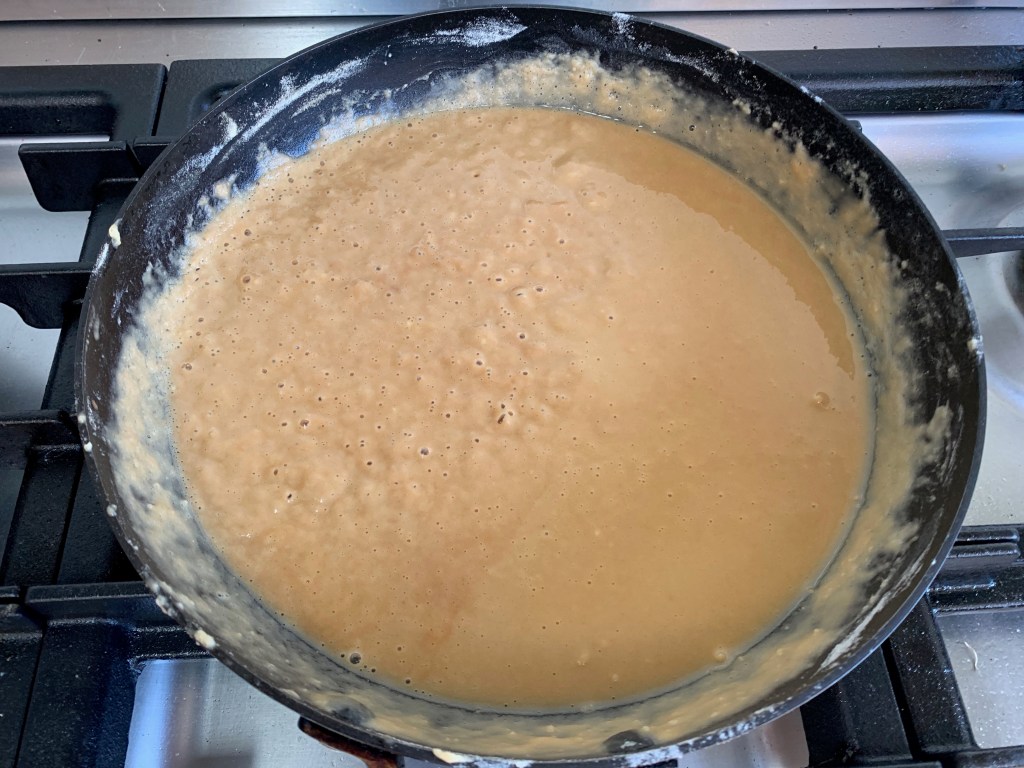
  7. Add the butter and mix thoroughly as it melts. Now cook for around 10-15 minutes until your mixture is a medium butterscotch kind of colour. Don’t let it go as far as dark brown.
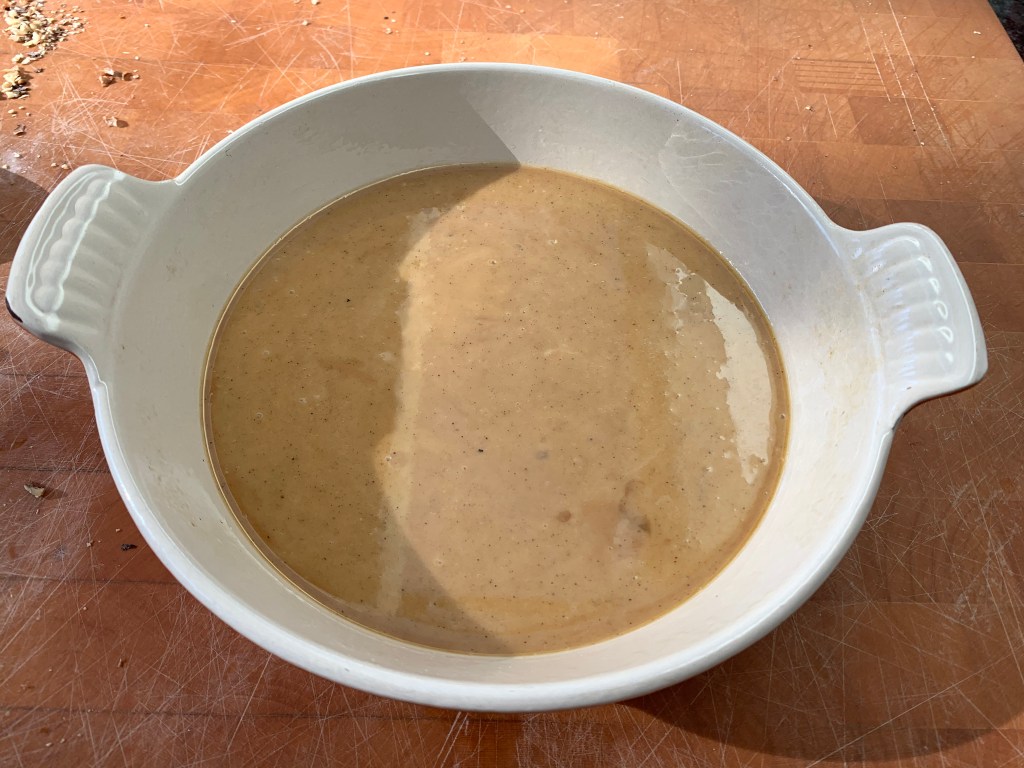
  8. Add the spiced sugar and mix thoroughly, then pour the mixture into your dish. Leave to cool for long enough that you’re not going to burn your fingers in the next step.
  9. Now lay out the stuffed dates on the mixture, and sprinkle some chopped pistachios. If you’re of an artistic bent (and especially if you’re doubling or trebling this recipe), you’ve got scope for some fun here. Sadly, I’m not, but there are plenty of pretty photos online to give you the idea.
  10. Leave to set, which should take a couple of hours at normal room temperature. If it’s a hot day and you’re in a hurry, you’ll probably want the Ranginak to spend part of the time in the fridge.

Traditionally, Ranginak is served with tea. Personally, I like going cross-cultural and serving a piece with a scoop of pistachio ice-cream. But I’ll leave that one to you…

Around the world in 80 bakes, no.10: Scottish oatcakes

Around the world in 80 bakes, no.10: Scottish oatcakes

I eat between meals. Because I’m type 2 diabetic, I need things that I can snack on that are neither overly sweet (we’ll draw a discreet veil over the cake recipes in this series of posts) nor overly salty (I can eat bags of peanuts for days, but this is a terrible idea also). Scottish oatcakes contain little or no sugar, don’t have to be overly salty and are really delicious, either on their own or with a bit of cheese: in short, they are the perfect snack. And they turn out to be one of the easiest things on the planet to bake.

This recipe is only slightly modified from the recipe by BBC good food contributor “zetallgerman”: I’ve changed a few things and added some details, but it’s basically their recipe and hats off to them, because it works like a charm.

I’ve given quite a lot of detail on rolling and cutting here, because this is a really good beginner’s bake – I beg forgiveness from experienced bakers for whom this is all obvious.

Ingredients

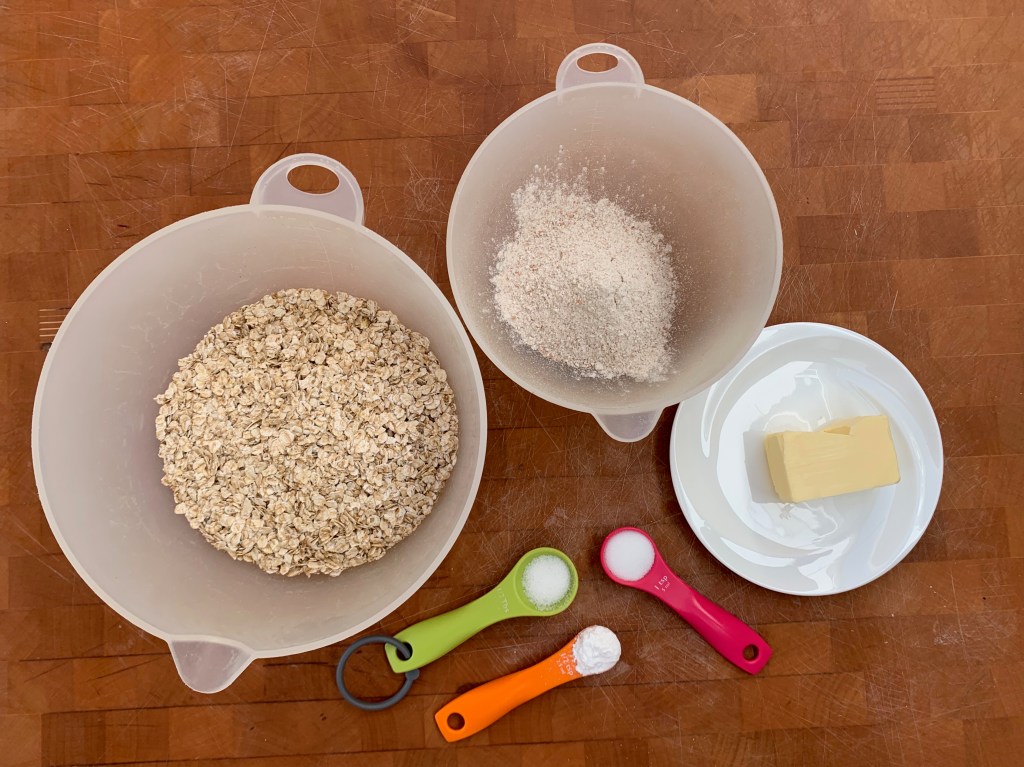
  • 225g oats (ordinary porridge oats if you can; jumbo oats need to be blitzed first)
  • 60g wholemeal spelt flour (ordinary wholemeal wheat flour is fine: my lockdown larder has spelt flour and it works very well)
  • ½ tsp bicarbonate of soda or baking powder
  • ½ tsp salt (zetallgerman says 1 tsp: I prefer ½ to ¾)
  • ½ tsp sugar (optional, as far as I’m concerned)
  • 60g unsalted butter (or use salted and reduce the amount of added salt)
  • 70ml warm water, plus 10ml or so more for the next round

Method

  1. Preheat oven to 190℃ fan
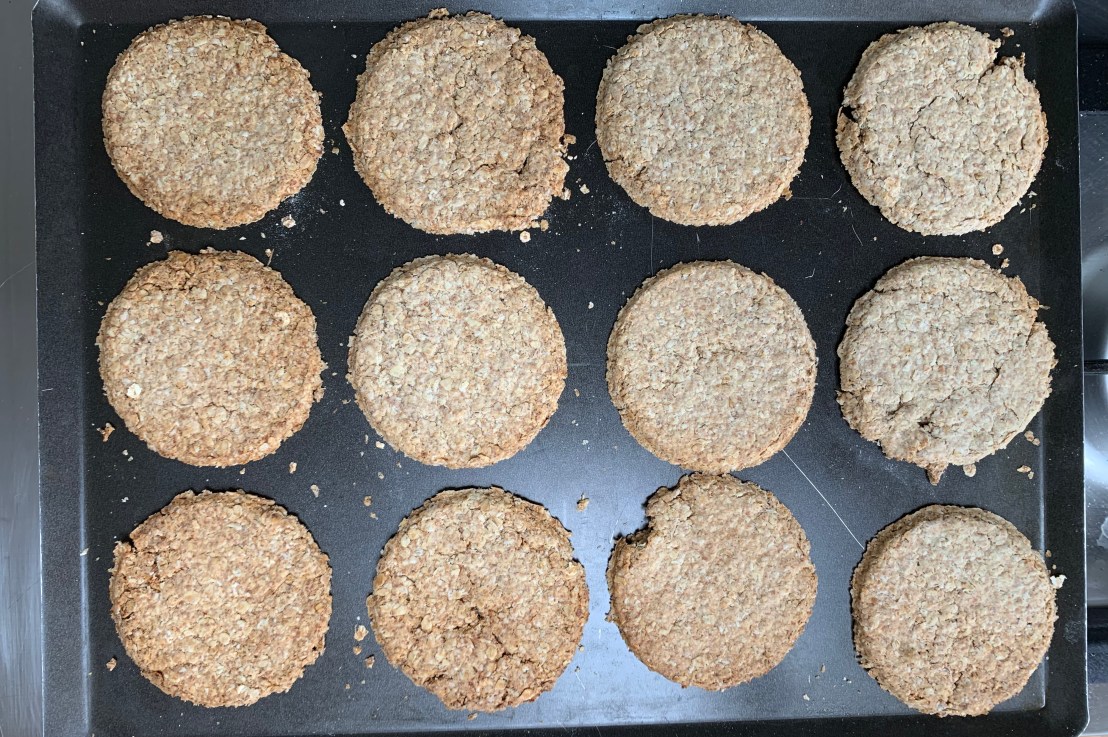
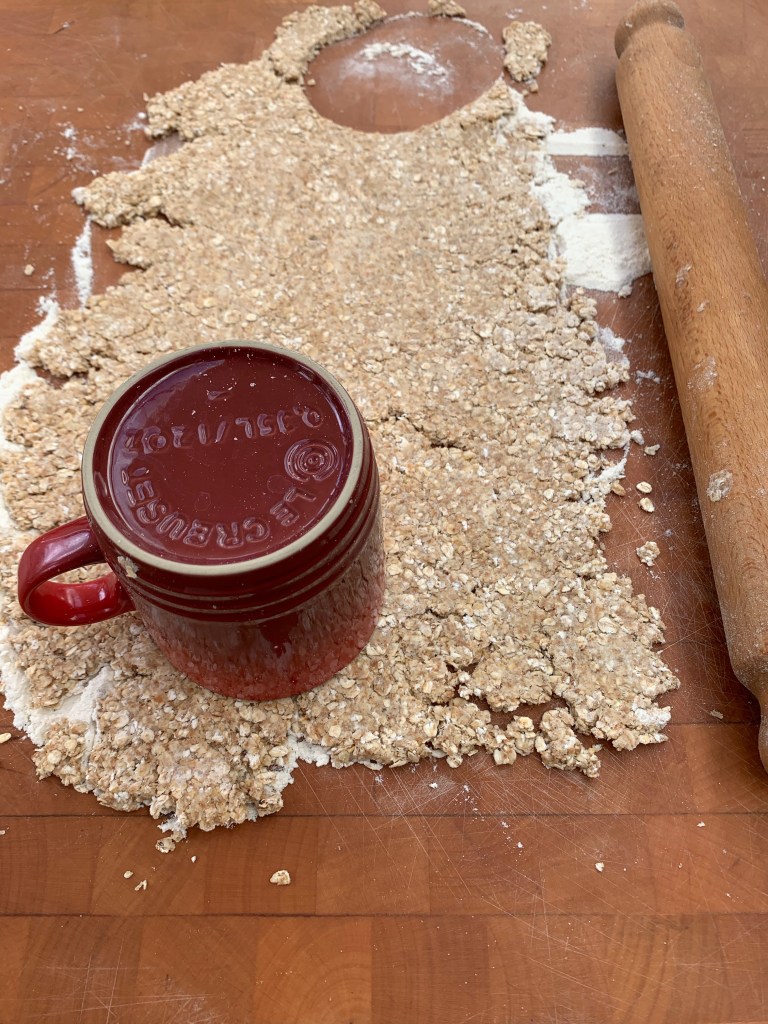
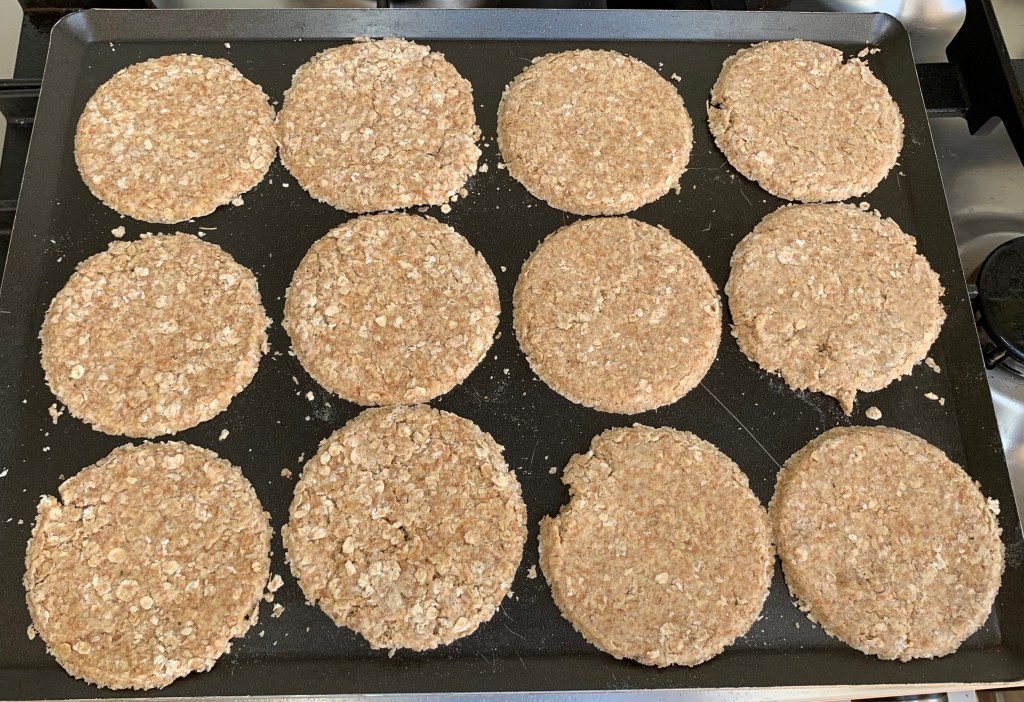
  2. Get a baking tray ready. If it isn’t non-stick, line it with baking paper. You’ll also need something with which to cut the oatcakes into circles: I use a fairly solid mug whose diameter is 9cm, so I just fit 12 oatcakes into my 30cm x 40cm tray.
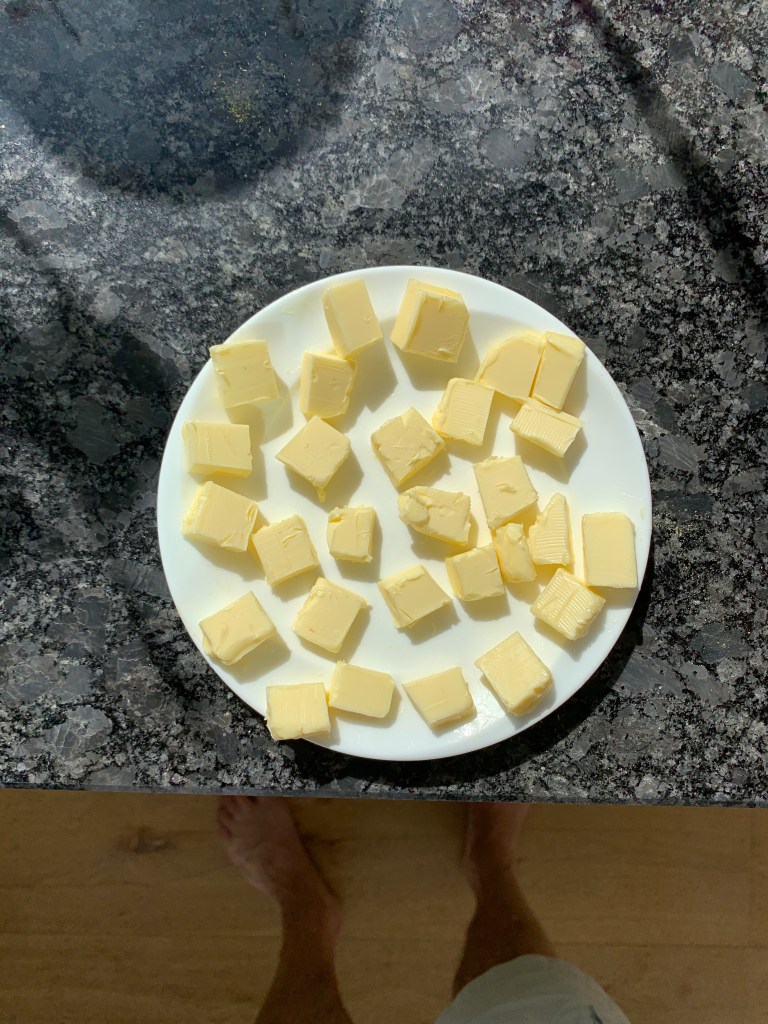
  3. If your butter came out of the fridge, soften. My favourite way is to cut it into small cubes and leave it in a warm place in the kitchen: five minutes in spring sunshine is plenty.
  4. Mix the oats, flour, baking soda or powder, salt and sugar until everything’s reasonably evenly distributed.
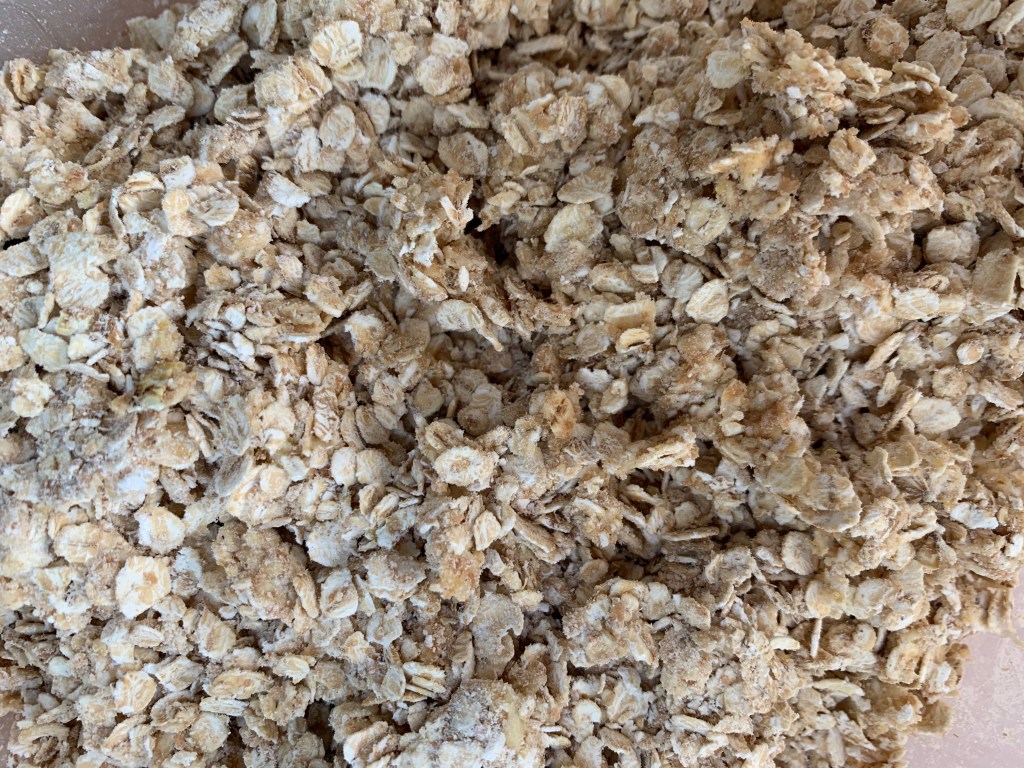
  5. Add the butter and mix thoroughly, pinching with your fingers until all the butter is absorbed. If you can, do this with one hand to keep the other one clean. Pastry and biscuit recipes always say “to the consistency of breadcrumbs”: personally, I’ve never succeeded in achieving anything looking remotely like a breadcrumb, but it doesn’t seem to matter. 
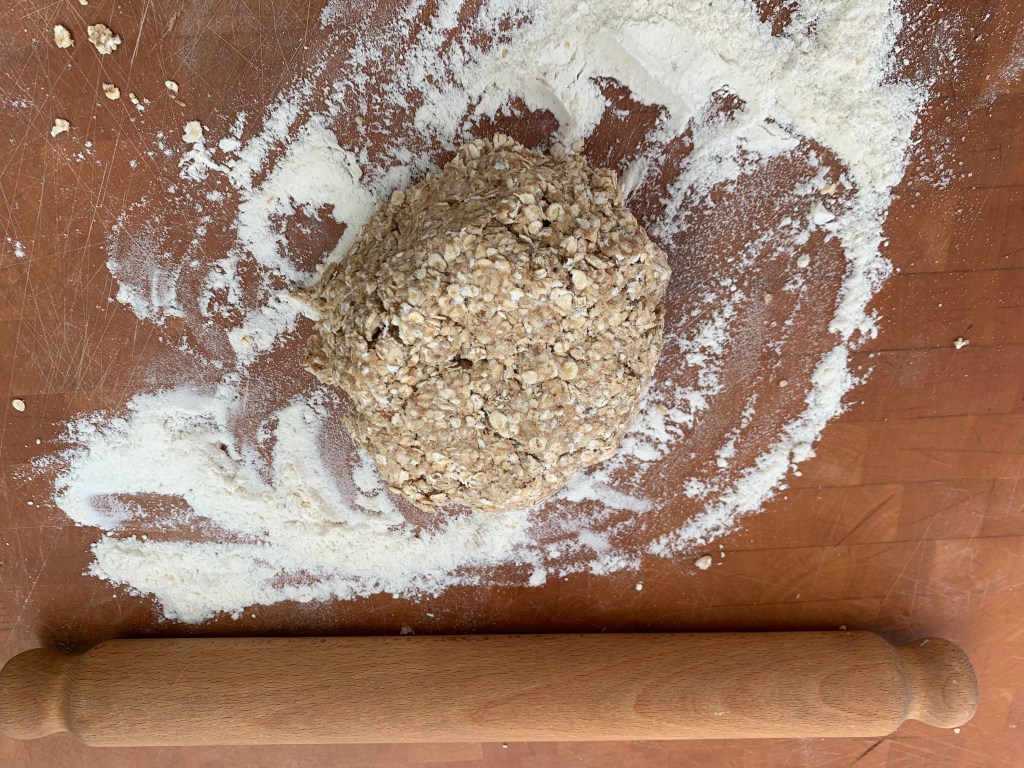
  6. Add 70ml of warm water and combine everything together into a dough. The amount of water is a bit variable: if your dough fragments horribly when you try to roll it, add a few drops more, remix and try again.
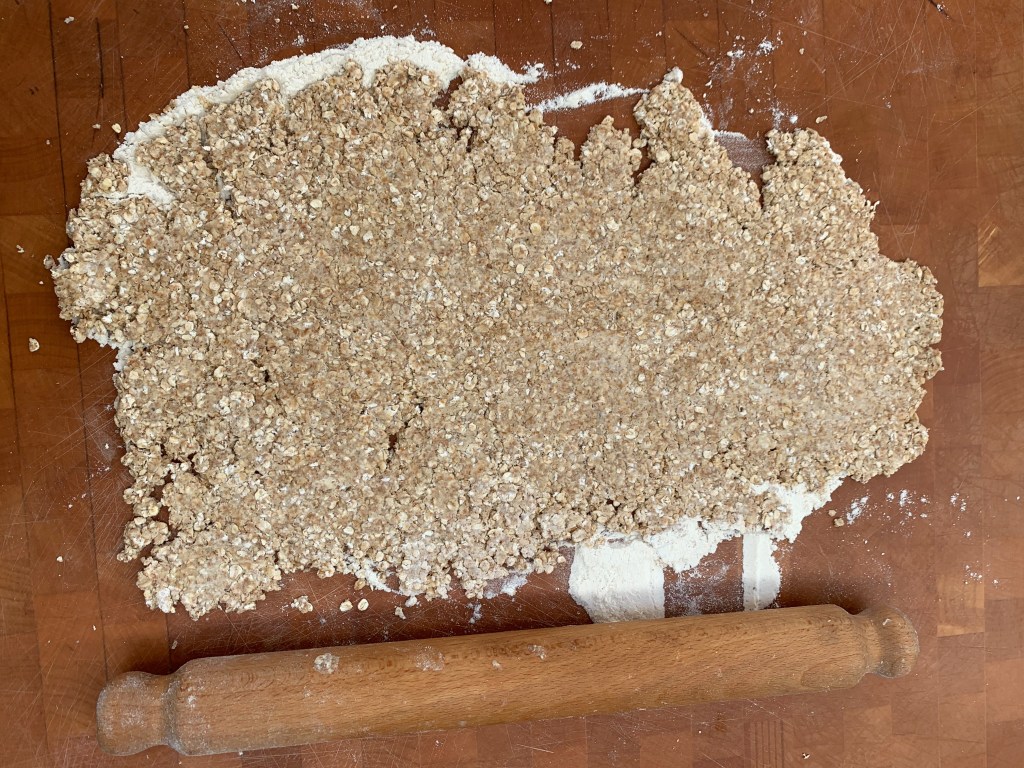
  7. On a floured board, roll your dough out to 4-5mm thickness. Cut a circle (I use a mug) and transfer to your baking sheet (I have to first put the mug over my hand and then thump it for the oatcake to come out). Repeat: if all is well, you should be able to get six oatcakes.
  8. Now gather together the off-cut dough and put it back in your bowl, add a few drops more water and recombine. You can now roll out the dough again and repeat. Hopefully, you’ll manage another four oatcakes this time.
  9. At this stage, I normally have enough dough for two oatcakes. I divide it in half and roll them out individually
  10. Bake for 20 minutes. As well as the usual oven variability, the exact time is a matter of taste: longer = crispier but gives more danger of a burnt taste

That’s it folks – a really low effort bake which has given me reliable results every time!

The usual in-process shots:

Unelectable opinions, no.2: the ineptness of rule sets for Coronavirus lockdown

Unelectable opinions, no.2: the ineptness of rule sets for Coronavirus lockdown

Last Wednesday, tennis players across England celebrated being given permission to return on court – for singles, that is. Tennis coaches celebrated getting their earnings back and ceasing to rely on the prospect of government handouts.

But why, you might ask, was singles tennis banned in the first place? It’s one of the most socially distanced sports one can imagine, with players spending the vast majority of the game over 20 metres apart. Compare that to someone jogging along a narrow track, breathing heavily without wearing a mask, which pretty much guarantees that anyone coming the other way is going to breathe in their potentially virus-laden droplets. Yet running was actively encouraged at a time when tennis and golf (another sport with built-in social distancing) were banned.

Of itself, tennis isn’t the biggest issue in the world. But it’s an example of a more significant problem: the UK government’s rules on lockdown – and, indeed, those of most other countries – have seemed full of inconsistencies, creating consequences that just seemed to fly in the face of common sense. Why limit going out of the house to an hour? Why was this supposedly  the same if you lived in the middle of a busy city as if you lived in an isolated farmhouse?

The underlying problem is this: rather than carefully lining up the rules with the principles of what we were trying to achieve, the government preferred to make simple, prescriptive rules about individual points of behaviour. And that was always going to create idiocies which would bring the rules into disrepute and prompt people to ignore them.

The rules that we actually want are these:

  1. Don’t breathe on anyone else. To help guide you: when breathing normally, your breath travels under a metre, when speaking, it’s more like 2m, when breathing heavily as a result of strenuous exercise, it can easily reach 4m. Wearing a face covering – pretty much any sort, it doesn’t have to be surgical – reduces this to under 1m with acceptable probability.
  2. Don’t put yourself in a position where other people can’t avoid coming into range of you breathing on them. Guideline: your breath hangs in the air for around 15 minutes, or somewhat longer in stagnant air indoors.
  3. If you touch anything that someone else may have breathed on within the last 24-48 hours (in practise, almost anything outdoors), don’t touch your eyes, nose or mouth before you have washed your hands thoroughly.

    (By the way, if you’re living in the same household and you get infected, everyone else in the household probably will too. So exclude them from “anyone” in the above rules).

Consider what this means for going out and meeting people. If you want to go out and meet your friends, it’s fine: you can meet as many of them as you like as long as (a) you’re keeping a couple of metres apart at all times (less if you’re wearing masks) and (b) you’re not standing somewhere making it impossible for other people to get past you. Getting together in a circle with your friends in the middle of a field is just fine. And it really doesn’t matter how long you spend. Sunbathing in the middle of a park – for any length of time, as long as there’s space – is fine, sunbathing on a park bench next to a path is not, especially if you’re talking.

For the runners I’ve mentioned above, this would have various implications to stop them breathing heavily into confined spaces – which is profoundly antisocial at the moment. Firstly, if they can, they should avoid narrow spaces: pavements, alleys, pathways with walls or trees either side. If that’s impossible, at the very least, they should wear a mask and do their best to steer clear of people coming the other way. Local governments could help by marking out official one-way lanes for runners in local parks, much as our larger supermarkets have done for shoppers pushing trolleys.

I’m not going to overburden this post with more examples: suffice to say that I could write hundreds of words going through irrational inconsistencies even within my own small area of life. What I’m more interested is the principle: why did government officials think that it was a better idea to micro-manage individual activities rather than explain the problem to people and expect them to make good decisions?

I don’t know the answer to this, but I have my suspicion and I don’t like it. My best guess is that the rulemakers think the majority of people are too fundamentally stupid and/or irresponsible to take a simple set of principles and deduce how they should behave. It’s an incredibly patronising attitude, which fails to recognise that it cuts both ways: for everyone too stupid to understand a principle, there’s someone else who recognises a stupid rule when they see one and draws the conclusion that all rules are stupid and should therefore be ignored. It also fails to realise that the really irresponsible people are going to be as irresponsible on detailed rules as they are on the big picture.

Our tennis coaches are mainly self-employed and will have been filing their claims under the Self-Employment Income Support Scheme when it opened – at exactly the time that the rumblings over “how are we going to pay for all this debt” have started increasing. Those claims were completely unnecessary: a result of poorly targeted rulemaking. I’m sure there are thousands of other examples.

Dear Government, please start treating people with some respect and make the rules line up with what we’re all trying to achieve, to minimise the havoc caused by this epidemic. Otherwise, you waste everyone’s time and resources and bring yourselves into disrepute.

Caveats:

In my guidance to rule 1, I don’t know whether 1, 2 and 4 metres are the best numbers to use: better scientists than me equipped with the latest evidence might choose different thresholds.

I’m talking about guidance to the public here. Obviously, there are many types of environment where there’s a need for clear guidance specific to that environment – hospitals, schools, offices, building sites and many more.

This all assumes that we agree with the basic strategy of “we need lockdown in order to minimise transmission of the virus”. Not everyone does, but that’s another story which needs to be explored separately.

Around the world in 80 bakes, no.9: Char siu bao from China

Around the world in 80 bakes, no.9: Char siu bao from China

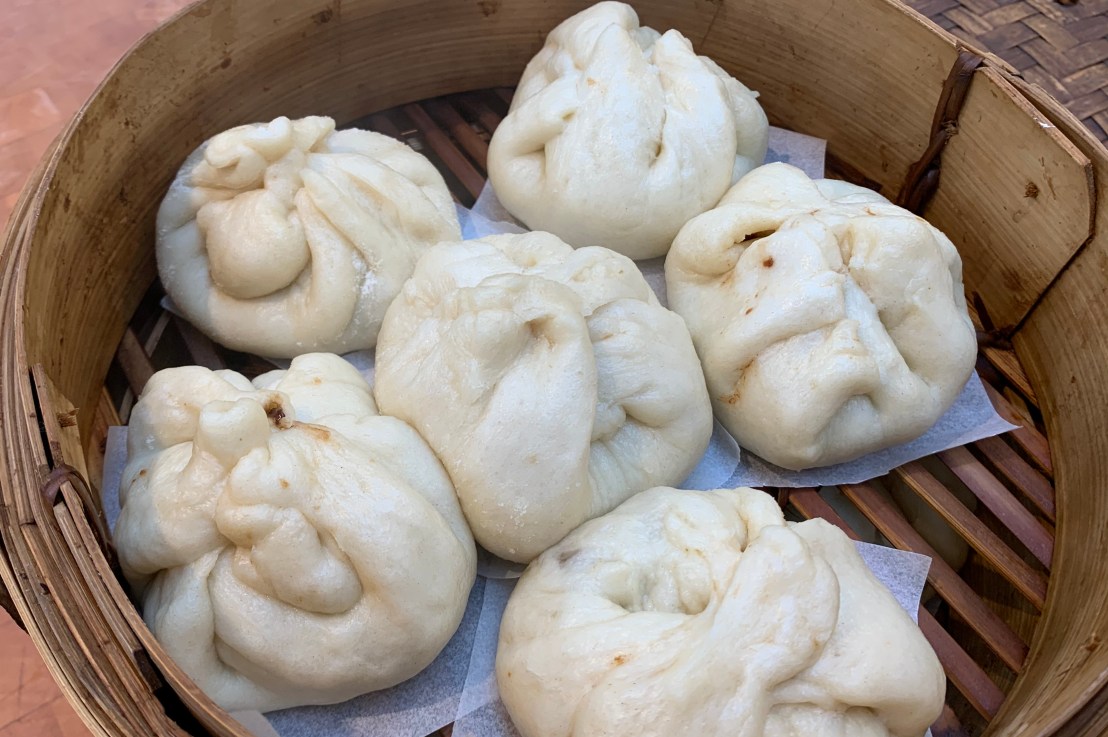
Quite simply, Char siu bao are the best street food ever. These steamed, yeasted dumplings filled with sticky barbecued pork may have started life in the heat of Southern China, but they’ve migrated to every corner of the country (and much of Asia and the rest of the world). In Beijing and Shanghai, there are whole shops devoted to them, not least because they make a fantastic warmer in the cold winters. People argue about the finer points of whose version is best.

None of this is a secret, but there are two surprises. The first is that bao are relatively easy to make, if you’re used to baking: you mostly use standard bread-making techniques, the difference coming only at the end when you use a steamer instead of an oven (there are baked versions of bao, but the steamed ones are far more common). The second is that they’re as good a dish to make at home as they are to eat on the street or in a dim sum joint: they freeze wonderfully and 20 seconds in a microwave will get a bao from fridge temperature to a delicious and warming snack.

A few subtleties before you start:

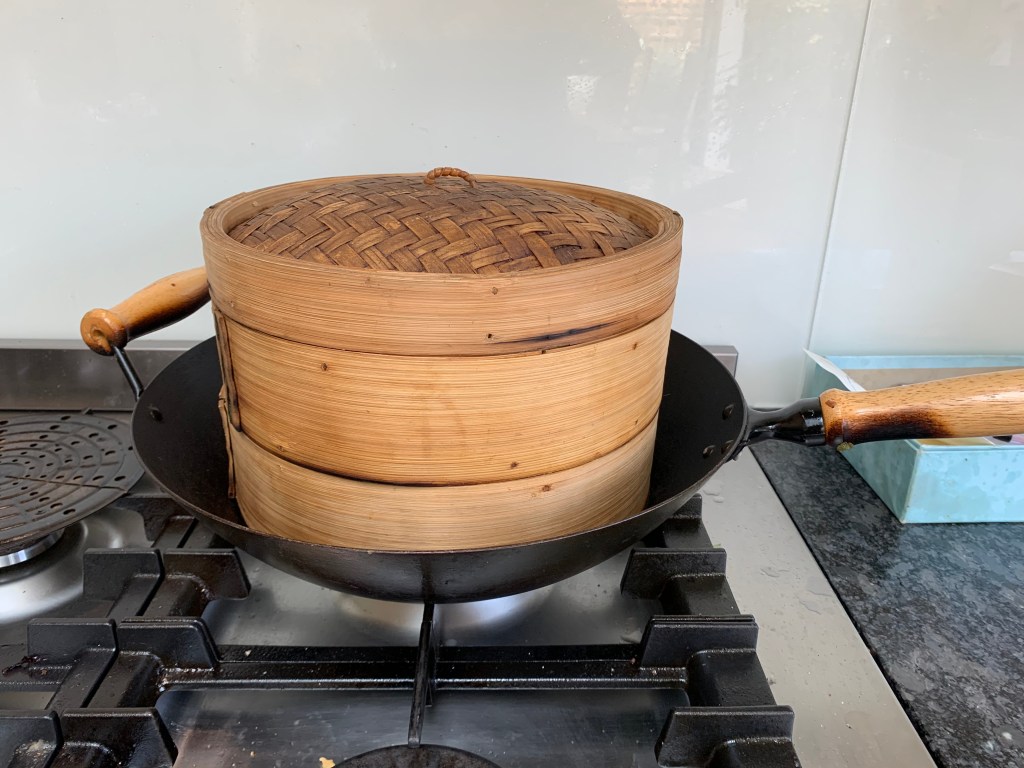
  • You will need a steamer, either purpose-built or jury-rigged. The ideal is to have one or two Chinese bamboo steamers set over a wok with a couple of centimetres of boiling water (they stack). But you can use anything you like that gets steam flowing around your bao without them ending up in a pool of hot water.
  • The bao you buy off the street in China or in dim sum joints are preternaturally white. That’s because they’re made from highly bleached flour (if you’re in a Chinese shop, ask for “Hong Kong flour”). Personally, I’m not bothered.
  • Tracts have been written on the best way to achieve maximum fluffiness of the bun. I’ve still got room from improvement here: when lockdown ends, I’ll be trying some different types of flour and technical variations on when to add the baking powder, whether to do a second prove, etc. For now, I’m going with a 5:1 mix of strong white bread flour to cornflour (it’s what I’ve got). Ideally, use a white flour with a low protein content.
  • The filling given here is an example. Use your favourite Chinese flavourings: bean pastes, oyster sauce, whatever; add chili if want it spicy. The choice is yours.
  • Choose your favourite spelling: Char siu vs Char siew vs chāshāo. And choose your favourite recipe for making it: I’ve given you one below.

Dough

  • 8g dried yeast
  • 50g sugar
  • 180g warm water (around 40℃)
  • 20g oil (I used sunflower oil, any fairly neutral oil will work)
  • 300g white flour
  • 60g cornflour
  • 1 tsp salt
  • 2 tsp baking powder
  1. Preheat oven to 50℃ (you’ll be using it to prove the dough).
  2. Combine water, sugar and yeast; stir well to dissolve; leave for 10 minutes or so
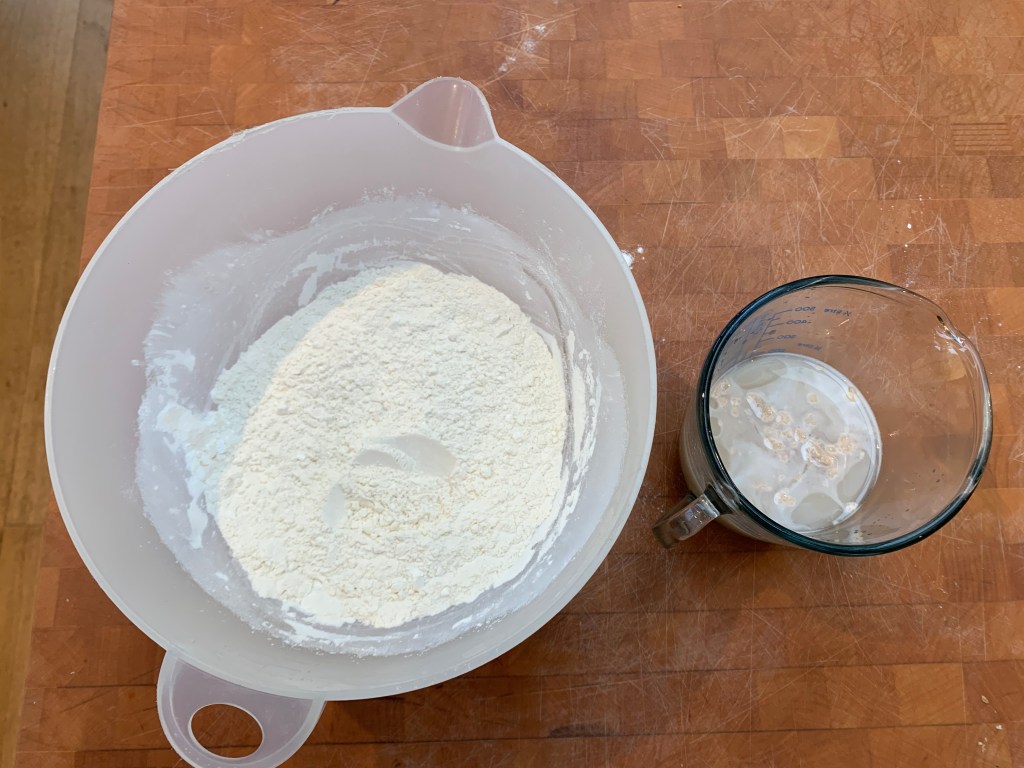
  3. Combine flour, cornflour, salt and baking powder and mix thoroughly
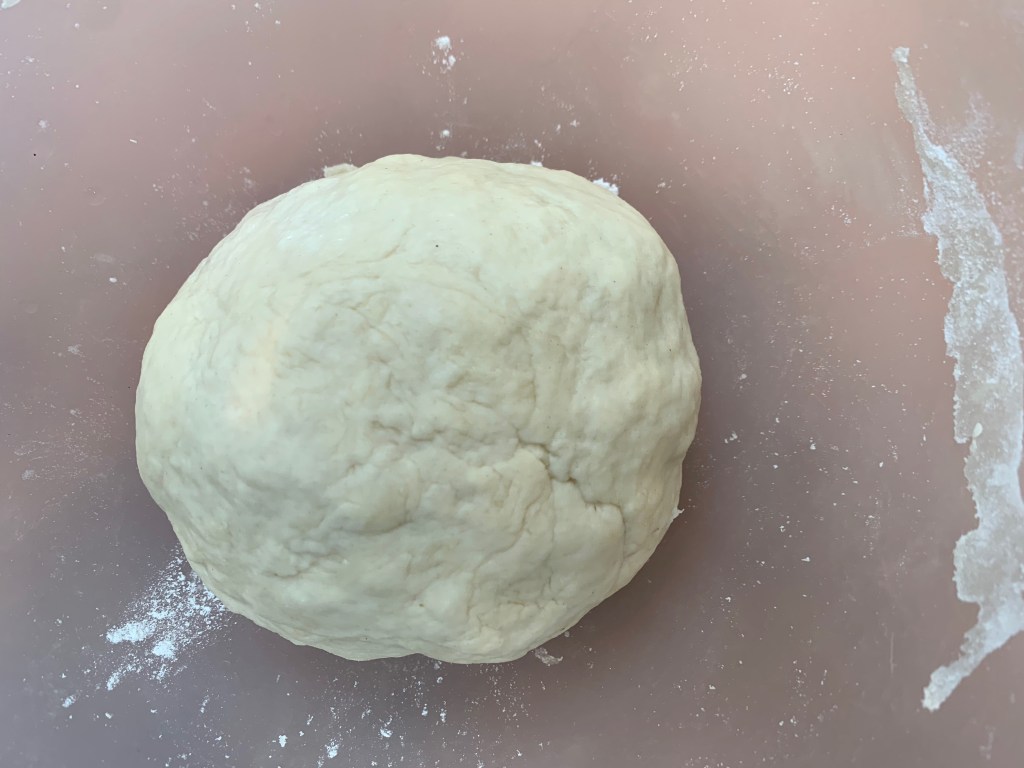
  4. Once your wet mixture is nicely frothy, add it to the dry mixture and add the oil. Mix thoroughly into a ball and then knead for around 5-10 minutes – you’ve kneaded it enough when the dough is very elastic and bounces back nicely when you stretch or punch it.
  5. Put the dough into a large bowl with a damp tea towel over it. SWITCH OFF THE OVEN and put it in. Leave the dough to to rise for around 60-90 minutes. I can never figure out what people mean when they say “until it’s doubled in size”: I leave the dough until it’s mostly filled the bowl.

Filling

You’ll have time to make your filling while the dough is being left to rise.

  • 200g Char siu (see below for recipe)
  • 90g red onion or banana shallots
  • 3 cloves garlic
  • 3 spring onions
  • 1 tbs oil (I used sunflower oil, any fairly neutral oil will work)
  • 1 tbs hoisin sauce
  • 1 tbs dark soya sauce
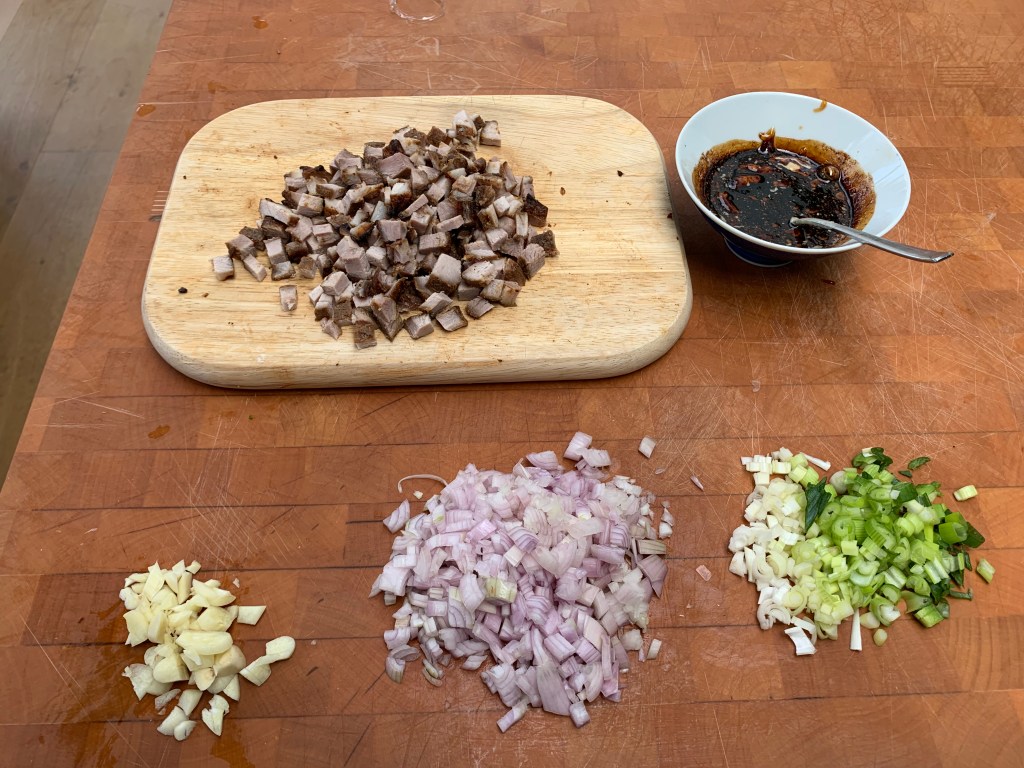
  1. Chop the Char siu very finely (around 3mm dice would be ideal). Chop the onion, garlic and spring onions very finely also.
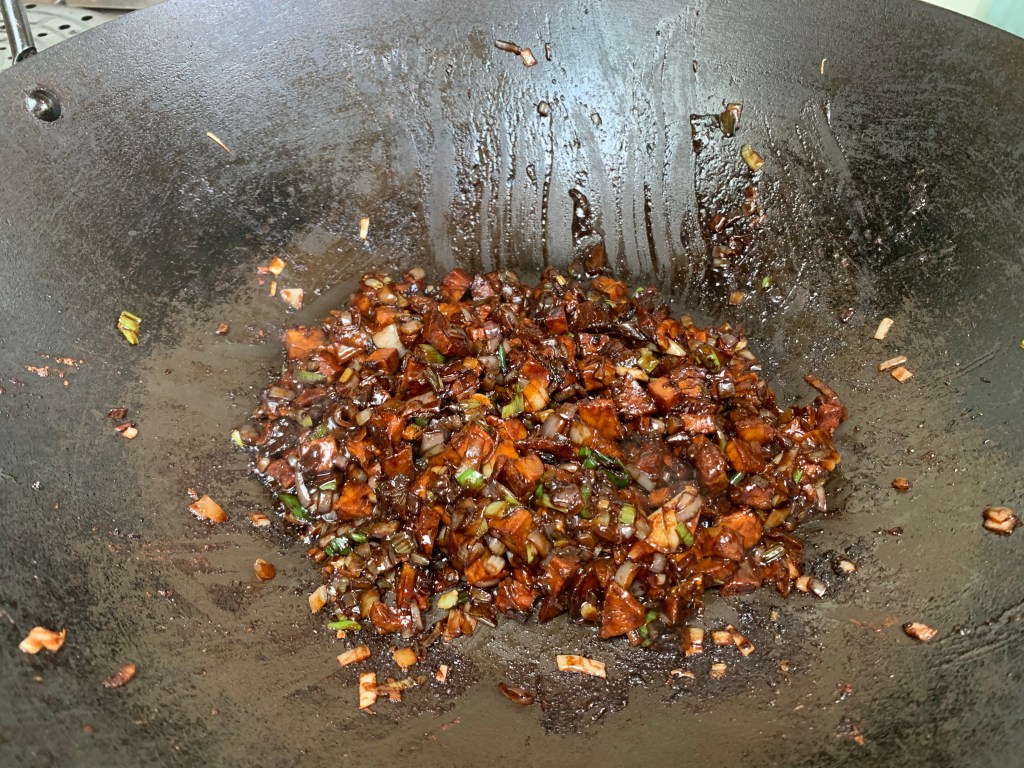
  2. Heat oil in your wok to high heat. When hot, add the onions and garlic, stir-fry for a couple of minutes
  3. Add spring onions, stir fry until onions are transparent
  4. Add Char siu, hoisin sance and dark soya sauce, mix thoroughly, then turn the heat down and stir fry for a minute or two until everything is combined and fragrant.
  5. Remove from heat and let cool while your dough is rising. If you’re going to use the same wok for steaming, you’ll now need to decant the filling to another bowl and wash up the wok.

Assembly

  1. Cut twelve squares of greaseproof paper, around 8cm square.
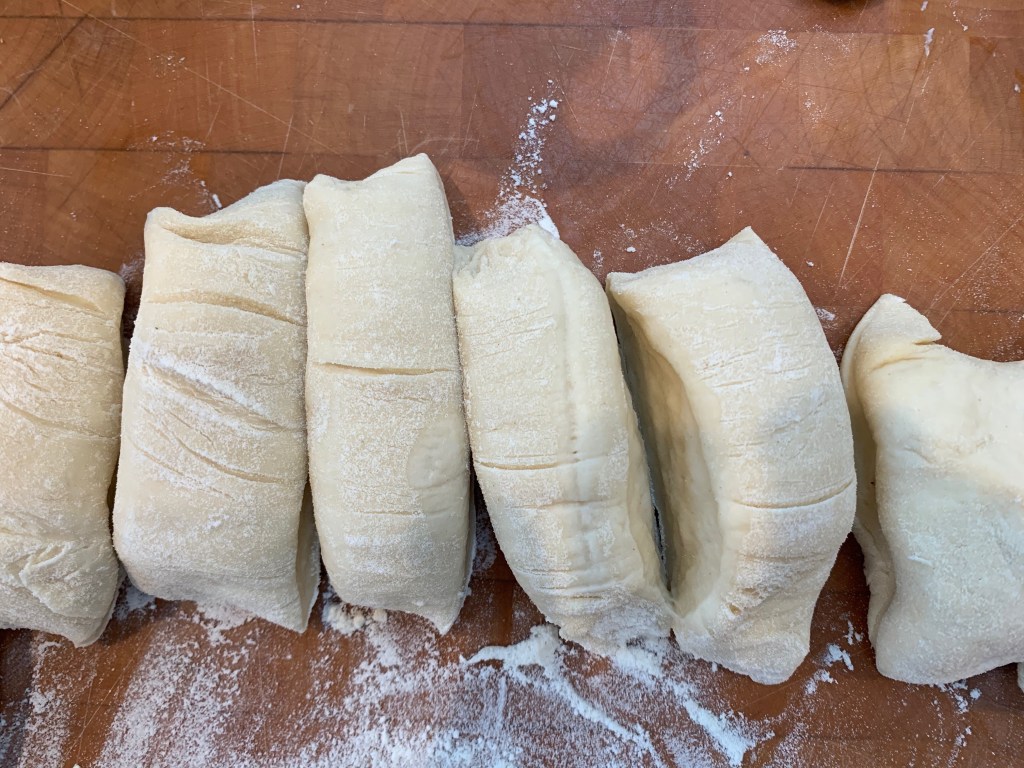
  2. Take the dough out of its bowl and divide into twelve portions, as evenly as you can manage (the easiest way to get them even is to roll the dough into a cylinder, chop it into half, chop each half in half and then each remaining piece into three).
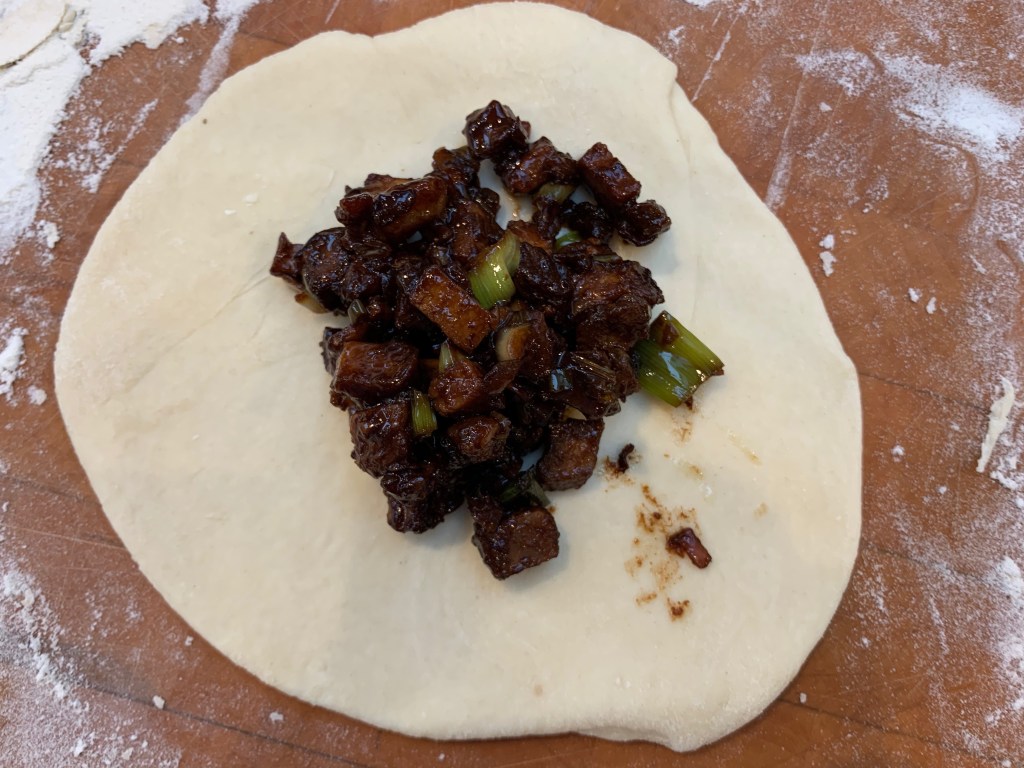
  3. With a floured rolling pin on  floured surface, roll a portion of dough out into a flat disc, around 12cm in diameter.
  4. Spoon a dollop of filling into the middle (don’t touch it with your fingers or you’ll then stain the dough)
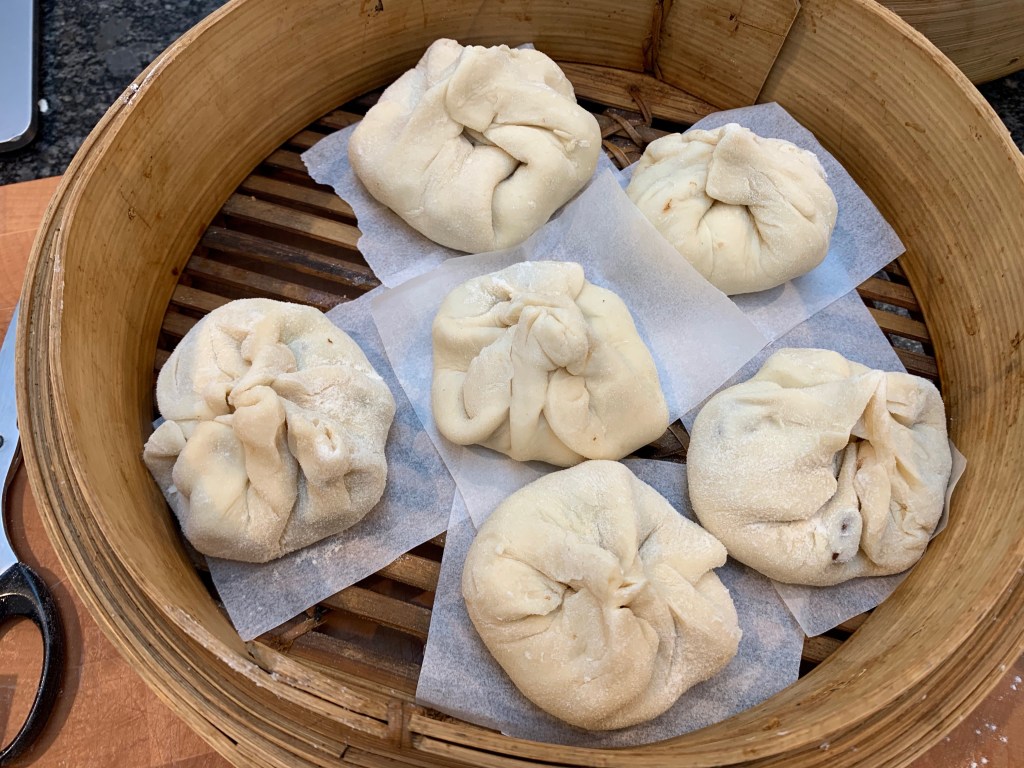
  5. Pinch up the dough into pleats, ensuring at each stage that the filling isn’t being allowed to drop out. You end up with a shape a bit like the onion dome on a Russian church.
  6. Put the completed dumpling on a square of greaseproof paper and transfer it to your steamer.
  7. Repeat for the remaining bao. Depending on the size of your steamer, you may have to do this in several batches.
  8. Steam the bao for around 12-15 minutes until fluffy and cooked through.

Making your own Char Siu

Char siu is barbecued, marinated pork. The first thing you have to decide is what pork to buy. My preferred cut is shoulder, which has some fat in it but not too much. Fillet (aka tenderloin) or loin is OK, but has so little fat content that it tends to dry out. Belly is the opposite: your char siu will be beautifully soft but you may find it rather fatty.

There are a million different recipes for the marinade. They pretty much all involve soy sauce, garlic, five spice powder, a sweetener (sugar / honey / hoisin sauce) and something to make it sour (vinegar / tomato puree). Shaoxing rice wine is a popular addition. Quantities can vary wildly according to taste.

The best suggestion I’ve found for simulating the way the Chinese make char siu comes from Woks of life: set your oven to its highest setting (probably 250℃ fan) and roast your meat on a grid over water. I’ve gone for a simplified version of what they do.

By tradition, char siu is red. In practise, this is typically achieved by using red food colouring. Personally, I can’t be bothered, so my char siu is brown.

  • Pork shoulder – 1 kg
  • Garlic – 3 clove, crushed
  • Five spice powder – ½ tsp
  • Dark soya sauce – 1 tbs
  • Hoisin sauce – 1 tbs
  • Shaoxing rice wine – 1 tbs
  • Tomato puree – 1 tbs
  1. Cut the pork into large strips (around 6-8 cm in diameter). If you’re using tenderloin, that’s pretty much the width of the whole thing, so just cut it in half.
  2. Mix all the marinade ingredients in a bowl big enough to hold the pork, dunk the pork into the marinade and make sure it’s all properly coated, cover and leave overnight.
  3. Preheat oven to 250℃, with an oven shelf near the top.
  4. Use a deep oven dish half-filled with water. Place a grid over the oven dish, then put the pork on the grid. 
  5. Put the whole lot into the oven and roast for around 40 minutes. You want the pork to be cooked through, but not dry. You may want to baste the pork with any remaining marinade every 10 minutes or so.

The quantities given are for 1 kg of pork, which is over three times what you’ll need for one batch of bao. The idea is that you’re going to eat some freshly cooked for a main meal, and then use the leftovers for bao a day or so later, freezing any you have left after that.

Guest post: how to make coronavirus masks

Guest post: how to make coronavirus masks

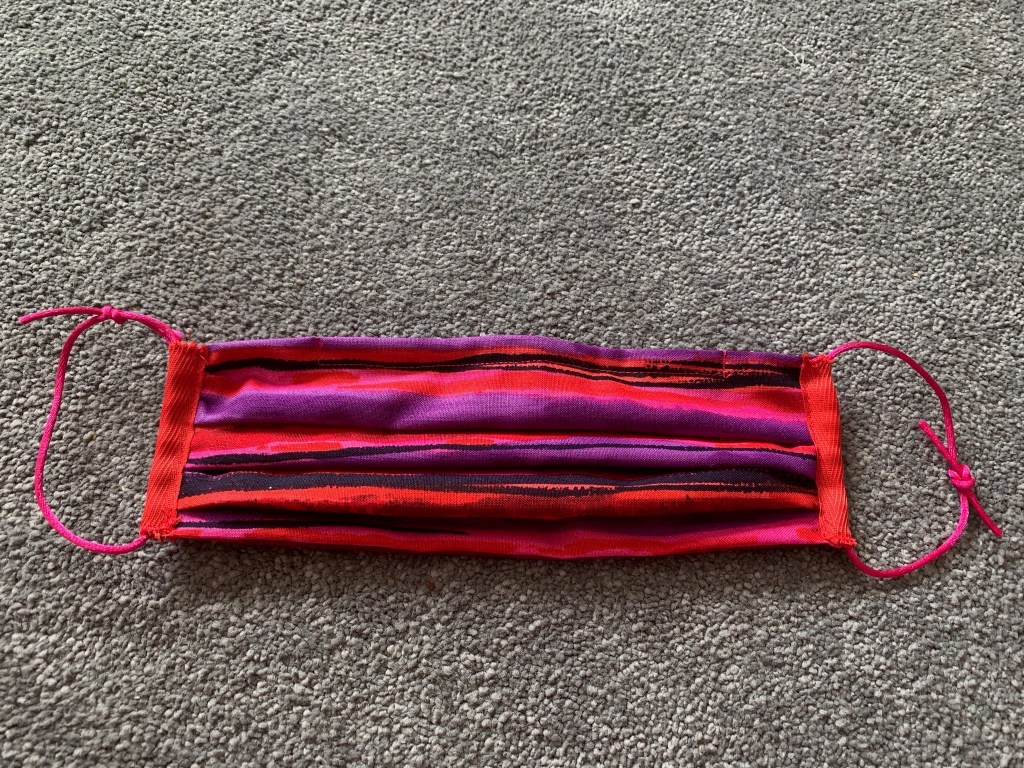
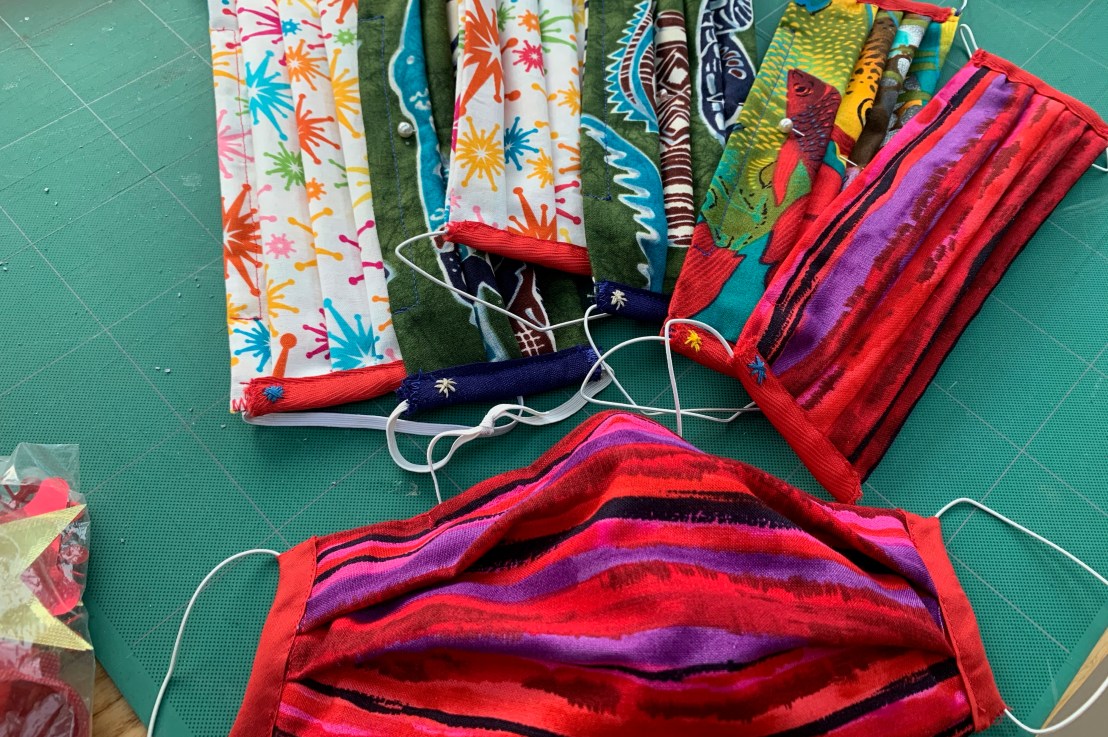
The “I” in this post is my wife Alison, who has spent much time making brightly coloured masks for family and friends from an assortment of materials hoarded in our home. She doesn’t have her own blog but very much wanted to share this with anyone who might find it useful.

There are other blog posts for making masks online, but for one reason or another I didn’t get on with them as they failed to give exact measurements where I most needed them and provided a video when I prefer images that I can study. Here is a complete version of masks that family and friends have found fit our faces well, and look stylish.

The cotton I have recommended is very crisp and has a very tight weave. This means if you hold it up to the light you should find it doesn’t let much light through. It is not stretchy if you pull it. The idea of this is that tightly woven material lets through fewer germs. A double thickness of the material is recommended. I tried adding a non woven fabric within the mask and found it too thick to allow me to breathe comfortably.

What you need

  • High thread count cotton fabric: 2 pieces 23 cm wide by 20 cm high. 
  • Cord elastic or 3mm flat elastic 50 cm
  • Tape 14 cm long x 2 cm wide – ideally cotton so it does not fray easily, but if you can’t find that bias binding or ribbon 2 cm wide (Note it’s very fiddly if the tape is 1 cm wide)
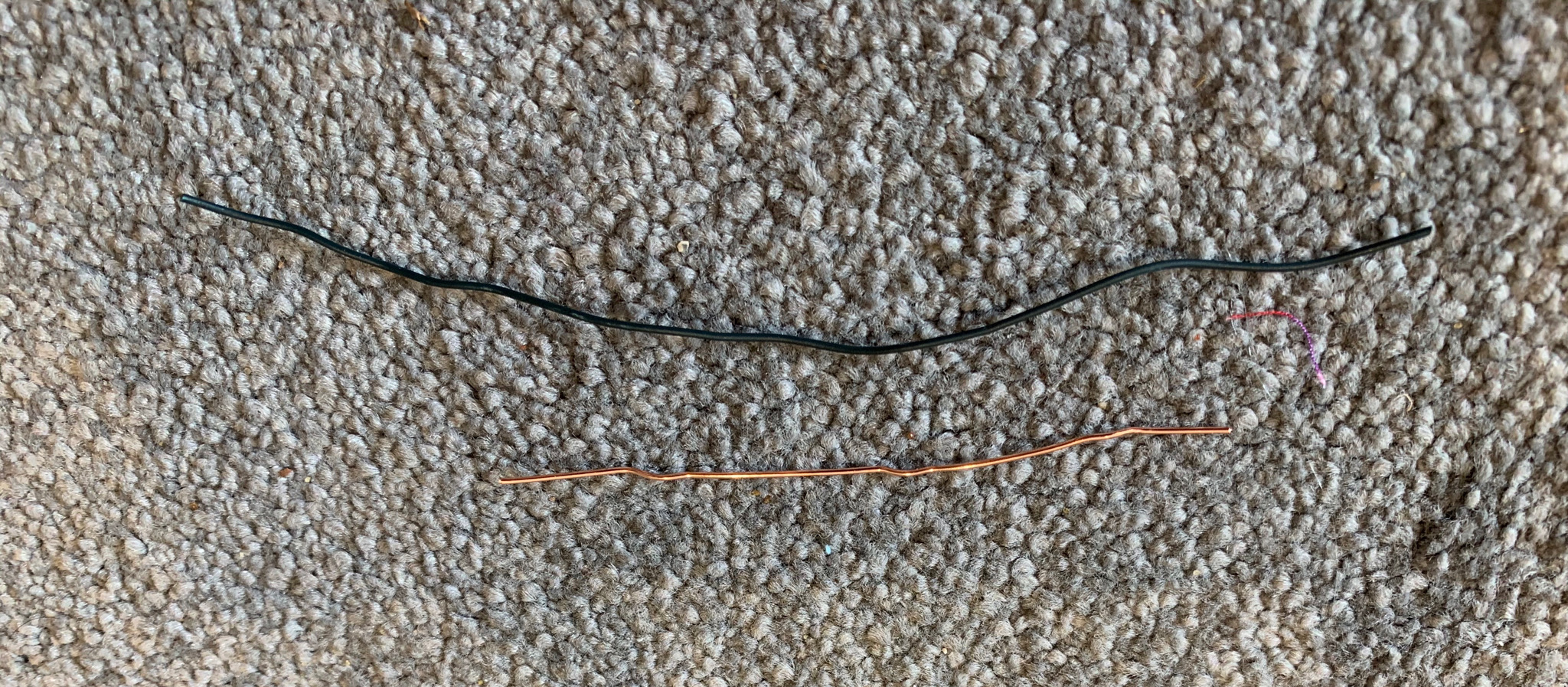
  • Wire for nose Garden wire, or a paper clip unwound, or a pipe cleaner, select anything from length 9 cm (paper-clip) to 15 cm (garden wire).
  • Thread

Method

  1. Cut out your fabric into 2 pieces of material 23 cm wide by 20 cm high. Put the right sides together.
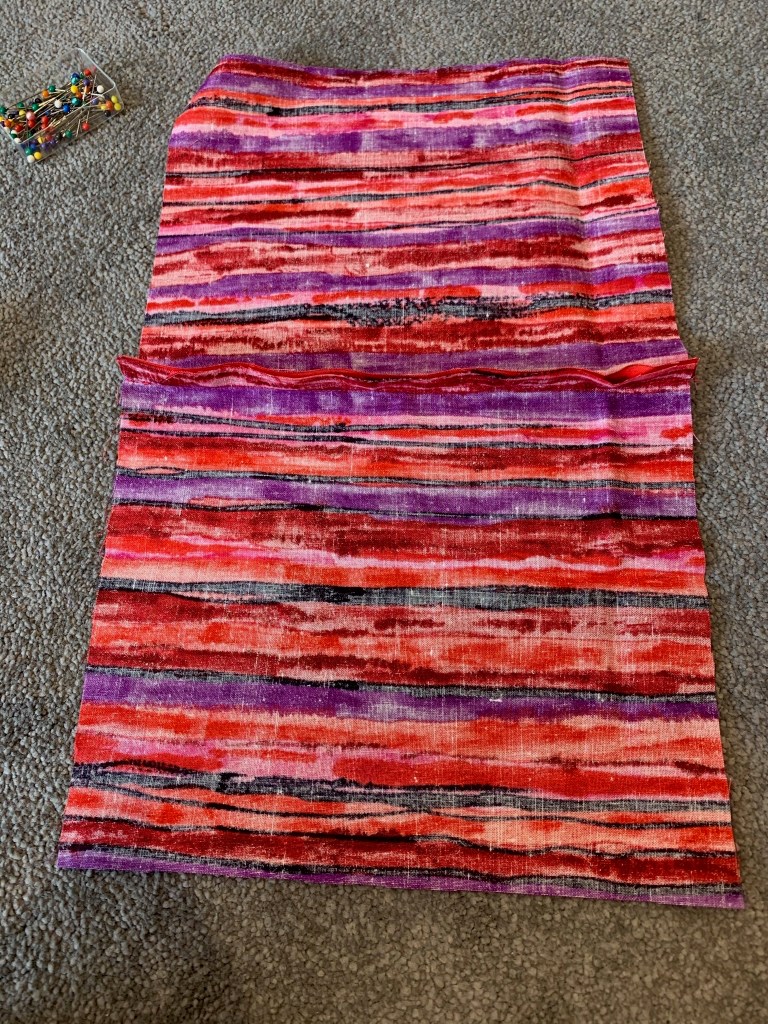
Masks cut 20 cm high x 23 cm wide, right sides together
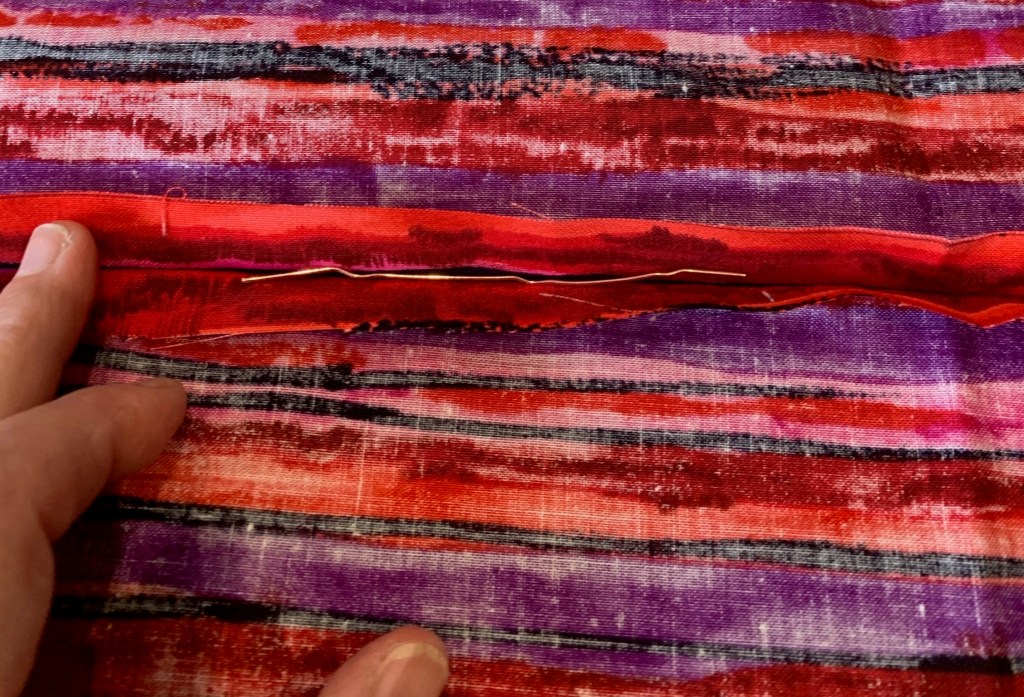
Wire to shape around nose
  1. Machine sew the two pieces together along one long side 1 cm from the edge of the material.
  2. Open out the fabric with the right side facing down. The hemmed edge faces up. Place your piece of wire in the middle, between the two edges of material 
Wire between two edges of material
  1. Bring the top piece of the material down so you trap the wire in place. Hold it there by pinning it into position leaving equal amounts of room to the left and right.
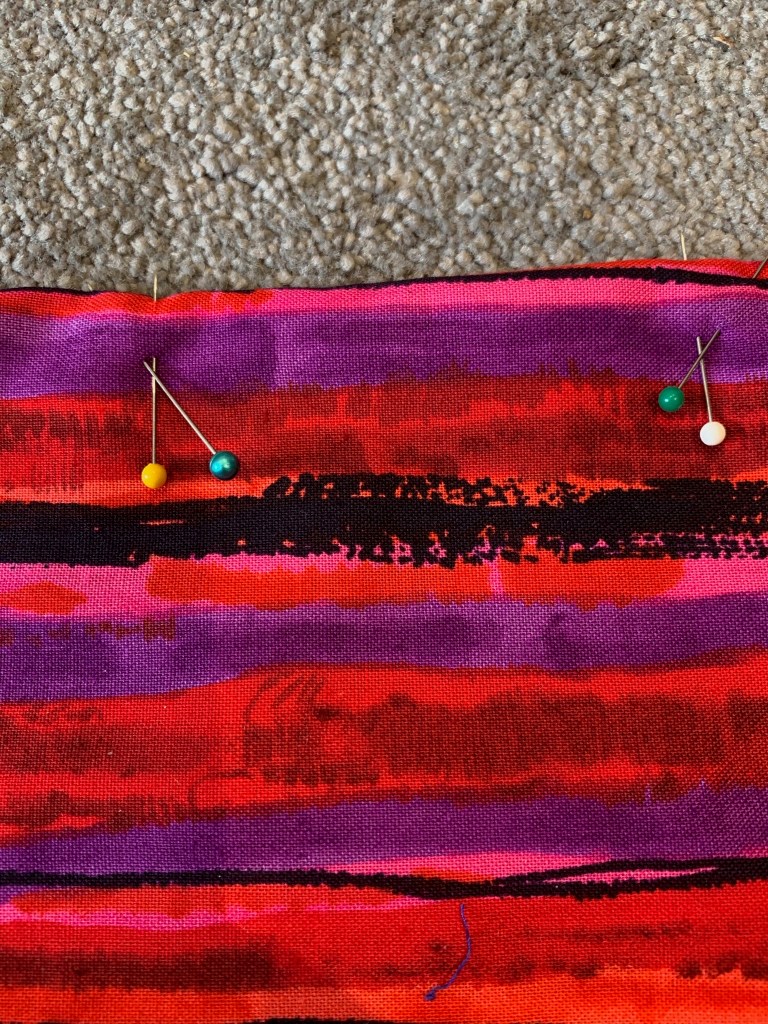
Pin the nose wire into position marking the ends
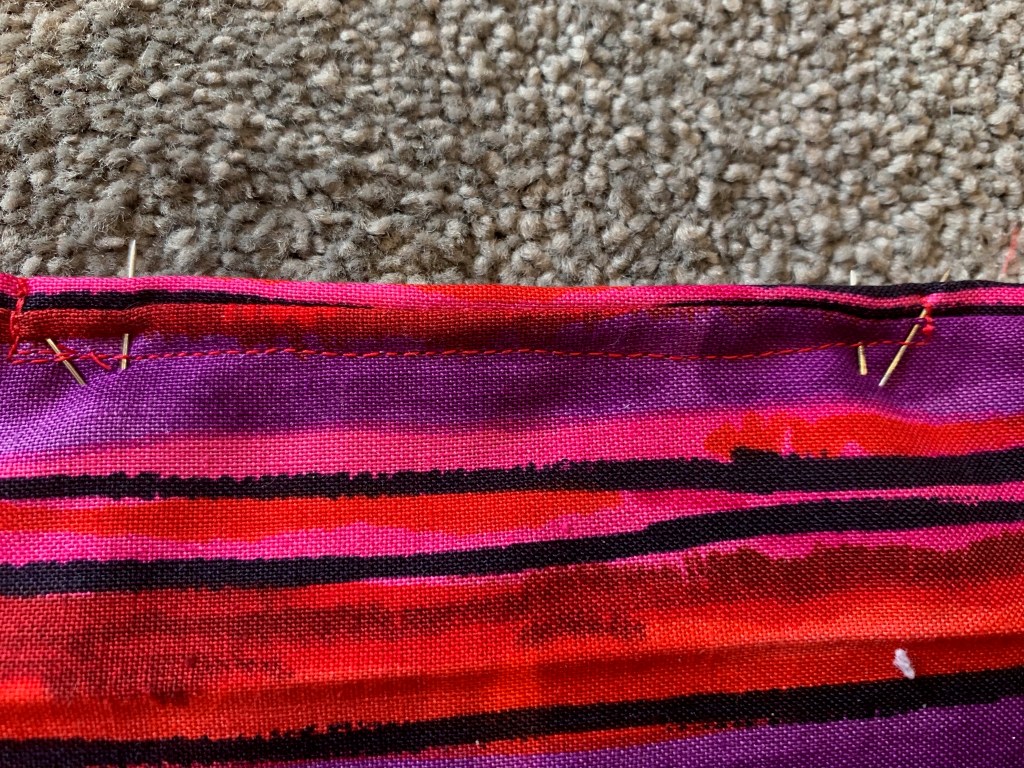
Nose wire sewn in mask
  1. Now flip the material so you have the right sides together again and sew the second long seam, parallel to the first seam, again 1 cm from the edge and when down, turn inside out so you now have a cylinder of material, right side facing out. You’re now ready for the pleating!
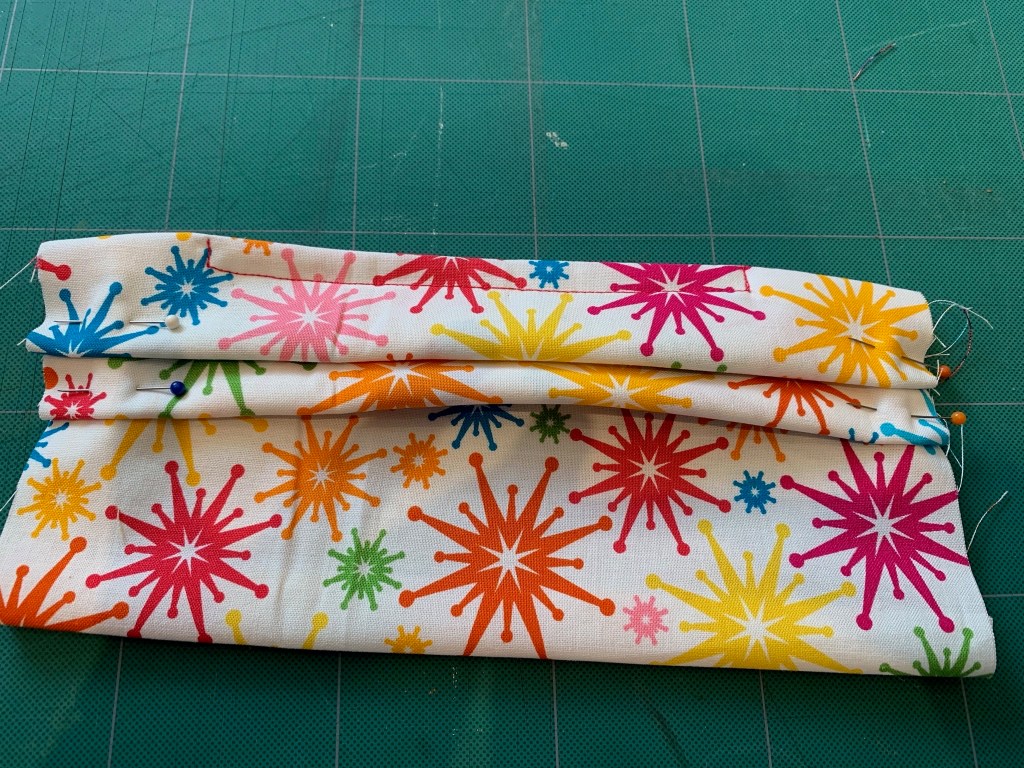
  1. The pleating is easy once you get used to it but the first time seems really fiddly. Remember your pleats must face down your mask, away from the nose wire. You need a total of 3 pleats. The top of one pleat should approximately meet the bottom of the next one. You want to end up with a mask which is 7cm wide at the sides. You fold the material starting just under the stitching of your box for the wire, about 2cm from the top.
Making pleats for mask, 2 out of 3 done
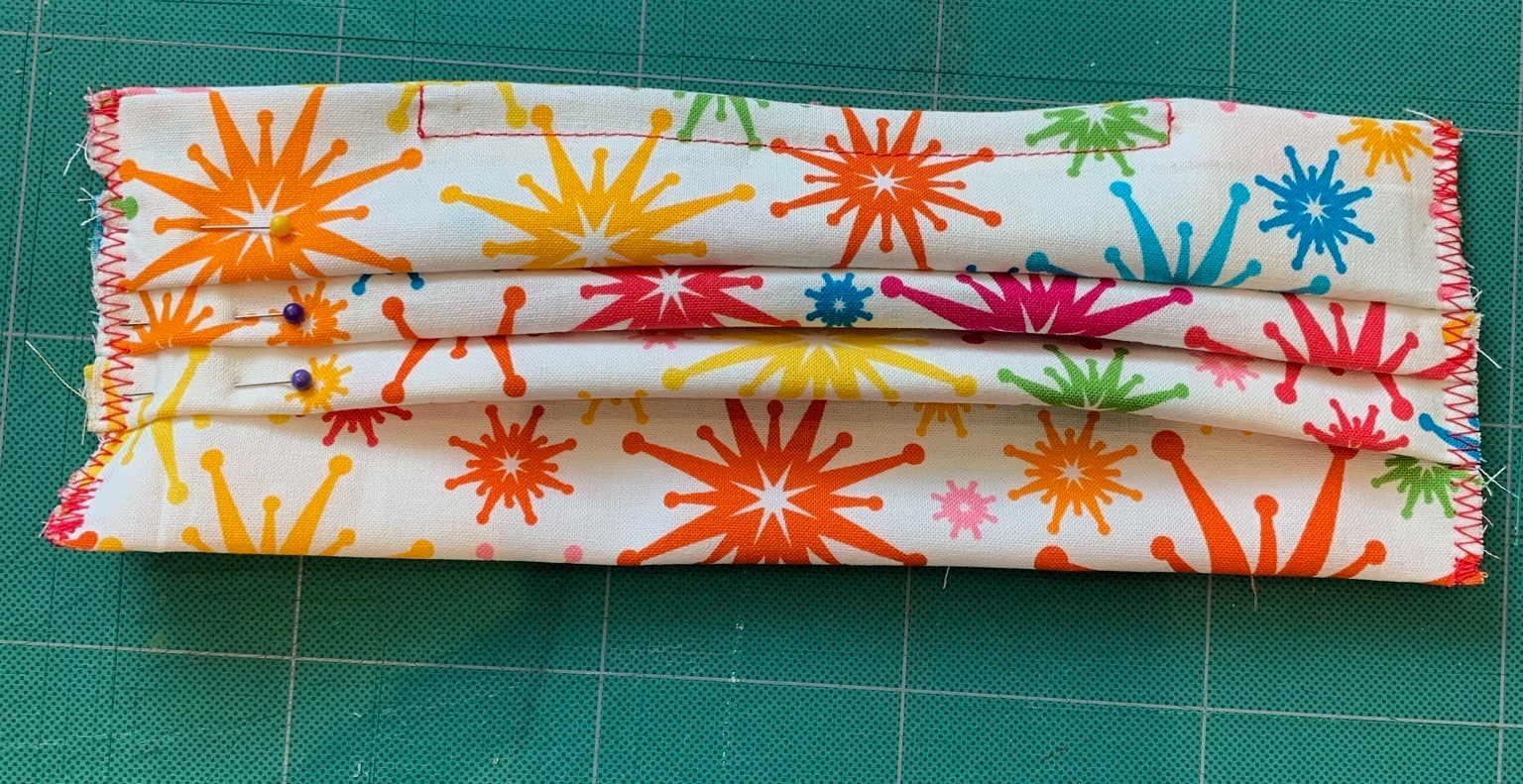
  1. You pin the pleats into place and once you’ve made your 3, check the width of your mask is no more than 7 cm wide, perhaps slightly less. When you’re happy with it, zig-zag stitch the edges of the mask to hold the pleats in place.
Zig-zag stitch edges of mask
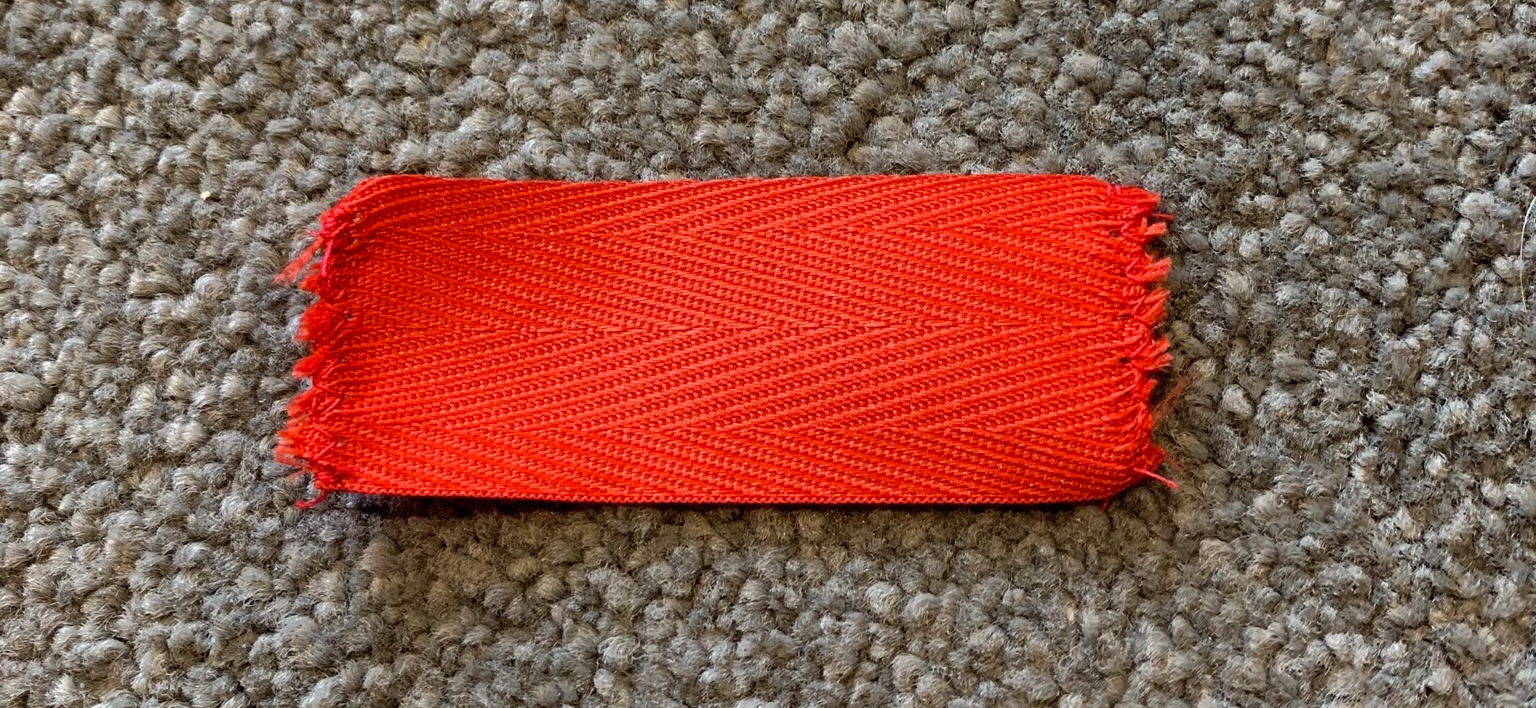
  1. Cut your tape exactly into two so you have 2 pieces 7 cm long. Zig-zag the short edges so they don’t fray. These must not be sewn onto the mask to enable you to get the elastic in and out (in case the knots in the elastic come undone.)
Zig-zag edges of tape to stop fraying
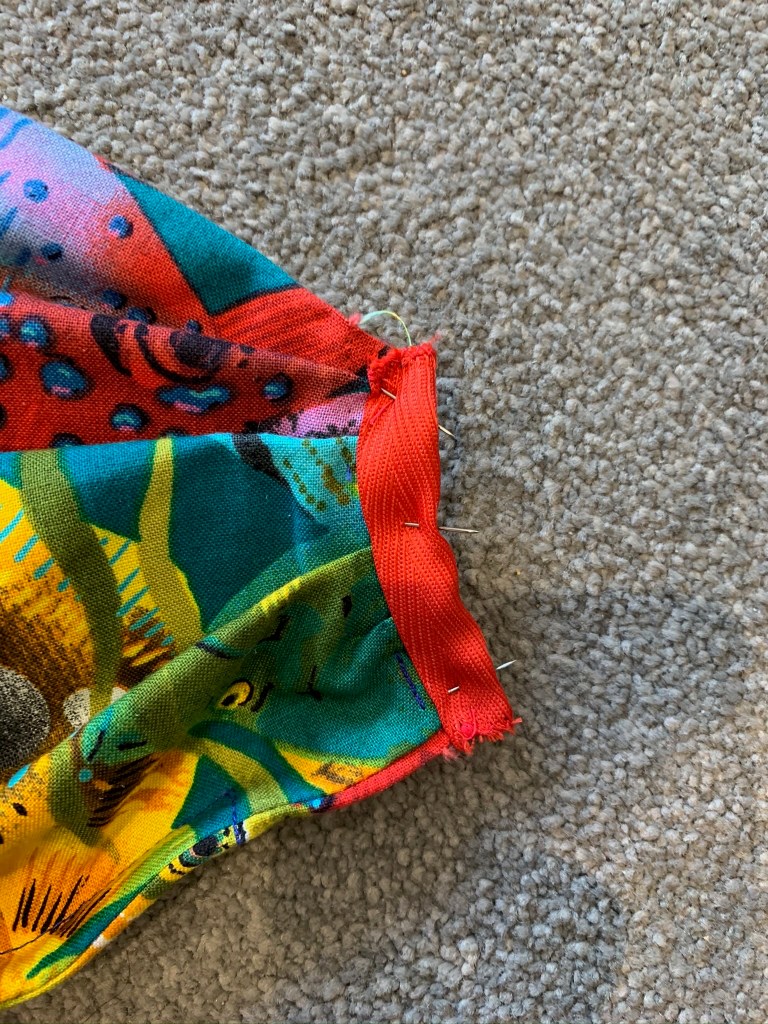
  1. Pin the tape to the edges of your mask as shown below. Try to get the same amount of tape on the back and the front of the mask. 
Tape pinned onto mask
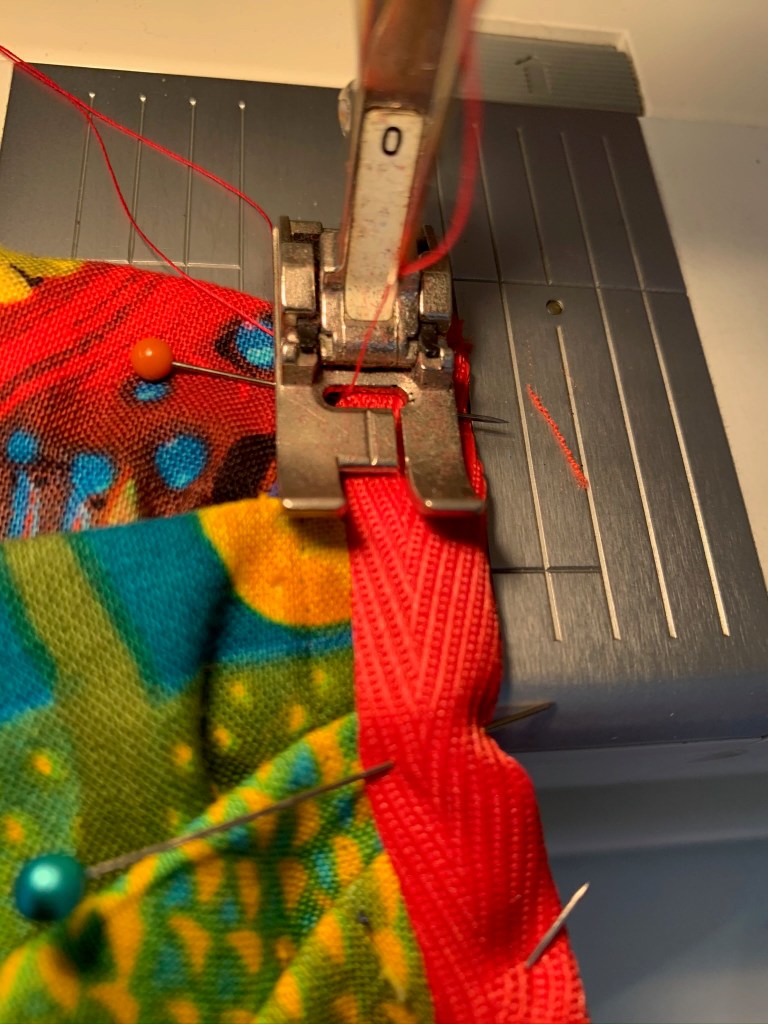
  1. Stitch the tape to the mask as close to the edge as you dare. 
Stitch tape close to its edge to allow the tape to go through easily
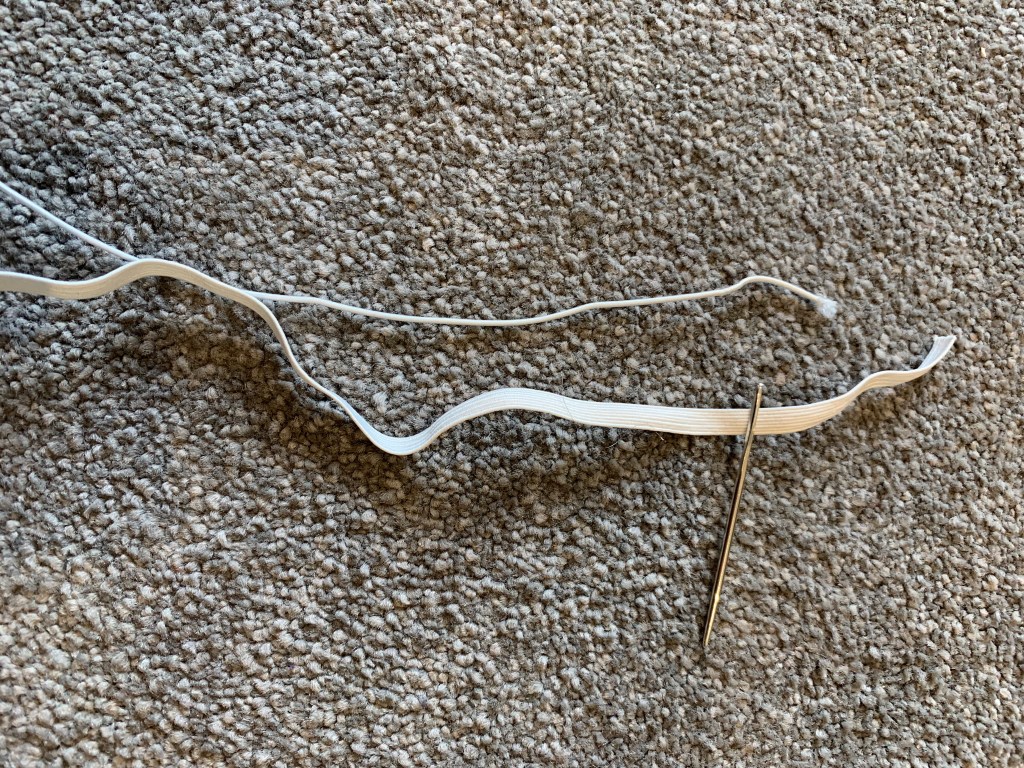
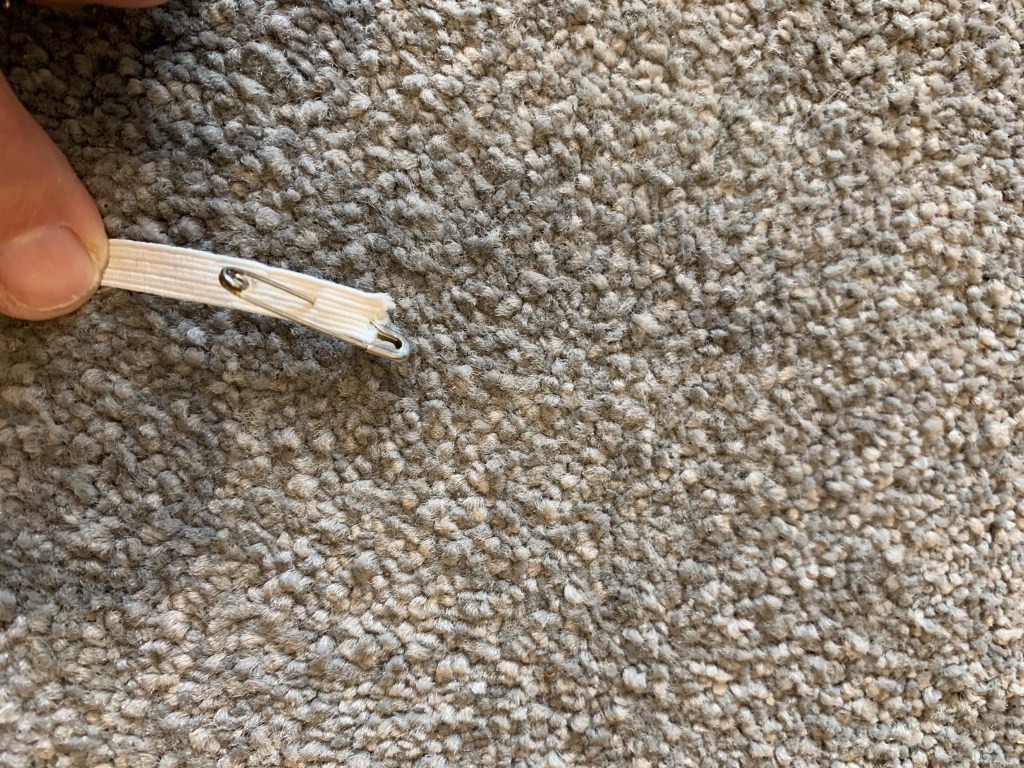
  1. Now cut the elastic exactly into two 25 cm lengths. Using either a tapestry needle to thread the elastic or a tiny safety pin, wiggle the needle or safety pin through the tape to bring the elastic from the bottom to the top.
Elastic for masks
How to thread elastic using a safety pin
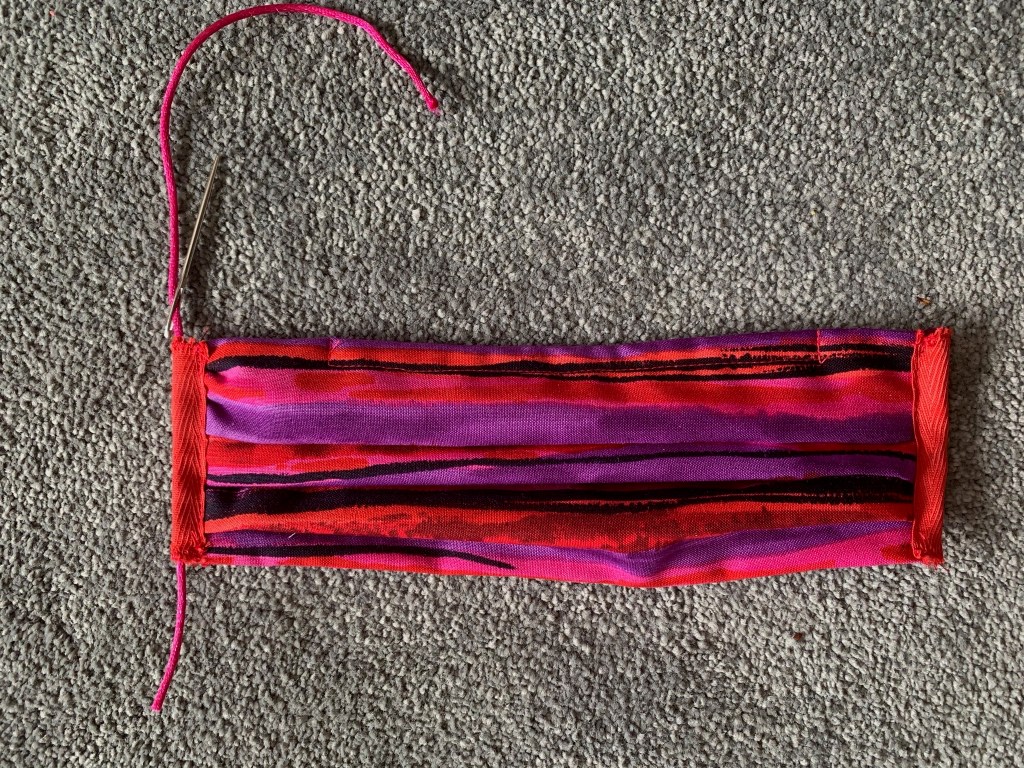
  1. Now tie the ends of the elastic together to make a secure knot – maybe a reef knot, 1 cm from the end of each piece of elastic and you have your mask
Thread elastic through the tape
Finished mask, adjustable by tightening the knots

I hope you enjoy making these and that they keep you cheerful and safe.

Around the world in 80 bakes, no. 8: Brigadeiros from Brazil

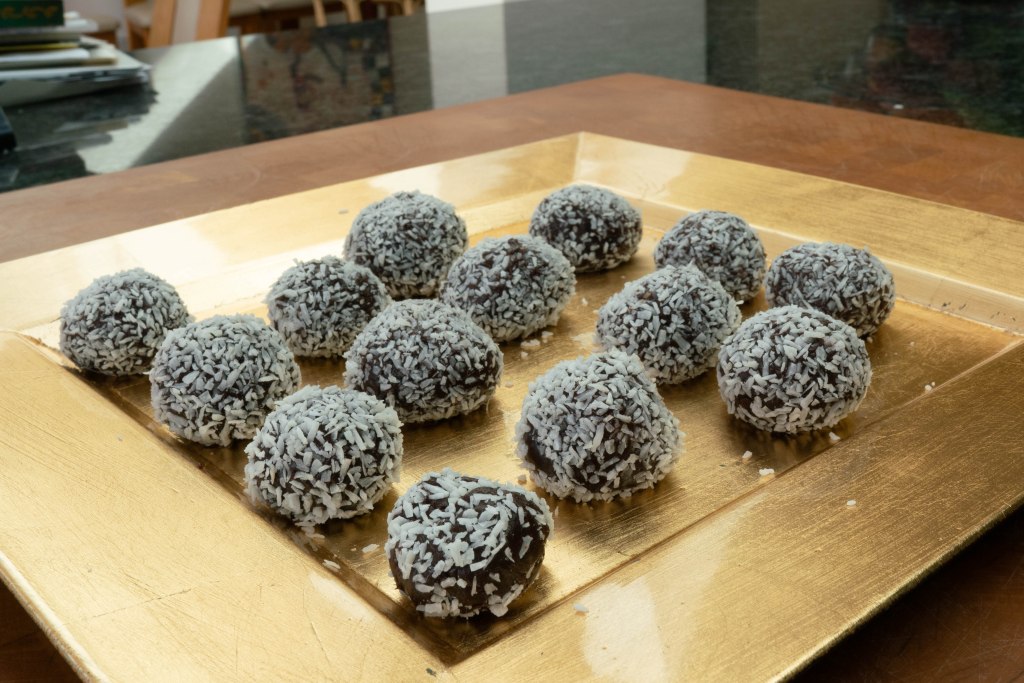
OK, so I’m cheating here: the Brigadeiro, pretty much Brazil’s national sweet, is cooked in a saucepan, not in an oven. But they’re really delicious (batch 2 was demanded immediately), really easy to make and by a long way the most Brazilian thing I could find. So here goes.

Brigadeiros have a relatively short history: they were created in Rio de Janeiro in 1946 and named after a presidential candidate, Eduardo Gomes, who happened to be an army Brigadier. Gomes lost the election, but these gooey chocolate truffles won the hearts of the Brazilian people and have been a favourite ever since.

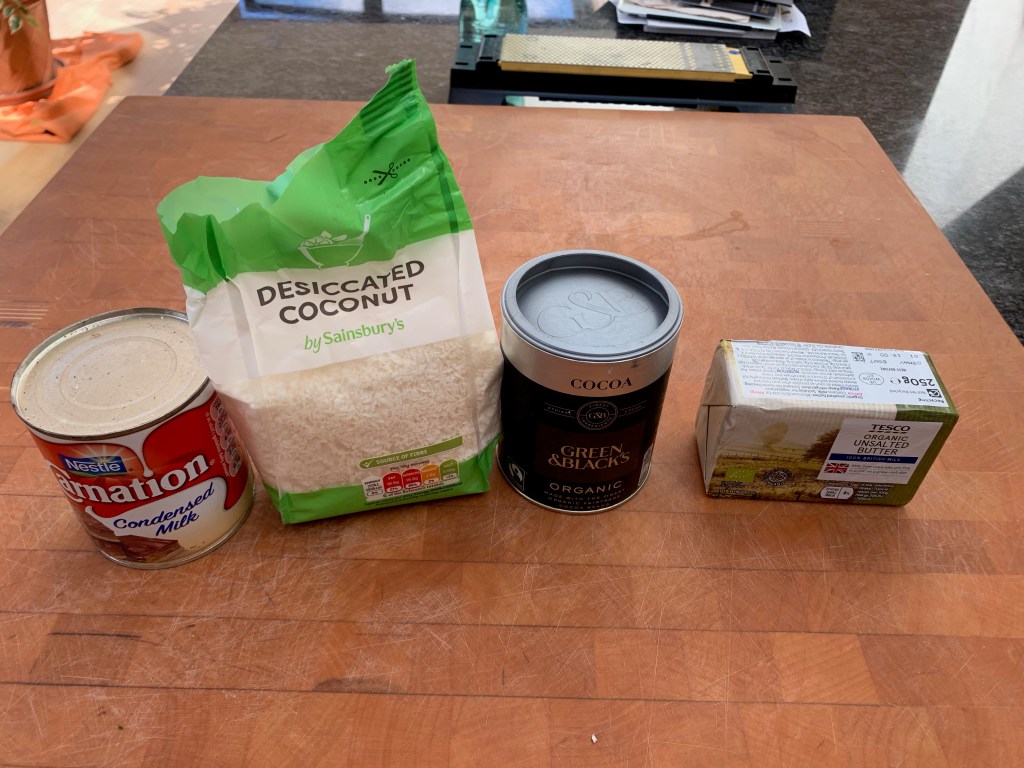
With the possible exception of some flatbreads in posts to come, I’m unlikely to provide any recipes with a smaller number of ingredients:

  • 1 can of sweetened condensed milk (approx 400g)
  • 30g cocoa powder (unsweetened)
  • 30g butter (if it’s unsalted, add a gramme or two of salt)
  • Dessicated coconut for rolling

In fact, you can roll your brigadeiros in anything you like: in most recipe photos you’ll see, they’re coated with chocolate sprinkles; some recipes go for chopped pistachios or almonds. I happen to love coconut and think it brings extra Brazil-ness, but the choice really is yours.

The steps in the method are just as simple:

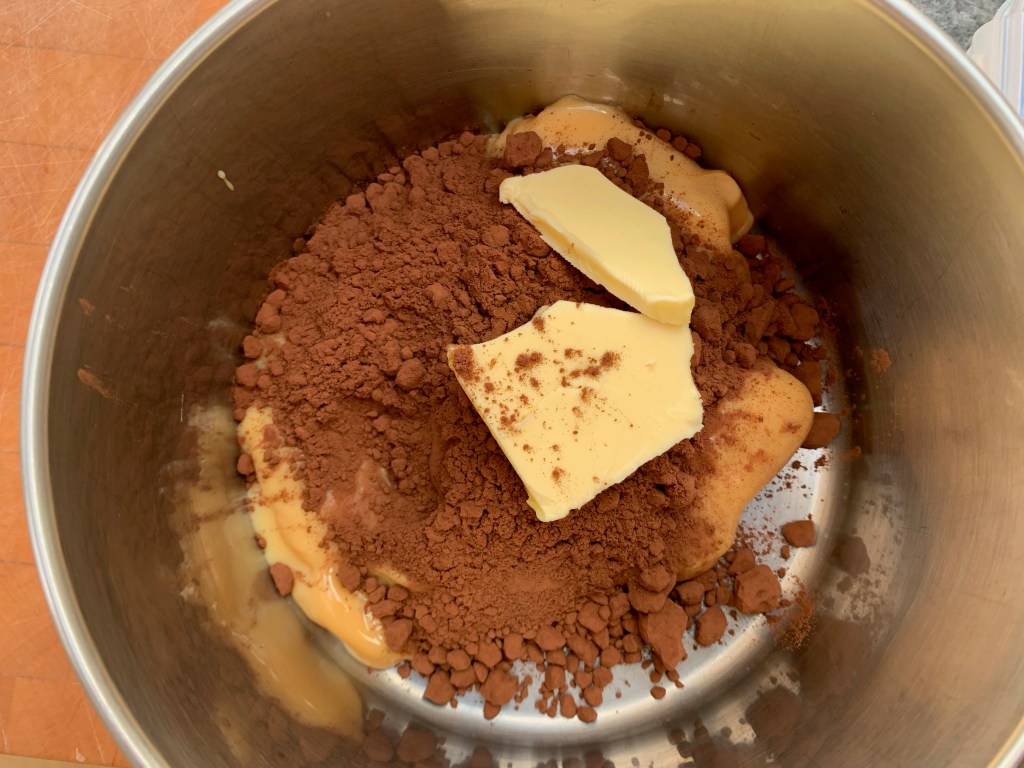
  1. Put the first three ingredients into a saucepan and mix thoroughly
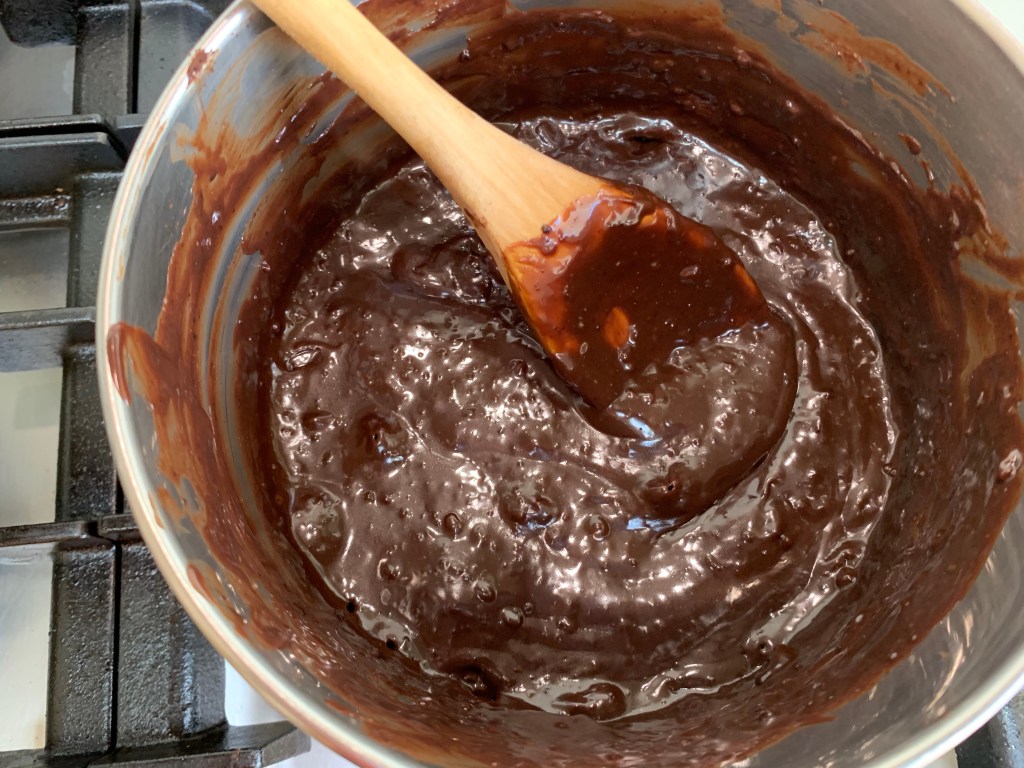
  2. Heat, mixing continually, until you have a sticky paste that comes away from the sides of the pan
  3. Leave to cool until they don’t burn your fingers
  4. Shape into balls around 3cm in diameter, and roll in your favourite topping

There are, however, some details worth mentioning:

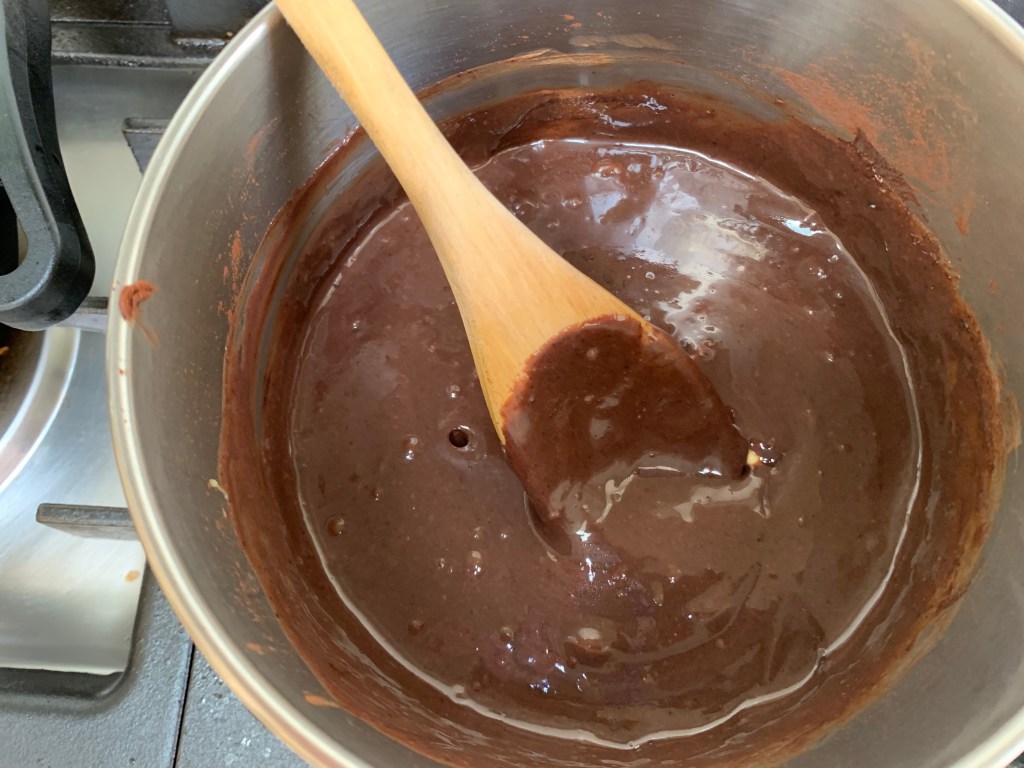
  • Cocoa powder clumps. A balloon whisk is a good idea for the first five minutes or so until it’s really smooth, then switch to a wooden spoon. If you don’t have a balloon whisk, go for elbow-grease.
  • “Mixing continually” means what it says. Don’t leave the mixture on the heat for more than a few seconds without stirring it to get some off the sides of the pan, especially towards the end.
  • Knowing when to take the mixture off the heat is tricky. Too soon and you have a liquid chocolate sauce that you can’t mould. Too late and your brigadeiros are decidedly chewy. My guidelines for the best point: (1) wait until the point where, when you run a wooden spoon through the liquid, it flows back very slowly and reluctantly, then give it another couple of minutes, or (2) when the mixture temperature is just above 100℃. Or just keep practising until you can do it by feel, at risk to your waistline.
  • You want to cool the mixture enough so that it doesn’t burn your fingers. If you want the mixture to cool more quickly, dump your saucepan into cold water when you’ve taken it off the heat. 
  • If you’ve overcooked and then over-cooled the mixture so that it’s too stiff to mould, warm it up slightly – it won’t hurt. But if that’s happened, be kind to your tasters’ teeth and make smaller balls.

Having said which, this is relatively simple stuff. And the results are incredibly moreish…

P.S. For added Brazilian authenticity, pronounce the name with the “Bri” rhyming with “Me”, the “ei” rhyming with “hay” and the “os” rhyming with “louche”. If you can be bothered.

Mid-process shots follow, somewhat more boring than usual…

Around the world in 80 bakes, no.7: Fatayer from Syria

For this post, we’re travelling to the Middle East – or, more accurately, to refugees from the Middle East. It turns out that when you’ve been exiled from your war-ravaged home, the one thing they can’t take from you is your food memories. Food writers Itab Azzam and Dina Mousawi have done the rounds of Syrians in exile and produced a lovely book called “Syria – recipes from home”: this recipe comes from the Shatila refugee camp in Beirut – yes, that Shatila, the site of the appalling massacre in 1982.

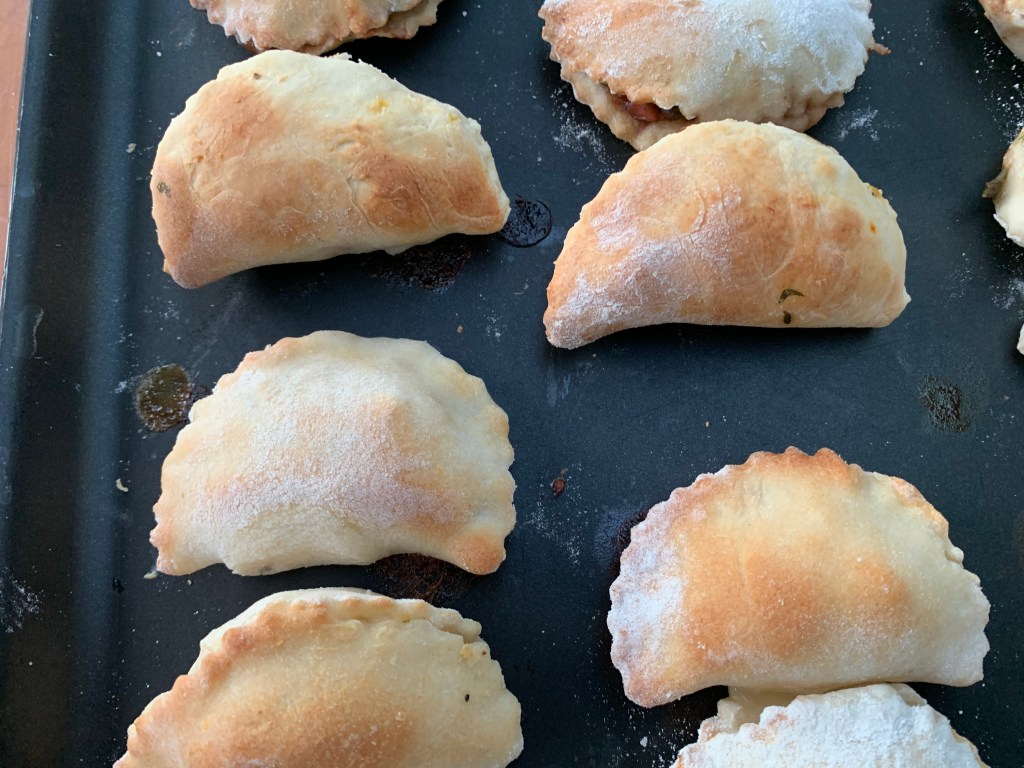
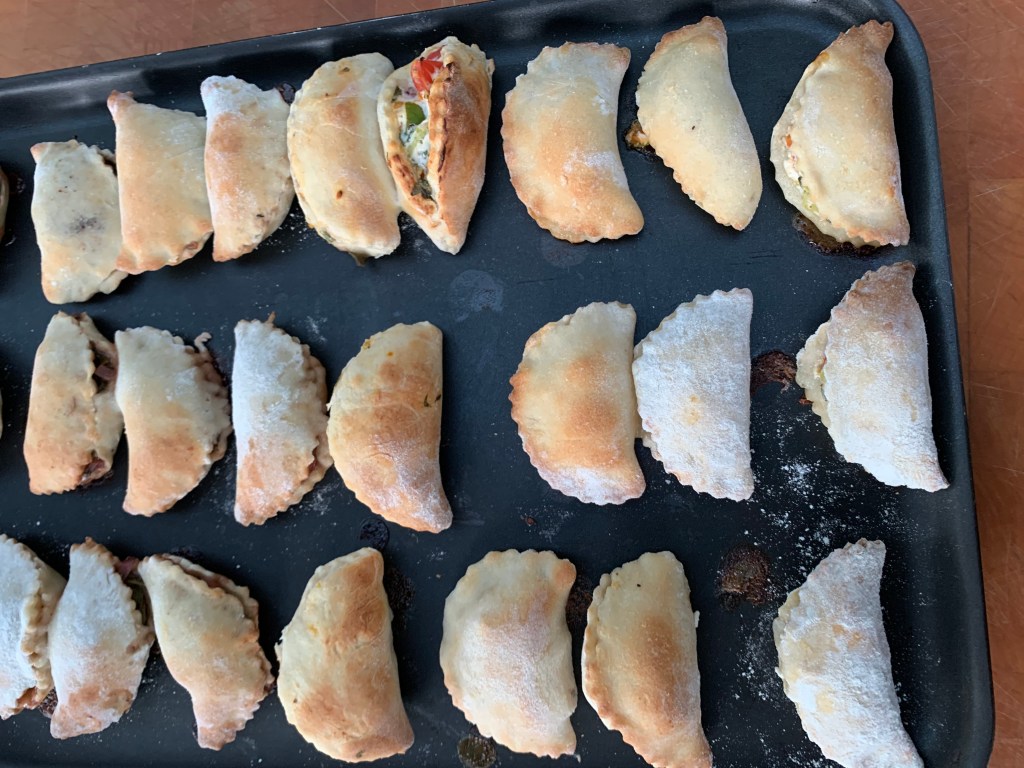
Out of the oven…

The recipe is for “fatayer”, which are small pasties made of yeasted dough which is rolled thinly and then shaped and pinched around a filling of your choice. There seem to be two popular shapes: I went for a simple half-moon, which gets you something like a miniature version of an Italian calzone. You’ll also see lots of images of fatayer where a hexagon of dough has been folded into a characteristic triangular pyramid: this looks complicated, so I thought I’d leave it for a second time round.

A bit of reading shows that you can fill your fatayer with pretty much anything: I tried two of the three fillings that Itab and Dina list in the recipe: a spinach-based one and a labneh-and-cherry-tomato one. 

If you can imagine miniature folded pizzas filled with your favourite yummy Middle Eastern flavours, piping hot out of the oven, you’ve pretty much got it. What’s not to like?

In what follows, by the way, the recipe in the book has been tweaked mildly to adjust seasoning, follow my usual baking drills, etc.

First, make your dough

  • 200ml milk
  • 300g plain flour, plus some for rolling
  • ½ tsp dried yeast
  • ½ tsp sugar
  • ½ tsp salt
  • 2 tbs sunflower oil (or any other fairly neutral oil)

Put the milk into a saucepan and warm it to around 45℃, add the sugar and yeast, and wait for 5-10 minutes for it to go frothy. Mix the flour and salt in a bowl.

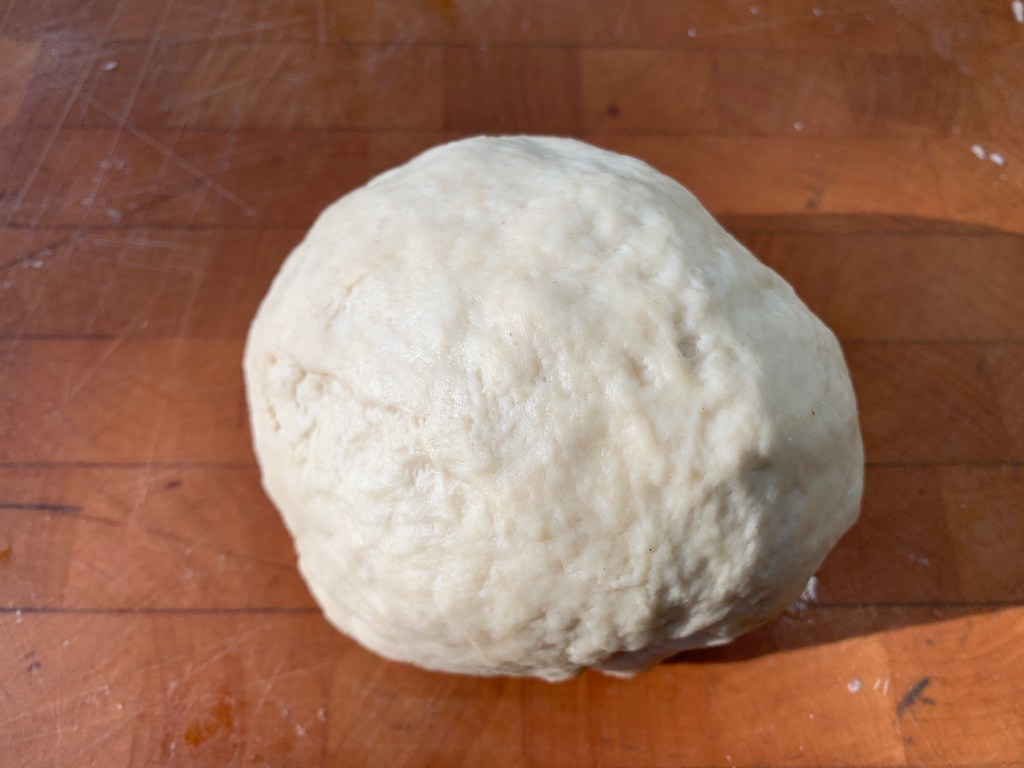
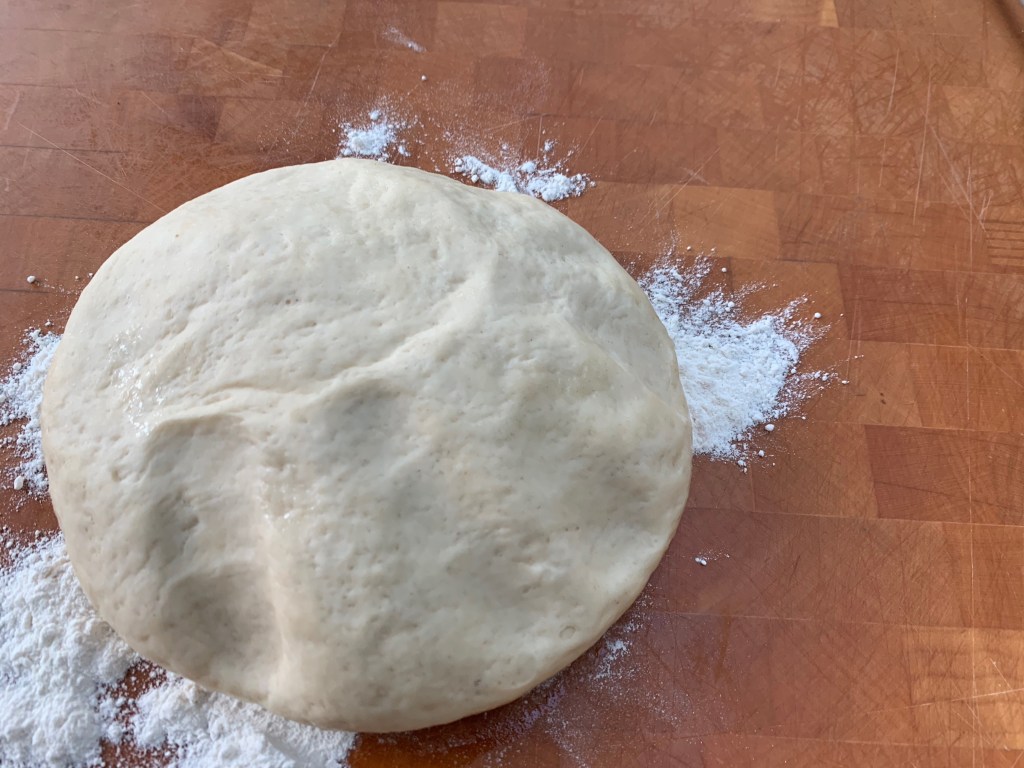
When the yeast mix is frothy, pour it into your bowl with the flour, add the oil and mix it well. You should get a soft dough: knead this reasonably vigorously until it goes nicely springy. Brush some oil around a bowl big enough to hold the dough when it’s risen, and put in a warm place. My favourite method is to heat an oven to 50℃ and turn if off just before putting the dough in to rise – it should take 60-90 minutes.

Now make the spinach filling…

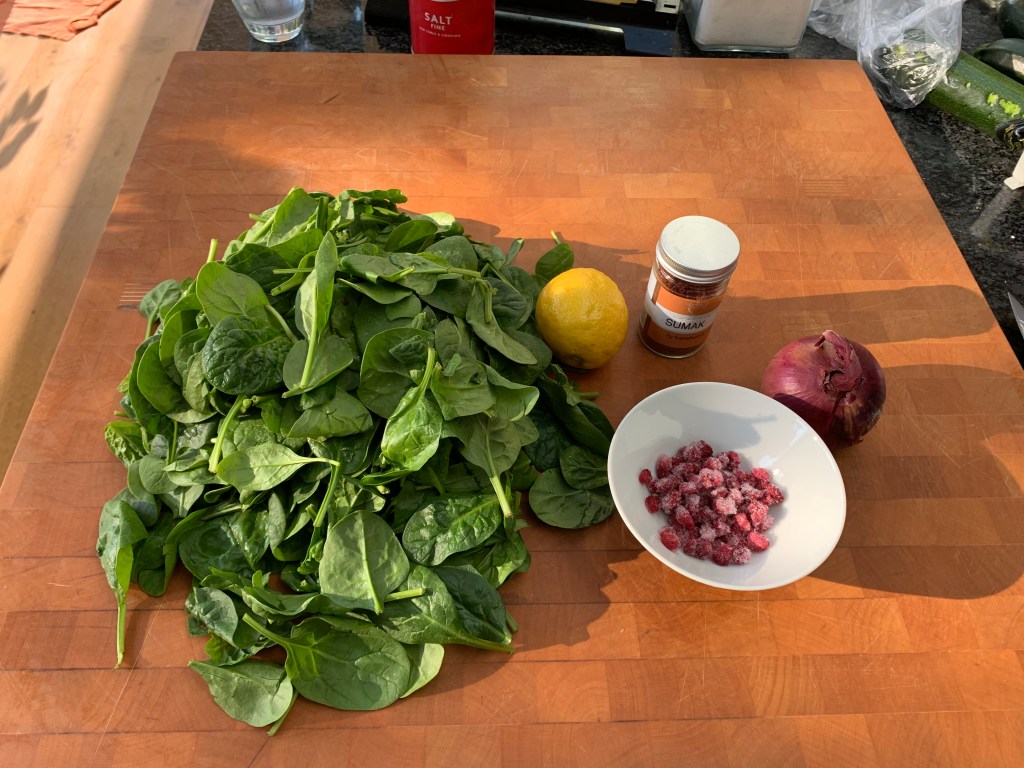
  • One onion
  • 300g spinach
  • 4 tsp sumak
  • Juice of half a lemon
  • Pomegranate seeds
  • Salt and pepper to taste

Chop the onion very finely, fry very slowly in a wok or other large pan bit of olive oil until it caramelises. (The pan has to be large enough to take the spinach before it’s wilted).

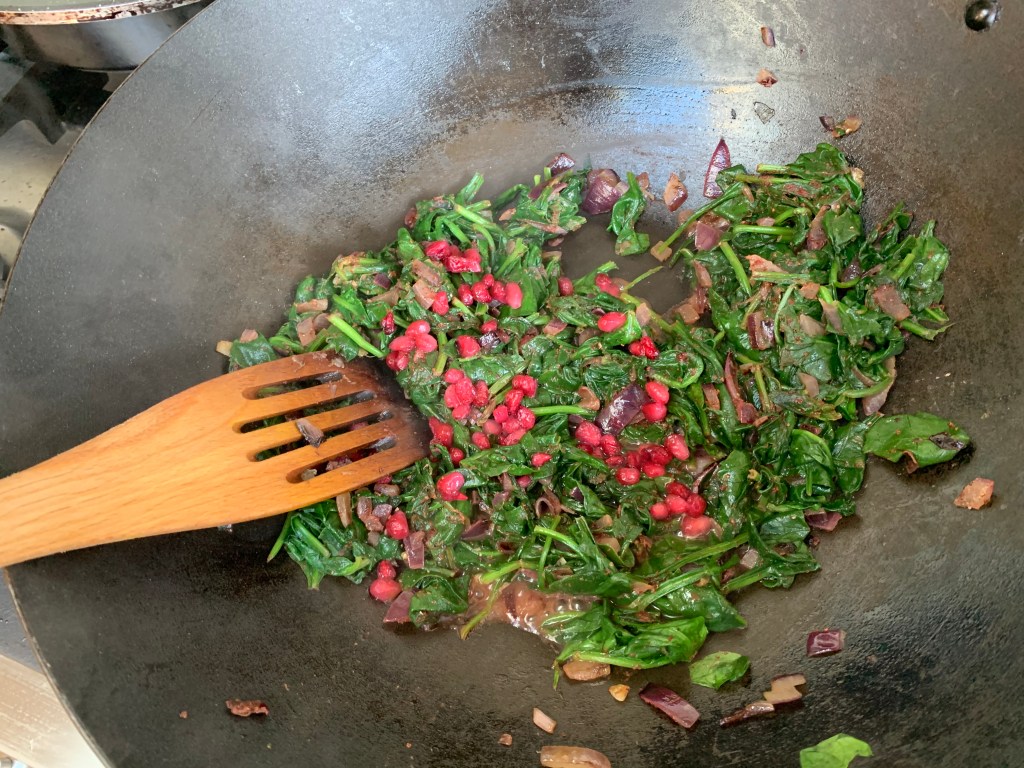
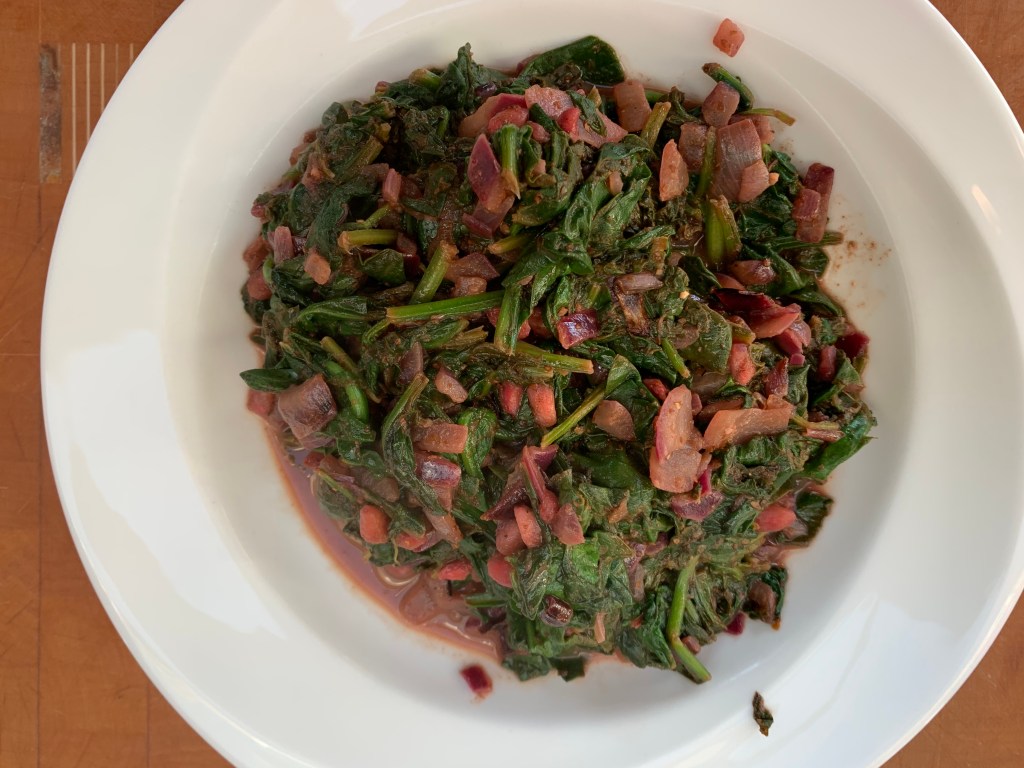
Add the spinach and keep frying until it’s wilted right down. Add the sumak, lemon juice and pomegranate seeds, season, and keep reducing gently until virtually all the liquid has gone. You don’t want the spinach to burn, but you don’t want any surplus liquid either.

…and the labneh filling

This is even simpler and, if I’m honest, the better of the two…

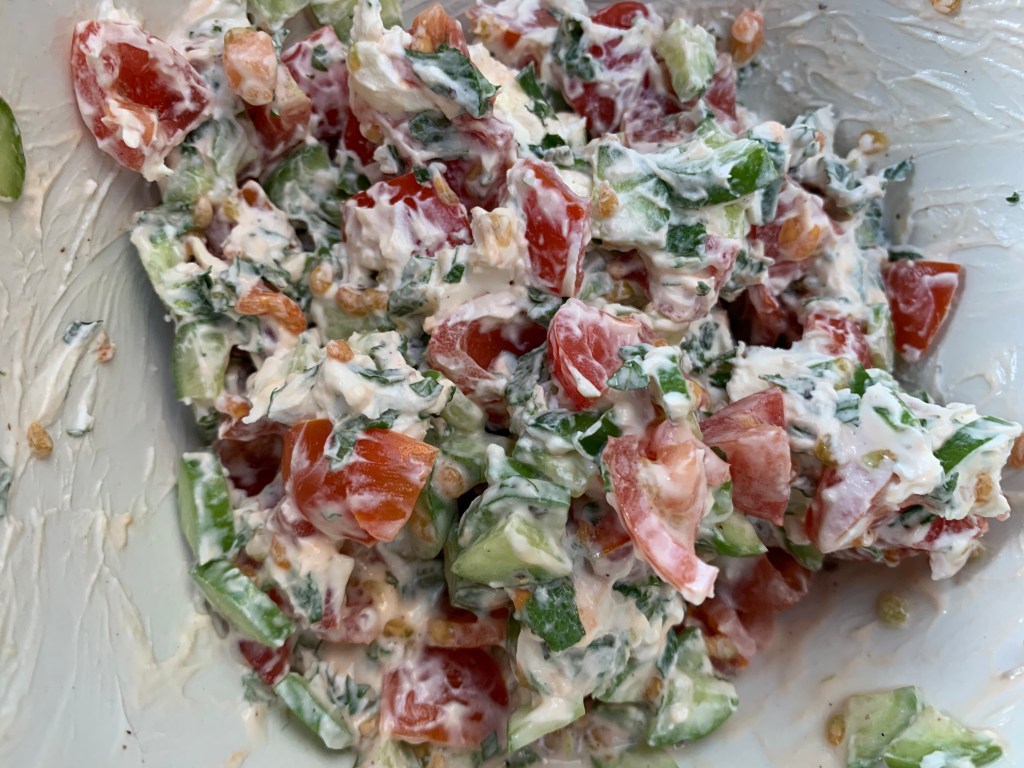
  • 12 cherry tomatoes
  • 2-3 baby cucumbers (or perhaps ¼of a large cucumber)
  • 5g fresh mint
  • 4 tbs labneh
  • 2 tbs olive oil

Chop the three dry ingredients as small as you can manage (or can be bothered). Mix everything together thoroughly.

Put it all together

Preheat your oven to 200℃ fan

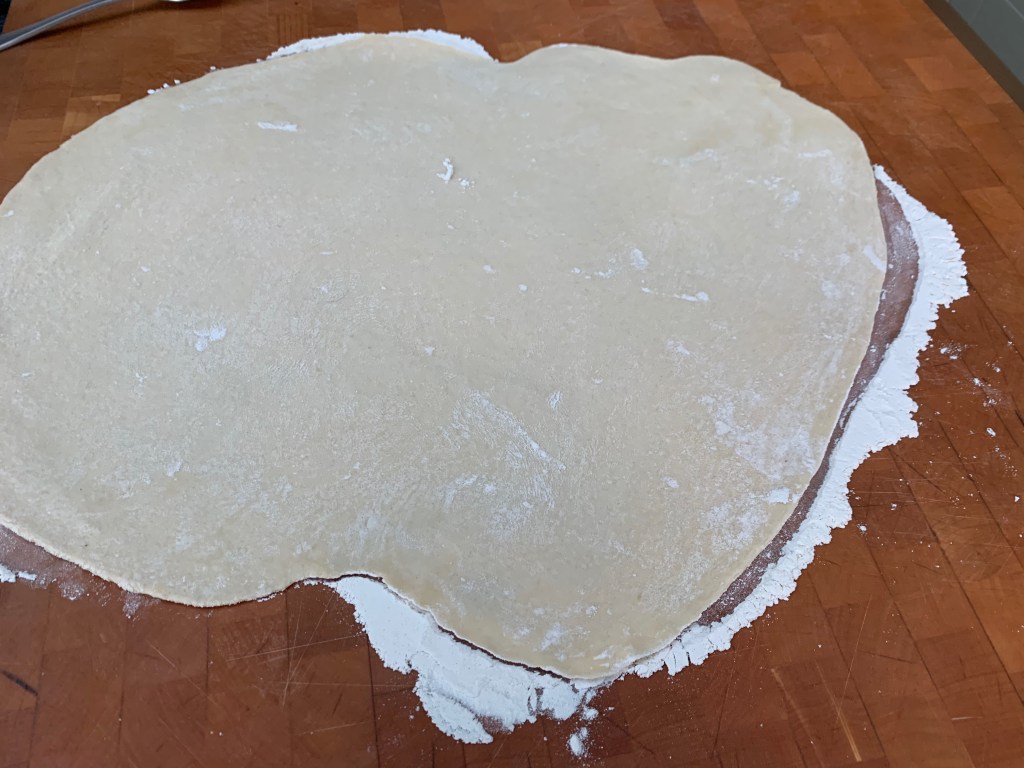
Flour your board and roll your dough out as evenly as you can. Itab and Dina say 3mm – I’d go thinner if you can do it without breakages.

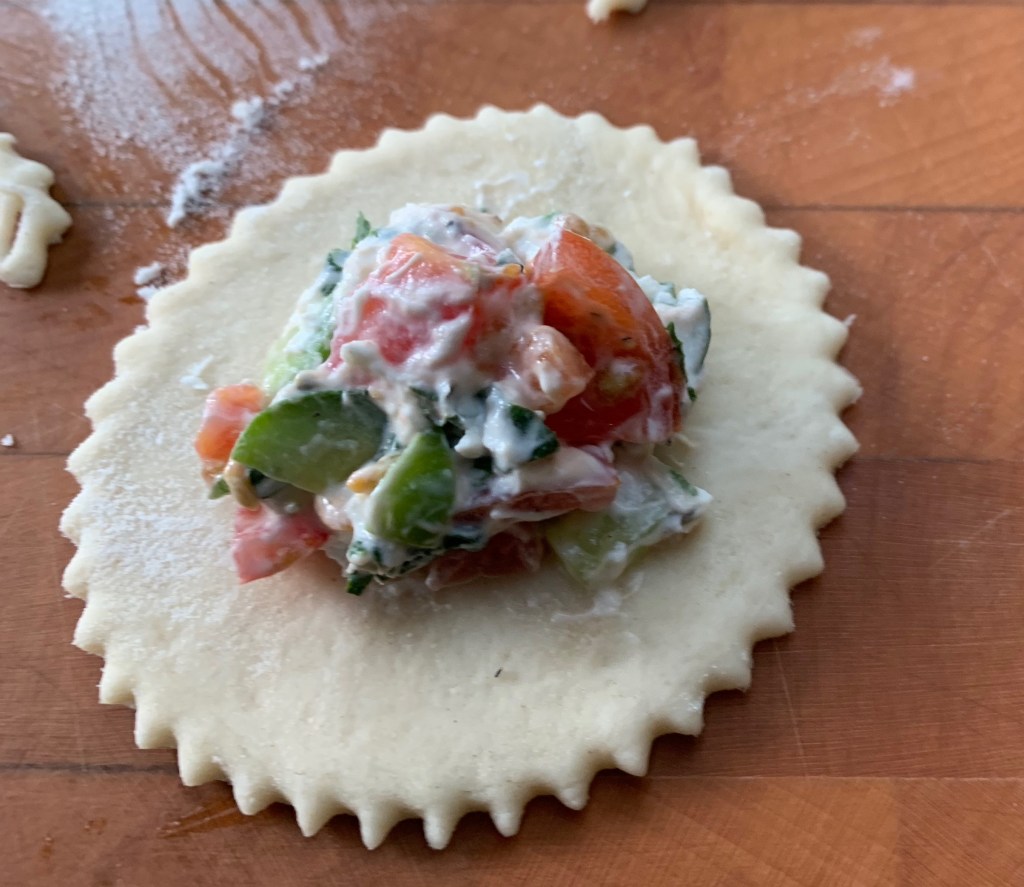
Cut out circles of dough to a size of your choice: 8cm is about the minimum. Spoon a dollop of filling into the middle of your circle, then fold the dough in half to enclose the filling. You then need to pinch it closed, taking care (a) not to let any filling seep out and (b) that you haven’t left any gaps.

The tricky part is to do this without letting liquid from the filling making it impossible for you to pinch the dough properly so that it stays closed, so two pieces of advice: (1) use a couple of teaspoons for the filling so you don’t dirty your hands and (2) don’t overfill. I ended up giving each circle a little extra roll to thin it out and give myself more margin.

Once you’ve done your first batch, you’ll have a lot of left over scraps of dough. I rolled them all into a ball, re-kneaded them somewhat and then did a second batch.

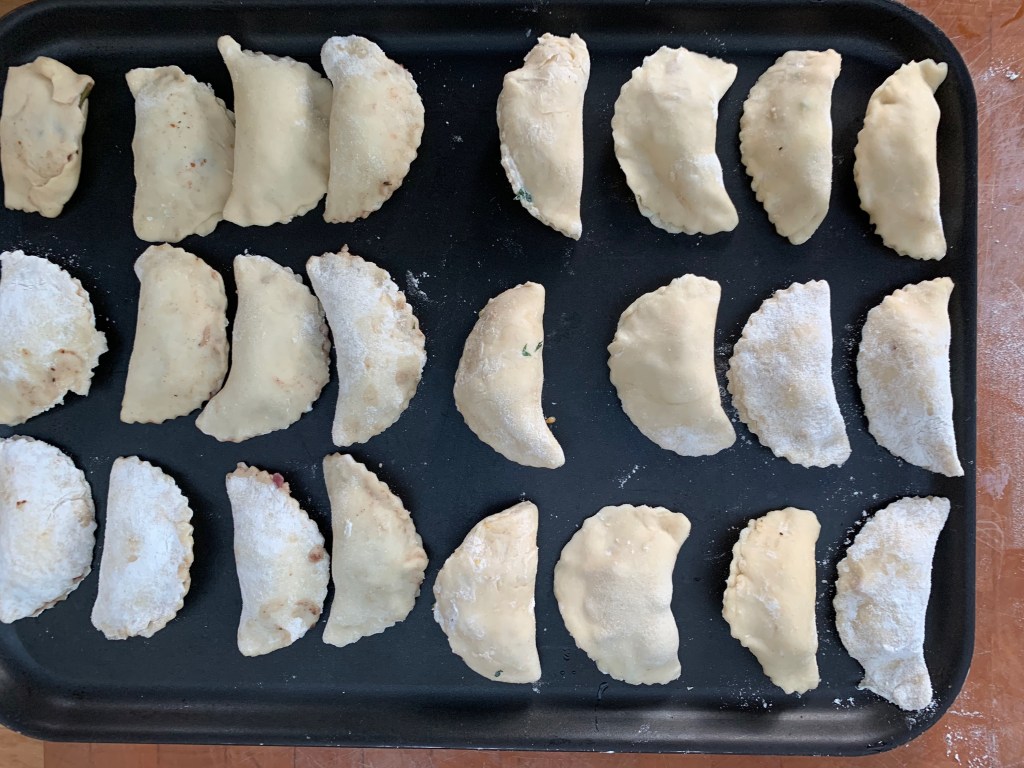
When each fatayer is made, place it on an oven tray. When they’re all made, bake them until nicely brown – everyone’s oven is different, so keep an eye on them (opening the oven won’t hurt). They took around 15 minutes in my fan oven.

Around the world in 80 bakes, no.6: Pan Rustico

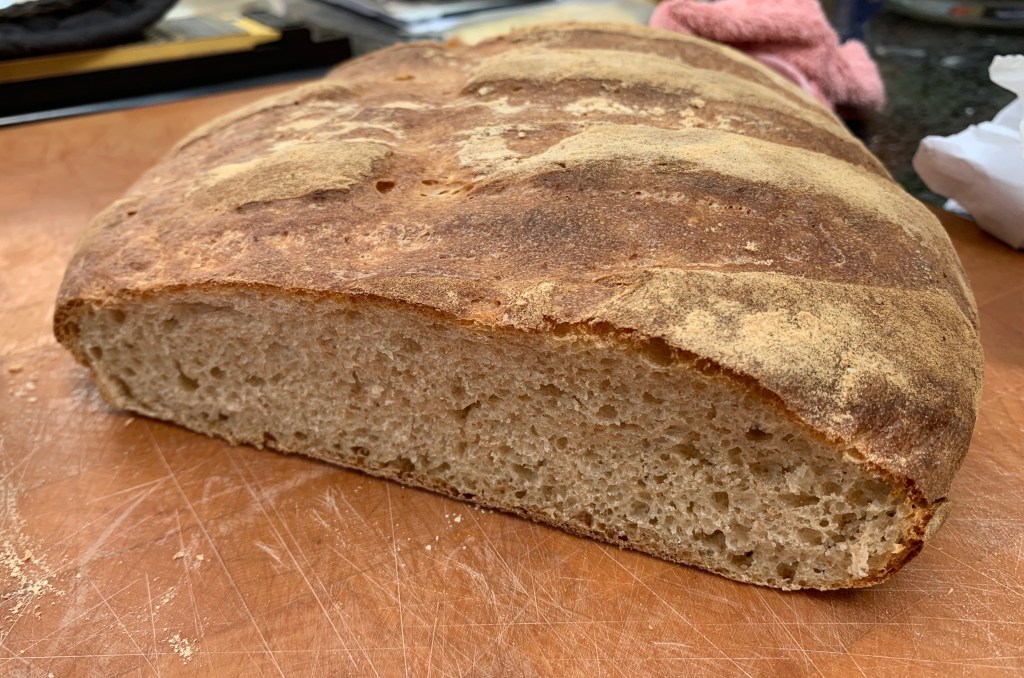
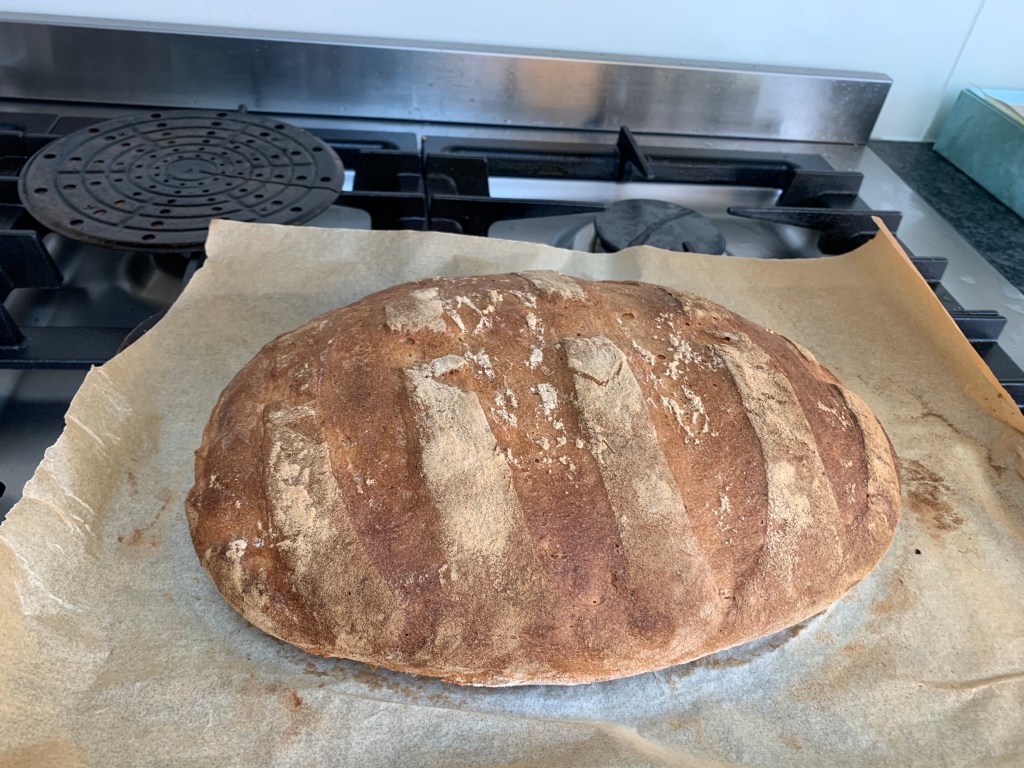
This week-end, I’m heading to Spain in the tracks of the Hairy Bikers for my attempt at their Pan Rustico (virtually, that is, since we’re all in coronavirus lockdown). Think of it as a kind of sourdough for those who don’t want the faff of maintaining a starter: basically, you make a flour, yeast and water mix and leave it to ferment for 24 hours, which you then use in the same way you would a sourdough starter. It avoids all the messing around with keeping the starter fed for a week and gives results that are not dissimilar. You get a bread that’s really soft and aerated, with a nice crust, perfect for a soup or a salad-and-cheese kind of lunch.

Here in the UK, a giant lockdown-induced rise in home bread-making has meant that you can’t buy flour at the moment: apparently, the problem isn’t that the millers can’t mill the stuff but that they’re used to selling to bakeries in bulk, and they’re struggling to get retail packaging for small quantities. Fortunately, I’ve been making bread for a few months now and I’d just placed my three-monthly order from buywholefoodsonline.co.uk when the crisis hit. But the selection of flours in the house is a bit idiosyncratic, so I used wholemeal spelt flour rather than the wheat flour in Si and Dave’s recipe. As it happens, I think that was a win – but that’s for you to decide.

To make bread for lunch, you’ll need to make your starter first thing in the morning the day before; you’ll then make the actual bread on the day.
I’m going to be honest, here: I’m not sure how particularly Spanish the results are… But it was lovely bread anyway!

Starter:

  • 150 ml warm water
  • 1tsp sugar
  • 1tsp dried yeast
  • 125g strong white flour

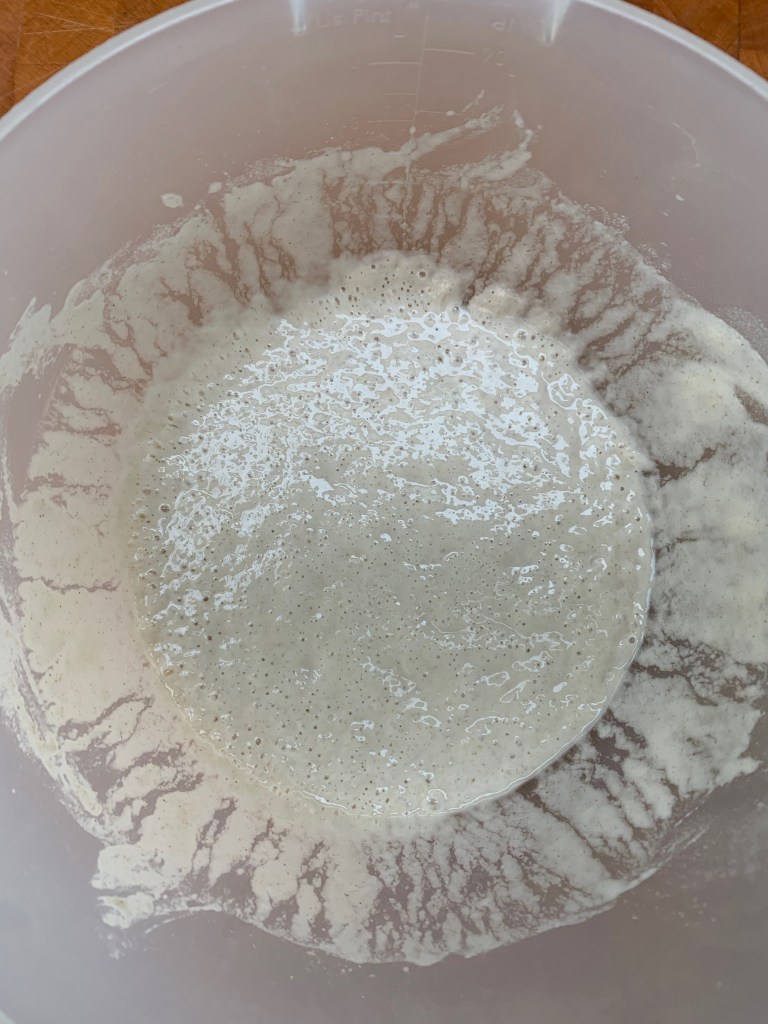
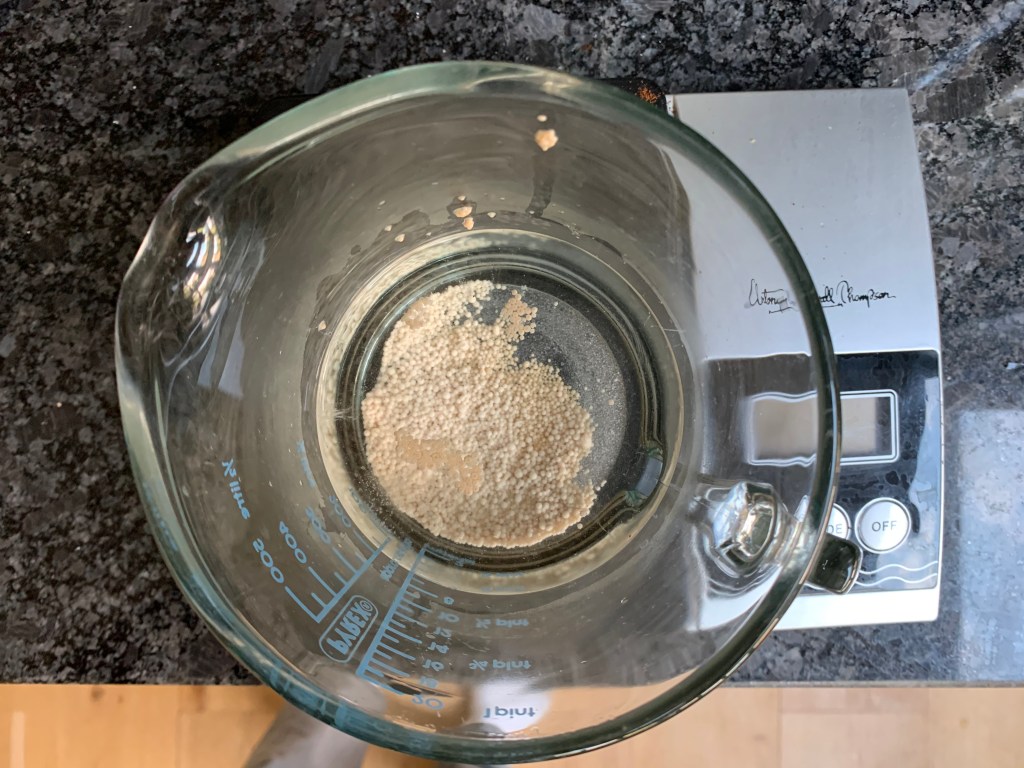
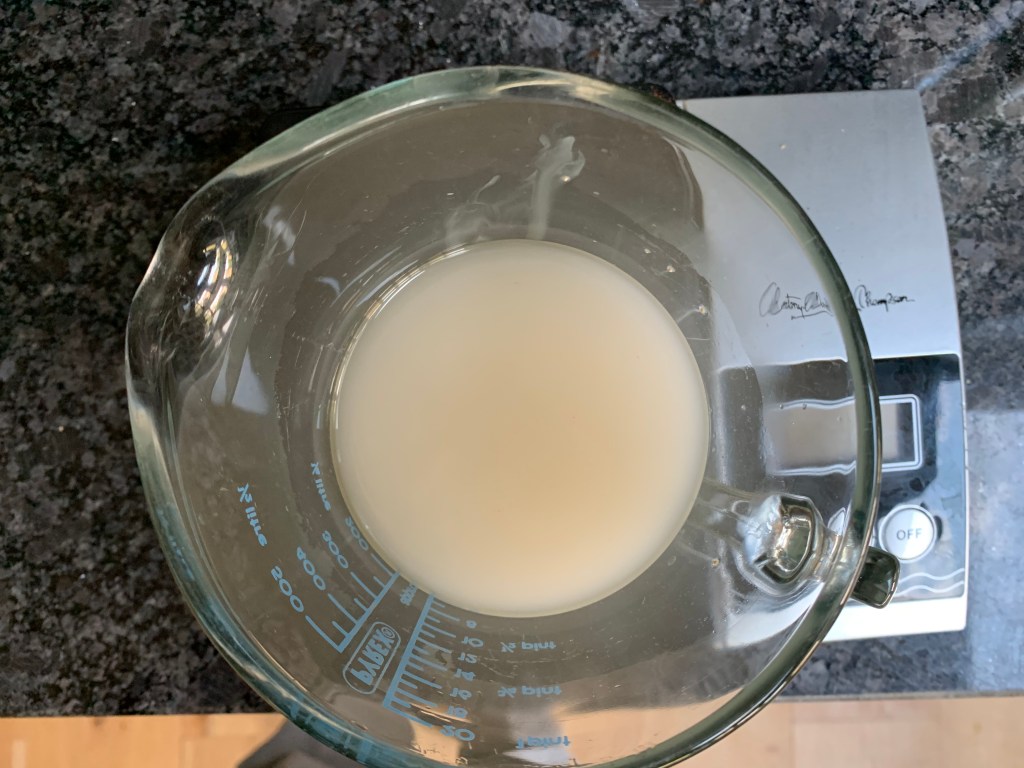
It’s the usual bread-making drill: dissolve the sugar and yeast in the warm water, give it 10 minutes or so to start frothing, then mix in the flour. Leave the whole lot for 24 hours.

The main action:

  • 200 ml warm water
  • 1 tsp sugar
  • 1 tsp dried yeast
  • 225 g strong white flour, plus lots more for your board
  • 100g wholemeal spelt flour
  • 1 tsp salt
  • 1 tbsp olive oil, plus a bit more for greasing your bowl

Before you start, choose a bowl in which you’re going to prove your bread and grease it with olive oil. Also preheat an oven to 50℃: as soon as it gets to temperature, switch it off.

  1. Start with same drill as before: dissolve the yeast and sugar in the warm water and leave it for 10 minutes.
  2. Meanwhile, mix your flours and the salt.
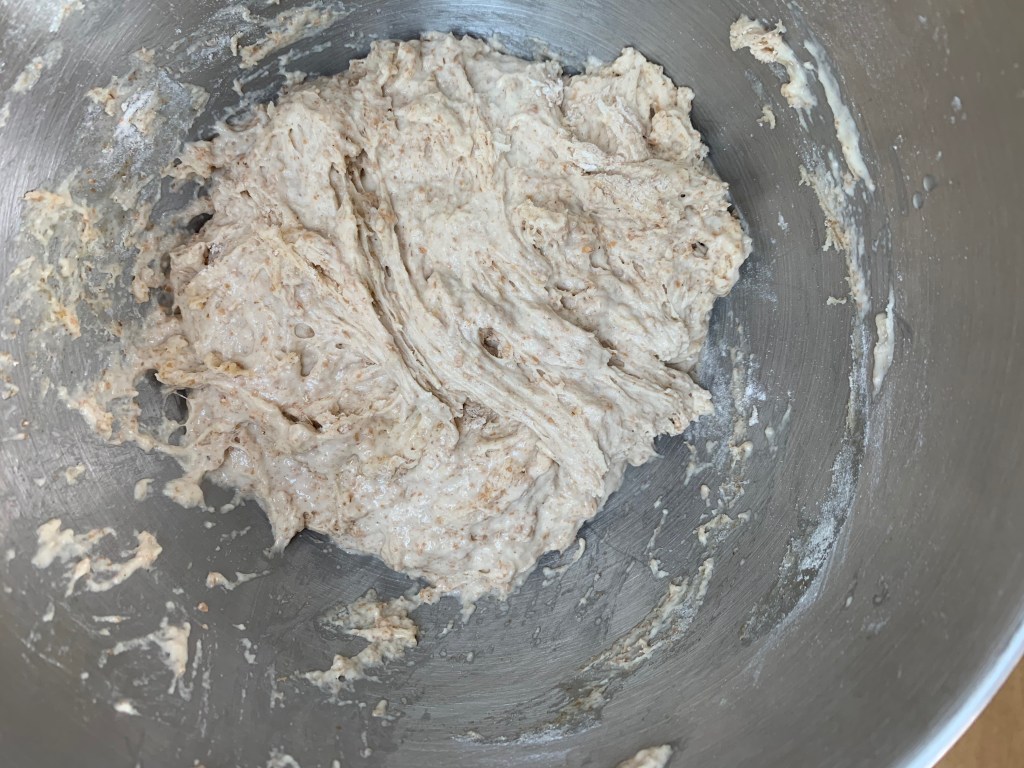
  3. Once your wet mix is frothing nicely pour it into the dry mix and add the starter dough you made the previous day, as well as the olive oil. Mix thoroughly with a wooden spoon.
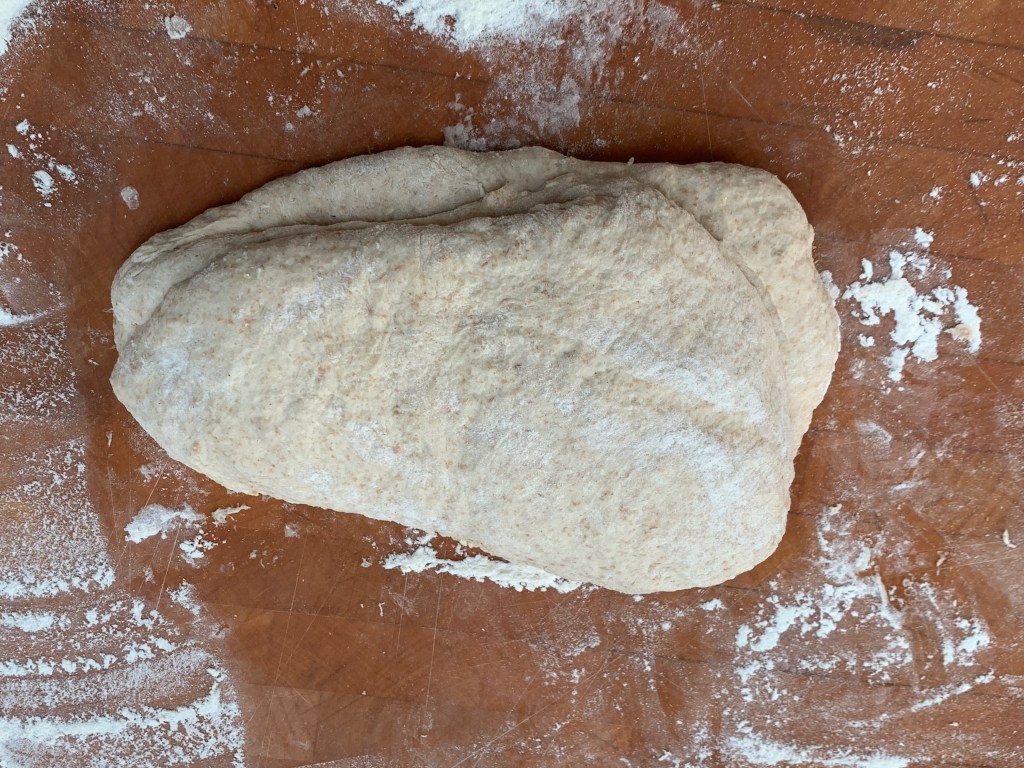
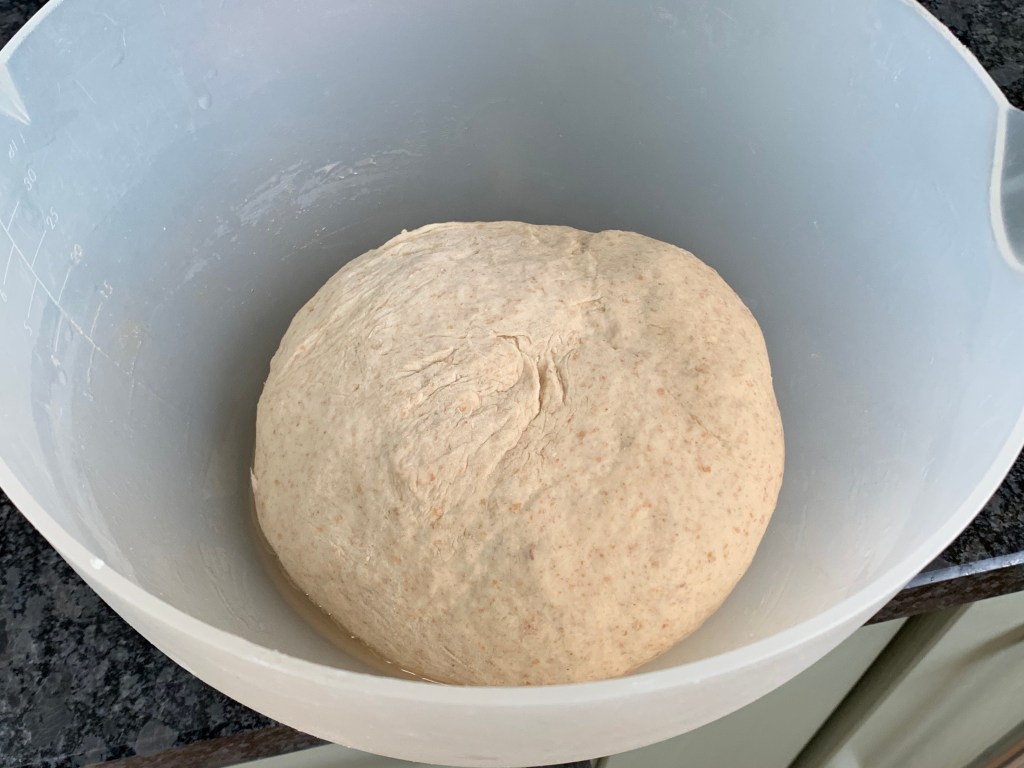
  4. Spread generous amounts of flour over your board or other surface and transfer your dough to it. Knead the dough for 5-10 minutes until it’s very elastic, then form into a ball and put it in your oiled bowl. You want to do a lot of stretching and folding in your kneading process, because you’re trying to get air into the dough. If your bowl has a lid, use it now; otherwise, cover it with cling film.
  5. Now let the bread rise. This takes about an hour if you do it using the “preheat an oven to 50℃ and switch it off” method; if you’re doing something different like using a boiler room or airing cupboard, I can’t guess… Wait for the bread to have risen nicely, and I’m not even going to attempt to define accurately what that means.
  6. Choose a baking tray and cut out a piece of baking paper to put on it.
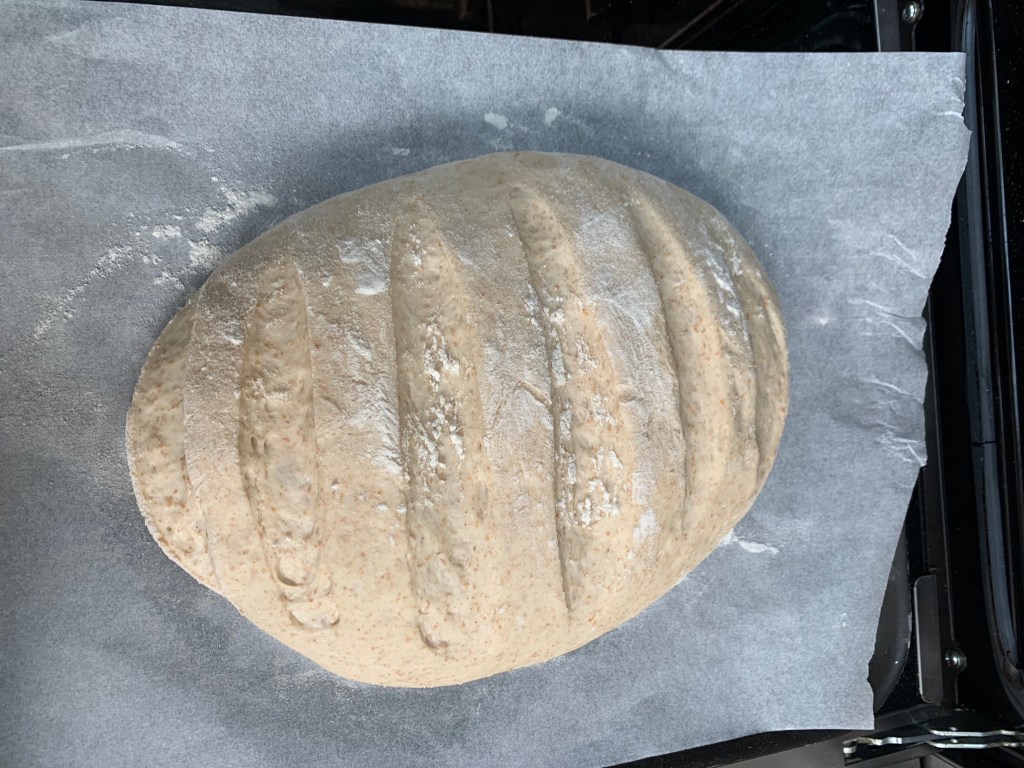
  7. Shove some more flour onto your surface and carefully transfer your dough to it – keeping it in one piece as best you can. Now stretch and fold it a few times: what you’re trying to do is to get more air into it, and to stretch the ends and pull the surface tight, tucking the dough under (this is easier than it sounds). Form your dough into your favourite shape (a ball? and rugby ball?) on your lined baking tray. If you want the traditional pattern on the top, slash a few gashes in it.
  8. Now leave your bread to prove. If you have a double oven, put the bread back into the one you used for its first rise, and warm the other one up to 240℃. If you have a single one, you’ll have to find somewhere else that’s warm to do the proving (or be patient if it’s at a cold room temperature).
  9. I always struggle with knowing whether the bread has proved the right amount, so I’m not going to proffer advice here either. With me, 40 minutes was plenty enough.
  10. Bake for about 20 minutes. Take out and cool on a rack.