Tag: Greece

Visiting Greece – Nafplio, Corinth, Mycenae, Epidaurus

Visiting Greece – Nafplio, Corinth, Mycenae, Epidaurus

To my shame: prior to planning the itinerary for this first trip to Greece, I’d never even heard of Nafplio (Ναύπλιο), the ancient seaport that nestles in the northeast corner of the Argolid Gulf in the Pelopponese. In the itinerary, we had it planned as the base from which to explore; the reality was that were too bewitched by its charm to spend all our time driving away from it.

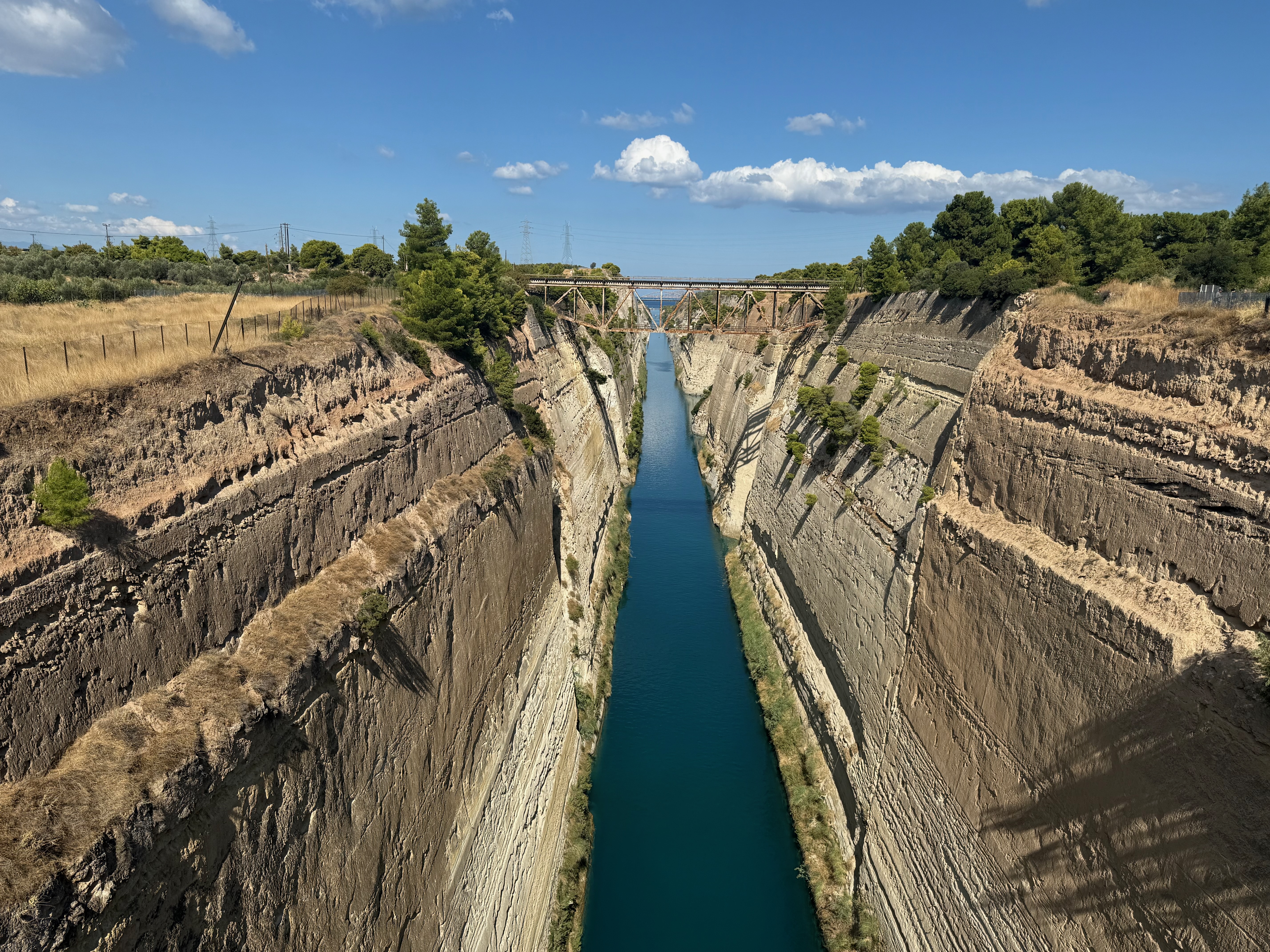
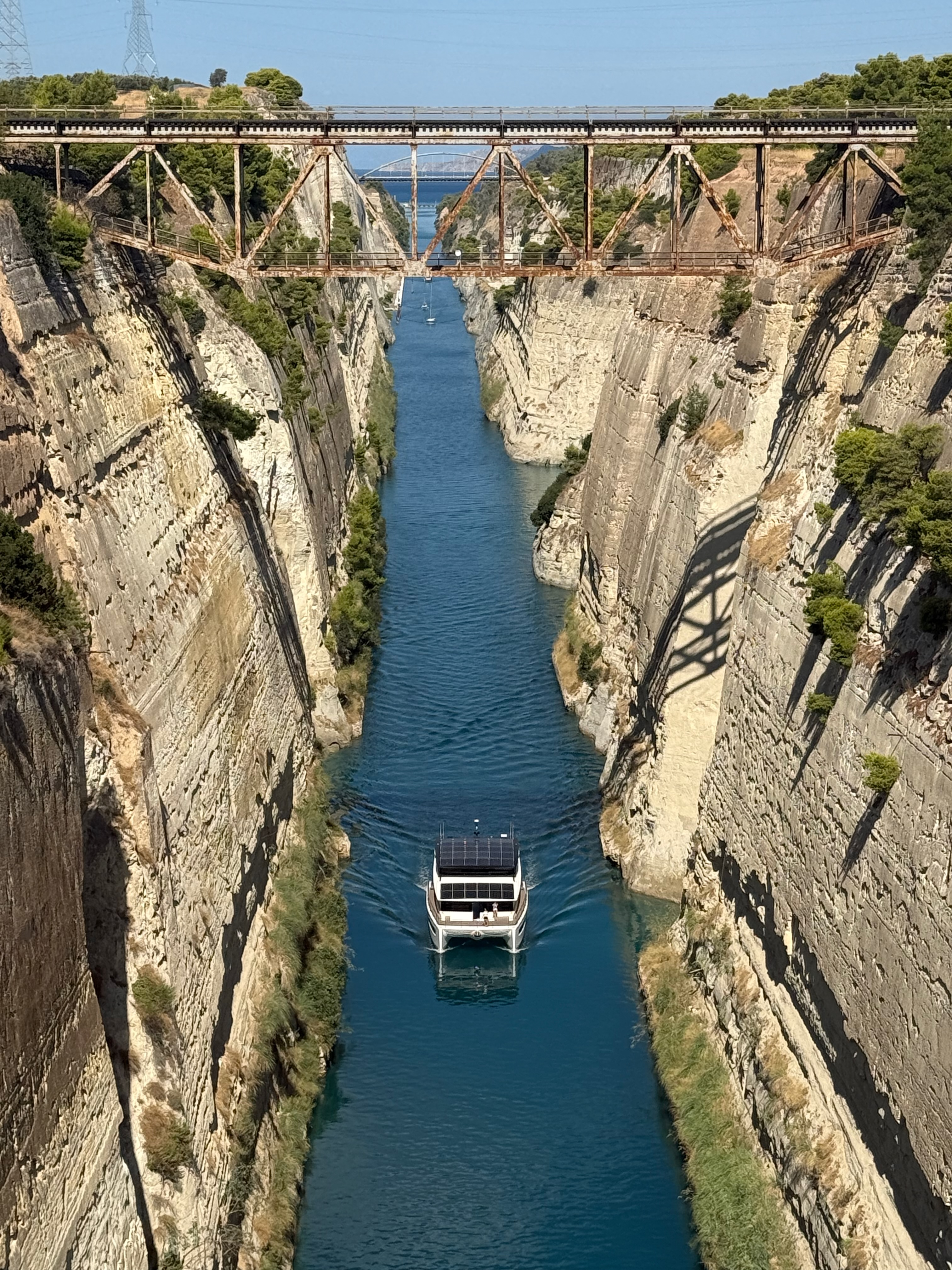
But first, to reach Nafplio from Athens, you have to cross the Corinth Canal. It was well worth taking a short detour from the motorway to the old road bridge, where we had a good gawp: this is a deep gash in the rock that joins Attica  to the Pelopponese. Completed in 1893, it’s a truly spectacular piece of civil engineering: over 6 km long, up to 80m deep, with 80° sides. The back story is even more impressive: Periander, the tyrant of Corinth, proposed building the canal 2,500 years earlier, during his reign in the seventh century BCE. The project was far too difficult to be undertaken with the limited technology of the time, so Periander built the next best thing: the Diolkos, a slipway allowing boats to be dragged across. So great was the appeal of being able to cross between the Aegean and Ionian seas while avoiding the perilous sea voyage around the Pelopponese that the Diolkos is thought to have contributed significantly to Corinth’s commercial success in the years that followed.

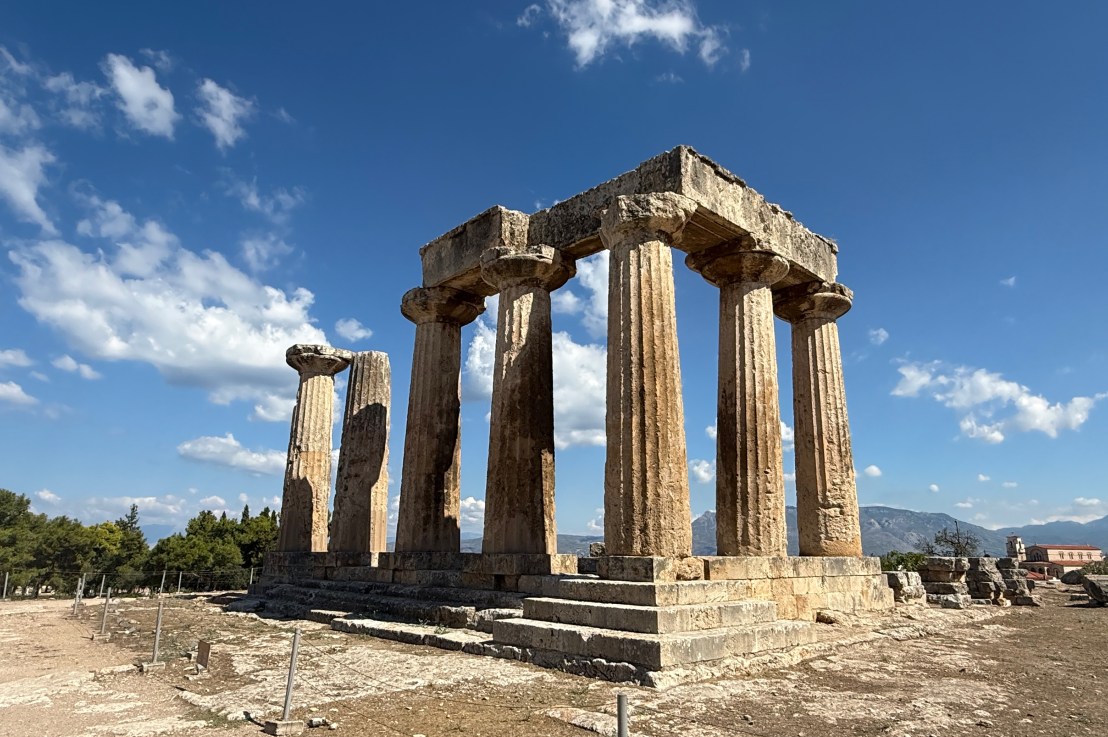
While in Corinth, a second worthwhile detour is the Temple of Apollo (the photo at the top), which dates from 560 BCE, built over an earlier temple created in the 7th century BCE by Periander’s father Cypselus, the first tyrant of Corinth. There are only seven Doric columns remaining, but this is the oldest surviving archaic temple in Greece and it’s another of those places where you can smell the history.
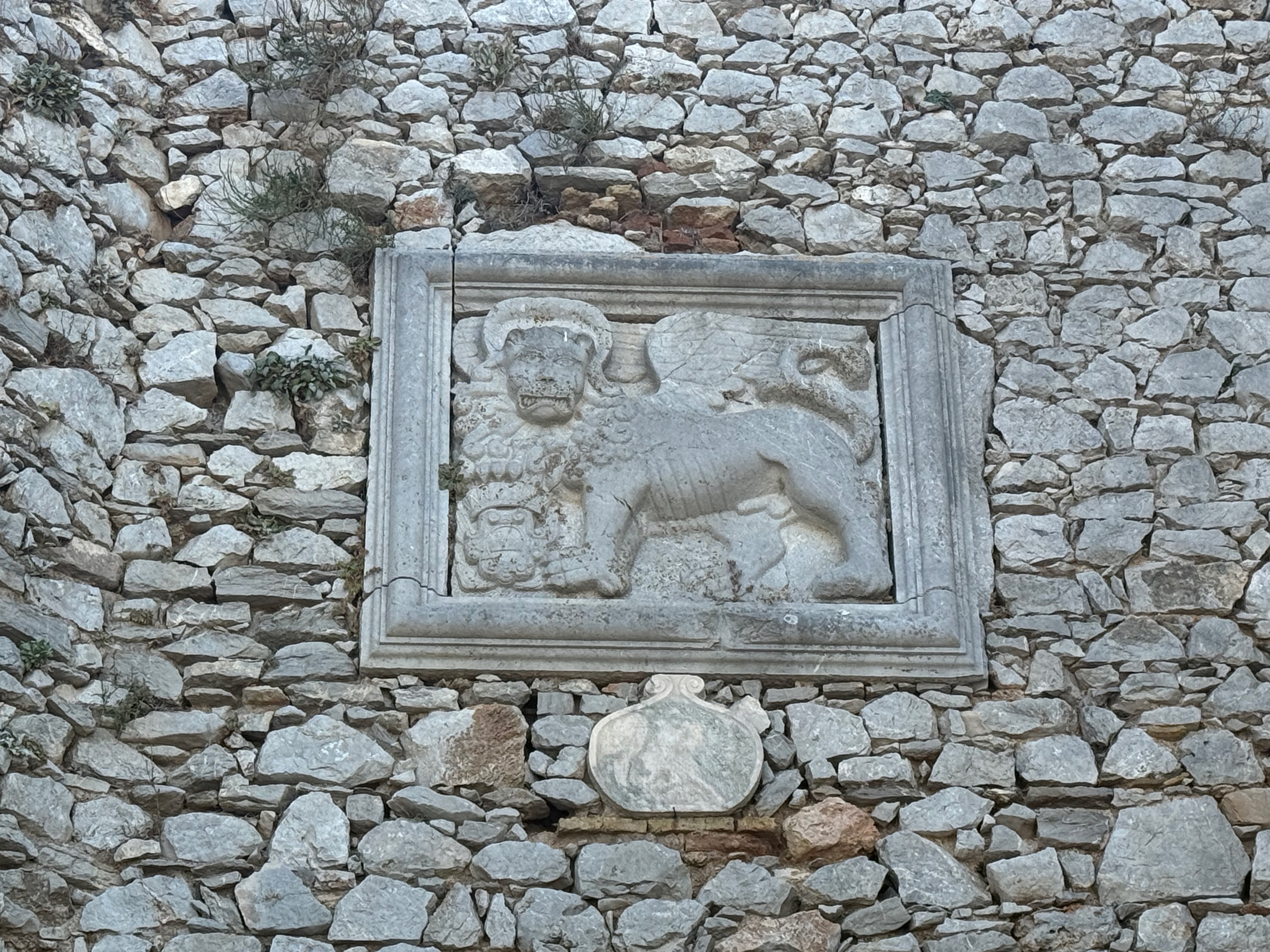
Nafplio itself smells of a very different period in history: it’s one of those places that ping-ponged between the Venetian and Ottoman empires. The old town’s architecture is eclectic mix, but the most prevalent component is the Venetian one, largely because the city was Venetian for most of the late Middle Ages and the Renaissance. The buildings, streets and piazzas are very attractive, making this a lovely city simply to wander round in.

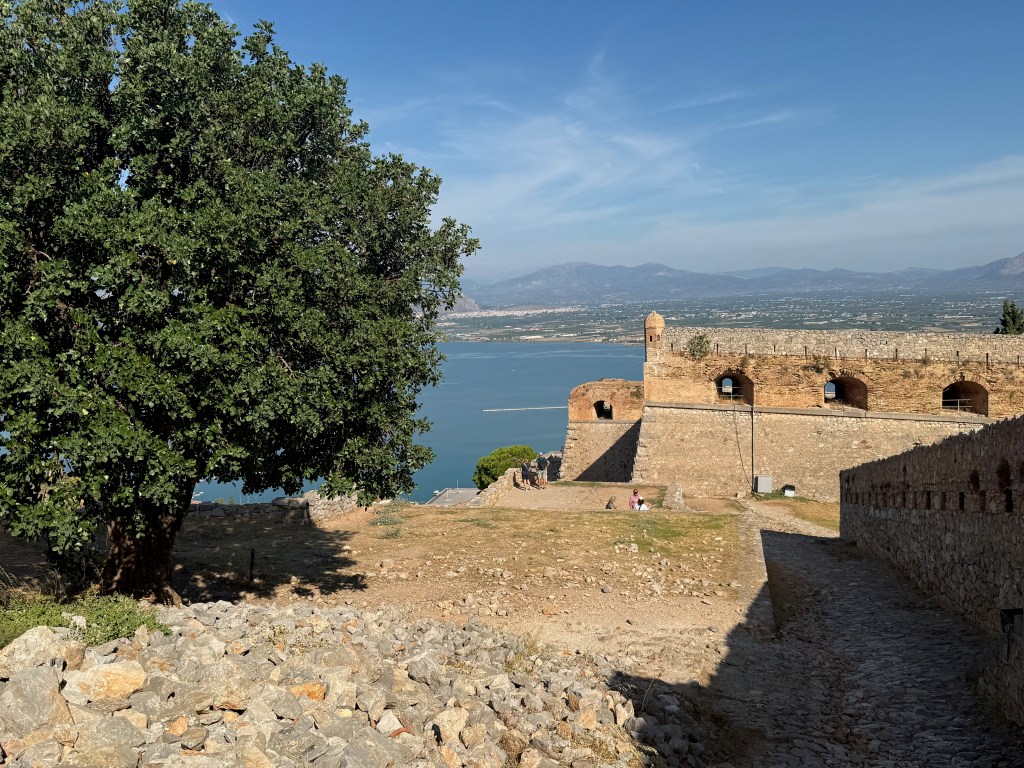
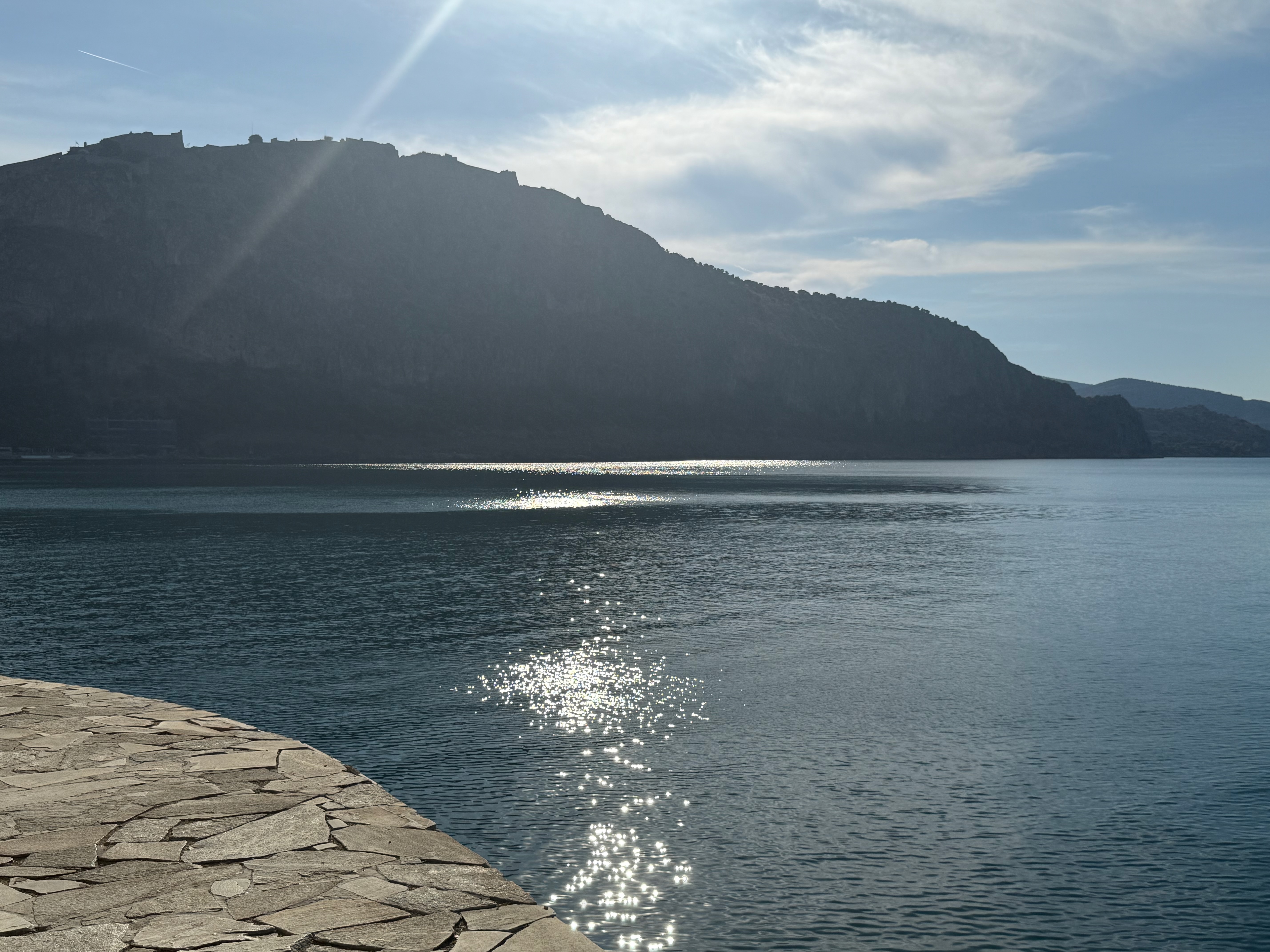
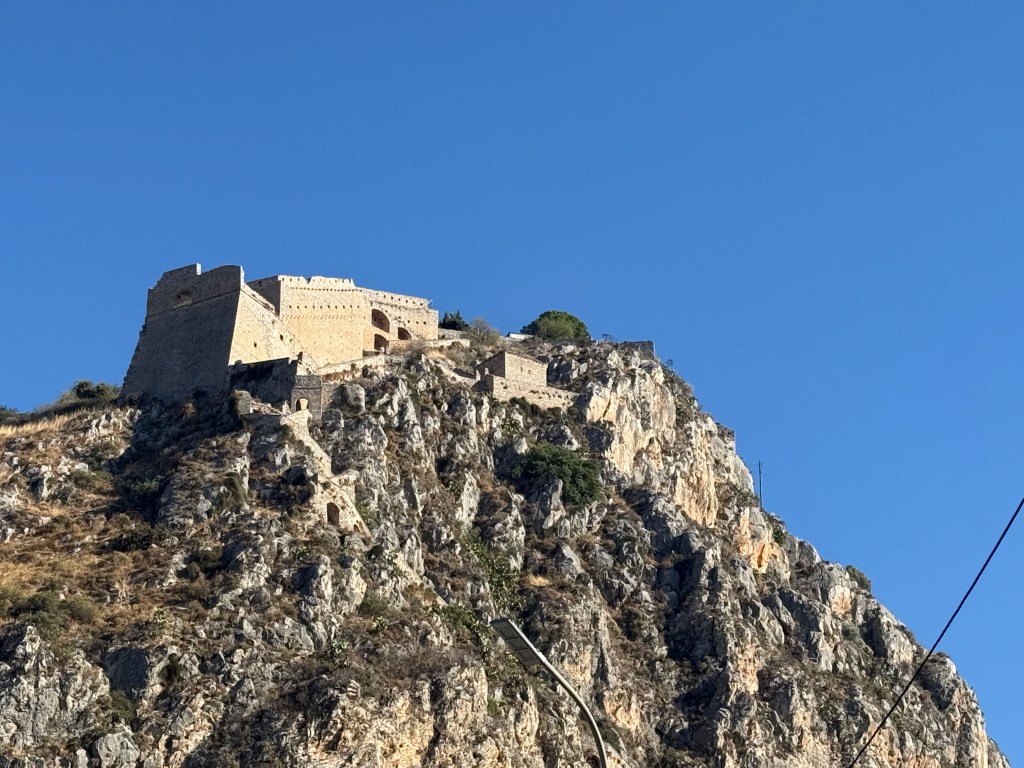
The most impressive construction is the feat of military engineering that is the Palamidi Fortress, a collection of eight bastions, seven of them linked by a single connecting wall, high on a vertiginous cliff overlooking the sea to north, west and south. Sadly, it turned out to be something of a white elephant. It was largely complete in 1714, but the Venetians could only afford a garrison of 80 (if you visit, you’ll realise how ludicrous this is) and the Turks captured the fortress with no difficulty the following year. The stairway up is a great workout  (originally 999 steps, but somewhat less since some of the bottom steps were removed) and the views from the top are outrageously spectacular.
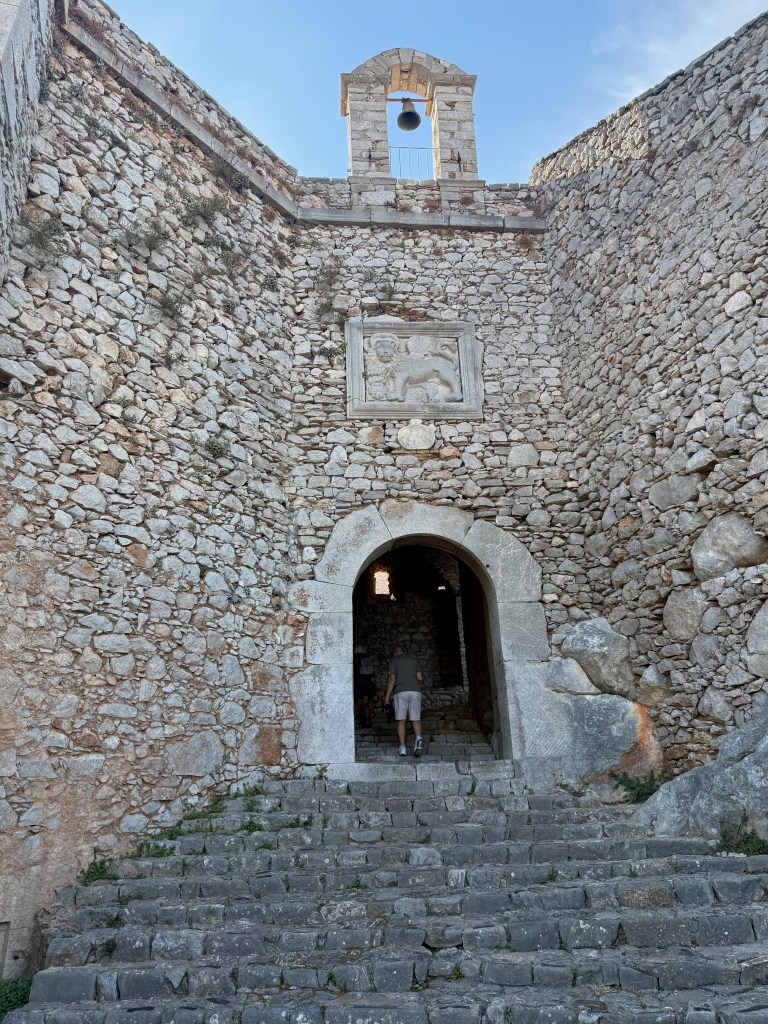
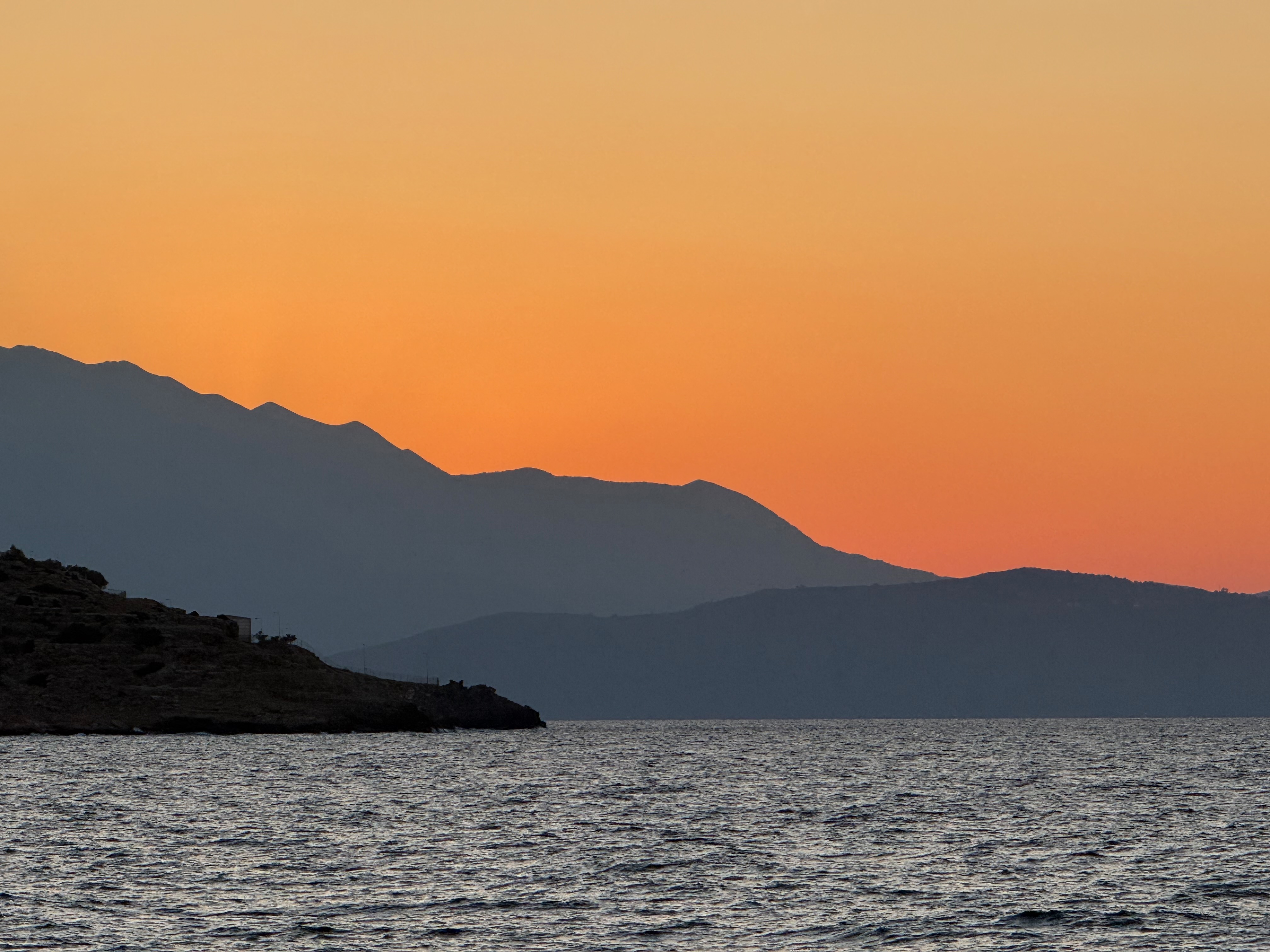
Looking east from the Palamidi Fortress, you see the old town of Nafplio, a spur of land jutting westwards into the gulf. On a (much) lower cliff to the west are the two top spots for sunset-viewing in September: the Valaora restaurant and the Omilos bar, the site of the former Yacht Club. The Valaora is reputed to be one of the best in town, but we failed to get in because it was hosting a big wedding. The Omilos bar is a pleasant spot and is above one of the more improbable bits of the city: an area of water almost totally enclosed by rocks and set up as an Olympic sized swimming pool – apparently, it used to be a training pool for the local water polo team. Follow the cliff from Omilos and you reach one of the most spectacular cliff-side walks you could wish for, leading round the promontory to the beautiful beach of Paralia Arvanitias. In another oddity, this one particularly Greek, the path is in immaculate condition, but to get onto it, you have to work your way round locked gates at each end with dire “Keep out” warnings, which are apparently there because the government, who own the path, didn’t want anyone suing them if they were hurt by rocks falling from the cliff above. Given the number of far more lethal hazards if you walk around Nafplio without keeping an eye on where you’re going, you have to wonder.
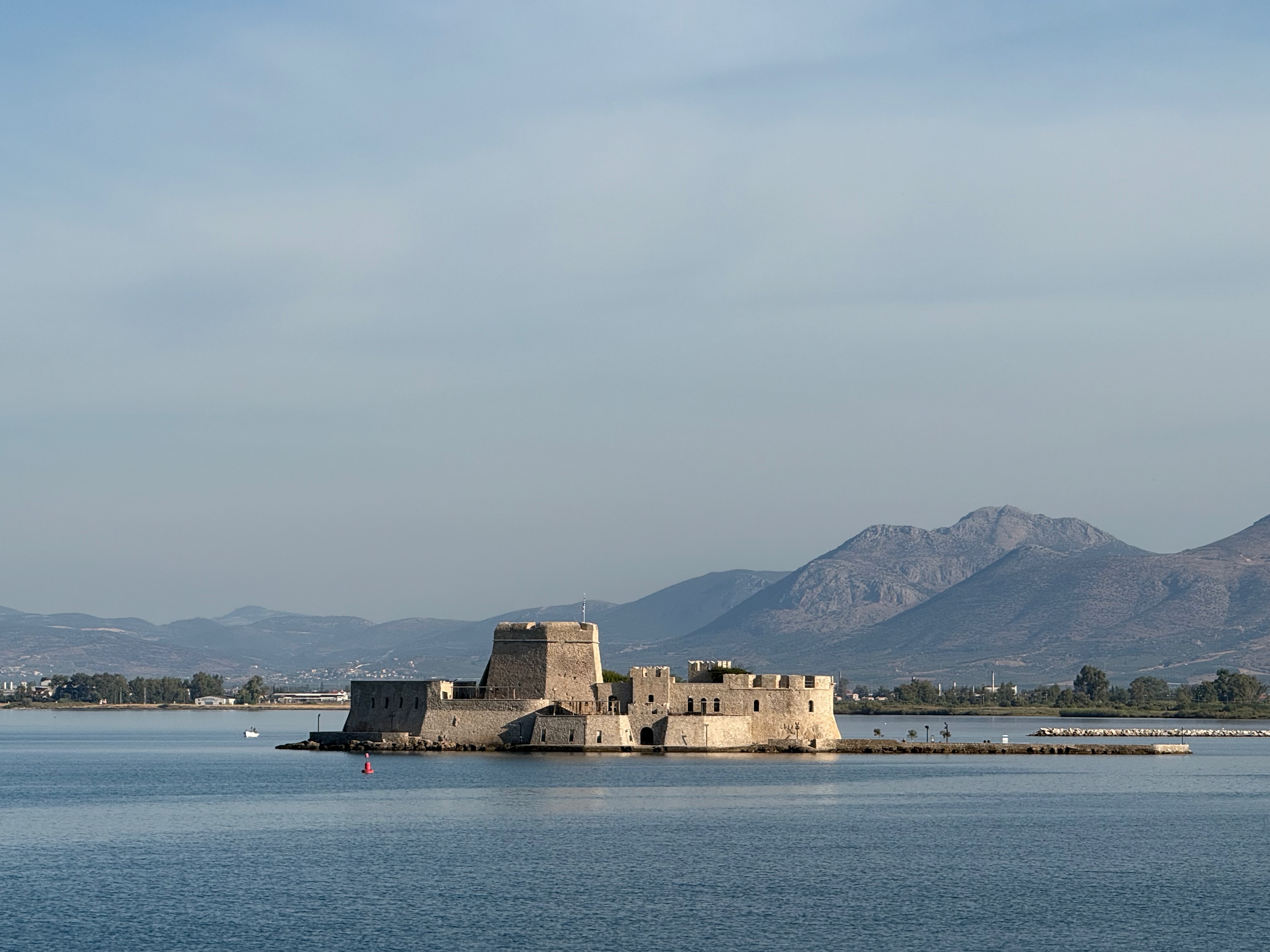
To the north of the old town is the harbour, which serves boats of all sizes and functions: pleasure boats for rent (we had a delicious half day sail to a protected cove next to the nearby island of Rómvi), yachts ranging from the smallest to gigantic oligarch-level gin palaces, ferries to the Cyclades and beyond and, further from the old town, container ships and other commercial vessels. The promenade is a favoured spot for an evening passeggiata, also with a view to the old fort of Bourtzi, which occupies an island in the middle of the harbour.

Nafplio attracts a lot of tourists and therefore, like Plaka in Athens, has more than its fair share of tourist-oriented shops, tavernas and restaurants. The visitor profile, however, would seem to be very different, with fewer cruise ships and bus tours, and a large number of Athenians who spend a week-end there. For whatever the reason, the average quality of the Nafplio establishments is a fair cut above what you see in Plaka: there’s still tourist tat, but a great deal less of it, and it’s a lot easier to find authentic local crafts and products: a weaver making gorgeous scarves on a loom in her shop, clothing that’s made in Greece and not in China, a shop selling honey from the 1,200 beehives it owns. We tasted olive oil from a place where the owner and her husband have both inherited olive groves (this is common, in Greece, apparently): when we asked where the olives were from, the reply was “up there” with a gesture to the hill behind her. Also, comparing Nafplio with Plaka, the menu in any given restaurant is far more likely to be individual than a bog standard “Greek cuisine’s greatest hits” (Greek salad, taramasalata, dolmades, spanakopita, etc).

Coming back to Nafplio as a centre for visiting the antiquities of the Pelopponese, two trips are unmissable: Mycenae (Μυκήνες) and Epidaurus (Ἐπίδαυρος). Both trips follow the “archaeological site and associated museum” combination, each is a half hour or so out of  Nafplio. The name Mycenae will be familiar to anyone with even a smattering of Homer as the kingdom of Agamemnon, the high king of the Greeks (or, more strictly, Achaians). So it’s not surprising that in 1876, when the Homer-obsessed archaeologist Heinrich Schliemann uncovered a massive grave circle with hundreds of gold objects including a spectacular gold mask, he immediately decided that he had found the grave of Agamemnon. He was wrong (more recent and detailed measurement and scholarship now shows the dates to be out by several hundred years), but it was still an extraordinary find and the sheer size of the grave circle is impressive in itself.
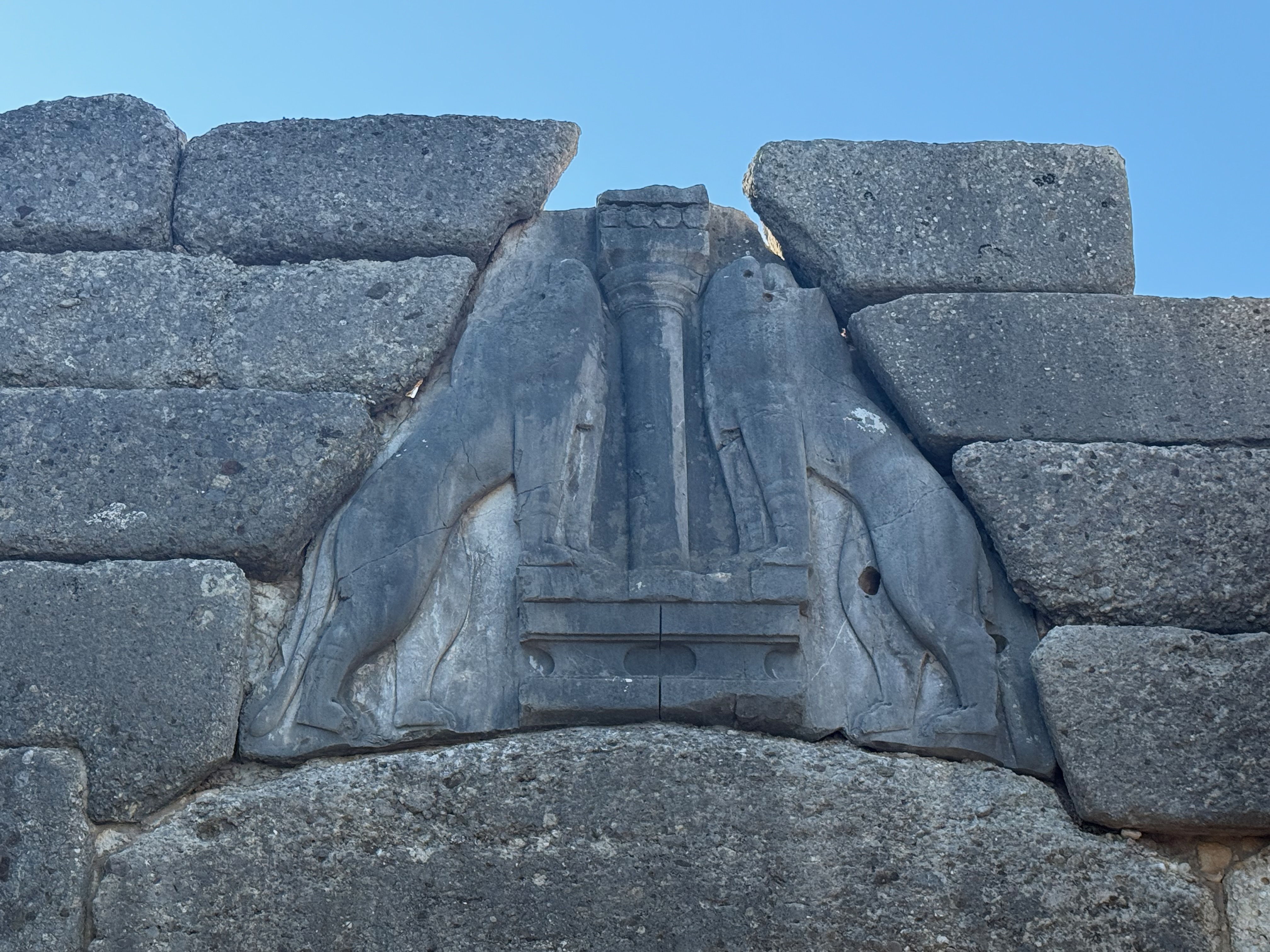
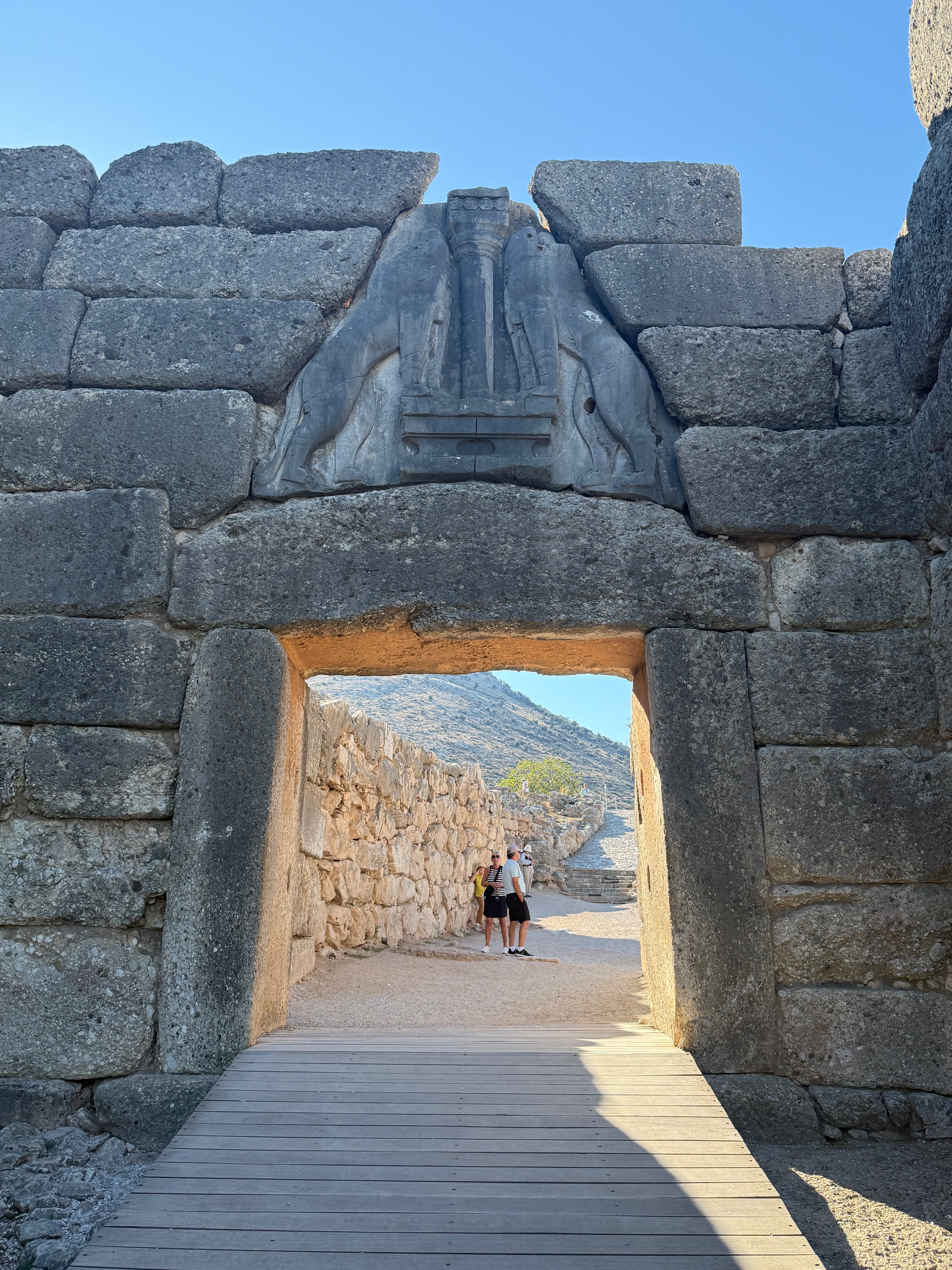
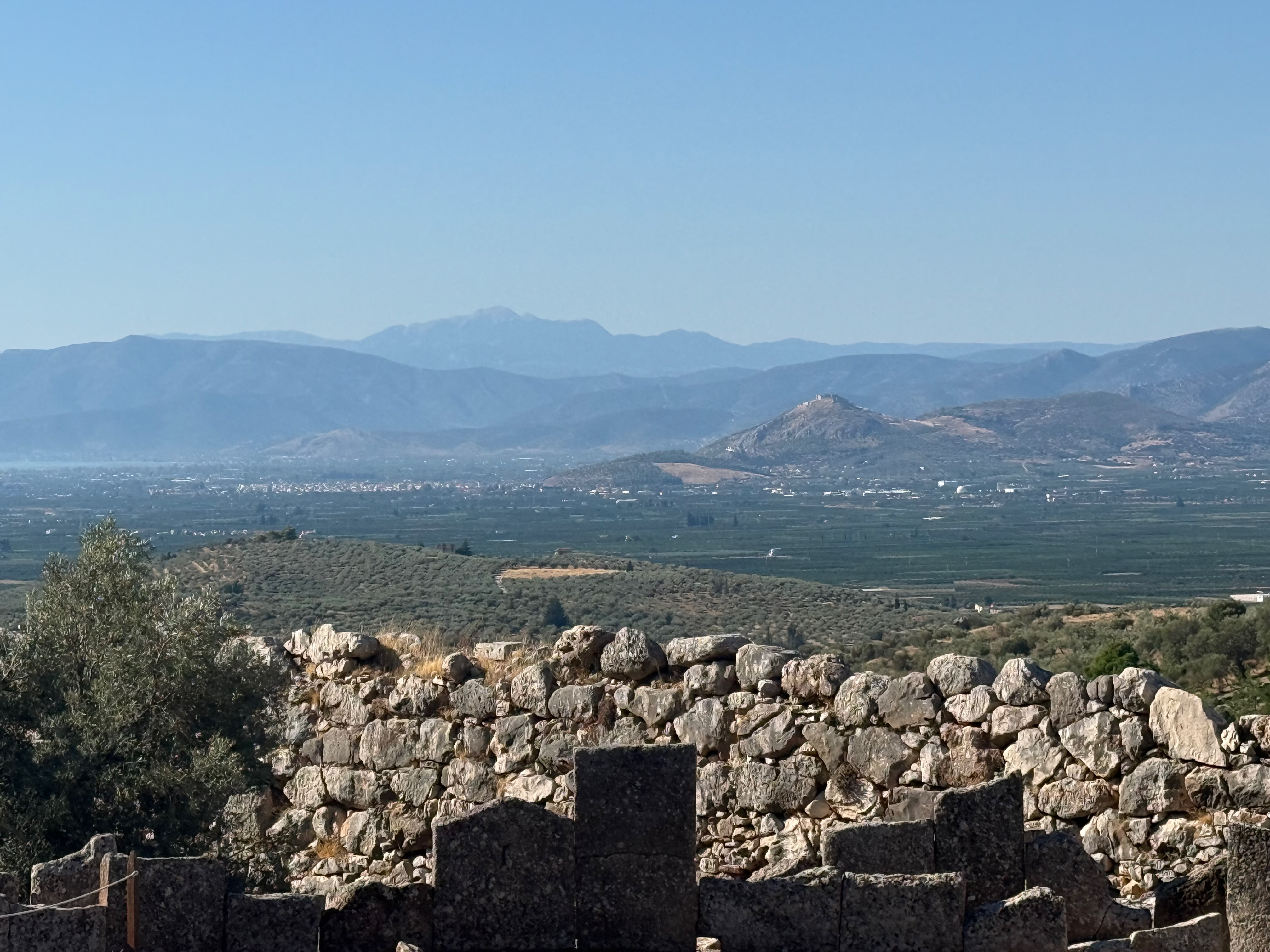
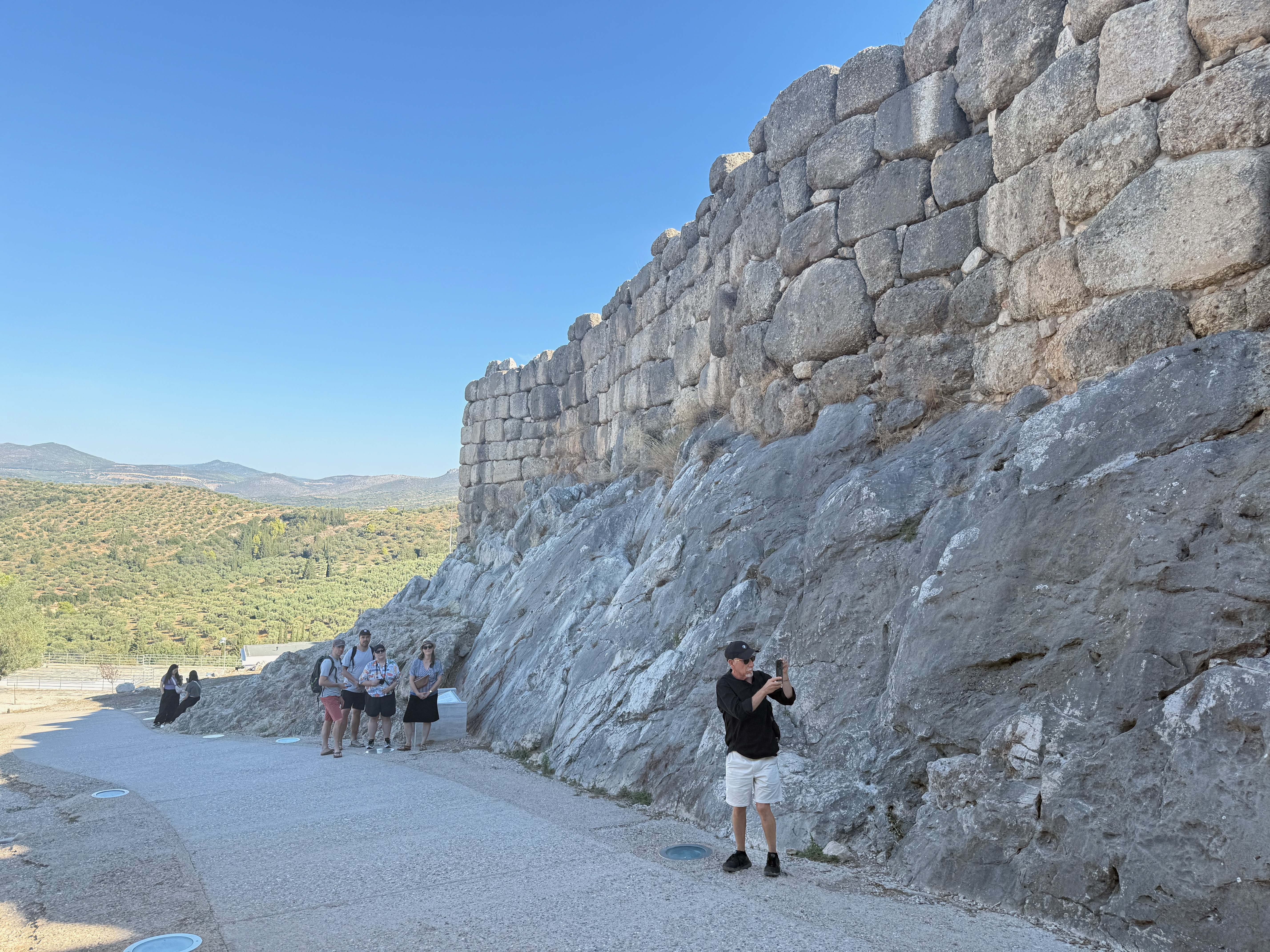
Mycenae was one of a pair of hill fortresses (the other, Argos, can be seen across the valley, bringing to mind Tolkien’s Minas Tirith and Minas Ithil). The fortifications and the palace complex bear testament to what vast resources the Mycenaean kings commanded. The walls were dubbed “Cyclopean” because the stones that make them are so big that people thought that only the Cyclopes could have shifted them. The Lion gate alone shows that the Mycenaeans could build with excellent accuracy on an enormous scale: it’s not just the superb lions that sit atop the gate, their heads sadly absent, but the sheer size and precision of the stones that form the entrance way. These artifacts are between 3,000 and 4,000 years old, reminding us of how advanced bronze age humans were.

Epidaurus is famous for its Greek theatre, built a millennium later, towards the end of the fourth century BCE. It’s estimated to have had a capacity of 13-14,000 seats and remains in sufficiently good condition to be still in use for an annual festival at a capacity of 11,000 (the uppermost are too dangerous to use). It’s in the classic Greek mould of semicircular seating carged into the hillside; the stage is still in the place, but almost nothing remains of the proscenium. Stand on the stone in the middle of the stage and declaim a few lines of poetry or sing a few notes (quickly, before one of the local guides tells you that it’s not permitted) and you can be heard with perfect clarity at the very top of the seating, several dozen metres away. The level decreases rapidly as you move away from the centre, though, leading one to the conclusion that ancient Greek theatre directors must have engaged in some careful choreography to get their actors into the right places at the right times.
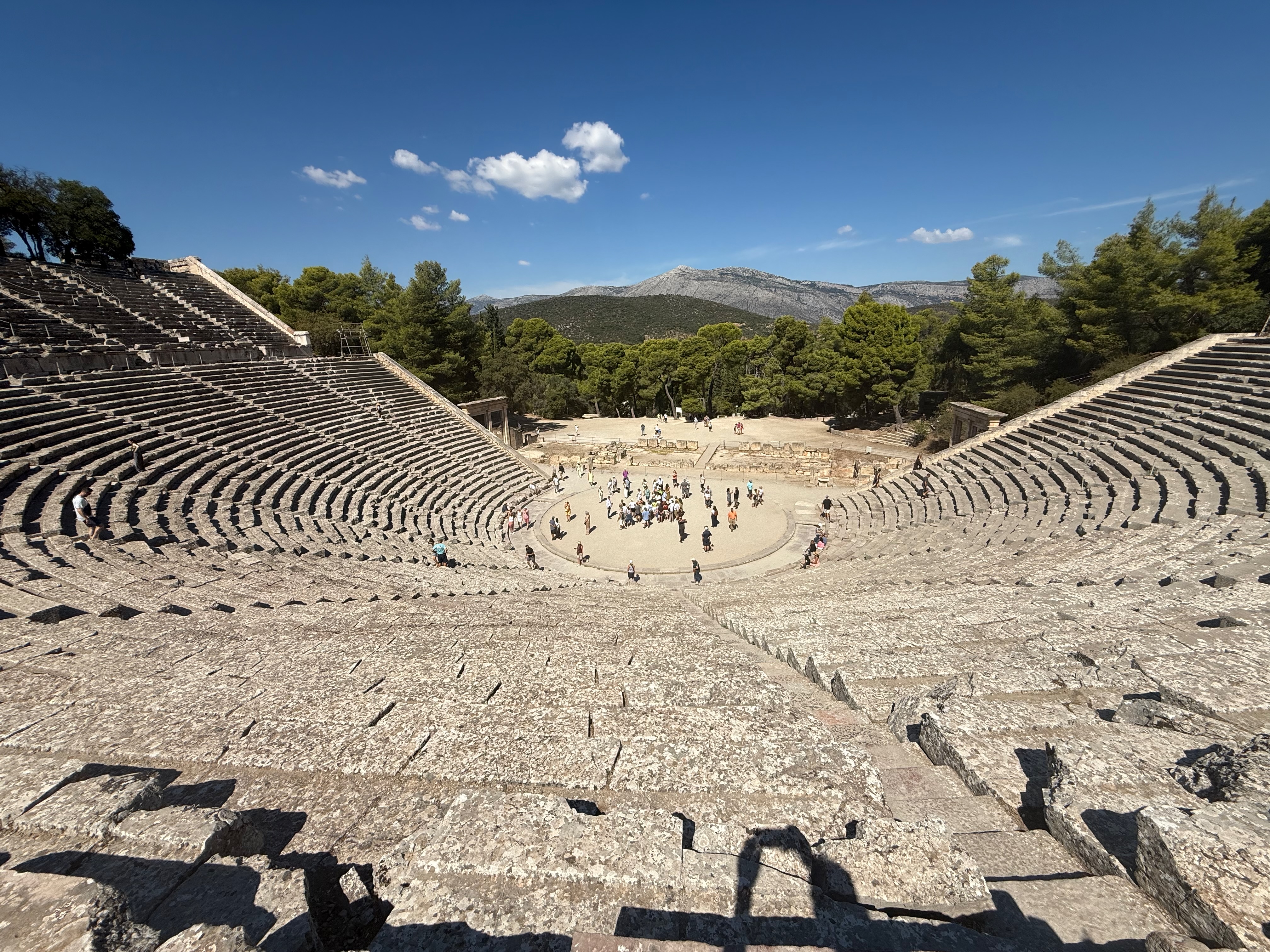
What makes the theatre more interesting is that the whole thing was part of a holistic healing process, operated by priests dedicated to Asklepios, god of healing and medicine. The surrounding complex is huge – essentially a giant hostelry for the patients, together with the obligatory temples to house the offerings they brought, often a stone carving of whichever body part they wanted the gods to heal.

We had a decent guide taking us round the sites, so I didn’t feel that their associated archaeological museums added all that much to the experience. In any case, the originals of a fair amount of the best stuff has been taken to Athens, with only copies remaining on site. But then I’m an amateur at this: if you’re an ardent antiquarian, you’ll find plenty to round out your knowledge.

Overall, I enjoyed our stay in Nafplio more than I possibly imagined I would. The sites of Corinth, Mycenae and Epidaurus were absolutely worth the visit, and with more time and staying power, we could have visited Argos, Tiryns or even Sparta, or wineries in Nemea. It’s been a great part of this trip.
Visiting Greece – Athens

Visiting Greece – Athens

There’s one reason to visit Athens that trumps the rest: this city genuinely is the cradle of much of our Western culture: our philosphy, our politics, our art, even our sport. For centuries, both autocrats and revolutionaries have sought to embrace the words and symbols of Greek civilisation and the Roman empire that followed it, so to take a deep draught of that civilisation, a visit to Athens is essential.

We took our drink from that wellspring in two key museums, the Museum of Archaelogy and the Acropolis Museum, and in two areas of old stones, the Agora and the Acropolis. Unquestionably, that set of sites delivers on the promise of giving a deep understanding of the ancient history of the Greek people.

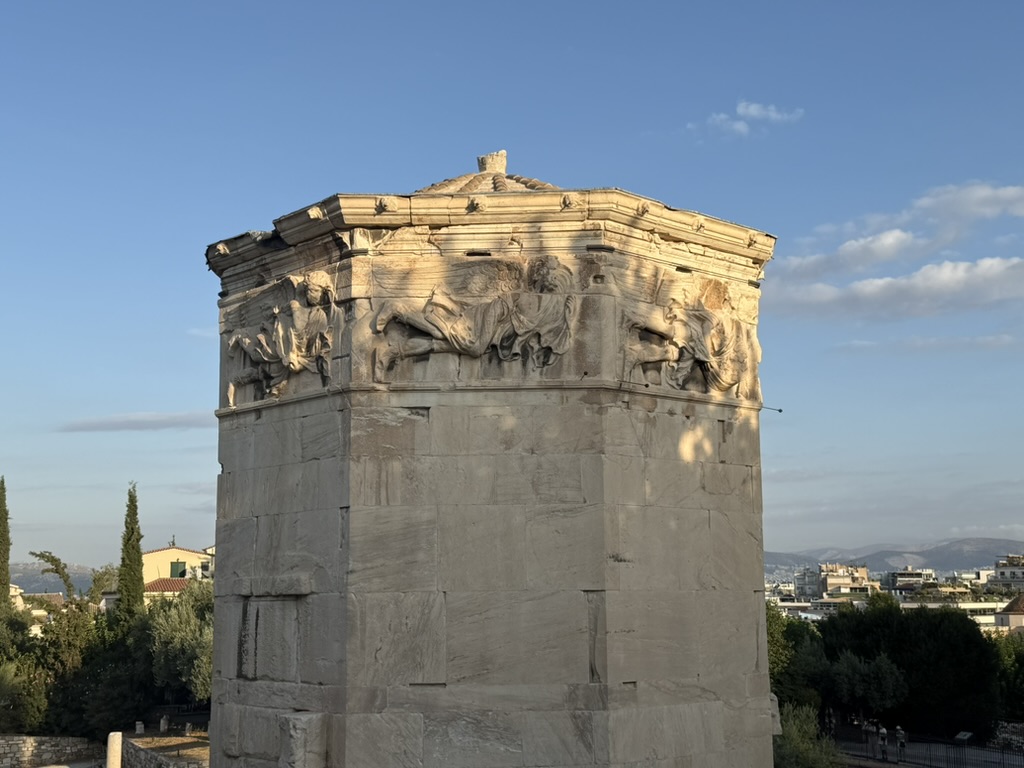
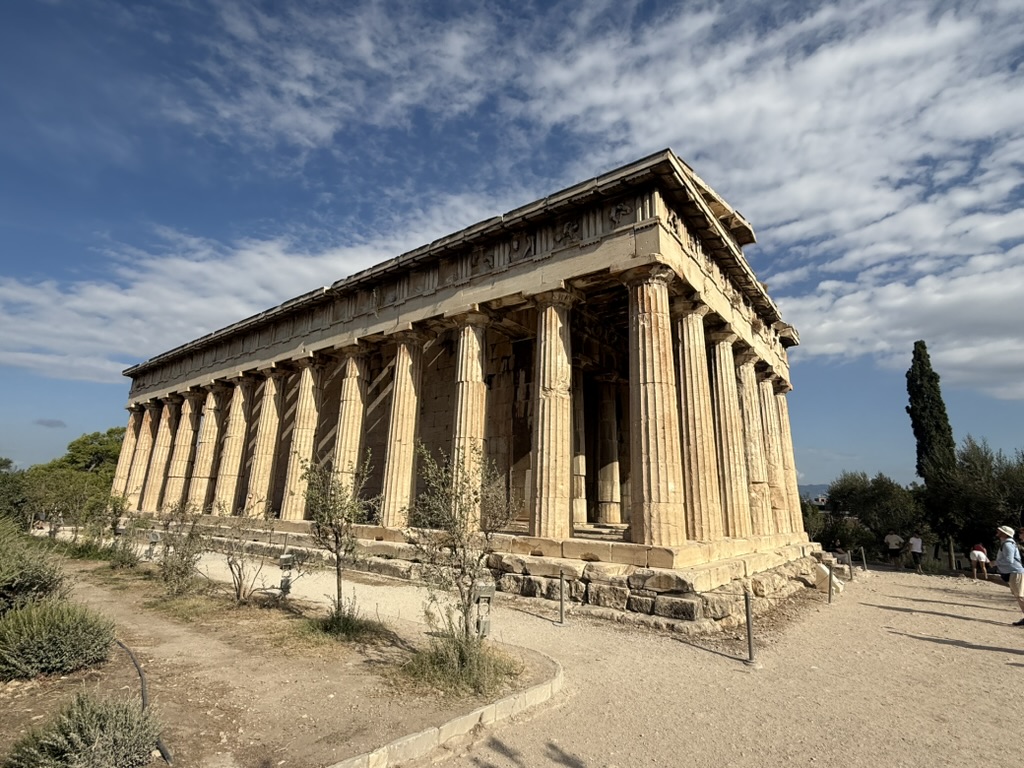
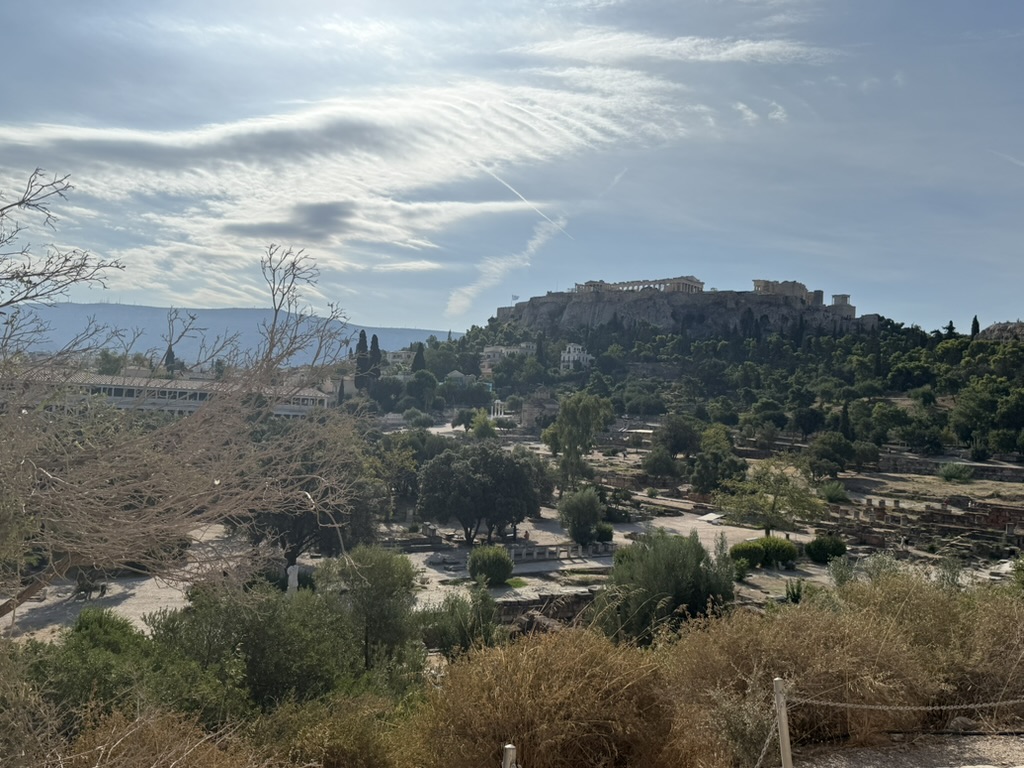
In each case, we visited the old stones first and the museum next, starting with the Agora (and the Roman Forum that took over from it). The Agora is best seen if you’ve done a bit of reading about classical civilisation in advance and you have a good guide – otherwise, it’s just a bunch of ruins – and we got lucky with Nikos, who was a veritable fount of knowledge of all eras. The project to excavate the Agora is an extraordinary story in itself: there was a perfectly normal residential district of central Athens above the Agora, whose houses needed to be expropriated and demolished for work to begin. The scale of the project was enormous (the are is some 30,000 m2 in size), and the Greek government could not possibly have financed it, but in the 1930s, the American School of Classical Studies at Athens received the necessary funding from John D. Rockerfeller. The excavated and partly restored ruins are interspersed with trees planted during the excavations, which are now mature and give an attractive (if slightly odd) rural tinge to the whole area.

Temple of Hephaestus

There’s something unique and magical about standing next to the house of Simon the Shoemaker, where Socrates debated with his pupils, perhaps the most important birthplace of philosophy. Or hearing about the political skill with which Cleisthenes sidelined the Athenian aristocracy to create the system of democracy, standing alongside the Bouleterion, the assembly house where it functioned. The tissue of checks and balances which Cleisthenes created is a mind-boggling achievement, and for all its failings, that system inspires every genuine democracy to this day. The constructions from the period and later – monuments, temples, libraries and so on – are wonderful, of course, but it’s that feeling of being immersed in history that makes the experience unforgettable.

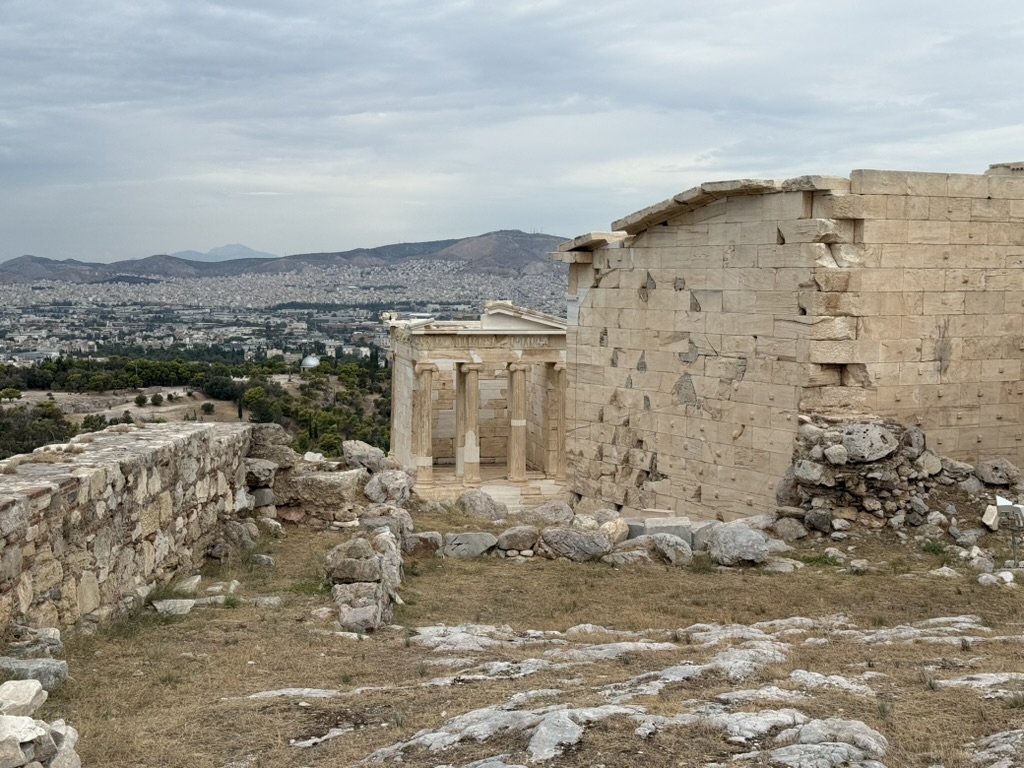
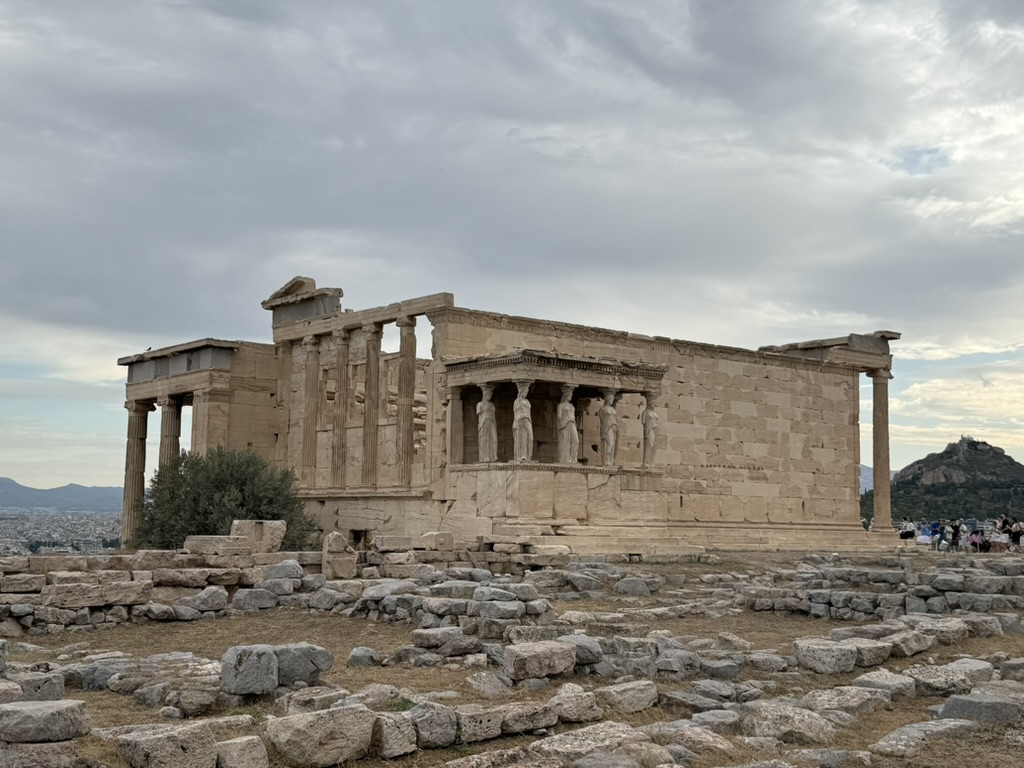
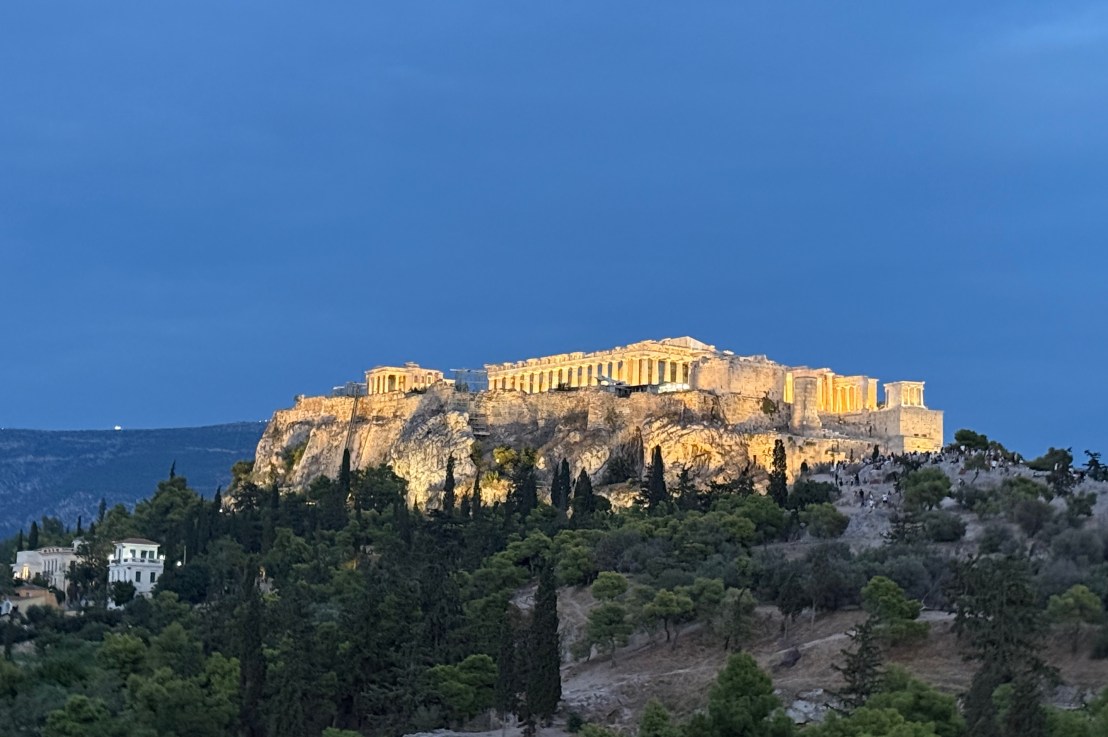
Contrary to my expectations before the trip, the Acropolis didn’t have the same emotional impact on me. From a standpoint of pure art and architecture, it’s magnificent, of course. But with all the heavy equipment that’s in place, the Parthenon feels like a permanent building project. The temple is so famous that I have a perfectly strong mental image of what it looks like, whether in its present day incarnation or in reconstructions of how it looked originally – and that image doesn’t include it being filled with giant cranes. I enjoyed the smaller temples far more – the Erichtheion and the Temple of Athena Nike, along with the Propyleia, the  splendid entrance gate. But at the end of the day, the Acropolis is a site of religious ritual, whereas the Agora is a site of history, politics and philosophy. For me, the latter wins every time.

Acropolis Museum
Acropolis Museum

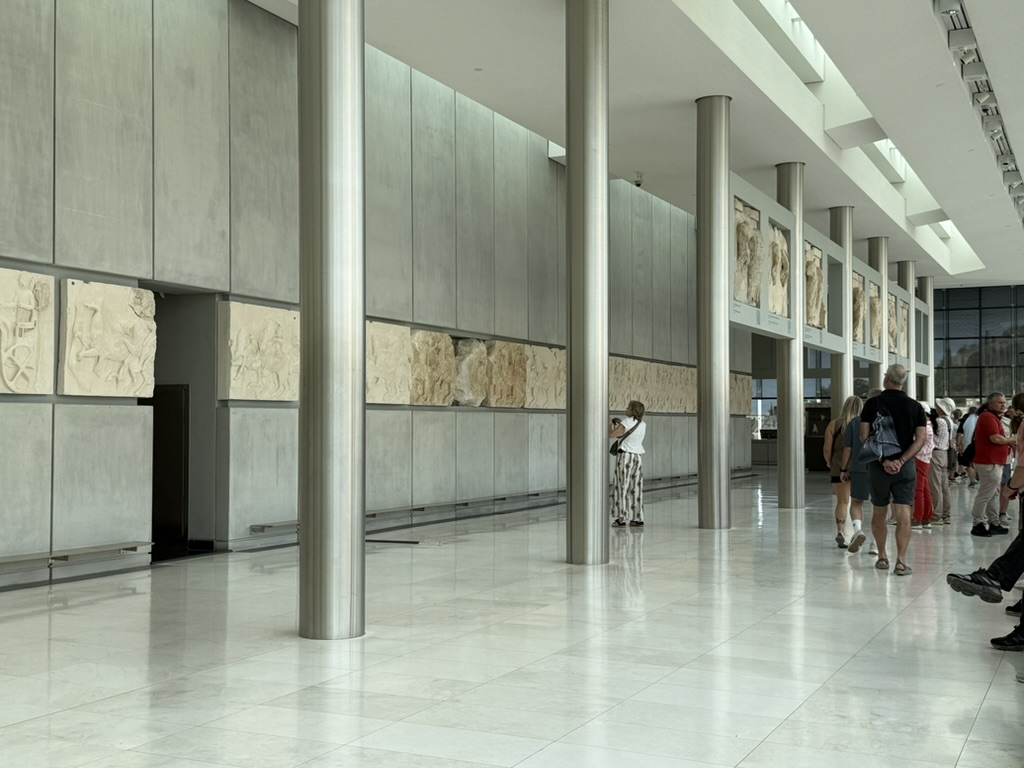
The Acropolis Museum is a magnificent piece of modern museum architecture, above all for its sublime use of natural light. Its signage is great; the way it displays the Parthenon marbles – as close as they can get to their original layout around the building, is excellent. For what it’s worth, I agree with the Greeks that it’s now time for the British Museum to send back the marbles they hold to reunite the collection – even if I’m not massively comfortable with the giant-sized chip on Greek shoulders about Lord Elgin, their glossing over of inconvenient truths of the story and the cartoonish way in which they depict Elgin as the archetypal British villian and Byron as the archetypal hero.

At some level, though, I’m dubious about whether it’s worth all the fuss. These are not the greatest examples of classical sculpture on the planet – their artistic quality is decidedly variable – nor are they the best preserved. Their main virtue lies in the sheer scale of the project and in the beauty of the building they once adorned. It makes sense to emphasise that scale by having them in one place, but I find can’t find it in me to be part of the fervour with which it’s debated.

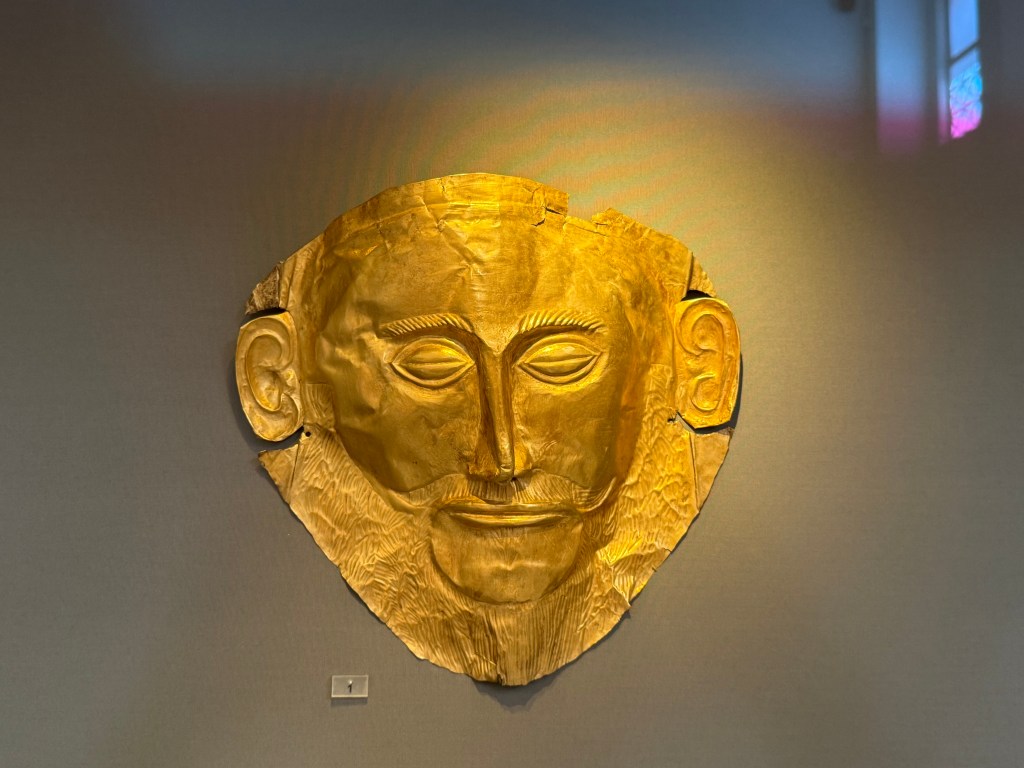
The National Archaeological Museum, on the other hand, blew me away. The building isn’t the greatest – in fact, we were lucky to see it at all because a giant refurbishment project will is slated to start next year. But the collection… Nikos guided us expertly through every era and civilsation, from ones with which I was familiar, such as the gold-obsessed Mycenaeans with the Mask of Agamemnon (mis-named, sadly, the dates being wrong by several centuries) to the ones of which I had no knowledge, like the bronze age Cycladic civilisation, whose art constitutes a bridge between the Egyptian and Greek worlds. Statues like the Artemision Zeus (or Poseidon, no-one’s quite sure) show just how much the Greek ideals of masculine beauty has survived through the ages to influence ours.

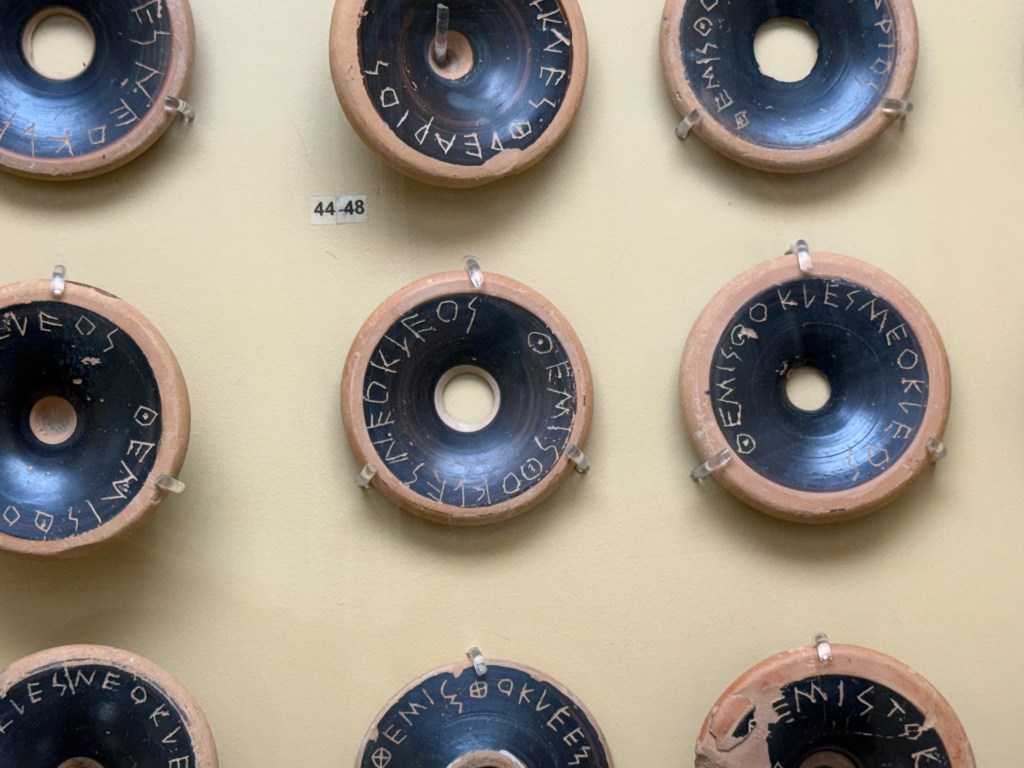
Setting aside the artistic point of view, the most telling artifacts are the political ones from Athenian democracy: the machine for random selection of people to serve as jurors or councillors, the voting apparatus, the potsherds (“Ostrakai”) engraved with the name of Themistocles to vote for his exile (“ostracism”) – in spite of his past as one of Athens’ greatest heroes.

In order to be within easy walking distance from all these sites, we chose to stay in a hotel in Plaka, the historic city centre immediately to the north of the Acropolis. This may not have shown Athens at its best, and almost certainly has little in common, for better or for worse, with the rest of the city.

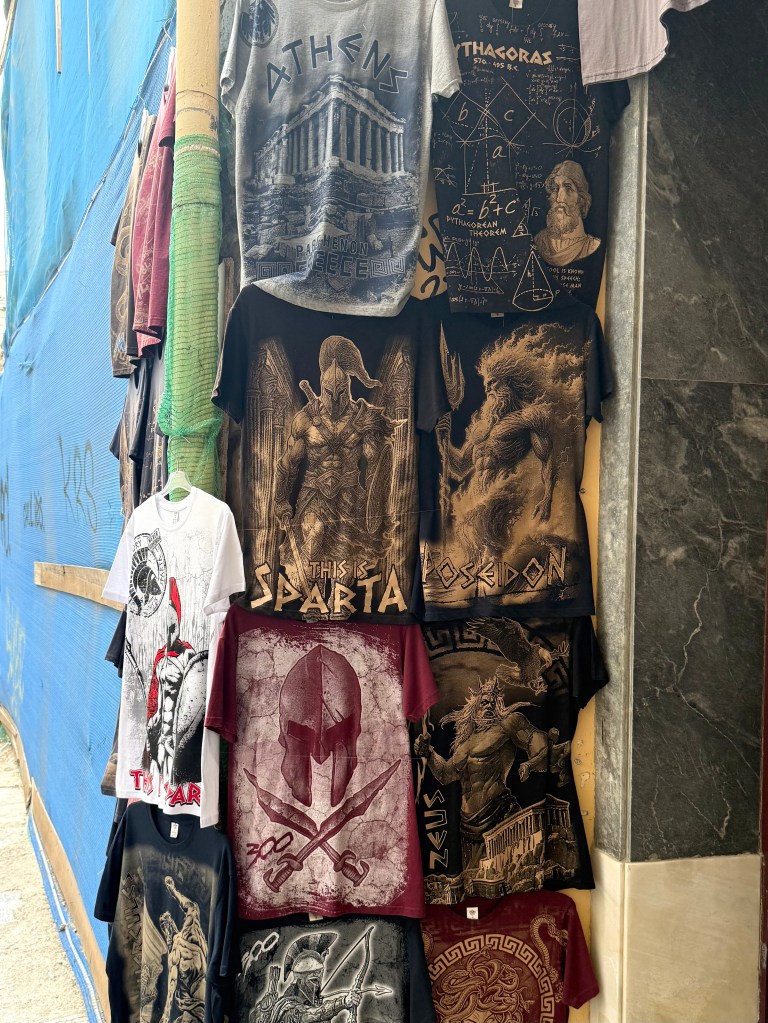
Many modern European cities are afflicted by the twin blights of mass cruise ship tourism and AirBnb. Amsterdam, Barcelona, Budapest, Prague: all have several million tourists per year and all suffer from these problems. What makes Athens stand out is the sheer concentration of tourism in the Plaka district, which feels like an uninterrupted swathe, half a kilometre wide by one kilometre long, of closely packed mass tourist eateries and shops. What’s extraordinary is the homogeneity: souvenir shops with T-shirts of Homeric figures (the interchange between the imagery of the Trojan wars and modern fantasy literature is striking), jewellery and clothing stores of indifferent quality, restaurants serving the same menu of moussaka, souvlaki, Greek salad and the odd pasta dish for the less adventurous. These include the largest mass tourism restaurant I’ve ever seen, Thanasis, which on its own takes up nearly 100 metres of Mitropoleos Street.

A few of the streets in Plaka escape this, with rows of elegant houses in the “Greek Revival” style of architecture. Some of these have been refurbished beautifully. Some are derelict, their owners waiting (we were told) for them to fall down so that they can rebuild them without having to comply with the tangle of restrictions on heritage buildings imposed by the Culture Ministry. Others show the mild decay of properties rented out for short lets.

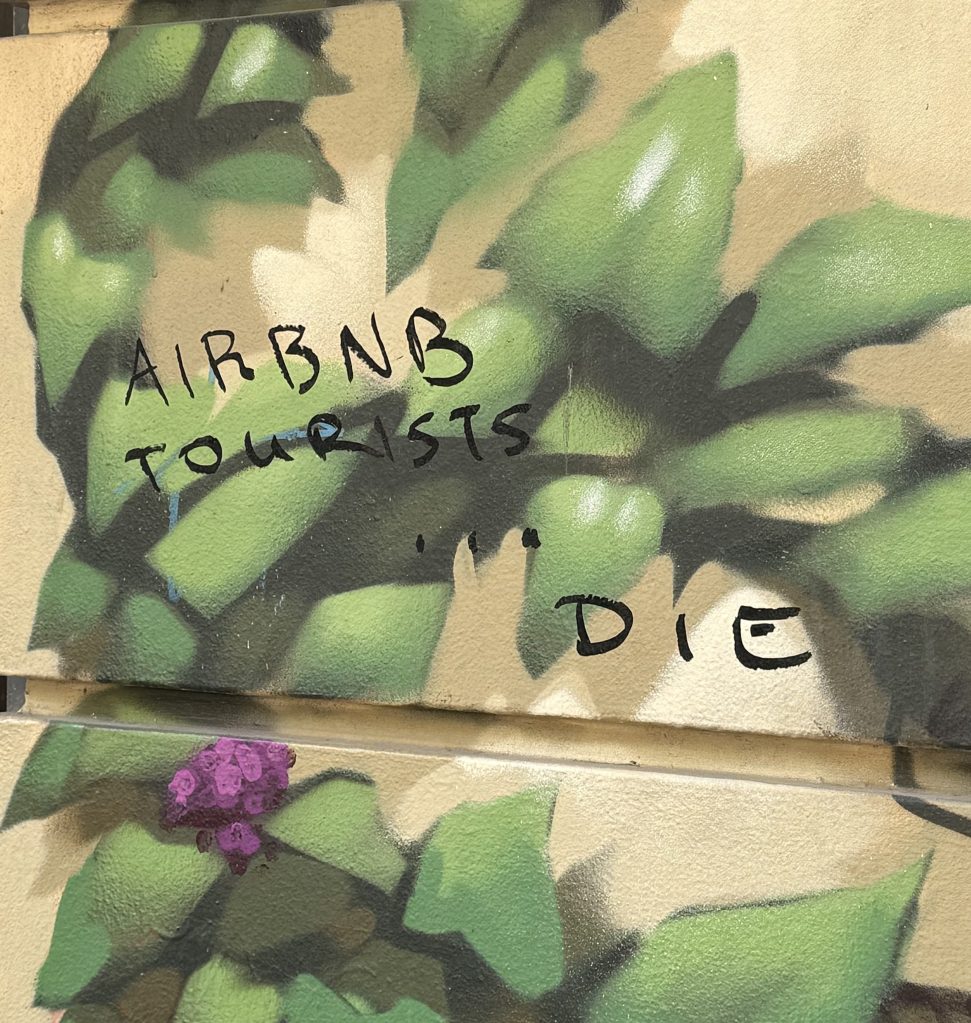
It’s not that there isn’t quality to be found here: if you look hard, there is good jewellery and clothing to be found amongst the tat, and we had some lovely meals in secluded gardens, helped by some memorable Cretan wine (clearly, Greek wine has come on by leaps and bounds in recent decades). But if the “AirBnB tourists die” graffiti is anything to go by, not all Athenians are happy with what tourism is doing to their city.

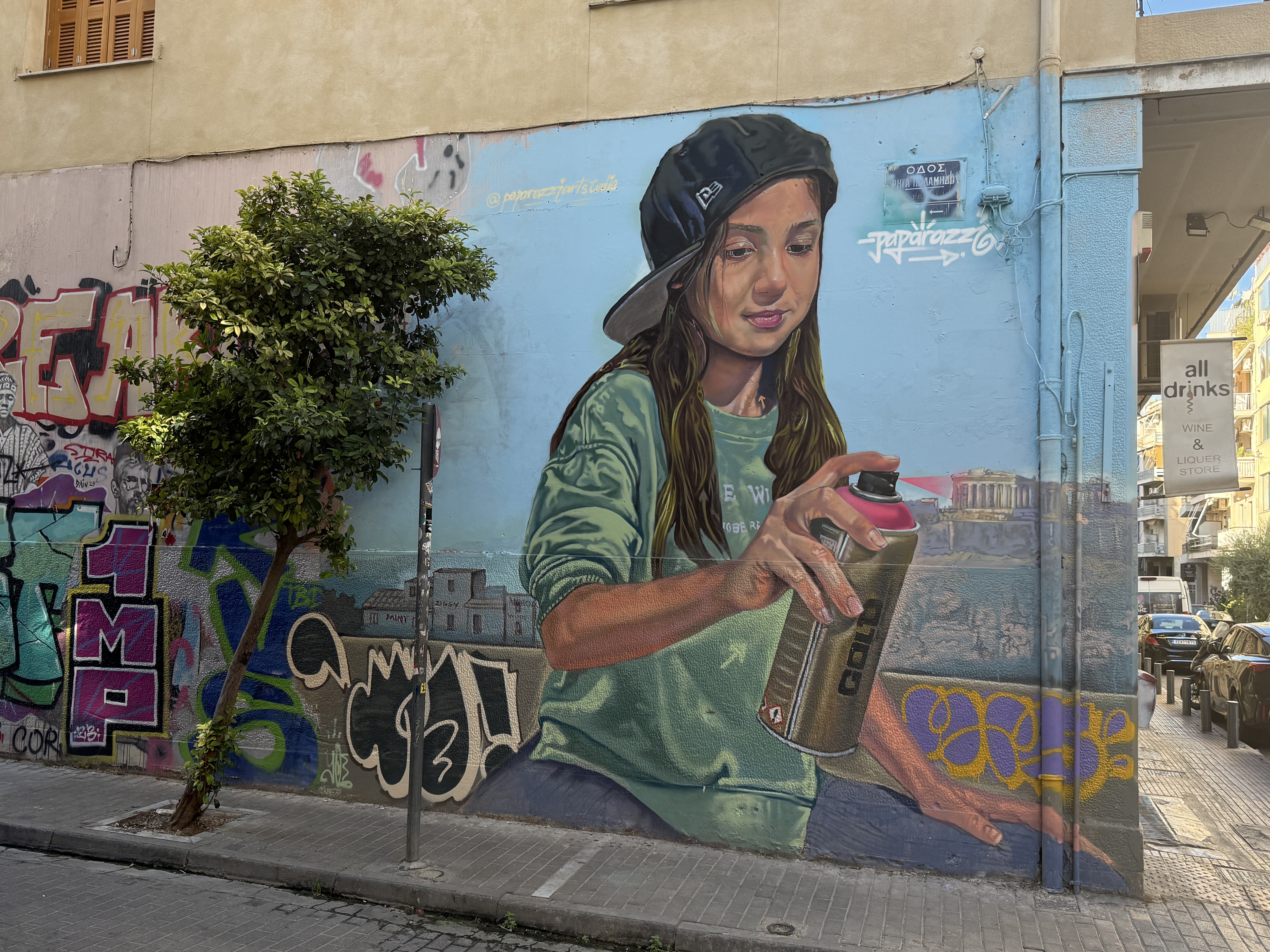
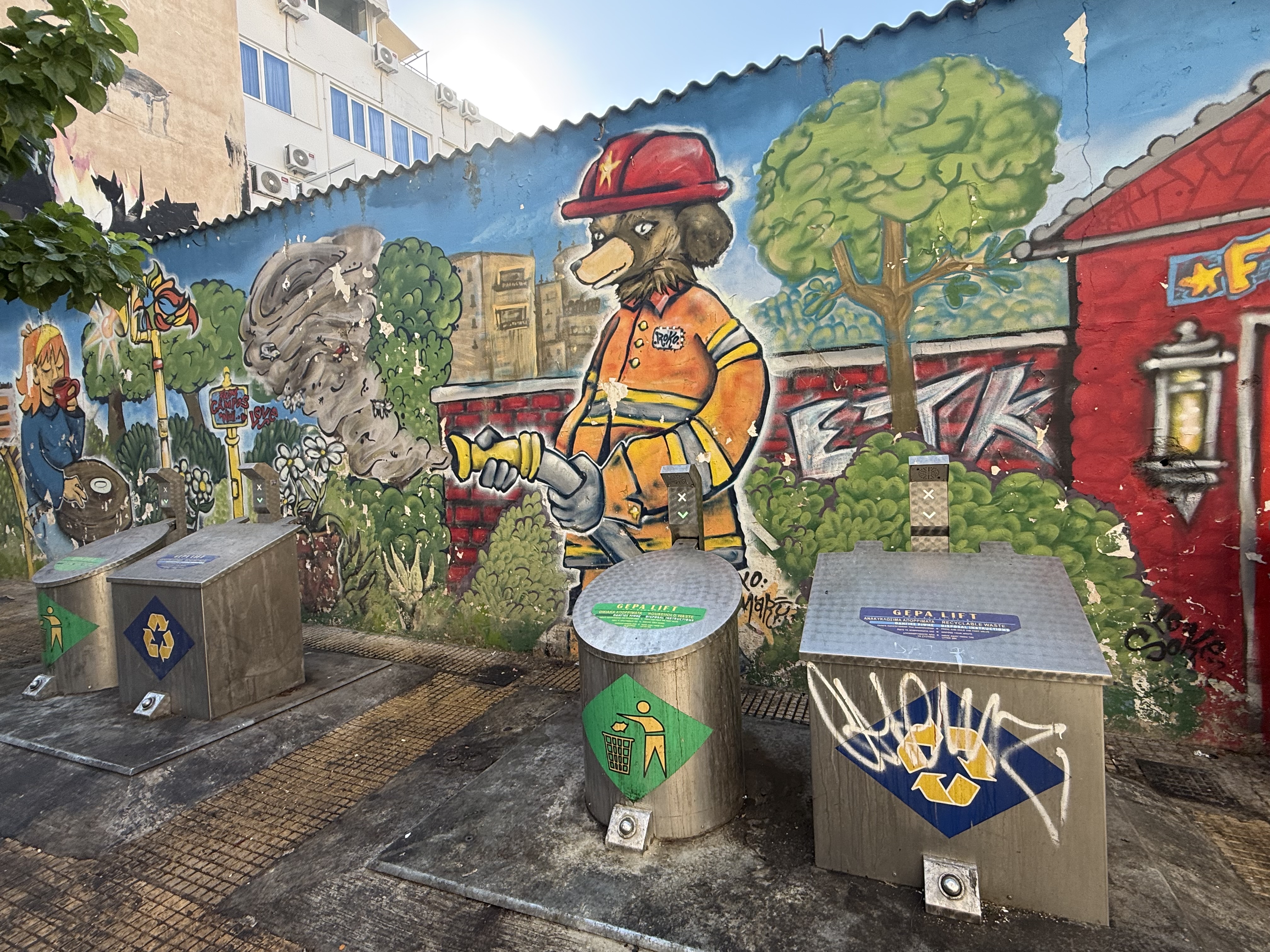
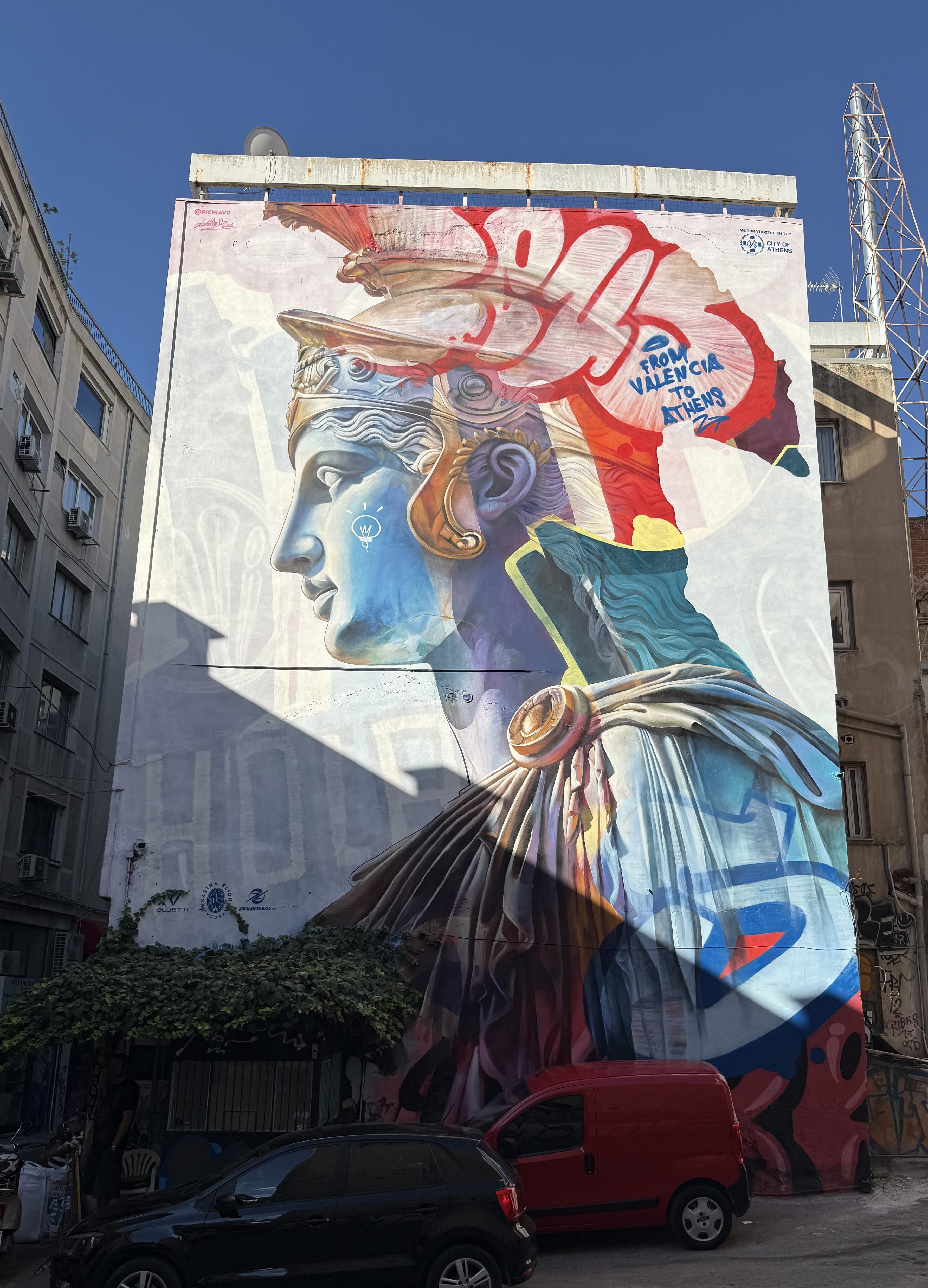
To the west side of Plaka, in Psyrri, there are some awesome pieces of street art. At the other end, across Syntagma Square, the National Garden provides a blissful escape from the hurly burly. Created at the behest of Queen Amalia, wife of King Otto, the Bavarian prince chosen by the Great Powers to be King of Greece in 1832, after the country’s independence, it’s a park of your dreams – more a forest than a park, really – with an untold number of exotic trees, and shady places to sit and relax, breathe some fresh air and let your mind wander.

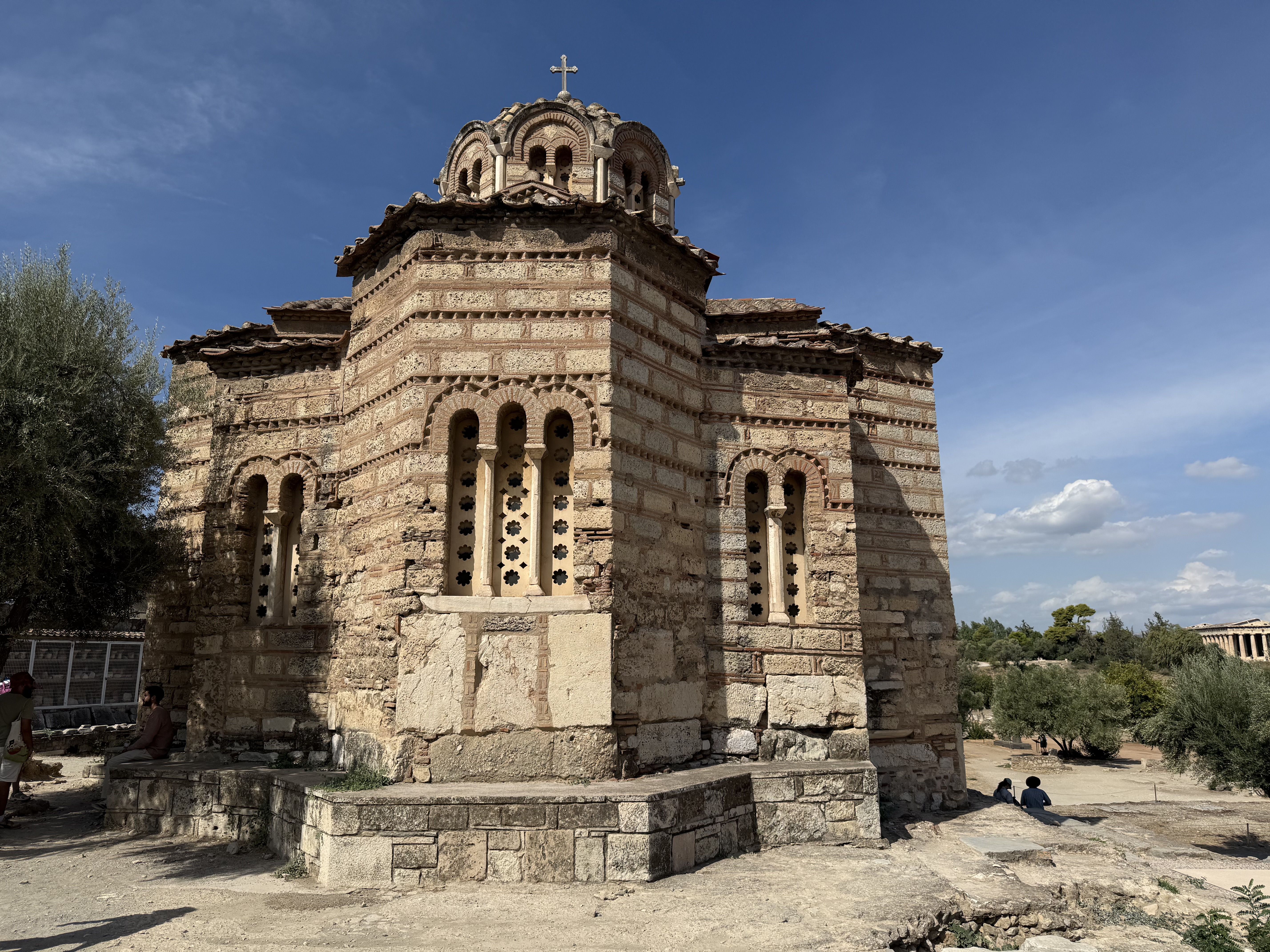
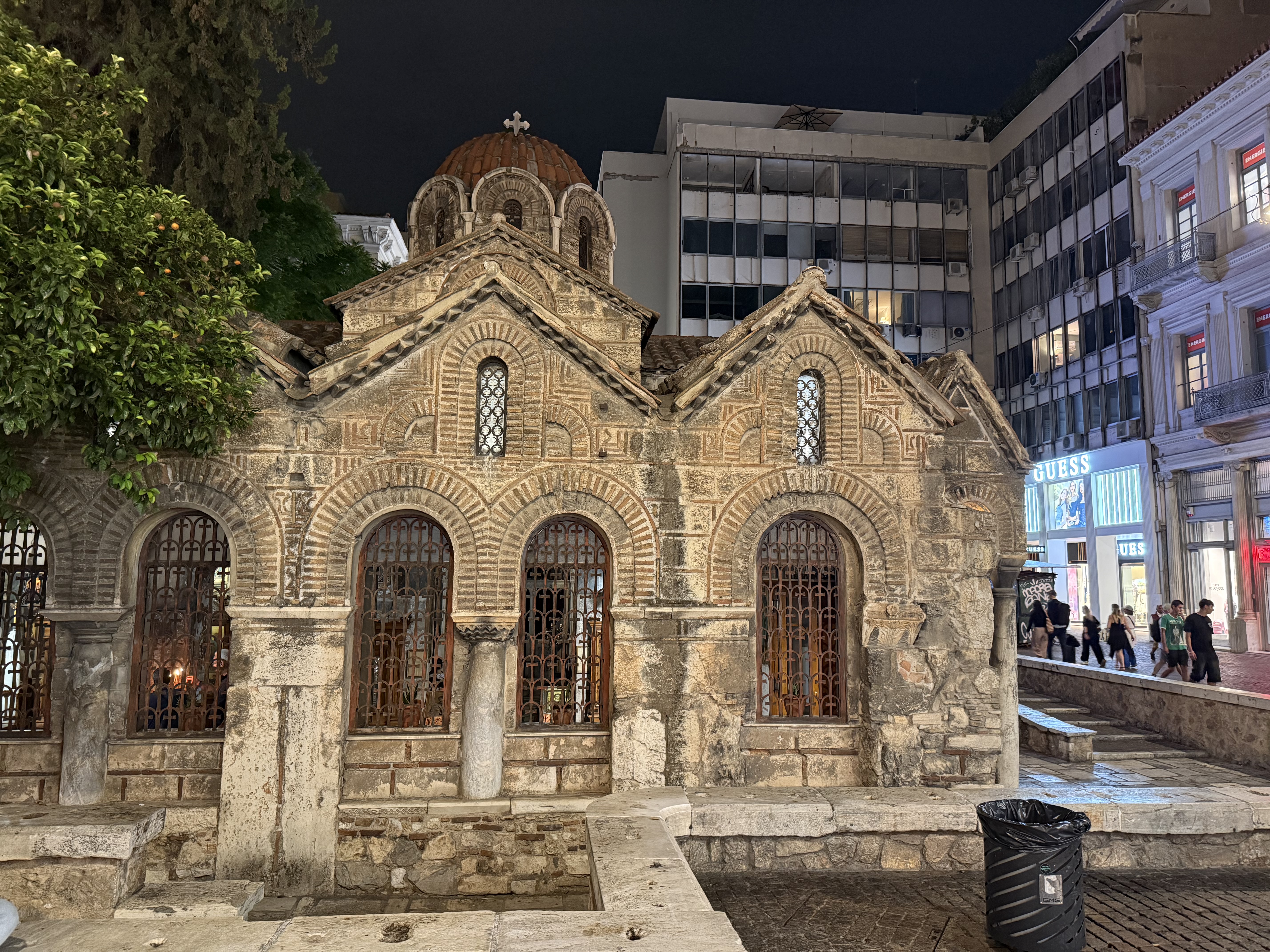
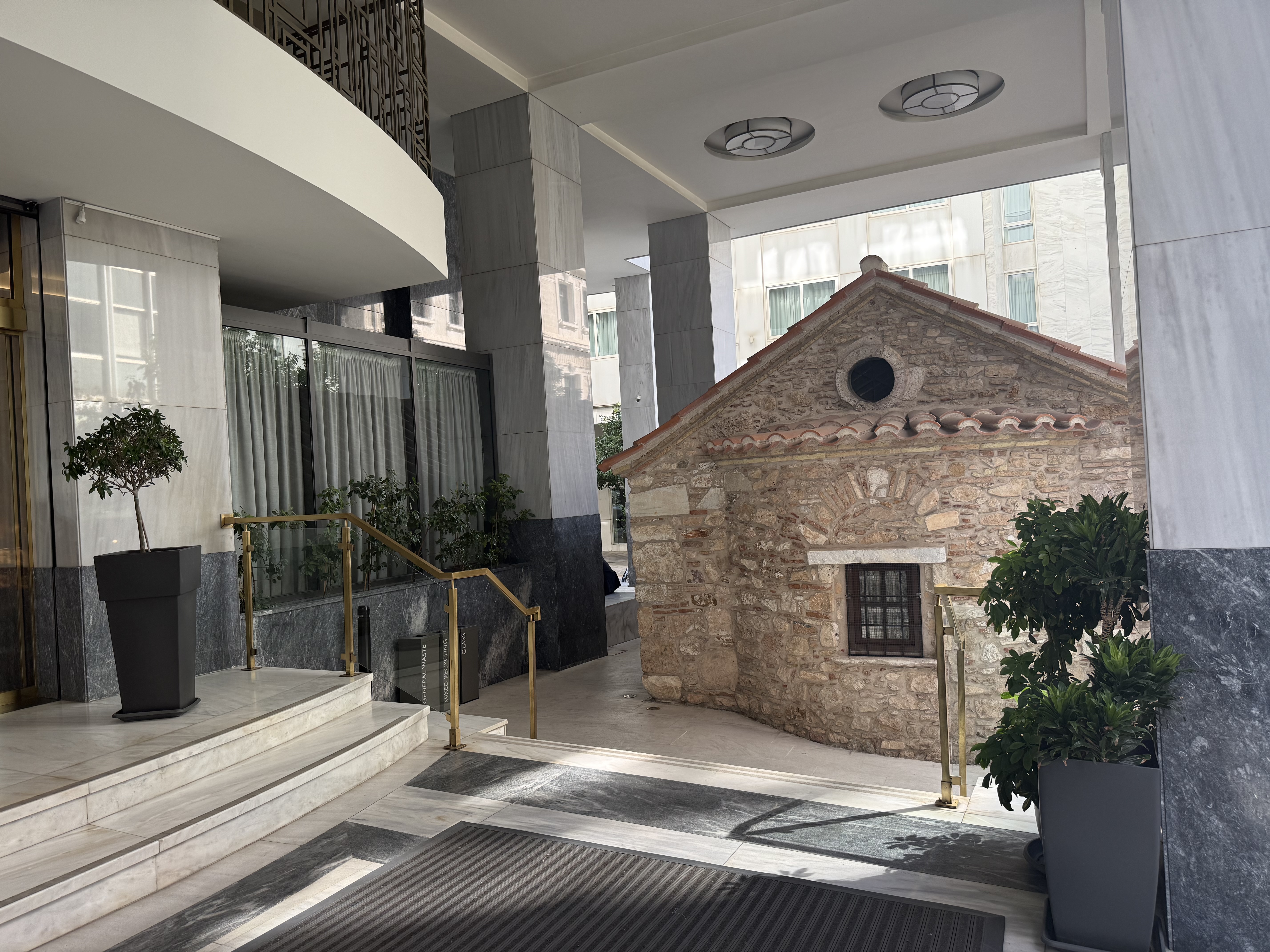
Another joy of Athens lies in the Orthodox churches that bespeckle the city, whether the ancient (the 10th century Chuch of the Holy Apostles on the edge of the Agora), the grand (The Metropolitan Cathedral – although the Greek Orthodox church never approaches the bling levels of baroque Catholic churches) or the intimate (a tiny chapel nestling in the columns that prop up the Electra Metropolis hotel).

A less good side is a syndrome of things that “nearly work but not quite” – even in a few days, we suffered our share of traffic nightmares, taxis who refuse to give you a ride, non-working hotel equipment and what appear to have been kitchen disasters in otherwise excellent restaurants.

For a visitor, Athens has a huge amount going for it, and not just its twin statuses as cradle of civilisation and gateway to the islands of the Aegean. With the Acropolis at its heart, its topography is spectacular. Its climate is gorgeous. Its culture is a true crossroads between East and West. And its food revolves around an abundant supply of superb local ingredients (if such things interest you, a visit to the Municipal Food Market, and particularly its fish market, is well worth while). Let’s hope it can make its peace with mass tourism.

We finished our trip on a high, with one of the best restaurant meals in memory at a place called Zohós (part of a different Electra hotel). In a lovely courtyard, with everything beautifully designed to the finest detail, charming and attentive staff served us five of the best meze I’ve ever had: every one a flavour bombing surprise – and at prices not so much higher than the bog standard places. I’ll be back.

Around the world in 80 bakes, no.51: Melomakarona, Christmas cookies from Cyprus

Around the world in 80 bakes, no.51: Melomakarona, Christmas cookies from Cyprus

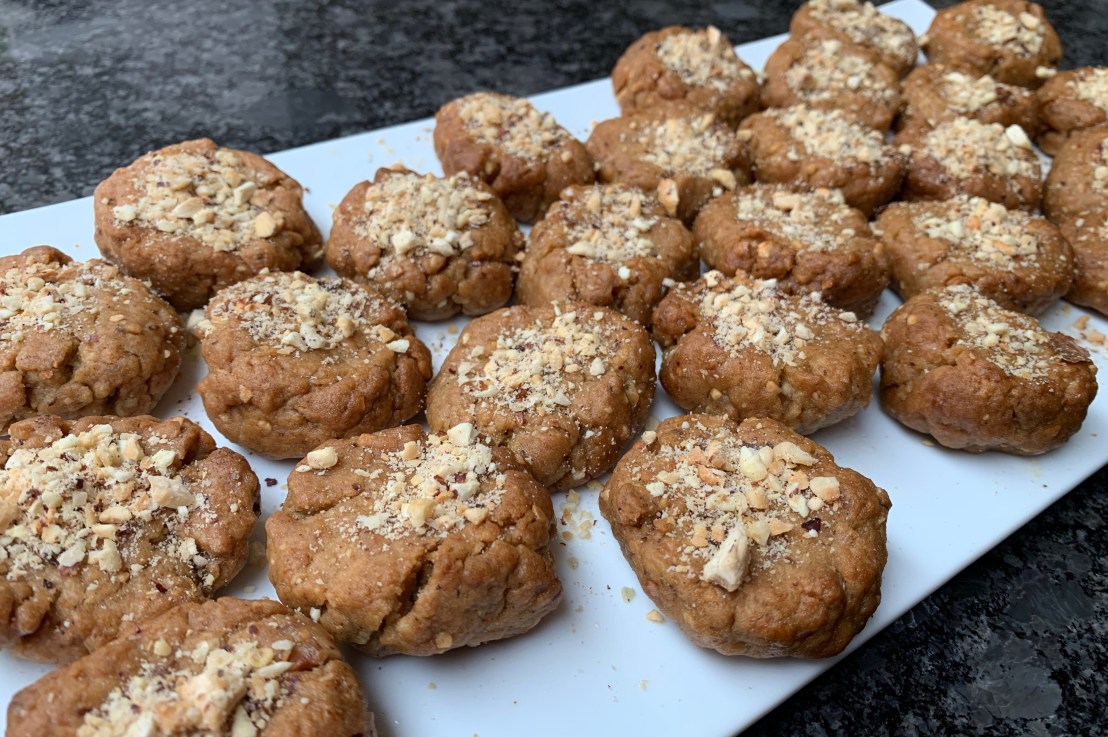
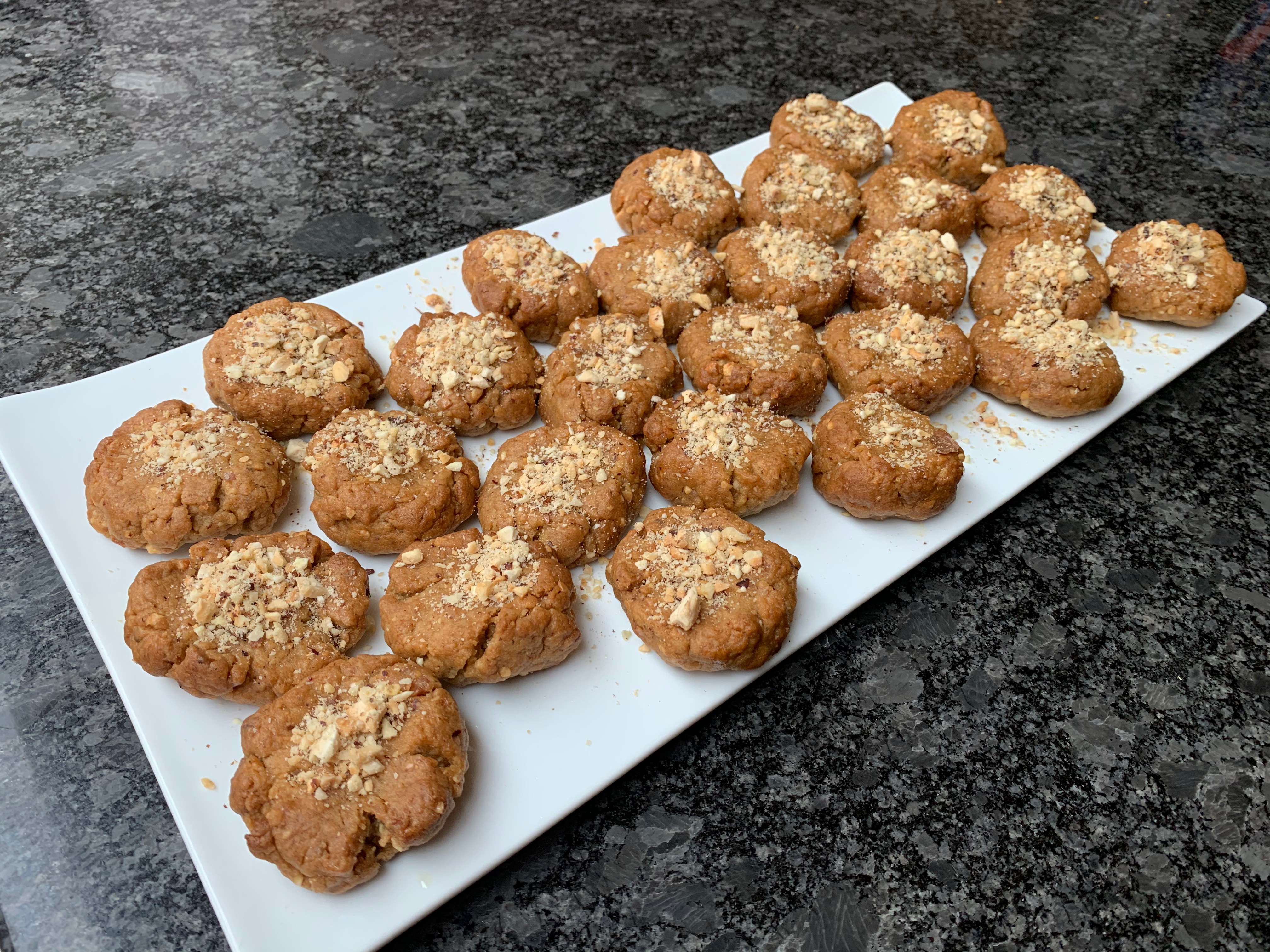
Many countries have taditional Christmas cookies. Melomakarona (μελομακάρονα) are the version from Cyprus (the Greek bit, as well as being from Greece). They’re laden with the flavours of orange and spices, dipped in syrup and dusted with nuts. They’re really delicious, so when the cookie jar is empty, why wait for Christmas?

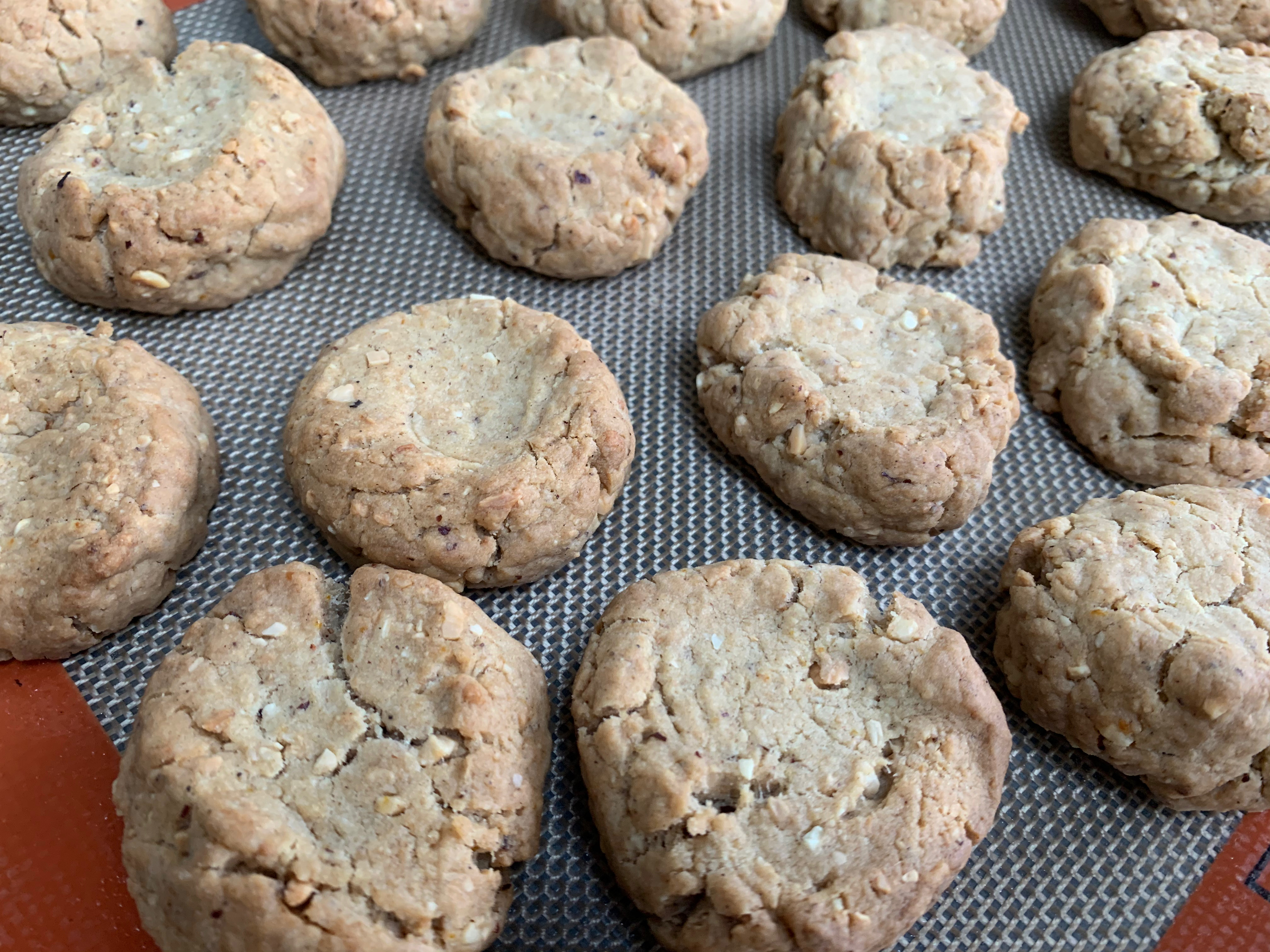
I started with a recipe from food blog Afrodite’s Kitchen, but there are plenty of others which vary in terms of choice of nuts, choice of spices and various other details. So everyone agrees that you dip the cookies in syrup, but some people cool the syrup first and others specify hot syrup. And I made my melomakarona round and dimpled, but other recipes are clear in preferring more of an egg shape.

I’ve halved the quantities in the original recipe and simplified things a bit. My dough came out a bit too floury, so I have reduced the amount of flour slightly here. Add a bit more flour (or, in the opposite direction, orange juice or water) if you think you need it.

The cookies

  • 1 orange
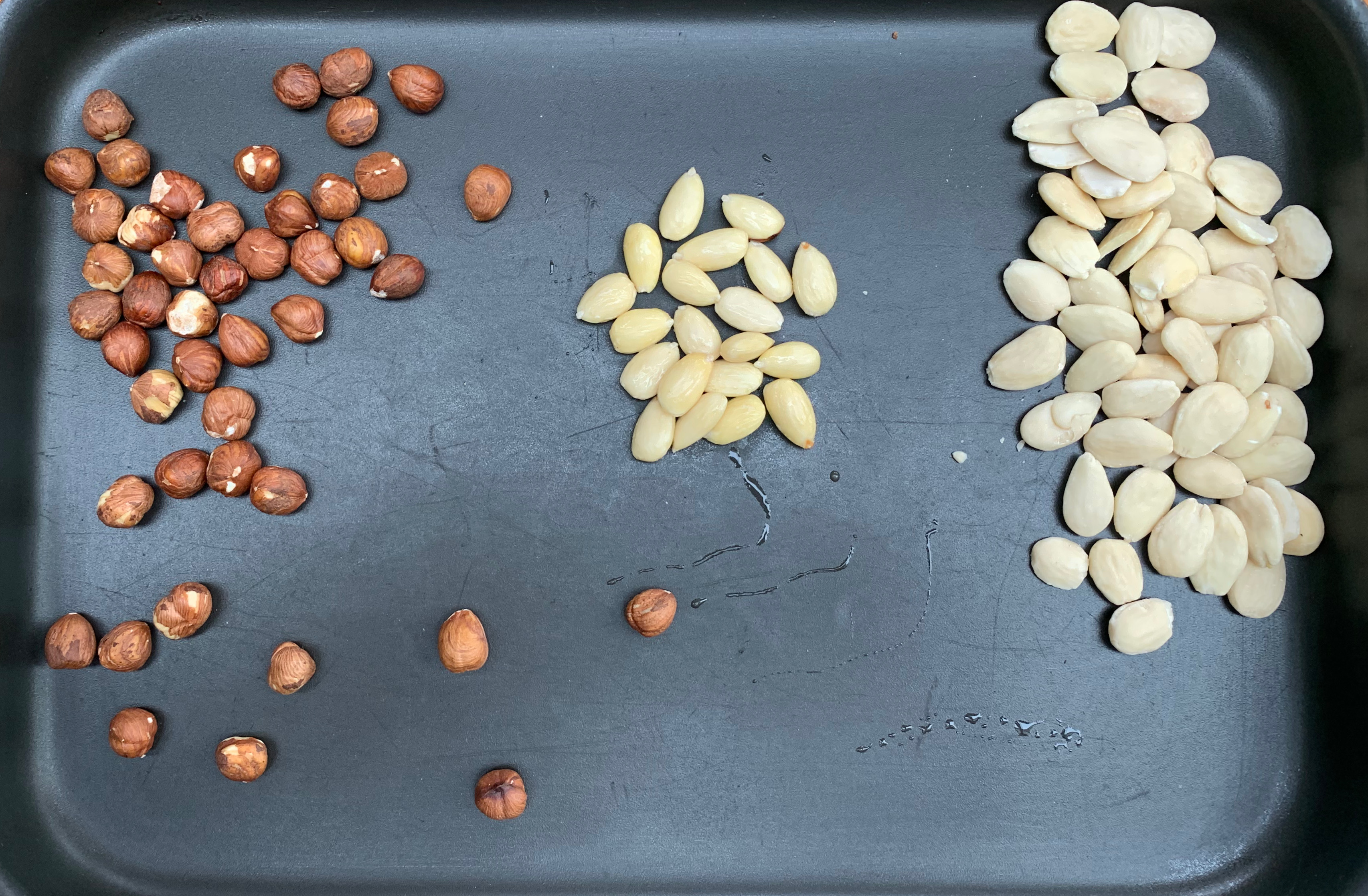
  • 80g almonds
  • 50g hazelnuts
  • 150ml sunflower oil
  • 50g icing sugar
  • 4g (1 tsp) cinnamon
  • 1g (¼ tsp) nutmeg
  • 1g (¼ tsp) ground cloves
  • 1 tsp ground ginger
  • 6g (¾ tsp) baking powder
  • 6g (¾ tsp) baking soda
  • 3g (½ tsp) salt
  • 400g OO flour
  1. Preheat oven to 175℃ fan.
  2. With a potato peeler, take a couple of thick pieces of rind from the orange and reserve. Grate the rest of the zest of the orange and juice it (expect around 80ml of juice). 
  3. Put the almonds and hazelnuts on a baking tray. When the oven is up to temperature, roast them for around 10 minutes until they’re a medium brown colour. Remove and leave to cool until you can handle them. Meanwhile, you can get on with making the cookie dough.
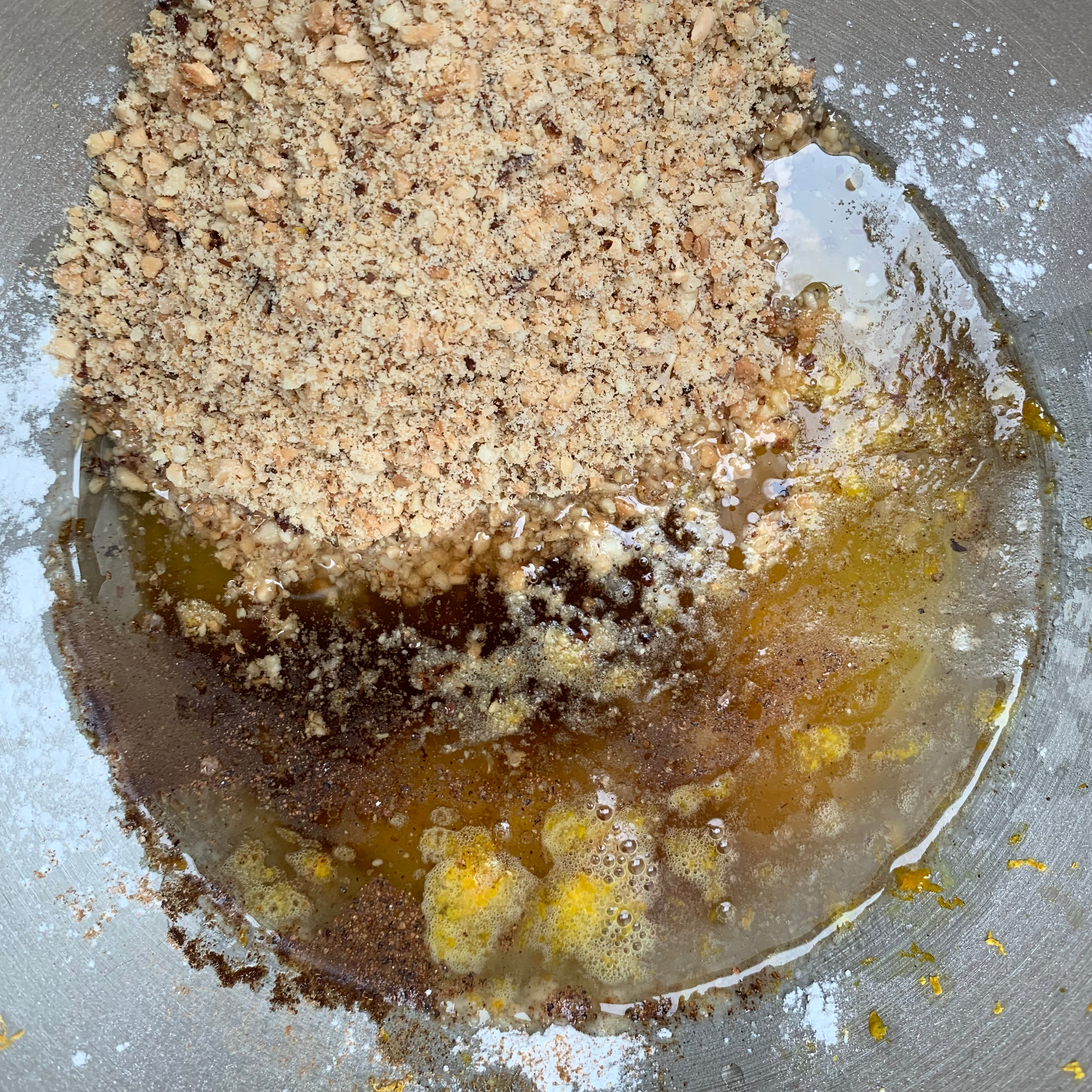
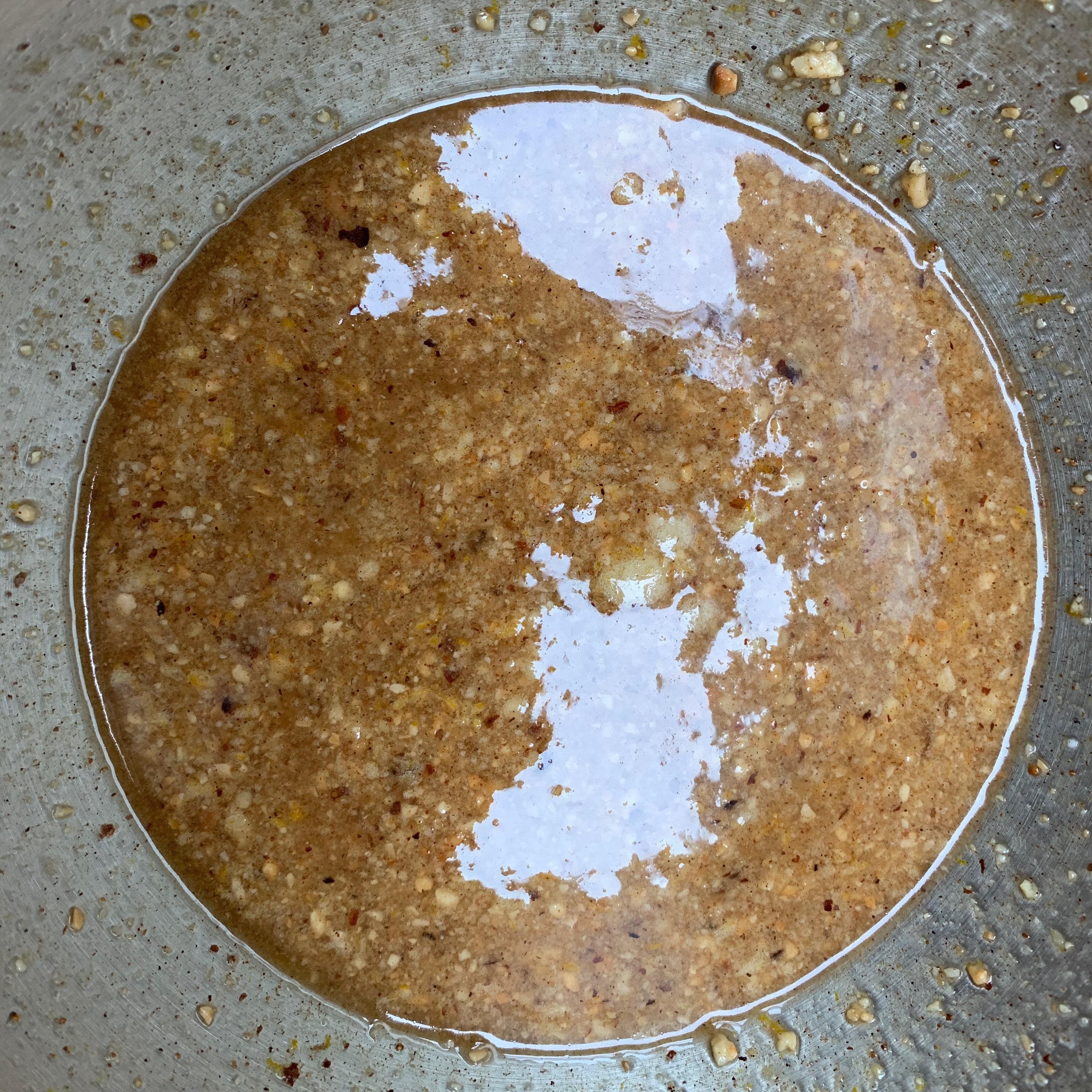
  4. Put the sunflower oil, orange juice and zest, icing sugar and spices into a bowl.
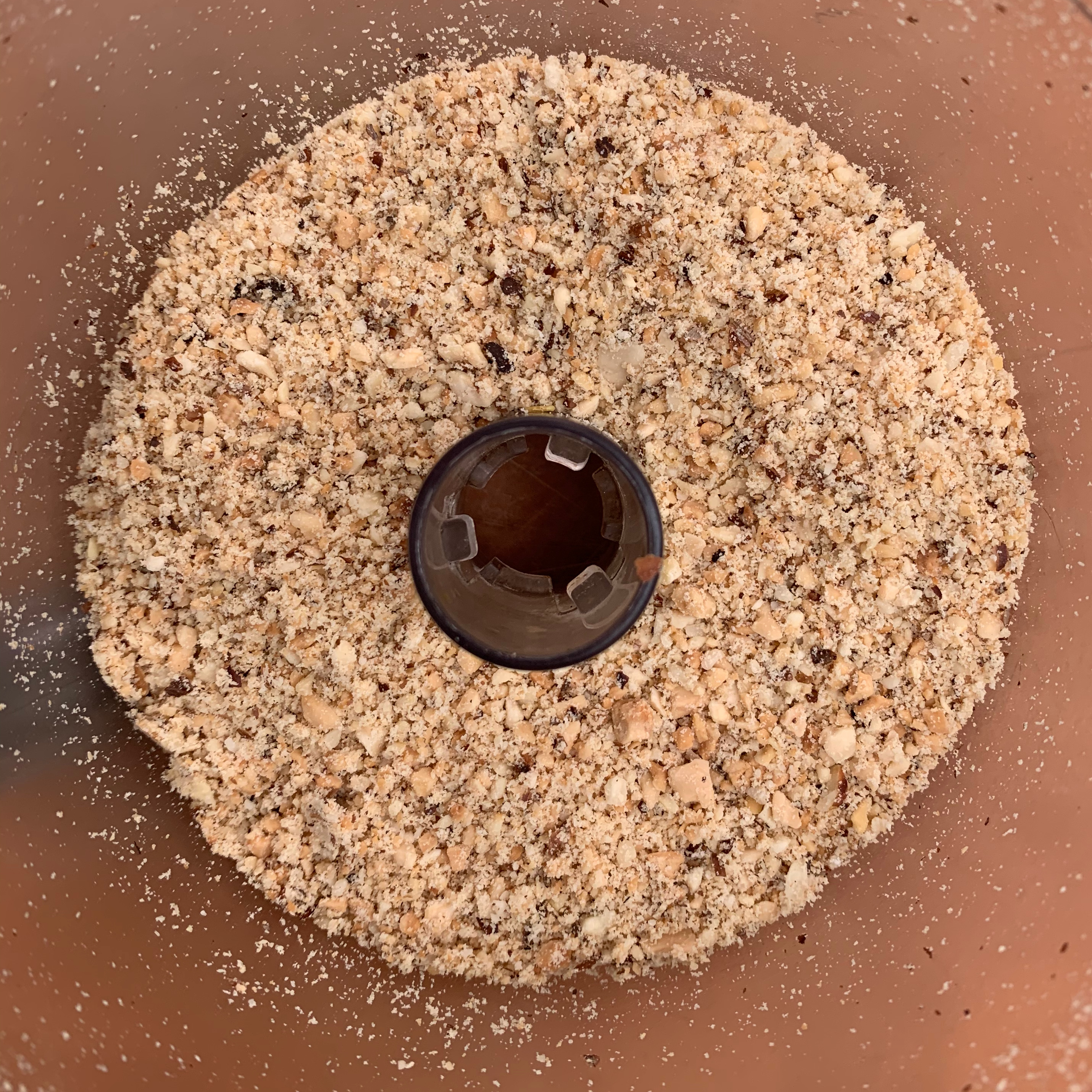
  5. Once the nuts are cool, reserve around 20g of each (you’ll be using them later for dusting). Blitz the rest to a powder (but don’t overdo it: you don’t want the oil coming out of the nuts).
  6. Add the nuts to the oil and spice mixture and whisk until smooth.
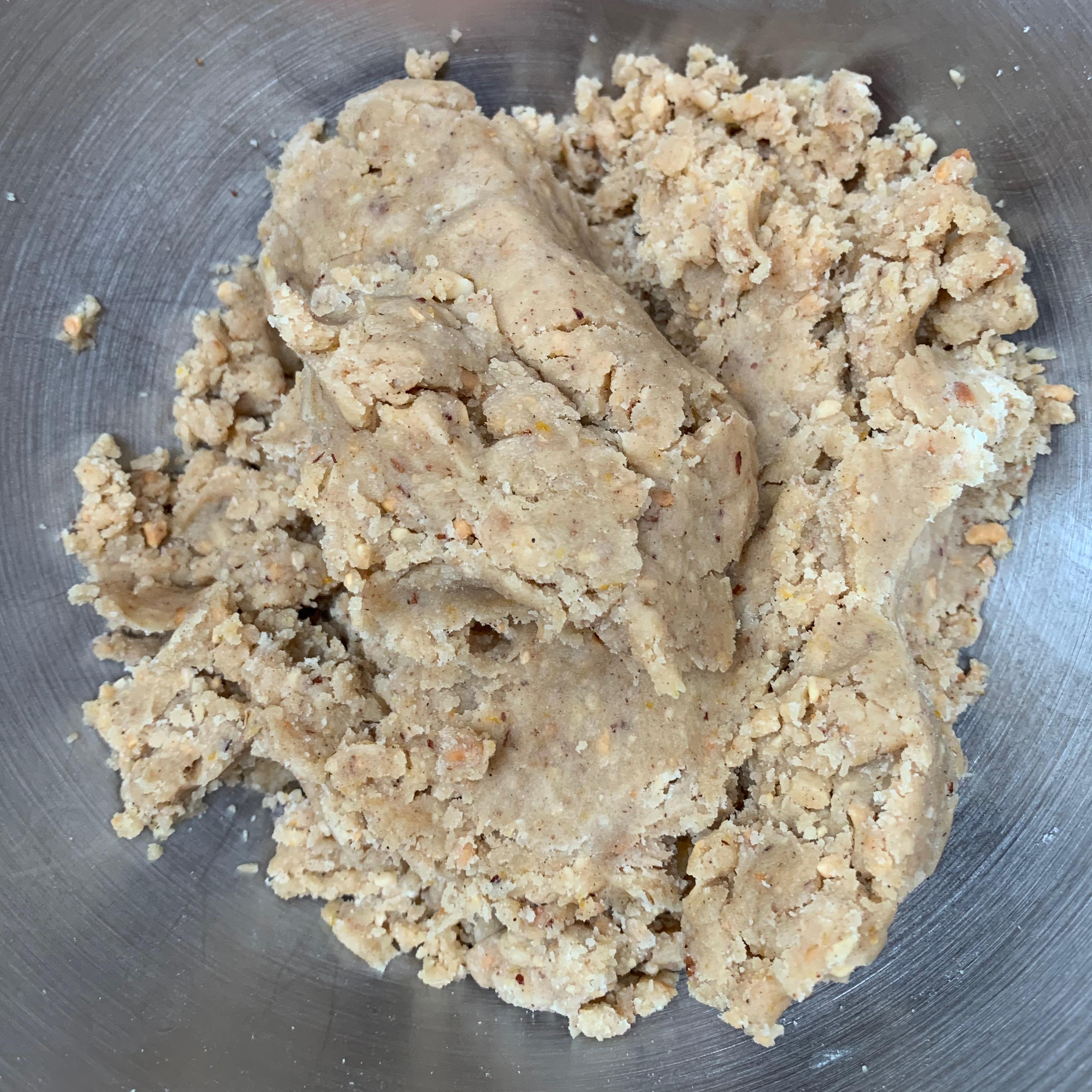
  7. Put the flour, salt, baking powder, baking soda and salt into a bowl, stir until even; add these to the wet mix.
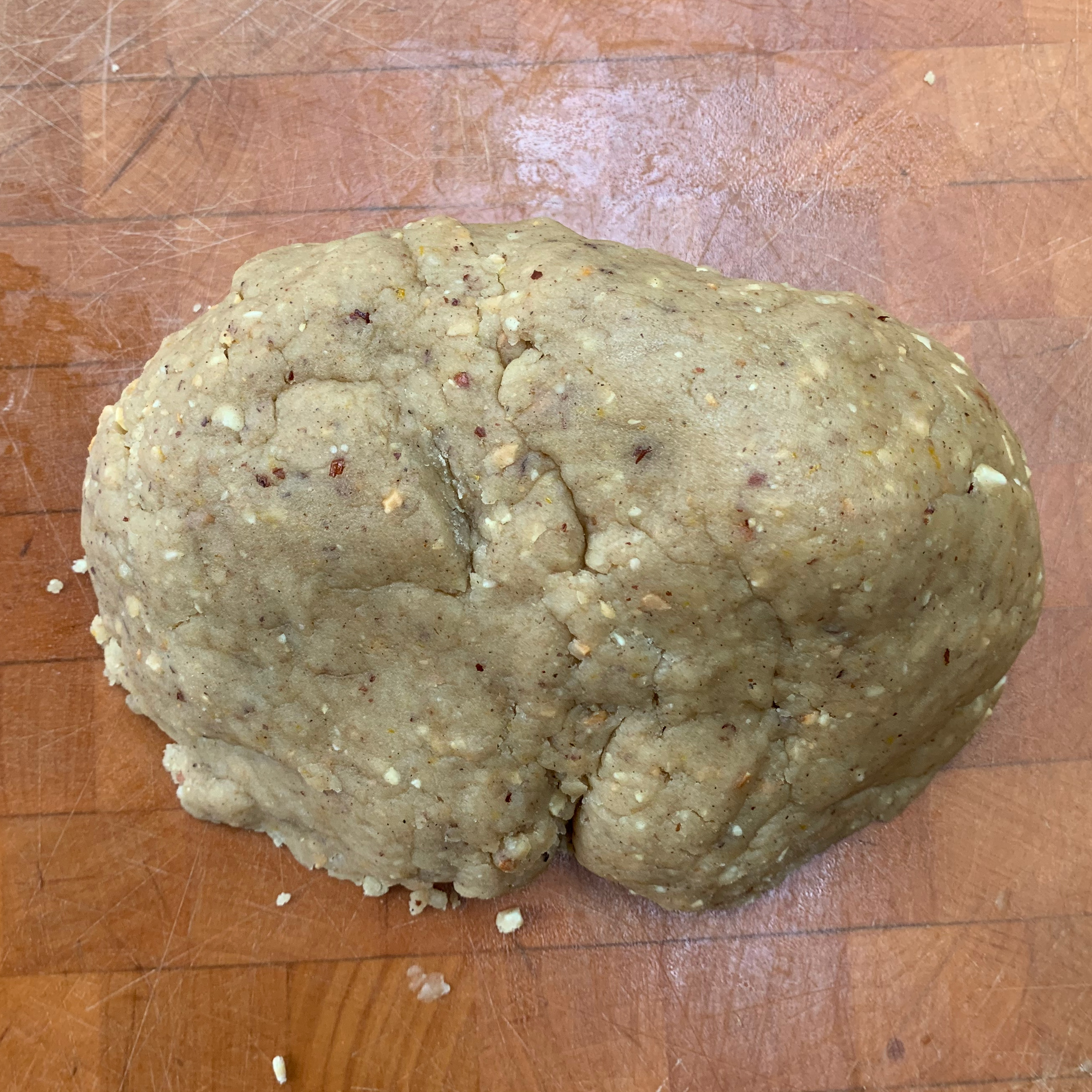
  8. Mix thoroughly and knead until you have a smooth dough which is the consistency of a thick paste.
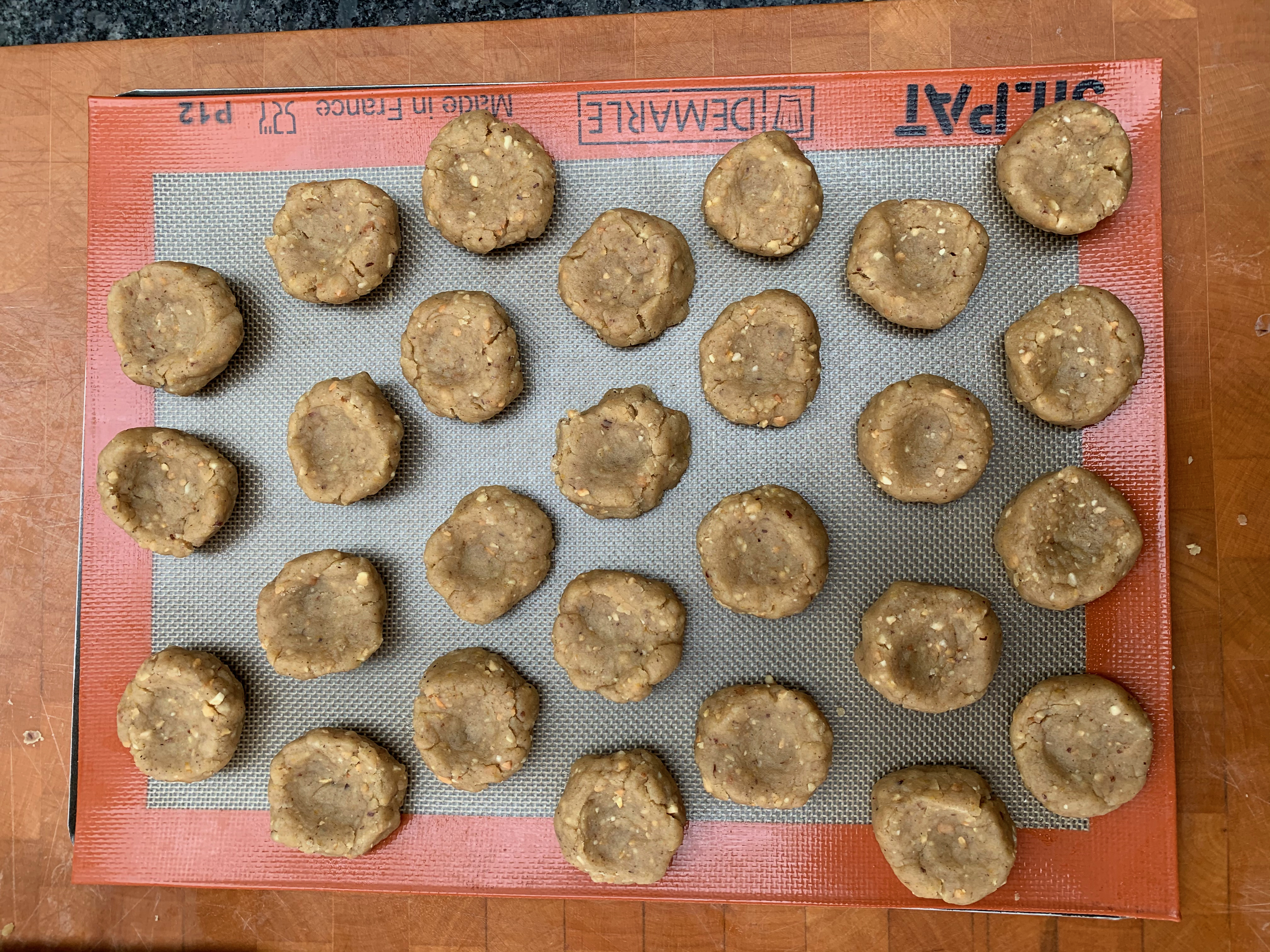
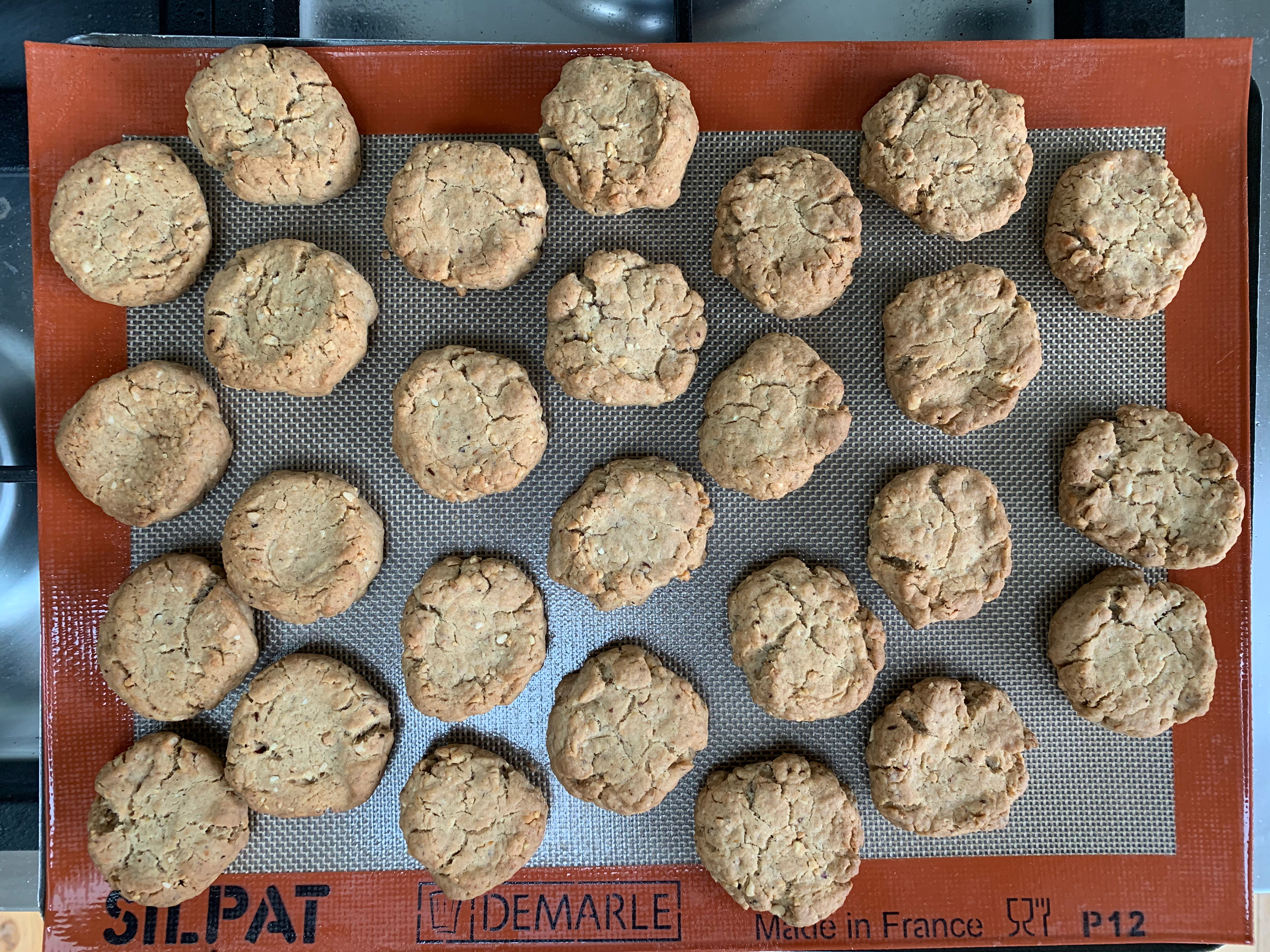
  9. Divide the dough into balls of around 30g each (my dough made 27 cookies). Press each ball into your choice of a dimpled circle or an oval.
  10. Place on a baking sheet and bake for around 20 minutes
  11. Leave to cool

The syrup, and final assembly

  • 240ml water
  • 200g sugar
  • 120g honey
  • 1 cinnamon stick
  • 3 cloves
  • 2 thick pieces of orange rind (from above)
  • Almonds and hazelnuts (from above)
  1. Chop the toasted nuts finely. You can use your food processor, but don’t blitz the nuts to a powder as you did with the others.
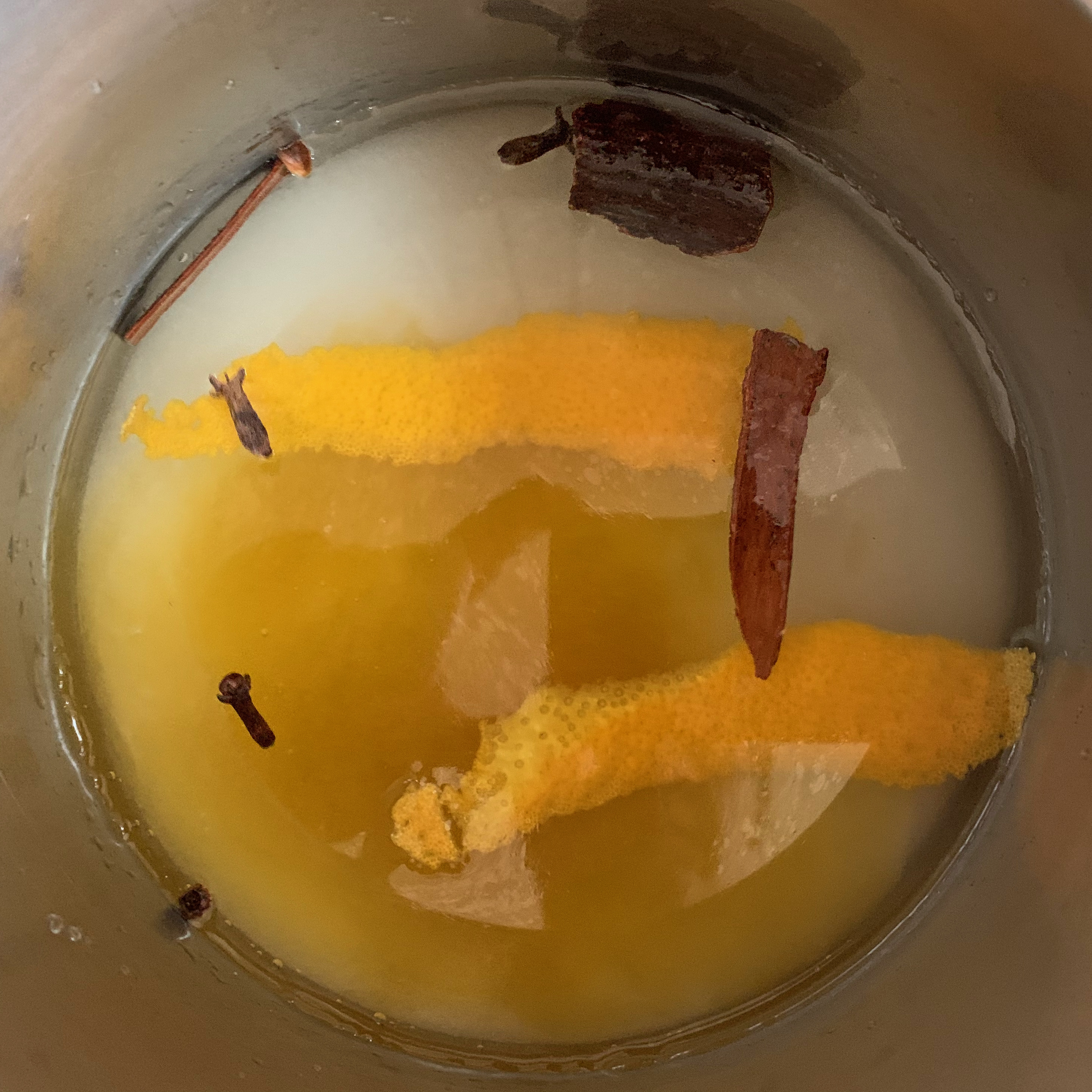
  2. Combine water, sugar, honey, cinnamon, cloves and orange rind in a small saucepan. Bring to a boil and then turn the heat down to simmer.
  3. Dip each cookie into the simmering syrup. Afrodite’s Kitchen says 10-15 seconds max, but I found it needed 20 to get enough syrup to soak in: this probably depends on the exact texture of your dough.
  4. Sprinkle the cookies with the chopped nuts.
  5. You can leave them to cool at this point, but you don’t have to…