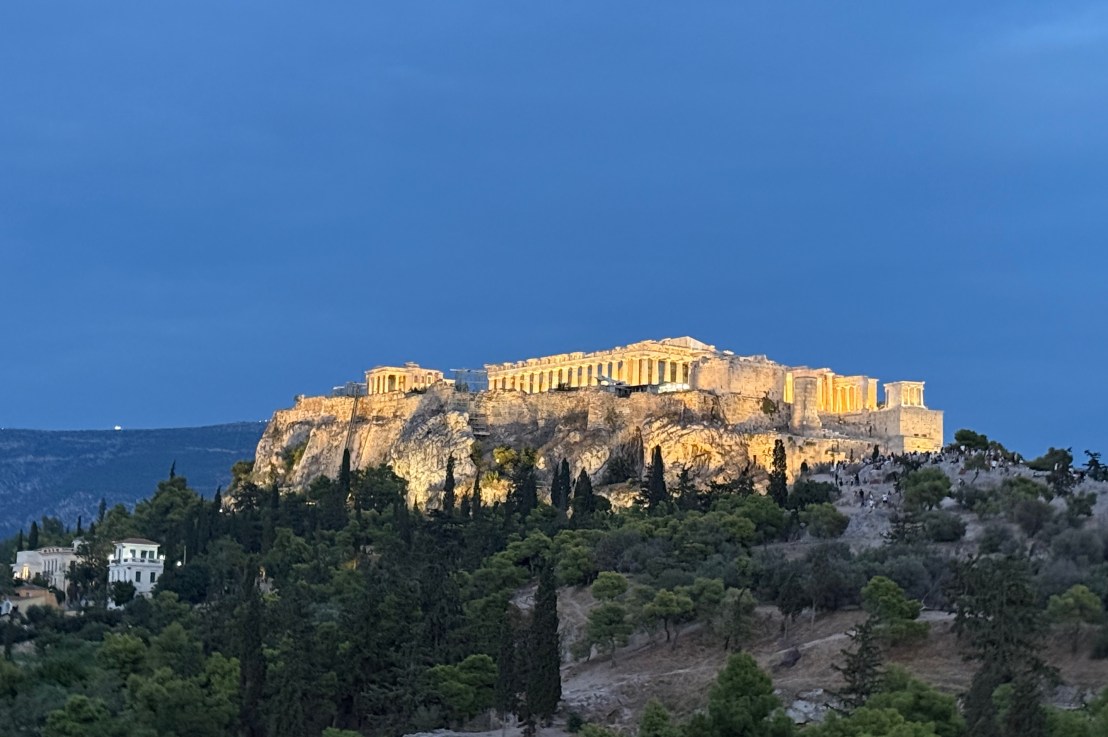
There’s one reason to visit Athens that trumps the rest: this city genuinely is the cradle of much of our Western culture: our philosphy, our politics, our art, even our sport. For centuries, both autocrats and revolutionaries have sought to embrace the words and symbols of Greek civilisation and the Roman empire that followed it, so to take a deep draught of that civilisation, a visit to Athens is essential.
We took our drink from that wellspring in two key museums, the Museum of Archaelogy and the Acropolis Museum, and in two areas of old stones, the Agora and the Acropolis. Unquestionably, that set of sites delivers on the promise of giving a deep understanding of the ancient history of the Greek people.
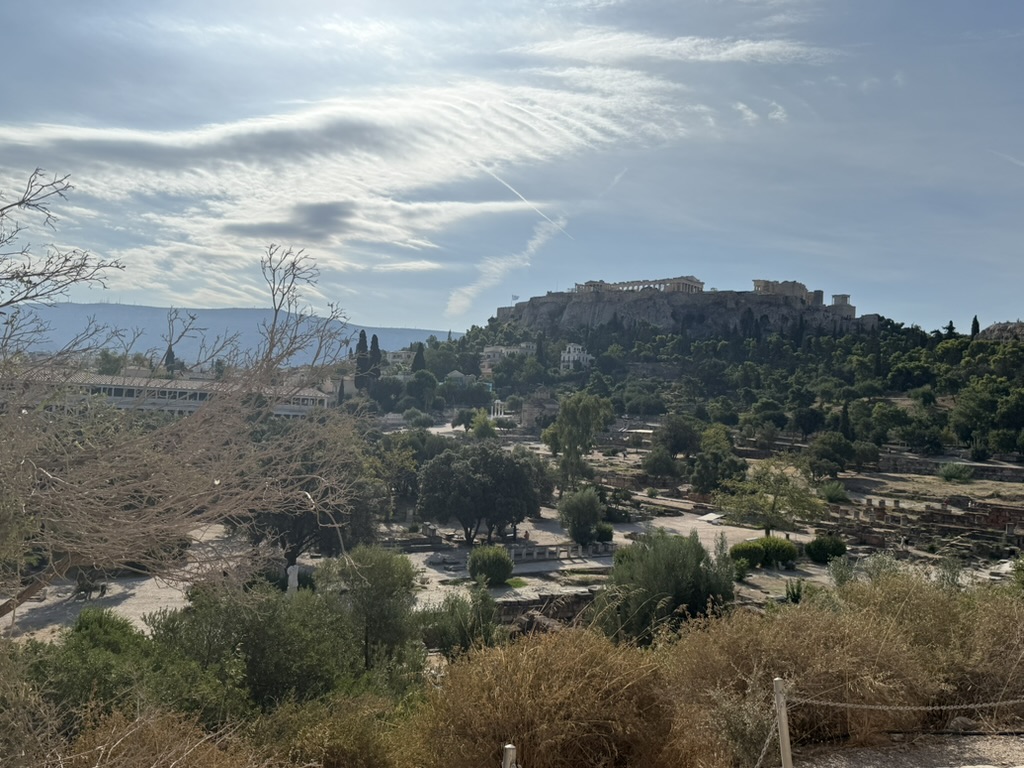
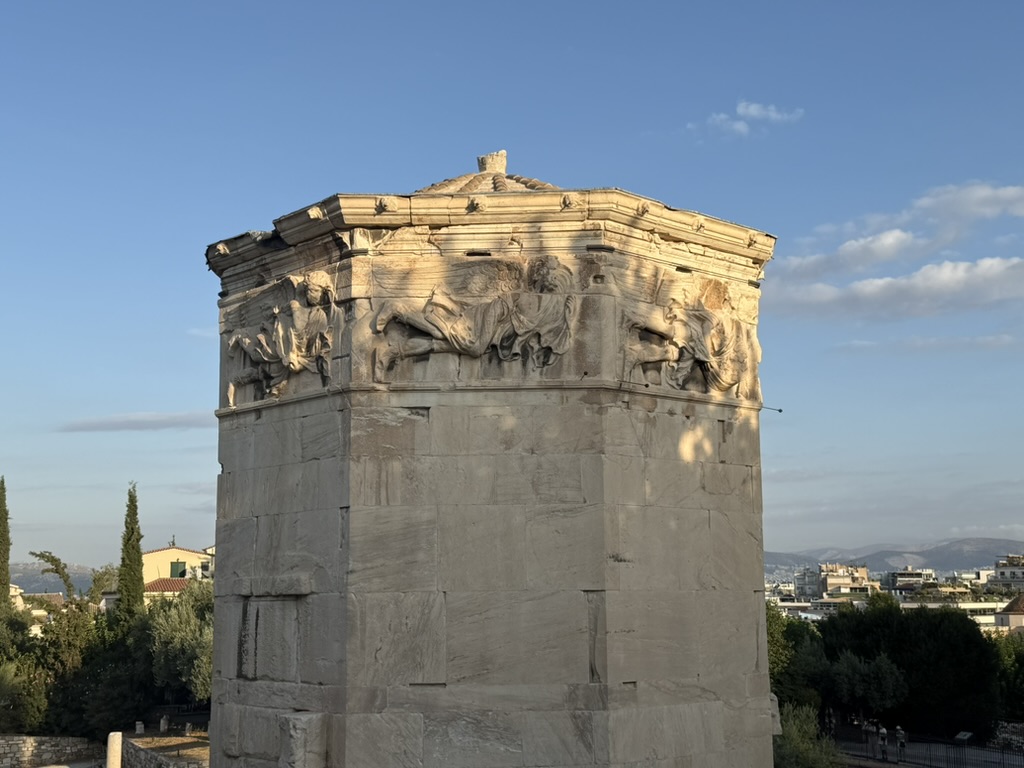
In each case, we visited the old stones first and the museum next, starting with the Agora (and the Roman Forum that took over from it). The Agora is best seen if you’ve done a bit of reading about classical civilisation in advance and you have a good guide – otherwise, it’s just a bunch of ruins – and we got lucky with Nikos, who was a veritable fount of knowledge of all eras. The project to excavate the Agora is an extraordinary story in itself: there was a perfectly normal residential district of central Athens above the Agora, whose houses needed to be expropriated and demolished for work to begin. The scale of the project was enormous (the are is some 30,000 m2 in size), and the Greek government could not possibly have financed it, but in the 1930s, the American School of Classical Studies at Athens received the necessary funding from John D. Rockerfeller. The excavated and partly restored ruins are interspersed with trees planted during the excavations, which are now mature and give an attractive (if slightly odd) rural tinge to the whole area.
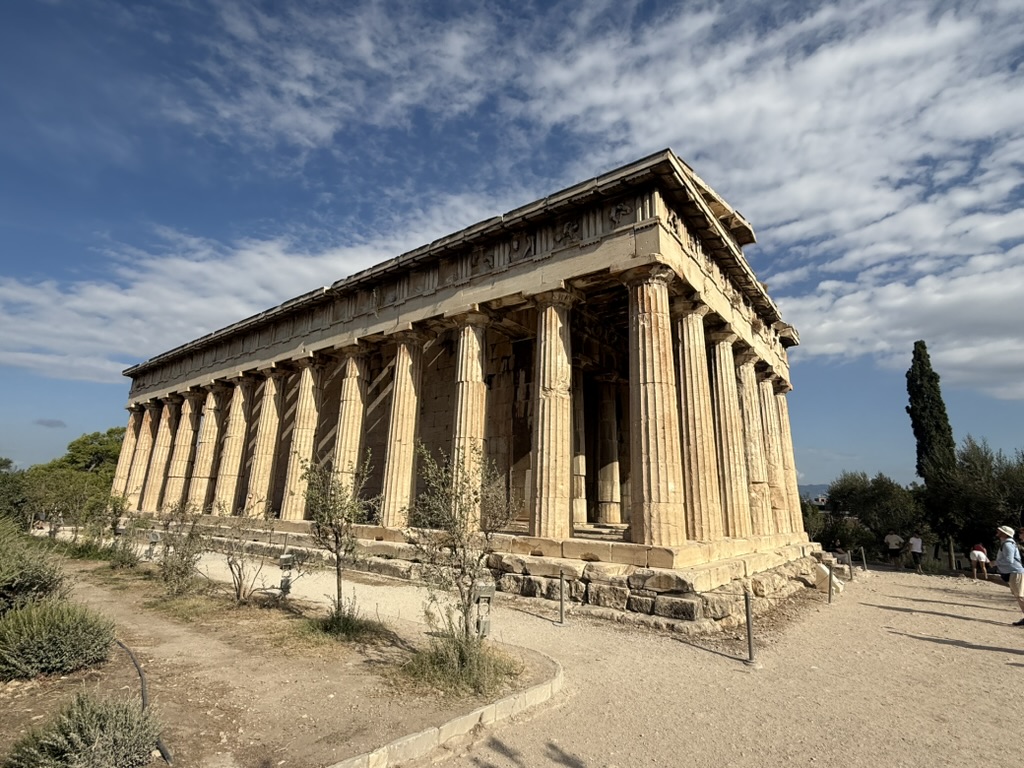
There’s something unique and magical about standing next to the house of Simon the Shoemaker, where Socrates debated with his pupils, perhaps the most important birthplace of philosophy. Or hearing about the political skill with which Cleisthenes sidelined the Athenian aristocracy to create the system of democracy, standing alongside the Bouleterion, the assembly house where it functioned. The tissue of checks and balances which Cleisthenes created is a mind-boggling achievement, and for all its failings, that system inspires every genuine democracy to this day. The constructions from the period and later – monuments, temples, libraries and so on – are wonderful, of course, but it’s that feeling of being immersed in history that makes the experience unforgettable.
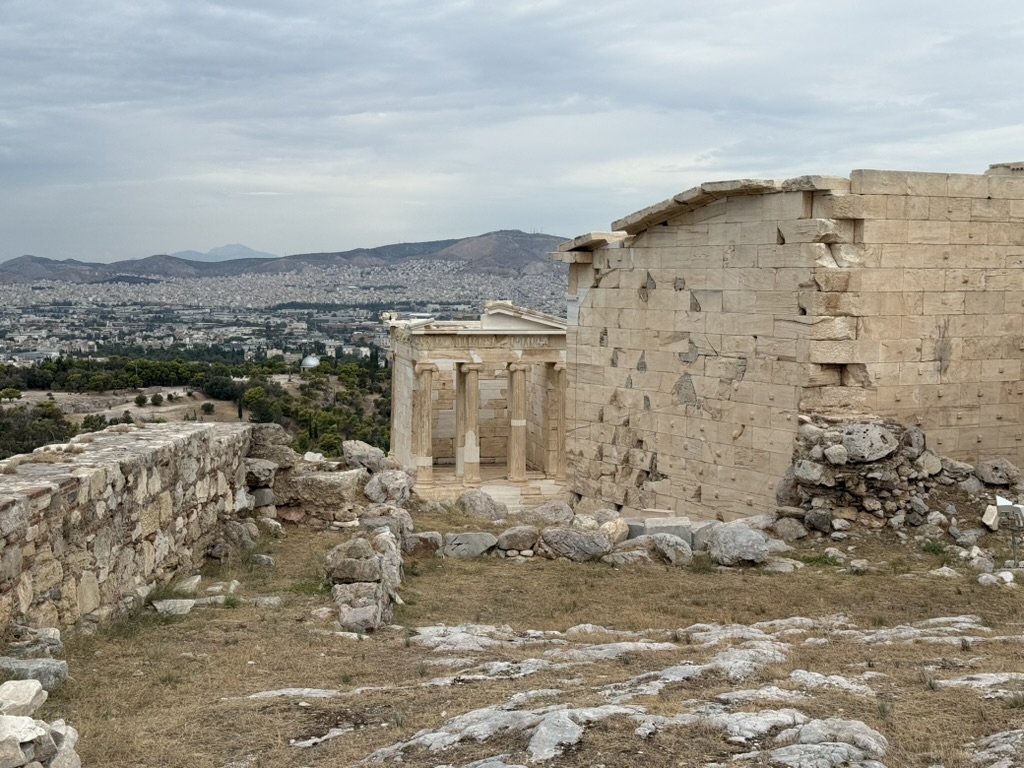
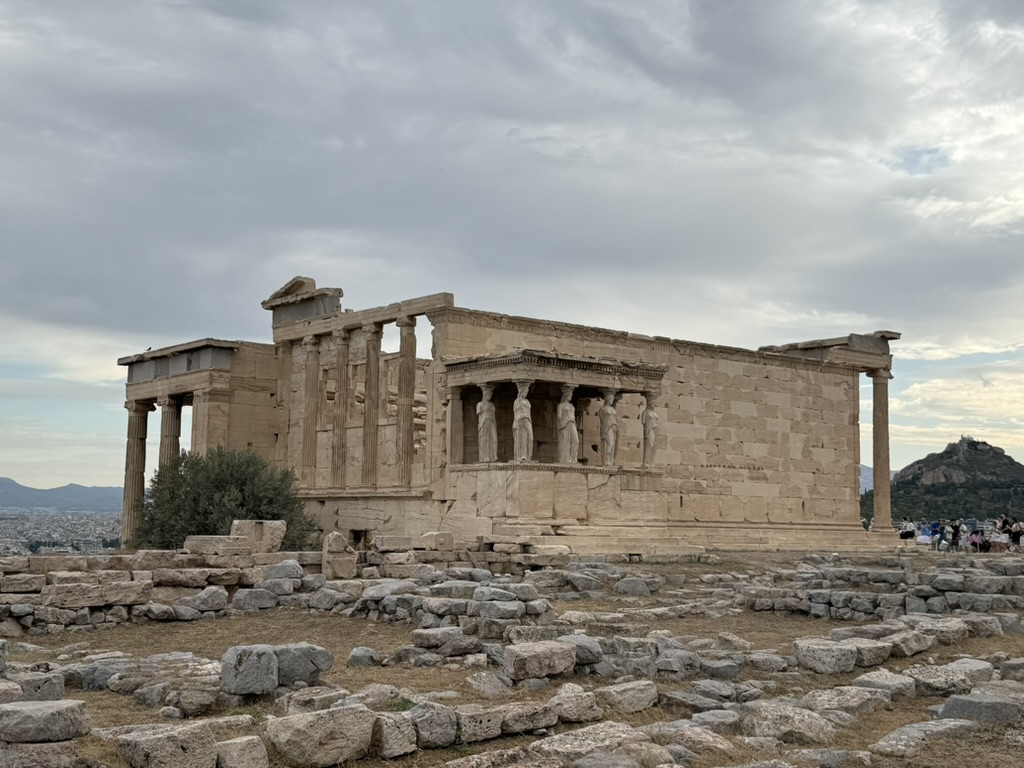
Contrary to my expectations before the trip, the Acropolis didn’t have the same emotional impact on me. From a standpoint of pure art and architecture, it’s magnificent, of course. But with all the heavy equipment that’s in place, the Parthenon feels like a permanent building project. The temple is so famous that I have a perfectly strong mental image of what it looks like, whether in its present day incarnation or in reconstructions of how it looked originally – and that image doesn’t include it being filled with giant cranes. I enjoyed the smaller temples far more – the Erichtheion and the Temple of Athena Nike, along with the Propyleia, the splendid entrance gate. But at the end of the day, the Acropolis is a site of religious ritual, whereas the Agora is a site of history, politics and philosophy. For me, the latter wins every time.
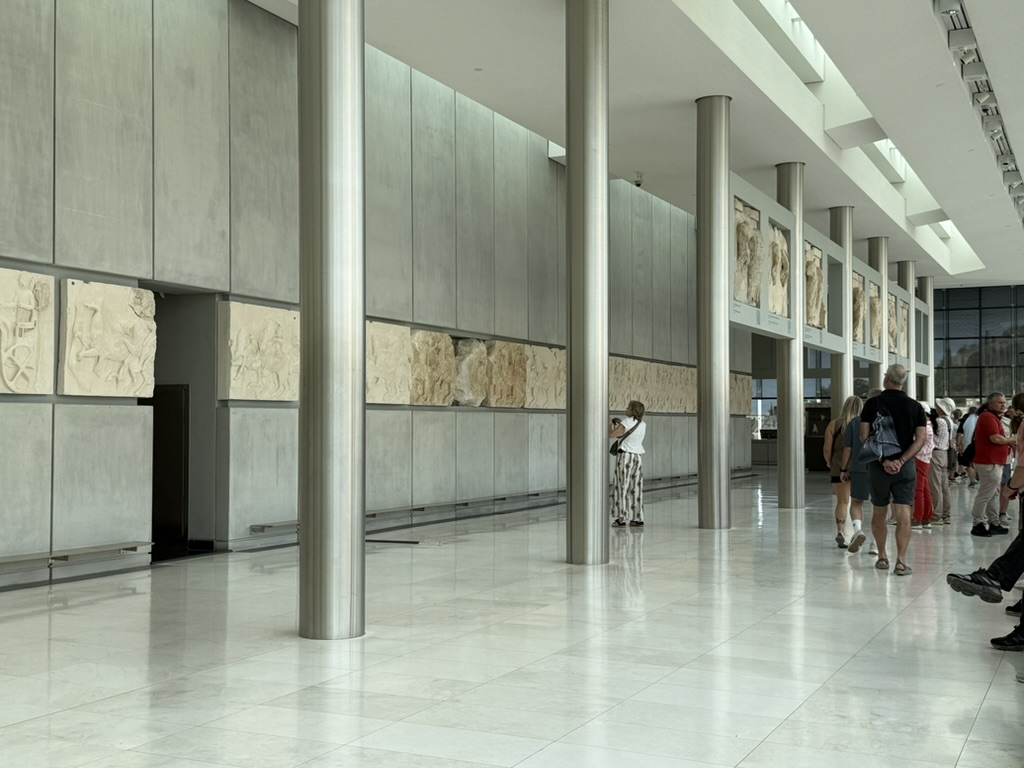
The Acropolis Museum is a magnificent piece of modern museum architecture, above all for its sublime use of natural light. Its signage is great; the way it displays the Parthenon marbles – as close as they can get to their original layout around the building, is excellent. For what it’s worth, I agree with the Greeks that it’s now time for the British Museum to send back the marbles they hold to reunite the collection – even if I’m not massively comfortable with the giant-sized chip on Greek shoulders about Lord Elgin, their glossing over of inconvenient truths of the story and the cartoonish way in which they depict Elgin as the archetypal British villian and Byron as the archetypal hero.
At some level, though, I’m dubious about whether it’s worth all the fuss. These are not the greatest examples of classical sculpture on the planet – their artistic quality is decidedly variable – nor are they the best preserved. Their main virtue lies in the sheer scale of the project and in the beauty of the building they once adorned. It makes sense to emphasise that scale by having them in one place, but I find can’t find it in me to be part of the fervour with which it’s debated.
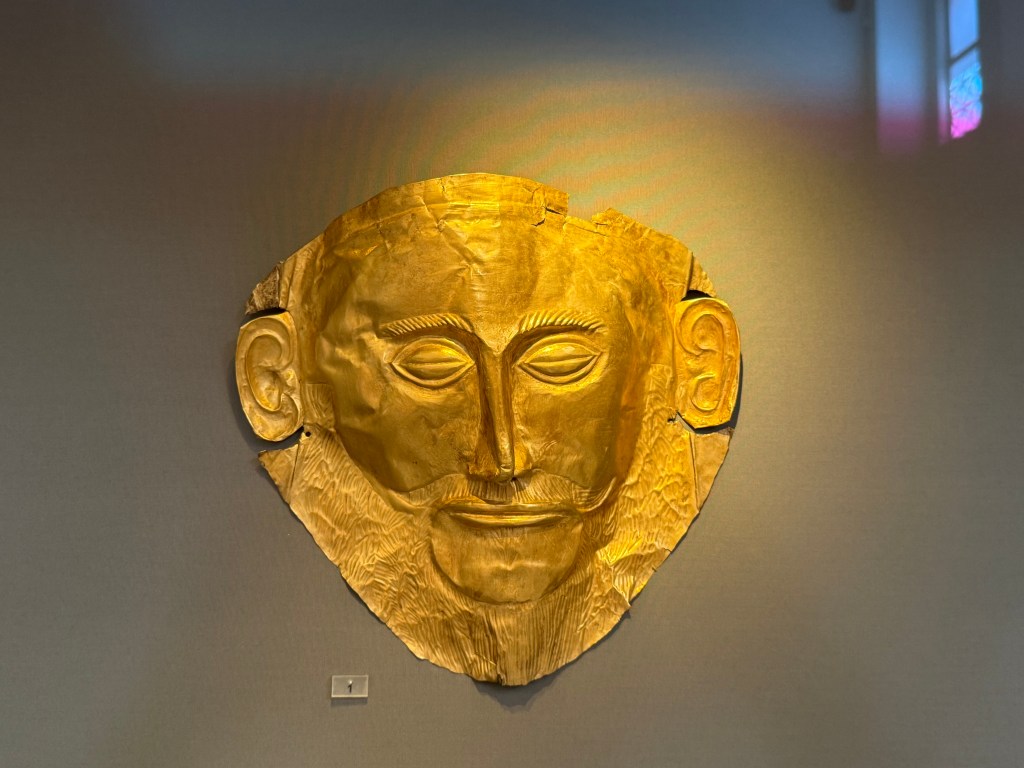
The National Archaeological Museum, on the other hand, blew me away. The building isn’t the greatest – in fact, we were lucky to see it at all because a giant refurbishment project will is slated to start next year. But the collection… Nikos guided us expertly through every era and civilsation, from ones with which I was familiar, such as the gold-obsessed Mycenaeans with the Mask of Agamemnon (mis-named, sadly, the dates being wrong by several centuries) to the ones of which I had no knowledge, like the bronze age Cycladic civilisation, whose art constitutes a bridge between the Egyptian and Greek worlds. Statues like the Artemision Zeus (or Poseidon, no-one’s quite sure) show just how much the Greek ideals of masculine beauty has survived through the ages to influence ours.
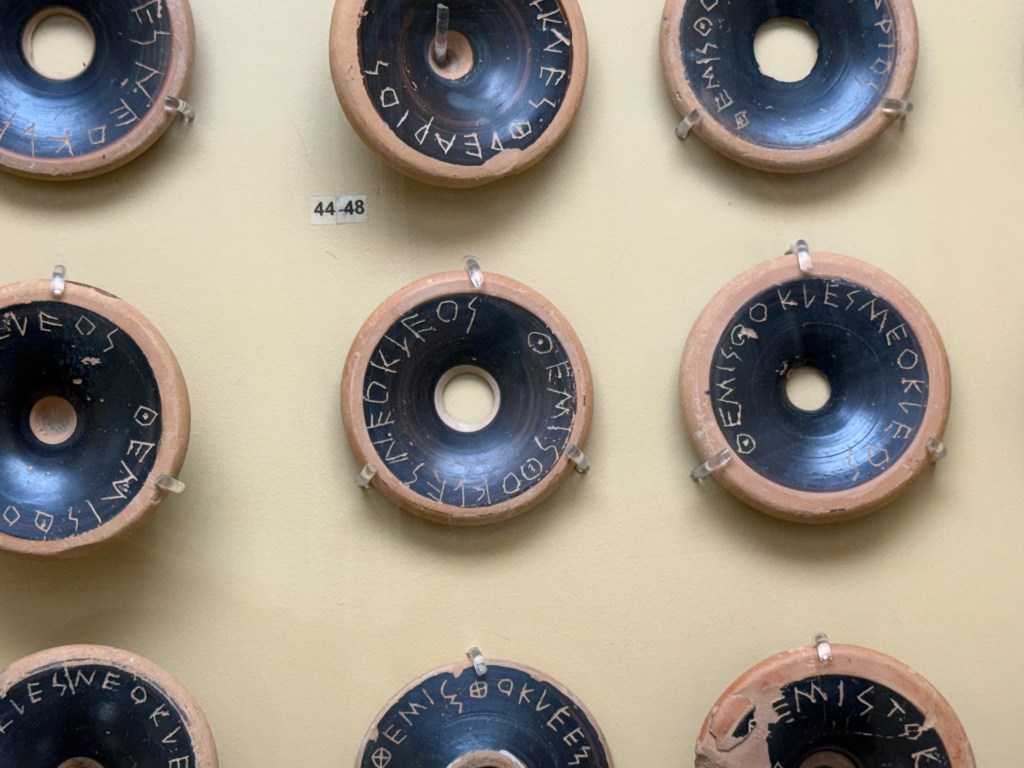
Setting aside the artistic point of view, the most telling artifacts are the political ones from Athenian democracy: the machine for random selection of people to serve as jurors or councillors, the voting apparatus, the potsherds (“Ostrakai”) engraved with the name of Themistocles to vote for his exile (“ostracism”) – in spite of his past as one of Athens’ greatest heroes.
In order to be within easy walking distance from all these sites, we chose to stay in a hotel in Plaka, the historic city centre immediately to the north of the Acropolis. This may not have shown Athens at its best, and almost certainly has little in common, for better or for worse, with the rest of the city.
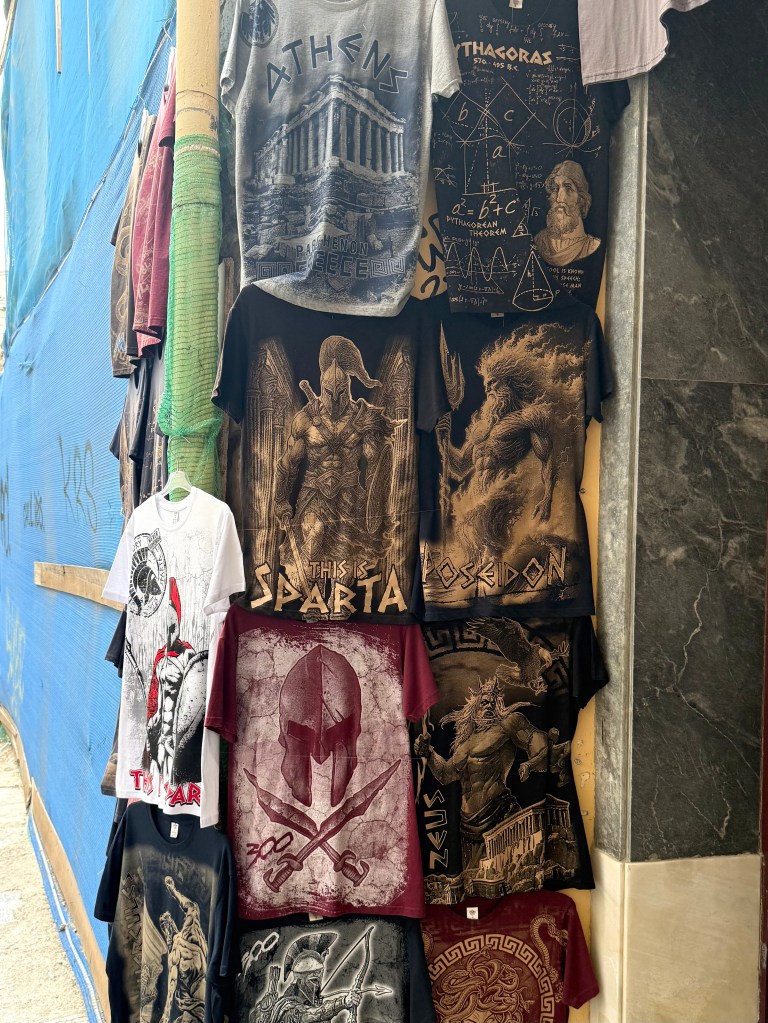
Many modern European cities are afflicted by the twin blights of mass cruise ship tourism and AirBnb. Amsterdam, Barcelona, Budapest, Prague: all have several million tourists per year and all suffer from these problems. What makes Athens stand out is the sheer concentration of tourism in the Plaka district, which feels like an uninterrupted swathe, half a kilometre wide by one kilometre long, of closely packed mass tourist eateries and shops. What’s extraordinary is the homogeneity: souvenir shops with T-shirts of Homeric figures (the interchange between the imagery of the Trojan wars and modern fantasy literature is striking), jewellery and clothing stores of indifferent quality, restaurants serving the same menu of moussaka, souvlaki, Greek salad and the odd pasta dish for the less adventurous. These include the largest mass tourism restaurant I’ve ever seen, Thanasis, which on its own takes up nearly 100 metres of Mitropoleos Street.
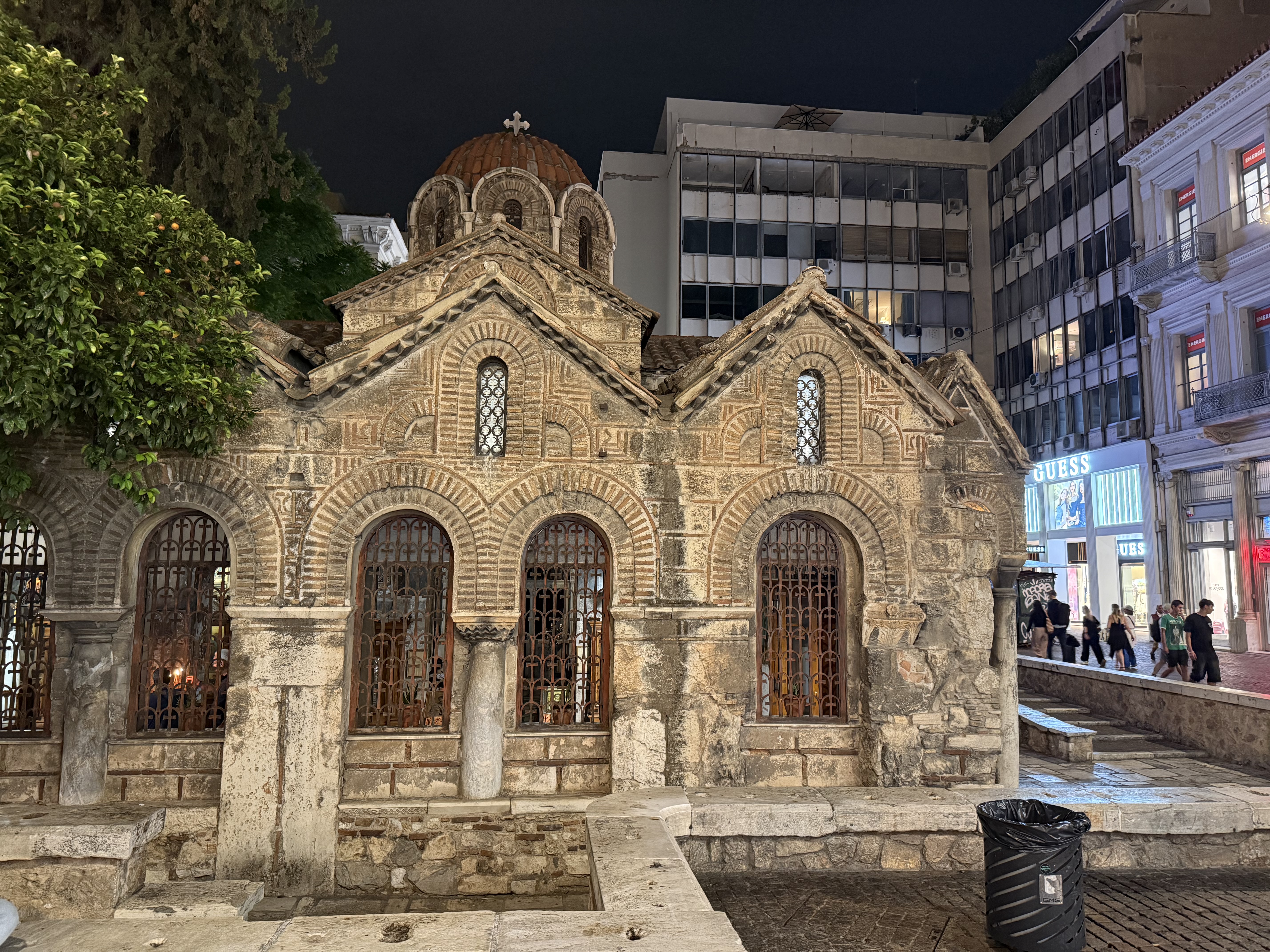
A few of the streets in Plaka escape this, with rows of elegant houses in the “Greek Revival” style of architecture. Some of these have been refurbished beautifully. Some are derelict, their owners waiting (we were told) for them to fall down so that they can rebuild them without having to comply with the tangle of restrictions on heritage buildings imposed by the Culture Ministry. Others show the mild decay of properties rented out for short lets.
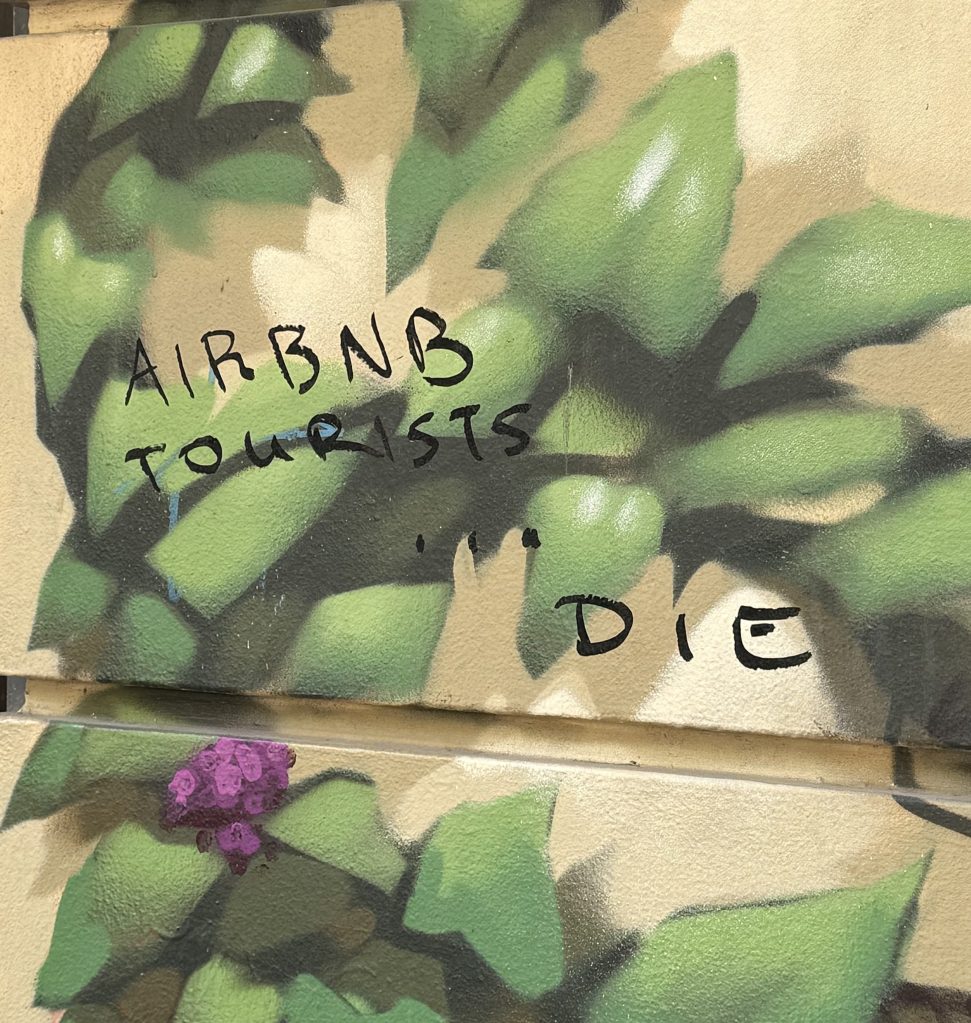
It’s not that there isn’t quality to be found here: if you look hard, there is good jewellery and clothing to be found amongst the tat, and we had some lovely meals in secluded gardens, helped by some memorable Cretan wine (clearly, Greek wine has come on by leaps and bounds in recent decades). But if the “AirBnB tourists die” graffiti is anything to go by, not all Athenians are happy with what tourism is doing to their city.
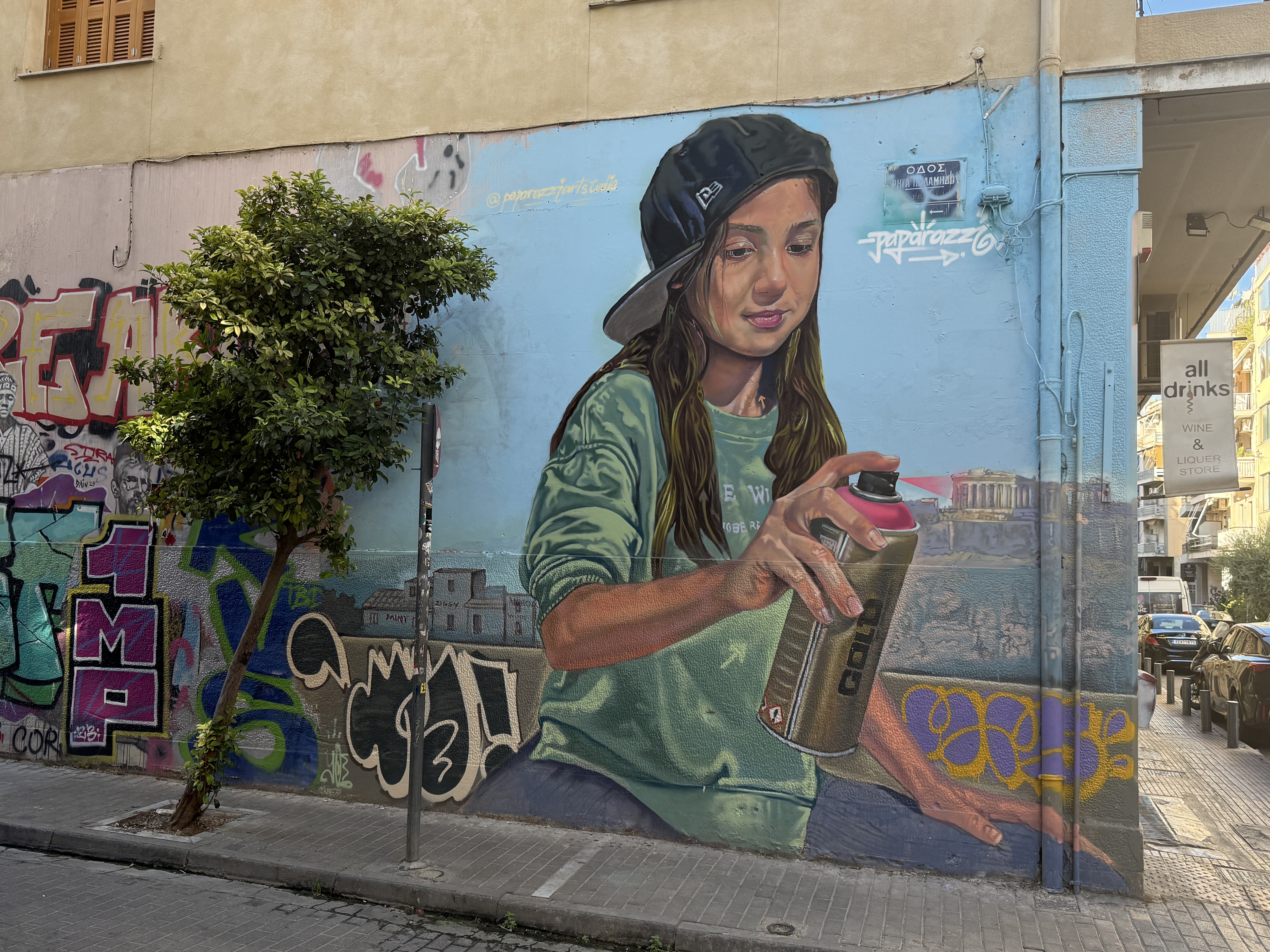
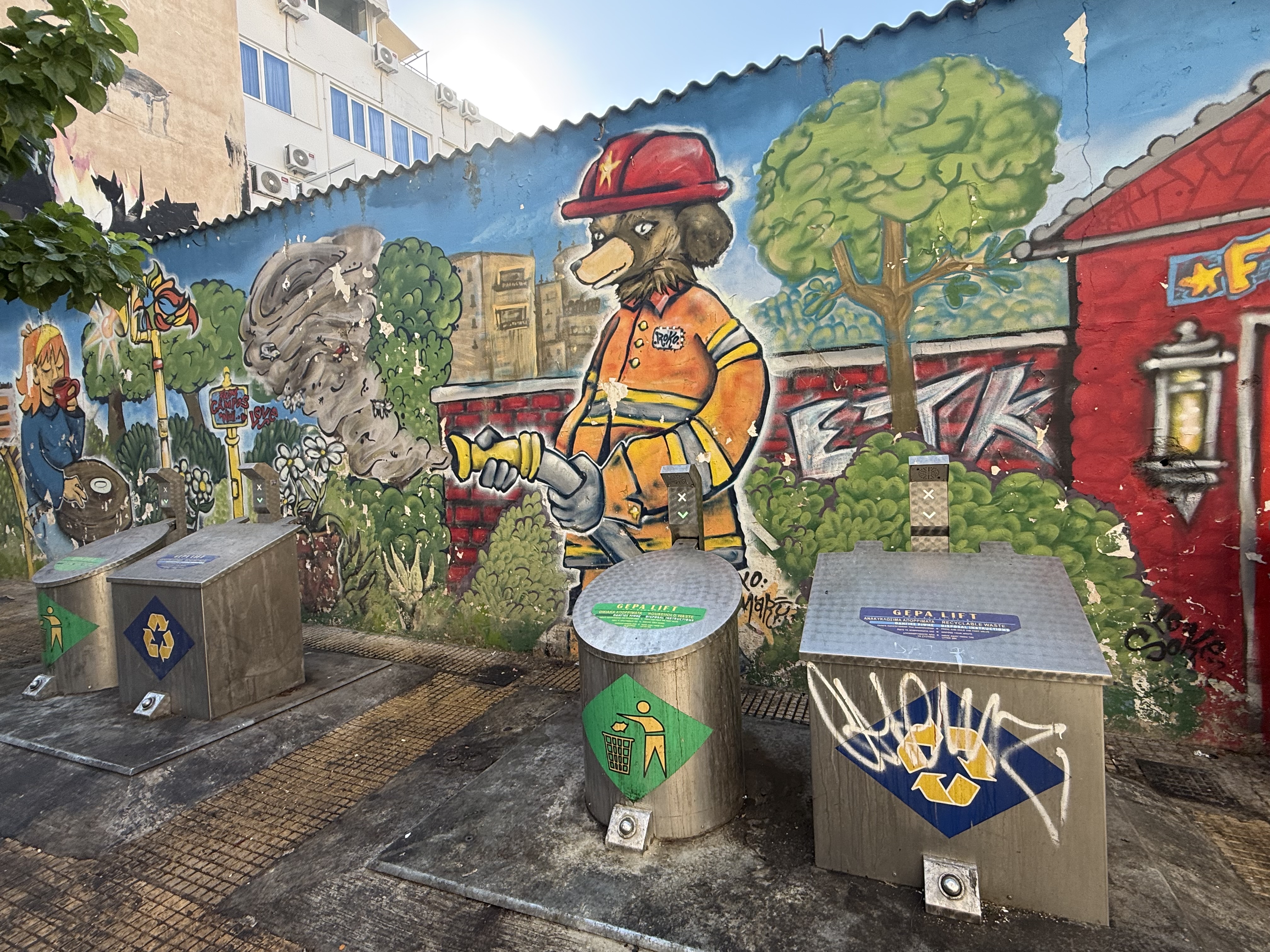
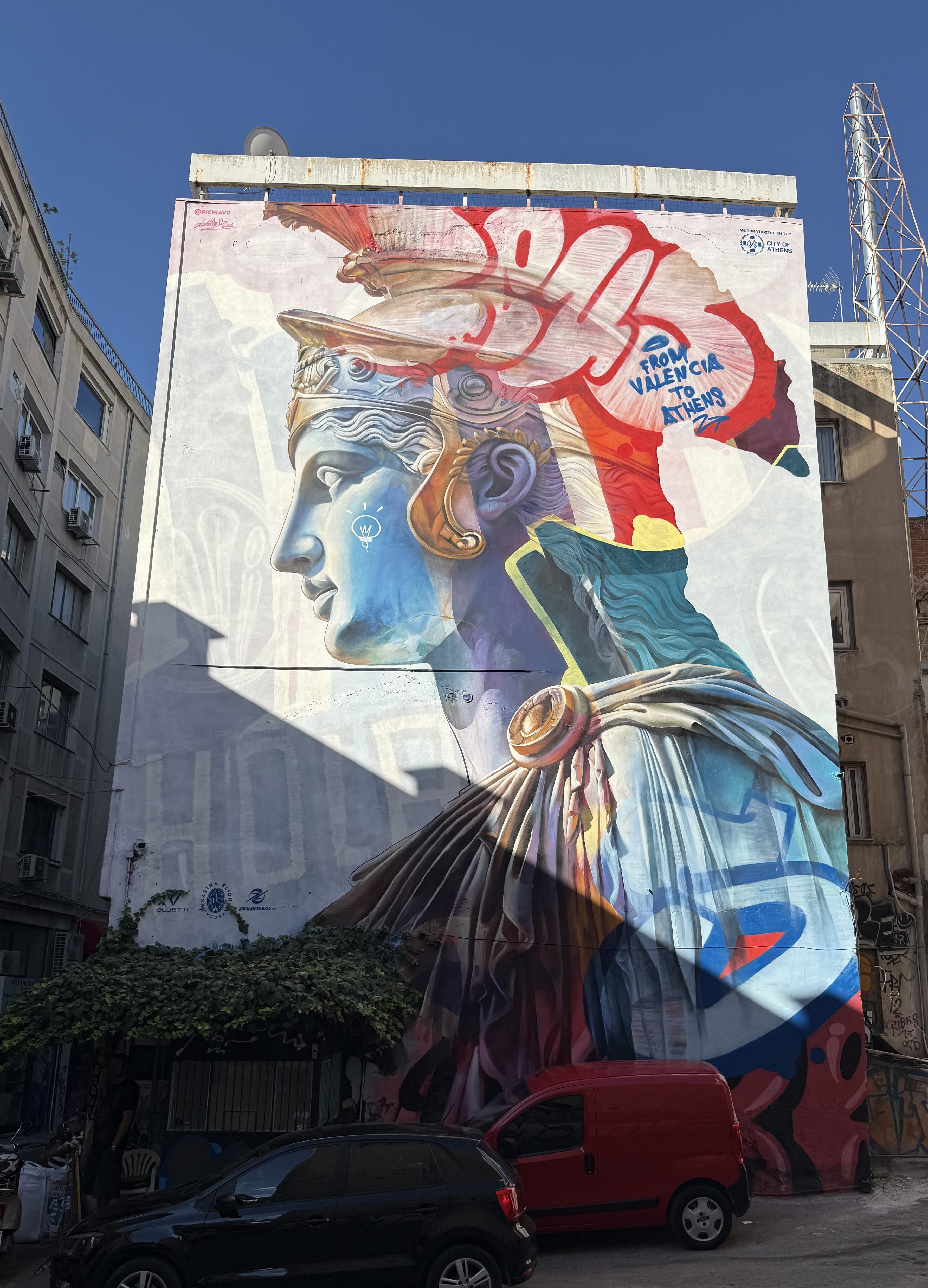
To the west side of Plaka, in Psyrri, there are some awesome pieces of street art. At the other end, across Syntagma Square, the National Garden provides a blissful escape from the hurly burly. Created at the behest of Queen Amalia, wife of King Otto, the Bavarian prince chosen by the Great Powers to be King of Greece in 1832, after the country’s independence, it’s a park of your dreams – more a forest than a park, really – with an untold number of exotic trees, and shady places to sit and relax, breathe some fresh air and let your mind wander.
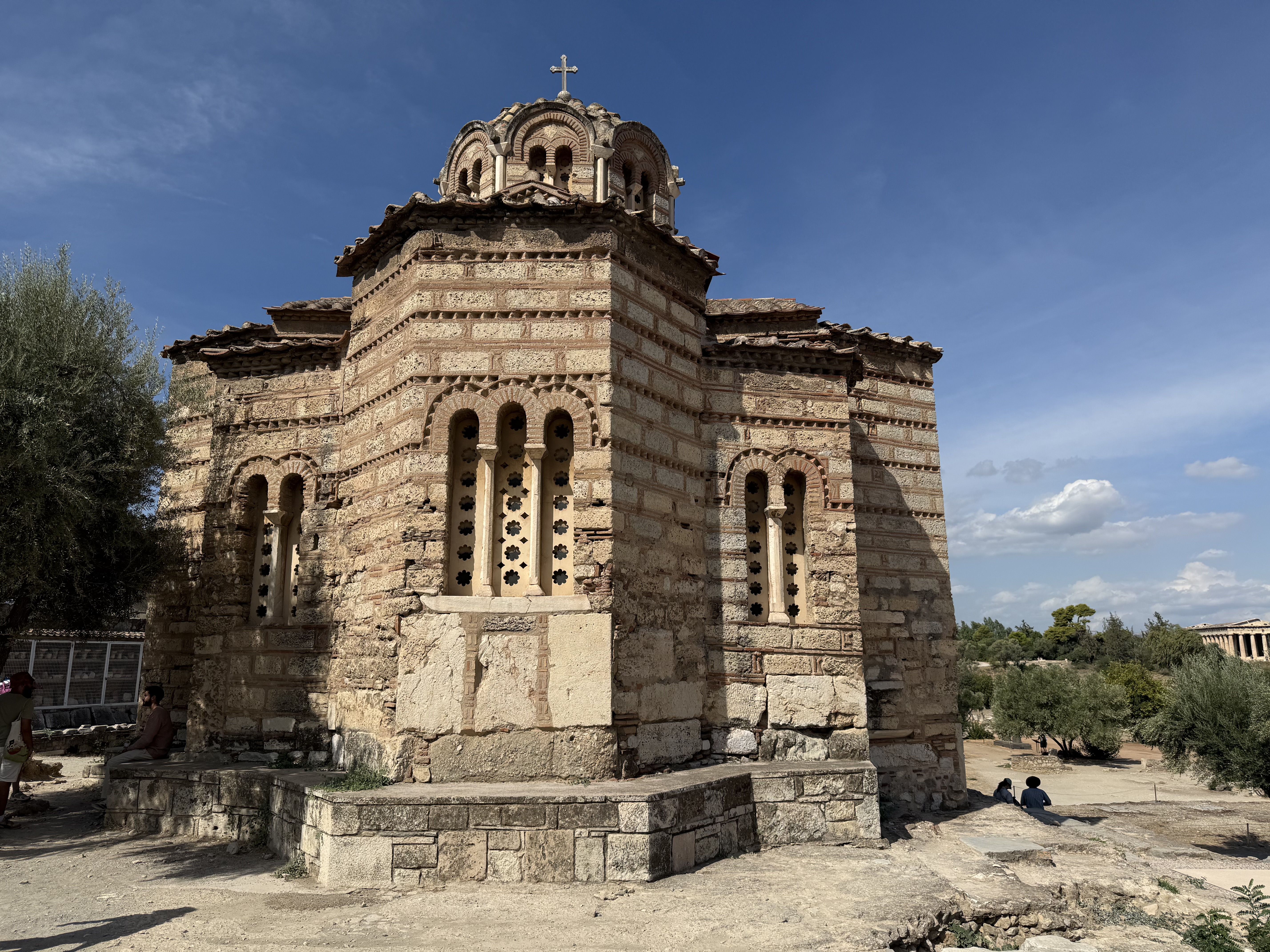
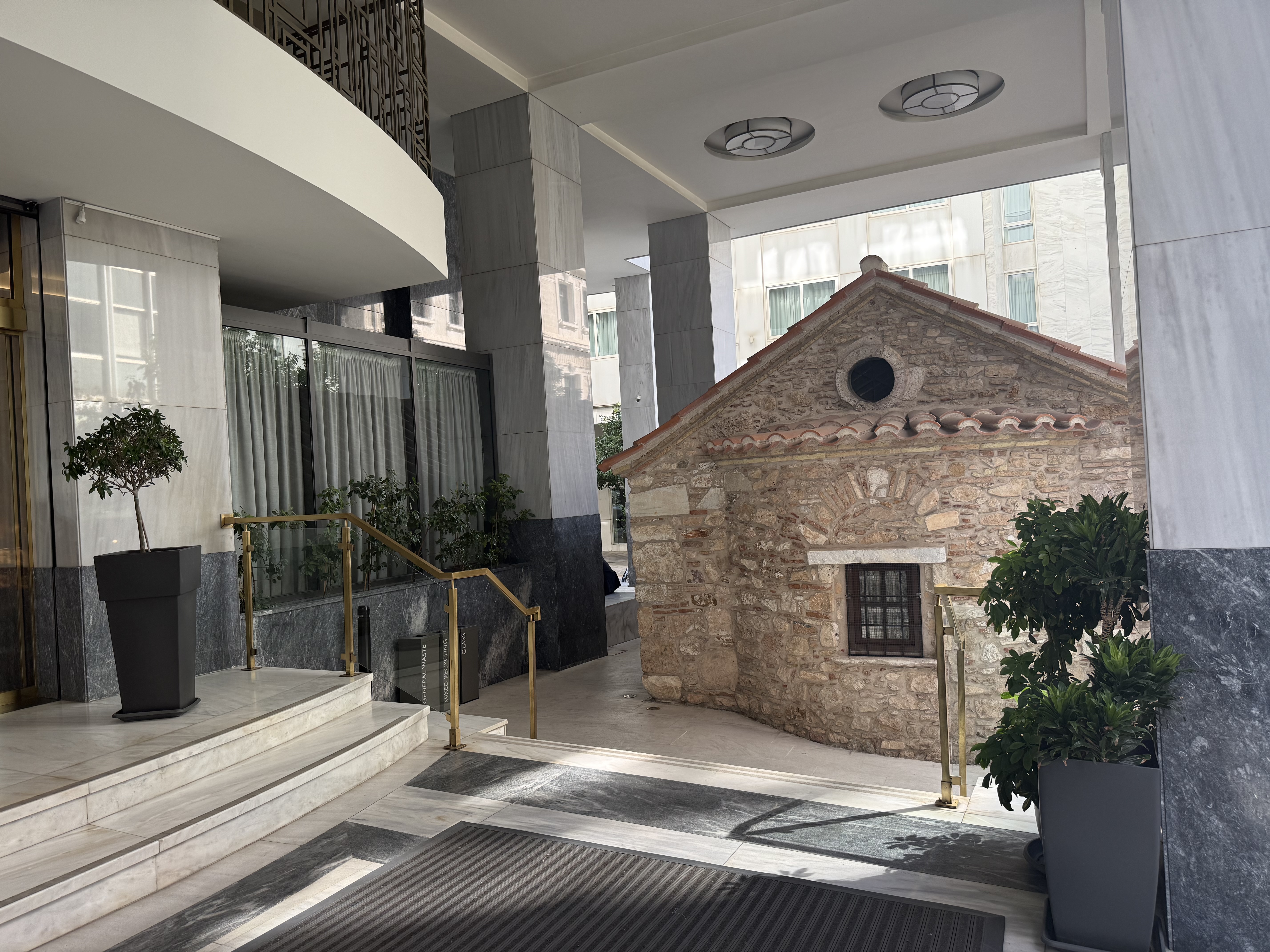
Another joy of Athens lies in the Orthodox churches that bespeckle the city, whether the ancient (the 10th century Chuch of the Holy Apostles on the edge of the Agora), the grand (The Metropolitan Cathedral – although the Greek Orthodox church never approaches the bling levels of baroque Catholic churches) or the intimate (a tiny chapel nestling in the columns that prop up the Electra Metropolis hotel).
A less good side is a syndrome of things that “nearly work but not quite” – even in a few days, we suffered our share of traffic nightmares, taxis who refuse to give you a ride, non-working hotel equipment and what appear to have been kitchen disasters in otherwise excellent restaurants.
For a visitor, Athens has a huge amount going for it, and not just its twin statuses as cradle of civilisation and gateway to the islands of the Aegean. With the Acropolis at its heart, its topography is spectacular. Its climate is gorgeous. Its culture is a true crossroads between East and West. And its food revolves around an abundant supply of superb local ingredients (if such things interest you, a visit to the Municipal Food Market, and particularly its fish market, is well worth while). Let’s hope it can make its peace with mass tourism.
We finished our trip on a high, with one of the best restaurant meals in memory at a place called Zohós (part of a different Electra hotel). In a lovely courtyard, with everything beautifully designed to the finest detail, charming and attentive staff served us five of the best meze I’ve ever had: every one a flavour bombing surprise – and at prices not so much higher than the bog standard places. I’ll be back.
 Polything