Tag: Recipes

Chocolate mousse

For anyone planning a Seder night (the Jewish celebration of Passover eve), the question raises itself of how to make a flourless dessert. There are various standard tricks, like using ground almonds or matzo meal to substitute for the flour, but here is a fabulous, indulgent dessert that avoids the tricks altogether.

This chocolate mousse started life as one of my mother’s standards, taken from the classic American cookbook Joy of Cooking (still in print and being revised, 93 years after its first edition – my own copy is now so tattered that it needs replacing). I’ve made things metric and changed various quantities, mainly to suit what you buy in English supermarkets, although, to be honest, it’s incredibly forgiving: the recipe will still work OK even if you change the ratios of cream to chocolate to eggs sugar, so you can make sweeter, lighter or more intensely chocolatey at will.

Recently, I’ve been making a more substantial change: making the egg whites into an Italian meringue before folding them into the rest of the mixture. The result is a far lighter, stable consistency which, in my view, is well worth the extra effort. This needs a thermometer – if you don’t have one, just go for standard sweetened beaten egg whites.

By the way, I tend to use the egg yolks for crème pâtissière, for use in éclairs or fruit tarts.

The Italian meringue

  • 4 large egg whites
  • 200g sugar (this is less than most recipes, so you can up it to 300g if wanted)
  • 5oml water
  • Juice of half a lemon
  1. Pu the egg whites into the bowl of your stand mixer, equipped with the whisk attachment.
  2. Put the sugar and water into a small saucepan and heat: for the first part of the process, make sure you mix things until the sugar is properly dissolved. 
  3. Monitor the temperature regularly with a thermometer: you will be using the syrup when it reaches 121℃.
  4. Well in time for the syrup to be complete (I tend to start when it’s at around 90℃), whisk the egg whites until they form soft peaks. Stop the mixer.
  5. When the syrup reaches 121℃, restart the mixer on full speed, and slowly pour the syrup into the bowl, in as thin a dribble as you can manage.
  6. Add the lemon juice, then continue mixing for at least 10 minutes while the meringue cools.
  7. Remove the whisk – you meringue is now ready to use.

The mousse

  • 50g sugar 
  • 80g rum
  • 350g dark chocolate, at least 70% cocoa solids
  • 500ml cream
  1. Put the sugar and rum into a saucepan and warm gently until dissolved into a syrup. You do NOT want the syrup to caramelise.
  2. Take the syrup off the heat and leave to cool somewhat.
  3. Break up the chocolate, then heat in a double boiler until melted
  4. Mix in the syrup
  5. Mix in 100ml of the cream, a bit at a time, until everything is smoothly blended
  6. Whip the remaining 400ml of the cream until stiff
  7. Fold in the chocolate mixture until completely blended (you don’t really want white blotches).
  8. Now fold in the Italian meringue. Try to do it without overworking, which will lose the air – but at the same time, you want it completely mixed. It’s a good idea to fold in about a quarter of the meringue first, and then the remainder, which you’ll be able to do more gently.
  9. Put the mousse into a large bowl for serving, or into individual ramekins or glasses if you prefer.

I like serving this with a red fruit coulis, made from reducing and sieving frozen red fruit and sugar, with a bit of lemon juice added. The sharpness of the coulis cuts through the richness of the mousse, and anyway, raspberries and chocolate are a marriage made in heaven.
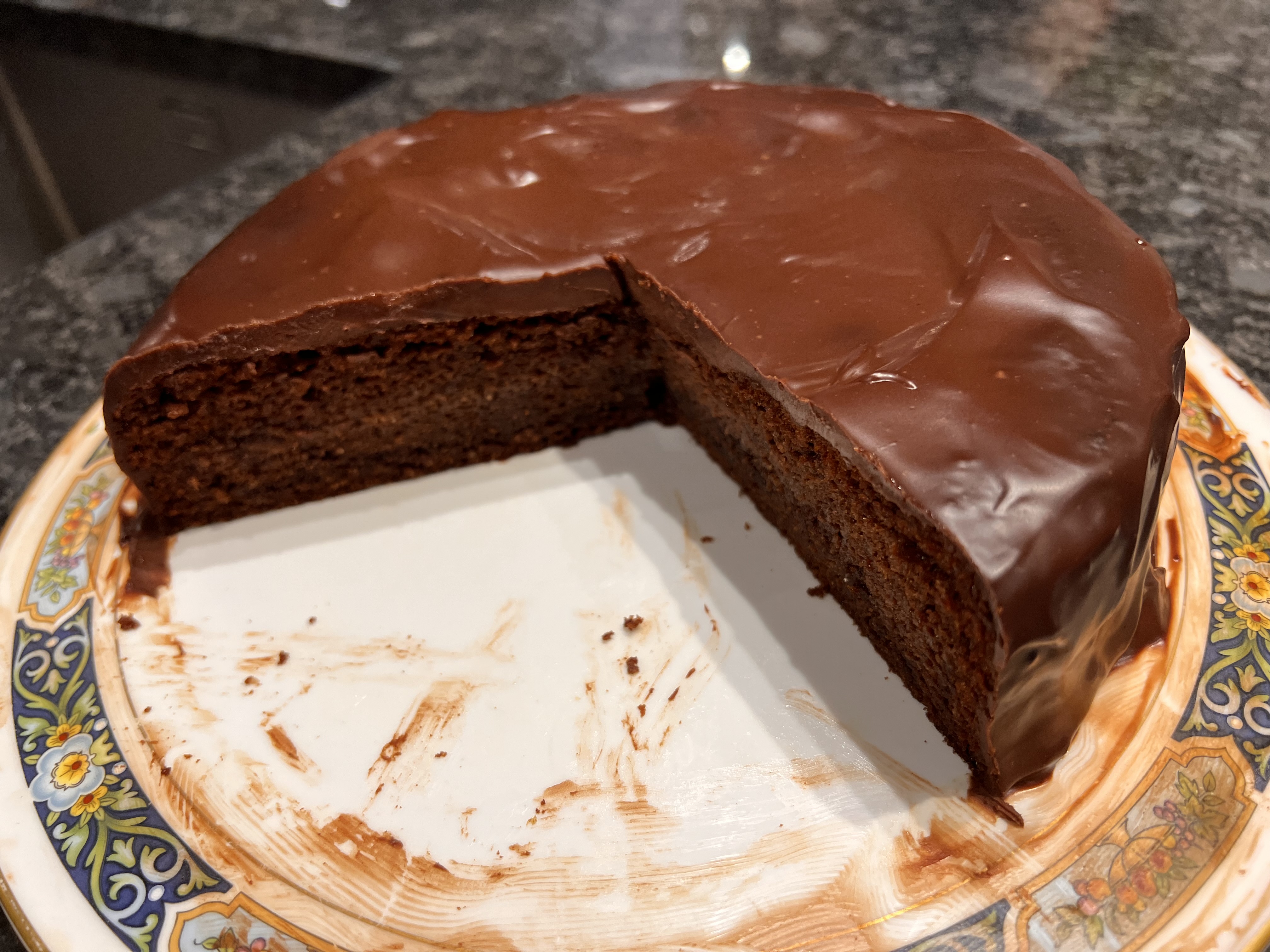
Sachertorte revisited – for diabetics

Sachertorte revisited – for diabetics

The words “diabetic baker” are something of an oxymoron: diabetics really shouldn’t be eating high carbohydrate foods, which pretty much rules out bread, cakes, biscuits, pies, pastries and just about any kind of baked goods. That makes my series of blog posts on baked goods from around the world a totally inappropriate project to have done (or, viewed more positively, a rash thumbing of my nose at the health gods).

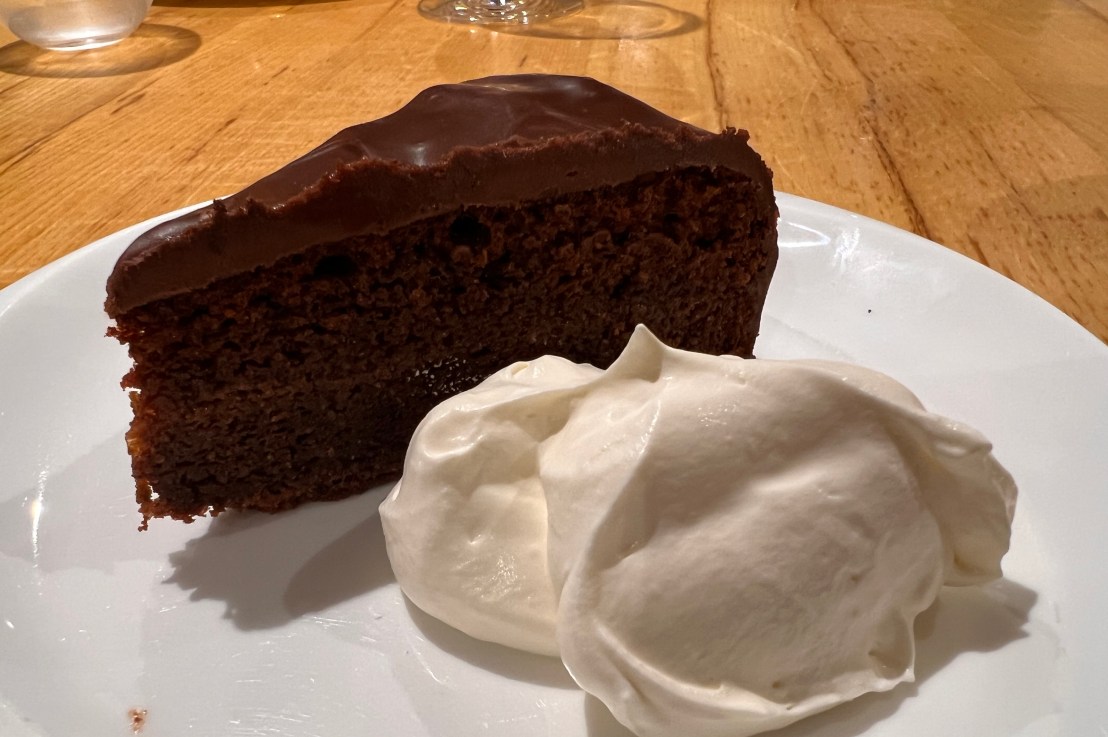
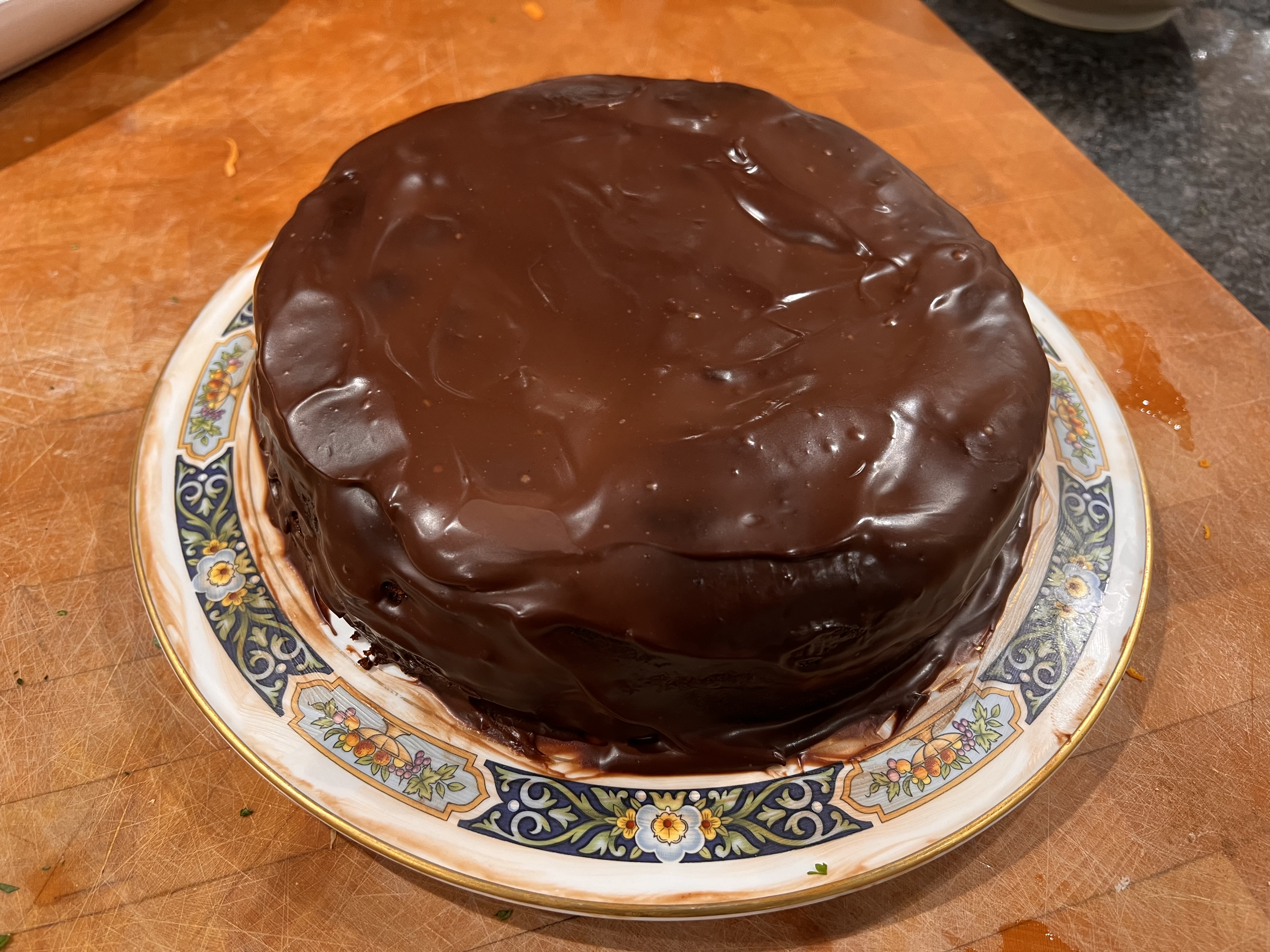
But there are times when you can cheat. I just ran an experiment to see how far I could minimise the carbohydrate content of my favourite cake – Sachertorte – and it was outstandingly successful.

Starting with my recipe for normal Sachertorte, I did four things:

  1. Replace the flour with ground almonds
  2. Replace the sugar with allulose
  3. Replace the icing with a chocolate ganache
  4. Keep careful control of the amount of apricot jam in the filling

With more time available and apricots in season, I could have made my own apricot compote with allulose, but there really wasn’t time.

If you aren’t aware of allulose (aka Psicose or D-ribo-2-hexulose): it’s a naturally occurring sugar which you can’t digest normally. It tastes something like 70% as sweet as sugar. I find that it has little or none of the aftertaste of most non-sugar sweeteners – and in a recipe with this one, with its strong-tasting dark chocolate, I could detect no aftertaste whatsoever. People have questioned whether there any health risks, but the US FDA have approved it with a maximum consumption of 33-36g per day for a 60kg adult (a portion of this cake uses under 20g, so I reckon it looks OK). 

Comparing the two recipes, the carbohydrate budget looks like this. In rough numbers, the new recipe’s carbohydrate count is a quarter of the standard one.

NormalDiabeticSaving
Dark chocolate 300g90g90g
Sugar to allulose150g0150g
Flour to ground almonds76g19g57g
Remove icing200g0200g
Apricot jam 90g to 60g53g35g18g
Total for a 1kg cake569g144g425g
Total for a (generous) 125g portion71g18g53g

I can’t fault the results. My family proclaimed this to be better than the original, which we attribute to liking the extra flavour of the almonds and preferring the creaminess of the ganache to the extra sweetness of the chocolate icing. It’s a winner.

For completeness, here’s the modified recipe. Make it in a greased, 8-9 inch, removable-rim pan.

Ingredients

Cake

  • 150g dark chocolate (70-80% cocoa solids)
  • 150g allulose
  • 30g granulated sugar
  • 170g butter, softened
  • 100g ground almonds
  • 6 eggs
  • 60g apricot jam mixed with the juice of half a lemon
  • 1/2 tsp baking powder
  • vanilla essence or vanilla paste to taste (different brands are so different in strength that I can’t give an amount)

Ganache

  • 150g dark chocolate (70-80% cocoa solids)
  • 200g double cream

Method

Cake

Preheat the oven to 160°C fan. Grease the sides of an 8-9 inch, removable-rim cake tin with butter and line the bottom with baking paper or parchment.

  1. Separate the eggs into yolks and whites
  2. Melt 150g of the chocolate in a double boiler. Then leave it to cool.
  3. Cream 120g of the allulose and the butter until the mixture is fluffy.
  4. Beat in the egg yolks gradually until the mixture is light in colour.
  5. Add the melted cooled chocolate.
  6. Add the ground almonds. Add the baking powder and mix everything thoroughly.
  7. Beat the egg whites until they are beginning to be stiff. Add the remaining 30g of allulose and beat on maximum speed until stiff but not dry.
  8. Fold the resulting meringue mix into the cake mixture, about a fifth at a time. The weight of the almond-rich mixture will make this trickier than for a normal cake.
  9. Bake the mixture in the pan for around 40 minutes.
  10. Remove and cool on a rack.
  11. Optionally, slice the top dome from the cake and set aside. Slice the remaining cake in half. Spread the jam on the bottom half and reassemble (optionally, spread jam on the top of the cake also).

Ganache

  1. Break or chop the chocolate into small pieces (less than 1cm square) and put in a reasonably heatproof bowl. Of course, if you’ve bought your chocolate in the form of chips/pellets, this has already been done for you.
  2. Bring the cream close to the boil, and pour it over the chocolate.
  3. Stir rapidly and continuously until the mixture is smooth.
  4. Cool enough that the ganache no longer runs really easily, but is still spreadable with a glossy finish.
  5. Spread over your cake.
  6. Leave to cool completely.
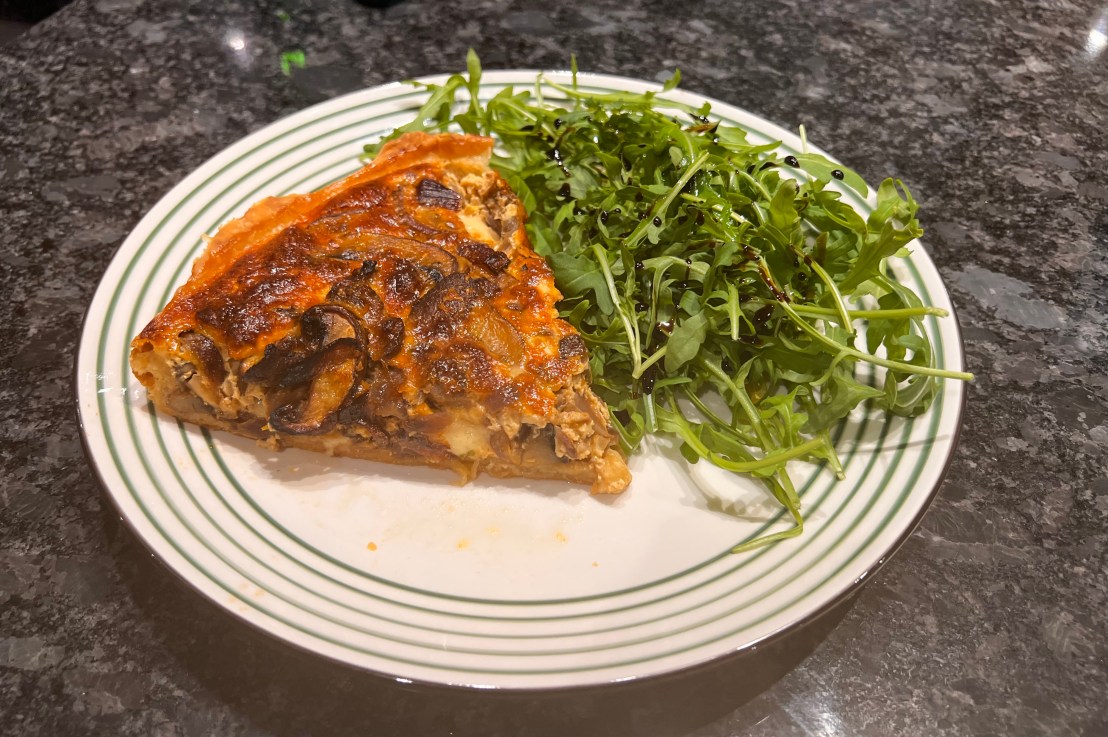
Luxury baking: Mushroom and Comté tart

Luxury baking: Mushroom and Comté tart

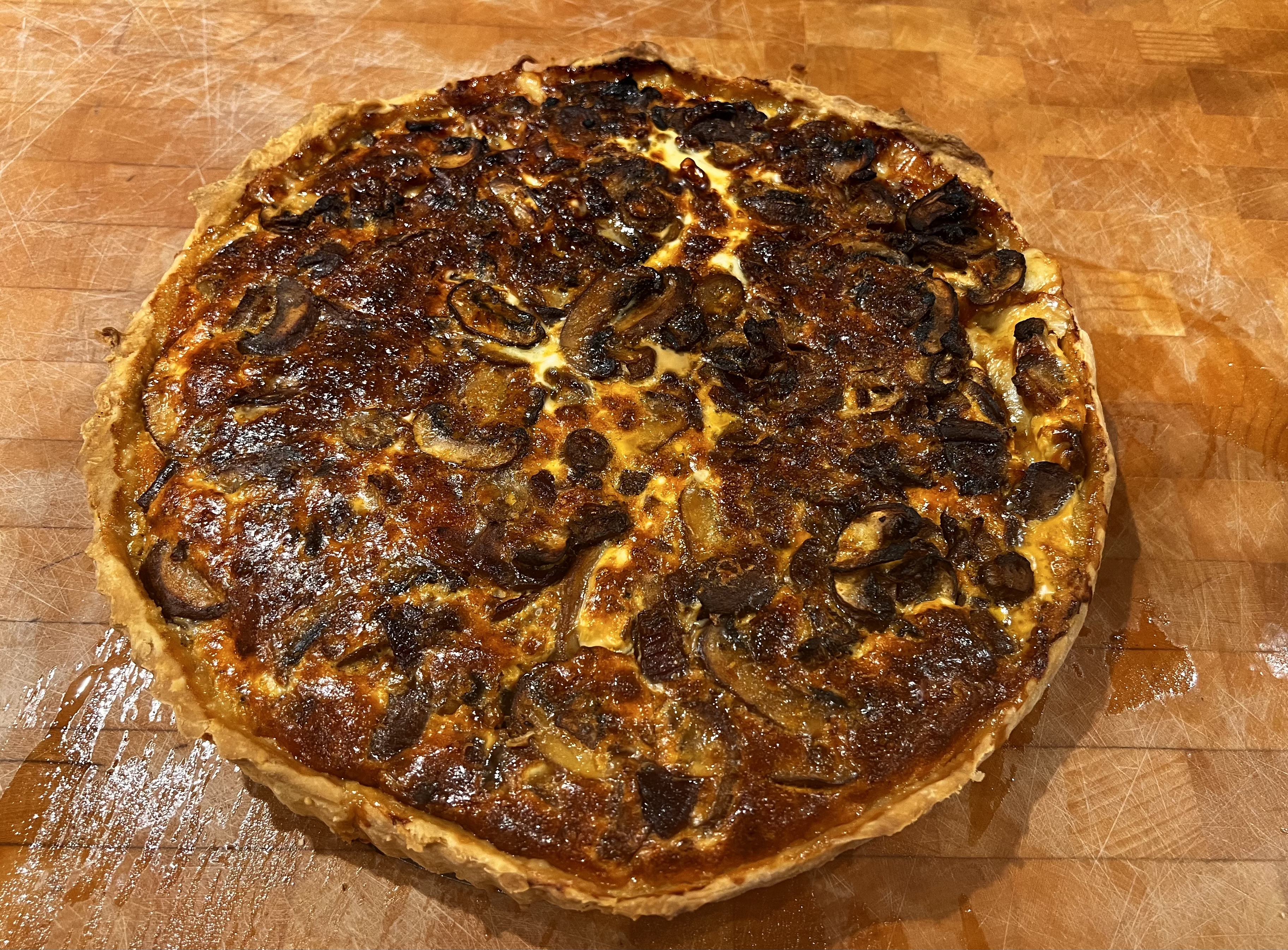
For anyone old enough to remember the 80s and Bruce Feirstein’s Real Men Don’t Eat Quiche: this particular real man not only eats quiche but also loves making them. But I’m picky about what sort of quiche: I’m not particularly fond of the thick version that’s essentially pastry-coated set custard, possibly with a few flecks of bacon. The version I love has thin, crisp pastry and is packed with flavourful ingredients (the egg binds it all together, but isn’t the principal component of the dish) and it’s backed to a gorgeous golden brown.

I make a bunch of variations on this particular theme. This Mushroom and Comté tart is my all time favourite dish to serve to vegetarian guests, but I also make versions with different cheeses and various nuts, peppers or other vegetables. If I’m not serving vegetarians, I will often add bacon or chorizo; if in the mood for spice, different chilies and peppercorns can put in an appearance.

This recipe is on the luxury end of ingredients: the truffle oil at the end is very optional; Cheddar is a perfectly good substitute for the Comté, albeit with a different flavour profile. The dried porcini can get very expensive in the UK (we buy them in bulk during trips to Italy): a teaspoon or two of white miso paste will add plenty of extra umami at noticeably lower price.

With the aid of a side salad or two, the quantities here will serve six generously as a main course and, depending on how hungry your guests are, will do 8-12 for a starter.

For the pastry, I use a stand mixer to combine the butter and flour. You can also use a food processor, or you can just use your fingers; whichever you choose, try to keep the ingredients cold.

Pastry

  • 250g plain flour (preferably OO)
  • 2g salt
  • 125g unsalted butter, cold from fridge
  • 30g yoghurt (I used Greek)
  • 2 eggs
  1. Put flour and salt into a mixing bowl. Cut the butter into small cubes (perhaps 5mm) and add them.
  2. Mix the flour and butter until it reaches the texture of coarse breadcrumbs.
  3. In a small bowl, beat the eggs and yoghurt together, then add to the flour/butter mixture.
  4. Mix until well combined into a smooth dough. Knead a few times with your hands, wrap in cling film and put in the fridge, preferably for 30 minutes or more (this will develop the gluten which will make the pastry stretchy and easier to roll).

Filling

  • Dried porcini to taste (I use around 15-20g)
  • Olive oil for frying – perhaps 20ml
  • 1 medium red onion (could use brown; could use a larger onion – 200g peeled weight)
  • 400g chestnut mushrooms
  • 1 tsp paprika (or choose your favourite seasoning: I’ve used different chilies and chili flakes; the best was some peppercorns my daughter brought home from a holiday in Madagascar).
  • 1 tsp dried oregano
  • A handful of garlic chives (optional, or could choose some other herb)
  • Salt and pepper to taste
  1. Chop the onions finely
  2. Slice the mushrooms
  3. In a small bowl, cover the dried porcini in hot water and leave them for a few minutes to rehydrate
  4. In a deep frying pan or wok on medium heat, fry the onions until transparent
  5. Drain the porcini, add them and fry for another minute or so
  6. Add the sliced mushrooms, paprika and dried oregano; fry until they are cooked and most of the liquid has evaporated.
  7. Add the garlic chives, salt and pepper and mix; take off the heat

Final assembly

  • 200g Comté cheese (Gruyère works fine; so would Beaufort; Cheddar would be a good cheaper alternative)
  • 4 eggs
  • Butter for greasing the tart tin
  • Flour for rolling
  • 200 ml milk
  • 30g Parmesan, grated
  • Truffle oil (optional)
  1. Preheat oven to 200℃ fan
  2. Chop the cheese into cubes, around 1cm.
  3. Separate one egg: you’ll put the white into a small bowl and the yolk into a medium-to-large bowl. Put the other three eggs in with the yolk.
  4. Grease your tart tin with butter
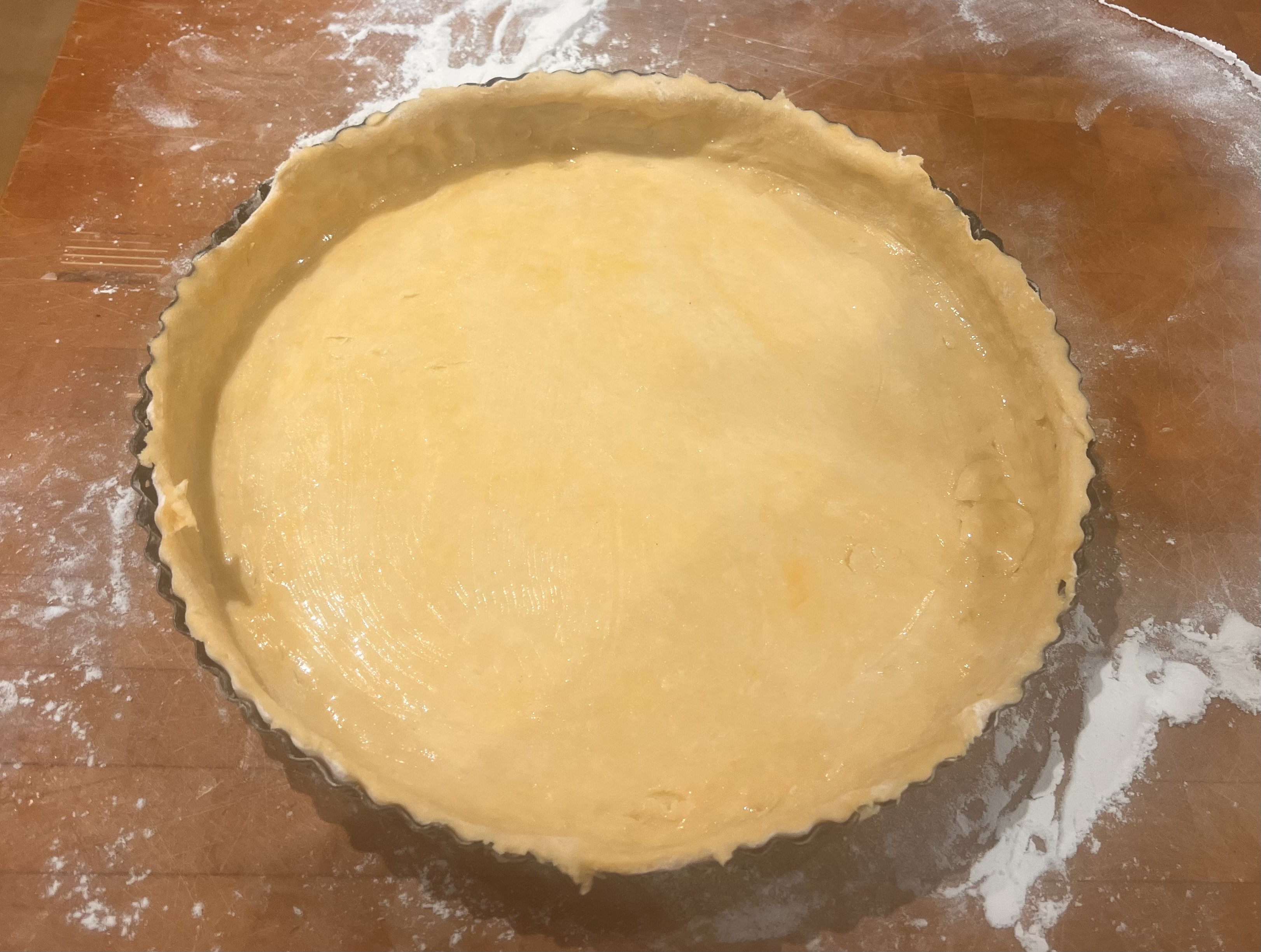
  5. Roll out your pastry and line the tart tin. Prick the bottom with a fork.
  6. Brush the pastry with the egg white, then put any left over egg white in with the rest of the eggs.
  7. Beat the eggs; add the milk and mix; add the Parmesan and mix
  8. Scatter the cheese cubes evenly across the pastry
  9. Scatter the mushroom filling evenly across the spaces pastry, discarding any excess liquid.
  10. Pour the egg/milk mixture over to fill the remaining gaps
  11. Bake until the surface is a deep golden brown, around 35 minutes
  12. Optionally: drizzle the tart with truffle oil
  13. Serve lukewarm to hot. A little rocket, oil and aceto on the side makes a good garnish.
Seville orange marmalade (aka “Henderson marmalade”)

Seville orange marmalade (aka “Henderson marmalade”)

It’s Seville orange season, which means it’s marmalade-making time. I’ve been doing this almost every year for as long as I can remember now, using the recipe passed down through the generations of the family of my late and much loved stepfather, so this is officially “Henderson marmalade”. Or it should possibly be “WSF marmalade”, since John would sign his cards to my brothers and me as “WSF” (for “wicked step father”, which was the polar opposite of reality).

This isn’t precisely the recipe handed down to me, for two reasons: firstly, the original recipe had some tweaking of quantities as you go, which adds washing up and which I don’t think is necessary, and secondly for the more prosaic reason that this is in metric and the numbers have been tweaked for my current kitchen equipment. But the results are pretty faithful to the original.

By the way, it’s worth hunting around for good Seville oranges. I’ve made this with standard supermarket ones for years, but for the last two, I’ve been getting them from our local greengrocer and they’re stunning.

This is sized to just about the maximum that will fit into my preserving pan, which is a 9 litre maslin pan from Lakeland (or 8.5l, depending on which bit of their blurb you read). It only just fits, so you might want to be a fraction more conservative with the amount of water, or go for a larger pan.

  • 2 kg Seville oranges
  • 6 litres water
  • 4 kg granulated sugar
  1. Line a bowl with a muslin or J cloth.
  2. Peel the oranges with your fingers; slice the peel into very thin strips and put it into the preserving pan.
  3. Coarsely chop the oranges. Put the pips and any particularly large bits of pith into the bowl. Put the flesh and any juice into the preserving pan.
  4. Tie up the muslin with string, making a bundle of the pips and pith. Put it into the preserving pan also, along with any juice left in the bowl.
  5. Add the water, mix, and leave for around 12 hours (I usually do this overnight).
  6. Now bring the mixture to the boil, uncovered, and leave to simmer for around 60-90 minutes. At the end of this, you should be able to cut the peel easily with a wooden spoon.
  7. Leave the mixture for another 8 hours, or longer if you like: there’s no harm in leaving it to the following day.
  8. Add the sugar and bring to the boil, again uncovered. If your mixture is in danger of overflowing the pan (this often happens to me), you may want to take a batch out into a separate saucepan, adding it back when the level has gone down enough that it will fit.
  9. Sterilise your jars. I do this by putting the jars themselves into a 90℃ oven for an hour or so and the lids into boiling water with a Milton table. But there are other methods: use your favourite.
  10. Keep boiling until the mixture reaches between 105℃ and 106℃, which is likely to take at least four hours. Make sure that your mixture is well stirred, because if you don’t, you can get a considerable temperature gradient. And be patient: the last couple of degrees take forever. 105℃ will give you a fairly runny marmalade; 106℃ is a stiffer set. Only go hotter if you’re paranoid, or if you like your marmalade dark and bitter, which some people do.
  11. There are various other setting tests involving pouring a teaspoon of mixture onto a cold plate and seeing if it forms a skin when you draw your finger across it, but honestly: going by temperature works fine.
  12. Remove the muslin with the pips and pith, and pour the marmalade into jars. For a belt-and-braces on sterilising the lids, turn the jars upside down while they’re cooling: the hot marmalade will make absolutely sure the lids are sterile. It definitely works: I did this for years without bothering with the Milton tablet and never had a problem.

Enjoy this critical component of a perfect breakfast. Even though London is packed with high end grocery shops, there’s nothing quite like the home made stuff: I warmly commend it to you.