Tag: Dessert

Chocolate mousse

For anyone planning a Seder night (the Jewish celebration of Passover eve), the question raises itself of how to make a flourless dessert. There are various standard tricks, like using ground almonds or matzo meal to substitute for the flour, but here is a fabulous, indulgent dessert that avoids the tricks altogether.

This chocolate mousse started life as one of my mother’s standards, taken from the classic American cookbook Joy of Cooking (still in print and being revised, 93 years after its first edition – my own copy is now so tattered that it needs replacing). I’ve made things metric and changed various quantities, mainly to suit what you buy in English supermarkets, although, to be honest, it’s incredibly forgiving: the recipe will still work OK even if you change the ratios of cream to chocolate to eggs sugar, so you can make sweeter, lighter or more intensely chocolatey at will.

Recently, I’ve been making a more substantial change: making the egg whites into an Italian meringue before folding them into the rest of the mixture. The result is a far lighter, stable consistency which, in my view, is well worth the extra effort. This needs a thermometer – if you don’t have one, just go for standard sweetened beaten egg whites.

By the way, I tend to use the egg yolks for crème pâtissière, for use in éclairs or fruit tarts.

The Italian meringue

  • 4 large egg whites
  • 200g sugar (this is less than most recipes, so you can up it to 300g if wanted)
  • 5oml water
  • Juice of half a lemon
  1. Pu the egg whites into the bowl of your stand mixer, equipped with the whisk attachment.
  2. Put the sugar and water into a small saucepan and heat: for the first part of the process, make sure you mix things until the sugar is properly dissolved. 
  3. Monitor the temperature regularly with a thermometer: you will be using the syrup when it reaches 121℃.
  4. Well in time for the syrup to be complete (I tend to start when it’s at around 90℃), whisk the egg whites until they form soft peaks. Stop the mixer.
  5. When the syrup reaches 121℃, restart the mixer on full speed, and slowly pour the syrup into the bowl, in as thin a dribble as you can manage.
  6. Add the lemon juice, then continue mixing for at least 10 minutes while the meringue cools.
  7. Remove the whisk – you meringue is now ready to use.

The mousse

  • 50g sugar 
  • 80g rum
  • 350g dark chocolate, at least 70% cocoa solids
  • 500ml cream
  1. Put the sugar and rum into a saucepan and warm gently until dissolved into a syrup. You do NOT want the syrup to caramelise.
  2. Take the syrup off the heat and leave to cool somewhat.
  3. Break up the chocolate, then heat in a double boiler until melted
  4. Mix in the syrup
  5. Mix in 100ml of the cream, a bit at a time, until everything is smoothly blended
  6. Whip the remaining 400ml of the cream until stiff
  7. Fold in the chocolate mixture until completely blended (you don’t really want white blotches).
  8. Now fold in the Italian meringue. Try to do it without overworking, which will lose the air – but at the same time, you want it completely mixed. It’s a good idea to fold in about a quarter of the meringue first, and then the remainder, which you’ll be able to do more gently.
  9. Put the mousse into a large bowl for serving, or into individual ramekins or glasses if you prefer.

I like serving this with a red fruit coulis, made from reducing and sieving frozen red fruit and sugar, with a bit of lemon juice added. The sharpness of the coulis cuts through the richness of the mousse, and anyway, raspberries and chocolate are a marriage made in heaven.
Around the world in 80 bakes, no.41: Bublanina from the Czech Republic

Around the world in 80 bakes, no.41: Bublanina from the Czech Republic

Let’s start 2021 and the second half of this trip around the world with an easy, cheerful bake from the Czech Republic. Like every country in the former Austro-Hungarian empire, Czech has a strong coffee-and-cake culture, and the bake that you see everywhere is a light cake made with fresh fruit called Bublanina – a close relative of the French clafoutis.

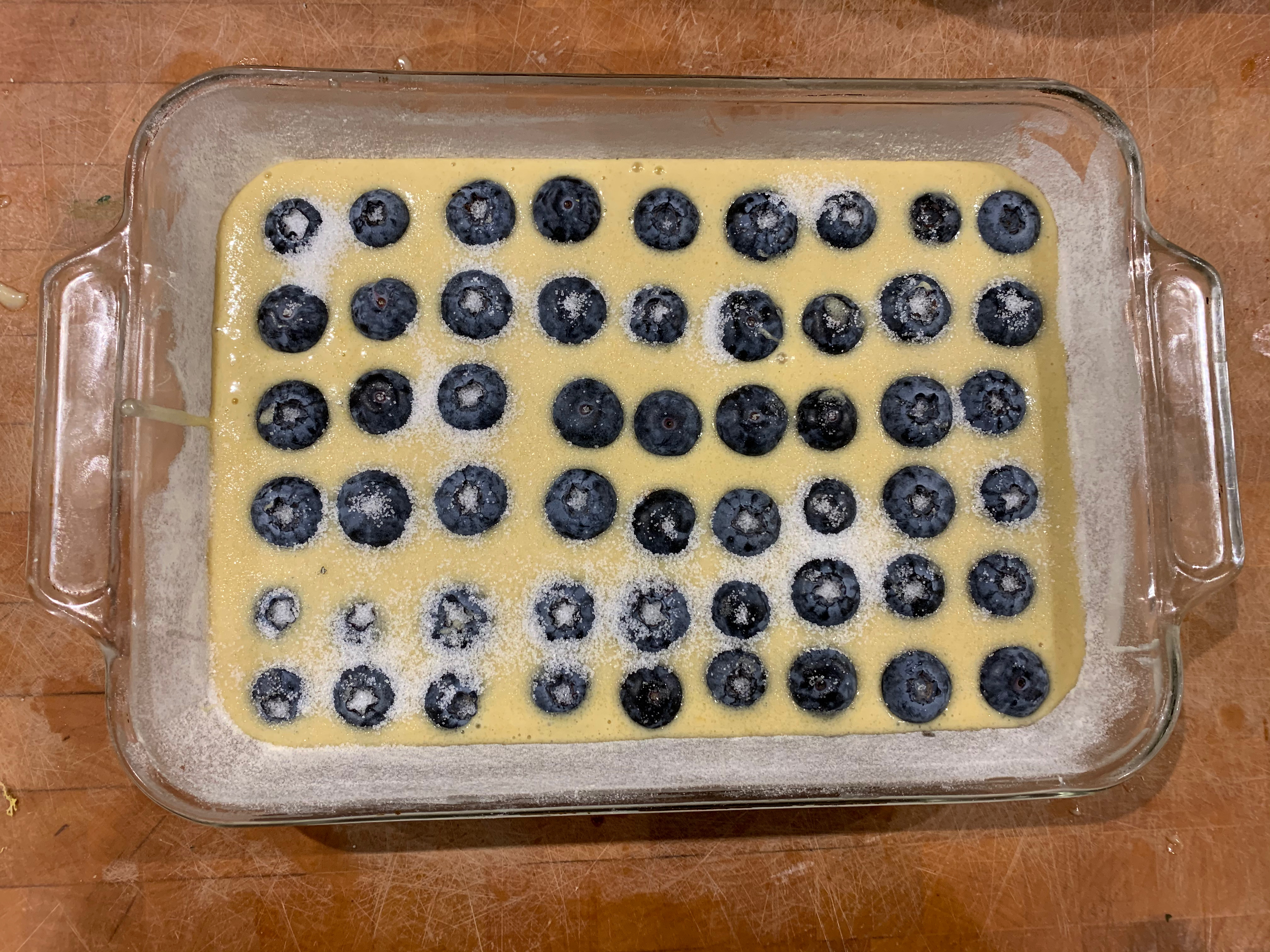
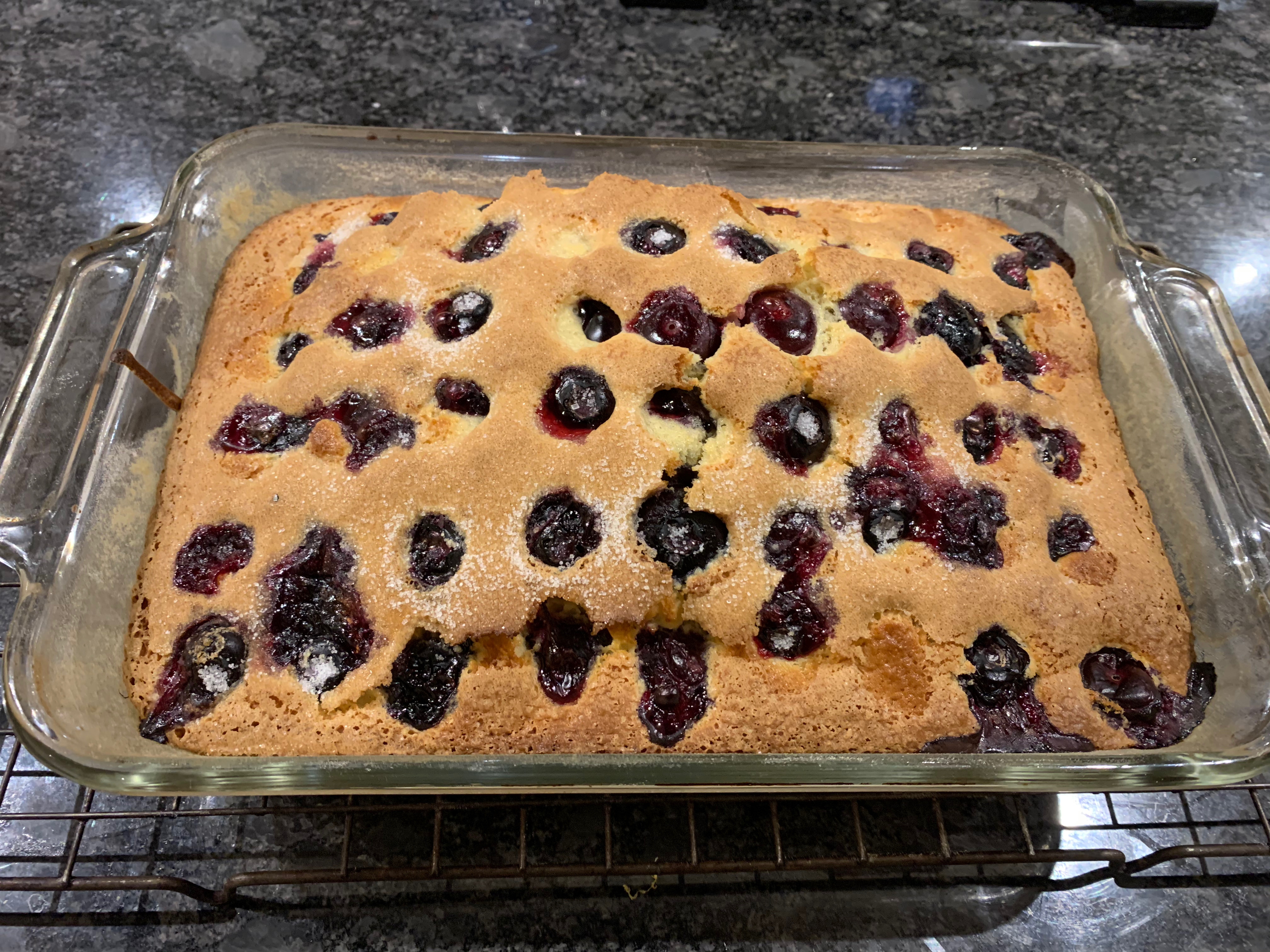
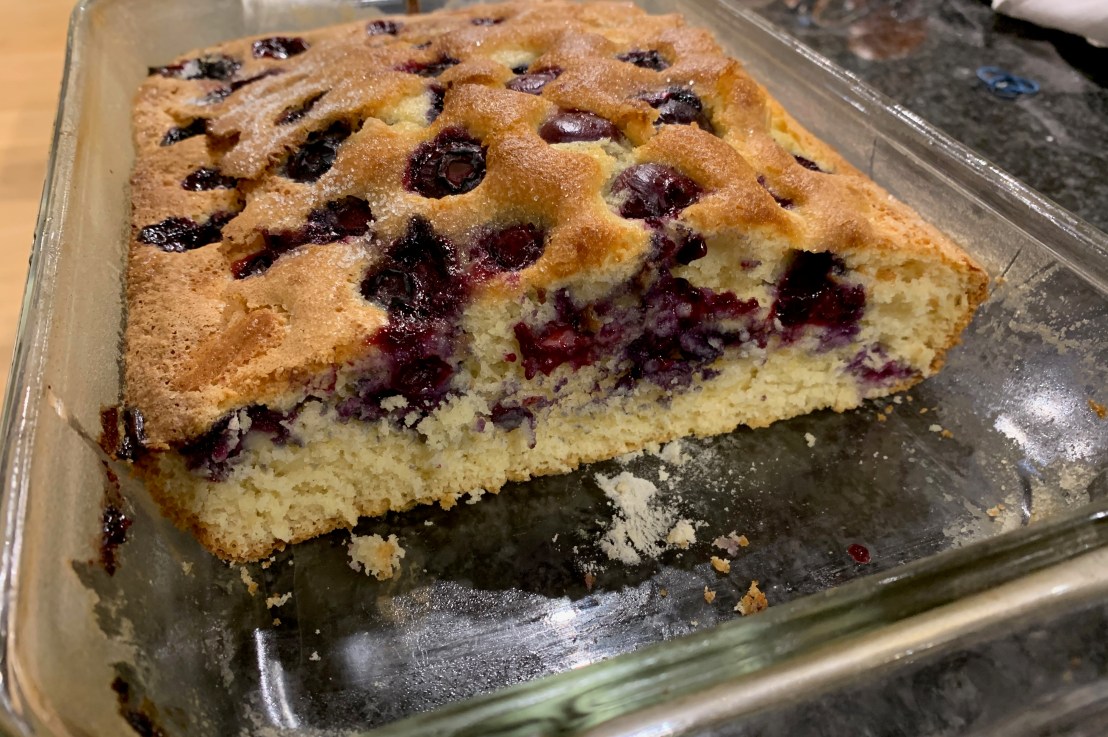
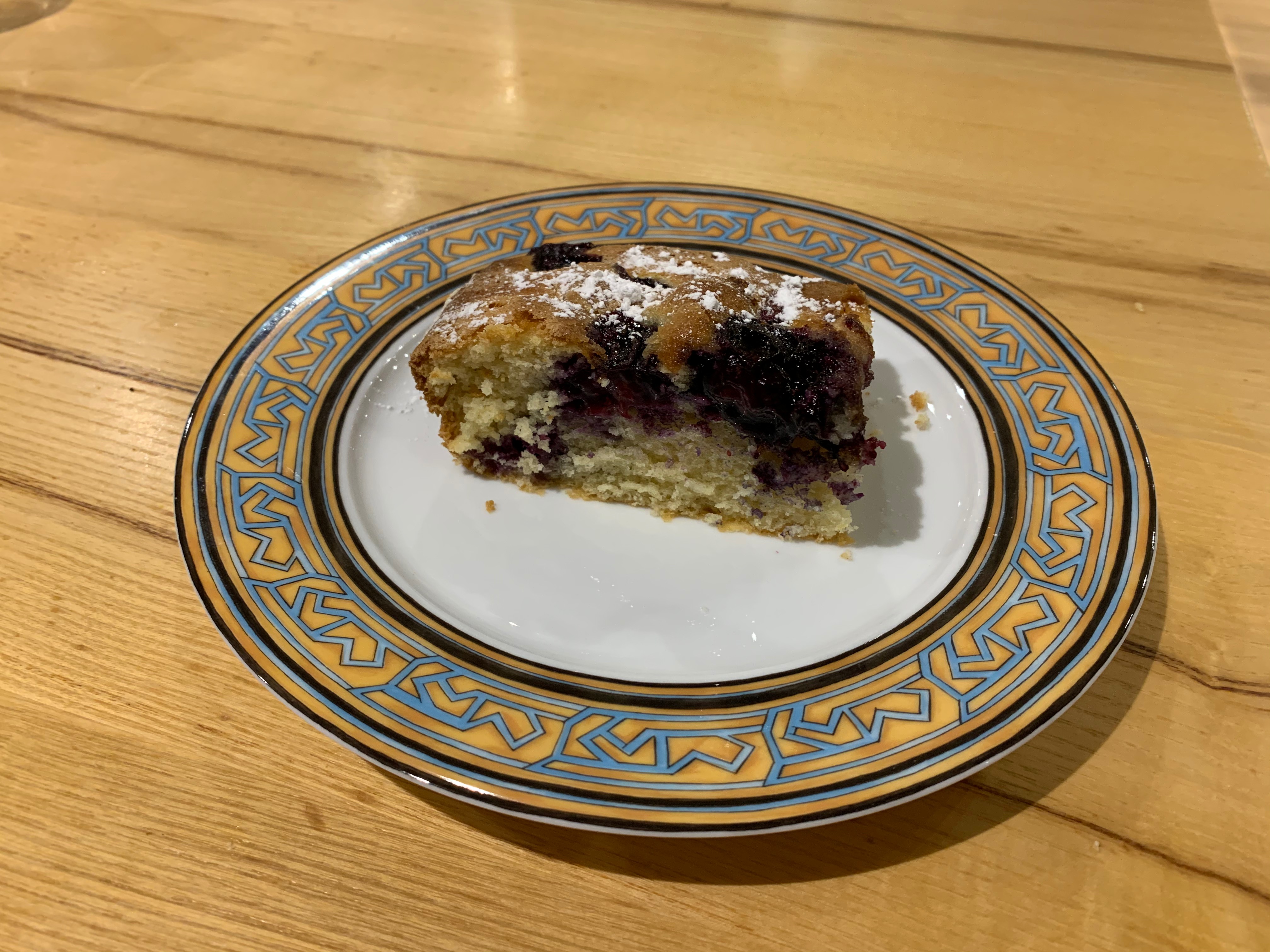
The idea of a Bublanina is that the cake batter bubbles up around the fresh fruit. The trick is to use enough fruit that’s fresh enough that the cake is moist and fruity, but not so much that it’s damp and soggy. There’s no prescription about what fruit to use: it’s really a case of whatever’s in season. In the middle of a London winter, I went for blueberries (which are presumably in season somewhere across the globe), but strawberries, cherries, peaches and plums are all possible.

You have various options on the batter. At one of the end, you can just shove everything into a bowl and mix it; at the other, you can separate the eggs and pack air into the whites as a raising agent, soufflé-style. You can make the batter more traditional by using some semolina flour, can emulate the clafoutis by adding ground almonds, you can use various flavourings (vanilla, orange or lemon zest, Grand Marnier, etc). I’ve kept it simple and gone with a recipe from czechcookbook.com by Kristýna Koutná, a native of Brno, one of my favourite places in Czech; I’ve added lemon zest and changed the amount of flour slightly (my batter was definitely coming out runnier than Kristýna’s video).

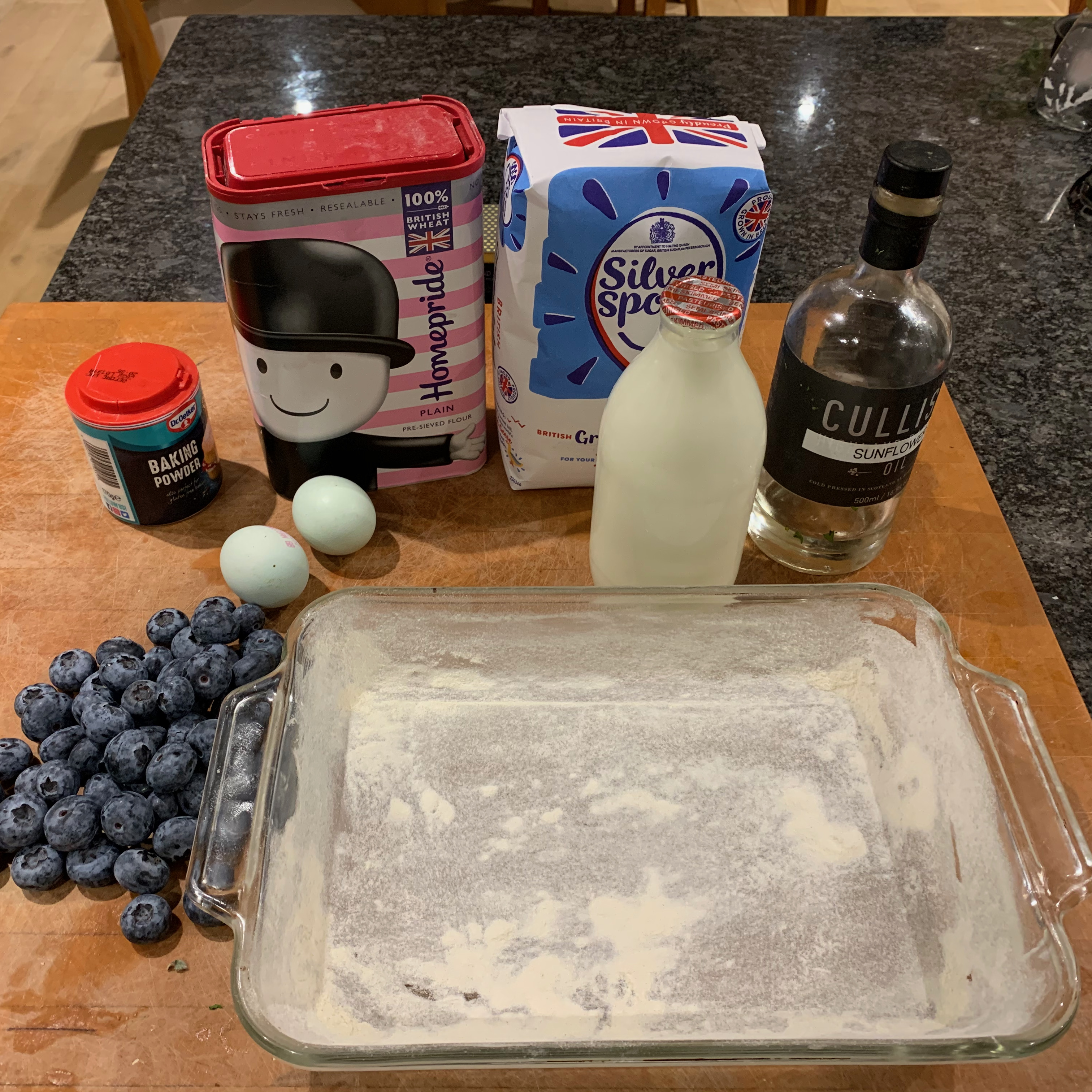
A couple of notes on the photos: (1) I used 250g of blueberries, which was all I had. 400-500g would have been better. (2) The ingredients shot is missing the vanilla and lemon.

  • Butter for greasing cake tin
  • 320g plain flour (plus 20g or so for sprinkling)
  • 200g sugar (plus 30g or so for sprinkling)
  • 8g baking powder
  • Grated zest of 1 lemon
  • 240 ml milk
  • 2 eggs
  • 40 ml oil 
  • Vanilla extract to taste
  • 400g fresh fruit in season
  • Icing sugar for dusting
  1. Preheat oven to 180℃ fan
  2. Grease a cake tin or baking dish (I used a rectangular Pyrex dish or around 30cm x 20cm, but you can use any shape you like). Dust it with flour and shake out the excess.
  3. If you’re using fruit like peaches or large strawberries that need to be cut up, do so now: make sure the fruit isn’t too wet.
  4. In the bowl of a stand mixer, mix flour, sugar and baking powder and blend.
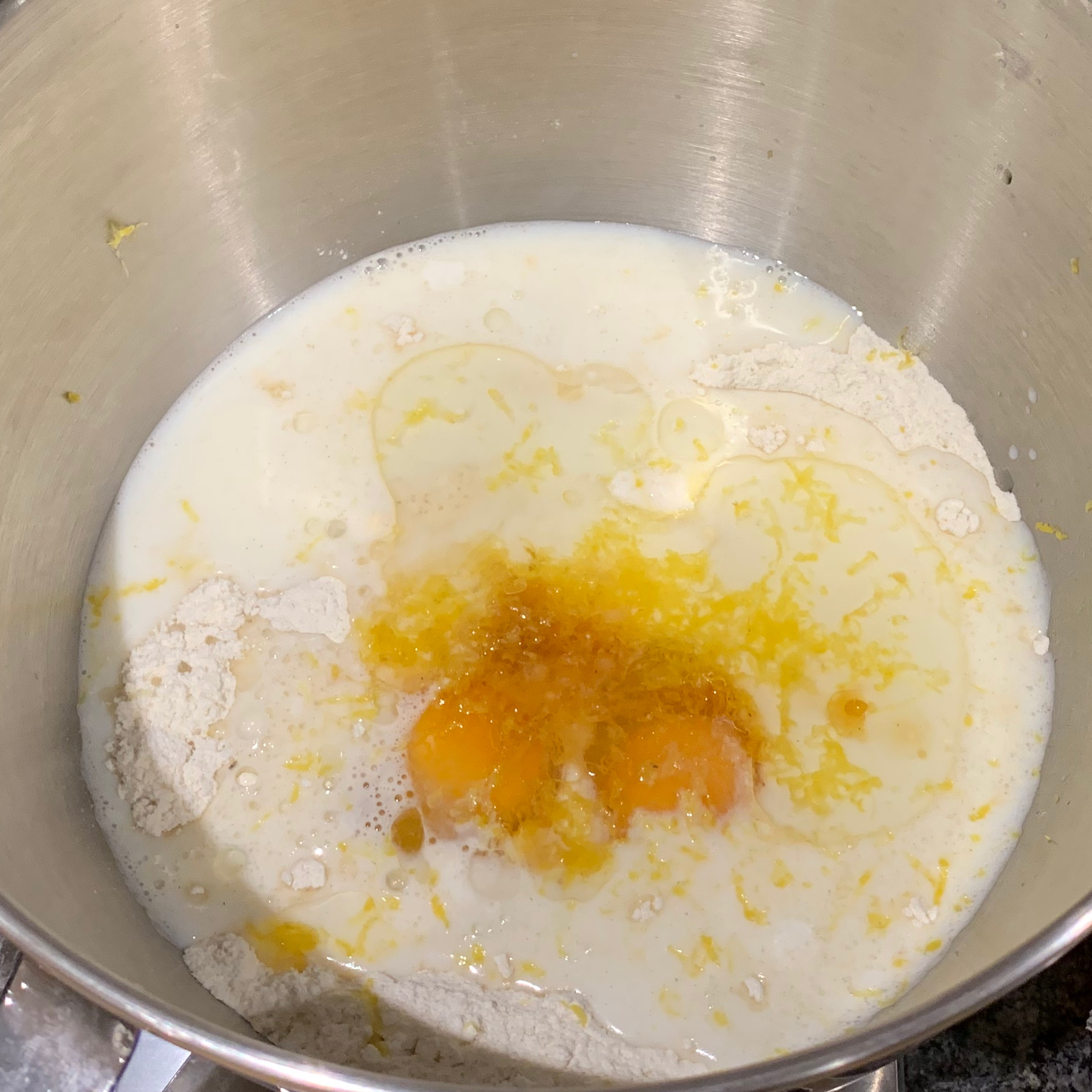
  5. Add lemon zest, eggs, milk and oil
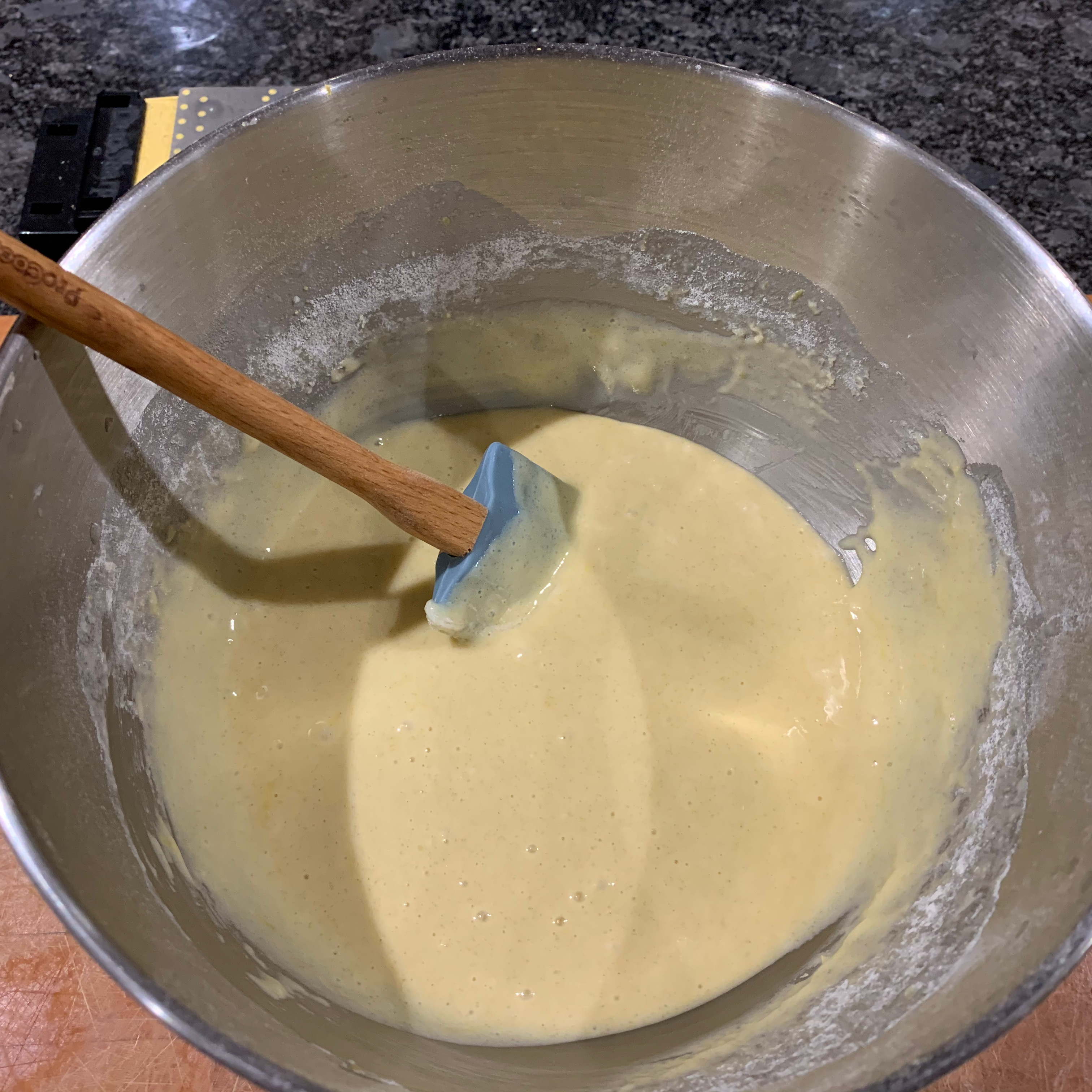
  6. With the standard beater, mix until smooth – do not overbeat.
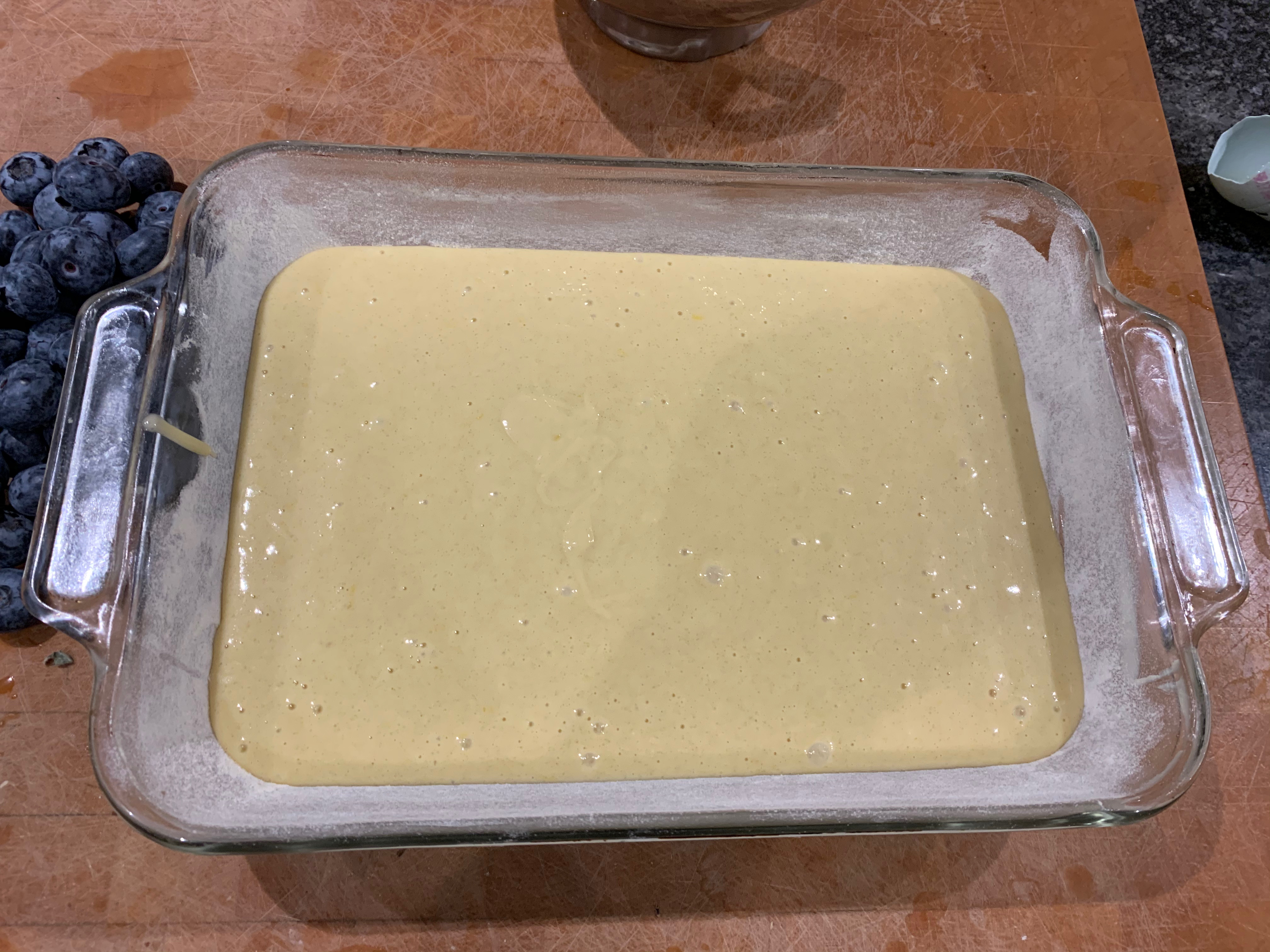
  7. Pour the batter into your cake tin or dish
  8. Lay out the fruit on the batter. If it sinks, it doesn’t matter.
  9. Sprinkle a bit of sugar over the top.
  10. Bake for around 40 minutes until golden brown on top
  11. Leave to cool
  12. Dust with icing sugar before serving

You can eat bublanina warm or cool it to room temperature. If you find it a bit dry on its own (particularly if, like me, you were a bit short of fruit), add a fruit coulis.

Around the world in 80 bakes, no.16: Carrot Cake from California

Around the world in 80 bakes, no.16: Carrot Cake from California

It’s been a strange Fourth of July this year: the poison of the Trump era has made  it harder than ever to summon positive feelings for the United States. Still, I’ll use the occasion to celebrate happy days in the past and hope for happier ones in the future, with some close family members and numerous friends in the USA firmly in mind.

I lived in California for a couple of years in the early 1980s and one of my fondest memories is of whiling away hours at Printers Inc., a bookshop-plus-café that was a kind of prototype Borders. Long before Starbucks had started to expand outside Seattle, Printers Inc. served really good coffee and superb brownies and carrot cake. Cake lovers would invariably spot some book they liked, while those in search of a book, with equal inevitability, would be entrapped by the aroma of fresh coffee and cake.

Sadly, I never did get the recipe for the best carrot cake I ever had, baked by Gigi Ellis, the wife of my boss at Fairchild, and I lost touch with Frank and Gigi decades ago. So this recipe, which is close to the Printers Inc. version, comes from the cookbook I bought at the time, a model of Californian eclecticism entitled San Francisco à la Carte. I’ve turned everything metric, because I just don’t see how you can bake accurately using measuring cups, or indeed why you would want to when digital scales are cheap, accurate and generate less washing up.

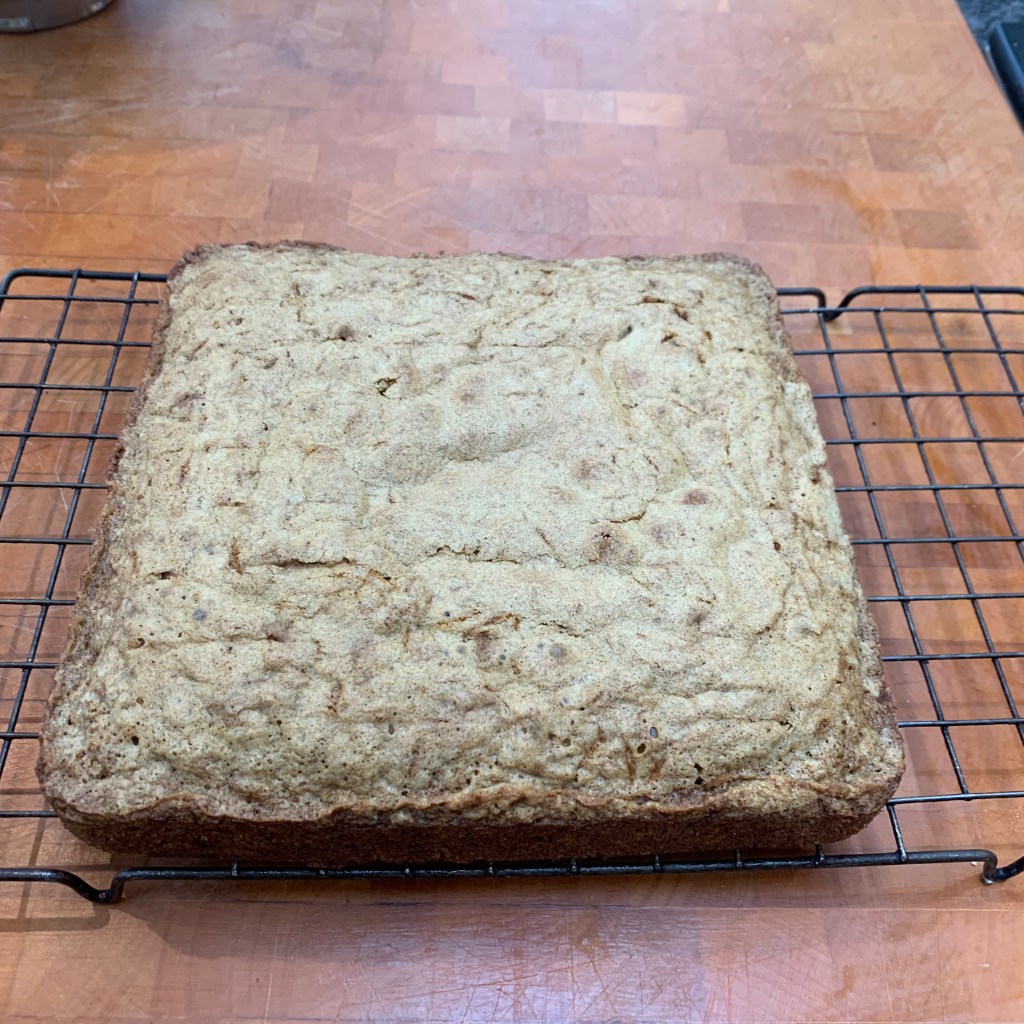
The quantities here will work for a single cake in a 23cm x 23cm square tin. That will do for 16 small portions (or 8 very generous portions, or whatever you pick in between). If you prefer, you can use more than one tin, which avoids the tricky process of slicing the cake in half, at the price of leaving you with an internal crust that you don’t really want.

Make the cake:

  • 250g carrots (weight after peeling)
  • 250g plain flour
  • 300g sugar
  • 10g baking soda
  • 4g salt
  • 3g cinnamon
  • 3 eggs
  • 150g corn oil
  1. Preheat oven to 175℃.
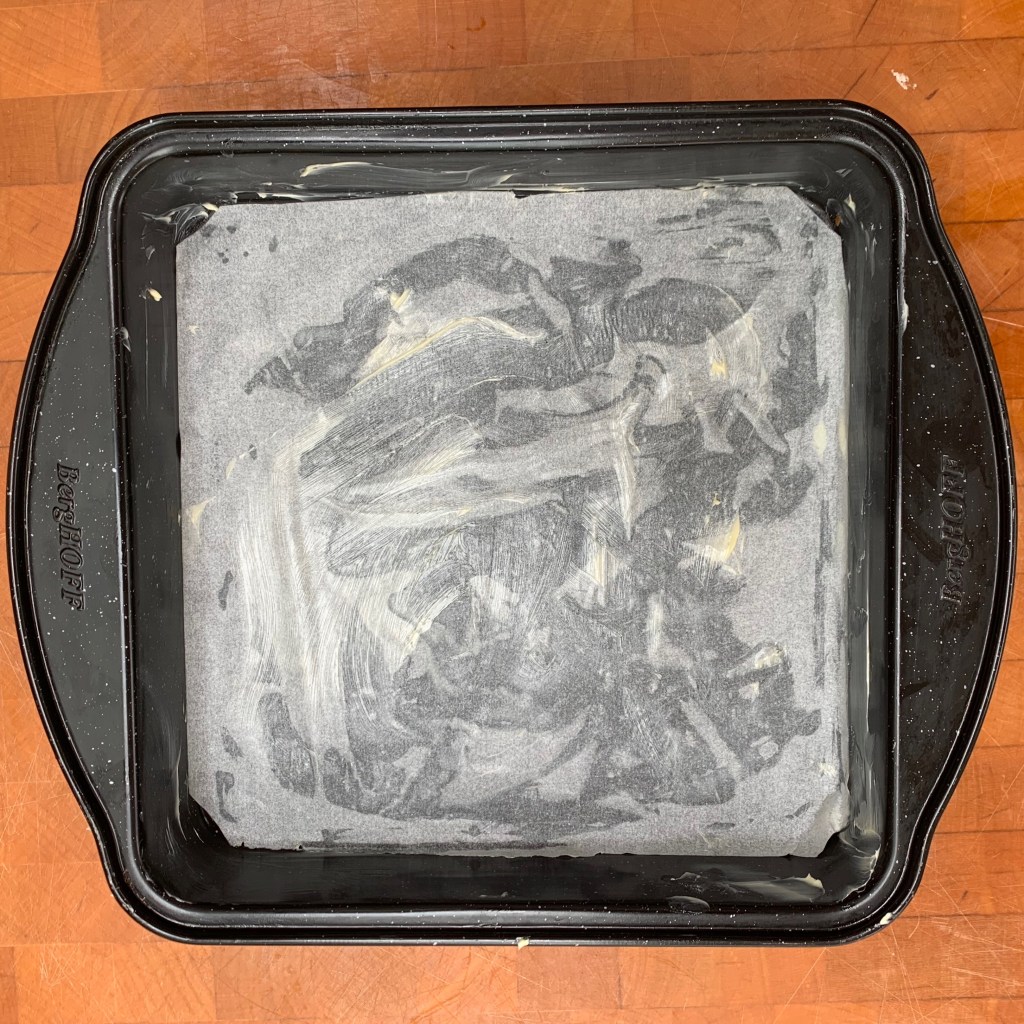
  2. Grease the bottom of your cake tin, line it with baking paper, then grease the bottom and sides.
  3. Mix together the flour, sugar, baking soda, salt and cinnamon. There’s no need to sift the flour.
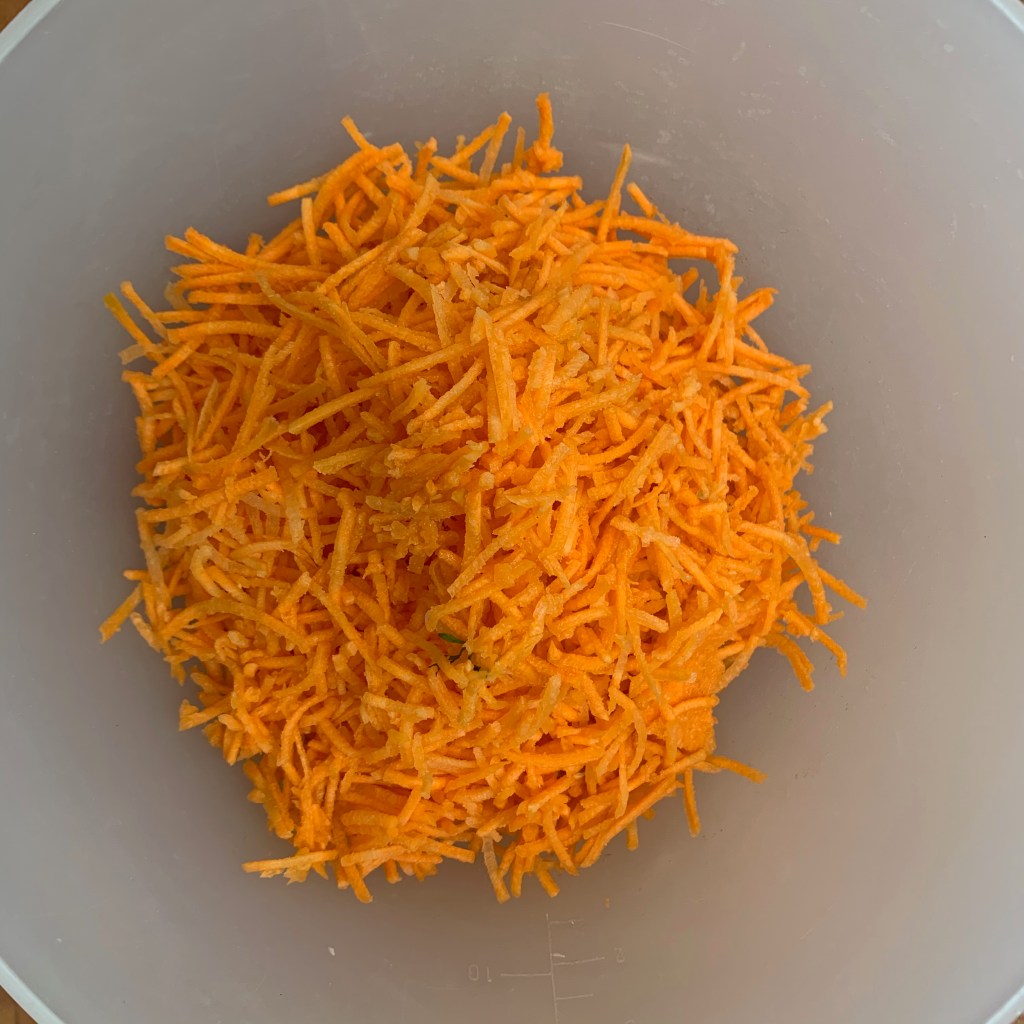
  4. Peel and grate the carrots.
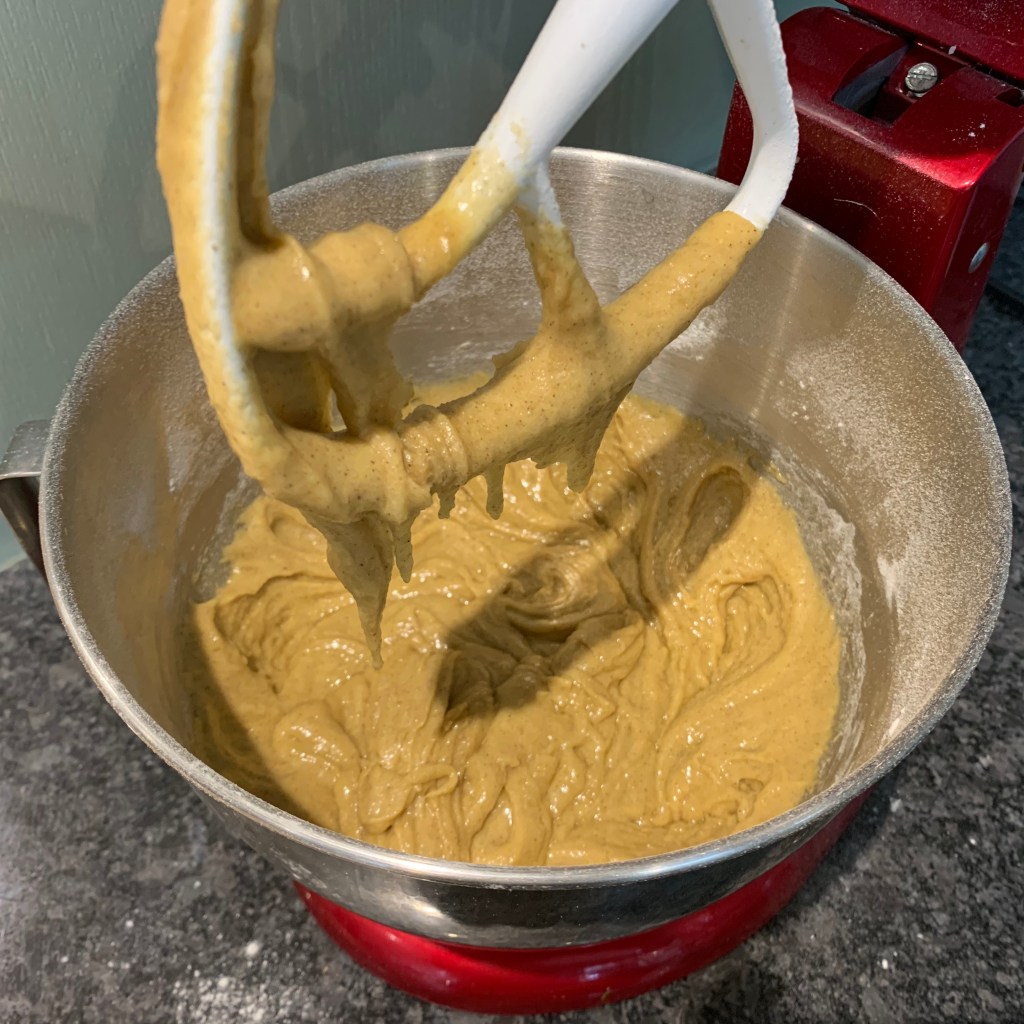
  5. Beat the eggs (I use a stand mixer). Add the oil and beat until the eggs and oil have combined into a smooth mixture. 
  6. Add the flour mixture to the egg and oil mixture and beat until smoothly combined.
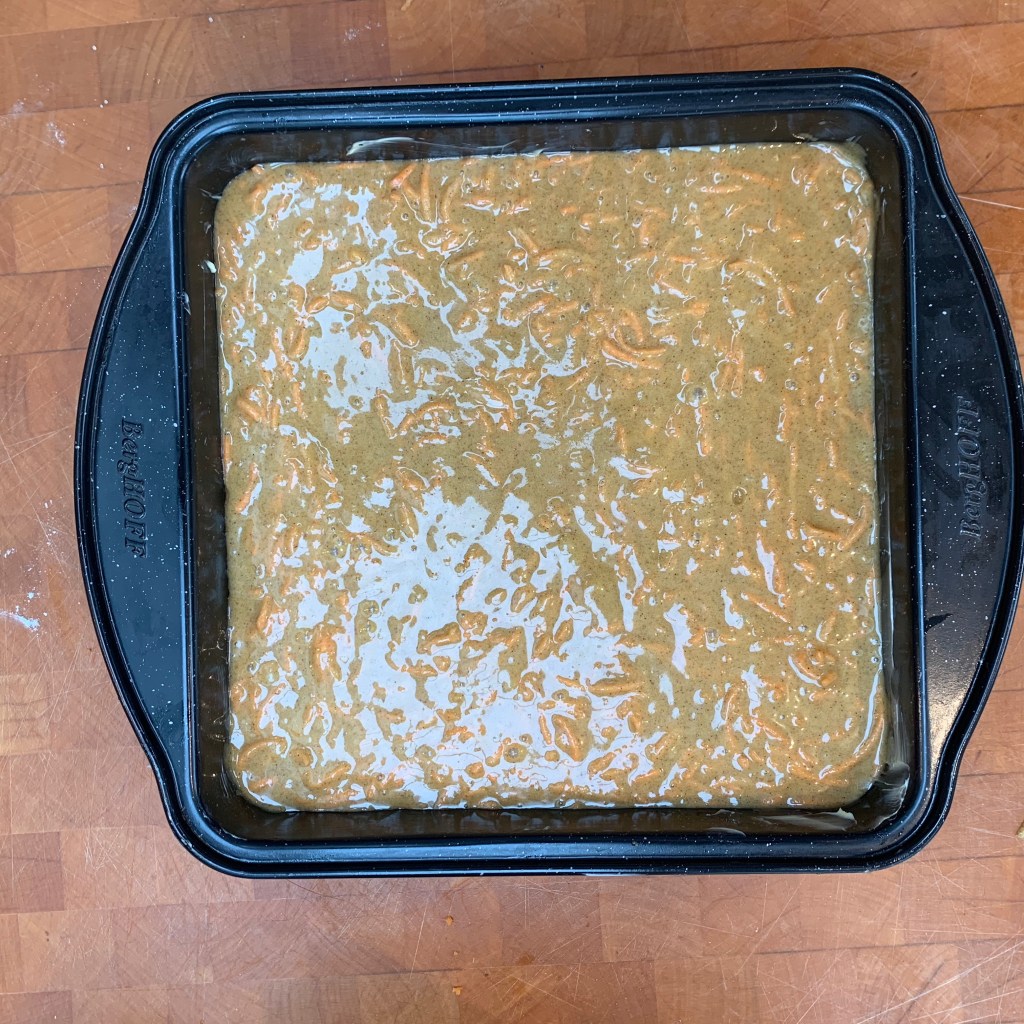
  7. Add the carrots and stir until they’re evenly distributed.
  8. Pour the whole mixture into your baking tin, ensuring that you spread it evenly including the corners.
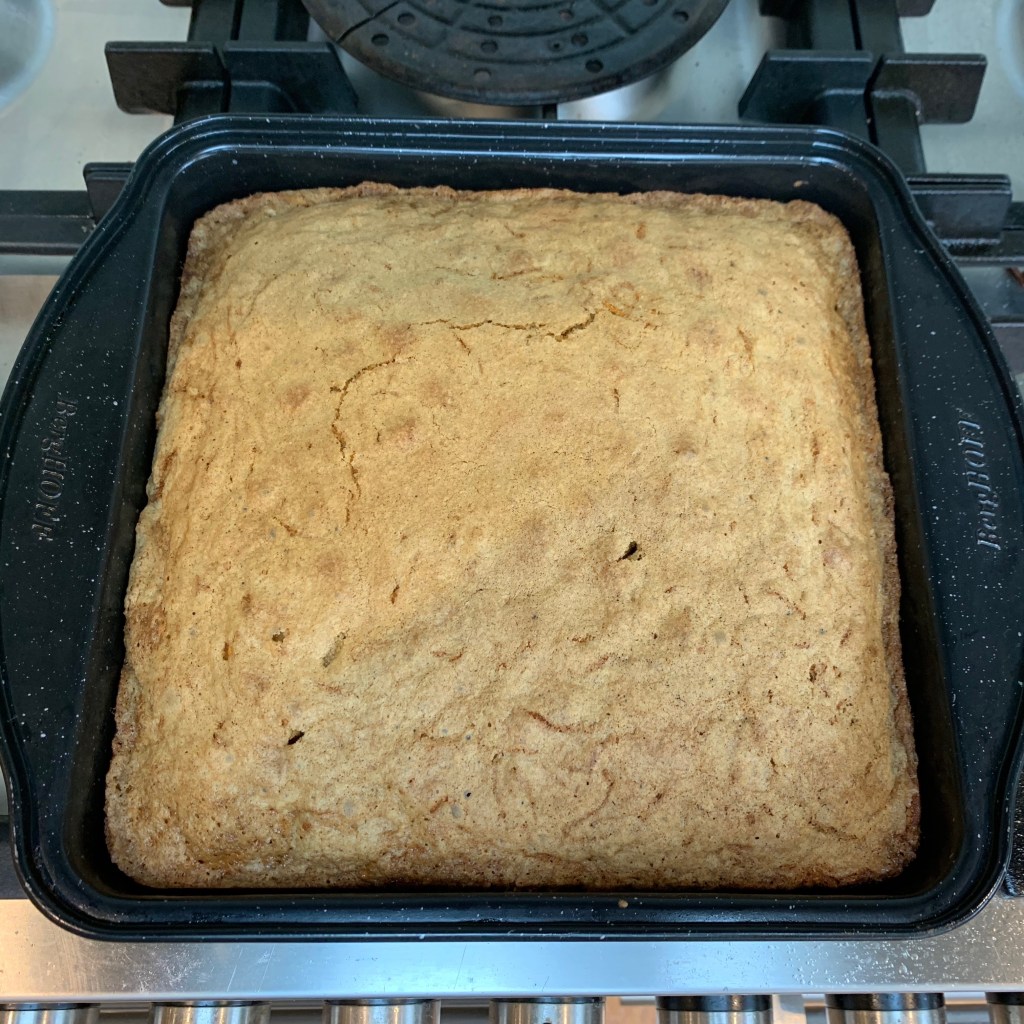
  9. Bake for 30 minutes – use the usual skewer test to ensure that it’s done. I’m always surprised by the way the cake can be really raw at 25 minutes and just fine at 30. By the way, some people like their carrot cake sticky: if you’re one of them, make sure the skewer *does* come out with some mixture sticking to it.
  10. Cool in the baking tin for 5-10 minutes and then on a wire rack.

Make the frosting:

  • 200g cream cheese
  • 50g butter
  • 150g icing sugar
  • Vanilla essence to taste (optional)
  1. Beat these together thoroughly until very smooth.
  2. Cover and leave in the refrigerator: especially if it’s summer, the frosting will be very runny and you want it to hold its shape when you spread it.

Assemble the cake:

  • 90g pecan halves
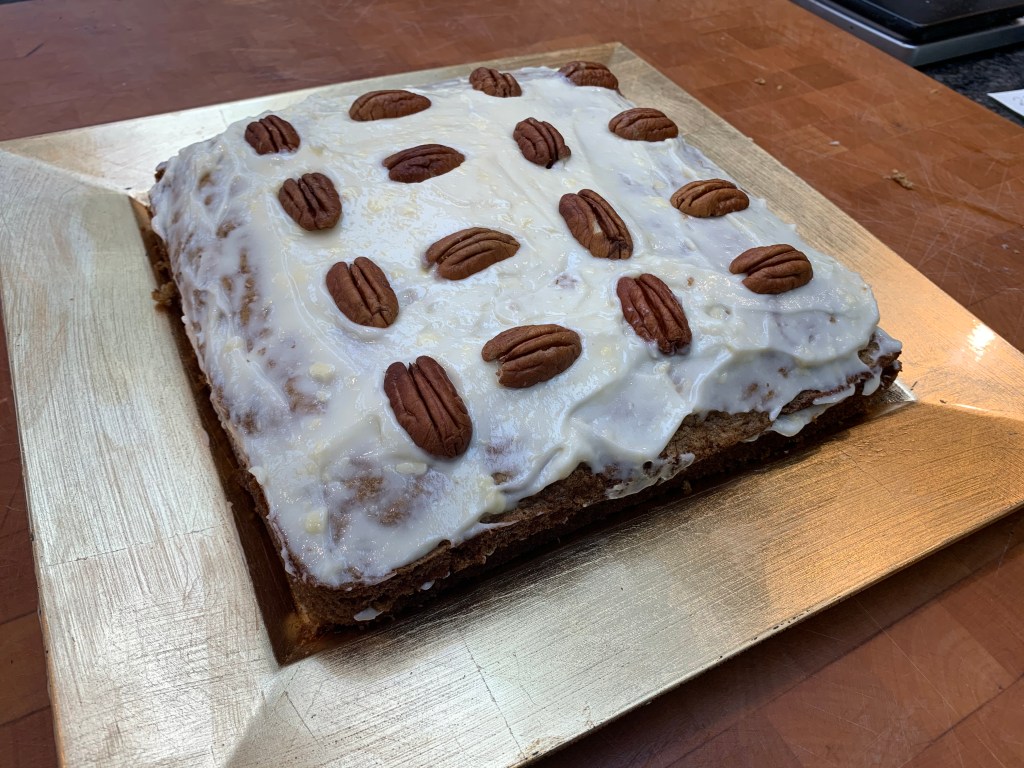
  1. Reserve 16 of the best pecan halves for decoration (this will use around 40g). Chop the remainder into small pieces.
  2. Transfer the cake from the wire rack to whatever you’re going to serve the cake on: cake plate, board, tray or whatever.
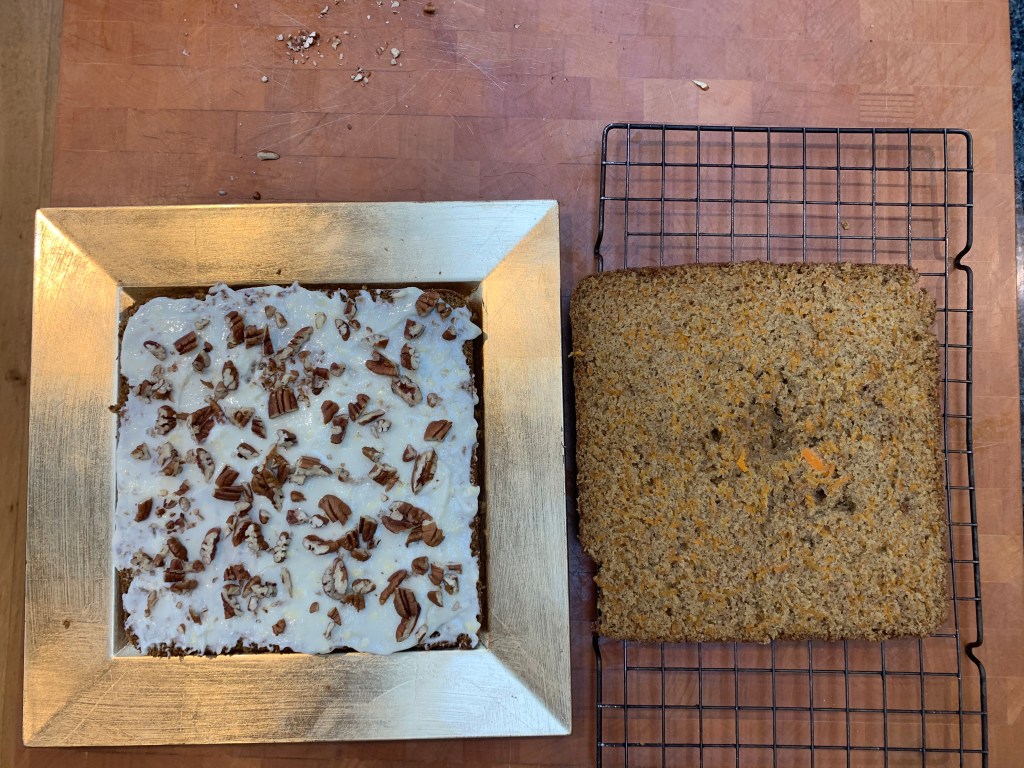
  3. With a long knife, slice the cake horizontally into two approximately equal parts. Take the top half off and set aside – I do this by sliding a plastic chopping mat between the two halves, sandwiching the top half between the mat and a wire rack and lifting it off.
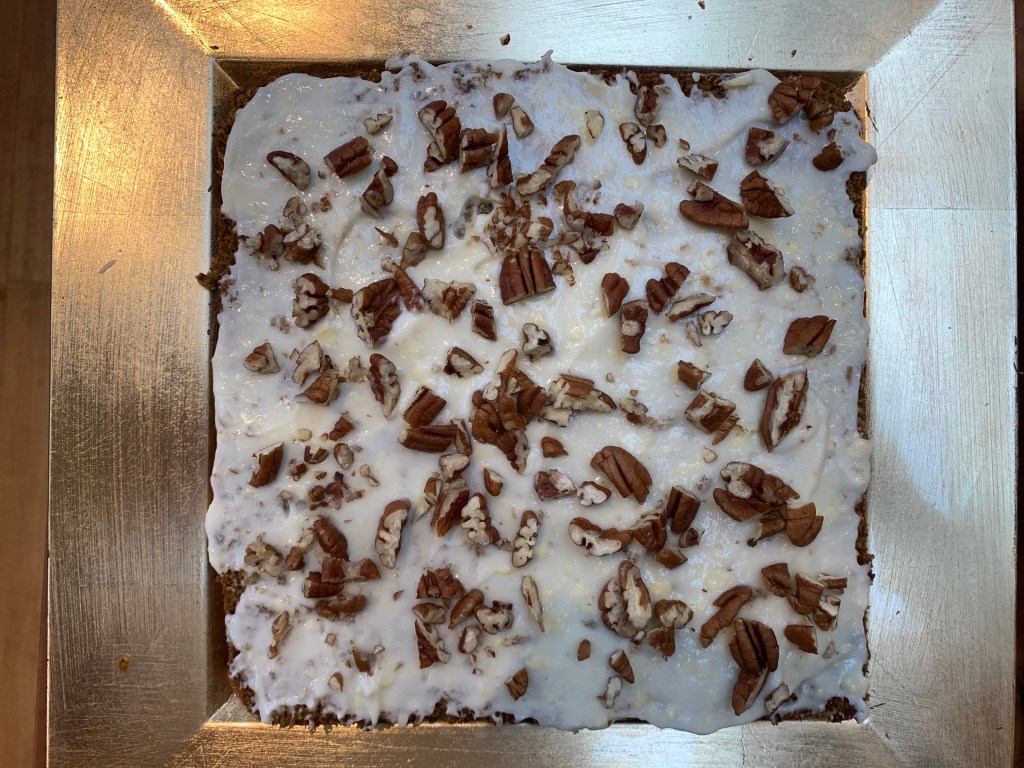
  4. Spread half the frosting over the bottom half. Scatter the chopped walnut pieces evenly across the cake.
  5. Put the top half of the cake back into place.
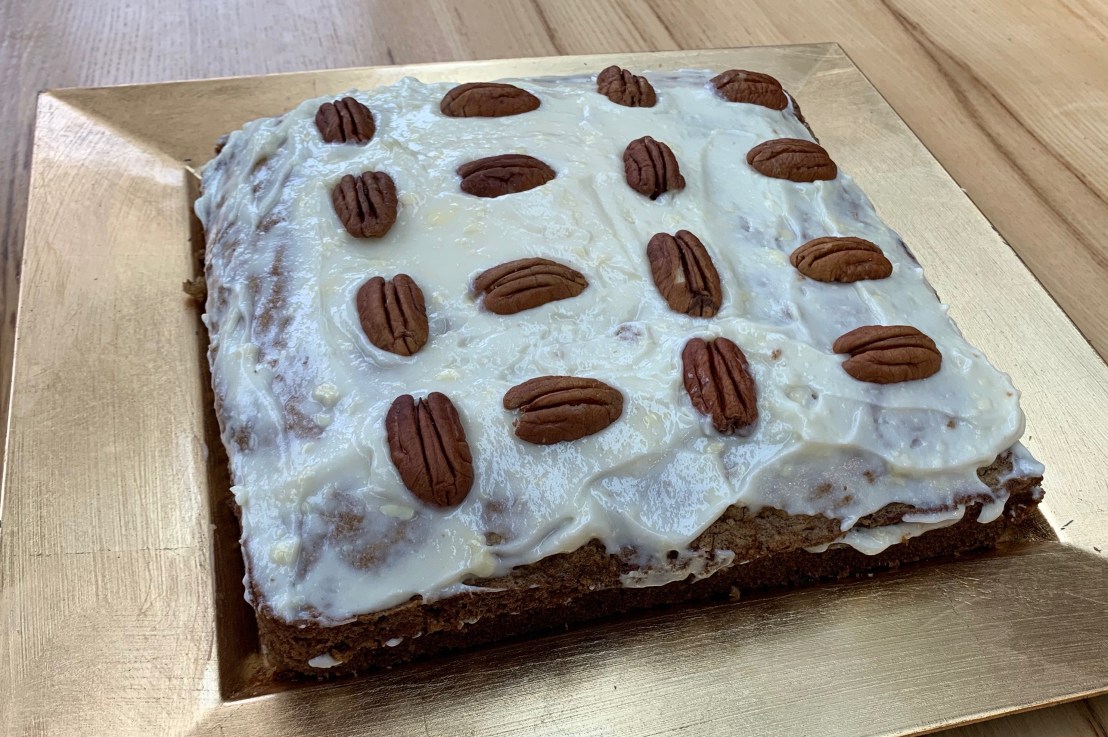
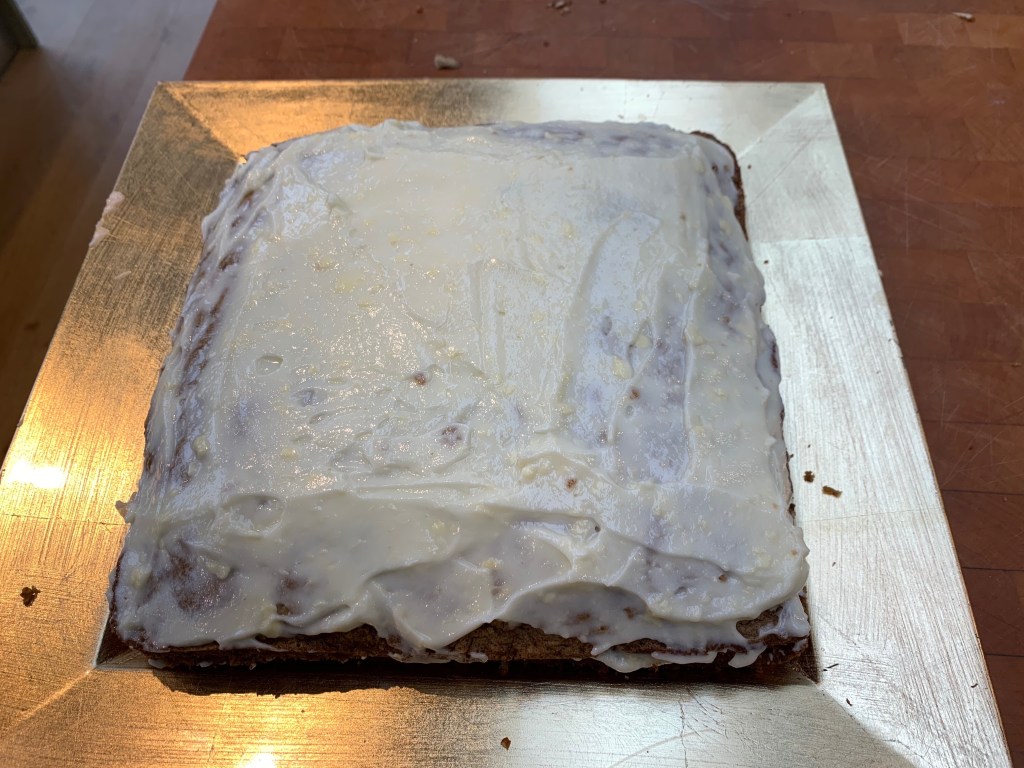
  6. Spread the remaining half of the frosting over the cake and decorate with remaining pecan halves, in whatever pattern takes your fancy.

It’s probably a good idea to chill the cake at this point, because the frosting really is quite liquid. Take it out of the refrigerator half an hour or so before serving.