Tag: Savoury pies

Luxury baking: Mushroom and Comté tart

Luxury baking: Mushroom and Comté tart

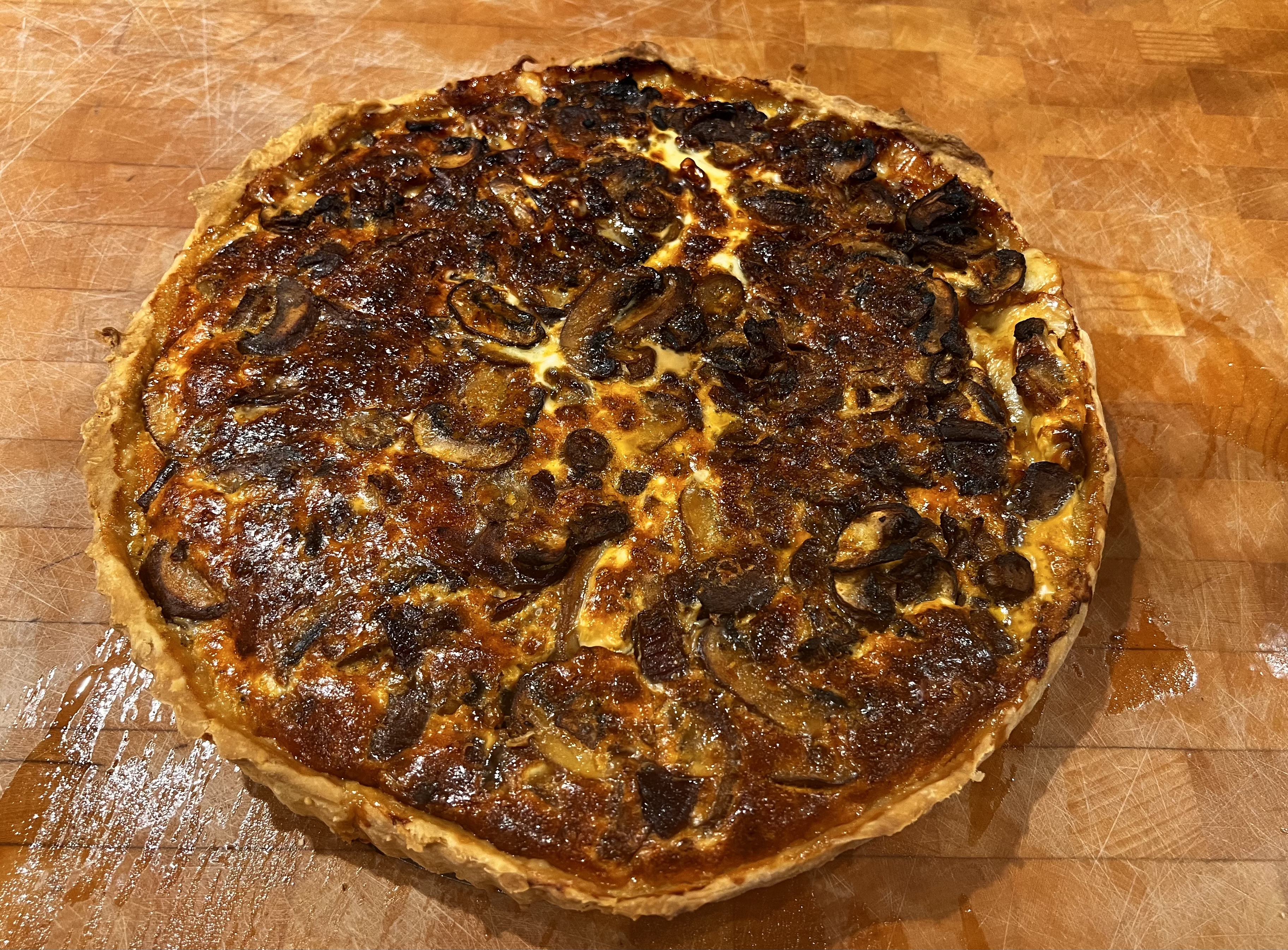
For anyone old enough to remember the 80s and Bruce Feirstein’s Real Men Don’t Eat Quiche: this particular real man not only eats quiche but also loves making them. But I’m picky about what sort of quiche: I’m not particularly fond of the thick version that’s essentially pastry-coated set custard, possibly with a few flecks of bacon. The version I love has thin, crisp pastry and is packed with flavourful ingredients (the egg binds it all together, but isn’t the principal component of the dish) and it’s backed to a gorgeous golden brown.

I make a bunch of variations on this particular theme. This Mushroom and Comté tart is my all time favourite dish to serve to vegetarian guests, but I also make versions with different cheeses and various nuts, peppers or other vegetables. If I’m not serving vegetarians, I will often add bacon or chorizo; if in the mood for spice, different chilies and peppercorns can put in an appearance.

This recipe is on the luxury end of ingredients: the truffle oil at the end is very optional; Cheddar is a perfectly good substitute for the Comté, albeit with a different flavour profile. The dried porcini can get very expensive in the UK (we buy them in bulk during trips to Italy): a teaspoon or two of white miso paste will add plenty of extra umami at noticeably lower price.

With the aid of a side salad or two, the quantities here will serve six generously as a main course and, depending on how hungry your guests are, will do 8-12 for a starter.

For the pastry, I use a stand mixer to combine the butter and flour. You can also use a food processor, or you can just use your fingers; whichever you choose, try to keep the ingredients cold.
Pastry

  • 250g plain flour (preferably OO)
  • 2g salt
  • 125g unsalted butter, cold from fridge
  • 30g yoghurt (I used Greek)
  • 2 eggs
  1. Put flour and salt into a mixing bowl. Cut the butter into small cubes (perhaps 5mm) and add them.
  2. Mix the flour and butter until it reaches the texture of coarse breadcrumbs.
  3. In a small bowl, beat the eggs and yoghurt together, then add to the flour/butter mixture.
  4. Mix until well combined into a smooth dough. Knead a few times with your hands, wrap in cling film and put in the fridge, preferably for 30 minutes or more (this will develop the gluten which will make the pastry stretchy and easier to roll).
Filling

  • Dried porcini to taste (I use around 15-20g)
  • Olive oil for frying – perhaps 20ml
  • 1 medium red onion (could use brown; could use a larger onion – 200g peeled weight)
  • 400g chestnut mushrooms
  • 1 tsp paprika (or choose your favourite seasoning: I’ve used different chilies and chili flakes; the best was some peppercorns my daughter brought home from a holiday in Madagascar).
  • 1 tsp dried oregano
  • A handful of garlic chives (optional, or could choose some other herb)
  • Salt and pepper to taste
  1. Chop the onions finely
  2. Slice the mushrooms
  3. In a small bowl, cover the dried porcini in hot water and leave them for a few minutes to rehydrate
  4. In a deep frying pan or wok on medium heat, fry the onions until transparent
  5. Drain the porcini, add them and fry for another minute or so
  6. Add the sliced mushrooms, paprika and dried oregano; fry until they are cooked and most of the liquid has evaporated.
  7. Add the garlic chives, salt and pepper and mix; take off the heat

Final assembly

  • 200g Comté cheese (Gruyère works fine; so would Beaufort; Cheddar would be a good cheaper alternative)
  • 4 eggs
  • Butter for greasing the tart tin
  • Flour for rolling
  • 200 ml milk
  • 30g Parmesan, grated
  • Truffle oil (optional)
  1. Preheat oven to 200℃ fan
  2. Chop the cheese into cubes, around 1cm.
  3. Separate one egg: you’ll put the white into a small bowl and the yolk into a medium-to-large bowl. Put the other three eggs in with the yolk.
  4. Grease your tart tin with butter
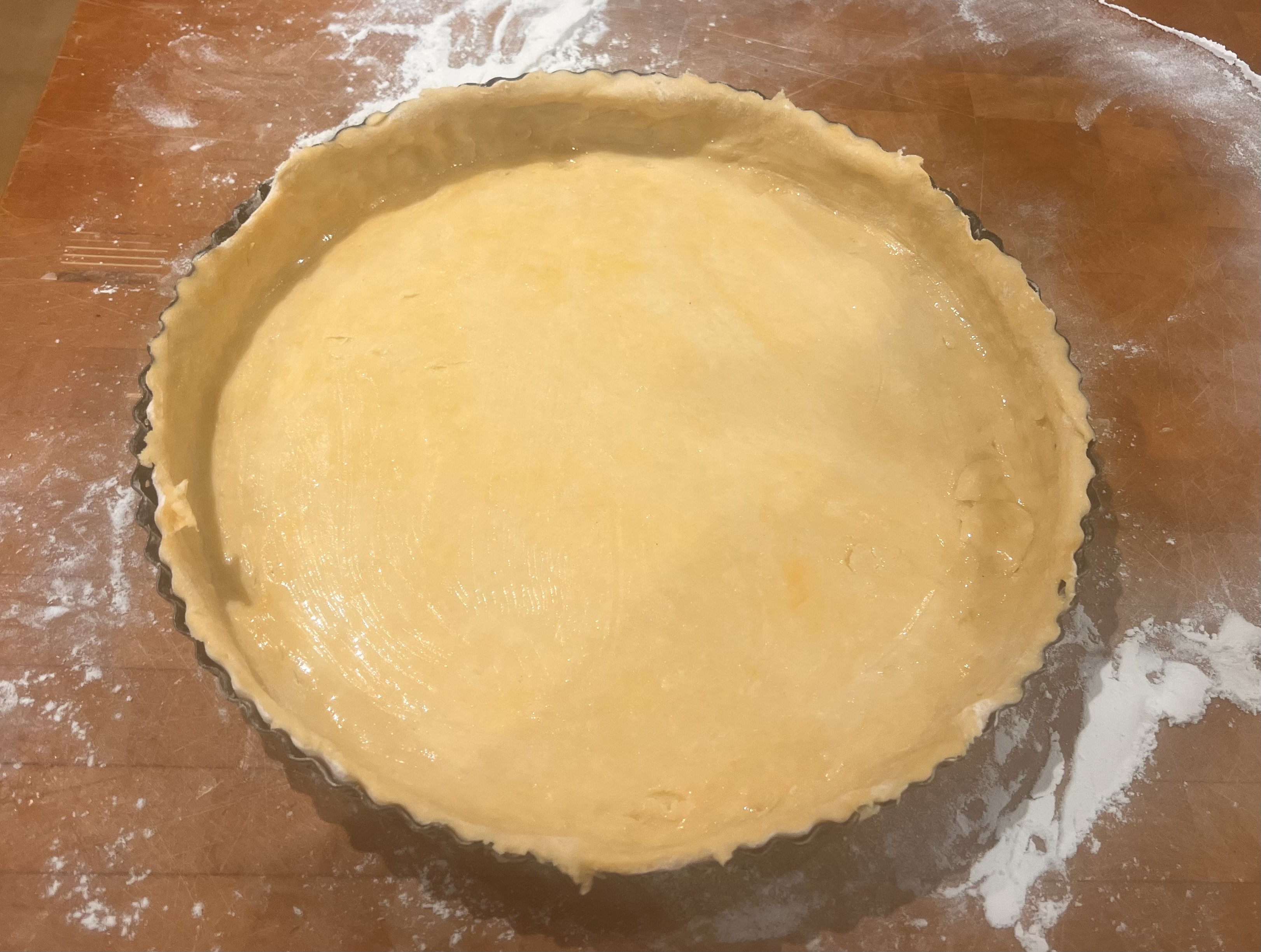
  5. Roll out your pastry and line the tart tin. Prick the bottom with a fork.
  6. Brush the pastry with the egg white, then put any left over egg white in with the rest of the eggs.
  7. Beat the eggs; add the milk and mix; add the Parmesan and mix
  8. Scatter the cheese cubes evenly across the pastry
  9. Scatter the mushroom filling evenly across the spaces pastry, discarding any excess liquid.
  10. Pour the egg/milk mixture over to fill the remaining gaps
  11. Bake until the surface is a deep golden brown, around 35 minutes
  12. Optionally: drizzle the tart with truffle oil
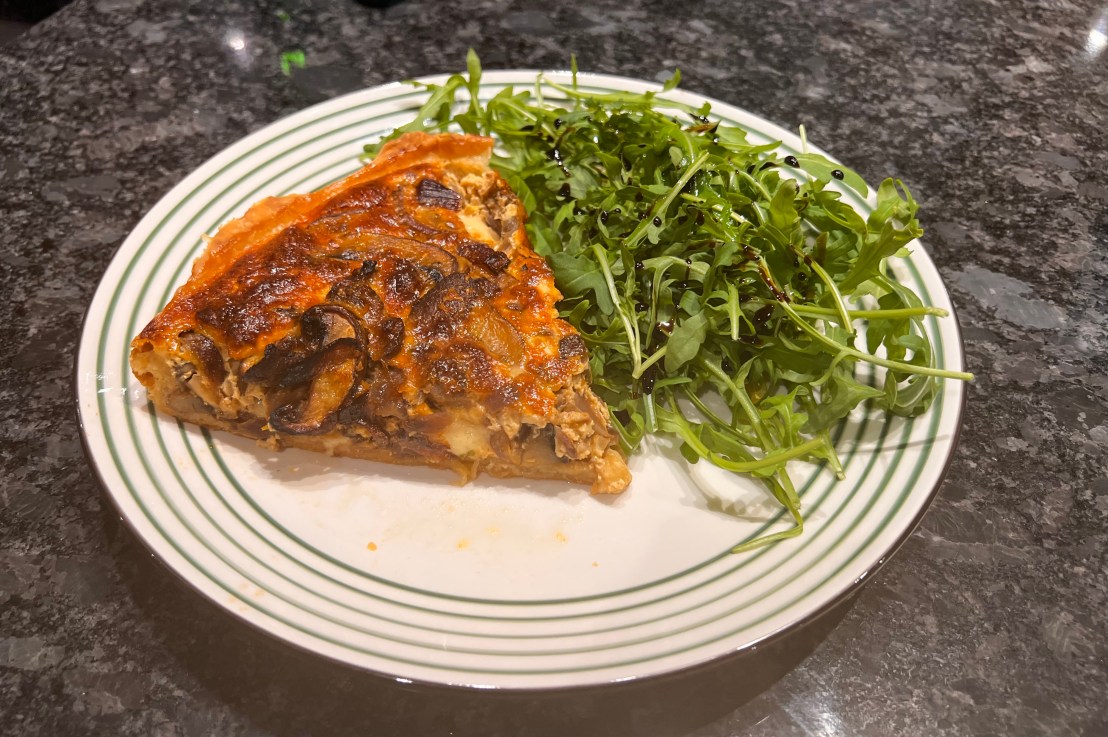
  13. Serve lukewarm to hot. A little rocket, oil and aceto on the side makes a good garnish.

Around the world in 80 bakes, no.66: Filipino Empanadas

Around the world in 80 bakes, no.66: Filipino Empanadas

At the end of the day, there are only so many basic ways in which you can wrap a piece of dough around a filling, so it’s unsurprising that lots of different cultures have their equivalent of a filled turnover. The Spanish version, which is ubiquitous in Spain and Latin America, is the Empanada. The verb empañar just means to wrap or cover and in no way specifies what the thing is that you’re covering: it can be sweet or savoury, meaty, cheesy or veggie, sticky or chunky.

I could have picked any Latin country for this bake, but I’ve gone East to the Philippines, where they’re extremely fond of their empanadas. What follows is an amalgam of several Filipino recipes: feel free to choose minced pork or shredded chicken in place of the beef, use butter or vegetable shortening in place of the lard and/or play whatever games you fancy with the flavourings: I’ve kept things to a mild, faintly Far Eastern kind of feel.

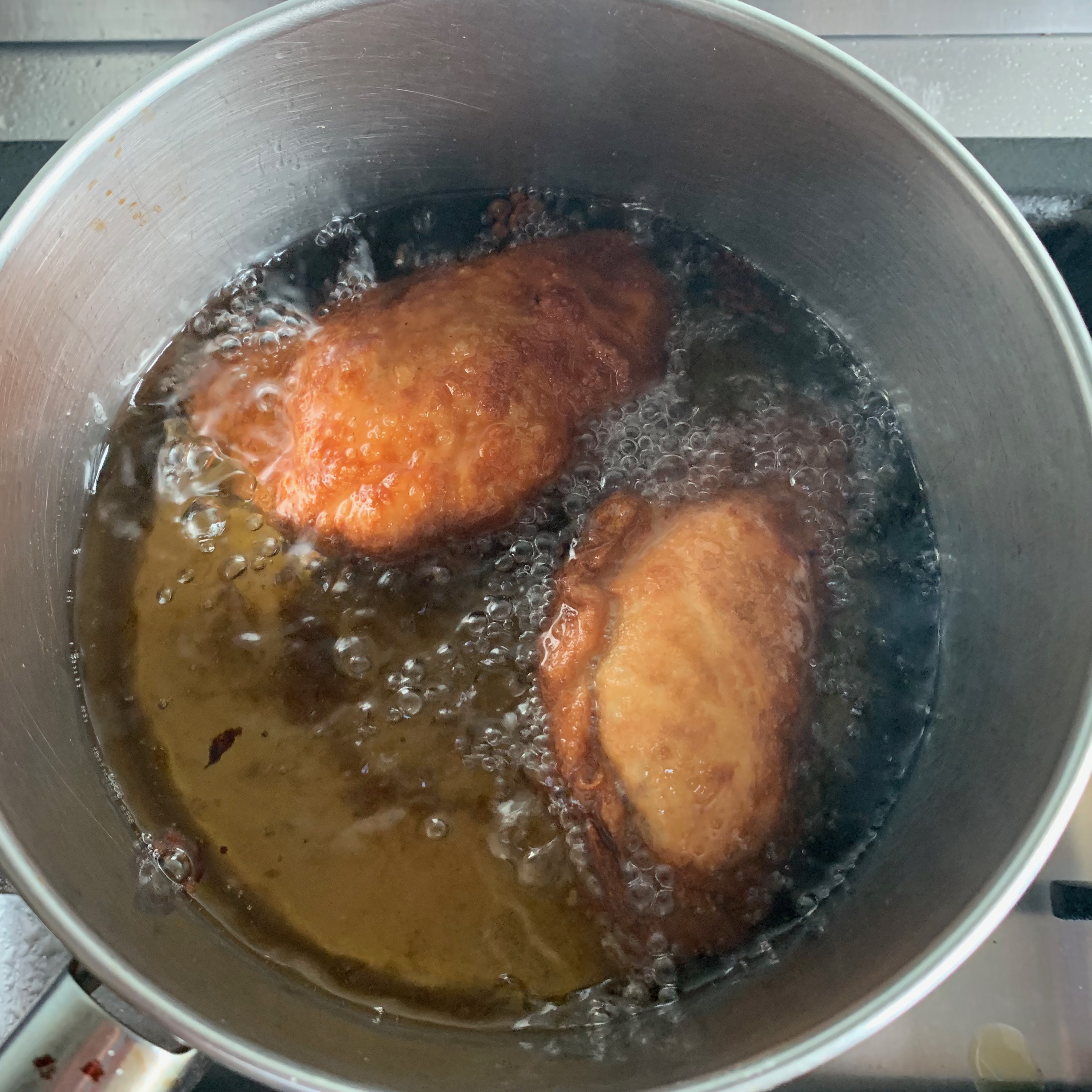
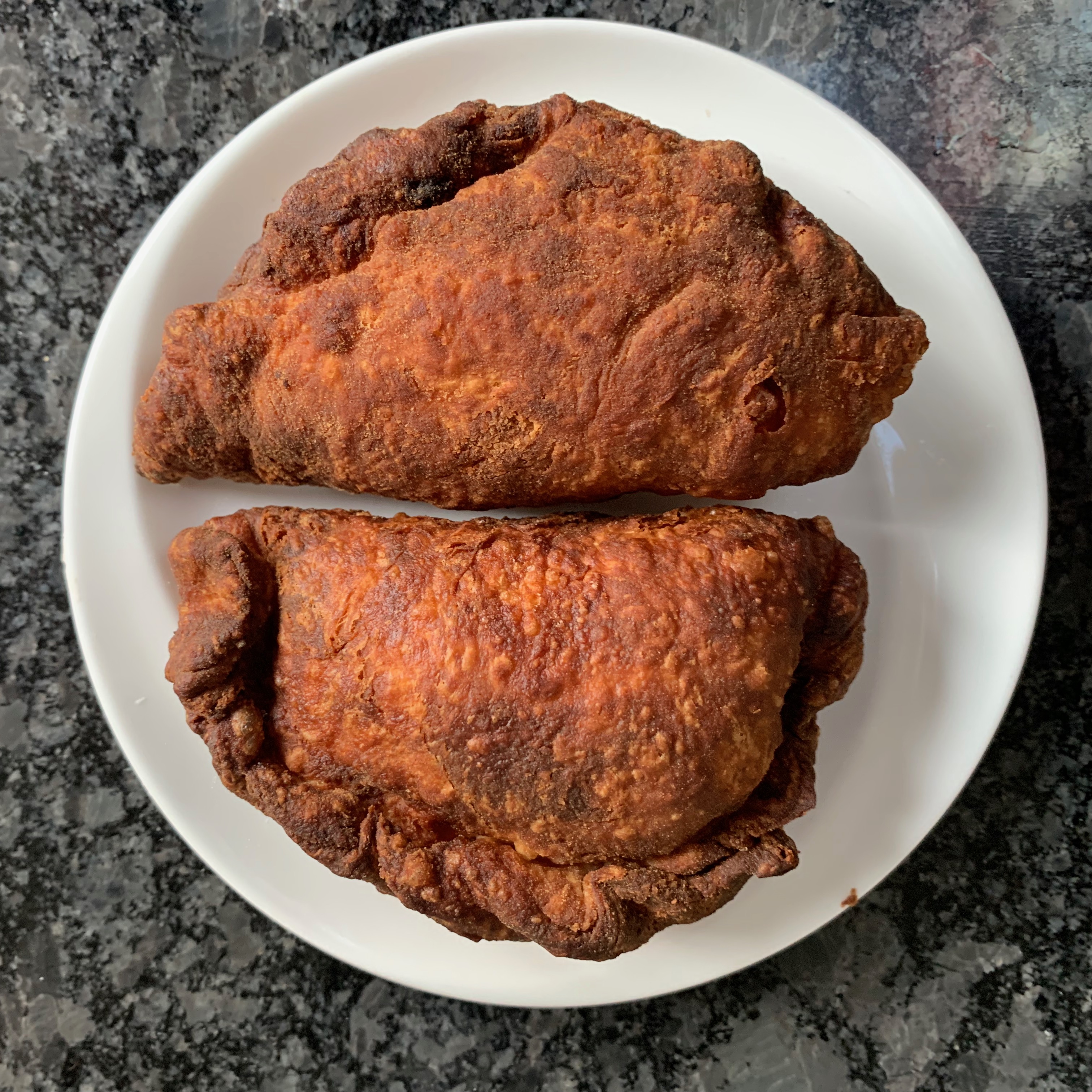
Empanadas can be baked or deep fried. I baked mine, although I deep fried two of them for comparison. Both were nice: I preferred the deep fried version for flavour, but the baked one had a nice flaky texture that gets lost in deep frier. Eat a couple of them with some salad for a light supper, or they make a fantastic savoury snack dish.
The filling

All the weights given here are net weights after peeling. Having said which, the exact amounts really aren’t critical: there’s no point in following them slavishly and it’s far more important that you taste the filling and get it seasoned the way you want.

The filling is best made well in advance – you want it completely cold when you actually start assembling the empanadas.

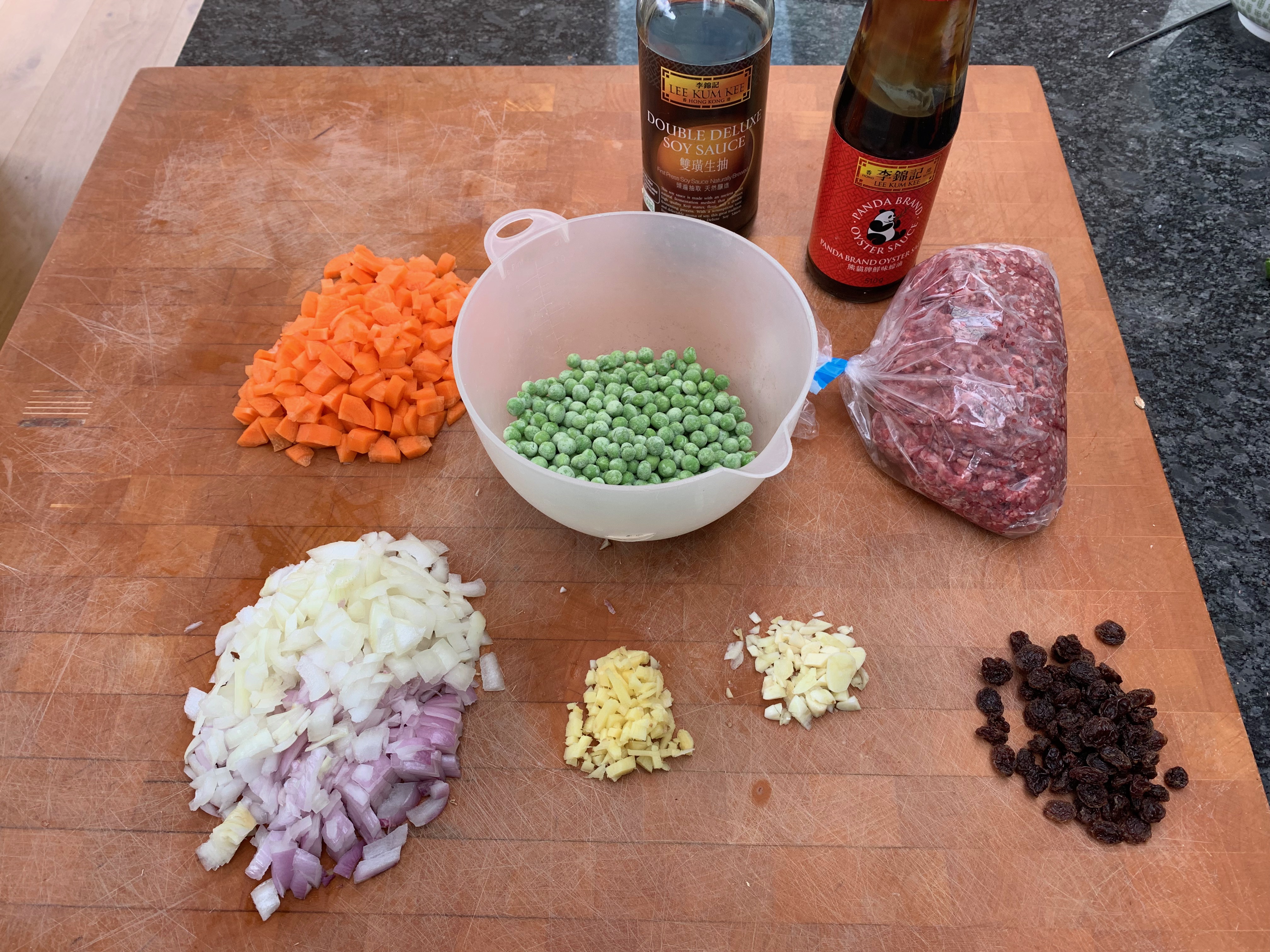
  • Sunflower or other neutral oil for frying
  • 180g onion (around one medium to large onion)
  • 12g ginger
  • 10g garlic
  • 500g minced beef
  • 180g carrots (two medium to large carrots)
  • 1 tbs dark soy sauce
  • 2 tbs oyster sauce
  • Sichuan peppercorns to taste (perhaps a teaspoon) – substitute with black pepper, paprika etc if you prefer
  • 150g frozen peas
  • 35g raisins: these are optional. Most Filipino recipes usually include them because they like a touch of sweetness, but others hate the idea.
  • Chili paste to taste (I used around a tablespoon of the stuff you get in jars from Chinese supermarkets – this is very much optional but I liked the extra slight kick)
  1. Chop the onion, garlic, ginger and carrots, keeping them separate.
  2. Pound the peppercorns in a pestle and mortar.
  3. Heat oil and fry the onions on medium heat until transparent.
  4. Add the garlic and ginger and fry for another minute or two.
  5. Add the minced beef and keep stir-frying until you can’t obviously see any pinkness.
  6. Add the carrots and stir fry for another five minutes or so.
  7. Add the soy and oyster sauces and the Sichuan peppercorns, and stir some more.
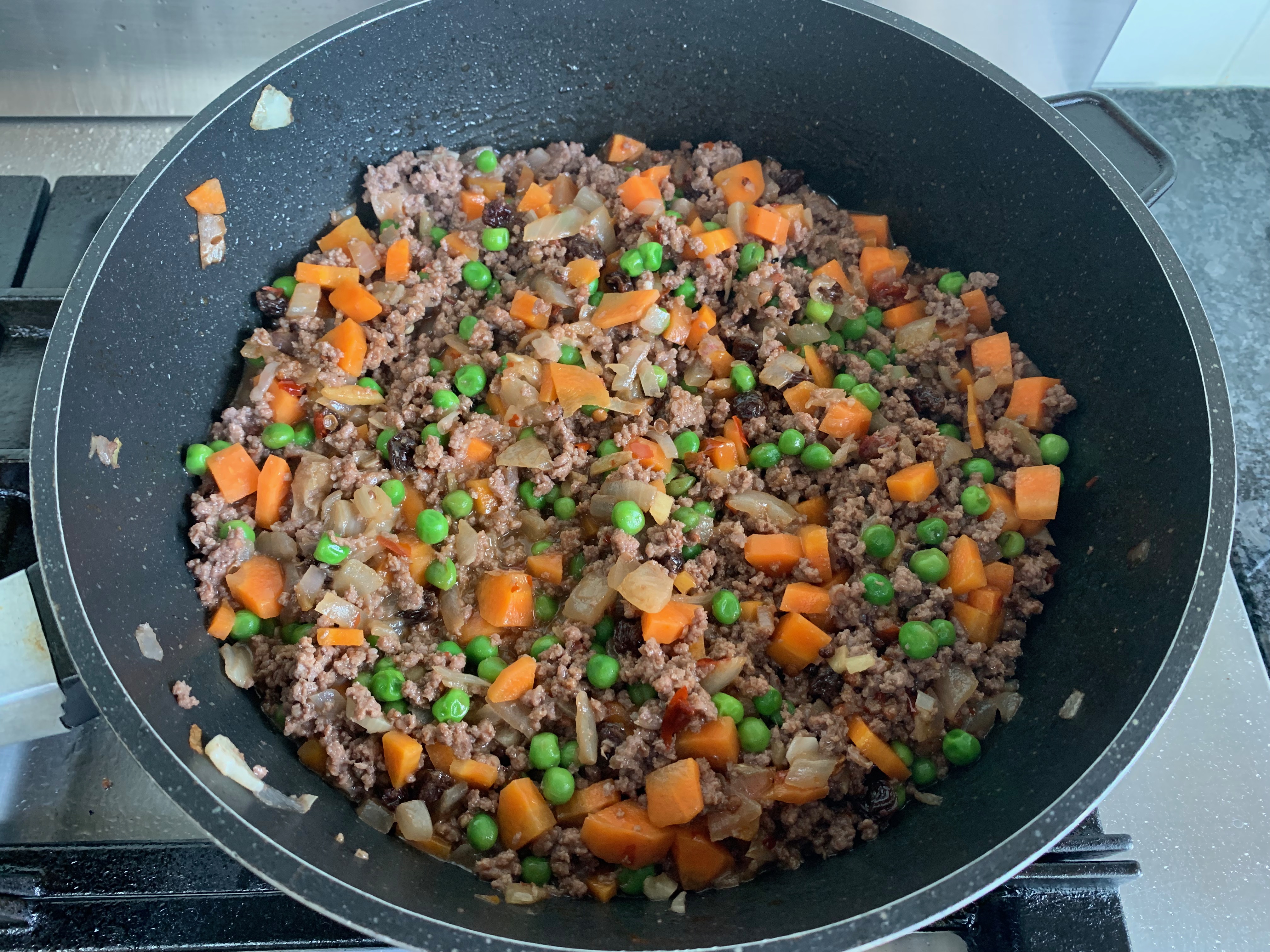
  8. Add frozen peas and raisins (if using), salt and Sichuan peppercorns, and cook the sauce until most of the liquid has evaporated.
  9. Remove from the heat and cool thoroughly. Leave the filling uncovered for the first hour or so to ensure that surplus water evaporates: a wet filling results in the dreaded soggy bottom!

The dough

The quantities here made about 670g of pastry, so enough for 16 empanadas using 40g each, with a tiny bit to spare.

  • 400g plain flour (if possible, use OO grade flour)
  • ½ tsp baking powder
  • ½ tsp salt
  • 100g lard (keep chilled until use)
  • 125ml water
  • 1 egg
  • 1 tsp vinegar
  1. Combine flour, baking powder and salt in a bowl and stir until evenly mixed. (Some recipes add sugar to the dough – I really didn’t like that idea).
  2. Cut the lard into very small cubes, tip them into the flour mix and work with your fingers until there are no big lumps of lard remaining and most of the flour has been absorbed.
  3. Beat together the egg, vinegar and water and add to your flour mixture. Mix in until you have a smooth dough.
  4. Knead the dough for five minutes or so until it is elastic and springs back when you press a dent into it with your thumb.
  5. Form into a ball, cover and leave in the fridge to rest for 20-30 minutes.

Assembly and baking

  • More flour for dusting – you’ll need a surprisingly large amount
  • 1 egg for the wash
  1. Preheat oven to 180℃ fan (if deep frying, 180℃ is also a good temperature for your oil).
  2. Cover a baking tray with a Silpat sheet if you have one, or baking paper if you don’t.
  3. Flour your pastry board.
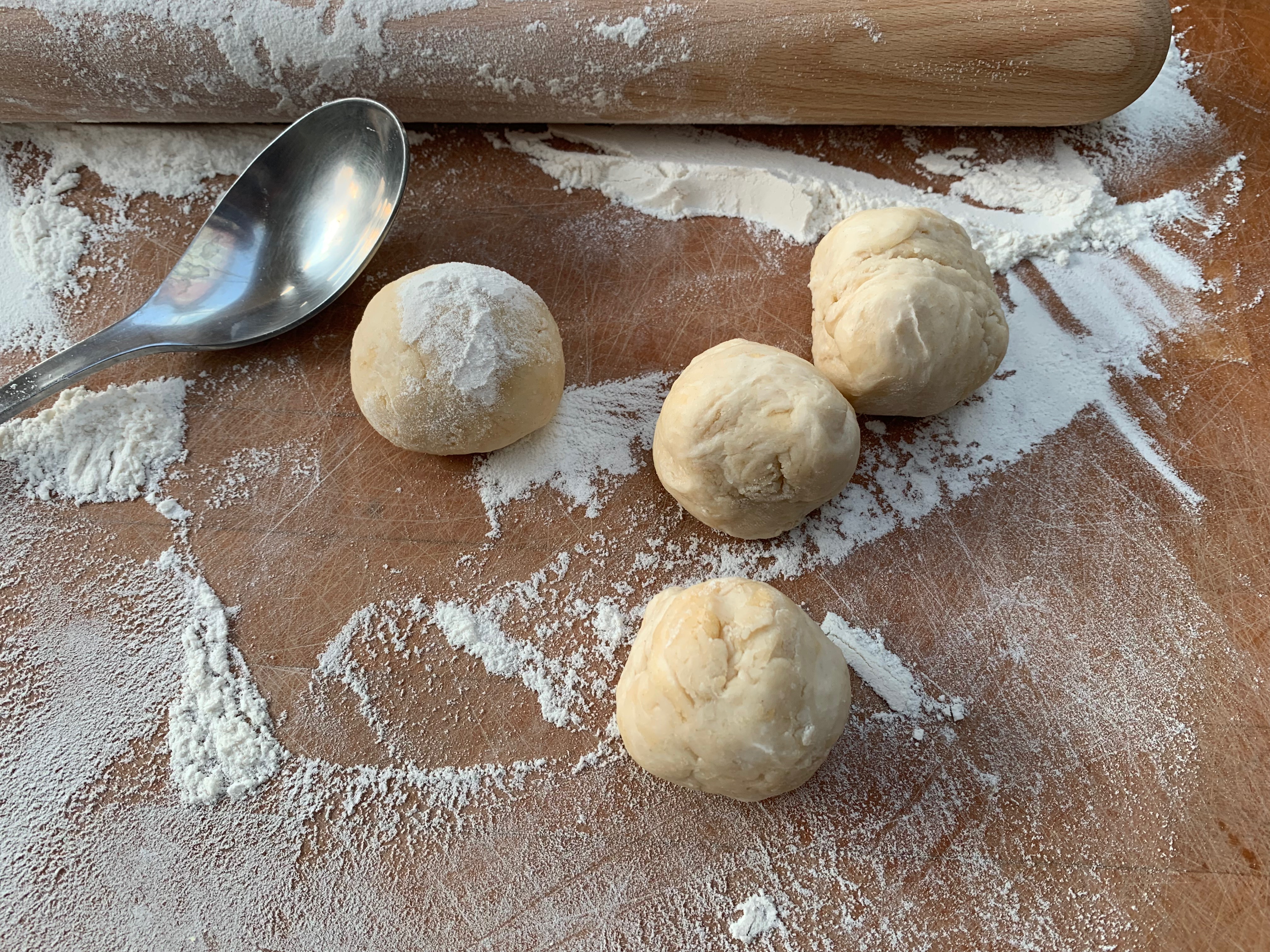
  4.  Divide your dough into 16 balls of around 40g each (I actually did four at a time, leaving the rest of the dough in the bowl, covered to stop it drying out).
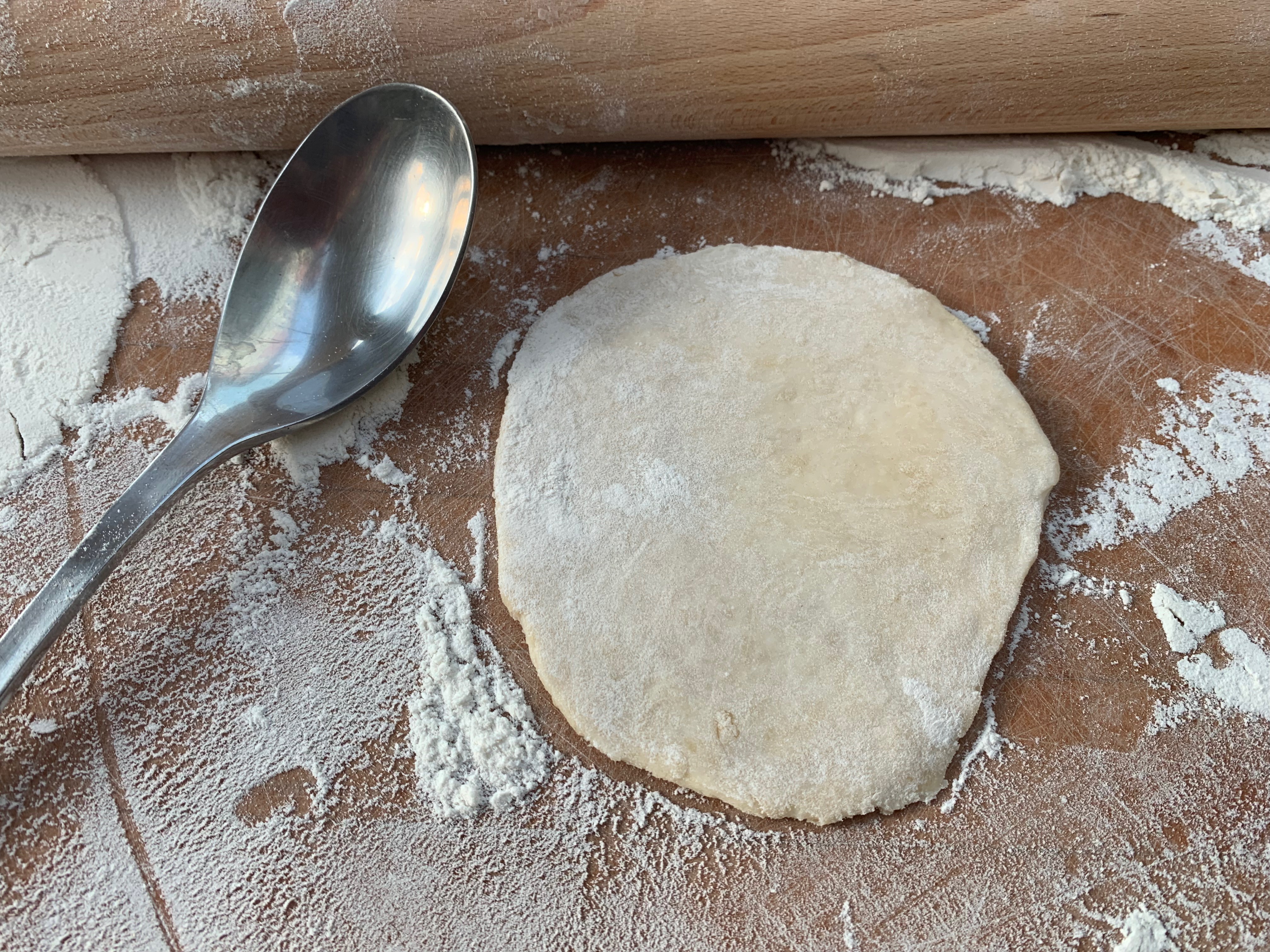
  5. Roll out a ball of dough into as good a circle as you can manage, perhaps 10-12cm in diameter.
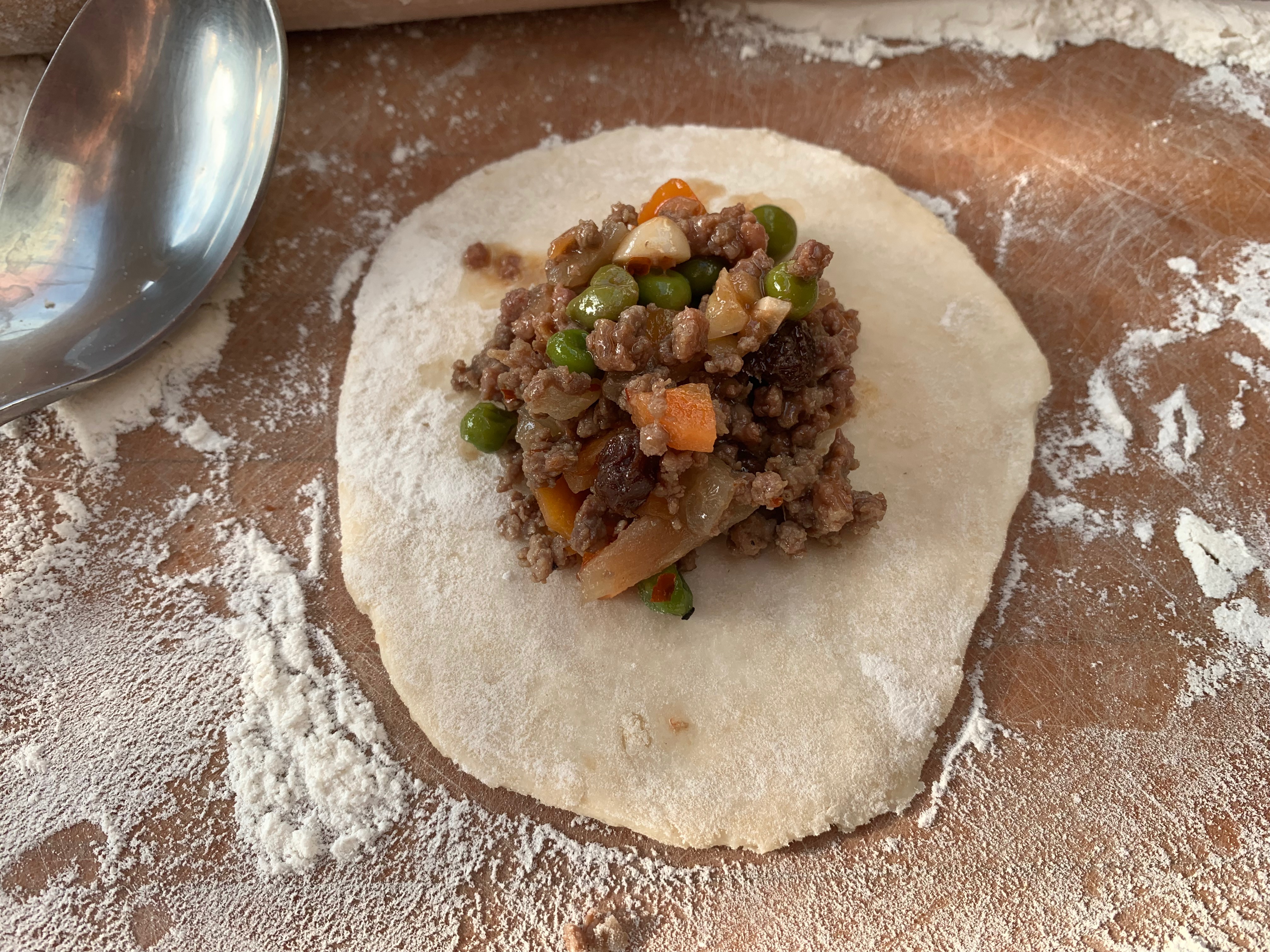
  6. Spoon a ball of filling into the middle of your circle. I used about two dessertspoonfuls of filling per empanada.
  7. Brush the circle of dough around the outside of your filling with water: that’s to help the edges stick together when you seal the parcel.
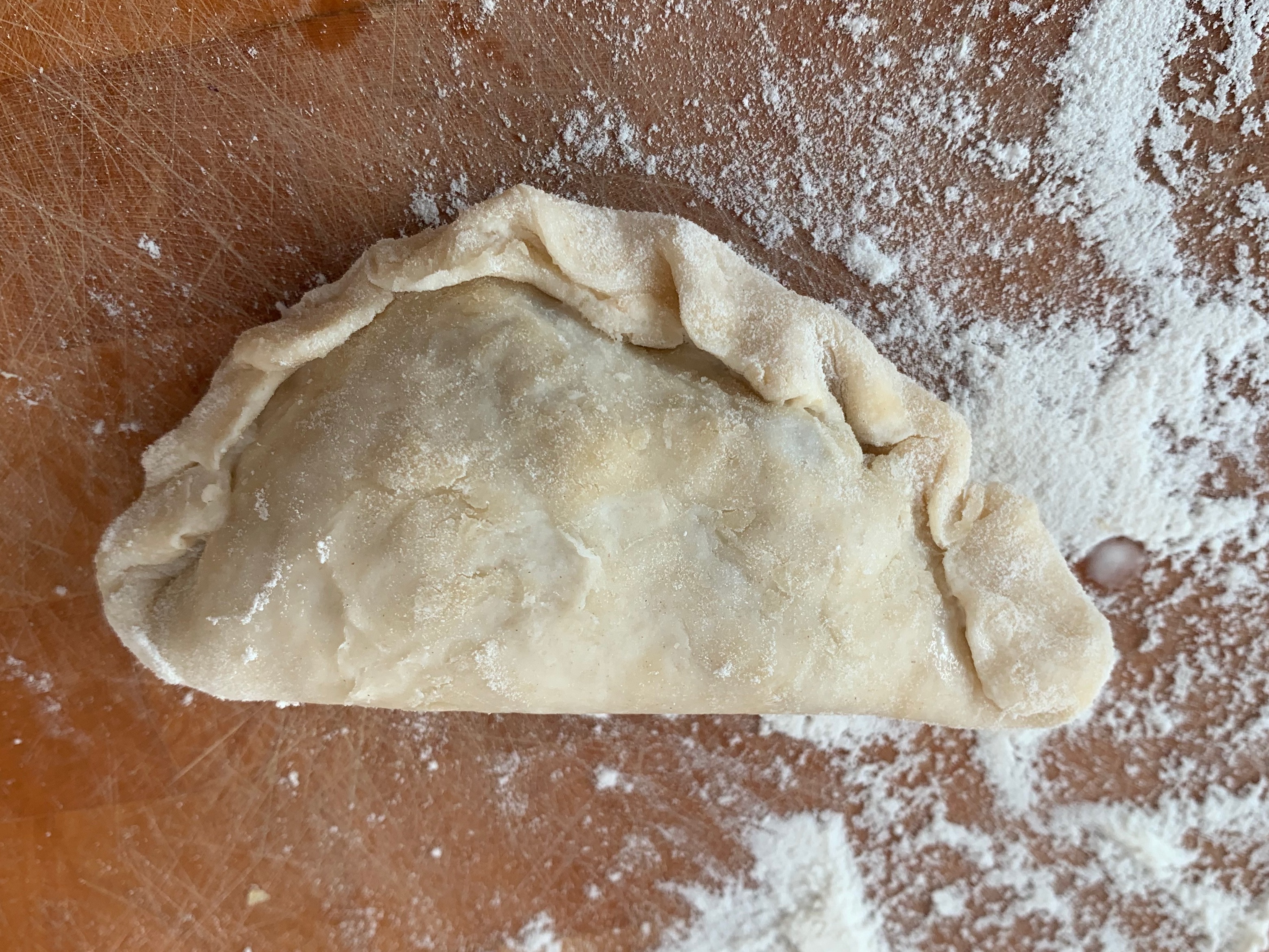
  8. Pick up two opposite edges of the circle and fold them together; then squeeze together all the way round the semicircle. You want to get all the air out and distribute the filling nicely while being sure that the dough doesn’t tear and the filling doesn’t leak out of the edge.
  9. Fold an end of your semi-circle inwards (about 5mm or so), then repeat until you have the characteristic braided pattern around the edge of your semi-circle. Personally, I’m incredibly messy at this, so you’re best not to look at my photos too closely and look at the Instagram video pointed to by this recipe.
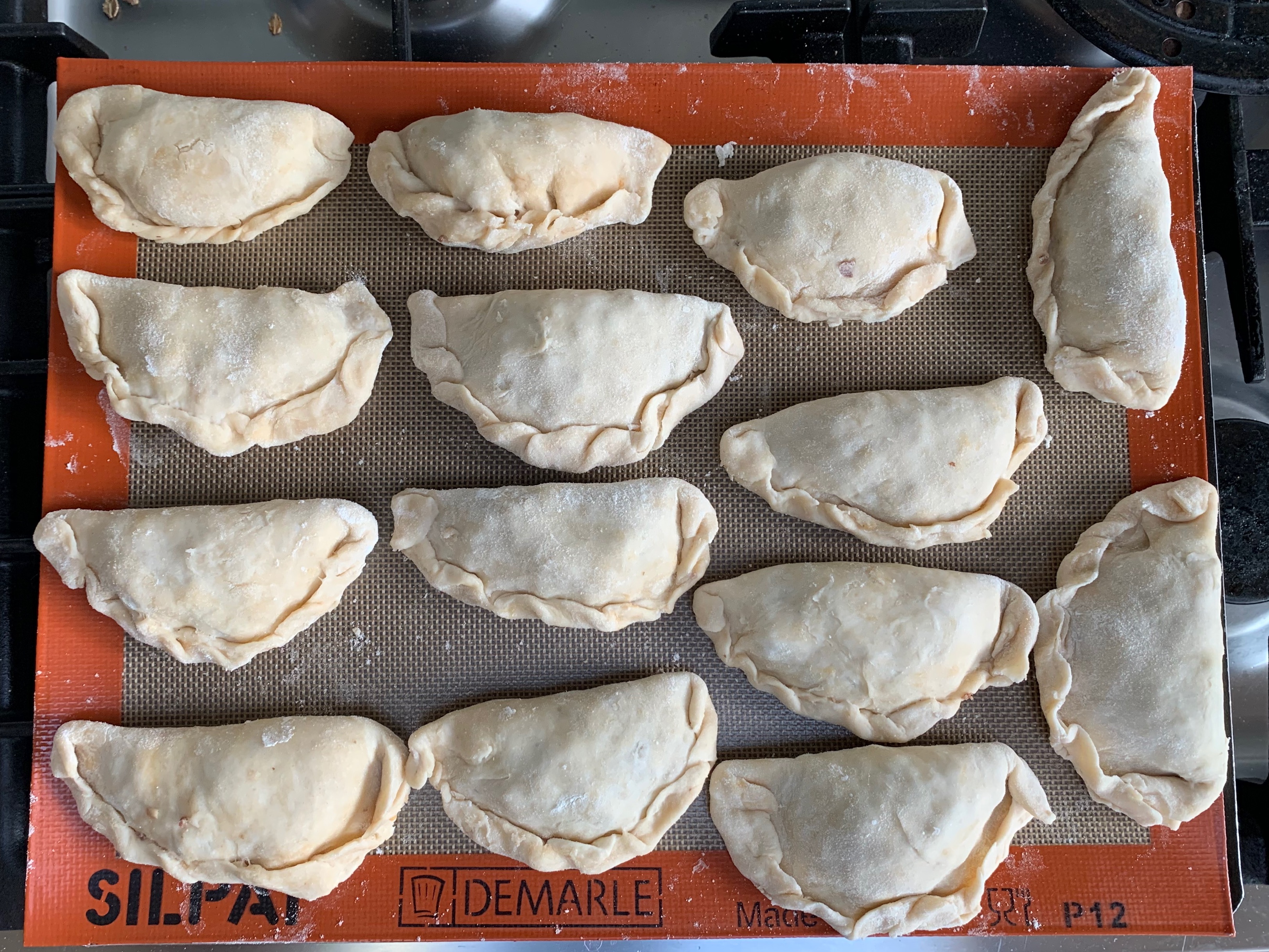
  10. Put the empanada on your baking sheet, and repeat for the next fifteen.
  11. Beat the egg with a bit of water and brush the pastries with the resulting wash (tip: if you don’t want to waste the leftover egg wash, which will be most of the egg, it makes a perfectly nice small omelette).
  12. Bake for around 25-30 minutes until golden brown.
Around the world in 80 bakes, no.56: baked spring rolls from Malaysia

Around the world in 80 bakes, no.56: baked spring rolls from Malaysia

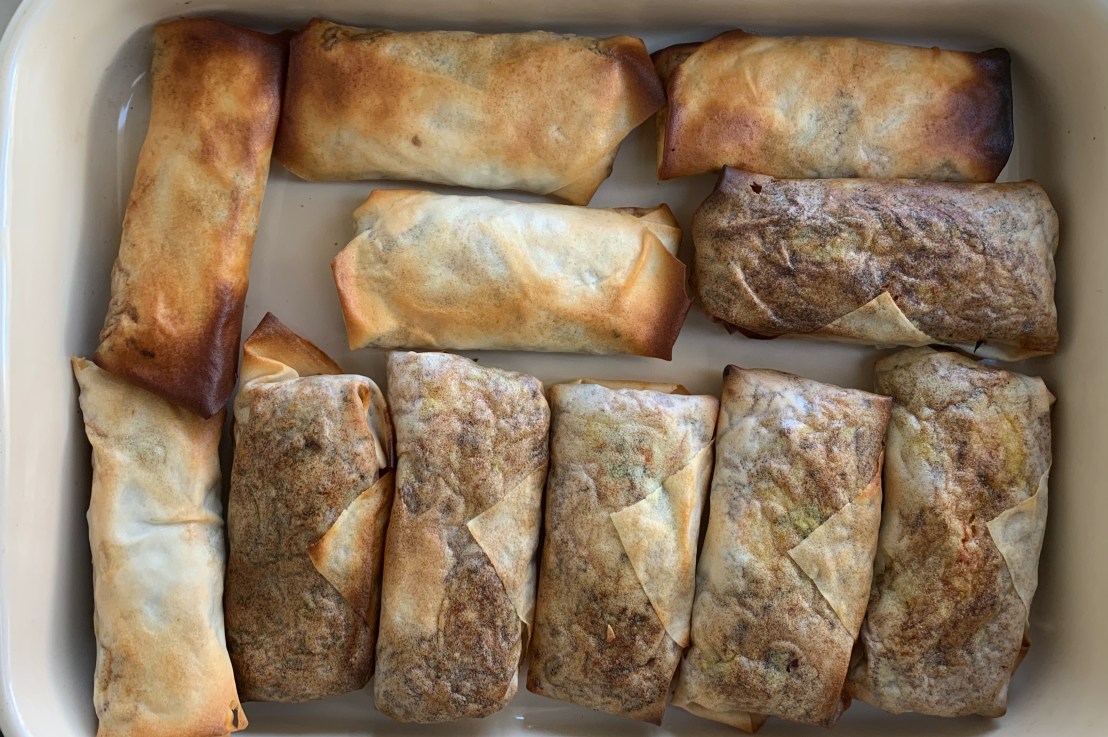
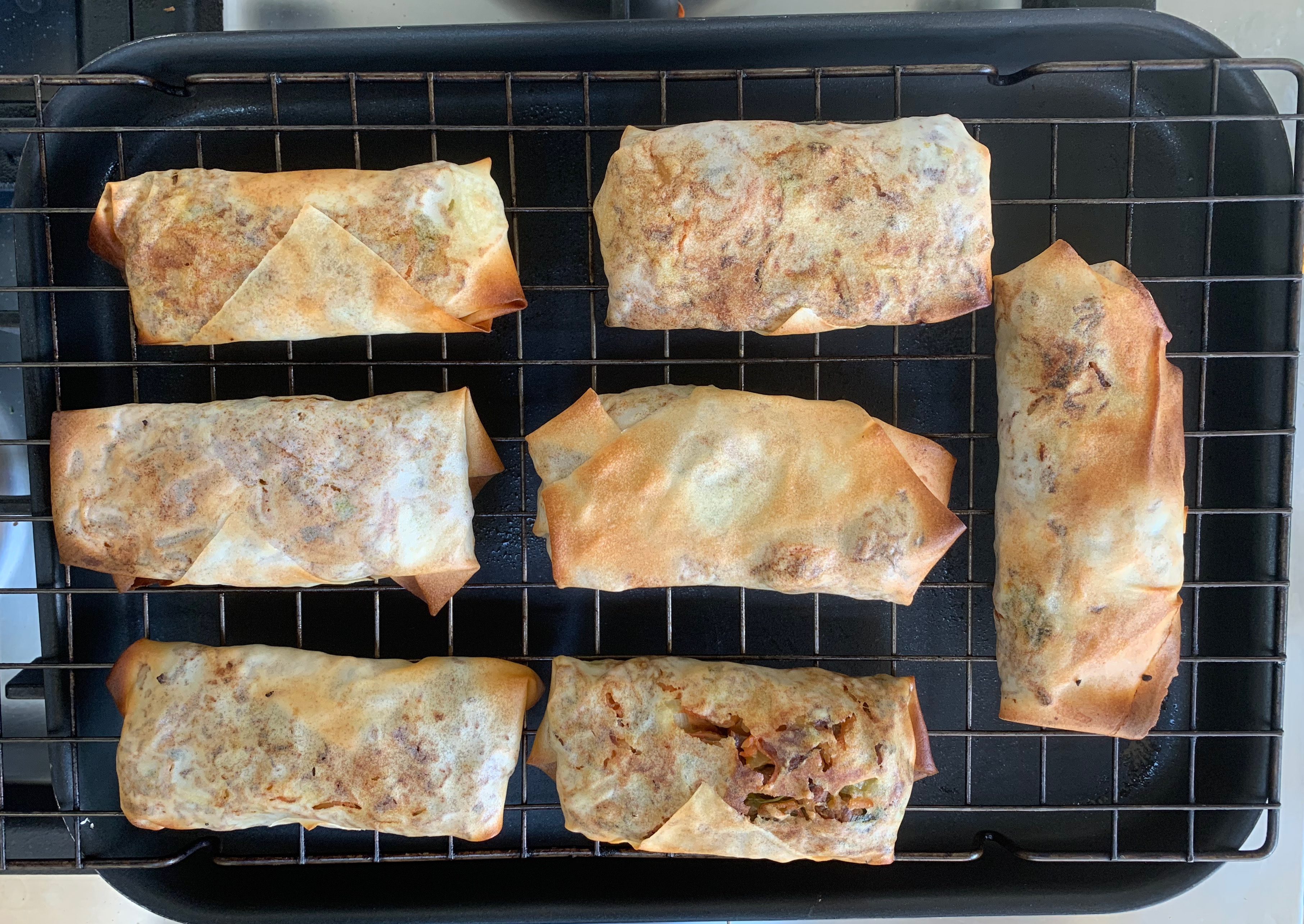
As far as I can see, the real definition of a spring roll is “anything you like that has vaguely Far Eastern flavourings, wrapped in a cigar shape of very thin pastry”. However, this being a baking blog with pretensions of authenticity, I started off with an actual Malaysian recipe – and one that specifies how to bake them rather than the more usual deep fry. If like me, you try to steer clear of deep frying, the use of cooking spray – not something I’d come across before using this recipe – seems to work pretty well, getting a result that’s crisp, non-greasy and holds its filling, even if you don’t get the classic “golden all over” look of the fried version.

The recipe will be very forgiving as to quantities: shown here are what I had easily available. The original recipe specifies jicama, a root vegetable that I couldn’t get hold of, so I substituted with a couple of cans of water chestnuts. I believe that mooli (aka daikon) also makes a good substitute, but with a more distinctive flavour of its own.

The filling

  • 500g lean pork mince
  • 1 tbsp dark soy sauce
  • Ground black pepper to taste
  • 1 onion
  • 2 cloves garlic
  • Oil for frying (I used groundnut oil, any neutral oil will do
  • 450g water chestnuts
  • 2 large carrots
  • 450g cabbage
  • 3 spring onions
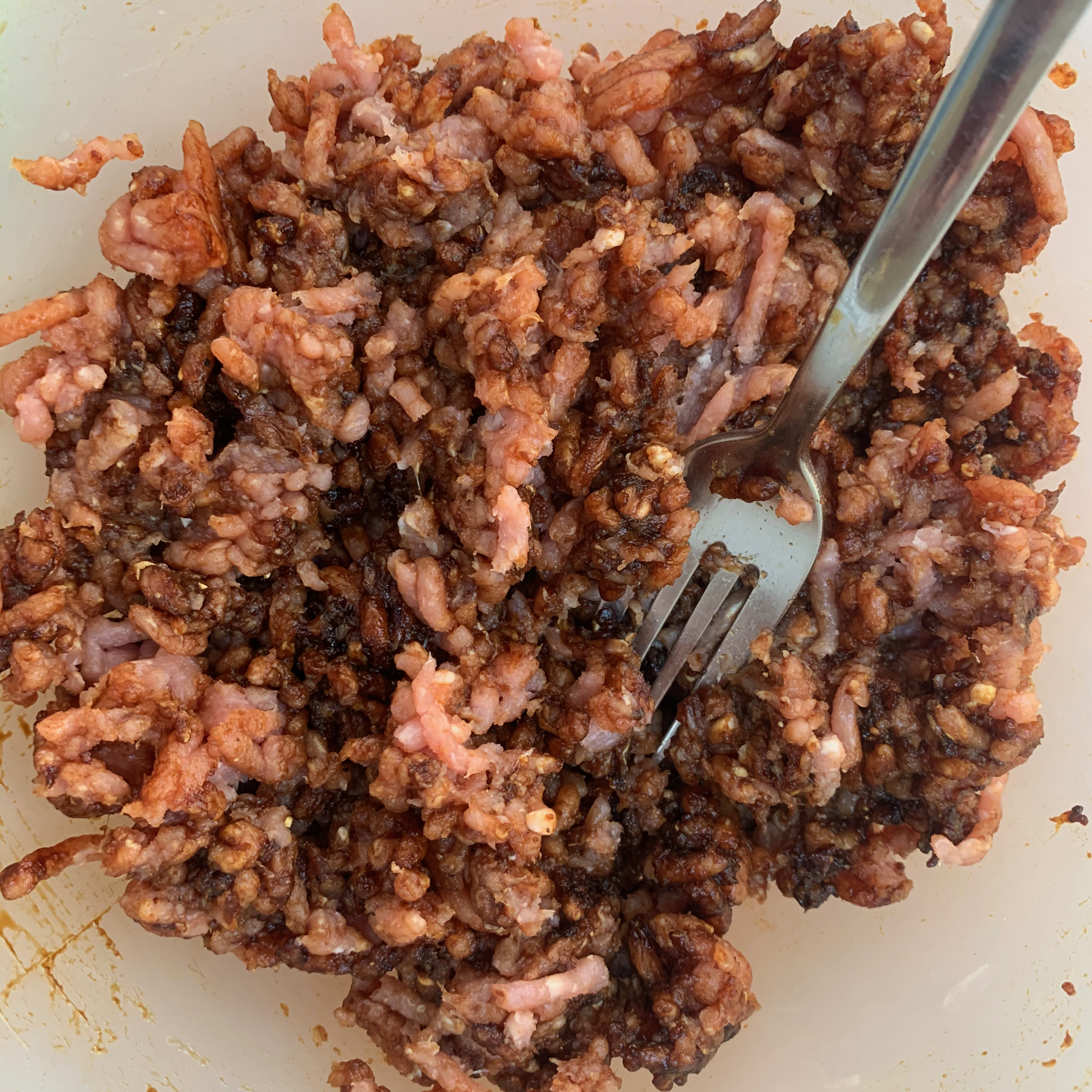
  1. Combine pork mince, soy sauce and black pepper in a bowl, mix well.
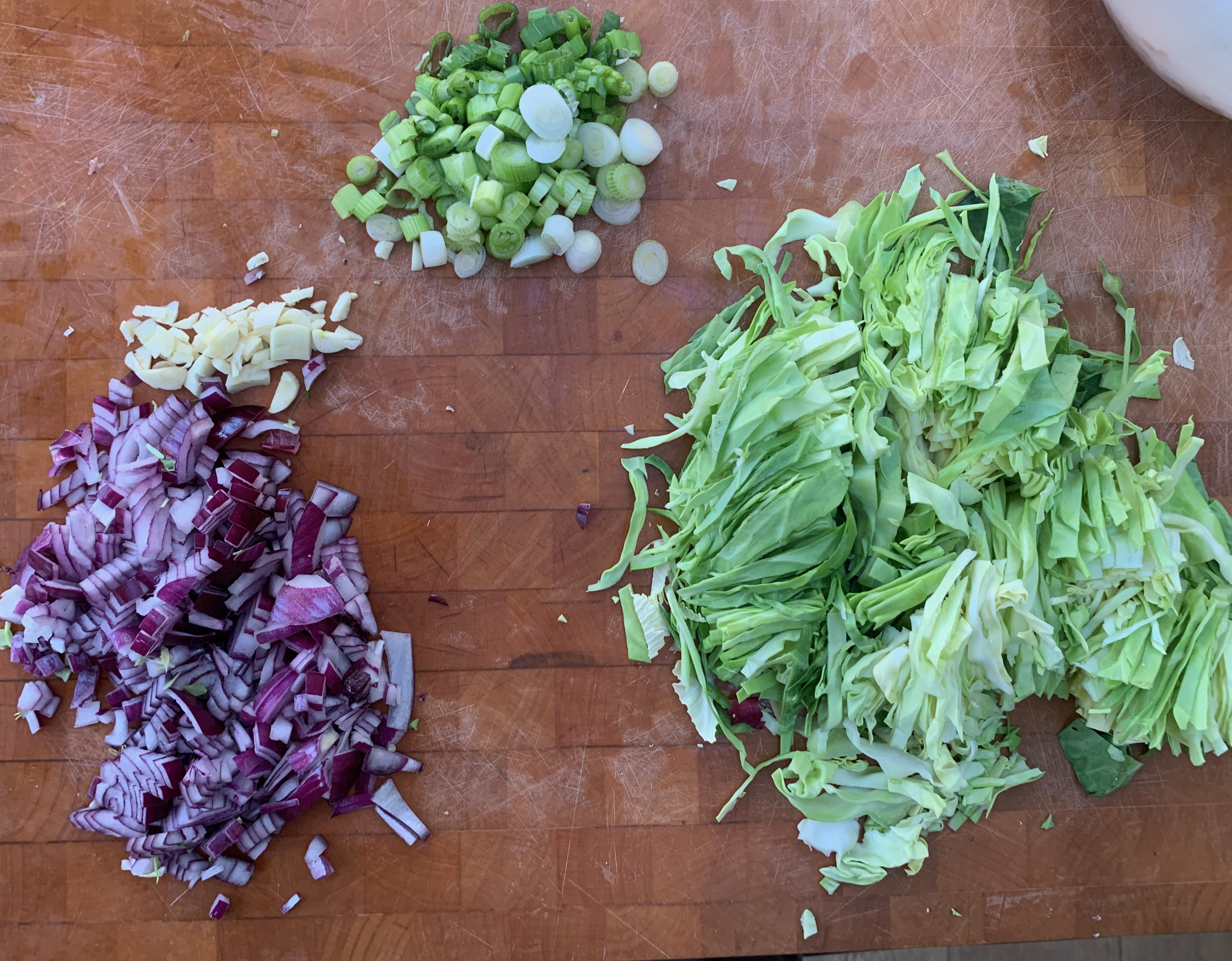
  2. Chop garlic and onion finely
  3. Shred cabbage
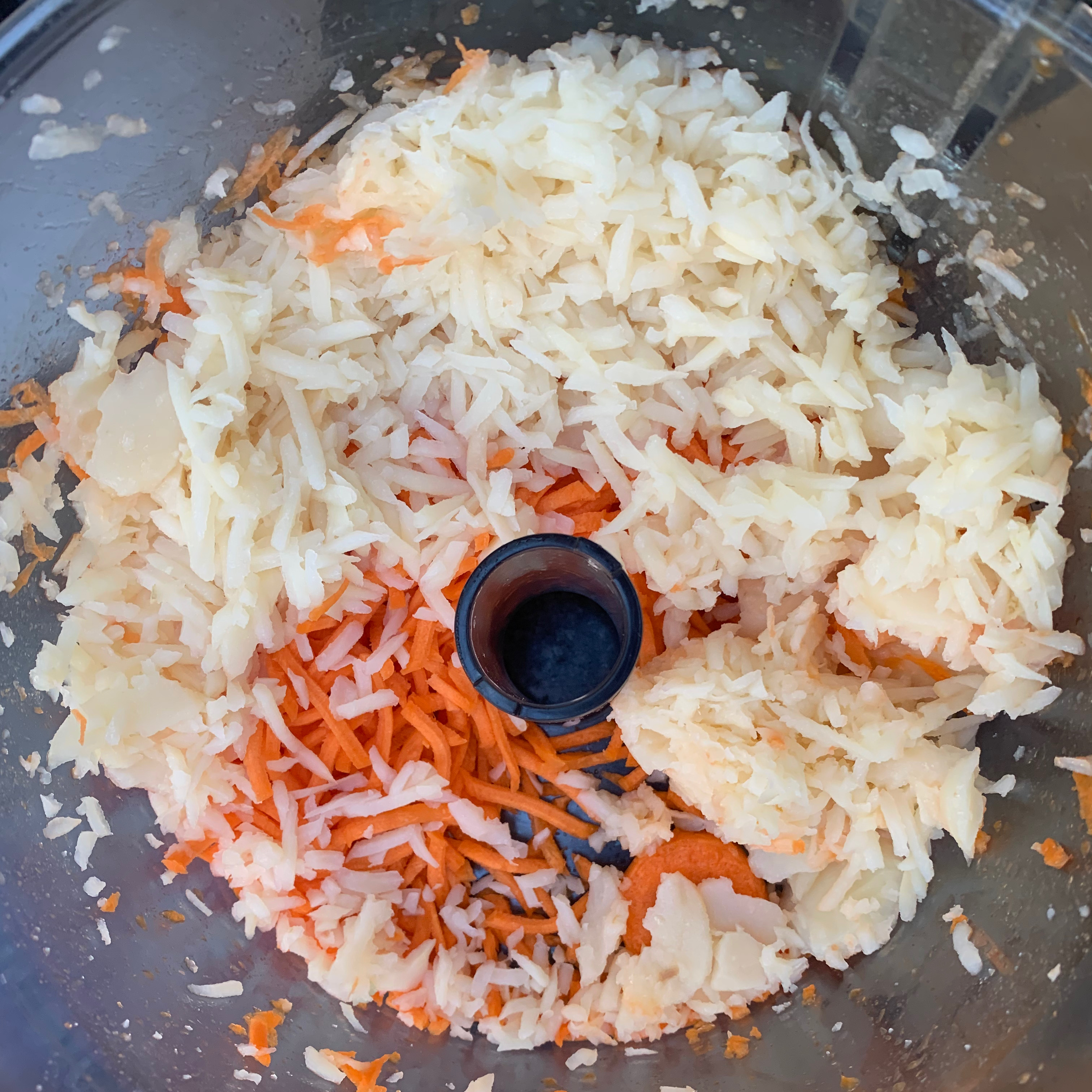
  4. Peel the carrots, grate them and the water chestnuts – I did this in a food processor.
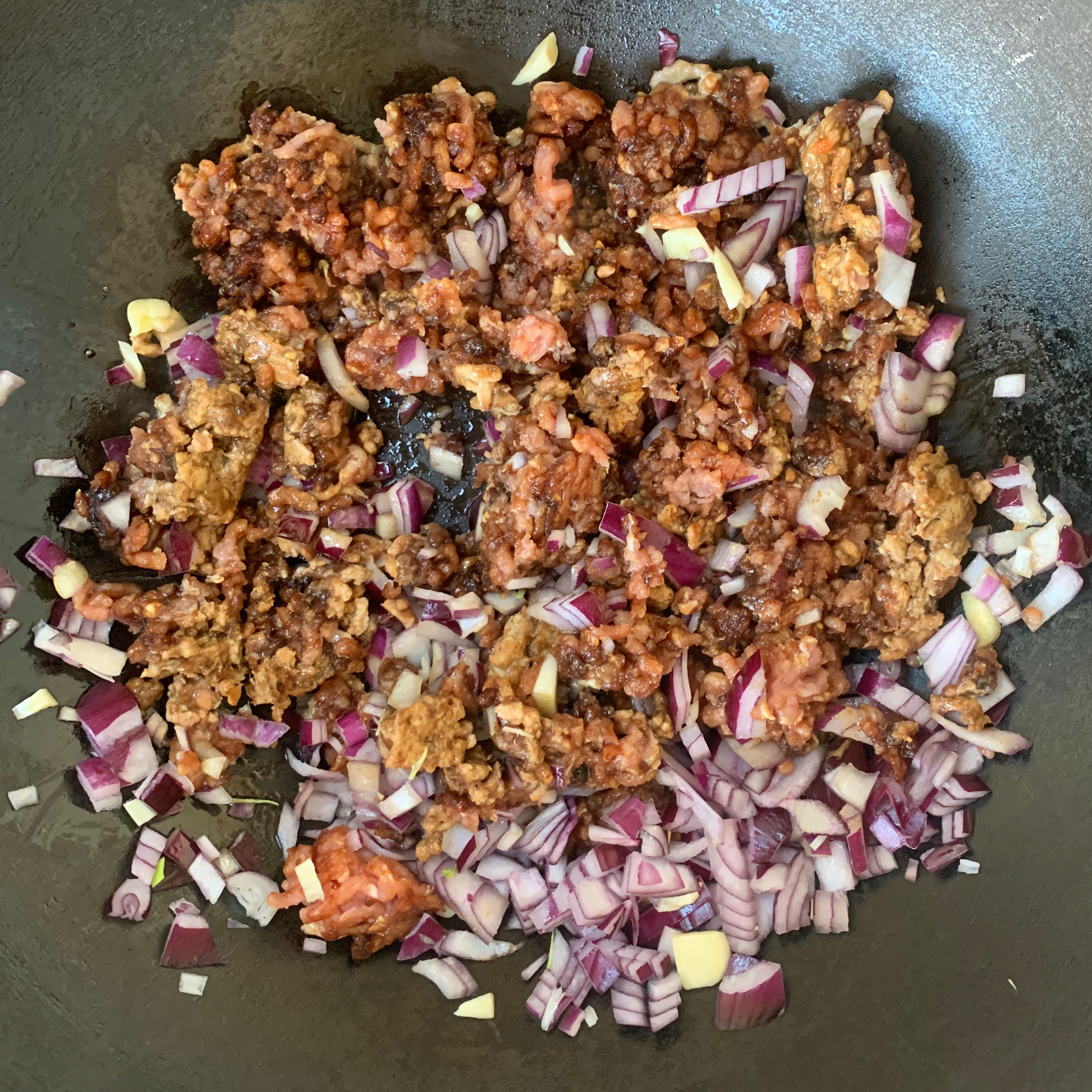
  5. Warm a small amount of oil in a wok, add the pork mixture and fry for a couple of minutes
  6. Add onion and garlic, fry until the meat is browned and the onion is soft
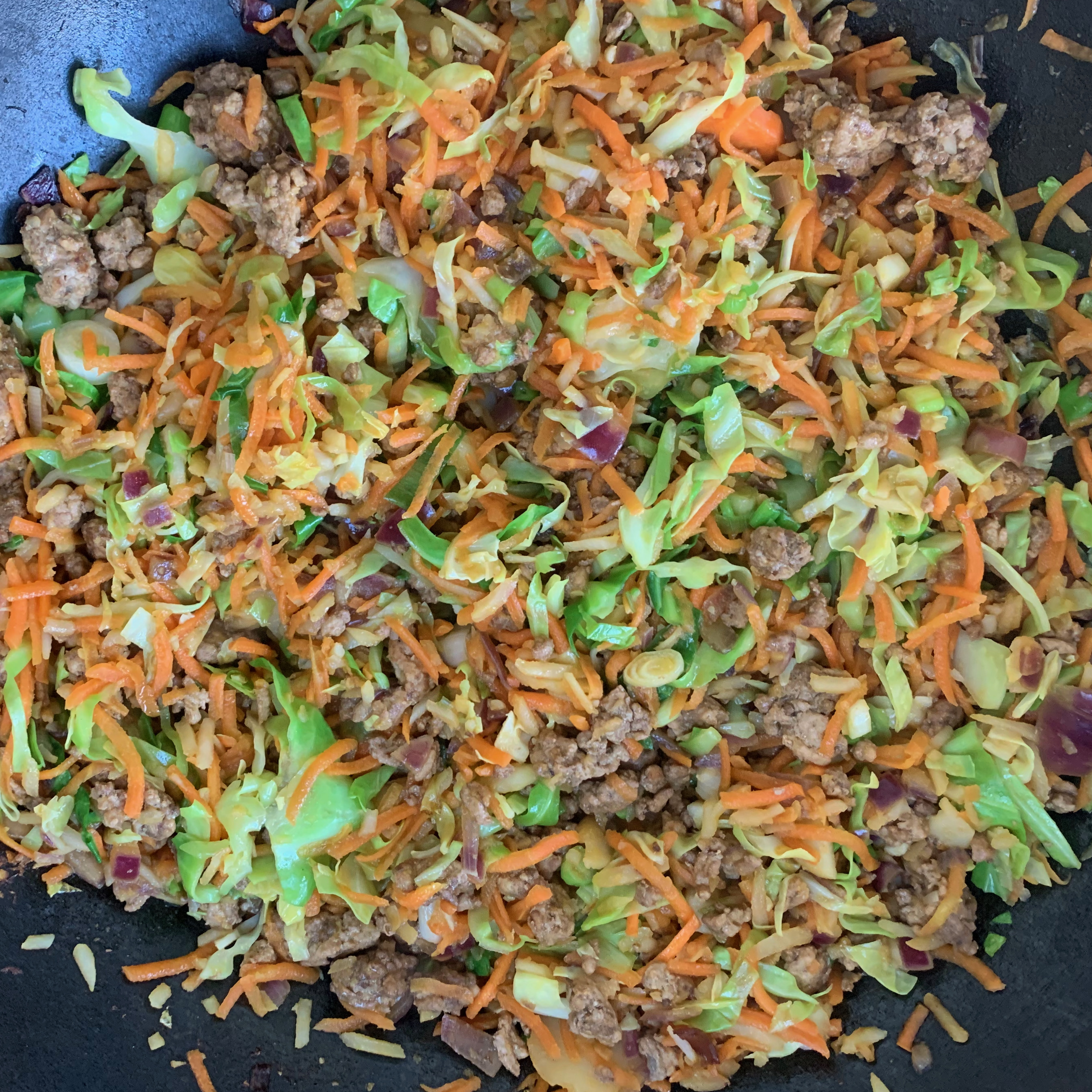
  7. Add the water chestnuts, carrots and cabbage, and keep cooking until the vegetables are cooked through and most of the water has been cooked out of them.
  8. Chop the spring onions and add them.
  9. Put the whole lot in a colander or sieve for ten minutes or so (or as long as you like) to allow more of the excess moisture to drain away.

Assembly and baking

Although I usually try to make my own pastry from scratch for this blog, I just couldn’t see a good reason for doing so here – and as far as I know, none of my Asian friends can be bothered either: the supermarket-bought wrappers are just fine. I couldn’t find fresh ones, so I bought a frozen pack: it was important to defrost them well in advance, because otherwise, peeling a wrapper off the frozen block would have been impossible without tearing it.

How many spring rolls this makes is a function of the size of your wrappers and how much filling you want to put into each. If you put a large amount of filling into each wrapper, you’ll have thinner pastry and a less carb-heavy dish; if you put less filling, you’ll have multiple layers of pastry, which will make it easier to get a crisper outside. I used wrappers that were 190mm square and put quite a lot of filling in, so the quantities here made about 20. Next time, I think, I’d go for two thirds of the filling I used here and make 30 rolls.

You want to work as quickly as you can manage, because the moisture from the filling will soak into the pastry faster than you would like.

  • 1 packet spring roll wrappers (20-30)
  • Cooking spray (I used a sunflower oil spray)
  1. Preheat oven to 225℃ fan
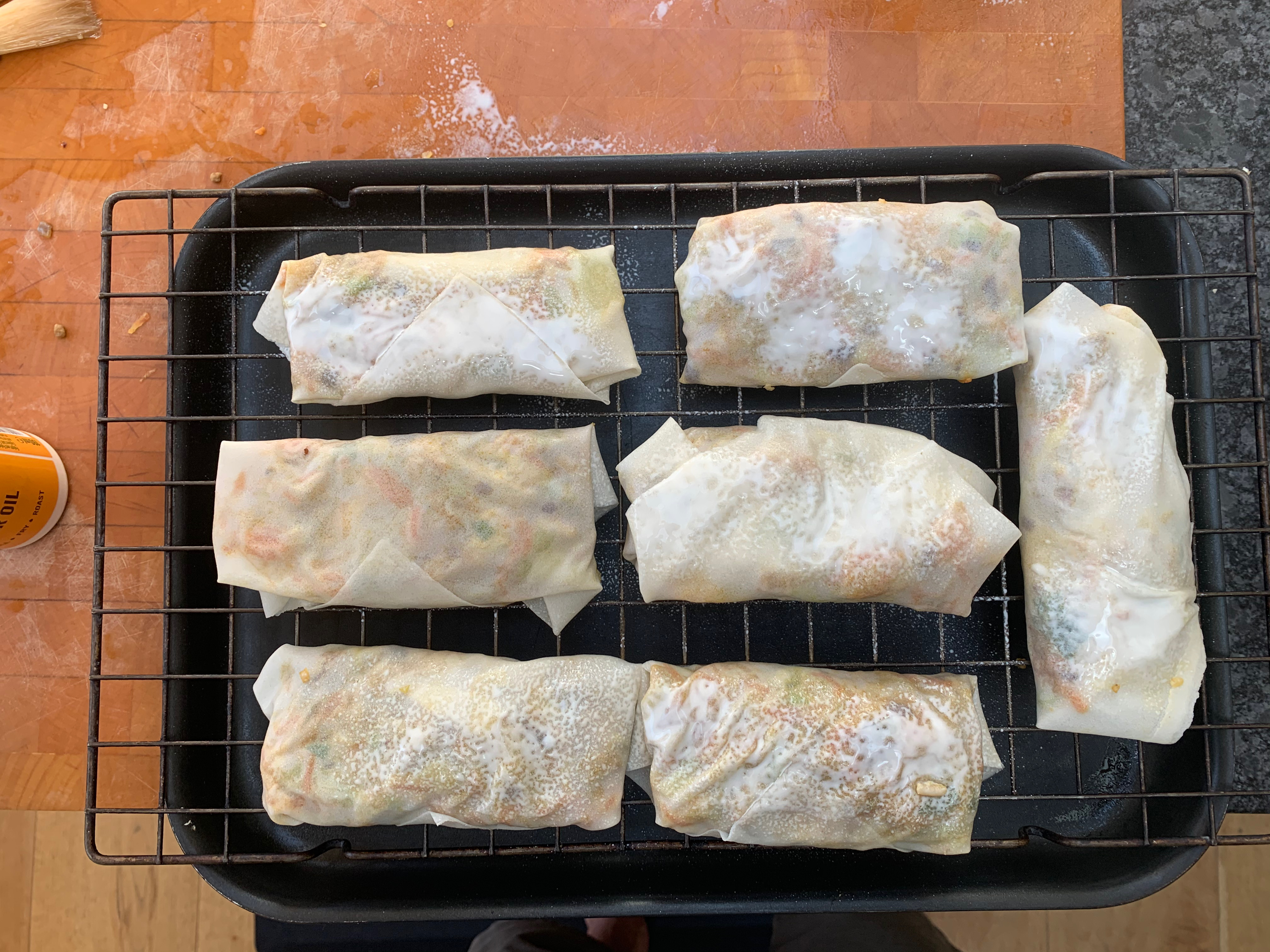
  2. Have ready a baking tray with a rack above it – I used a rack that I would normally use for cooling cakes or biscuits. Also have ready a small bowl of water and a pastry brush.
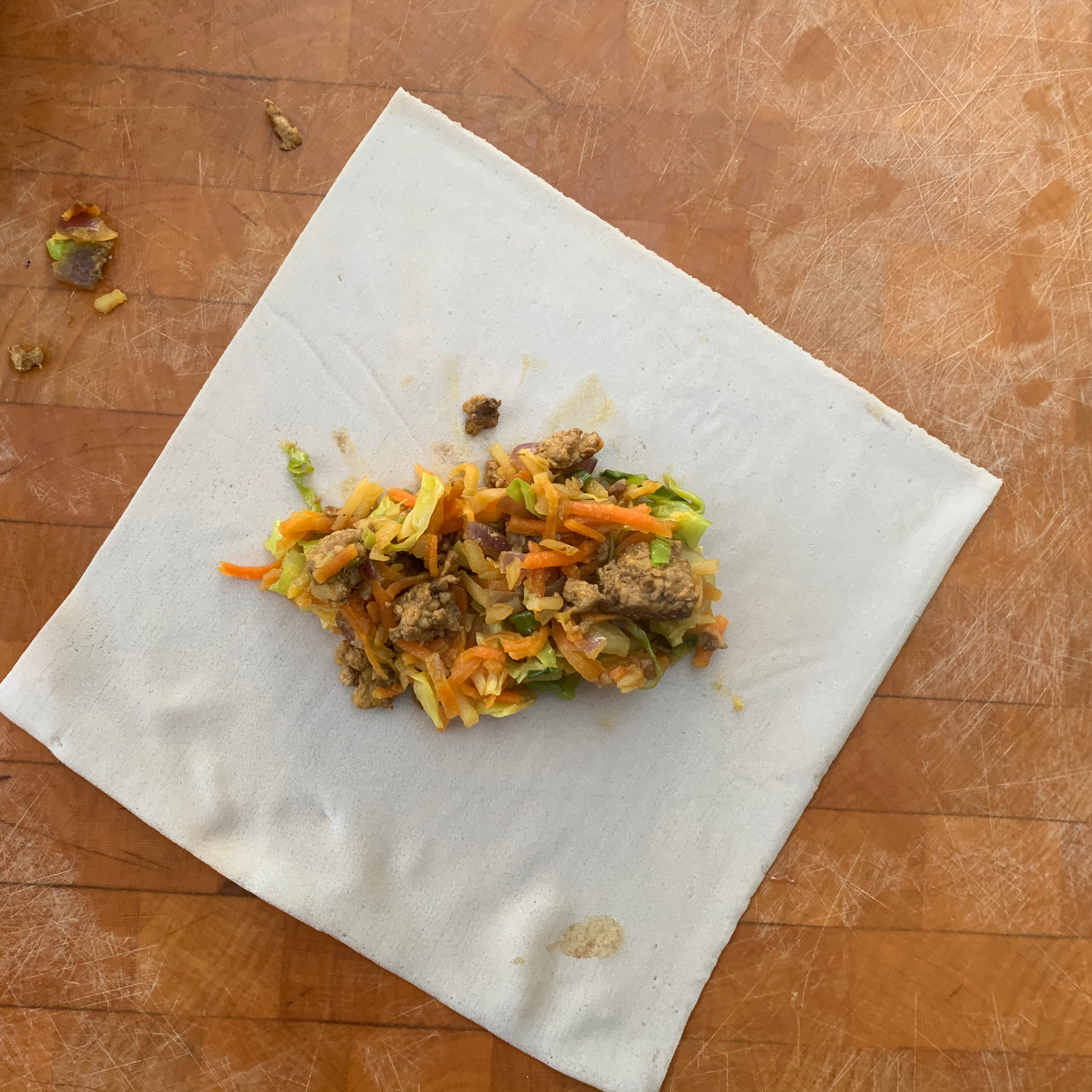
  3. Place a wrapper on a clean work surface so that you’re looking at a diamond rather than a square (i.e. the thing furthest away from you is a corner, not an edge).
  4. Spoon some filling into a cigar shape in the middle of the wrapper, going left-to-right as you see it.
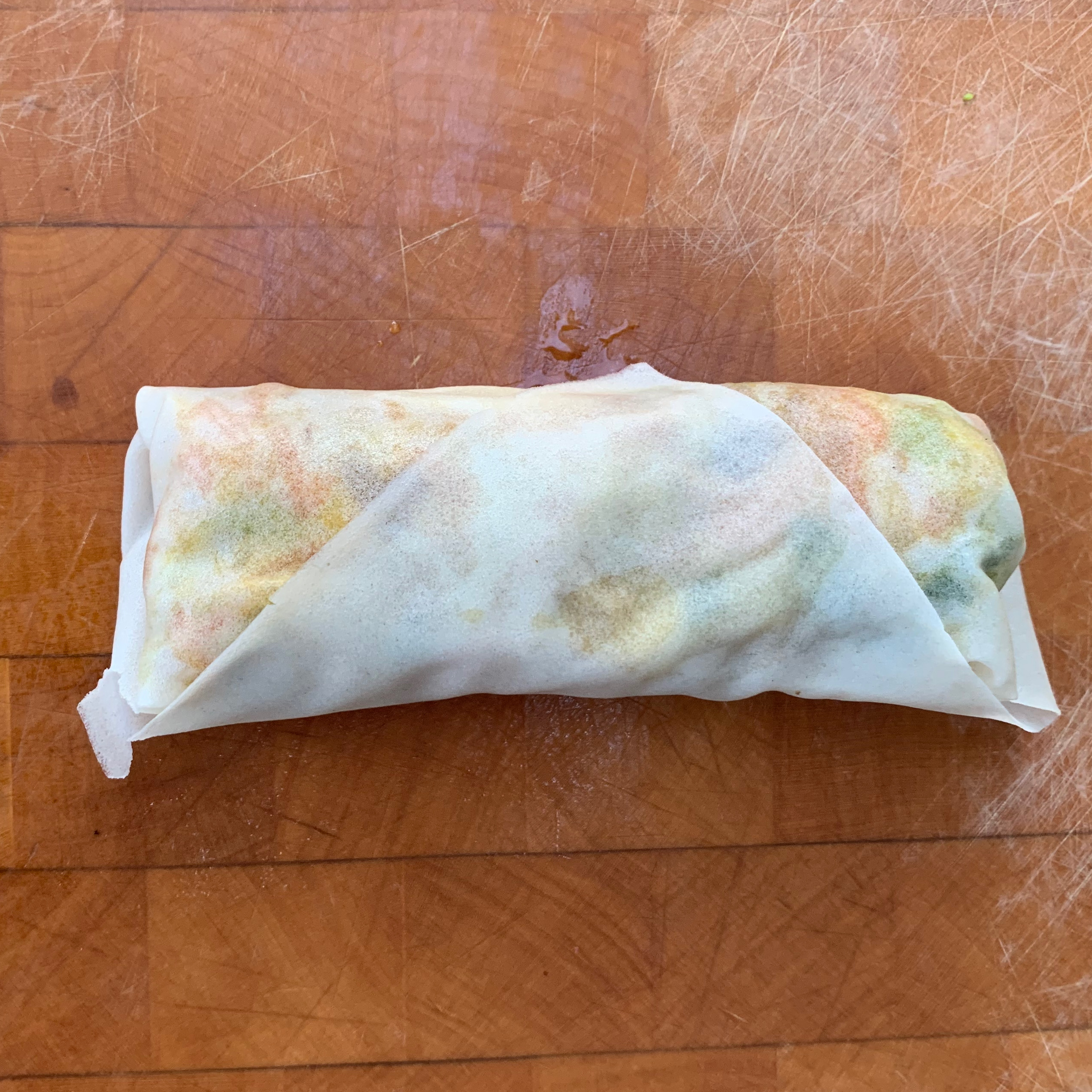
  5. Tuck the corner furthest from you over your cigar of filling
  6. Tuck the left hand right corners into the middle
  7. Brush the remaining flat part of the wrapper with water, and tuck it over your filling to form the completed roll.
  8. Repeat for half a dozen or so rolls, spray them generously with cooking spray, transfer them onto you rack, turning them outside down as you go. Now spray the other side.
  9. Repeat until your rack is full. You’ll probably need to do the whole process twice: if you have a second pan and rack, you can bake them all at the same time; otherwise, you’ll have to wait until the first batch is backed.
  10. Bake for around 25-30 minutes until crisp.
  11. Cool slightly before eating.
Around the world in 80 bakes, no.38: English Game Pie

Around the world in 80 bakes, no.38: English Game Pie

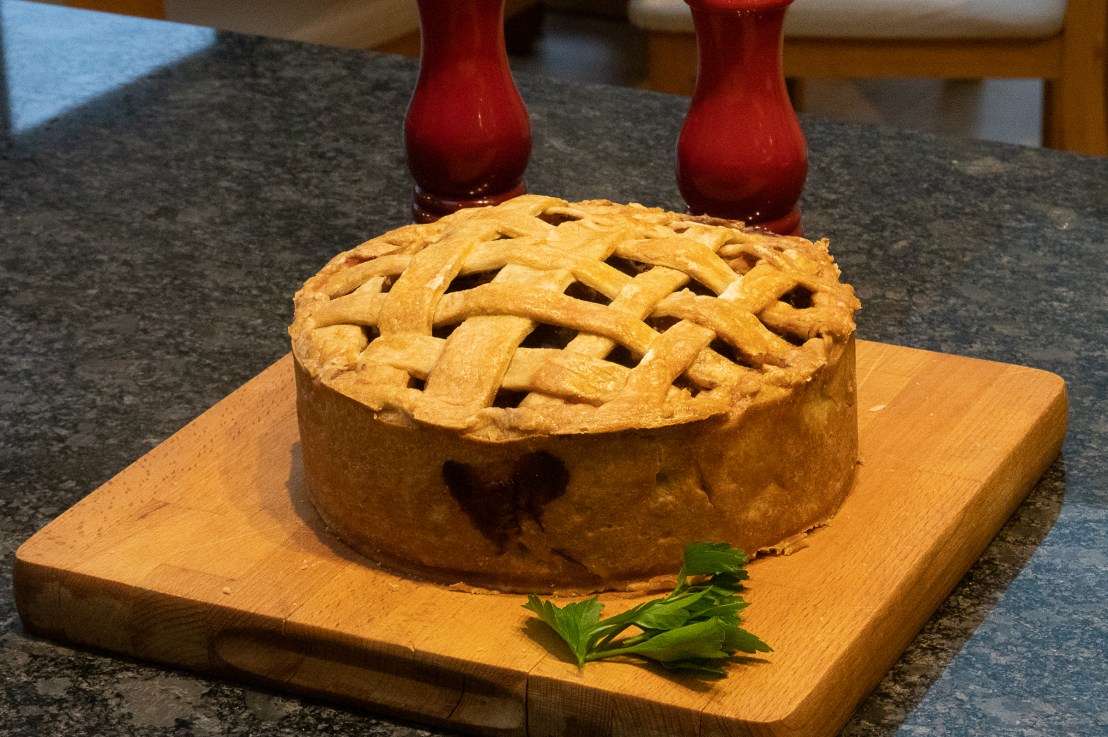
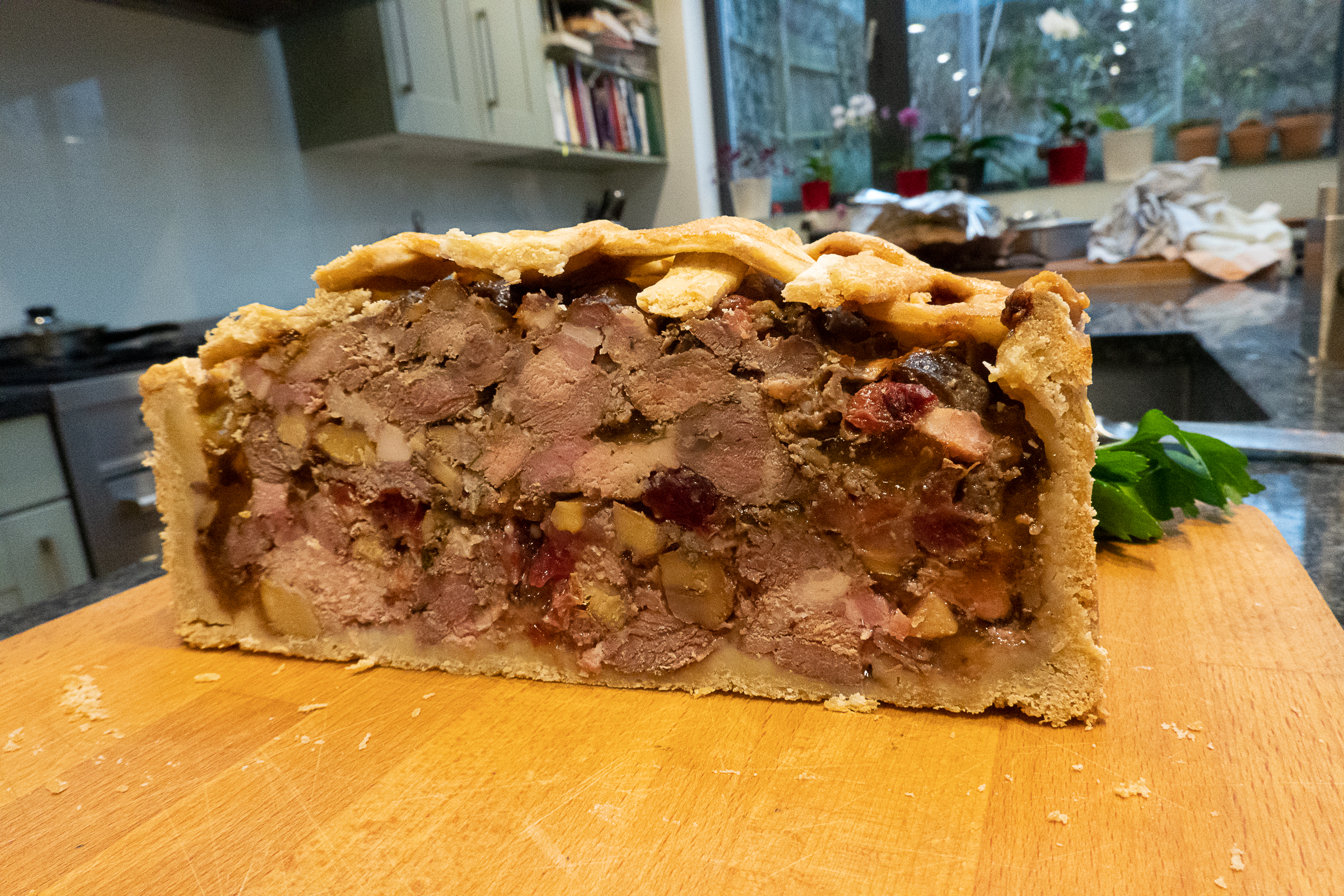
It’s time for the bake from my own country. There are so many to choose from: timeless cakes like the Victoria Sponge, regional specials like the Eccles cake or Bakewell tart, seasonal fruit cakes or hot cross buns, tea time favourites of scones or crumpets, or the humble muffin, which even has “English” in its name (everywhere except, of course, in England). But I’ve chosen to do a pastry style that I’ve hardly seen anywhere else in the world: the hot water pie crust, using it to make the classic English game pie. Since it’s coming up to December and people are thinking about Christmas, I’ve gone for a recipe from the BBC with the seasonal twist of cranberries and chestnuts.

Although you can warm up this kind of pie, it’s more often eaten cold as a lunch dish. It’s a fabulous main course for a picnic, although you’ll need freezer capacity since the game season doesn’t generally coincide with picnic weather in these parts. But the same technique should work for a pork pie or other variants.

The pastry-making technique is a bit like choux pastry without the eggs: boil up fat and water together, then quickly combine the flour and mix. As with most recipes for hot water crust, the BBC’s specifies lard, which is difficult to find right now and, in any case, isn’t to everyone’s taste. I used butter and it worked fine. The key is to work quickly when mixing and rolling the pastry, which is beautifully elastic when it’s still warm.

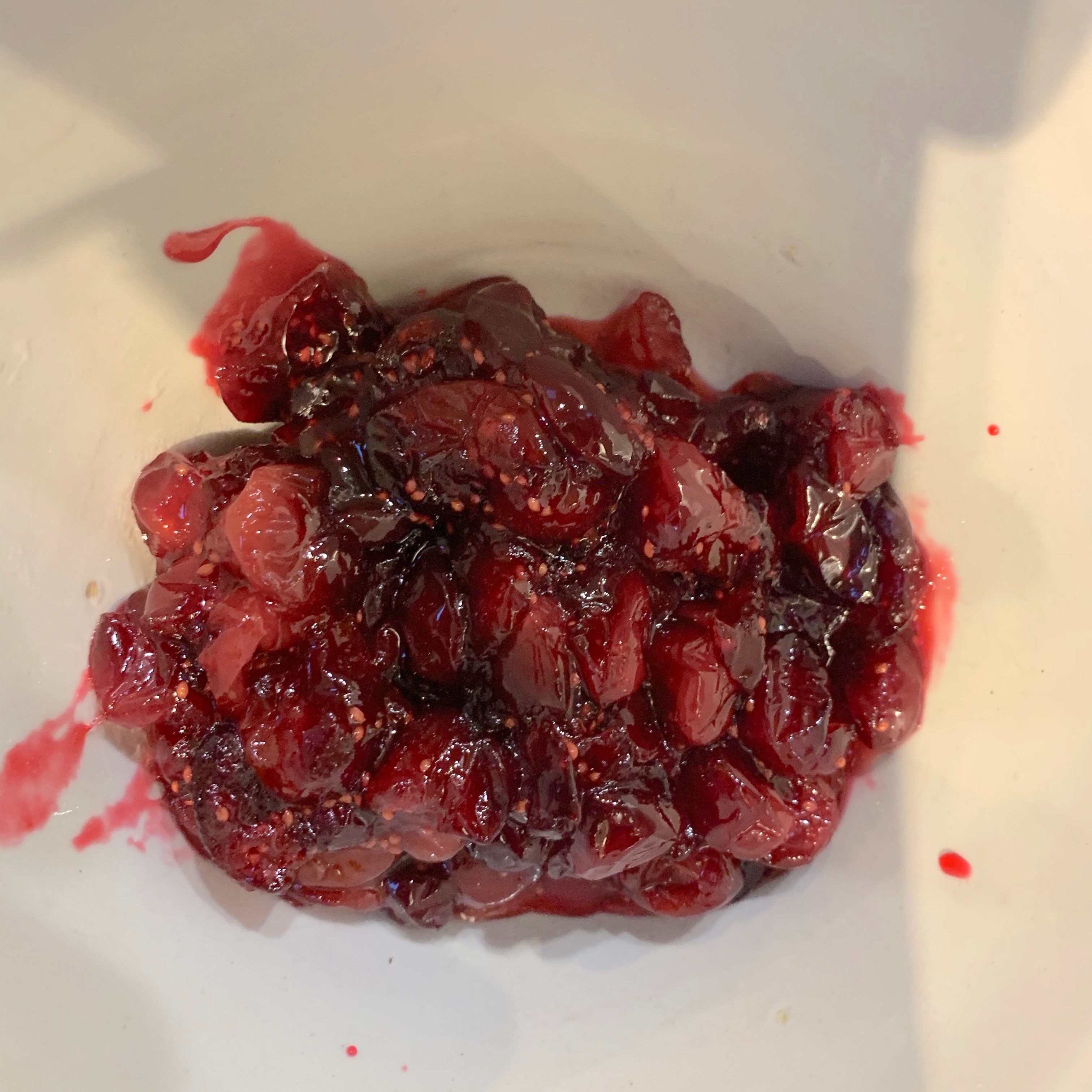
Cranberry sauce filling

  • 150g fresh or frozen cranberries (buy 200g – we’re using the rest later)
  • 50g golden caster sugar
  • 20ml water
  1. If using frozen cranberries, defrost them.
  2. Add all ingredients into a pan, bring to the boil and simmer until cranberries are soft and the liquid is much reduced
  3. Pour into a bowl to cool

Meat filling

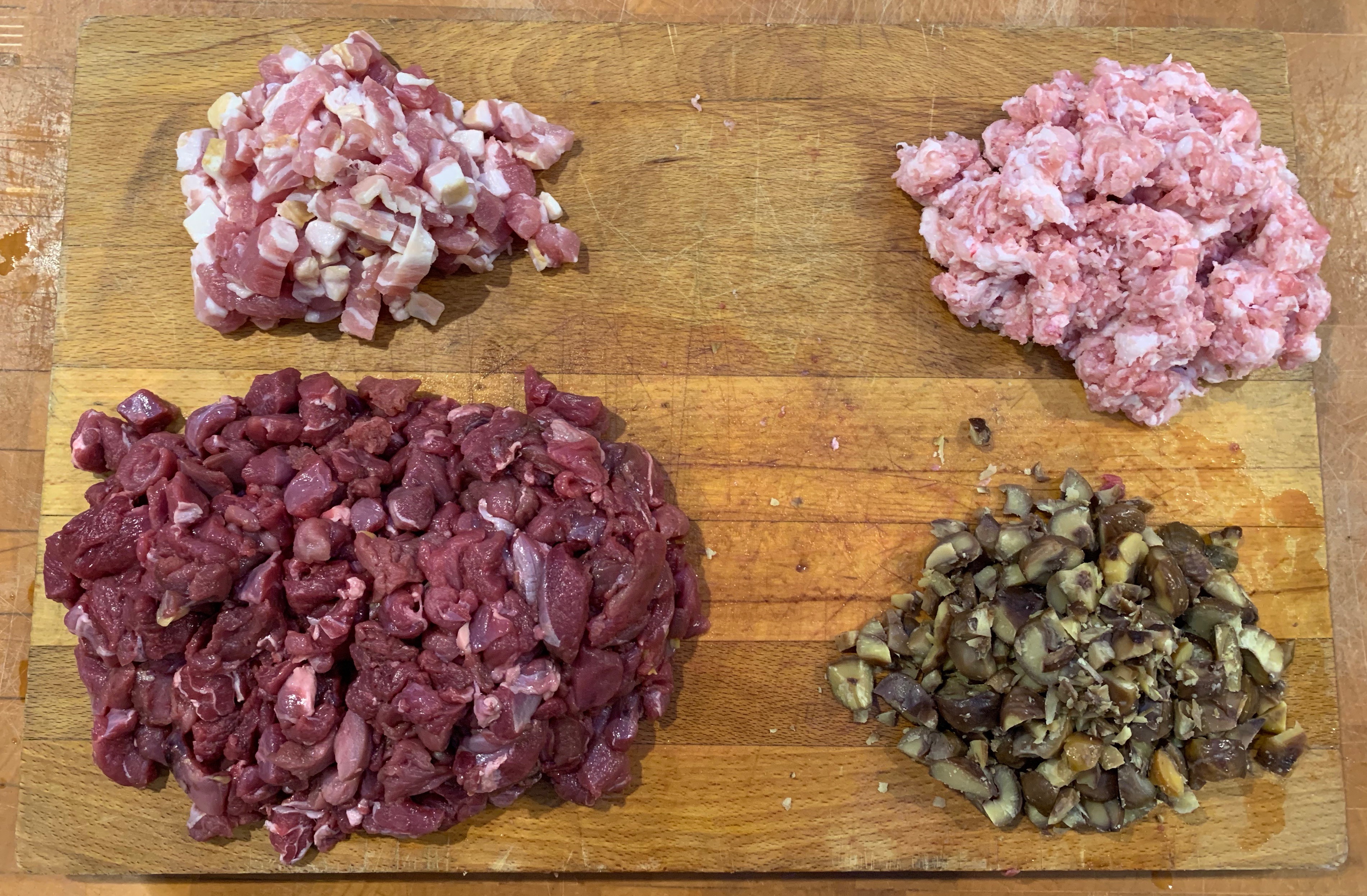
  • 800g mixed boneless game, such as rabbit, venison, wild boar, pheasant, partridge or pigeon
  • 300g pork belly
  • 200g bacon lardons
  • 150g cooked chestnuts (the vacuum packed ones readily available in UK supermarkets work well)
  • 50g fresh or frozen cranberries
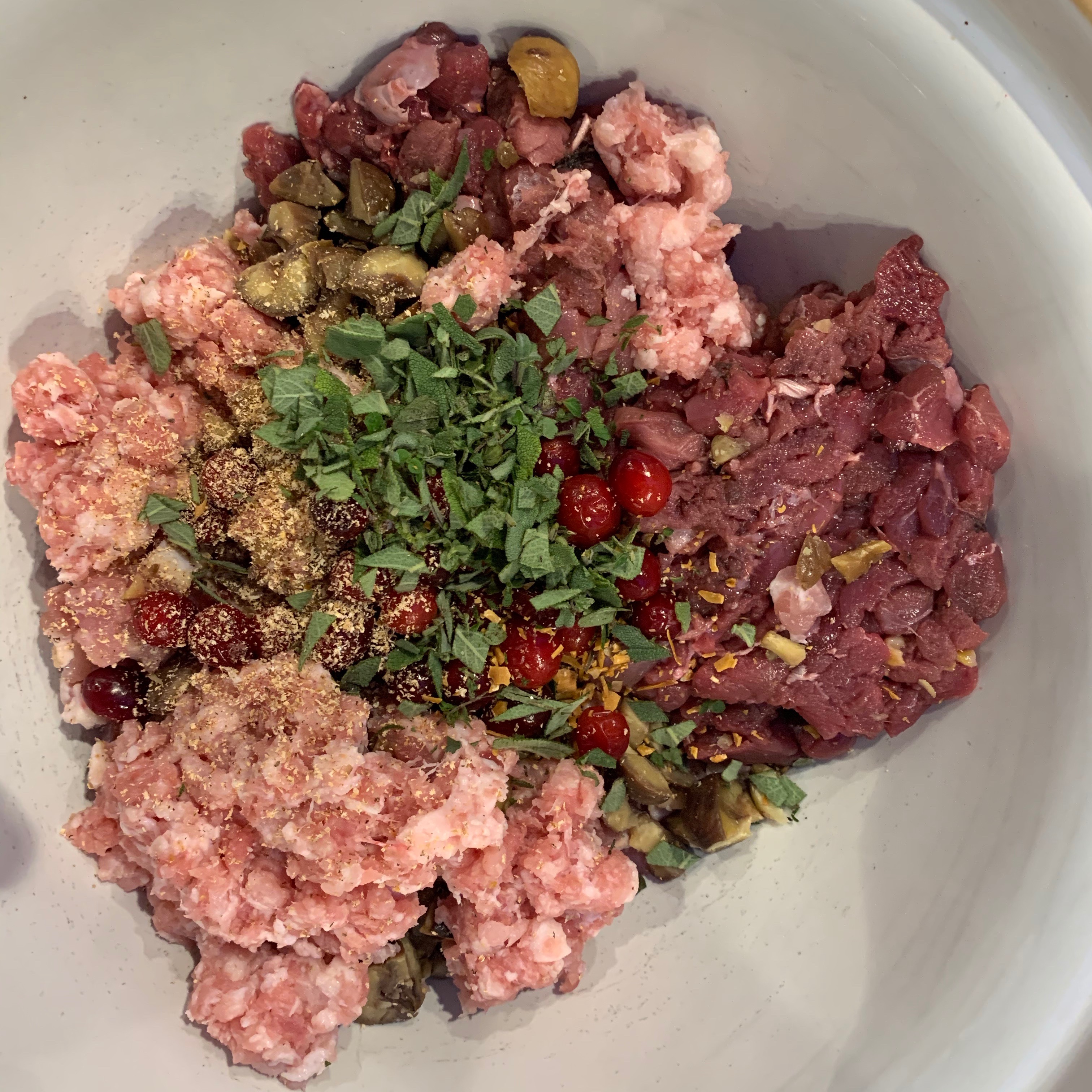
  • ½ tsp ground mace
  • 2 large pinches of ground nutmeg
  • Small bunch sage
  • Small bunch thyme
  1. Finely mince the pork belly (or blitz in a food processor)
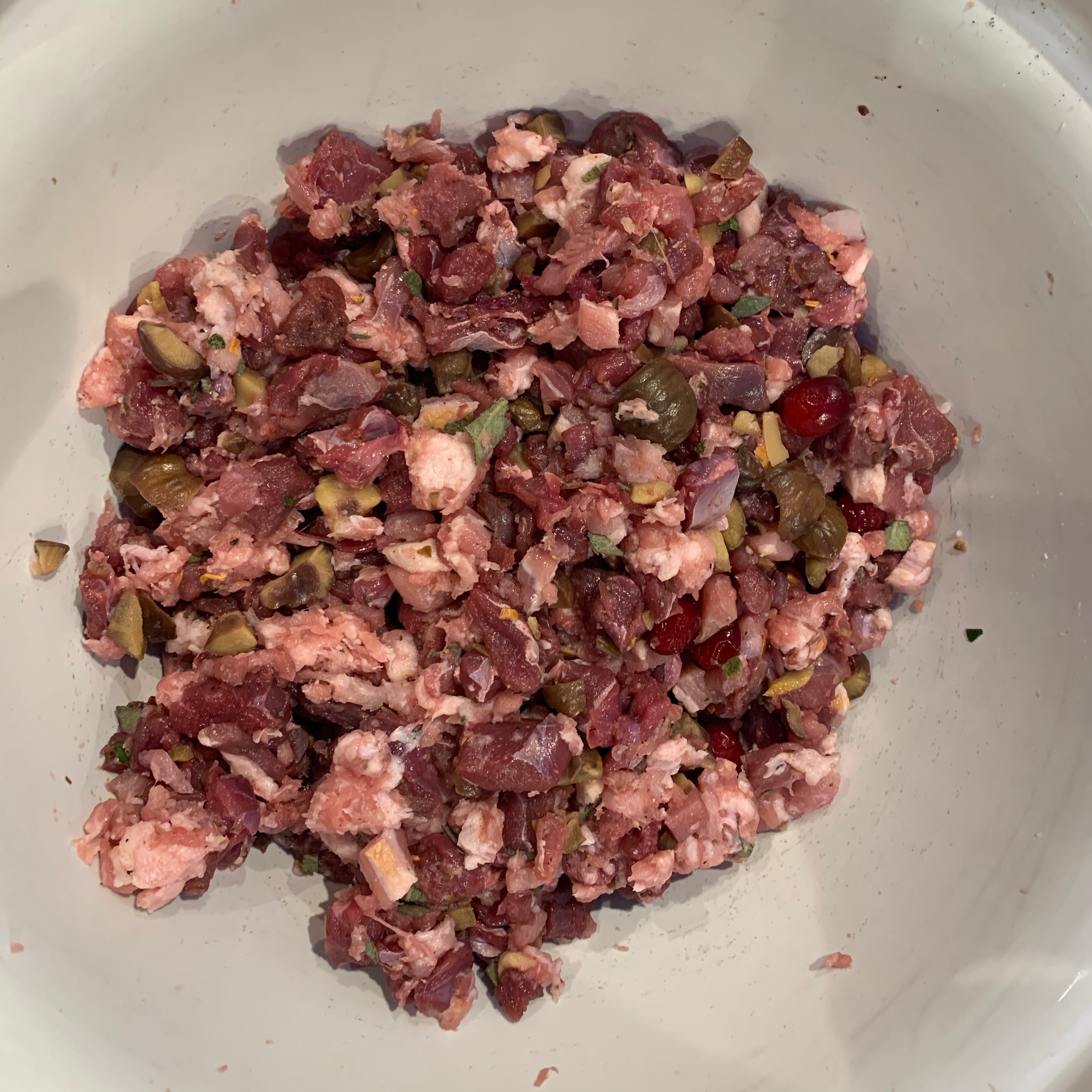
  2. Chop the game finely. I went for around 5mm cubes, which gives a fairly coarse filling which is well matched to the size of the lardons in the supermarket packet. But you can go finer if you prefer.
  3. Chop the chestnuts coarsely.
  4. Chop the sage and the thyme finely.
  5. Mix everything together as evenly as you can: it takes a surprisingly long time to get the belly mince evenly distributed around the rest of the filling.

Making the hot water crust pastry and filling the pie

  • 200g butter, plus some for greasing
  • 10g salt
  • 575g plain flour, plus some for the board
  • 220ml water
  • 1 egg
  1. Preheat oven to 160℃ fan.
  2. Boil a kettle.
  3. Grease a 20cm springform cake tin.
  4. In a small bowl, beat the egg.
  5. In a large bowl, mix the flour and salt.
  6. Cut the butter into cubes, perhaps 2cm per side.
  7. Get your rolling pin and board ready, spread some flour on them.
  8. Now work quickly: combine the water and butter in a jug and mix thoroughly. If the butter is taking too long to melt and the whole thing has cooled down, top up the temperature with 30 seconds in the microwave.
  9. Pour your wet mix into the flour and rapidly combine it, kneading a little until you have a smooth dough with no dry flour.
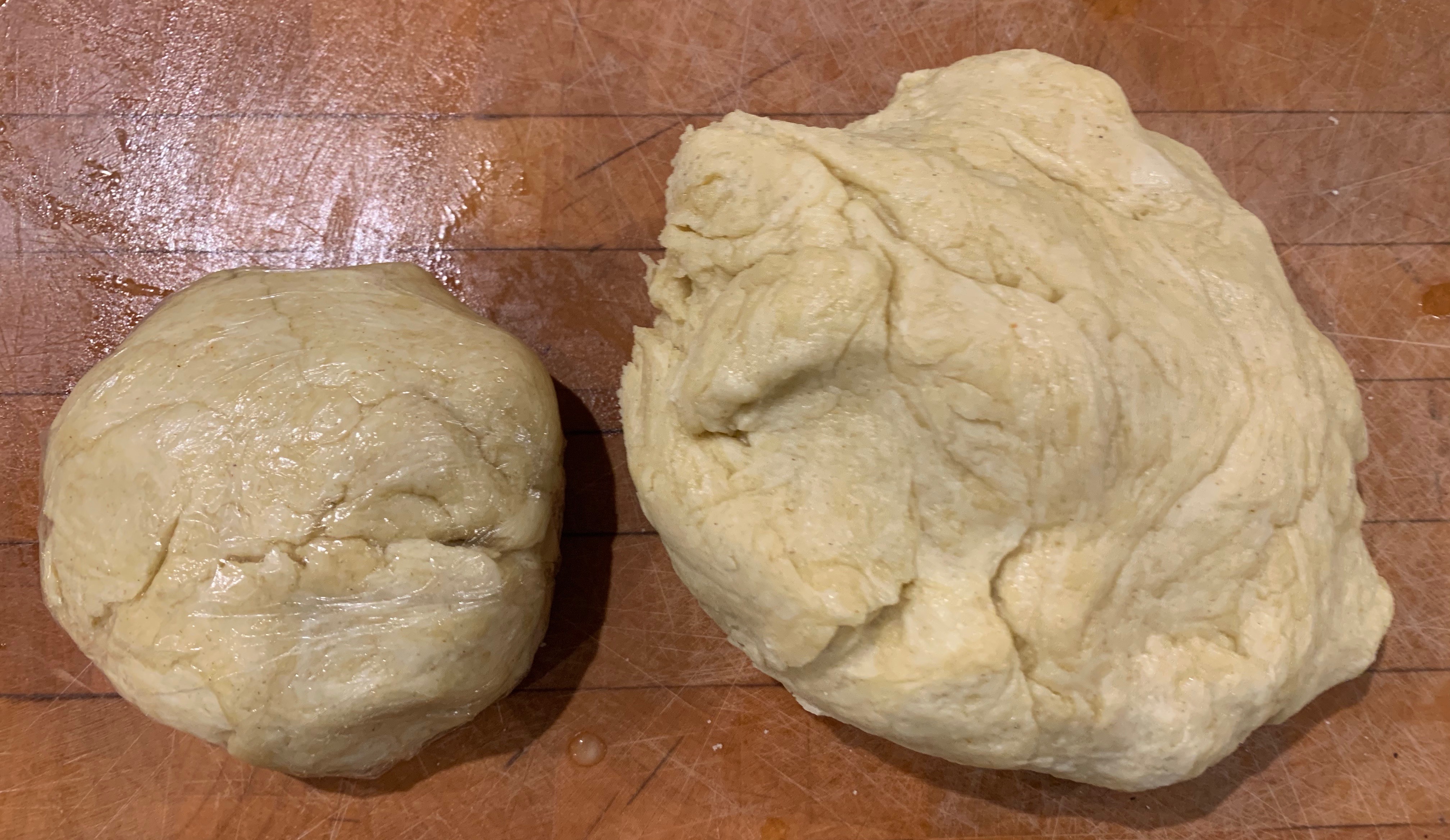
  10. Take a quarter of the dough and wrap it in cling film.
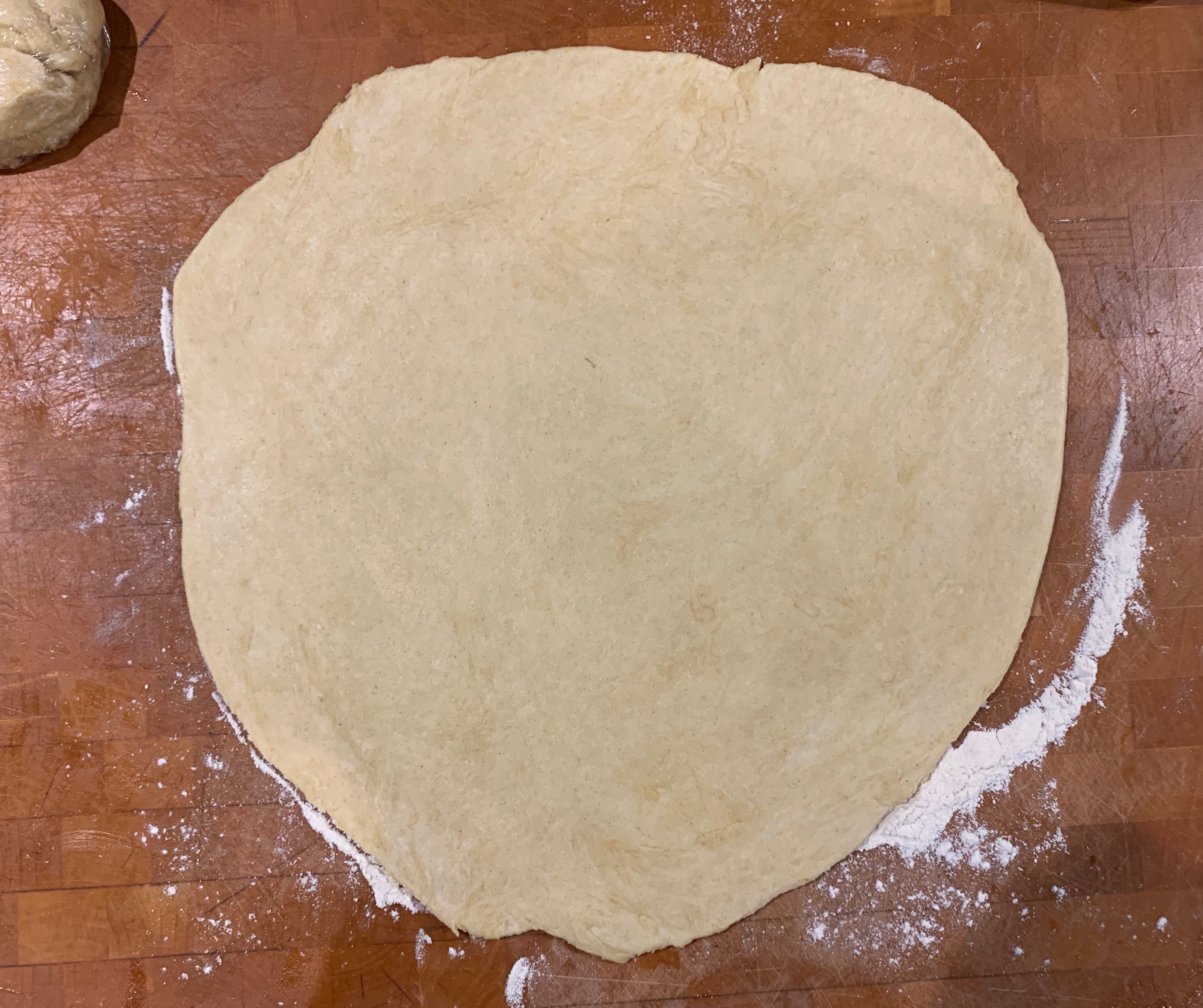
  11. Roll the rest of the dough to a circle somewhat larger than the diameter of your tin plus twice its height.
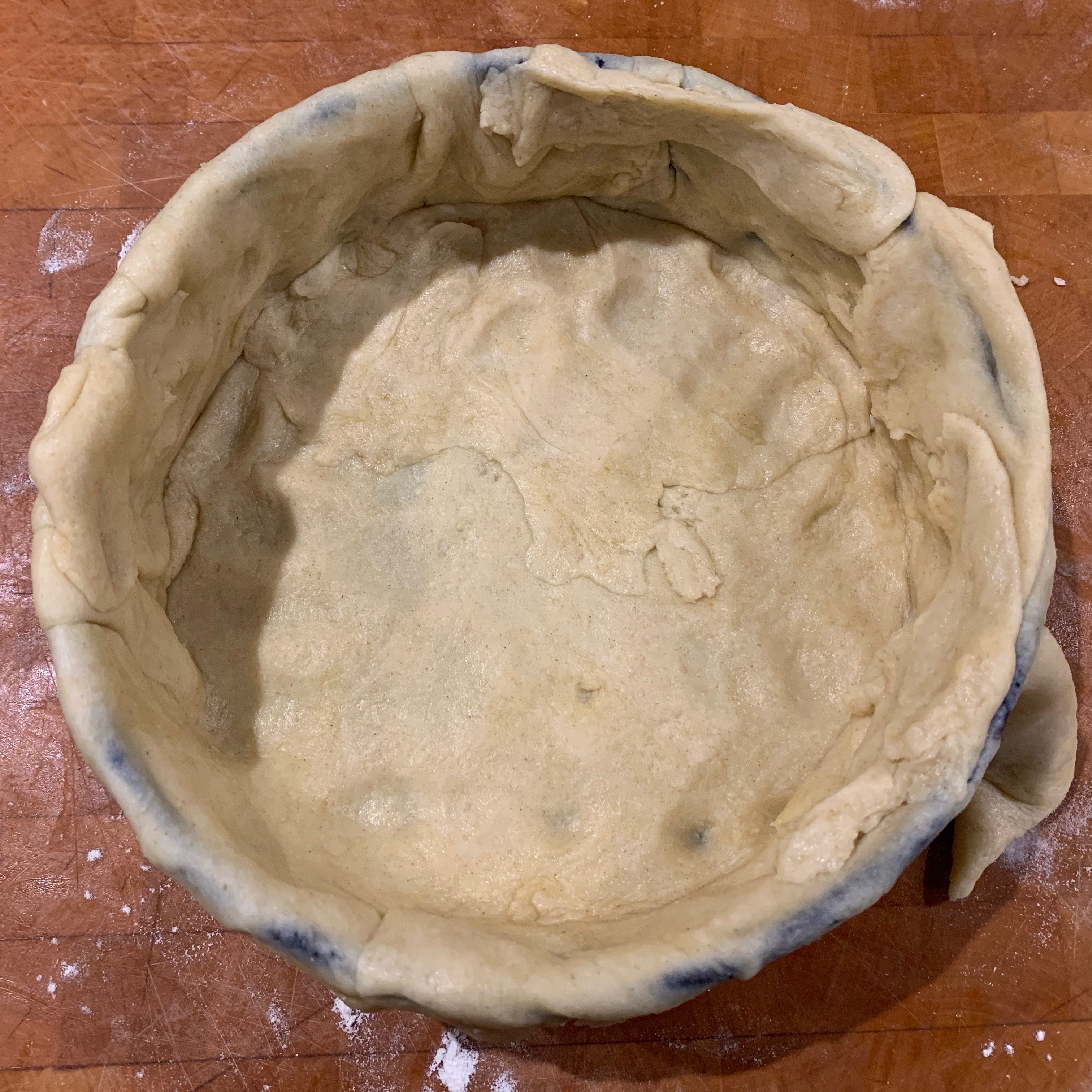
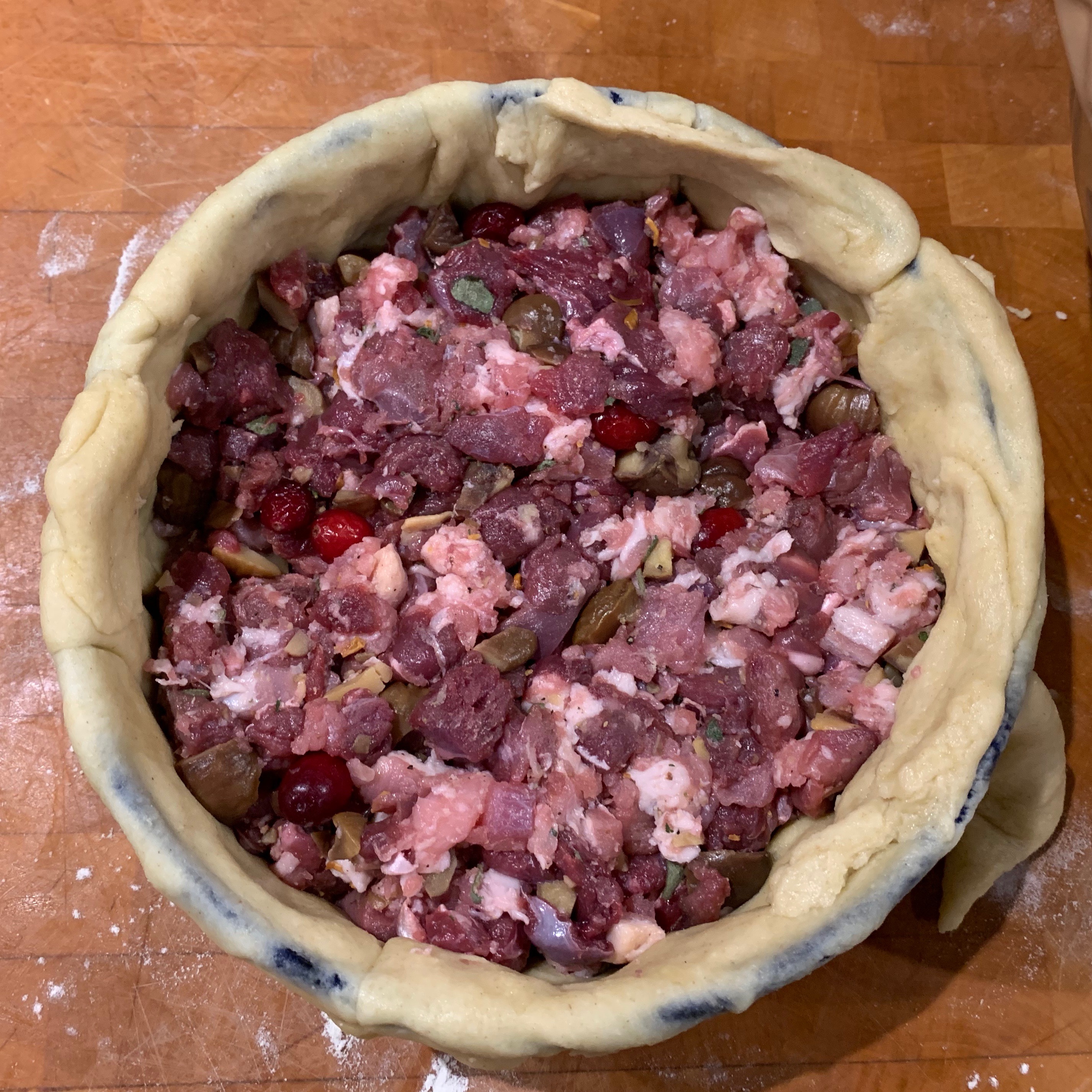
  12. Transfer the dough to the tin, using it to line the base and sides. For now, leave any excess hanging over the sides.
  13. Fill the pie in the following order: half the meat filling, all the cranberry sauce, then the second half of the filling. The top should be slightly domed.
  14. Roll out the remaining dough and slice into 1cm strips.
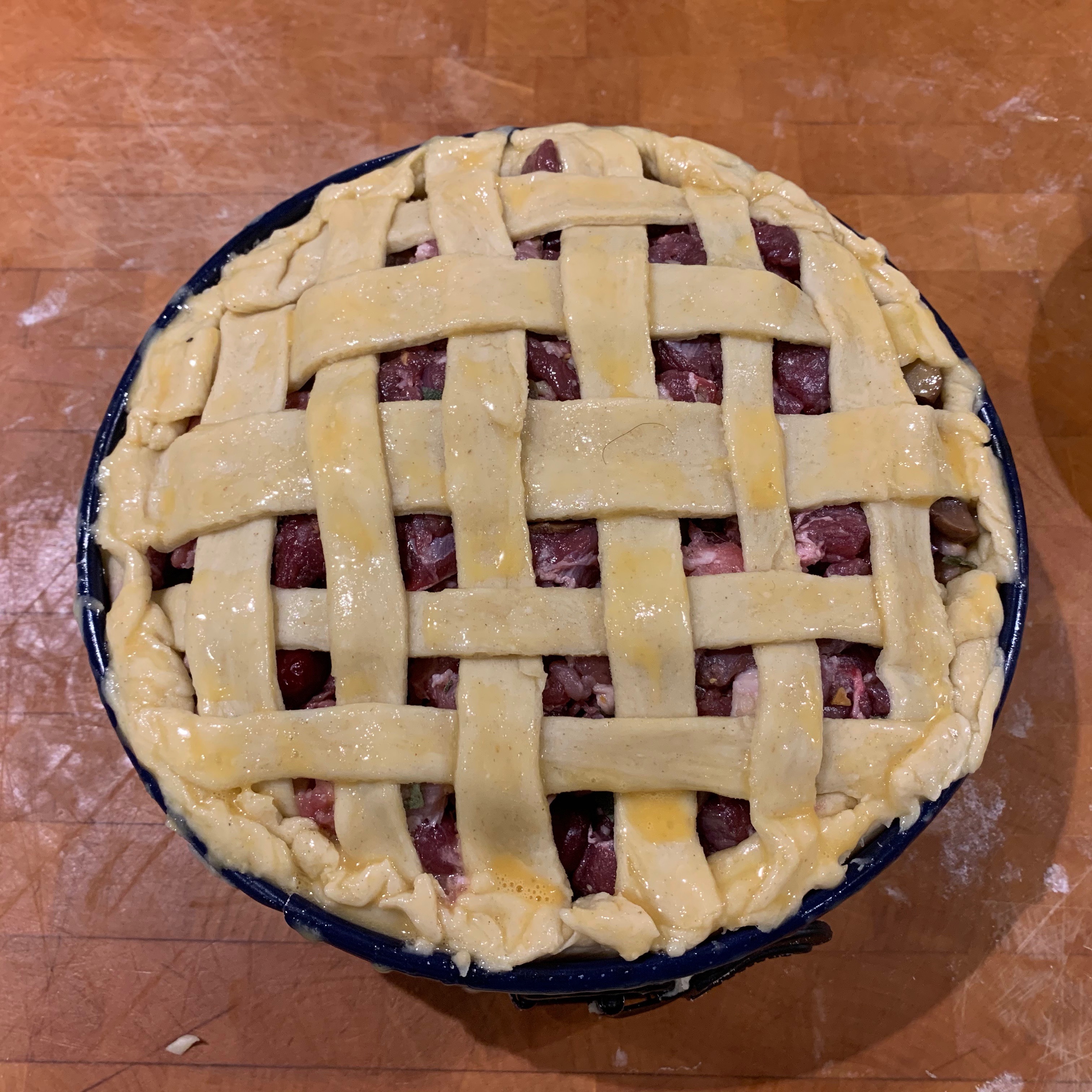
  15. Make a lattice on the top of the pie with the strips of dough – leaving gaps (or at least one gap) big enough to poke a funnel through. If you’ve run out, cut off some of the overhanging pastry and roll them out to make up the shortfall.
  16. Brush the top with some of the beaten egg (you’ll only need a little of it)
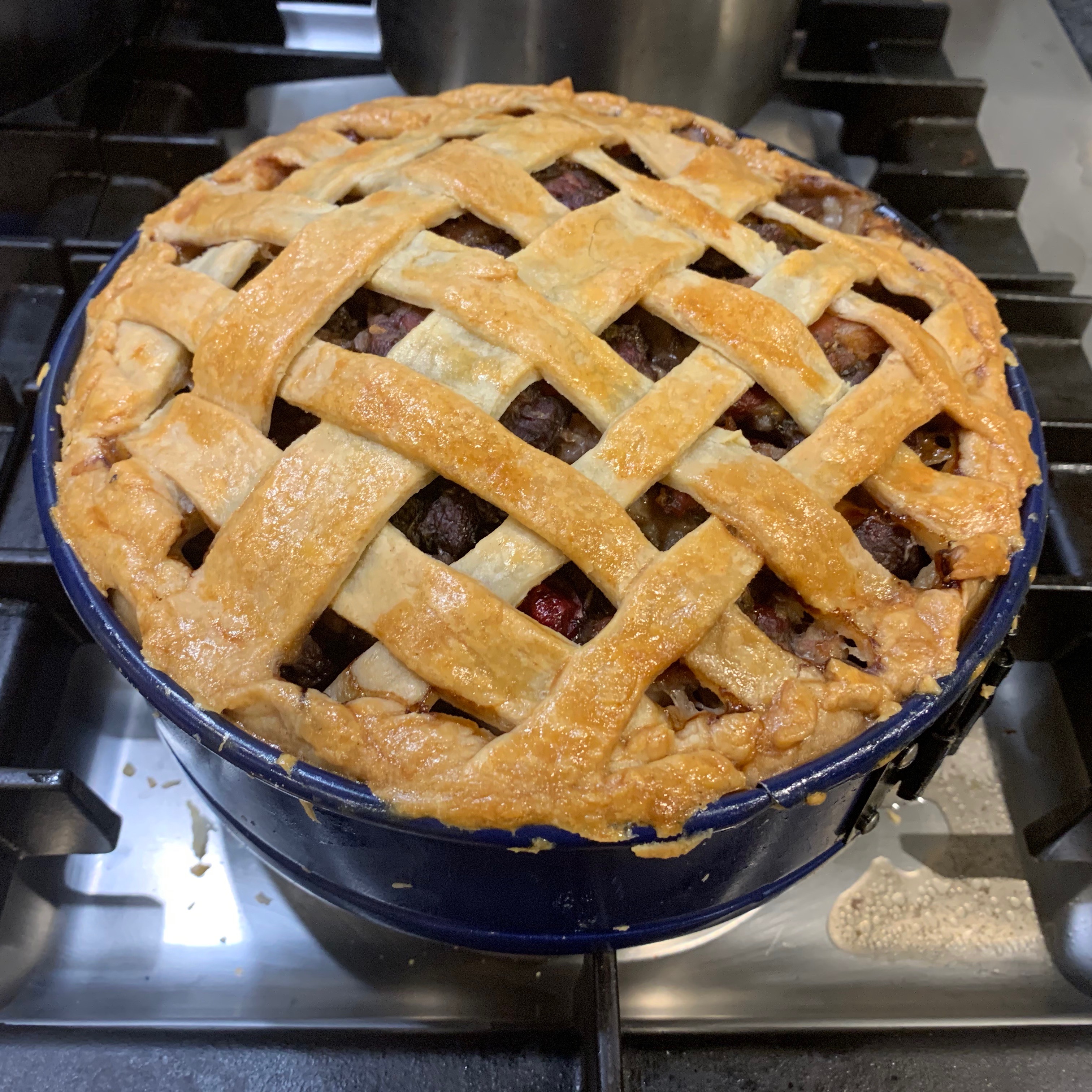
  17. Bake for 45 minutes, then reduce the temperature to 140℃ fan, then bake for another 90 minutes.

Finishing off

  • 4 gelatine leaves, or 1 sachet powdered gelatine
  • 300ml veal or chicken stock
  1. Leave the pie to cool for at least an hour, preferably two.
  2. Warm the stock to close to boiling, then add and dissolve the gelatine in it.
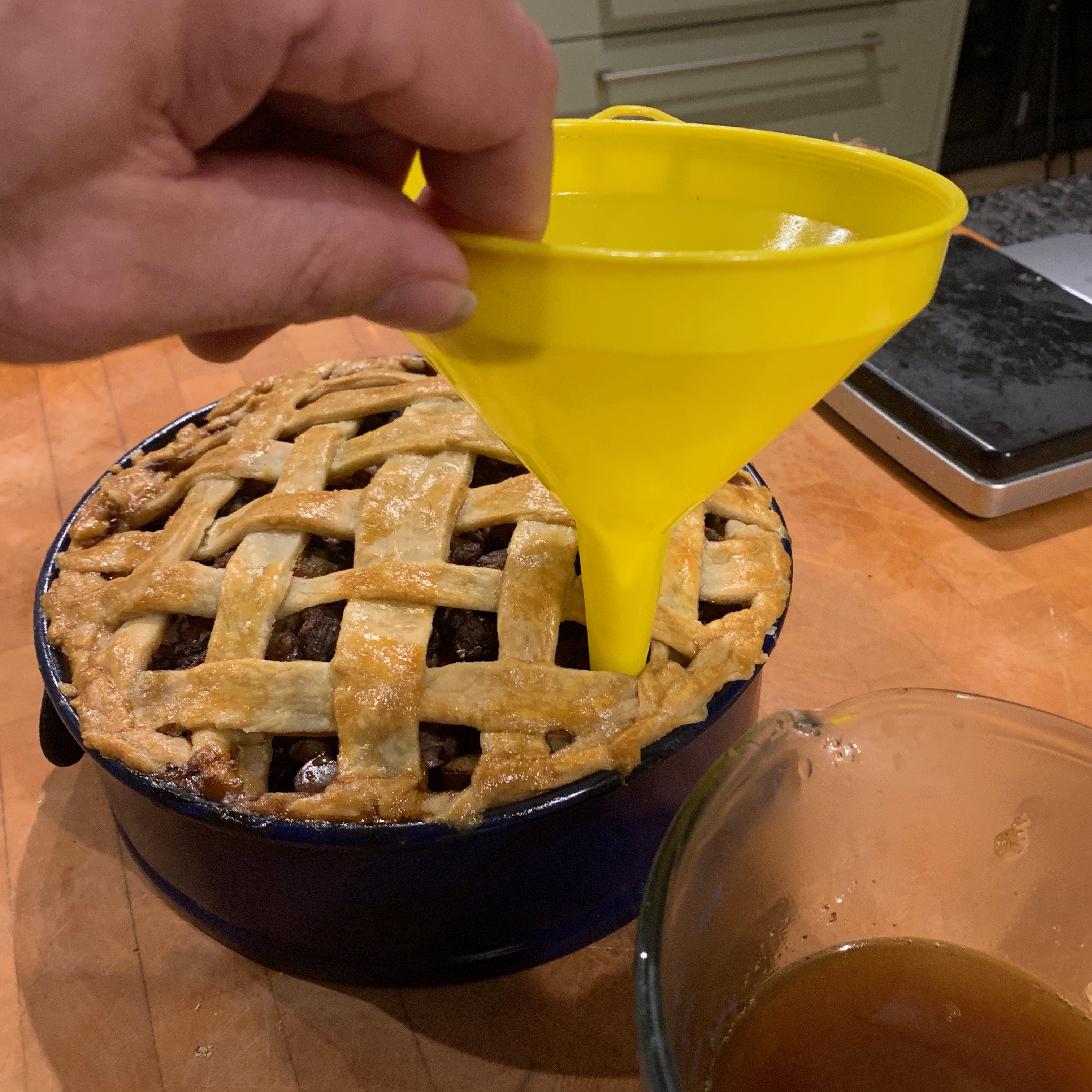
  3. Pour the stock through a funnel into one or more holes in the lattice until it nearly overflows. Discard any excess stock.
  4. Refrigerate overnight for the jelly to set.