Tag: Austria

Sachertorte revisited – for diabetics

Sachertorte revisited – for diabetics

The words “diabetic baker” are something of an oxymoron: diabetics really shouldn’t be eating high carbohydrate foods, which pretty much rules out bread, cakes, biscuits, pies, pastries and just about any kind of baked goods. That makes my series of blog posts on baked goods from around the world a totally inappropriate project to have done (or, viewed more positively, a rash thumbing of my nose at the health gods).

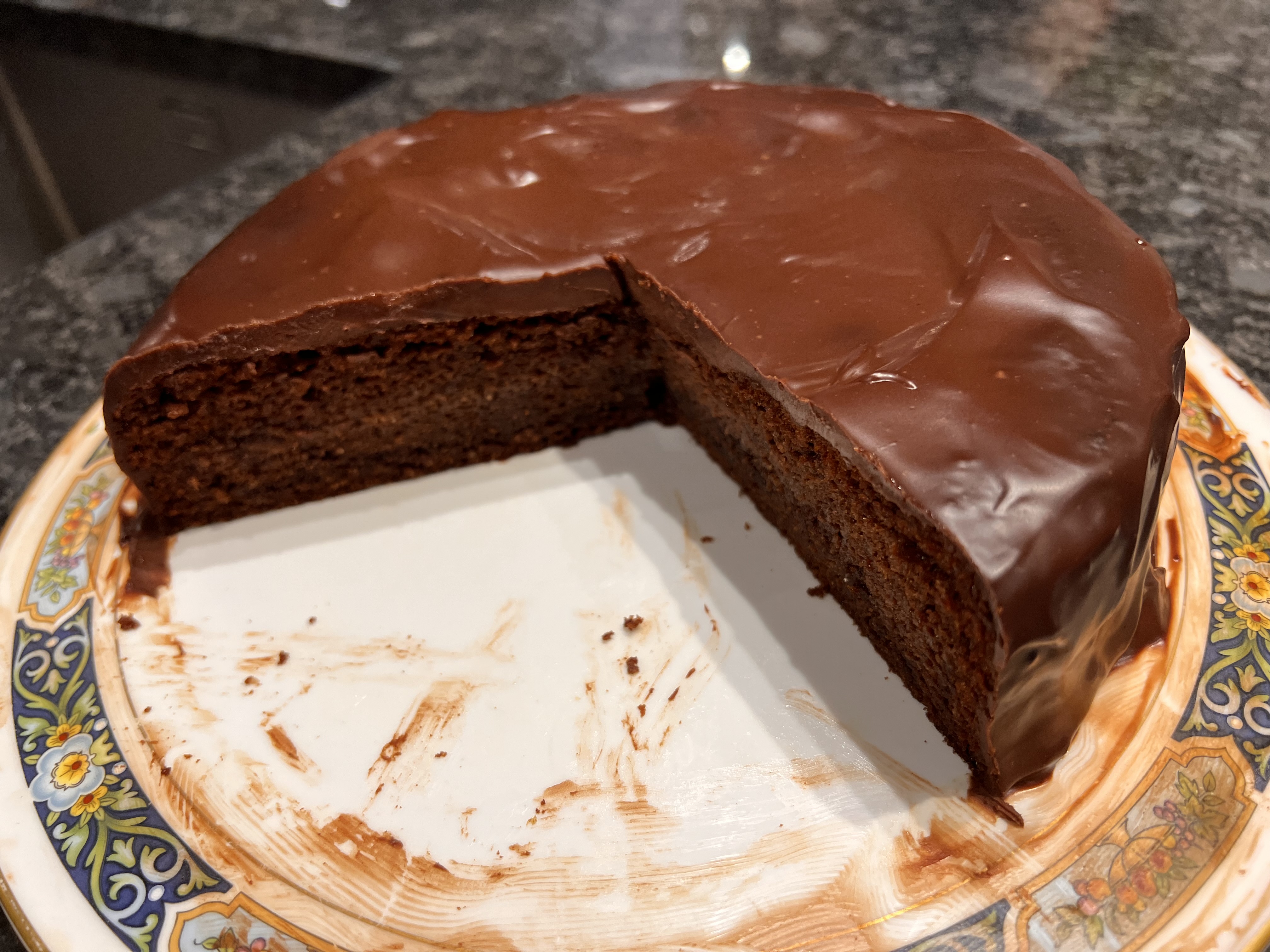
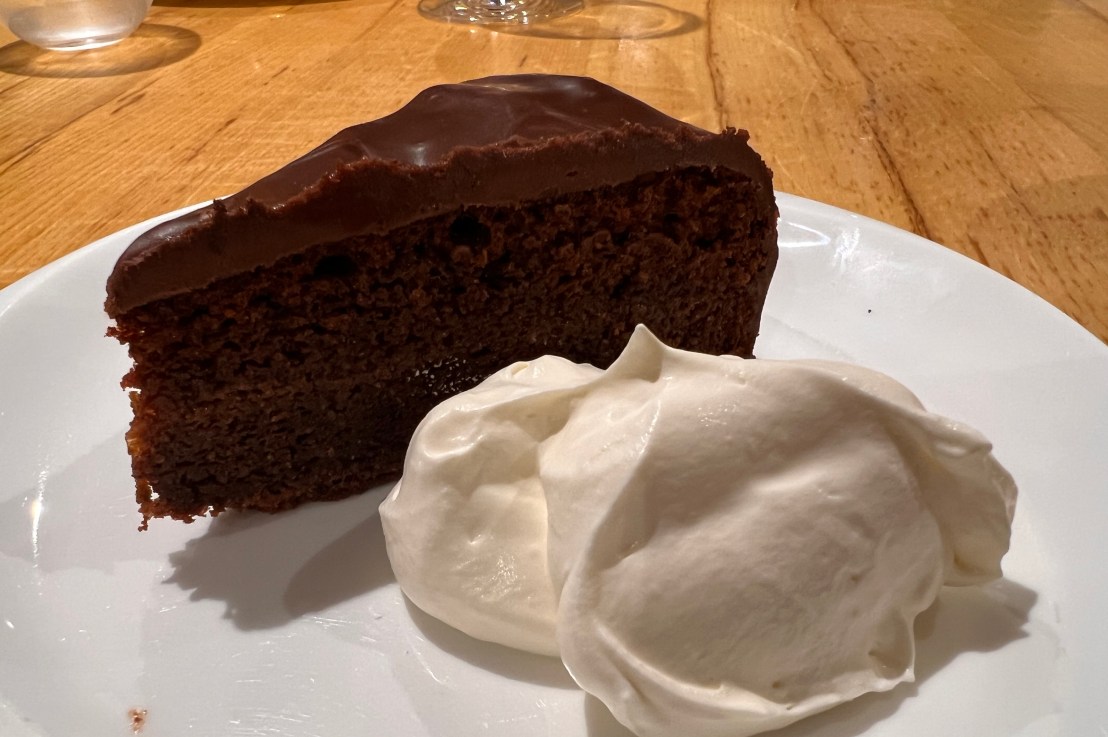
But there are times when you can cheat. I just ran an experiment to see how far I could minimise the carbohydrate content of my favourite cake – Sachertorte – and it was outstandingly successful.

Starting with my recipe for normal Sachertorte, I did four things:

  1. Replace the flour with ground almonds
  2. Replace the sugar with allulose
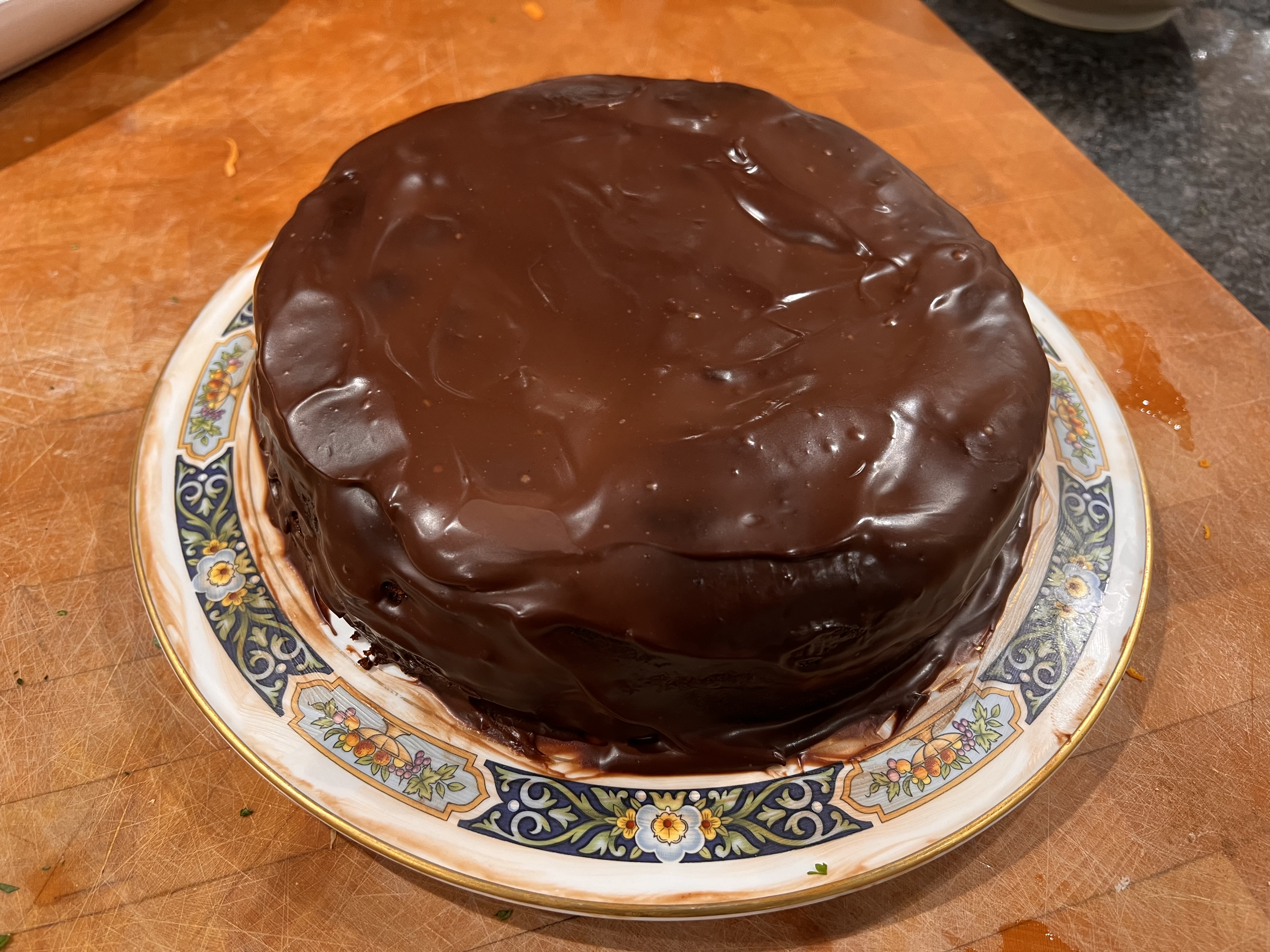
  3. Replace the icing with a chocolate ganache
  4. Keep careful control of the amount of apricot jam in the filling

With more time available and apricots in season, I could have made my own apricot compote with allulose, but there really wasn’t time.

If you aren’t aware of allulose (aka Psicose or D-ribo-2-hexulose): it’s a naturally occurring sugar which you can’t digest normally. It tastes something like 70% as sweet as sugar. I find that it has little or none of the aftertaste of most non-sugar sweeteners – and in a recipe with this one, with its strong-tasting dark chocolate, I could detect no aftertaste whatsoever. People have questioned whether there any health risks, but the US FDA have approved it with a maximum consumption of 33-36g per day for a 60kg adult (a portion of this cake uses under 20g, so I reckon it looks OK). 
Comparing the two recipes, the carbohydrate budget looks like this. In rough numbers, the new recipe’s carbohydrate count is a quarter of the standard one.

NormalDiabeticSaving
Dark chocolate 300g90g90g
Sugar to allulose150g0150g
Flour to ground almonds76g19g57g
Remove icing200g0200g
Apricot jam 90g to 60g53g35g18g
Total for a 1kg cake569g144g425g
Total for a (generous) 125g portion71g18g53g

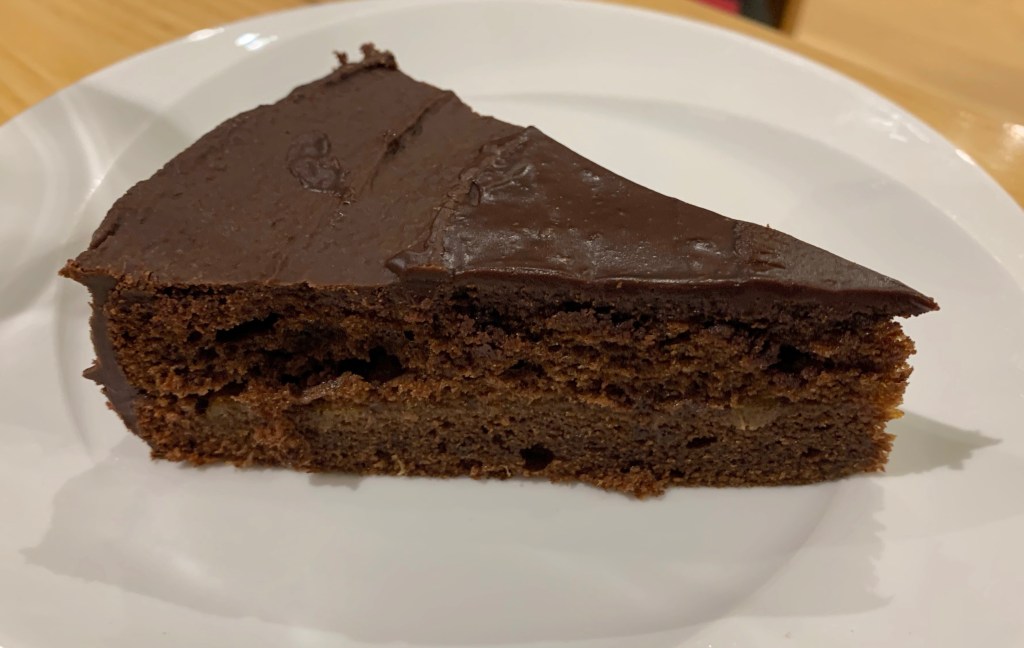
I can’t fault the results. My family proclaimed this to be better than the original, which we attribute to liking the extra flavour of the almonds and preferring the creaminess of the ganache to the extra sweetness of the chocolate icing. It’s a winner.

For completeness, here’s the modified recipe. Make it in a greased, 8-9 inch, removable-rim pan.

Ingredients

Cake

  • 150g dark chocolate (70-80% cocoa solids)
  • 150g allulose
  • 30g granulated sugar
  • 170g butter, softened
  • 100g ground almonds
  • 6 eggs
  • 60g apricot jam mixed with the juice of half a lemon
  • 1/2 tsp baking powder
  • vanilla essence or vanilla paste to taste (different brands are so different in strength that I can’t give an amount)

Ganache

  • 150g dark chocolate (70-80% cocoa solids)
  • 200g double cream

Method

Cake

Preheat the oven to 160°C fan. Grease the sides of an 8-9 inch, removable-rim cake tin with butter and line the bottom with baking paper or parchment.

  1. Separate the eggs into yolks and whites
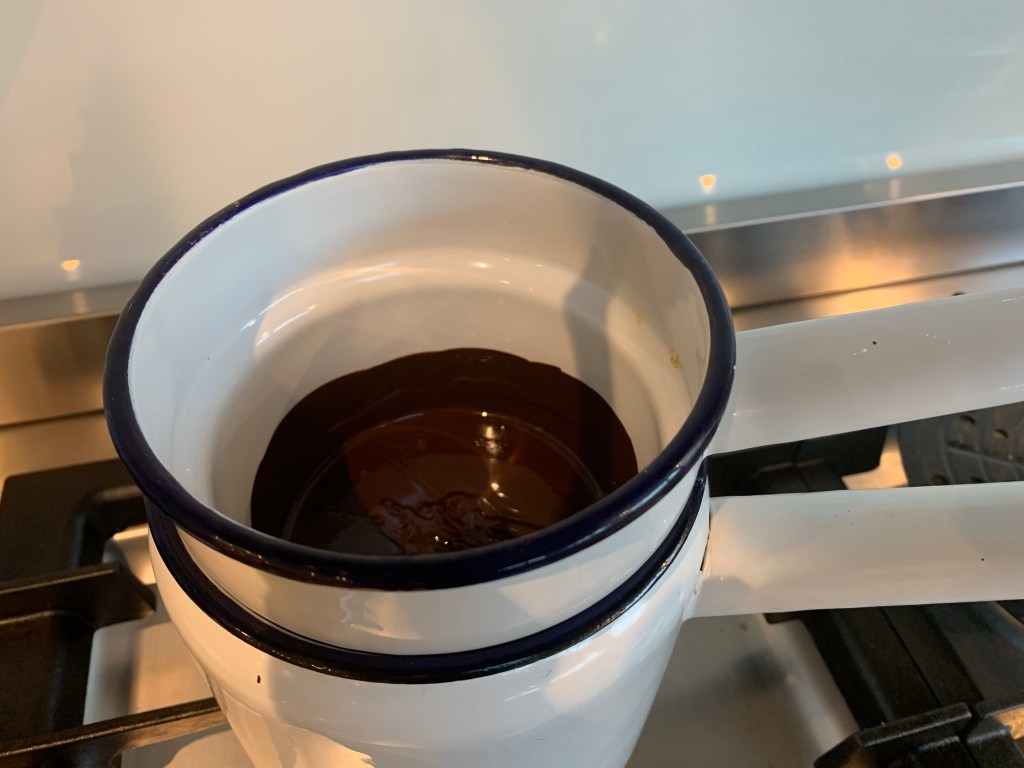
  2. Melt 150g of the chocolate in a double boiler. Then leave it to cool.
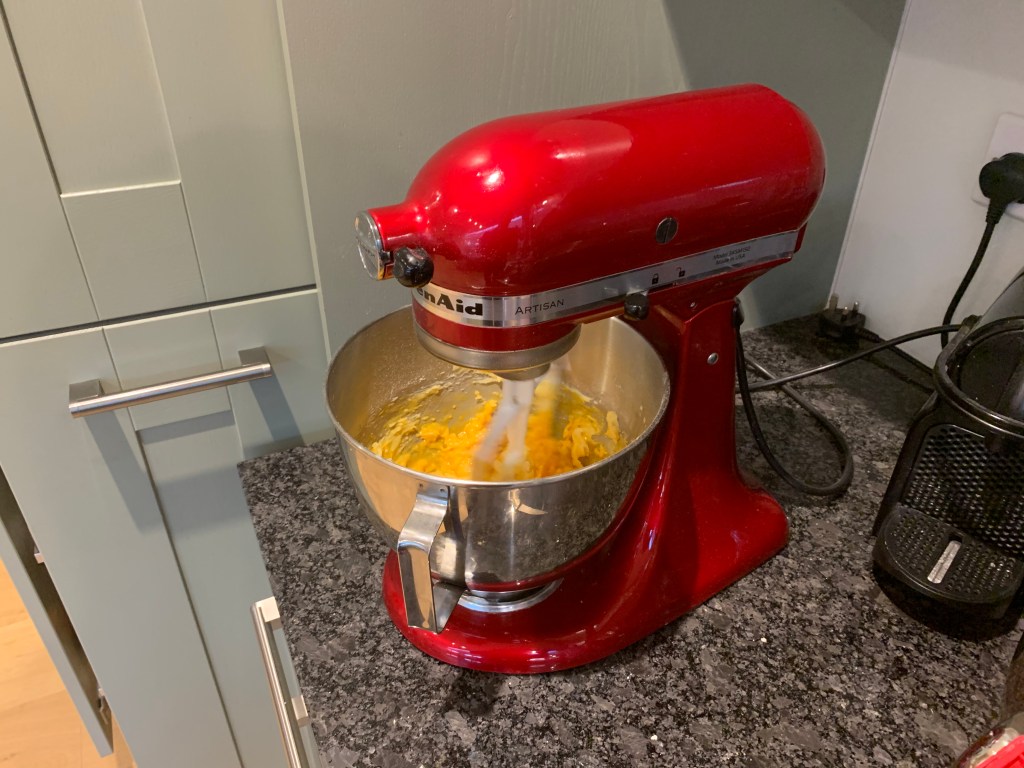
  3. Cream 120g of the allulose and the butter until the mixture is fluffy.
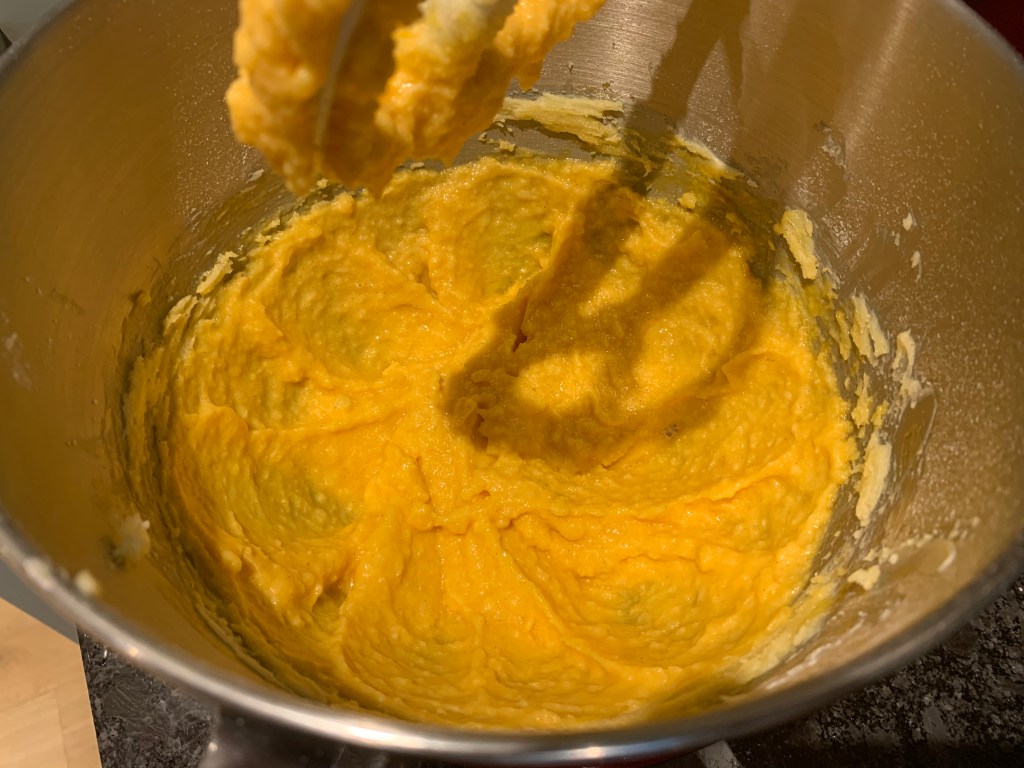
  4. Beat in the egg yolks gradually until the mixture is light in colour.
  5. Add the melted cooled chocolate.
  6. Add the ground almonds. Add the baking powder and mix everything thoroughly.
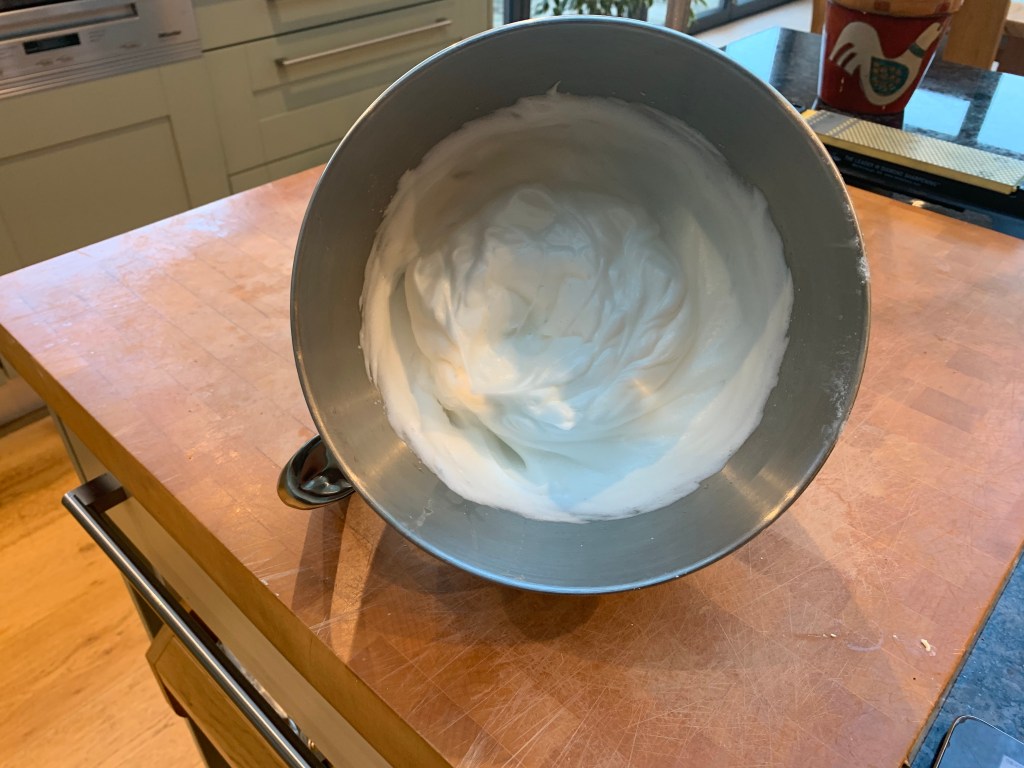
  7. Beat the egg whites until they are beginning to be stiff. Add the remaining 30g of allulose and beat on maximum speed until stiff but not dry.
  8. Fold the resulting meringue mix into the cake mixture, about a fifth at a time. The weight of the almond-rich mixture will make this trickier than for a normal cake.
  9. Bake the mixture in the pan for around 40 minutes.
  10. Remove and cool on a rack.
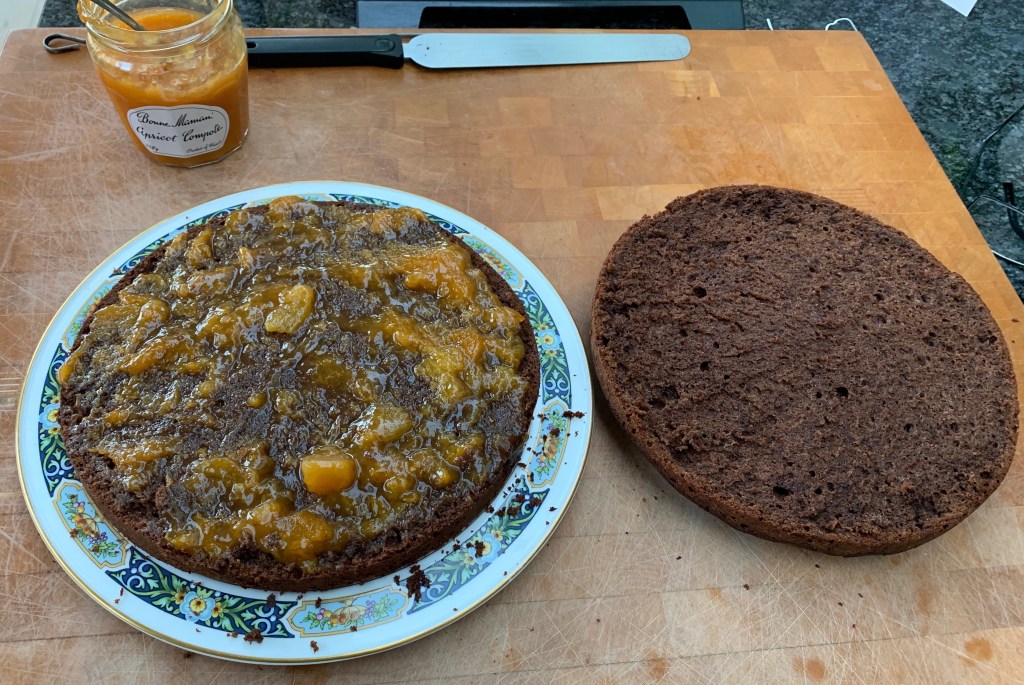
  11. Optionally, slice the top dome from the cake and set aside. Slice the remaining cake in half. Spread the jam on the bottom half and reassemble (optionally, spread jam on the top of the cake also).

Ganache

  1. Break or chop the chocolate into small pieces (less than 1cm square) and put in a reasonably heatproof bowl. Of course, if you’ve bought your chocolate in the form of chips/pellets, this has already been done for you.
  2. Bring the cream close to the boil, and pour it over the chocolate.
  3. Stir rapidly and continuously until the mixture is smooth.
  4. Cool enough that the ganache no longer runs really easily, but is still spreadable with a glossy finish.
  5. Spread over your cake.
  6. Leave to cool completely.
Around the world in 80 bakes, no.79: Vanillekipferl, Viennese crescent biscuits

Around the world in 80 bakes, no.79: Vanillekipferl, Viennese crescent biscuits

Austrians don’t necessarily like to think too hard about how close they became to being a Turkish province and quite how much they have to thank the Poles that this didn’t happen. In 1683, the Turks neared the city gates, to be defeated in the Battle of Vienna when the forces of the Holy Roman Empire were joined by the Polish army of King John III Sobieski.

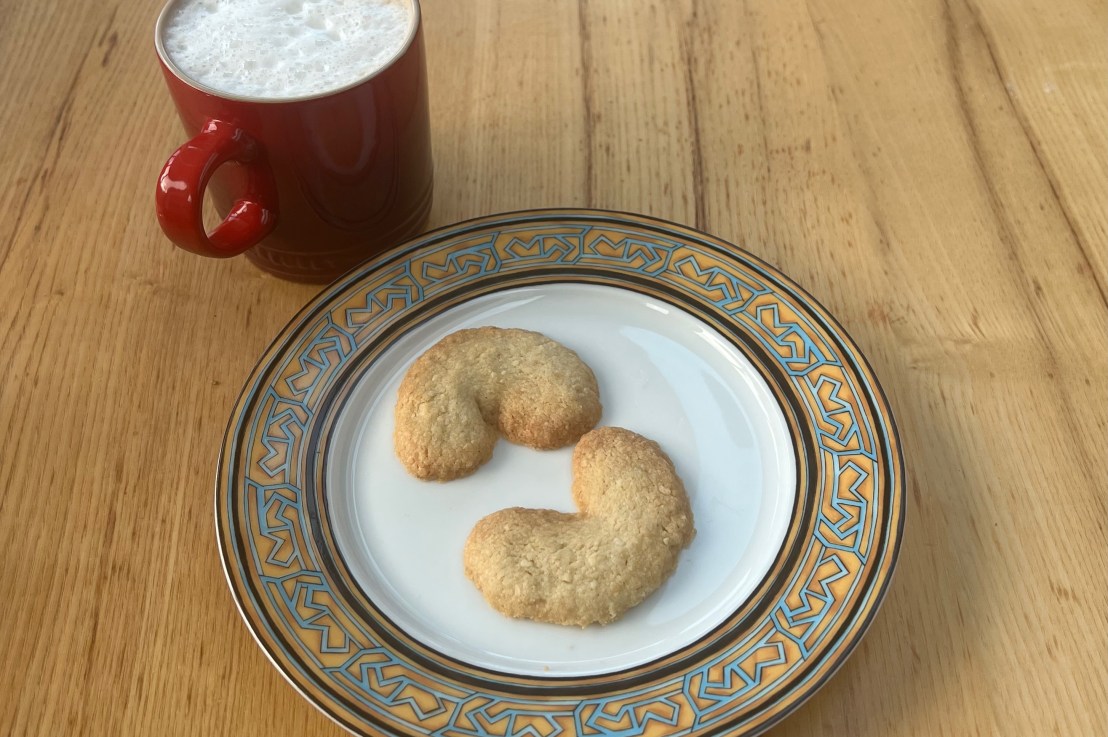
For some reason, however, the crescent moon of the Turkish flag lives on in Austrian culture in the shape of Vanillekipferl (vanilla crescents): delectable, crumbly nut-flavoured biscuits that are particularly popular as a Christmas treat. They’ve spread from their origins in Vienna all over Germanic countries and many Eastern European ones, including (of course) Poland.

My wife has Austrian blood in her if you go back a century or so and this recipe came down from one of her relatives. It’s similar to many Austrian recipes today. There are choices to be made: this uses almonds, but walnuts are a popular choice and you also see hazelnuts. Some recipes have a slightly higher ratio of flour to everything else, and some add an egg to the dough to bind it, giving you a slightly richer and considerably less crumbly result with greater structural integrity.

This looks like a straightforward recipe but it’s trickier than many biscuit/cookie recipes because it’s easy to get the texture wrong. Undergrind your nuts and you’ll get a grainy, rather lumpen biscuit which tastes fine but just doesn’t feel right. Overprocess or overwork the dough – especially if your hands are too warm – and the butter will come out and you lose the flavour. But if you get this right, Vanillekipferl have a crumbly butteriness that makes them a rare treat.

The quantities here give you 300g of dough which will yield 15-20 Vanillekipferl. It scales really easily – just multiply by as much as you want. But be aware that a standard size baking tray won’t take many more than 20, because they spread.

The ground almond mixture

You don’t have to make grind your own almonds: you can just buy a pack of ground almonds and add sugar. But doing your own with good quality almonds will result in a better tasting biscuit.

I keep a jar of vanilla sugar, which is simply a jar of caster sugar with a couple of vanilla pods in it which has been left in the cupboard more or less indefinitely. Again, you don’t have to do this: you can either rely on adding more vanilla essence or buy a packet of pre-made vanilla sugar (which is what most Austrian recipes suggest).

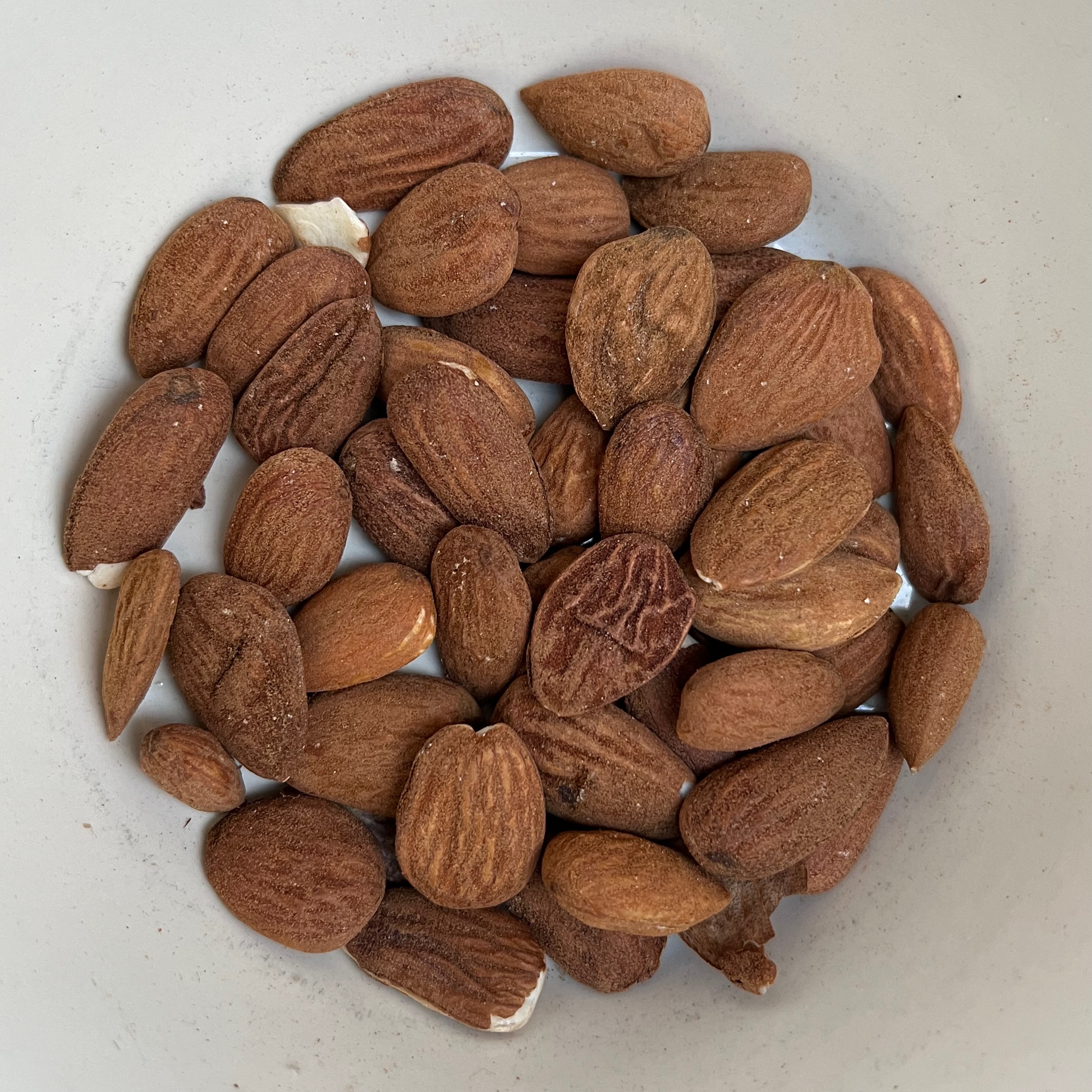
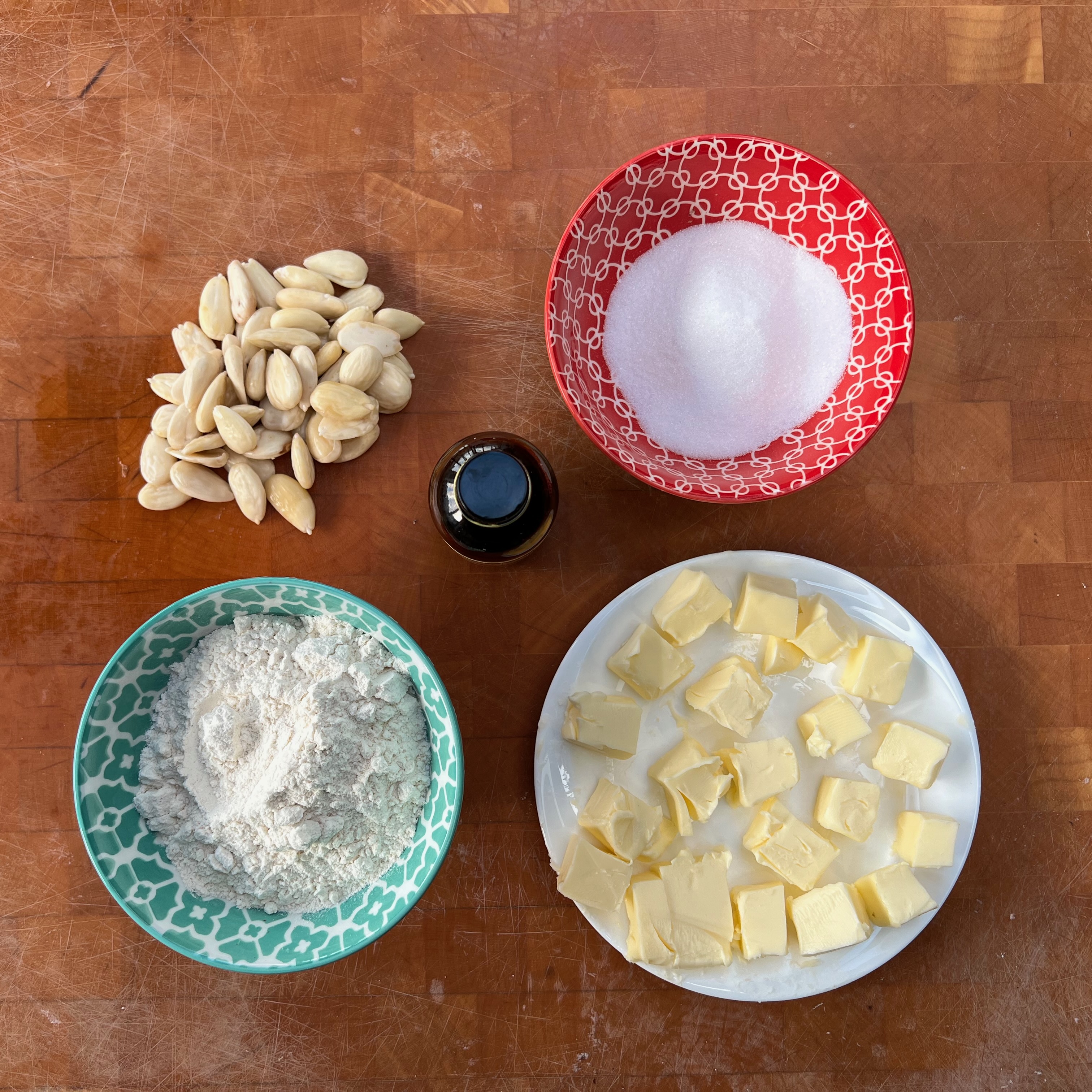
  • 50g almonds in their shells
  • 50g caster sugar (vanilla sugar if you have it)
  1. Put the almonds into a bowl and cover with boiling water.
  2. Wait around 15 minutes, then discard the water and pop each almond out of its skin. When you’ve finished, pat the almonds dry with a tea towel or kitchen roll and discard the skins.
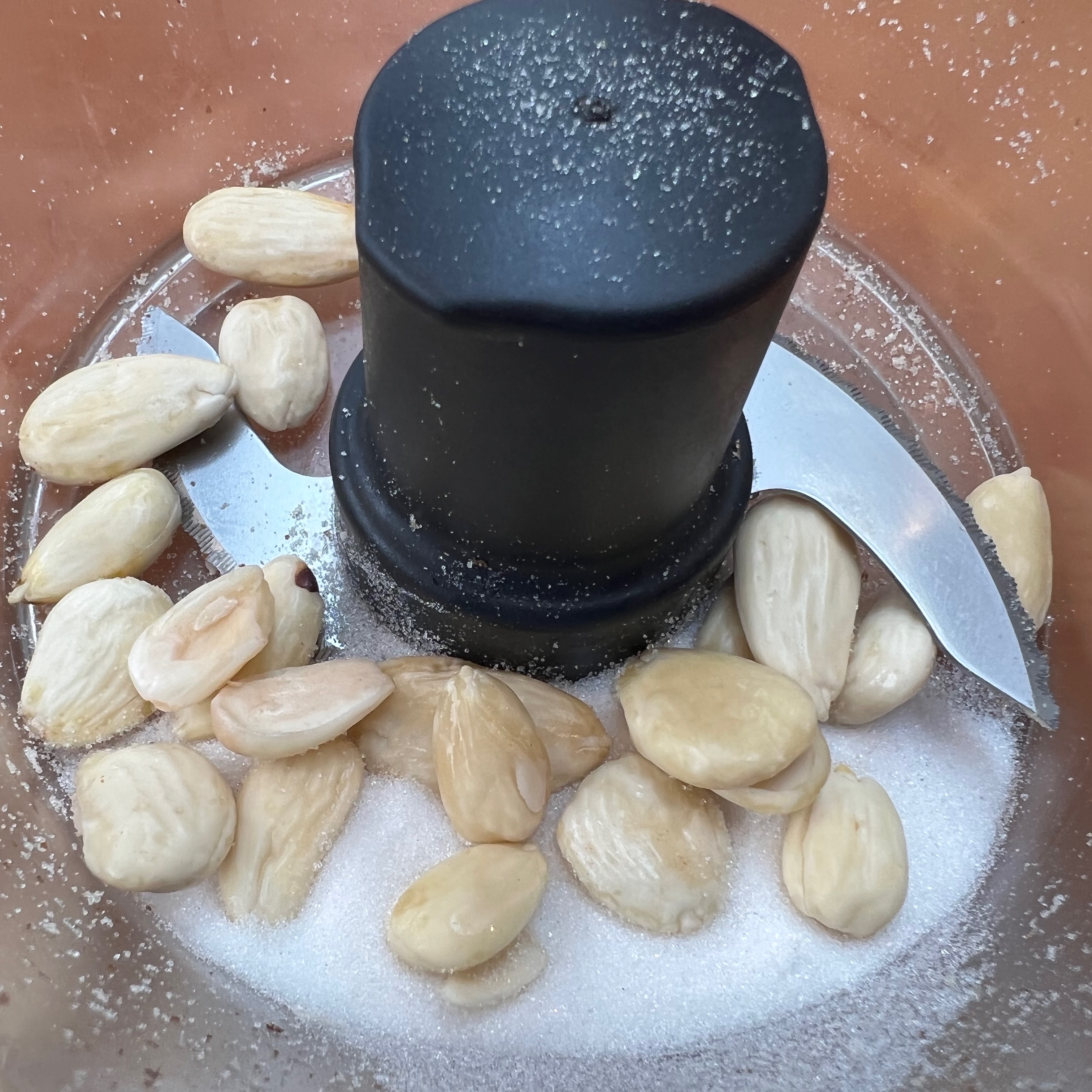
  3. Put the almonds and sugar into the bowl of a food processor and process until the almonds have been ground very fine. This should take around 1-2 minutes. Leave them in the bowl – you’ll be adding the other ingredients shortly.

Making the Kipferl

  • 100g butter
  • 100g plain flour
  • Pinch of salt (⅛ tsp is plenty)
  • Vanilla essence to taste – but be generous
  1. Preheat oven to 160℃ fan.
  2. Line a baking tray with a Silpat sheet, or baking paper if you don’t have one.
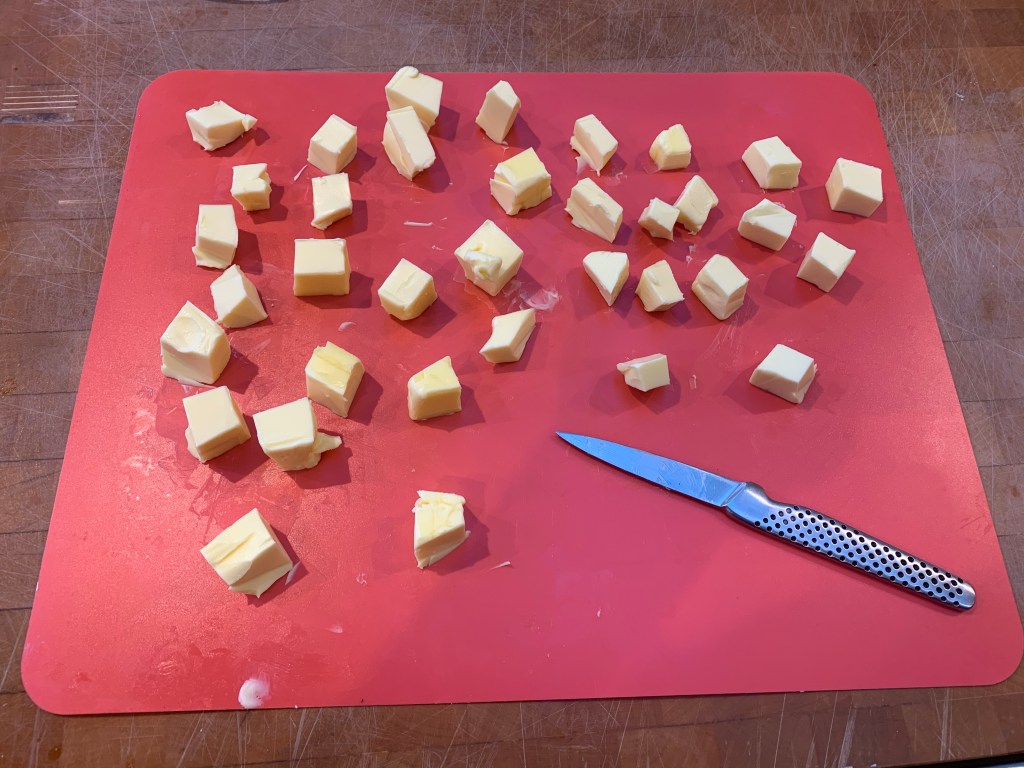
  3. Cut the butter into cubes (between 5-10mm).
  4. Add the butter, flour and vanilla essence to your food processor bowl with the almonds and sugar.
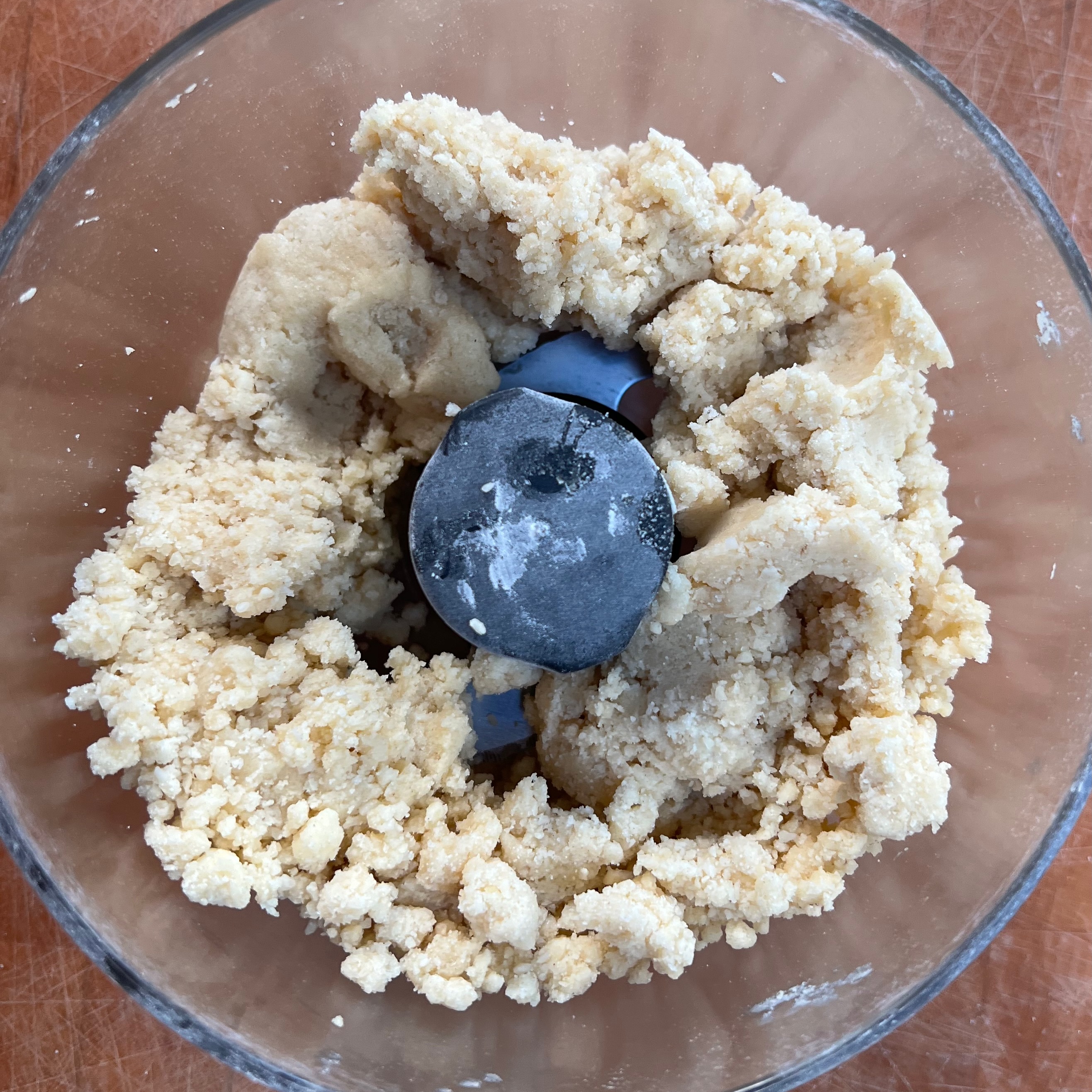
  5. Process the mixture until it comes together into a smooth dough.
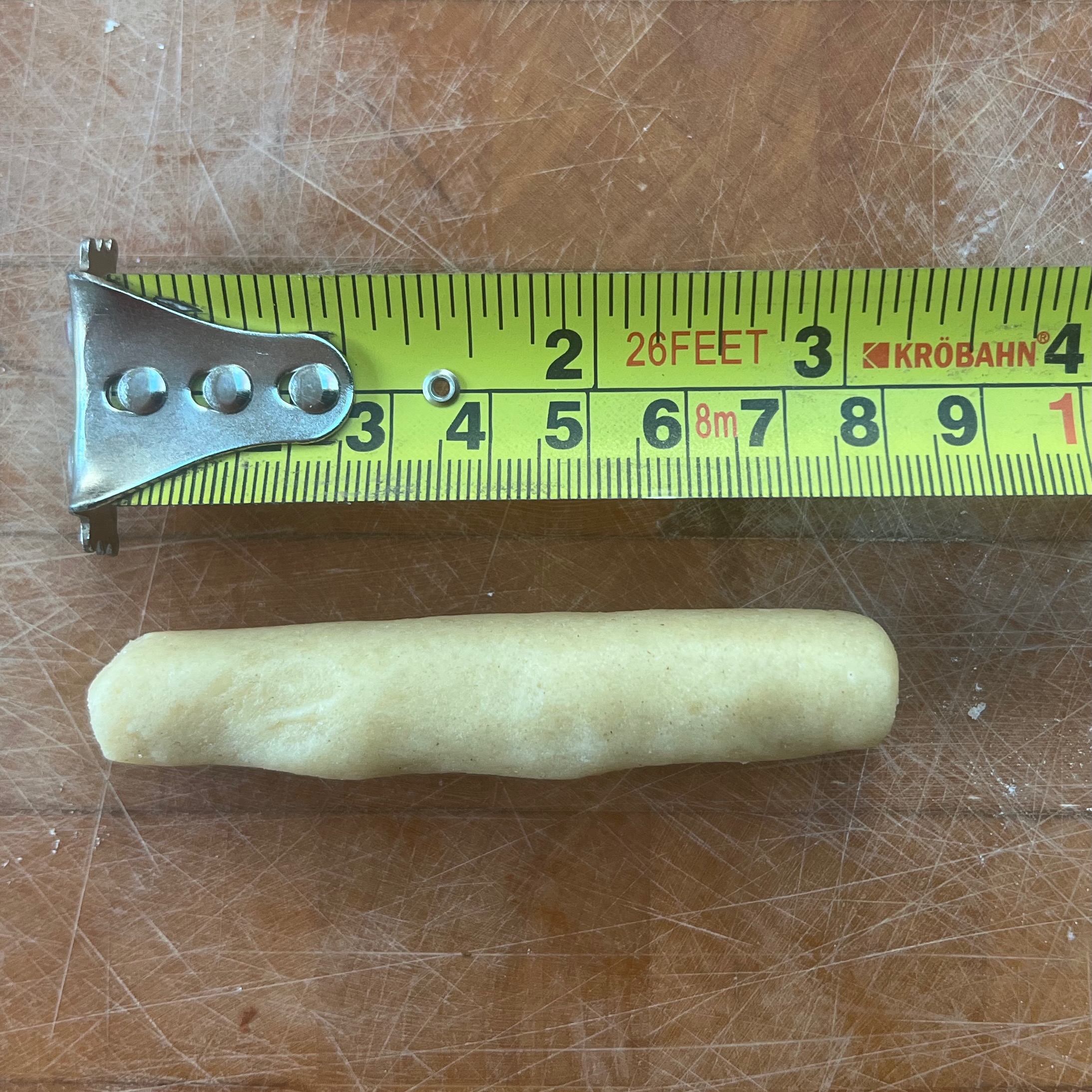
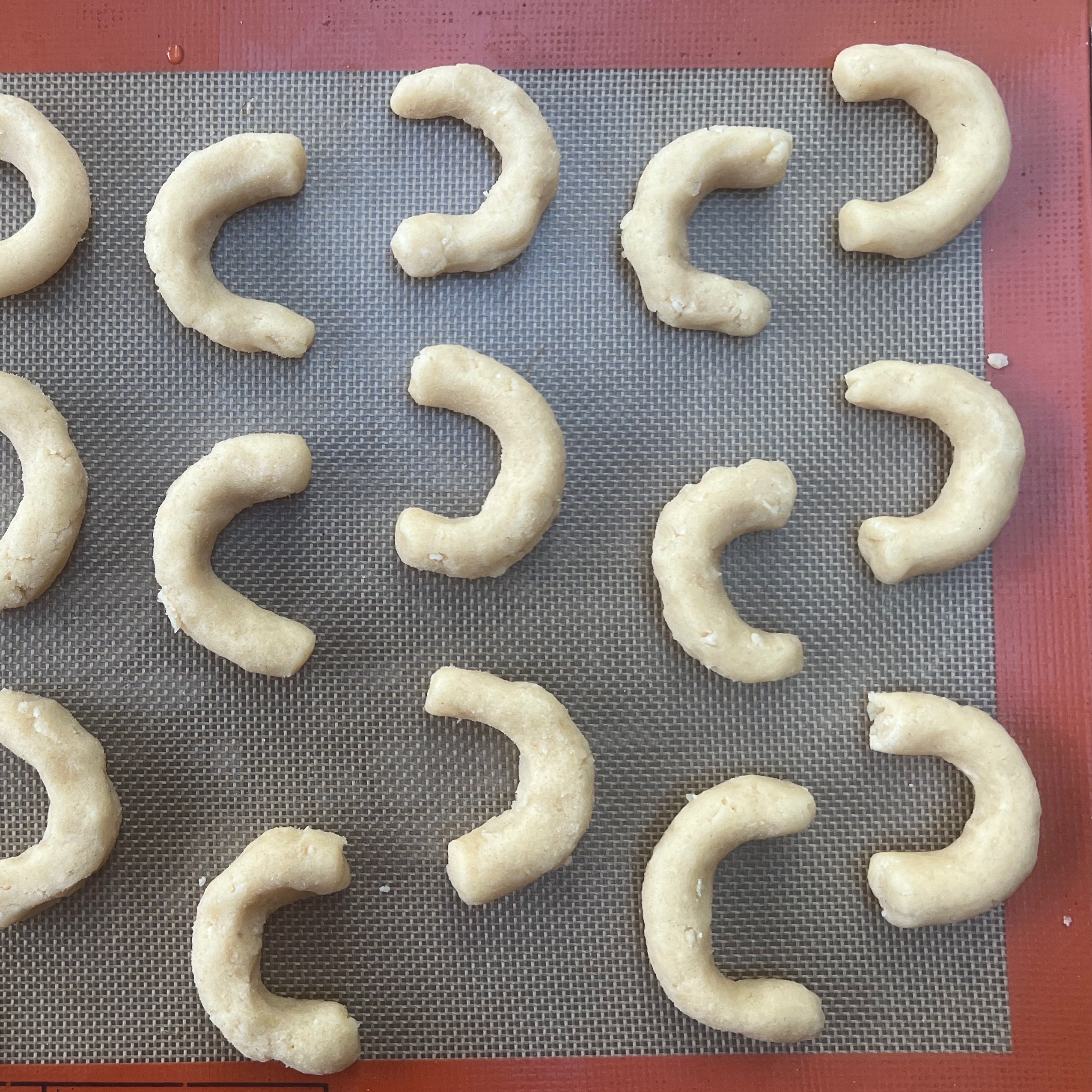
  6. Take a small ball of dough, around 15-20g, compress it in your hands and roll it into a cigar shape around 8 cm long. 
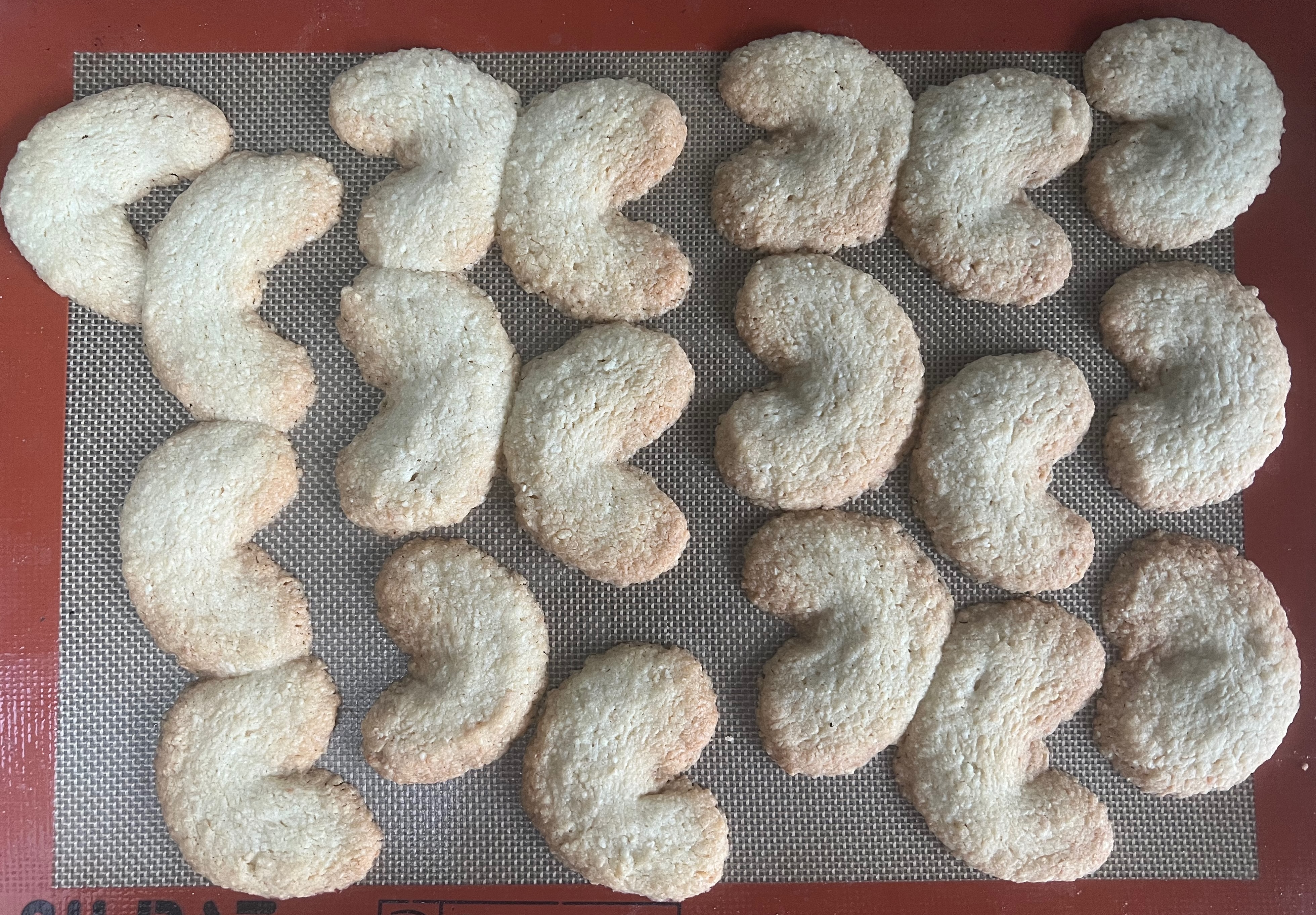
  7. Form the dough into a crescent and place it onto your baking sheet. Make sure to keep at least a couple of centimetres between each crescent, because the Kipferl will spread in the oven more than you expect.
  8. Repeat for the other Kipferl and bake until just beginning to go golden – this will take around 16-18 minutes. You want them fairly pale for the best flavour.
  9. Remove from the oven, slide your Silpat sheet off the baking tray and leave to cool. Handle with care because the Kipferl are quite fragile. 
  10. If any of the Kipferl have merged together when they spread, separate them gently with a knife and serve.

I stop here, because the Vanillekipferl are plenty sweet enough for me already. But Austrian recipes now dust theKkipferl with icing sugar in one or both of the following stages:

  1. Immediately after taking out of the oven. In this case, the icing sugar will be absorbed into the Kipferl.
  2. After the Kipferl have been cooled. In this case, the icing will stay as a pretty powdery dusting on the top.

It would, of course, be close to criminal to miss out on having these with good coffee…

Around the world in 80 bakes, no.2: Sachertorte

The Austrians, particularly the Viennese, are serious about cake and serious about chocolate. And there’s no debate as to what is the baked item most emblematic of Vienna: it’s the apricot-laced dark chocolate cake created in 1832 by Franz Sacher and known to the world as Sachertorte (or, in the case of my family, “Sam’s birthday cake”, which it has been for several years now).

There are plenty of recipes for Sachertorte around, but the basics are common to all of them: a mixture of butter, sugar, flour, egg yolks and melted dark chocolate, folded into a meringue made with the egg whites; the baked cake is cut into layers, spread with apricot jam and topped with a chocolate icing. The variations are in the detail – the choice of icing sugar or caster sugar for the cake mix, or additions like ground almonds, vanilla, rum or baking powder. For the icing, Austrian recipes tend to favour a combination of sugar syrup and chocolate, while English ones are more likely to use a ganache made with cream.

The Hotel Sacher claims to guard the original recipe jealously, but in my honest opinion, it’s now selling the stuff to tourists in such volume that it doesn’t even make the best Sachertorte any more. Opinions differ, but my Austrian colleague Elisabeth (who is a serious baker herself as well as having an encyclopaedic knowledge of Viennese cafés) recommends Café Sperl, near the Theater an der Wien, or Café Diglas, which has four locations around the city.

My personal set of preferences, as shown in the recipe below, is to (1) follow the Austrians in using icing sugar for the cake mix, (2) use a teaspoon of baking powder to help the rise, (3) add some vanilla essence, (4) use the syrup method for the icing, (5) take the trouble to slice off the top dome of the cake to create a perfect cylinder. One Austrian tradition I don’t follow is to serve Sachertorte with whipped cream, because no-one in my family likes it. But you will undoubtedly come up with your own set of likes and dislikes.

By the way, although the instructions I’ve given are reasonably precise, don’t be intimidated, because it’s a fairly forgiving recipe. As long as you have good dark chocolate and apricot jam, your result is likely to taste just fine, even if it isn’t the last word in elegance or perfect texture.

Credits: my recipe started life as the one in the American classic “The Joy of Cooking” by Irma S. Rombauer and Marion Rombauer Becker. Since then, it has morphed and has acquired its icing recipe from austria.info.

Cook with a greased, 8-9 inch, removable-rim pan. Serves 8, generously.

Ingredients

Cake

  • 150g dark chocolate (70-80% cocoa solids)
  • 120g icing sugar
  • 30g granulated sugar
  • 170g butter, softened
  • 100g plain flour
  • 6 eggs
  • Apricot compote, or apricot jam mixed with the juice of half a lemon
  • 1/2 tsp baking powder
  • vanilla essence or vanilla paste to taste (different brands are so different in strength that I can’t give an amount)

Icing

  • 150g dark chocolate (70-80% cocoa solids)
  • 200g granulated sugar
  • 120g water

Method

  • Preheat the oven to 160°C fan. Grease the sides of the pan with butter and line the bottom with baking paper or parchment.
  • Separate the eggs into yolks and whites
  • Melt 150g of the chocolate in a double boiler. Then leave it to cool.
  • Cream the icing sugar and the butter until the mixture is fluffy.
  • Beat in the egg yolks gradually until the mixture is light in colour.
  • Add the melted cooled chocolate.
  • Sift the flour and add it gradually. Add the baking powder and mix everything thoroughly.
  • Beat the egg whites until they are beginning to be stiff. Add the 30g of granulated sugar and beat on maximum speed until stiff but not dry.
  • Fold the resulting meringue mix into the cake mixture, about a quarter first, then the rest.
  • Bake the mixture in the pan for 50 to 60 minutes.
  • Remove and cool on a rack.
  • Optionally, slice the top dome from the cake and set aside. Slice the remaining cake in half. Spread the jam on the bottom half and reassemble (optionally, spread jam on the top of the cake also).

Icing

  • Put water and sugar into a pan, heat until you have a thick syrup
  • Add the chocolate, and mix vigorously until smooth
  • Leave to cool for a few minutes (but don’t allow it to set)
  • Spread over the cake
  • Cool

Notes

Really, you want a higher and narrower tin than my one, so bear this in mind when looking at the photos.

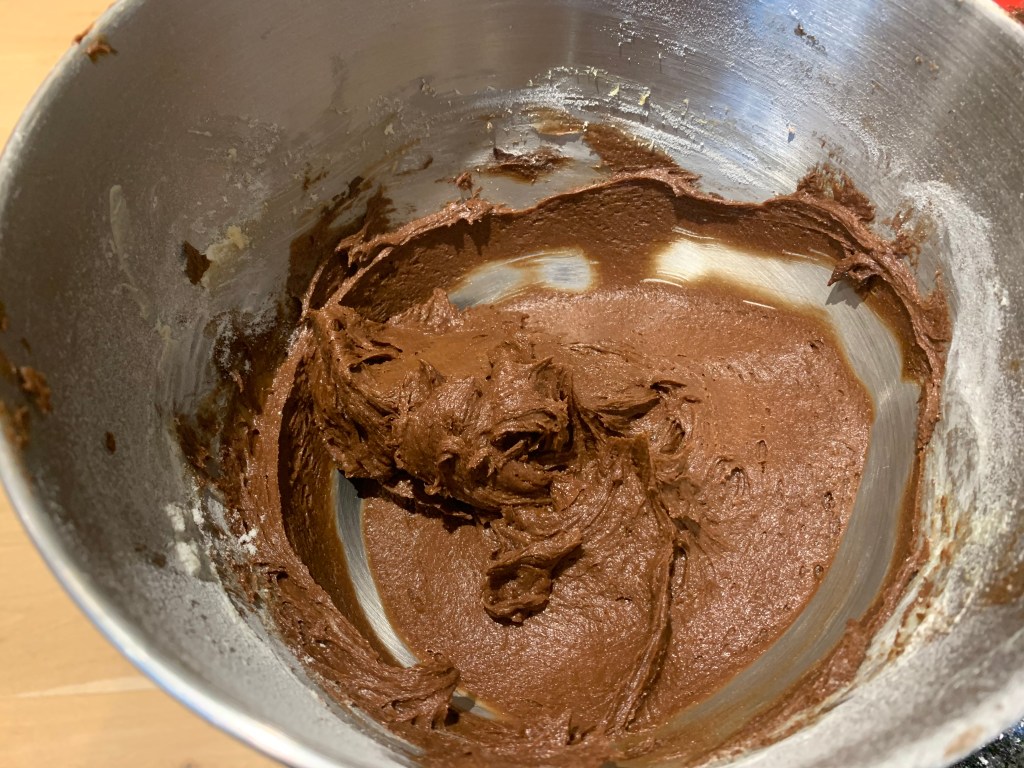
If your butter isn’t soft, cut it small cubes and leave it at room temperature for a bit (see photo)

The part of the recipe worth taking trouble is the part with the egg white. When you fold the first bit of meringue into the mix, be robust enough to make sure that it’s fully blended, at the expense of losing some of the air in the meringue. The result will be softer and easier to fold for your second phase, when you’re trying to protect that fluffiness.

If you’ve sliced off the top of the cake to get that perfect cylinder and/or to allow an extra apricot layer, the offcuts make a magic cheesecake base when blitzed with some butter.

The home made jam I’ve had from an apricot-growing area in Austria has much more fruit and less sugar than apricot jam that I can buy in the UK: the nearest I’ve found here is Bonne Maman apricot compote. If you’re using standard apricot jam, you will need some lemon juice to thin it out or it won’t spread properly (some recipes suggest heating the jam).

The reason I’ve gone off using a cream-based ganache is that it never really stays set at room temperature and the cake never tastes as good when chilled. And although I own a sugar thermometer, I haven’t given a temperature for the syrup for the icing because I’m not convinced I’ve got it right yet. Any recommendations welcome!