Tag: Paris

What I learned about Paris

What I learned about Paris

We spent the months of April and May in Paris – a mixture of pleasure and business, giving us the chance to see many clients throughout France. It’s a city in which I spent several years as a child – but that was over half a century ago, so it was a chance to rediscover the city.

Some of what we found agreed with what our expectations from previous visits or from things we’ve read. But here are some things that surprised us. I should point out, of course, that anything in here is a result of our own experience – other people visiting other parts of the city might feel very differently.
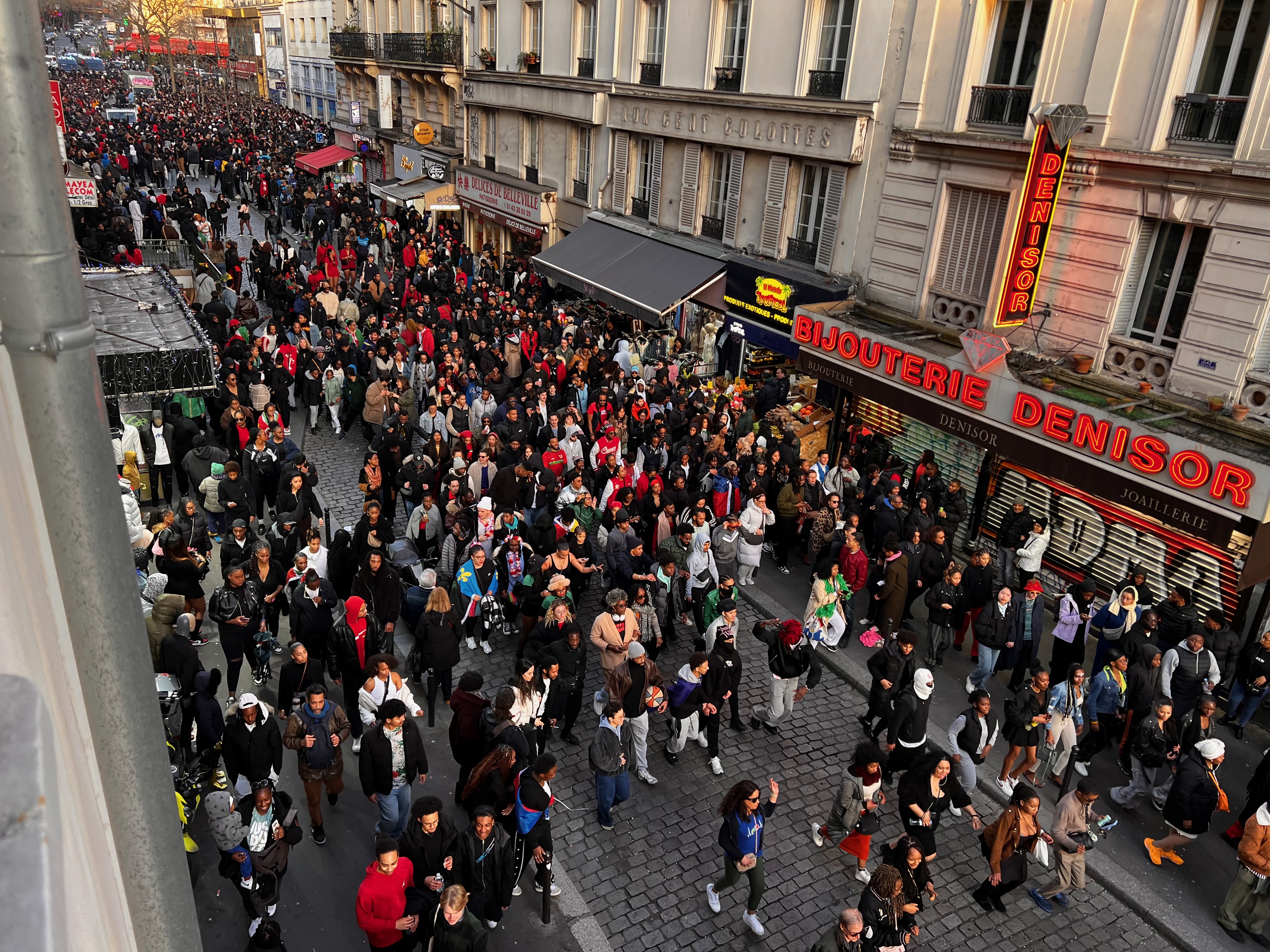
Belleville Carnival
Carnival at Belleville

Living in a residential area is an eye-opener

On previous visits, we’ve stayed in places where tourists go: the Marais, the area around the Opéra or the Champs-Élysées. My childhood was in the ritzy 16ème (yes, I know this signals heavy over-privilege).  This time, somewhat by accident, we ended up in an apartment in Belleville, of Rendezvous/Triplets fame. It’s a residential area that attracts few tourists and is very racially mixed – lots of Africans, lots of Chinese and Vietnamese, some South American, some indigenous French, a smattering of others. And we loved every minute.

We could step out of our apartment, be swamped by a riot of colours and scents and be surrounded by the kind of shops where normal people go to buy everyday stuff (food, clothing, housewares, electronics). The whole place was unbelievably lively with the buzz of people going about their daily lives. The banks of the pretty Canal Saint-Martin were almost permanently rammed with young people hanging out, picnicking, drinking or just chatting.  You just don’t get that sense of really living in the city in an area where most of the people are tourists and most of the shops are oriented to them.
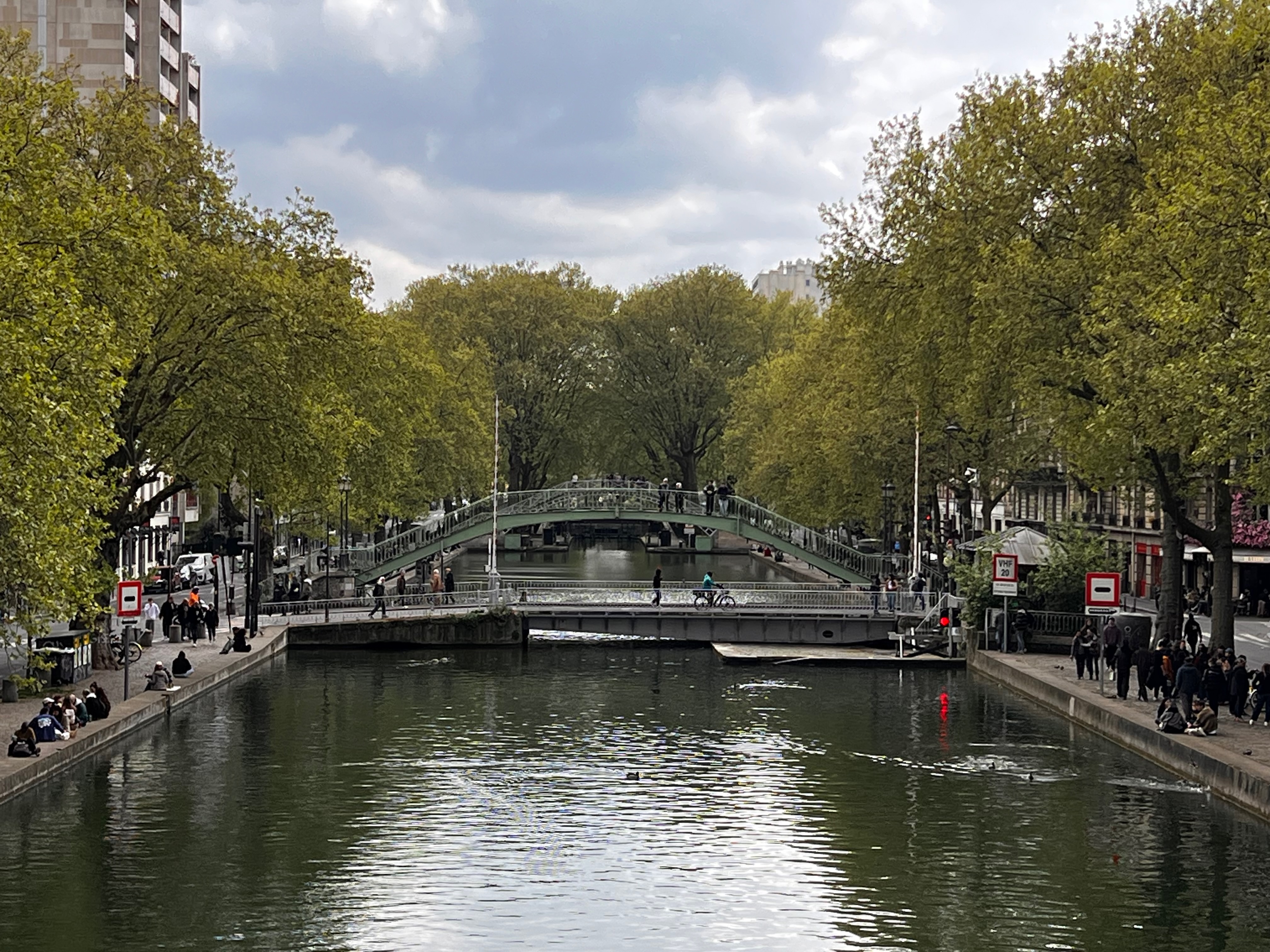
Canal Saint Martin
Canal Saint Martin

People are strong on minor courtesies

Parisians have a reputation for being brusque and surly, but with very few exceptions, that wasn’t our experience. People in shops varied from generally welcoming to seriously charming. The degree of pushing and shoving was far lower than in London, either on crowded pavements or in the Metro, where people readily gave up their seats, especially to women older than them (the same rule doesn’t seem to apply for men). This seemed particularly to be enforced by non-white mothers with their occasionally-reluctant children.

The major exceptions here are the cyclists and e-scooter riders, many of whom travel fast and ignore traffic lights. To cross a street, look them in the eye and walk predicatably so they know how to avoid you.
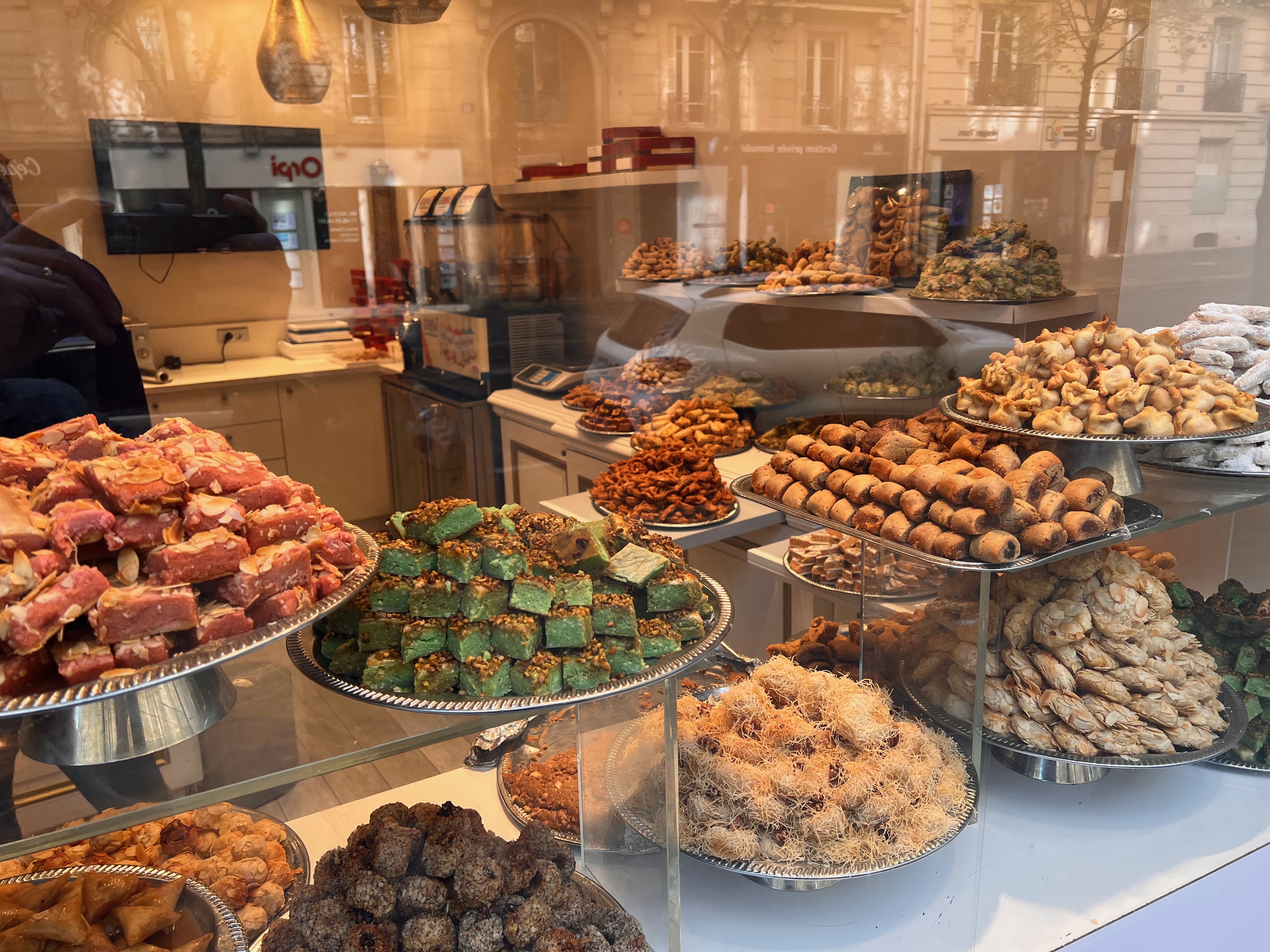
Middle Eastern pastries in 16e

Parisian street cleaning is awesome

Parisians are fond of a good whinge when it comes to their public services. But our experience of their street cleaning was uniformly excellent. We were on the Rue du Faubourg du Temple, a street choc-a-bloc with food shops and cafés. By 11pm every day, there was a quantity of rubbish on the streets. Overnight, however, an army of hose-equipped trucks and broom-equipped cleaning staff would roam the street. By 7am, the place was sparkling. 

The swimming pools are also awesome

We swim most mornings. The availability of public pools was extraordinary, with 41 across the city (the coverage is variable, but our apartment was within a 10 minute walk of two 25 metre pools in excellent shape). A short metro ride would have taken us to various 50 metre pools, including Piscine Suzanne Berlioux, improbably located underneath Les Halles, the giant shopping centre in the centre of town. And the prices are jaw-droppingly low: 44 € gets you a three month pass valid in all 41 pools – or 22 € if you’re over 65. 

The changing rooms are mixed, with cubicles for changing – which was perfectly fine and sidesteps what is currently a political hot potato in the UK. However, the showers only have individual cubicles for the disabled, so you have to shower with your swimming costume on. And during school periods, the early morning time slots available to the public are restricted. But we rapidly embraced our morning drill of “get up at 7am, swim, buy croissants on the way home”.
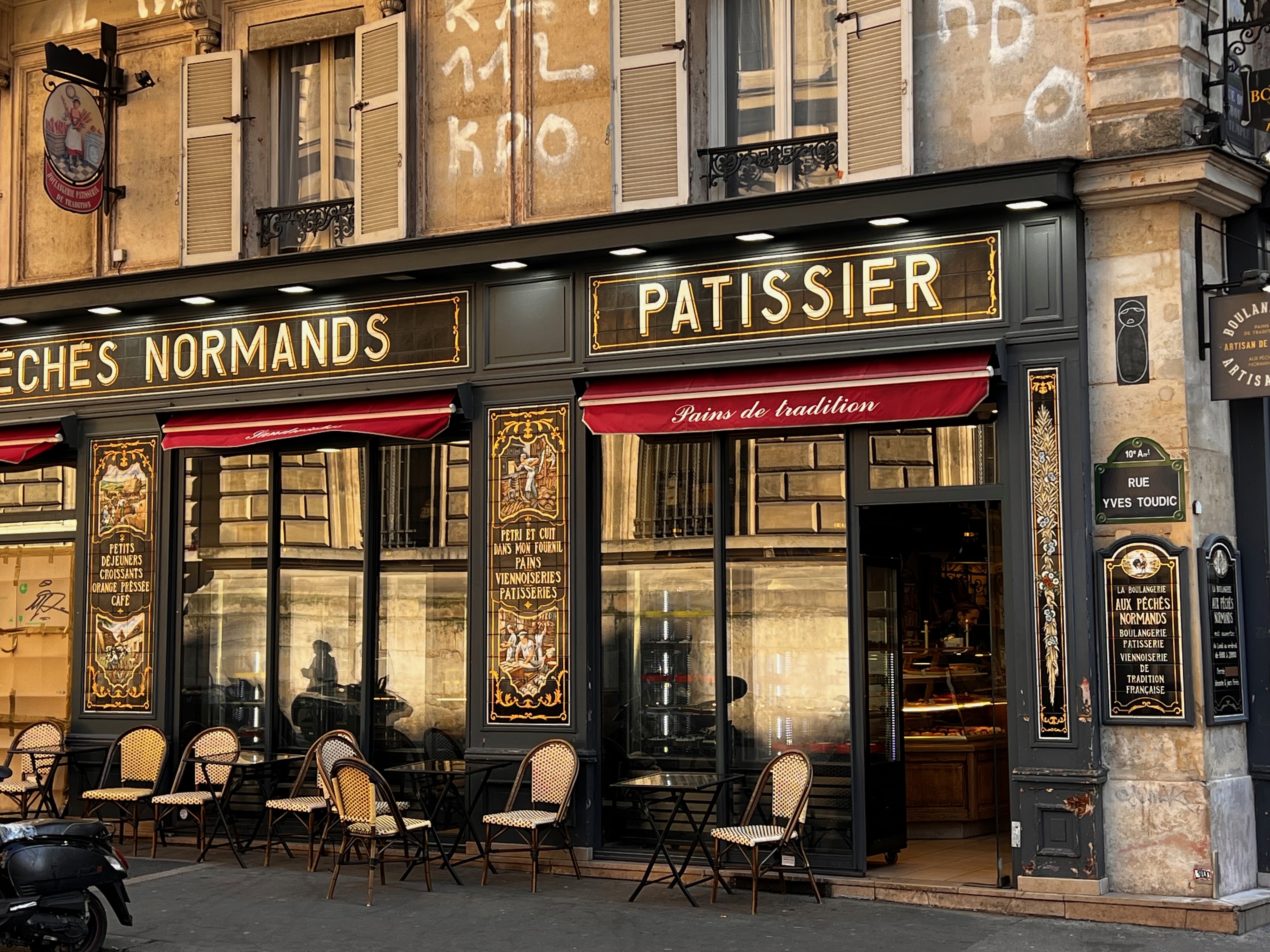
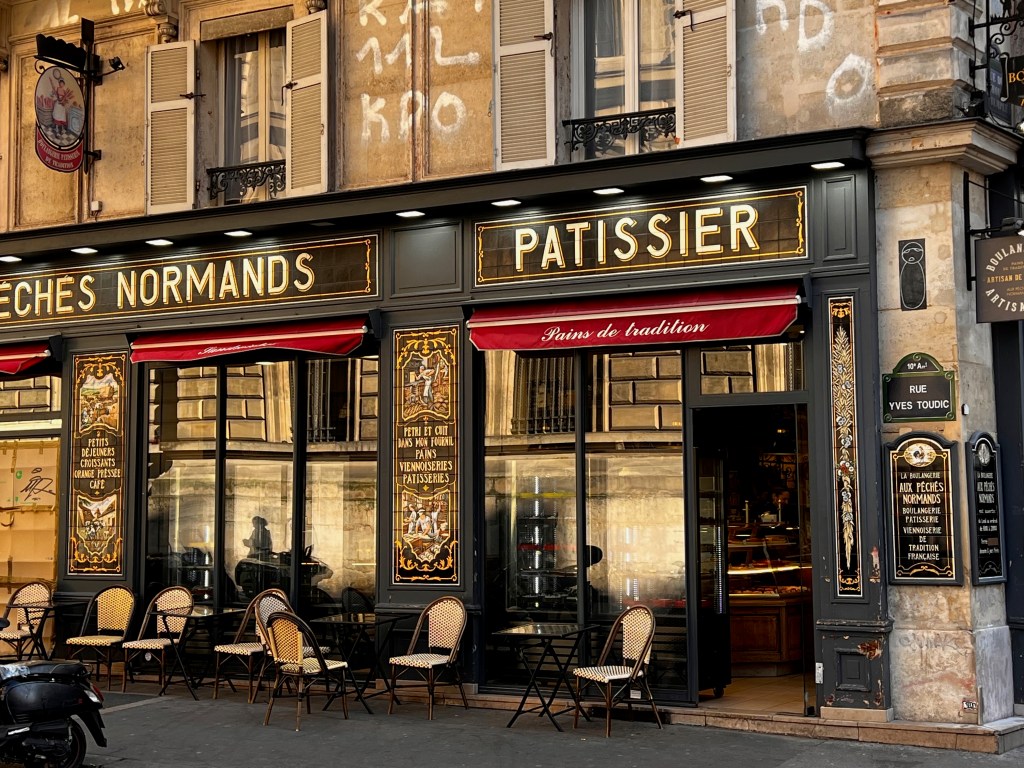
Aux Péchés Normands bakery

The dark side: there’s a lot of homelessness and begging

Sadly, we couldn’t walk too far without coming across someone sleeping rough, or someone asking for a few coins. The begging was usually pretty gentle and surprisingly polite, although there were instances of beggars who got aggressive. Several, we suspected, were mentally ill. And to judge by the number of ads and fundraisers for food banks, there are also a bunch of people who can’t feed themselves.

I don’t honestly know how this compares to other cities. My gut feel/memory says it’s worse than London and not as bad as San Francisco, but that’s a pretty unreliable guide.

The melting pot approach to multiculturalism is beginning to work

When a country has large a immigrant population, there are two main ways to approach multiculturalism. The approach promoted by many on the left of UK politics is the maintenance of identity, the idea that people have a right to their ancestral culture and heritage, which should not be “appropriated” from them. Faith schools and ethnically unmixed areas contribute to that.

The French do the opposite: what they call la mixité. It’s closer to the US idea of a “melting pot” but more extreme – religion and race are excluded from the public sphere. One is encouraged to be “colour-blind”, so that people of all races get the same upbringing and the same opportunities.

Or at least, that’s the theory. The reality has been very different, as expressed in the horrific treatment of immigrants from the Maghreb, by recruitment outcomes which varied wildly according to whether or not you had a Muslim-sounding name, and in Paris, by the concentration of immigrants in the impoverished parts of the banlieue (the suburbs outside the Périphérique ring road), leaving “Paris intramuros” to French whites.

But I saw and heard evidence that la mixité is beginning to become a reality. I saw many more mixed race couples than on previous visits to Paris. I saw black customer-facing staff in some very smart shops that wouldn’t have dreamed of having them in the past. And the “Grand Paris” project, the extension of the Metro into the suburbs, is beginning to break down the previously hard border between the city and the banlieue

It’s baby steps at this point, but the signs are promising.
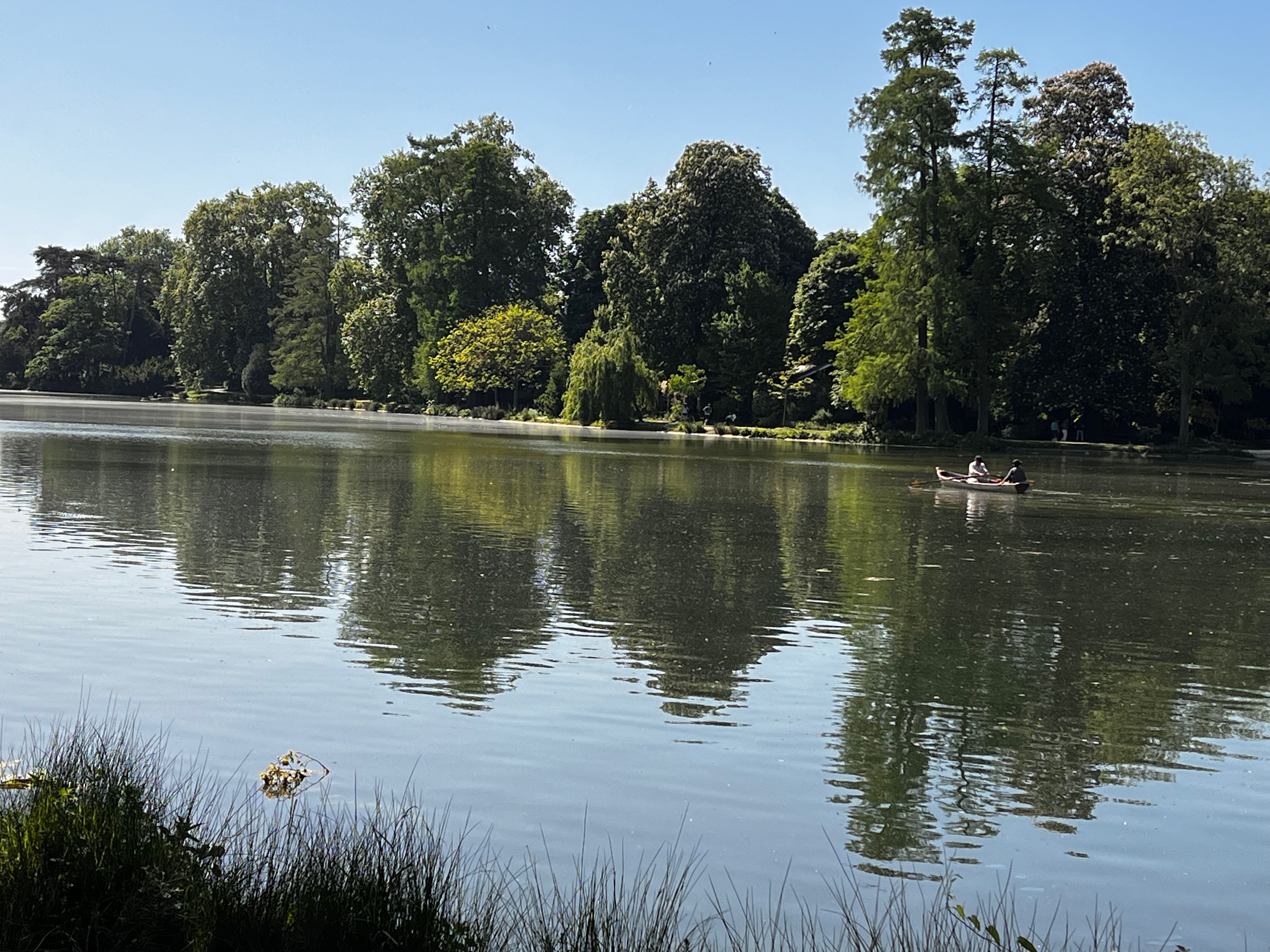
Bois de Vincennes
Bois de Vincennes

 The green side: we discovered the Coulée Verte and the Bois de Vincennes

Paris isn’t celebrated for its green spaces, but there are a some real gems. The one we discovered on this trip was the Coulée Verte (formerly the Promenade Plantée), a narrow strip of land high above the streets that run from Bastille towards the Bois de Vincennes, the former royal hunting forest at the South-East of Paris. The Coulée Verte is about an hour’s walk end to end and is gorgeously landscaped: it’s like having a very long and thin botanical garden, interspersed with little nooks to chill out or gaze down at city outside. It’s blissful.

The Bois de Vincennes itself is huge and very beautiful. We didn’t make much of a dent in its overall size, but managed a long walk alongside the boating lake. I’ll be back.
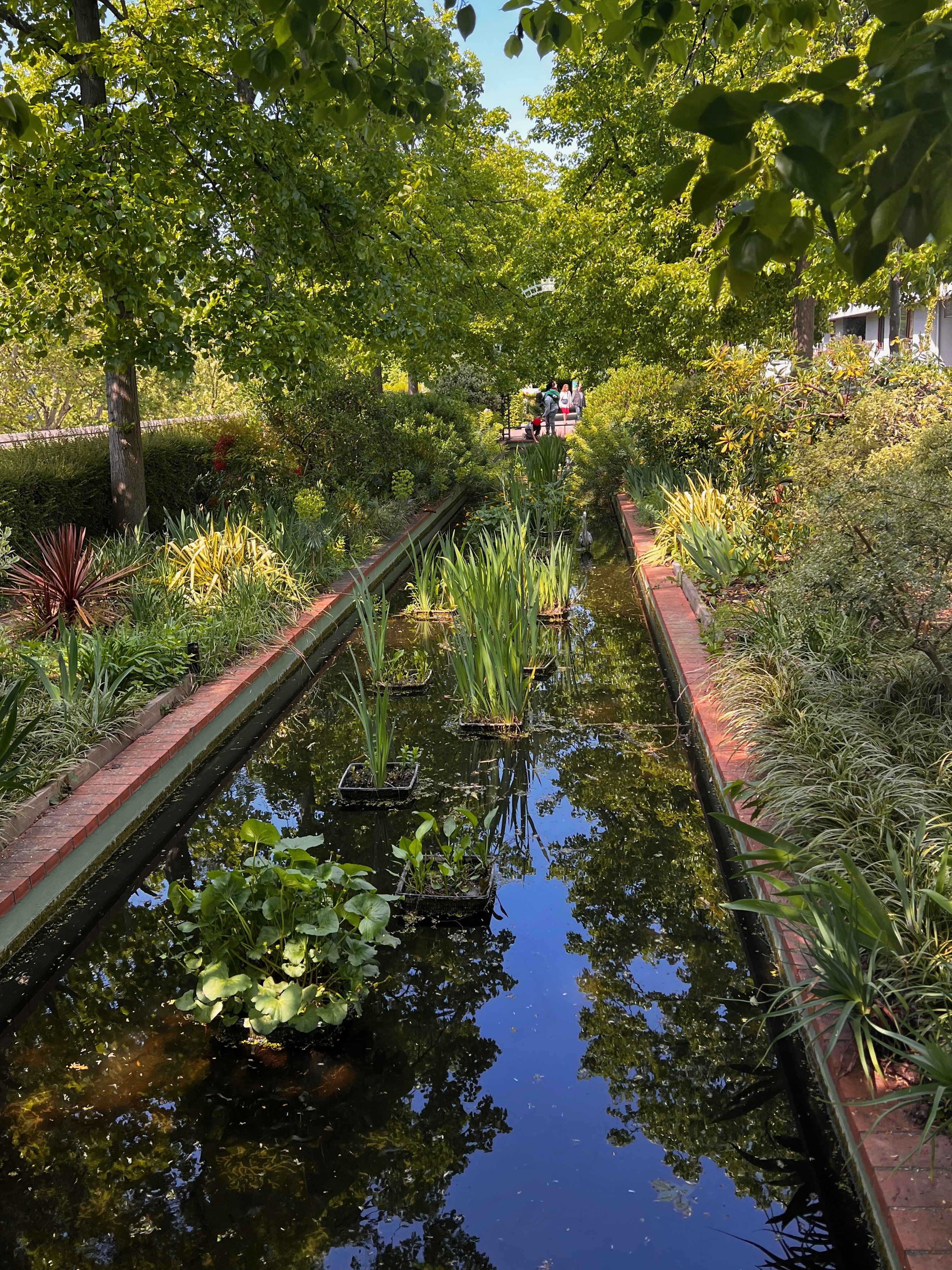
Pond on the Coulée Verte

The city is ever shifting

The status of different areas of Paris isn’t fixed. On the Left Bank, back in the 70s, the Boulevard St Germain and the Boulevard St Michel were the hippest of the hip, celebrated both in popular culture and in literature and the home of cool new fashions from Yves Saint Laurent and others.

We found it rather sad, the streets mainly populated by guided parties of tourists there to relive its former glories. The fashion world has moved elsewhere: the Avenue Montaigne for brands favoured by the high rollers – Dior, Chanel, Prada and the like – and the Marais for a younger, more boho crowd (or bobo, as the French call it).

The Marais is changing, also. At one time, it was very much populated by younger professionals, with many foreign students or people early on their career. That’s been changing: the eclecticism is still there, but one senses that it’s catering to tourists far more than to locals, heading towards becoming a theme park of its former self. Personally, I suspect it’s a result of AirBnB and (to a lesser extent) Brexit, but I can’t be sure.
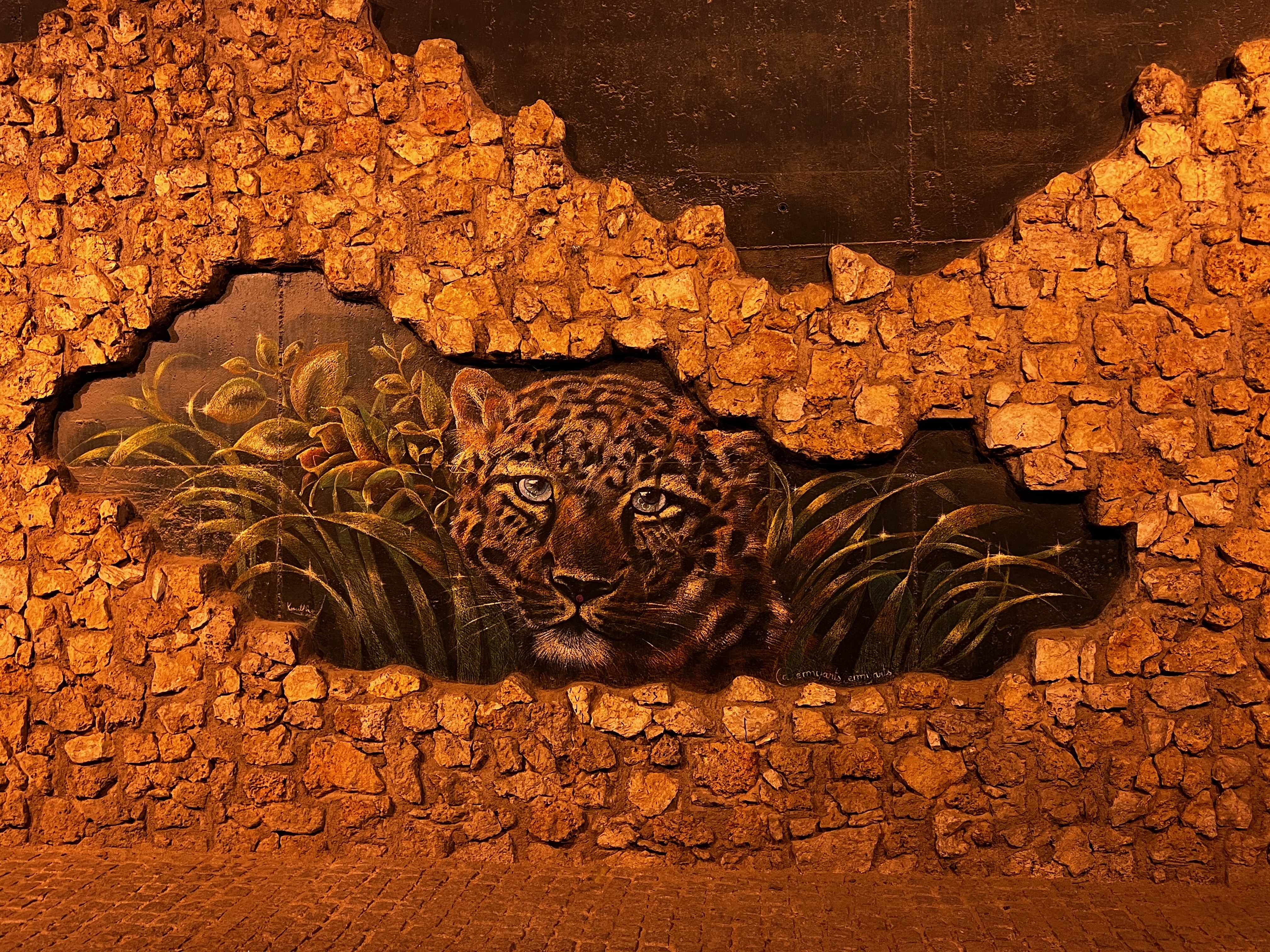
Mural in tunnel by the Coulee Verte

And the stuff you know…

I haven’t even mentioned the things you already know all about – the phenomenal food, both restaurant meals and produce for cooking at home, the breadth of the cultural offering in both visual and performing arts, the cityscape with its famous monuments and that incredible light. Suffice to say that I’ve fallen in love with the city all over again.
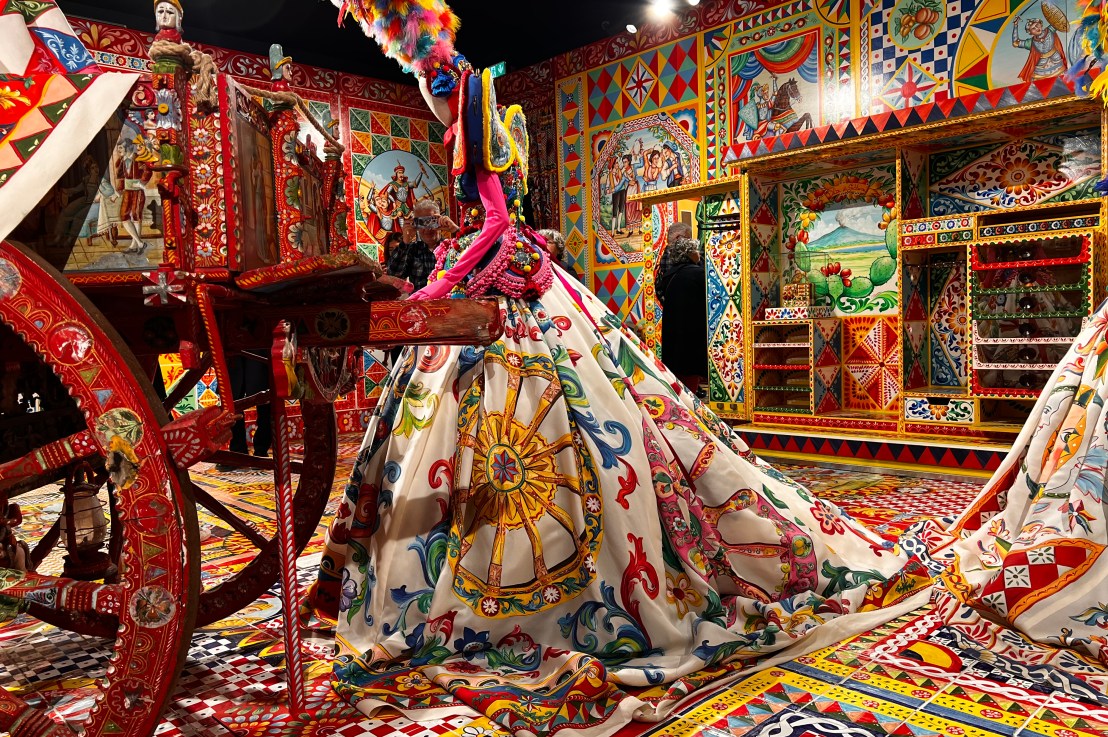
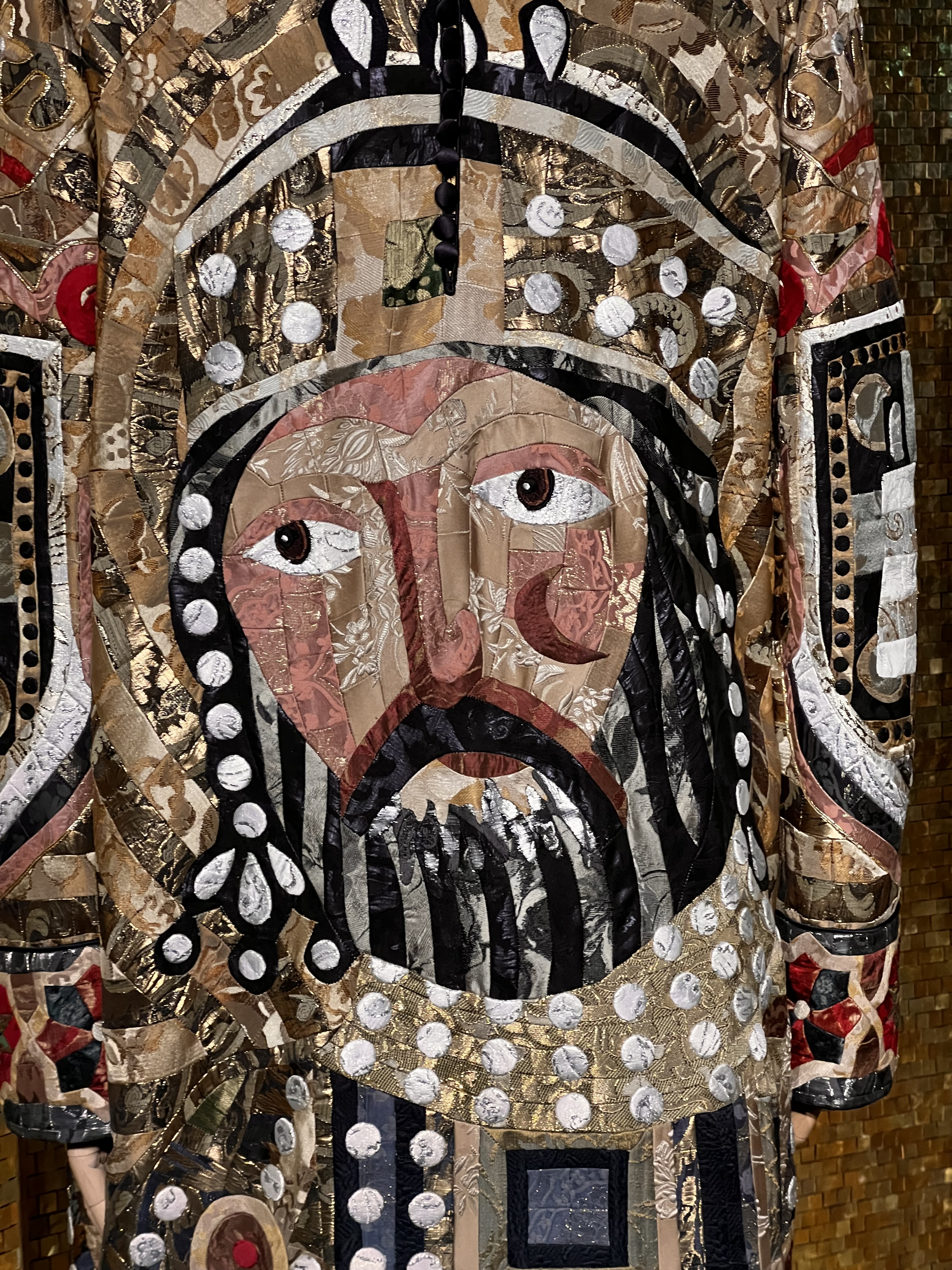
Discovering Haute Couture: Dolce&Gabbana’s Captivating Exhibition in Paris

Discovering Haute Couture: Dolce&Gabbana’s Captivating Exhibition in Paris

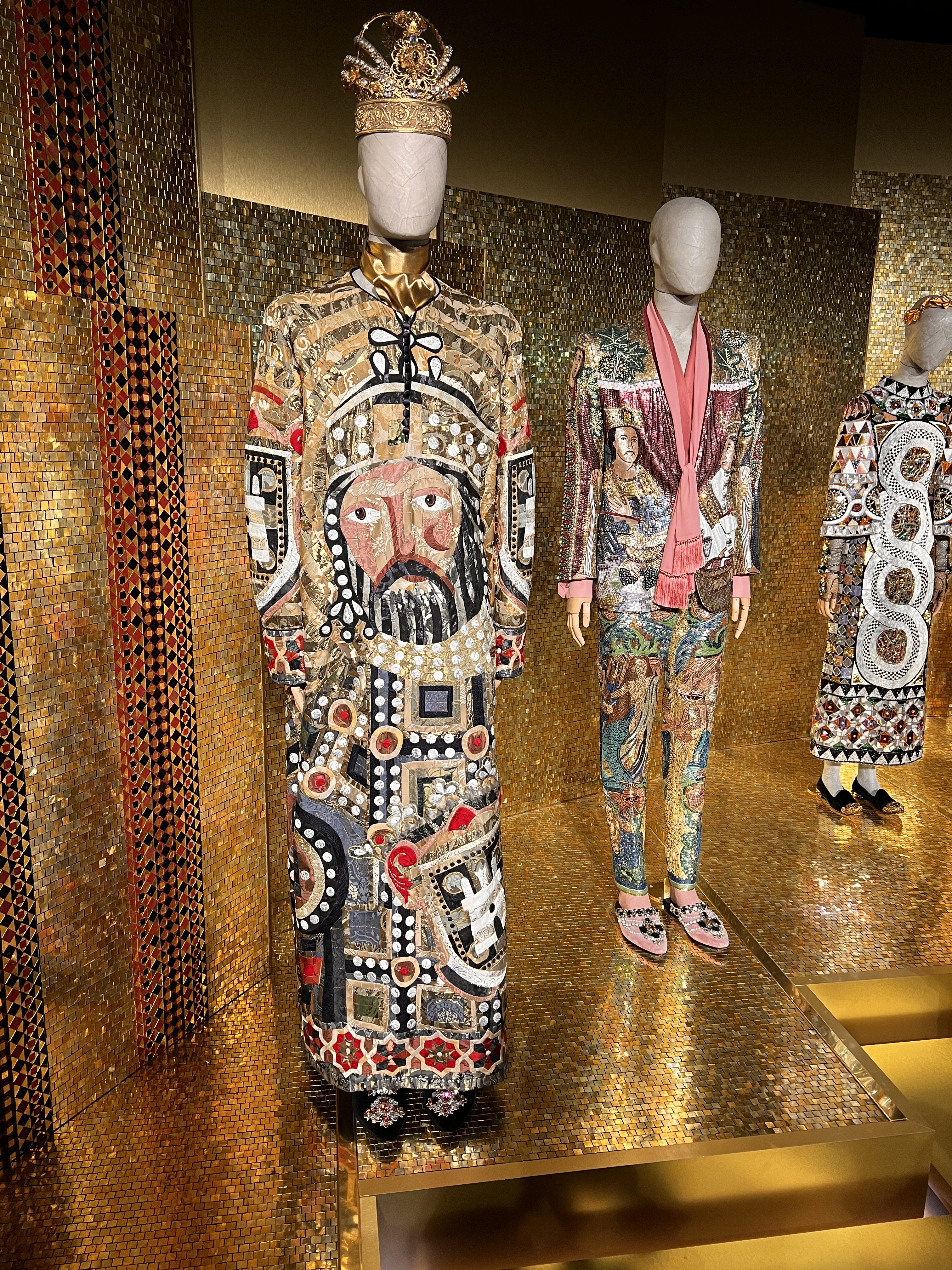
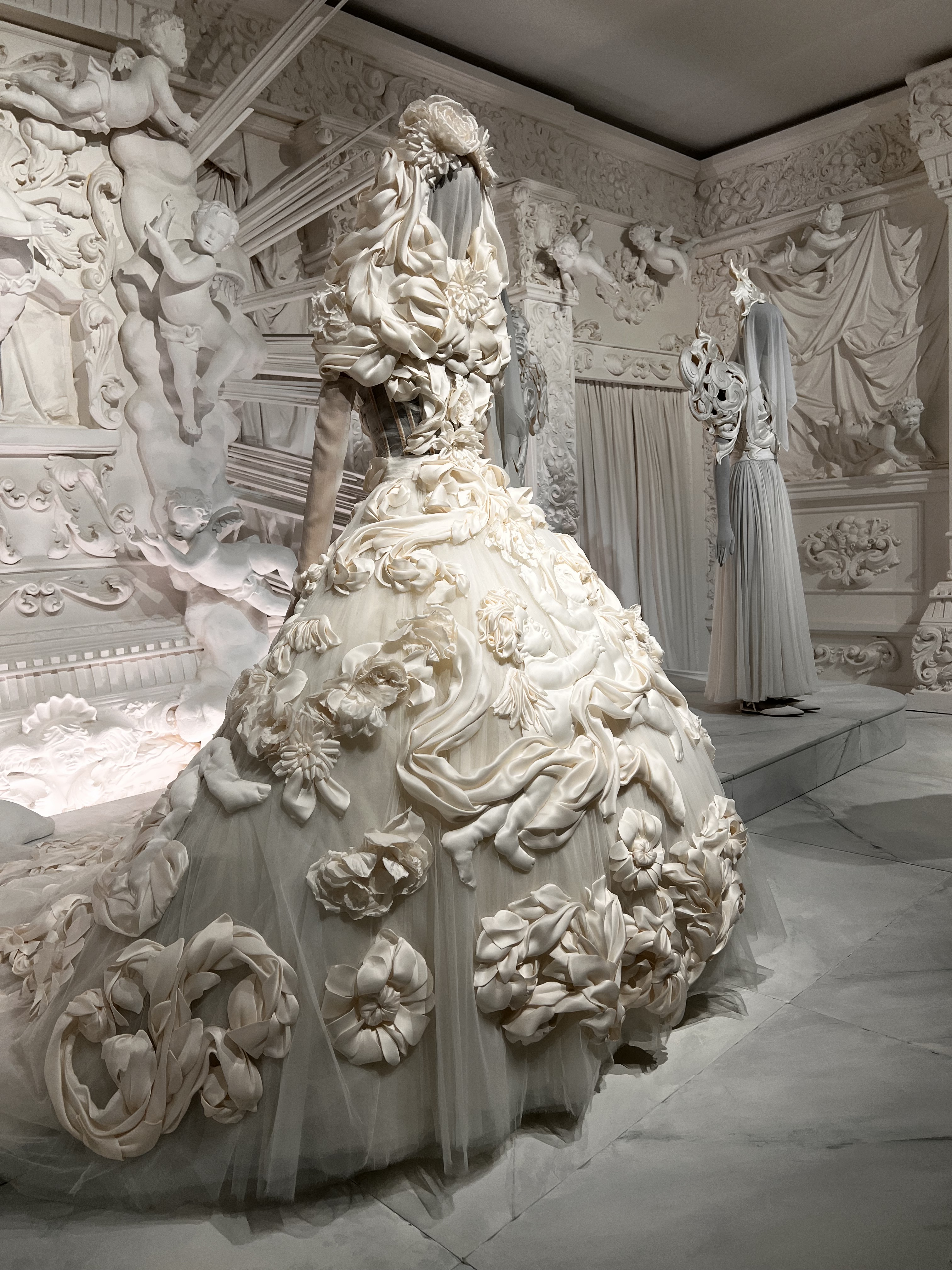
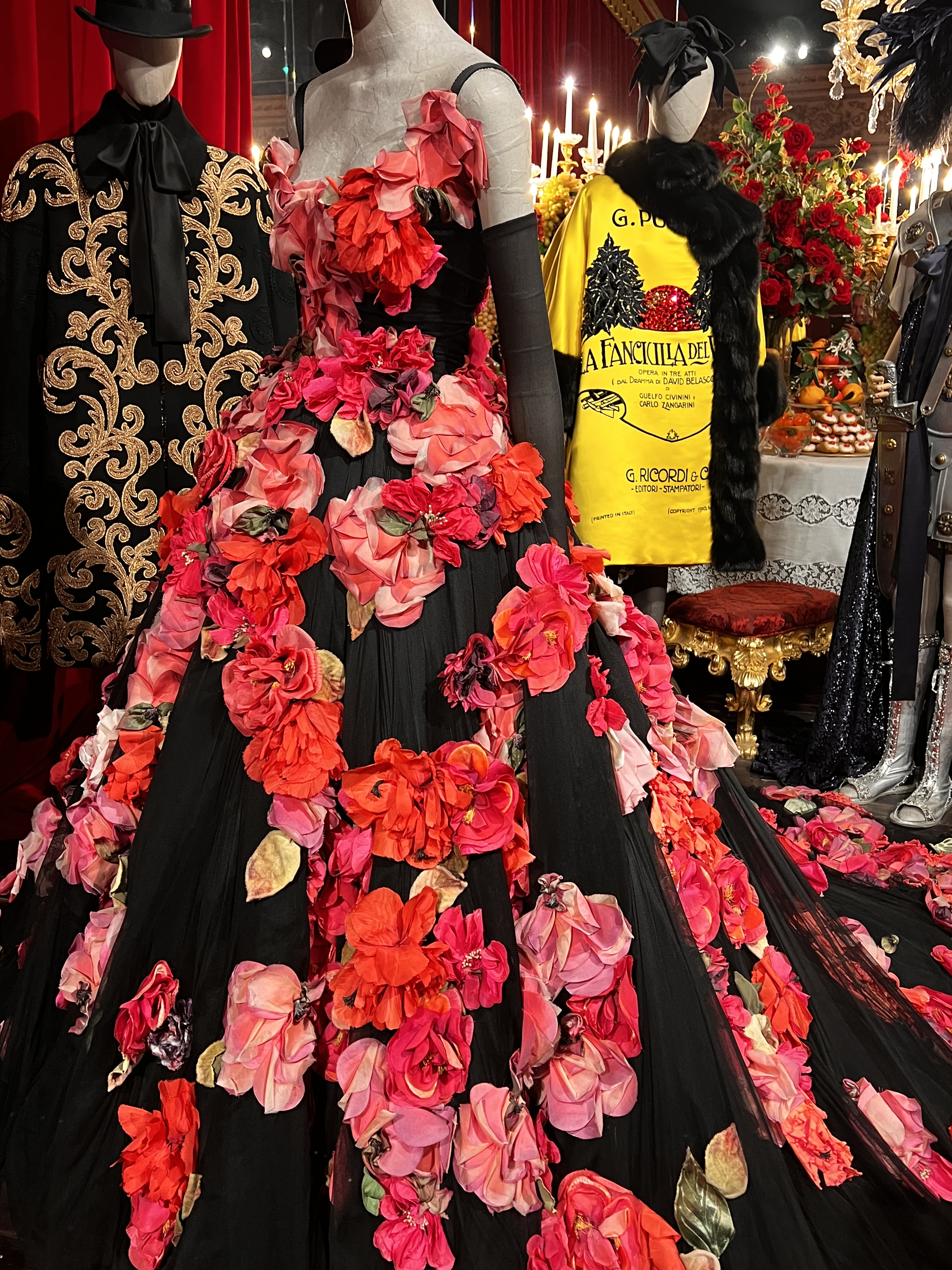
I’m not normally a follower of haute couture: the images of elaborate dresses that I can’t imagine anyone actually wearing leave me thinking of the Raymond Chandler tag “as elaborate a waste of human intelligence as you can find outside an advertising agency” (Chandler was referring to the game of chess, but we all have our own bugbears). So when someone told me that the one unmissable exhibition in Paris was the “Dolce&Gabbana: Du Cœur à la Main” show at the Grand Palais, I was dubious in the extreme.

Still, our informant was quite firm on the matter, so I took my heart in my hands and booked our tickets (which were rarer than hen’s teeth and only available for early mornings or very late nights). And thank goodness I did, because I left the exhibition with my mind completely blown, with a completely fresh understanding of what this kind of fashion can mean.
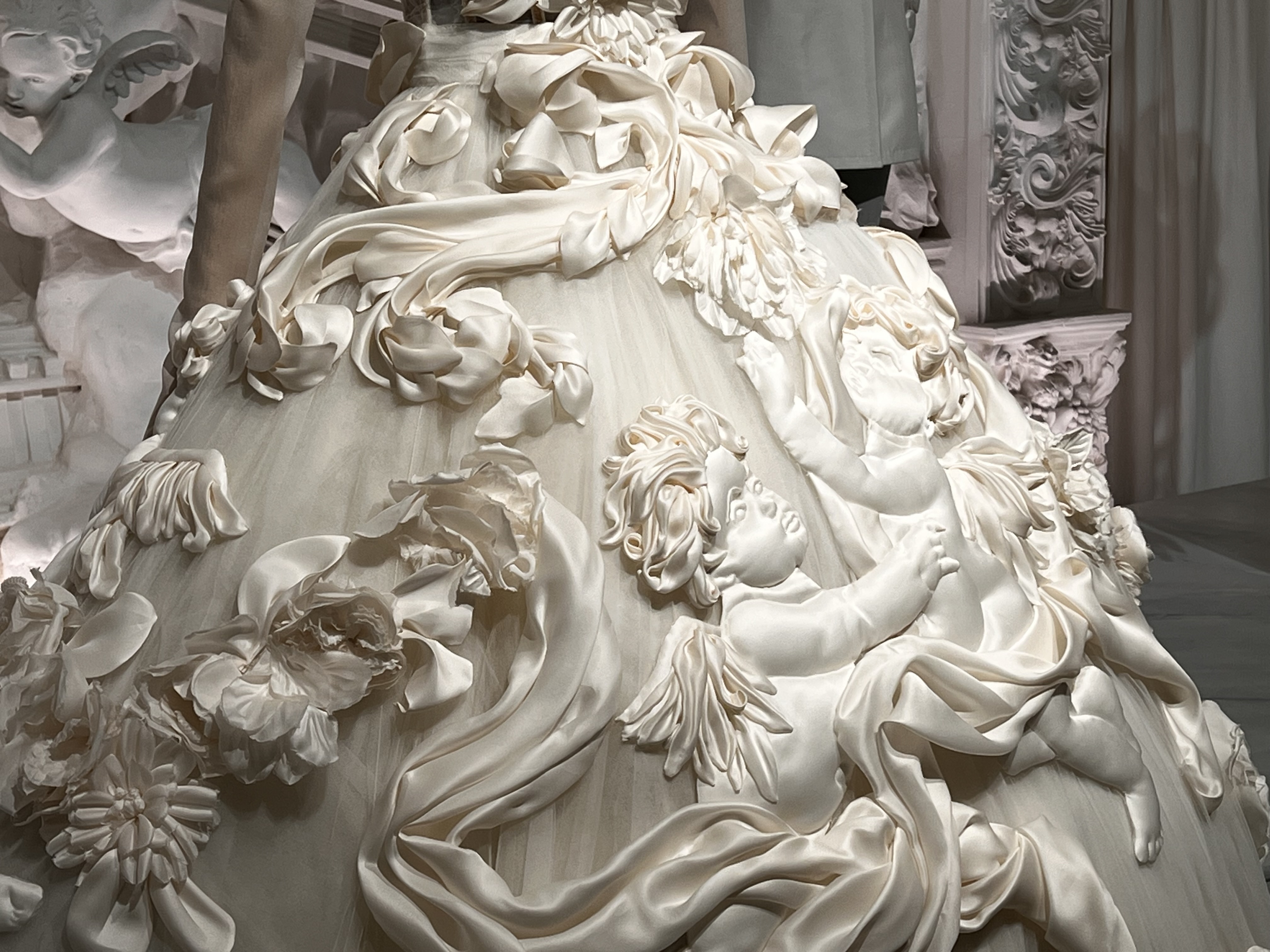
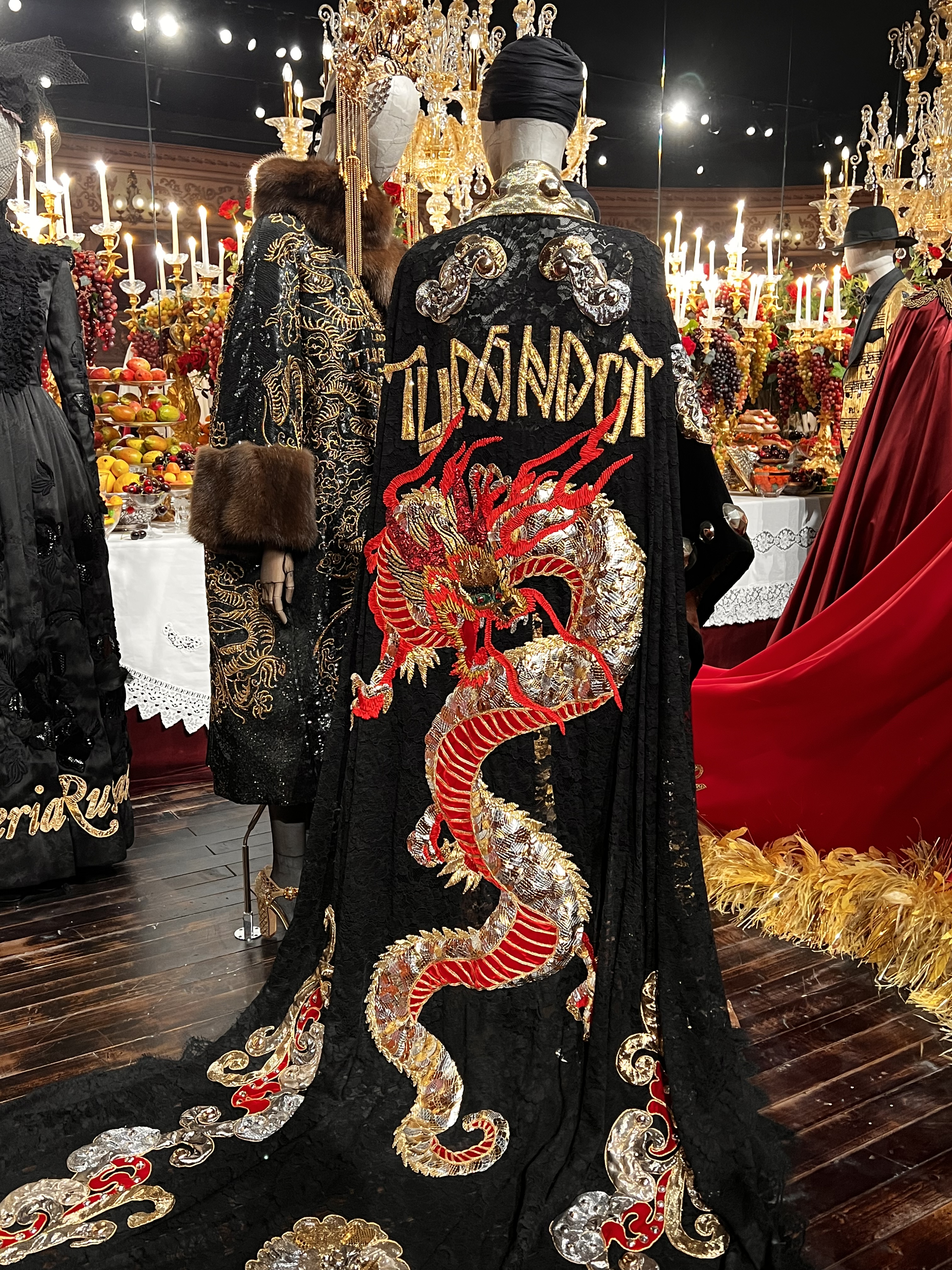
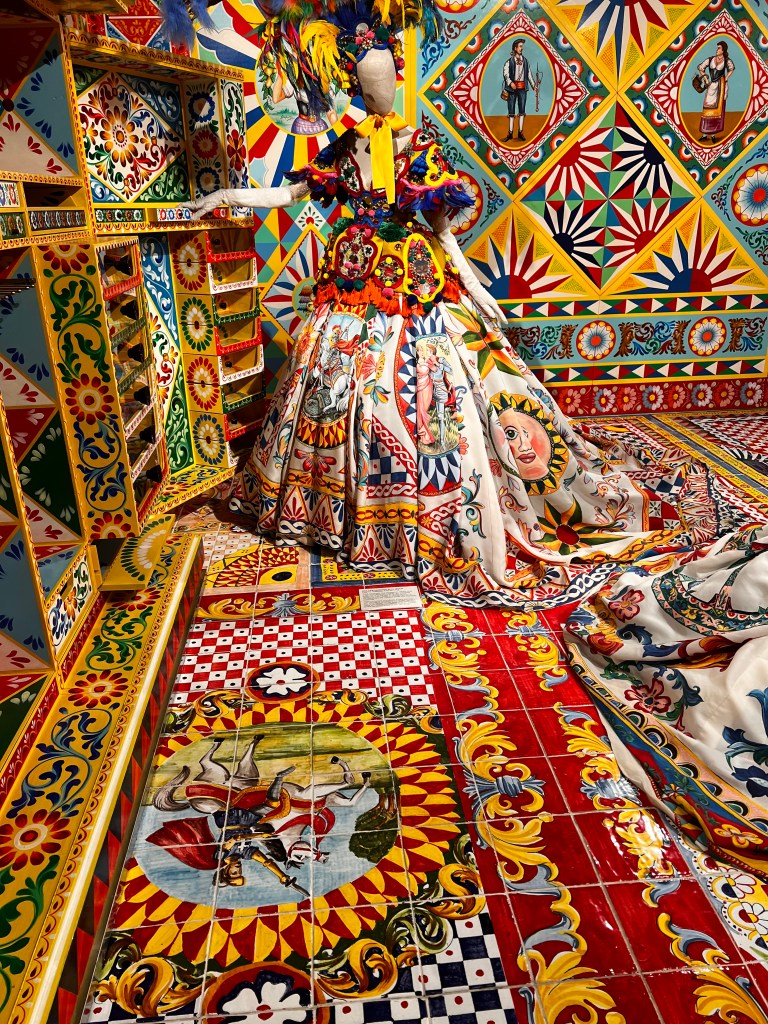
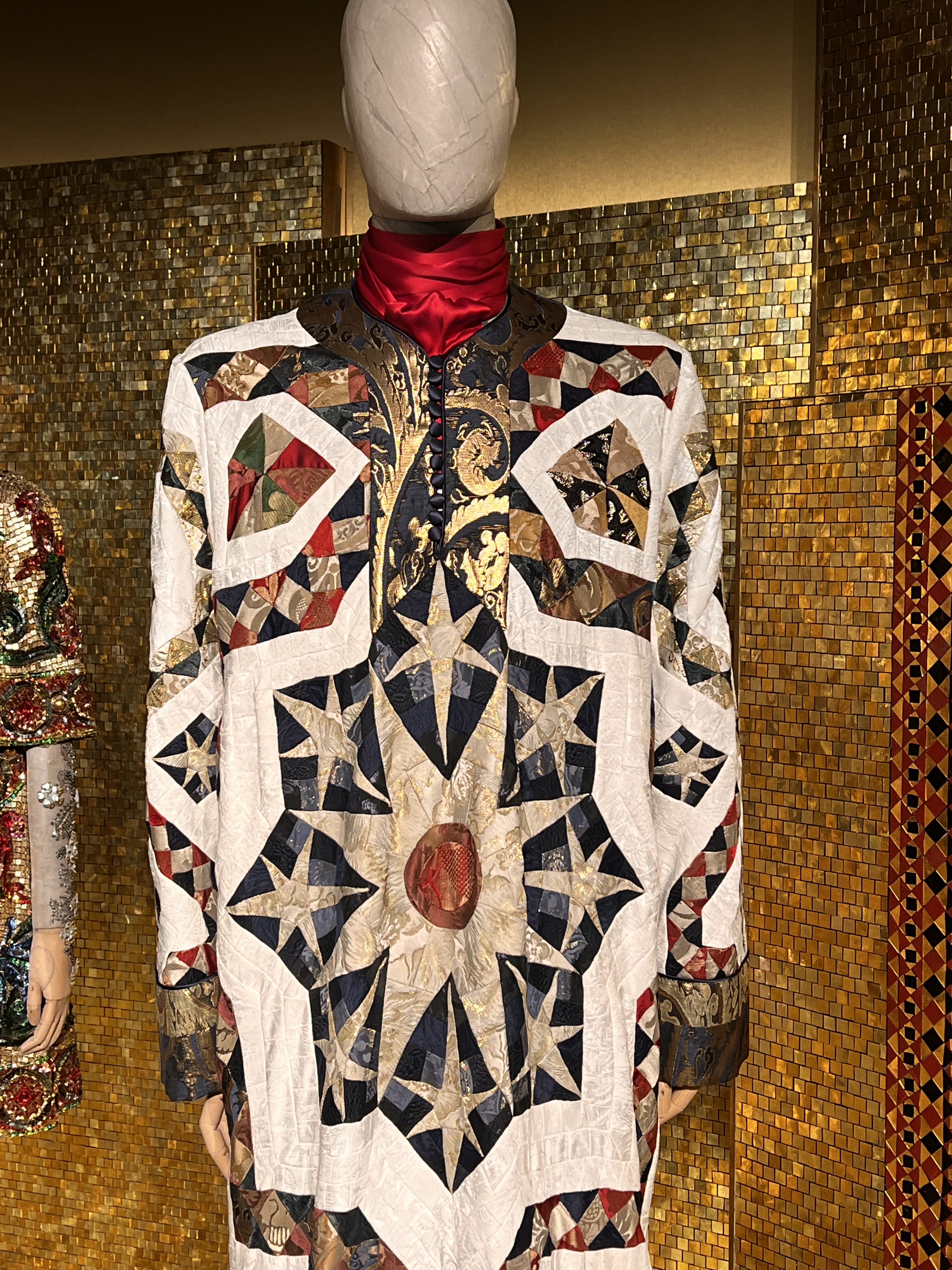
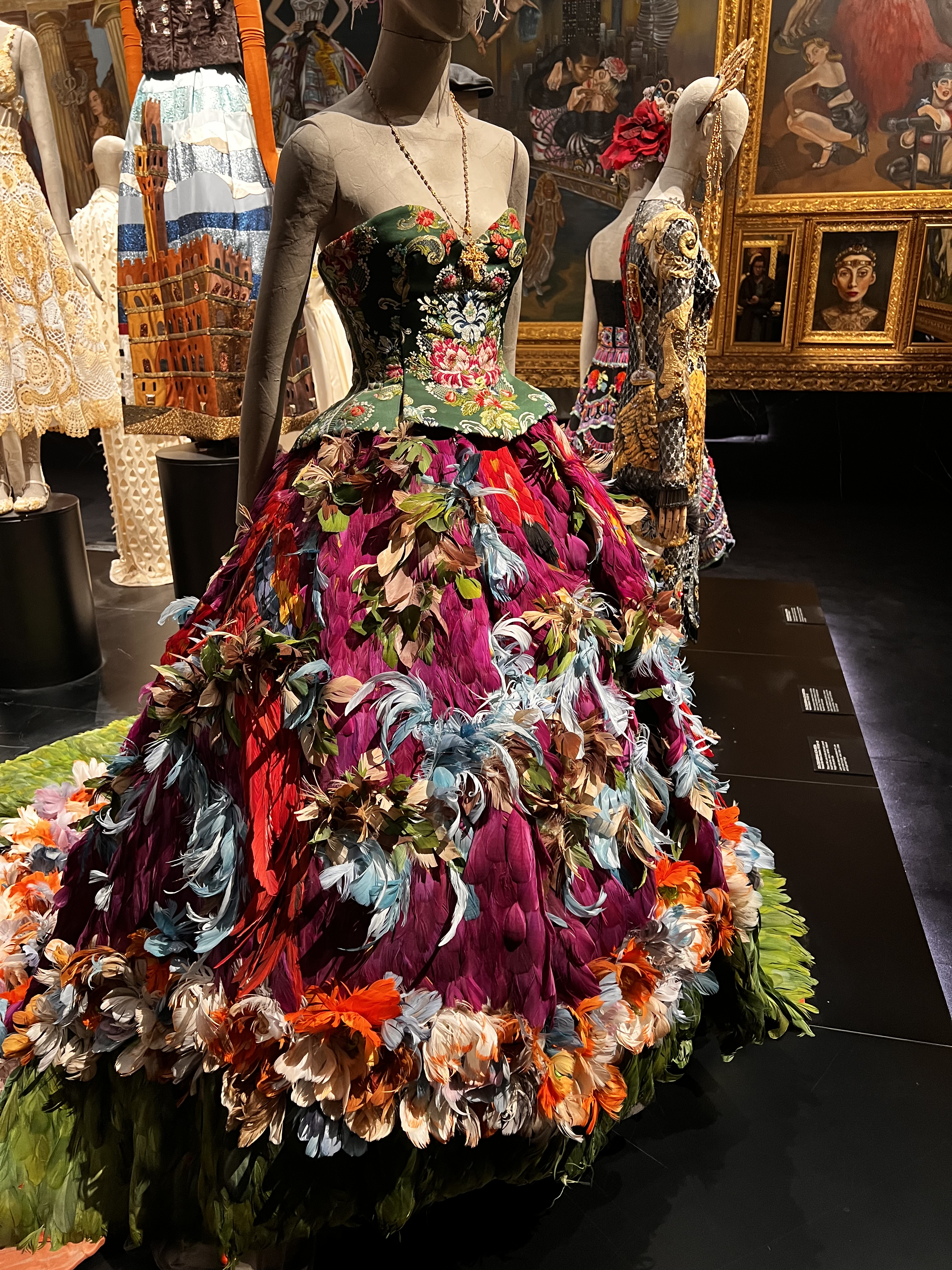
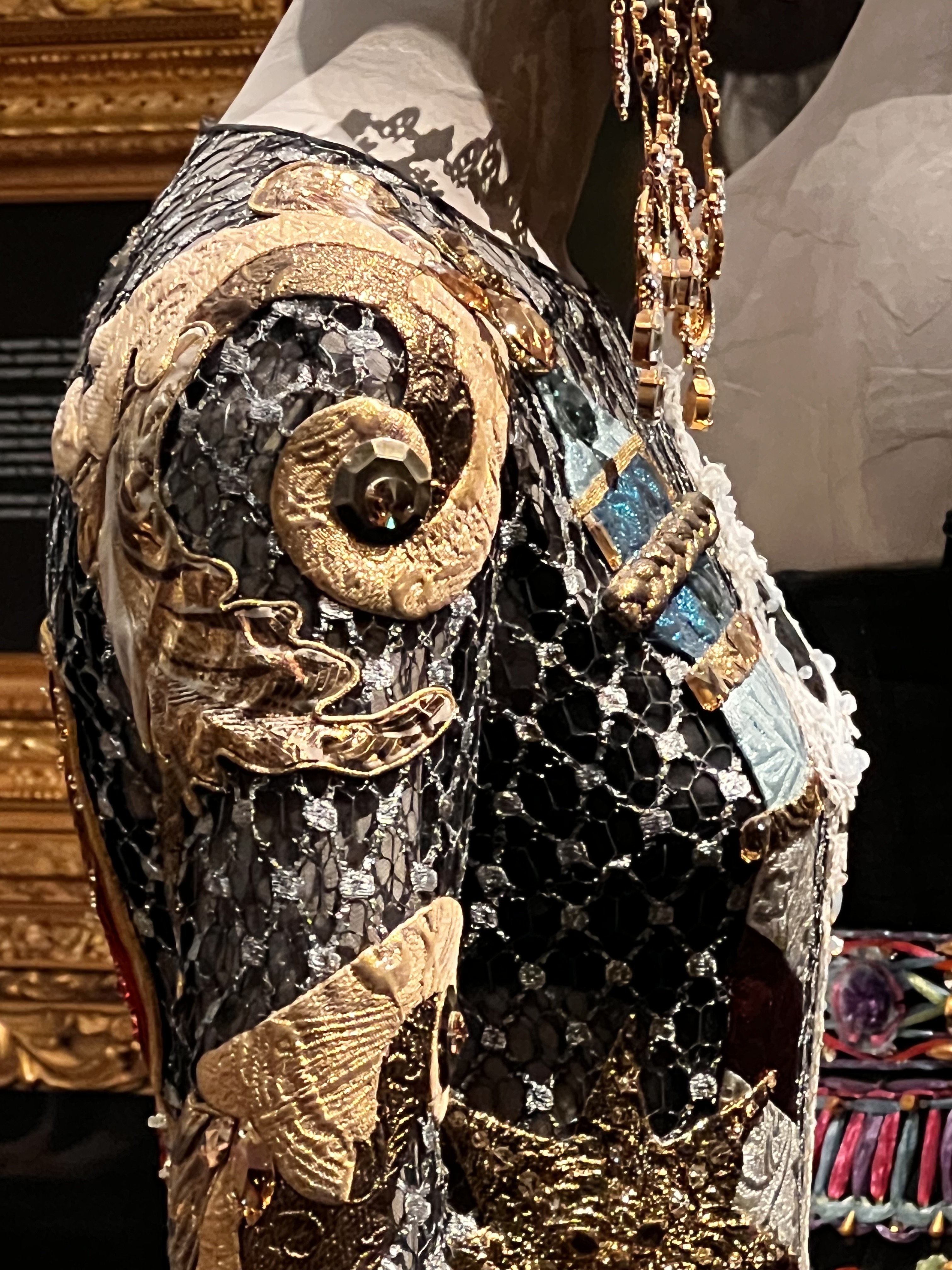
On the one hand, it’s true to say that the vast majority of what was on show was indeed clothing, in the sense that it’s in the form of sets of garments that people can wear. However, that turns out to be almost incidental: what Domenico Dolce et Stefano Gabbana are displaying in the “Alta Moda” in this exhibition is an array of works of art in different media, which happen to be in the shape that you can drape over a mannequin (or, presumably, the occasional supermodel or super-rich real person). And the beauty and craftsmanship embodied in those works of art is simply mind-boggling.
Apart from the obvious needlework and pleating, the art/craft forms in use include  tapestry (both woven and cross-stitch), printing, painting, metalwork and even glass-making. Dolce&Gabbana seem to be experts (or have experts on tap, anyway) on every one. The exhibition is mostly of the finished products, but it’s sprinkled with video of the artisans at work, so you can marvel at the skills on display as well as goggle at the garments that result.

It helps that Dolce and Gabbana evidently share two obsessions of mine: opera and Sicily. You’re assaulted by everyone’s favourite opera highlights (Pavarotti singing Nessun dorma, Callas singing Casta diva, you get the idea) as soon as you’re in the exhibition, and it largely continues that way – but what really blew me away was some of the wearable versions of the posters for various famous premières at La Scala.

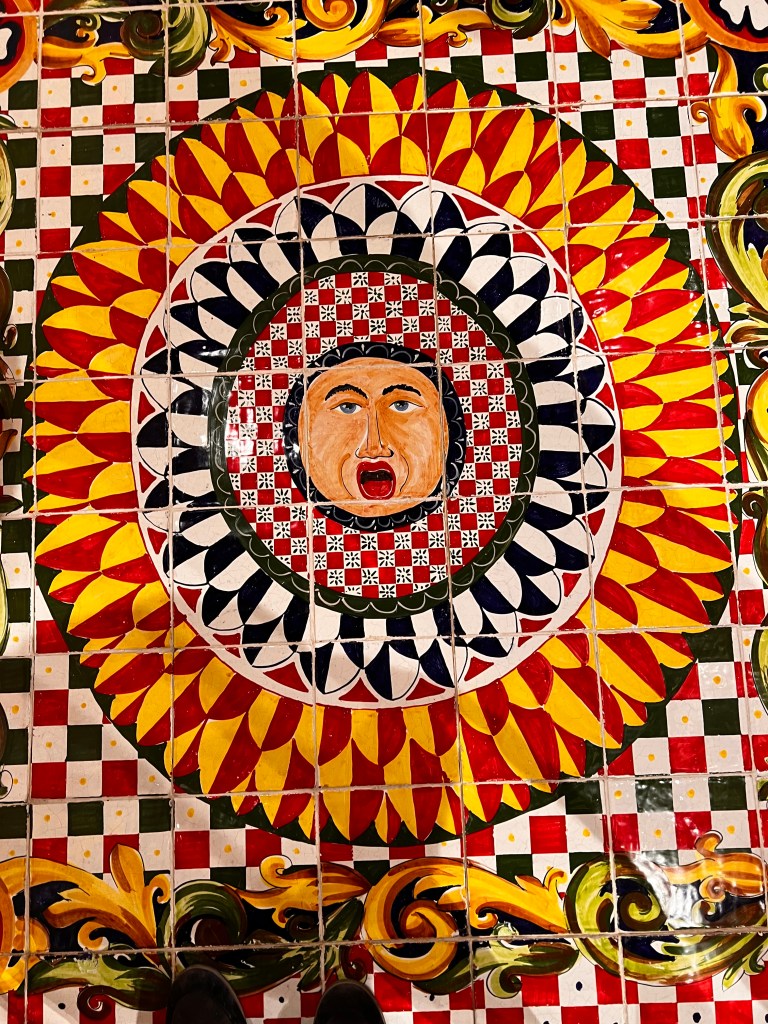
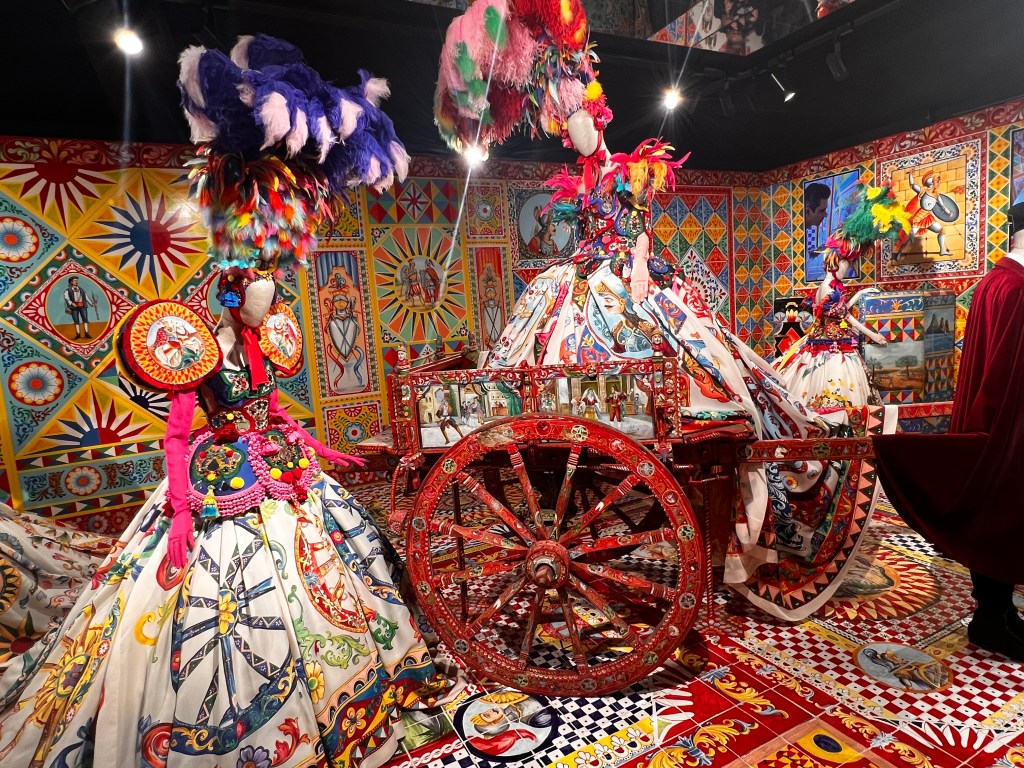
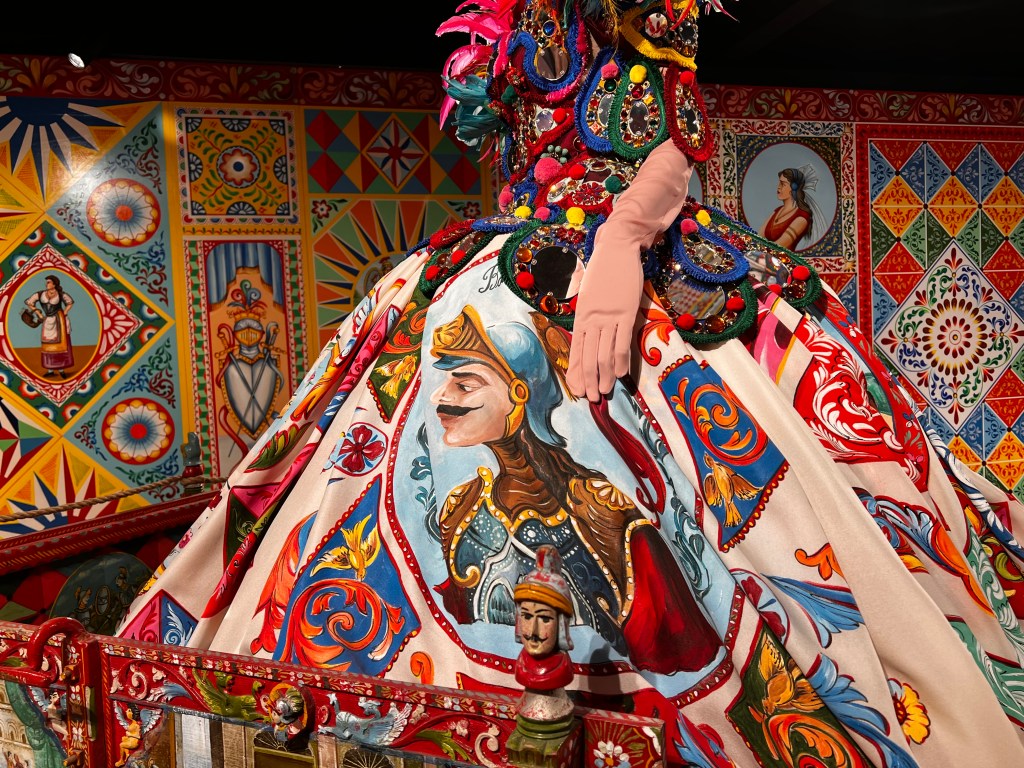
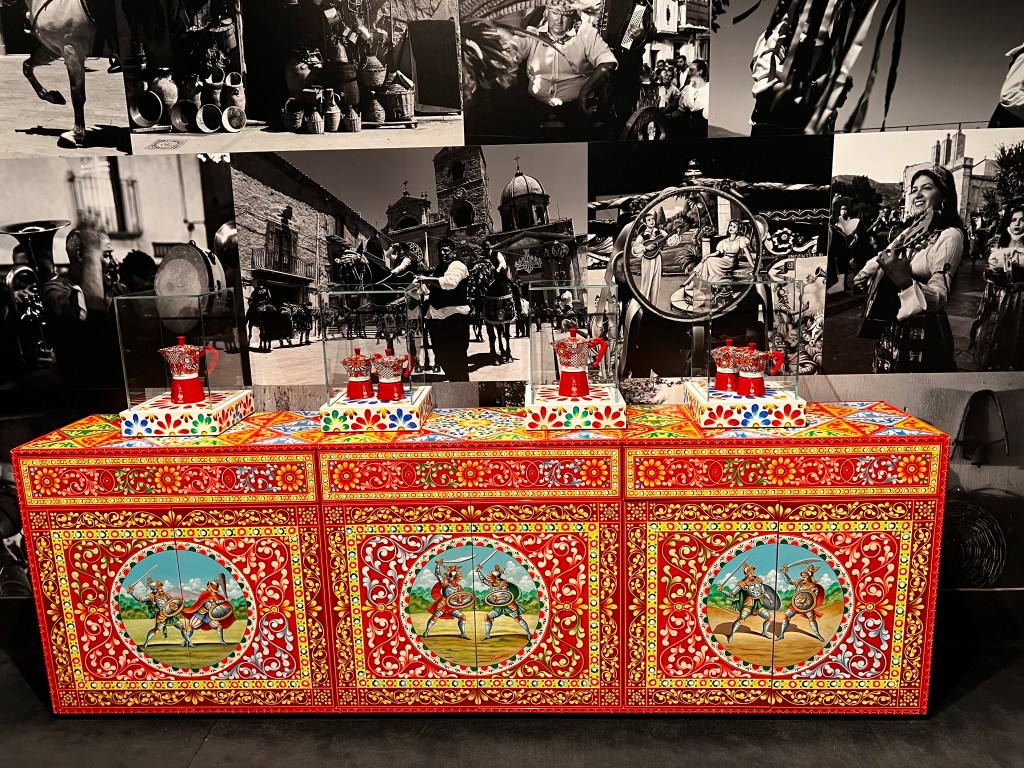
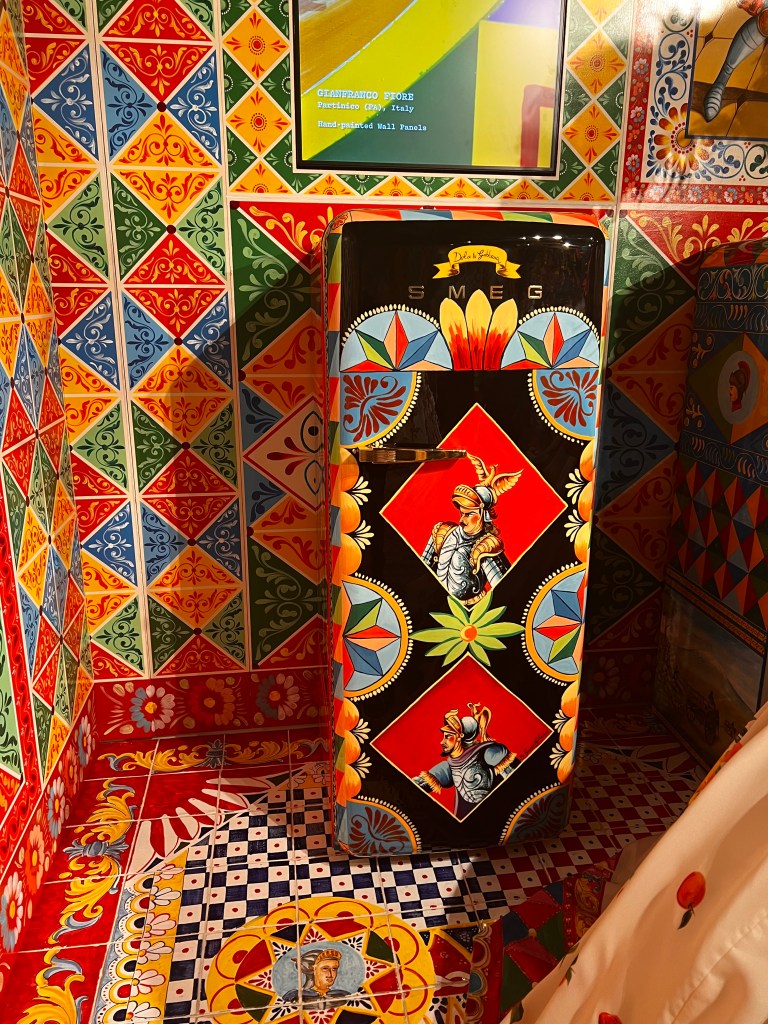
Two rooms were devoted to Sicily. The first was a modest antechamber with only a few garments but walls filled of black-and-white reportage photos of the island. That opened up into the brightest sunniest vista I’ve ever seen indoors: a blaze of Sicilian sunlight created by the boldest of colours. The themes I loved were the stories from Orlando Furioso – peerless knights, fair damsels, evil sorceresses and so on – that you’ll find in Sicilian puppet theatre, complete with a full size travelling cart that the puppeteers would have used to tour their show from village to village. And the brightness was applied to homewares as well as garments, with Smeg fridges as you’ve never seen them. (You could buy a gorgeously bedecked espresso pot if you wanted – not much else was on sale).

But back to that question that bothered me about coming to this show in the first place: would anyone really wear this stuff? And why? Are we just at a kind of massive craft fair where all the goods on show just happen to be people-shaped, or is this just providing a vehicle for oligarchs’ fantasies of what their wives and girlfriends should wear? I’ve rationalised a kinder answer – I don’t really know, of course – which is to consider professionals where the way you look really is a key part of the product (I’m thinking Lady Gaga or Margot Robbie, let alone models like Agel Akol or Bella Hadid). In that category, if you’re going out to a big occasion where you know the paparazzi will be out in force, then wearing something utterly individual and striking isn’t just a matter of vanity or self-indulgence, it’s simply good business. Even if you feel like you’re walking around in something that should really be in a museum. Like the Grand Palais.

By the time I get this posted, you’ll missed the Paris version of this show, but the exhibition will then be travelling to other cities “on a world tour”. Even for a non-fashion-lover like me, I think it’s worth the trip.

Springtime in Paris: the bakeries of Belleville

Springtime in Paris: the bakeries of Belleville

When people think about Paris, the top things they think about are the landmarks (the Eiffel Tower, the Arc de Triomphe and so on), the great public buildings (the Louvre, the Opera),  and the cafés and restaurants. But there’s one aspect of Paris that isn’t necessarily on everyone’s list: the place is a baker’s paradise.

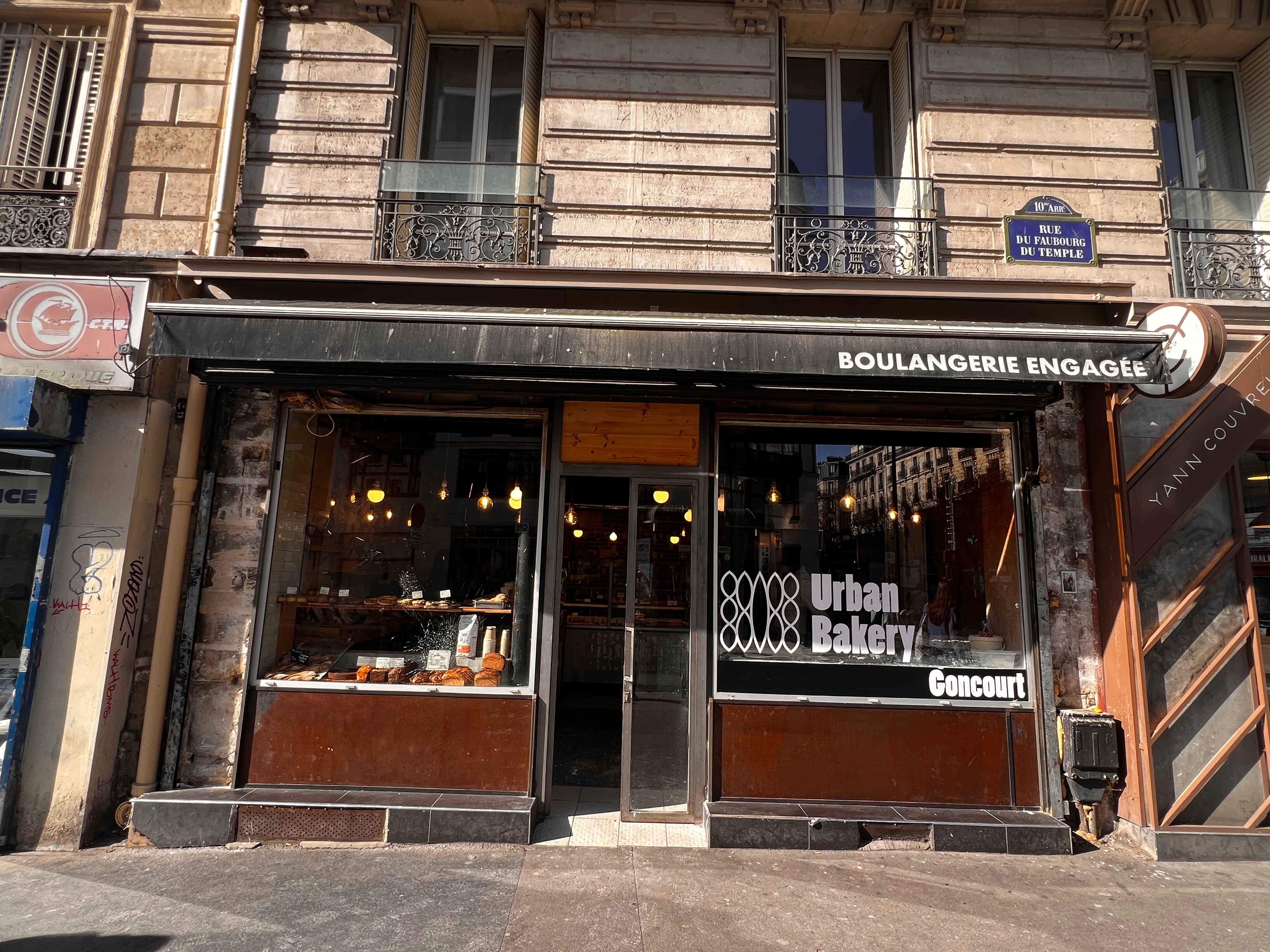
We’re currently on a two-month stay in Paris. Rather than being in a standard tourist area, the apartment we’ve rented is somewhat north-east of the city centre in Belleville, made famous by Sylvain Chaumet’s wonderful animated film Belleville Rendezvous (aka The Triplets of Belleville). It’s an ethnically mixed residential area, with a large population of North African origin as well as a lot of Chinese and Vietnamese mixing with the white population. Our apartment is on the Rue du Faubourg du Temple between Belleville and République metro stations. In the course of that one kilometre stretch, without going into the side streets, I counted fourteen bakeries of different kinds. Most of them are places I’d be more than happy to patronise near my home; the best are utterly outstanding.

Here’s a little guided tour – in no particular order (and not geographically).

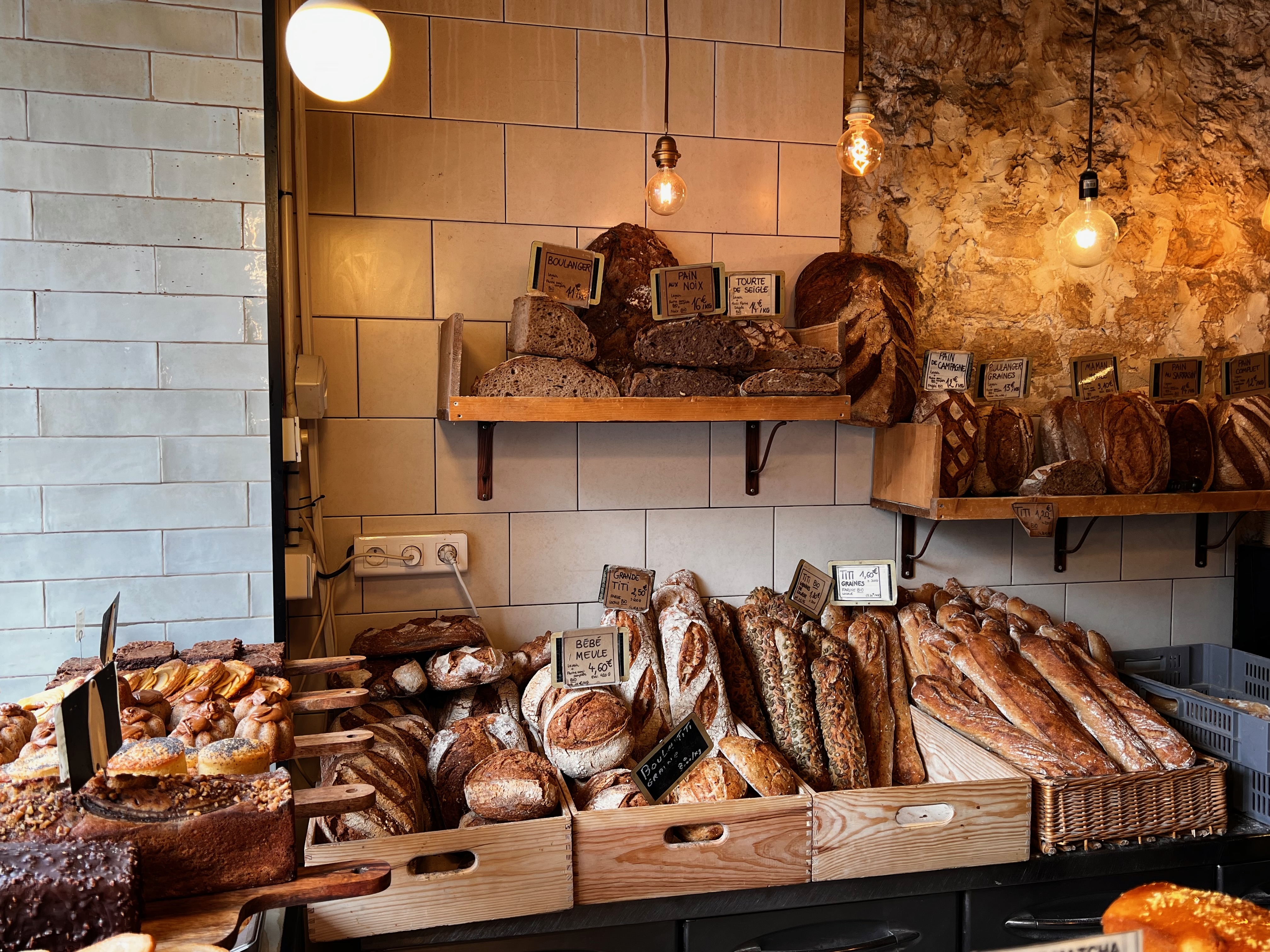
The most outstanding bread so far came from next to Goncourt metro: the Urban Bakery Goncourt, a branch of a small chain, with ten shops across Paris, which descibes itself as a “Boulangerie Engagée”. They do a wide selection of breads with different grains – rye and buckwheat as well as standard wheat – which  simply burst with flavour.

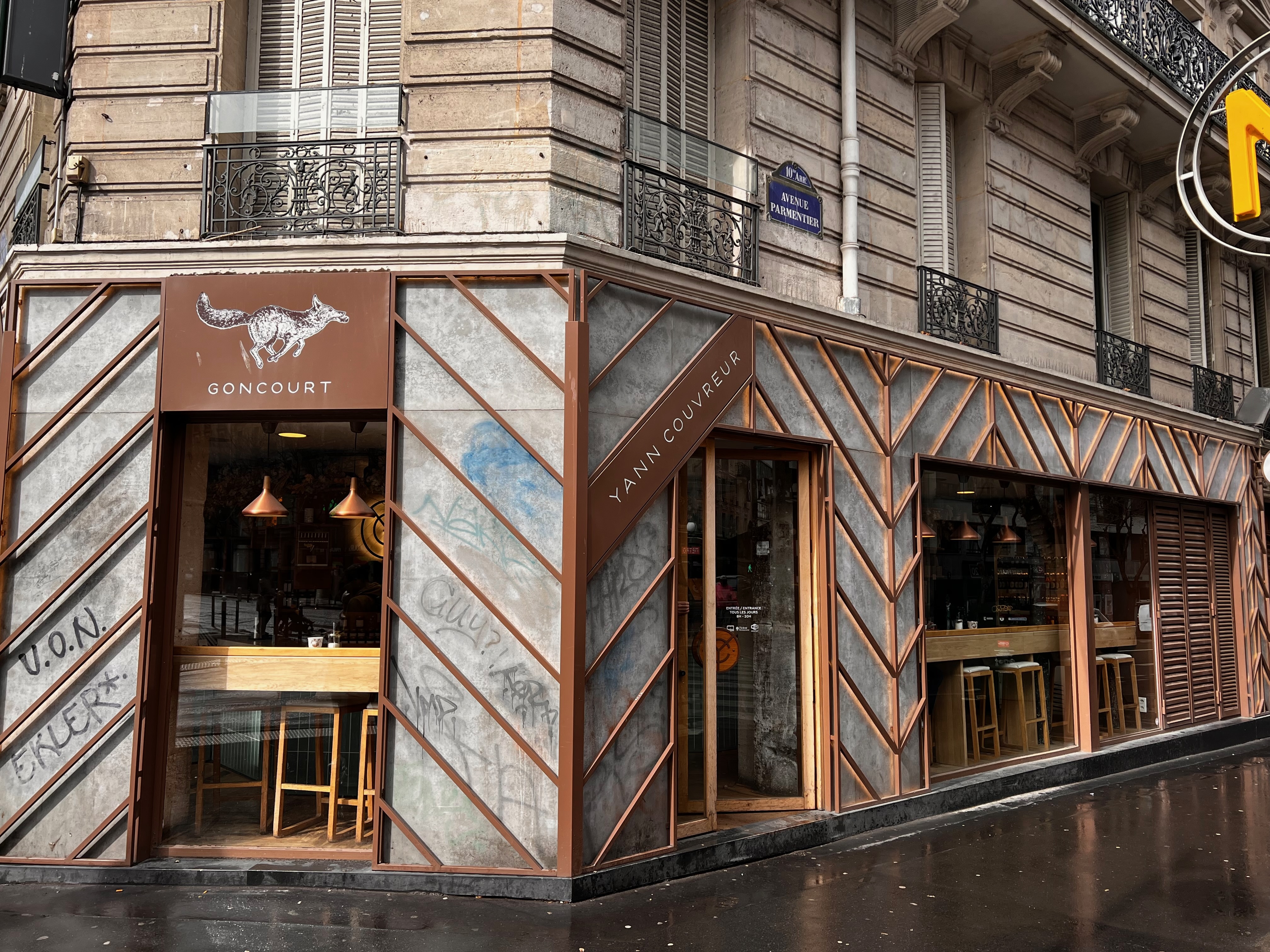
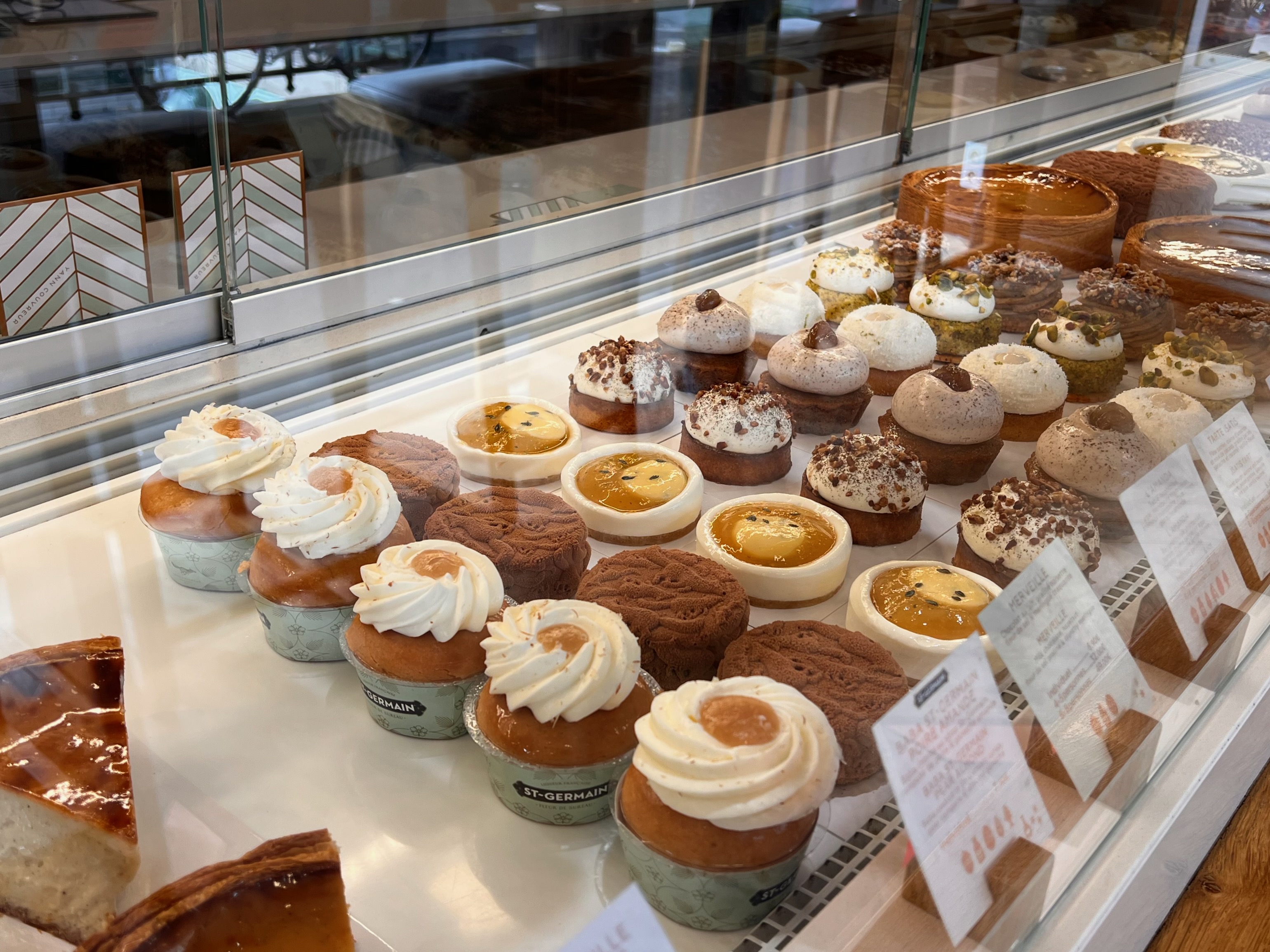
The Urban Bakery does some pâtisserie, though bread is clearly its main focus. However, it’s next door to Yann Couvreur, which doesn’t do bread but does uber-posh, innovative pâtisserie (at eye-watering prices, one has to admit). Couvreur is a famous pastry chef who also has branches in the Marais and in the main Galeries Lafayette, plus a café in town.

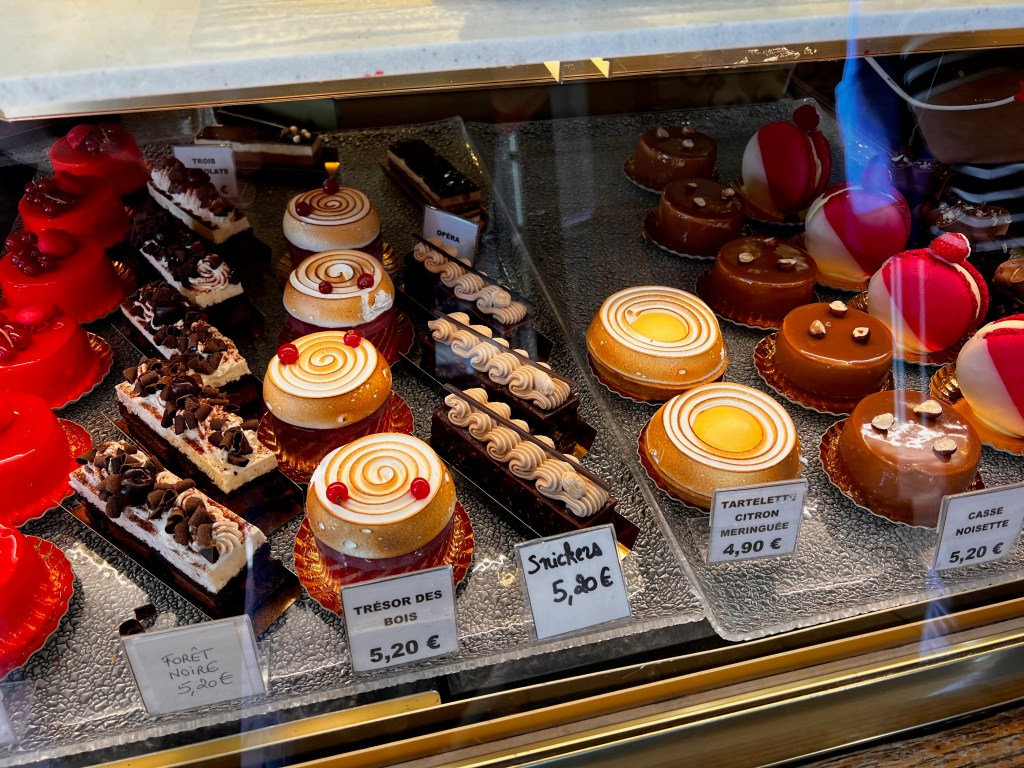
Nearer to République, Aux Péchés Normands does great bread and fabulous croissants and pastries, if perhaps not quite up to the refined levels above. But I can attest that their lemon meringue tartlets are a thing of beauty.

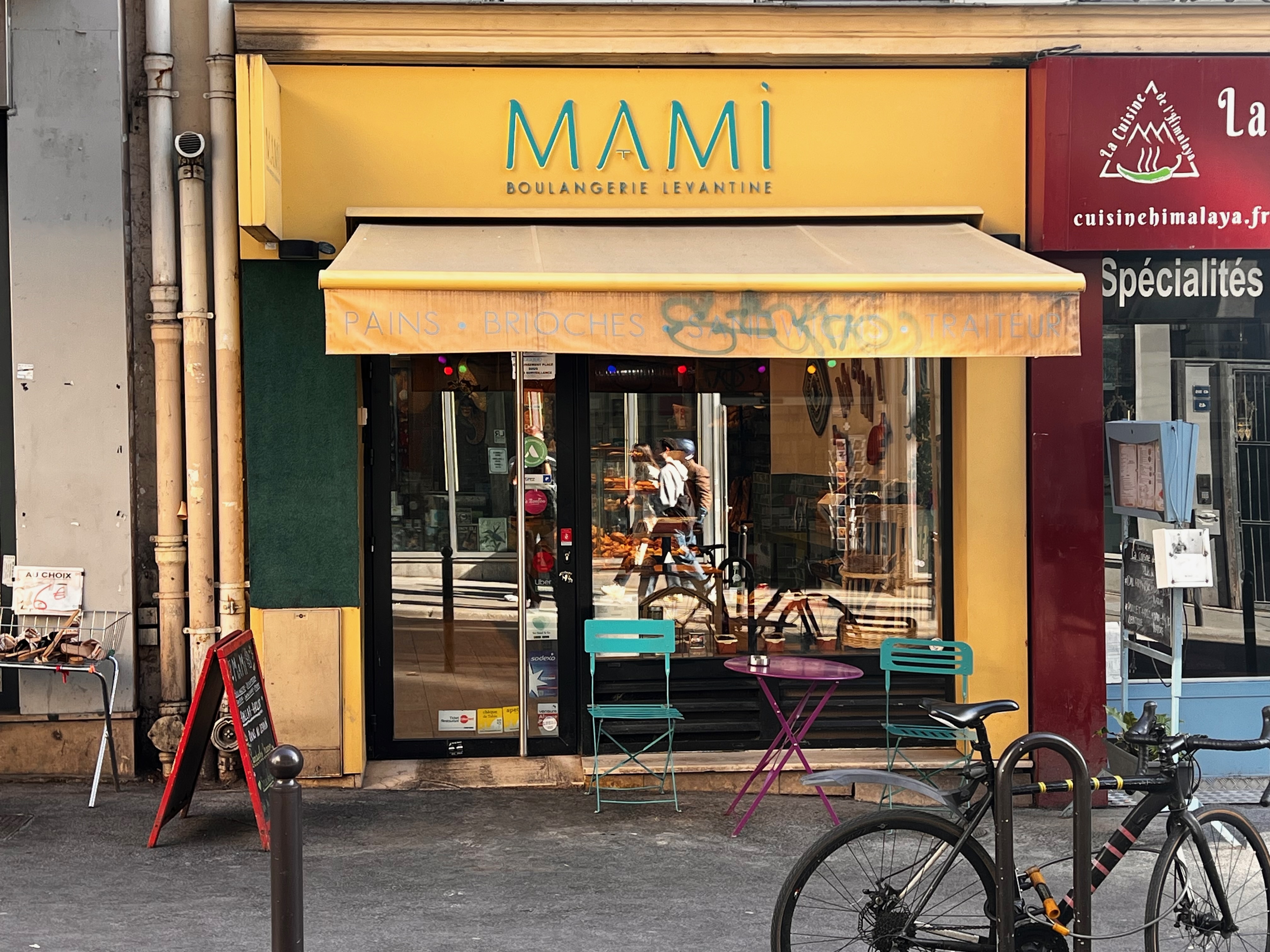
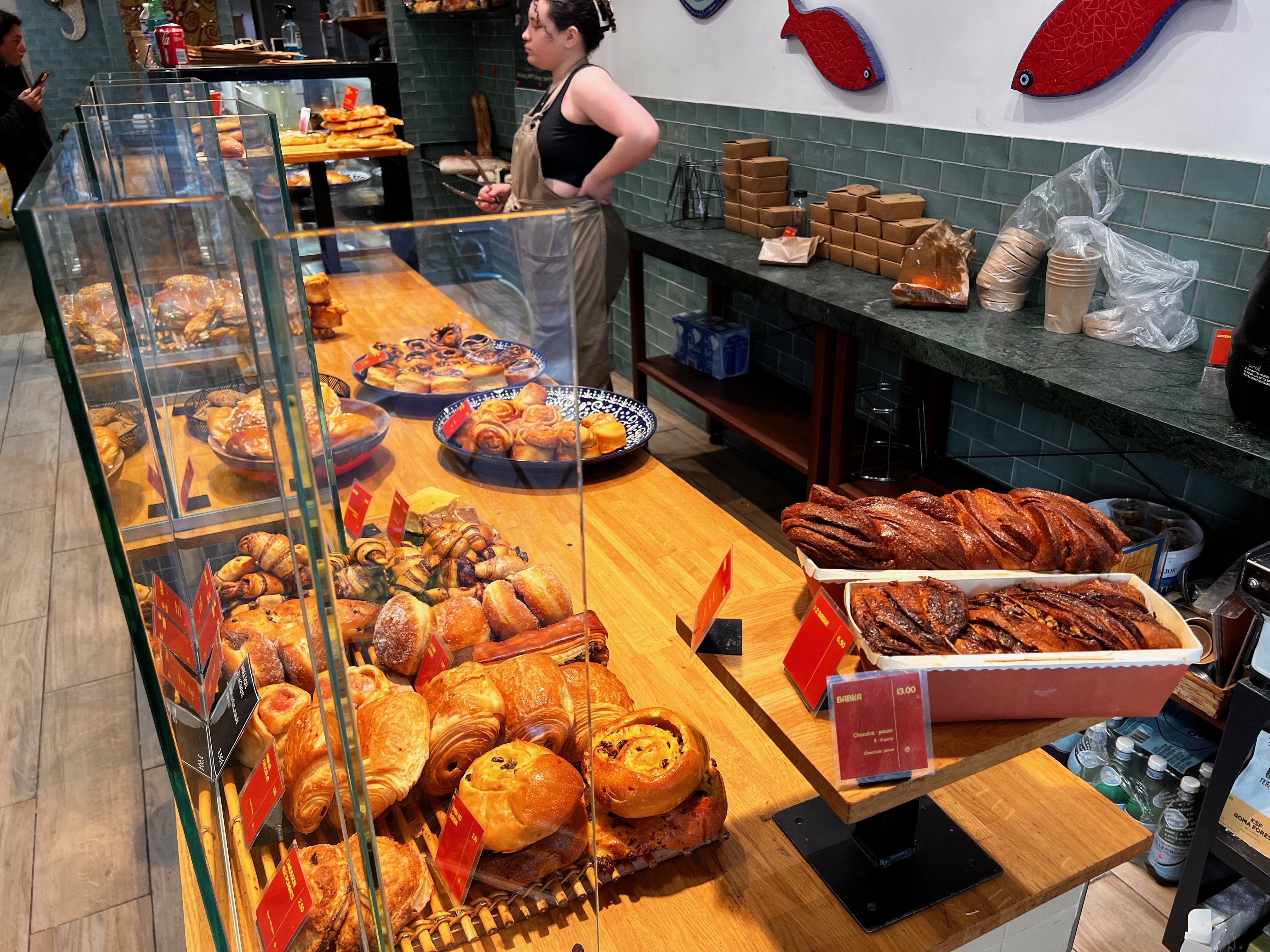
The really unexpected one was Mami, which describes itself as a “Boulangerie Levantine”. Taking its inspiration from all things Jewish and Middle Eastern, it has mouth-watering Babkas and a variety of Challahs, including a Za’atar-flavoured Challah, which is something I’ve never seen before but is quite delicious.

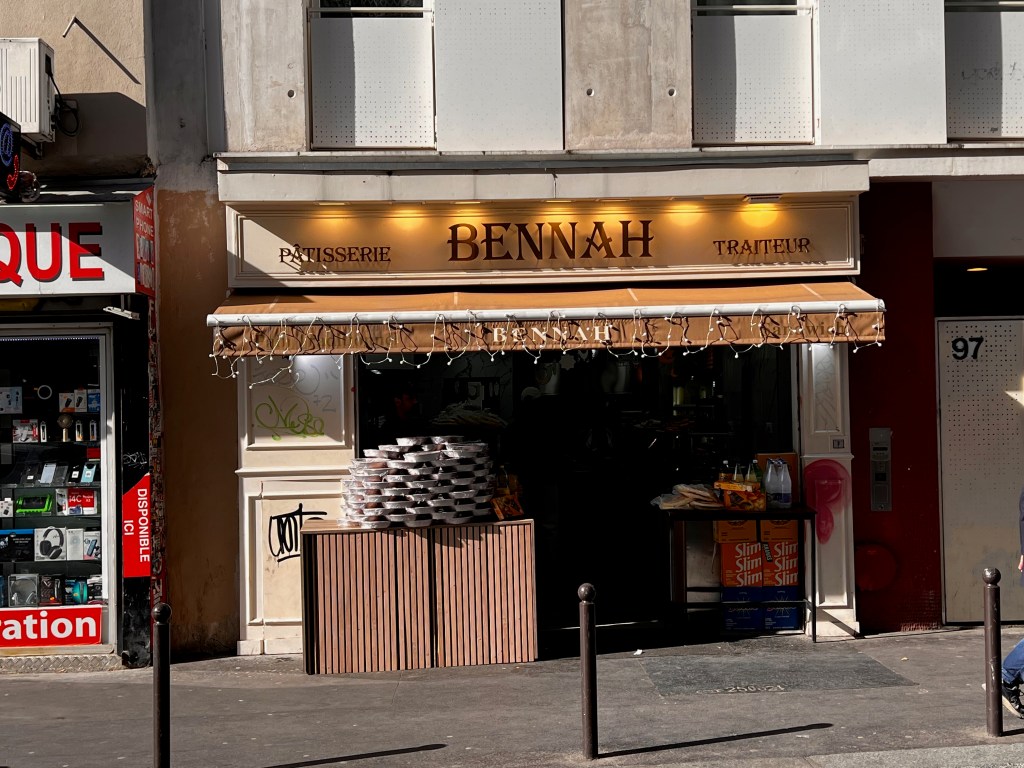
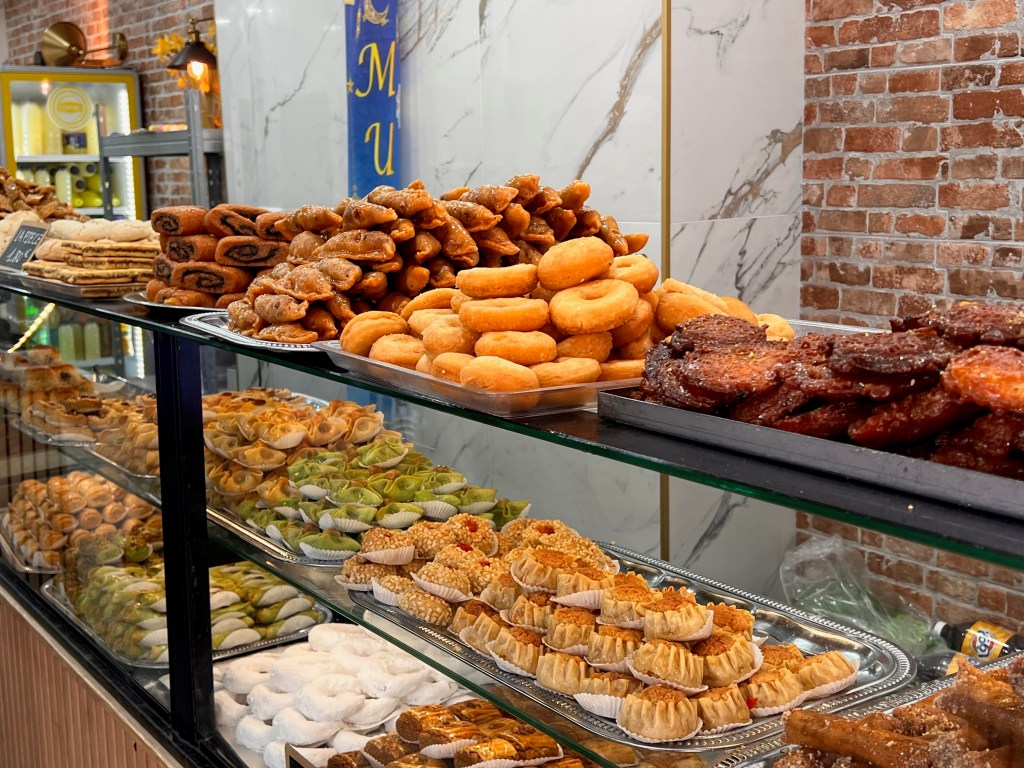
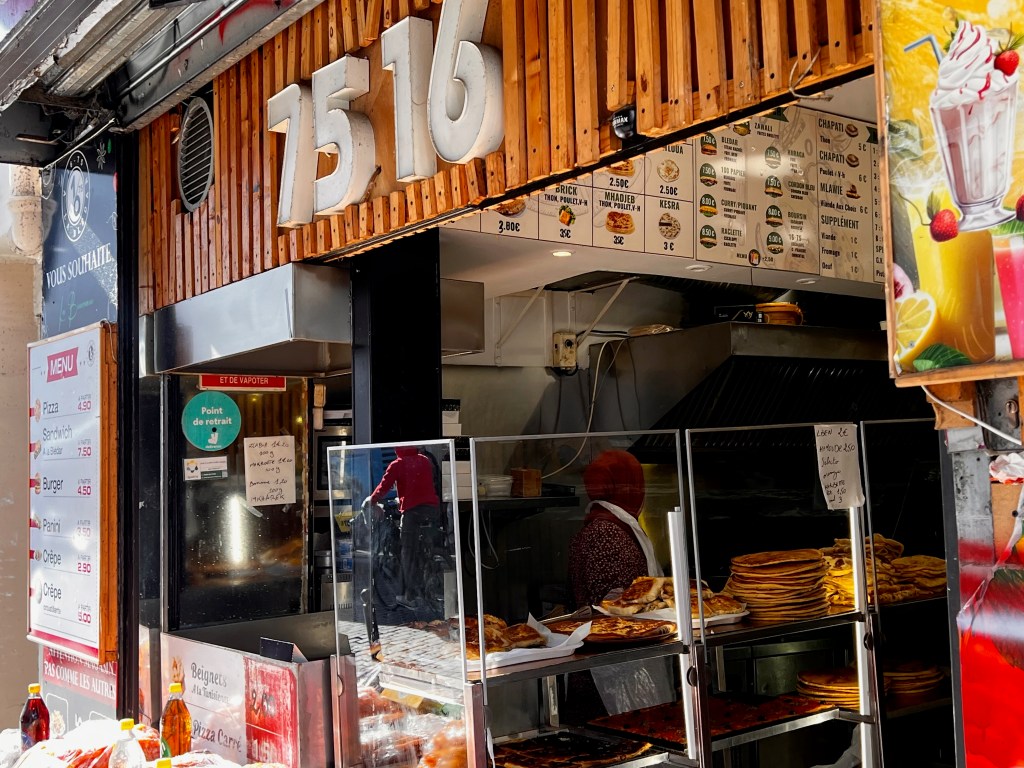
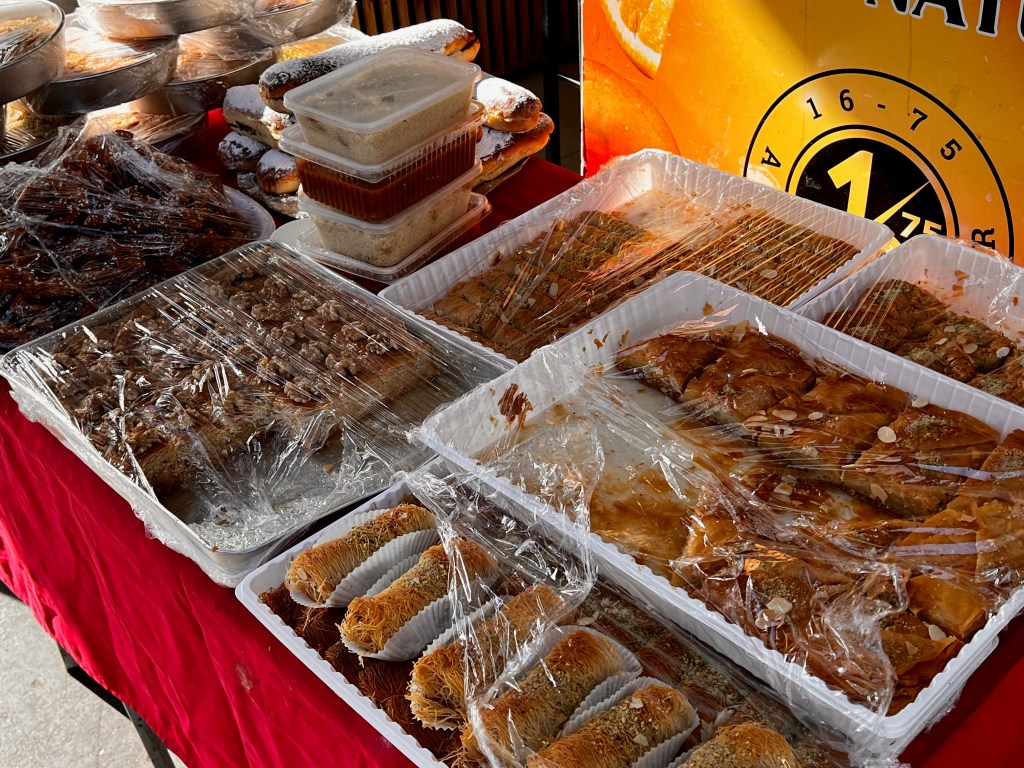
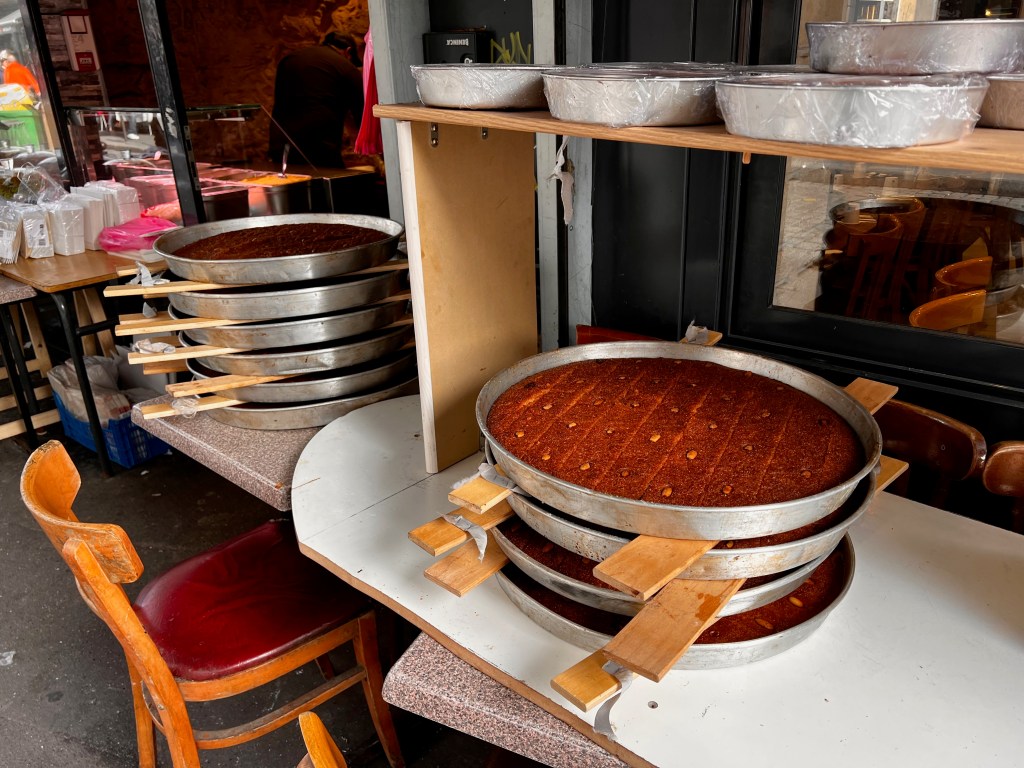
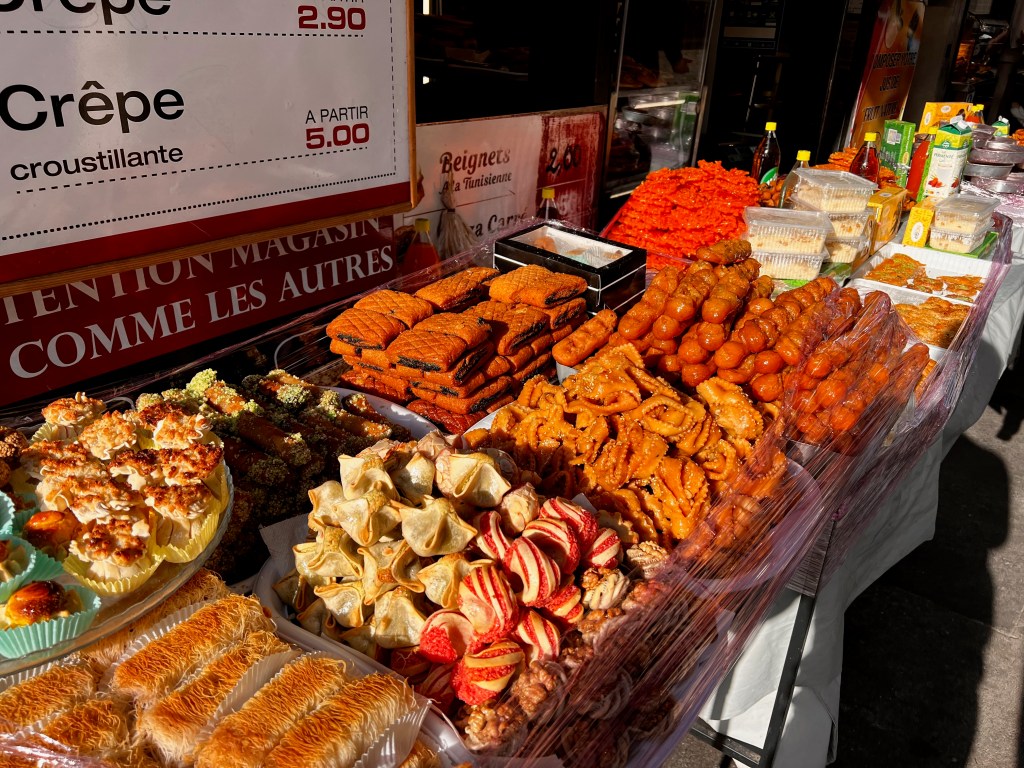
The area has many North African inhabitants (particularly Tunisians, it seems to me), resulting in the presence of many shops specialising in Arab and Maghrebi breads, sweets and pastries. It’s Ramadan at the moment, so every evening, there are vast arrays of goodies stacked on trestle tables outside the shops, which  wolfed down when the fast ends at sunset (to be fair, they also seem pretty busy through the day from both Muslim and non-Muslim shoppers). The one that seems permanently rammed is called Bennah – I took photos of three others and I probably missed a few.

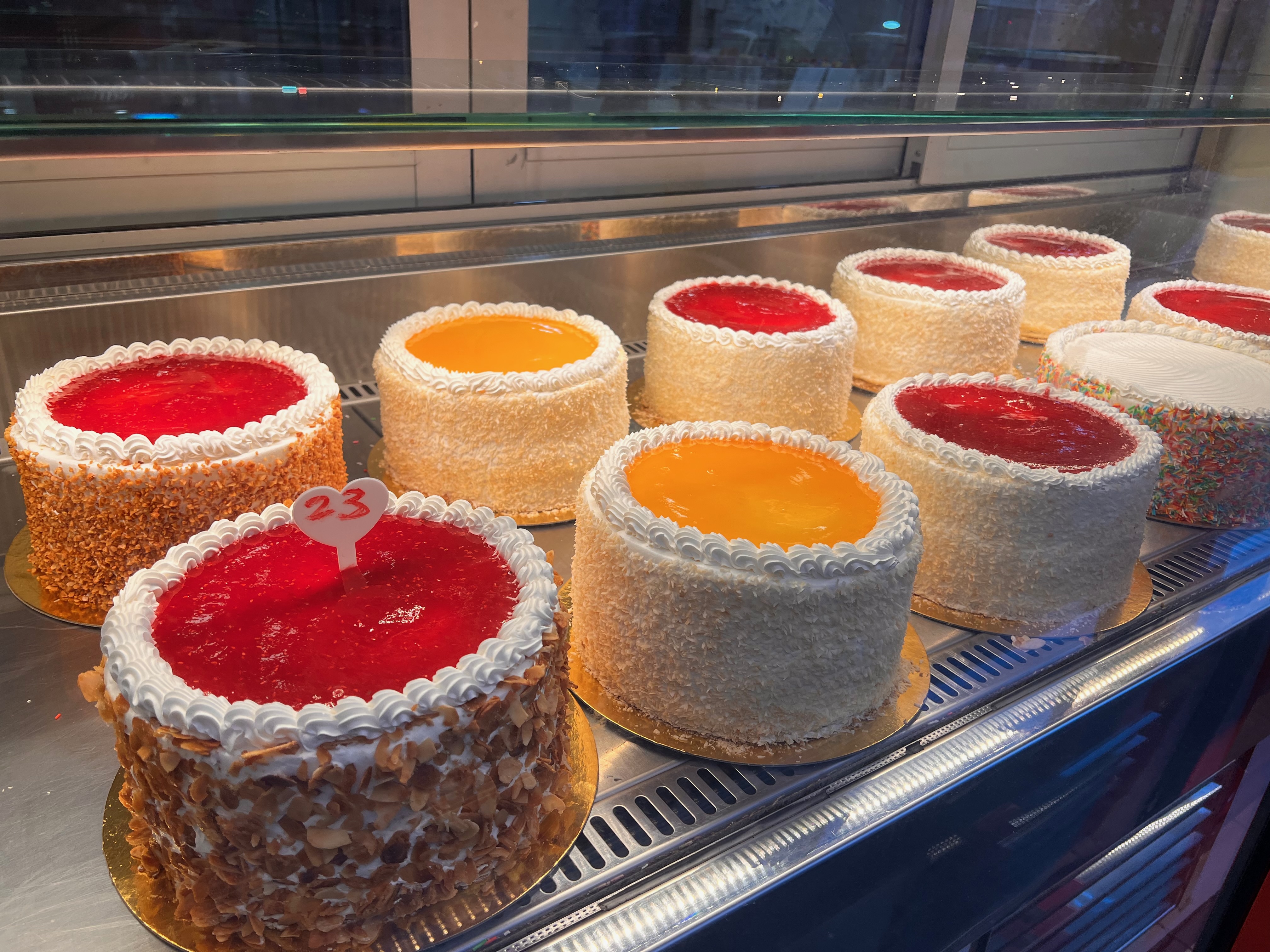
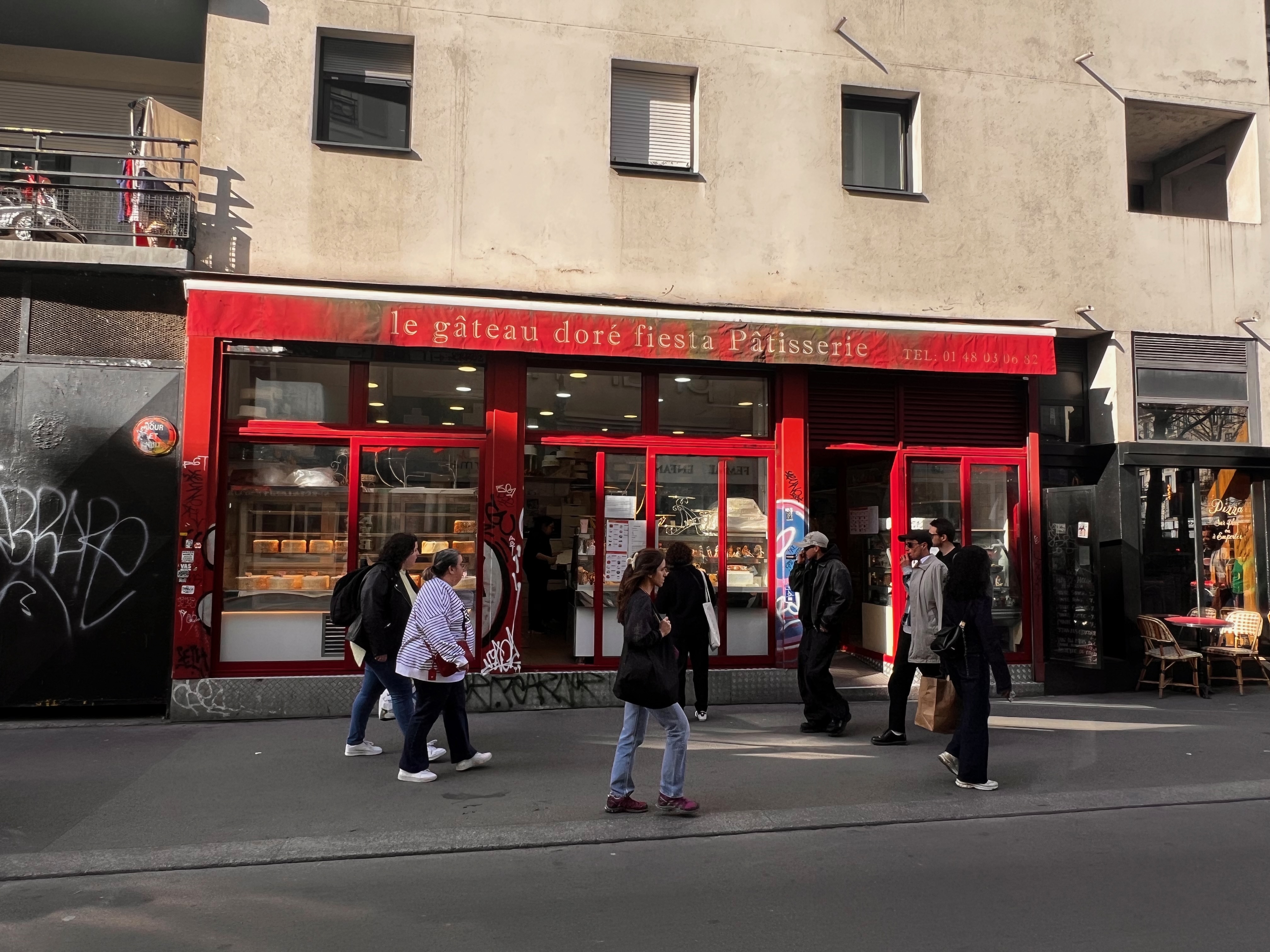
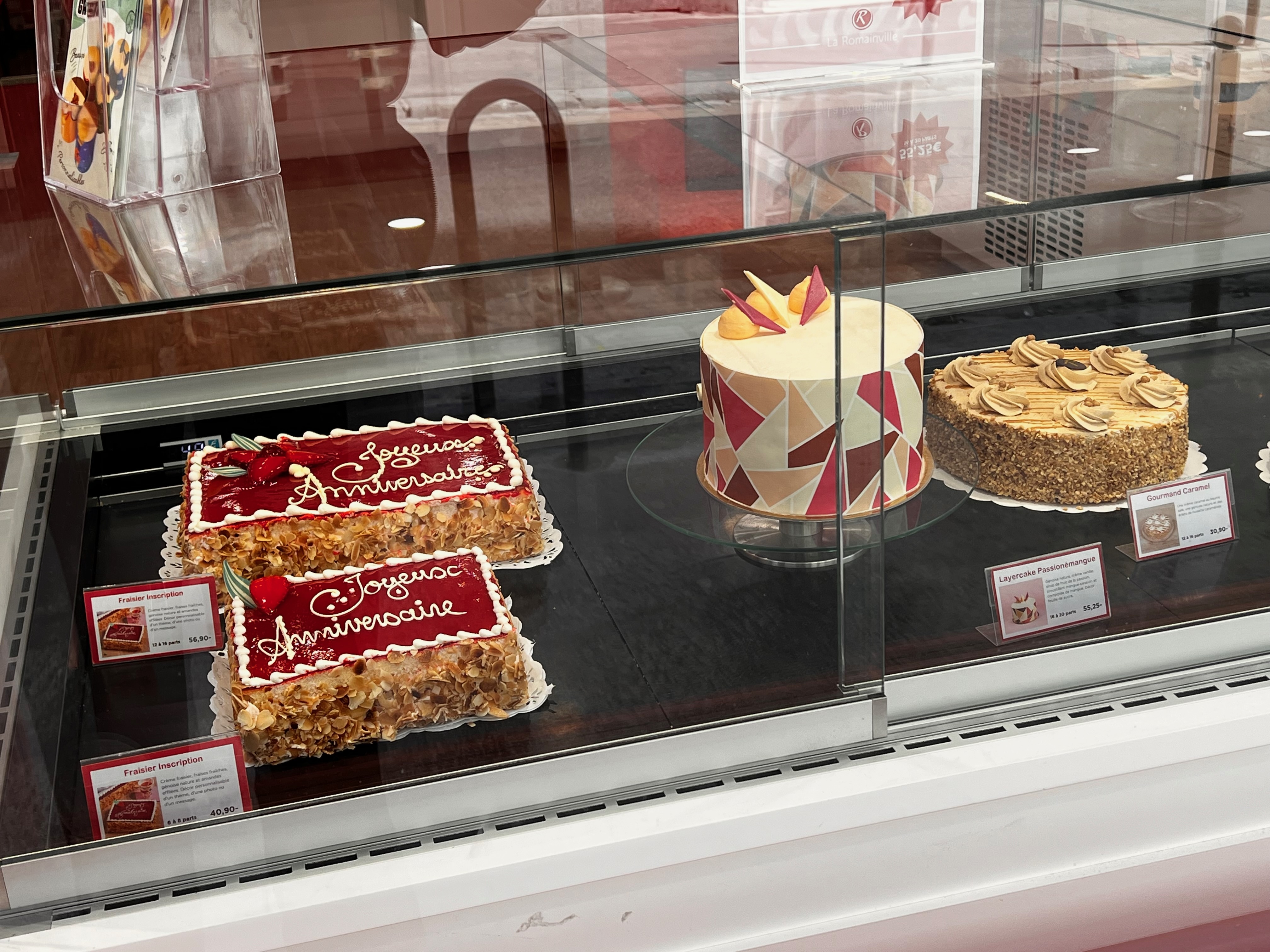
For something completely different, there’s Le gâteau doré fiesta Pâtisserie. It’s a cake shop which sells large cakes for birthdays and other events, apparently in large volumes. Its unusual feature, however, which has led me to dub it the “pornographic cake shop” is the array of scantily-clad plastic women in the window, waiting to adorn the birthday cake of your fantasies. (To be fair, there are also more conventional figures of brides and grooms, furry animals, national flags and so on).

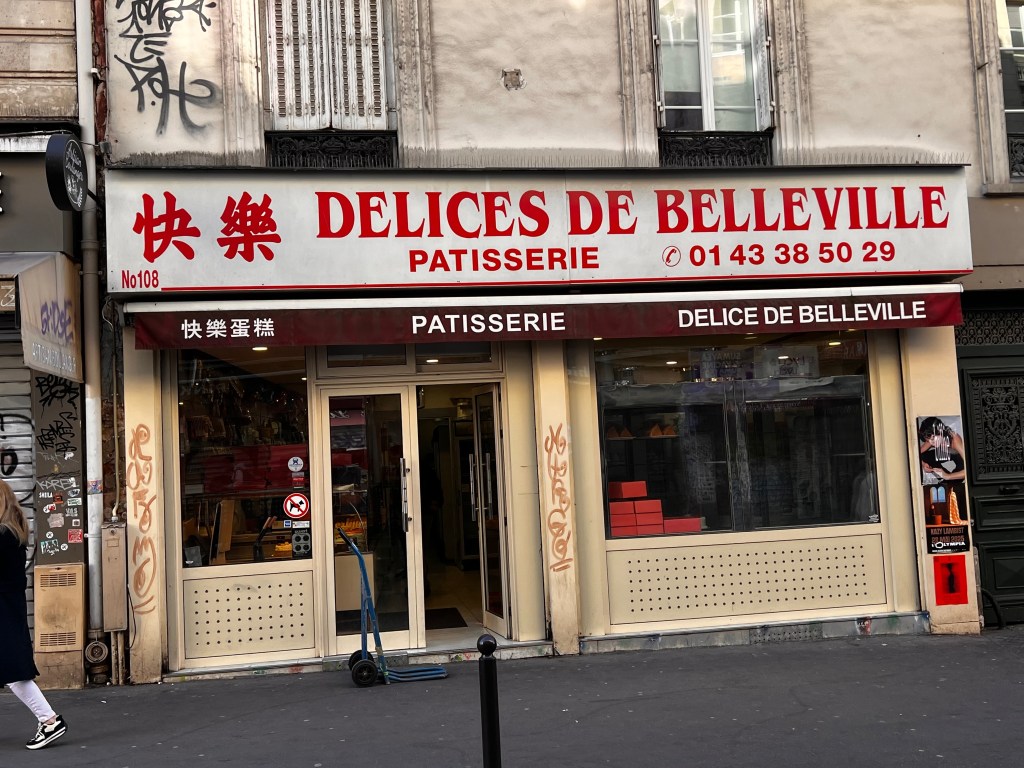
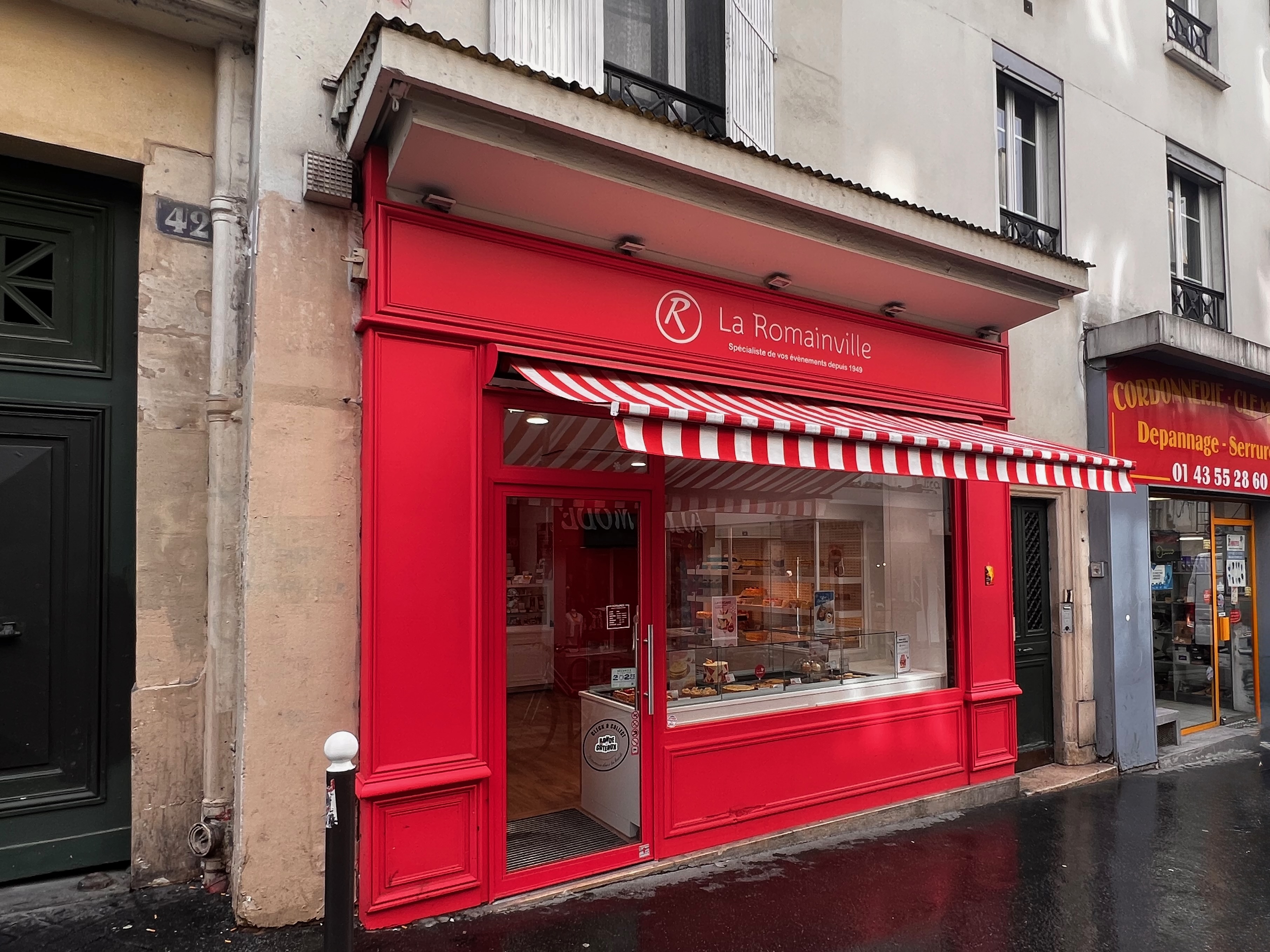
On the other side of the road from Le gáteau doré is a more demure looking (and possibly more upmarket) shop specialising in cakes for events, the Pâtisserie La Romainville. Another cake shop – the one nearest us, Délices de Belleville – is also labelled with the Chinese characters for “happy cake”.

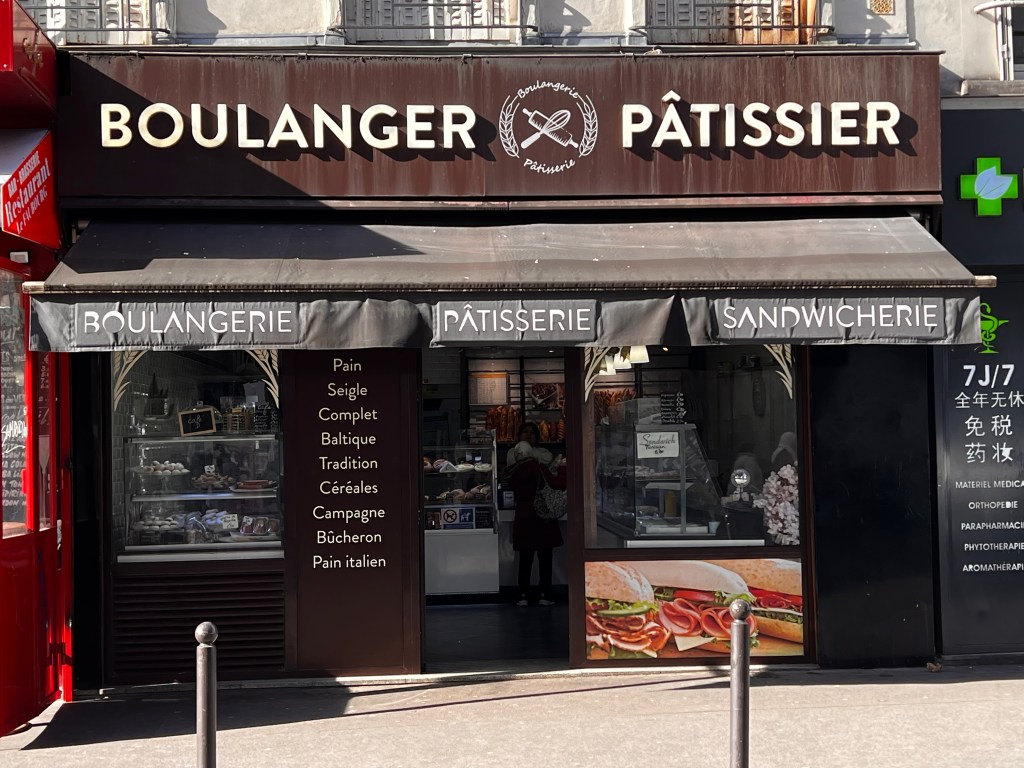
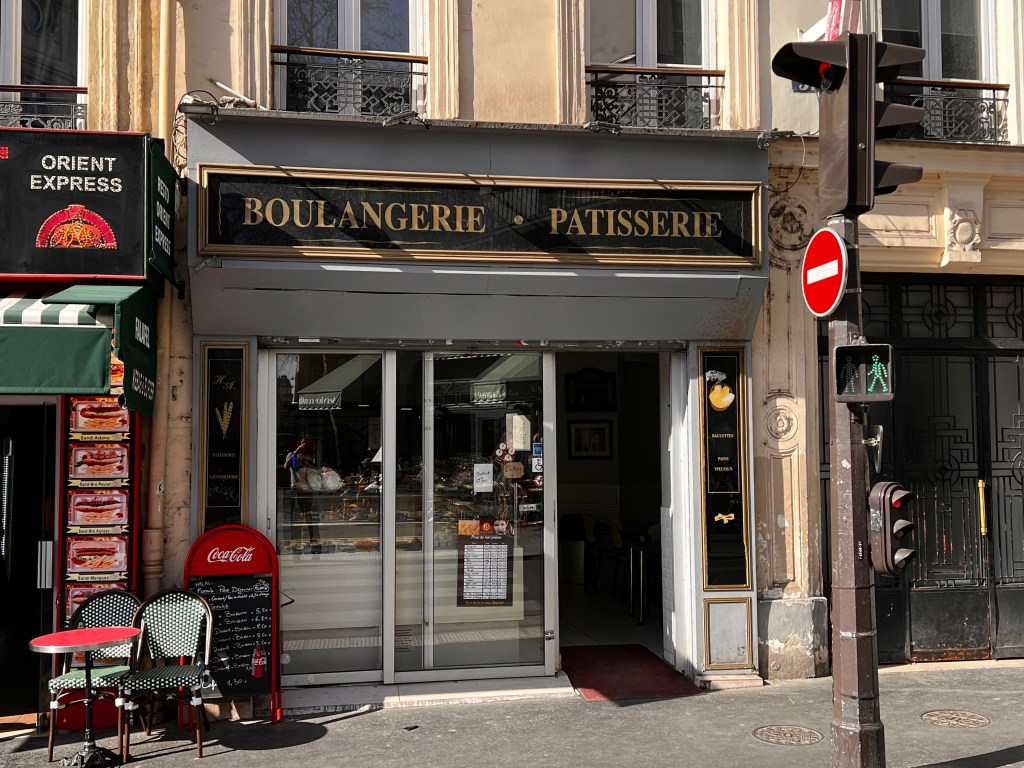
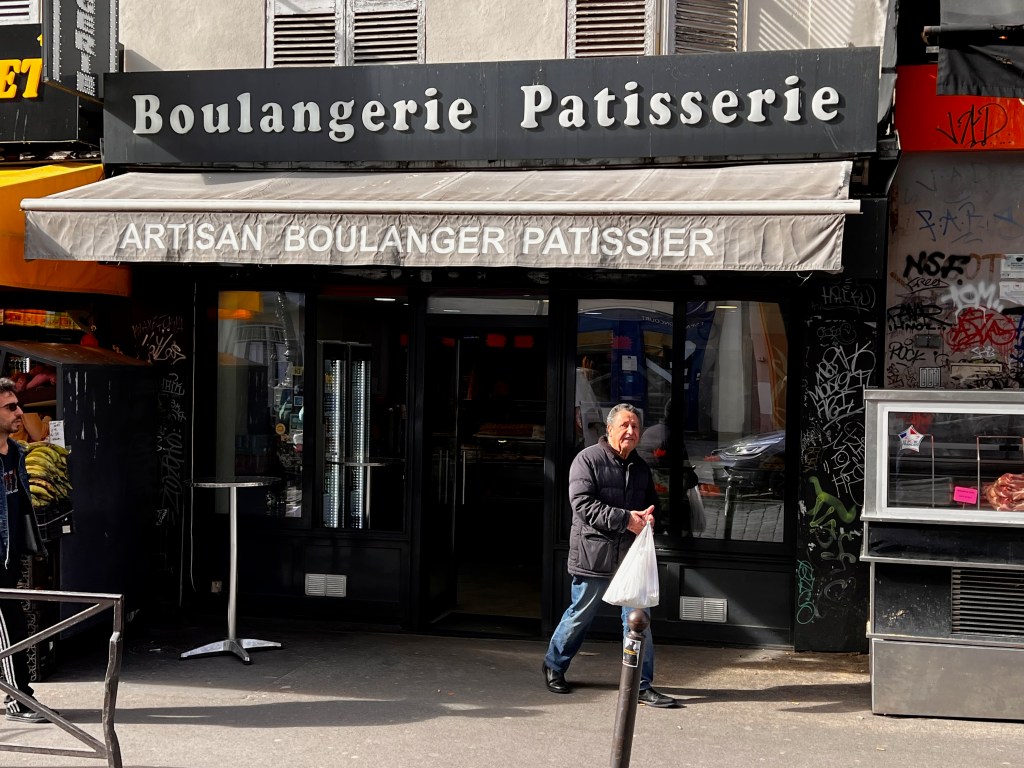
And there is no shortage of standard boulangerie-pâtisseries, the sort that will sell your morning baguettes and croissants as well as a variety of other stuff. Several of these don’t even have a brand name attached and are just labelled Boulangerie Pâtisserie or Artisan Boulanger Pâtissier or similar.

And that’s not counting the several supermarkets along the way that will sell you bread, croissants and cakes. I don’t think I’ve ever seen a place where you can’t walk for 50 metres without running into a bakery, and I’ve certainly never lived in one. And I love it.