Lots of what we saw in Japan was exciting and great to see, but pretty much consistent with what I’ve read and with my memories of a short visit thirty years ago. To close our trip, in no particular order, here’s my pick of the rest…
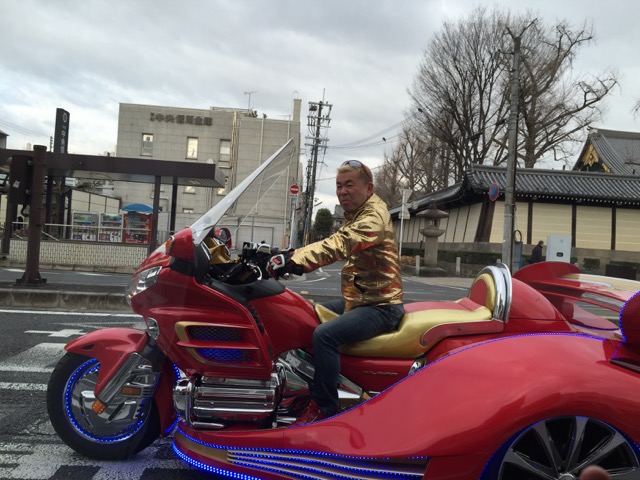
Japanese Kitsch
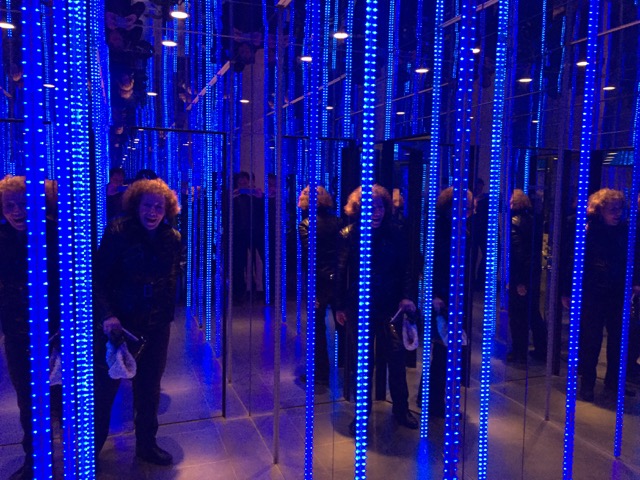
The Japanese love their minimalist aesthetic of clean lines and elegant shapes. But when they drop all that and go for kitsch, they do it in a big way. Here’s the guy in Kyoto with close cropped dyed-blonde hair in a gold lame suit on a red Honda Goldwing-based tricycle trimmed with blue neon lighting. And while we’re on the subject of blue neon, here is the hall-of-mirrors corridor to the toilets in the otherwise relatively modest Café Grace in the suburbs of Hiroshima. The toilet itself, by the way, uses mirrors instead of wallpaper. Floor to ceiling, on all four walls. Really.
Washlets
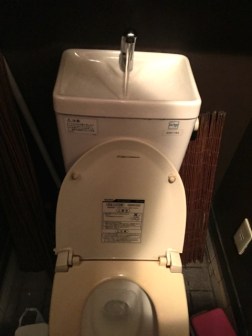 Speaking of toilets, a couple of weeks before getting here, I was sent a Japanese class item about washlets – the toilets which have a sort of built in electronic bidet and spray water over your nether regions. But nothing prepares you for the reality of a toilet with a heated seat which, as soon as you sit down, starts making gurgling and squelching noises to mask anything you might be producing yourself. I’m told that birdsong is a popular alternative.
Less weird but strangely impressive is the cistern with integral wash basin. It saves the space of a separate floor standing unit (always a consideration in space-constrained Japan) and means that your hand-washing water is re-used to flush the toilet.
Shinkansen trips are short. Even 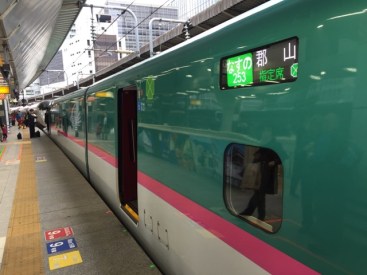 when they’re not.
Eurostar and TGV, eat your heart out. The original and best high speed railway line is the Shinkansen “bullet train”. I don’t understand how it’s possible to do a five and a half hour ride from Hiroshima to Tokyo and have been so relaxed and comfortable along the way that you feel you could happily have gone double the distance.
Japanese directions. Or not.
If you ask someone Japanese the way to go somewhere, they don’t seem to accept the concept of telling you where to go (or pointing, as you might expect if their English is as non-existent as my Japanese). Rather, they simply accompany you to wherever you are trying to go, even if it appears to be considerably out of their way. We had one shopkeeper virtually shut up shop when we asked for some wrapping paper. He didn’t have any in his shop, but he duly accompanied us to a shop a short way down the road that did.
Hideki the teppan-yaki guy
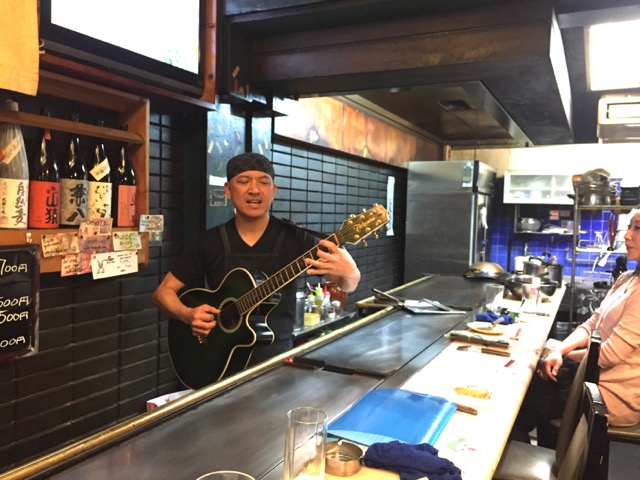
I expected Japanese food to be relatively expensive by the standards of most cities I visit, an expectation that turned out to be largely correct. Then we fetched up at the Teppan Tavern Tenamonya: a tiny hole-in-the-wall teppan-yaki place in Kyoto, just by the Torii of the Yasaka shrine. The owner, Hideki, more or less bullied us into ordering the right things, and proceeded to serve up course after course of totally delicious, perfectly cooked food. The whole thing cost us ¥7,000 for four (around £11 a head), including a couple of rounds of beer and sake.
Hideki keeps a nice Takamine acoustic guitar in the joint, which he will lend out if asked nicely. And if he’s not busy and you ask really nicely, you’ll discover that he spent years in a Beatles tribute band and plays mean versions of Blackbird and I saw her standing (and, presumably, others). An amazing evening out.
The Kimono-and-selfie-stick combo
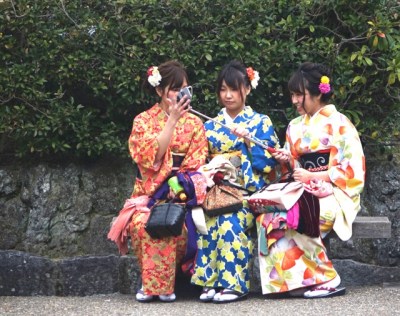 Several of the main Kyoto shrines are awash with girls wearing full kimono regalia, who have come there in groups, not least to Kiyomizu-dera, the temple with the “walk of love” where you have to go blindfolded from one stone to another – if you succeed in reaching the target (and you’re allowed help from onlooking friends), you will gain fortune in matters of the heart. Somehow, the combination of these beautiful traditional outfits with a cellphone on the end of a selfie stick struck me as particularly bizarre.
Japanese banks don’t take foreign cards
The vast majority of Japanese banks – even the big international ones – have ATMs that only take Japanese cards. And by the way, there are far fewer high-street branches and cash machines than we’re used to in the UK, so it takes longer than you expect to find this out: visitors come back with tales of “The Great ATM Hunt”. If you want to get money out with your European debit card, it turns out, improbably, that the place to go and do this is a Seven-Eleven convenience store, many of which are suitably equipped.
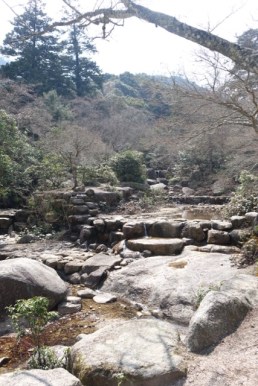
Hill walking
We did two lots of hill walking while we were here, at opposite ends of the country. Nikko, in the mountains outside Tokyo is a sea of cedar forests, a place of bewitching calm. Miyajima, an island just off Hiroshima, is at the latitude of the northern edge of Africa; it’s volcanic geology gives it steep forested slopes whose vegetation reminds one of the jungles of further south – although in March, it’s chilly out of the sunshine, so the trees and undergrowth are far less dense than in real tropical regions. Both longish hikes were utterly magical, each in its own way.
The Onsen is a marvellous thing
OK, so we were spoilt. As well as a public onsen (hot-springs type bath with continually circulating hot water) our ryokan (Japanese-style inn) in Nikko gave us a private onsen for our own personal use. There’s a ritual – rinse first with hot water, then soak in the tub, then get out, wash with whatever soap or washing products you’re using, rinse and then soak in the tub again – and you have to get used to soaking in seriously hot water. But particularly with the help Nikko’s clear mountain water, I have never felt so relaxed and totally clean in my entire life.
The obsession with Sakura picnics
The moment the cherry blossom comes out in spring, Japanese people feel an irresistible urge to eat under it. The most junior person in the office is dispatched to the nearby park of choice to lay down their mat (usually in a rather lurid blue which isn’t necessarily the best match for the sakura itself) and spend the day on it awaiting the party that will happen at sundown. The picnics themselves appear to be quite cheerful affairs, if this one in Tokyo’s Ueno Park is anything to go by: there are drinking games, performances of music on a variety of instruments, magic tricks and, of course, large quantities of eating. Since it’s actually quite chilly at sakura time, the ramen stalls (hot noodle soup) do a roaring trade. The trait is odd, really, since the Japanese are normally incredibly reticent about eating in public. Maybe this is just a time to throw off the shackles…
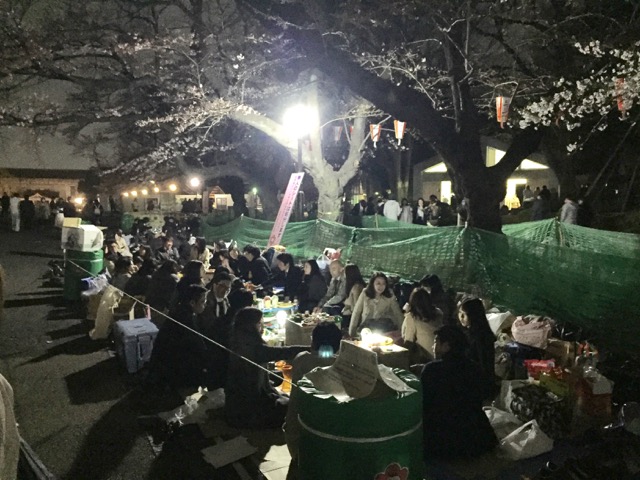
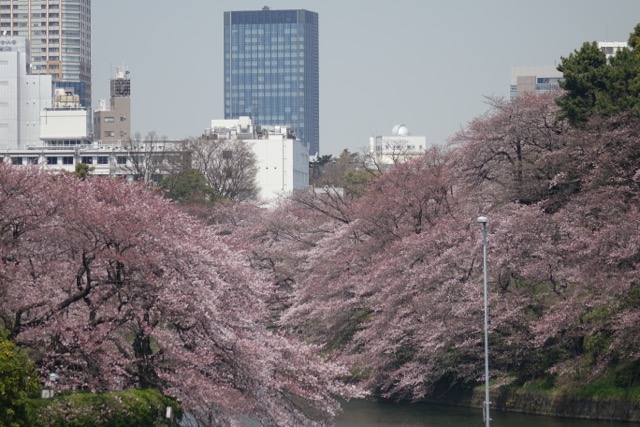
And just for a bit of eye candy, I’ll close with a picture of the cherry blossom in full glory at Chidorigafuchi. Actually, I can kind of see what they get so worked up about…
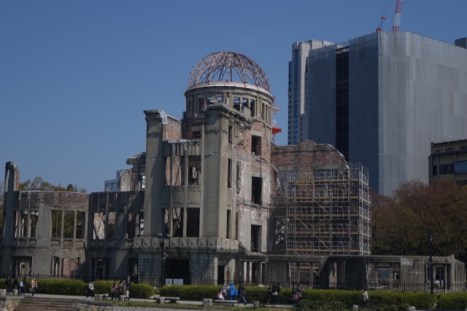
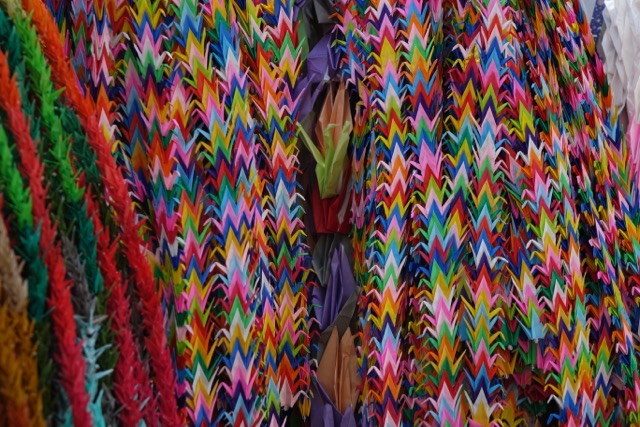
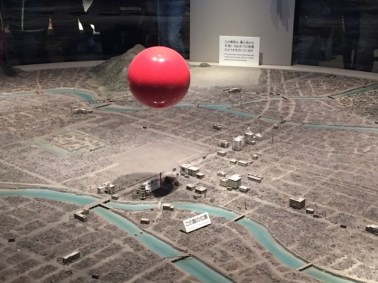 Messages of peace and goodwill from a plethora of world leaders provide a thimbleful of soothing balm, while just down the road, the Children’s Peace Monument tells the story of the girl who hoped that if she could make a thousand origami cranes, she might survive her A-bomb related leukaemia. She did not.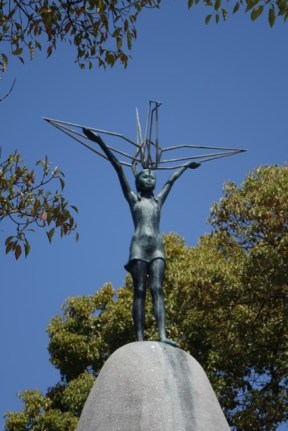
 The Japanese love of their cameras is famous, to the point where the cluster of Japanese tourists snapping away is a hardy old cultural stereotype. My assumption has always been that this is because of the Japanese love of gadgets and the associated fact that they make the world’s best cameras. But having been to Kyoto, I’m not so sure.
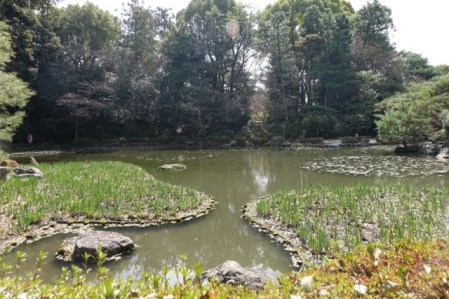
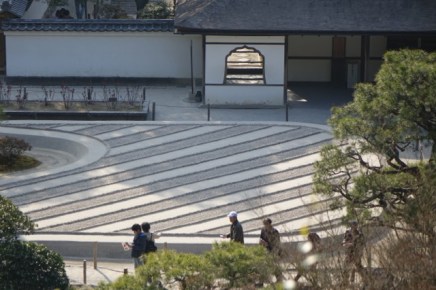 The fact that this isn’t accidental is something you realise when you’ve been through some of the city’s many gardens: whether it’s a zen sand garden (who, I wonder, first thought of simply raking sand or gravel into harmonious patterns), the formal gardens set around water with their pavilions, stepping stones, bridges and ornamental trees, or the enormous park-like gardens that surround the imperial palaces, you feel that every square metre has been laid out by someone who knew exactly what he wanted the space to look like from every angle and was quite clear about the emotional responses he hoped to induce: calm, harmony, a sense of rightness about the world.
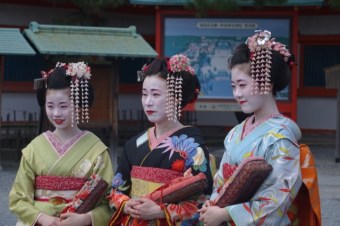
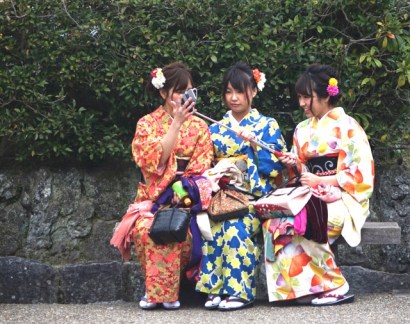 It seems to me that the Japanese don’t just love their cameras because they’re into gadgetry. It’s that the idea of the perfect composition of an image is hard baked into their culture. You see it in the prints they revere from Hokusai, Utamaro et al, and in the spectacular Kano school scrolls in Kyoto’s Jukoin temple. And it’s part of everyday life – or at least special occasion life. In Kyoto, a cool thing to do is for groups of young girls to come here for a trip in which they rent kimonos and go and photograph themselves (or get friends to do it) in full traditional regalia near the various temples and beauty spots. The combination of kimono and selfie stick is a common sight. More spectacular still is when you see geishas in full, white-faced splendour (usually, to be precise, the “maiko” or trainee geishas).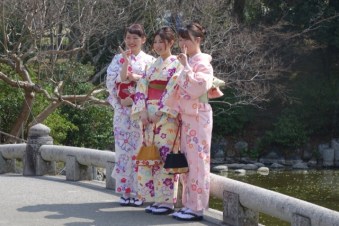
 For most of the world’s major tourist cities, if you do a modest amount of reading up before your visit, you get a decent idea of what it’s going to be like to be there. It’s not just that you read the list of attractions and formulate a mental tick list: travel writers generally do a good enough job that you get some sort of feel for the nature of the destination.
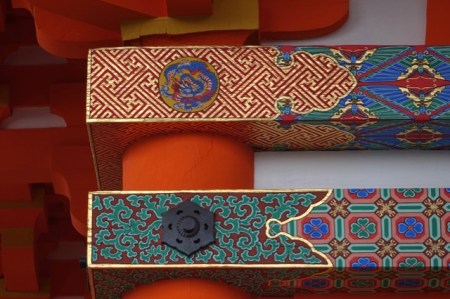 Not Kyoto.
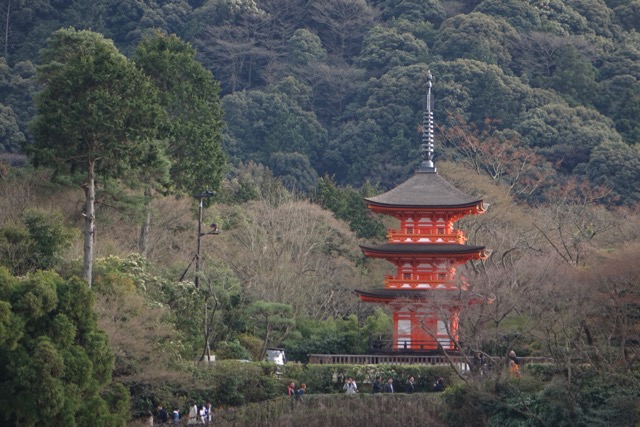 Back in the 8th century, Kyoto was chosen as the location to which the Emperor should move his capital in order to move away from religious influences. The Imperial geomancers loved the protection and natural beauty of a site bounded on three sides by mountains and split by a broad river: snow-melt from the mountains means that there is water all over the city, with countless canals and storm drains meaning that (at least in spring) water is running wherever you go. Today’s density of temples says that the move away from religion wasn’t stable. But I reckon the Imperial geomancers hit the bull’s eye.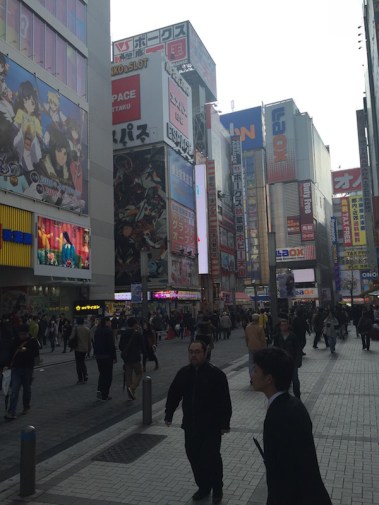
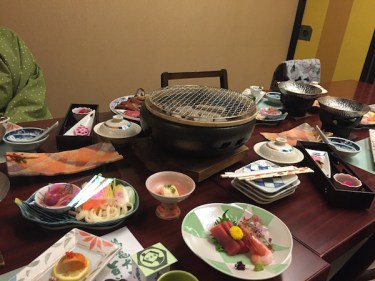
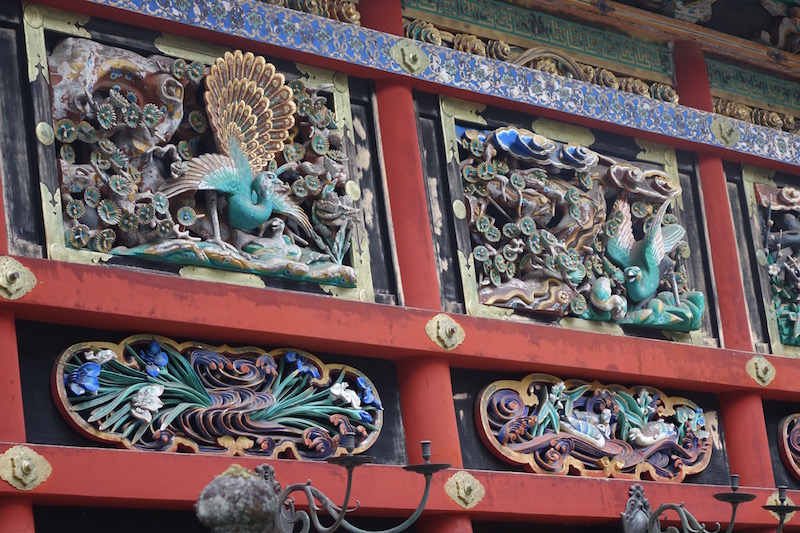 Nikko epitomises some of the contrasts in the country. The town is famous for its major shrines of the Tokugawa shoguns (the first of whom, Ieyasu, was the single most important figure in making Japan into the single country that it remains today). The Tokugawa shrines and temples are in a sort of Japanese baroque – gigantically ornamented to the point where it’s quite hard to get your head round the sensory overload of different themes and motifs. And – on a holiday week end, at least – they are packed rigid with visitors. It’s all very well organised, but Buddhist calm and Ieyasu’s own rather austere-sounding personality are very much submerged in the throng.
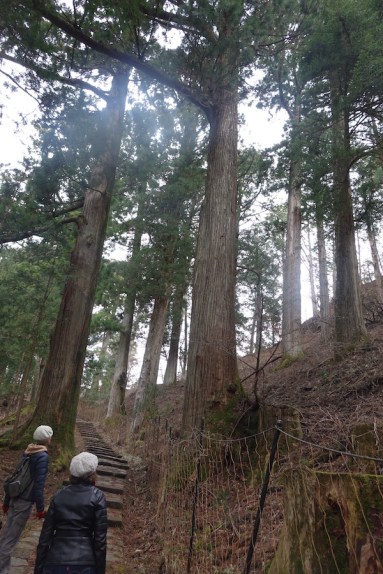 But step just a few yards off the beaten track and the world changes. In the blink of an eye, you find yourself in the utter serenity and clear air of the mountain cedar forests; as you tread the well tended path through giant, ancient trees, you pass ancient shrines which don’t attract the big restoration funds: there might be a single brazier of incense burning, but the tiny stone buddhas with fractured limbs have not been tended. Yet amazing carvings can await you, and these are places of deep spiritual calm.
 Polything