From the vantage point of a Paris apartment near the Place de la République, let me tell you a story.
The country is by no means poor, but for many years, it has been riven by inequality. The opulent lifestyle of the super-rich contrasts starkly with the misery of large portions of the population. The head of state is not an ultra-reactionary and is open to some ideas of reform, but the various initiatives have all fallen foul of a variety of vested interests which he lacks the will and/or means to overcome. They might well have been inadequate anyway, but we will never know. The country is heavily indebted, not least from the expansion of military spending, and a number of unpredictable economic shocks have turned the situation into a spiralling debt crisis, which has resisted the best efforts of a series of treasury ministers. Eventually, the anger has spilled onto the streets, with protests joined by tens of thousands. Many – probably the vast majority – are peaceful protesters wanting government action; some are violent extremists who believe that the existing order must be overthrown; they are joined by common criminals hoping to capitalise on the disorder. The violence spirals, and then…
This is the true story of France leading up to 1789. We know what happened in its aftermath: horrific bloodshed, the country in violent convulsions for decades, the demolition of the old order only for it to be replaced by autocracy and then, some 25 years later, for parts of it to be restored with the intervention of foreign powers.
The description, however, is disturbingly close to what is happening in France today. The characters of the heads of state are different – Macron is a very different animal from Louis XVI, but neither was filled with viciously tyrannical intent. The nature of the economic shocks are different – crop failure and a devastating winter in 1788-9, the after effects of the 2008 banking crisis and spiralling energy prices today. The military overspend is lower today: the need to protect against a Russian aggression, compared with overhang from the American War of Independence in 1789. The base economic level is different – in 1789, a mass of the population was genuinely hungry. The numbers of protesters are bigger today, into the hundreds of thousands. But the pattern is spookily similar, founded on a political class unwilling or unable to solve the problems of inequality at their root.
So what will the outcome be today? We all have to hope that the worst possibilities will be avoided: a downward spiral into violence, a reversion to a repressive, authoritarian government or, worse still, one which picks a portion of its population as scapegoats and persecutes it mercilessly. What will it take to avoid such things? How can the country learn to reform itself in a way that restores people’s belief that government is genuinely “for the people” and not just for some privileged section of it?
My fundamental belief is that the rich and powerful need to wake up and realise that they own too much of the cake and they need to accept redistribution by some means. It doesn’t necessarily matter what particular mixture of redistributive changes is chosen: tax changes are probably at the top of the list, but there are also questions of property prices, reversing the transfer of wealth from young to old, consumer protection law and its enforcement (or not), government spending priorities (particularly as regards education), equalities legislation, regulation of predatory practices by banks and technology companies – the list of possible changes is long. But one thing is common to all of them: the people profiting most from the existing order must be prepared to sacrifice some of those profits. To refuse all of them is unacceptable if we are to avoid a desolate future for the country as a whole, perhaps violent, most probably a future in which they lose those profits anyway.
Politics, in Bismarck’s hallowed phrase, is the art of the possible. Macron can’t change the global oil price, he can’t change the need to protect his country against Russia and he has to tread carefully in his dealings with global financial institutions. But the situation isn’t nearly as dire as the one facing Louis, and in the limited time he has left, Macron could and should publicly admit his country’s political and economic systems are working to the disadvantage of too much of its population, and show some leadership in the direction of major changes to remedy this.
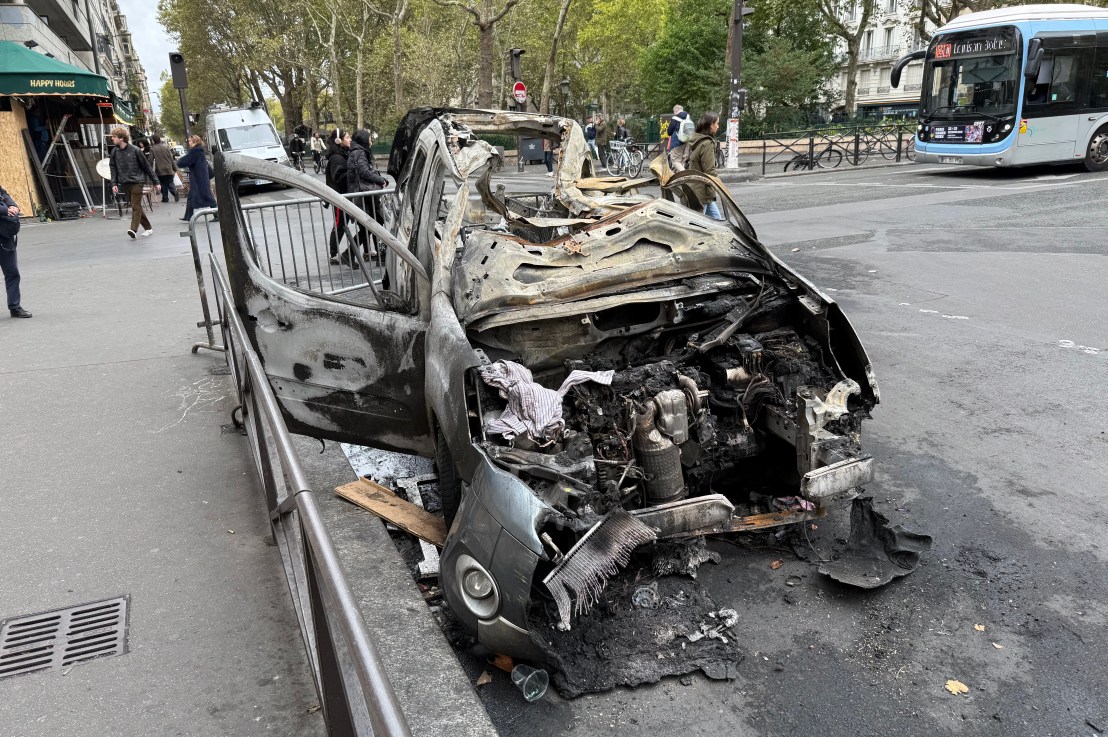
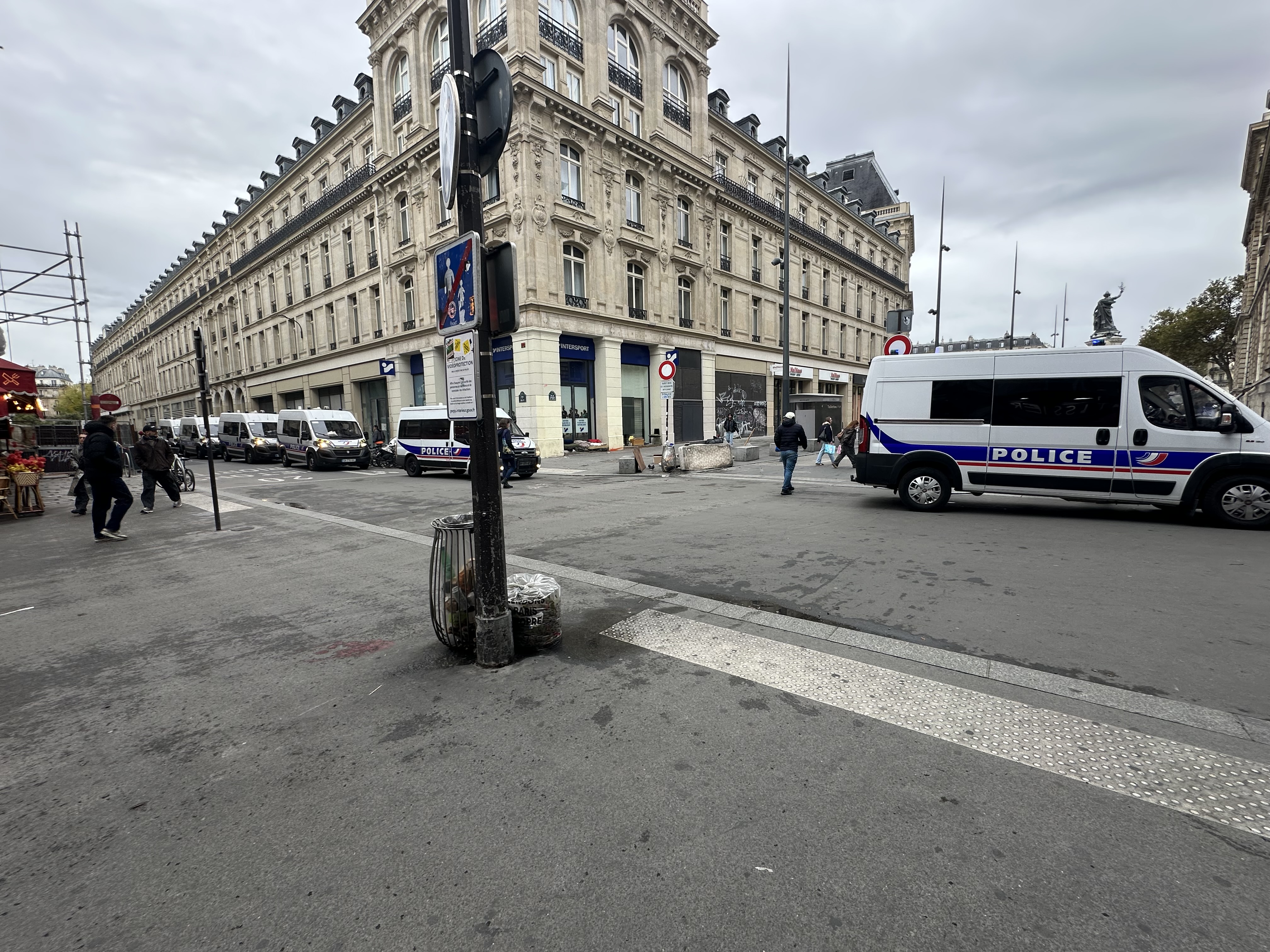
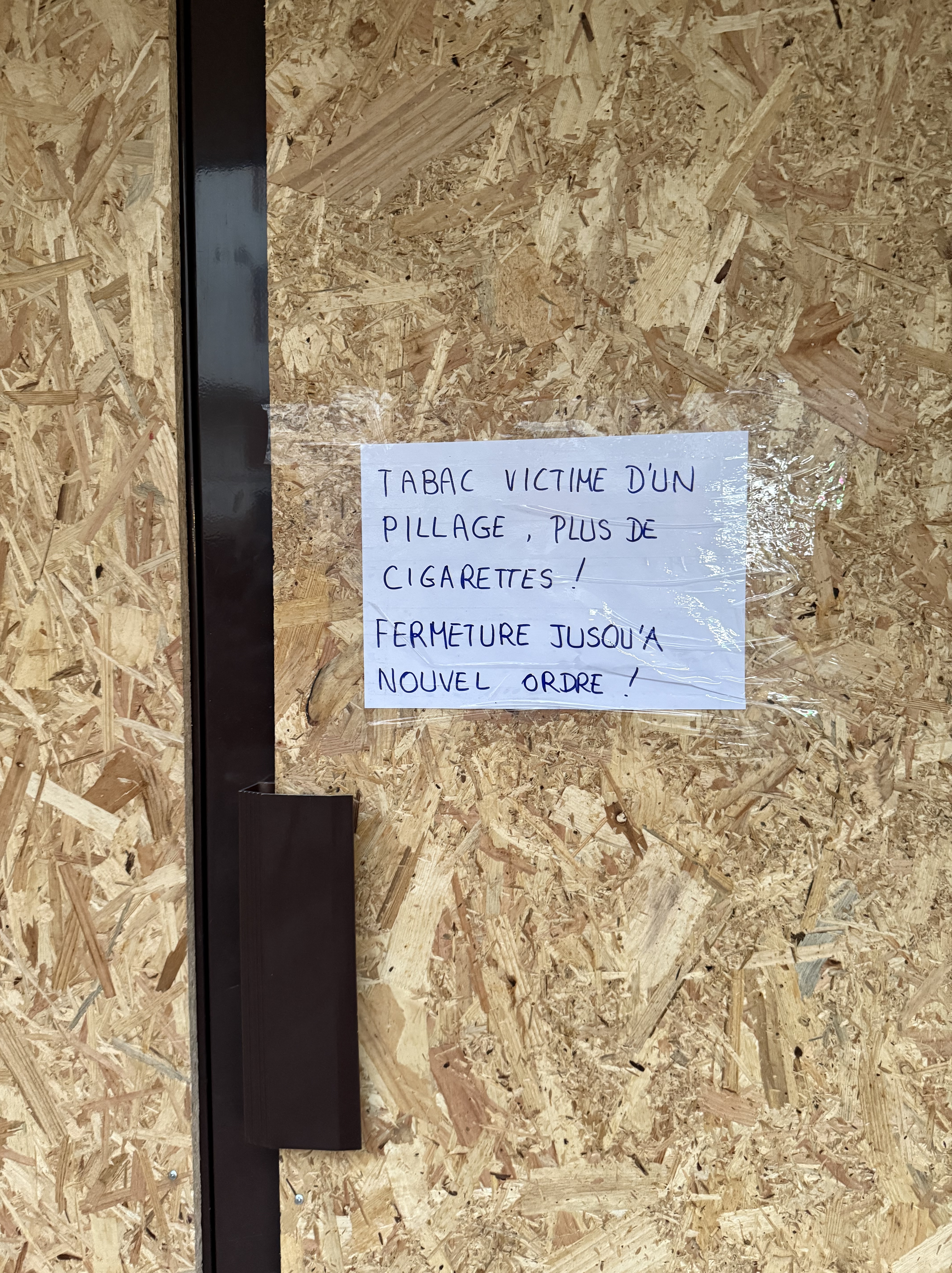
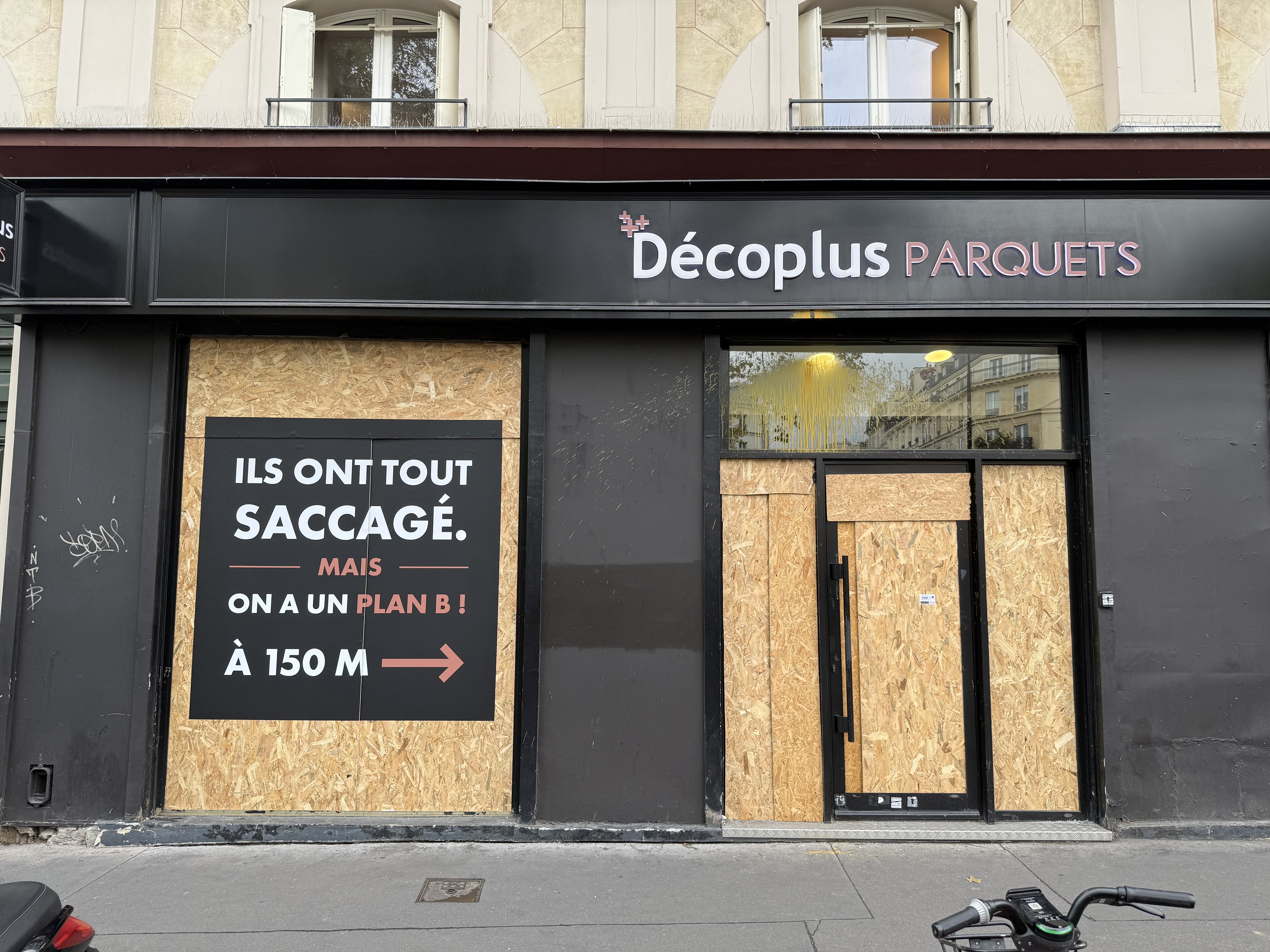
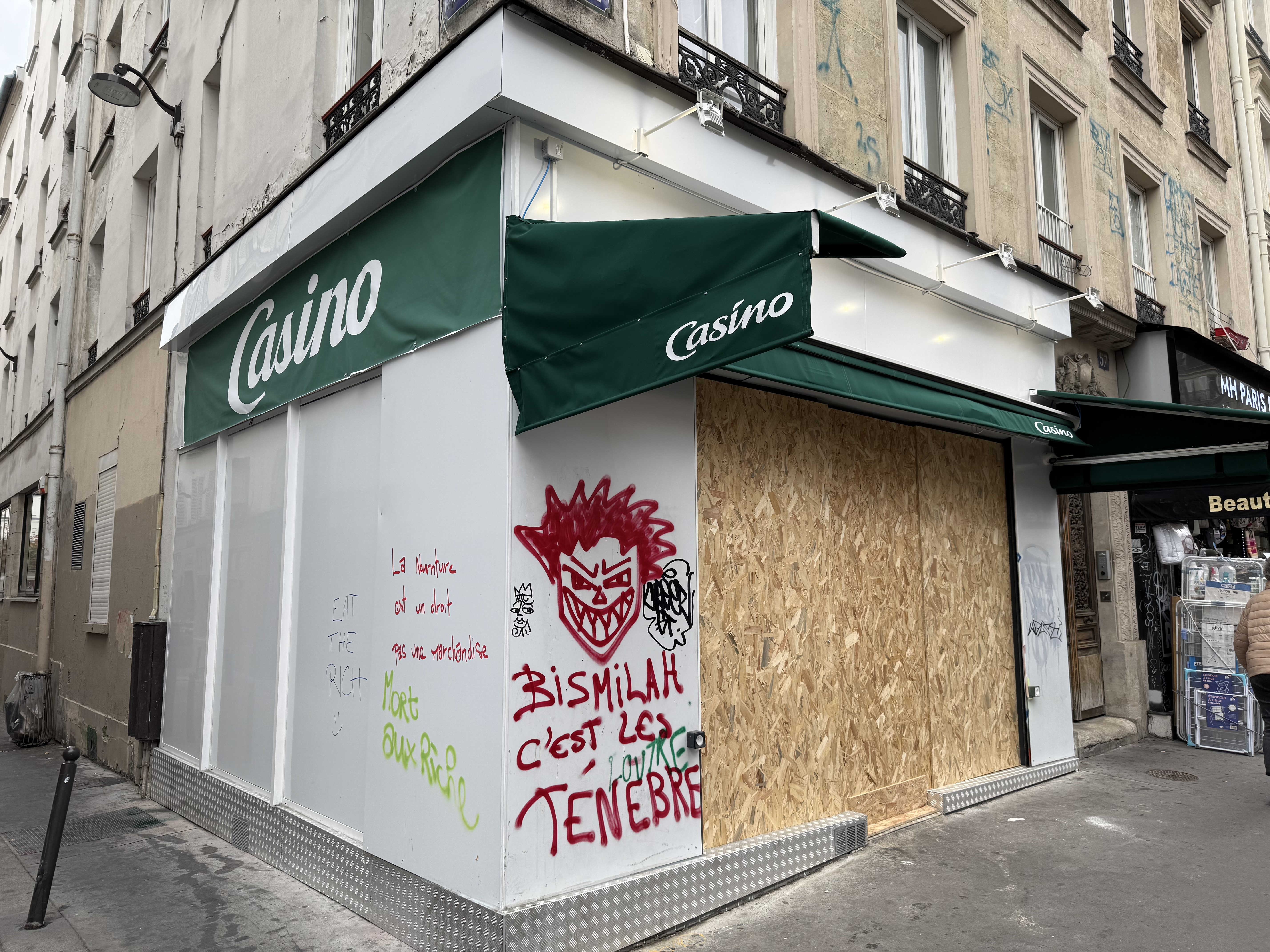
As I write this, on Sunday 25th October, the streets around us are quiet, albeit with a substantial police presence, and they were quiet through the whole of yesterday, in stark contrast to the mass looting a week earlier, when the place resembled a war zone: the headline picture shows a burnt out car outside our apartment; the distinctive marks on the tarmac show that there were many more; boarded up shops attest to the looting; it’s salutory to read the notices on those shops (some brave, some humorous, some just sad) and the Islamic-inflected graffiti meme of the moment “Bismilah, C’est les ténèbres”, which displays the attempts by the more extreme elements to appropriate the protests as their own. Yesterday’s protest march in Paris was rerouted to an area far from here. News reports say that it attracted over 100,000 people and passed largely peacefully until early evening – there were fights with the police, but nothing on the level of the previous week.
There’s no sign of the protests abating and, as yet, little prospect of government action. A scan of today’s Le Monde shows a disappointing shortage of ideas about these themes from politicians or anyone else, when set against the many thousands of words about the law and order issues. I can only hope this changes.
By the way, this story may be about France, but the same question applies to my home in the United Kingdom, to the United States and to many others – perhaps not with the same immediacy, but with the same fundamentals. We need to start replacing broken systems, not just tinker around the edges.

