Category: Politics

What I learned about Paris

What I learned about Paris

We spent the months of April and May in Paris – a mixture of pleasure and business, giving us the chance to see many clients throughout France. It’s a city in which I spent several years as a child – but that was over half a century ago, so it was a chance to rediscover the city.

Some of what we found agreed with what our expectations from previous visits or from things we’ve read. But here are some things that surprised us. I should point out, of course, that anything in here is a result of our own experience – other people visiting other parts of the city might feel very differently.
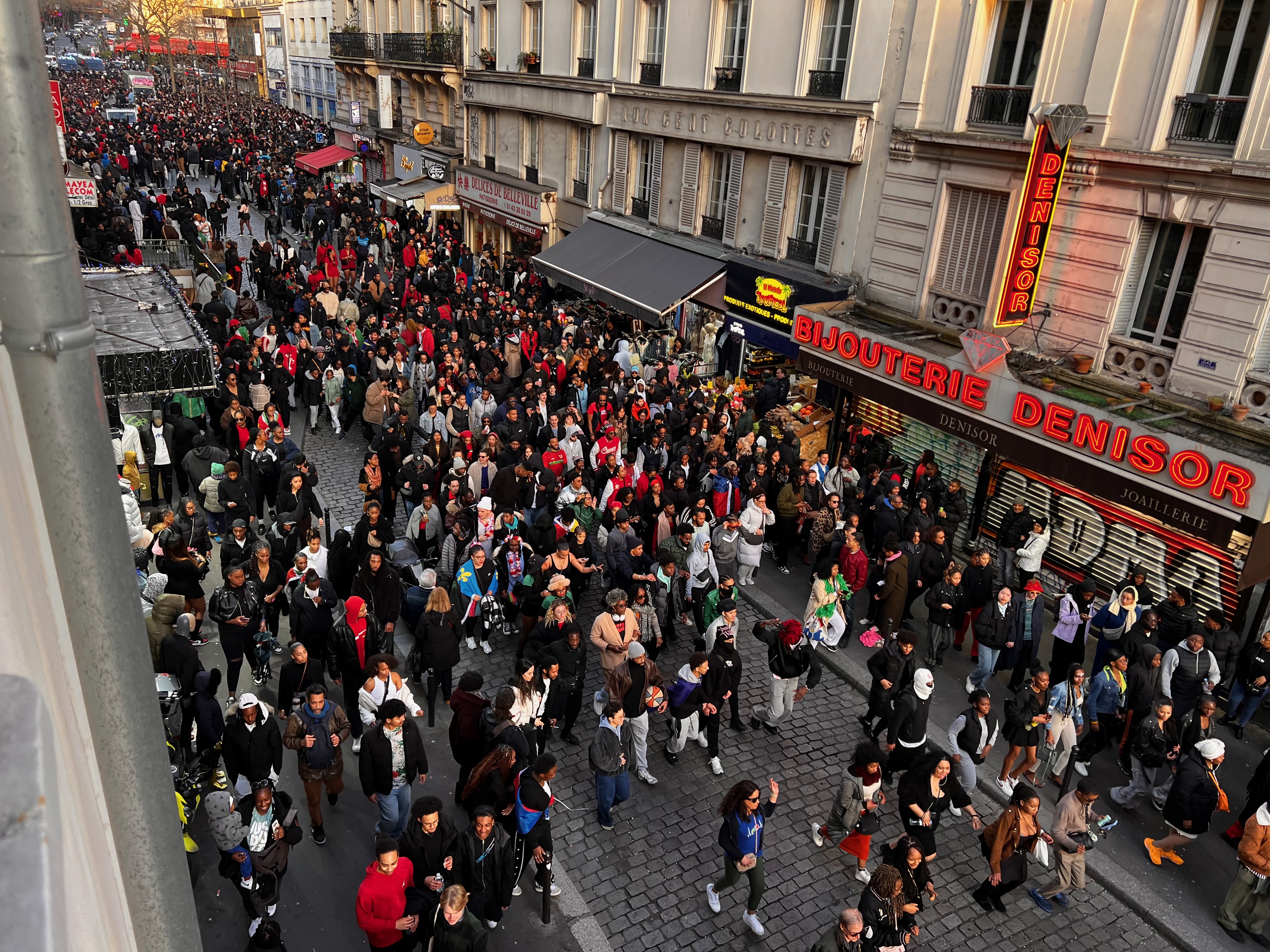
Belleville Carnival
Carnival at Belleville

Living in a residential area is an eye-opener

On previous visits, we’ve stayed in places where tourists go: the Marais, the area around the Opéra or the Champs-Élysées. My childhood was in the ritzy 16ème (yes, I know this signals heavy over-privilege).  This time, somewhat by accident, we ended up in an apartment in Belleville, of Rendezvous/Triplets fame. It’s a residential area that attracts few tourists and is very racially mixed – lots of Africans, lots of Chinese and Vietnamese, some South American, some indigenous French, a smattering of others. And we loved every minute.

We could step out of our apartment, be swamped by a riot of colours and scents and be surrounded by the kind of shops where normal people go to buy everyday stuff (food, clothing, housewares, electronics). The whole place was unbelievably lively with the buzz of people going about their daily lives. The banks of the pretty Canal Saint-Martin were almost permanently rammed with young people hanging out, picnicking, drinking or just chatting.  You just don’t get that sense of really living in the city in an area where most of the people are tourists and most of the shops are oriented to them.
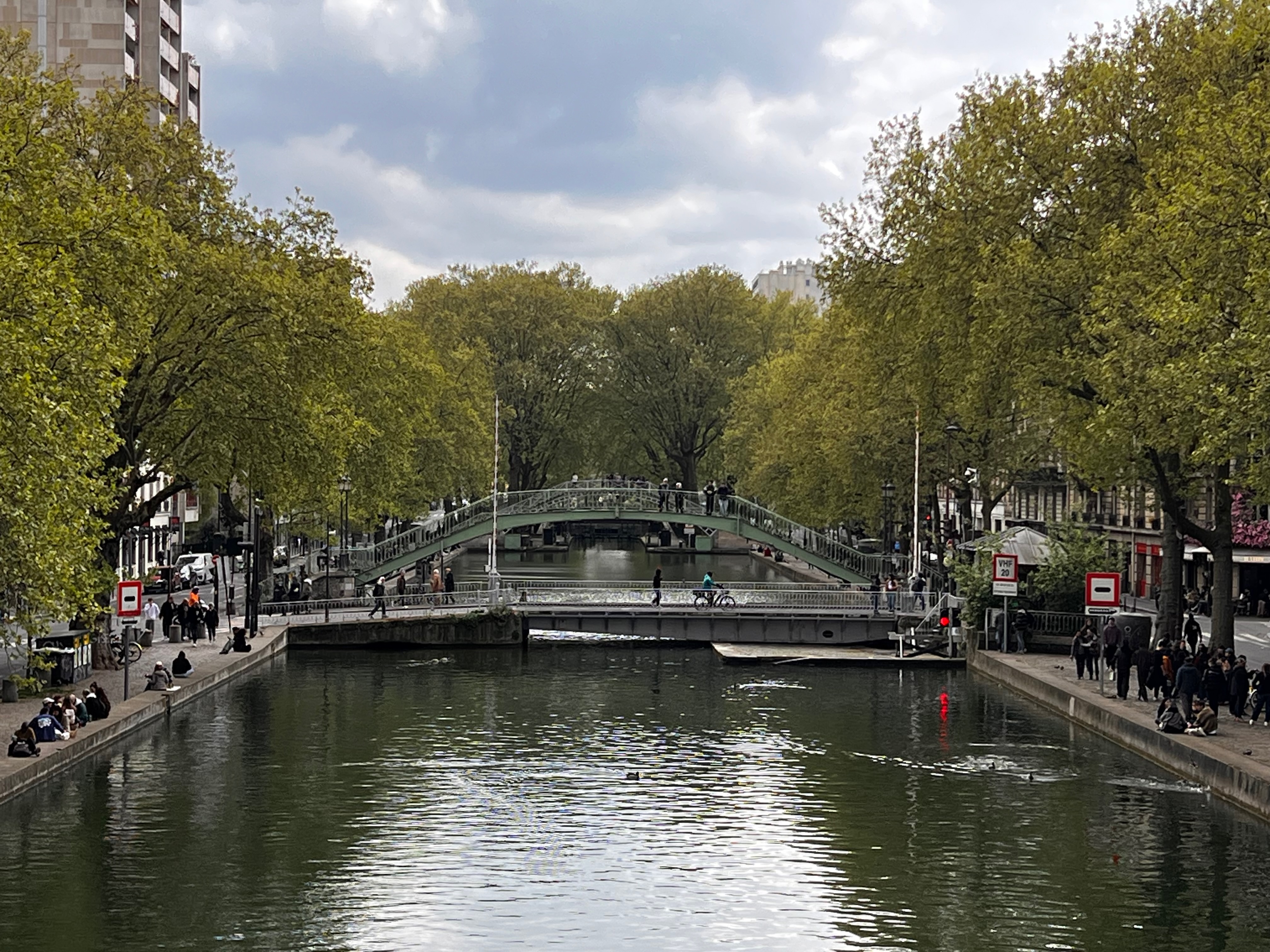
Canal Saint Martin
Canal Saint Martin

People are strong on minor courtesies

Parisians have a reputation for being brusque and surly, but with very few exceptions, that wasn’t our experience. People in shops varied from generally welcoming to seriously charming. The degree of pushing and shoving was far lower than in London, either on crowded pavements or in the Metro, where people readily gave up their seats, especially to women older than them (the same rule doesn’t seem to apply for men). This seemed particularly to be enforced by non-white mothers with their occasionally-reluctant children.

The major exceptions here are the cyclists and e-scooter riders, many of whom travel fast and ignore traffic lights. To cross a street, look them in the eye and walk predicatably so they know how to avoid you.
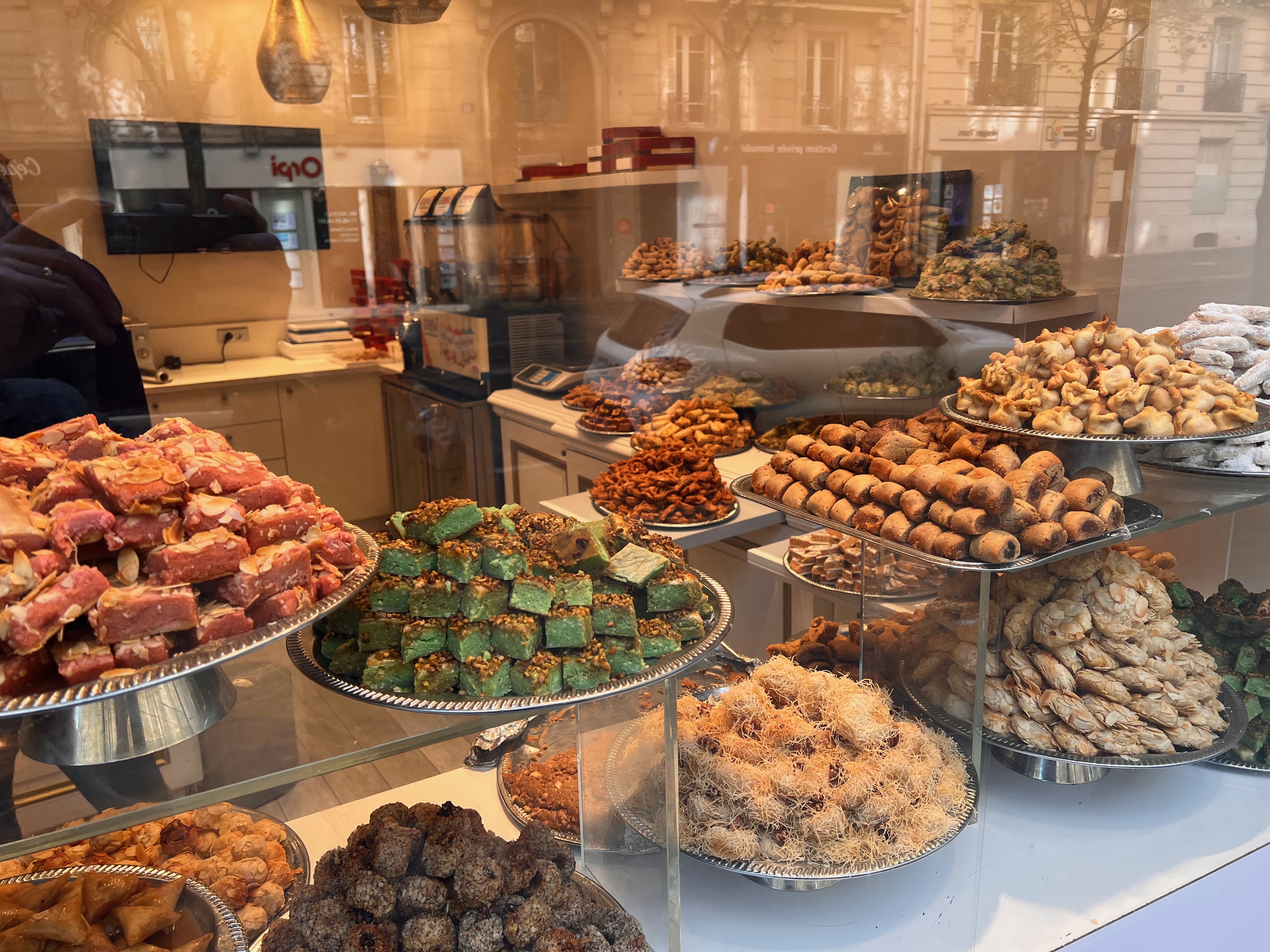
Middle Eastern pastries in 16e

Parisian street cleaning is awesome

Parisians are fond of a good whinge when it comes to their public services. But our experience of their street cleaning was uniformly excellent. We were on the Rue du Faubourg du Temple, a street choc-a-bloc with food shops and cafés. By 11pm every day, there was a quantity of rubbish on the streets. Overnight, however, an army of hose-equipped trucks and broom-equipped cleaning staff would roam the street. By 7am, the place was sparkling. 

The swimming pools are also awesome

We swim most mornings. The availability of public pools was extraordinary, with 41 across the city (the coverage is variable, but our apartment was within a 10 minute walk of two 25 metre pools in excellent shape). A short metro ride would have taken us to various 50 metre pools, including Piscine Suzanne Berlioux, improbably located underneath Les Halles, the giant shopping centre in the centre of town. And the prices are jaw-droppingly low: 44 € gets you a three month pass valid in all 41 pools – or 22 € if you’re over 65. 

The changing rooms are mixed, with cubicles for changing – which was perfectly fine and sidesteps what is currently a political hot potato in the UK. However, the showers only have individual cubicles for the disabled, so you have to shower with your swimming costume on. And during school periods, the early morning time slots available to the public are restricted. But we rapidly embraced our morning drill of “get up at 7am, swim, buy croissants on the way home”.
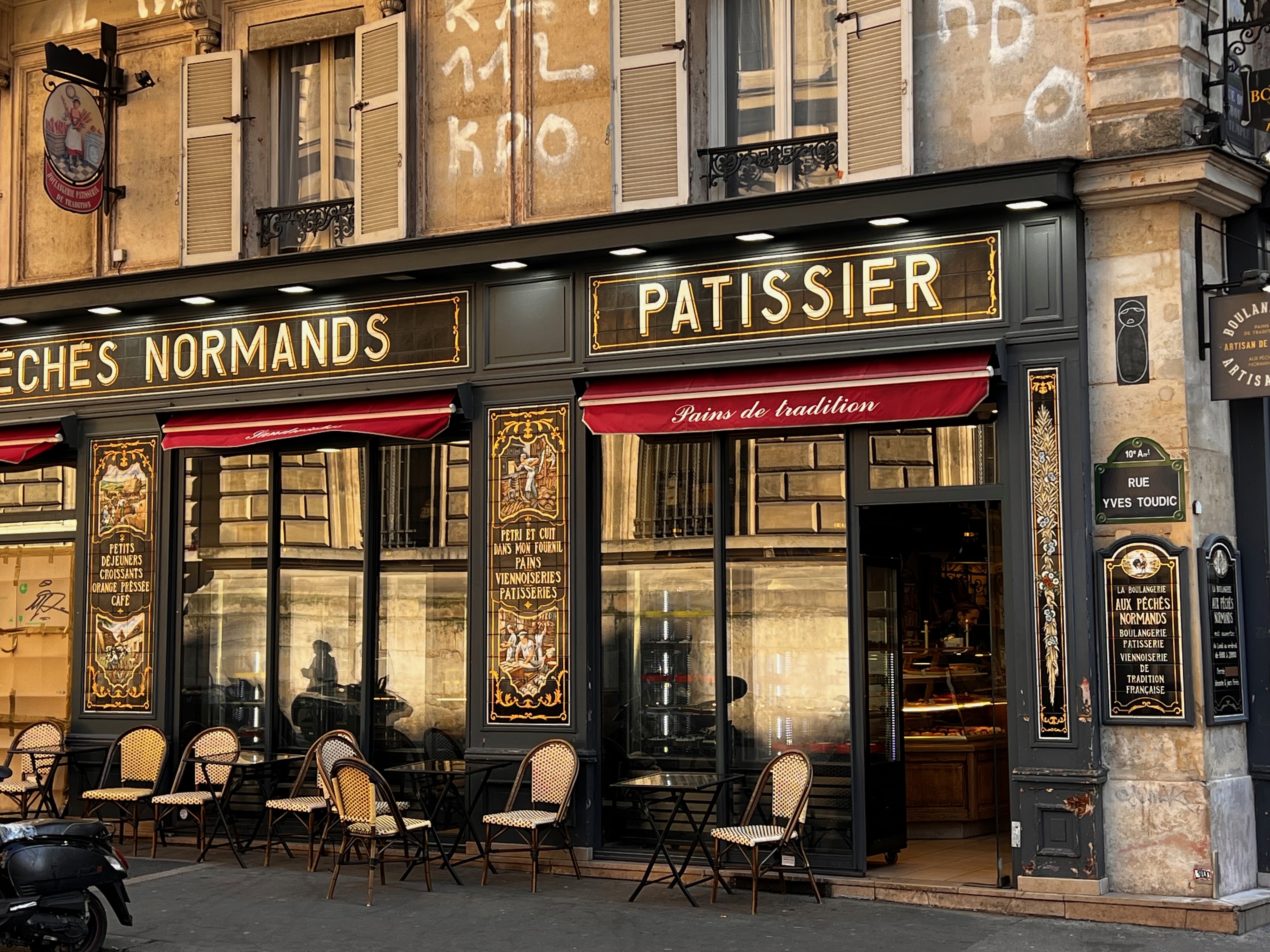
Aux Péchés Normands bakery

The dark side: there’s a lot of homelessness and begging

Sadly, we couldn’t walk too far without coming across someone sleeping rough, or someone asking for a few coins. The begging was usually pretty gentle and surprisingly polite, although there were instances of beggars who got aggressive. Several, we suspected, were mentally ill. And to judge by the number of ads and fundraisers for food banks, there are also a bunch of people who can’t feed themselves.

I don’t honestly know how this compares to other cities. My gut feel/memory says it’s worse than London and not as bad as San Francisco, but that’s a pretty unreliable guide.

The melting pot approach to multiculturalism is beginning to work

When a country has large a immigrant population, there are two main ways to approach multiculturalism. The approach promoted by many on the left of UK politics is the maintenance of identity, the idea that people have a right to their ancestral culture and heritage, which should not be “appropriated” from them. Faith schools and ethnically unmixed areas contribute to that.

The French do the opposite: what they call la mixité. It’s closer to the US idea of a “melting pot” but more extreme – religion and race are excluded from the public sphere. One is encouraged to be “colour-blind”, so that people of all races get the same upbringing and the same opportunities.

Or at least, that’s the theory. The reality has been very different, as expressed in the horrific treatment of immigrants from the Maghreb, by recruitment outcomes which varied wildly according to whether or not you had a Muslim-sounding name, and in Paris, by the concentration of immigrants in the impoverished parts of the banlieue (the suburbs outside the Périphérique ring road), leaving “Paris intramuros” to French whites.

But I saw and heard evidence that la mixité is beginning to become a reality. I saw many more mixed race couples than on previous visits to Paris. I saw black customer-facing staff in some very smart shops that wouldn’t have dreamed of having them in the past. And the “Grand Paris” project, the extension of the Metro into the suburbs, is beginning to break down the previously hard border between the city and the banlieue

It’s baby steps at this point, but the signs are promising.
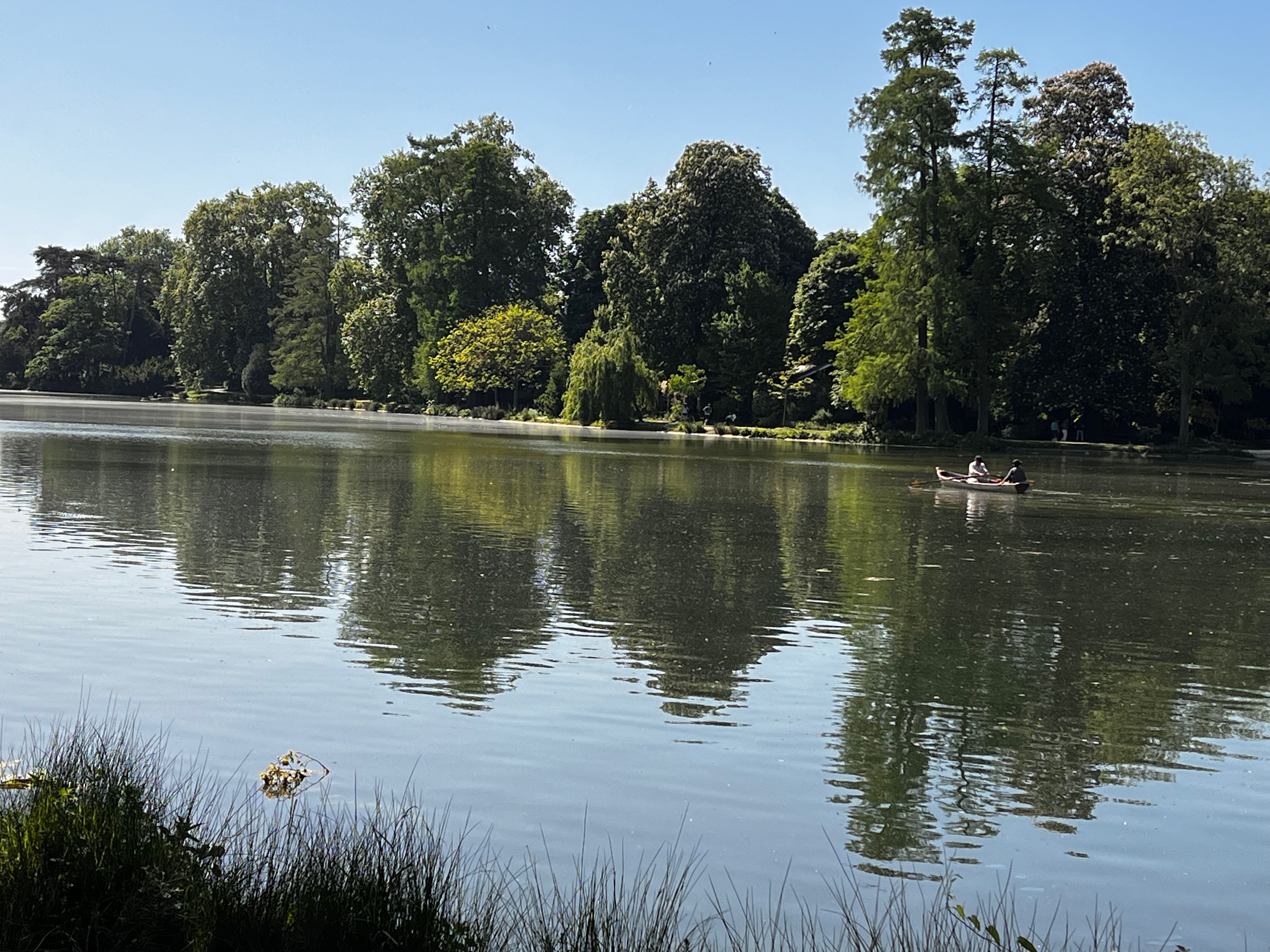
Bois de Vincennes
Bois de Vincennes

 The green side: we discovered the Coulée Verte and the Bois de Vincennes

Paris isn’t celebrated for its green spaces, but there are a some real gems. The one we discovered on this trip was the Coulée Verte (formerly the Promenade Plantée), a narrow strip of land high above the streets that run from Bastille towards the Bois de Vincennes, the former royal hunting forest at the South-East of Paris. The Coulée Verte is about an hour’s walk end to end and is gorgeously landscaped: it’s like having a very long and thin botanical garden, interspersed with little nooks to chill out or gaze down at city outside. It’s blissful.

The Bois de Vincennes itself is huge and very beautiful. We didn’t make much of a dent in its overall size, but managed a long walk alongside the boating lake. I’ll be back.
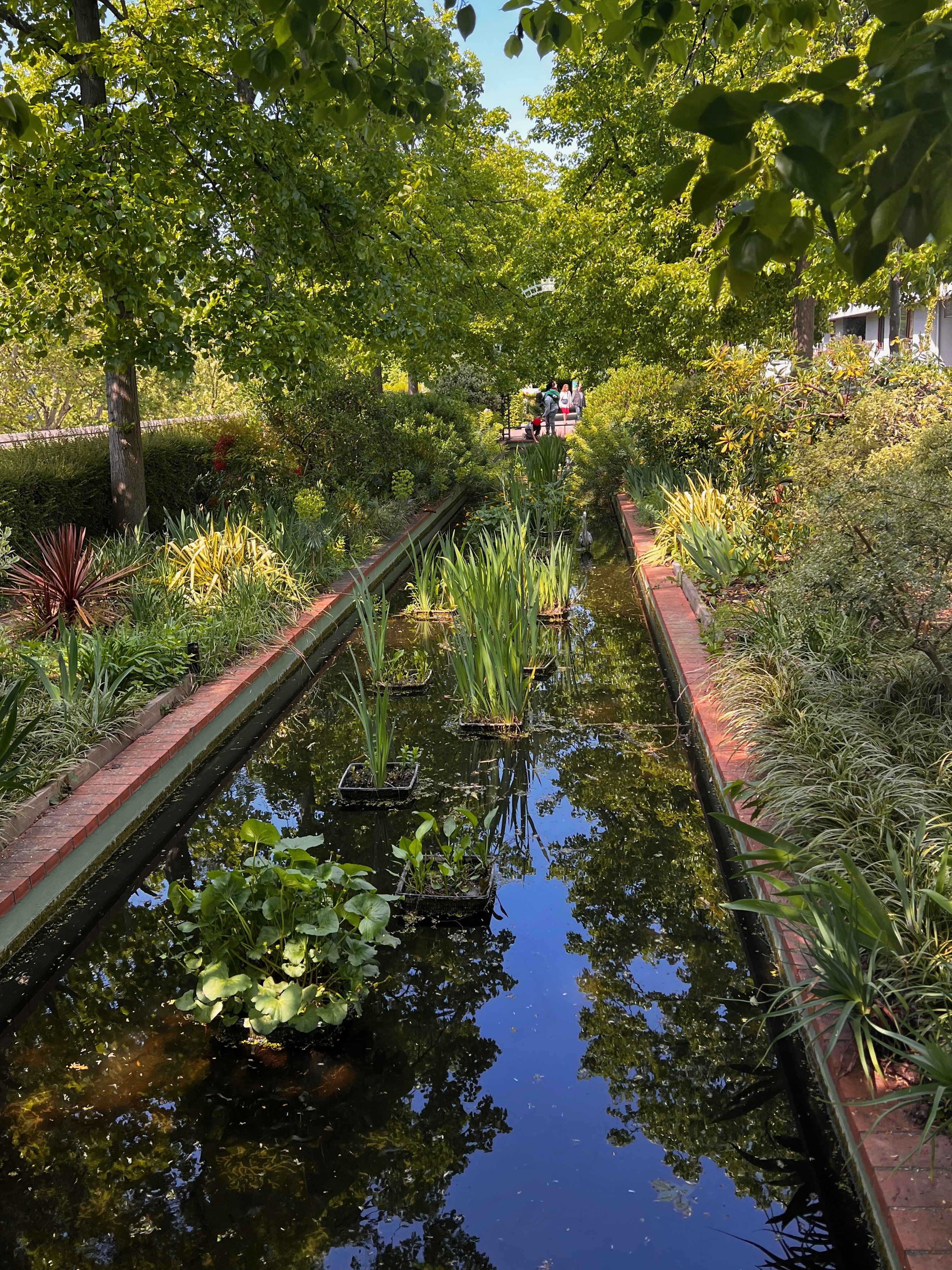
Pond on the Coulée Verte

The city is ever shifting

The status of different areas of Paris isn’t fixed. On the Left Bank, back in the 70s, the Boulevard St Germain and the Boulevard St Michel were the hippest of the hip, celebrated both in popular culture and in literature and the home of cool new fashions from Yves Saint Laurent and others.

We found it rather sad, the streets mainly populated by guided parties of tourists there to relive its former glories. The fashion world has moved elsewhere: the Avenue Montaigne for brands favoured by the high rollers – Dior, Chanel, Prada and the like – and the Marais for a younger, more boho crowd (or bobo, as the French call it).

The Marais is changing, also. At one time, it was very much populated by younger professionals, with many foreign students or people early on their career. That’s been changing: the eclecticism is still there, but one senses that it’s catering to tourists far more than to locals, heading towards becoming a theme park of its former self. Personally, I suspect it’s a result of AirBnB and (to a lesser extent) Brexit, but I can’t be sure.

Mural in tunnel by the Coulee Verte

And the stuff you know…

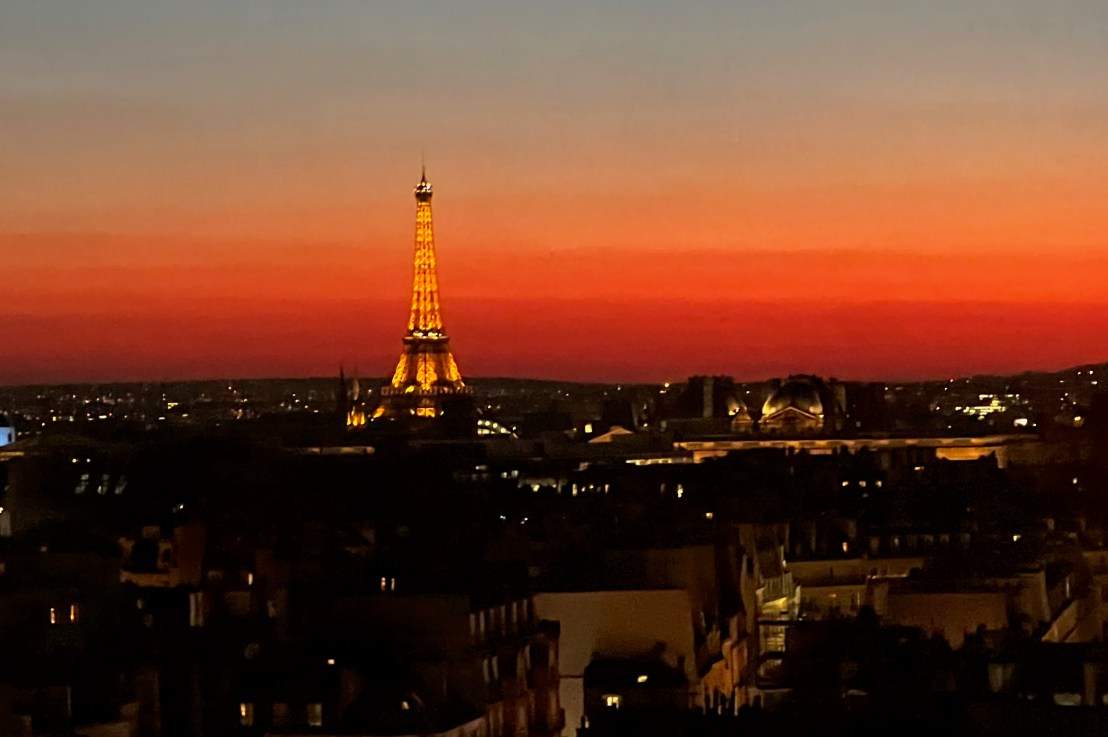
I haven’t even mentioned the things you already know all about – the phenomenal food, both restaurant meals and produce for cooking at home, the breadth of the cultural offering in both visual and performing arts, the cityscape with its famous monuments and that incredible light. Suffice to say that I’ve fallen in love with the city all over again.
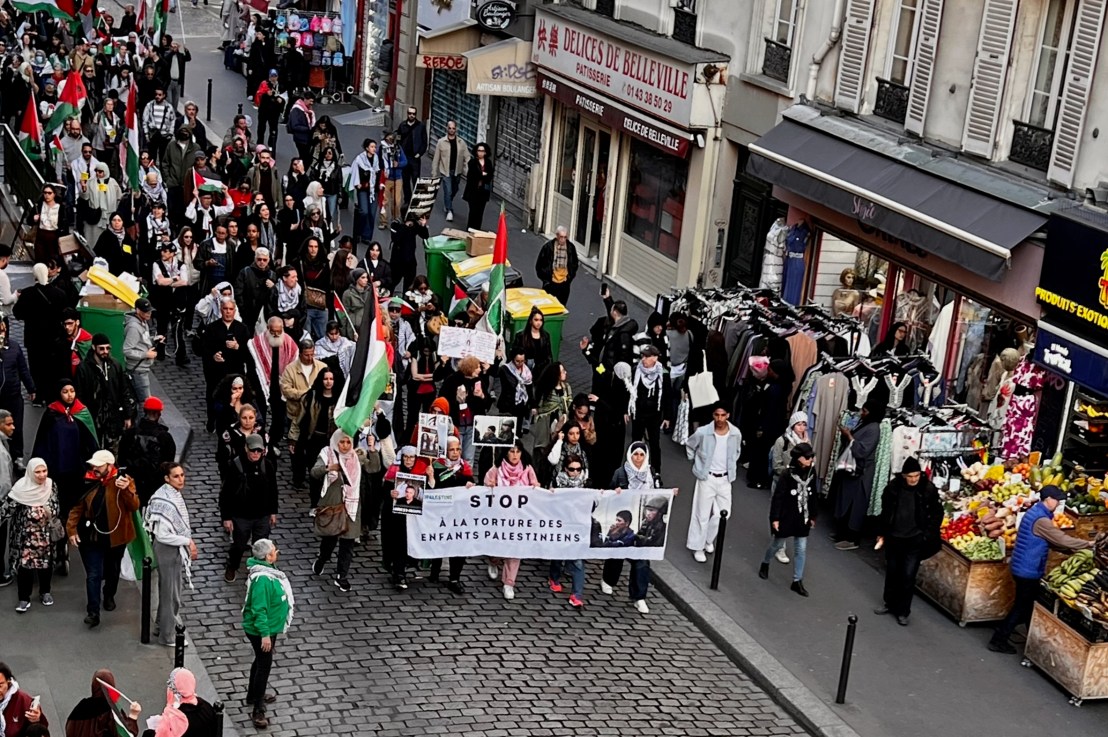
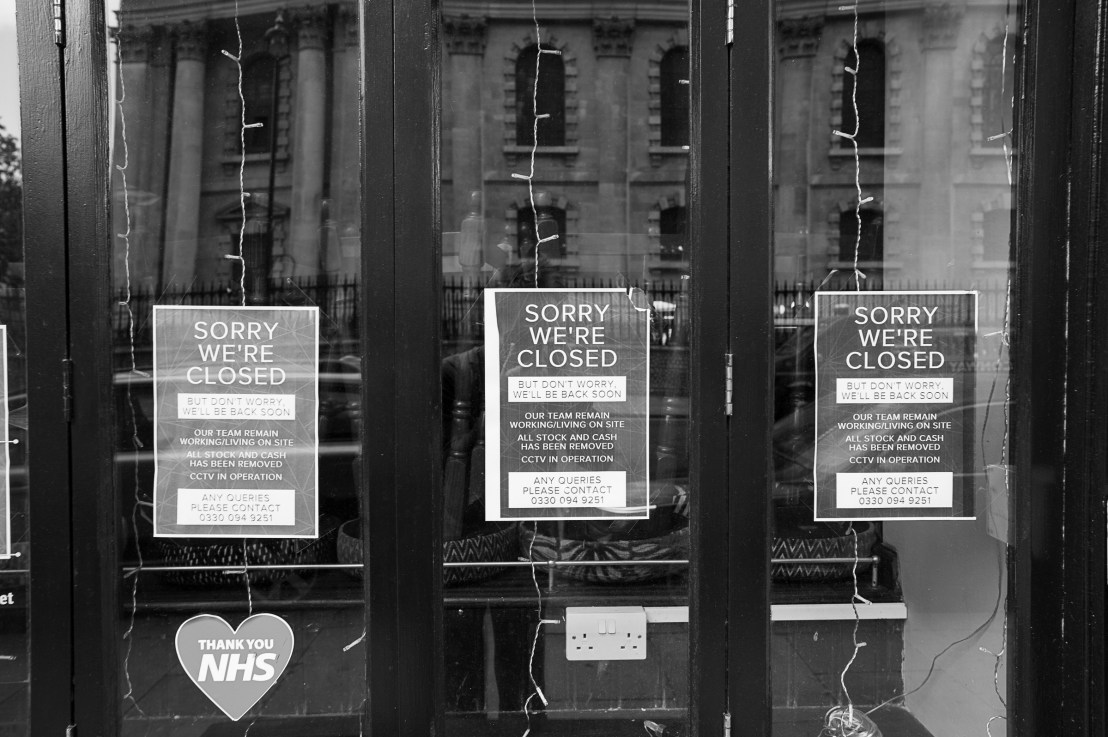
Palestinian freedom, seen from Paris at Passover

Palestinian freedom, seen from Paris at Passover

Our Seder night this year was a small affair, with just close family. I’m not very religious, so for the last few times we’ve been hosting Seder, we’ve used a Haggadah I’ve put together that focuses on telling the full story from the Bible. Within that, there is a space entitled “Other stories” for discussing tales of enslavement from other peoples – last year, this was the African slave trade and the oppression of the Uighurs.

This year, it hit us like a thunderbolt: the people suffering the most severe oppression are the Palestinians, and the oppressors are the Israelis. Every day, we are hearing stories of atrocities perpetrated by Israeli forces in Gaza; every day, more Palestinians are forced from their homes. The difference between their plight and that of the Jews in Egypt is that we were able to flee from our oppressors and find some vacant territory to which we could migrate. The Palestinians are unable to do so.

Just War theory includes a doctrine called proportionality: even if a war is just in all other ways, it cannot be just if the degree of force used is so massive as to be utterly out of proportion to the initial events that triggered the war. If a terrorist commits a single murder, it’s unjust to annihilate a whole village in reprisal. The October 7th attacks were heinous – but it cannot be right to use them to justify the devastation of the entirety of Gaza.

It worries me greatly that several of my Jewish friends and family members seem unable to see this. Have they so absorbed the idea that the attack was so bad that any level of violence is justified in response – even tens of thousands of deaths? Do they consider Palestinians to be so subhuman that anything the Israeli government does to them is just fine? Do they really think that any criticism of Israel is anti-semitism, regardless of how it behaves?

The word genocide is an unhelpful distraction in this context. Clearly, Israel is not attempting to exterminate all Muslims or all Arabs in the way that Hitler attempted to exterminate all Jews. As a result, when faced with accusations of genocide, it’s all too easy for Israelis to let themselves off the hook by denying them. What cannot be denied, however, is that Israel is engaged in major league ethnic cleansing: they’re turning Gaza into such a hell-hole that no person could reasonably expect to live there. I assume that they hope that at some point, other countries will open up their doors to a flood of Palestinan refugees, willingly or not, but that’s guesswork on my part. In any case, it presupposes that Israel has a single coherent strategy, which may well not be the case.

But regardless of this, I don’t believe that Israel’s real priority is the return of the hostages. And since the arrival of Benjamin Netanyahu, I don’t believe that Israel has shown any intention of making a just and lasting peace with the Palestinans – their overwhelming strategy for many years has been one of oppression and landgrab, dressed in the name of needing to maintain security.

I’m not denying that there is a great deal of anti-semitism in the world, much of it founded on a tissue of ancestral lies and hatreds. But right now, the actions of the Israeli government are the biggest thing feeding the anti-semitic fires. It’s time to tell them to stop. To tell them that the Jewish nation is not a barbaric people in this way, that they do not represent us and that we do not support them.

Yesterday, from the window of the Paris apartment where I am currently staying, I saw a large and powerfully crafted demonstration demanding the freedom of Palestinian prisoners. As a Jew, I felt frightened, but I also felt like I was on their side.

Thoughts on the Israel-Hamas war, two months in

At its heart, as Amos Oz put it, the Israeli-Palestinian conflict is fundamentally a matter of real estate: there is only one Palestine and there are two peoples who want it. The reason that both sides want the land so badly is that they have nowhere else to go. Jews have been forcibly expelled from so many countries over so many centuries that they see Israel as the only place where they can be safe. In the time that has passed since the creation of the state of Israel, the situation of the Palestinians has been shown to be little better: they might not be persecuted for their religion, but neighbouring Arab countries have shown no appetite for a mass influx of Palestinian refugees.

We can argue until the cows come home as to who has the stronger ancestral claim on the land and whose human rights have been violated by whom. But it boils down to this: in the long term, there are only three possible outcomes: ethnic cleansing whereby one side or the other is “driven into the sea” (a phrase often heard on both sides), a peace deal whereby both sides share the land and feel equitably treated (whether the “two state solution” or one of the various alternatives to it) or a stasis whereby violence continues indefinitely, perhaps ebbing and flowing in severity.

The 1993 and 1995 Oslo accords stated the objective of a peace deal. It’s reasonable to suppose that at the time, both a majority of Jews and a majority of Palestinians hoped that a listing peace could be created that would be accepted by both sides. But even then, there were contingents on both sides who had no interest in this and preferred to push for ethnic cleansing of the other side. For these contingents, it was better  to accept a violent stasis, however long it might last, if it meant avoiding capitulation. On the Palestinian side, Hamas exemplifies those who believe that the Jews should be expelled from Palestine. On the Jewish side, there are substantial numbers of people promote unlimited settler expansion and severe constraints on the liberties of Palestinians: they may not be terrorists in the way that Hamas are, but they are equivalent in their desire to subvert the peace process. In November 1995, with the ink scarcely dry on the Oslo accords, one of these Jewish equivalents murdered Yitzhak Rabin, the Israeli Prime Minister who signed them.

Both of these camps are in profound agreement: they don’t want a peace deal on terms that could conceivably be palatable to the other side: you could call it an anti-peace alliance. And while both sides get very angry if you accuse them of intending genocide, they both use genocidal language and they both have the same goal: ethnic cleansing or complete subjugation of the other side. Right now, the alliance is the ascendancy, in control of the governments of both Israel and Gaza. In the early days after the Oslo accords, you might have considered these two camps as extremists. By now, in the aftermath of the October 7th attack,  they are mainstream – perhaps even in the majority in their respective peoples.

Both halves of the alliance must think that everything is going swimmingly well right now. Hamas is achieving the dream of every terrorist organisation, to provoke its opponents into acts of revenge and repression so horrible that anybody neutral considers them to be monstrous (for a clear analysis of this kind of mindset, read Louise Richardson’s What Terrorists Want, written in 2007 but still spot on today). The Israeli far right are in equally good shape, able to demonstrate to their followers that Hamas are monsters who must be eradicated at all costs – even if those costs include taking a large chunk of the civilian Palestinian population with them.

So how do I – born in the UK of Israeli parents, Jewish by race and atheist by religion – feel about supporting Israel in all this? For a start, I accept the fundamental Jewish argument of “we need a safe haven, and Israel is it.” I don’t believe for a moment that antisemitism has been consigned to history: even in supposedly liberal countries like the UK, it’s easy to detect classic antisemite language and behaviour both in the far right and the far left, while in most Muslim countries, antisemitism is a majority viewpoint. (By the way, Islamophobia is even more present in the West, a fact which doesn’t affect the argument here but shouldn’t be ignored).

But the way Israel is waging its war against Hamas is a godsend to the antisemite cause: it’s daily proof for everyone who considers Jews to be bloodthirsty monsters, giving credence to centuries of slanders from Christ-killing to the blood libel. If we want to persuade the world to hate us because we’re Jews, there’s no better way to do it than to massacre thousands of Palestinian civilians. It doesn’t matter whether individual killings are deliberate, collateral damage from operations against armed enemy fighters, or starvation by destruction of infrastructure. A civilian death is a civilian death. If flushing out a terrorist organisation requires the killing of tens of thousands of civilians and the destruction of their entire country, that isn’t self-defence, it’s revenge.

Sadly, it was a predictable response. Writing in Le Monde just a week after the Hamas attacks, historian Vincent Lemire described what he called “the double trap” set by Hamas: the military trap of enticing Israel into warfare in difficult territory and the moral trap of provoking Israel into an excessive response. The Israelis may have been smart enough to avoid the worst of the military trap, but they have fallen headlong into the moral one.

Unless both sides commit to peace, the cycles of violence in Palestine are doomed to repeat themselves. This may be the worst of the cycles in recent times, but it will not be the last – however much the Israeli military might wish to believe it so. The “war to end wars” idea didn’t work in Europe and it won’t work in Palestine either.

What Hamas did on October 7th was monstrous, and their continued holding of Israeli hostages remains so. But before I can support Israel in their war against Hamas, Israel needs to do three things: stop the mass killing of civilians in Gaza, reverse the settling of Palestinian lands in the West Bank and display some genuine intent to make peace on fair terms. The present Israeli government might conceivably do the first of those things. It looks unlikely in the extreme that they will do all three. I can only hope that some political cataclysm happens in Israel that will bring in leadership of a very different kind.

The Israelis are my people. I hope that one day, I can once again be proud of this. But I fear that’s a day I won’t live to see.

More reading:

Louise Richardson, What Terrorists Want, Random House, 2007 https://www.randomhousebooks.com/books/153951/

Le Monde article by Vincent Lemire https://www.lemonde.fr/idees/article/2023/10/14/vincent-lemire-historien-depuis-l-attaque-du-hamas-contre-israel-nous-sommes-entres-dans-une-periode-obscure-qu-il-est-encore-impossible-de-nommer_6194355_3232.html (in French, paywalled)

Unelectable opinions, no.2: the ineptness of rule sets for Coronavirus lockdown

Unelectable opinions, no.2: the ineptness of rule sets for Coronavirus lockdown

Last Wednesday, tennis players across England celebrated being given permission to return on court – for singles, that is. Tennis coaches celebrated getting their earnings back and ceasing to rely on the prospect of government handouts.

But why, you might ask, was singles tennis banned in the first place? It’s one of the most socially distanced sports one can imagine, with players spending the vast majority of the game over 20 metres apart. Compare that to someone jogging along a narrow track, breathing heavily without wearing a mask, which pretty much guarantees that anyone coming the other way is going to breathe in their potentially virus-laden droplets. Yet running was actively encouraged at a time when tennis and golf (another sport with built-in social distancing) were banned.

Of itself, tennis isn’t the biggest issue in the world. But it’s an example of a more significant problem: the UK government’s rules on lockdown – and, indeed, those of most other countries – have seemed full of inconsistencies, creating consequences that just seemed to fly in the face of common sense. Why limit going out of the house to an hour? Why was this supposedly  the same if you lived in the middle of a busy city as if you lived in an isolated farmhouse?

The underlying problem is this: rather than carefully lining up the rules with the principles of what we were trying to achieve, the government preferred to make simple, prescriptive rules about individual points of behaviour. And that was always going to create idiocies which would bring the rules into disrepute and prompt people to ignore them.

The rules that we actually want are these:

  1. Don’t breathe on anyone else. To help guide you: when breathing normally, your breath travels under a metre, when speaking, it’s more like 2m, when breathing heavily as a result of strenuous exercise, it can easily reach 4m. Wearing a face covering – pretty much any sort, it doesn’t have to be surgical – reduces this to under 1m with acceptable probability.
  2. Don’t put yourself in a position where other people can’t avoid coming into range of you breathing on them. Guideline: your breath hangs in the air for around 15 minutes, or somewhat longer in stagnant air indoors.
  3. If you touch anything that someone else may have breathed on within the last 24-48 hours (in practise, almost anything outdoors), don’t touch your eyes, nose or mouth before you have washed your hands thoroughly.

    (By the way, if you’re living in the same household and you get infected, everyone else in the household probably will too. So exclude them from “anyone” in the above rules).

Consider what this means for going out and meeting people. If you want to go out and meet your friends, it’s fine: you can meet as many of them as you like as long as (a) you’re keeping a couple of metres apart at all times (less if you’re wearing masks) and (b) you’re not standing somewhere making it impossible for other people to get past you. Getting together in a circle with your friends in the middle of a field is just fine. And it really doesn’t matter how long you spend. Sunbathing in the middle of a park – for any length of time, as long as there’s space – is fine, sunbathing on a park bench next to a path is not, especially if you’re talking.

For the runners I’ve mentioned above, this would have various implications to stop them breathing heavily into confined spaces – which is profoundly antisocial at the moment. Firstly, if they can, they should avoid narrow spaces: pavements, alleys, pathways with walls or trees either side. If that’s impossible, at the very least, they should wear a mask and do their best to steer clear of people coming the other way. Local governments could help by marking out official one-way lanes for runners in local parks, much as our larger supermarkets have done for shoppers pushing trolleys.

I’m not going to overburden this post with more examples: suffice to say that I could write hundreds of words going through irrational inconsistencies even within my own small area of life. What I’m more interested is the principle: why did government officials think that it was a better idea to micro-manage individual activities rather than explain the problem to people and expect them to make good decisions?

I don’t know the answer to this, but I have my suspicion and I don’t like it. My best guess is that the rulemakers think the majority of people are too fundamentally stupid and/or irresponsible to take a simple set of principles and deduce how they should behave. It’s an incredibly patronising attitude, which fails to recognise that it cuts both ways: for everyone too stupid to understand a principle, there’s someone else who recognises a stupid rule when they see one and draws the conclusion that all rules are stupid and should therefore be ignored. It also fails to realise that the really irresponsible people are going to be as irresponsible on detailed rules as they are on the big picture.

Our tennis coaches are mainly self-employed and will have been filing their claims under the Self-Employment Income Support Scheme when it opened – at exactly the time that the rumblings over “how are we going to pay for all this debt” have started increasing. Those claims were completely unnecessary: a result of poorly targeted rulemaking. I’m sure there are thousands of other examples.

Dear Government, please start treating people with some respect and make the rules line up with what we’re all trying to achieve, to minimise the havoc caused by this epidemic. Otherwise, you waste everyone’s time and resources and bring yourselves into disrepute.

Caveats:

In my guidance to rule 1, I don’t know whether 1, 2 and 4 metres are the best numbers to use: better scientists than me equipped with the latest evidence might choose different thresholds.

I’m talking about guidance to the public here. Obviously, there are many types of environment where there’s a need for clear guidance specific to that environment – hospitals, schools, offices, building sites and many more.

This all assumes that we agree with the basic strategy of “we need lockdown in order to minimise transmission of the virus”. Not everyone does, but that’s another story which needs to be explored separately.

Unelectable opinions: Prevention of Faceless Bureaucracy Act

I would love to change our country and our world for the better. But there’s one overriding reason that I don’t go into politics: there are too many things that I think should be done that will never get taken up by any of our major political parties. So whether you agree or disagree with me, I’d love to hear from you.

Kafka portrayed it better than anyone: the common man, faced with a bureaucracy which is unreasonable, impenetrable, which denies you access to the people who might resolve your problem, an entanglement of petty obstacles which exhausts your will to stand up for your rights.

In the course of the last decade, UK government departments have been making enthusiastic efforts to turn Kafka’s vision into reality. This post isn’t about the big deliberate policies like Theresa May’s “hostile environment”, iniquitous that it was. Rather, what I’m talking about is this: every government agency, one at a time, has changed its operational policies in ways that make it more difficult, frustrating and time consuming for individuals to deal with them, while increasingly allowing government officials to engage in unfair behaviour without sanction.

I’ll start by quoting two examples from my own direct experience.

My company occasionally sells services to public bodies in Poland. For some reason, in order to pay our invoices, these bodies require a Certificate of Residence which is produced by HMRC. Back in 2011, the procedure was fairly straightforward: you phoned your assigned HMRC office, they told you what you needed to put in a letter to them and when you did this, they sent you back a signed certificate. Job done, invoices duly got paid.

By 2017, the process had changed. There was now an online form filled with jargon that was hard to understand unless you were an international tax expert (I’m not). Several weeks later, a certificate was sent, but this contained a laser printed signature which was unacceptable under Polish law. I couldn’t phone the HMRC office any more: all I could do was to get through to a call centre operator who refused to deal with the problem, saying that “HMRC no longer issue documents with wet signatures”. In the end, we wrote off a significant sum of Polish withholding tax.

My second example is with the Valuation Office Agency – the bit of government which assesses the rateable value of a business property, who set our business rates at several thousand pounds higher than the correct amount (they used a wrong measurement). Once again, we were banned from speaking to the person dealing with the case: our only possible contact was via the call centre – lots of time waiting in voice mail jail, followed by speaking to a person with no authority to even read the full case documents, let alone actually take action.

And here’s the beef: when I submitted a complaint, the complaints office passed it on to someone inside the VOA, but refused to initiate a formal complaints process on the grounds that their Code of Practice states that I should have started by “contacting the person you are dealing with”. Since the VOA specifically made this impossible, this is a Catch-22.

What’s happened in both these cases is happening across just about every government department: where the old process involved assigning your case to an identified person who would read your letter or answer your call, the new process deliberately makes it as difficult as possible for you to do contact any person with any level of authority to assess and deal with your individual case. It’s done in the name of cost reduction, but what’s actually happening is to transfer cost from the government to the individual while ignoring the increased risk of unfairness.

I’m fortunate that on the grand scale of things, these examples are minor and that I’m literate enough to deal with them (in contrast to HMRC, by the way, the VOA dealt with my complaint properly). But the bureaucratic mechanics at play – the replacement of individual responsibility by rigidly automated processes – are the same ones that cause genuine hardship to vulnerable people, as shown in this article from the Guardian and this harrowing story from the Liverpool Echo. People are actually dying as a result of this trend.

Please don’t think I’m a luddite. I’ve designed and sold customer-facing IT systems and use them happily every day. This is not a complaint against automating routine processes: it’s a complaint against government officials being encouraged to hide behind a mask of anonymity and the shield of a call centre. “I was only following orders” has been replaced by “I followed the process”. Officials should not be encouraged (or even forced) to behave in ways that are blatantly unfair or inhumane as a result of supposed efficiency measures. And my (admittedly untutored) guess is that if you account for the duplication of effort from multiple people reviewing a given case and the time wasted by members of the public in jumping through hoops, the cost savings are illusory.

I believe we should have a Prevention of Faceless Bureaucracy Act which grants any citizen dealing with any government department the right to the name, email address and direct telephone number of the official dealing with their case, with a defined level of responsiveness required from that official and a defined process for escalation if that responsiveness is not met. For good measure, let’s add a requirement that senior department officials should be required to meet those responsiveness levels as a condition of any bonuses.

This idea isn’t glamorous and is probably tricky to implement. But I honestly believe that the attitudinal change involved would make a big difference, most of all to those too vulnerable and/or IT-illiterate to deal with the systems and processes now being rolled out. We must not allow the current dehumanising trend to continue.

What the EU referendum says about our democracy

I campaigned for Britain to stay in the EU, and I’m extremely upset that we voted to leave. But the fact of leaving isn’t the thing that’s most depressing: far worse is what it has told me about our democracy. Successful Leave campaigners should be every bit as worried as I am about some of the things I’m about to discuss.

The first thing that alarms me is the way the referendum was allowed to operate. Anyone on either side of the argument was able to make any statement, however outlandish, however false, with total impunity. After a parliamentary or local government election, voters can punish a false campaign promise by voting against the person who makes it (or at least against their party) at future elections. In the referendum, campaigners could tell whatever lies they wanted to in the knowledge that all they had to do was to get 50.00001% of the votes on the day, and that once that was over, nothing else mattered.

Both sides indulged in outrageously indefensible rhetoric. I happen to think that the Leave side’s was particularly egregious, but that’s not the point: the problem is that a major decision that will affect our country for decades and maybe more was made after a campaign characterised by a tissue of lies.

I’m also disturbed by the referendum’s reduction of the highly complex matter of our relationship with Europe to a single In/Out question, without in any way defining what “Out” meant. Are we talking about “the Norwegian Solution” of remaining in the free trade agreement while continuing to comply with EU regulations? The “Swiss solution” of continuing to contribute to the EU budget? Or a total withdrawal from the free trade zone? Whichever of these options is chosen, the Prime Minister who implements Brexit risks a huge backlash from whichever part of the leave constituency had assumed either (a) we’re going to have fewer rules from Brussels, (b) we can stop contributing to the EU budget or (c) we can continue to be in the free trade block. Because truly, if anyone thinks we’re so important to the EU that they will continue to grant all of our former privileges while releasing us from all of the rules an obligations, they are living in a delusive state. All this means that far from resolving the EU debate, this referendum has merely fired its starting gun.

Why was it constitutionally OK for a political party in government to propose such a simplistic referendum? Of the reasons for doing so, it is now reasonably clear that (a) Cameron had no intention of putting out EU membership at risk and thought he was taking a safe bet; (b) the principal intent was to resolve tensions within the Conservative party and (c) Cameron and his aides didn’t think the electorate were intelligent enough to understand a more nuanced set of questions (I’m guessing on this last one, admittedly, but I think it’s a fairly safe guess). I’m afraid I don’t buy the idea that Cameron called the referendum because he genuinely believed that “the people deserved their say”: I’ve never yet seen a referendum called for that reason and I don’t expect to.

Having spoken to a lot of people in the days leading up to June 23rd, I don’t think the majority of voters made a serious attempt to research and understand the facts. The most intelligent conversation I had with a probable Leave voter was with a doctor of African extraction who is deeply unhappy with EU policy in Africa, which she had checked out in a great deal of detail. Every other conversation showed rampant confirmation bias: people were simply not interested even in discussing their reasons for voting in detail and certainly didn’t want to understand the views of anyone on the opposing side.

One of the important arguments on the Leave side is the idea that outside the EU, we can regain total control of our democratic process. But that’s small comfort when you see the immediate effect of the referendum on that process. The first thing that is going to happen is that from around October, the country will be run for close to four years by an unelected Prime Minister – and probably, in the circumstances, by a Prime Minister of a very different complexion from the one who we voted for a year ago. How was it OK for Cameron to omit to mention that he would be resigning if he lost the referendum?

Early on Friday, I was pretty much in the #AshamedToBeBritish camp, living in the wonderful, open city that London is, but surrounded by a country full of racists. I’ve calmed down from that view, but I still fear greatly that most people who voted leave (not all, of course) did so because they were looking for someone to blame for twenty years of stagnant disposable incomes and ever reducing job opportunities. And the easiest people to blame were “everyone except us” – the immigrants and the foreigners. How much easier to blame a Brussels bureaucrat than to accept that we’ve lagged the world in productivity improvements, that a rash of people got into debt they couldn’t afford, or that the Blairite expansion of university places wasn’t fundable without either increasing taxes or making the students pay for it.

Indulging in arbitrary blame without being prepared to debate the facts isn’t a good way to make important decisions. Allowing a party’s internal issues to have such a huge and immediate impact on our future is worrying. So is having an unelected Prime Minister at what will now be a critical moment in history. And our permitting of demagogues – racist or otherwise – to tell a pack of lies with impunity is the scariest of all.


Can someone now start the real EU debate, please?

We arrived home from holiday last week to find campaign literature from both sides of the EU referendum campaign in the letterbox. I was dismayed by both: the arguments presented were dubious, to say the least, and it seemed to me that neither side dares to say what it really believes.

Humans are tribal creatures and the EU debate is ultimately about the size of the tribe. Do we want a tribe which is large and strong (if possibly fragmented and slightly fractious), or do we want our tribe to be small and cohesive (if possibly short of resources and clout)?

The Eurosceptic viewpoint seems to me to be driven by two fundamentals. The first is the image of Gulliver strapped down by the Lilliputians: Eurosceptics hark back to the days when the United Kingdom was a great power in its own right and feel that it could be so again if it were not enmeshed in a web of European bureaucracy and compromise. The second is a deep discomfort with immigrants, the idea that we are losing our country to invaders and not even putting up a fight over it.

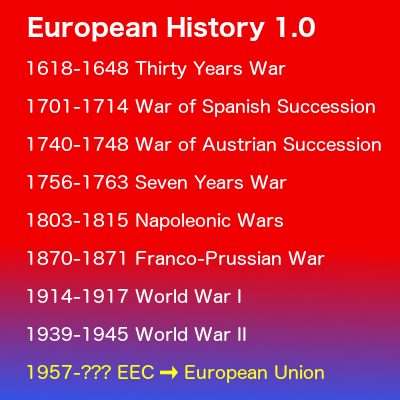
European history My own beliefs are the opposite. I was born in 1958, which makes me pretty much the first generation for as long as anyone can remember to live sixty years without a major European war, and I attribute this not merely to nuclear weapons but largely to the EU – not to its specific institutions, but to the change in mindset that makes European governments start with an assumption of co-operation.

I don’t buy the “UK can be great again” argument. The UK is great: I love my country for the creativity, humour and fundamental sense of decency of its people, not its empire – which was lost not because of the EU but because the UK bankrupted itself over two world wars and because the prevailing ethical climate made it impossible to continue with the colonialist principles on which that empire was built. I’m only too pleased that historical episodes such as slavery, the opium wars and the salt tax  are well behind us, and if a Brit ever feels the need to preach to the world about genocide, they would do well first to consider the question “why are there no aborigines in Tasmania.” (Answer: because we killed them all). And I fundamentally believe in government by compromise – at the European or the UK level. To get technical for a moment, I actually believe in stuff like pooled sovereignty and subsidiarity.

Turning from those who hark to the olden days to those who merely say that Britain is the world’s fifth largest economy and can stand perfectly well on its own, I would reply “yes, but for how long?” As education globalises, can a heavily populated small country with depleted natural resources really maintain the productivity lead that we have had in the past?

These are huge issues, and I’m more than happy to debate them with an open mind – and I believe we should be debating them. In my view, it is neither evil nor racist to feel uncomfortable at living in a city where you often can’t understand the language of the majority of the people in your street, or to be concerned at democratic deficit. But that’s not the debate we’re having.

Rather, on both sides, the debate so far has been about nickels and dimes, with statements being made that are deeply misleading. Consider this one, from the “Leave EU” side:

“We can remove our politicians who are answerable to us. Unlike unelected European commissioners”.

European commissioners are the equivalent of our senior civil servants, who are every bit as unelected. The laws in the UK are written by civil servants and voted on by politicians, just as EU laws are written by commissioners (and their staff) and voted on by the Council of Ministers and/or the European Parliament, who are people we elect. At heart, it’s not the existence of appointed officials that Eurosceptics dislike – otherwise, they should be trying to get rid of the whole of Whitehall – it’s the idea of appointments being made by what they consider to be the wrong people.

The Stay camp hardly fares better. “AA warns of pain at the pump with possible 19p rise if Britain leaves EU,” trumpets the leaflet, quoting the authoritative source of The Sun. Really? Even if it’s true, which sounds highly dubious, is the future of our country’s international relations really to be decided on the basis of motorists’ worries about their next petrol bill?

Or “Good for women, with the EU protecting women’s rights in the workplace, including vital anti-discrimination and equal pay laws”. I’m sorry, I may be an ardent supporter of the staying in campaign, but I can’t accept the idea that the UK Parliament is in some way incapable of enacting wise gender equality laws without having to rely on the EU to police it.

So please, let’s debate the real issues. Will a Brexit do irreparable damage to our relationship with European countries? Can an independent UK continue indefinitely to punch above its weight economically? Is it real or illusory that ordinary people will gain more control over the decisions that affect them? Should we wean ourselves off immigration, which we have relied on to cope with the economics of an ageing population? And if the answer is yes, is it feasible for an independent UK go about doing so?

For me, the answer is simple and emotional. It lies in a clip from the unashamedly anti-Brexit Great European Disaster Movie, in which a German lady lays out on her table a series of Iron Crosses, each representing a parent / grandparent / great-grandparent who died in a European war. She is of the first generation not to add to that list, and is unspeakably proud of it. Long may that trend continue. Being part of a whole, peaceful Europe enhances my life.

Semi-ethics and blowback

It was in my business software days that I first came across the concept of a “semi-ethical” policy. We were looking at companies who wrote software for lawyers, and I remember with complete clarity one of their product managers explaining to me that you could have a “fully ethical” timesheet system (where the system printed precisely the time recorded on each job), a “non-ethical” system (where the lawyer could write in whatever time they wanted) or a “semi-ethical” system, which defaulted to the actual time recorded but then allowed the lawyer to modify the results before sending them on to the client. My younger and more naive self was shocked, not so much by the fact that the systems (or indeed the lawyers) behaved in this way, but by the brazenness of the nomenclature.

The late Robin Cook caused some seriously raised eyebrows in diplomatic circles when, upon becoming foreign secretary in 1997, he appeared to suggest that our future foreign policy should be an ethical one. But Cook’s exact wording was more nuanced: he said that our foreign policy should “have an ethical dimension” – in a speech that explicitly placed security as the first goal of foreign policy and included a commitment to “resolutely defend British interests”. A semi-ethical policy, in other words.

A couple of decades later, it strikes me that a semi-ethical policy is precisely what we are pursuing in the Middle East, and that this is a major cause of our present levels of confusion and muddle. The problem is that we’re prepared to be ethical, but only in isolated compartments (and, one suspects, when it suits us for other reasons). For example:

  1. Saddam Hussein is an evil tyrant, so something must be done. For the sake of his people, we must overthrow him at all costs.
  2. Bashar al-Assad is an evil tyrant, so something must….(repeat above)
  3. The Soviet Union was an evil empire, so when we had an opportunity to damage it at little risk to ourselves (such as in Afghanistan), it had to be seized at all costs.

The point here is that regardless of the ethical choice that you’re making (if, by the way, you accept the principle of self-determination, you have to be pretty doubtful about both 1 and 2), such choices made in isolation have a nasty habit of leading to results that are at best unpredictable and at worst seriously counterproductive.

The term “blowback” was originally coined to refer to the effect of battlefield poison gas when the wind changed and brought the gas back onto one’s own soldiers. Semi-ethical policies – or, to be more precise, policies in which one’s reliance on one’s ethics are limited to a particular, narrowly drawn issue, are particularly vulnerable to blowback. Our support for the Mujahideen in Afghanistan created the conditions in which Osama bin-Laden founded Al Qaeda. It turned out that the undoubtedly evil Saddam Hussein had been effectively keeping the lid on an explosive sectarian conflict, and it’s easy to trace the rise of IS directly to his removal. Our insistence on the deposition of Assad as a primary policy goal has led to the current crisis in Syrian refugees.

The difficulty faced by policy-makers is that most fully ethical policies look just as unappealing as ever, whereas in 21st century democracies, policies which disregard ethics altogether are becoming almost as unviable.

A fully ethical policy with the ability to prevent the Syrian crisis would have required the prevention of the global warming that caused or at least exacerbated the multi-year drought that triggered the crisis in the first place (see this graphic); our direct involvement could probably have been avoided only by getting rid of our dependence on Middle East oil, enabling us to be genuinely disinterested brokers. Both of the these things required sacrifices in lifestyle that Western electorates have found and continue to find unacceptable.

In the 19th century, ethics would have played little part in anyone’s thinking: a British or US government would have achieved its ends by a combination of overwhelming military force and diplomatic deviousness (there’s a reason for the name “Perfidious Albion”), without batting an eyelid. But times are different: as Robin Cook pointed out in that 1997 speech, “We are instant witness in our sitting rooms through the medium of television to human tragedy in distant lands.” The results of total ruthlessness in foreign policy are visible with considerable ease both to other nations and to our own electorates. Tony Blair’s prime ministership was very much a success until the Iraq invasion: for many, the results of the invasion and particularly the shenanigans surrounding the “dodgy dossier” that was used to justify it have turned Blair into a figure of hate.

So the chances are that semi-ethics will win, and that the processes of media spin and intensive muddling through will continue. At any given crisis, the cries of “something must be done” will be heeded and something will be done – even in the Middle East. But there’s little indication that the something will be the foundation of fair and lasting peace: that’s going to take a lot of luck, a commodity that’s been in short supply in the region.