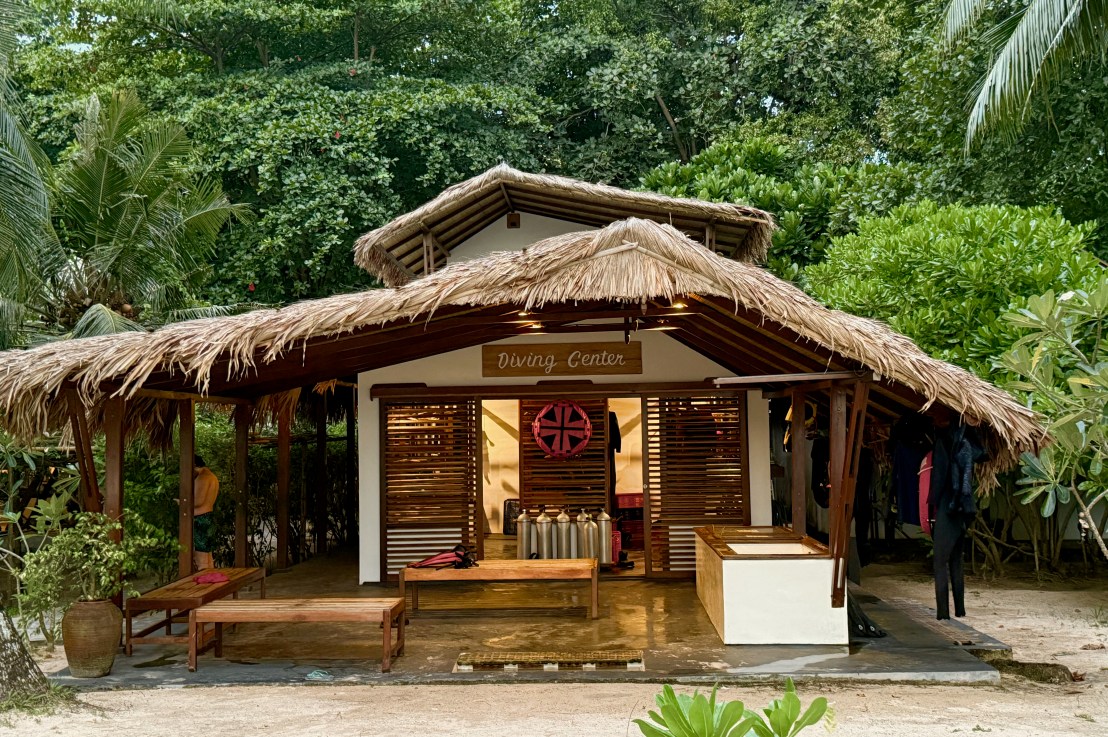
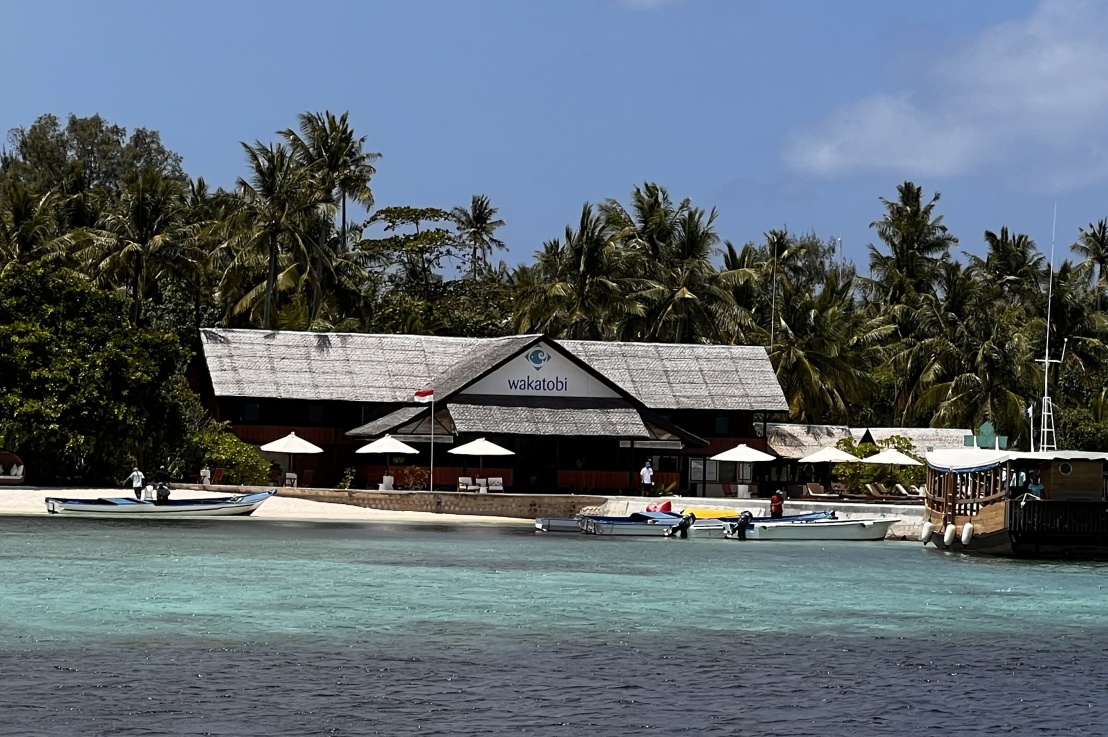
It’s been nearly three years since our last diving trip, to Wakatobi in Indonesia, at the southern end of the Coral Triangle. For this latest trip, we’ve decided to move further north in the triangle, starting at Coral Eye, a so-called “Marine Outpost” on Bangka Island, a short distance away from northern Sulawesi and its main city of Manado.
I’ll leave non-diving-related comments about Indonesia for another post, and I won’t repeat the “why we love coral reef diving” explanation of the post I did at the time. Suffice to say that most of the things I said about Wakatobi apply to Coral Eye, to a greater or lesser extent. On the other hand, I think it’s worth exploring the similarities and the differences between the two resorts, both in the diving and in the general ethos.
The primary intent for both Wakatobi and Coral Eye is the same: provide the guests with a luxurious experience and friction-free diving in waters rich in marine life, while at the same time making an effort to do good to the planet, or at least their particular corner of the planet. A veil is discreetly drawn over the carbon impact of actually getting there (both places are pretty remote from the overwhelming majority of their guests).
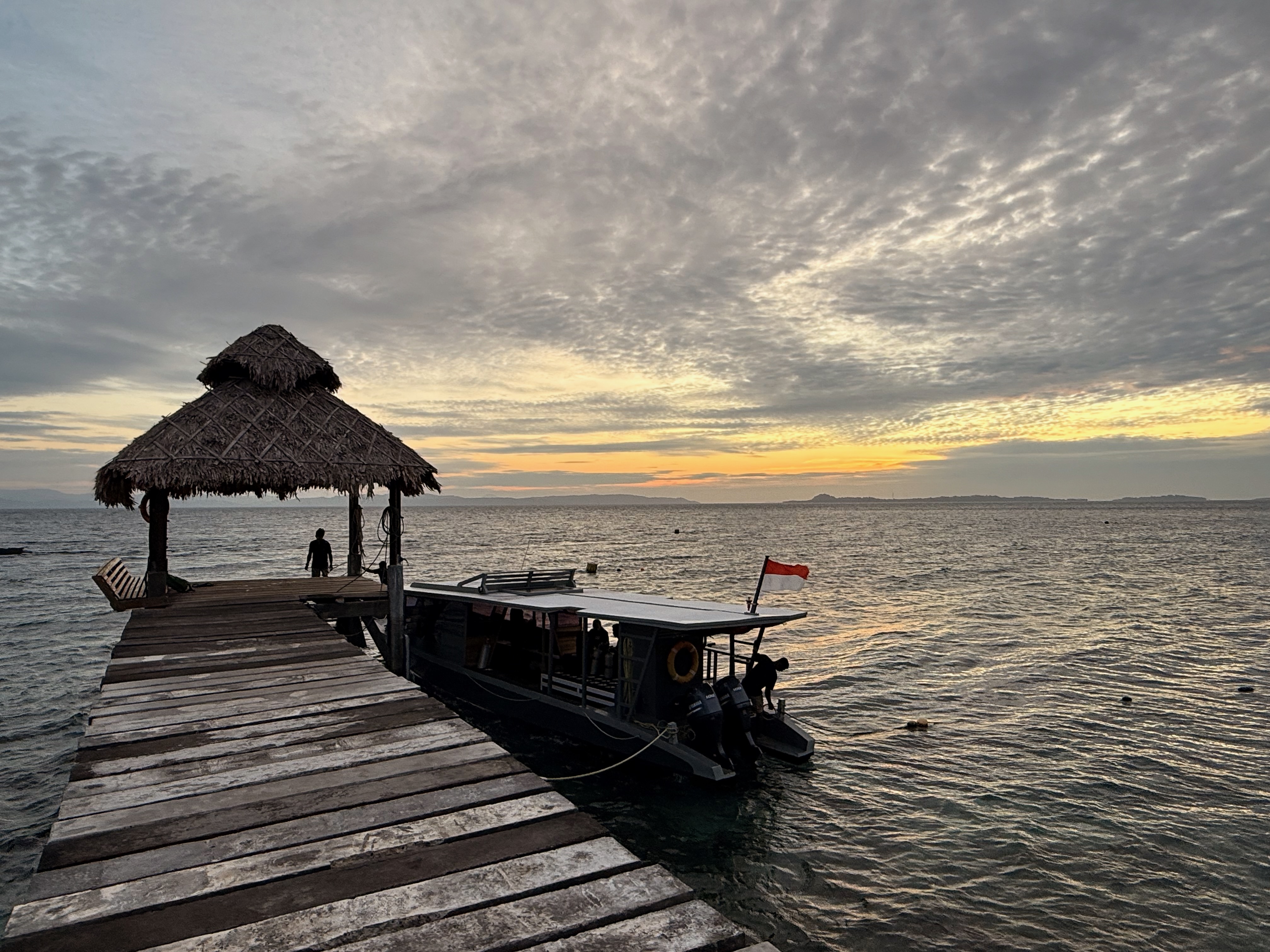
For both, the “do good to the planet” agenda starts with the need to protect the reefs and the fish life. This requires a constant programme of engagement with the local communities to affect their behaviour, most notably in discouraging destructive forms of fishing: dynamite fishing has been common in the Philippines and Indonesia for years, and fishing by releasing poison is another activity that the planet would be better off without. The locals need to be persuaded (a) that both methods are disastrous to their long term well-being and (b) that the resorts can put in more money into the local economy – either by direct funding or indirectly via employment and purchases from local suppliers – than destructive fishing can possibly provide. Fortunately, the more intractable problem of dragnet fishing isn’t common in these kind of areas, coral reefs being really not the ideal venue for it. A more difficult struggle is the battle against plastic, which gets dumped into the sea at a depressingly high rate.
The differences between the two resorts are driven partly by the geography of the two sites and partly by their different histories. Wakatobi is bigger; it occupies the whole of a relatively small island but is close to communities on islands nearby. Their engagement is all about providing education and employment for the locals, with many “graduates” who have worked for the resort getting jobs in other parts of Indonesia.
Coral Eye, in contrast, started out not as a luxury resort but as a marine biology research station. Early in its history, it became clear that the owners could provide funding for the research (for example scholarships and grants) by letting rooms to the general public. It then emerged that the more luxurious the experience, the more money could be generated. Divers from faraway countries were thrilled to mix with researchers at the dinner table and learn more about the marine life they loved watching, and were prepared to pay good money for the experience.
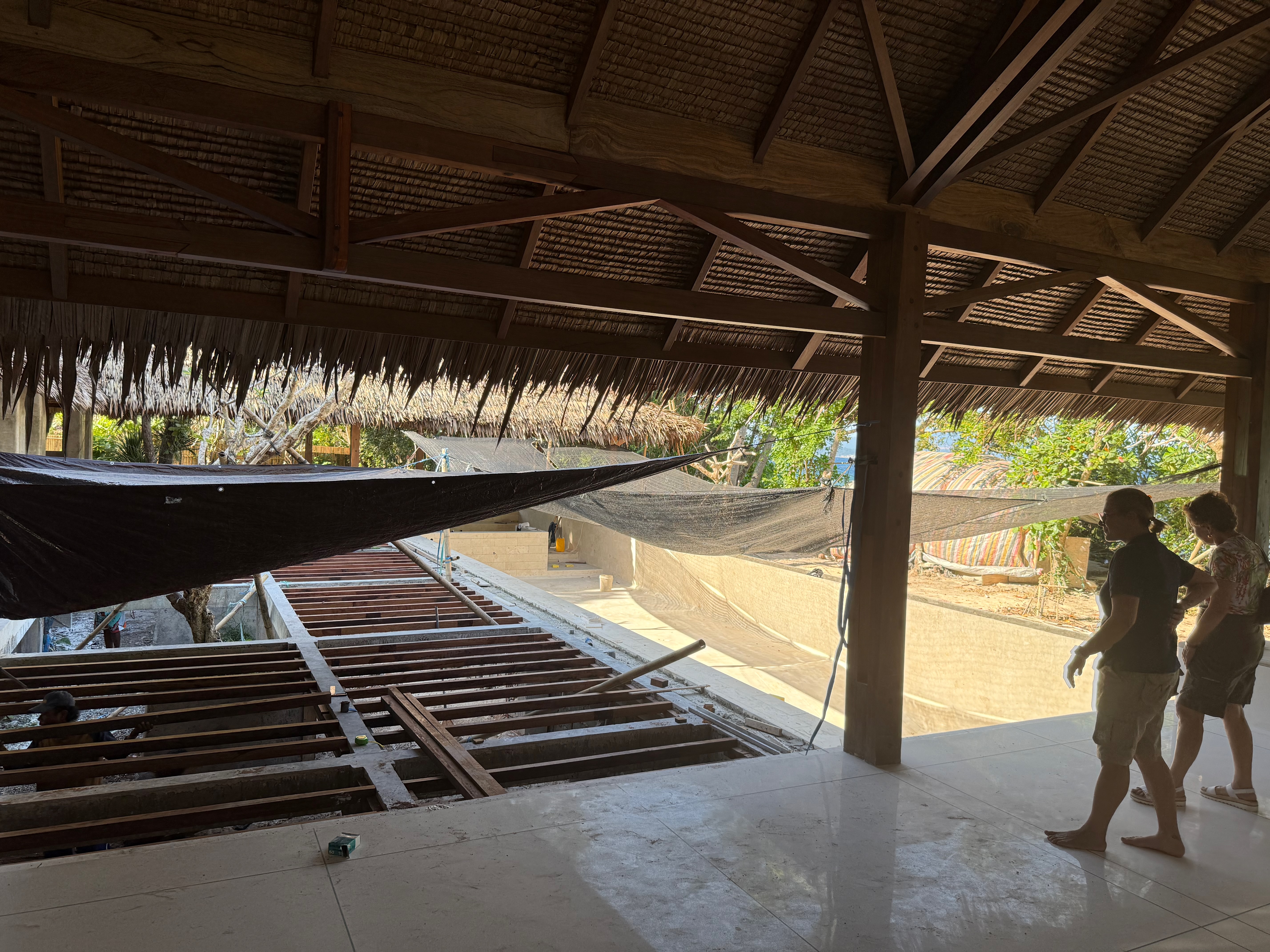
Covid blew a hole in all that. Visits from the researchers became less frequent, so you currently have to be lucky for your trip to coincide with one – there were no biologists present in our trip, although we did see a bunch of the experiments they set up underwater at one of the dive sites. But plans to change all that are at an advanced stage. A new central guest area is almost complete (including a good sized swimming pool, both for general use and learning to free dive). When the new area opens, the existing guest area will be repurposed as a dedicated research centre, allowing Coral Eye to resume its research activities on a larger scale. If all goes well, when it’s complete, it will be possible for guests to gain a far deeper insight into marine life than a mere “look at all the pretty fish”.
In terms of the diving itself: we found the marine life to be very much comparable to what you see at Wakatobi in its profusion and diversity, with sightings of many fish and reef creatures we hadn’t come across before. Mostly, the coral isn’t as scenic – many of the dive sites are blocks or pinnacles of coral scattered over a sandy area (some of then quite large, to be fair) – but there were exceptions amongst the dozen sites we visited: Sahaung 1 was a glorious castle of coral with a blaze of gorgonians that I haven’t seen in many years, while Sahaung 2, next door, was more like the castle’s towers, with imposing pinnacles. For wall dives, you’re recommended to take the hour or so’s boat ride to Bunaken National Park, or to stay at Coral Eye’s sister resort Siladen, from which it’s more easily accessible.
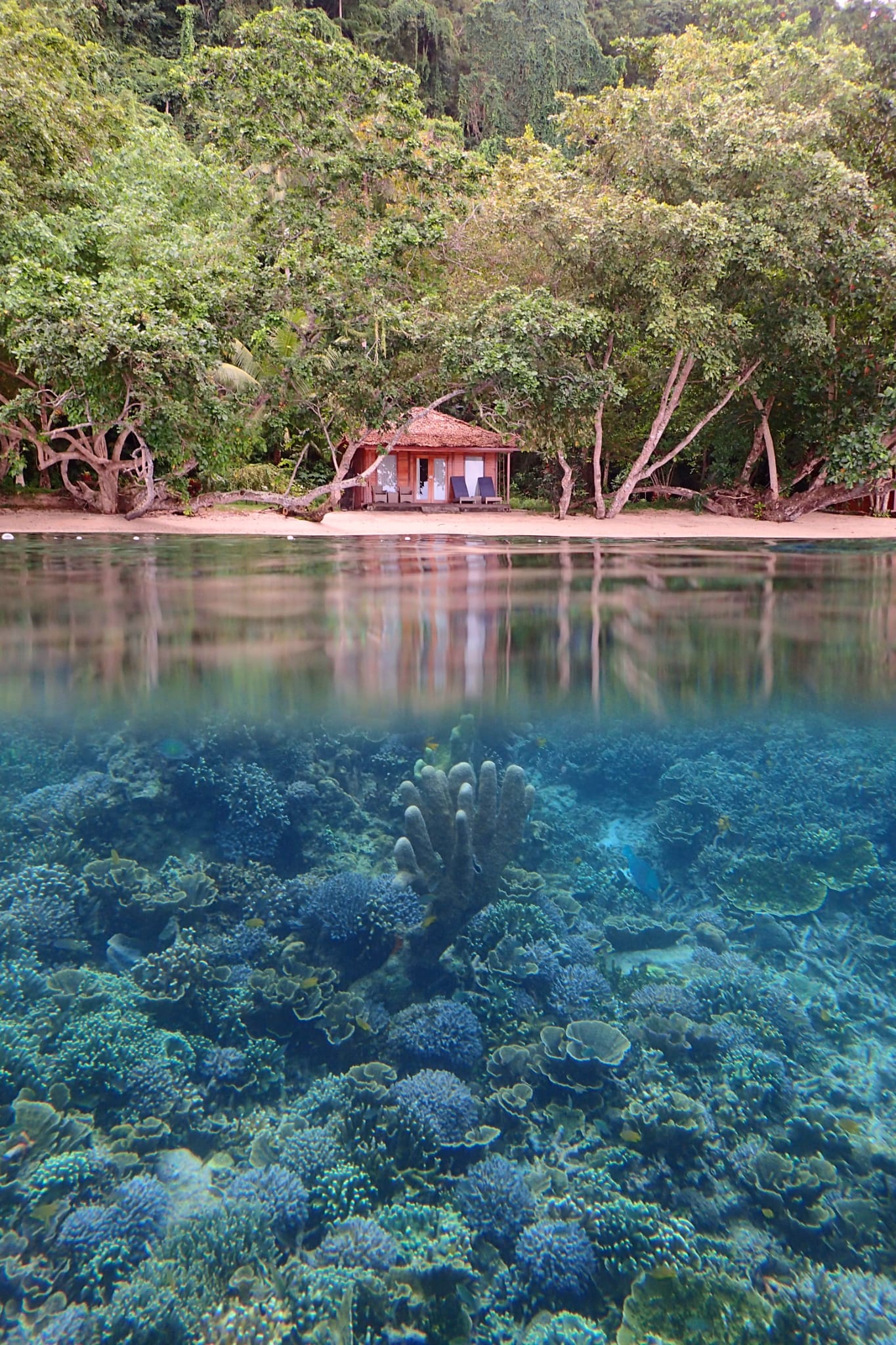
For the second week of this year’s trip, we chose to continue eastward in the Coral Triangle to Sali Bay, on a small island off the coast of South Almahera, the southern chunk of Northern Maluku province, in the Moluccas (the famed Spice Islands). It’s well further off the beaten track than Coral Eye, and our travel agent promised that “Being the only resort in the region offers an unrivalled advantage of being able to explore new undiscovered dive sites.”
This turned out to be false. Although Sali Bay was the first resort in the area, it’s now been joined by at least three more within a fifteen minute boat ride (on a not particularly fast dive boat), and the area is served by various liveaboards. Still, it’s fair to say that in our time there, we only saw other divers on very few occasions. And undiscovered or not, there are two things to be said hugely in favour of the area.
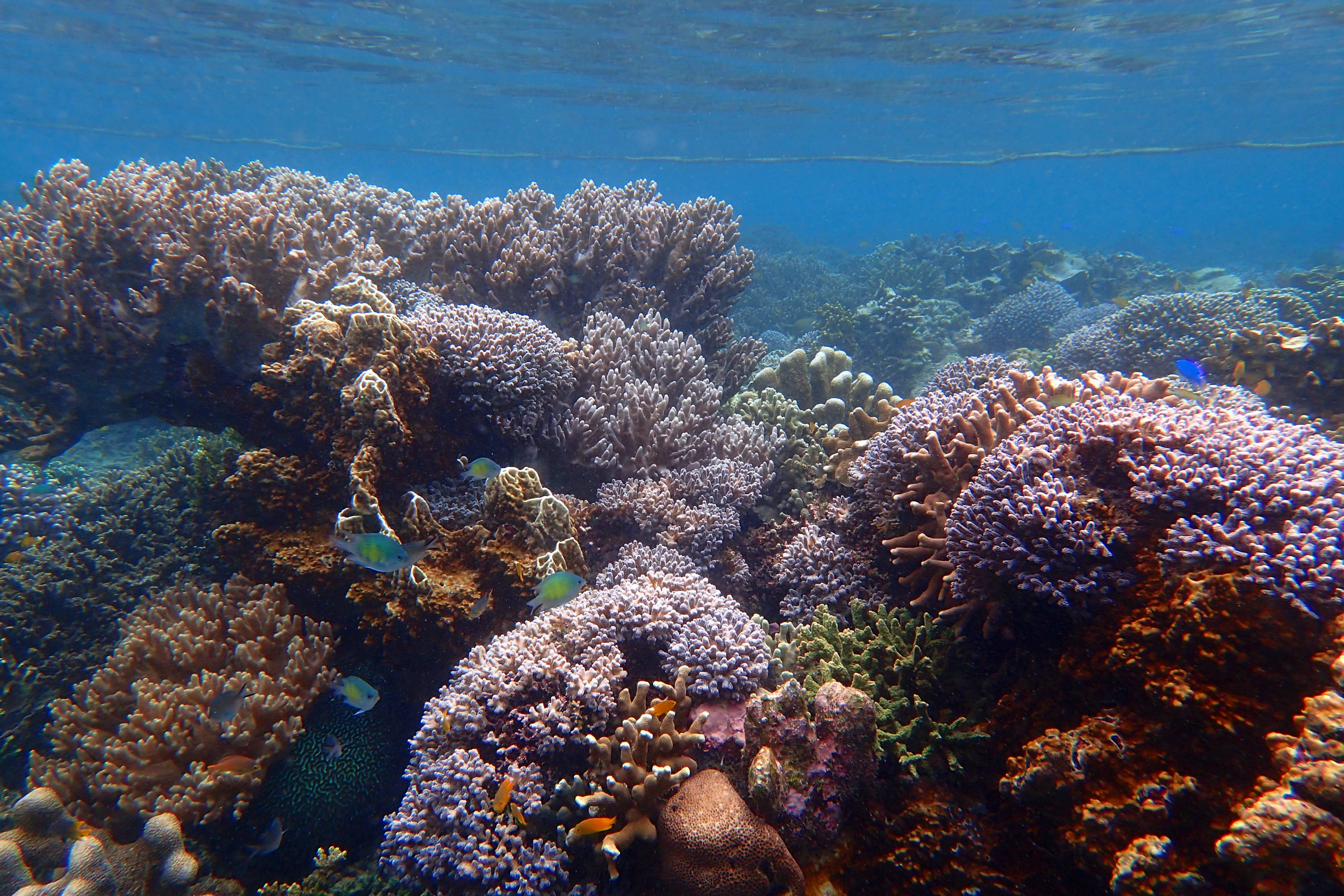
Firstly, the fish life is more profuse than anywhere I’ve ever seen. In one dive, we spent more than twenty minutes accompanied by a shoal of blue triggerfish – they just kept on coming. And it’s not just the one species: both in the blue (with schooling snappers and jacks) and on the reef (with every patch of coral thriving with anthias and damselfish as well as a massive variety of other reef fish), this was an impressive place.
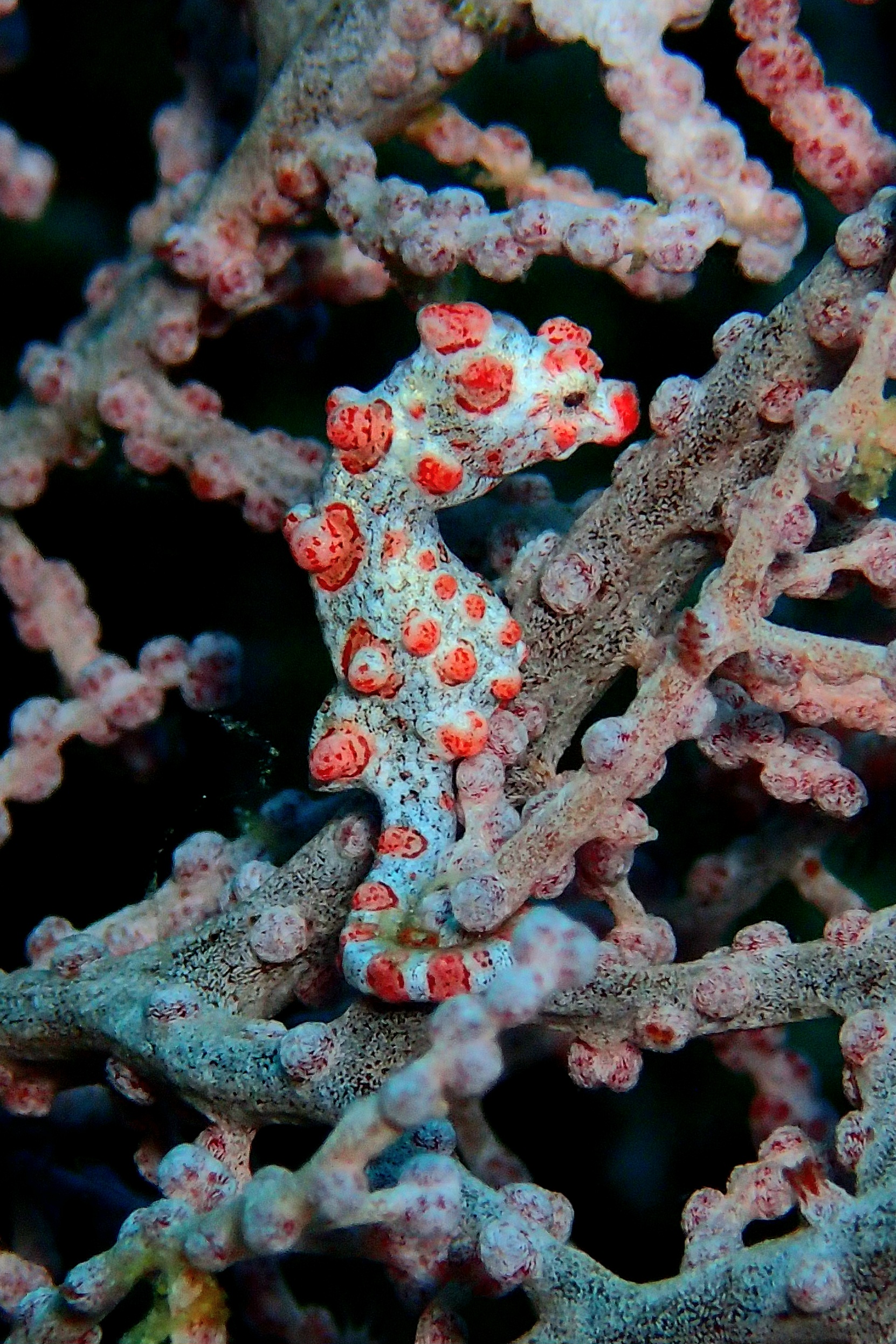
As to the coral: it might not be the most scenic (it’s a similar coral-block-on-sandy-slope landscape to Coral Eye, albeit the slopes are steeper), rather than the more spectacular vertical walls. However, it’s in rude health and it covers a very wide area. We often talk about the areas of branching corals at a depth of around 4-6m at the end of a dive as a “coral garden”: on that metaphor, one of our dives was a “coral Hyde Park”, stretching on far further than we could cover in our time available. In general, one could see multiple species of coral side by side, with exceptionally large colonies of each. So we may not have felt like intrepid dive explorers, but it was a heartening experience to see coral in such good shape.
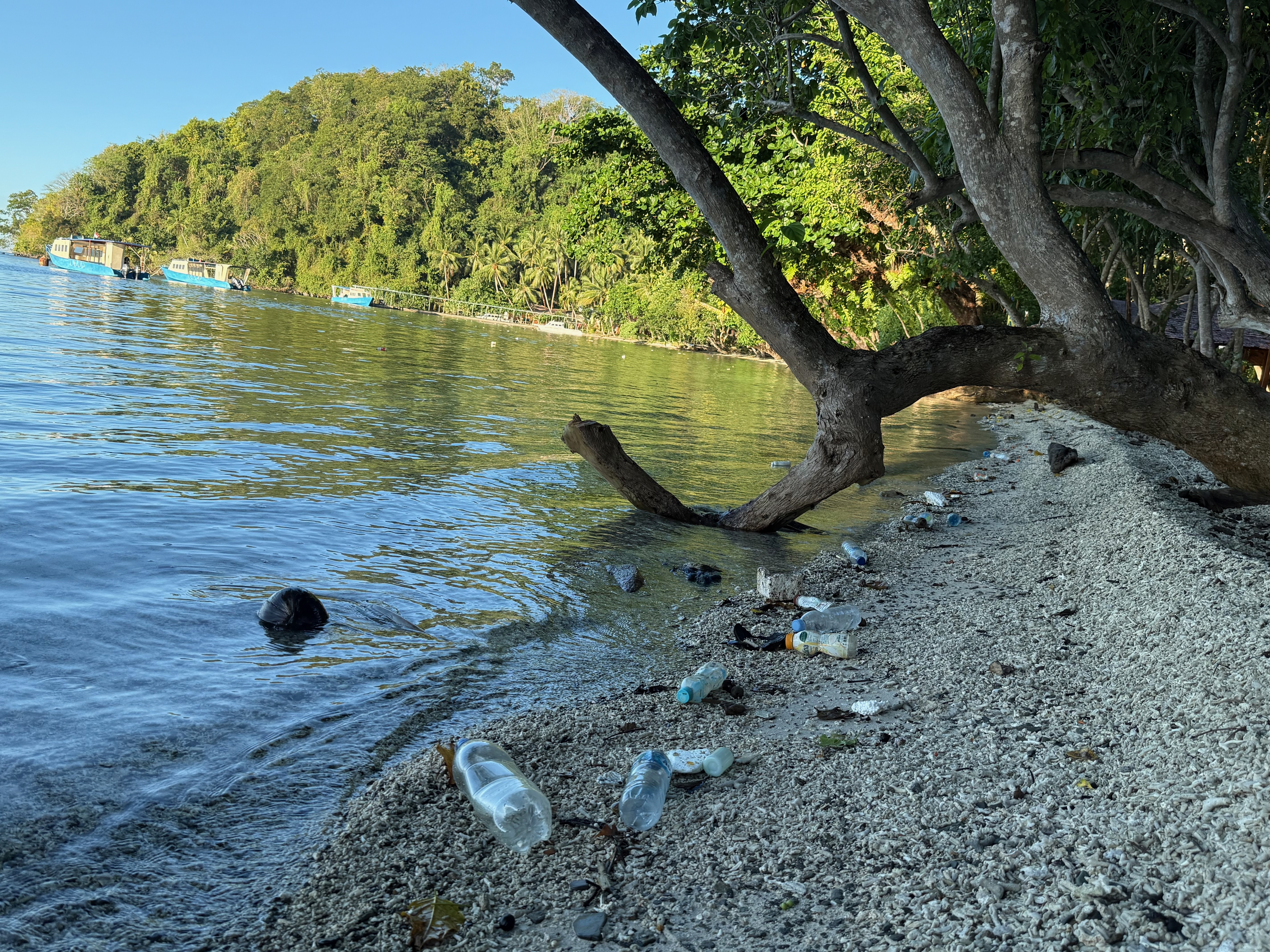
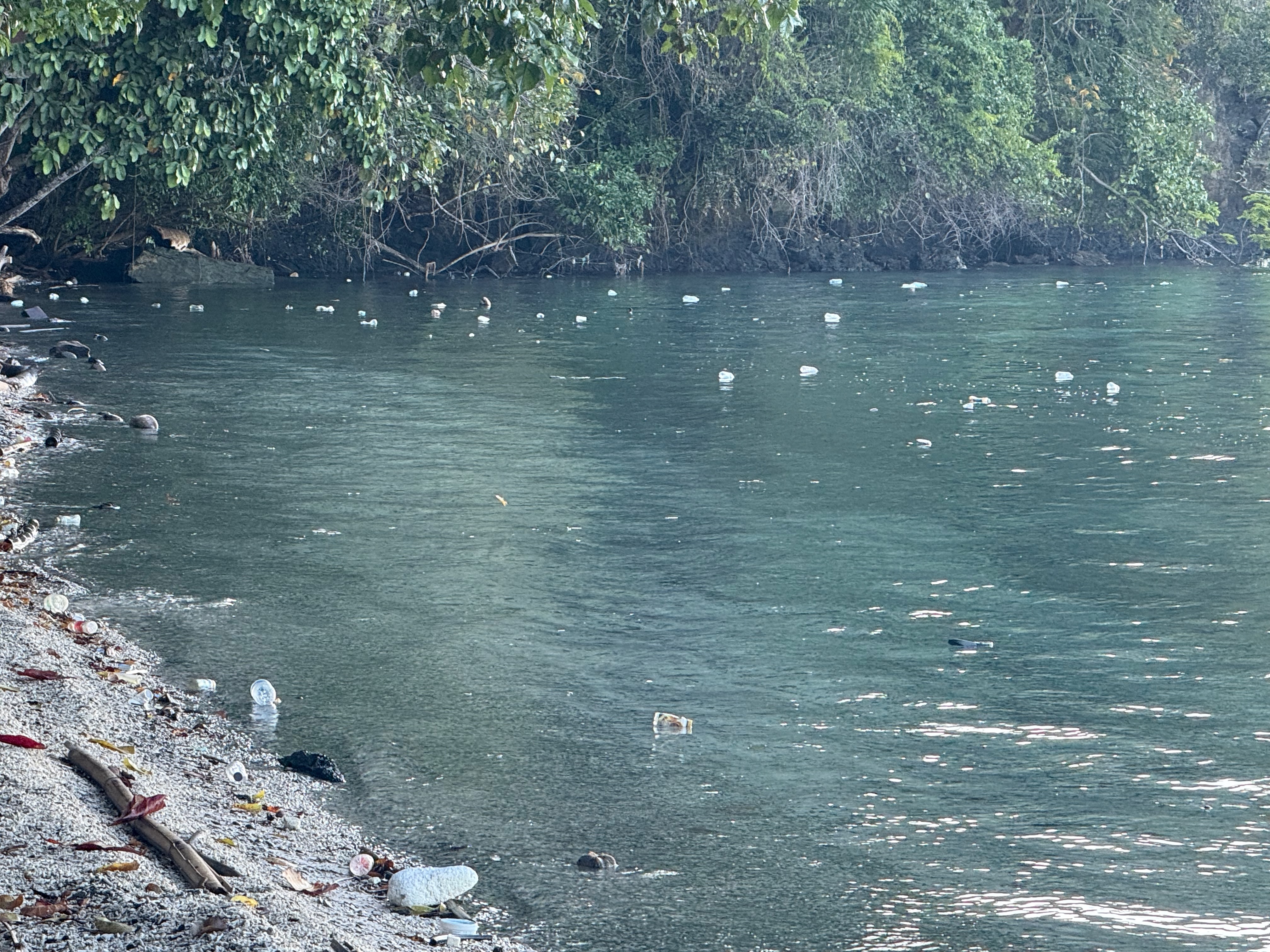
With one caveat. Some boat rides felt like ploughing through a sea of plastic, mostly food packaging and bottles. Most probably, this wasn’t local – at a population of 10,000, the nearest town of Labuha isn’t exactly a thriving metropolis, and other guests told us that the rubbish had only arrived recently, so I suppose it was probably carried in on currents in the wake of a typhoon in the Philippines whose tail end we caught. But local or not, concentrated or not, it was a sobering experience. The charities trying to deal with the issue of plastic in the oceans need our support.
Huge thanks to Frederico Navarro, a fellow guest at Sali Bay, for the wonderful underwater photos
 Polything