Tag: Asia

Travel notes from Indonesia above water

Travel notes from Indonesia above water

Our recent trip to Indonesia was mainly about diving (see the previous post). But as on all diving trips, there was also a day or two of seeing around, in fairly out of the way parts of the country. Our first day out was in the small port of Labuha (population 10,000, according to our guide), on Pulau Bacan in the Maluku Islands, aka the Moluccas, the famed Spice Islands which were of such great interest to European colonists. (“Pulau”, by the way, means “Island”, and the “c” in “Bacan” is pronounced “ch”). Our second was in the considerably larger city of Manado (population 458,582, according to Wikipedia, or 1.4m for its metropolitan area) at the Northern end of Sulawesi – the large island immediately recognisable on a map because of its spidery arms.

Here, in no particular order, are some impressions that we gathered about the country.
Firstly, there’s been a lot of development, most probably in relatively recent years. My memories of past visits to Malaysia or Indonesia are of a lot of simple wooden buildings in a fairly standard style that you would see anywhere in Asia, and not all that well maintained – the climate doesn’t really lend itself to the spick and span look to which Europeans aspire, and in any case, doesn’t need it in terms of perfect insulation. In both locations on this trip, there were plenty enough of these, but there were also large numbers of modern structures in concrete and steel. The bigger and fancier ones were either government buildings or places of worship (mosques in Labuha, churches in Manado), showing clear evidence of investment from sources outside the region. But even ordinary homes included some buildings that looked very solid and well made.
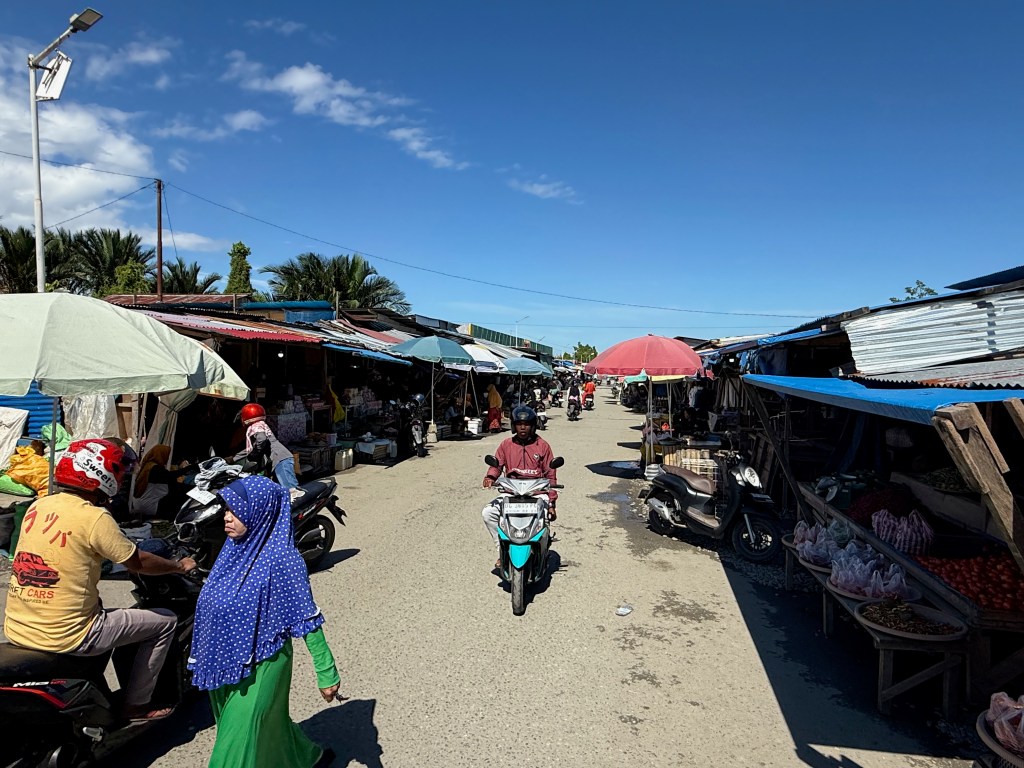
Labuha market

The growth very much follows a ribbon development model. On both routes from our boat mooring point to the city, there was hardly any open countryside bordering immediately onto the road – for almost the whole length of the road, there was a strip of buildings one deep (be they houses, shops or something larger). These were not major roads; the road quality seemed to be very good along most of the length, but with multiple places where the weather had wrecked a chunk of road. Particularly near Manado, there were a fair number of crews mending the worst damage – but for the most part, these were very small crews with very little equiment – a couple of men with shovels and a sack of cement.
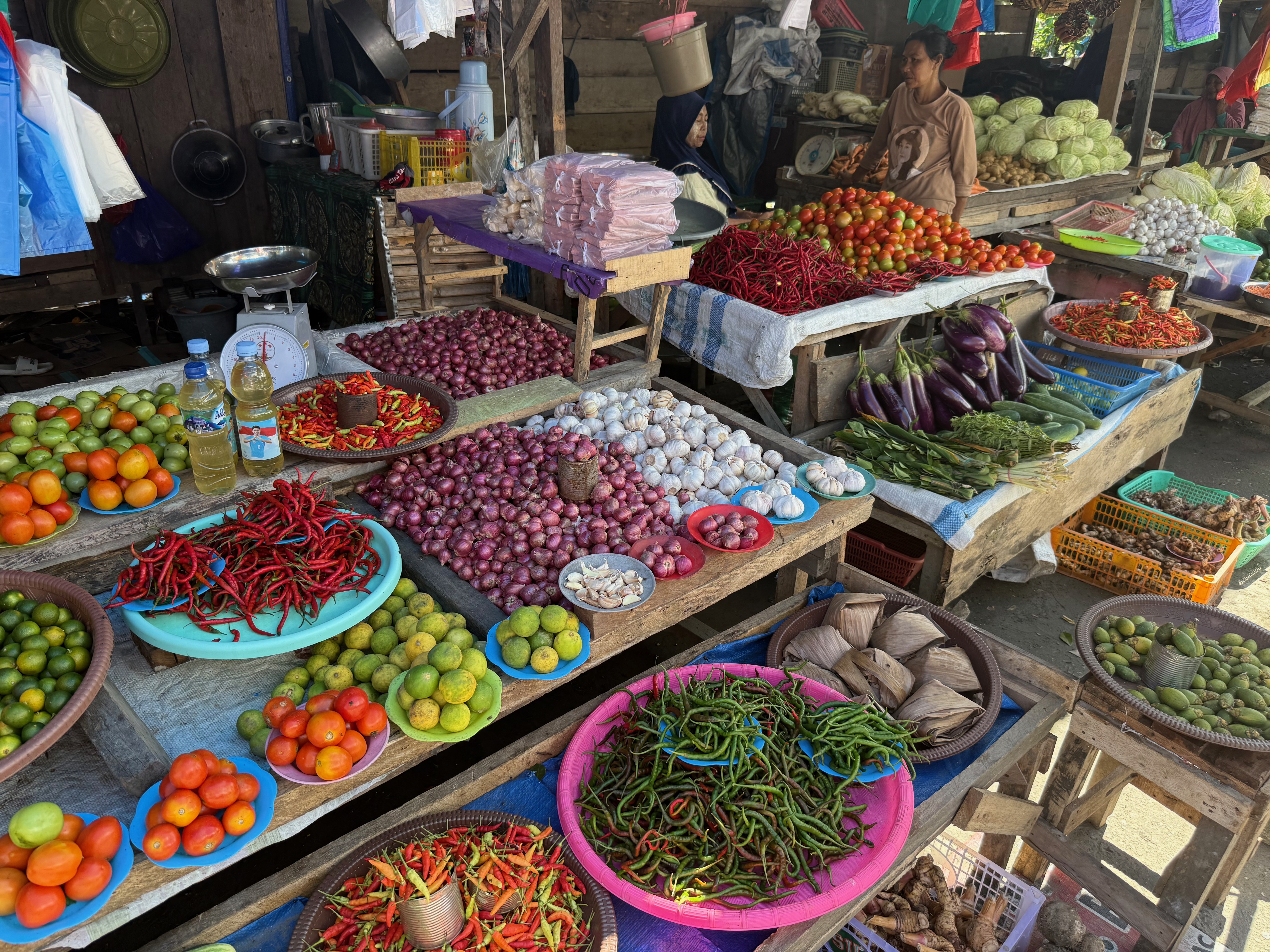
Labuha market

Fundamentally, Indonesia has the potential to be a wealthy country. It was a major oil producer in the past and remains a major gas producer, with an annual production of around 60 billion cubic metres – which makes it the largest in the region after China and Australia. And it’s incredibly fertile: pretty much anything can grow here. I can’t really speak for the large populous cities in Java and Sumatra, but in Manado, our guide related how a US visitor had told him that whatever apocalypse happened in the world, “you’ll be fine here. You’ll always be able to feed yourselves”.

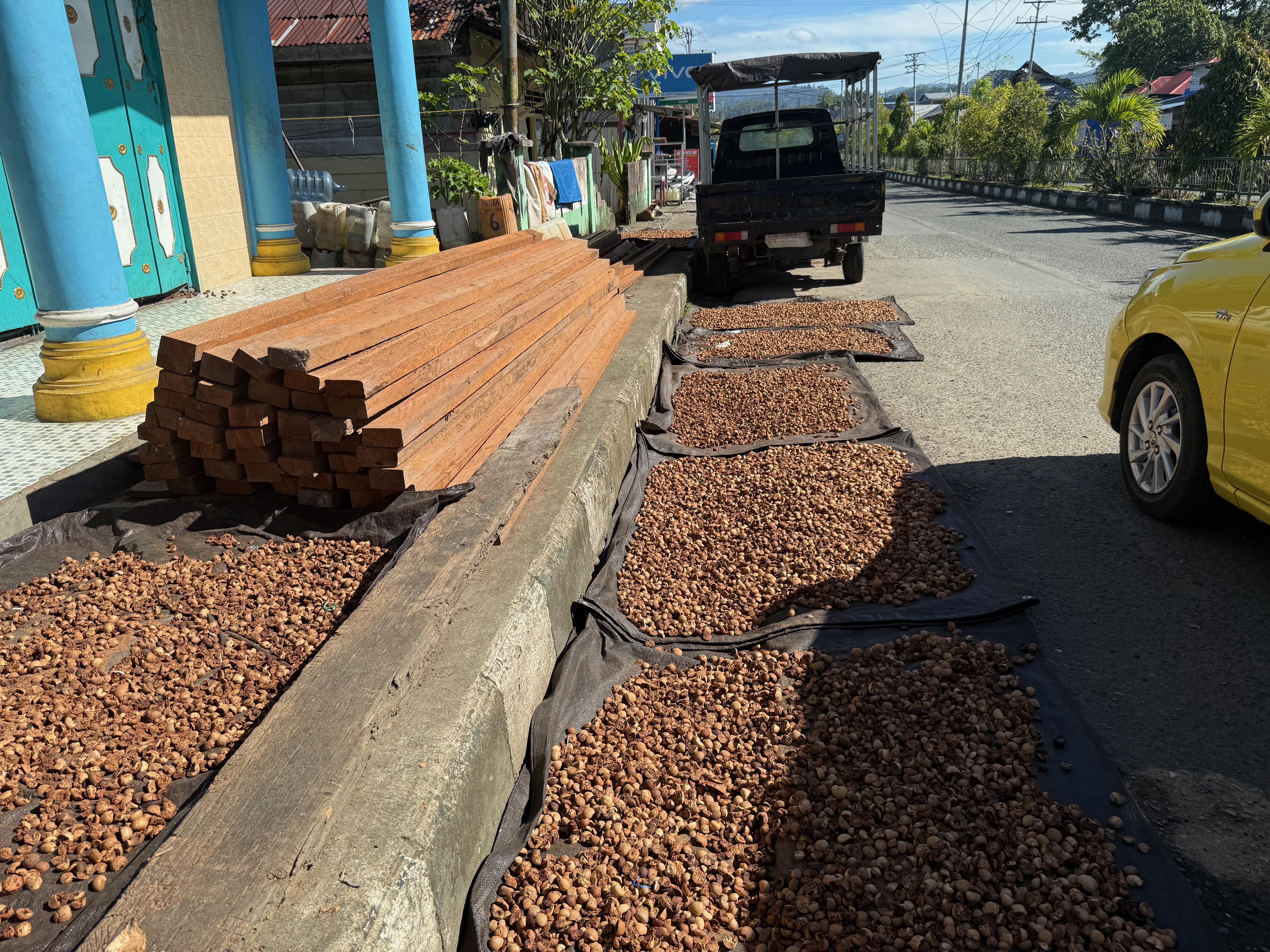
And, indeed, the country was an incredibly foody place. We were expecting the glorious spice traders in Labuha – after all, the place has been the epicentre of nutmeg, mace and cloves for centuries. What we weren’t expecting was the incredible food market, with dozens of stalls selling all manner of fruit and vegetables, bean curds, spices, palm tree products, raw and smoked fish, chickens. The quality and vareity of vegetables was the real eye opener: ranging from characteristically Asian items like long beans and pak choi through to recent imports like avocados, through to things we’d never heard of like papaya flowers (tasty, and allegedly good for diabetics). The two lunches we had on these trips were in pretty ordinary hole-in-the-wall type places, and the food on both was outstanding, doing full justice to these lovely ingredients.
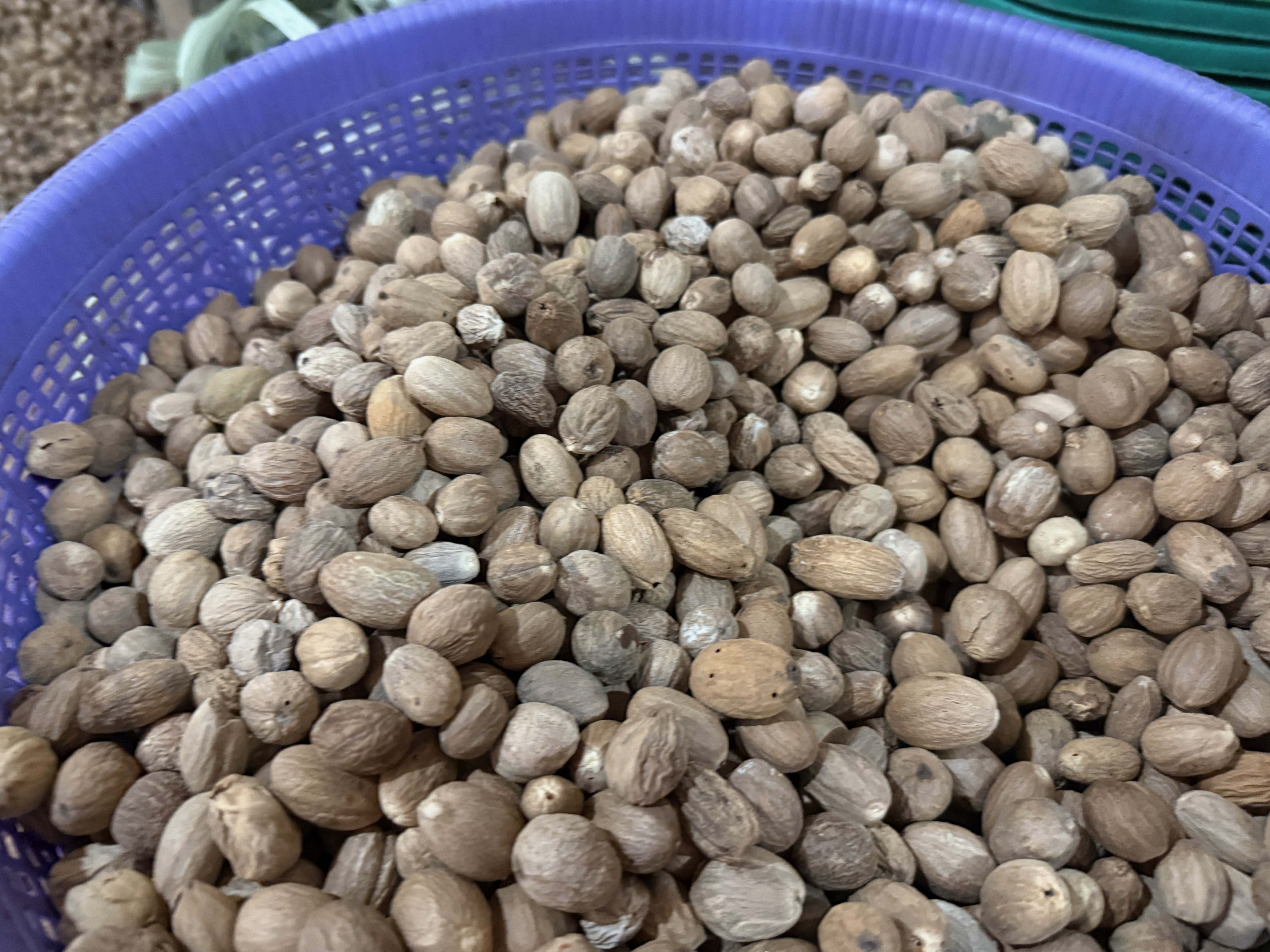
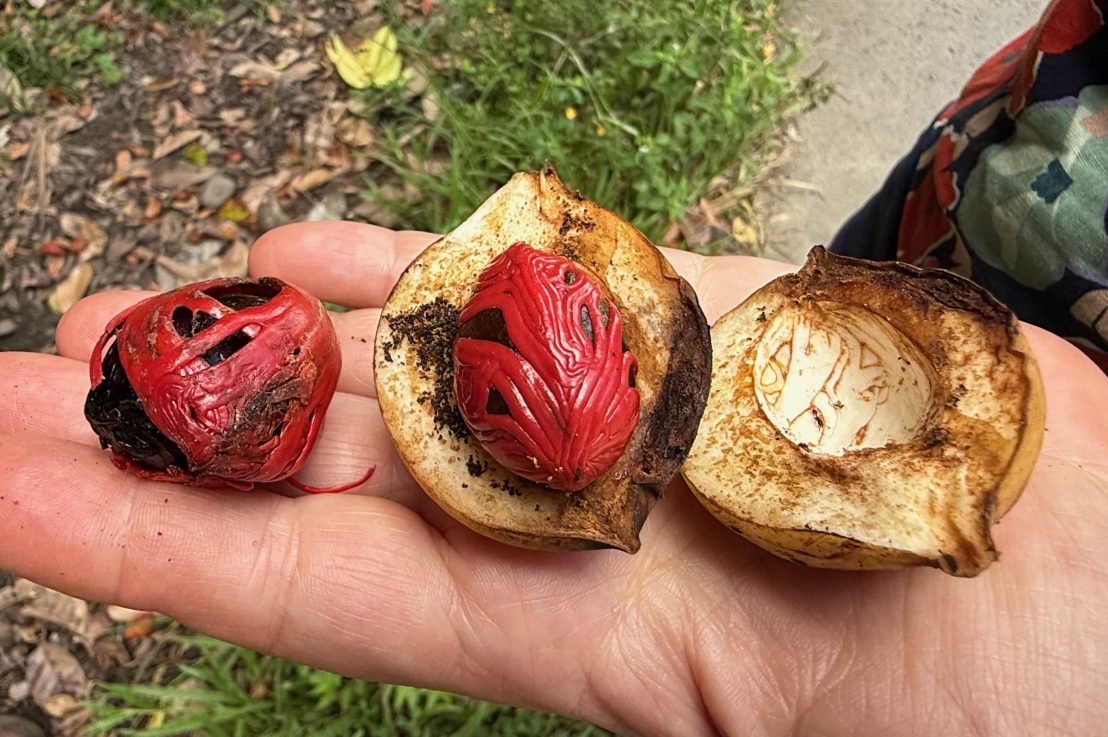
Nutmegs

The other food and beverage surprise was a reminder that this is a coffee-growing country:  one of the best cappuccinos I’ve had in a long time was served to us in the improbable venue of the Hapa Kitchen and Bakery, a small café airside in Manado Airport.

We had several reminders of how religiously and ethnically diverse the country is. While most of it is Muslim, there are big Hindu areas (most notably Bali) and big Christian areas (of which Manado is one). In the past, different religions seem to have co-existed in relative harmony, but there was a bad conflict, “the Ambon Riots”, in the Maluku Islands at the turn of the millennium. The obvious visible effect of this was at the end of class time at a very large boarding school, with hundreds of girls spilling out of the school wearing hijabs. According to our guide, the wearing of hijabs started in the wake of the Ambon Riots. The other sign of diversity was seeing instructions in more than one language: while the vast majority of Indonesians speak the lingua franca Bahasa Indonesia, it’s the primary language of only 20% of the population, with over 800 languages recorded in 2010. (Having said which, both Manado and Labuha have a higher-than-average proportion of Bahasa-speakers).
The flora and fauna are also diverse. Like most British, I suspect, I was unaware of the name of the Victorian naturalist Alfred Russel Wallace, a contemporary of Darwin who gave his name to the “Wallace Line” which splits Indonesia down the middle, with mainly Asian species on one side and Australisian species on the other. That made it surprising to discover that Wallace is very much remembered in the Maluku Islands, where he did a substantial amount of field work. Our guide on Bacan island wore a T shirt emblazoned with the gorgeous butterfly Ornithoptera croesus, otherwise known as Wallace’s Golden Birdwing. There are also many species whose latin names have the suffix “wallacei”.
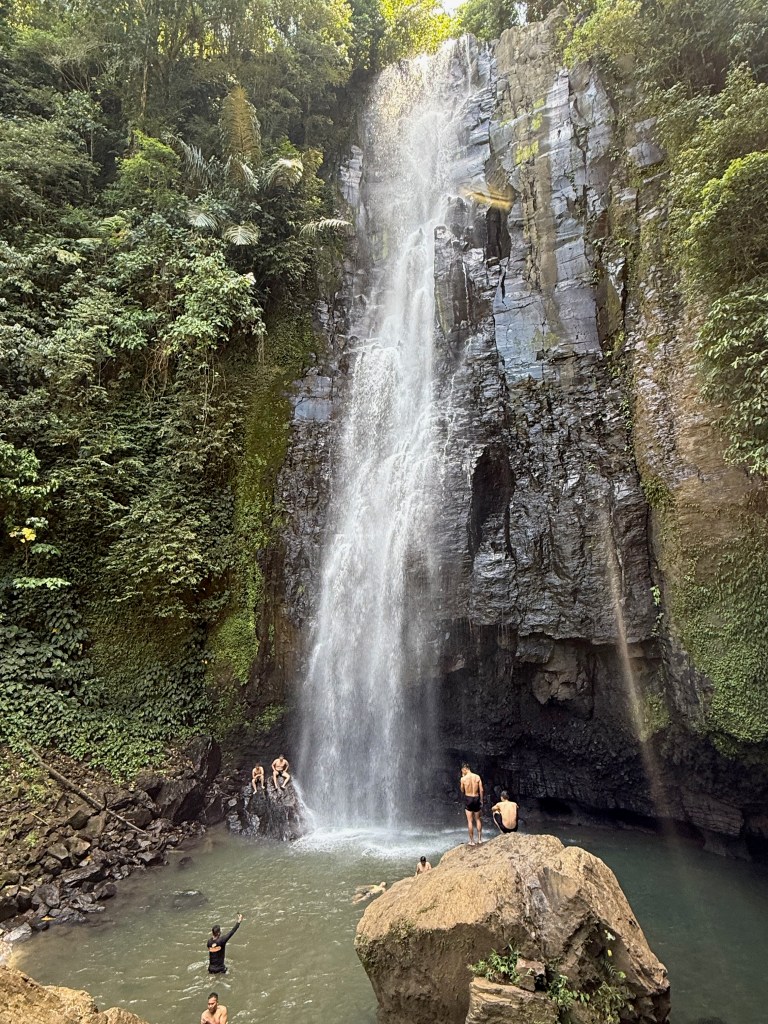
Tunan Telawaan waterfall near Manado

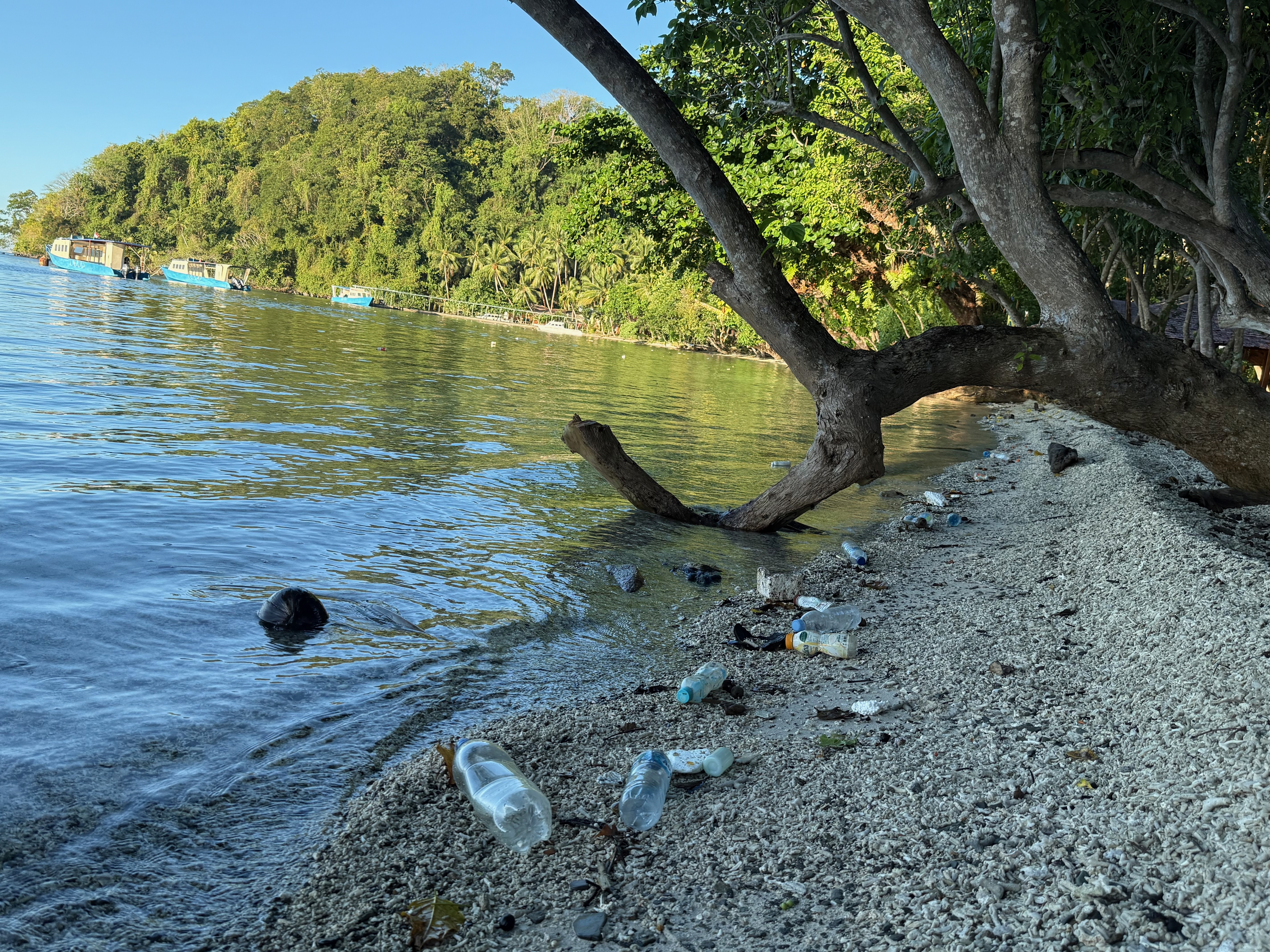
Having said all this good stuff, you can’t deny that Indonesia is still a developing country, and there are things that you’d hope they will improve – for example, our seat belts only worked on one car journey out of six. Generally, attitudes to safety seem on the lax side – we certainly saw that on our boats, with luggage piled up in front of the compartment with the life jackets, or with the boat handler cheerfully smoking a cigarette three feet away from a fuel tank whose cap had been replaced by a bit of rag. And I’ve already mentioned the most important of my worries in the diving post – plastic pollution. There are separated recycling bins in Manado airport, which I suppose is a start, but we did see an awful lot of food packaging littered on the streets.

Still, those are relatively modest cavils. The truth is, all we got was a little sampler of this fascinating country. I hope I’ll be back for more some day – and to other islands.
Indonesia underwater: Coral Eye and South Halmahera

Indonesia underwater: Coral Eye and South Halmahera

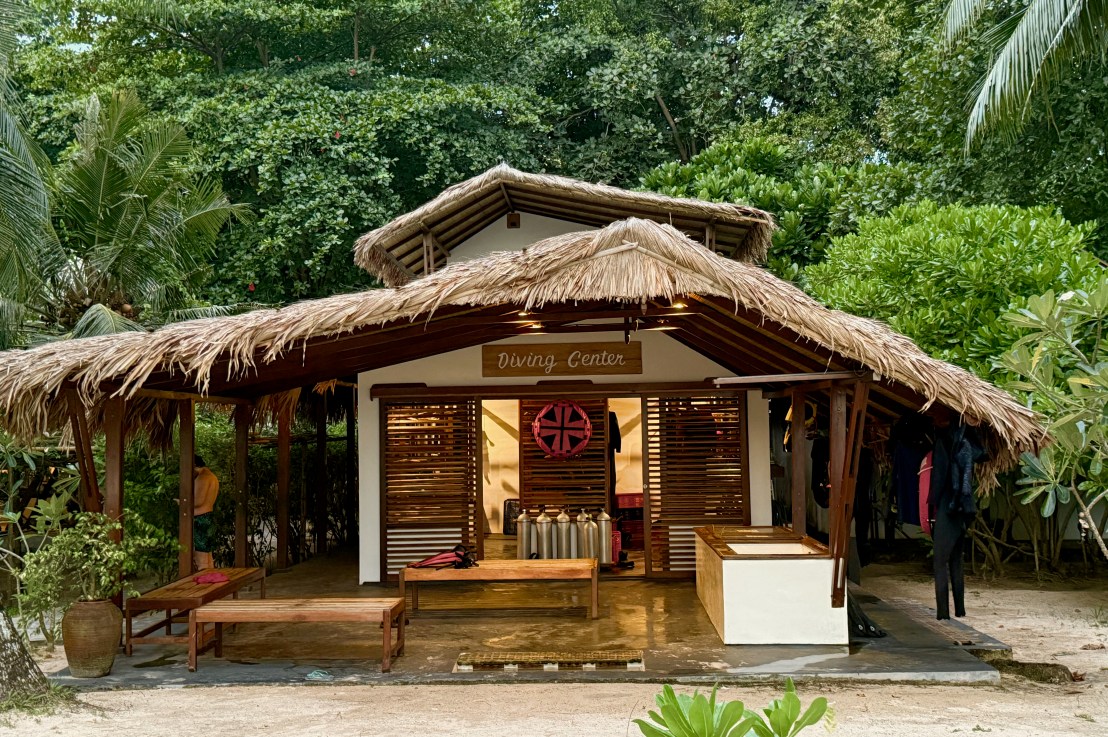
It’s been nearly three years since our last diving trip, to Wakatobi in Indonesia, at the southern end of the Coral Triangle. For this latest trip, we’ve decided to move further north in the triangle, starting at Coral Eye, a so-called “Marine Outpost” on Bangka Island, a short distance away from northern Sulawesi and its main city of Manado.

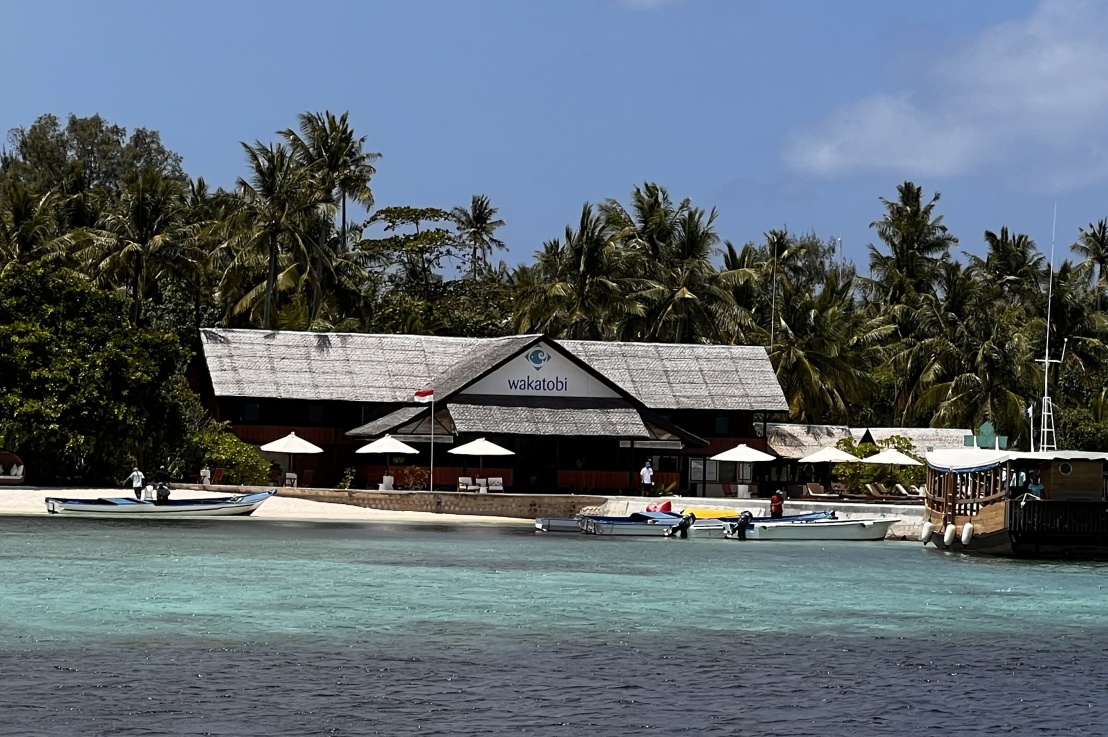
I’ll leave non-diving-related comments about Indonesia for another post, and I won’t repeat the “why we love coral reef diving” explanation of the post I did at the time. Suffice to say that most of the things I said about Wakatobi apply to Coral Eye, to a greater or lesser extent. On the other hand, I think it’s worth exploring the similarities and the differences between the two resorts, both in the diving and in the general ethos.

The primary intent for both Wakatobi and Coral Eye is the same: provide the guests with a luxurious experience and friction-free diving in waters rich in marine life, while at the same time making an effort to do good to the planet, or at least their particular corner of the planet. A veil is discreetly drawn over the carbon impact of actually getting there (both places are pretty remote from the overwhelming majority of their guests).

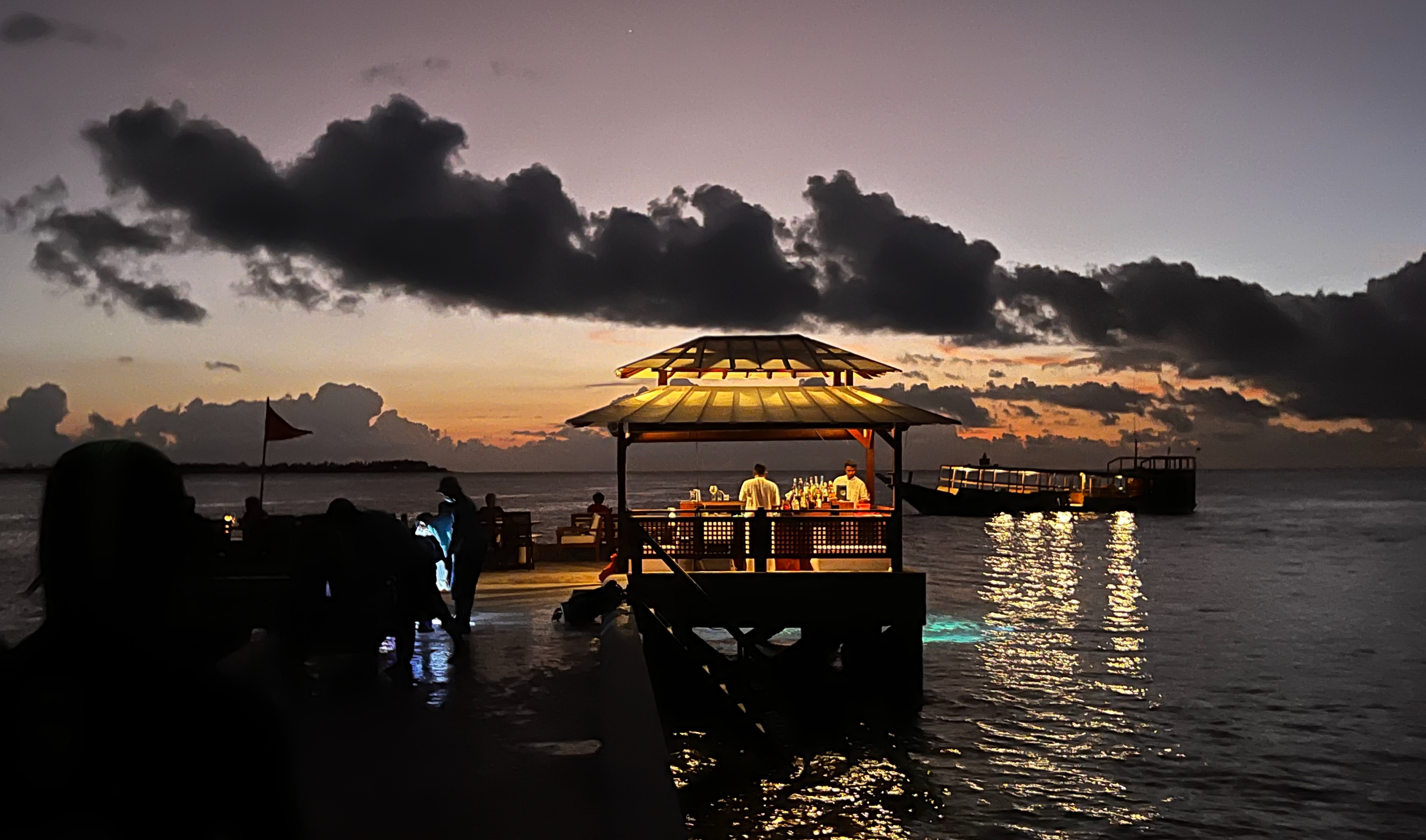
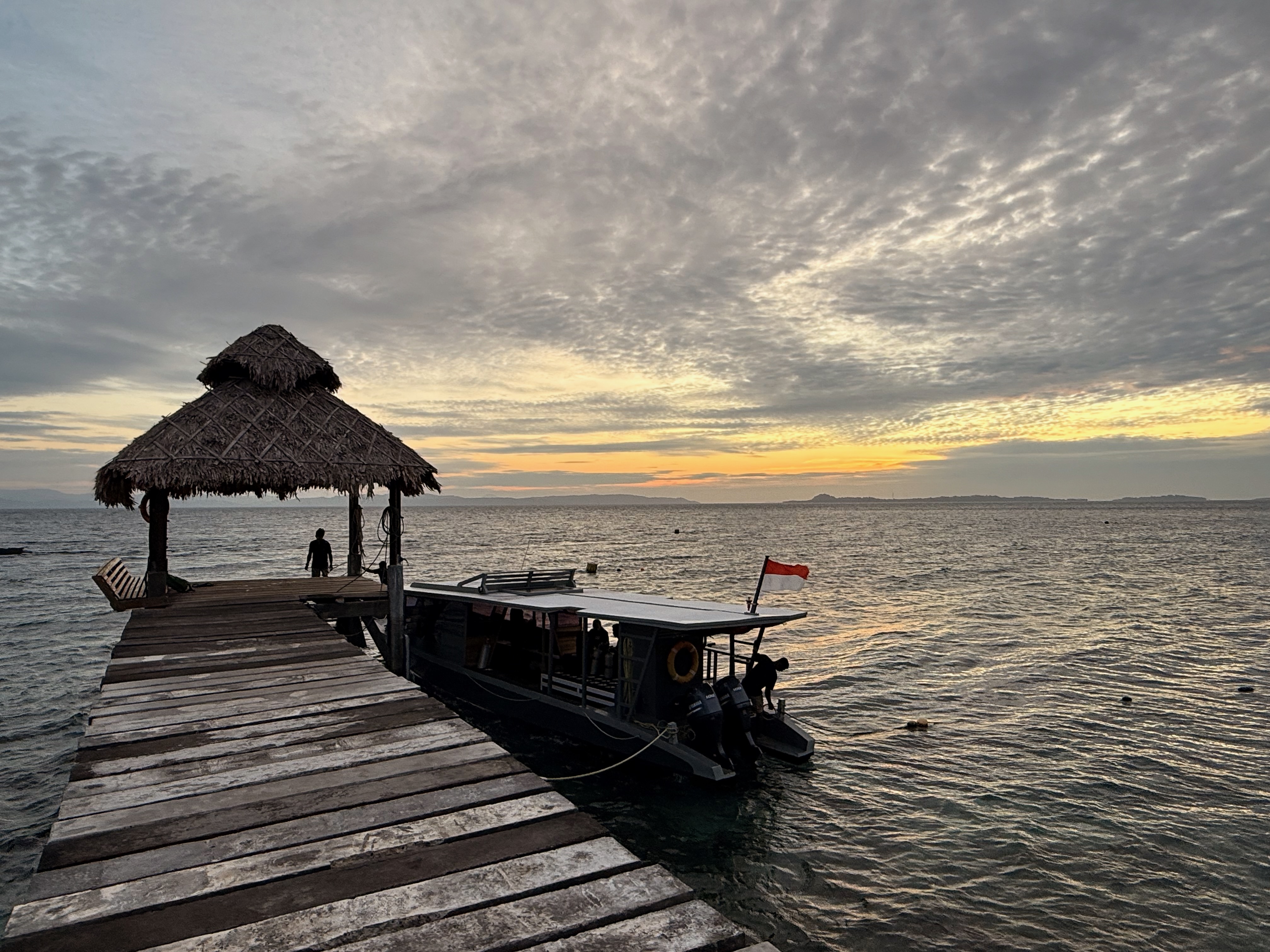
Jetty and dive boat at Coral Eye

For both, the “do good to the planet” agenda starts with the need to protect the reefs and the fish life. This requires a constant programme of engagement with the local communities to affect their behaviour, most notably in discouraging destructive forms of fishing: dynamite fishing has been common in the Philippines and Indonesia for years, and fishing by releasing poison is another activity that the planet would be better off without. The locals need to be persuaded (a) that both methods are disastrous to their long term well-being and (b) that the resorts can put in more money into the local economy – either by direct funding or indirectly via employment and purchases from local suppliers – than destructive fishing can possibly provide. Fortunately, the more intractable problem of dragnet fishing isn’t common in these kind of areas, coral reefs being really not the ideal venue for it. A more difficult struggle is the battle against plastic, which gets dumped into the sea at a depressingly high rate.

The differences between the two resorts are driven partly by the geography of the two sites and partly by their different histories. Wakatobi is bigger; it occupies the whole of a relatively small island but is close to communities on islands nearby. Their engagement is all about providing education and employment for the locals, with many “graduates” who have worked for the resort getting jobs in other parts of Indonesia.

Coral Eye, in contrast, started out not as a luxury resort but as a marine biology research station. Early in its history, it became clear that the owners could provide funding for the research (for example scholarships and grants) by letting rooms to the general public. It then emerged that the more luxurious the experience, the more money could be generated. Divers from faraway countries were thrilled to mix with researchers at the dinner table and learn more about the marine life they loved watching, and were prepared to pay good money for the experience.

New building in progress at Coral Eye ©️ David Karlin
New building in progress at Coral Eye

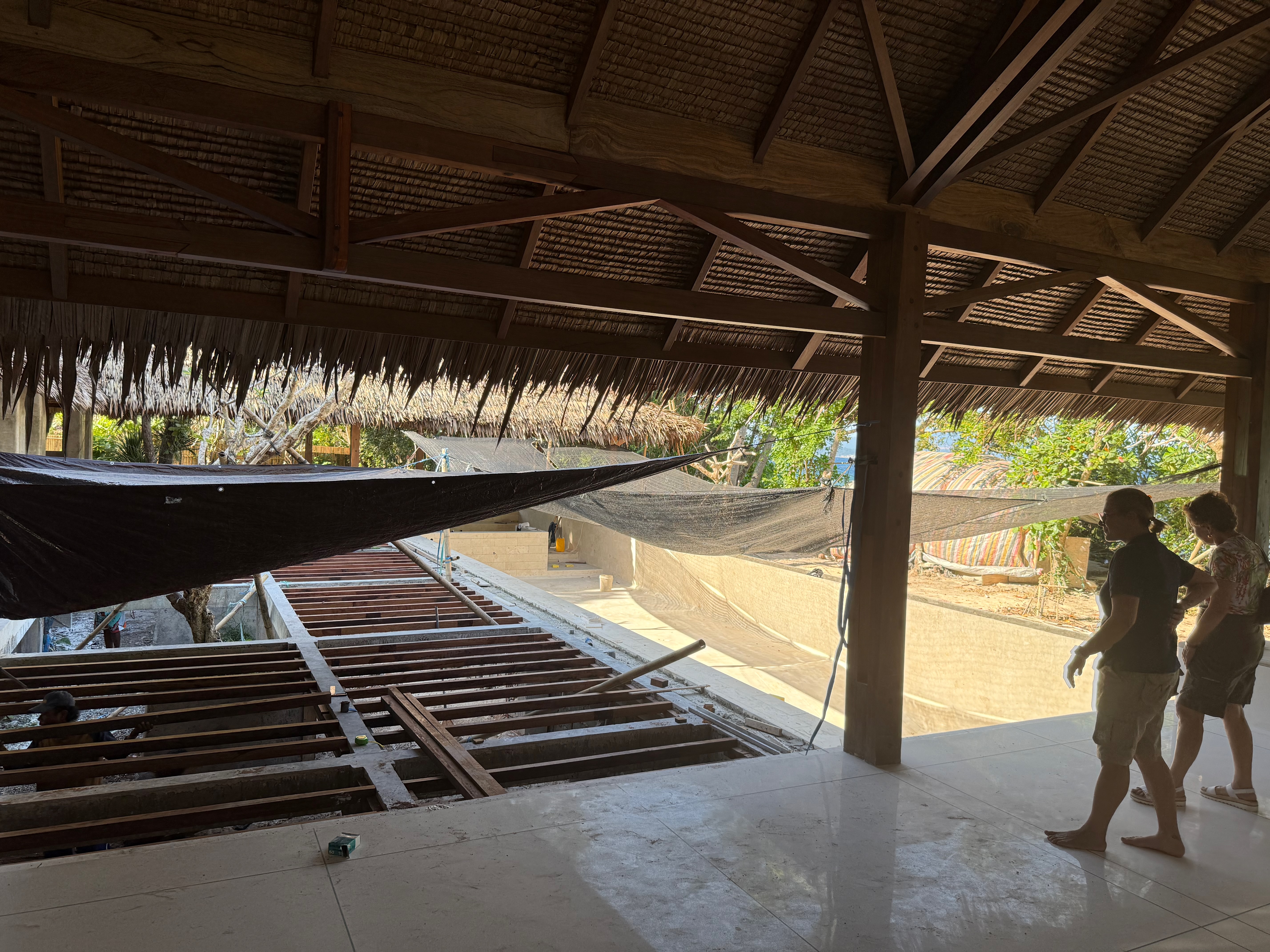
Covid blew a hole in all that. Visits from the researchers became less frequent, so you currently have to be lucky for your trip to coincide with one – there were no biologists present in our trip, although we did see a bunch of the experiments they set up underwater at one of the dive sites. But plans to change all that are at an advanced stage. A new central guest area is almost complete (including a good sized swimming pool, both for general use and learning to free dive). When the new area opens, the existing guest area will be repurposed as a dedicated research centre, allowing Coral Eye to resume its research activities on a larger scale. If all goes well, when it’s complete, it will be possible for guests to gain a far deeper insight into marine life than a mere “look at all the pretty fish”.

In terms of the diving itself: we found the marine life to be very much comparable to what you see at Wakatobi in its profusion and diversity, with sightings of many fish and reef creatures we hadn’t come across before. Mostly, the coral isn’t as scenic – many of the dive sites are blocks or pinnacles of coral scattered over a sandy area (some of then quite large, to be fair) – but there were exceptions amongst the dozen sites we visited: Sahaung 1 was a glorious castle of coral with a blaze of gorgonians that I haven’t seen in many years, while Sahaung 2, next door, was more like the castle’s towers, with imposing pinnacles. For wall dives, you’re recommended to take the hour or so’s boat ride to Bunaken National Park, or to stay at Coral Eye’s sister resort Siladen, from which it’s more easily accessible.

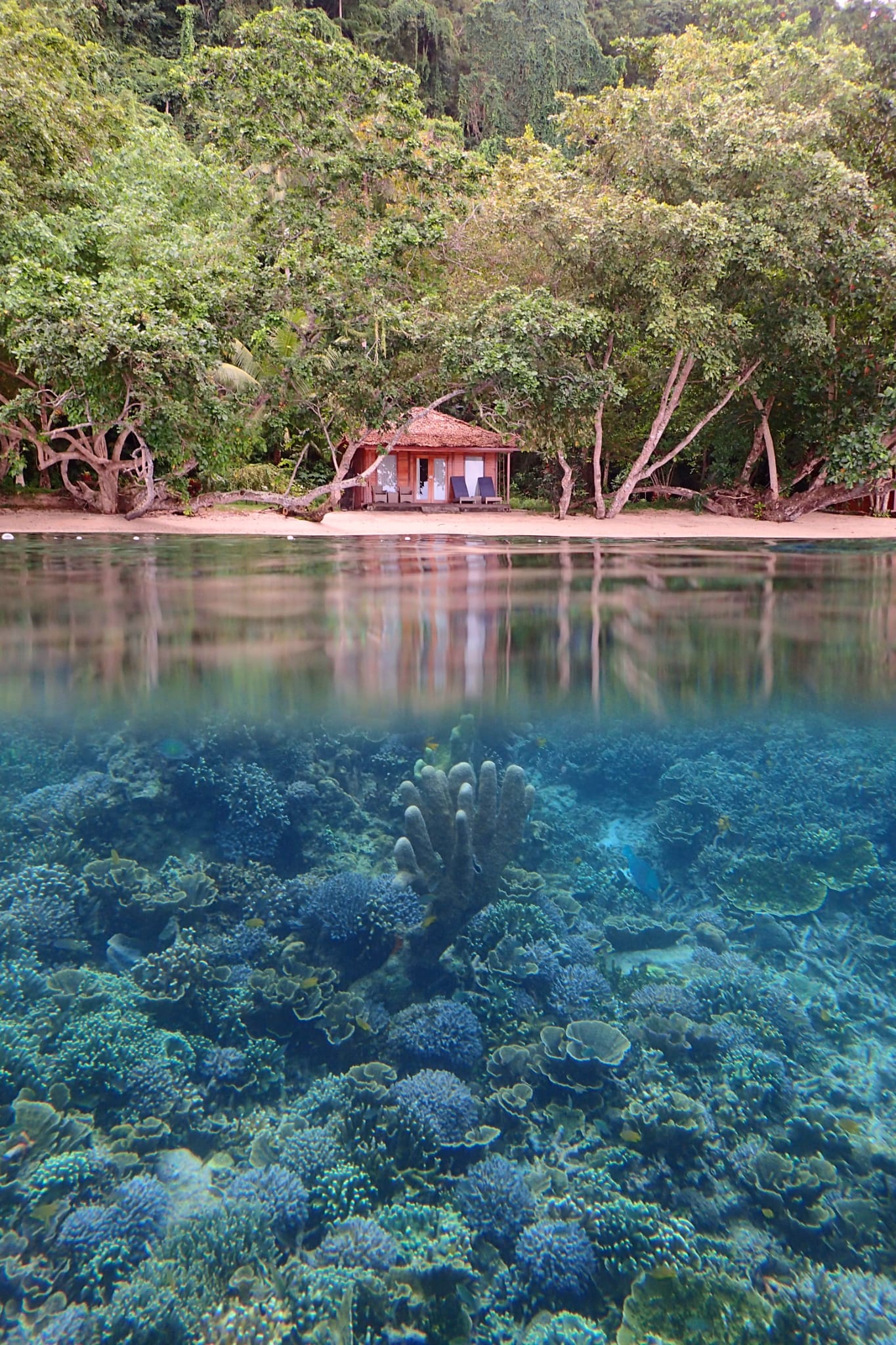
Underwater and on land at Sali Bay ©️ Frederico Navarro

For the second week of this year’s trip, we chose to continue eastward in the Coral Triangle to Sali Bay, on a small island off the coast of South Almahera, the southern chunk of Northern Maluku province, in the Moluccas (the famed Spice Islands). It’s well further off the beaten track than Coral Eye, and our travel agent promised that “Being the only resort in the region offers an unrivalled advantage of being able to explore new undiscovered dive sites.”

This turned out to be false. Although Sali Bay was the first resort in the area, it’s now been joined by at least three more within a fifteen minute boat ride (on a not particularly fast dive boat), and the area is served by various liveaboards. Still, it’s fair to say that in our time there, we only saw other divers on very few occasions. And undiscovered or not, there are two things to be said hugely in favour of the area.

Firstly, the fish life is more profuse than anywhere I’ve ever seen. In one dive, we spent more than twenty minutes accompanied by a shoal of blue triggerfish – they just kept on coming. And it’s not just the one species: both in the blue (with schooling snappers and jacks) and on the reef (with every patch of coral thriving with anthias and damselfish as well as a massive variety of other reef fish), this was an impressive place.

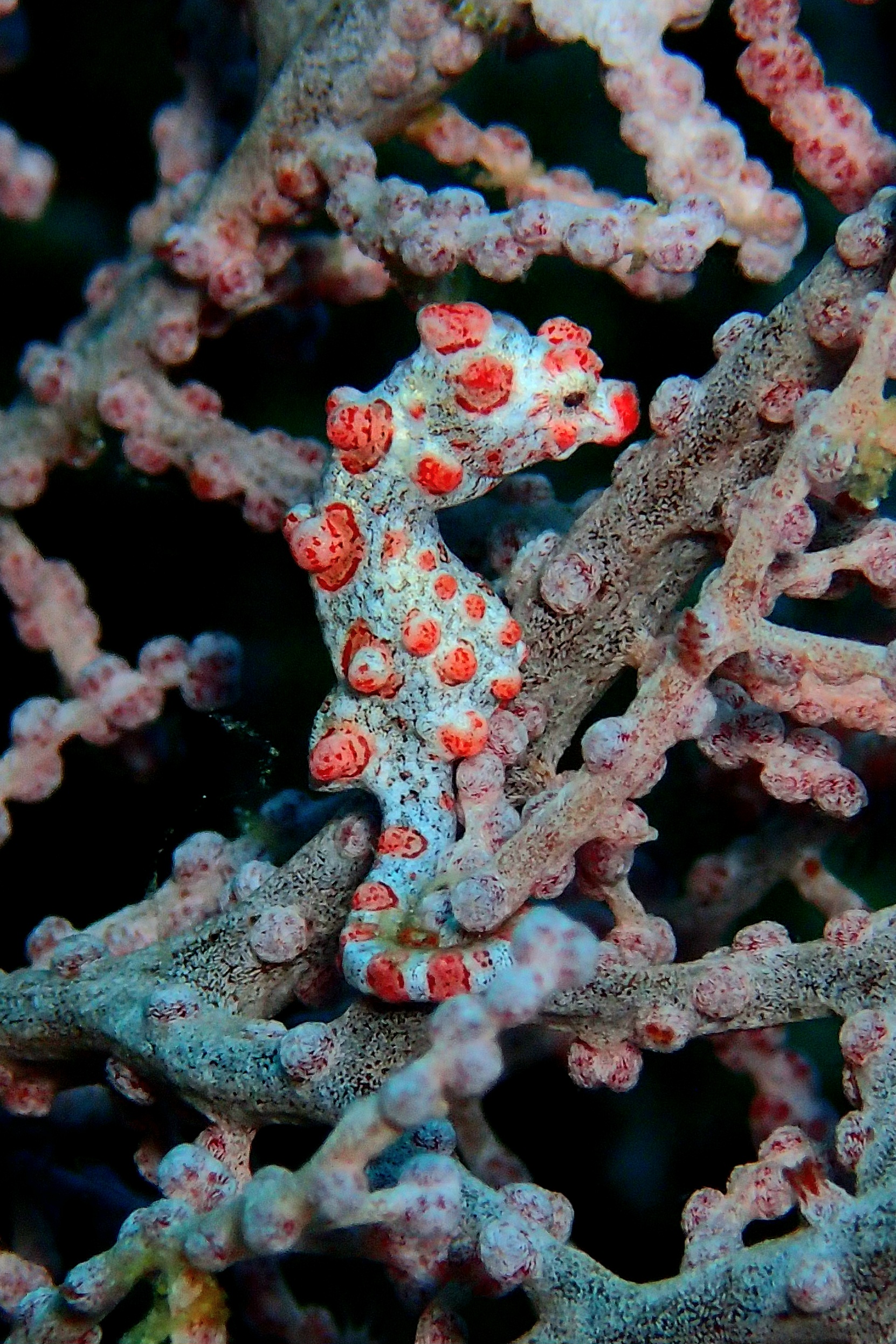
Pygmy seahorse ©️ Frederico Navarro
Pygmy Seahorse ©️ Frederico Navarro

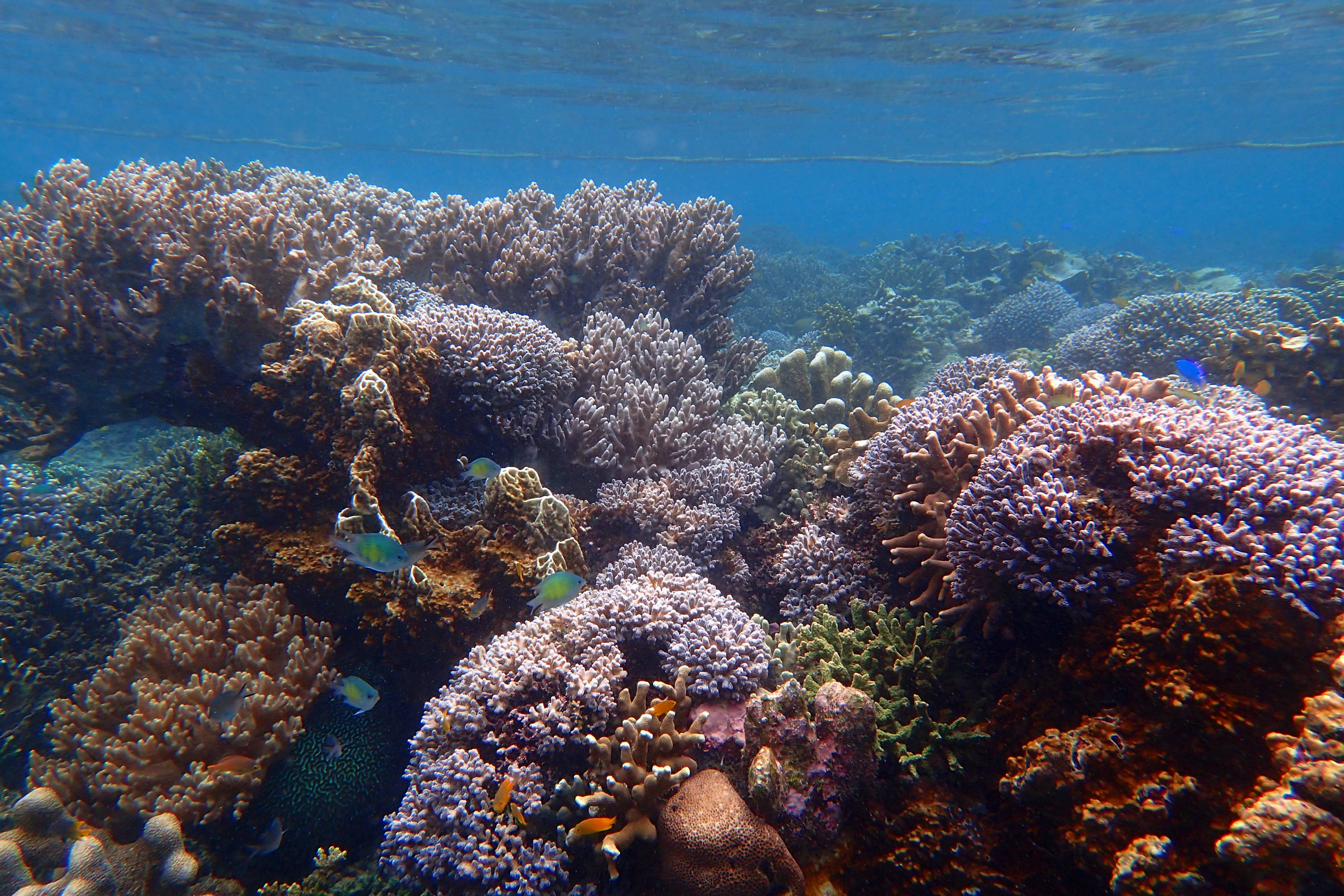
As to the coral: it might not be the most scenic (it’s a similar coral-block-on-sandy-slope landscape to Coral Eye, albeit the slopes are steeper), rather than the more spectacular vertical walls. However, it’s in rude health and it covers a very wide area. We often talk about the areas of branching corals at a depth of around 4-6m at the end of a dive as a “coral garden”: on that metaphor, one of our dives was a “coral Hyde Park”, stretching on far further than we could cover in our time available. In general, one could see multiple species of coral side by side, with exceptionally large colonies of each. So we may not have felt like intrepid dive explorers, but it was a heartening experience to see coral in such good shape.

Coral at Sali Bay ©️ Frederico Navarro

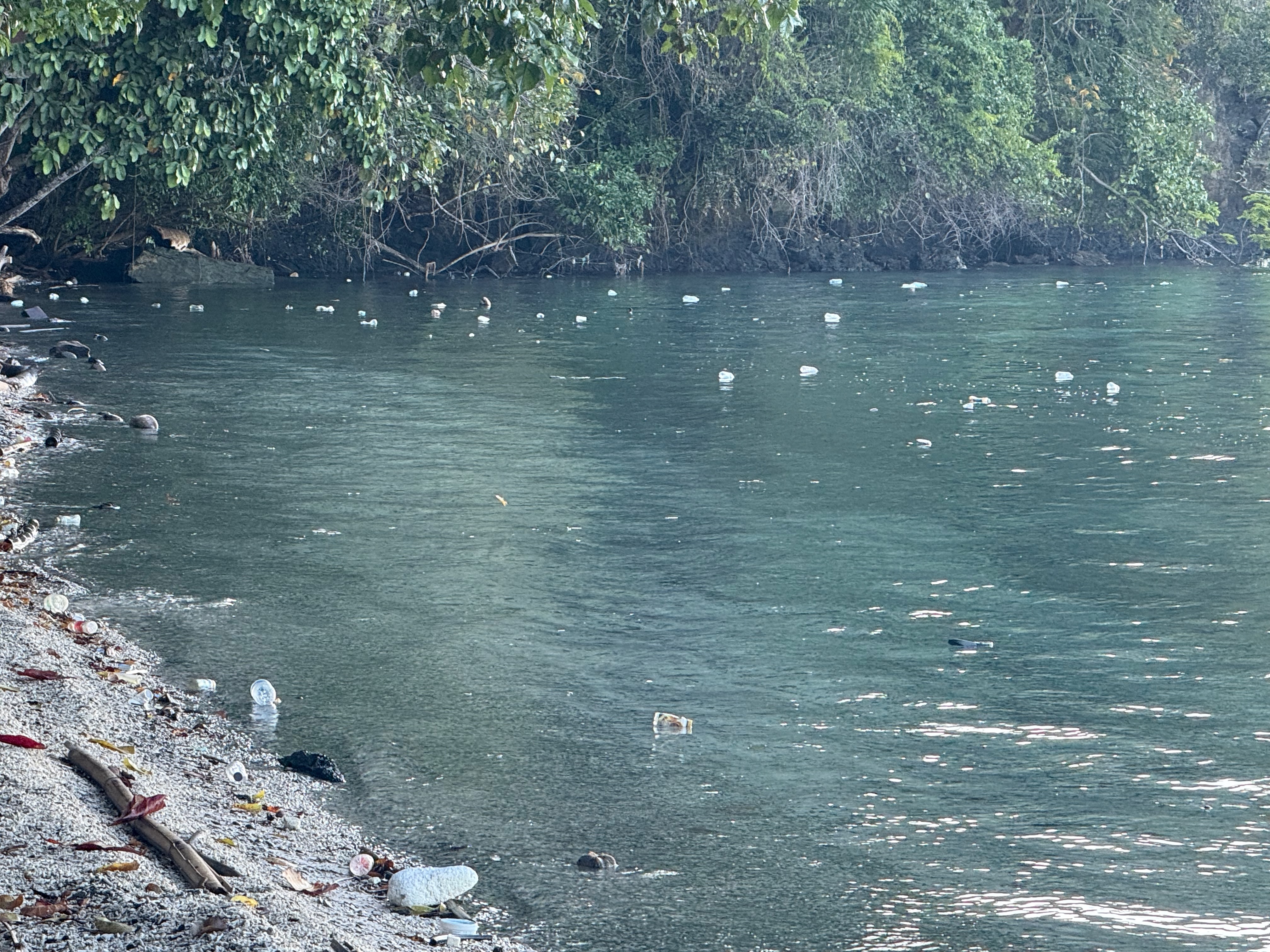
With one caveat. Some boat rides felt like ploughing through a sea of plastic, mostly food packaging and bottles. Most probably, this wasn’t local – at a population of 10,000, the nearest town of Labuha isn’t exactly a thriving metropolis, and other guests told us that the rubbish had only arrived recently, so I suppose it was probably carried in on currents in the wake of a typhoon in the Philippines whose tail end we caught. But local or not, concentrated or not, it was a sobering experience. The charities trying to deal with the issue of plastic in the oceans need our support.

Huge thanks to Frederico Navarro, a fellow guest at Sali Bay, for the wonderful underwater photos

Wakatobi: underwater heaven in Indonesia

Wakatobi: underwater heaven in Indonesia

I’m going to find it difficult to explain Wakatobi to you. If you’re not (yet) a scuba diver, I’m going to attempt to describe the whole experience of coral sea diving in a few hundred words. If you are already a scuba diver, you’ll understand the general attraction, but Wakatobi is almost certainly a different experience from anywhere that you’ve dived previously (unless, I’m reliably informed, you’ve been to Rajah Ampat).

Overwhelmingly, people like me who love warm water diving in coral seas do it for one big reason: we love gazing at the wildlife (there are other sorts of diver, like the ones who dive deep into ice cold water to hunt for artifacts in wrecks, which is a different experience altogether). So when we talk about our dives, we discuss excitedly whether we saw a turtle or a shark or a manta ray, or a tiny brightly coloured mandarin fish found only in this particular corner of ocean, or of a coral shrimp so tiny and translucent that it took the sharpest of eyes to notice it. Many divers are obsessive about writing up every dive in their logbook, not least because the major certification bodies make this an important part of one’s training, and old habits die hard. On a good dive in normal sites, which would typically last somewhere between 30 and 60 minutes, you might expect to see a dozen or so notable things (the definition of “notable” is fuzzy, but everyone agrees that it includes sharks, rays and turtles, and it usually includes any bright, colourful or physically odd-shaped fish that isn’t present in massive numbers in the area you’re diving).

The thing about Wakatobi is that on just about every dive, you reach the “dozen notable things” mark in about the first five minutes. Then, the number keeps clocking up as you go, accelerating as you reach the shallows, especially if the sun is out. If you try to remember all the species you’ve seen on a dive, you’re on a hiding to nothing; even counting them is beyond my ability. I’ve tried remembering all the species of butterfly fish – just one small section of the marine diversity out there – and given up when it gets to a dozen (it turns out that around 60 of the world’s 120 species are present in the area). In other dive areas, you might struggle to think of any really significant thing you saw during a dive. At Wakatobi, you have the opposite problem: you’re getting sensory overload. It’s best to start a dive with a couple of things you’re going to look out for, like, for example, counting butterfly fish species, counting turtle sightings (my maximum count was twelve) or searching the sand for its inhabitants. The goby-shrimp combo is a particularly cool sand-dwelling symbiosis: the shrimp lives in a hole and does the housekeeping, ejecting anything it considers not to be nice and clean, while the goby (a silvery fish around 3cm long) stands on guard outside.

If you compare coral reef diving to wildlife-watching on land, the difference in sheer profusion and diversity is simply enormous. Whether it’s a safari in Africa, hoping to see the “big five” (elephant, lion, leopard, rhino, buffalo), looking for bears or moose in Scandinavia, or just bird-watching in the UK, you can spend most of your hours in the field waiting for some animal to put in an appearance. On a coral reef, by contrast, there is a riot of colour and shape all around you.

It’s not just about the fish. The coral comes in a thousand forms. The hard corals are generally named after things on land: potato coral, lettuce coral, mushroom coral, plate coral, brain coral (you get the idea). They can make very large formations indeed. Some sea fans can be well over the size of a person. Roma, one of Wakatobi’s dive sites, has two enormous “coral roses” of overlapping plates which must measure at least 30m in diameter. Towards the top of the reef, you can see single formations of staghorn coral that last for 100m at a time, hosting an unbelievable variety of reef fish sheltering in its branches. The soft corals can be equally eye-catching, like watching a colony of Xenia coral feeding, each of its dozens of arms waving in the swell, with a star of eight feathery “fingers” opening and closing to grab nutrients which pass by. Blown up in your mind’s eye, it’s the stuff of horror movies. There are many other creatures that are not corals. Ali Baba could hide inside the basket sponges without a problem; Lampert’s sea cucumbers form scary white patterns around the outside. There’s the tunicate family: solitary tunicates with a delicately veined pattern like fine porcelain, bluebell tunicates,  electric blue translucent ovals which you’ll see in colonies scattered across the reef. Sailor’s eyeballs are a type of anemone which look for all the world like giant pearls.

Everyone has their own favourites. I love the ambush predators, like the crocodile fish which looks extremely like its landbound namesake, except that it’s perfectly camouflaged for the underwater landscape. We’ve seen a scorpion fish coloured white as it swims through the water, then settling on a reddish brown rock and then changing in an instant to match the place where it has settled, waiting for prey to arrive. There’s also defensive camouflage: at 20-30cm, a trumpet fish isn’t exactly a small item, but it’s surprisingly difficult to spot one when it’s pretending to be one of a bunch of sea rods. Many divers and most dive guides seem to love nudibranchs; personally, I struggle to see what the fuss is about. At the end of the day, even if it’s brilliantly coloured and boldly patterned, a snail is a snail. But big shoals are always a thrill, particularly when they’re tiny fish swirling around in a “bait ball”, whose shape morphs as they move with the current’s ebb and flow or perform some shift to attempt to confuse predators. I also love seeing parrot fish bump the coral, bite off a chunk and grind it up into fine sand which you can see them excrete (after they’ve ingested the nutrients). It’s not far off the mark to assert that the fabulous beaches of white sands in these parts are largely composed of parrot fish droppings.

By the way, I haven’t attached any underwater photos because I stopped taking them a few years ago: I realised that I wasn’t enjoying dives any more because I was spending all my time worrying about the camera and the pictures. There are plenty of people who disagree with me, as a search for “Wakatobi underwater” will quickly show you.

Wakatobi is located just off the south-east corner of Sulawesi (that’s the spindly one on the Indonesian map) in the so-called “coral triangle”, which brings me to the first of my three caveats: it’s a bitch to get to. If you’re coming from the UK or the US, you have to spend the best part of a couple of days getting to Bali, and it’s then a two and a half hour charter flight to the airstrip on nearby Tomia island. They do their best to make the trip smooth and efficient, but any way you look at it, Wakatobi is in the middle of nowhere.

Second caveat: you won’t see much in the way of large pelagics here (sharks, rays, etc). And finally, Wakatobi isn’t a cheap ticket by any stretch of the imagination. It’s a luxury resort with a capacity of around 60 guests, where they take exquisite care of you. You do pay for what you get, although not at the level of the ritzy international brands. 

Somehow, when you leave, the team there manage to make you feel like you’ve just left a long lost second family. I don’t know quite how they do it, but whatever the magic is, it results in a lot of return guests. We’ve just done our third trip and it won’t be the last.